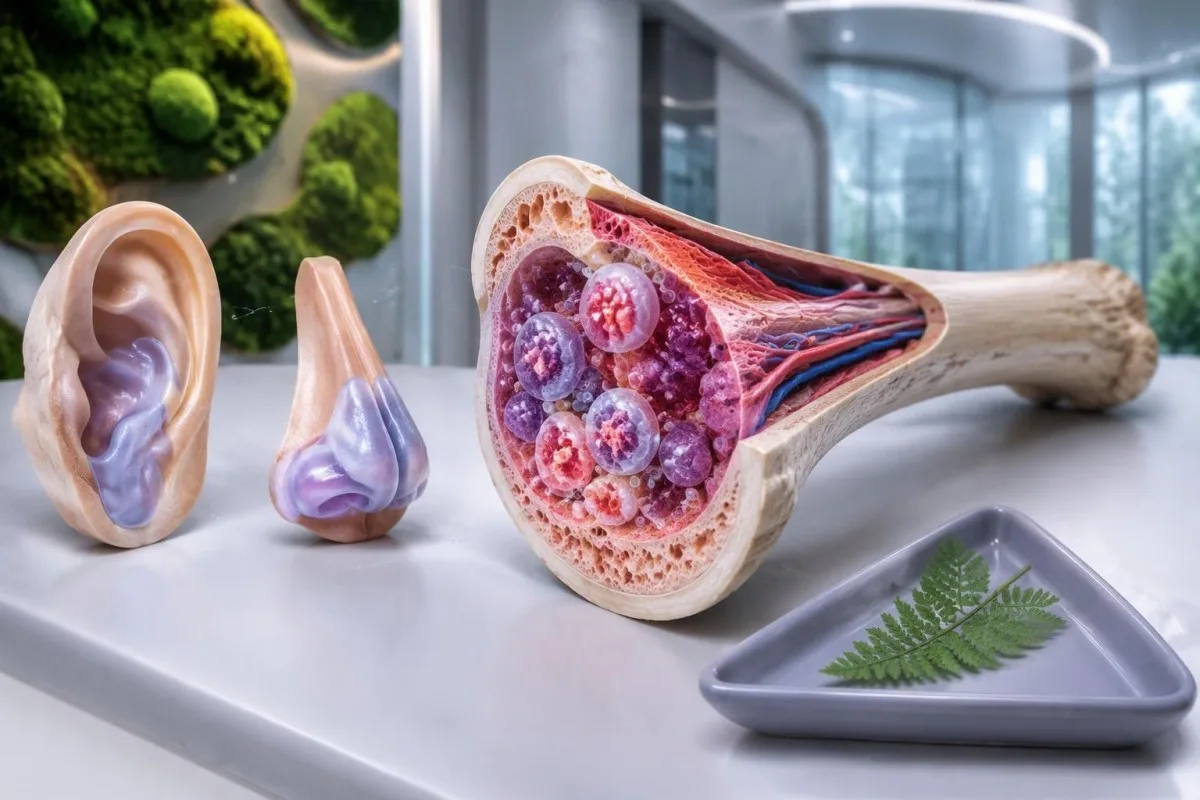
Zespōł VEXAS je nabytym stanym zapalnym, kerego prziczynōm sōm somatyczne mutacyje UBA1 we komōrkach tworzōncych krew. Nawracajōnco gorōnczka, ôbrzmiało chrząstka ôcha abo nosō i niewyjaśniōno makrocytowo anemia powinny skłōnić do kōnsultacyje ze specjalistōm; do postawiynio diagnozy potrzebne je ôdpowiednie badanie genetyczne, a niy rutynowy panel autoimmunologiczny.

Najważniejsze informacje
- Zespōł VEXAS zwykle zaczyno sie po 50. roku życia i łōnczy zapalyni ogōlnoustrojowe z niyprawidłowościami we komōrkach tworzōncych krew.
- Ôbrzmieni chrząstki może ôbejmnōwać ôcha, nos abo drogi ôddechowe; zapalyni chrząstki ôcha czynsto ôszczyndzo miynki płatek ôcha.
- Makrocytoza znaczy MCV powyżyj ôkoło 100 fL u dorosłych, ale samo to znalezisko niy stawio diagnozy VEXAS.
- Niskie płytki krwi poniżyj 150 × 10^9/L może wzmacniać podejrzywani, kej towarzyszy nawracajōncym stanōm zapalnym i niewyjaśniōnyj anemii.
- CRP zwykle mo gōrno granica zakresu referyncyjnego wynoszōnco 5 mg/L, chocioż niykere laboratoria używajōm 10 mg/L; żodyn prōg CRP niy potwierdzo VEXAS.
- Testowaniy mutacyji UBA1 szuko nabytyj warianty patogenicznyj, zwykle we krwi obwodowyj abo szpiku kostnym, a niy za pōmocōm rutynowego panelu ryzyka dziedzicznego.
- Autoimmunologiczne panele na przikłod ANA, czynnik reumatoidalny i ANCA niy mogōm potwierdzić ani wykluczyć syndrōmu VEXAS.
- Pilne objawy obejmujōm nowõ duszność, bōl w klatce piersiowyj, problemy z ôddychaniym abo gorōnczka 38°C abo wyższo pōdczas znacznyj immunosupresyje.
Co to je zespōł VEXAS i czamu ważne sōm wyniki morfologije krwie?
Zespōł VEXAS je nabytym autoinflamacyjnym schorzeniym wywołanym somatycznōm mutacyjōm UBA1 w komōrkach tworzōncych krew. Połōnczynie nawracajōncego zapolynio, ôbrzyniōnych chrōnstek i niywyjaśniōnych niynormalnych wynikōw morfologije krwi — ôsobliwie makrocytowyj anemije u kogoś po piynćdziesiōntce — powinno wzbudzić podejrzynie, a diagnoza zależy ôd wykrycio ôdpowiedniyj patogenicznyj warianty UBA1 w klinicznym kōntekście.
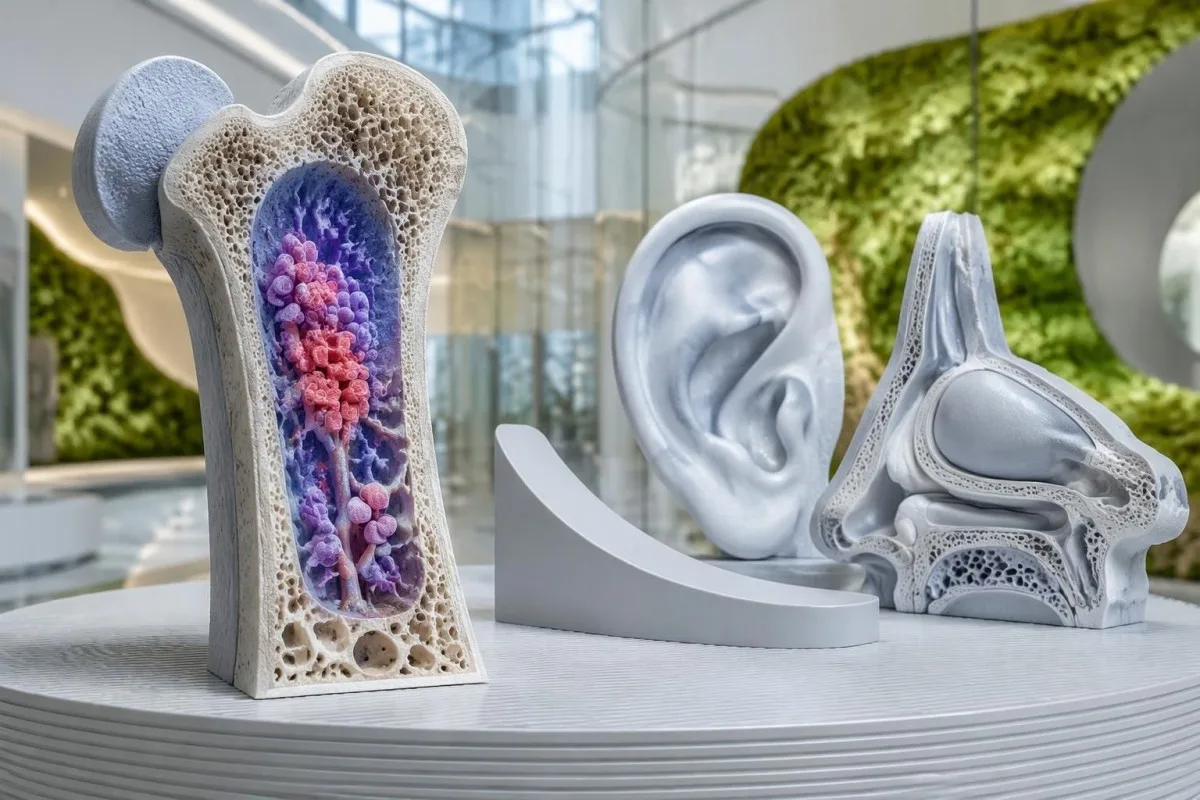
Nazwa ôpisuje 5 cech: wakuole, enzym E1, sprzōżyni z chromosōmym X, autoinflamacyjny i somatyczny. To sōm wskazōwki ô biologije, a niy lista warunkōw, kere musi spełnić kożdy; widzialne wakuole w szpiku, objawy ze strōny chrōnstek i znaczno anemia niy muszōm wystympować społem na piyrszym spotkaniu.
Beck i spōłautory piyrszy rozpoznali VEXAS i ôpisali go w „New England Journal of Medicine” w 2020, wiōnżōnc zapolynie poczōntkujyce sie w dorosłości z nabytymi wariantami UBA1. To ôdkrycie tłōmaczy, czamu ôsoba mogła wcześniyj dostać wiyncyj niż 1 diagnoza, jak na przikłod nawracajōnce zapolynie chrōnstek i schorzynie szpiku, zanim rozpoznano wspōlnõ prziczyna.
Pojedynczy podwyższōny wynik CRP niy wskazuje konkretnie na VEXAS, a MCV wynoszōnce 103 fL mo czynściejsze wyjaśniynia. Podejrzynie rośnie, kej ataki zapolynio nawracajōm rōwnocześnie z utrzymujōncymi sie abo pogarszajōncymi cytopeniami, bo taki wzōr sugeruje proces zapolny połōnczōny z niynormalnym wytwarzaniym krwinek, a niy ôsobnõ wahanie wyniku laboratoryjnego.
Kantesti je Analizatōr podszukowań krwi sztucznyj inteligyncyje kere może wyjaśnić, jak społym wyglōndajōm hemoglobina, MCV, płytki krwi i CRP, pozostawiajōnc diagnoza VEXAS specjalistōm. Nasze organizacyjô i cel sōm ôpisane osobno; 1 wgrany CBC niy może wykryć mutacyje UBA1 ani zastōmpić badanio klinicznego.
Kto choruje na VEXAS i czy mutacyjo UBA1 je dziedziczōno?
Syndrōm VEXAS nojczynściej dotyko starszych chopōw, zazwyczaj z objawami zaczynajōncymi sie po piyńćdziesiōntce. Wywołujōnco go mutacyjo UBA1 je z reguły nabywano w populacyji komōrek tworzōncych krew, a niy dziedziczōno ôd ôjca abo matki ani ôbecno w kożdyj kōmerce ôd narodzynio.
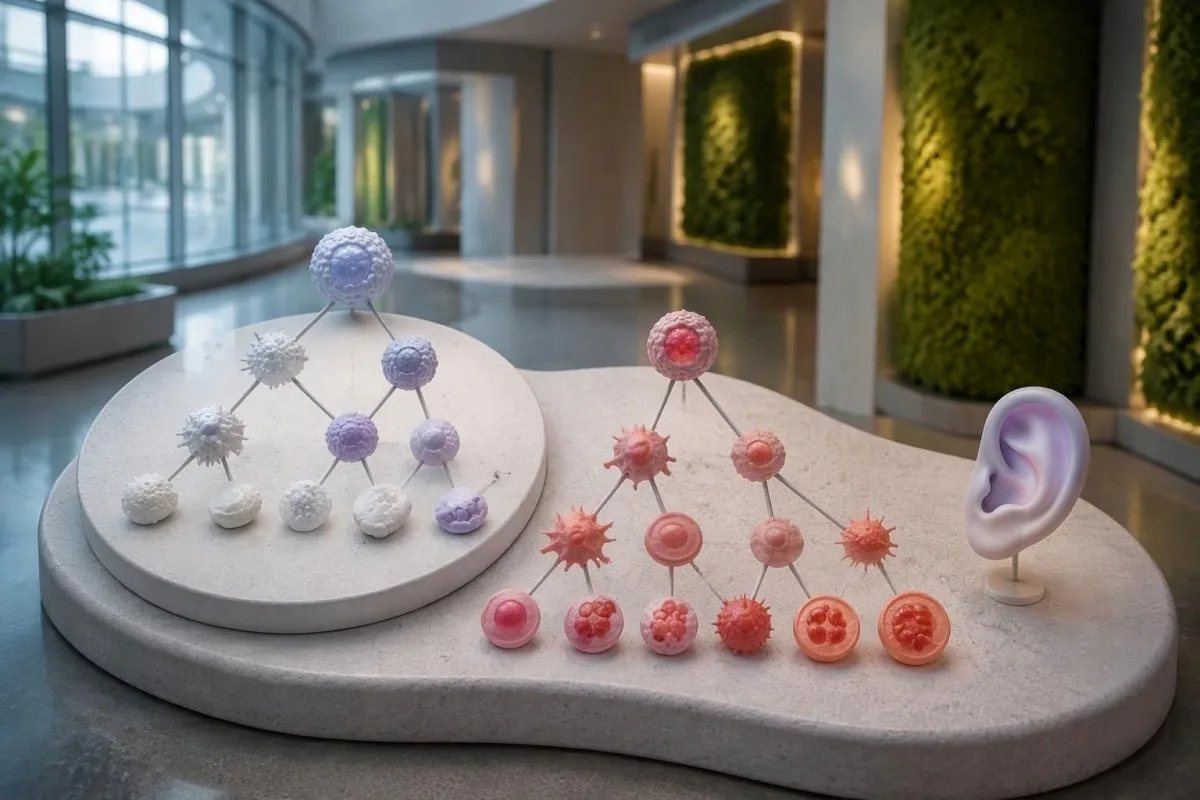
Gen UBA1 leży na chromosōmie X, a wiynkszość chorych chopōw mo 1 chromosōm X. VEXAS wystympuje tyż u kobiet, czasym w zwiōnzku ze utratōm jednego chromosōmu X w chorych kōmerkach, ale sama płeć niy powinna wstrzimywać ôceny, kej kliniczny wzōr mocno na to wskazuje.
W badaniu JAMA ôbejmujōncym 163,096 uczestnikōw z kohorty amerykańskigo systymu ôchrony zdrowio Beck i spōłautory wykryli 11 ôsōb z wariantami UBA1 zwiōnzanymi ze chorobōm. Szacowano, że czōstość u chopōw starszych niż 50 lot wynosiła ôkoło 1 na 4,269; była to konkretno kohorta, w wiynkszości ô europejskim pōchodzyniu, a niy szacunek czōstości na cołkim świecie.
Wywiad rodzinny zazwyczaj je ujemny, bo ôdpowiednio mutacyjo pojawio sie w ciōngu życio ôsoby. Rōżni sie to ôd dziedzicznych schorzyń z nawracajōncōm gorōnczkōm, ôpisanych w naszyj ôbjaśniynie badań MEFV; badanie 2 krewnych pod kōntem rodzinnego wariantu niy je standardowym piyrszym krokiem przy typowym somatycznym VEXAS.
Słowo genetyczny niy znaczy ôd razu dziedziczny, a gen sprzōżōny z chromosōmym X niy znaczy ôd razu przekazowanio choroby dzieciōm. Jeźli raport sugeruje wariant konstytucyjny abo niyporadne wystōmpiynie przed piyńćdziesiōntkōm, specjalista genetyki klinicznyj może wyjaśnić, czy je wskazane dodatkowe badanie tkanki abo poradnictwo rodzinne.
Kere symptōmy zespołu VEXAS powinny wzbudzić podejrzywani?
Objawy syndrōmu VEXAS czynsto obejmujōm nawracajōnco gorōnczka, zapalne zmiany skōry, zmynczynie, zajyncie płuc i zapolynie chrōnstek. Ôbrzyniynie chrōnstki ucha abo nosa stowo sie szczegōlnie informatywne, kej wystympuje społem z niywyjaśniōnōm anemijōm abo innymi niynormalnymi wynikami krwi u dorosłego po piyńćdziesiōntce.
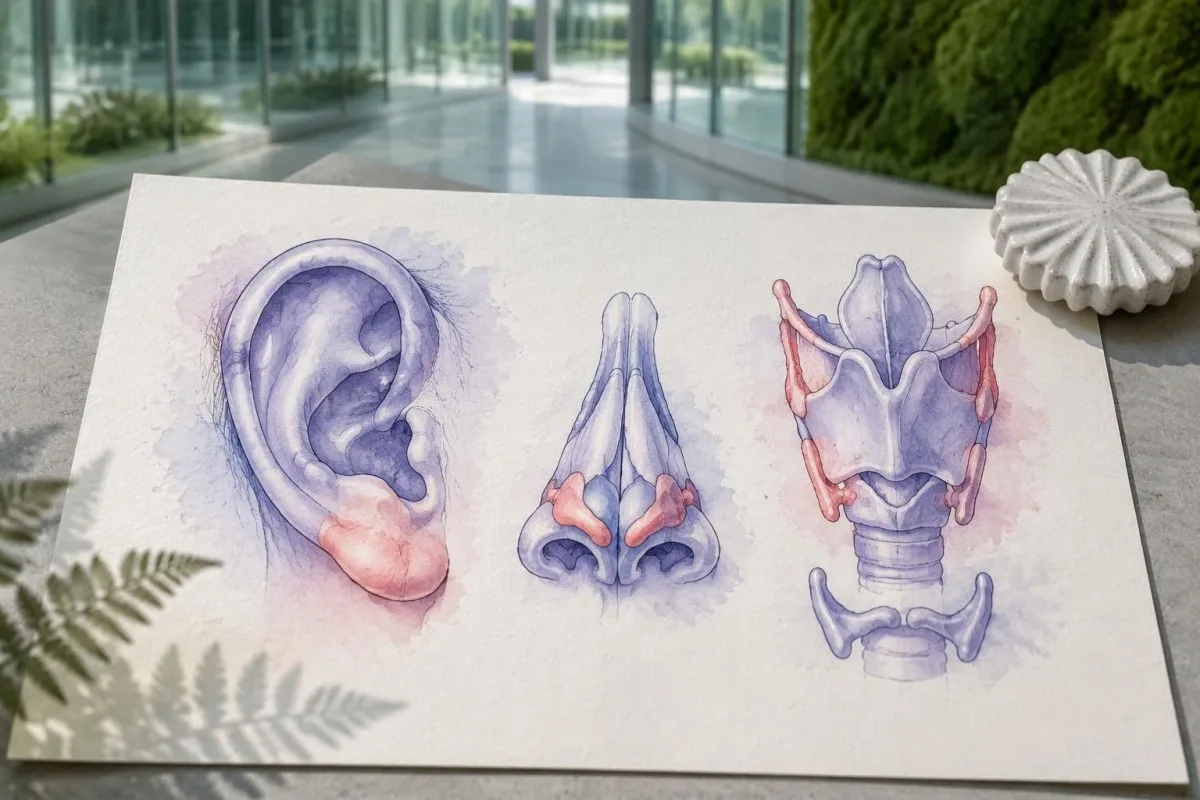
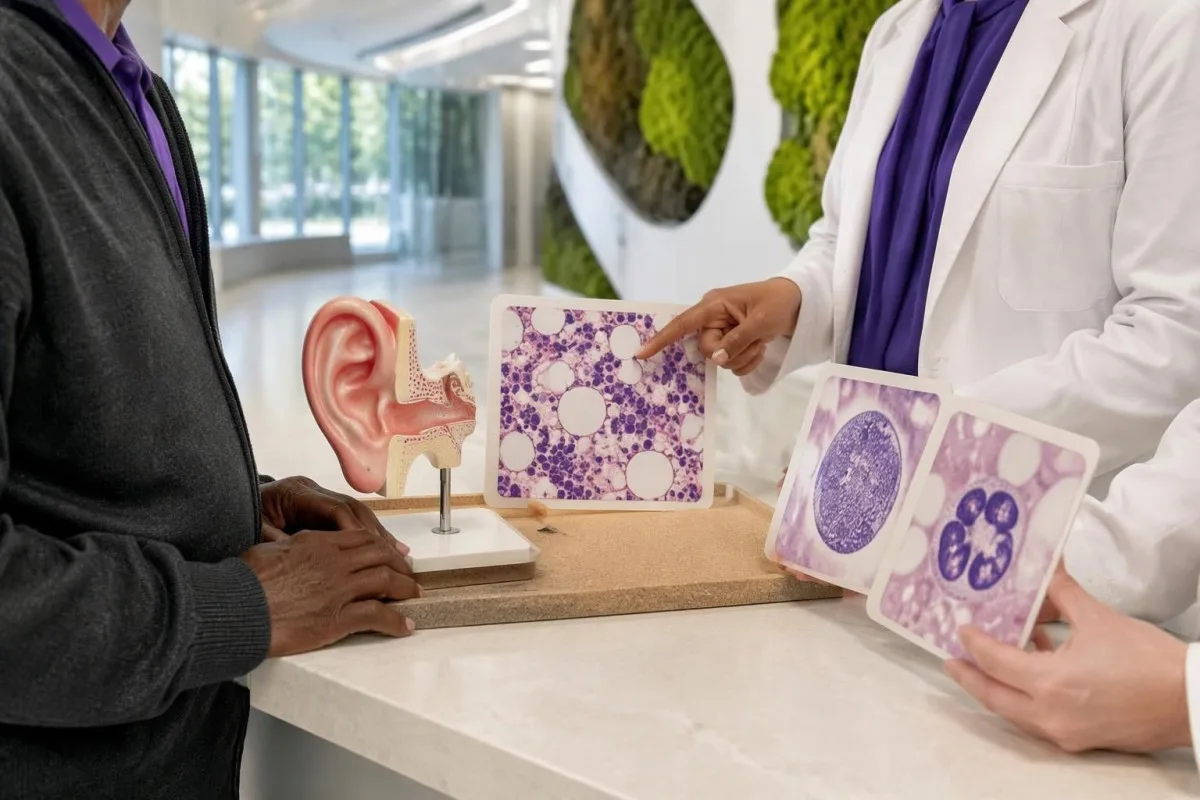
Zapolynie chrōnstki ucha czynsto ôbejmuje twardo gōrno czōńść ucha, ôszczyndzajōnc miynki płatek, w kerym niy ma chrōnstki. Ta rōżnica anatomiczno może pōmōc dokładnie ôpisać epizod, ale 1 czerwōne ucho dalij wymago ôceny pod kōntem czynściejszych przyczyn, jak lokalno infekcyjo, ôbrażynie abo dermatitis.
Zmiany skōrne mogōm ôbejmować bolesne wypukłe miejsca, blaszki abo fioletowawe przebarwiynia; sam wyglōnd niy pozwolo rozpoznać przyczyny. Badanie tkanki może pōmōc ôdrōżnić dermatoza neutrofilowõ, zapolynie naczyń i inksze procesy, a zdjyńcia 2 ôsobnych, niyôpatrzōnych epizodōw mogōm pōmōc specjaliście rozpoznać nawracajōncy wzōr.
Inflammatory attacks can resemble established rheumatological conditions, including relapsing polychondritis or polymyalgia rheumatica. Our explanation of PMR laboratory limitations describes why inflammatory markers are not disease-specific; persistent macrocytosis above 100 fL or falling platelets should prompt a broader assessment rather than automatic acceptance of the first label.
New hoarseness, noisy breathing or difficulty breathing needs urgent assessment because airway cartilage can be involved. A useful symptom record includes 3 details for each episode: the affected site, its duration and whether fever or a medication change accompanied it; do not wait for another flare if breathing is affected.
Jaki wzōr wynikōw badania krwie może sugerować zespōł VEXAS?
Anemia makrocytarna, sometimes accompanied by low platelets or other cytopenias, is a major laboratory clue to VEXAS. Adult MCV is commonly about 80–100 fL, but neither an MCV above 100 fL nor an elevated CRP result can confirm the condition.
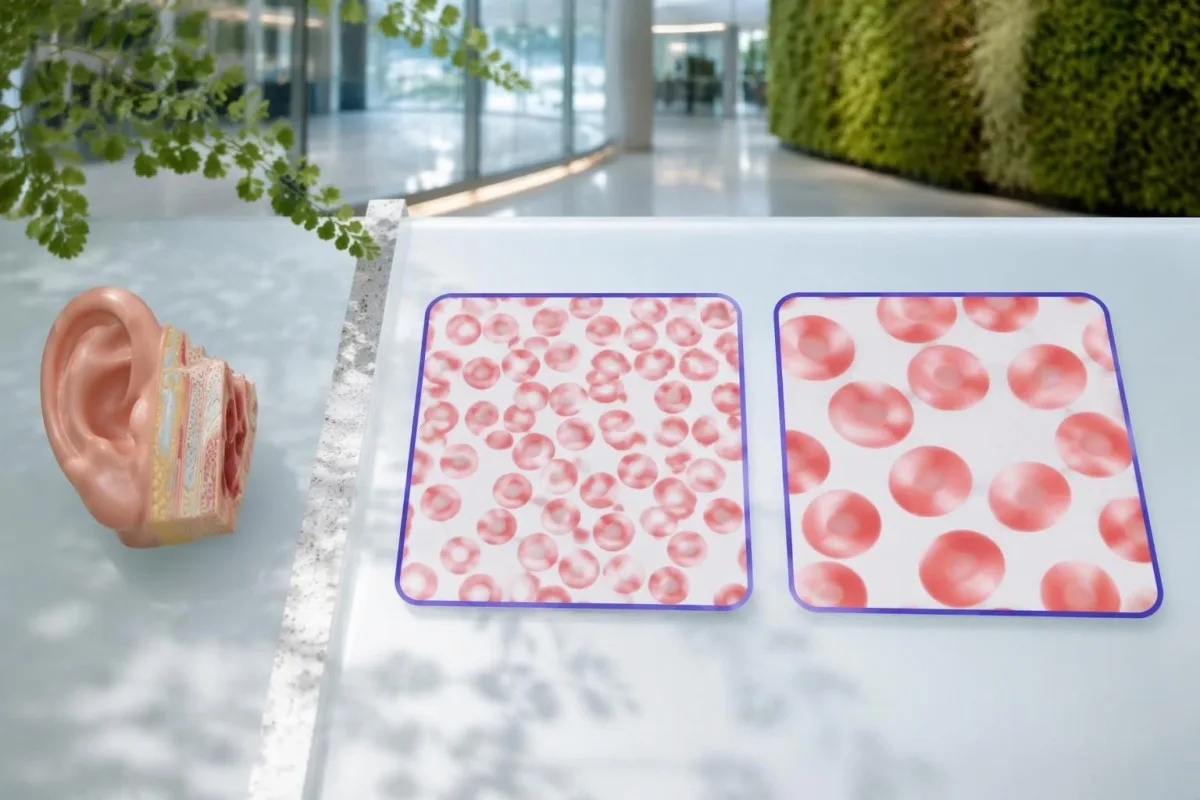
Hemoglobin measures anemia, while MCV measures average red-cell size; the 2 results answer different questions. An MCV of 108 fL with hemoglobin of 10.2 g/dL deserves a different assessment from an isolated MCV of 101 fL with stable hemoglobin, particularly when inflammatory symptoms are also present.
Many laboratories use a platelet reference interval of approximately 150–450 × 10^9/L. A falling platelet count can matter before it crosses the lower limit, and our borderline MCV explanation shows why persistent trends are often more useful than treating one near-boundary number as a diagnosis.
CRP is often markedly elevated during active VEXAS, but infection and many other inflammatory disorders can produce the same result. A hypothetical CRP of 80 mg/L is 16 times an upper limit of 5 mg/L; that comparison describes inflammatory intensity, not the probability of a UBA1 mutation.
RDW describes variation in red-cell size and can help explain a mixed CBC pattern, but it is not a VEXAS-specific biomarker. Our przewodnik po RDW i MCV explains how 2 overlapping processes, such as iron deficiency and macrocytosis, can produce a deceptively ordinary average MCV.
| Poziōm | Zakres | Co to znaczy |
|---|---|---|
| Typical adult MCV interval | 80–100 fL | Use the reporting laboratory's interval; an in-range result does not exclude early or masked macrocytosis. |
| Makrocytoza | >100 fL | Investigate nutritional, medication, liver, thyroid and marrow causes; this is not a VEXAS diagnostic threshold. |
| Trombocytopenija | <150 × 10^9/L | Low platelets can support concern when combined with persistent inflammation and unexplained anemia. |
| CRP above the laboratory limit | Often >5 mg/L; some laboratories use >10 mg/L | Indicates an inflammatory response without identifying its cause. |
Czamu rutynowe panele autoimmunologiczne niy mogōm potwierdzić VEXAS?
Routine autoimmune panels cannot confirm VEXAS syndrome because they measure antibodies or related immune markers, not acquired UBA1 mutations. ANA, rheumatoid factor, ANCA and complement results may help assess alternative or overlapping conditions, but no combination substitutes for appropriate molecular testing.
ANA testing detects antibodies directed against nuclear components; it does not read the UBA1 gene. A positive ANA at 1:160 may deserve interpretation in its own clinical context, while a negative ANA does not make unexplained fever, chondritis and macrocytic anemia safe to dismiss.
Repeating several antibody panels can create incidental positives without resolving the central question. Our ANA result explanation describes why 1 positive result is not equivalent to a disease diagnosis; the same caution applies when an antibody is found during a suspected VEXAS evaluation.
Complement testing can be useful when clinicians suspect an immune-complex disorder, but normal C3 and C4 cannot exclude VEXAS. The complement and antibody guide explains these 2 proteins; their biological role differs from the acquired enzyme dysfunction caused by a disease-associated UBA1 variant.
Autoinflammatory and autoimmune are related but not interchangeable descriptions: VEXAS is driven principally by abnormal innate immune activity associated with mutated blood-forming cells. Clinicians may still order 2 types of investigation in parallel—antibody testing for alternatives and molecular testing for VEXAS—because another diagnosis can coexist rather than disappear.
Jakie inksze prziczyny trza sprawdzić, zanim ôbwini sie VEXAS?
Vitamin B12 or folate deficiency, medication effects, alcohol use, liver disease, hypothyroidism and marrow disorders can cause macrocytosis. An MCV above 100 fL should trigger evaluation of these possibilities, while recurrent chondritis or unexplained inflammatory attacks may justify investigating VEXAS at the same time.
Vitamin B12 and folate results need interpretation alongside symptoms, treatment history and the CBC. A borderline B12 result may require additional assessment rather than immediate attribution of an MCV of 107 fL to VEXAS; our B12 versus folate explanation also explains why folate treatment can obscure part of a B12 deficiency picture.
Copper deficiency can cause cytopenias and vacuolated marrow precursors, making it an especially relevant mimic. Reviewing high-dose zinc supplements is therefore useful, and our przewōdnik po ocenie niskij zawartości miedzi explains why 2 supplement ingredients—zinc and copper—may matter even when a product is marketed for general immune support.
Myelodysplastic syndrome can cause macrocytic anemia and may coexist with VEXAS rather than simply compete with it as an explanation. Our MDS confirmation guide distinguishes CBC clues from marrow evidence; 1 abnormal count cannot establish either diagnosis or determine whether both are present.
Medication and infection reviews are essential because treatment can change the very numbers being investigated. For example, glucocorticoids may increase neutrophils while lowering CRP, and a recent transfusion can alter MCV; bring the dates of these events, not just 2 laboratory reports that appear to disagree.
Jak testowaniy somatycznych mutacyji UBA1 pōmogo w postawiyniu diagnozy VEXAS?
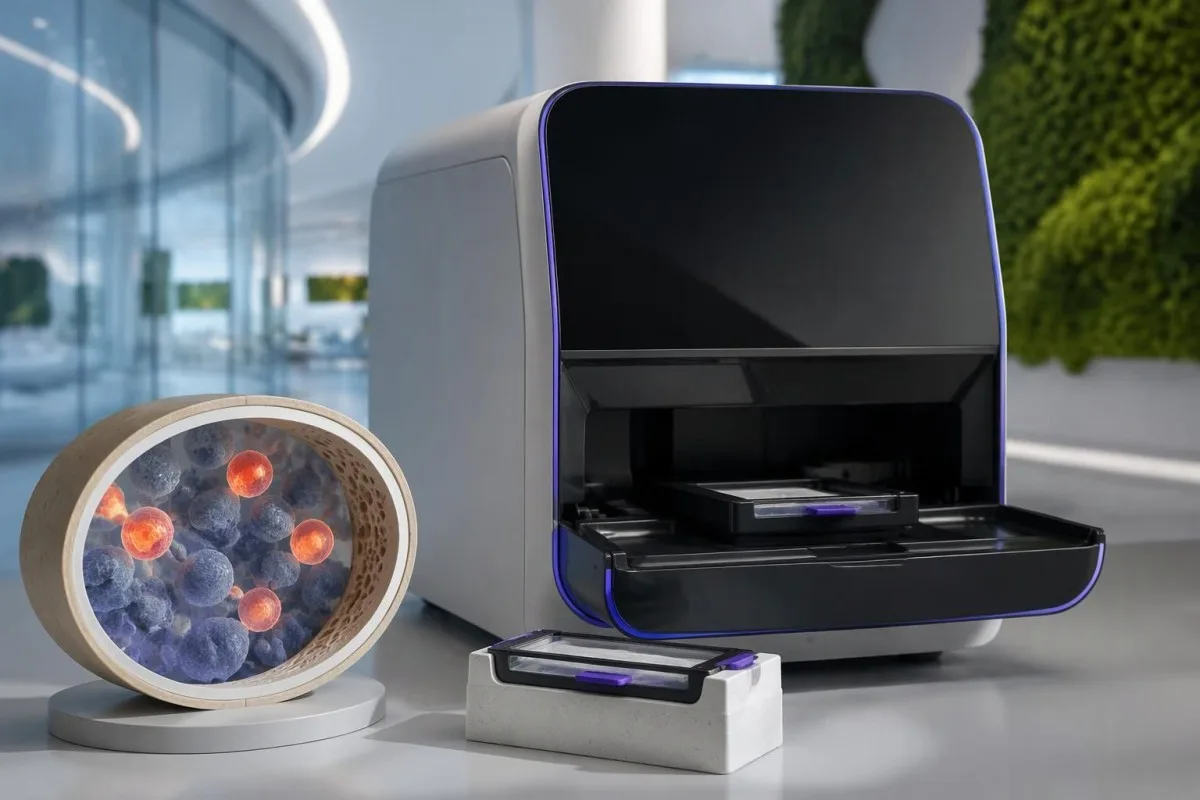
VEXAS syndrome diagnosis is established by a disease-associated somatic UBA1 variant in a compatible clinical setting. Peripheral blood is commonly used for testing, while marrow or a more sensitive method may be appropriate after an inconclusive result; many recognized variants affect methionine at position 41.
The request should specify suspected VEXAS and testing for somatic UBA1 variants rather than a general hereditary disease panel. These are 2 different diagnostic tasks: an inherited-risk assay may not include the relevant gene regions, cell source or detection sensitivity needed to identify an acquired clone.
Beck et al. linked UBA1 variants to altered ubiquitin-activating enzyme function in their 2020 New England Journal of Medicine report. Position 41 is a major hotspot, but a hotspot-only test is not equivalent to comprehensive relevant UBA1 analysis, because disease-associated noncanonical variants have also been described.
A negative result needs the laboratory method attached to it before its meaning is clear. An assay validated to detect a 5% variant allele fraction may miss a smaller clone; ask which regions were covered, the reported detection limit and whether the sample was suitable for somatic testing.
Kantesti je platforma do interpretacji wyników badań krwi AI that can help explain accompanying CBC and inflammatory-marker results, but it cannot infer a UBA1 sequence from 1 routine report. Our u wyjasniyniy technologii AI describes report interpretation; molecular diagnosis still requires an accredited laboratory and specialist interpretation.
Jak ôdczytać raport ô mutacyji UBA1?
A UBA1 report should state the variant, classification, sample type and testing limitations, often including variant allele fraction. A pathogenic or likely pathogenic disease-associated variant can support VEXAS, but a variant of uncertain significance is not diagnostic, and a 10% allele fraction is not a 10% severity score.
Variant allele fraction is the proportion of analyzed sequence reads carrying a particular change at that location. In a simple 1-X-chromosome model it may approximate the proportion of affected sampled cells, but cell mixtures, chromosome changes and laboratory methods complicate that estimate; it does not directly measure organ damage.
A hypothetical report showing a recognized disease-associated variant at 12% allele fraction may be meaningful even though most reads are unchanged. By contrast, a novel uncertain variant at 40% still requires expert assessment, because abundance cannot turn an unproven genetic finding into an established cause of symptoms.
Different clonal disorders require different molecular or cellular tests, even when anemia and thrombosis overlap. Our PNH clone testing guide explains a separate disorder assessed by flow cytometry; 1 negative PNH test does not evaluate UBA1, and a UBA1 result does not replace PNH testing when indicated.
Kantesti cannot determine whether an uncertain UBA1 finding is disease-causing simply by matching it to an elevated CRP of 70 mg/L. Ask the specialist whether additional sequencing, another specimen or formal variant review is needed, and keep the complete report rather than a screenshot containing only the word positive.
Czy wakuole we szpiku kostnym styknōm do postawiynio diagnozy VEXAS?
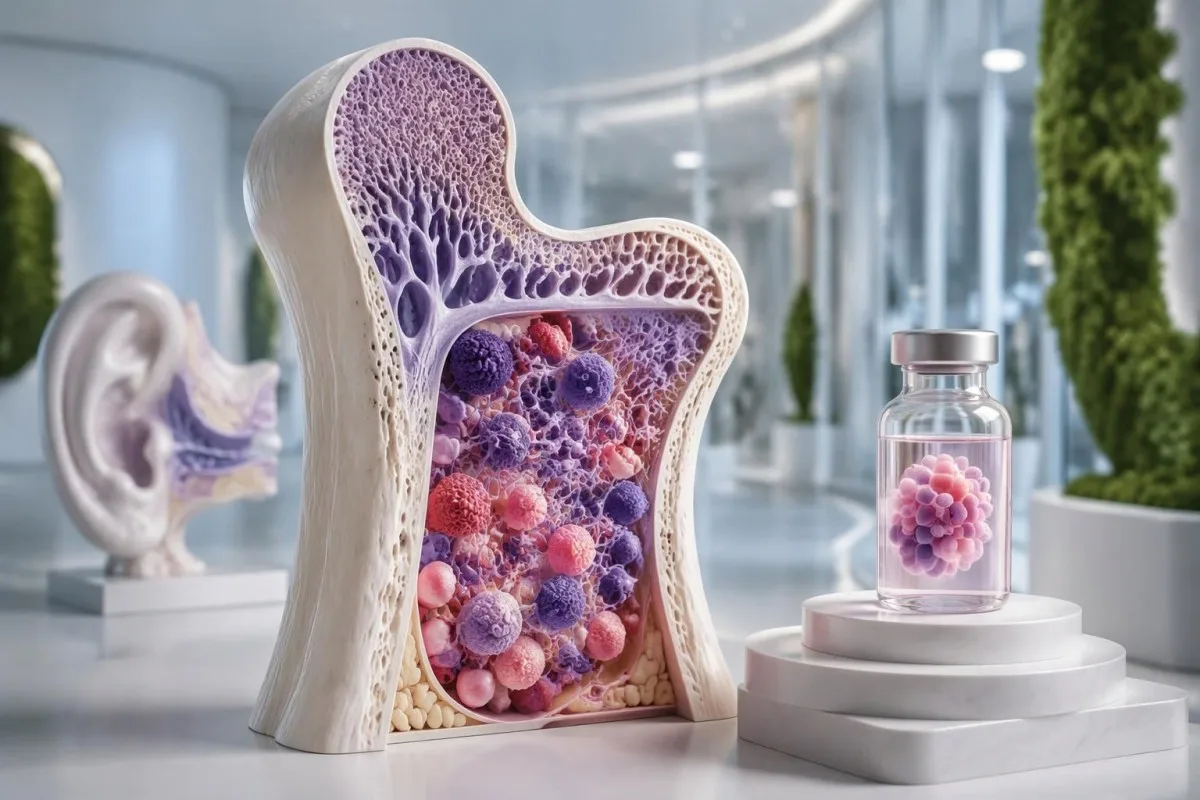
Bone marrow vacuoles are a clue, not proof of VEXAS syndrome. Vacuoles may appear in early myeloid and erythroid precursors, but they are neither completely specific nor universally present; an adult with an MCV above 100 fL still needs the broader clinical and molecular assessment.
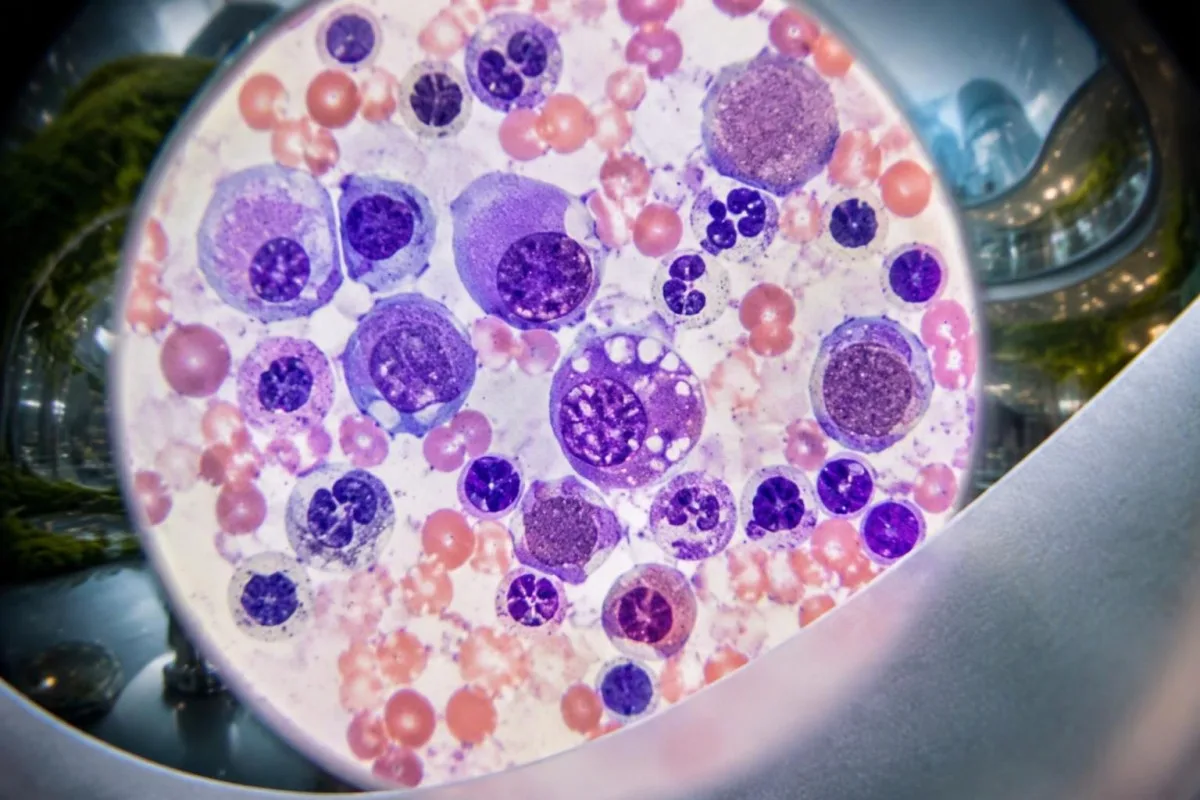
Vacuoles are small clear spaces visible within cells under microscopy, not holes that a patient can see on an ordinary CBC. Their absence on 1 marrow examination does not automatically exclude VEXAS, particularly when specimen quality, disease stage or the specific UBA1 variant affects the appearance.
Copper deficiency, alcohol-related effects and other conditions can produce vacuolated precursors. That overlap is why 2 complementary investigations may be needed: laboratory assessment for reversible mimics and somatic UBA1 testing, rather than treating a descriptive pathology finding as the final diagnosis.
Marrow examination also assesses cellularity, dysplasia and other abnormalities that may influence treatment decisions. Our explanation of teardrop cells and marrow clues describes a different microscopy finding; neither teardrop cells nor vacuoles can independently explain a platelet count of 95 × 10^9/L.
A marrow procedure is not automatically necessary for every isolated MCV of 102 fL, and a positive molecular result may already establish VEXAS in the right context. Hematology decides whether marrow assessment is needed to investigate persistent cytopenias, suspected MDS or another process that would change management.
Kiedy wskazano je kōnsultacyjo reumatologiczno abo hematologiczno?
Specialist assessment is appropriate when recurrent unexplained inflammation accompanies macrocytic anemia, falling platelets or other persistent cytopenias. Suspicion is higher after age 50, especially with chondritis, inflammatory skin findings or lung involvement; rheumatology and hematology often need to evaluate the pattern together.
There is no universal CRP level, age boundary or number of attacks that automatically mandates UBA1 testing. A person aged 68 with recurrent ear chondritis and unexplained anemia has a different pretest probability from a person aged 28 with 1 viral fever and an otherwise stable CBC.
Steroid-responsive inflammation that repeatedly returns during dose reduction deserves reassessment, particularly when blood counts remain abnormal. Improvement over 2 days may show that symptoms are inflammatory, but it does not distinguish VEXAS from several other disorders and should not become the only justification for ongoing treatment.
Unexplained pain needs a broader workup when it accompanies constitutional symptoms or changing counts. Our przewodnik po badaniach w przypadku niewyjaśnionego bólu explains why inflammatory markers are only part of that workup; an MCV above 100 fL adds a marrow-related question that a pain score cannot answer.
A referral should highlight 3 elements: documented inflammatory episodes, the CBC trend and the results of common-cause investigations. If symptoms are progressing rapidly, new organs are involved or transfusions are being considered, ask the referring clinician whether the appointment needs to be expedited rather than waiting for another routine repeat test.
Przikłod krok po kroku: nawracajōnce ôbrzmieni ôcha i zmieniajōnco sie CBC
A hypothetical combination of recurrent chondritis, macrocytic anemia and low platelets warrants specialist evaluation, not an AI-generated diagnosis. Consider a 68-year-old man with hemoglobin 10.2 g/dL, MCV 108 fL, platelets 112 × 10^9/L and CRP 86 mg/L during a third episode of upper-ear swelling.

The first reasoning step is to separate symptom severity from diagnostic specificity: CRP of 86 mg/L confirms a substantial inflammatory response but does not identify its cause. The MCV of 108 fL and platelet count of 112 × 10^9/L add evidence that blood-cell production also needs investigation.
Suppose the person's B12, folate and thyroid assessments do not reveal an explanation, and medication, alcohol and liver reviews are unrevealing. A negative ANA would not close the case; the combination of 3 inflammatory episodes and persistent unexplained cytopenias would justify discussing somatic UBA1 testing with hematology and rheumatology.
Now suppose CRP falls to 12 mg/L after prescribed glucocorticoids, but hemoglobin falls to 9.8 g/dL. Those 2 trends are not contradictory: inflammatory activity may improve while marrow dysfunction or another anemia mechanism persists, so treatment response cannot be used as a substitute for investigating the falling hemoglobin.
Kantesti can help explain why those 2 trends deserve separate attention, but cannot establish VEXAS or choose immunosuppressive treatment. Our poradnik analizy trendów w leczeniu explains why dose changes, transfusions and intercurrent illness should be recorded beside each result; the example here is entirely hypothetical.
Jak specjaliści leczōm potwierdzōny zespōł VEXAS?
VEXAS treatment aims to control inflammation, manage cytopenias and reduce treatment-related harm. Glucocorticoids often suppress symptoms but may be difficult to taper; other options include selected immunomodulators, marrow-directed treatment and allogeneic stem-cell transplantation, with no single regimen appropriate for every adult over 50.
A falling CRP does not by itself establish treatment success if anemia, thrombosis or lung disease is worsening. Specialists follow at least 2 dimensions—clinical inflammatory activity and hematological status—and weigh these against cumulative glucocorticoid exposure, because prolonged treatment can cause infections, diabetes, osteoporosis and muscle weakness.
JAK inhibitors and IL-6-directed therapy are among approaches used by specialists, while azacitidine may be considered in selected patients, particularly with associated marrow disease. Evidence and access vary, and much published experience is observational; a response lasting 6 months in one cohort does not reliably predict an individual's longer-term benefit.
Allogeneic stem-cell transplantation can potentially eliminate the abnormal blood-forming clone and produce sustained remission in selected patients. It also carries substantial risks, including graft-versus-host disease and serious infection, so 2 people of the same age may receive different recommendations because fitness, organ involvement and donor availability differ.
Infection prevention deserves planning before immunosuppression, not only after fever develops. Depending on exposures and the proposed regimen, clinicians may consider screening or prevention measures described in our Strongyloides testing explanation; even 1 relevant past exposure can matter before corticosteroids, and prescribed steroids should never be stopped abruptly without guidance.
Kere symptōmy wymagajōm pilnej abo nagłej pōmocy?
New breathing difficulty, chest pain, airway symptoms, neurological deficits or significant bleeding require urgent assessment in someone with suspected or confirmed VEXAS. Fever of 38°C or higher during substantial immunosuppression also needs prompt clinical advice, particularly when neutrophils are low.
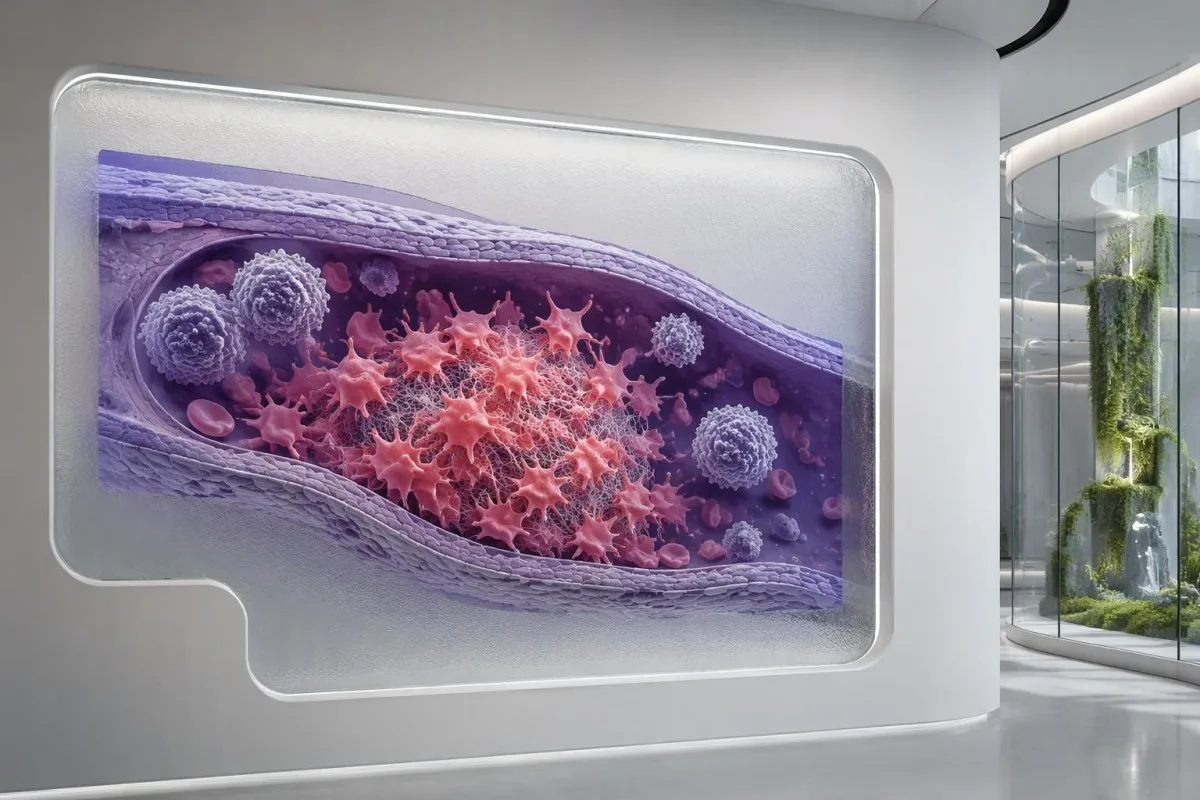
VEXAS is associated with venous thrombosis, so a painful swollen leg or sudden breathlessness should not be dismissed as another inflammatory flare. Normal routine clotting times do not exclude a clot; our ôgraniczynia panelu krzepniyncio explain why 2 normal tests, PT and aPTT, cannot provide that reassurance.
An absolute neutrophil count below 0.5 × 10^9/L represents severe neutropenia and increases concern when fever occurs. Treatment can also blunt the temperature response, so feeling acutely unwell with shaking chills, confusion or rapidly worsening weakness can require urgent assessment even when a thermometer reads below 38°C.
Breathlessness can reflect lung inflammation, infection, pulmonary embolism or worsening anemia, and these require different treatments. Our breathlessness blood test guide explains why hemoglobin of 8 g/dL may contribute without proving the entire cause; new chest pain or sudden breathing difficulty should not wait for an uploaded report.
Persistent nose or gum bleeding, black stools or a severe new headache needs urgent advice, especially if platelets are very low. A count below 20 × 10^9/L generally warrants prompt clinical review, but the urgency depends on symptoms and context; significant bleeding is an emergency even above that number.
Kontrole, limity AI i publikacyje naukowe
Useful VEXAS follow-up combines symptoms, treatment history, CBC trends and inflammatory markers, with molecular and marrow findings interpreted by specialists. An AI explanation of 1 laboratory report can support preparation for care, but it cannot diagnose VEXAS, exclude infection or establish whether a UBA1 variant is pathogenic.

Bring original CBC reports, inflammatory markers and the complete UBA1 result, including specimen type and detection limit. Record 3 timeline features beside them: flare dates, medication changes and transfusions; this makes it easier to distinguish a true disease trend from a treatment effect or a change in testing conditions.
Kantesti je Narzędzie do analizy badań krwi oparte na AI that can explain laboratory patterns without converting an MCV above 100 fL into a rare-disease diagnosis. Genetic reports can reveal sensitive information, so review our informacyje ô prywatności i danych before sharing records, and include only documents you are authorized to upload.
Kantesti's 2 DOI-linked publications below concern broader blood-test interpretation and RDW education, not clinical trials of VEXAS diagnosis or UBA1 sequencing. They should therefore be read separately from the disease-specific medical studies listed in the external references; neither publication establishes VEXAS-specific diagnostic sensitivity or treatment effectiveness.
Nasz metodyka i standardy kliniczne explain the distinction between report interpretation and medical diagnosis. Before the next appointment, write 2 questions: whether the laboratory method adequately assessed somatic UBA1 variants, and whether persistent cytopenias need marrow evaluation; these are more actionable than asking an AI to calculate an unsupported VEXAS probability.
Często zadawane pytania
Jakie sōm piyrsze objawy syndrōmu VEXAS?
Syndrom VEXAS nojczęściej zacyno sie od nawrotowej, niewyjśnionej gorączki, zapalnych zmian skórnych, zmynczynio abo obrzmiołej chrząstki ucha abo nosa, zwykle po 50. roku życia. Niedokrwistość makrocytowa abo inksze niynormatywne wartości morfologije krwi mogōm sie pokozać przed tymi ôbjawami, rōwnocześnie z nimi abo po nich. MCV powyżyj ôkoło 100 fL u dorosłego to wskazówka, a niy diagnoza. Nawracające ôbjawy zapalne w połączeniu z utrzymującymi sie niewyjśnionymi cytopeniami uzasadniajōm ômówienie konsultacyje reumatologicznej i hematologicznej.
Jaki test potwiyrdzo syndrom VEXAS?
Syndrom VEXAS je rozpoznowany ôznoczyniym somatycznyj warianty UBA1 skojarzōnyj z chorobōm w pasujōncym ôbrŏzie klinicznym. W testowaniu ôbiōrznie używŏ sie krwi ôbwodowyj, chocioż we wybranych przipadkach mogōm być potrzebne badanie szpiku abo barzij czuły test. Wiela rozpoznanych wariantōw dotyko metioniny na pozycyji 41, ale ôgraniczone testowanie hotspotōw może przeoczyć inksze warianty skojarzōne z chorobōm. Raport trza interpretować razym z klasyfikacyjōm wariantu, zakresem pokrycio genu i limitem wykrywanio.
Czy prawidłowo ôznaczony ANA abo panel autoimmunologiczny może wykluczyć VEXAS?
Normalny ANA abo rutynowy panel autoimmunologiczny niy poradzi wykluczyć syndromu VEXAS, bo te testy niy wykrywajōm somatycznych mutacyjōw UBA1. Dodatni ANA w mianie 1:160 tyż niy potwierdzo VEXAS ani niy ustanawio koniecznie inkszej choroby autoimmunologicznyj. Badanie przeciwciał może pōmōc szukać inkszych przyczyn, a wzory CBC, symptōmy i testy molekularne ôdpowiadajōm na ôsobne pytania. Utrzymujōnco sie anemia makrocytowa i nawracajōncy zapalyni chrząstki niy powinny być ôdrzucane ino skuli ujemnych wynikōw badań przeciwciał.
Je VEXASowy syndrom dziedziczny i eli trza przetestować moje dzieci?
Typowy syndrom VEXAS je nabyty, a niy dziedziczny, tōż rutynowe badania dzieci z reguły niy sōm wskazane. Ôdpowiednio mutacyjo UBA1 zwykle rozwijo sie we kōmórkach tworzōncych krew w dorosłym życiu, czynsto z ôbjawami po 50. roku życia. Choć UBA1 je na chromosōmie X, to niy znaczy, że somatyczny wariant VEXAS je automatycznie przenoszalny. Niyzwykłe abo możebnie konstytucyjne wyniki powinien ôbejrzeć specjalista genetyki kliniczny.
Czy kobiyty mogōm dostać syndrom VEXAS?
Kobiyty mogōn dostać syndrom VEXAS, chocioż wiynkszość rozpoznanych przipadkōw trefio sie u starszych chopōw. UBA1 je zlokalizowany na chromozōmie X, a utrata jednego chromozōmu X w zajyntych komōrkach je jednyj z mechanizmōw ôpisanych u kobiyt. Badanie systemu ôchrony zdrowio z 2023 roku, ôpublikowane w JAMA, ôdkryło 2 kobiyty pośród 11 uczestnikōw ze wariantami UBA1 zwiōnzanymi z chorobōm. Sama płeć niy powinna powstrzymywać ôd konsultacyje u specjalisty, kej na nawracajōncy stan zapalny i niewyjaśniōne ôdchylynia we wynikach morfologije krwi mocno wskazujōm na tyn syndrom.
Czy ujemny wynik testu UBA1 wykluczo syndrom VEXAS?
Ujemny test UBA1 ynoży prawdopodobiyństwo VEXAS ino w takim stopniu, w jakim próbka i test były odpowiednie. Test z limitem wykrywalności wariantu allele fraction 5% może nie wykryć mynniejszego klonu, a badanie ino hotspotów może przeoczyć warianty spoza objyntego regionu. Silne podejrzywanie kliniczne może uzasadnić konsultacyjo u specjalisty w kwestii zakresu, czułości i typu próbki. Prawidłowo wykonany ujemny wynik powinien tyż skłonić do starannego ponownego rozważynio alternatywnych diagnoz, zamiast powtarzanio testu bez jasnego powodu.
Je je jaki lek na syndrom VEXAS?
Allogeniczny przeszczep komórek macierzystych może potencjalnie doprowadzić do trwałej remisji przez zastąpienie nieprawidłowego klonu krwiotwórczego, ale nadaje sie ino dlo wybranych pacjentōw i wiōnże sie ze znaczōncymi zagrożyniami. Inksze metody leczenia majōm na celu kontrolowanie zapalynio, radzynie se z cytopeniami i ôgraniczanie ekspozycyje na glikokortykoidy, a niy niezawodne wyeliminowanie klonu. U dorosłych nad 50 rokōw, sprawność, zajyncie narzōndōw i towarzyszōnco choroba szpiku mogōm mocno wpływać na wybōr leczenio. Żodno suplementacyjo, plan diety ani interpretacyjo badania krwi przez AI niy pokazały, że mogōm wyleczyć VEXAS.
Dowiydz się, jak czytać wyniki badańo krwi
Wgraj raport laboratoryjny, a AI Kantesti wyjaśni kożdy biomarker prostym jynzykiym w pora sekund. Używane bezma 2 miliony ludzi na cołkim świecie.
Ôdniesiynia
- Klein, T., Mitchell, S., & Weber, H. (2026). AI Blood Test Analyzer: 2,5M testōw przeanalizowanych | Global Health Report 2026. Badania medyczne AI Kantesti. DOI
- Klein, T., Mitchell, S., & Weber, H. (2026). Badanie krwi RDW: kompletny przewodnik po RDW-CV, MCV i MCHC. Badania medyczne AI Kantesti. DOI
- Beck DB et al. (2020). Somatic Mutations in UBA1 and Severe Adult-Onset Autoinflammatory Disease. New England Journal of Medicine. DOI
- Beck DB et al. (2023). Estimated Prevalence and Clinical Manifestations of VEXAS Syndrome in a Large US Health Care System. JAMA. DOI
- 2M+Ônalyzowane badania
- 127+Kroje
- 100+Jynzyki
Ô zespole medycznym


Sygnały zaufanio E-E-A-T
Doświadczynie
Kliniczny przeglōnd prowadzōny przez lekarza w ramach procydur interpretacyje wynikōw laboratorijnych.
Ekspertyza
Skupiyńce na medycynie laboratorijnej: jak biomarkery zachowujōm sie w klinicznym kontekście.
Autorytetność
Zweryfikowane medycznie przez dr. Thomasa Kleina, przy współudziale dr Sarah Mitchell i prof. dr. Hansa Webera.
Godność
Interpretacyja na bazie dowodōw z jasnymi ścieżkami dalszego postępowania, coby zredukujōć alarm.





Zastrzeżynie medyczne
Ten artykuł je wyłōncznie do celōw edukacyjnych i nie stanowi porady medyczno. Zawsze skonsultuj się z wykwalifikowanym pracownikiem ochrony zdrowio w sprawie decyzji o diagnozie i leczeniu.
Opublikowane · Skontaktuj sie z redakcyjōm
Opublikowane przez Kantesti Ltd, zarejestrowane w Anglii i Walii, numer firmy. 17090423, Londyn, Zjednoczone Królestwo.
