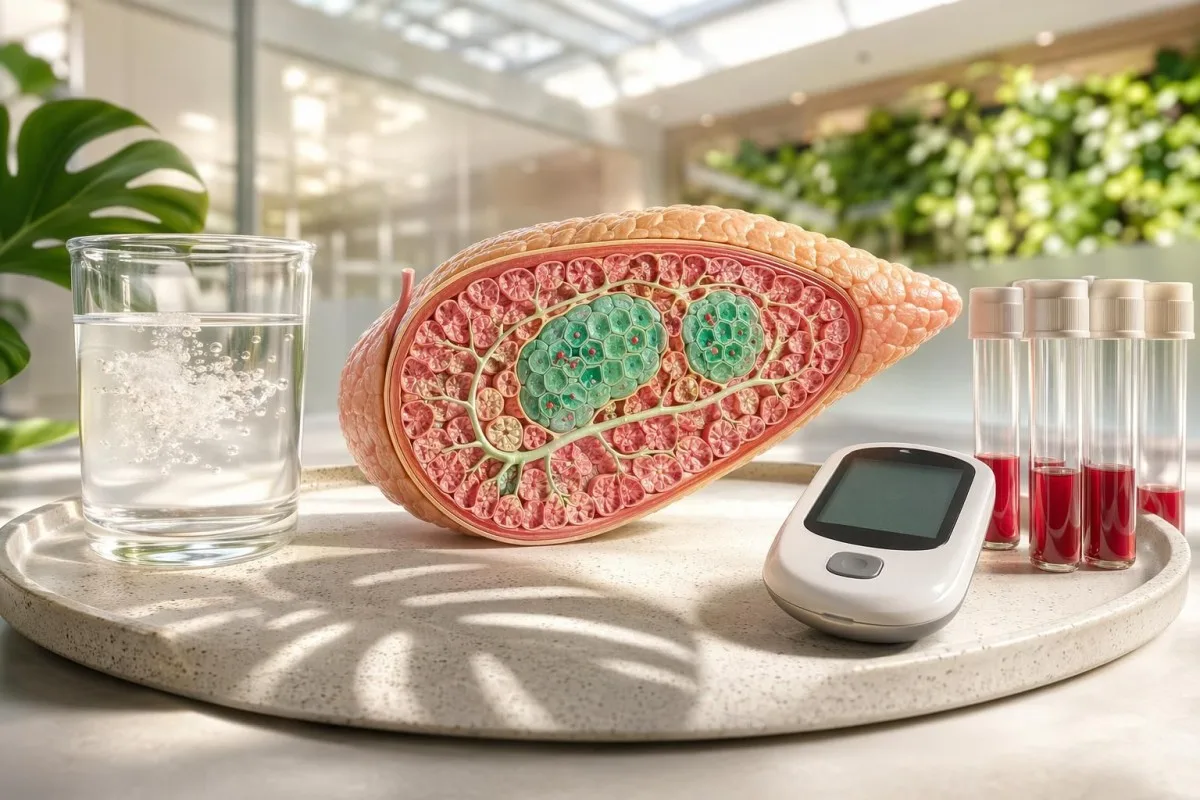
Una guida pratica per lo screening postpartum per chiunque sia stato informato che gli zuccheri in gravidanza sono tornati normali, ma desidera comunque sapere cosa succede dopo.


- OGTT 75 g a 4-12 settimane postpartum è il test preferito dopo il diabete gestazionale perché rileva problemi della glicemia a 2 ore che la glicemia a digiuno può non individuare.
- Soglie per il diabete sono glicemia plasmatica a digiuno ≥126 mg/dL, glicemia all’OGTT a 2 ore ≥200 mg/dL, HbA1c ≥6.5%, oppure glicemia casuale ≥200 mg/dL con sintomi.
- Soglie per prediabete sono glicemia a digiuno 100-125 mg/dL, glicemia all’OGTT a 2 ore 140-199 mg/dL, oppure HbA1c 5.7-6.4%.
- HbA1c nel primo periodo postpartum può risultare falsamente bassa dopo perdite di sangue al parto o alto turnover dei globuli rossi, quindi non dovrebbe sostituire l’OGTT a 4-12 settimane.
- Glicemia normale in gravidanza dopo il parto non elimina il rischio futuro; il diabete gestazionale è spesso un test di stress delle cellule beta che rivela una vulnerabilità anni prima del diabete di tipo 2.
- Intervallo di riesame ogni 1-3 anni per tutta la vita se lo screening postparto è normale e di solito ogni anno se uno qualsiasi dei risultati rientra nell’intervallo di prediabete.
- Prima di un’altra gravidanza chiedere un test della glicemia prima del concepimento o all’inizio del primo trimestre, soprattutto se in precedenza il GDM ha richiesto insulina o farmaci.
- Indicatori di rischio come insulina a digiuno, trigliceridi, HDL, ALT e rapporto albumina/creatinina urinaria non diagnosticano il diabete, ma aiutano a stimare il rischio cardiometabolico.
Gli esami del sangue che diagnosticano il diabete dopo il diabete gestazionale
Gli esami del sangue che rilevano il diabete dopo il diabete gestazionale sono i test di tolleranza orale al glucosio da 75 g per 2 ore, la glicemia plasmatica a digiuno, HbA1c, E glicemia plasmatica casuale quando sono presenti sintomi classici. L’OGTT è di solito il miglior test di screening del diabete postparto a 4-12 settimane perché individua una gestione alterata della glicemia a 2 ore prima che la glicemia a digiuno o HbA1c diventino anomali.
Come Thomas Klein, MD, dico ai pazienti che la domanda non è solo se il valore è alto oggi; è se il pancreas ha ancora abbastanza riserva dopo la gravidanza. Una glicemia a digiuno di 94 mg/dL può sembrare rassicurante, mentre un valore OGTT a 2 ore di 168 mg/dL dice in silenzio che la risposta insulinica della prima fase è in ritardo.
Una diagnosi di diabete al di fuori della gravidanza si fa con la glicemia plasmatica a digiuno ≥126 mg/dL, glucosio OGTT a 2 ore ≥200 mg/dL, HbA1c ≥6.5%, oppure con la glicemia plasmatica casuale ≥200 mg/dL in presenza di sintomi come sete, minzione frequente o perdita di peso inspiegata. Per un confronto in linguaggio semplice tra test diagnostici e di monitoraggio, i nostri cut-off dei test per il diabete guida è un utile complemento.
Kantesti è un analizzatore di test del sangue basato su AI che legge la glicemia postparto, HbA1c, i lipidi e i marker renali nello stesso contesto clinico, invece che come singoli segnali isolati. Nella nostra analisi dei referti di laboratorio caricati di 2M+, uno schema continua a ripetersi: le persone ricordano la diagnosi di gravidanza, ma spesso il risultato dell’OGTT a 4-12 settimane non entra mai nella cartella sanitaria a lungo termine.
Perché la glicemia normale in gravidanza non azzera il rischio futuro
La glicemia normale dopo il parto non azzera il rischio futuro di diabete perché il diabete gestazionale di solito riflette una riserva limitata delle cellule beta sotto lo stress della gravidanza. Il parto rimuove gli ormoni placentari, ma non necessariamente ripara l’insulino-resistenza, il rischio genetico, la tendenza al fegato grasso o la vulnerabilità delle cellule beta pancreatiche.
La placenta produce ormoni che spingono verso l’aumento dell’insulino-resistenza, spesso in modo più evidente dopo le 24-28 settimane. Quando la glicemia si normalizza dopo la nascita, significa che lo stressore è scomparso; non dimostra che le cellule produttrici di insulina abbiano una riserva illimitata.
Bellamy et al. hanno riportato su The Lancet che le donne con diabete gestazionale pregresso avevano circa una rischio 7 volte più alto di sviluppare successivamente il diabete di tipo 2 rispetto a quelle senza GDM (Bellamy et al., 2009). Nella pratica quotidiana, vedo il cluster di rischio con aumento della circonferenza vita, trigliceridi sopra 150 mg/dL, HDL basso, familiarità, PCOS e interruzione del sonno durante i primi due anni postparto.
Un HbA1c normale di 5.3% Sei mesi dopo il parto può ancora coesistere con una precoce resistenza insulinica. Se vuoi una visione metabolica più approfondita, la nostra guida a valutazione per la resistenza insulinica spiega perché insulina e glucosio a digiuno possono fluttuare prima che A1c superi la soglia della prediabete.
Quando dovrebbe avvenire lo screening del diabete postpartum
Lo screening per il diabete postpartum dovrebbe avvenire 4-12 settimane dopo il parto, preferibilmente con un OGTT da 75 g della durata di 2 ore. Se quella finestra è stata mancata, il momento migliore per eseguire il test è adesso; non aspetterei il prossimo controllo annuale se la gravidanza risale a 6 mesi o a 6 anni fa.
L’American Diabetes Association raccomanda un OGTT da 75 g a 4-12 settimane postpartum e uno screening a vita ogni 1-3 anni dopo il diabete gestazionale (American Diabetes Association Professional Practice Committee, 2024). Anche l’ACOG supporta lo screening postpartum in questa fase iniziale e molti ambulatori ostetrici ora cercano di programmarlo prima della visita alle 6 settimane, così da non dimenticarlo (ACOG, 2018).
L’allattamento, la frammentazione del sonno e i cambiamenti di peso postpartum possono modificare il glucosio di giorno in giorno, ma non sono motivi per saltare il test. La maggior parte delle pazienti può eseguire l’OGTT mentre allatta; il problema pratico è spesso la gestione del bambino durante l’attesa di 2 ore in laboratorio, non la biologia.
Se dopo il parto ti servono anche controlli per anemia, funzionalità tiroidea, enzimi epatici o marcatori renali, la nostra checklist degli esami di laboratorio postpartum indica quali test vengono comunemente associati allo screening del glucosio. Una singola visita può spesso coprire più di un problema postpartum.
Come si interpreta il test di tolleranza orale al glucosio da 75 g
IL test orale di tolleranza al glucosio dopo la gravidanza misura la glicemia a digiuno e la glicemia dopo 2 ore da una bevanda di glucosio da 75 g. Un valore ≥200 mg/dL di 2 ore diagnostica il diabete, mentre 2-hour OGTT diagnostica la ridotta tolleranza al glucosio, anche quando la glicemia a digiuno è normale.
Il test funziona perché mette alla prova il sistema insulinico invece di osservarlo a riposo. Per esperienza, le persone con GDM pregressa spesso superano la parte a digiuno ma falliscono la parte a 2 ore; questo schema indica una secrezione insulinica ritardata dopo i pasti.
Preparati con la normale alimentazione per almeno 3 giorni, idealmente includendo almeno 150 g di carboidrati al giorno a meno che il tuo clinico non ti abbia detto diversamente. Un’alimentazione molto ipocalorica prima di un OGTT può esagerare l’aumento della glicemia e rendere l’interpretazione più complicata; la nostra le regole per il digiuno guida tratta dettagli su acqua, caffè e tempistiche.
Non fare esercizio intenso durante l’attesa di 2 ore e avvisa il laboratorio se vomiti o non riesci a finire la bevanda. Un risultato dovrebbe essere ripetuto o sostituito con un altro test diagnostico se la procedura non è stata completata correttamente.
Cosa può e non può rilevare la glicemia a digiuno
La glicemia plasmatica a digiuno rileva il diabete quando il valore a digiuno è ≥126 mg/dL, ma può mancare un’alterata tolleranza al glucosio post-prandiale isolata dopo il diabete gestazionale. È utile, economico e ripetibile; è semplicemente troppo “grossolano” per sostituire l’OGTT post-partum.
Un glucosio a digiuno di 100-125 mg/dL è prediabete secondo i criteri dell’ADA, mentre <100 mg/dL è generalmente considerata normale negli Stati Uniti. Alcuni sistemi internazionali usano 110 mg/dL come soglia inferiore di alterazione della glicemia a digiuno, ed è una delle ragioni per cui i pazienti si confondono quando si spostano tra Paesi.
La trappola clinica è una glicemia a digiuno di 88-96 mg/dL con un’OGTT di 2 ore di 155-185 mg/dL. A quella persona potrebbe essere detto che va tutto bene se viene ordinata solo la glicemia a digiuno, ma la biologia della glicemia durante i pasti è già anomala.
La glicemia del mattino è influenzata dal debito di sonno, dal mangiare a tarda notte, dai corticosteroidi, dall’infezione e dal fenomeno dell’alba. Il nostro guida sulla glicemia a digiuno spiega perché un singolo risultato del mattino dovrebbe essere interpretato tenendo conto della serata precedente e della qualità del sonno.
Perché HbA1c è comodo ma non perfetto dopo il parto
HbA1c rileva il diabete a ≥6.5%, ma è meno affidabile nelle prime 4-12 settimane post-partum perché la perdita di sangue al momento del parto e il turnover dei globuli rossi possono alterare il risultato. L’HbA1c è utile più tardi, soprattutto per il follow-up a lungo termine, ma non dovrebbe sostituire la prima OGTT post-partum.
L’HbA1c stima la glicemia media nell’arco di circa 8-12 settimane, ponderato verso il mese più recente. Dopo il parto, anemia, trasfusioni, carenza di ferro o una rapida sostituzione dei globuli rossi possono spostare il valore rispetto alla reale storia della glicemia.
La carenza di ferro può aumentare falsamente l’HbA1c in alcuni pazienti, mentre una recente perdita di sangue può abbassarlo falsamente. È uno di quei casi in cui il contesto conta più del numero; un HbA1c post-partum di 5.6% potrebbe non essere altrettanto rassicurante se la ferritina è 8 ng/mL e l’OGTT non è mai stata eseguita.
Se il tuo A1c non corrisponde alle letture del glucometro o ai sintomi, leggi la nostra guida su accuratezza dell’A1c prima di accettare il valore così com’è. Di solito abbino HbA1c alla glicemia a digiuno, alla CBC e alla ferritina quando la storia post-partum sembra incoerente.
Quando la glicemia casuale o i sintomi richiedono un’azione rapida
La glicemia plasmatica casuale rileva il diabete quando è ≥200 mg/dL e sono presenti sintomi. Dopo il diabete gestazionale, è necessario un riesame urgente per glicemia alta con vomito, disidratazione, perdita di peso rapida, chetoni, visione offuscata o stanchezza insolita.
La maggior parte del diabete dopo GDM è di tipo 2, ma il diabete autoimmune post-partum può occasionalmente comparire, soprattutto se la perdita di peso è rapida e sono presenti chetoni. Ho visto pazienti liquidati come semplicemente genitori nuovi stanchi quando la loro glicemia era 280 mg/dL e avevano già chetonemia.
Una glicemia casuale di 2-hour OGTT non è diagnostica di per sé, ma dovrebbe portare a glicemia a digiuno, HbA1c o OGTT a seconda dei tempi e dei sintomi. Un valore casuale superiore a 300 mg/dL, soprattutto con dolore addominale o respiro difficoltoso, deve essere trattato come assistenza medica nella stessa giornata.
Un singolo valore alto può verificarsi dopo un’infezione, steroidi o un pasto molto ricco di carboidrati, ma conta il pattern. La nostra guida su glicemia alta inattesa spiega come i clinici distinguano l’iperglicemia da stress dal diabete iniziale.
Marcatori ematici che indicano il rischio prima della comparsa del diabete
Insulina a digiuno, C-peptide, trigliceridi, HDL, ALT e rapporto albumina-creatinina nelle urine non diagnosticano il diabete, ma aiutano a mostrare il rischio metabolico dopo il diabete gestazionale. Questi marcatori possono rivelare insulino-resistenza, tendenza al fegato grasso o stress renale precoce mentre la glicemia è ancora tecnicamente normale.
Un’insulina a digiuno superiore a circa 15-20 µIU/mL può suggerire insulino-resistenza, sebbene i metodi di laboratorio differiscano e non esista un cut-off diagnostico universale. HOMA-IR utilizza insulina a digiuno e glicemia a digiuno; valori superiori a 2.0-2.5 spesso aumentano il sospetto negli adulti, ma etnia, BMI e scelta dell’analita modificano l’interpretazione.
Trigliceridi sopra 150 mg/dL e HDL sotto 50 mg/dL nelle donne spesso si associano a insulino-resistenza. ALT sopra circa 25-30 IU/L in una donna con GDM pregressa può essere un indizio precoce di fegato grasso anche quando il referto di laboratorio indica ancora “normale”.
Kantesti è una piattaforma di interpretazione di biomarcatori AI che tratta un A1C normale dopo diabete gestazionale come una domanda di marker di rischio, non come un “via libera” per sempre. Se vuoi calcolare l’insulino-resistenza dai tuoi valori, la calcolo HOMA-IR guida mostra la formula e i suoi limiti.
Ogni quanto ripetere il test se lo screening postpartum è normale
Se lo screening post-partum è normale dopo diabete gestazionale, ripetere ogni 1-3 anni per tutta la vita. Ripetere prima, spesso ogni anno, se aumenta il peso, compare prediabete, è prevista un’altra gravidanza oppure farmaci come steroidi o antipsicotici aumentano il rischio di iperglicemia.
La raccomandazione ADA di uno screening per tutta la vita ogni 1-3 anni esiste perché il rischio di diabete aumenta nel tempo, non solo nel primo anno post-partum. Nella mia clinica, di solito scelgo la 1 anno di intervallo per chiunque abbia prediabete, GDM in terapia insulinica, BMI sopra 30, forte familiarità o PCOS.
Un test normale nel 2026 è ancora utile perché diventa il tuo valore di riferimento. La glicemia a digiuno che passa da 82 a 96 mg/dL nell’arco di 3 anni può essere più significativa di un singolo risultato segnalato, soprattutto se trigliceridi e circonferenza vita aumentano nello stesso periodo.
Kantesti L’AI può tracciare nel tempo glucosio, HbA1c, trigliceridi e ALT, così piccoli cambiamenti diventano visibili prima di diventare drammatici. Il nostro analisi delle tendenze articolo spiega perché spesso contano più la pendenza e il raggruppamento che un singolo valore anomalo di laboratorio.
Cosa chiedere al proprio clinico di prescrivere
Chiedi un OGTT da 75 g per 2 ore a 4-12 settimane dopo il parto, oppure glicemia plasmatica a digiuno più HbA1c se un OGTT non è fattibile. Per il rischio a lungo termine, chiedi se lipidi, ALT, creatinina, eGFR e rapporto albumina-creatinina urinaria debbano essere controllati insieme ai tuoi marcatori del glucosio.
Un primo ordine sensato dopo il parto spesso recita: glicemia a digiuno, glucosio a 75 g per 2 ore, HbA1c, CBC se c’è stata una perdita di sangue importante durante il parto, ferritina se si sospetta anemia, pannello lipidico e CMP se il rischio cardiometabolico è elevato. Non ogni paziente ha bisogno di tutti i test, ma l’ordine dovrebbe rispecchiare la storia della gravidanza.
Se durante la gravidanza avevi iperglicemia a digiuno o se ti serviva insulina, sarei più aggressivo con il follow-up precoce. Se la tua GDM era lieve e controllata con dieta, l’OGTT conta comunque, ma la cadenza a lungo termine può essere più vicina a ogni 2-3 anni quando tutti i risultati sono normali.
Per i lettori che vogliono capire cosa misura effettivamente ogni marcatore, il nostro guida ai biomarcatori tratta migliaia di marcatori di laboratorio e differenze comuni nelle unità. È particolarmente utile quando un laboratorio riporta il glucosio in mg/dL e un altro in mmol/L.
Cosa fanno i medici con risultati borderline o contrastanti
Risultati del diabete borderline o contrastanti dovrebbero di solito essere ripetuti o confermati con un test diagnostico diverso. Una glicemia a digiuno di 124 mg/dL, un HbA1c di 6.4%, oppure un OGTT di 2 ore di 198 mg/dL non è un “non importa”; è un risultato vicino alla soglia che merita un piano.
Senza sintomi classici, la maggior parte dei clinici conferma il diabete con un secondo risultato anomalo. Se due test diversi non concordano, in genere si ripete il test sopra la soglia diagnostica e il contesto del paziente determina quanto rapidamente ciò avvenga.
Thomas Klein, MD, regola pratica: non lasciare che la parola borderline faccia sembrare il risultato innocuo. Un OGTT di 2 ore di 196 mg/dL dopo una precedente GDM spesso comporta un rischio futuro maggiore rispetto a una glicemia a digiuno di 101 mg/dL, anche se entrambi possono essere archiviati come prediabete.
La nostra guida a soglie del prediabete spiega come la glicemia a digiuno, A1c e OGTT definiscano problemi biologici diversi. Spesso inquadra il prediabete dopo GDM come una finestra terapeutica piuttosto che come una sala d’attesa.
Situazioni speciali: allattamento, anemia, PCOS e farmaci
Allattamento, anemia, PCOS, medicinali GLP-1, steroidi e patologie tiroidee possono cambiare come dovrebbero essere interpretati i test del diabete post-partum. Le soglie del glucosio restano le stesse, ma la fiducia che riponi in HbA1c, glicemia a digiuno o livelli di insulina può cambiare in modo sostanziale.
L’allattamento spesso migliora il metabolismo del glucosio e può ridurre il rischio futuro di diabete di tipo 2, ma non elimina la necessità di eseguire lo screening. Se stai assumendo insulina o sulfoniluree nel post-partum, chiedi al tuo medico il rischio di ipoglicemia durante poppate più lunghe o pasti mancati.
La PCOS aggiunge una via separata di resistenza insulinica e la combinazione tra GDM pregressa e PCOS è una di quelle che tratto con particolare attenzione. Il nostro Pattern di laboratorio della PCOS spiega perché insulina a digiuno, lipidi e androgeni possono essere importanti anche quando il glucosio non è ancora diagnostico.
Le iniezioni di steroidi, il prednisone ad alte dosi, alcuni antipsicotici e la grave privazione del sonno possono aumentare temporaneamente la glicemia. Le evidenze sulle soglie esatte del sonno nel post-partum sono, onestamente, contrastanti, ma vedo valori di glicemia a digiuno peggiori quando il sonno è frammentato al di sotto di 5-6 ore per settimane.
Come Kantesti legge in modo sicuro gli esami per il diabete postpartum
Kantesti legge gli esami per il diabete post-partum combinando soglie di glucosio con tempistica, storia della gravidanza, indizi di anemia, pattern lipidici e marcatori renali. L’obiettivo non è sostituire il tuo medico; è rendere più chiaro il profilo di rischio prima dell’appuntamento.
Kantesti è uno strumento di analisi di esami del sangue basato su AI usato da 2M+ persone in 127 paesi, con interpretazione di PDF o foto degli esami del sangue in circa 60 secondi. Per lo screening del diabete post-partum, la nostra rete neurale separa i criteri diagnostici di glucosio dai marcatori di contesto del rischio come trigliceridi, HDL, ALT e ACR urinaria.
Un upload tipico potrebbe mostrare HbA1c 5.5%, glicemia a digiuno 92 mg/dL, ferritina 10 ng/mL e nessun OGTT. Kantesti AI non diagnosticerebbe il diabete da quei valori, ma dovrebbe segnalare che l’A1c precoce nel post-partum potrebbe essere inaffidabile e che l’OGTT raccomandato manca.
I nostri metodi sono allineati con standard clinici pubblicati e revisione interna dei medici; i lettori possono vedere la nostra standard di validazione clinica e la AI benchmark. pre-registrata. Se stai caricando una scansione invece di digitare i valori, il flusso di lavoro per il caricamento dei PDF spiega come i referti vengono letti e controllati.
Un piano pratico di riesame per il 2026 e oltre
A partire dal 26 maggio 2026, il piano più sicuro dopo il diabete gestazionale è OGTT a 4-12 settimane, ripetere lo screening ogni 1-3 anni e fare test prima di un’altra gravidanza. Se uno qualsiasi dei risultati rientra nell’intervallo di prediabete, trattalo come una finestra attiva di prevenzione, non come una semplice curiosità di laboratorio.
Il mio copione abituale è semplice: fai il primo OGTT nel post-partum, salva il risultato, poi metti il prossimo controllo della glicemia in calendario prima che la vita si faccia troppo intensa. Se il tuo OGTT a 2 ore è 2-hour OGTT, chiedi un intervallo di follow-up chiaro, un piano nutrizionale e un obiettivo di esercizio, invece di un promemoria vago per fare attenzione.
Se lo screening del diabete è normale, dì comunque a ogni futuro medico che hai avuto GDM. Quella singola frase cambia il modo in cui leggo una glicemia a digiuno di 103 mg/dL, un livello di trigliceridi di 180 mg/dL, o un HbA1c che aumenta da 5,2% a 5,6% nel corso di diversi anni.
Kantesti Ltd è un’azienda britannica di tecnologie sanitarie e i nostri medici esaminano i contenuti medici attraverso il nostro comitato consultivo medico e il processo di governance clinica descritto in Chi siamo. In sintesi: i test giusti non sono complicati, ma la tempistica e l’interpretazione contano più di quanto la maggior parte delle persone venga informata.
Pubblicazioni di ricerca correlate Kantesti
Lo screening del diabete nel post-partum spesso rientra in una revisione più ampia di laboratorio che include CBC, stato del ferro e marcatori renali. Le pubblicazioni DOI Kantesti elencate di seguito supportano metodi di interpretazione dei test del sangue adiacenti, inclusi gli indici delle cellule del sangue rosse e i rapporti di funzionalità renale che possono influire sulla confidenza dell’HbA1c o sulla valutazione del rischio metabolico a lungo termine.
Domande frequenti
Quali esami del sangue rilevano il diabete dopo il diabete gestazionale?
Gli esami del sangue che rilevano il diabete dopo il diabete gestazionale sono il test orale di tolleranza al glucosio di 75 g a 2 ore, la glicemia plasmatica a digiuno, l’HbA1c e la glicemia plasmatica random quando sono presenti sintomi. Il diabete viene diagnosticato con glicemia a digiuno ≥126 mg/dL, glicemia all’OGTT a 2 ore ≥200 mg/dL, HbA1c ≥6.5%, oppure glicemia random ≥200 mg/dL con sintomi classici. L’OGTT è preferito a 4-12 settimane dopo il parto perché può rilevare una gestione alterata della glicemia a 2 ore anche quando la glicemia a digiuno è normale.
Il test orale di tolleranza al glucosio dopo la gravidanza è migliore dell’HbA1c?
Sì, il test di tolleranza orale al glucosio dopo la gravidanza è di solito migliore dell’HbA1c per il primo screening post-partum a 4-12 settimane. L’HbA1c può essere alterato da perdite ematiche al momento del parto, anemia, trasfusioni o rapido ricambio dei globuli rossi, mentre l’OGTT misura direttamente la gestione del glucosio dopo una prova con 75 g di glucosio. L’HbA1c diventa più utile in seguito per lo screening a lungo termine e il monitoraggio delle tendenze.
Quando dovrebbe essere eseguito lo screening per il diabete post-partum dopo GDM?
Lo screening del diabete post-partum dopo il diabete gestazionale dovrebbe essere eseguito 4-12 settimane dopo il parto, idealmente con un OGTT da 75 g per 2 ore. Se quella finestra è stata mancata, il test dovrebbe essere eseguito il prima possibile, invece di attendere la comparsa dei sintomi. Se il risultato post-partum è normale, ripetere lo screening del diabete ogni 1-3 anni per tutta la vita.
L’HbA1c può essere normale ma l’OGTT essere anormale dopo il diabete gestazionale?
Sì, l’HbA1c può essere normale mentre l’OGTT risulta anomalo dopo il diabete gestazionale. Una persona può avere un HbA1c 5,3% e una glicemia a digiuno di 92 mg/dL, ma un valore dell’OGTT a 2 ore di 160 mg/dL, che indica una ridotta tolleranza al glucosio. Questo accade perché l’HbA1c riflette la glicemia media, mentre l’OGTT mette alla prova la risposta insulinica dopo un carico di glucosio.
Cosa significano i risultati: prediabete dopo il diabete gestazionale?
Il prediabete dopo il diabete gestazionale è definito da glicemia plasmatica a digiuno 100-125 mg/dL, glucosio al test OGTT a 2 ore 140-199 mg/dL, oppure HbA1c 5.7-6.4%. Un’anomalia all’OGTT a 2 ore è particolarmente comune dopo il GDM e può essere mancata se viene richiesto solo il glucosio a digiuno. Il prediabete dovrebbe di solito determinare un follow-up annuale e un piano di prevenzione strutturato.
Con quale frequenza dovrei ripetere il test se lo screening postparto è normale?
Se lo screening del diabete postparto è normale dopo il diabete gestazionale, ripetere ogni 1-3 anni per tutta la vita. Molti clinici scelgono un controllo annuale se hai avuto GDM trattato con insulina, prediabete, PCOS, BMI superiore a 30, una forte storia familiare o trigliceridi in aumento. Il test dovrebbe essere ripetuto anche prima di un’altra gravidanza o precocemente nel primo trimestre.
La allattamento al seno cambia i risultati delle analisi del sangue per il diabete?
L’allattamento al seno può migliorare il metabolismo del glucosio e può ridurre il rischio futuro di diabete di tipo 2, ma non elimina la necessità di eseguire lo screening del diabete postpartum. I valori di cut-off diagnostici per la glicemia a digiuno, l’OGTT e l’HbA1c non cambiano perché una persona sta allattando. Se si usano farmaci per il diabete nel postpartum, i clinici possono adeguare i tempi o la dose per ridurre il rischio di ipoglicemia durante poppate prolungate o pasti mancati.
Posso usare un monitor continuo del glucosio invece del test di tolleranza al glucosio post-parto?
No. Un monitor continuo del glucosio può mostrare utili schemi glicemici giornalieri, ma non sostituisce la glicemia a digiuno di laboratorio, l'HbA1c o un OGTT da 75 g per la diagnosi di diabete dopo il diabete gestazionale. Il tuo medico potrebbe usarlo in seguito per supportare decisioni sullo stile di vita o sul trattamento.
Il mio bambino ha bisogno di esami per il diabete perché ho avuto il diabete gestazionale?
La glicemia del neonato può essere controllata in ospedale, soprattutto se durante la gravidanza hai usato insulina o farmaci, ma la maggior parte dei bambini non ha bisogno di esami del sangue per il diabete a lungo termine solo a causa del diabete gestazionale materno. Mantieni le visite pediatriche regolari e supporta le abitudini familiari relative a pasti equilibrati, attività e sonno.
E se non riesco a tollerare la bevanda di glucosio per l’OGTT postpartum?
Informi il suo medico prima del test. Potrebbero riprogrammare con strategie contro la nausea, controllare la glicemia a digiuno e HbA1c, oppure usare temporaneamente dati della glicemia a domicilio o del monitoraggio continuo, ma queste alternative potrebbero non sostituire completamente l’OGTT diagnostico.
Ottieni oggi l’analisi degli esami del sangue con IA (AI-Powered Blood Test Analysis)
Unisciti a oltre 2 milioni di utenti in tutto il mondo che si fidano di Kantesti per un’analisi istantanea e accurata degli esami di laboratorio. Carica i tuoi risultati analisi del sangue e ricevi un’interpretazione completa dei biomarcatori di 15,000+ in pochi secondi.
📚 Pubblicazioni di ricerca di riferimento
Klein, T., Mitchell, S., & Weber, H. (2026). Esame del sangue RDW: guida completa a RDW-CV, MCV e MCHC. Kantesti AI Medical Research.
Klein, T., Mitchell, S., & Weber, H. (2026). Spiegazione del rapporto BUN/creatinina: guida al test della funzionalità renale. Kantesti AI Medical Research.
📖 Riferimenti medici esterni
American Diabetes Association Professional Practice Committee (2024). 2. Diagnosi e classificazione del diabete: standard di assistenza nel diabete—2024. Diabetes Care.
⚕️ Esclusione di responsabilità medica
Questo articolo ha solo scopo educativo e non costituisce consulenza medica. Consulta sempre un operatore sanitario qualificato per decisioni su diagnosi e trattamento.
Segnali di fiducia E-E-A-T
Esperienza
Revisione clinica guidata da un medico dei flussi di lavoro di interpretazione degli esami.
Competenza
Focus sulla medicina di laboratorio su come i biomarcatori si comportano nel contesto clinico.
autorevolezza
Scritto dal dott. Thomas Klein con revisione della dott.ssa Sarah Mitchell e del Prof. Dr. Hans Weber.
Affidabilità
Interpretazione basata su evidenze, con percorsi di follow-up chiari per ridurre l’allarme.