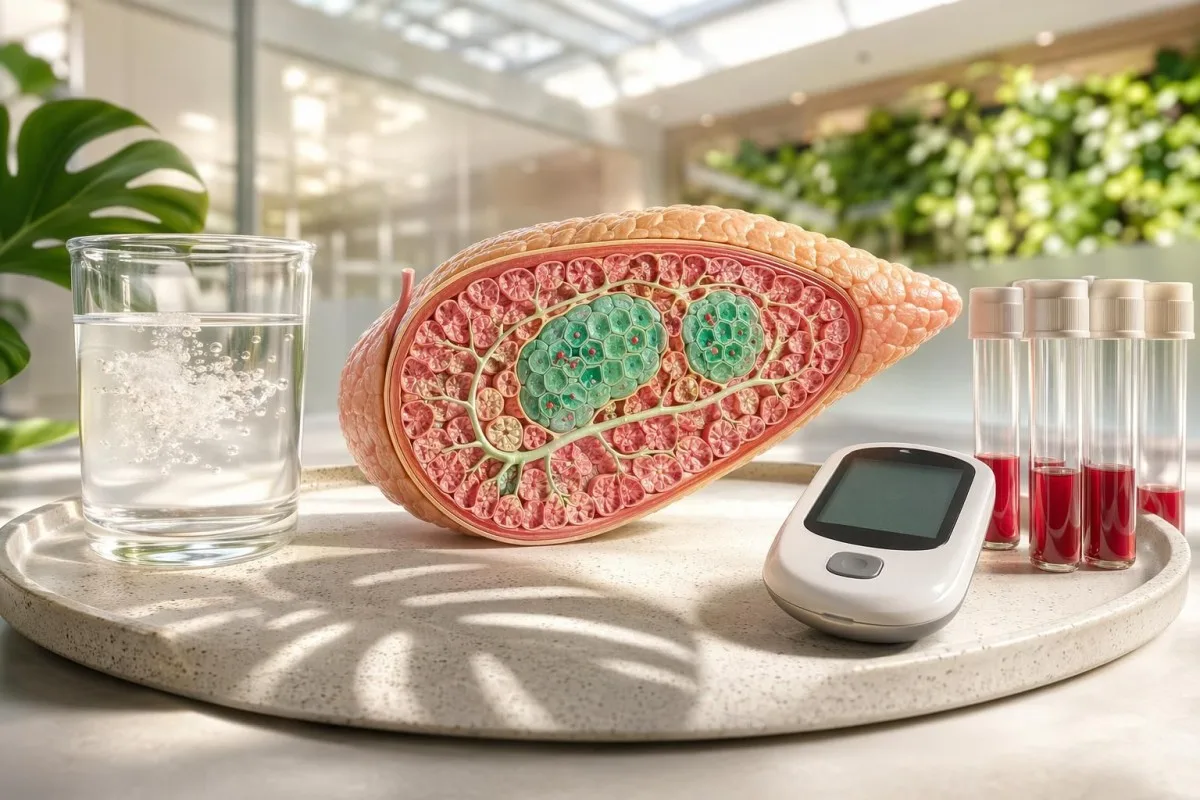
Panduan skrining postpartum yang praktis bagi siapa pun yang diberi tahu bahwa gula kehamilan mereka sudah normal kembali, tetapi masih ingin tahu apa langkah berikutnya.


- 75 g OGTT pada 4–12 minggu postpartum adalah tes yang lebih disukai setelah diabetes gestasional karena tes ini mendeteksi masalah glukosa 2 jam yang mungkin terlewat oleh glukosa puasa.
- Batas ambang diabetes adalah glukosa plasma puasa ≥126 mg/dL, glukosa OGTT 2 jam ≥200 mg/dL, HbA1c ≥6.5%, atau glukosa acak ≥200 mg/dL dengan gejala.
- Batas (cutoff) prediabetes adalah glukosa puasa 100–125 mg/dL, glukosa OGTT 2 jam 140–199 mg/dL, atau HbA1c 5.7–6.4%.
- HbA1c pada awal postpartum dapat menjadi rendah secara keliru setelah perdarahan saat melahirkan atau peningkatan pergantian sel darah merah, sehingga tidak boleh menggantikan OGTT pada 4–12 minggu.
- Glukosa kehamilan normal setelah melahirkan tidak menghapus risiko di masa depan; diabetes gestasional sering kali merupakan uji stres sel beta yang mengungkap kerentanan bertahun-tahun sebelum diabetes tipe 2.
- Interval pemeriksaan ulang setiap 1-3 tahun seumur hidup jika skrining pascapersalinan normal, dan biasanya setiap tahun jika ada hasil yang berada pada kisaran pradiabetes.
- Sebelum kehamilan berikutnya minta pemeriksaan glukosa sebelum konsepsi atau pada awal trimester pertama, terutama jika GDM sebelumnya memerlukan insulin atau obat.
- Penanda risiko seperti insulin puasa, trigliserida, HDL, ALT, dan rasio albumin-kreatinin urin tidak mendiagnosis diabetes, tetapi membantu memperkirakan risiko kardiometabolik.
Tes darah yang mendiagnosis diabetes setelah diabetes gestasional
Tes darah yang mendeteksi diabetes setelah diabetes gestasional adalah tes toleransi glukosa oral 2 jam 75 g, glukosa plasma puasa, HbA1c, Dan glukosa plasma acak bila gejala klasik ada. OGTT biasanya merupakan tes skrining diabetes pascapersalinan terbaik pada 4-12 minggu karena tes ini menemukan gangguan penanganan glukosa 2 jam sebelum glukosa puasa atau HbA1c menjadi abnormal.
Sebagai Thomas Klein, MD, saya memberi tahu pasien bahwa pertanyaannya bukan hanya apakah angkanya tinggi hari ini; melainkan apakah pankreas masih memiliki cadangan yang cukup setelah kehamilan. Glukosa puasa 94 mg/dL dapat tampak meyakinkan, sementara nilai OGTT 2 jam sebesar 168 mg/dL secara diam-diam menunjukkan respons insulin fase pertama tertinggal.
Diagnosis diabetes di luar kehamilan dibuat dengan glukosa plasma puasa ≥126 mg/dL, glukosa OGTT 2 jam ≥200 mg/dL, HbA1c ≥6.5%, atau glukosa plasma acak ≥200 mg/dL dengan gejala seperti haus, sering buang air kecil, atau penurunan berat badan yang tidak dapat dijelaskan. Untuk perbandingan yang mudah dipahami antara tes diagnostik dan pemantauan, batas ambang tes diabetes panduan kami adalah pendamping yang bermanfaat.
Kantesti adalah penganalisis tes darah berbasis AI yang membaca glukosa pascapersalinan, HbA1c, lipid, dan penanda ginjal dalam konteks klinis yang sama, bukan sebagai penanda terpisah. Dalam analisis kami terhadap laporan lab yang diunggah 2M+, satu pola terus muncul: orang mengingat diagnosis kehamilan, tetapi hasil OGTT mereka pada 4-12 minggu sering kali tidak pernah masuk ke catatan kesehatan jangka panjang.
Mengapa glukosa kehamilan yang normal tidak menghapus risiko di masa depan
Glukosa normal setelah persalinan tidak menghapus risiko diabetes di masa depan karena diabetes gestasional biasanya mencerminkan cadangan sel beta yang terbatas di bawah stres kehamilan. Persalinan menghilangkan hormon plasenta, tetapi tidak selalu memperbaiki resistensi insulin, risiko genetik, kecenderungan hati berlemak, atau kerentanan sel beta pankreas.
Plasenta menghasilkan hormon yang mendorong resistensi insulin meningkat, sering kali paling terlihat setelah 24-28 minggu. Ketika glukosa menjadi normal setelah melahirkan, itu berarti pemicunya sudah hilang; hal itu tidak membuktikan bahwa sel penghasil insulin memiliki cadangan yang tidak terbatas.
Bellamy dkk. melaporkan di The Lancet bahwa wanita dengan diabetes gestasional sebelumnya memiliki risiko sekitar 7 kali lebih tinggi untuk diabetes tipe 2 di kemudian hari dibandingkan mereka yang tidak memiliki GDM (Bellamy dkk., 2009). Dalam praktik sehari-hari, saya melihat klaster risiko dengan pertambahan lingkar pinggang, trigliserida di atas 150 mg/dL, HDL rendah, riwayat keluarga, PCOS, dan gangguan tidur selama dua tahun pertama pascapersalinan.
HbA1c normal sebesar 5.3% enam bulan setelah persalinan masih dapat berbarengan dengan resistensi insulin dini. Jika Anda menginginkan pandangan metabolik yang lebih mendalam, panduan kami untuk pemeriksaan resistensi insulin menjelaskan mengapa insulin puasa dan glukosa dapat bergeser sebelum A1C melewati batas pradiabetes.
Kapan skrining diabetes postpartum sebaiknya dilakukan
Skrining diabetes postpartum harus dilakukan 4-12 minggu setelah persalinan, sebaiknya dengan OGTT 75 g 2 jam. Jika jendela tersebut terlewat, waktu terbaik untuk melakukan tes adalah sekarang; saya tidak akan menunggu pemeriksaan fisik tahunan berikutnya jika kehamilan terjadi 6 bulan atau 6 tahun yang lalu.
American Diabetes Association merekomendasikan OGTT 75 g pada 4-12 minggu postpartum dan skrining seumur hidup setiap 1-3 tahun setelah diabetes gestasional (American Diabetes Association Professional Practice Committee, 2024). ACOG juga mendukung skrining postpartum pada jendela awal ini, dan banyak klinik kebidanan kini mencoba memesan tes tersebut sebelum kunjungan 6 minggu agar tidak terlupakan (ACOG, 2018).
Menyusui, fragmentasi tidur, dan perubahan berat badan postpartum semuanya dapat mengubah glukosa dari hari ke hari, tetapi itu bukan alasan untuk melewatkan tes. Kebanyakan pasien dapat menjalani OGTT saat menyusui; masalah praktisnya sering kali adalah pengasuhan anak selama menunggu 2 jam di laboratorium, bukan biologinya.
Jika Anda juga perlu pemeriksaan untuk anemia, fungsi tiroid, enzim hati, atau penanda ginjal setelah persalinan, kami daftar periksa lab postpartum menjelaskan tes mana yang umumnya dipasangkan dengan skrining glukosa. Satu janji temu sering kali dapat mencakup lebih dari satu masalah postpartum.
Cara menginterpretasikan tes toleransi glukosa oral 75 g
Itu tes toleransi glukosa oral setelah kehamilan mengukur glukosa puasa dan glukosa 2 jam setelah minum glukosa 75 g. Nilai 2 jam ≥200 mg/dL mendiagnosis diabetes, sedangkan tes OGTT 2 jam mendiagnosis toleransi glukosa terganggu, bahkan ketika glukosa puasa normal.
Tes ini bekerja karena menantang sistem insulin, bukan mengamatinya saat istirahat. Dari pengalaman saya, orang dengan GDM sebelumnya sering lolos bagian puasa tetapi gagal bagian 2 jam; pola ini menunjukkan sekresi insulin yang tertunda setelah makan.
Bersiaplah dengan pola makan biasa setidaknya 3 hari, idealnya termasuk setidaknya 150 g karbohidrat per hari kecuali dokter Anda telah memberi tahu sebaliknya. Mengonsumsi karbohidrat sangat rendah sebelum OGTT dapat melebih-lebihkan kenaikan glukosa dan membuat interpretasi menjadi rumit; panduan kami aturan puasa membahas detail air, kopi, dan waktu.
Jangan berolahraga berat selama menunggu 2 jam, dan beri tahu lab jika Anda muntah atau tidak dapat menyelesaikan minuman. Hasil harus diulang atau diganti dengan tes diagnostik lain jika prosedur tidak diselesaikan dengan benar.
Apa yang bisa dan tidak bisa dideteksi oleh glukosa puasa
Glukosa plasma puasa mendeteksi diabetes ketika nilai puasa adalah ≥126 mg/dL, tetapi dapat melewatkan intoleransi glukosa pascamakan yang terisolasi setelah diabetes gestasional. Ini berguna, murah, dan dapat diulang; namun terlalu “tumpul” untuk menggantikan OGTT pascapersalinan.
Glukosa puasa sebesar 100-125 mg/dL adalah pradiabetes menurut kriteria ADA, sedangkan <100 mg/dL umumnya dianggap normal di Amerika Serikat. Beberapa sistem internasional menggunakan 110 mg/dL sebagai ambang batas gangguan untuk puasa, yang merupakan salah satu alasan pasien menjadi bingung saat berpindah antarnegara.
Perangkap klinisnya adalah glukosa puasa 88-96 mg/dL dengan OGTT 2 jam 155-185 mg/dL. Orang tersebut mungkin diberi tahu semuanya baik-baik saja jika hanya diperiksa glukosa puasa, padahal biologi glukosa saat makan mereka sudah tidak normal.
Glukosa pagi dipengaruhi oleh kurang tidur, makan larut malam, kortikosteroid, infeksi, dan fenomena fajar. Tim kami gula puasa menjelaskan mengapa satu hasil glukosa pagi harus diinterpretasikan dengan mempertimbangkan malam sebelumnya dan kualitas tidur.
Mengapa HbA1c nyaman tetapi tidak sempurna setelah melahirkan
HbA1c mendeteksi diabetes pada ≥6.5%, tetapi kurang dapat diandalkan pada 4-12 minggu pertama pascapersalinan karena kehilangan darah saat persalinan dan pergantian sel darah merah dapat mendistorsi hasil. HbA1c berguna kemudian, terutama untuk pemantauan jangka panjang, tetapi tidak boleh menggantikan OGTT pascapersalinan pertama.
HbA1c memperkirakan glukosa rata-rata selama kira-kira 8-12 minggu, condong ke bulan yang paling baru. Setelah melahirkan, anemia, transfusi, defisiensi besi, atau penggantian sel darah merah yang cepat dapat menggeser nilai dari gambaran glukosa yang sebenarnya.
Defisiensi besi dapat secara keliru meningkatkan HbA1c pada sebagian pasien, sementara perdarahan baru-baru ini dapat secara keliru menurunkannya. Ini salah satu area di mana konteks lebih penting daripada angka; HbA1c postpartum sebesar 5.6% mungkin tidak sebaiknya dianggap menenangkan jika feritin 8 ng/mL dan OGTT tidak pernah dilakukan.
Jika A1c Anda tidak sesuai dengan hasil pemeriksaan jari atau gejala, baca panduan kami tentang akurasi A1c sebelum menerima nilainya begitu saja. Biasanya saya menggabungkan HbA1c dengan glukosa puasa, CBC, dan feritin ketika cerita postpartum terasa tidak konsisten.
Kapan glukosa acak atau gejala memerlukan tindakan cepat
Glukosa plasma acak mendeteksi diabetes ketika ≥200 mg/dL dan gejala ada. Setelah diabetes gestasional, diperlukan peninjauan segera untuk glukosa tinggi disertai muntah, dehidrasi, penurunan berat badan yang cepat, keton, penglihatan kabur, atau kelelahan yang tidak biasa.
Sebagian besar diabetes setelah GDM adalah tipe 2, tetapi diabetes autoimun postpartum kadang-kadang dapat muncul, terutama jika penurunan berat badan cepat dan keton ada. Saya pernah melihat pasien diabaikan hanya karena tampak lelah sebagai orang tua baru, padahal glukosa mereka 280 mg/dL dan mereka sudah mengalami ketosis.
Glukosa acak sebesar tes OGTT 2 jam tidak bersifat diagnostik dengan sendirinya, tetapi harus mendorong pemeriksaan glukosa puasa, HbA1c, atau OGTT tergantung waktu dan gejalanya. Nilai acak di atas 300 mg/dL, terutama bila disertai nyeri perut atau napas yang terasa berat, harus diperlakukan sebagai perawatan medis pada hari yang sama.
Satu nilai tinggi yang terisolasi bisa terjadi setelah sakit, steroid, atau makan dengan karbohidrat yang sangat tinggi, tetapi polanya yang penting. Panduan kami tentang glukosa tinggi yang tidak terduga menjelaskan bagaimana klinisi memisahkan hiperglikemia akibat stres dari diabetes dini.
Penanda darah yang menunjukkan risiko sebelum diabetes muncul
Insulin puasa, C-peptida, trigliserida, HDL, ALT, dan rasio albumin-kreatinin urin tidak mendiagnosis diabetes, tetapi membantu menunjukkan risiko metabolik setelah diabetes gestasional. Penanda ini dapat mengungkap resistensi insulin, kecenderungan hati berlemak, atau stres ginjal dini sementara glukosa masih secara teknis normal.
Insulin puasa di atas kira-kira 15-20 µIU/mL dapat menunjukkan resistensi insulin, meskipun metode pemeriksaan berbeda dan tidak ada batas diagnostik universal. HOMA-IR menggunakan insulin puasa dan glukosa puasa; nilai di atas 2.0-2.5 sering meningkatkan kecurigaan pada orang dewasa, tetapi etnis, BMI, dan pilihan pemeriksaan mengubah interpretasi.
Trigliserida di atas 150 mg/dL dan HDL di bawah 50 mg/dL pada wanita sering berjalan bersama resistensi insulin. ALT di atas sekitar 25-30 IU/L pada seorang wanita dengan GDM sebelumnya dapat menjadi petunjuk awal hati berlemak bahkan ketika penanda lab masih mengatakan normal.
Kantesti adalah platform interpretasi biomarker AI yang memperlakukan A1c normal setelah diabetes gestasional sebagai pertanyaan penanda risiko, bukan lampu hijau selamanya. Jika Anda ingin menghitung resistensi insulin dari angka Anda, panduan menunjukkan rumus dan keterbatasannya. perhitungan HOMA-IR panduan menunjukkan rumus dan keterbatasannya.
Seberapa sering perlu pemeriksaan ulang jika skrining postpartum normal
Jika skrining postpartum normal setelah diabetes gestasional, lakukan tes ulang setiap 1-3 tahun untuk seumur hidup. Lakukan tes ulang lebih cepat, sering kali setiap tahun, jika berat badan meningkat, muncul prediabetes, direncanakan kehamilan lain, atau obat seperti steroid atau antipsikotik meningkatkan risiko glukosa.
Rekomendasi ADA untuk skrining seumur hidup setiap 1-3 tahun ada karena risiko diabetes meningkat seiring waktu, bukan hanya pada tahun postpartum pertama. Di klinik saya, saya biasanya memilih interval 1 tahun untuk siapa pun dengan prediabetes, GDM yang diobati insulin, BMI di atas 30, riwayat keluarga yang kuat, atau PCOS.
Tes yang normal pada tahun 2026 masih berguna karena itu menjadi baseline Anda. Glukosa puasa yang bergeser dari 82 menjadi 96 mg/dL selama 3 tahun mungkin lebih bermakna daripada satu hasil yang diberi tanda, terutama jika trigliserida dan lingkar pinggang juga meningkat pada waktu yang sama.
Kantesti AI dapat memetakan glukosa, HbA1c, trigliserida, dan ALT dari waktu ke waktu sehingga perubahan kecil terlihat sebelum menjadi dramatis. Artikel kami analisis tren menjelaskan mengapa kemiringan (slope) dan pengelompokan (clustering) sering kali lebih penting daripada satu penanda laboratorium tunggal yang ditandai.
Apa yang perlu diminta kepada dokter untuk dipesan
Minta OGTT 75 g 2 jam pada 4-12 minggu postpartum, atau glukosa plasma puasa ditambah HbA1c jika OGTT tidak memungkinkan. Untuk risiko jangka panjang, tanyakan apakah lipid, ALT, kreatinin, eGFR, dan rasio albumin-kreatinin urin perlu diperiksa bersama penanda glukosa Anda.
Urutan postpartum pertama yang masuk akal sering berbunyi: glukosa puasa, glukosa 75 g 2 jam, HbA1c, CBC jika ada kehilangan darah persalinan yang berat, feritin jika dicurigai anemia, panel lipid, dan CMP jika risiko kardiometabolik tinggi. Tidak setiap pasien membutuhkan semua tes, tetapi urutannya harus sesuai dengan cerita kehamilan.
Jika Anda mengalami hiperglikemia puasa selama kehamilan atau membutuhkan insulin, saya akan lebih agresif dengan tindak lanjut awal. Jika GDM Anda ringan dan dikendalikan dengan diet, OGTT tetap penting, tetapi ritme jangka panjang mungkin lebih dekat ke setiap 2-3 tahun saat semua hasil normal.
Untuk pembaca yang ingin memahami apa yang sebenarnya diukur oleh setiap penanda, artikel kami biomarker mencakup ribuan penanda laboratorium dan perbedaan satuan yang umum. Ini sangat membantu ketika satu laboratorium melaporkan glukosa dalam mg/dL dan laboratorium lain melaporkan mmol/L.
Apa yang dilakukan dokter dengan hasil yang meragukan atau saling bertentangan
Hasil diabetes yang meragukan atau saling bertentangan biasanya perlu diulang atau dikonfirmasi dengan tes diagnostik yang berbeda. Glukosa puasa sebesar 124 mg/dL, HbA1c sebesar 6.4%, atau OGTT 2 jam sebesar 198 mg/dL bukan sekadar “tidak apa-apa”; itu adalah hasil yang berada sangat dekat ambang dan layak mendapat rencana.
Tanpa gejala klasik, sebagian besar klinisi mengonfirmasi diabetes dengan hasil abnormal yang diulang. Jika dua tes berbeda tidak sepakat, tes yang berada di atas ambang diagnostik biasanya diulang, dan konteks pasien menentukan seberapa cepat hal itu terjadi.
Thomas Klein, MD, aturan praktis: jangan biarkan kata “borderline” membuat hasil terasa tidak berbahaya. OGTT 2 jam sebesar 196 mg/dL setelah GDM sebelumnya sering kali membawa risiko masa depan yang lebih besar daripada glukosa puasa sebesar 101 mg/dL, meskipun keduanya mungkin dicatat sebagai prediabetes.
Panduan kami untuk ambang batas prediabetes menjelaskan bagaimana glukosa puasa, A1c, dan OGTT mendefinisikan masalah biologis yang berbeda. Saya sering membingkai prediabetes setelah GDM sebagai “jendela perawatan” daripada ruang tunggu.
Situasi khusus: menyusui, anemia, PCOS, dan obat-obatan
Menyusui, anemia, PCOS, obat GLP-1, steroid, dan penyakit tiroid dapat mengubah cara penafsiran hasil lab diabetes postpartum. Batas potong glukosa tetap sama, tetapi tingkat keyakinan yang Anda berikan pada HbA1c, glukosa puasa, atau kadar insulin dapat berubah secara substansial.
Menyusui sering kali memperbaiki metabolisme glukosa dan dapat menurunkan risiko diabetes tipe 2 di masa depan, tetapi tidak menghilangkan kebutuhan untuk skrining. Jika Anda sedang menggunakan insulin atau sulfonilurea pada masa postpartum, tanyakan kepada dokter Anda tentang risiko hipoglikemia saat menyusui lebih lama atau saat makan terlewat.
PCOS menambah jalur resistensi insulin yang terpisah, dan riwayat GDM sebelumnya ditambah PCOS adalah salah satu kombinasi yang saya tangani dengan perhatian ekstra. Kami Pola lab PCOS menjelaskan mengapa insulin puasa, lipid, dan androgen dapat berperan bahkan ketika glukosa belum memenuhi kriteria diagnostik.
Injeksi steroid, prednison dosis tinggi, beberapa antipsikotik, dan kurang tidur berat dapat mendorong glukosa naik sementara. Bukti mengenai ambang tidur postpartum yang tepat, jujur saja, masih beragam, tetapi saya melihat nilai puasa yang lebih buruk ketika tidur terfragmentasi di bawah 5-6 jam selama berminggu-minggu.
Cara Kantesti membaca lab diabetes postpartum dengan aman
Kantesti membaca hasil lab diabetes postpartum dengan menggabungkan ambang glukosa dengan waktu, riwayat kehamilan, petunjuk anemia, pola lipid, dan penanda ginjal. Tujuannya bukan untuk menggantikan dokter Anda; tujuannya adalah membuat pola risiko lebih jelas sebelum janji temu Anda.
Kantesti adalah alat analisis tes darah berbasis AI yang digunakan oleh 2M+ orang di 127 negara, dengan interpretasi PDF atau foto hasil tes darah dalam sekitar 60 detik. Untuk skrining diabetes postpartum, jaringan saraf kami memisahkan kriteria glukosa diagnostik dari penanda konteks risiko seperti trigliserida, HDL, ALT, dan ACR urin.
Unggahan yang khas mungkin menampilkan HbA1c 5.5%, glukosa puasa 92 mg/dL, feritin 10 ng/mL dan tidak ada OGTT. AI Kantesti tidak akan mendiagnosis diabetes dari angka-angka tersebut, tetapi harus memberi tanda bahwa A1c postpartum awal mungkin tidak dapat diandalkan dan bahwa OGTT yang direkomendasikan tidak ada.
Metode kami selaras dengan standar klinis yang dipublikasikan dan peninjauan internal oleh dokter; pembaca dapat melihat kami standar validasi klinis kami dan yang telah didaftarkan sebelumnya Tolok Ukur AI. Jika Anda mengunggah pemindaian daripada mengetik nilai, karena laboratorium mencampur menjelaskan bagaimana laporan dibaca dan diperiksa.
Rencana pemeriksaan ulang yang praktis untuk tahun 2026 dan seterusnya
Per 26 Mei 2026, rencana paling aman setelah diabetes gestasional adalah OGTT pada 4-12 minggu, pengulangan skrining setiap 1-3 tahun, dan pengujian lebih awal sebelum kehamilan berikutnya. Jika ada hasil yang berada pada rentang prediabetes, perlakukan itu sebagai jendela pencegahan yang aktif, bukan sekadar keingintahuan ringan dari hasil lab.
Skrip saya biasanya sederhana: lakukan OGTT postpartum pertama, simpan hasilnya, lalu masukkan pemeriksaan glukosa berikutnya ke kalender sebelum hidup menjadi sibuk. Jika OGTT 2 jam Anda tes OGTT 2 jam, minta interval tindak lanjut yang jelas, rencana nutrisi, dan target latihan, bukan pengingat yang samar untuk berhati-hati.
Jika skrining diabetes Anda normal, tetap beri tahu setiap dokter di masa depan bahwa Anda pernah GDM. Satu baris itu mengubah cara saya membaca glukosa puasa sebesar 103 mg/dL, kadar trigliserida sebesar 180 mg/dL, atau HbA1c yang meningkat dari 5,2% hingga 5,6% selama beberapa tahun.
Kantesti Ltd adalah perusahaan teknologi kesehatan asal Inggris, dan dokter kami meninjau konten medis melalui dewan penasihat medis dan proses tata kelola klinis yang dijelaskan pada Tentang Kami. Intinya: tes yang tepat tidak rumit, tetapi waktu dan interpretasinya lebih penting daripada yang diberitahukan kepada kebanyakan orang.
Publikasi penelitian terkait Kantesti
Skrining diabetes pascapersalinan sering berada di dalam tinjauan laboratorium yang lebih luas yang mencakup CBC, status besi, dan penanda ginjal. Publikasi DOI Kantesti yang tercantum di bawah ini mendukung metode interpretasi tes darah yang berdekatan, termasuk indeks sel darah merah dan rasio fungsi ginjal yang dapat memengaruhi tingkat kepercayaan HbA1c atau penilaian risiko metabolik jangka panjang.
Pertanyaan yang Sering Diajukan
Tes darah apa yang mendeteksi diabetes setelah diabetes gestasional?
Tes darah yang mendeteksi diabetes setelah diabetes gestasional adalah tes toleransi glukosa oral 75 g 2 jam, glukosa plasma puasa, HbA1c, dan glukosa plasma acak bila terdapat gejala. Diabetes didiagnosis dengan glukosa puasa ≥126 mg/dL, glukosa OGTT 2 jam ≥200 mg/dL, HbA1c ≥6.5%, atau glukosa acak ≥200 mg/dL dengan gejala klasik. OGTT lebih disukai pada 4–12 minggu postpartum karena dapat mendeteksi gangguan penanganan glukosa 2 jam meskipun glukosa puasa normal.
Apakah tes toleransi glukosa oral setelah kehamilan lebih baik daripada HbA1c?
Ya, tes toleransi glukosa oral setelah kehamilan biasanya lebih baik daripada HbA1c untuk skrining postpartum pertama pada 4–12 minggu. HbA1c dapat terdistorsi oleh perdarahan saat persalinan, anemia, transfusi, atau pergantian sel darah merah yang cepat, sedangkan OGTT secara langsung mengukur penanganan glukosa setelah tantangan glukosa 75 g. HbA1c menjadi lebih bermanfaat kemudian untuk skrining jangka panjang dan pemantauan tren.
Kapan skrining diabetes pascapersalinan harus dilakukan setelah GDM?
Skrining diabetes pascapersalinan setelah diabetes gestasional harus dilakukan 4–12 minggu setelah persalinan, idealnya dengan OGTT 75 g selama 2 jam. Jika jendela tersebut terlewat, pemeriksaan harus dilakukan sedini mungkin daripada menunggu munculnya gejala. Jika hasil pascapersalinan normal, ulangi skrining diabetes setiap 1–3 tahun seumur hidup.
Apakah HbA1c dapat normal tetapi OGTT tidak normal setelah diabetes gestasional?
Ya, HbA1c dapat normal sementara OGTT tidak normal setelah diabetes gestasional. Seseorang mungkin memiliki HbA1c 5,3% dan glukosa puasa 92 mg/dL, tetapi nilai OGTT 2 jam sebesar 160 mg/dL, yang merupakan toleransi glukosa terganggu. Hal ini terjadi karena HbA1c mencerminkan rata-rata kadar glukosa, sedangkan OGTT menguji respons insulin setelah pemberian beban glukosa.
Apa arti hasil prediabetes setelah diabetes gestasional?
Prediabetes setelah diabetes gestasional didefinisikan oleh glukosa plasma puasa 100–125 mg/dL, glukosa OGTT 2 jam 140–199 mg/dL, atau HbA1c 5,7–6,4%. Kelainan pada OGTT 2 jam sangat umum setelah GDM dan dapat terlewat jika hanya glukosa puasa yang diperintahkan. Prediabetes biasanya harus memicu tindak lanjut setiap tahun dan rencana pencegahan yang terstruktur.
Seberapa sering saya harus melakukan tes ulang jika skrining postpartum saya normal?
Jika skrining diabetes pascapersalinan Anda normal setelah diabetes gestasional, lakukan pemeriksaan ulang setiap 1–3 tahun seumur hidup. Banyak klinisi memilih pemeriksaan tahunan jika Anda memiliki GDM yang diobati dengan insulin, prediabetes, PCOS, BMI di atas 30, riwayat keluarga yang kuat, atau trigliserida yang meningkat. Pemeriksaan juga harus diulang sebelum kehamilan berikutnya atau pada awal trimester pertama.
Apakah menyusui mengubah hasil tes darah diabetes?
Menyusui dapat memperbaiki metabolisme glukosa dan mungkin menurunkan risiko diabetes tipe 2 di masa depan, tetapi tidak menghilangkan kebutuhan untuk skrining diabetes pascapersalinan. Nilai batas diagnostik untuk glukosa puasa, OGTT, dan HbA1c tidak berubah karena seseorang sedang menyusui. Jika obat diabetes digunakan pascapersalinan, klinisi dapat menyesuaikan waktu atau dosis untuk mengurangi risiko hipoglikemia selama menyusui yang lama atau saat waktu makan terlewat.
Apakah bayi saya perlu pemeriksaan diabetes karena saya mengalami diabetes gestasional?
Glukosa bayi baru lahir mungkin diperiksa di rumah sakit, terutama jika Anda menggunakan insulin atau obat selama kehamilan, tetapi sebagian besar anak tidak memerlukan pemeriksaan darah diabetes lanjutan semata-mata karena diabetes gestasional pada ibu. Lakukan kunjungan rutin ke dokter anak dan dukung kebiasaan keluarga terkait pola makan seimbang, aktivitas, dan tidur.
Bagaimana jika saya tidak dapat menoleransi minuman glukosa untuk OGTT postpartum?
Beri tahu klinisi Anda sebelum pemeriksaan. Mereka mungkin menjadwalkan ulang dengan strategi untuk mengatasi mual, memeriksa glukosa puasa dan HbA1c, atau menggunakan data glukosa di rumah atau pemantauan glukosa berkelanjutan untuk sementara, tetapi alternatif ini mungkin tidak sepenuhnya menggantikan OGTT diagnostik.
Dapatkan Analisis Tes Darah Berbasis AI Hari Ini
Bergabunglah dengan lebih dari 2 juta pengguna di seluruh dunia yang mempercayai Kantesti untuk analisis instan dan akurat terhadap tes lab. Unggah hasil tes darah Anda dan terima interpretasi komprehensif biomarker 15,000+ dalam hitungan detik.
📚 Publikasi Riset yang Dirujuk
Klein, T., Mitchell, S., & Weber, H. (2026). Tes Darah RDW: Panduan Lengkap untuk RDW-CV, MCV & MCHC. Kantesti Penelitian Medis AI.
Klein, T., Mitchell, S., & Weber, H. (2026). Penjelasan Rasio BUN/Kreatinin: Panduan Tes Fungsi Ginjal. Kantesti Penelitian Medis AI.
📖 Referensi Medis Eksternal
American Diabetes Association Professional Practice Committee (2024). 2. Diagnosis dan Klasifikasi Diabetes: Standar Perawatan dalam Diabetes—2024. Diabetes Care.
⚕️ Penafian Medis
Artikel ini hanya untuk tujuan edukasi dan tidak merupakan nasihat medis. Selalu konsultasikan dengan penyedia layanan kesehatan yang berkualifikasi untuk keputusan diagnosis dan perawatan.
Sinyal Kepercayaan E-E-A-T
Pengalaman
Tinjauan klinis yang dipimpin dokter terhadap alur kerja interpretasi hasil lab.
Keahlian
Fokus pada kedokteran laboratorium tentang bagaimana biomarker berperilaku dalam konteks klinis.
Kewenangan
Ditulis oleh Dr. Thomas Klein dengan peninjauan oleh Dr. Sarah Mitchell dan Prof. Dr. Hans Weber.
Kepercayaan
Interpretasi berbasis bukti dengan jalur tindak lanjut yang jelas untuk mengurangi kepanikan.