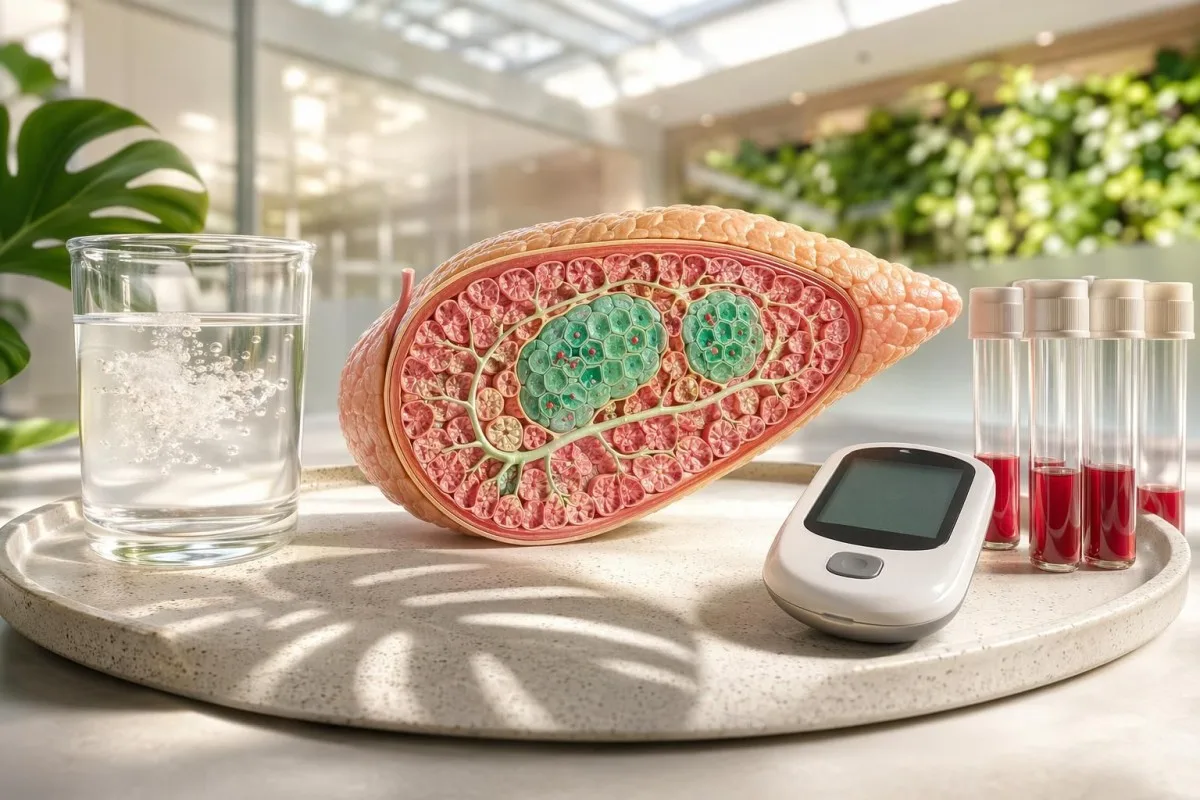
Egy gyakorlati útmutató a szülés utáni szűréshez mindenkinek, akinek azt mondták, hogy a terhességi cukrok ismét normálisak, de mégis tudni szeretné, mi következik ezután.


- 75 g OGTT A szülés utáni 4–12. héten végzett vizsgálat a preferált teszt terhességi cukorbetegség után, mert kimutatja a 2 órás glükózproblémákat, amelyeket az éhomi glükóz esetleg nem észlel.
- Cukorbetegség küszöbértékei az éhomi plazma glükóz ≥126 mg/dL, a 2 órás OGTT glükóz ≥200 mg/dL, a HbA1c ≥6.5%, vagy a véletlenszerű glükóz ≥200 mg/dL tünetekkel.
- Prediabétesz határértékek az éhomi glükóz 100–125 mg/dL, a 2 órás OGTT glükóz 140–199 mg/dL, vagy a HbA1c 5.7–6.4%.
- HbA1c a szülés utáni korai időszakban a szülés utáni vérvesztés vagy a magas vörösvérsejt-forgalom miatt ál-alacsony lehet, ezért nem válthatja ki az OGTT-t a 4–12. héten.
- Normális terhességi glükóz a szülés után nem törli el a jövőbeni kockázatot; a terhességi cukorbetegség gyakran egy béta-sejt stresszteszt, amely évekkel a 2-es típusú cukorbetegség előtt feltárja a sebezhetőséget.
- Újravizsgálati intervallum élethosszig minden 1–3 évben, ha a szülés utáni szűrés normális, és általában évente, ha bármelyik eredmény a prediabétesz tartományba esik.
- Mielőtt újabb terhességbe kezdenél kérj glükózvizsgálatot fogantatás előtt vagy az első trimeszter elején, különösen ha a korábbi GDM inzulint vagy gyógyszert igényelt.
- Kockázati markerek mint az éhomi inzulin, trigliceridek, HDL, ALT és a vizelet albumin-kreatinin arány nem diagnosztizálják a cukorbetegséget, de segítenek a kardiometabolikus kockázat becslésében.
A vérvizsgálatok, amelyek a terhességi cukorbetegség után diagnosztizálják a cukorbetegséget
Azok a vérvizsgálatok, amelyek a terhességi cukorbetegség után kimutatják a cukorbetegséget, a következők: 75 g 2 órás orális glükóztolerancia-teszt, éhomi plazma glükózt, HbA1c, és véletlenszerű plazmaglükóz amikor klasszikus tünetek is fennállnak. Az OGTT általában a legjobb szülés utáni cukorbetegség-szűrővizsgálat 4–12 héten belül, mert a kórosodott 2 órás glükózkezelést már akkor felismeri, mielőtt az éhomi glükóz vagy a HbA1c kórossá válna.
Thomas Klein, MD-ként azt mondom a pácienseimnek, hogy a kérdés nem csak az, hogy ma magas-e a szám; hanem az, hogy a hasnyálmirigy a terhesség után még mindig rendelkezik-e elegendő tartalékkal. A 94 mg/dL éhomi glükóz megnyugtatónak tűnhet, miközben a 168 mg/dL 2 órás OGTT-érték halkan azt jelzi, hogy az első fázisú inzulinválasz lemarad.
A terhességen kívüli cukorbetegség diagnózisát éhomi plazmaglükóz alapján állítják fel Akkor diagnosztikus, ha megerősítik, 2 órás OGTT glükóz Cukorbetegséget diagnosztizálhat, ha a klasszikus tünetek jelen vannak, HbA1c ≥6.5%, vagy véletlenszerű plazmaglükóz alapján Cukorbetegséget diagnosztizálhat, ha a klasszikus tünetek jelen vannak olyan tünetekkel, mint a szomjúság, gyakori vizelés vagy megmagyarázhatatlan testsúlycsökkenés. A diagnosztikai és monitorozó vizsgálatok egyszerű nyelvű összehasonlításához a cukorbetegség-vizsgálat határértékei Ha vesebetegség, vérszegénység, terhesség vagy közelmúltbeli transzfúzió fennáll, a HbA1c kevésbé megbízható lehet. Ilyen esetekben az orvosok inkább a plazma glükózra, a fruktózaminra, a CGM-mintázatokra vagy az ismételt vizsgálatra támaszkodhatnak.
az Kantesti egy AI-alapú vérvizsgálat-analizátor, amely a szülés utáni glükózt, HbA1c-t, lipideket és vesemarkereket ugyanabban a klinikai kontextusban olvassa ki, nem pedig elszigetelt jelzőként. Az 2M+ feltöltött laborleleteinek elemzésében egy mintázat mindig visszatér: az emberek emlékeznek a terhességi diagnózisra, de a 4–12 hetes OGTT-eredményük gyakran soha nem kerül be a hosszú távú egészségügyi nyilvántartásba.
Miért nem „nullázza le” a jövőbeni kockázatot a normális terhességi glükóz?
A szülés utáni normális glükóz nem „nullázza” a jövőbeli cukorbetegség-kockázatot, mert a terhességi cukorbetegség általában a terhesség alatti stressz mellett korlátozott béta-sejt-tartalékot tükröz. A szülés megszünteti a placenta hormonjait, de nem feltétlenül javítja az inzulinrezisztenciát, a genetikai kockázatot, a zsírmájra való hajlamot vagy a hasnyálmirigy béta-sejtjeinek sérülékenységét.
A placenta olyan hormonokat termel, amelyek fokozzák az inzulinrezisztenciát, gyakran leginkább a 24–28. hét után. Amikor szülés után a glükóz normalizálódik, az azt jelenti, hogy a stresszor megszűnt; ez nem bizonyítja, hogy az inzulintermelő sejteknek korlátlan tartalékuk van.
Bellamy és mtsai a The Lancet-ben arról számoltak be, hogy a korábban terhességi cukorbetegségben szenvedő nőknek kb. 7-szeres a későbbi 2-es típusú cukorbetegség kockázata a GDM nélküli nőkhöz képest (Bellamy és mtsai, 2009). A mindennapi gyakorlatban azt látom, hogy a kockázati csoport a deréktáji hízással, a trigliceridekkel (a 150 mg/dL, ), az alacsony HDL-lel, a családi anamnézissel, a PCOS-szal és az alvászavarral társul az első két szülés utáni évben.
Normális HbA1c érték 5.3% hat hónappal szülés után még együtt is járhat a korai inzulinrezisztenciával. Ha a mélyebb anyagcsere-képet szeretnéd, útmutatónk inzulinrezisztencia-vizsgálattal elmagyarázza, miért tud az éhomi inzulin és a glükóz elmozdulni, mielőtt az A1C átlépné a prediabétesz határát.
Mikor kell megtörténnie a szülés utáni cukorbetegség-szűrésnek?
A szülés utáni diabétesz-szűrést 4–12 héttel a szülés után kell elvégezni, lehetőleg egy 75 g-os 2 órás OGTT-vel. Ha ez az időablak kimaradt, a legjobb időpont a vizsgálatra most van; nem várnék a következő éves fizikális vizsgálatig, ha a terhesség 6 hónappal vagy 6 évvel ezelőtt volt.
Az American Diabetes Association a 75 g-os OGTT-t 4–12 héttel szülés után, valamint a gesztációs diabétesz után élethosszig tartó szűrést javasolja minden . (American Diabetes Association Professional Practice Committee, 2024). Az ACOG is támogatja a szülés utáni szűrést ebben a korai időablakban, és sok szülészeti rendelő ma már megpróbálja még a 6 hetes kontroll előtt megrendelni, hogy ne maradjon ki (ACOG, 2018).
A szoptatás, az alvásfragmentáció és a szülés utáni testsúlyváltozások mind módosíthatják a glükóz napi alakulását, de nem okok arra, hogy kihagyd a vizsgálatot. A legtöbb beteg szoptatás mellett is el tudja végezni az OGTT-t; a gyakorlati nehézség gyakran a 2 órás laborvárakozás alatti gyermekfelügyelet, nem a biológia.
Ha szülés után vérszegénységre, pajzsmirigyfunkcióra, májenzimekre vagy vesemarkerekre is szükség van ellenőrzésre, akkor szülés utáni laboratóriumi ellenőrzőlistánk bemutatja, mely vizsgálatokat szokták gyakran a glükóz-szűréssel együtt elvégezni. Egyetlen időpont gyakran több szülés utáni problémát is lefedhet.
Hogyan értelmezik a 75 g-os orális glükóztolerancia-tesztet?
A orális glükóztolerancia-teszt terhesség után méri az éhomi glükózt és a 2 órás glükózt egy 75 g-os glükózital elfogyasztása után. A 2 órás érték Cukorbetegséget diagnosztizálhat, ha a klasszikus tünetek jelen vannak diabéteszt diagnosztizál, míg 140–199 mg/dL csökkent glükóztoleranciát diagnosztizál, akkor is, ha az éhomi glükóz normális.
A teszt azért működik, mert az inzulinrendszert „megpróbára teszi”, nem pedig nyugalomban figyeli. A tapasztalatom szerint a korábbi GDM-ben szenvedők gyakran átmennek az éhomi részen, de elbuknak a 2 órás részen; ez a mintázat az étkezések utáni késleltetett inzulinszekrécióra utal.
Készülj a szokásos étkezéssel legalább 3 napig, ideális esetben legalább napi 150 g szénhidráttal , hacsak a kezelőorvosod másképp nem mondta. A nagyon alacsony szénhidráttartalmú étrend az OGTT előtt felnagyíthatja a glükózemelkedést, és megnehezítheti az értelmezést; útmutatónk az éhgyomri szabályok a vízről, a kávéról és az időzítési részletekről is szól.
A 2 órás várakozás alatt ne eddz keményen, és szólj a labornak, ha hánysz vagy nem tudod befejezni az italt. Ha az eljárás nem lett megfelelően befejezve, az eredményt meg kell ismételni, vagy egy másik diagnosztikus vizsgálattal kell helyettesíteni.
Mit tud és mit nem tud kimutatni az éhomi glükóz
Az éhomi plazma glükóz kimutatja a cukorbetegséget, ha az éhomi érték Akkor diagnosztikus, ha megerősítik, de kihagyhatja a terhességi cukorbetegség után jelentkező izolált, étkezés utáni glükózintoleranciát. Hasznos, olcsó és ismételhető; egyszerűen túl „durva” ahhoz, hogy kiváltsa a szülés utáni OGTT-t.
Éhomi glükóz: prediabétesznek felel meg, és az ADA kritériumai szerint prediabétesz, míg <100 mg/dL az Egyesült Államokban általában normálisnak tekintik. Néhány nemzetközi rendszer a 110 mg/dl feletti értékek értéket használja az alacsonyabb, károsodott éhomi küszöbértéknek, ami az egyik oka annak, hogy a betegek összezavarodnak az országok közötti átjáráskor.
A klinikai csapda az, ha az éhomi vércukor 88–96 mg/dL, a 2 órás OGTT pedig 155–185 mg/dL. Az illetőnek azt mondhatják, hogy minden rendben van, ha csak az éhomi vércukrot rendelték el, miközben az étkezéshez kötődő glükózbiológiája már kóros.
A reggeli vércukrot befolyásolja az alváshiány, a késő esti evés, a kortikoszteroidok, a fertőzés és a hajnali jelenség. A mi éhomi vércukor irányelvünk megmagyarázza, miért kell egyetlen reggeli eredményt az előző esti eseményekkel és az alvásminőséggel együtt értelmezni.
Miért kényelmes, de miért nem tökéletes a HbA1c a szülés után?
A HbA1c a cukorbetegséget kimutatja ≥6.5%, de az első 4–12 szülés utáni hétben kevésbé megbízható, mert a szülés alatti vérvesztés és a vörösvérsejt-forgalom torzíthatja az eredményt. A HbA1c később hasznos, különösen a hosszú távú követéshez, de nem helyettesítheti az első szülés utáni OGTT-t.
A HbA1c hozzávetőleg 8–12 hét, a legutóbbi hónap felé súlyozva. Szülés után az anaemia, a transzfúzió, a vashiány vagy a vörösvérsejtek gyors pótlása eltolhatja az értéket a valódi glükóztörténettől.
A vashiány egyes betegeknél hamisan megemelheti a HbA1c-t, míg a közelmúltbeli vérvesztés hamisan csökkentheti. Ez azok közé a területek közé tartozik, ahol a kontextus fontosabb, mint a szám; egy szülés utáni HbA1c érték 5.6% nem feltétlenül megnyugtató, ha a ferritin 8 ng/ml és az OGTT-t soha nem végezték el.
Ha az A1c-je nem egyezik az ujjbegyből mért értékekkel vagy a tünetekkel, olvassa el az útmutatónkat az A1c pontosságáról mielőtt az értéket névértéken elfogadná. Általában a HbA1c-t a szülés utáni történet ellentmondásosnak tűnése esetén az éhomi glükózzal, a CBC-vel és a ferritinnel együtt értékelem.
Mikor van szükség gyors beavatkozásra véletlenszerű glükóz vagy tünetek esetén
A véletlenszerű plazmaglükóz akkor mutatja ki a diabéteszt, ha Cukorbetegséget diagnosztizálhat, ha a klasszikus tünetek jelen vannak és tünetek is jelen vannak. Gesztációs diabétesz után sürgős felülvizsgálat szükséges, ha magas glükóz mellett hányás, kiszáradás, gyors testsúlycsökkenés, ketonok, homályos látás vagy szokatlan kimerültség jelentkezik.
A GDM után a legtöbb diabétesz 2-es típusú, de szülés utáni autoimmun diabétesz alkalmanként megjelenhet, különösen ha a fogyás gyors és ketonok is jelen vannak. Láttam olyan betegeket, akiket csak „fáradt új szülőknek” minősítettek, miközben a glükózuk 280 mg/dL és már ketotikusak voltak.
A 140–199 mg/dL véletlenszerű glükóz önmagában nem diagnosztikus, de időzítéstől és tünetektől függően éhomi glükózt, HbA1c-t vagy OGTT-t kell kezdeményezni. A véletlenszerű érték 300 mg/dL, felett, különösen hasi fájdalom vagy nehezített légzés esetén, ugyanazon napi sürgős orvosi ellátást igényel.
Egyetlen, elszigetelt magas érték előfordulhat betegség, szteroidok vagy nagyon magas szénhidráttartalmú étkezés után, de a mintázat számít. Az útmutatónk a váratlanul magas glükózról elmagyarázza, hogyan különítik el a klinikusok a stressz-hyperglykaemiát a korai diabétesztől.
Vérmarkerek, amelyek jelzik a kockázatot, mielőtt megjelenne a cukorbetegség
Az éhomi inzulin, a C-peptid, a trigliceridek, a HDL, az ALT és a vizelet albumin-kreatinin arány nem diagnosztizálja a diabéteszt, de segít kimutatni a metabolikus kockázatot gesztációs diabétesz után. Ezek a markerek feltárhatják az inzulinrezisztenciát, a zsírmájra való hajlamot vagy a korai veseterhelést, miközben a glükóz technikailag még normális.
Az éhomi inzulin nagyjából 15–20 µIU/mL felett utalhat inzulinrezisztenciára, bár a laboratóriumi módszerek eltérnek, és nincs egyetemes diagnosztikus küszöbérték. A HOMA-IR az éhomi inzulint és az éhomi glükózt használja; az értékek, amelyek 2.0-2.5 gyakran gyanút keltenek felnőtteknél, de az etnikum, a BMI és a vizsgálati módszer megváltoztatja az értelmezést.
A trigliceridek 150 mg/dL és a HDL alatti 50 mg/dL-t nőknél gyakran együtt jár inzulinrezisztenciával. Az ALT, ha kb. 25-30 IU/L egy olyan nőnél, akinek korábban GDM-je volt, korai zsírmájra utaló jel lehet akkor is, ha a laborlelet még normálisnak jelzi.
Az Kantesti egy AI biomarker-értelmező platform, amely a gesztációs diabetes után mért normál A1c-t kockázati jelként értelmezi (nem pedig „zöld utat” jelent örökre). Ha a számaidból szeretnéd kiszámítani az inzulinrezisztenciát, a HOMA-IR számítással, útmutató megmutatja a képletet és annak korlátait.
Milyen gyakran kell újravizsgálni, ha a szülés utáni szűrés normális?
Ha a szülés utáni szűrés normális gesztációs diabetes esetén, akkor ismételd meg minden 1-3 évben az egész életen át. Korábban, gyakran évente, ha nő a testsúly, megjelenik a prediabétesz, újabb terhességet terveznek, vagy olyan gyógyszerek (pl. szteroidok vagy antipszichotikumok) emelik a glükózkockázatot.
Az ADA ajánlása az egész életen át tartó, 1-3 évente történő szűrésre azért van, mert a diabetes kockázata idővel emelkedik, nem csak az első szülés utáni évben. A rendelőmben általában a 1 éves intervallumot választom mindenkinek, akinél prediabétesz van, inzulinnal kezelt GDM, BMI 30 felett, erős családi anamnézis vagy PCOS.
A 2026-ban mért normális vizsgálat még mindig hasznos, mert ez lesz az alapértéked. Az éhomi glükóz 3 év alatt 82-ről 96 mg/dL-re emelkedése jelentősebb lehet, mint egyetlen jelzett eredmény, különösen akkor, ha a trigliceridek és a derékbőség ugyanakkor emelkednek.
Az Kantesti AI képes időben ábrázolni a glükózt, HbA1c-t, a triglicerideket és az ALT-t, így a kis elmozdulások már akkor láthatóvá válnak, mielőtt drámaivá válnának. A cikkünk trendanalízisünk elmagyarázza, miért gyakran a meredekség és a csoportosulás fontosabb, mint egyetlen laboratóriumi jelző.
Mit érdemes kérni a kezelőorvostól, hogy rendelje el
Kérjen egy 75 g-os 2 órás OGTT-t 4–12 héttel szülés után, vagy éhomi plazma glükózt HbA1c-cel együtt, ha az OGTT nem kivitelezhető. Hosszú távú kockázat esetén kérdezze meg, hogy a lipideket, az ALT-t, a kreatinint, az eGFR-t és a vizelet albumin–kreatinin arányt is ellenőrizzék-e a glükózmarkerei mellett.
Egy ésszerű első szülés utáni rendelés gyakran így hangzik: éhomi glükóz, 75 g-os 2 órás glükóz, HbA1c, CBC, ha jelentős szülés alatti vérvesztés volt, ferritin, ha vérszegénység gyanúja merül fel, lipidprofil és CMP, ha magas a kardiometabolikus kockázat. Nem minden betegnek van szüksége minden vizsgálatra, de a rendelésnek illeszkednie kell a terhességi történethez.
Ha terhesség alatt éhomi hiperglikémiája volt, vagy inzulinra volt szüksége, akkor agresszívebben követném korán. Ha a GDM-je enyhe volt és diétával kontrollált, az OGTT még mindig számít, de a hosszú távú ütemezés közelebb lehet ahhoz, hogy 2–3 évben amikor minden eredmény normális.
Azoknak az olvasóknak, akik meg szeretnék érteni, hogy az egyes markerek valójában mit mérnek, a biomarker-útmutatónkban több ezer laboratóriumi markert és a gyakori mértékegység-különbségeket ismerteti. Különösen hasznos, ha az egyik labor mg/dL-ben, a másik pedig mmol/L-ben közli a glükózt.
Mit tesznek az orvosok a határértékes vagy ellentmondó eredményekkel
A határértékes vagy ellentmondó diabetes eredményeket általában meg kell ismételni, vagy egy másik diagnosztikus vizsgálattal megerősíteni. Az 124 mg/dL, HbA1c 6.4%, éhomi glükóz, vagy a 198 mg/dL 2 órás OGTT nem legyintésre való; ez egy küszöbérték-közeli eredmény, amelyhez terv kell.
Klasszikus tünetek nélkül a legtöbb klinikus a diabetes diagnózisát egy ismételt kóros eredménnyel erősíti meg. Ha két különböző vizsgálat nem egyezik, akkor jellemzően megismétlik azt a tesztet, amely a diagnosztikus küszöbérték felett van, és a beteg kontextusa dönti el, milyen gyorsan történik ez.
Thomas Klein, MD, gyakorlati szabály: ne hagyja, hogy a „határértékes” szó ártalmatlannak éreztesse az eredményt. A 196 mg/dL 2 órás OGTT a korábbi GDM után gyakran nagyobb jövőbeli kockázattal jár, mint a 101 mg/dL, éhomi glükóz, még akkor is, ha mindkettő prediabetesként kerülhet dokumentálásra.
Útmutatónk a prediabetes küszöbértékek elmagyarázza, hogyan határozza meg az éhomi glükóz, az A1c és az OGTT a különböző biológiai problémákat. Gyakran úgy fogalmazom meg a GDM utáni prediabetest, mint egy kezelési ablakot, nem pedig mint egy várótermet.
Speciális helyzetek: szoptatás, vérszegénység, PCOS és gyógyszerek
A szoptatás, a vérszegénység, a PCOS, a GLP-1 gyógyszerek, a szteroidok és a pajzsmirigybetegség megváltoztathatják, hogyan kell értelmezni a szülés utáni diabetes laboreredményeket. A glükóz-határértékek ugyanazok maradnak, de az, hogy mennyire bízik az HbA1c-ben, az éhomi glükózban vagy az inzulinszintekben, jelentősen változhat.
A szoptatás gyakran javítja a glükózanyagcserét, és csökkentheti a jövőbeli 2-es típusú cukorbetegség kockázatát, de nem szünteti meg a szűrés szükségességét. Ha szülés után inzulint vagy szulfonilureákat szed, kérdezze meg kezelőorvosát a hipoglikémia kockázatáról a hosszabb etetések vagy kihagyott étkezések esetén.
A PCOS egy külön inzulinrezisztencia-útvonalat is hozzáad, és a korábbi GDM plusz PCOS az egyik kombináció, amelyet különös figyelemmel kezelek. A mi PCOS laboratóriumi mintázatai elmagyarázza, miért számíthat az éhomi inzulin, a lipidek és az androgének akkor is, ha a glükóz még nem diagnosztikus.
A szteroidinjekciók, a nagy dózisú prednizon, egyes antipszichotikumok és a súlyos alváshiány átmenetileg megemelhetik a vércukorszintet. Az evidencia azzal kapcsolatban, hogy pontosan milyen szülés utáni alvásküszöbök számítanak, őszintén vegyes, de azt látom, hogy rosszabb éhomi értékek adódnak, ha az alvás töredezett, és az alvás 5-6 óra hetekig tart.
Hogyan olvassa az Kantesti biztonságosan a szülés utáni cukorbetegségre vonatkozó laborleleteket
Az Kantesti a szülés utáni cukorbetegségre vonatkozó laboreredményeket úgy olvassa, hogy a glükóz küszöbértékeket az időzítéssel, a terhességi előzményekkel, az anémia jeleivel, a lipidmintázatokkal és a vesemarkerrel kombinálja. A cél nem az, hogy kiváltsa a kezelőorvosát; az, hogy az időpont előtt világosabb legyen a kockázati mintázat.
Az Kantesti egy mesterséges intelligencia-alapú vérvizsgálat-elemző eszköz, amelyet 2M+ ember használ 127 országban, vérvizsgálati PDF vagy fotó értelmezéssel kb. 60 másodperc. A szülés utáni cukorbetegség-szűréshez a neurális hálózat szétválasztja a diagnosztikus glükóz kritériumokat a kockázati kontextus markereitől, mint például a trigliceridek, HDL, ALT és a vizelet ACR.
Egy tipikus feltöltés HbA1c-et 5.5%, éhomi vércukor 92 mg/dL, ferritin 10 ng/mL alatt és nincs OGTT-t. Az Kantesti AI nem diagnosztizálná a cukorbetegséget ezekből a számokból, de jeleznie kell, hogy a korai szülés utáni A1C megbízhatatlan lehet, és hogy a javasolt OGTT hiányzik.
A módszereink összhangban vannak a publikált klinikai standardokkal és a belső orvosi felülvizsgálattal; az olvasók láthatják a klinikai validálási standardjainkhoz és az előzetesen regisztrált AI benchmark. Ha szkennelést töltesz fel ahelyett, hogy értékeket gépelnél be, a PDF feltöltési munkafolyamatunkat elmagyarázza, hogyan olvassák és ellenőrzik a jelentéseket.
Egy gyakorlati újravizsgálati terv 2026-ra és azon túlra
2026. május 26-tól a legbiztonságosabb terv terhességi cukorbetegség után az OGTT 4-12 héten belül, a szűrés megismétlése 1-3 évente, és korábbi vizsgálat a következő terhesség előtt. Ha bármelyik eredmény a prediabétesz tartományba esik, kezeld aktív megelőzési időablakként, ne pedig enyhe laboratóriumi érdekességként.
A szokásos mondatom egyszerű: megcsinálni az első szülés utáni OGTT-t, elmenteni az eredményt, majd a következő glükózellenőrzést beírni a naptárba, mielőtt az élet túlságosan elfoglalt lesz. Ha a 2 órás OGTT-d 140–199 mg/dL, kérj egyértelmű utánkövetési időközt, táplálkozási tervet és mozgáscélkitűzést, ne csak egy homályos emlékeztetőt arra, hogy óvatosnak kell lenni.
Ha a cukorbetegség-szűrésed normális, akkor is mondd el minden jövőbeli kezelőorvosnak, hogy volt GDM-ed. Ez az egy mondat megváltoztatja, ahogyan én egy éhomi glükózértéket 103 mg/dL, egy trigliceridszintet 180 mg/dL, vagy egy HbA1c-et értelmezek, amely 5,2%–5,6% több év alatt.
Az Kantesti Ltd egy brit egészségtechnológiai vállalat, és az orvosaink a orvosi tartalmat a orvosi tanácsadó testület és a klinikai irányítási (governance) folyamatunkon keresztül felülvizsgálják, amelyet a Rólunk. Az összegzés: a megfelelő vizsgálatok nem bonyolultak, de az időzítés és az értelmezés fontosabb, mint ahogy azt a legtöbb embernek mondják.
Kapcsolódó Kantesti kutatási publikációk
A szülés utáni diabétesz-szűrés gyakran egy átfogóbb laboratóriumi áttekintés része, amely magában foglalja a CBC-t, a vas státuszt és a vesemarker(ek)et. Az Kantesti alább felsorolt DOI-publikációk a közeli vérvizsgálat-értelmezési módszereket támogatják, beleértve a vörösvérsejt-indexeket és a vesefunkciós arányokat, amelyek befolyásolhatják a HbA1c megbízhatóságát vagy a hosszú távú anyagcsere-kockázat felmérését.
Gyakran Ismételt Kérdések
Milyen vérvizsgálatok mutatják ki a cukorbetegséget terhességi cukorbetegség után?
A vérvizsgálatok, amelyek a terhességi cukorbetegség után kimutatják a cukorbetegséget, a 75 g-os, 2 órás orális glükóztolerancia-teszt, az éhomi plazma-glükóz, a HbA1c és a véletlenszerű plazma-glükóz, ha tünetek is fennállnak. A cukorbetegséget az alábbiak alapján diagnosztizálják: éhomi glükóz ≥126 mg/dL, 2 órás OGTT glükóz ≥200 mg/dL, HbA1c ≥6.5% vagy véletlenszerű glükóz ≥200 mg/dL a klasszikus tünetekkel együtt. Az OGTT-t a szülés után 4–12 héttel előnyben részesítik, mert képes kimutatni a 2 órás glükózkezelés zavaráját akkor is, ha az éhomi glükóz normális.
A terhesség utáni orális glükóztolerancia-teszt jobb, mint az HbA1c?
Igen, a terhesség utáni orális glükóztolerancia-teszt általában jobb, mint az HbA1c az első postpartum szűréshez 4–12 héten belül. Az HbA1c-t torzíthatja a szülés alatti vérvesztés, vérszegénység, transzfúzió vagy a vörösvérsejtek gyors megújulása, míg az OGTT közvetlenül méri a glükózkezelést a 75 g-os glükózterhelést követően. Az HbA1c később hasznosabb a hosszú távú szűréshez és a trendek követéséhez.
Mikor kell elvégezni a szülés utáni diabetes-szűrést GDM esetén?
A szülés utáni diabetes-szűrést terhességi diabetes esetén 4–12 héttel a szülés után kell elvégezni, ideálisan 75 g-os, 2 órás OGTT-vel. Ha ez az időablak kimaradt, a vizsgálatot a lehető leghamarabb el kell végezni, nem pedig a tünetekre várva. Ha a szülés utáni eredmény normális, az élethosszig tartó diabetes-szűrést 1–3 évente meg kell ismételni.
Lehet, hogy a HbA1c normális, de az OGTT kóros a terhességi cukorbetegség után?
Igen, a HbA1c lehet normális, miközben a terhességi cukorbetegség után az OGTT kóros. Előfordulhat, hogy az illető HbA1c értéke 5,3%, az éhomi vércukorszintje pedig 92 mg/dL, de a 2 órás OGTT-értéke 160 mg/dL, ami csökkent glükóztoleranciát jelent. Ez azért történik, mert a HbA1c az átlagos vércukrot tükrözi, míg az OGTT a glükózterhelés utáni inzulinválaszt „stresszeli”.
Mit jelentenek az eredmények: prediabétesz terhességi cukorbetegség után?
A terhességi cukorbetegség után kialakuló prediabéteszt az éhomi plazma glükóz 100–125 mg/dL, a 2 órás OGTT glükóz 140–199 mg/dL, vagy az HbA1c 5,7–6,4% értéke határozza meg. A 2 órás OGTT eltérés különösen gyakori GDM után, és akkor elmaradhat, ha csak éhomi glükózt rendelnek el. A prediabétesz általában évente esedékes kontrollt és strukturált megelőzési tervet kell, hogy kiváltson.
Milyen gyakran kell újravizsgálatot végezni, ha a szülés utáni szűrés eredménye normális?
Ha a szülés utáni cukorbetegség-szűrés normális a terhességi cukorbetegség után, akkor élete során minden 1–3 évben ismételje meg. Sok klinikus évente végez vizsgálatot, ha inzulinnal kezelt GDM-je volt, prediabétesze, PCOS-e, 30 feletti BMI-je, erős családi anamnézise vagy emelkedő trigliceridszintje van. A vizsgálatot meg kell ismételni egy újabb terhesség előtt vagy a terhesség első trimeszterének elején is.
Megváltoztatja a szoptatás a cukorbetegség vérvizsgálat eredmények?
A szoptatás javíthatja a glükózanyagcserét, és csökkentheti a jövőbeli 2-es típusú diabetes kockázatát, de nem szünteti meg a szülés utáni diabetes-szűrés szükségességét. A böjtös vércukorra, az OGTT-re és a HbA1c-re vonatkozó diagnosztikus határértékek nem változnak attól, hogy valaki szoptat. Ha szülés után diabetes elleni gyógyszereket alkalmaznak, a kezelőorvosok módosíthatják az adagolás időzítését vagy dózisát a hosszan tartó etetések vagy kihagyott étkezések során fellépő hypoglykaemia kockázatának csökkentése érdekében.
Használhatok folyamatos glükózmonitort a szülés utáni glükózterheléses vizsgálat helyett?
Nem. A folyamatos glükózmonitor hasznos napi glükózmintázatokat mutathat, de nem helyettesíti a laboratóriumi éhomi glükózt, az HbA1c-t vagy egy 75 g-os OGTT-t a gesztációs diabétesz utáni cukorbetegség diagnosztizálásához. Orvosa később felhasználhatja az életmódbeli vagy kezelési döntések támogatására.
Szüksége van a babámnak cukorbetegség-vizsgálatra, mert terhességi cukorbetegségem volt?
Az újszülött vércukorszintjét a kórházban ellenőrizhetik, különösen, ha terhesség alatt inzulint vagy gyógyszert használt, de a legtöbb gyermeknek nincs szüksége folyamatos cukorbetegség-vérvizsgálatokra kizárólag azért, mert az anya terhességi cukorbetegségben szenvedett. Tartsa a rendszeres gyermekorvosi kontrollokat, és támogassa a család szokásait a kiegyensúlyozott étkezés, a mozgás és az alvás terén.
Mi van, ha nem tudom tolerálni a glükózitalt a szülés utáni OGTT során?
A vizsgálat előtt tájékoztassa a kezelőorvosát. Lehet, hogy átütemezik a vizsgálatot hányinger-csökkentési stratégiákkal, ellenőrzik az éhomi vércukrot és a HbA1c-t, vagy átmenetileg otthoni vagy folyamatos glükózadatokat használnak, de ezek az alternatívák nem feltétlenül váltják ki teljes mértékben a diagnosztikus OGTT-t.
Végezzen mesterséges intelligencia által támogatott vérvizsgálat-elemzést még ma
Csatlakozzon világszerte több mint 2 millió felhasználóhoz, akik az Kantesti-t bízzák meg azonnali, pontos laborvizsgálat-elemzésért. Töltse fel a vérvizsgálat eredményeit, és kapjon átfogó értelmezést az 15,000+ biomarkerekről másodpercek alatt.
📚 Hivatkozott kutatási publikációk
Klein, T., Mitchell, S., & Weber, H. (2026). RDW vérvizsgálat: Átfogó útmutató az RDW-CV-hez, az MCV-hez és a MCHC-hez. Kantesti mesterséges intelligencia orvosi kutatás.
Klein, T., Mitchell, S., & Weber, H. (2026). BUN/kreatinin arány magyarázata: Vesefunkciós teszt útmutató. Kantesti mesterséges intelligencia orvosi kutatás.
📖 Külső orvosi hivatkozások
American Diabetes Association Professional Practice Committee (2024). 2. A cukorbetegség diagnózisa és osztályozása: A Diabetes—2024 gondozási standardjai. Diabetes Care.
⚕️ Orvosi nyilatkozat
A cikk kizárólag oktatási célokat szolgál, és nem minősül orvosi tanácsadásnak. A diagnózisra és a kezelési döntésekre vonatkozóan mindig konzultáljon szakképzett egészségügyi szolgáltatóval.
E-E-A-T bizalmi jelzések
Tapasztalat
Orvosok által vezetett klinikai áttekintés a laboratóriumi értelmezési munkafolyamatokról.
Szakértelem
Laboratóriumi medicina fókusz: hogyan viselkednek a biomarkerek klinikai környezetben.
Tekintélyesség
Dr. Thomas Klein írta, Dr. Sarah Mitchell és Prof. Dr. Hans Weber általi felülvizsgálattal.
Megbízhatóság
Bizonyítékokon alapuló értelmezés, világos követési útvonalakkal a riadalom csökkentésére.