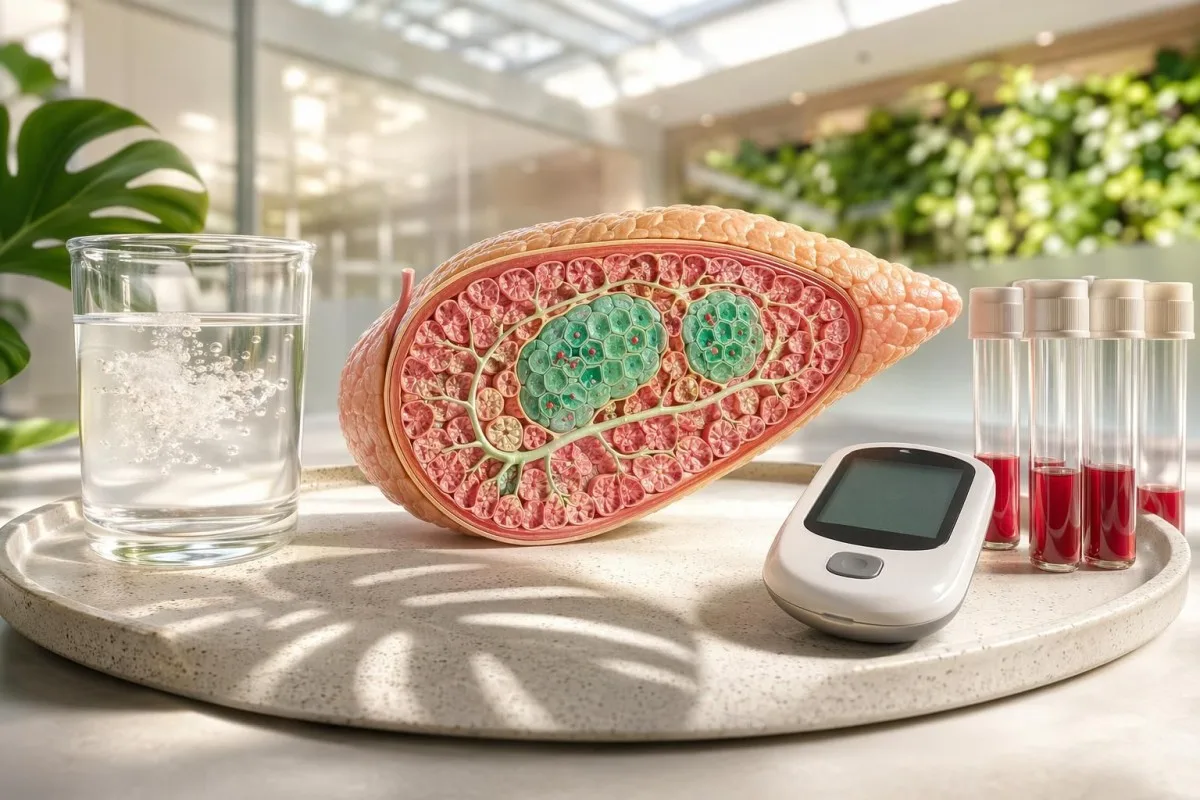
Una guía práctica de cribado posparto para cualquiera a quien le dijeron que los azúcares del embarazo volvieron a la normalidad, pero que aún quiere saber qué sigue.


- 75 g OGTT a las 4-12 semanas posparto es la prueba preferida después de la diabetes gestacional porque detecta problemas de glucosa a las 2 horas que la glucosa en ayunas puede pasar por alto.
- Puntos de corte para la diabetes son glucosa plasmática en ayunas ≥126 mg/dL, glucosa en OGTT de 2 horas ≥200 mg/dL, HbA1c ≥6.5%, o glucosa aleatoria ≥200 mg/dL con síntomas.
- Puntos de corte de prediabetes son glucosa en ayunas 100-125 mg/dL, glucosa en OGTT de 2 horas 140-199 mg/dL, o HbA1c 5.7-6.4%.
- HbA1c en el posparto temprano puede ser falsamente baja después del parto por pérdida de sangre o por un recambio elevado de glóbulos rojos, así que no debe sustituir al OGTT a las 4-12 semanas.
- Glucosa normal en el embarazo después del parto no borra el riesgo futuro; la diabetes gestacional a menudo es una prueba de estrés de las células beta que revela vulnerabilidad años antes de la diabetes tipo 2.
- Intervalo de repetición de la prueba es cada 1-3 años de por vida si el cribado posparto es normal, y por lo general es anual si algún resultado está en el rango de prediabetes.
- Antes de otro embarazo solicitar pruebas de glucosa antes de la concepción o al inicio del primer trimestre, especialmente si la GDM previa requirió insulina o medicación.
- Marcadores de riesgo como la insulina en ayunas, los triglicéridos, HDL, ALT y la relación albúmina/creatinina en orina no diagnostican diabetes, pero ayudan a estimar el riesgo cardiometabólico.
Los análisis de sangre que diagnostican la diabetes después de la diabetes gestacional
Los análisis de sangre que detectan diabetes después de la diabetes gestacional son los prueba de tolerancia oral a la glucosa de 75 g y 2 horas, la glucosa plasmática en ayunas, HbA1c, y glucosa plasmática aleatoria cuando están presentes síntomas clásicos. La OGTT suele ser la mejor prueba de cribado de diabetes posparto a las 4-12 semanas porque detecta el manejo alterado de la glucosa a las 2 horas antes de que la glucosa en ayunas o el HbA1c se vuelvan anormales.
Como Thomas Klein, MD, les digo a los pacientes que la pregunta no es solo si el número está alto hoy; es si el páncreas todavía tiene suficiente reserva después del embarazo. Una glucosa en ayunas de 94 mg/dL puede parecer tranquilizadora, mientras que un valor de OGTT de 168 mg/dL a las 2 horas dice en silencio que la respuesta de insulina de la primera fase va rezagada.
Un diagnóstico de diabetes fuera del embarazo se realiza mediante la glucosa plasmática en ayunas ≥126 mg/dL, glucosa en la OGTT de 2 horas ≥200 mg/dL, HbA1c ≥6.5%, o la glucosa plasmática aleatoria ≥200 mg/dL con síntomas como sed, micción frecuente o pérdida de peso inexplicada. Para una comparación en lenguaje sencillo de las pruebas diagnósticas y de seguimiento, nuestras puntos de corte de la prueba de diabetes guía es un complemento útil.
Kantesti es un analizador de pruebas de sangre con IA que lee la glucosa posparto, HbA1c, lípidos y marcadores renales en el mismo contexto clínico, en lugar de como indicadores aislados. En nuestro análisis de informes de laboratorio cargados de 2M+, aparece un patrón que se repite: las personas recuerdan el diagnóstico del embarazo, pero el resultado de su OGTT de 4-12 semanas a menudo nunca llega al registro de salud a largo plazo.
Por qué la glucosa normal en el embarazo no restablece el riesgo futuro
La glucosa normal después del parto no restablece el riesgo futuro de diabetes porque la diabetes gestacional suele reflejar una reserva limitada de células beta bajo el estrés del embarazo. El parto elimina las hormonas placentarias, pero no necesariamente repara la resistencia a la insulina, el riesgo genético, la tendencia a hígado graso ni la vulnerabilidad de las células beta pancreáticas.
La placenta produce hormonas que aumentan la resistencia a la insulina, a menudo de forma más notable después de las 24-28 semanas. Cuando la glucosa se normaliza después del nacimiento, eso significa que el factor estresante ha desaparecido; no prueba que las células productoras de insulina tengan una reserva ilimitada.
Bellamy et al. informaron en The Lancet que las mujeres con diabetes gestacional previa tenían aproximadamente una riesgo 7 veces mayor de diabetes tipo 2 posterior en comparación con las que no tuvieron GDM (Bellamy et al., 2009). En la práctica diaria, veo el grupo de riesgo con aumento de perímetro abdominal, triglicéridos por encima de 150 mg/dL, HDL bajo, antecedentes familiares, PCOS y alteración del sueño durante los primeros dos años posparto.
Un HbA1c normal de 5.3% seis meses después del parto aún puede coexistir con una resistencia temprana a la insulina. Si quieres una visión metabólica más profunda, nuestra guía para pruebas tempranas de resistencia a la insulina explica por qué la insulina en ayunas y la glucosa pueden fluctuar antes de que la A1C cruce la línea de prediabetes.
Cuándo debe realizarse el cribado de diabetes posparto
El cribado de diabetes posparto debe realizarse entre 4 y 12 semanas después del parto, preferiblemente con un OGTT de 75 g durante 2 horas. Si se pasó esa ventana, el mejor momento para hacerse la prueba es ahora; no esperaría a la próxima revisión anual si el embarazo fue hace 6 meses o 6 años.
La American Diabetes Association recomienda un OGTT de 75 g a las 4-12 semanas posparto y un cribado de por vida cada 1-3 años después de diabetes gestacional (American Diabetes Association Professional Practice Committee, 2024). ACOG también apoya el cribado posparto en esta ventana temprana, y muchas clínicas obstétricas ahora intentan solicitarlo antes de la visita de 6 semanas para que no se olvide (ACOG, 2018).
La lactancia, la fragmentación del sueño y los cambios de peso posparto pueden modificar la glucosa día a día, pero no son razones para omitir la prueba. La mayoría de las pacientes pueden realizar el OGTT mientras amamantan; el problema práctico suele ser el cuidado de los niños durante la espera de 2 horas en el laboratorio, no la biología.
Si además necesitas controles de anemia, función tiroidea, enzimas hepáticas o marcadores renales después del parto, nuestro checklist de laboratorio posparto detalla qué pruebas se combinan comúnmente con el cribado de glucosa. Una sola cita a menudo puede cubrir más de un problema posparto.
Cómo se interpreta la prueba de tolerancia oral a la glucosa de 75 g
El prueba oral de tolerancia a la glucosa después del embarazo mide la glucosa en ayunas y la glucosa a las 2 horas después de una bebida de 75 g de glucosa. Un valor a las 2 horas ≥200 mg/dL diagnostica diabetes, mientras que 140-199 mg/dL diagnostica tolerancia alterada a la glucosa, incluso cuando la glucosa en ayunas es normal.
La prueba funciona porque desafía el sistema de insulina en lugar de observarlo en reposo. En mi experiencia, las personas con GDM previa a menudo superan la parte en ayunas pero fallan la parte de 2 horas; ese patrón apunta a una secreción de insulina retrasada después de las comidas.
Prepárate con la alimentación habitual durante al menos 3 días, idealmente incluyendo al menos 150 g de carbohidratos por día a menos que tu clínico te haya indicado lo contrario. Hacer una dieta muy baja en carbohidratos antes de un OGTT puede exagerar el aumento de la glucosa y dificultar la interpretación; nuestra las reglas de ayuno guía cubre detalles sobre agua, café y el momento.
No hagas ejercicio intenso durante la espera de 2 horas, y avisa al laboratorio si vomitas o no puedes terminar la bebida. Un resultado debe repetirse o sustituirse por otra prueba diagnóstica si el procedimiento no se completó correctamente.
Lo que la glucosa en ayunas puede y no puede detectar
La glucosa plasmática en ayunas detecta diabetes cuando el valor en ayunas es ≥126 mg/dL, pero puede pasar por alto una intolerancia aislada a la glucosa posprandial después de la diabetes gestacional. Es útil, barata y repetible; simplemente es demasiado imprecisa para reemplazar el OGTT posparto.
Una glucosa en ayunas de 100-125 mg/dL es prediabetes según los criterios de la ADA, mientras que <100 mg/dL generalmente se considera normal en Estados Unidos. Algunos sistemas internacionales usan 110 mg/dL como el umbral inferior de ayuno alterado, lo cual es una de las razones por las que los pacientes se confunden al pasar de un país a otro.
La trampa clínica es una glucosa en ayunas de 88-96 mg/dL con un OGTT de 2 horas de 155-185 mg/dL. A esa persona pueden decirle que todo está bien si solo se pidió glucosa en ayunas, pero la biología de la glucosa durante las comidas ya está alterada.
La glucosa matutina se ve afectada por la deuda de sueño, la ingesta nocturna tardía, los corticosteroides, la infección y el fenómeno del alba. Nuestro guía de glucosa en ayunas explica por qué un único resultado de la mañana debe interpretarse teniendo en cuenta la noche anterior y la calidad del sueño.
Por qué HbA1c es conveniente pero imperfecta después del parto
HbA1c detecta diabetes en ≥6.5%, pero es menos fiable en las primeras 4-12 semanas posparto porque la pérdida de sangre durante el parto y la recambio de eritrocitos pueden distorsionar el resultado. HbA1c es útil más adelante, especialmente para el seguimiento a largo plazo, pero no debe reemplazar el primer OGTT posparto.
HbA1c estima la glucosa promedio durante aproximadamente 8-12 semanas, ponderado hacia el mes más reciente. Después del parto, la anemia, la transfusión, la deficiencia de hierro o el recambio rápido de eritrocitos pueden desviar el valor de la verdadera historia de la glucosa.
La deficiencia de hierro puede elevar falsamente la HbA1c en algunos pacientes, mientras que una pérdida de sangre reciente puede reducirla falsamente. Esta es una de esas áreas en las que el contexto importa más que el número; una HbA1c posparto de 5.6% puede no ser tan tranquilizadora si la ferritina es 8 ng/mL y nunca se realizó la OGTT.
Si tu A1c no coincide con las lecturas de la glucemia capilar o con los síntomas, lee nuestra guía sobre la precisión de la A1c antes de aceptar el valor tal cual. Por lo general, combino HbA1c con glucosa en ayunas, CBC y ferritina cuando la historia posparto se siente inconsistente.
Cuándo la glucosa aleatoria o los síntomas requieren una acción rápida
La glucosa plasmática aleatoria detecta diabetes cuando es ≥200 mg/dL y hay síntomas. Después de la diabetes gestacional, se necesita una revisión urgente si hay glucosa alta con vómitos, deshidratación, pérdida de peso rápida, cetonas, visión borrosa o agotamiento inusual.
La mayoría de la diabetes después de la DGM es tipo 2, pero la diabetes autoinmune posparto puede aparecer ocasionalmente, especialmente si la pérdida de peso es rápida y hay cetonas. He visto pacientes descartadas como simplemente padres nuevos cansados cuando su glucosa era 280 mg/dL y ya estaban cetósicas.
Una glucosa aleatoria de 140-199 mg/dL no es diagnóstica por sí sola, pero debería llevar a solicitar glucosa en ayunas, HbA1c u OGTT según el momento y los síntomas. Un valor aleatorio por encima de 300 mg/dL, especialmente con dolor abdominal o respiración trabajosa, debe tratarse como atención médica el mismo día.
Un solo valor alto puede ocurrir después de una enfermedad, esteroides o una comida muy alta en carbohidratos, pero el patrón importa. Nuestra guía sobre glucosa alta inesperada explica cómo los clínicos distinguen la hiperglucemia por estrés de la diabetes temprana.
Marcadores en sangre que muestran riesgo antes de que aparezca la diabetes
La insulina en ayunas, el péptido C, los triglicéridos, HDL, ALT y la relación albúmina-creatinina en orina no diagnostican diabetes, pero ayudan a mostrar el riesgo metabólico después de la diabetes gestacional. Estos marcadores pueden revelar resistencia a la insulina, tendencia a hígado graso o estrés renal temprano mientras la glucosa aún es técnicamente normal.
Una insulina en ayunas por encima de aproximadamente 15-20 µIU/mL puede sugerir resistencia a la insulina, aunque los métodos de laboratorio difieren y no existe un punto de corte diagnóstico universal. HOMA-IR utiliza insulina en ayunas y glucosa en ayunas; valores por encima de 2.0-2.5 a menudo aumentan la sospecha en adultos, pero la etnia, el BMI y la elección del ensayo cambian la interpretación.
Triglicéridos por encima de 150 mg/dL y HDL por debajo de 50 mg/dL en mujeres a menudo se asocian con resistencia a la insulina. ALT por encima de aproximadamente 25-30 UI/L en una mujer con GDM previa puede ser una pista temprana de hígado graso incluso cuando la alerta del laboratorio aún dice normal.
Kantesti es una plataforma de interpretación de biomarcadores de IA que trata un A1C normal después de diabetes gestacional como una pregunta de marcador de riesgo, no como una luz verde para siempre. Si quieres calcular la resistencia a la insulina a partir de tus cifras, la cálculo HOMA-IR guía muestra la fórmula y sus limitaciones.
Cada cuánto repetir la prueba si el cribado posparto es normal
Si el cribado posparto es normal tras diabetes gestacional, repetir cada 1-3 años para toda la vida. Repetir antes, a menudo anualmente, si aumenta el peso, aparece prediabetes, se planifica otro embarazo o medicamentos como esteroides o antipsicóticos aumentan el riesgo de glucosa.
La recomendación de la ADA de cribado de por vida cada 1-3 años existe porque el riesgo de diabetes aumenta con el tiempo, no solo en el primer año posparto. En mi consulta, normalmente elijo el intervalo de 1 año para cualquier persona con prediabetes, GDM tratada con insulina, BMI por encima de 30, antecedentes familiares fuertes o SOP.
Una prueba normal en 2026 sigue siendo útil porque se convierte en tu línea de base. Una glucosa en ayunas que se desplaza de 82 a 96 mg/dL a lo largo de 3 años puede ser más significativo que un resultado marcado, especialmente si los triglicéridos y la circunferencia de cintura aumentan al mismo tiempo.
Kantesti La IA puede graficar la glucosa, HbA1c, los triglicéridos y ALT a lo largo del tiempo, de modo que los pequeños cambios sean visibles antes de que se vuelvan dramáticos. Nuestro análisis de tendencias artículo explica por qué la pendiente y la agrupación a menudo importan más que una sola bandera de laboratorio.
Qué pedirle a tu clínico que ordene
Pida una OGTT de 75 g y 2 horas a las 4-12 semanas posparto, o glucosa plasmática en ayunas más HbA1c si no es factible realizar una OGTT. Para el riesgo a largo plazo, pregunte si deben revisarse los lípidos, ALT, creatinina, eGFR y la relación albúmina-creatinina en orina con sus marcadores de glucosa.
Una primera orden posparto sensata a menudo dice: glucosa en ayunas, glucosa de 75 g y 2 horas, HbA1c, CBC si hubo una pérdida de sangre importante durante el parto, ferritina si se sospecha anemia, panel lipídico y CMP si el riesgo cardiometabólico es alto. No todas las pacientes necesitan todas las pruebas, pero la orden debe ajustarse a la historia del embarazo.
Si tuvo hiperglucemia en ayunas durante el embarazo o necesitó insulina, yo sería más agresivo con el seguimiento temprano. Si su GDM fue leve y controlada con dieta, la OGTT sigue siendo importante, pero la cadencia a largo plazo puede estar más cerca de cada 2-3 años cuando todos los resultados son normales.
Para los lectores que quieren entender qué mide realmente cada marcador, nuestro guía de biomarcadores cubre miles de marcadores de laboratorio y diferencias comunes de unidades. Esto es especialmente útil cuando un laboratorio informa la glucosa en mg/dL y otro la informa en mmol/L.
Qué hacen los médicos con resultados limítrofes o contradictorios
Los resultados de diabetes limítrofes o contradictorios por lo general deben repetirse o confirmarse con una prueba diagnóstica diferente. Una glucosa en ayunas de 124 mg/dL, HbA1c de 6.4%, o una OGTT de 2 horas de 198 mg/dL no es para encogerse de hombros; es un resultado cercano al umbral que merece un plan.
Sin síntomas clásicos, la mayoría de los clínicos confirma la diabetes con un resultado anormal repetido. Si dos pruebas diferentes no coinciden, la prueba por encima del umbral diagnóstico típicamente se repite, y el contexto de la paciente decide qué tan rápido ocurre eso.
Thomas Klein, MD, regla práctica: no dejes que la palabra limítrofe haga que el resultado parezca inofensivo. Una OGTT de 2 horas de 196 mg/dL después de un GDM previo a menudo conlleva más riesgo futuro que una glucosa en ayunas de 101 mg/dL, aunque ambas puedan clasificarse como prediabetes.
Nuestra guía para umbrales de prediabetes explica cómo la glucosa en ayunas, A1c y la OGTT definen problemas biológicos diferentes. A menudo planteo la prediabetes después de GDM como una ventana de tratamiento en lugar de una sala de espera.
Situaciones especiales: lactancia, anemia, SOP y medicamentos
La lactancia, la anemia, el SOP, los medicamentos GLP-1, los esteroides y la enfermedad tiroidea pueden cambiar cómo deben interpretarse los laboratorios de diabetes posparto. Los puntos de corte de glucosa se mantienen igual, pero la confianza que depositas en HbA1c, la glucosa en ayunas o los niveles de insulina puede cambiar sustancialmente.
La lactancia materna a menudo mejora el metabolismo de la glucosa y puede reducir el riesgo futuro de diabetes tipo 2, pero no elimina la necesidad de realizar cribado. Si estás tomando insulina o sulfonilureas en el posparto, pregunta a tu clínico sobre el riesgo de hipoglucemia durante tomas más largas o comidas omitidas.
El SOP añade una vía separada de resistencia a la insulina, y el antecedente de GDM más SOP es una de las combinaciones que trato con especial atención. Nuestro Patrones de laboratorio del SOP explica por qué la insulina en ayunas, los lípidos y los andrógenos pueden importar incluso cuando la glucosa aún no es diagnóstica.
Las inyecciones de esteroides, la prednisona en dosis altas, algunos antipsicóticos y la privación severa del sueño pueden elevar la glucosa temporalmente. La evidencia sobre umbrales exactos de sueño en el posparto es, sinceramente, mixta, pero veo valores de ayuno peores cuando el sueño se fragmenta por debajo de 5-6 horas durante semanas.
Cómo Kantesti lee de forma segura los análisis de diabetes posparto
Kantesti lee los análisis de diabetes posparto combinando umbrales de glucosa con el momento, el historial del embarazo, pistas de anemia, patrones lipídicos y marcadores renales. El objetivo no es sustituir a tu clínico; es hacer más claro el patrón de riesgo antes de tu cita.
Kantesti es una herramienta de análisis de pruebas de sangre impulsada por IA utilizada por 2M+ personas en 127 países, con interpretación de PDF o foto de análisis de sangre en aproximadamente 60 segundos. Para el cribado de diabetes posparto, nuestra red neuronal separa los criterios diagnósticos de glucosa de marcadores de contexto de riesgo como triglicéridos, HDL, ALT y ACR en orina.
Una carga típica podría mostrar HbA1c 5.5%, glucosa en ayunas y se pierden por completo el patrón más amplio., ferritina 10 ng/mL y no OGTT. Kantesti IA no diagnosticaría diabetes a partir de esos valores, pero debería marcar que el A1C temprano en el posparto puede ser poco fiable y que falta el OGTT recomendado.
Nuestros métodos están alineados con estándares clínicos publicados y revisión interna de médicos; los lectores pueden ver nuestro estándares de validación clínica y el benchmark de IA. pre-registrado. Si estás cargando un escaneo en lugar de escribir valores, el flujo de trabajo de carga de PDF explica cómo se leen y se verifican los informes.
Un plan práctico de repetición de pruebas para 2026 y más allá
A partir del 26 de mayo de 2026, el plan más seguro después de la diabetes gestacional es OGTT a las 4-12 semanas, repetir el cribado cada 1-3 años y realizar pruebas antes de otro embarazo. Si algún resultado está en el rango de prediabetes, trátalo como una ventana activa de prevención, no como una simple curiosidad de laboratorio.
Mi guion habitual es sencillo: hacer el primer OGTT posparto, guardar el resultado y luego poner la siguiente comprobación de glucosa en el calendario antes de que la vida se vuelva ocupada. Si tu OGTT de 2 horas es 140-199 mg/dL, pide un intervalo de seguimiento claro, un plan de nutrición y un objetivo de ejercicio en lugar de un recordatorio vago de tener cuidado.
Si tu cribado de diabetes es normal, aun así dile a cada clínico futuro que tuviste GDM. Esa línea cambia cómo leo una glucosa en ayunas de 103 mg/dL, un nivel de triglicéridos de 42 mg/dL, o un HbA1c que se incrementa desde 5.2% a 5.6% durante varios años.
Kantesti Ltd es una empresa de tecnología sanitaria del Reino Unido, y nuestros médicos revisan el contenido médico a través de nuestro consejo médico asesor y el proceso de gobernanza clínica descrito en Sobre nosotros. En resumen: las pruebas adecuadas no son complicadas, pero el momento y la interpretación importan más de lo que la mayoría de las personas cree.
Publicaciones de investigación relacionadas de Kantesti
El cribado de diabetes posparto a menudo se integra en una revisión más amplia del laboratorio que incluye CBC, estado del hierro y marcadores renales. Las publicaciones de Kantesti con DOI que se enumeran a continuación respaldan métodos de interpretación de análisis de sangre adyacentes, incluidos índices de células rojas y proporciones de función renal que pueden afectar la confianza en HbA1c o la evaluación del riesgo metabólico a largo plazo.
Preguntas frecuentes
¿Qué análisis de sangre detectan la diabetes después de la diabetes gestacional?
Las pruebas de sangre que detectan la diabetes después de la diabetes gestacional son la prueba de tolerancia oral a la glucosa de 75 g y 2 horas, la glucosa plasmática en ayunas, HbA1c y la glucosa plasmática aleatoria cuando hay síntomas. La diabetes se diagnostica con glucosa en ayunas ≥126 mg/dL, glucosa en la OGTT de 2 horas ≥200 mg/dL, HbA1c ≥6.5%, o glucosa aleatoria ≥200 mg/dL con síntomas clásicos. Se prefiere la OGTT a las 4-12 semanas posparto porque puede detectar un manejo alterado de la glucosa a las 2 horas incluso cuando la glucosa en ayunas es normal.
¿La prueba de tolerancia oral a la glucosa después del embarazo es mejor que la HbA1c?
Sí, la prueba de tolerancia oral a la glucosa después del embarazo suele ser mejor que la HbA1c para el primer cribado posparto a las 4-12 semanas. La HbA1c puede verse alterada por la pérdida de sangre durante el parto, la anemia, la transfusión o la rotación rápida de los eritrocitos, mientras que la OGTT mide directamente el manejo de la glucosa después de una prueba de carga de 75 g de glucosa. La HbA1c se vuelve más útil más adelante para el cribado a largo plazo y el seguimiento de tendencias.
¿Cuándo debe realizarse el cribado de diabetes posparto después de la DMG?
La detección de diabetes posparto después de diabetes gestacional debe realizarse entre 4 y 12 semanas después del parto, idealmente con una OGTT de 75 g durante 2 horas. Si se omitió ese intervalo, la prueba debe realizarse lo antes posible en lugar de esperar a que aparezcan síntomas. Si el resultado posparto es normal, repetir la detección de diabetes cada 1-3 años de por vida.
¿Puede el HbA1c ser normal pero el OGTT anormal después de una diabetes gestacional?
Sí, el HbA1c puede ser normal mientras que la prueba de tolerancia oral a la glucosa (OGTT) es anormal después de una diabetes gestacional. Una persona puede tener un HbA1c de 5.3% y una glucosa en ayunas de 92 mg/dL, pero un valor de la OGTT a las 2 horas de 160 mg/dL, lo que corresponde a una tolerancia alterada a la glucosa. Esto ocurre porque el HbA1c refleja la glucosa promedio, mientras que la OGTT pone a prueba la respuesta de la insulina después de una carga de glucosa.
¿Qué significan los resultados de prediabetes después de la diabetes gestacional?
La prediabetes después de la diabetes gestacional se define por glucosa plasmática en ayunas de 100-125 mg/dL, glucosa en la prueba de tolerancia oral (OGTT) de 2 horas de 140-199 mg/dL, o HbA1c 5.7-6.4%. Una alteración en la OGTT de 2 horas es especialmente común después de la DGM y puede pasar desapercibida si solo se solicita la glucosa en ayunas. La prediabetes por lo general debe dar lugar a un seguimiento anual y a un plan de prevención estructurado.
¿Con qué frecuencia debo volver a realizar la prueba si mi evaluación posparto es normal?
Si su prueba de diabetes posparto es normal después de la diabetes gestacional, vuelva a evaluarse cada 1-3 años de por vida. Muchos clínicos eligen pruebas anuales si tuvo diabetes gestacional tratada con insulina, prediabetes, SOP, BMI por encima de 30, antecedentes familiares sólidos o triglicéridos en aumento. La prueba también debe repetirse antes de otro embarazo o al inicio del primer trimestre.
¿La lactancia materna cambia los resultados análisis de sangre de la diabetes?
La lactancia materna puede mejorar el metabolismo de la glucosa y puede reducir el riesgo futuro de diabetes tipo 2, pero no elimina la necesidad de realizar el cribado posparto de diabetes. Los puntos de corte diagnósticos para la glucosa en ayunas, la OGTT y la HbA1c no cambian porque alguien esté lactando. Si se utilizan medicamentos para la diabetes en el posparto, los clínicos pueden ajustar el momento o la dosis para reducir el riesgo de hipoglucemia durante tomas prolongadas o comidas omitidas.
¿Puedo usar un monitor continuo de glucosa en lugar de la prueba de tolerancia a la glucosa posparto?
No. Un monitor continuo de glucosa puede mostrar patrones útiles de glucosa día a día, pero no reemplaza la glucosa en ayunas de laboratorio, la HbA1c o una PTGO de 75 g para diagnosticar diabetes después de la diabetes gestacional. Su médico puede usarlo más tarde para apoyar las decisiones de estilo de vida o tratamiento.
¿Mi bebé necesita pruebas de diabetes porque tuve diabetes gestacional?
Es posible que se revise la glucosa del recién nacido en el hospital, especialmente si usó insulina o medicación durante el embarazo, pero la mayoría de los niños no necesitan pruebas continuas de sangre para diabetes únicamente por la diabetes gestacional materna. Mantenga las visitas pediátricas regulares y apoye los hábitos familiares relacionados con comidas equilibradas, actividad y sueño.
¿Qué pasa si no puedo tolerar la bebida de glucosa para la OGTT posparto?
Informe a su profesional de la salud antes de la prueba. Es posible que la reprogramen con estrategias para las náuseas, que revisen la glucosa en ayunas y HbA1c, o que utilicen datos temporales de glucosa en casa o de monitorización continua, pero estas alternativas pueden no reemplazar completamente la OGTT diagnóstica.
Obtén hoy un análisis de sangre con IA
Únete a más de 2 millones de usuarios en todo el mundo que confían en Kantesti para el análisis instantáneo y preciso de pruebas de laboratorio. Sube tus resultados de análisis de sangre y recibe una interpretación completa de los biomarcadores de 15,000+ en segundos.
📚 Publicaciones de investigación citadas
Klein, T., Mitchell, S., & Weber, H. (2026). Análisis de sangre de RDW: Guía completa de RDW-CV, MCV y MCHC. Investigación médica con IA de Kantesti.
Klein, T., Mitchell, S., & Weber, H. (2026). Explicación del índice BUN/creatinina: Guía para la prueba de función renal. Investigación médica con IA de Kantesti.
📖 Referencias médicas externas
American Diabetes Association Professional Practice Committee (2024). 2. Diagnóstico y clasificación de la diabetes: estándares de atención en diabetes—2024. Diabetes Care.
⚕️ Descargo de responsabilidad médica
Este artículo es solo con fines educativos y no constituye asesoramiento médico. Consulta siempre a un profesional sanitario cualificado para decisiones de diagnóstico y tratamiento.
Señales de confianza E-E-A-T
Experiencia
Revisión clínica dirigida por un médico de los flujos de interpretación de análisis.
Pericia
Enfoque en medicina de laboratorio sobre cómo se comportan los biomarcadores en el contexto clínico.
Autoridad
Escrito por el Dr. Thomas Klein, con revisión de la Dra. Sarah Mitchell y el Prof. Dr. Hans Weber.
Integridad
Interpretación basada en la evidencia con vías de seguimiento claras para reducir la alarma.