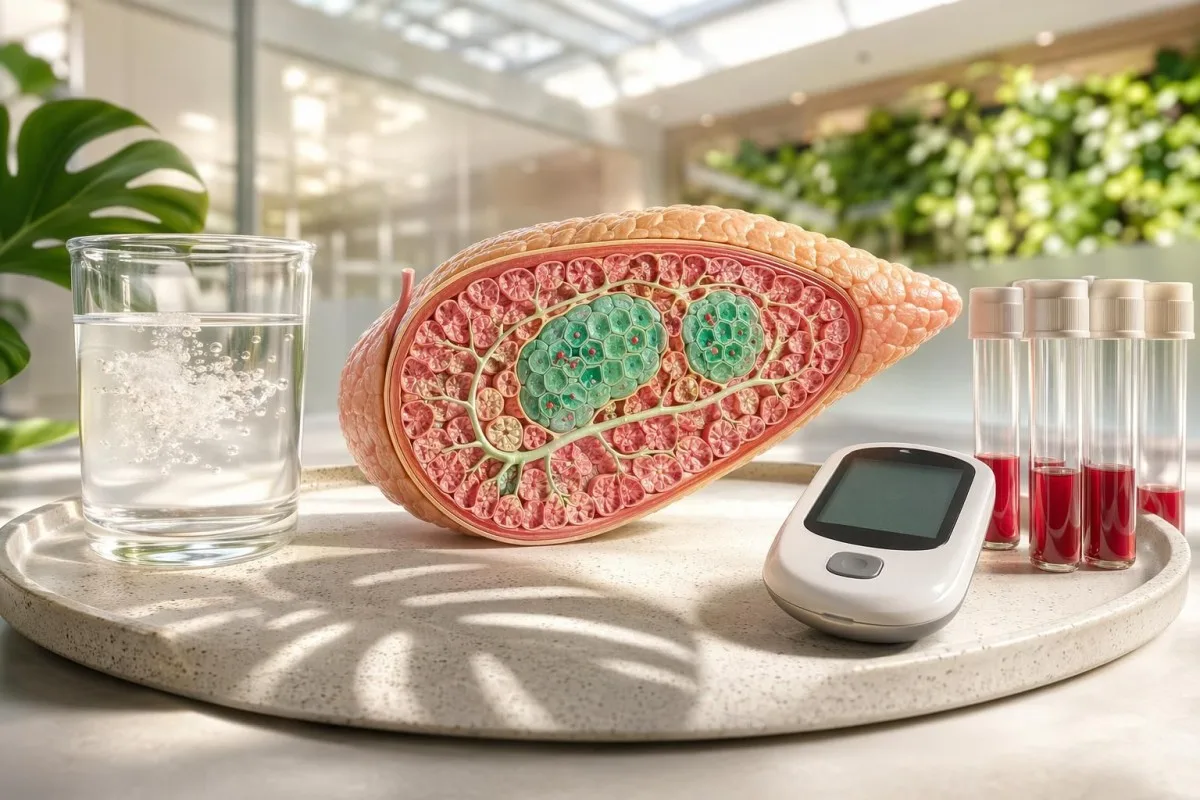
Практичний посібник для післяпологового скринінгу для кожного, кому сказали, що цукри під час вагітності знову нормальні, але хто все одно хоче знати, що буде далі.


- 75 г ОГТТ на 4–12 тижні після пологів — це бажаний тест після гестаційного діабету, тому що він виявляє проблеми з 2-годинною глюкозою, які може пропустити натщева глюкоза.
- Пороги для діабету є натщева плазмова глюкоза ≥126 мг/дл, глюкоза за OGTT через 2 години ≥200 мг/дл, HbA1c ≥6.5% або випадкова глюкоза ≥200 мг/дл за наявності симптомів.
- Порогові значення для предіабету є натщева глюкоза 100–125 мг/дл, глюкоза за OGTT через 2 години 140–199 мг/дл або HbA1c 5.7–6.4%.
- HbA1c у ранньому післяпологовому періоді може бути хибно низьким після післяпологової крововтрати або підвищеного обміну еритроцитів, тому він не має замінювати OGTT на 4–12 тижні.
- Нормальна глюкоза під час вагітності після пологів не стирає майбутній ризик; гестаційний діабет часто є стрес-тестом для β-клітин, який виявляє вразливість за роки до діабету 2 типу.
- Інтервал повторного обстеження кожні 1–3 роки протягом усього життя, якщо післяпологовий скринінг нормальний, і зазвичай щороку, якщо будь-який результат потрапляє в діапазон предіабету.
- Перед іншою вагітністю попросіть провести тест на глюкозу до зачаття або на початку першого триместру, особливо якщо в минулому GDM вимагав інсуліну чи медикаментів.
- Маркери ризику такі як інсулін натще, тригліцериди, HDL, ALT та співвідношення альбумін/креатинін у сечі, не діагностують діабет, але допомагають оцінити кардіометаболічний ризик.
Аналізи крові, які діагностують діабет після гестаційного діабету
Аналізи крові, які виявляють діабет після гестаційного діабету, це пероральний тест толерантності до глюкози 75 г на 2 години, глюкоза плазми натще, HbA1c, та випадкова глюкоза плазми коли наявні класичні симптоми. OGTT зазвичай є найкращим післяпологовим тестом для скринінгу діабету на 4–12 тижні, тому що він виявляє порушене засвоєння глюкози через 2 години ще до того, як рівень глюкози натще або HbA1c стануть ненормальними.
Як Томас Кляйн, MD, я кажу пацієнтам, що питання полягає не лише в тому, чи високий показник сьогодні; питання в тому, чи підшлункова залоза все ще має достатній резерв після вагітності. Глюкоза натще 94 мг/дл може виглядати заспокійливо, тоді як значення OGTT через 2 години 168 мг/дл тихо свідчить, що відповідь інсуліну в першій фазі відстає.
Діагноз діабету поза вагітністю встановлюють за рівнем глюкози плазми натще ≥126 мг/дл, глюкоза під час ОГТТ через 2 години ≥200 мг/дл, HbA1c ≥6.5%, або випадкової глюкози плазми ≥200 мг/дл за наявності симптомів, таких як спрага, часте сечовипускання або необґрунтоване схуднення. Для простого порівняння діагностичних і моніторингових тестів наші порогові значення тесту на діабет посібник є корисним доповненням.
Kantesti — це аналізатор AI для аналізу крові, який зчитує післяпологову глюкозу, HbA1c, ліпіди та маркери нирок у тому самому клінічному контексті, а не як ізольовані «прапорці». У нашому аналізі завантажених лабораторних звітів 2M+ з’являється одна й та сама закономірність: люди пам’ятають діагноз під час вагітності, але результат їхнього OGTT на 4–12 тижні часто так і не потрапляє до довгострокової медичної документації.
Чому нормальна глюкоза під час вагітності не «обнуляє» майбутній ризик
Нормальна глюкоза після пологів не «обнуляє» майбутній ризик діабету, тому що гестаційний діабет зазвичай відображає обмежений резерв β-клітин під час стресу вагітності. Пологи усувають плацентарні гормони, але це не обов’язково відновлює інсулінорезистентність, генетичний ризик, схильність до жирової хвороби печінки або вразливість β-клітин підшлункової залози.
Плацента виробляє гормони, які підвищують інсулінорезистентність, часто найбільш помітно після 24–28 тижнів. Коли після народження глюкоза нормалізується, це означає, що стресор зник; це не доводить, що клітини, які виробляють інсулін, мають необмежений резерв.
Bellamy та співавт. повідомили в The Lancet, що жінки з попереднім гестаційним діабетом мали приблизно у 7 разів вищий ризик пізнішого діабету 2 типу порівняно з тими, хто не мав GDM (Bellamy та співавт., 2009). У щоденній практиці я бачу кластер ризику разом із набором окружності талії, тригліцеридами вище 150 мг/дл, низьким HDL, сімейним анамнезом, PCOS і порушенням сну впродовж перших двох післяпологових років.
Нормальний HbA1c становить 5.3% через шість місяців після пологів усе ще може співіснувати з ранньою інсулінорезистентністю. Якщо вам потрібен глибший метаболічний погляд, наш гід до тестуванням на інсулінорезистентність пояснює, чому натще інсулін і глюкоза можуть «плисти» ще до того, як A1C перетне межу предіабету.
Коли має відбутися післяпологовий скринінг на діабет
Скринінг післяпологового діабету має відбуватися через 4–12 тижнів після пологів, бажано з 75 g 2-hour OGTT. Якщо цей проміжок було пропущено, найкращий час для тестування — зараз; я б не чекав наступного щорічного профілактичного огляду, якщо вагітність була 6 місяців або 6 років тому.
Американська діабетична асоціація рекомендує 75 g OGTT через 4–12 тижнів після пологів і довічний скринінг кожні 1–3 років після гестаційного діабету (American Diabetes Association Professional Practice Committee, 2024). ACOG також підтримує післяпологовий скринінг у цьому ранньому вікні, і багато акушерських клінік тепер намагаються призначити його ще до візиту на 6-му тижні, щоб про нього не забули (ACOG, 2018).
Грудне вигодовування, фрагментація сну та післяпологові зміни маси тіла можуть змінювати рівень глюкози день у день, але це не причини пропускати тестування. Більшість пацієнток можуть пройти OGTT під час грудного вигодовування; практична проблема часто полягає в догляді за дитиною під час очікування в лабораторії протягом 2 годин, а не в біології.
Якщо вам також потрібні перевірки на анемію, функцію щитоподібної залози, печінкові ферменти або маркери роботи нирок після пологів, наш чекліст післяпологових аналізів описує, які тести зазвичай поєднують зі скринінгом глюкози. Один візит часто може охопити більше ніж одну післяпологову проблему.
Як інтерпретується пероральний тест толерантності до глюкози 75 г
The оральний тест на толерантність до глюкози після вагітності вимірює глюкозу натще та глюкозу через 2 години після прийому 75 g глюкози. Значення через 2 години ≥200 мг/дл діагностує діабет, тоді як у діапазоні 140–199 мг/дл. діагностує порушену толерантність до глюкози, навіть коли глюкоза натще є нормальною.
Тест працює тому, що він «кидає виклик» системі інсуліну, а не спостерігає її в стані спокою. У моєму досвіді люди з попереднім GDM часто проходять частину натще, але «провалюють» частину через 2 години; цей патерн вказує на відтерміновану секрецію інсуліну після прийому їжі.
Підготуйтеся, харчуючись як звично, щонайменше 3 днів, і, бажано, включно щонайменше 150 g вуглеводів на день якщо ваш лікар не сказав інакше. Дуже низьковуглеводна дієта перед OGTT може перебільшити підйом глюкози та зробити інтерпретацію складною; наш правила голодування гід охоплює деталі щодо води, кави та часу.
Не тренуйтеся інтенсивно під час очікування 2 години та повідомте лабораторію, якщо ви блюватимете або не зможете завершити напій. Результат слід повторити або замінити іншим діагностичним тестом, якщо процедуру було виконано неналежним чином.
Що може і чого не може виявити натщева глюкоза
Глюкоза плазми натще виявляє діабет, коли показник натще становить ≥126 мг/дл, але вона може пропустити ізольовану непереносимість глюкози після прийому їжі після гестаційного діабету. Це корисно, недорого і відтворювано; однак воно надто грубе, щоб замінити післяпологовий OGTT.
Натщева глюкоза 100–125 мг/дл є предіабетом за критеріями ADA, тоді як <100 мг/дл загалом вважається нормою в Сполучених Штатах. Деякі міжнародні системи використовують 110 мг/дл як нижній поріг порушеного рівня глюкози натще, і це одна з причин, чому пацієнти плутаються, переходячи між країнами.
Клінічна пастка — глюкоза натще 88–96 мг/дл за 2-годинного OGTT 155–185 мг/дл. Цій людині можуть сказати, що все добре, якщо призначили лише глюкозу натще, але біологія глюкози під час їжі вже є аномальною.
Ранкова глюкоза залежить від нестачі сну, пізнього нічного прийому їжі, кортикостероїдів, інфекції та феномену світанку. Наш орієнтир щодо рівня глюкози натще пояснює, чому один ранковий результат слід інтерпретувати з урахуванням попереднього вечора та якості сну.
Чому HbA1c зручний, але недосконалий після пологів
HbA1c виявляє діабет при ≥6.5%, але менш надійний у перші 4–12 післяпологових тижнів, оскільки крововтрата під час пологів і швидкість обміну еритроцитів можуть спотворити результат. HbA1c корисний пізніше, особливо для тривалого спостереження, але він не має замінювати перший післяпологовий OGTT.
HbA1c оцінює середню глюкозу приблизно за 8-12 тижнів, з урахуванням того, що найбільше важить останній місяць. Після пологів анемія, переливання крові, дефіцит заліза або швидка заміна еритроцитів можуть відхилити показник від правдивої картини щодо глюкози.
Дефіцит заліза може хибно підвищувати HbA1c у деяких пацієнтів, тоді як нещодавня крововтрата може хибно знижувати його. Це одна з тих сфер, де контекст важливіший за цифру; післяпологовий HbA1c 5.6% може бути не таким заспокійливим, якщо феритин 8 нг/мл і ОГТТ ніколи не проводили.
Якщо ваш A1c не відповідає показникам з пальця або симптомам, прочитайте наш посібник щодо точності A1c перш ніж сприймати значення як істину. Зазвичай я поєдную HbA1c із глюкозою натще, CBC та феритином, коли післяпологова історія виглядає суперечливою.
Коли потрібні швидкі дії при випадковій глюкозі або симптомах
Випадкова плазмова глюкоза виявляє діабет, коли вона ≥200 мг/дл і наявні симптоми. Після гестаційного діабету потрібен терміновий перегляд при високій глюкозі з блюванням, зневодненням, швидкою втратою ваги, кетонами, затуманеним зором або незвичною виснаженістю.
Більшість випадків діабету після ГДМ — це тип 2, але післяпологовий аутоімунний діабет інколи може з’явитися, особливо якщо втрата ваги швидка і присутні кетони. Я бачив пацієнтів, яких відмахували як просто втомлених новоспечених батьків, коли їхня глюкоза була 280 мг/дл і вони вже мали кетонемію.
Випадкова глюкоза у діапазоні 140–199 мг/дл. сама по собі не є діагностичною, але вона має спонукати до глюкози натще, HbA1c або ОГТТ залежно від термінів і симптомів. Випадкове значення понад 300 мг/дл, особливо якщо є біль у животі або утруднене дихання, слід розцінювати як потребу в медичній допомозі в той самий день.
Один ізольовано високий показник може траплятися після хвороби, стероїдів або дуже високовуглеводного прийому їжі, але важливий патерн. Наш посібник щодо несподівано високої глюкози пояснює, як клініцисти відрізняють стресову гіперглікемію від раннього діабету.
Показники крові, які демонструють ризик до появи діабету
Інсулін натще, С-пептид, тригліцериди, HDL, ALT і співвідношення альбумін/креатинін у сечі не діагностують діабет, але допомагають показати метаболічний ризик після гестаційного діабету. Ці маркери можуть виявити інсулінорезистентність, схильність до жирової хвороби печінки або ранній стрес для нирок, поки глюкоза технічно ще нормальна.
Інсулін натще вище приблизно 15–20 µIU/mL може вказувати на інсулінорезистентність, хоча лабораторні методи відрізняються і не існує універсального діагностичного порогу. HOMA-IR використовує інсулін натще та глюкозу натще; значення вище 2.0-2.5 часто підвищують підозру у дорослих, але етнічність, BMI та вибір аналізу змінюють інтерпретацію.
Тригліцериди вище 150 мг/дл і HDL нижче 50 мг/дл у жінок часто супроводжують інсулінорезистентність. ALT вище приблизно 25-30 IU/L у жінки з попереднім GDM може бути ранньою підказкою щодо жирової хвороби печінки навіть тоді, коли лабораторний прапорець ще каже, що показники нормальні.
Kantesti — це платформа інтерпретації біомаркерів AI, яка розглядає нормальний A1C після гестаційного діабету як питання маркера ризику, а не як «зелений сигнал назавжди». Якщо ви хочете розрахувати інсулінорезистентність за вашими показниками, то розрахунком HOMA-IR гайд показує формулу та її обмеження.
Як часто потрібно повторно перевіряти, якщо післяпологовий скринінг нормальний
Якщо після гестаційного діабету скринінг у післяпологовий період нормальний, повторюйте кожні 1-3 роки протягом життя. Повторюйте раніше, часто щороку, якщо збільшується вага, з’являється предіабет, планується ще одна вагітність або ліки на кшталт стероїдів чи антипсихотиків підвищують ризик гіперглікемії.
Рекомендація ADA щодо довічного скринінгу кожні 1-3 роки існує, тому що ризик діабету зростає з часом, а не лише в перший післяпологовий рік. У моїй клініці я зазвичай обираю 1-річний інтервал для будь-кого з предіабетом, GDM, який лікували інсуліном, BMI понад 30, сильною сімейною історією або PCOS.
Нормальний тест у 2026 році все ще корисний, бо він стає вашим базовим рівнем. Глюкоза натще, що «пливе» з 82 до 96 мг/дл протягом 3 років може бути більш значущою, ніж один результат, позначений як відхилення, особливо якщо тригліцериди та окружність талії зростають одночасно.
Kantesti AI може відстежувати глюкозу, HbA1c, тригліцериди та ALT у часі, тож невеликі зсуви стають видимими до того, як вони перетворяться на драматичні зміни. Наша аналіз трендів стаття пояснює, чому нахил і кластеризація часто важливіші за один лабораторний “прапорець”.
Що попросити свого лікаря призначити
Попросіть 75 г 2-годинного OGTT через 4–12 тижнів після пологів або натще плазмову глюкозу плюс HbA1c, якщо OGTT неможливий. Для оцінки довгострокового ризику запитайте, чи слід перевіряти ліпіди, ALT, креатинін, eGFR та співвідношення альбумін/креатинін у сечі разом із вашими маркерами глюкози.
Розумне перше призначення після пологів часто виглядає так: глюкоза натще, 75 г 2-годинної глюкози, HbA1c, CBC, якщо під час пологів була значна крововтрата, феритин, якщо підозрюють анемію, ліпідний профіль і CMP, якщо високий кардіометаболічний ризик. Не кожному пацієнту потрібні всі тести, але призначення має відповідати історії вагітності.
Якщо під час вагітності у вас була гіперглікемія натще або вам потрібен був інсулін, я б був більш наполегливим щодо раннього контрольного спостереження. Якщо ваш GDM був легким і контролювався дієтою, OGTT усе одно має значення, але довгостроковий графік може бути ближчим до кожного 2–3 роки коли всі результати нормальні.
Для читачів, які хочуть зрозуміти, що саме вимірює кожен маркер, наша посібник із біомаркерів охоплює тисячі лабораторних маркерів і поширені відмінності одиниць. Це особливо корисно, коли одна лабораторія повідомляє глюкозу в мг/дл, а інша — в ммоль/л.
Що роблять лікарі з прикордонними або суперечливими результатами
Прикордонні або суперечливі результати щодо діабету зазвичай слід повторити або підтвердити іншим діагностичним тестом. Глюкоза натще 124 мг/дл, HbA1c 6.4%, або 2-годинний OGTT 198 мг/дл — це не “просто так”; це результат, близький до порогового, який потребує плану.
Без класичних симптомів більшість клініцистів підтверджують діабет повторним аномальним результатом. Якщо два різні тести не збігаються, зазвичай повторюють тест, що перевищує діагностичний поріг, а контекст пацієнтки визначає, як швидко це відбувається.
Thomas Klein, MD, практичне правило: не дозволяйте слову “прикордонний” зробити результат таким, ніби він нешкідливий. 2-годинний OGTT 196 мг/дл після попереднього GDM часто несе більше майбутнього ризику, ніж глюкоза натще 101 мг/дл, навіть якщо обидва можуть бути віднесені до предіабету.
Наш гід щодо порогові значення предіабету пояснює, як глюкоза натще, A1c та OGTT визначають різні біологічні проблеми. Я часто формулюю предіабет після GDM як “вікно для лікування”, а не як “кімнату очікування”.
Особливі ситуації: грудне вигодовування, анемія, СПКЯ та ліки
Грудне вигодовування, анемія, PCOS, ліки GLP-1, стероїди та захворювання щитоподібної залози можуть змінювати те, як слід інтерпретувати лабораторні показники діабету після пологів. Пороги для глюкози залишаються тими самими, але впевненість, яку ви покладаєте на HbA1c, глюкозу натще або рівні інсуліну, може суттєво змінитися.
Грудне вигодовування часто покращує метаболізм глюкози та може знизити ризик майбутнього діабету 2 типу, але не усуває потреби в скринінгу. Якщо ви приймаєте інсулін або сульфонілсечовини після пологів, запитайте свого лікаря про ризик гіпоглікемії під час триваліших годувань або пропущених прийомів їжі.
PCOS додає окремий шлях інсулінорезистентності, і перенесений GDM разом із PCOS — одна з комбінацій, яку я лікую з особливою увагою. Наша Лабораторні патерни при PCOS пояснює, чому натще інсулін, ліпіди та андрогени можуть мати значення навіть тоді, коли глюкоза ще не є діагностичною.
Ін’єкції стероїдів, високі дози преднізолону, деякі антипсихотики та тяжка недосипання можуть тимчасово підвищити рівень глюкози. Докази щодо точних порогів сну після пологів, чесно кажучи, неоднозначні, але я бачу гірші показники натще, коли сон фрагментований нижче 5–6 годин протягом тижнів.
Як Kantesti безпечно зчитує лабораторні дані щодо післяпологового діабету
Kantesti зчитує лабораторні аналізи на післяпологовий діабет, поєднуючи пороги глюкози з часом, історією вагітності, підказками щодо анемії, патернами ліпідів і маркерами нирок. Мета не в тому, щоб замінити вашого лікаря; це зробити картину ризику зрозумілішою до вашого візиту.
Kantesti — це інструмент аналізу результатів аналізу крові з підтримкою AI, який використовують 2M+ людей у 127 країнах, із інтерпретацією PDF або фото аналізів крові приблизно 60 секунд. Для скринінгу післяпологового діабету наша нейромережа відокремлює діагностичні критерії глюкози від маркерів контексту ризику, таких як тригліцериди, HDL, ALT та сечовий ACR.
Типове завантаження може показати HbA1c 5.5%, натще 92 мг/дл, феритин 10 нг/мл і відсутність OGTT. AI Kantesti не діагностуватиме діабет за цими показниками, але має позначити, що ранній післяпологовий A1c може бути ненадійним, і що рекомендований OGTT відсутній.
Наші методи узгоджені з опублікованими клінічними стандартами та внутрішнім лікарським переглядом; читачі можуть побачити наші стандартів клінічної валідації і попередньо зареєстровані AI benchmark. Якщо ви завантажуєте скан, а не вводите значення, то робочий процес завантаження PDF пояснює, як зчитують і перевіряють звіти.
Практичний план повторного обстеження на 2026 рік і далі
Станом на 26 травня 2026 року найбезпечніший план після гестаційного діабету — OGTT на 4–12 тижні, повторний скринінг кожні 1–3 роки та більш раннє тестування перед іншою вагітністю. Якщо будь-який результат потрапляє в діапазон переддіабету, ставтеся до цього як до активного вікна профілактики, а не як до легковажної лабораторної знахідки.
Мій звичний сценарій простий: зробіть перший OGTT після пологів, збережіть результат, а потім внесіть наступну перевірку глюкози в календар, перш ніж життя стане надто насиченим. Якщо ваш OGTT на 2 години у діапазоні 140–199 мг/дл., попросіть чіткий інтервал подальшого спостереження, план харчування та ціль щодо фізичних вправ, а не розмите нагадування бути обережними.
Якщо ваш скринінг на діабет нормальний, все одно повідомте кожному майбутньому лікарю, що у вас був GDM. Одна ця фраза змінює те, як я інтерпретую глюкозу натще 103 мг/дл, рівень тригліцеридів 180 мг/дл, або HbA1c, який повільно підвищується з 5.2% до 5.6% протягом кількох років.
Kantesti Ltd — це компанія з медичних технологій у Великій Британії, і наші лікарі переглядають медичний контент через наш медична консультативна рада та процес клінічного управління (clinical governance), описаний у Про нас. Суть: правильні тести не є складними, але час проведення та інтерпретація мають значення більше, ніж більшості людей повідомляють.
Супутні наукові публікації Kantesti
Скринінг післяпологового діабету часто є частиною ширшого огляду лабораторних показників, який включає CBC, показники заліза та маркери функції нирок. Публікації Kantesti DOI, наведені нижче, підтримують суміжні методи інтерпретації аналізів крові, зокрема індекси еритроцитів і співвідношення показників функції нирок, які можуть впливати на довіру до HbA1c або оцінку довгострокового метаболічного ризику.
Часті запитання
Які аналізи крові виявляють діабет після гестаційного діабету?
Аналізи крові, які виявляють діабет після гестаційного діабету, — це пероральний тест на толерантність до глюкози 75 г за 2 години, рівень глюкози натще, HbA1c та випадковий рівень глюкози в плазмі крові за наявності симптомів. Діабет діагностують за рівнем глюкози натще ≥126 мг/дл, глюкози за 2 години під час ОГТТ ≥200 мг/дл, HbA1c ≥6.5% або випадкової глюкози ≥200 мг/дл за наявності типових симптомів. ОГТТ є кращим на 4–12 тижні післяпологового періоду, оскільки він може виявити порушення обробки глюкози за 2 години навіть тоді, коли рівень глюкози натще є нормальним.
Чи є пероральний тест на толерантність до глюкози після вагітності кращим, ніж HbA1c?
Так, пероральний глюкозотолерантний тест після вагітності зазвичай є кращим за HbA1c для першого післяпологового скринінгу на 4–12 тижні. HbA1c може бути спотворений післяпологовою крововтратою, анемією, переливанням крові або швидким оновленням еритроцитів, тоді як OGTT безпосередньо вимірює обробку глюкози після навантаження 75 г глюкози. HbA1c стає більш корисним пізніше для довгострокового скринінгу та моніторингу динаміки.
Коли слід проводити скринінг післяпологового діабету після ГДМ?
Скринінг післяпологового діабету після гестаційного діабету слід проводити через 4–12 тижнів після пологів, бажано з 75 г 2-годинного ОГТТ. Якщо цей інтервал було пропущено, тестування слід виконати якнайшвидше, не очікуючи появи симптомів. Якщо післяпологовий результат є нормальним, повторювати скринінг на діабет кожні 1–3 роки протягом усього життя.
Чи може HbA1c бути нормальним, але OGTT бути ненормальним після гестаційного діабету?
Так, HbA1c може бути нормальним, тоді як OGTT є патологічним після гестаційного діабету. У людини може бути HbA1c 5.3% і рівень глюкози натще 92 мг/дл, але значення OGTT через 2 години становить 160 мг/дл, що відповідає порушеній толерантності до глюкози. Це відбувається тому, що HbA1c відображає середній рівень глюкози, тоді як OGTT перевіряє інсулінову відповідь після навантаження глюкозою.
Що означають результати: переддіабет після гестаційного діабету?
Переддіабет після гестаційного діабету визначається рівнем глюкози натще 100–125 мг/дл, глюкозою через 2 години під час ПГТТ 140–199 мг/дл або HbA1c 5,7–6,4%. Відхилення під час ПГТТ через 2 години є особливо поширеним після ГДМ і може бути пропущеним, якщо призначено лише глюкозу натще. Переддіабет зазвичай має спричиняти щорічне спостереження та структурований план профілактики.
Як часто мені слід повторно проходити обстеження, якщо мій післяпологовий скринінг є нормальним?
Якщо ваш післяпологовий скринінг на діабет є нормальним після гестаційного діабету, проходьте повторне обстеження кожні 1–3 роки протягом усього життя. Багато клініцистів обирають щорічне тестування, якщо у вас був гестаційний діабет, що лікувався інсуліном, предіабет, СПКЯ, BMI понад 30, сильний сімейний анамнез або зростання рівня тригліцеридів. Тестування також слід повторити перед іншою вагітністю або на початку першого триместру.
Чи змінює грудне вигодовування результати аналізу крові при діабеті?
Грудне вигодовування може покращувати метаболізм глюкози та може знижувати ризик розвитку майбутнього цукрового діабету 2 типу, але воно не усуває потреби в післяпологовому скринінгу на діабет. Діагностичні порогові значення для рівня глюкози натще, OGTT та HbA1c не змінюються через те, що людина годує грудьми. Якщо післяпологово застосовують препарати для лікування діабету, клініцисти можуть коригувати час або дозу, щоб зменшити ризик гіпоглікемії під час тривалих годувань або пропущених прийомів їжі.
Чи можу я використовувати безперервний монітор глюкози замість післяпологового тесту толерантності до глюкози?
Ні. Безперервний монітор глюкози може показати корисні щоденні патерни рівня глюкози, але він не замінює лабораторного визначення рівня глюкози натщесерце, HbA1c або 75 г OGTT для діагностики діабету після гестаційного діабету. Ваш лікар може використовувати його пізніше для підтримки рішень щодо способу життя або лікування.
Чи потрібно моєму немовляті проходити обстеження на діабет, тому що в мене був гестаційний діабет?
Глюкозу новонародженого можуть перевіряти в лікарні, особливо якщо під час вагітності ви застосовували інсулін або ліки, але більшість дітей не потребують подальших аналізів крові на діабет лише через материнський гестаційний діабет. Продовжуйте регулярні візити до педіатра та підтримуйте сімейні звички щодо збалансованого харчування, активності та сну.
Що робити, якщо я не можу переносити напій з глюкозою для післяпологового OGTT?
Повідомте свого лікаря перед тестом. Можливо, вони перенесуть обстеження з урахуванням стратегій проти нудоти, перевірять рівень глюкози натще та HbA1c або тимчасово використають дані домашнього чи безперервного моніторингу глюкози, але ці альтернативи можуть не повністю замінити діагностичний OGTT.
Отримайте аналіз крові з підтримкою ШІ вже сьогодні
Приєднуйтесь до понад 2 мільйонів користувачів у всьому світі, які довіряють Kantesti для миттєвого та точного аналізу лабораторних тестів. Завантажте результати аналізу крові та отримайте комплексну інтерпретацію біомаркерів 15,000+ за секунди.
📚 Дослідження з посиланнями на публікації
Klein, T., Mitchell, S., & Weber, H. (2026). Аналіз крові на RDW: повний посібник з RDW-CV, MCV та MCHC. Медичні дослідження ШІ Kantesti.
Klein, T., Mitchell, S., & Weber, H. (2026). Пояснення співвідношення сечовини крові до креатиніну: посібник з тестування функції нирок. Медичні дослідження ШІ Kantesti.
📖 Зовнішні медичні посилання
Професійний комітет Американської діабетичної асоціації (2024). 2. Діагностика та класифікація діабету: стандарти медичної допомоги при діабеті—2024. Diabetes Care.
⚕️ Медична відмова від відповідальності
Ця стаття призначена лише для освітніх цілей і не становить медичної поради. Завжди консультуйтеся з кваліфікованим медичним працівником щодо рішень про діагностику та лікування.
Сигнали довіри E-E-A-T
Досвід
Лікарський клінічний огляд робочих процесів інтерпретації лабораторних показників.
Експертиза
Лабораторна медицина з акцентом на те, як біомаркери поводяться в клінічному контексті.
Авторитетність
Написано доктором Томасом Кляйном за редакційного перегляду докторки Сари Мітчелл і професора доктора Ганса Вебера.
Довірливість
Інтерпретація на основі доказів із чіткими шляхами подальших дій, щоб зменшити тривогу.