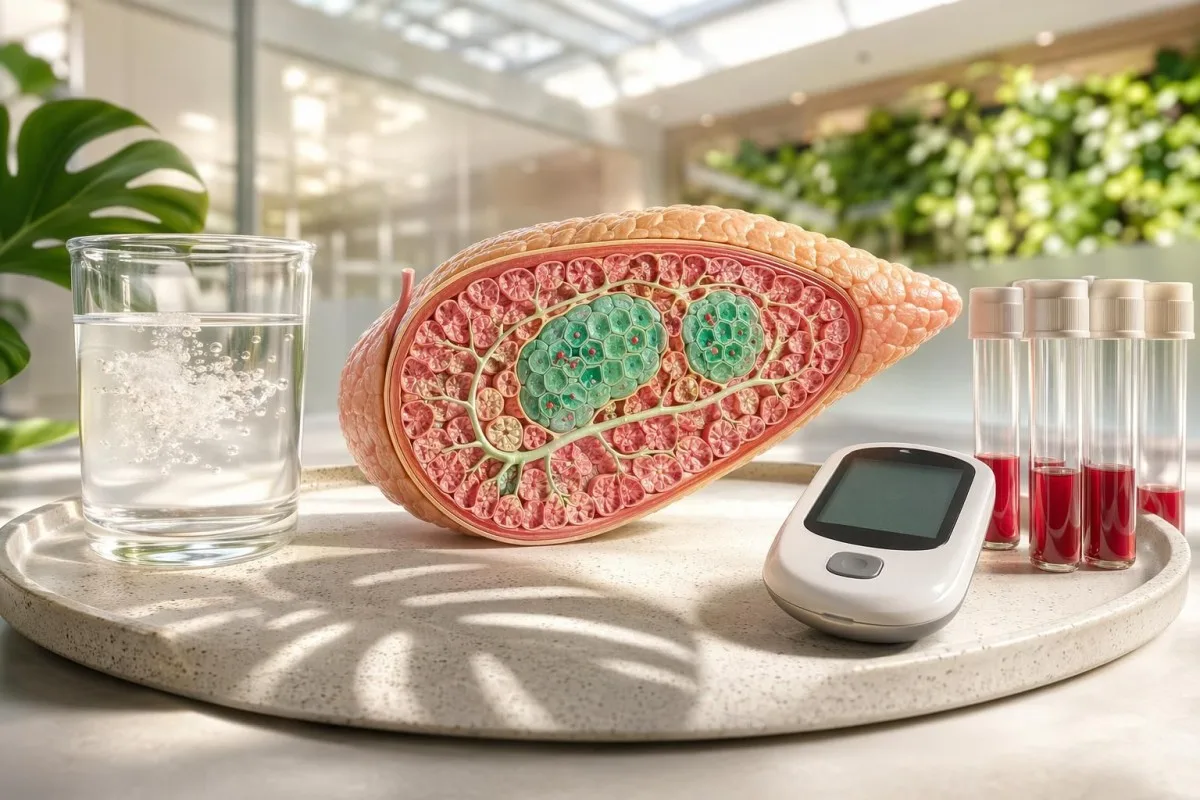
Hamiləlik şəkərlərinin yenidən normal olduğu deyildiyi halda, amma növbəti addımın nə olduğunu yenə də bilmək istəyən hər kəs üçün praktik doğuşdan sonrakı skrininq bələdçisi.


- 75 q OGTT Gestational Diabetesdən sonra üstünlük verilən test 4–12 həftə doğuşdan sonradır, çünki oruc qlükozasının qaçıra bildiyi 2 saatlıq qlükoza problemlərini aşkar edir.
- Diabet kəsim nöqtələri oruc plazma qlükozası ≥126 mg/dL, 2 saatlıq OGTT qlükozası ≥200 mg/dL, HbA1c ≥6.5% və ya simptomlarla birlikdə təsadüfi qlükoza ≥200 mg/dL olduqda.
- Prediabet hədləri oruc qlükozası 100–125 mg/dL, 2 saatlıq OGTT qlükozası 140–199 mg/dL və ya HbA1c 5.7–6.4% olduqda.
- HbA1c doğuşdan sonrakı erkən dövrdə doğuşdan sonra qan itirilməsi və ya yüksək eritrosit dövranı səbəbilə yalançı aşağı ola bilər, buna görə də 4–12 həftədə OGTT-ni əvəz etməməlidir.
- Normal hamiləlik qlükozası doğuşdan sonra gələcək riskin “silinməsi” demək deyil; gestational diabetes tez-tez beta-hüceyrə stress testi kimi illər əvvəl tip 2 diabetə qarşı həssaslığı üzə çıxarır.
- Yenidən yoxlanma intervalı doğuşdan sonrakı skrininq normal olarsa ömür boyu hər 1-3 ildən bir, hər hansı nəticə prediabet diapazonunda olarsa isə adətən ildə bir dəfə.
- Növbəti hamiləlikdən əvvəl hamilə qalmazdan əvvəl və ya birinci trimestrin əvvəlində qlükoza yoxlanışı istəyin; xüsusən də əvvəlki GDM insulin və ya dərman tələb edirdisə.
- Risk göstəriciləri məsələn, acqarına insulin, triqliseridlər, HDL, ALT və sidik albumin-kreatinin nisbəti diabeti diaqnoz etmir, amma kardiometabolik riski qiymətləndirməyə kömək edir.
Gestational Diabetesdən sonra diabeti diaqnoz edən qan analizləri
Doğuşdan sonrakı dövrdə gestasion diabetdən sonra diabeti aşkar edən qan analizləri bunlardır: 75 q 2 saatlıq oral qlükoza tolerantlıq testi, acqarına plazma qlükozasını, HbA1c, və təsadüfi plazma qlükozası klassik simptomlar olduqda. OGTT adətən 4-12 həftədə doğuşdan sonrakı diabet skrininqi üçün ən yaxşı testdir, çünki acqarına qlükoza və ya HbA1c anormal olmamışdan əvvəl 2 saatlıq qlükoza idarəetməsində pozulmanı aşkar edir.
Thomas Klein, MD olaraq xəstələrə deyirəm ki, sual təkcə bu gün rəqəmin yüksək olub-olmaması deyil; hamiləlikdən sonra mədəaltı vəzinin hələ də kifayət qədər ehtiyatı olub-olmamasıdır. 94 mg/dL acqarına qlükoza rahatlaşdırıcı görünə bilər, halbuki 168 mg/dL 2 saatlıq OGTT dəyəri birinci faz insulin cavabının ləngidiyini səssizcə göstərir.
Hamiləlikdən kənarda diabet diaqnozu acqarına plazma qlükozası ilə qoyulur Təsdiqlənərsə diaqnostikdir, 2 saatlıq OGTT qlükozası Klassik simptomlar varsa diabeti diaqnostika edə bilər, HbA1c ≥6.5%, və ya susuzluq, tez-tez sidiyə getmə və ya izah olunmayan çəki itkisi kimi simptomlarla müşayiət olunan təsadüfi plazma qlükozası ilə Klassik simptomlar varsa diabeti diaqnostika edə bilər susuzluq, tez-tez sidiyə getmə və ya səbəbsiz çəki itkisi kimi əlamətlərlə. Diaqnostik və monitorinq testlərinin sadə dildə müqayisəsi üçün, bizim Diaqnostik və monitorinq testlərinin sadə dildə müqayisəsi üçün bizim bələdçimiz faydalı tamamlayıcıdır.
diabet testinin kəsim göstəriciləri.
Niyə normal hamiləlik qlükozası gələcək riskin sıfırlanmasına səbəb olmur
Kantesti eyni klinik kontekstdə doğuşdan sonrakı qlükozanı, HbA1c-ni, lipidləri və böyrək göstəricilərini tək-tək “siqnal” kimi deyil, birlikdə oxuyan AI qan analizi aparatıdir. 2M+ yüklənmiş laboratoriya hesabatlarının analizimizdə bir nümunə təkrarlanır: insanlar hamiləlik diaqnozunu xatırlayır, amma onların 4-12 həftəlik OGTT nəticəsi çox vaxt uzunmüddətli sağlamlıq qeydinə düşmür.
Gestasion diabet, tip 2 diabet ortaya çıxmazdan çox əvvəl beta-hüceyrə həssaslığını üzə çıxara bilər.
Plasenta insulin rezistentliyini artıran hormonlar istehsal edir; bu, çox vaxt ən çox 24-28 həftələrdən sonra nəzərə çarpır. Doğuşdan sonra qlükoza normallaşanda bu, stressorun aradan qalxdığını göstərir; insulin istehsal edən hüceyrələrin ehtiyatının limitsiz olduğunu sübut etmir Bellamy və digərləri The Lancet-də bildirmişdir ki, əvvəllər gestasion diabet keçirmiş qadınlarda sonradan 7 dəfə daha yüksək risk 150 mq/dL, GDM olmayanlarla müqayisədə tip 2 diabet riski (Bellamy və digərləri, 2009). Gündəlik praktikada mən bu risk qrupunu bel artımı, triqliseridlərin.
, aşağı HDL, ailə anamnezi, PCOS və doğuşdan sonrakı ilk iki ildə yuxu pozulması ilə birlikdə görürəm 5.3% Doğuşdan sonra altı ay keçməsinə baxmayaraq, bu hal hələ də erkən insulin rezistentliyi ilə yanaşı mövcud ola bilər. Daha dərin metabolik baxış istəyirsinizsə, bələdçimiz insulin rezistentliyi testləri ilə müqayisə edin. izah edir ki, A1C prediabet xəttini keçməzdən əvvəl aclıq insulini və qlükoza necə dəyişə (sürüşə) bilər.
Doğuşdan sonra diabet skrininqi nə zaman aparılmalıdır
Doğuşdan sonrakı diabet skrininqi doğuşdan sonra 4-12 həftə ərzində aparılmalıdır, tercihen 75 g-lıq 2 saatlıq OGTT ilə. Bu pəncərə qaçırılıbsa, ən yaxşı vaxt indi test verməkdir; hamiləlik 6 ay əvvəl və ya 6 il əvvəl olubsa, növbəti illik müayinəni gözləməzdim.
Amerika Diabet Assosiasiyası (American Diabetes Association) gestasion diabetdən sonra 4-12 həftə postpartum 75 g OGTT və ömürboyu skrininqi hər 1-3 years (American Diabetes Association Professional Practice Committee, 2024) tövsiyə edir. ACOG da bu erkən dövrdə postpartum skrininqi dəstəkləyir və bir çox doğuşxana klinikası bunu 6 həftəlik vizitdən əvvəl sifariş etməyə çalışır ki, unudulmasın (ACOG, 2018).
Emzirmə, yuxunun parçalanması və doğuşdan sonrakı çəki dəyişiklikləri hamısı qlükozanın günbəgün dəyişməsinə təsir edə bilər, amma testdən yayınmaq üçün səbəb deyil. Əksər pasiyentlər emzirərkən də OGTT verə bilir; praktik problem çox vaxt 2 saatlıq laboratoriya gözləməsi zamanı uşaq baxımıdır, biologiya deyil.
Doğuşdan sonra anemiya, qalxanabənzər vəz funksiyası, qaraciyər fermentləri və ya böyrək göstəriciləri üçün də yoxlamalara ehtiyacınız varsa, bizim postpartum laboratoriya yoxlama siyahımız qlükoza skrininqi ilə tez-tez birlikdə aparılan hansı testlərin olduğunu göstərir. Tək bir görüş çox vaxt birdən çox postpartum problemi əhatə edə bilər.
75 qram oral qlükoza tolerantlıq testi (OGTT) necə şərh olunur
The hamiləlikdən sonra oral qlükoza tolerantlıq testi 75 g-lıq qlükoza içkisindən sonra aclıq qlükozasını və 2 saatlıq qlükozanı ölçür. 2 saatlıq göstərici Klassik simptomlar varsa diabeti diaqnostika edə bilər diabeti diaqnoz edir, halbuki 140–199 mq/dL aclıq qlükozası normal olsa belə pozulmuş qlükoza tolerantlığını diaqnoz edir.
Test işləyir, çünki onu istirahətdə müşahidə etməkdənsə, insulin sistemini “sınağa” çəkir. Mənim təcrübəmə görə, əvvəlki GDM olan insanlar çox vaxt aclıq hissəsini keçir, amma 2 saatlıq hissədə uğursuz olur; bu nümunə yeməklərdən sonra insulin sekresiyasının gecikdiyini göstərir.
Ən azı 3 gün normal pəhriz, əvvəlki gecə cəzalandırıcı məşq etməmək və təkrar dəyəri real bazal göstəricinizdən daha yaxşı göstərən qəhrəmanlıq səviyyəsində 24 saatlıq ac qalma olmaması, ideal olaraq ən azı gündə 150 q karbohidrat daxil olmaqla, adi qidalanma ilə hazırlanın , əgər həkiminiz başqa cür deməyibsə. OGTT-dən əvvəl çox aşağı karbohidratlı pəhriz qlükoza artımını şişirdə və şərhi çətinləşdirə bilər; bizim ac qalma qaydaları bələdçimiz su, qəhvə və vaxtlama detallarını əhatə edir.
2 saatlıq gözləmə müddətində ağır məşq etməyin və qusursunuzsa və ya içkini bitirə bilmirsinizsə, laboratoriyaya bildirin. Prosedur düzgün tamamlanmayıbsa, nəticə təkrar edilməli və ya başqa diaqnostik testlə əvəz olunmalıdır.
Oruc qlükozası nələri aşkar edə bilər və nələri edə bilməz
Ac-plazma qlükozası diabeti aşkar edir, əgər ac vəziyyətdəki göstərici Təsdiqlənərsə diaqnostikdir, lakin hamiləlik diabetindən sonra təkcə yeməkdən sonrakı (izolyə olunmuş) qlükoza dözümsüzlüyünü qaçıra bilər. Faydalıdır, ucuzdur və təkrarlana bilir; sadəcə doğuşdan sonrakı OGTT-ni əvəz etmək üçün çox kobuddur.
Oruc qlükozası 100-125 mq/dL ADA meyarlarına görə prediabetdir, halbuki <100 mq/dL ABŞ-da ümumən normal sayılır. Bəzi beynəlxalq sistemlər 110 mq/dL aşağı pozulmuş-ac qlükoza həddi kimi istifadə edir; bu da xəstələrin ölkələr arasında keçid edərkən çaşmasının səbəblərindən biridir.
Klinik tələ ac qlükozanın 88-96 mq/dL olduğu, 2 saatlıq OGTT-nin isə 155-185 mq/dL olduğu vəziyyətdir. Yalnız ac qlükoza yoxlanılıbsa, həmin şəxsə hər şeyin qaydasında olduğu deyə bilər, amma yemək vaxtı qlükoza biologiyası artıq anormaldır.
Səhər qlükozası yuxu borcu, gecəyarısı yemək, kortikosteroidlər, infeksiya və “dawn” (sübh şəfəqi) fenomenindən təsirlənir. Bizim acqarına şəkər bələdçimiz tək bir səhər nəticəsinin əvvəlki axşam və yuxu keyfiyyəti nəzərə alınaraq şərh edilməsinin səbəbini izah edir.
Niyə HbA1c doğuşdan sonra əlverişlidir, amma tam dəqiq deyil
HbA1c diabeti aşkar edir ≥6.5%, lakin doğuşdan sonrakı ilk 4-12 həftədə daha az etibarlıdır, çünki doğuş zamanı qan itkisi və eritrositlərin yenilənməsi nəticəni təhrif edə bilər. HbA1c sonradan, xüsusən də uzunmüddətli izləmədə faydalıdır, amma ilk doğuşdan sonrakı OGTT-ni əvəz etməməlidir.
HbA1c təxminən orta qlükozanı qiymətləndirir 8-12 həftə, ən son ayın göstəricisinə daha çox meylli. Doğuşdan sonra anemiya, transfuziya, dəmir çatışmazlığı və ya qırmızı qan hüceyrələrinin sürətli yenilənməsi dəyəri həqiqi qlükoza hekayəsindən uzaqlaşdıra bilər.
Dəmir çatışmazlığı bəzi xəstələrdə HbA1c-ni yalançı olaraq yüksəldə bilər, halbuki yaxın dövrdə baş vermiş qan itkisi onu yalançı olaraq azalda bilər. Bu, rəqəmdən daha çox kontekstin önəmli olduğu belə sahələrdən biridir; ferritin 5.6% olduqda doğuşdan sonrakı HbA1c 8 ng/mL və OGTT heç vaxt aparılmadısa, o qədər də rahatladıcı olmaya bilər.
Əgər A1c göstəriciniz barmaqla ölçülən qlükoza nəticələri və ya simptomlarla uyğun gəlmirsə, dəyəri olduğu kimi qəbul etməzdən əvvəl A1c dəqiqliyi barədə bələdçimizi oxuyun. Doğuşdan sonrakı hekayə uyğunsuz görünəndə adətən HbA1c-ni ac qlükoza, CBC və ferritinlə birlikdə qiymətləndirirəm.
Nə vaxt təsadüfi qlükoza və ya simptomlar sürətli müdaxilə tələb edir
Təsadüfi plazma qlükoza, o zaman diabeti aşkar edir ki, Klassik simptomlar varsa diabeti diaqnostika edə bilər və simptomlar mövcuddur. Gestasion diabetdən sonra qusma, susuzlaşma, sürətli çəki itkisi, ketonlar, bulanıq görmə və ya qeyri-adi halsizlik ilə müşayiət olunan yüksək qlükoza üçün təcili yenidən qiymətləndirmə lazımdır.
GDM-dən sonra diabetin çoxu 2-ci tip olur, amma doğuşdan sonrakı autoimmun diabet bəzən görünə bilər; xüsusilə çəki itkisi sürətli olduqda və ketonlar mövcud olduqda. Qlükozası 280 mq/dL olan və artıq ketotik olduğu halda sadəcə yorğun yeni valideyn kimi rədd edilən xəstələr görmüşəm.
Təsadüfi qlükoza 140–199 mq/dL təkbaşına diaqnostik deyil, amma zamanlama və simptomlardan asılı olaraq ac qlükoza, HbA1c və ya OGTT-yə yönləndirməlidir. Təsadüfi dəyər 300 mq/dL, üzərindədirsə, xüsusən də qarın ağrısı və ya çətinləşmiş nəfəsalma ilə birlikdədirsə, eyni gün tibbi yardım kimi qəbul edilməlidir.
Tək bir yüksək dəyər xəstəlikdən, steroidlərdən və ya çox yüksək karbohidratlı yeməkdən sonra baş verə bilər, amma nümunə önəmlidir. Gözlənilməz yüksək qlükoza barədə bələdçimiz klinisyenlərin stress hiperglisemiyasını erkən diabetdən necə ayırdığını izah edir. Stress hiperglisemiyası.
Diabet hələ görünmədən riski göstərən qan göstəriciləri
Ac insulin, C-peptid, trigliseridlər, HDL, ALT və sidik albumin-kreatinin nisbəti diabeti diaqnostika etmir, amma gestasion diabetdən sonra metabolik riski göstərməyə kömək edir. Bu markerlər qlükoza texniki olaraq hələ normal ikən insulin rezistentliyini, yağlı qaraciyər meylini və ya erkən böyrək stresini üzə çıxara bilər.
Təxminən 15-20 µIU/mL-dən yuxarı olduqda insulin rezistentliyini göstərə bilər, baxmayaraq ki, laboratoriya metodları fərqlənir və universal diaqnostik hədd yoxdur. HOMA-IR acqarına insulin və acqarına qlükoza istifadə edir; dəyərlər 2.0-2.5 çox vaxt yetkinlərdə şübhəni artırır, lakin etnik mənsubiyyət, BMI və analiz seçimi interpretasiyanı dəyişir.
trigliseridlər kişilərdə 150 mq/dL və HDL aşağı olduqda 50 mq/dL-dən yuxarı qadınlarda çox vaxt insulin rezistentliyi ilə birlikdə olur. ALT təxminən 25-30 IU/L əvvəllər GDM keçirmiş bir qadında laboratoriya göstəricisi hələ normal deyə işarə etsə də, erkən yağlı qaraciyər əlaməti ola bilər.
Kantesti normal A1c-nin gestasion diabetdən sonra risk göstəricisi sualı kimi şərh olunduğu, əbədi “yaşıl işıq” olmadığı AI biomarker interpretasiya platformasıdır. Əgər rəqəmlərinizdən insulin rezistentliyini hesablamaq istəyirsinizsə, HOMA-IR hesablaması ilə cütləşdirmək bələdçi formulunu və məhdudiyyətlərini göstərir.
Doğuşdan sonrakı skrininq normal çıxarsa, nə qədər tez-tez yenidən yoxlama aparılmalıdır
Gestasion diabetdən sonra postpartum skrininq normaldırsa, hər 1-3 ildən bir. Çəki artarsa, prediabet meydana çıxarsa, başqa hamiləlik planlaşdırılırsa və ya steroidlər və ya antipsixotiklər kimi dərmanlar qlükoza riskini artırarsa, daha tez, çox vaxt hər il təkrar edin.
ADA-nın hər 1-3 ildən bir ömürboyu skrininq tövsiyəsi mövcuddur, çünki diabet riski yalnız ilk postpartum ilində deyil, zaman keçdikcə artır. Klinikamda mən adətən 1-il intervalını seçirəm: prediabeti olan, insulinlə müalicə olunan GDM keçirmiş, BMI 30-dan yuxarı olan, güclü ailə anamnezi olan və ya PCOS olan hər kəs üçün.
2026-da normal test yenə də faydalıdır, çünki sizin əsas göstəricinizə çevrilir. Acqarına qlükozanın 82-dən 96 mq/dL-ə 3 il ərzində artması, xüsusən də triqliseridlər və bel çevrəsi eyni vaxtda yüksələrsə, işarələnmiş tək bir nəticədən daha mənalı ola bilər.
Kantesti AI qlükozanı, HbA1c-ni, trigliseridləri və ALT-ni zamanla qrafikləşdirə bilər ki, kiçik dəyişikliklər dramatikləşmədən əvvəl görünə bilsin. Məqaləmiz trend analizi izah edir ki, niyə tək bir laboratoriya göstəricisi bayrağından çox, meyl (slope) və qruplaşma (clustering) tez-tez daha önəmlidir.
Klinik həkiminizdən nəyi sifariş etməsini istəməlisiniz
4-12 həftə 75 q 2 saatlıq OGTT doğuşdan sonra, yaxud OGTT mümkün deyilsə, acqarına plazma qlükozası plus HbA1c. Uzunmüddətli risk üçün soruşun ki, qlükoza göstəricilərinizlə birlikdə lipidlər, ALT, kreatinin, eGFR və sidik albumin-kreatinin nisbəti yoxlanılmalıdırmı.
Doğuşdan sonrakı ilk ağlabatan sifariş çox vaxt belə oxunur: acqarına qlükoza, 75 q 2 saatlıq qlükoza, HbA1c, ağır doğuş qan itkisidirsə CBC, anemiya şübhəsi varsa ferritin, kardiometabolik risk yüksəkdirsə lipid paneli və CMP. Hər bir xəstəyə bütün testlər lazım deyil, amma sifariş hamiləlik hekayəsinə uyğun olmalıdır.
Əgər hamiləlik zamanı acqarına hiperglisemiya olubsa və ya insulinə ehtiyacınız olubsa, erkən təqibdə daha aqressiv davranardım. Əgər GDM-iniz yüngül olub və pəhrizlə nəzarətdə idisə, OGTT yenə də önəmlidir, amma uzunmüddətli izləmə ritmi daha çox hər 2-3 ildən bir nəticələrin hamısı normal olanda.
Hər bir göstəricinin əslində nəyi ölçdüyünü anlamaq istəyən oxucular üçün bizim biomarker bələdçimiz minlərlə laboratoriya göstəricisini və yayğın vahid fərqlərini əhatə edir. Xüsusilə bir laboratoriya qlükozanı mg/dL ilə, digəri isə mmol/L ilə bildirdikdə bu çox faydalıdır.
Həkimlər sərhəddə və ya ziddiyyətli nəticələrlə nə edir
Sərhəddə və ya ziddiyyətli diabet nəticələri adətən təkrar edilməli və ya fərqli bir diaqnostik testlə təsdiqlənməlidir. Acqarına qlükoza 124 mg/dL, HbA1c 6.4%, yaxud 2 saatlıq OGTT 198 mg/dL isə laqeyd yanaşılacaq məsələ deyil; bu, həddə çox yaxın nəticədir və plan tələb edir.
Klassik simptomlar olmadan, əksər klinisyenlər diabeti təkrar anormal nəticə ilə təsdiqləyir. Əgər iki fərqli test bir-biri ilə razılaşmırsa, adətən diaqnostik həddən yuxarı olan test təkrar edilir və xəstənin konteksti bunun nə qədər tez baş verdiyini müəyyən edir.
Thomas Klein, MD, praktik qayda: “sərhəddə” sözünün nəticəni zərərsiz kimi hiss etdirməsinə imkan verməyin. Əvvəlki GDM-dən sonra 2 saatlıq OGTT 196 mg/dL çox vaxt acqarına qlükoza -ə bərabərdir və xolesterin, kreatinin və bilirubin vahid dəyişəndə kağız üzərində dramatik şəkildə fərqli görünə bilər, amma fiziologiya dəyişmir., ilə müqayisədə gələcəkdə daha çox risk daşıyır, baxmayaraq ki, hər ikisi prediabet kimi qeyd oluna bilər.
Bələdçimiz prediabet hədləri acqarına qlükoza, A1c və OGTT-nin fərqli bioloji problemləri necə müəyyən etdiyini izah edir. Mən tez-tez GDM-dən sonra prediabeti “gözləmə zalı” kimi yox, müalicə pəncərəsi kimi çərçivələndirirəm.
Xüsusi vəziyyətlər: ana südü ilə qidalanma, anemiya, PCOS və dərmanlar
Emizdirmə, anemiya, PCOS, GLP-1 dərmanları, steroidlər və tiroid xəstəliyi doğuşdan sonrakı diabet laboratoriya analizlərinin necə şərh edilməsinə təsir göstərə bilər. Qlükoza kəsim nöqtələri eyni qalır, amma HbA1c, acqarına qlükoza və ya insulin səviyyələrinə verdiyiniz inam əhəmiyyətli dərəcədə dəyişə bilər.
Ana südü ilə qidalanma çox vaxt qlükoza mübadiləsini yaxşılaşdırır və gələcəkdə 2-ci tip diabet riskini azalda bilər, lakin skrininqin ehtiyacını aradan qaldırmır. Doğuşdan sonra insulin və ya sulfonilüre qəbul edirsinizsə, daha uzun qidalanmalar və ya qaçırılmış yeməklər zamanı hipoqlikemiya riski barədə klinisistinizdən soruşun.
PCOS ayrıca insulin-rezistentlik yolu əlavə edir və əvvəlki GDM plus PCOS mənim əlavə diqqətlə yanaşdığım kombinasiyalardan biridir. Bizim PCOS laboratoriya göstərici nümunələri izah edir ki, qlükoza hələ diaqnostik səviyyəyə çatmasa belə, acqarına insulin, lipidlər və androgenlər niyə önəmli ola bilər.
Steroid inyeksiyaları, yüksək doza prednizon, bəzi antipsixotiklər və ağır yuxusuzluq qlükozanı müvəqqəti yüksəldə bilər. Doğuşdan sonrakı yuxu hədləri ilə bağlı dəlillər dürüst desək qarışıqdır, amma yuxu parçalanması aşağıda olanda acqarına göstəricilərin daha pis olduğunu görürəm 5-6 saat həftələrlə.
Kantesti doğuşdan sonrakı diabet analizlərini təhlükəsiz şəkildə necə oxuyur
Kantesti doğuşdan sonrakı diabet laborator analizlərini qlükoza hədlərini vaxtlama, hamiləlik tarixi, anemiya ipucları, lipid nümunələri və böyrək göstəriciləri ilə birləşdirərək oxuyur. Məqsəd klinisistinizi əvəz etmək deyil; görüşünüzdən əvvəl risk nümunəsini daha aydın etməkdir.
Kantesti 2M+ insan tərəfindən 127 ölkədə istifadə olunan, qan analizi üçün AI ilə işləyən test alətidir; qan analizi PDF-i və ya fotoşəkilinin şərhi təxminən 60 saniyəyə. Doğuşdan sonrakı diabet skrininqi üçün neyron şəbəkəmiz diaqnostik qlükoza meyarlarını trigliseridlər, HDL, ALT və sidik ACR kimi risk-kontext göstəricilərindən ayırır.
Tipik yükləmə HbA1c 5.5%, acqarına qlükoza 92 mq/dL, ferritin 10 ng/mL və OGTT olmadan göstərə bilər. Kantesti AI bu rəqəmlərdən diabet diaqnozu qoymaz, amma erkən doğuşdan sonrakı A1C-nin etibarsız ola biləcəyini və tövsiyə olunan OGTT-nin çatışmadığını işarələməlidir.
Metodlarımız dərc olunmuş klinik standartlara və daxili həkim rəyinə uyğundur; oxucular bizim klinik təsdiqləmə standartlarımızla və əvvəlcədən qeydiyyatdan keçmiş AI benchmark. Əgər dəyərləri yazmaq əvəzinə skan yükləyirsinizsə, çünki laboratoriyalar hesabatların necə oxunub və yoxlanıldığını izah edir.
2026 və sonrasına uyğun praktik təkrar yoxlama planı
26 may 2026 tarixinə olan məlumata görə, gestasion diabetdən sonra ən təhlükəsiz plan 4-12 həftədə OGTT, hər 1-3 ildən bir təkrar skrininq və növbəti hamiləlikdən əvvəl daha erkən testdir. Əgər hər hansı nəticə prediabet diapazonundadırsa, onu yüngül laborator maraq kimi yox, aktiv profilaktika pəncərəsi kimi müalicə edin.
Mənim adi ssenarim sadədir: ilk doğuşdan sonrakı OGTT-ni götürün, nəticəni saxlayın, sonra həyat qarışmazdan əvvəl növbəti qlükoza yoxlamasını təqvimə yazın. Əgər 2 saatlıq OGTT-niz 140–199 mq/dL, diqqətli olmağınız barədə qeyri-müəyyən xatırlatmadan daha çox aydın təqib intervalı, qidalanma planı və məşq hədəfi istəyin.
Əgər diabet skrininqiniz normaldırsa, yenə də gələcək hər bir klinisistə GDM keçirdiyinizi deyin. Bu bir cümlə mənim acqarına qlükozanı oxuma tərzimə təsir edir: 103 mq/dL, trigliserid səviyyəsi 180 mq/dL, və ya HbA1c-nin 5.2%-dən 5.6%-ə qədər bir neçə il ərzində.
Kantesti Ltd Böyük Britaniyada fəaliyyət göstərən bir səhiyyə texnologiyası şirkətidir və həkimlərimiz aşağıda təsvir olunan tibbi məsləhətçi şuradan və klinik idarəetmə (governance) prosesi vasitəsilə tibbi məzmunu nəzərdən keçirir. Haqqımızda. Yekun nəticə: düzgün testlər mürəkkəb deyil, amma vaxtlama və şərh əksər insanların dediyindən daha çox önəmlidir.
Əlaqəli Kantesti tədqiqat nəşrləri
Doğuşdan sonrakı dövrdə diabetin skrininqi çox vaxt CBC, dəmir vəziyyəti və böyrək göstəricilərini də əhatə edən daha geniş laboratoriya yoxlamasının tərkibində olur. Aşağıda sadalanan Kantesti DOI nəşrləri, qırmızı qan hüceyrəsi indeksləri və HbA1c etibarlılığına və ya uzunmüddətli metabolik riskin qiymətləndirilməsinə təsir göstərə bilən böyrək funksiyası nisbətləri də daxil olmaqla, yaxın əlaqəli qan testi şərh etmə metodlarını dəstəkləyir.
Tez-tez verilən suallar
Hamiləlik diabetindən sonra diabeti aşkar edən hansı qan analizləri var?
Hamiləlik diabetindən sonra diabeti aşkar edən qan analizləri 75 q 2 saatlıq oral qlükoza tolerantlıq testi, acqarına plazma qlükozası, HbA1c və simptomlar olduqda təsadüfi plazma qlükozasıdır. Diabet aşağıdakı meyarlarla diaqnoz qoyulur: acqarına qlükoza ≥126 mq/dL, 2 saatlıq OGTT qlükozası ≥200 mq/dL, HbA1c ≥6.5% və ya klassik simptomlarla birlikdə təsadüfi qlükoza ≥200 mq/dL. OGTT doğuşdan sonrakı 4–12 həftə ərzində üstünlük təşkil edir, çünki acqarına qlükoza normal olduqda belə 2 saatlıq qlükoza idarəetməsində pozulmanı aşkar edə bilir.
Hamiləlikdən sonra oral qlükoza tolerantlıq testi HbA1c-dən daha yaxşıdırmı?
Bəli, doğuşdan sonra 4–12 həftə ərzində ilk skrininq üçün hamiləlikdən sonrakı oral qlükoza tolerantlıq testi (OGTT) adətən HbA1c-dən daha yaxşıdır. HbA1c doğuş zamanı qan itkisindən, anemiyadan, transfuziyadan və ya sürətli eritrosit dövranından təhrif oluna bilər, halbuki OGTT 75 q qlükoza sınağından sonra qlükozanın idarə olunmasını birbaşa ölçür. HbA1c isə sonradan uzunmüddətli skrininq və tendensiyaların (dinamikanın) izlənməsi üçün daha faydalı olur.
GDM-dən sonra doğuşdan sonrakı diabet skrininqi nə vaxt aparılmalıdır?
Gestasion diabetdən sonra doğuşdan sonrakı diabet skrininqi çatdırılmadan 4-12 həftə sonra, ideal olaraq 75 q 2 saatlıq OGTT ilə aparılmalıdır. Bu müddət qaçırılıbsa, simptomları gözləməkdənsə, mümkün olan ən tez vaxtda yoxlama aparılmalıdır. Doğuşdan sonrakı nəticə normaldırsa, ömür boyu hər 1-3 ildən bir diabet skrininqi təkrarlanmalıdır.
HbA1c normal ola bilər, amma hamiləlik diabetindən sonra OGTT anormal ola bilər?
Bəli, HbA1c hamiləlik diabetindən sonra OGTT anormal olduqda normal ola bilər. Bir şəxsdə HbA1c 5.3% və acqarına qlükoza 92 mq/dL ola bilər, amma 2 saatlıq OGTT göstəricisi 160 mq/dL olur ki, bu da qlükoza tolerantlığının pozulmasıdır. Bu, HbA1c-nin orta qlükozanı əks etdirməsi, OGTT-nin isə qlükoza yüklənməsindən sonra insulin cavabını “gərginləşdirməsi” ilə baş verir.
Gestational diabetdən sonra prediabet nəticələri nə deməkdir?
Gestational diabetdən sonra prediabet acqarına plazma qlükozası 100–125 mq/dL, 2 saatlıq OGTT qlükozası 140–199 mq/dL və ya HbA1c 5.7–6.4% ilə müəyyən edilir. 2 saatlıq OGTT-də anormallıq xüsusilə GDM-dən sonra tez-tez rast gəlinir və yalnız acqarına qlükoza təyin edilərsə qaçırıla bilər. Prediabet adətən illik təqib və strukturlaşdırılmış profilaktika planı ilə nəticələnməlidir.
Doğuşdan sonrakı skrininqim normaldırsa, nə qədər tez-tez yenidən yoxlanılmalıdır?
Əgər hamiləlik diabetindən sonra doğuşdan sonrakı diabet skrininqiniz normaldırsa, ömür boyu hər 1–3 ildən bir təkrar yoxlayın. Bir çox klinisyenlər, əgər siz insulinlə müalicə olunan GDM keçirmisinizsə, prediabetiniz varsa, PCOS varsa, BMI 30-dan yuxarıdırsa, güclü ailə anamnezi varsa və ya trigliseridlər yüksəlirsə, hər il yoxlanılmasını seçir. Test həmçinin başqa bir hamiləlikdən əvvəl və ya birinci trimestrin əvvəlində də təkrar edilməlidir.
Ana südü ilə qidalanma diabetin qan analizinin nəticələrini dəyişirmi?
Ana südü ilə qidalandırma qlükoza mübadiləsini yaxşılaşdıra və gələcəkdə 2-ci tip diabet riskini azalda bilər, lakin doğuşdan sonrakı diabet skrininqinə ehtiyacı aradan qaldırmır. Oruc qlükoza, OGTT və HbA1c üçün diaqnostik hədlər kimsə ana südü ilə qidalandırdığı üçün dəyişmir. Doğuşdan sonra diabet dərmanları istifadə edilərsə, həkimlər uzun qidalanmalar və ya yemək qaçırılmaları zamanı hipoqlikemiya riskini azaltmaq üçün vaxtı və ya dozanı tənzimləyə bilər.
Doğuşdan sonrakı qlükoza tolerantlıq testini əvəz edə bilərəmmi?
Xeyr. Daimi qlükoza monitoru gündəlik qlükoza nümunələrini göstərə bilər, lakin bu, gestasiya zamanı şəkərli diabet diaqnozu üçün laboratoriya oruc qlükozasını, HbA1c-i və ya 75 q qlükoza tolerans testini əvəz etmir. Həkiminiz sonradan həyat tərzi və ya müalicə qərarlarını dəstəkləmək üçün ondan istifadə edə bilər.
Mənim körpəmə, hamiləlik diabeti keçirdiyim üçün, diabet testi lazımdırmı?
Yenidoğanın qlükozası xəstəxanada yoxlanıla bilər, xüsusən də hamiləlik dövründə insulin və ya dərman istifadə etmisinizsə, amma əksər uşaqlara yalnız ana tərəfdən hamiləlik diabeti olduğu üçün davamlı olaraq diabetə dair qan testləri lazım olmur. Daimi pediatrik müayinələri davam etdirin və ailə vərdişlərini balanslı qidalanma, fiziki aktivlik və yuxu ətrafında dəstəkləyin.
Doğuşdan sonrakı OGTT zamanı qlükoza içkisini qəbul edə bilməsəm nə etməliyəm?
Testdən əvvəl klinisistinizə məlumat verin. Onlar ürəkbulanma ilə bağlı strategiyalarla testi yenidən planlaşdıra, acqarına qlükozanı və HbA1c-ni yoxlaya və ya müvəqqəti olaraq evdə və ya davamlı qlükoza məlumatlarından istifadə edə bilərlər, lakin bu alternativlər diaqnostik OGTT-ni tam əvəz edə bilməyə bilər.
Bu gün AI ilə gücləndirilmiş qan analizi nəticələrinin şərhini əldə edin
Ani və dəqiq laborator analiz şərhinə güvənən dünya üzrə 2 milyondan çox istifadəçiyə qoşulun. Qan analizinin nəticələrini yükləyin və bir neçə saniyəyə 15,000+ biomarkerlərinin hərtərəfli şərhini alın.
📚 İstinad edilən tədqiqat nəşrləri
Klein, T., Mitchell, S., & Weber, H. (2026). RDW qan analizi: RDW-CV, MCV və MCHC üçün tam bələdçi. Kantesti AI Tibbi Tədqiqatlar.
Klein, T., Mitchell, S., & Weber, H. (2026). BUN/Kreatinin Nisbətinin İzahı: Böyrək Funksiyası Testi Təlimatı. Kantesti AI Tibbi Tədqiqatlar.
📖 Xarici Tibbi İstinadlar
Amerika Diabet Assosiasiyası Peşəkar Təcrübə Komitəsi (2024). 2. Diabetin diaqnozu və təsnifatı: Diabet üzrə qayğı standartları—2024. Diabetes Care.
⚕️ Tibbi Məsuliyyətdən İmtina
Bu məqalə yalnız təhsil məqsədlidir və tibbi məsləhət təşkil etmir. Diaqnoz və müalicə qərarları üçün həmişə ixtisaslı səhiyyə işçisi ilə məsləhətləşin.
E-E-A-T Etibar Siqnalları
Təcrübə
Həkim rəhbərliyi ilə laborator şərh iş axınlarının klinik icmalı.
Ekspertiza
Biomarkerlərin klinik kontekstdə necə davrandığına dair laboratoriya təbabəti diqqəti.
Səlahiyyətlilik
Dr. Thomas Klein tərəfindən yazılıb; Dr. Sarah Mitchell və Prof. Dr. Hans Weber tərəfindən nəzərdən keçirilib.
Etibarlılıq
Aydın izləmə yolları ilə həyəcanı azaltmağa yönəlmiş sübuta əsaslanan şərh.