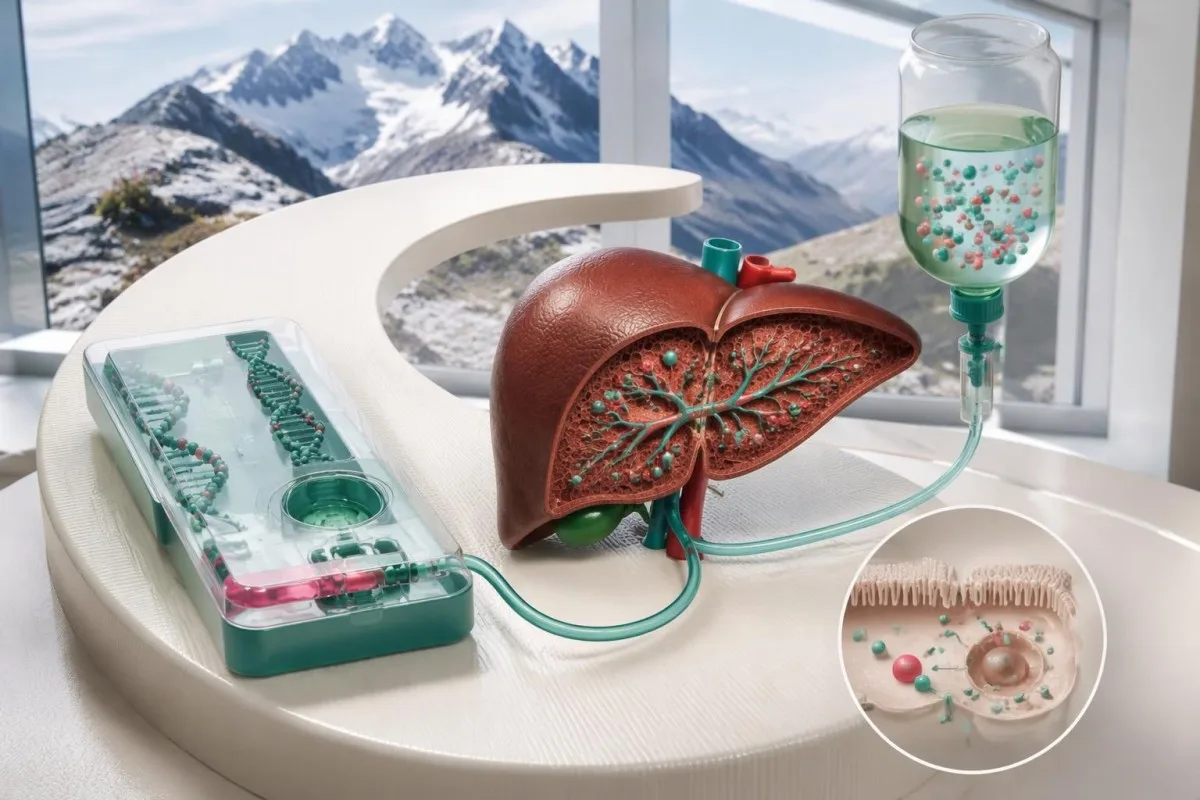
การตรวจ UGT1A1 สามารถระบุการกำจัดเมแทบอไลต์ออกฤทธิ์ของ irinotecan ที่ลดลง และช่วยกำหนดขนาดยาเริ่มต้นที่ปลอดภัยยิ่งขึ้น แต่ไม่สามารถทำนายปฏิกิริยาทุกรูปแบบได้ และการตัดสินใจขึ้นอยู่กับตำรับยาเฉพาะ สูตรการรักษา และการประเมินของทีมมะเร็งวิทยาของคุณ.

ประเด็นสำคัญ
- การตรวจ UGT1A1 ระบุความแตกต่างที่ถ่ายทอดทางพันธุกรรมในการยับยั้งฤทธิ์ SN-38; การตรวจบิลิรูบินหรือตับตามปกติใช้แทนผลตรวจทางพันธุกรรมไม่ได้.
- ผู้ที่มีความสามารถในการเมแทบอลิซึมต่ำ มักมีผล *28/*28, *6/*6 หรือ *6/*28 ซึ่งเพิ่มความเสี่ยงต่อภาวะนิวโทรพีเนียรุนแรงที่เกี่ยวข้องกับ irinotecan.
- ผู้ที่มีความสามารถในการเมแทบอลิซึมระดับปานกลาง มักมีผล *1/*28 หรือ *1/*6; กลุ่มเภสัชพันธุศาสตร์แห่งเนเธอร์แลนด์ไม่แนะนำให้ลดขนาดยาโดยอัตโนมัติโดยอาศัยจีโนไทป์เพียงอย่างเดียวในผู้ป่วยกลุ่มนี้.
- แนวทางการกำหนดขนาดยาเริ่มต้น แตกต่างกัน: แนวทางของเนเธอร์แลนด์แนะนำให้ใช้ 70% ของขนาดยาเริ่มต้น irinotecan ตามปกติในผู้ที่มีความสามารถในการเมแทบอลิซึมต่ำ จากนั้นปรับขนาดยาตามดุลยพินิจของแพทย์.
- สูตรการรักษามีความสำคัญ เพราะสูตร FOLFIRI แบบดั้งเดิมมักใช้ 180 mg/m² ทุก 2 สัปดาห์ ขณะที่ตารางการให้ยาอื่นและตำรับยาไลโปโซมใช้ขนาดยาที่แตกต่างกัน.
- ไอริโนทีแคนชนิดไลโปโซม มีคำแนะนำเฉพาะตามรูปแบบยา จึงห้ามถือว่าสูตรขนาด 70 mg/m² และสูตรขนาด 50 mg/m² ใช้แทนกันได้.
- ท้องเสียที่เกิดช้า เริ่มเกิดหลังได้รับไอริโนทีแคนเกิน 24 ชั่วโมง และอาจเป็นอันตรายจากภาวะขาดน้ำ การสูญเสียอิเล็กโทรไลต์ หรือภาวะนิวโทรพีเนียที่เกิดร่วมด้วย.
- ต้องประเมินอย่างเร่งด่วน จำเป็นเมื่อมีอุณหภูมิ 38.0°C ขึ้นไปในระหว่างให้เคมีบำบัด เว้นแต่ทีมมะเร็งวิทยาของคุณจะแจ้งเกณฑ์อื่นที่เข้มงวดกว่า.
การตรวจ UGT1A1 เปลี่ยนแปลงอะไรบ้างก่อนให้ยาครั้งแรก?
A การตรวจ UGT1A1 ก่อนให้ไอริโนทีแคน ระบุความสามารถที่ลดลงในการทำให้ SN-38 ซึ่งเป็นเมแทบอไลต์ออกฤทธิ์ของยา หมดฤทธิ์ ผลตรวจ เช่น 28/*28, *6/*6 หรือ *6/*28 สามารถใช้ประกอบการพิจารณาลดขนาดยาเริ่มต้นและติดตามภาวะนิวโทรพีเนียรุนแรงกับท้องเสียที่เกิดช้าอย่างใกล้ชิด ทั้งนี้ทีมมะเร็งวิทยาต้องนำผลไปปรับใช้กับสูตรยาที่ใช้จริง.

การตรวจมีประโยชน์มากที่สุดก่อนรอบการรักษาที่ 1 เพราะความแตกต่างด้านการกำจัดยาที่ถ่ายทอดทางพันธุกรรมมีอยู่ก่อนเกิดอาการจากการรักษาใด ๆ ผลตรวจไม่ได้วัดปริมาณไอริโนทีแคนที่กำลังหมุนเวียนอยู่ในร่างกาย และไม่ได้บอกว่าเคมีบำบัดจะได้ผลหรือไม่ ซึ่งเป็นคนละประเด็นที่ประเมินได้จากการตอบสนองต่อการรักษา การประเมินทางคลินิก และในบางกรณีอาจใช้วิธีทางเภสัชจลนศาสตร์โดยผู้เชี่ยวชาญ.
ผู้ป่วยสมมติรายหนึ่งที่มีกำหนดรับไอริโนทีแคนสูตรมาตรฐานขนาด 180 mg/m² อาจได้รับแผนขนาดยาเริ่มต้นที่แตกต่างออกไปหลังทราบผลว่าเป็นผู้ที่มีเมแทบอลิซึมช้า ขณะที่ผู้ป่วยอีกรายที่มีจีโนไทป์เหมือนกันอาจได้รับสูตรยาผสมขนาดต่ำกว่าอยู่แล้ว คำถามที่เป็นประโยชน์จึงไม่ใช่เพียงว่าผลตรวจเป็นบวกหรือไม่ แต่ควรถามว่าผลตรวจทำให้ขนาดยาเริ่มต้น ตารางการติดตาม และเกณฑ์การเพิ่มขนาดยาเปลี่ยนแปลงอย่างไร.
คันเตสตีเป็น เครื่องวิเคราะห์ผลเลือด AI ที่ช่วยอธิบายผลรายงาน CBC และบิลิรูบินตามปกติ ไม่ใช่ห้องปฏิบัติการที่ตรวจจีโนไทป์ UGT1A1 หรือบริการที่สั่งจ่ายเคมีบำบัด ของเรา องค์กรและวัตถุประสงค์ทางคลินิก แตกต่างจากบทบาทการสั่งจ่ายยาของทีมมะเร็งวิทยาของคุณ ให้เก็บรายงานทางพันธุกรรมและผลตรวจทางห้องปฏิบัติการเฉพาะรอบการรักษาแยกเป็น 2 ส่วนในเวชระเบียนการรักษา.
UGT1A1 *28 และ *6 ส่งผลต่อเมแทบอลิซึมของ irinotecan อย่างไร?
UGT1A1 *28 ทำให้การแสดงออกของเอนไซม์ลดลง ขณะที่ ตัวแปร UGT1A1 *6 ทำให้การทำงานของเอนไซม์ลดลงผ่านการเปลี่ยนแปลงในบริเวณรหัสพันธุกรรม ทั้งสองอย่างอาจชะลอการเปลี่ยน SN-38 ที่ออกฤทธิ์เป็น SN-38G ซึ่งเป็นกลูคูโรไนด์ที่ออกฤทธิ์น้อยกว่ามาก ส่งผลให้การได้รับยาสูงขึ้นโดยไม่จำเป็นต้องมีผล ALT หรือ AST ผิดปกติ.

คาร์บอกซิลเอสเทอเรสเปลี่ยนไอริโนทีแคนเป็น SN-38 ในขั้นแรก จากนั้น UGT1A1 จึงมีส่วนในการทำให้ SN-38 หมดฤทธิ์ ไม่ใช่ในการออกฤทธิ์เริ่มแรก โดยทั่วไปแอลลีล *28 มี TA ซ้ำ 7 ครั้งในบริเวณโปรโมเตอร์ แทนที่จะเป็น 6 ครั้งตามแบบ *1 ขณะที่ *6 มักระบุเป็น c.211G>A ซึ่งทำให้เกิดการแทนที่ p.Gly71Arg.
เอนไซม์ชนิดเดียวกันนี้ยังจับคู่กับบิลิรูบินด้วย จึงอธิบายความเกี่ยวข้องกับ กลุ่มอาการกิลเบิร์ตและบิลิรูบิน. อย่างไรก็ตาม ผลบิลิรูบินปกติไม่ได้ตัดความเป็นไปได้ของจีโนไทป์ที่มีการทำงานลดลง และผลที่สูงขึ้นก็ไม่ได้ระบุว่ามีตัวแปรชนิดใด การอดอาหาร การเจ็บป่วย การอุดตัน และการทำงานของตับบกพร่องอาจเปลี่ยนการแปลผลของการตรวจเพียงครั้งเดียวได้.
Minami และคณะศึกษาทั้ง *6 และ *28 ในผู้ป่วยชาวญี่ปุ่น และพบความเชื่อมโยงระหว่างความแปรผันของ UGT1A กับเภสัชจลนศาสตร์และพิษจากไอริโนทีแคน (Pharmacogenetics and Genomics, 2007) ผลงานนี้มีความสำคัญเพราะการตรวจที่จำกัดเฉพาะ *28 อาจมองข้ามแอลลีล *6 ที่มีความสำคัญทางคลินิก ผู้ป่วย 2 รายที่ระบุว่า *28-negative จึงไม่จำเป็นต้องมีความสามารถในการกำจัด SN-38 เท่ากัน.
ผลแบบใดบ่งชี้ว่าเป็นผู้ที่มีความสามารถในการเมแทบอลิซึม UGT1A1 ต่ำ?
A ผู้ที่มีเมแทบอลิซึม UGT1A1 ช้า generally carries 2 decreased-function alleles, including 28/*28, *6/*6 หรือ *6/*28. A person with *1/*28 or *1/*6 usually has an intermediate-metabolizer phenotype; *1/*1 is usually classified as normal when the test adequately covers relevant variants.

The slash separates the 2 inherited gene copies; it is not a fraction or a drug concentration. A *6/*28 result usually means one decreased-function allele came from each parent, creating a compound-heterozygous poor-metabolizer result; possessing 2 different allele names does not make the result less clinically relevant than *28/*28.
Intermediate metabolism is not the same as zero risk. Although the Dutch guideline does not recommend an automatic reduction for *1/*28 or *1/*6, a patient starting at 180 mg/m² may still need modification because of elevated bilirubin, limited marrow reserve, previous toxicity, or the accompanying drugs; the phenotype is one input, not permission to ignore the rest.
Pharmacogenetic recommendations are drug-specific, as our explanation of SLCO1B1-related medication risk also illustrates. A reduced-function result does not mean every medicine is unsafe, and *28/*28 does not itself diagnose a hereditary cancer syndrome; ask the laboratory to provide the diplotype, assigned phenotype, and variants tested rather than a 1-word positive result.
การตรวจทางพันธุกรรมควรครอบคลุมอะไรบ้าง และจำเป็นต้องตรวจเมื่อใด?
The test should clearly state whether it detects both *28 and *6, how it assigns the 2 alleles, and which other variants it evaluates. Testing before the first irinotecan dose allows the result to influence prevention rather than merely explain toxicity after it occurs.
UGT1A1 *6 is more frequent in several East Asian populations, while *28 occurs across multiple ancestry groups; ancestry can inform test coverage but cannot substitute for testing. Some assays also distinguish the 5-repeat *36 and 8-repeat *37 alleles, so reports from 2 laboratories may differ because their analytical scope differs—not because your inherited genotype changed.
A laboratory may use a blood-derived DNA sample or a validated saliva or cheek-cell method; fasting is not ordinarily required for the genetic analysis itself. Recent allogeneic stem-cell transplantation needs special discussion because circulating DNA may reflect the donor, and turnaround time must be checked locally rather than assumed to fit a treatment appointment in 2 days.
Genotyping and enzyme-activity testing are not interchangeable, a distinction also relevant to TPMT test interpretation. UGT1A1 genotype generally needs testing only once, but a narrow panel may warrant additional analysis if the clinical picture is unexpected; a report listing only 1 tested variant should not be read as proof that every other reduced-function allele is absent.
UGT1A1 เพิ่มความเสี่ยงต่อภาวะนิวโทรพีเนียรุนแรงมากเพียงใด?
Poor-metabolizer genotypes increase the likelihood of นิวโทรพีเนียรุนแรง, but the size of the increase depends on dose and regimen. Grade 3 neutropenia generally means an absolute neutrophil count below 1.0 down to 0.5 × 10⁹/L; grade 4 means below 0.5 × 10⁹/L.
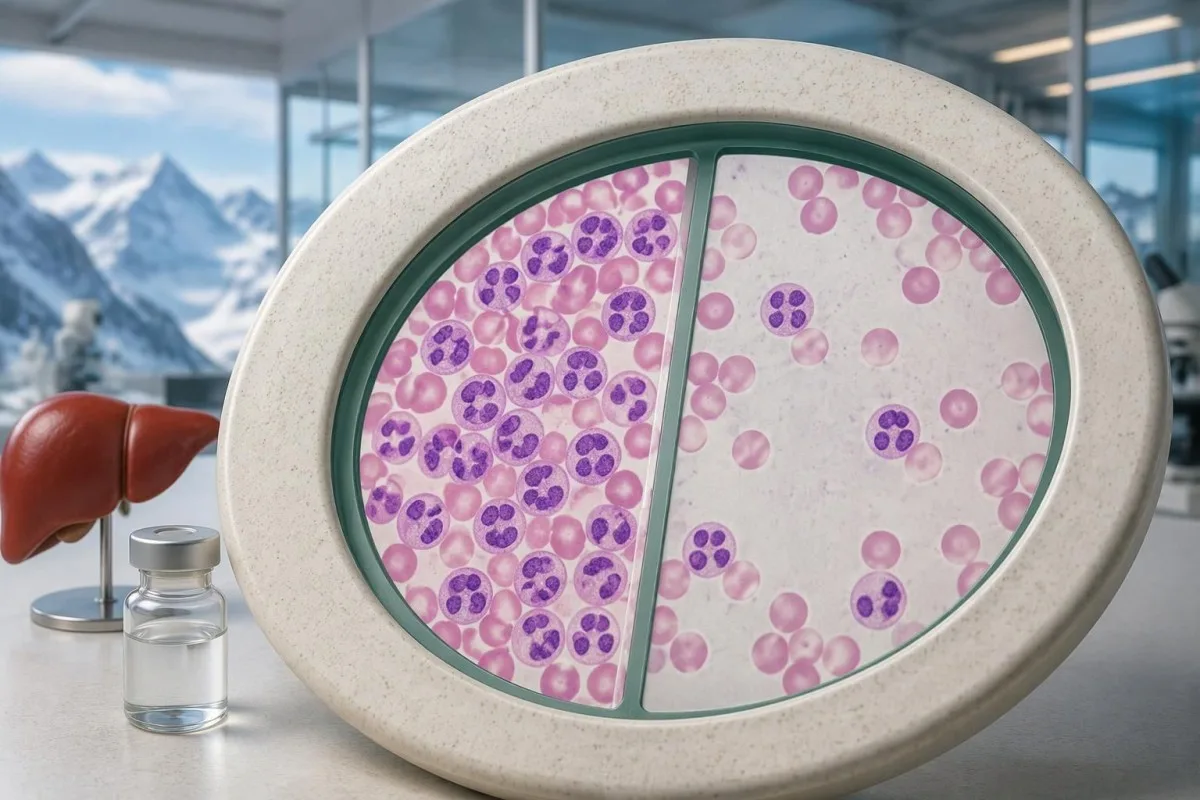
Hoskins et al. reported a dose-dependent association between *28/*28 and irinotecan-related neutropenia in their 2007 Journal of the National Cancer Institute meta-analysis. In the 150–250 mg/m² category, the pooled odds ratio was 3.22, with a 95% confidence interval of 1.52–6.81; older mixed schedules and wide uncertainty prevent treating this as a personal probability.
An odds ratio is not the percentage of patients affected. In a purely hypothetical illustration, if baseline risk were 10%, an odds ratio of 3 would correspond to approximately 25% risk—not 30%; the actual baseline varies with companion drugs, supportive care, prior treatment, and eligibility criteria, so no single percentage applies to every poor metabolizer.
Kantesti can help readers distinguish the ANC from the neutrophil percentage in routine reports, using the concepts explained in our คู่มือจำนวนนิวโทรฟิลสัมบูรณ์. A pre-existing Duffy-null-associated lower ANC requires individualized interpretation, but a new chemotherapy-related fall below 0.5 × 10⁹/L still deserves prompt oncology assessment rather than reassurance based on ancestry alone.
เหตุใดอาการท้องเสียจาก irinotecan ระยะแรกกับระยะหลังจึงแตกต่างกัน?
Early diarrhea occurs during or shortly after infusion, usually within 24 hours, and may accompany cholinergic symptoms such as sweating or abdominal cramping. ท้องเสียที่เกิดช้า begins more than 24 hours after treatment and is more closely related to intestinal toxicity, including exposure to SN-38.
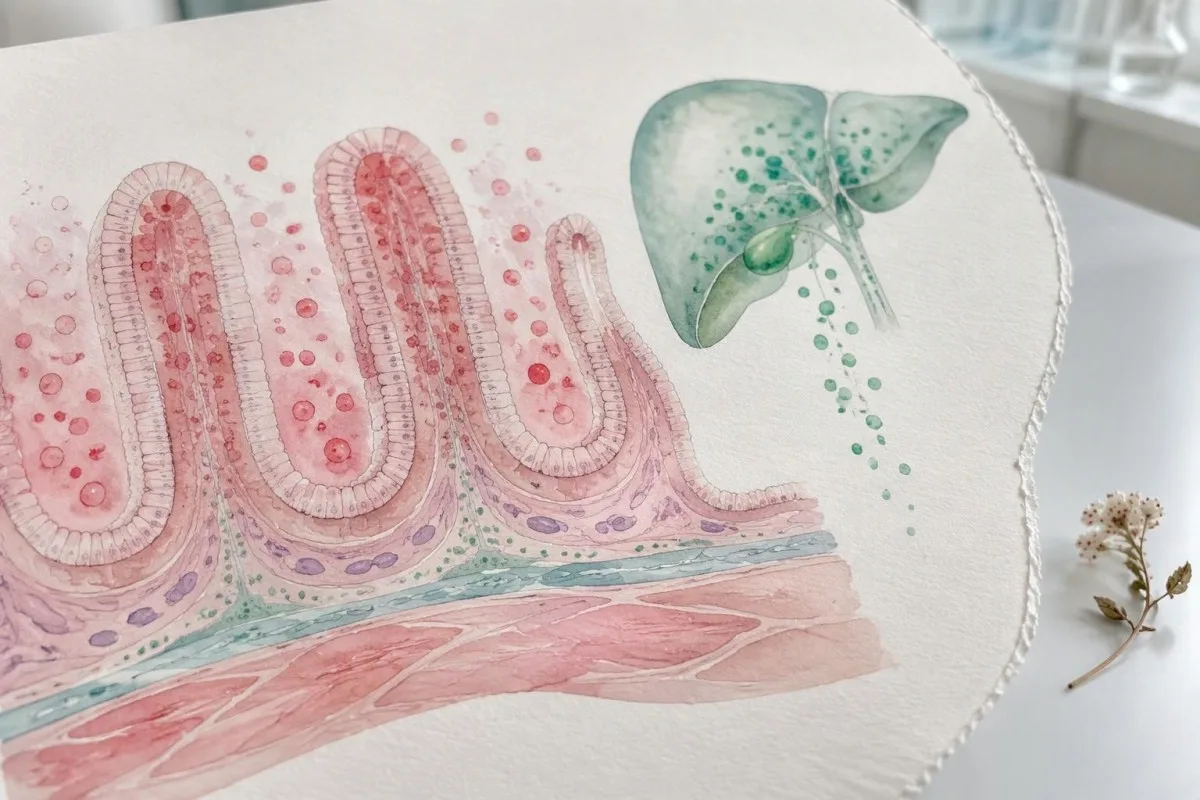
UGT1A1 genotype is more useful for anticipating delayed toxicity than predicting the immediate cholinergic syndrome. Clinicians may use atropine for early symptoms when appropriate, while delayed diarrhea requires a separate written treatment plan; intestinal bacteria can convert SN-38G back to SN-38 through beta-glucuronidase activity, illustrating why liver conjugation is not the only determinant of bowel exposure.
Grade 3 diarrhea commonly includes at least 7 additional stools per day above baseline, hospitalization being indicated, or a severe increase in ostomy output. Do not wait to reach that count before calling: persistent diarrhea despite the prescribed plan, vomiting that prevents drinking, fever, dizziness, or reduced urine output can justify urgent assessment at a much smaller stool increase.
Diarrhea during chemotherapy should not automatically be attributed to genotype, because antibiotics, infections, and accompanying drugs can produce similar symptoms; our C. difficile result guide explains one relevant diagnostic complication. If diarrhea lasts beyond 24 hours despite your oncology instructions, contact the team, and treat blood in the stool or significant abdominal pain as warning signs rather than ordinary treatment effects.
สูตรการรักษาเปลี่ยนการตัดสินใจเรื่องขนาดยาเริ่มต้นอย่างไร?
A starting-dose decision combines UGT1A1 phenotype with the planned regimen, not genotype alone. Conventional FOLFIRI commonly uses irinotecan 180 mg/m² every 2 weeks, whereas modified combinations may use 150 mg/m² or another protocol-specific amount; those differences change baseline exposure and toxicity.

The Dutch Pharmacogenetics Working Group recommends starting poor metabolizers at 70% of the normal irinotecan dose, with subsequent increases guided by neutrophil counts and clinical tolerance (Hulshof et al., 2023). Applied hypothetically to a 180 mg/m² protocol, 70% is 126 mg/m²; the prescribing team decides whether protocol rules permit rounding, what dose level to use, and when reassessment occurs.
A 70% calculation is relative to the regimen’s usual starting dose, not a fixed universal dose. For a hypothetical protocol starting at 150 mg/m², the same calculation gives 105 mg/m²; applying the 126 mg/m² figure from a different protocol would therefore be a genuine dosing error, especially if the infusion schedule or formulation also differed.
คันเตสตีเป็น แพลตฟอร์มการแปลผลตรวจเลือดของ AI for explaining reported laboratory values, not selecting a 180 mg/m² chemotherapy prescription; our กรอบการตรวจยืนยันทางคลินิก describes the distinction between interpretation support and prescribing. In combinations containing fluorouracil or capecitabine, การตรวจ DPYD ก่อนให้เคมีบำบัด addresses a separate metabolic risk that a normal UGT1A1 result cannot rule out.
เหตุใดแนวทางการให้ขนาดยา irinotecan จึงแตกต่างกันระหว่างแนวทางเวชปฏิบัติ?
Guidelines differ because they interpret dose-dependent evidence differently and serve different clinical settings. The Dutch guideline recommends a 70% starting dose for poor metabolizers, while US conventional irinotecan prescribing information advises considering a reduction by at least 1 dose level, without defining one percentage for every regimen.

A dose level is defined by the treatment protocol rather than by the genetic test. Moving from 180 to 150 mg/m² would be approximately a 17% reduction, while moving from 180 to 120 mg/m² would be approximately a 33% reduction; these are mathematical examples, not recommendations, and explain why the phrase reduce one level needs a named protocol.
The French RNPGx/GPCO dose-stratified framework has historically distinguished doses below 180 mg/m², doses of 180–230 mg/m², and high doses of at least 240 mg/m². It recommended approximately 25–30% reduction for *28/*28 at the intermediate range and advised against high-dose use in that genotype; the Dutch recommendation is broader, including lower-dose regimens and other poor-metabolizer combinations.
The evidence is genuinely less settled at lower doses, where severe events may be less frequent and studies less able to estimate genotype effects precisely. This differs from HLA-B*57:01 drug avoidance, where the relevant recommendation is avoidance rather than a 30% reduction; ask which local guideline your team follows and whether its advice specifically covers *6/*6 or *6/*28.
irinotecan ชนิดไลโปโซมใช้กฎการปรับขนาดยาตาม UGT1A1 แบบเดียวกันหรือไม่?
Liposomal irinotecan is not interchangeable with conventional irinotecan, and its UGT1A1 instructions depend on the regimen. In the liposomal irinotecan plus fluorouracil/leucovorin setting, a usual 70 mg/m² dose is reduced to 50 mg/m² initially for known *28/*28; the NALIRIFOX regimen already starts at 50 mg/m².

Those 70 and 50 mg/m² figures refer to irinotecan free base in the relevant liposomal prescribing instructions. Some documents also express doses using the hydrochloride trihydrate equivalent, approximately 80 and 60 mg/m² respectively; the team must verify the convention rather than interpret a different-looking number as an intentional dose increase or decrease.
For NALIRIFOX—liposomal irinotecan with oxaliplatin, fluorouracil, and leucovorin—the labeled starting dose is 50 mg/m² every 2 weeks, including patients known to have *28/*28. This does not establish that every poor-metabolizer genotype has identical evidence, especially *6-containing combinations; the oncology pharmacist should check the relevant product information and local protocol rather than import conventional irinotecan rules automatically.
A medication list that says only irinotecan is insufficient for a pharmacogenetic decision: request the formulation, companion drugs, dose expression, and schedule before comparing 2 plans. Our คู่มือเตรียมตัวตรวจทางห้องปฏิบัติการเบื้องต้น also explains why recording pretreatment measurements helps later interpretation, although those measurements cannot resolve a formulation or prescribing ambiguity.
ผลตรวจทางห้องปฏิบัติการและยาชนิดใดมีความสำคัญควบคู่กับจีโนไทป์?
CBC with differential, bilirubin, liver tests, kidney function, and electrolytes provide information that UGT1A1 genotype cannot supply. A bilirubin of 2.0 mg/dL is approximately 34 µmol/L; conventional irinotecan studies often excluded values above this level, so higher results require specialist assessment rather than a genotype-only calculation.
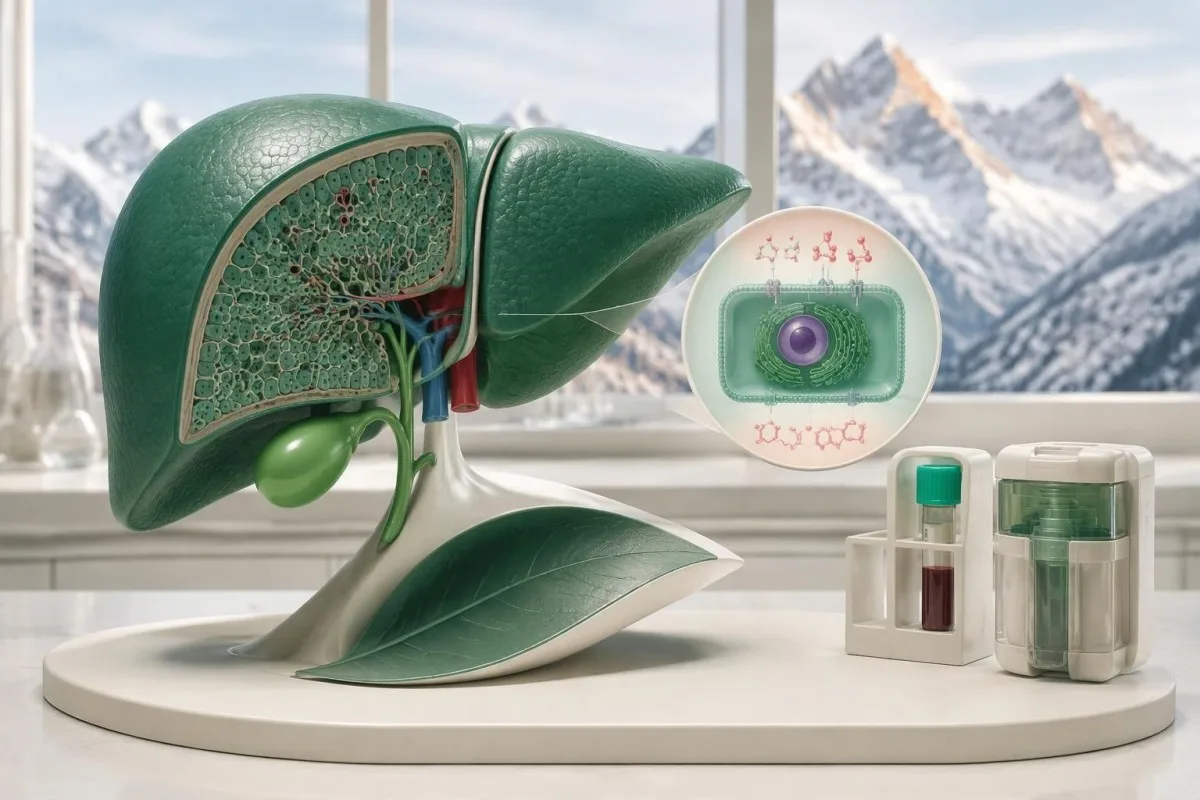
An isolated indirect bilirubin rise may fit reduced UGT1A1 activity, while rising direct bilirubin with abnormal ALP or transaminases suggests an additional hepatobiliary problem. A hypothetical total bilirubin of 1.8 mg/dL with otherwise stable tests is therefore not equivalent to 1.8 mg/dL accompanied by new jaundice and obstruction; fractionation, trends, symptoms, and imaging determine the interpretation.
Strong CYP3A4 inducers can lower irinotecan exposure, while strong CYP3A4 or UGT1A1 inhibitors can increase clinically relevant exposure; examples requiring pharmacy review include rifampicin, carbamazepine, ketoconazole, and atazanavir. Do not stop a prescription yourself, and disclose supplements such as St John’s wort before cycle 1 because changing an interacting medicine can itself change exposure.
Kantesti can help explain routine kidney and electrolyte reports, but a normal creatinine does not guarantee tolerance of delayed diarrhea. The คู่มืออัตราส่วน BUN/creatinine describes contextual interpretation, while our electrolyte safety guide explains why potassium or magnesium losses can matter after 24 hours of gastrointestinal symptoms.
การติดตามอาการแบบใดและอาการใดที่ต้องรีบดำเนินการ?
Monitoring remains necessary for every genotype, with CBC checks before treatment and additional measurements when clinically indicated. A temperature of ไข้ที่ 38.0°C ขึ้นไป during chemotherapy warrants immediate contact with the oncology service unless the team has supplied a different threshold; follow a stricter local instruction.

Formal definitions of febrile neutropenia often use a single temperature of 38.3°C or a temperature of 38.0°C sustained for 1 hour, together with a low or falling ANC. These definitions are not instructions to wait at home: chemotherapy services often use simpler, more cautious telephone thresholds, and shaking chills, confusion, or sudden deterioration can be urgent without a documented fever.
A falling ANC can precede symptoms, so a patient feeling well should still attend the scheduled laboratory check. Our borderline neutrophil interpretation guide explains why a result near a cutoff needs context; during treatment, a change from 2.5 to 0.7 × 10⁹/L carries different significance from a stable longstanding count near 1.4 × 10⁹/L.
Dose escalation after a reduced start should follow a predefined plan based on counts, diarrhea, other toxicity, and treatment goals—not simply the absence of nausea after cycle 1. G-CSF may reduce neutropenia risk when indicated, but it does not prevent intestinal toxicity; urgent assessment is needed for diarrhea with fever, severe abdominal pain, inability to drink, or markedly reduced urination.
เหตุใดแม้มีจีโนไทป์ปกติก็ยังอาจเกิดผลข้างเคียงรุนแรงได้?
A normal UGT1A1 result does not guarantee safe treatment because irinotecan toxicity has multiple causes. Genotype does not adequately predict every episode of nausea, fatigue, hair loss, infusion symptoms, or toxicity from companion drugs; even *1/*1 patients can develop severe neutropenia or diarrhea.
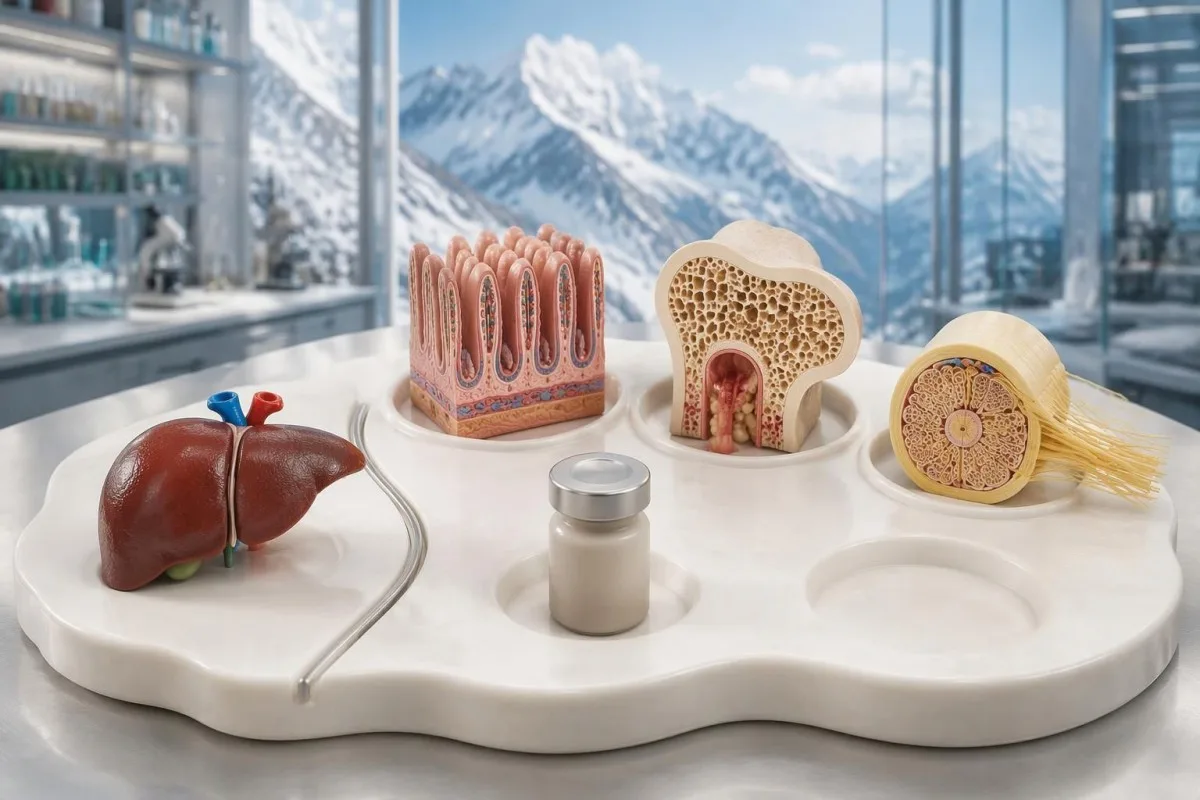
A narrow assay may miss uncommon reduced-function variants, while liver impairment, interacting medicines, treatment intensity, and previous chemotherapy can increase risk independently. Thus, 2 patients both reported as *1/*1 may have different exposures and different marrow reserve; a phenotype assignment only describes the genetic information captured by the test, not every biological factor affecting treatment.
Companion drugs create additional attribution problems: oxaliplatin can cause neuropathy, and fluoropyrimidines can contribute diarrhea, mucositis, and marrow suppression. A hypothetical patient on a 4-drug combination with severe diarrhea cannot have the culprit assigned from UGT1A1 alone; timing, the complete regimen, microbiological testing when indicated, and other pharmacogenetic results may alter the clinical explanation.
Kantesti’s role in laboratory trend interpretation is to support understanding, not establish which drug caused a change between 2 cycles. Genetic reports also contain durable personal information, so review our ความเป็นส่วนตัวและการจัดการข้อมูล before sharing them; an inherited metabolic variant is not a complete forecast of your future health.
ก่อนใช้ irinotecan คุณควรถามทีมมะเร็งวิทยาเรื่องใดบ้าง?
Before treatment, ask which formulation and regimen you will receive, whether *28 and *6 were tested, and how the result changes the first dose. Also obtain a written diarrhea plan, a temperature threshold, and a 24-hour contact route; these practical details matter even when the genotype is normal.

Request the actual dose in mg/m² and the planned total dose in mg, because they answer different questions. For example, a hypothetical 126 mg/m² order for a body surface area of 1.8 m² gives 226.8 mg before institutional rounding; patients should not perform their own adjustment, but this distinction helps identify whether 2 documents describe the same prescription.
Ask how the team will judge tolerance after cycle 1, whether an interim CBC is planned, and what would justify later escalation. Your written diarrhea instructions may use a loperamide schedule different from ordinary over-the-counter directions, so follow the oncology prescription rather than inventing a schedule; fever, abdominal pain, or persistent symptoms may require assessment instead of additional self-treatment.
คันเตสตีเป็น เครื่องมือวิเคราะห์ผลตรวจเลือดที่ขับเคลื่อนด้วย AI that can help explain routine reports alongside your own treatment notes; our คู่มือเทคโนโลยี AI explains the supporting technology rather than a chemotherapy dosing system. Keep 3 items accessible: the genetic report, the current regimen sheet, and the emergency contact instructions, with the prescribing team verifying all clinical decisions.
เอกสารตีพิมพ์ทางวิจัย: อะไรสนับสนุนคำแนะนำนี้ และอะไรไม่สนับสนุน?
The dosing advice rests on drug-specific pharmacogenetic guidance and irinotecan studies, not on general blood-test education publications. The 2023 Dutch guideline recommends a 70% start for poor metabolizers, while the 2007 studies cited here help explain dose dependence and the relevance of both *28 and *6.
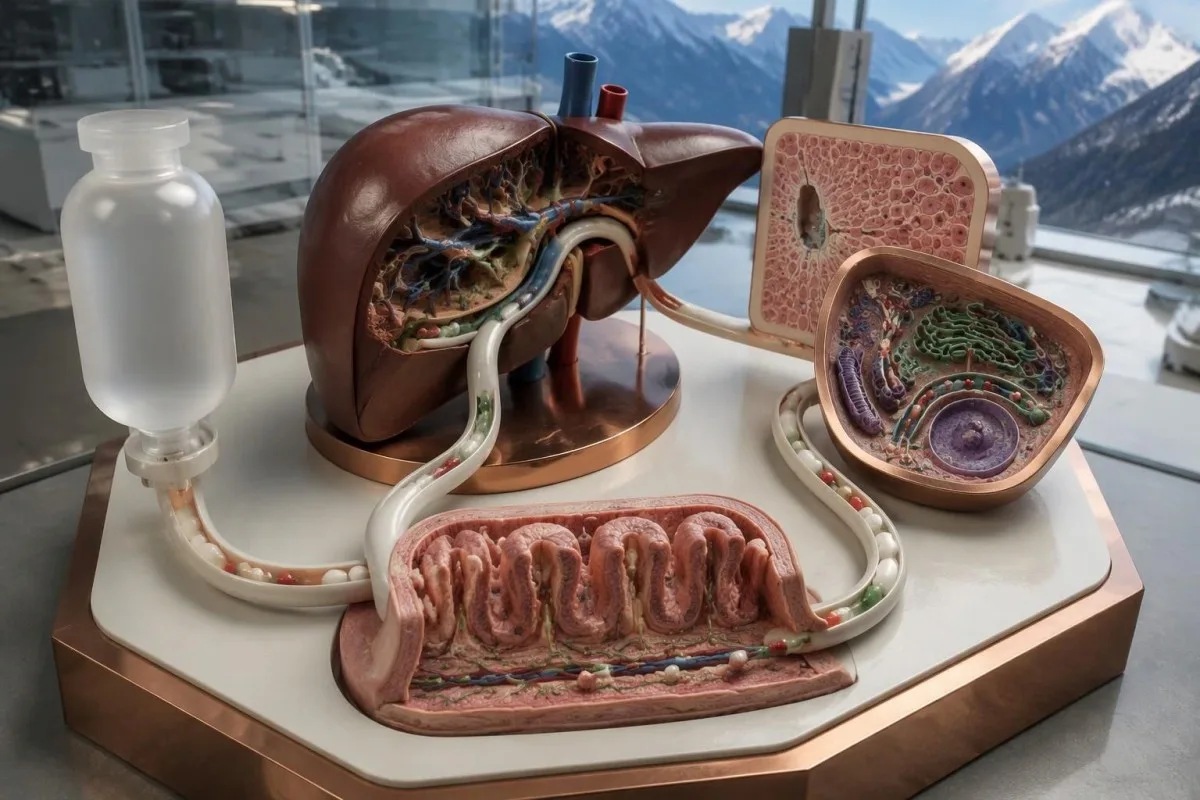
Hulshof et al. translate pharmacokinetic and toxicity evidence into prescribing guidance, whereas Hoskins et al. quantify associations across older dose categories, and Minami et al. examine relevant variants in Japanese patients. These 3 sources answer complementary questions; none supplies an individualized toxicity percentage for every contemporary combination, and observational associations should not be presented as proof that one starting dose suits everyone.
Kantesti’s 2 Zenodo publications listed below are educational resources on RDW and the BUN/creatinine ratio, not trials of UGT1A1-guided irinotecan dosing. Our RDW and CBC interpretation resource can explain accompanying red-cell indices, but RDW does not replace ANC, genotype, or a chemotherapy protocol; a DOI is a persistent identifier, not an automatic guarantee of clinical relevance or peer review.
The unresolved question is often how best to preserve treatment intensity while preventing a severe event in cycle 1, particularly in lower-dose combinations and less-studied genotypes. Our มาตรฐานเนื้อหาทางการแพทย์ require separating established guidance, hypothetical calculations, and genuine uncertainty; the oncology team should confirm the current local product information and protocol before applying any published recommendation.
คำถามที่พบบ่อย
ทุกคนควรได้รับการตรวจ UGT1A1 ก่อนใช้ยาไอริโนทีแคนหรือไม่?
นโยบายการตรวจแตกต่างกันไปตามประเทศ สถาบัน และสูตรการรักษา แต่คณะทำงานเภสัชพันธุศาสตร์แห่งเนเธอร์แลนด์แนะนำให้ตรวจ UGT1A1 ก่อนเริ่มใช้ยา irinotecan ผลตรวจมีประโยชน์เป็นพิเศษก่อนรอบการรักษาที่ 1 เพราะช่วยระบุผู้ที่มีการเปลี่ยนแปลงยาได้ไม่ดี ก่อนเกิดพิษรุนแรง การตรวจควรครอบคลุมทั้ง *28 และ *6 ไม่ใช่เพียงรายงานว่าไม่พบ *28 ทีมมะเร็งวิทยาของคุณควรอธิบายว่าผลตรวจจะเปลี่ยนขนาดยาเริ่มต้นเฉพาะของคุณหรือไม่ และการรอผลตรวจก่อนเริ่มยานั้นเหมาะสมหรือไม่.
UGT1A1 *28/*28 มีความหมายอย่างไรต่อการกำหนดขนาดยาไอริโนทีแคน?
โดยทั่วไป UGT1A1 *28/*28 บ่งชี้สถานะการเผาผลาญยาได้ไม่ดีและความเสี่ยงที่เพิ่มขึ้นต่อภาวะนิวโทรพีเนียรุนแรงที่เกี่ยวข้องกับ irinotecan แนวทางของเนเธอร์แลนด์แนะนำให้ใช้ 70% ของขนาดยาเริ่มต้นตามปกติ จากนั้นให้แพทย์ปรับขนาดยาตามความทนต่อยาและจำนวนเม็ดเลือดขาวนิวโทรฟิล สำหรับสูตรการรักษาแบบทั่วไปที่สมมติให้ใช้ขนาด 180 mg/m² การคำนวณดังกล่าวเท่ากับ 126 mg/m² ก่อนพิจารณาการตัดสินใจเฉพาะตามโพรโทคอลหรือการปัดเศษ คำแนะนำการสั่งยาของสหรัฐฯ และสูตรยาแบบไลโปโซมใช้แนวทางที่แตกต่างกัน ดังนั้นการคำนวณนี้จึงไม่ใช่ใบสั่งยาสำหรับบุคคลใดโดยเฉพาะ.
UGT1A1 *6 มีความสำคัญเทียบเท่ากับ *28 ก่อนใช้ยาไอริโนทีแคนหรือไม่?
UGT1A1 *6 เป็นแปรผันที่มีความสำคัญทางคลินิกซึ่งทำให้การทำงานลดลง และอาจลดการทำให้ SN-38 หมดฤทธิ์ ผลตรวจอย่าง *6/*6 หรือ *6/*28 โดยทั่วไปบ่งชี้สถานะผู้เมแทบอลิซึมช้า เนื่องจากมีแอลลีลที่ทำงานลดลง 2 แอลลีล แปรผันนี้พบได้บ่อยกว่าในประชากรเอเชียตะวันออกหลายกลุ่ม แต่เชื้อสายเพียงอย่างเดียวไม่สามารถระบุได้ว่าบุคคลนั้นมีแปรผันนี้หรือไม่ สอบถามว่าห้องปฏิบัติการของคุณตรวจ *6 หรือไม่ ก่อนแปลผลที่ไม่พบ *28 ว่าเป็นการเมแทบอลิซึมปกติ.
UGT1A1 *1/*28 จำเป็นต้องลดขนาดยาโดยอัตโนมัติหรือไม่?
โดยทั่วไป UGT1A1 *1/*28 บ่งชี้สถานะการเมแทบอลิซึมระดับปานกลาง มากกว่าสถานะการเมแทบอลิซึมระดับต่ำ แนวทางของเนเธอร์แลนด์ไม่แนะนำให้ลดขนาดยาเริ่มต้นโดยอัตโนมัติโดยพิจารณาจากจีโนไทป์เพียงอย่างเดียวสำหรับผู้ที่มีการเมแทบอลิซึมระดับปานกลาง อย่างไรก็ตาม ผู้ป่วยที่กำหนดให้รับยา 180 mg/m² อาจจำเป็นต้องใช้แผนการรักษาที่แตกต่างออกไปเนื่องจากระดับบิลิรูบิน การรักษาก่อนหน้า ยาที่มีปฏิกิริยาระหว่างกัน หรือสูตรยาผสม การเมแทบอลิซึมระดับปานกลางไม่ได้ทำให้ไม่จำเป็นต้องติดตาม CBC หรือมีแผนความปลอดภัยสำหรับอาการท้องเสีย.
บิลิรูบินปกติสามารถใช้ทดแทนการตรวจพันธุกรรม UGT1A1 ได้หรือไม่?
บิลิรูบินปกติไม่สามารถตัดความเป็นไปได้ของจีโนไทป์ UGT1A1 ที่มีการทำงานลดลง และบิลิรูบินที่สูงขึ้นก็ไม่สามารถระบุแอลลีลจำเพาะได้ ระดับบิลิรูบินสะท้อนกระบวนการหลายอย่าง รวมถึงการคอนจูเกชัน การทำงานของตับ การอุดกั้น และการหมุนเวียนของเม็ดเลือดแดง บิลิรูบินรวม 2.0 mg/dL มีค่าประมาณ 34 µmol/L และต้องแปลผลภายใต้แนวทางการใช้ยา irinotecan ที่เกี่ยวข้อง การตรวจทางพันธุกรรมและการวัดบิลิรูบินให้ข้อมูลที่ส่งเสริมกัน ไม่ใช่คำตอบที่ใช้แทนกันได้.
เมื่อใดควรโทรแจ้งเรื่องท้องเสียหรือมีไข้หลังได้รับยาไอริโนทีแคน?
ติดต่อหน่วยบริการมะเร็งวิทยาของคุณทันทีหากมีอุณหภูมิ 38.0°C ขึ้นไปในระหว่างการทำเคมีบำบัด เว้นแต่ทีมรักษาจะกำหนดเกณฑ์อื่นไว้ และปฏิบัติตามคำแนะนำที่เข้มงวดกว่า อาการท้องเสียจาก irinotecan ที่เกิดขึ้นล่าช้าจะเริ่มหลังการรักษามากกว่า 24 ชั่วโมง และอาจทำให้ร่างกายขาดน้ำหรือสูญเสียเกลือแร่ โทรแจ้งโดยเร็วหากท้องเสียต่อเนื่องแม้ปฏิบัติตามแผนที่แพทย์สั่งแล้ว ดื่มน้ำไม่ได้ ปัสสาวะน้อยลง มีเลือดปนในอุจจาระ หรือปวดท้องมาก อย่ารอให้ถ่ายเพิ่มขึ้น 7 ครั้งต่อวันหรือรอผลตรวจเลือดตามนัดก่อนขอความช่วยเหลือ.
อ่านผลตรวจเลือดอย่างไร
อัปโหลดรายงานผลตรวจของคุณ แล้ว AI ของ Kantesti จะอธิบายตัวบ่งชี้ทางชีวภาพแต่ละรายการด้วยภาษาที่เข้าใจง่ายภายในไม่กี่วินาที มีผู้ใช้ทั่วโลกมากกว่า 2 ล้านคน.
เอกสารอ้างอิง
- ไคลน์, ที., มิตเชลล์, เอส., & เวเบอร์, เอช. (2026). การตรวจเลือด RDW: คู่มือฉบับสมบูรณ์เกี่ยวกับ RDW-CV, MCV และ MCHC. Kantesti AI การวิจัยทางการแพทย์. โดอิ
- ไคลน์, ที., มิตเชลล์, เอส., & เวเบอร์, เอช. (2026). อธิบายอัตราส่วน BUN/Creatinine: คู่มือการทดสอบการทำงานของไต. Kantesti AI การวิจัยทางการแพทย์. โดอิ
- Hulshof DP et al. (2023). Dutch pharmacogenetics working group (DPWG) guideline for the gene–drug interaction between UGT1A1 and irinotecan. European Journal of Human Genetics.
- Hoskins JM et al. (2007). UGT1A1*28 genotype and irinotecan-induced neutropenia: dose matters. Journal of the National Cancer Institute. โดอิ
- Minami H et al. (2007). Irinotecan pharmacokinetics/pharmacodynamics and UGT1A genetic polymorphisms in Japanese: roles of UGT1A1*6 and *28. Pharmacogenetics and Genomics.
- 2 ล้าน+การตรวจที่วิเคราะห์
- 127+ประเทศ
- 100+ภาษา
เกี่ยวกับทีมแพทย์


สัญญาณความน่าเชื่อถือ E-E-A-T
ประสบการณ์
การทบทวนเชิงคลินิกโดยแพทย์ที่นำโดยกระบวนการตีความผลตรวจในห้องแล็บ.
ความเชี่ยวชาญ
โฟกัสด้านเวชศาสตร์ห้องปฏิบัติการเกี่ยวกับพฤติกรรมของไบโอมาร์กเกอร์ในบริบททางคลินิก.
อำนาจ
ทบทวนทางการแพทย์โดย นพ. Thomas Klein พร้อมผลงานจาก นพ. Sarah Mitchell และศาสตราจารย์ ดร. Hans Weber.
ความน่าเชื่อถือ
การตีความที่อิงหลักฐาน พร้อมเส้นทางการติดตามที่ชัดเจนเพื่อลดความตื่นตระหนก.






ข้อจำกัดความรับผิดชอบทางการแพทย์
บทความนี้จัดทำเพื่อวัตถุประสงค์ด้านการศึกษาเท่านั้น และไม่ถือเป็นคำแนะนำทางการแพทย์ โปรดปรึกษาผู้ให้บริการด้านสุขภาพที่มีคุณสมบัติเหมาะสมเสมอสำหรับการตัดสินใจด้านการวินิจฉัยและการรักษา.
เผยแพร่แล้ว · ติดต่อทีมบรรณาธิการ
เผยแพร่โดย Kantesti Ltd จดทะเบียนในอังกฤษและเวลส์ เลขทะเบียนบริษัท. 17090423, ลอนดอน สหราชอาณาจักร.
