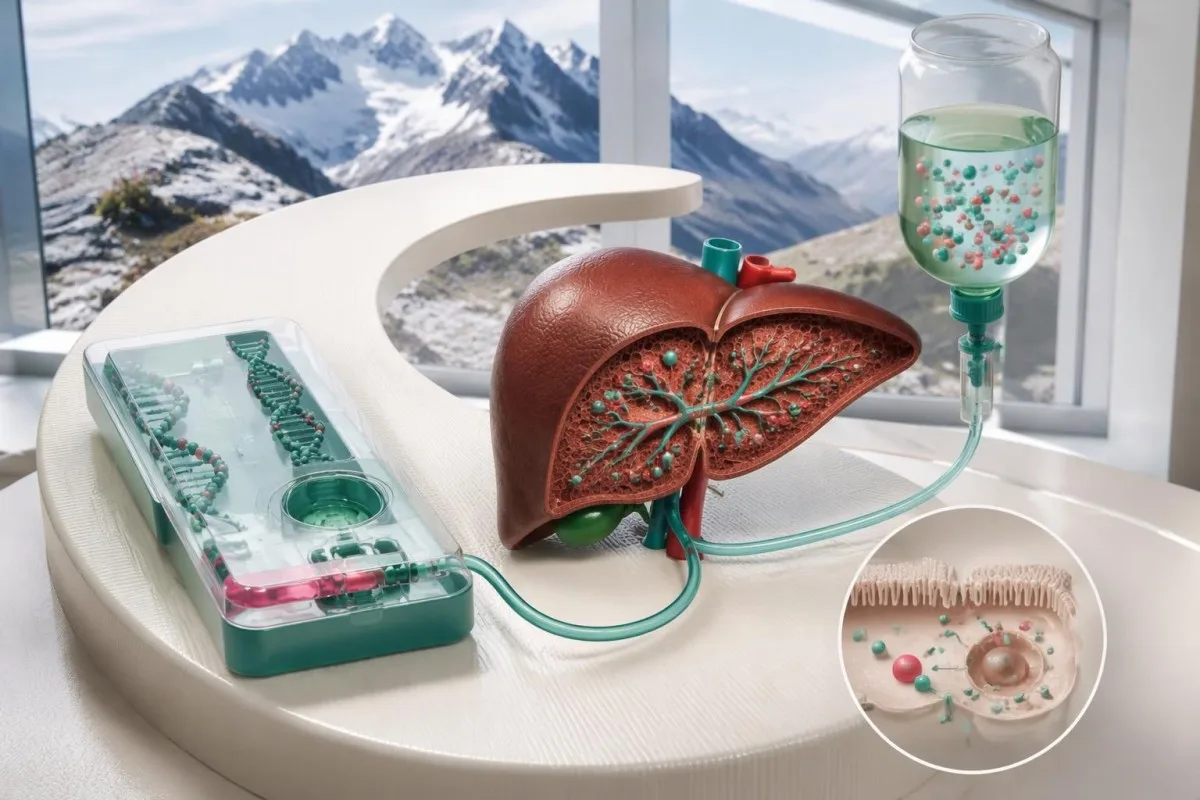
Badanie UGT1A1 może wykryć zmniejszony klirens aktywnego metabolitu irynotekanu i pomóc w ustaleniu bezpieczniejszej dawki początkowej. Nie pozwala przewidzieć każdej reakcji, a decyzja zależy od konkretnej postaci leku, schematu leczenia i oceny zespołu onkologicznego.

Najważniejsze wnioski
- Badanie UGT1A1 wykrywa dziedziczne różnice w inaktywacji SN-38; rutynowe badania bilirubiny lub wątroby nie mogą zastąpić wyniku badania genetycznego.
- Słabo metabolizujący najczęściej mają wyniki *28/*28, *6/*6 lub *6/*28, które zwiększają ryzyko ciężkiej neutropenii związanej z irynotekanem.
- Pośrednio metabolizujący najczęściej mają wyniki *1/*28 lub *1/*6; Holenderska Grupa Robocza ds. Farmakogenetyki nie zaleca automatycznego zmniejszania dawki wyłącznie na podstawie genotypu u tych pacjentów.
- Zalecenia dotyczące dawki początkowej różnią się: holenderskie wytyczne zalecają 70% zwykłej dawki początkowej irynotekanu u słabo metabolizujących, a następnie dostosowanie dawki przez lekarza.
- Schemat leczenia ma znaczenie ponieważ w standardowym schemacie FOLFIRI zwykle stosuje się 180 mg/m² co 2 tygodnie, podczas gdy inne schematy i postacie liposomalne wymagają innych dawek.
- Liposomalny irynotekan ma wskazówki dotyczące dawkowania właściwe dla danej postaci; schematów 70 mg/m² i 50 mg/m² nie należy traktować jako zamiennych.
- Opóźniona biegunka rozpoczyna się po upływie ponad 24 godzin od podania irynotekanu i może stać się niebezpieczna z powodu odwodnienia, utraty elektrolitów lub współistniejącej neutropenii.
- Ocena pilna jest konieczna w przypadku temperatury 38,0°C lub wyższej podczas chemioterapii, chyba że zespół onkologiczny wyznaczył inny, bardziej rygorystyczny próg.
Co zmienia badanie UGT1A1 przed pierwszym wlewem?
A Badanie UGT1A1 przed podaniem irynotekanu pozwala wykryć zmniejszoną zdolność do inaktywacji SN-38, aktywnego metabolitu leku. Wyniki takie jak 28/*28, *6/*6 lub *6/*28 mogą uzasadniać niższą dawkę początkową i ściślejsze monitorowanie pod kątem ciężkiej neutropenii i opóźnionej biegunki; zespół onkologiczny musi odnieść wynik do konkretnego schematu leczenia.

Badanie jest najbardziej przydatne przed 1. cyklem, ponieważ dziedziczna różnica w klirensie występuje, zanim pojawią się jakiekolwiek objawy związane z leczeniem. Wynik nie mierzy aktualnego stężenia irynotekanu w organizmie ani nie pozwala ustalić, czy chemioterapia będzie skuteczna; to odrębne kwestie oceniane na podstawie odpowiedzi na leczenie, oceny klinicznej i niekiedy specjalistycznych metod farmakokinetycznych.
Hipotetyczny pacjent zakwalifikowany do konwencjonalnego schematu irynotekanu w dawce 180 mg/m² może otrzymać inny plan dawkowania początkowego po uzyskaniu wyniku wskazującego na wolny metabolizm, podczas gdy inny pacjent z tym samym genotypem może już otrzymywać skojarzenie leków w niższej dawce. Przydatne pytanie nie brzmi po prostu, czy wynik jest dodatni: zapytaj, jaką dawkę początkową, harmonogram monitorowania i kryteria zwiększania dawki zmienia ten wynik.
Kantesti jest Analizator do badań krwi AI który pomaga wyjaśnić rutynowe wyniki CBC i bilirubiny, a nie laboratorium wykonujące genotypowanie UGT1A1 ani usługę przepisującą chemioterapię. Nasze organizacja i cel kliniczny różnią się od roli zespołu onkologicznego w przepisywaniu leków; przechowuj raport genetyczny i wyniki badań laboratoryjnych z poszczególnych cykli jako 2 odrębne elementy dokumentacji leczenia.
Jak warianty UGT1A1 *28 i *6 wpływają na metabolizm irynotekanu?
UGT1A1 *28 zmniejsza ekspresję enzymu, natomiast wariant UGT1A1 *6 zmniejsza aktywność enzymu wskutek zmiany w sekwencji kodującej. Oba warianty mogą spowalniać przekształcanie aktywnego SN-38 w jego znacznie mniej aktywny glukuronid, SN-38G; zwiększa to ekspozycję na lek bez konieczności występowania nieprawidłowych wyników ALT lub AST.

Irynotekan jest najpierw przekształcany w SN-38 przez karboksyloesterazy; UGT1A1 uczestniczy następnie w inaktywacji SN-38, a nie w jego początkowej aktywacji. Allel *28 zazwyczaj zawiera 7 powtórzeń TA w promotorze zamiast 6 związanych z *1, natomiast *6 jest zwykle opisywany jako c.211G>A, powodujący substytucję p.Gly71Arg.
Ten sam enzym sprzęga również bilirubinę, co wyjaśnia związek z zespołem Gilberta i bilirubiną. Prawidłowy wynik bilirubiny nie wyklucza jednak genotypu o zmniejszonej funkcji, a podwyższony wynik nie wskazuje, który wariant występuje; głodzenie, choroba, niedrożność i zaburzenia czynności wątroby mogą zmienić interpretację pojedynczego pomiaru.
Minami i wsp. badali zarówno *6, jak i *28 u pacjentów japońskich i wykazali związek zmienności UGT1A z farmakokinetyką i toksycznością irynotekanu (Pharmacogenetics and Genomics, 2007). Ich praca ma znaczenie, ponieważ badanie ograniczone do *28 może nie wykryć klinicznie istotnego allelu *6; 2 pacjentów określanych jako *28-ujemni niekoniecznie ma taką samą zdolność klirensu SN-38.
Które wyniki oznaczają słaby metabolizm UGT1A1?
A Słaby metabolizer UGT1A1 generally carries 2 decreased-function alleles, including 28/*28, *6/*6 lub *6/*28. A person with *1/*28 or *1/*6 usually has an intermediate-metabolizer phenotype; *1/*1 is usually classified as normal when the test adequately covers relevant variants.

The slash separates the 2 inherited gene copies; it is not a fraction or a drug concentration. A *6/*28 result usually means one decreased-function allele came from each parent, creating a compound-heterozygous poor-metabolizer result; possessing 2 different allele names does not make the result less clinically relevant than *28/*28.
Intermediate metabolism is not the same as zero risk. Although the Dutch guideline does not recommend an automatic reduction for *1/*28 or *1/*6, a patient starting at 180 mg/m² may still need modification because of elevated bilirubin, limited marrow reserve, previous toxicity, or the accompanying drugs; the phenotype is one input, not permission to ignore the rest.
Pharmacogenetic recommendations are drug-specific, as our explanation of SLCO1B1-related medication risk also illustrates. A reduced-function result does not mean every medicine is unsafe, and *28/*28 does not itself diagnose a hereditary cancer syndrome; ask the laboratory to provide the diplotype, assigned phenotype, and variants tested rather than a 1-word positive result.
Co powinno obejmować badanie genetyczne i kiedy jest potrzebne?
The test should clearly state whether it detects both *28 and *6, how it assigns the 2 alleles, and which other variants it evaluates. Testing before the first irinotecan dose allows the result to influence prevention rather than merely explain toxicity after it occurs.
UGT1A1 *6 is more frequent in several East Asian populations, while *28 occurs across multiple ancestry groups; ancestry can inform test coverage but cannot substitute for testing. Some assays also distinguish the 5-repeat *36 and 8-repeat *37 alleles, so reports from 2 laboratories may differ because their analytical scope differs—not because your inherited genotype changed.
A laboratory may use a blood-derived DNA sample or a validated saliva or cheek-cell method; fasting is not ordinarily required for the genetic analysis itself. Recent allogeneic stem-cell transplantation needs special discussion because circulating DNA may reflect the donor, and turnaround time must be checked locally rather than assumed to fit a treatment appointment in 2 days.
Genotyping and enzyme-activity testing are not interchangeable, a distinction also relevant to TPMT test interpretation. UGT1A1 genotype generally needs testing only once, but a narrow panel may warrant additional analysis if the clinical picture is unexpected; a report listing only 1 tested variant should not be read as proof that every other reduced-function allele is absent.
O ile UGT1A1 zwiększa ryzyko ciężkiej neutropenii?
Poor-metabolizer genotypes increase the likelihood of ciężka neutropenia, but the size of the increase depends on dose and regimen. Grade 3 neutropenia generally means an absolute neutrophil count below 1.0 down to 0.5 × 10⁹/L; grade 4 means below 0.5 × 10⁹/L.
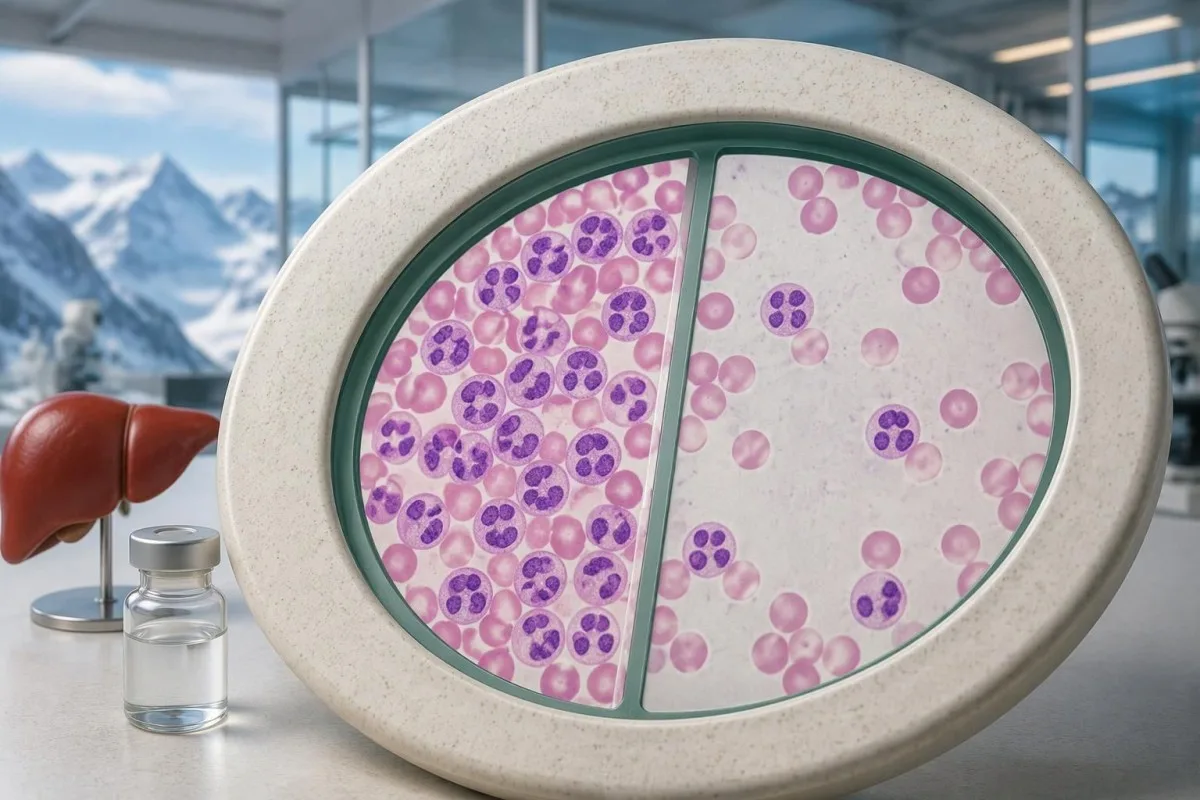
Hoskins et al. reported a dose-dependent association between *28/*28 and irinotecan-related neutropenia in their 2007 Journal of the National Cancer Institute meta-analysis. In the 150–250 mg/m² category, the pooled odds ratio was 3.22, with a 95% confidence interval of 1.52–6.81; older mixed schedules and wide uncertainty prevent treating this as a personal probability.
An odds ratio is not the percentage of patients affected. In a purely hypothetical illustration, if baseline risk were 10%, an odds ratio of 3 would correspond to approximately 25% risk—not 30%; the actual baseline varies with companion drugs, supportive care, prior treatment, and eligibility criteria, so no single percentage applies to every poor metabolizer.
Kantesti can help readers distinguish the ANC from the neutrophil percentage in routine reports, using the concepts explained in our przewodnik po bezwzględnej liczbie neutrofili. A pre-existing Duffy-null-associated lower ANC requires individualized interpretation, but a new chemotherapy-related fall below 0.5 × 10⁹/L still deserves prompt oncology assessment rather than reassurance based on ancestry alone.
Dlaczego wczesna biegunka po irynotekanie różni się od biegunki opóźnionej?
Early diarrhea occurs during or shortly after infusion, usually within 24 hours, and may accompany cholinergic symptoms such as sweating or abdominal cramping. Opóźniona biegunka begins more than 24 hours after treatment and is more closely related to intestinal toxicity, including exposure to SN-38.
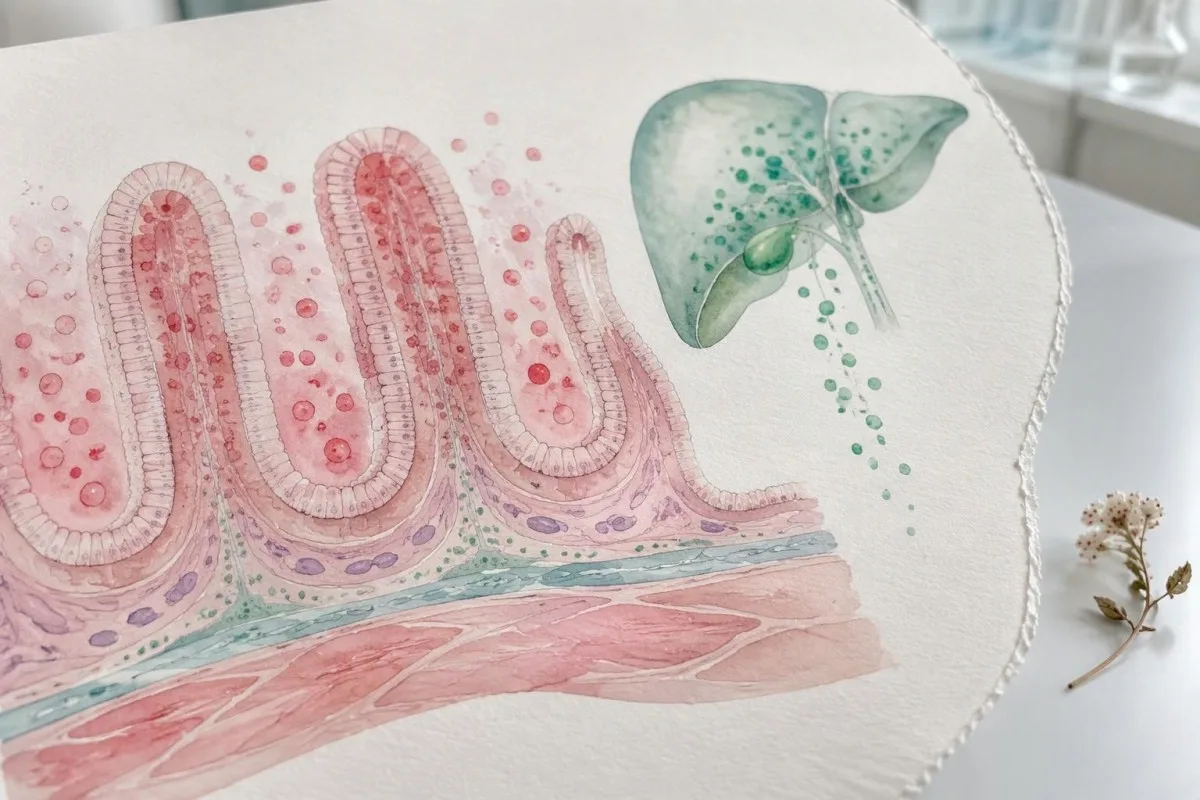
UGT1A1 genotype is more useful for anticipating delayed toxicity than predicting the immediate cholinergic syndrome. Clinicians may use atropine for early symptoms when appropriate, while delayed diarrhea requires a separate written treatment plan; intestinal bacteria can convert SN-38G back to SN-38 through beta-glucuronidase activity, illustrating why liver conjugation is not the only determinant of bowel exposure.
Grade 3 diarrhea commonly includes at least 7 additional stools per day above baseline, hospitalization being indicated, or a severe increase in ostomy output. Do not wait to reach that count before calling: persistent diarrhea despite the prescribed plan, vomiting that prevents drinking, fever, dizziness, or reduced urine output can justify urgent assessment at a much smaller stool increase.
Diarrhea during chemotherapy should not automatically be attributed to genotype, because antibiotics, infections, and accompanying drugs can produce similar symptoms; our C. difficile result guide explains one relevant diagnostic complication. If diarrhea lasts beyond 24 hours despite your oncology instructions, contact the team, and treat blood in the stool or significant abdominal pain as warning signs rather than ordinary treatment effects.
Jak schemat leczenia wpływa na decyzję dotyczącą dawki początkowej?
A starting-dose decision combines UGT1A1 phenotype with the planned regimen, not genotype alone. Conventional FOLFIRI commonly uses irinotecan 180 mg/m² every 2 weeks, whereas modified combinations may use 150 mg/m² or another protocol-specific amount; those differences change baseline exposure and toxicity.

The Dutch Pharmacogenetics Working Group recommends starting poor metabolizers at 70% of the normal irinotecan dose, with subsequent increases guided by neutrophil counts and clinical tolerance (Hulshof et al., 2023). Applied hypothetically to a 180 mg/m² protocol, 70% is 126 mg/m²; the prescribing team decides whether protocol rules permit rounding, what dose level to use, and when reassessment occurs.
A 70% calculation is relative to the regimen’s usual starting dose, not a fixed universal dose. For a hypothetical protocol starting at 150 mg/m², the same calculation gives 105 mg/m²; applying the 126 mg/m² figure from a different protocol would therefore be a genuine dosing error, especially if the infusion schedule or formulation also differed.
Kantesti jest platforma do interpretacji wyników badań krwi AI for explaining reported laboratory values, not selecting a 180 mg/m² chemotherapy prescription; our kliniczne ramy walidacji describes the distinction between interpretation support and prescribing. In combinations containing fluorouracil or capecitabine, badanie DPYD przed chemioterapią addresses a separate metabolic risk that a normal UGT1A1 result cannot rule out.
Dlaczego zalecenia dotyczące dawkowania irynotekanu różnią się między wytycznymi?
Guidelines differ because they interpret dose-dependent evidence differently and serve different clinical settings. The Dutch guideline recommends a 70% starting dose for poor metabolizers, while US conventional irinotecan prescribing information advises considering a reduction by at least 1 dose level, without defining one percentage for every regimen.

A dose level is defined by the treatment protocol rather than by the genetic test. Moving from 180 to 150 mg/m² would be approximately a 17% reduction, while moving from 180 to 120 mg/m² would be approximately a 33% reduction; these are mathematical examples, not recommendations, and explain why the phrase reduce one level needs a named protocol.
The French RNPGx/GPCO dose-stratified framework has historically distinguished doses below 180 mg/m², doses of 180–230 mg/m², and high doses of at least 240 mg/m². It recommended approximately 25–30% reduction for *28/*28 at the intermediate range and advised against high-dose use in that genotype; the Dutch recommendation is broader, including lower-dose regimens and other poor-metabolizer combinations.
The evidence is genuinely less settled at lower doses, where severe events may be less frequent and studies less able to estimate genotype effects precisely. This differs from HLA-B*57:01 drug avoidance, where the relevant recommendation is avoidance rather than a 30% reduction; ask which local guideline your team follows and whether its advice specifically covers *6/*6 or *6/*28.
Czy w przypadku liposomalnego irynotekanu obowiązują te same zasady dawkowania zależne od UGT1A1?
Liposomal irinotecan is not interchangeable with conventional irinotecan, and its UGT1A1 instructions depend on the regimen. In the liposomal irinotecan plus fluorouracil/leucovorin setting, a usual 70 mg/m² dose is reduced to 50 mg/m² initially for known *28/*28; the NALIRIFOX regimen already starts at 50 mg/m².

Those 70 and 50 mg/m² figures refer to irinotecan free base in the relevant liposomal prescribing instructions. Some documents also express doses using the hydrochloride trihydrate equivalent, approximately 80 and 60 mg/m² respectively; the team must verify the convention rather than interpret a different-looking number as an intentional dose increase or decrease.
For NALIRIFOX—liposomal irinotecan with oxaliplatin, fluorouracil, and leucovorin—the labeled starting dose is 50 mg/m² every 2 weeks, including patients known to have *28/*28. This does not establish that every poor-metabolizer genotype has identical evidence, especially *6-containing combinations; the oncology pharmacist should check the relevant product information and local protocol rather than import conventional irinotecan rules automatically.
A medication list that says only irinotecan is insufficient for a pharmacogenetic decision: request the formulation, companion drugs, dose expression, and schedule before comparing 2 plans. Our poradnika przygotowania do podstawowych badań laboratoryjnych also explains why recording pretreatment measurements helps later interpretation, although those measurements cannot resolve a formulation or prescribing ambiguity.
Które wyniki badań laboratoryjnych i leki mają znaczenie oprócz genotypu?
CBC with differential, bilirubin, liver tests, kidney function, and electrolytes provide information that UGT1A1 genotype cannot supply. A bilirubin of 2.0 mg/dL is approximately 34 µmol/L; conventional irinotecan studies often excluded values above this level, so higher results require specialist assessment rather than a genotype-only calculation.
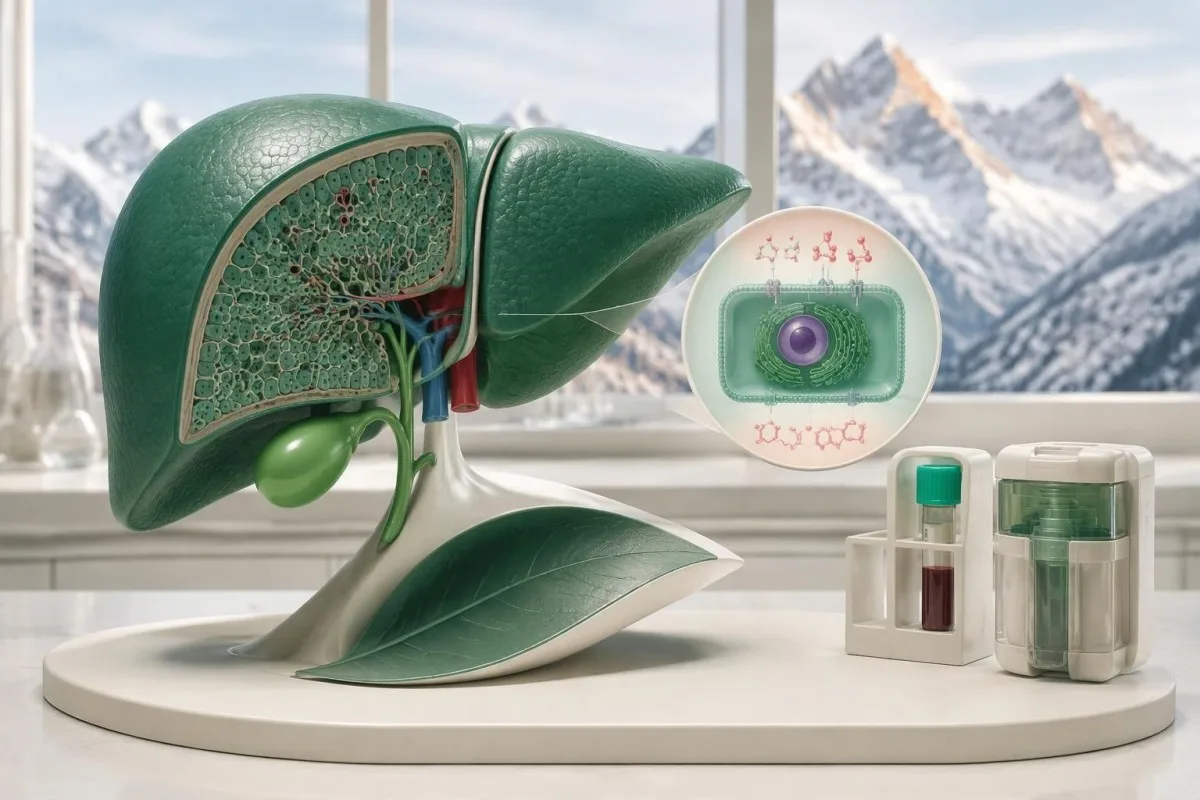
An isolated indirect bilirubin rise may fit reduced UGT1A1 activity, while rising direct bilirubin with abnormal ALP or transaminases suggests an additional hepatobiliary problem. A hypothetical total bilirubin of 1.8 mg/dL with otherwise stable tests is therefore not equivalent to 1.8 mg/dL accompanied by new jaundice and obstruction; fractionation, trends, symptoms, and imaging determine the interpretation.
Strong CYP3A4 inducers can lower irinotecan exposure, while strong CYP3A4 or UGT1A1 inhibitors can increase clinically relevant exposure; examples requiring pharmacy review include rifampicin, carbamazepine, ketoconazole, and atazanavir. Do not stop a prescription yourself, and disclose supplements such as St John’s wort before cycle 1 because changing an interacting medicine can itself change exposure.
Kantesti can help explain routine kidney and electrolyte reports, but a normal creatinine does not guarantee tolerance of delayed diarrhea. The poradnik dotyczący wskaźnika BUN/kreatynina describes contextual interpretation, while our electrolyte safety guide explains why potassium or magnesium losses can matter after 24 hours of gastrointestinal symptoms.
Jakie monitorowanie jest potrzebne i które objawy wymagają pilnej reakcji?
Monitoring remains necessary for every genotype, with CBC checks before treatment and additional measurements when clinically indicated. A temperature of 38,0°C lub wyższa during chemotherapy warrants immediate contact with the oncology service unless the team has supplied a different threshold; follow a stricter local instruction.

Formal definitions of febrile neutropenia often use a single temperature of 38.3°C or a temperature of 38.0°C sustained for 1 hour, together with a low or falling ANC. These definitions are not instructions to wait at home: chemotherapy services often use simpler, more cautious telephone thresholds, and shaking chills, confusion, or sudden deterioration can be urgent without a documented fever.
A falling ANC can precede symptoms, so a patient feeling well should still attend the scheduled laboratory check. Our borderline neutrophil interpretation guide explains why a result near a cutoff needs context; during treatment, a change from 2.5 to 0.7 × 10⁹/L carries different significance from a stable longstanding count near 1.4 × 10⁹/L.
Dose escalation after a reduced start should follow a predefined plan based on counts, diarrhea, other toxicity, and treatment goals—not simply the absence of nausea after cycle 1. G-CSF may reduce neutropenia risk when indicated, but it does not prevent intestinal toxicity; urgent assessment is needed for diarrhea with fever, severe abdominal pain, inability to drink, or markedly reduced urination.
Dlaczego ciężkie działania niepożądane mogą wystąpić mimo prawidłowego genotypu?
A normal UGT1A1 result does not guarantee safe treatment because irinotecan toxicity has multiple causes. Genotype does not adequately predict every episode of nausea, fatigue, hair loss, infusion symptoms, or toxicity from companion drugs; even *1/*1 patients can develop severe neutropenia or diarrhea.
A narrow assay may miss uncommon reduced-function variants, while liver impairment, interacting medicines, treatment intensity, and previous chemotherapy can increase risk independently. Thus, 2 patients both reported as *1/*1 may have different exposures and different marrow reserve; a phenotype assignment only describes the genetic information captured by the test, not every biological factor affecting treatment.
Companion drugs create additional attribution problems: oxaliplatin can cause neuropathy, and fluoropyrimidines can contribute diarrhea, mucositis, and marrow suppression. A hypothetical patient on a 4-drug combination with severe diarrhea cannot have the culprit assigned from UGT1A1 alone; timing, the complete regimen, microbiological testing when indicated, and other pharmacogenetic results may alter the clinical explanation.
Kantesti’s role in laboratory trend interpretation is to support understanding, not establish which drug caused a change between 2 cycles. Genetic reports also contain durable personal information, so review our zasadami ochrony prywatności i przetwarzania danych before sharing them; an inherited metabolic variant is not a complete forecast of your future health.
O co zapytać zespół onkologiczny przed rozpoczęciem leczenia irynotekanem?
Before treatment, ask which formulation and regimen you will receive, whether *28 and *6 were tested, and how the result changes the first dose. Also obtain a written diarrhea plan, a temperature threshold, and a 24-hour contact route; these practical details matter even when the genotype is normal.

Request the actual dose in mg/m² and the planned total dose in mg, because they answer different questions. For example, a hypothetical 126 mg/m² order for a body surface area of 1.8 m² gives 226.8 mg before institutional rounding; patients should not perform their own adjustment, but this distinction helps identify whether 2 documents describe the same prescription.
Ask how the team will judge tolerance after cycle 1, whether an interim CBC is planned, and what would justify later escalation. Your written diarrhea instructions may use a loperamide schedule different from ordinary over-the-counter directions, so follow the oncology prescription rather than inventing a schedule; fever, abdominal pain, or persistent symptoms may require assessment instead of additional self-treatment.
Kantesti jest Narzędzie do analizy wyników badań krwi oparte na AI that can help explain routine reports alongside your own treatment notes; our przewodnik technologii AI explains the supporting technology rather than a chemotherapy dosing system. Keep 3 items accessible: the genetic report, the current regimen sheet, and the emergency contact instructions, with the prescribing team verifying all clinical decisions.
Publikacje naukowe: co potwierdza te zalecenia, a co nie?
The dosing advice rests on drug-specific pharmacogenetic guidance and irinotecan studies, not on general blood-test education publications. The 2023 Dutch guideline recommends a 70% start for poor metabolizers, while the 2007 studies cited here help explain dose dependence and the relevance of both *28 and *6.
Hulshof et al. translate pharmacokinetic and toxicity evidence into prescribing guidance, whereas Hoskins et al. quantify associations across older dose categories, and Minami et al. examine relevant variants in Japanese patients. These 3 sources answer complementary questions; none supplies an individualized toxicity percentage for every contemporary combination, and observational associations should not be presented as proof that one starting dose suits everyone.
Kantesti’s 2 Zenodo publications listed below are educational resources on RDW and the BUN/creatinine ratio, not trials of UGT1A1-guided irinotecan dosing. Our RDW and CBC interpretation resource can explain accompanying red-cell indices, but RDW does not replace ANC, genotype, or a chemotherapy protocol; a DOI is a persistent identifier, not an automatic guarantee of clinical relevance or peer review.
The unresolved question is often how best to preserve treatment intensity while preventing a severe event in cycle 1, particularly in lower-dose combinations and less-studied genotypes. Our standardy treści medycznych require separating established guidance, hypothetical calculations, and genuine uncertainty; the oncology team should confirm the current local product information and protocol before applying any published recommendation.
Często zadawane pytania
Czy przed podaniem irynotekanu każda osoba powinna wykonać badanie UGT1A1?
Zasady testowania różnią się w zależności od kraju, instytucji i schematu leczenia, ale Holenderska Grupa Robocza ds. Farmakogenetyki zaleca wykonanie badania UGT1A1 przed rozpoczęciem leczenia irynotekanem. Wynik jest szczególnie przydatny przed 1. cyklem, ponieważ może pozwolić zidentyfikować osoby słabo metabolizujące lek, zanim rozwinie się ciężka toksyczność. Badanie powinno obejmować zarówno wariant *28, jak i *6, a nie jedynie wykazywać brak wariantu *28. Zespół onkologiczny powinien wyjaśnić, czy wynik badania wpłynie na początkową dawkę w konkretnym przypadku i czy należy poczekać na wynik.
Co oznacza UGT1A1 *28/*28 w kontekście dawkowania irynotekanu?
Genotyp UGT1A1 *28/*28 zasadniczo wskazuje na fenotyp wolnego metabolizera i zwiększone ryzyko ciężkiej neutropenii związanej z irynotekanem. Wytyczne holenderskie zalecają 70% zwykłej dawki początkowej, a następnie dostosowanie przez lekarza w zależności od tolerancji i liczby neutrofili. W przypadku hipotetycznego konwencjonalnego schematu 180 mg/m² obliczenie to daje 126 mg/m² przed uwzględnieniem decyzji specyficznych dla protokołu lub zaokrąglenia. Amerykańskie instrukcje dotyczące przepisywania leku oraz schematy z liposomalną postacią leku opierają się na innych podejściach, dlatego to obliczenie nie stanowi indywidualnej recepty.
Czy UGT1A1 *6 ma takie samo znaczenie jak *28 przed podaniem irynotekanu?
0 UGT1A1 *6 to klinicznie istotny wariant o obniżonej funkcji, który może zmniejszać inaktywację SN-38. Wyniki takie jak *6/*6 lub *6/*28 zazwyczaj wskazują na status słabego metabolizatora, ponieważ obejmują 2 allele o obniżonej funkcji. Wariant ten występuje częściej w kilku populacjach wschodnioazjatyckich, ale samo pochodzenie nie pozwala ustalić, czy dana osoba go nosi. Przed zinterpretowaniem wyniku *28-ujemnego jako wskazującego na prawidłowy metabolizm zapytaj, czy laboratorium zbadało *6.
Czy genotyp UGT1A1 *1/*28 wymaga automatycznego zmniejszenia dawki?
UGT1A1 *1/*28 zazwyczaj wskazuje na status metabolizatora pośredniego, a nie słabego. Holenderskie wytyczne nie zalecają automatycznego zmniejszania dawki początkowej wyłącznie na podstawie genotypu u metabolizatorów pośrednich. Pacjent, u którego zaplanowano dawkę 180 mg/m², może jednak wymagać innego schematu ze względu na stężenie bilirubiny, wcześniejsze leczenie, leki wchodzące w interakcje lub terapię skojarzoną. Metabolizm pośredni nie eliminuje potrzeby monitorowania CBC ani opracowania planu postępowania w razie biegunki.
Czy prawidłowy poziom bilirubiny może zastąpić badanie genetyczne UGT1A1?
Prawidłowe stężenie bilirubiny nie wyklucza genotypu UGT1A1 o obniżonej funkcji, a podwyższone stężenie bilirubiny nie pozwala zidentyfikować konkretnego allelu. Stężenie bilirubiny odzwierciedla kilka procesów, w tym sprzęganie, czynność wątroby, niedrożność dróg żółciowych i obrót krwinek czerwonych. Stężenie bilirubiny całkowitej wynoszące 2,0 mg/dL odpowiada w przybliżeniu 34 µmol/L i wymaga interpretacji w ramach odpowiedniego protokołu stosowania irynotekanu. Badania genetyczne i pomiar stężenia bilirubiny dostarczają uzupełniających się informacji, a nie zamiennych odpowiedzi.
Kiedy powinienem zadzwonić w sprawie biegunki lub gorączki po irynotekanie?
W przypadku temperatury wynoszącej co najmniej 38,0°C podczas chemioterapii natychmiast skontaktuj się z zespołem onkologicznym, chyba że zespół podał inny próg, i stosuj się do wszelkich bardziej rygorystycznych zaleceń. Opóźniona biegunka po irinotekanie zaczyna się po upływie ponad 24 godzin od leczenia i może powodować odwodnienie lub utratę elektrolitów. Niezwłocznie zadzwoń, jeśli biegunka utrzymuje się mimo stosowania zaleconego postępowania, nie możesz pić, oddajesz mniej moczu, zauważysz krew w stolcu lub odczuwasz znaczny ból brzucha. Nie czekaj, aż liczba stolców zwiększy się o 7 na dobę, ani na planowe badanie krwi, zanim zwrócisz się o pomoc.
Dowiedz się, jak czytać wyniki badań krwi
Prześlij wynik badania laboratoryjnego, a sztuczna inteligencja Kantesti w kilka sekund objaśni prostym językiem każdy biomarker. Z narzędzia korzysta ponad 2 miliony osób na całym świecie.
Odniesienia
- Klein, T., Mitchell, S. i Weber, H. (2026). Badanie krwi RDW: kompletny przewodnik po RDW-CV, MCV i MCHC. Badania medyczne z wykorzystaniem sztucznej inteligencji Kantesti. DOI
- Klein, T., Mitchell, S. i Weber, H. (2026). Wyjaśnienie wskaźnika BUN/Creatynina: Przewodnik testu funkcji nerek. Badania medyczne z wykorzystaniem sztucznej inteligencji Kantesti. DOI
- Hulshof DP et al. (2023). Dutch pharmacogenetics working group (DPWG) guideline for the gene–drug interaction between UGT1A1 and irinotecan. European Journal of Human Genetics.
- Hoskins JM et al. (2007). UGT1A1*28 genotype and irinotecan-induced neutropenia: dose matters. Journal of the National Cancer Institute. DOI
- Minami H et al. (2007). Irinotecan pharmacokinetics/pharmacodynamics and UGT1A genetic polymorphisms in Japanese: roles of UGT1A1*6 and *28. Pharmacogenetics and Genomics.
- 2 mln+Analizowane badania
- 127+Kraje
- 100+Języki
O zespole medycznym


Sygnały zaufania E-E-A-T
Doświadczenie
Kliniczna weryfikacja procesów interpretacji przez lekarza.
Ekspertyza
Medycyna laboratoryjna skupiona na tym, jak zachowują się biomarkery w kontekście klinicznym.
Autorytatywność
Recenzja medyczna: dr Thomas Klein, przy współpracy dr Sarah Mitchell i prof. dr. Hansa Webera.
Solidność
Interpretacja oparta na dowodach, z jasnymi ścieżkami dalszego postępowania, aby ograniczyć alarm.






Zastrzeżenie medyczne
Ten artykuł ma wyłącznie charakter edukacyjny i nie stanowi porady medycznej. Zawsze konsultuj decyzje dotyczące diagnozy i leczenia z wykwalifikowanym pracownikiem ochrony zdrowia.
Opublikowano · Skontaktuj się z zespołem redakcyjnym
Opublikowano przez Kantesti Ltd, zarejestrowaną w Anglii i Walii, numer firmy. 17090423, Londyn, Wielka Brytania.
