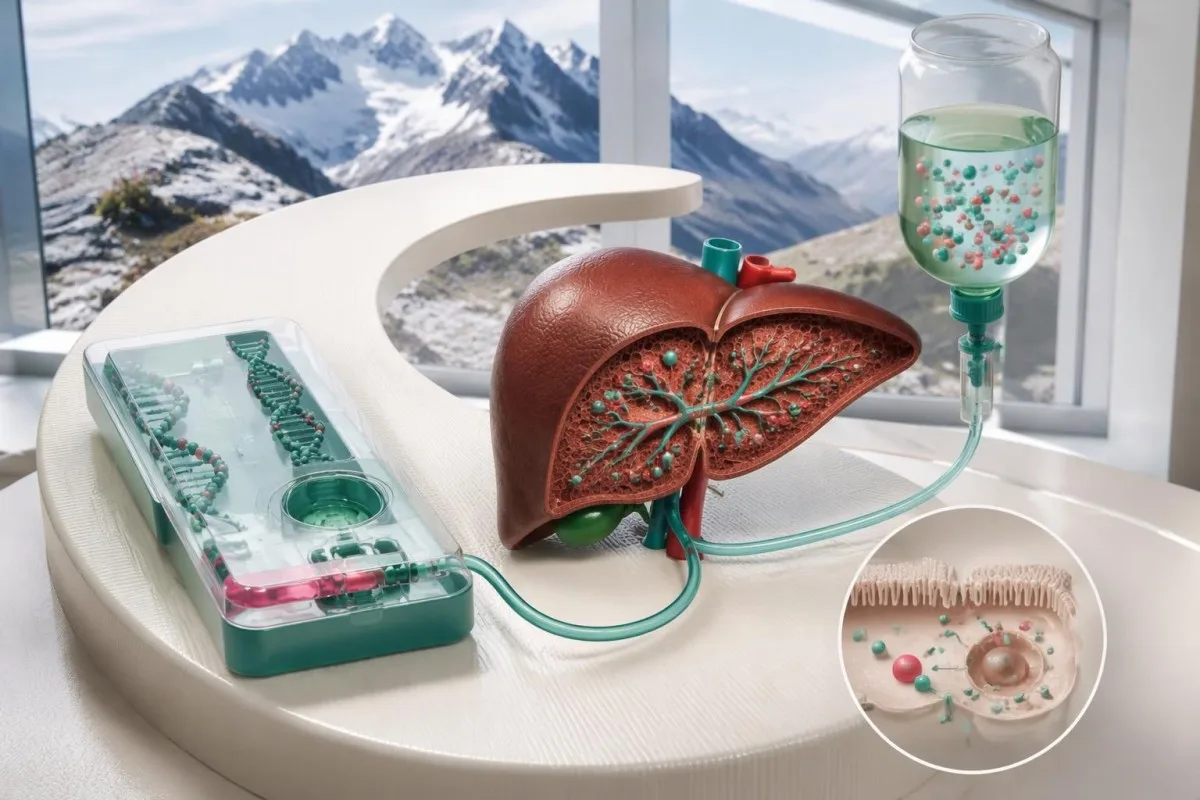
UGT1A1-ийн шинжилгээгээр иринотеканы идэвхтэй метаболитын клиренс буурсан эсэхийг тодорхойлж, эхлэх тунг аюулгүй сонгоход тусалж болно. Энэ нь бүх урвалыг урьдчилан таамаглах боломжгүй бөгөөд шийдвэр нь яг ямар бэлдмэл, эмчилгээний горим хэрэглэж байгаагаас болон хавдар судлалын багийн үнэлгээнээс хамаарна.

Гол санаанууд
- UGT1A1-ийн шинжилгээ нь SN-38 идэвхгүйжихэд нөлөөлдөг удамшлын ялгааг тодорхойлдог; билирубин эсвэл элэгний үйл ажиллагааны ердийн шинжилгээ генетикийн шинжилгээний үр дүнг орлож чадахгүй.
- Метаболизм муутай хүмүүс ихэвчлэн *28/*28, *6/*6 эсвэл *6/*28 үр дүнтэй байдаг бөгөөд эдгээр нь иринотекантай холбоотой хүнд хэлбэрийн нейтропенийн эрсдэлийг нэмэгдүүлдэг.
- Метаболизм дунд зэрэгтэй хүмүүс ихэвчлэн *1/*28 эсвэл *1/*6 үр дүнтэй байдаг; Нидерландын Фармакогенетикийн ажлын хэсэг эдгээр өвчтөнд зөвхөн генотипэд үндэслэн тунг автоматаар бууруулахыг зөвлөдөггүй.
- Эхлэх тунгийн зөвлөмж нь ялгаатай: Нидерландын удирдамж метаболизм муутай хүмүүст иринотеканы ердийн эхлэх тунгийн 70%-ийг зөвлөж, цаашид эмчийн хяналтаар тохируулахыг заадаг.
- Эмчилгээний горим чухал учир нь уламжлалт FOLFIRI-д ихэвчлэн 2 долоо хоног тутамд 180 mg/m² хэрэглэдэг бол бусад хуваарь болон липосомын бэлдмэлүүд өөр тунгаар хэрэглэгддэг.
- Липосомын иринотекан найрлагаас хамаарсан заавартай; 70 mg/m² болон 50 mg/m² тунгийн дэглэмийг харилцан орлуулж болохгүй.
- Хожуу илрэх суулгалт иринотекан хэрэглэснээс хойш 24 цаг өнгөрсний дараа эхэлдэг бөгөөд шингэн алдалт, электролитын алдагдал эсвэл дагалдах нейтропениэс шалтгаалан аюултай болж болзошгүй.
- Яаралтай үнэлгээ хими эмчилгээний үед 38.0°C буюу түүнээс дээш халуурсан тохиолдолд, хавдрын баг тань өөр, илүү хатуу босго заагаагүй л бол шаардлагатай.
Эхний дуслын өмнө UGT1A1-ийн шинжилгээ юуг өөрчилдөг вэ?
A Иринотекан хэрэглэхийн өмнөх UGT1A1 шинжилгээ нь эмийн идэвхтэй метаболит болох SN-38-ыг идэвхгүйжүүлэх чадвар буурсныг илрүүлнэ. Дараах мэт үр дүн 28/*28, *6/*6 эсвэл *6/*28 нь эмчилгээний эхлэх тунг бууруулж, хүнд нейтропени болон хожуу илрэх суулгалтыг илүү ойр хянах үндэслэл болж болох ч хавдрын баг уг үр дүнг тухайн эмчилгээний бодит дэглэмд нийцүүлэн хэрэглэх ёстой.

Удамшлын клиренсийн ялгаа эмчилгээтэй холбоотой ямар нэг шинж тэмдэг илрэхээс өмнө байдаг тул шинжилгээг эмчилгээний 1-р мөчлөгөөс өмнө хийх нь хамгийн үр дүнтэй. Шинжилгээний хариу нь одоогоор цусанд эргэлдэж буй иринотеканы хэмжээг хэмждэггүй бөгөөд хими эмчилгээ үр дүнтэй байх эсэхийг тогтоодоггүй; эдгээр нь эмчилгээний хариу урвал, эмнэлзүйн үнэлгээ, заримдаа мэргэжлийн фармакокинетикийн аргаар хариулдаг өөр өөр асуултууд юм.
Ердийн иринотеканыг 180 mg/m² тунгаар хэрэглэхээр товлосон нэг жишээ өвчтөн метаболизм муу байх хариу гарсны дараа өөр эхлэх тунгийн төлөвлөгөө авч болох бол ижил генотиптэй өөр өвчтөн аль хэдийн бага тунтай хавсарсан эмчилгээ хийлгэж байж болно. Үр дүн эерэг эсэхийг асуух төдий биш, харин уг үр дүн эхлэх тун, хяналтын хуваарь, тунг нэмэгдүүлэх шалгуурын алийг өөрчилж байгааг асуух нь зүйтэй.
Кантести бол AI цусны шинжилгээний анализатор ердийн CBC болон билирубиний шинжилгээний хариуг ойлгоход тусалдаг болохоос UGT1A1 генотип тодорхойлох лаборатори эсвэл хими эмчилгээ бичиж өгөх үйлчилгээ биш. Манай байгууллага ба эмнэлзүйн зорилго нь хавдрын багийн эмчилгээ бичиж өгөх үүргээс тусдаа; генетикийн тайлан болон мөчлөг тус бүрийн лабораторийн үр дүнг эмчилгээний бүртгэлийн тусдаа 2 хэсэг болгон хадгална уу.
UGT1A1 *28 ба *6 нь иринотеканы метаболизмд хэрхэн нөлөөлдөг вэ?
UGT1A1 *28 нь ферментийн илэрхийллийг бууруулдаг бол UGT1A1 *6 хувилбар нь кодлогч хэсгийн өөрчлөлтөөр ферментийн үйл ажиллагааг бууруулдаг. Аль аль нь идэвхтэй SN-38-ыг идэвх нь үлэмж сул глюкуронид болох SN-38G болгон хувиргах явцыг удаашруулж болно; ингэснээр ALT эсвэл AST-ийн үзүүлэлт хэвийн байсан ч эмийн өртөлт нэмэгдэнэ.

Иринотеканыг эхлээд карбоксилэстераза SN-38 болгон хувиргадаг; үүний дараа UGT1A1 анх идэвхжүүлэх үйл явцад бус, харин SN-38-ыг идэвхгүйжүүлэхэд оролцдог. *28 аллельд *1-тэй холбоотой 6-ийн оронд ихэвчлэн промоторын 7 TA давталт байдаг бол *6-ыг c.211G>A гэж нийтлэг тодорхойлдог бөгөөд үүний улмаас p.Gly71Arg орлуулалт үүсдэг.
Ижил фермент билирубиныг мөн коньюгацалдаг нь Жильбертийн хам шинж ба билирубинтай холбоотойг тайлбарлана. Гэвч билирубин хэвийн байх нь үйл ажиллагаа буурсан генотипийг үгүйсгэхгүй, харин өндөр байх нь ямар хувилбар байгааг тогтоохгүй; өлөн байх, өвчлөл, цөсний замын бөглөрөл болон элэгний үйл ажиллагааны алдагдал нь нэг удаагийн шинжилгээний тайлбарыг өөрчилж болно.
Minami нар Японы өвчтөнүүдэд *6 болон *28 хувилбарыг хоёуланг нь судалж, UGT1A-ийн өөрчлөлтийг иринотеканы фармакокинетик болон хордлоготой холбон үзүүлсэн (Pharmacogenetics and Genomics, 2007). *28-ыг л шинжилдэг тест эмнэлзүйн ач холбогдолтой *6 аллелийг орхигдуулж болзошгүй тул тэдний ажил чухал; *28-сөрөг гэж тодорхойлсон 2 өвчтөн SN-38-ыг гадагшлуулах ижил чадвартай гэсэн үг биш.
Ямар шинжилгээний үр дүн UGT1A1-ийн метаболизм муутайг илтгэдэг вэ?
A UGT1A1-ийн метаболизм муутай хүн generally carries 2 decreased-function alleles, including 28/*28, *6/*6 эсвэл *6/*28. A person with *1/*28 or *1/*6 usually has an intermediate-metabolizer phenotype; *1/*1 is usually classified as normal when the test adequately covers relevant variants.

The slash separates the 2 inherited gene copies; it is not a fraction or a drug concentration. A *6/*28 result usually means one decreased-function allele came from each parent, creating a compound-heterozygous poor-metabolizer result; possessing 2 different allele names does not make the result less clinically relevant than *28/*28.
Intermediate metabolism is not the same as zero risk. Although the Dutch guideline does not recommend an automatic reduction for *1/*28 or *1/*6, a patient starting at 180 mg/m² may still need modification because of elevated bilirubin, limited marrow reserve, previous toxicity, or the accompanying drugs; the phenotype is one input, not permission to ignore the rest.
Pharmacogenetic recommendations are drug-specific, as our explanation of SLCO1B1-related medication risk also illustrates. A reduced-function result does not mean every medicine is unsafe, and *28/*28 does not itself diagnose a hereditary cancer syndrome; ask the laboratory to provide the diplotype, assigned phenotype, and variants tested rather than a 1-word positive result.
Генетикийн шинжилгээнд юу хамрагдах ёстой вэ, хэзээ шаардлагатай вэ?
The test should clearly state whether it detects both *28 and *6, how it assigns the 2 alleles, and which other variants it evaluates. Testing before the first irinotecan dose allows the result to influence prevention rather than merely explain toxicity after it occurs.
UGT1A1 *6 is more frequent in several East Asian populations, while *28 occurs across multiple ancestry groups; ancestry can inform test coverage but cannot substitute for testing. Some assays also distinguish the 5-repeat *36 and 8-repeat *37 alleles, so reports from 2 laboratories may differ because their analytical scope differs—not because your inherited genotype changed.
A laboratory may use a blood-derived DNA sample or a validated saliva or cheek-cell method; fasting is not ordinarily required for the genetic analysis itself. Recent allogeneic stem-cell transplantation needs special discussion because circulating DNA may reflect the donor, and turnaround time must be checked locally rather than assumed to fit a treatment appointment in 2 days.
Genotyping and enzyme-activity testing are not interchangeable, a distinction also relevant to TPMT test interpretation. UGT1A1 genotype generally needs testing only once, but a narrow panel may warrant additional analysis if the clinical picture is unexpected; a report listing only 1 tested variant should not be read as proof that every other reduced-function allele is absent.
UGT1A1 нь хүнд хэлбэрийн нейтропенийн эрсдэлийг хэр хэмжээгээр нэмэгдүүлдэг вэ?
Poor-metabolizer genotypes increase the likelihood of хүнд хэлбэрийн нейтропени, but the size of the increase depends on dose and regimen. Grade 3 neutropenia generally means an absolute neutrophil count below 1.0 down to 0.5 × 10⁹/L; grade 4 means below 0.5 × 10⁹/L.
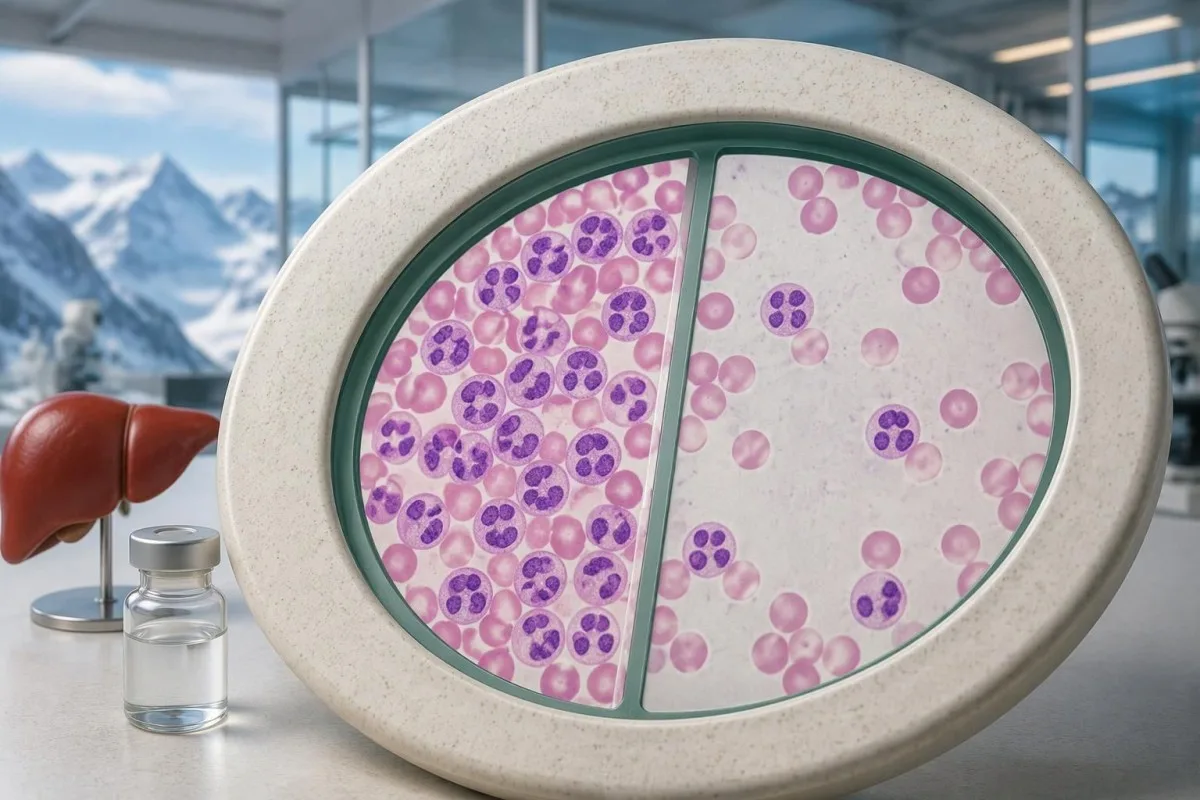
Hoskins et al. reported a dose-dependent association between *28/*28 and irinotecan-related neutropenia in their 2007 Journal of the National Cancer Institute meta-analysis. In the 150–250 mg/m² category, the pooled odds ratio was 3.22, with a 95% confidence interval of 1.52–6.81; older mixed schedules and wide uncertainty prevent treating this as a personal probability.
An odds ratio is not the percentage of patients affected. In a purely hypothetical illustration, if baseline risk were 10%, an odds ratio of 3 would correspond to approximately 25% risk—not 30%; the actual baseline varies with companion drugs, supportive care, prior treatment, and eligibility criteria, so no single percentage applies to every poor metabolizer.
Kantesti can help readers distinguish the ANC from the neutrophil percentage in routine reports, using the concepts explained in our мөхлэг эсийн тоонд зориулсан гарын авлага. A pre-existing Duffy-null-associated lower ANC requires individualized interpretation, but a new chemotherapy-related fall below 0.5 × 10⁹/L still deserves prompt oncology assessment rather than reassurance based on ancestry alone.
Иринотеканы эрт үеийн болон хожуу үеийн суулгалт яагаад ялгаатай байдаг вэ?
Early diarrhea occurs during or shortly after infusion, usually within 24 hours, and may accompany cholinergic symptoms such as sweating or abdominal cramping. Хожуу илрэх суулгалт begins more than 24 hours after treatment and is more closely related to intestinal toxicity, including exposure to SN-38.
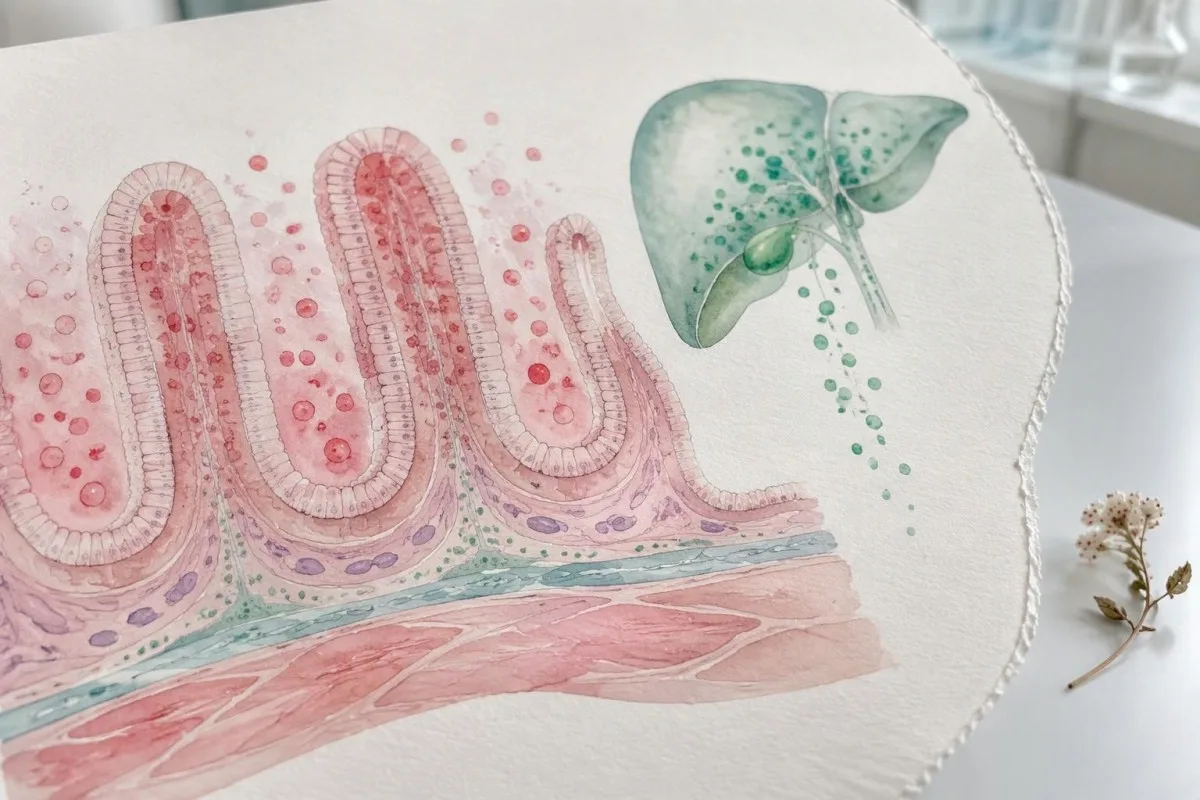
UGT1A1 genotype is more useful for anticipating delayed toxicity than predicting the immediate cholinergic syndrome. Clinicians may use atropine for early symptoms when appropriate, while delayed diarrhea requires a separate written treatment plan; intestinal bacteria can convert SN-38G back to SN-38 through beta-glucuronidase activity, illustrating why liver conjugation is not the only determinant of bowel exposure.
Grade 3 diarrhea commonly includes at least 7 additional stools per day above baseline, hospitalization being indicated, or a severe increase in ostomy output. Do not wait to reach that count before calling: persistent diarrhea despite the prescribed plan, vomiting that prevents drinking, fever, dizziness, or reduced urine output can justify urgent assessment at a much smaller stool increase.
Diarrhea during chemotherapy should not automatically be attributed to genotype, because antibiotics, infections, and accompanying drugs can produce similar symptoms; our C. difficile result guide explains one relevant diagnostic complication. If diarrhea lasts beyond 24 hours despite your oncology instructions, contact the team, and treat blood in the stool or significant abdominal pain as warning signs rather than ordinary treatment effects.
Эмчилгээний горим эхлэх тунгийн шийдвэрт хэрхэн нөлөөлдөг вэ?
A starting-dose decision combines UGT1A1 phenotype with the planned regimen, not genotype alone. Conventional FOLFIRI commonly uses irinotecan 180 mg/m² every 2 weeks, whereas modified combinations may use 150 mg/m² or another protocol-specific amount; those differences change baseline exposure and toxicity.

The Dutch Pharmacogenetics Working Group recommends starting poor metabolizers at 70% of the normal irinotecan dose, with subsequent increases guided by neutrophil counts and clinical tolerance (Hulshof et al., 2023). Applied hypothetically to a 180 mg/m² protocol, 70% is 126 mg/m²; the prescribing team decides whether protocol rules permit rounding, what dose level to use, and when reassessment occurs.
A 70% calculation is relative to the regimen’s usual starting dose, not a fixed universal dose. For a hypothetical protocol starting at 150 mg/m², the same calculation gives 105 mg/m²; applying the 126 mg/m² figure from a different protocol would therefore be a genuine dosing error, especially if the infusion schedule or formulation also differed.
Кантести бол AI цусны шинжилгээний тайлал платформ for explaining reported laboratory values, not selecting a 180 mg/m² chemotherapy prescription; our эмнэлзүйн баталгаажуулалтын хүрээ describes the distinction between interpretation support and prescribing. In combinations containing fluorouracil or capecitabine, хими эмчилгээний өмнөх DPYD шинжилгээ addresses a separate metabolic risk that a normal UGT1A1 result cannot rule out.
Иринотеканы тунгийн зөвлөмжүүд удирдамж бүрд яагаад ялгаатай байдаг вэ?
Guidelines differ because they interpret dose-dependent evidence differently and serve different clinical settings. The Dutch guideline recommends a 70% starting dose for poor metabolizers, while US conventional irinotecan prescribing information advises considering a reduction by at least 1 dose level, without defining one percentage for every regimen.
A dose level is defined by the treatment protocol rather than by the genetic test. Moving from 180 to 150 mg/m² would be approximately a 17% reduction, while moving from 180 to 120 mg/m² would be approximately a 33% reduction; these are mathematical examples, not recommendations, and explain why the phrase reduce one level needs a named protocol.
The French RNPGx/GPCO dose-stratified framework has historically distinguished doses below 180 mg/m², doses of 180–230 mg/m², and high doses of at least 240 mg/m². It recommended approximately 25–30% reduction for *28/*28 at the intermediate range and advised against high-dose use in that genotype; the Dutch recommendation is broader, including lower-dose regimens and other poor-metabolizer combinations.
The evidence is genuinely less settled at lower doses, where severe events may be less frequent and studies less able to estimate genotype effects precisely. This differs from HLA-B*57:01 drug avoidance, where the relevant recommendation is avoidance rather than a 30% reduction; ask which local guideline your team follows and whether its advice specifically covers *6/*6 or *6/*28.
Липосомын иринотеканд UGT1A1-ийн тунгийн ижил дүрэм үйлчилдэг үү?
Liposomal irinotecan is not interchangeable with conventional irinotecan, and its UGT1A1 instructions depend on the regimen. In the liposomal irinotecan plus fluorouracil/leucovorin setting, a usual 70 mg/m² dose is reduced to 50 mg/m² initially for known *28/*28; the NALIRIFOX regimen already starts at 50 mg/m².

Those 70 and 50 mg/m² figures refer to irinotecan free base in the relevant liposomal prescribing instructions. Some documents also express doses using the hydrochloride trihydrate equivalent, approximately 80 and 60 mg/m² respectively; the team must verify the convention rather than interpret a different-looking number as an intentional dose increase or decrease.
For NALIRIFOX—liposomal irinotecan with oxaliplatin, fluorouracil, and leucovorin—the labeled starting dose is 50 mg/m² every 2 weeks, including patients known to have *28/*28. This does not establish that every poor-metabolizer genotype has identical evidence, especially *6-containing combinations; the oncology pharmacist should check the relevant product information and local protocol rather than import conventional irinotecan rules automatically.
A medication list that says only irinotecan is insufficient for a pharmacogenetic decision: request the formulation, companion drugs, dose expression, and schedule before comparing 2 plans. Our суурь лабораторийн шинжилгээнд бэлтгэх гарын авлагын also explains why recording pretreatment measurements helps later interpretation, although those measurements cannot resolve a formulation or prescribing ambiguity.
Генотипээс гадна ямар лабораторийн үзүүлэлт, эм бэлдмэл чухал вэ?
CBC with differential, bilirubin, liver tests, kidney function, and electrolytes provide information that UGT1A1 genotype cannot supply. A bilirubin of 2.0 mg/dL is approximately 34 µmol/L; conventional irinotecan studies often excluded values above this level, so higher results require specialist assessment rather than a genotype-only calculation.
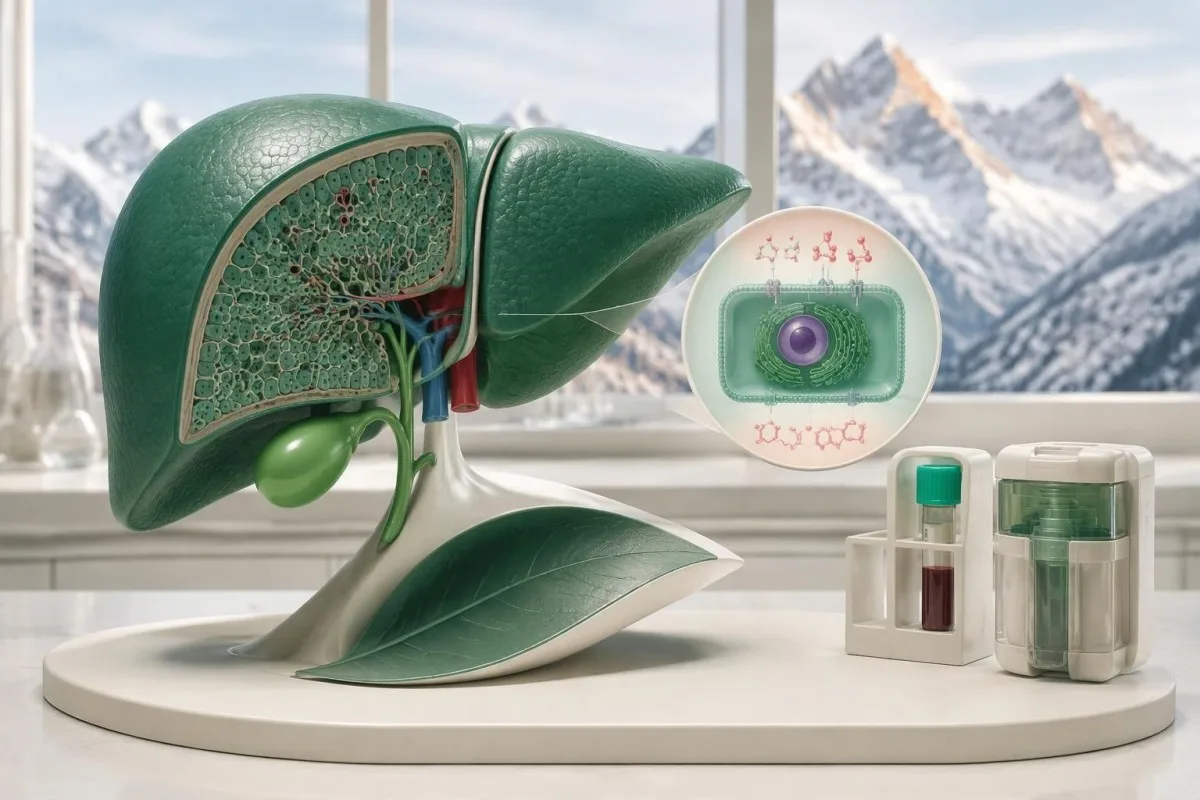
An isolated indirect bilirubin rise may fit reduced UGT1A1 activity, while rising direct bilirubin with abnormal ALP or transaminases suggests an additional hepatobiliary problem. A hypothetical total bilirubin of 1.8 mg/dL with otherwise stable tests is therefore not equivalent to 1.8 mg/dL accompanied by new jaundice and obstruction; fractionation, trends, symptoms, and imaging determine the interpretation.
Strong CYP3A4 inducers can lower irinotecan exposure, while strong CYP3A4 or UGT1A1 inhibitors can increase clinically relevant exposure; examples requiring pharmacy review include rifampicin, carbamazepine, ketoconazole, and atazanavir. Do not stop a prescription yourself, and disclose supplements such as St John’s wort before cycle 1 because changing an interacting medicine can itself change exposure.
Kantesti can help explain routine kidney and electrolyte reports, but a normal creatinine does not guarantee tolerance of delayed diarrhea. The BUN/креатинины харьцааны заавар describes contextual interpretation, while our electrolyte safety guide explains why potassium or magnesium losses can matter after 24 hours of gastrointestinal symptoms.
Ямар хяналт, шинж тэмдэг илэрвэл яаралтай арга хэмжээ авах шаардлагатай вэ?
Monitoring remains necessary for every genotype, with CBC checks before treatment and additional measurements when clinically indicated. A temperature of 38.0°C буюу түүнээс дээш халууралттай during chemotherapy warrants immediate contact with the oncology service unless the team has supplied a different threshold; follow a stricter local instruction.

Formal definitions of febrile neutropenia often use a single temperature of 38.3°C or a temperature of 38.0°C sustained for 1 hour, together with a low or falling ANC. These definitions are not instructions to wait at home: chemotherapy services often use simpler, more cautious telephone thresholds, and shaking chills, confusion, or sudden deterioration can be urgent without a documented fever.
A falling ANC can precede symptoms, so a patient feeling well should still attend the scheduled laboratory check. Our borderline neutrophil interpretation guide explains why a result near a cutoff needs context; during treatment, a change from 2.5 to 0.7 × 10⁹/L carries different significance from a stable longstanding count near 1.4 × 10⁹/L.
Dose escalation after a reduced start should follow a predefined plan based on counts, diarrhea, other toxicity, and treatment goals—not simply the absence of nausea after cycle 1. G-CSF may reduce neutropenia risk when indicated, but it does not prevent intestinal toxicity; urgent assessment is needed for diarrhea with fever, severe abdominal pain, inability to drink, or markedly reduced urination.
Генотип хэвийн байсан ч яагаад хүнд гаж нөлөө илэрч болох вэ?
A normal UGT1A1 result does not guarantee safe treatment because irinotecan toxicity has multiple causes. Genotype does not adequately predict every episode of nausea, fatigue, hair loss, infusion symptoms, or toxicity from companion drugs; even *1/*1 patients can develop severe neutropenia or diarrhea.
A narrow assay may miss uncommon reduced-function variants, while liver impairment, interacting medicines, treatment intensity, and previous chemotherapy can increase risk independently. Thus, 2 patients both reported as *1/*1 may have different exposures and different marrow reserve; a phenotype assignment only describes the genetic information captured by the test, not every biological factor affecting treatment.
Companion drugs create additional attribution problems: oxaliplatin can cause neuropathy, and fluoropyrimidines can contribute diarrhea, mucositis, and marrow suppression. A hypothetical patient on a 4-drug combination with severe diarrhea cannot have the culprit assigned from UGT1A1 alone; timing, the complete regimen, microbiological testing when indicated, and other pharmacogenetic results may alter the clinical explanation.
Kantesti’s role in laboratory trend interpretation is to support understanding, not establish which drug caused a change between 2 cycles. Genetic reports also contain durable personal information, so review our нууцлал ба өгөгдөлтэй харьцах журам before sharing them; an inherited metabolic variant is not a complete forecast of your future health.
Иринотекан хэрэглэхээс өмнө хавдар судлалын багаасаа юу асуух вэ?
Before treatment, ask which formulation and regimen you will receive, whether *28 and *6 were tested, and how the result changes the first dose. Also obtain a written diarrhea plan, a temperature threshold, and a 24-hour contact route; these practical details matter even when the genotype is normal.

Request the actual dose in mg/m² and the planned total dose in mg, because they answer different questions. For example, a hypothetical 126 mg/m² order for a body surface area of 1.8 m² gives 226.8 mg before institutional rounding; patients should not perform their own adjustment, but this distinction helps identify whether 2 documents describe the same prescription.
Ask how the team will judge tolerance after cycle 1, whether an interim CBC is planned, and what would justify later escalation. Your written diarrhea instructions may use a loperamide schedule different from ordinary over-the-counter directions, so follow the oncology prescription rather than inventing a schedule; fever, abdominal pain, or persistent symptoms may require assessment instead of additional self-treatment.
Кантести бол AI-аар ажилладаг цусны шинжилгээний үр дүнгийн шинжилгээний хэрэгсэл that can help explain routine reports alongside your own treatment notes; our AI технологийн заавар explains the supporting technology rather than a chemotherapy dosing system. Keep 3 items accessible: the genetic report, the current regimen sheet, and the emergency contact instructions, with the prescribing team verifying all clinical decisions.
Судалгааны нийтлэлүүд: зөвлөмжийг юу дэмждэг, юу дэмждэггүй вэ?
The dosing advice rests on drug-specific pharmacogenetic guidance and irinotecan studies, not on general blood-test education publications. The 2023 Dutch guideline recommends a 70% start for poor metabolizers, while the 2007 studies cited here help explain dose dependence and the relevance of both *28 and *6.
Hulshof et al. translate pharmacokinetic and toxicity evidence into prescribing guidance, whereas Hoskins et al. quantify associations across older dose categories, and Minami et al. examine relevant variants in Japanese patients. These 3 sources answer complementary questions; none supplies an individualized toxicity percentage for every contemporary combination, and observational associations should not be presented as proof that one starting dose suits everyone.
Kantesti’s 2 Zenodo publications listed below are educational resources on RDW and the BUN/creatinine ratio, not trials of UGT1A1-guided irinotecan dosing. Our RDW and CBC interpretation resource can explain accompanying red-cell indices, but RDW does not replace ANC, genotype, or a chemotherapy protocol; a DOI is a persistent identifier, not an automatic guarantee of clinical relevance or peer review.
The unresolved question is often how best to preserve treatment intensity while preventing a severe event in cycle 1, particularly in lower-dose combinations and less-studied genotypes. Our эмнэлгийн агуулгын стандартууд require separating established guidance, hypothetical calculations, and genuine uncertainty; the oncology team should confirm the current local product information and protocol before applying any published recommendation.
Түгээмэл асуултууд
Иринотекан хэрэглэхээс өмнө хүн бүр UGT1A1 шинжилгээ өгөх ёстой юу?
Шинжилгээний бодлого улс орон, байгууллага болон эмчилгээний схемээс хамаарч өөр байдаг ч Нидерландын Фармакогенетикийн ажлын хэсэг иринотекан эмчилгээг эхлэхийн өмнө UGT1A1-ийн шинжилгээ хийхийг зөвлөдөг. Энэ шинжилгээ нь хүнд хордлого үүсэхээс өмнө метаболизмын идэвх султай хүмүүсийг илрүүлэх боломжтой тул эмчилгээний 1-р мөчлөгөөс өмнө онцгой ач холбогдолтой. Шинжилгээнд *28 болон *6 аль аль нь хамрагдаж байгаа эсэхийг тодруулах ёстой бөгөөд зөвхөн *28 байхгүй гэж мэдээлэх нь хангалтгүй. Шинжилгээний үр дүн таны эхлэх тунг өөрчлөх эсэх, мөн үр дүнг хүлээх нь зохистой эсэхийг хавдрын эмчилгээний баг тань тайлбарлах ёстой.
UGT1A1 *28/*28 генотип нь иринотеканы тунгийн хувьд ямар утгатай вэ?
0 UGT1A1 *28/*28 нь ерөнхийдөө эмийн бодисын солилцоо муу явагддаг фенотипийг илтгэх бөгөөд иринотекантай холбоотой хүнд нейтропени үүсэх эрсдэлийг нэмэгдүүлдэг. Нидерландын удирдамжид ердийн эхлэх тунгийн 70%-ийг зөвлөж, дараа нь тэсвэрлэх чадвар болон нейтрофилийн тоонд үндэслэн эмч тунг тохируулахыг зөвлөдөг. Жишээ болгон авч үзсэн ердийн 180 mg/m² схемийн хувьд энэ тооцоо нь протоколд заасан шийдвэр, тунг бүхэлчлэхээс өмнө 126 mg/m² болно. АНУ-ын эм бичих заавар болон липосомын эмчилгээний схемд өөр арга хэрэглэдэг тул энэ тооцоо нь хувь хүнд зориулсан эмийн жор биш юм.
Иринотеканы өмнө UGT1A1 *6 нь *28-тай адил ач холбогдолтой юу?
0 UGT1A1 *6 нь SN-38-ын идэвхгүйжүүлэлтийг бууруулж болзошгүй, эмнэлзүйн ач холбогдолтой үйл ажиллагаа буурсан хувилбар юм. *6/*6 эсвэл *6/*28 зэрэг үр дүн нь үйл ажиллагаа буурсан 2 аллель агуулдаг тул ерөнхийдөө метаболизм муутай байдлыг илтгэнэ. Энэ хувилбар Зүүн Азийн хэд хэдэн хүн амд илүү түгээмэл боловч гарал үүслээр нь тухайн хүн уг хувилбарыг тээгч эсэхийг дангаар нь тогтоох боломжгүй. *28-сөрөг үр дүнг хэвийн метаболизм гэж тайлбарлахаасаа өмнө лаборатори *6-г шинжилсэн эсэхийг лавлаарай.
UGT1A1 *1/*28 генотиптэй тохиолдолд тунг автоматаар бууруулах шаардлагатай юу?
UGT1A1 *1/*28 нь ерөнхийдөө бодисын солилцооны завсрын түвшний метаболизаторын төлөвийг илтгэдэг болохоос метаболизм муутай метаболизаторын төлөвийг илтгэдэггүй. Нидерландын удирдамжид завсрын метаболизаторт зөвхөн генотипэд үндэслэн эхлэх тунг автоматаар бууруулахыг зөвлөдөггүй. 180 mg/m² тунгаар эмчилгээ хийхээр төлөвлөсөн өвчтөнд билирубины хэмжээ, өмнөх эмчилгээ, эмийн харилцан үйлчлэл эсвэл хавсарсан эмчилгээний схемээс шалтгаалан өөр төлөвлөгөө шаардлагатай байж болно. Завсрын түвшний бодисын солилцоо нь CBC-ийн хяналт эсвэл суулгалтын үед авах аюулгүй байдлын арга хэмжээний төлөвлөгөөний хэрэгцээг үгүйсгэхгүй.
Билирубины хэвийн үзүүлэлт UGT1A1 генетикийн шинжилгээг орлож чадах уу?
Билирубины хэвийн байх нь UGT1A1-ийн үйл ажиллагаа буурсан генотипийг үгүйсгэхгүй, харин билирубин ихэссэн байх нь тодорхой аллелийг тогтоох боломж олгохгүй. Билирубин нь коньюгаци, элэгний үйл ажиллагаа, цөсний замын бөглөрөл болон улаан эсийн задрал зэрэг хэд хэдэн үйл явцыг илэрхийлдэг. Нийт билирубины 2.0 mg/dL хэмжээ нь ойролцоогоор 34 µmol/L-тэй тэнцэх бөгөөд үүнийг иринтотеканы холбогдох протоколын хүрээнд тайлбарлах шаардлагатай. Генетикийн шинжилгээ болон билирубины хэмжилт нь харилцан орлуулах хариу биш, харин харилцан нөхөх мэдээлэл өгдөг.
Иринотекан хэрэглэсний дараа суулгалт, халууралт илэрвэл хэзээ эмчид хандах вэ?
Хими эмчилгээний үед биеийн халуун 38.0°C буюу түүнээс дээш бол, эмчилгээний баг өөр босго заагаагүй тохиолдолд хавдрын эмчилгээний багтайгаа нэн даруй холбогдож, илүү хатуу заавар өгсөн бол түүнийг дагана уу. Иринотеканы эмчилгээний дараа 24 цагаас хойш эхэлдэг суулгалт нь шингэн алдалт эсвэл электролитийн алдагдалд хүргэж болзошгүй. Заасан арга хэмжээг дагасан ч суулгалт үргэлжилж байгаа, ууж чадахгүй байгаа, шээс багассан, өтгөнд цус байгаа эсвэл хэвлийгээр хүчтэй өвдөж байвал даруй залгаарай. Тусламж авахаасаа өмнө өдөрт 7 удаа нэмж суулгахыг эсвэл товлосон цусны шинжилгээ өгөхийг хүлээж болохгүй.
Цусны шинжилгээний хариугаа тайлбарлуулаарай
Лабораторийн тайлангаа байршуулснаар Kantesti-ийн AI биомаркер бүрийг энгийн хэлээр хэдхэн секундэд тайлбарлана. Дэлхий даяар 2 сая гаруй хүн ашигладаг.
Лавлагаа
- Klein, T., Mitchell, S., & Weber, H. (2026). RDW цусны шинжилгээ: RDW-CV, MCV болон MCHC-ийн талаарх бүрэн гарын авлага. Kantesti AI-ийн анагаахын судалгаа. DOI
- Klein, T., Mitchell, S., & Weber, H. (2026). BUN/Creatinine Ratio тайлбар: шээсний функцийн тестийн гарын авлага. Kantesti AI-ийн анагаахын судалгаа. DOI
- Hulshof DP et al. (2023). Dutch pharmacogenetics working group (DPWG) guideline for the gene–drug interaction between UGT1A1 and irinotecan. European Journal of Human Genetics.
- Hoskins JM et al. (2007). UGT1A1*28 genotype and irinotecan-induced neutropenia: dose matters. Journal of the National Cancer Institute. DOI
- Minami H et al. (2007). Irinotecan pharmacokinetics/pharmacodynamics and UGT1A genetic polymorphisms in Japanese: roles of UGT1A1*6 and *28. Pharmacogenetics and Genomics.
- 2 сая+Шинжилсэн сорилууд
- 127+Улс орнууд
- 100+Хэлнүүд
Эмнэлгийн багийн тухай


E-E-A-T итгэлийн дохио
Туршлага
Эмчийн удирдлагатай лабораторийн тайлалын ажлын урсгалын клиник хяналт.
Мэргэшсэн байдал
Биомаркерууд клиникийн нөхцөлд хэрхэн ажиллаж/өөрчлөгдөж байгаад чиглэсэн лабораторийн анагаах ухаан.
Эрх мэдэл
Доктор Томас Кляйн эмнэлзүйн хувьд хянасан бөгөөд доктор Сара Митчелл, профессор доктор Ханс Вебер нар хувь нэмэр оруулсан.
Найдвартай байдал
Сэрэмжлүүлгийг бууруулахын тулд тодорхой дараагийн алхамтай, нотолгоонд суурилсан тайлал.






Эмнэлгийн хариуцлагаас татгалзах мэдэгдэл
Энэ нийтлэл зөвхөн боловсролын зорилготой бөгөөд эмнэлгийн зөвлөгөө биш болно. Оношилгоо, эмчилгээний шийдвэр гаргахдаа мэргэшсэн эрүүл мэндийн үйлчилгээ үзүүлэгчтэй заавал зөвлөлдөнө.
Хэвлэгдсэн · Редакцын багтай холбогдох
Kantesti Ltd компани Англи, Уэльст бүртгэлтэй, компанийн дугаар. 17090423, Лондон, Нэгдсэн Хаант Улс.
