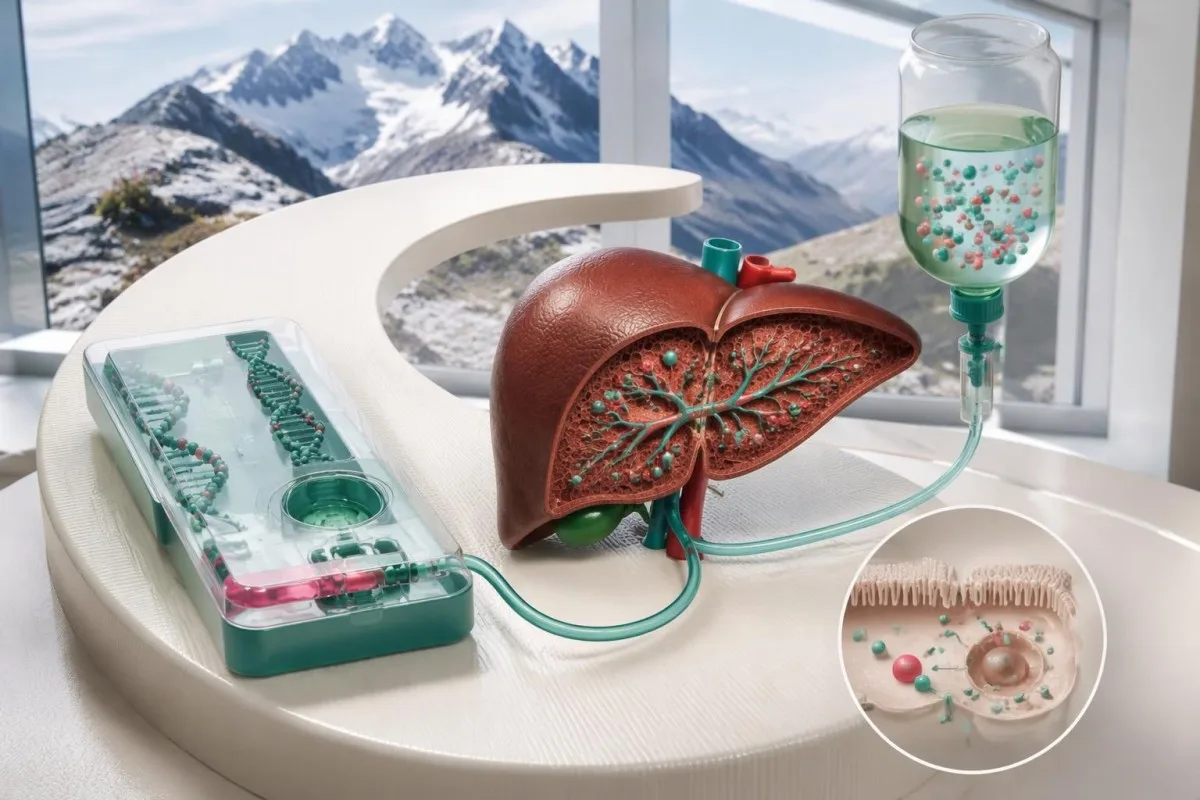
Kipimo cha UGT1A1 kinaweza kutambua upungufu wa uondoaji wa metaboliti hai ya irinotecan na kusaidia kuchagua dozi salama zaidi ya kuanzia. Hakiwezi kutabiri kila athari, na uamuzi hutegemea uundaji halisi wa dawa, regimen, na tathmini ya timu yako ya onkolojia.

Mambo muhimu ya kukumbuka
- Kipimo cha UGT1A1 hubaini tofauti za kurithi zinazoathiri uzimishaji wa SN-38; vipimo vya kawaida vya bilirubini au ini haviwezi kuchukua nafasi ya matokeo ya kipimo cha vinasaba.
- Metabolizer hafifu kwa kawaida huwa na matokeo ya *28/*28, *6/*6, au *6/*28, ambayo huongeza hatari ya neutropenia kali inayohusiana na irinotecan.
- Metabolizer wa kiwango cha kati kwa kawaida huwa na matokeo ya *1/*28 au *1/*6; Kikundi cha Kazi cha Kifamasia cha Uholanzi hakipendekezi kupunguza dozi kiotomatiki kwa wagonjwa hawa kwa kutegemea aina ya jeni pekee.
- Mwongozo wa dozi ya kuanzia hutofautiana: mwongozo wa Uholanzi unapendekeza 70% ya dozi ya kawaida ya kuanzia ya irinotecan kwa metabolizer hafifu, kisha daktari hurekebisha dozi.
- Regimen ni muhimu kwa sababu FOLFIRI ya kawaida mara nyingi hutumia 180 mg/m² kila baada ya wiki 2, ilhali ratiba nyingine na uundaji wa liposomu hutumia dozi tofauti.
- Irinotekani ya liposomu ina maelekezo mahususi kulingana na uundaji wake; regimen ya 70 mg/m² na regimen ya 50 mg/m² hazipaswi kuchukuliwa kuwa zinaweza kubadilishana.
- Kuhara kwa kuchelewa huanza zaidi ya saa 24 baada ya irinotekani na kunaweza kuwa hatari kutokana na upungufu wa maji mwilini, upotevu wa elektroliti au neutropenia inayoambatana nako.
- Tathmini ya haraka inahitajika kwa halijoto ya 38.0°C au zaidi wakati wa tiba ya kemikali, isipokuwa timu yako ya onkolojia imeweka kiwango tofauti na kikali zaidi.
Kipimo cha UGT1A1 hubadilisha nini kabla ya kuwekewa dozi ya kwanza kwa njia ya mshipa?
A Kipimo cha UGT1A1 kabla ya irinotekani hutambua uwezo uliopungua wa kugeuza SN-38, metaboliti hai ya dawa, kuwa isiyotumika. Matokeo kama vile 28/*28, *6/*6, au *6/*28 yanaweza kusaidia kuchagua dozi ya chini ya kuanzia na ufuatiliaji wa karibu zaidi wa neutropenia kali na kuhara kwa kuchelewa; timu ya onkolojia lazima itumie matokeo hayo kwa regimen halisi.

Upimaji huwa na manufaa zaidi kabla ya mzunguko wa 1 kwa sababu tofauti ya kurithi ya uondoaji wa dawa mwilini huwa ipo kabla ya dalili zozote zinazohusiana na matibabu kujitokeza. Matokeo hayaonyeshi kiasi cha irinotekani kinachozunguka mwilini kwa sasa, wala hayathibitishi kama tiba ya kemikali itafanya kazi; hayo ni maswali tofauti yanayojibiwa kwa mwitikio wa matibabu, tathmini ya kitabibu, na wakati mwingine mbinu maalumu za kifamasia za kupima dawa mwilini.
Mgonjwa wa kubuniwa aliyepangiwa irinotekani ya kawaida kwa 180 mg/m² anaweza kupewa mpango tofauti wa kuanzia baada ya matokeo kuonyesha uwezo duni wa kumetaboli dawa, ilhali mgonjwa mwingine mwenye aina hiyo hiyo ya jeni anaweza kuwa tayari anapokea mchanganyiko wa dozi ya chini. Swali la manufaa si tu kama matokeo ni chanya: uliza ni dozi gani ya kuanzia, ratiba gani ya ufuatiliaji, na vigezo gani vya kuongeza dozi ambavyo matokeo hayo hubadilisha.
Kantesti ni Mchambuzi wa mtihani wa damu wa AI inayosaidia kueleza ripoti za kawaida za CBC na bilirubini, si maabara inayofanya uchunguzi wa aina za jeni za UGT1A1 au huduma inayotoa maagizo ya tiba ya kemikali. Zetu shirika na kusudi la kliniki ni tofauti na jukumu la timu yako ya onkolojia la kuagiza matibabu; hifadhi ripoti ya kijenetiki na matokeo ya maabara ya kila mzunguko kama sehemu 2 tofauti za rekodi ya matibabu.
UGT1A1 *28 na *6 huathirije umetaboli wa irinotecan?
UGT1A1 *28 hupunguza mwonekano wa kimeng'enya, ilhali aina ya UGT1A1 *6 hupunguza utendaji wa kimeng'enya kupitia mabadiliko katika sehemu ya usimbaji. Zote mbili zinaweza kupunguza kasi ya ubadilishaji wa SN-38 hai kuwa glukuronidi yake isiyo na shughuli nyingi, SN-38G; hali hii huongeza kiwango cha dawa mwilini bila kuhitaji matokeo yasiyo ya kawaida ya ALT au AST.

Irinotekani kwanza hubadilishwa kuwa SN-38 na karboksiliestaresi; kisha UGT1A1 hushiriki katika kuzima SN-38 badala ya kuiwasha mwanzoni. Aleli ya *28 kwa kawaida huwa na marudio 7 ya TA katika promota badala ya 6 yanayohusishwa na *1, ilhali *6 huelezwa kwa kawaida kama c.211G>A, na kusababisha badiliko la p.Gly71Arg.
Kimeng'enya hicho hicho pia huunganisha bilirubini, jambo linaloeleza uhusiano na ugonjwa wa Gilbert na bilirubini. Hata hivyo, matokeo ya kawaida ya bilirubini hayaondoi uwezekano wa aina ya jeni yenye utendaji uliopungua, na matokeo yaliyoinuka hayatambui ni aina gani ya mabadiliko iliyopo; kufunga, ugonjwa, kuziba kwa njia za nyongo na kuharibika kwa ini vinaweza kubadilisha tafsiri ya kipimo kimoja.
Minami na wenzake walichunguza *6 na *28 kwa wagonjwa wa Japani na kuhusisha tofauti za UGT1A na famakokinetiki na sumu ya irinotekani (Pharmacogenetics and Genomics, 2007). Kazi yao ni muhimu kwa sababu kipimo kinachochunguza *28 pekee kinaweza kukosa aleli ya *6 yenye umuhimu wa kitabibu; wagonjwa 2 walioelezwa kuwa hawana *28 si lazima wawe na uwezo sawa wa kuondoa SN-38 mwilini.
Ni matokeo gani yanayoashiria mtu kuwa metabolizer hafifu wa UGT1A1?
A Mmetaboli duni wa UGT1A1 generally carries 2 decreased-function alleles, including 28/*28, *6/*6, au *6/*28. A person with *1/*28 or *1/*6 usually has an intermediate-metabolizer phenotype; *1/*1 is usually classified as normal when the test adequately covers relevant variants.

The slash separates the 2 inherited gene copies; it is not a fraction or a drug concentration. A *6/*28 result usually means one decreased-function allele came from each parent, creating a compound-heterozygous poor-metabolizer result; possessing 2 different allele names does not make the result less clinically relevant than *28/*28.
Intermediate metabolism is not the same as zero risk. Although the Dutch guideline does not recommend an automatic reduction for *1/*28 or *1/*6, a patient starting at 180 mg/m² may still need modification because of elevated bilirubin, limited marrow reserve, previous toxicity, or the accompanying drugs; the phenotype is one input, not permission to ignore the rest.
Pharmacogenetic recommendations are drug-specific, as our explanation of SLCO1B1-related medication risk also illustrates. A reduced-function result does not mean every medicine is unsafe, and *28/*28 does not itself diagnose a hereditary cancer syndrome; ask the laboratory to provide the diplotype, assigned phenotype, and variants tested rather than a 1-word positive result.
Kipimo cha vinasaba kinapaswa kujumuisha nini, na kinahitajika lini?
The test should clearly state whether it detects both *28 and *6, how it assigns the 2 alleles, and which other variants it evaluates. Testing before the first irinotecan dose allows the result to influence prevention rather than merely explain toxicity after it occurs.
UGT1A1 *6 is more frequent in several East Asian populations, while *28 occurs across multiple ancestry groups; ancestry can inform test coverage but cannot substitute for testing. Some assays also distinguish the 5-repeat *36 and 8-repeat *37 alleles, so reports from 2 laboratories may differ because their analytical scope differs—not because your inherited genotype changed.
A laboratory may use a blood-derived DNA sample or a validated saliva or cheek-cell method; fasting is not ordinarily required for the genetic analysis itself. Recent allogeneic stem-cell transplantation needs special discussion because circulating DNA may reflect the donor, and turnaround time must be checked locally rather than assumed to fit a treatment appointment in 2 days.
Genotyping and enzyme-activity testing are not interchangeable, a distinction also relevant to TPMT test interpretation. UGT1A1 genotype generally needs testing only once, but a narrow panel may warrant additional analysis if the clinical picture is unexpected; a report listing only 1 tested variant should not be read as proof that every other reduced-function allele is absent.
UGT1A1 huongeza kwa kiasi gani hatari ya neutropenia kali?
Poor-metabolizer genotypes increase the likelihood of neutropenia kali, but the size of the increase depends on dose and regimen. Grade 3 neutropenia generally means an absolute neutrophil count below 1.0 down to 0.5 × 10⁹/L; grade 4 means below 0.5 × 10⁹/L.
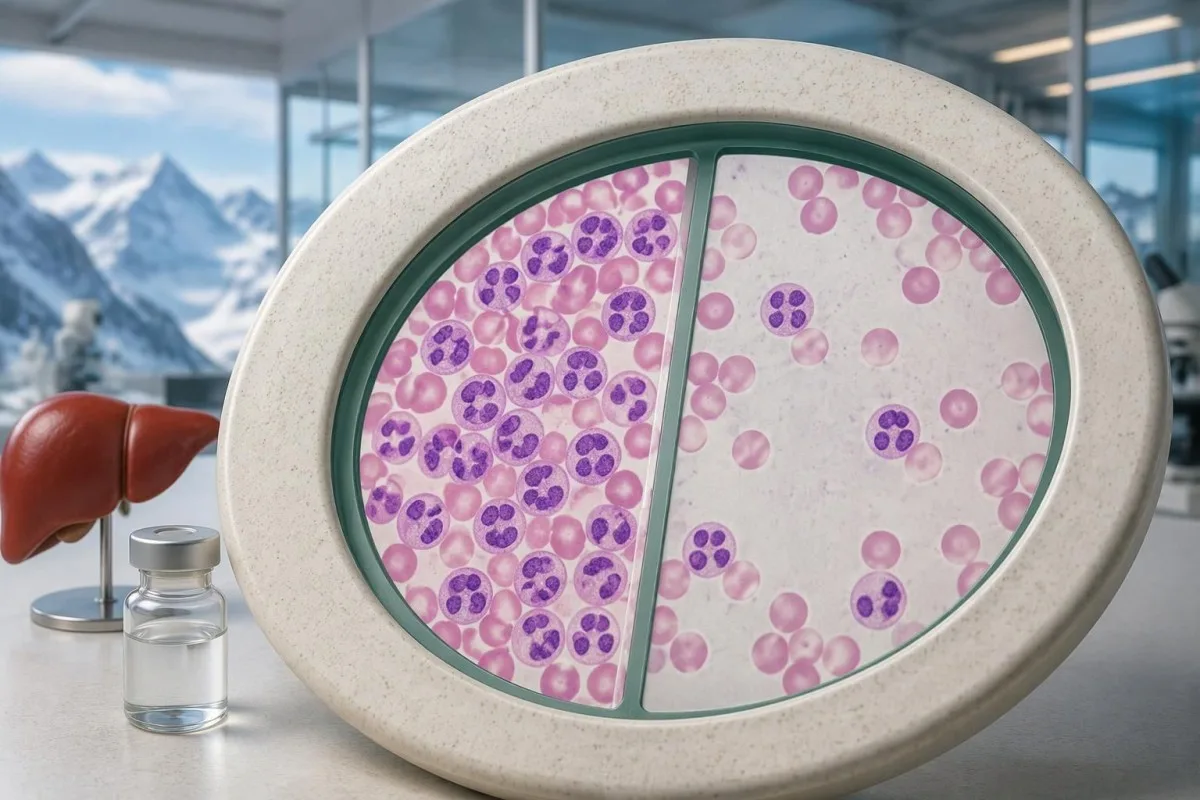
Hoskins et al. reported a dose-dependent association between *28/*28 and irinotecan-related neutropenia in their 2007 Journal of the National Cancer Institute meta-analysis. In the 150–250 mg/m² category, the pooled odds ratio was 3.22, with a 95% confidence interval of 1.52–6.81; older mixed schedules and wide uncertainty prevent treating this as a personal probability.
An odds ratio is not the percentage of patients affected. In a purely hypothetical illustration, if baseline risk were 10%, an odds ratio of 3 would correspond to approximately 25% risk—not 30%; the actual baseline varies with companion drugs, supportive care, prior treatment, and eligibility criteria, so no single percentage applies to every poor metabolizer.
Kantesti can help readers distinguish the ANC from the neutrophil percentage in routine reports, using the concepts explained in our mwongozo wa hesabu kamili ya neutrophil. A pre-existing Duffy-null-associated lower ANC requires individualized interpretation, but a new chemotherapy-related fall below 0.5 × 10⁹/L still deserves prompt oncology assessment rather than reassurance based on ancestry alone.
Kwa nini kuharisha kwa irinotecan kunakotokea mapema hutofautiana na kunakotokea baadaye?
Early diarrhea occurs during or shortly after infusion, usually within 24 hours, and may accompany cholinergic symptoms such as sweating or abdominal cramping. Kuhara kwa kuchelewa begins more than 24 hours after treatment and is more closely related to intestinal toxicity, including exposure to SN-38.
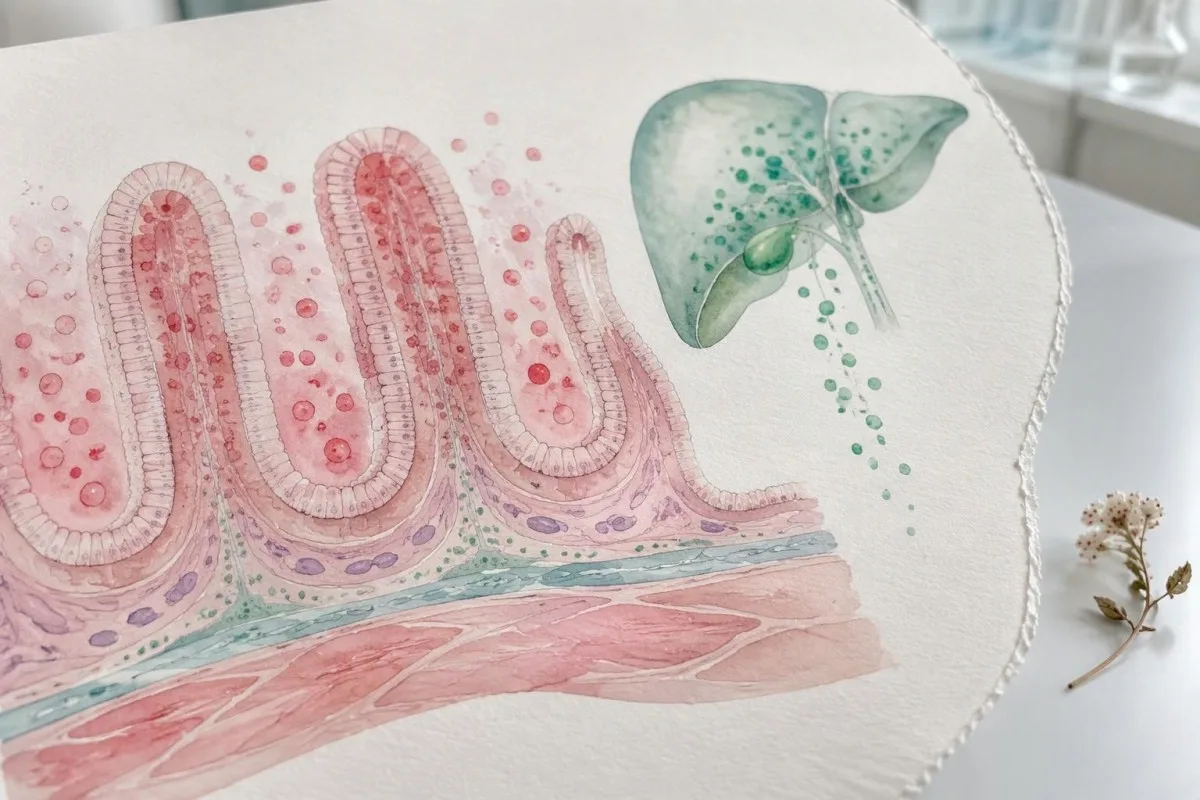
UGT1A1 genotype is more useful for anticipating delayed toxicity than predicting the immediate cholinergic syndrome. Clinicians may use atropine for early symptoms when appropriate, while delayed diarrhea requires a separate written treatment plan; intestinal bacteria can convert SN-38G back to SN-38 through beta-glucuronidase activity, illustrating why liver conjugation is not the only determinant of bowel exposure.
Grade 3 diarrhea commonly includes at least 7 additional stools per day above baseline, hospitalization being indicated, or a severe increase in ostomy output. Do not wait to reach that count before calling: persistent diarrhea despite the prescribed plan, vomiting that prevents drinking, fever, dizziness, or reduced urine output can justify urgent assessment at a much smaller stool increase.
Diarrhea during chemotherapy should not automatically be attributed to genotype, because antibiotics, infections, and accompanying drugs can produce similar symptoms; our C. difficile result guide explains one relevant diagnostic complication. If diarrhea lasts beyond 24 hours despite your oncology instructions, contact the team, and treat blood in the stool or significant abdominal pain as warning signs rather than ordinary treatment effects.
Regimen ya matibabu hubadilishaje uamuzi wa dozi ya kuanzia?
A starting-dose decision combines UGT1A1 phenotype with the planned regimen, not genotype alone. Conventional FOLFIRI commonly uses irinotecan 180 mg/m² every 2 weeks, whereas modified combinations may use 150 mg/m² or another protocol-specific amount; those differences change baseline exposure and toxicity.

The Dutch Pharmacogenetics Working Group recommends starting poor metabolizers at 70% of the normal irinotecan dose, with subsequent increases guided by neutrophil counts and clinical tolerance (Hulshof et al., 2023). Applied hypothetically to a 180 mg/m² protocol, 70% is 126 mg/m²; the prescribing team decides whether protocol rules permit rounding, what dose level to use, and when reassessment occurs.
A 70% calculation is relative to the regimen’s usual starting dose, not a fixed universal dose. For a hypothetical protocol starting at 150 mg/m², the same calculation gives 105 mg/m²; applying the 126 mg/m² figure from a different protocol would therefore be a genuine dosing error, especially if the infusion schedule or formulation also differed.
Kantesti ni jukwaa la tafsiri ya vipimo vya damu la AI for explaining reported laboratory values, not selecting a 180 mg/m² chemotherapy prescription; our mfumo wa uthibitishaji wa kliniki describes the distinction between interpretation support and prescribing. In combinations containing fluorouracil or capecitabine, upimaji wa DPYD kabla ya tiba ya kemikali addresses a separate metabolic risk that a normal UGT1A1 result cannot rule out.
Kwa nini mapendekezo ya kipimo cha irinotecan hutofautiana kati ya miongozo?
Guidelines differ because they interpret dose-dependent evidence differently and serve different clinical settings. The Dutch guideline recommends a 70% starting dose for poor metabolizers, while US conventional irinotecan prescribing information advises considering a reduction by at least 1 dose level, without defining one percentage for every regimen.
A dose level is defined by the treatment protocol rather than by the genetic test. Moving from 180 to 150 mg/m² would be approximately a 17% reduction, while moving from 180 to 120 mg/m² would be approximately a 33% reduction; these are mathematical examples, not recommendations, and explain why the phrase reduce one level needs a named protocol.
The French RNPGx/GPCO dose-stratified framework has historically distinguished doses below 180 mg/m², doses of 180–230 mg/m², and high doses of at least 240 mg/m². It recommended approximately 25–30% reduction for *28/*28 at the intermediate range and advised against high-dose use in that genotype; the Dutch recommendation is broader, including lower-dose regimens and other poor-metabolizer combinations.
The evidence is genuinely less settled at lower doses, where severe events may be less frequent and studies less able to estimate genotype effects precisely. This differs from HLA-B*57:01 drug avoidance, where the relevant recommendation is avoidance rather than a 30% reduction; ask which local guideline your team follows and whether its advice specifically covers *6/*6 or *6/*28.
Je, irinotecan ya liposomu hutumia kanuni zilezile za dozi za UGT1A1?
Liposomal irinotecan is not interchangeable with conventional irinotecan, and its UGT1A1 instructions depend on the regimen. In the liposomal irinotecan plus fluorouracil/leucovorin setting, a usual 70 mg/m² dose is reduced to 50 mg/m² initially for known *28/*28; the NALIRIFOX regimen already starts at 50 mg/m².

Those 70 and 50 mg/m² figures refer to irinotecan free base in the relevant liposomal prescribing instructions. Some documents also express doses using the hydrochloride trihydrate equivalent, approximately 80 and 60 mg/m² respectively; the team must verify the convention rather than interpret a different-looking number as an intentional dose increase or decrease.
For NALIRIFOX—liposomal irinotecan with oxaliplatin, fluorouracil, and leucovorin—the labeled starting dose is 50 mg/m² every 2 weeks, including patients known to have *28/*28. This does not establish that every poor-metabolizer genotype has identical evidence, especially *6-containing combinations; the oncology pharmacist should check the relevant product information and local protocol rather than import conventional irinotecan rules automatically.
A medication list that says only irinotecan is insufficient for a pharmacogenetic decision: request the formulation, companion drugs, dose expression, and schedule before comparing 2 plans. Our mwongozo wetu wa maandalizi ya vipimo vya maabara vya msingi also explains why recording pretreatment measurements helps later interpretation, although those measurements cannot resolve a formulation or prescribing ambiguity.
Ni matokeo gani ya vipimo vya maabara na dawa zipi ni muhimu pamoja na aina ya jeni?
CBC with differential, bilirubin, liver tests, kidney function, and electrolytes provide information that UGT1A1 genotype cannot supply. A bilirubin of 2.0 mg/dL is approximately 34 µmol/L; conventional irinotecan studies often excluded values above this level, so higher results require specialist assessment rather than a genotype-only calculation.
An isolated indirect bilirubin rise may fit reduced UGT1A1 activity, while rising direct bilirubin with abnormal ALP or transaminases suggests an additional hepatobiliary problem. A hypothetical total bilirubin of 1.8 mg/dL with otherwise stable tests is therefore not equivalent to 1.8 mg/dL accompanied by new jaundice and obstruction; fractionation, trends, symptoms, and imaging determine the interpretation.
Strong CYP3A4 inducers can lower irinotecan exposure, while strong CYP3A4 or UGT1A1 inhibitors can increase clinically relevant exposure; examples requiring pharmacy review include rifampicin, carbamazepine, ketoconazole, and atazanavir. Do not stop a prescription yourself, and disclose supplements such as St John’s wort before cycle 1 because changing an interacting medicine can itself change exposure.
Kantesti can help explain routine kidney and electrolyte reports, but a normal creatinine does not guarantee tolerance of delayed diarrhea. The uwiano wa BUN/creatinine describes contextual interpretation, while our electrolyte safety guide explains why potassium or magnesium losses can matter after 24 hours of gastrointestinal symptoms.
Ni ufuatiliaji na dalili zipi zinazohitaji hatua za haraka?
Monitoring remains necessary for every genotype, with CBC checks before treatment and additional measurements when clinically indicated. A temperature of 38.0°C au zaidi during chemotherapy warrants immediate contact with the oncology service unless the team has supplied a different threshold; follow a stricter local instruction.
Formal definitions of febrile neutropenia often use a single temperature of 38.3°C or a temperature of 38.0°C sustained for 1 hour, together with a low or falling ANC. These definitions are not instructions to wait at home: chemotherapy services often use simpler, more cautious telephone thresholds, and shaking chills, confusion, or sudden deterioration can be urgent without a documented fever.
A falling ANC can precede symptoms, so a patient feeling well should still attend the scheduled laboratory check. Our borderline neutrophil interpretation guide explains why a result near a cutoff needs context; during treatment, a change from 2.5 to 0.7 × 10⁹/L carries different significance from a stable longstanding count near 1.4 × 10⁹/L.
Dose escalation after a reduced start should follow a predefined plan based on counts, diarrhea, other toxicity, and treatment goals—not simply the absence of nausea after cycle 1. G-CSF may reduce neutropenia risk when indicated, but it does not prevent intestinal toxicity; urgent assessment is needed for diarrhea with fever, severe abdominal pain, inability to drink, or markedly reduced urination.
Kwa nini mtu anaweza kupata athari kali hata kama aina yake ya jeni ni ya kawaida?
A normal UGT1A1 result does not guarantee safe treatment because irinotecan toxicity has multiple causes. Genotype does not adequately predict every episode of nausea, fatigue, hair loss, infusion symptoms, or toxicity from companion drugs; even *1/*1 patients can develop severe neutropenia or diarrhea.
A narrow assay may miss uncommon reduced-function variants, while liver impairment, interacting medicines, treatment intensity, and previous chemotherapy can increase risk independently. Thus, 2 patients both reported as *1/*1 may have different exposures and different marrow reserve; a phenotype assignment only describes the genetic information captured by the test, not every biological factor affecting treatment.
Companion drugs create additional attribution problems: oxaliplatin can cause neuropathy, and fluoropyrimidines can contribute diarrhea, mucositis, and marrow suppression. A hypothetical patient on a 4-drug combination with severe diarrhea cannot have the culprit assigned from UGT1A1 alone; timing, the complete regimen, microbiological testing when indicated, and other pharmacogenetic results may alter the clinical explanation.
Kantesti’s role in laboratory trend interpretation is to support understanding, not establish which drug caused a change between 2 cycles. Genetic reports also contain durable personal information, so review our faragha na utunzaji wa data before sharing them; an inherited metabolic variant is not a complete forecast of your future health.
Unapaswa kuuliza nini timu yako ya onkolojia kabla ya kutumia irinotecan?
Before treatment, ask which formulation and regimen you will receive, whether *28 and *6 were tested, and how the result changes the first dose. Also obtain a written diarrhea plan, a temperature threshold, and a 24-hour contact route; these practical details matter even when the genotype is normal.

Request the actual dose in mg/m² and the planned total dose in mg, because they answer different questions. For example, a hypothetical 126 mg/m² order for a body surface area of 1.8 m² gives 226.8 mg before institutional rounding; patients should not perform their own adjustment, but this distinction helps identify whether 2 documents describe the same prescription.
Ask how the team will judge tolerance after cycle 1, whether an interim CBC is planned, and what would justify later escalation. Your written diarrhea instructions may use a loperamide schedule different from ordinary over-the-counter directions, so follow the oncology prescription rather than inventing a schedule; fever, abdominal pain, or persistent symptoms may require assessment instead of additional self-treatment.
Kantesti ni Zana ya uchambuzi wa vipimo vya damu inayotumia AI that can help explain routine reports alongside your own treatment notes; our mwongozo wa teknolojia ya AI explains the supporting technology rather than a chemotherapy dosing system. Keep 3 items accessible: the genetic report, the current regimen sheet, and the emergency contact instructions, with the prescribing team verifying all clinical decisions.
Machapisho ya utafiti: ni nini kinachounga mkono ushauri huu na ni nini kisichounga mkono?
The dosing advice rests on drug-specific pharmacogenetic guidance and irinotecan studies, not on general blood-test education publications. The 2023 Dutch guideline recommends a 70% start for poor metabolizers, while the 2007 studies cited here help explain dose dependence and the relevance of both *28 and *6.
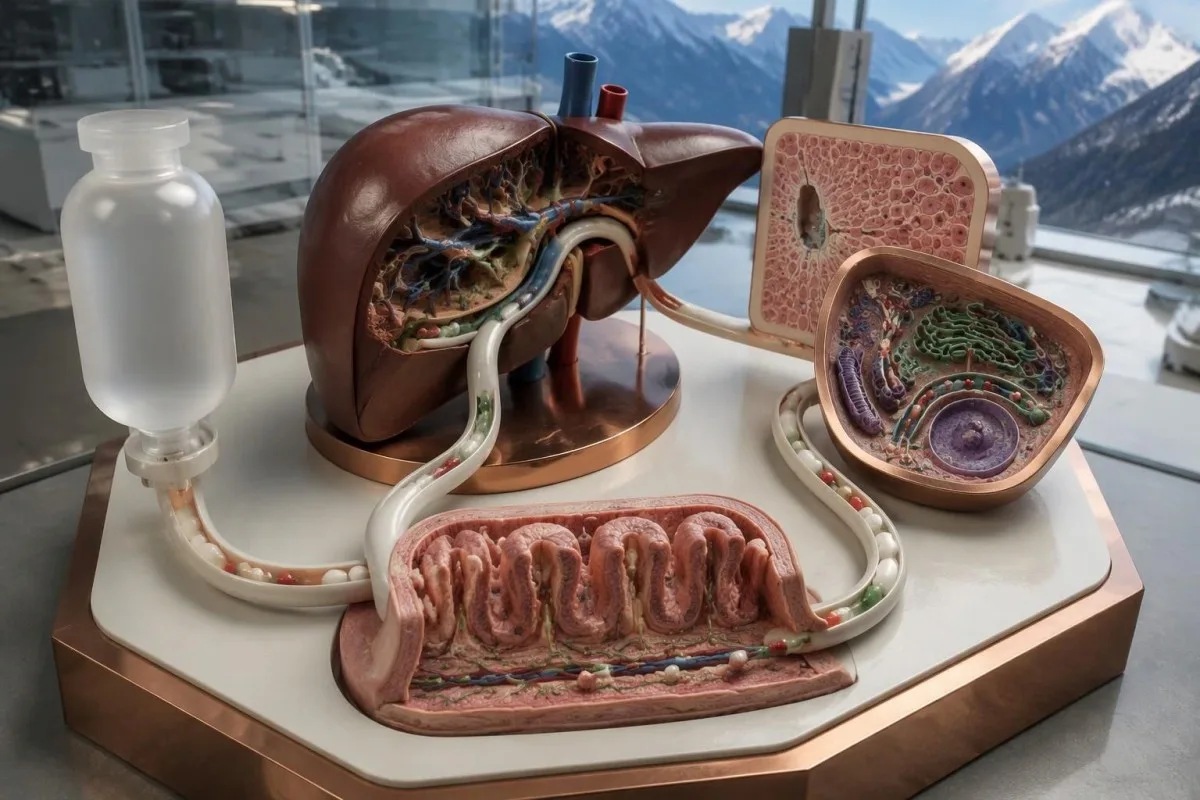
Hulshof et al. translate pharmacokinetic and toxicity evidence into prescribing guidance, whereas Hoskins et al. quantify associations across older dose categories, and Minami et al. examine relevant variants in Japanese patients. These 3 sources answer complementary questions; none supplies an individualized toxicity percentage for every contemporary combination, and observational associations should not be presented as proof that one starting dose suits everyone.
Kantesti’s 2 Zenodo publications listed below are educational resources on RDW and the BUN/creatinine ratio, not trials of UGT1A1-guided irinotecan dosing. Our RDW and CBC interpretation resource can explain accompanying red-cell indices, but RDW does not replace ANC, genotype, or a chemotherapy protocol; a DOI is a persistent identifier, not an automatic guarantee of clinical relevance or peer review.
The unresolved question is often how best to preserve treatment intensity while preventing a severe event in cycle 1, particularly in lower-dose combinations and less-studied genotypes. Our viwango vya maudhui ya matibabu require separating established guidance, hypothetical calculations, and genuine uncertainty; the oncology team should confirm the current local product information and protocol before applying any published recommendation.
Maswali ya mara kwa mara
Je, kila mtu anapaswa kupimwa UGT1A1 kabla ya kutumia irinotecan?
0. Sera za upimaji hutofautiana kulingana na nchi, taasisi na utaratibu wa matibabu, lakini Kikundi Kazi cha Kifamasia Jenetiki cha Uholanzi kinapendekeza upimaji wa UGT1A1 kabla ya matibabu kwa irinotecan. Matokeo yana manufaa hasa kabla ya mzunguko wa 1 kwa sababu yanaweza kubaini watu wanaovunja dawa polepole kabla ya sumu kali kujitokeza. Kipimo kinapaswa kubainisha kama kinajumuisha *28 na *6 zote mbili, si kuripoti tu kuwa *28 haipo. Timu yako ya onkolojia inapaswa kueleza kama upimaji utabadilisha dozi yako mahususi ya kuanzia na kama inafaa kusubiri matokeo.
UGT1A1 *28/*28 ina maana gani kwa kipimo cha irinotecan?
0 UGT1A1 *28/*28 kwa ujumla huashiria hali ya metaboli hafifu na ongezeko la hatari ya neutropenia kali inayohusiana na irinotecan. Mwongozo wa Uholanzi unapendekeza 70% ya dozi ya kawaida ya kuanzia, kisha marekebisho yanayoongozwa na daktari kulingana na uvumilivu na hesabu za neutrofili. Kwa regimen ya kawaida ya kudhaniwa ya 180 mg/m², hesabu hiyo ni 126 mg/m² kabla ya maamuzi mahususi ya itifaki au kuzungusha namba. Maelekezo ya utoaji wa dawa nchini Marekani na regimen za liposomal hutumia mbinu tofauti, kwa hiyo hesabu hii si agizo la kibinafsi la dawa.
Je, UGT1A1 *6 ni muhimu kama *28 kabla ya irinotecan?
UGT1A1 *6 ni lahaja inayohusika kliniki yenye utendaji uliopungua, ambayo inaweza kupunguza uzimishaji wa SN-38. Matokeo kama *6/*6 au *6/*28 kwa kawaida huashiria hali ya kimetaboli dhaifu kwa sababu yana aleli 2 zenye utendaji uliopungua. Lahaja hii hupatikana mara nyingi zaidi katika baadhi ya watu wa Asia Mashariki, lakini asili ya mtu pekee haiwezi kubaini ikiwa mtu ana lahaja hii. Uliza ikiwa maabara yako ilipima *6 kabla ya kutafsiri matokeo hasi ya *28 kuwa yanamaanisha kimetaboliki ya kawaida.
0 Je, UGT1A1 *1/*28 inahitaji kupunguzwa kwa dozi moja kwa moja?
UGT1A1 *1/*28 kwa ujumla huashiria hali ya kimetaboliki ya kati badala ya hali ya kimetaboliki hafifu. Mwongozo wa Uholanzi haupendekezi kupunguza dozi ya kuanzia kiotomatiki kwa watu wenye kimetaboliki ya kati kwa kutegemea jenotipu pekee. Hata hivyo, mgonjwa aliyepangiwa dozi ya 180 mg/m² anaweza kuhitaji mpango tofauti kwa sababu ya bilirubini, matibabu ya awali, dawa zinazoingiliana, au mchanganyiko wa tiba. Kimetaboliki ya kati haiondoi ulazima wa kufuatilia CBC au kuwa na mpango wa usalama wa kukabiliana na kuhara.
Je, bilirubini ya kawaida inaweza kuchukua nafasi ya upimaji wa kijenetiki wa UGT1A1?
Bilirubini ya kawaida haiwezi kuondoa uwezekano wa aina ya jeni ya UGT1A1 yenye utendaji uliopungua, na bilirubini iliyoinuka haiwezi kubainisha aleli mahususi. Bilirubini huakisi michakato kadhaa, ikiwemo uunganishaji, utendaji wa ini, kuziba kwa mirija na mzunguko wa chembe nyekundu za damu. Kiwango cha jumla cha bilirubini cha 2.0 mg/dL ni takribani 34 µmol/L na kinahitaji kutafsiriwa kulingana na itifaki husika ya irinotecan. Upimaji wa kijenetiki na upimaji wa bilirubini hutoa taarifa zinazokamilishana badala ya majibu yanayoweza kutumika kwa kubadilishana.
Ninapaswa kupiga simu lini kuhusu kuharisha au homa baada ya irinotecan?
Wasiliana mara moja na huduma yako ya saratani ikiwa una joto la mwili la 38.0°C au zaidi wakati wa tibakemikali, isipokuwa timu yako imekupa kiwango kingine, na fuata maagizo yoyote yaliyo makali zaidi. Kuhara kunakochelewa kutokana na irinotecan huanza zaidi ya saa 24 baada ya matibabu na kunaweza kusababisha upungufu wa maji mwilini au upotevu wa elektroliti. Piga simu mara moja ikiwa kuhara kunaendelea licha ya mpango ulioandikiwa, huwezi kunywa, unakojoa kidogo, kuna damu kwenye kinyesi, au una maumivu makali ya tumbo. Usisubiri kupata haja kubwa mara 7 zaidi kwa siku au kufanyiwa kipimo cha damu kilichopangwa kabla ya kutafuta msaada.
Pata maelezo ya jinsi ya kusoma matokeo ya vipimo vya damu
Pakia ripoti yako ya maabara na AI ya Kantesti itaeleza kila kiashiria cha kibayolojia kwa lugha rahisi ndani ya sekunde chache. Inatumiwa na zaidi ya watu milioni 2 duniani kote.
Marejeleo
- Klein, T., Mitchell, S., & Weber, H. (2026). Kipimo cha RDW katika Damu: Mwongozo Kamili wa RDW-CV, MCV na MCHC. Utafiti wa Kimatibabu wa AI ya Kantesti. DOI
- Klein, T., Mitchell, S., & Weber, H. (2026). Ufafanuzi wa Mbadala wa BUN/Creatinine: Mwongozo wa Kipimo cha Utendaji wa Kifua. Utafiti wa Kimatibabu wa AI ya Kantesti. DOI
- Hulshof DP et al. (2023). Dutch pharmacogenetics working group (DPWG) guideline for the gene–drug interaction between UGT1A1 and irinotecan. European Journal of Human Genetics.
- Hoskins JM et al. (2007). UGT1A1*28 genotype and irinotecan-induced neutropenia: dose matters. Journal of the National Cancer Institute. DOI
- Minami H et al. (2007). Irinotecan pharmacokinetics/pharmacodynamics and UGT1A genetic polymorphisms in Japanese: roles of UGT1A1*6 and *28. Pharmacogenetics and Genomics.
- 2M+Vipimo vilivyochanganuliwa
- 127+Nchi
- 100+Lugha
Kuhusu timu ya matibabu


E-E-A-T Trust Signals
Uzoefu
Mapitio ya kimatibabu inayoongozwa na daktari ya mifumo ya tafsiri ya maabara.
Utaalamu
Kuzingatia dawa za maabara kuhusu jinsi viashiria (biomarkers) vinavyobadilika katika muktadha wa kliniki.
Mamlaka
Imekaguliwa kimatibabu na Dkt. Thomas Klein, kwa michango kutoka kwa Dkt. Sarah Mitchell na Prof. Dkt. Hans Weber.
Uaminifu
Tafsiri inayotegemea ushahidi yenye njia zilizo wazi za ufuatiliaji ili kupunguza tahadhari za hofu.






Kanusho la kimatibabu
Makala haya ni kwa madhumuni ya elimu tu na si ushauri wa kimatibabu. Wasiliana na mtoa huduma aliyehitimu kila wakati kwa maamuzi ya utambuzi na matibabu.
Imechapishwa · Wasiliana na timu ya uhariri
Imechapishwa na Kantesti Ltd, imesajiliwa nchini Uingereza na Wales, nambari ya kampuni. 17090423, London, Uingereza.
