Тэставанне UGT1A1 можа выявіць зніжаны кліранс актыўнага метабаліту ірынакатэкану і дапамагчы падабраць больш бяспечную пачатковую дозу. Яно не можа прадказаць усе рэакцыі, а рашэнне залежыць ад дакладнай лекавай формы, схемы лячэння і ацэнкі вашай анкалагічнай каманды.

Асноўныя высновы
- Тэставанне UGT1A1 выяўляе спадчынныя адрозненні ў інактывацыі SN-38; звычайныя аналізы на білірубін або функцыю печані не могуць замяніць генетычны вынік.
- Павольныя метабалізатары звычайна маюць генатыпы *28/*28, *6/*6 або *6/*28, якія павялічваюць рызыку цяжкай нейтрапеніі, звязанай з ірынакатэканам.
- Метабалізатары прамежкавага тыпу звычайна маюць генатыпы *1/*28 або *1/*6; Нідэрландская рабочая група па фармакагенетыцы не рэкамендуе аўтаматычна змяншаць дозу гэтым пацыентам, абапіраючыся толькі на генатып.
- Рэкамендацыі па пачатковай дозе адрозніваюцца: нідэрландскія рэкамендацыі раяць прызначаць 70% ад звычайнай пачатковай дозы ірынакатэкану павольным метабалізатарам з наступнай карэкцыяй дозы лекарам.
- Схема лячэння мае значэнне бо ў стандартнай схеме FOLFIRI звычайна выкарыстоўваюць 180 мг/м² кожныя 2 тыдні, тады як у іншых схемах і пры выкарыстанні ліпасомальных формаў дозы іншыя.
- Ліпасомны ірынотэкан мае спецыфічныя для лекавай формы інструкцыі; схемы з дозамі 70 mg/m² і 50 mg/m² нельга лічыць узаемазаменнымі.
- Адтэрмінаваная дыярэя пачынаецца больш чым праз 24 гадзіны пасля ўвядзення ірынотэкана і можа стаць небяспечнай праз абязводжванне, страту электралітаў або спадарожную нейтрапенію.
- Неадкладная ацэнка неабходная пры тэмпературы 38.0°C або вышэй падчас хіміятэрапіі, калі ваша анкалагічная каманда не вызначыла іншы, больш строгі парог.
Што змяняе тэст UGT1A1 перад першай інфузіяй?
A Тэст на UGT1A1 перад увядзеннем ірынотэкана выяўляе зніжаную здольнасць інактываваць SN-38, актыўны метабаліт прэпарата. Такія вынікі, як 28/*28, *6/*6 або *6/*28 могуць служыць падставай для ніжэйшай пачатковай дозы і больш пільнага кантролю на прадмет цяжкай нейтрапеніі і адтэрмінаванай дыярэі; анкалагічная каманда павінна ўжыць вынік да фактычнай схемы лячэння.

Тэставанне найбольш карыснае перад 1-м цыклам, бо спадчынная асаблівасць вывядзення прэпарата існуе яшчэ да з’яўлення любых звязаных з лячэннем сімптомаў. Вынік не паказвае, колькі ірынотэкана цяпер цыркулюе ў арганізме, і не вызначае, ці будзе хіміятэрапія эфектыўнай; гэта іншыя пытанні, на якія адказваюць з дапамогай ацэнкі адказу на лячэнне, клінічнага абследавання і, зрэдку, спецыялізаваных фармакокінетычных метадаў.
Гіпатэтычны пацыент, якому прызначаны звычайны ірынотэкан у дозе 180 mg/m², можа атрымаць іншы план пачатковага лячэння пасля выяўлення павольнага метабалізму, тады як іншаму пацыенту з тым жа генатыпам ужо могуць прызначаць камбінацыю ў ніжэйшай дозе. Важна не проста даведацца, ці станоўчы вынік: спытайцеся, як ён змяняе пачатковую дозу, графік кантролю і крытэрыі павелічэння дозы.
Кантэсці — гэта Аналізатар крыві са штучным інтэлектам што дапамагае разумець звычайныя вынікі CBC і аналізу білірубіну, але не з’яўляецца лабараторыяй, якая праводзіць генатыпаванне UGT1A1, або службай, якая прызначае хіміятэрапію. Нашы арганізацыя і клінічнае прызначэнне адрозніваюцца ад функцыі вашай анкалагічнай каманды па прызначэнні лячэння; захоўвайце генетычную справаздачу і вынікі аналізаў, выкананых для кожнага цыкла, як 2 асобныя часткі медыцынскай дакументацыі па лячэнні.
Як UGT1A1 *28 і *6 уплываюць на метабалізм ірынакатэкану?
UGT1A1 *28 зніжае экспрэсію фермента, у той час як варыянт UGT1A1 *6 зніжае функцыю фермента ў выніку змены кадавальнай паслядоўнасці. Абодва могуць запаволіць ператварэнне актыўнага SN-38 у значна менш актыўны глюкуронід SN-38G; гэта павялічвае экспазіцыю прэпарата без неабходнасці мець анамальныя вынікі ALT або AST.

Спачатку карбоксыэстэразы ператвараюць ірынотэкан у SN-38; затым UGT1A1 удзельнічае ў інактывацыі SN-38, а не ў яго першапачатковай актывацыі. Алель *28 звычайна змяшчае 7 паўтораў TA у прамотары замест 6, звязаных з *1, а *6 звычайна апісваюць як c.211G>A, што прыводзіць да замены p.Gly71Arg.
Той жа фермент таксама кан’югуе білірубін, што тлумачыць сувязь з сіндромам Жыльбера і білірубінам. Аднак нармальны вынік аналізу на білірубін не выключае генатып са зніжанай функцыяй, а павышаны вынік не вызначае, які варыянт прысутнічае; галаданне, хвароба, абструкцыя і парушэнне функцыі печані могуць змяніць інтэрпрэтацыю асобнага вымярэння.
Minami і суаўтары даследавалі як *6, так і *28 у японскіх пацыентаў і выявілі сувязь варыяцый UGT1A з фармакакінетыкай і таксічнасцю ірынотэкана (Pharmacogenetics and Genomics, 2007). Іх праца важная, бо тэст толькі на *28 можа не выявіць клінічна значны алель *6; 2 пацыенты, у якіх не выяўлены *28, не абавязкова маюць аднолькавую здольнасць выводзіць SN-38.
Якія вынікі азначаюць, што метабалізм UGT1A1 нізкі?
A Павольны метабалізм UGT1A1 generally carries 2 decreased-function alleles, including 28/*28, *6/*6 або *6/*28. A person with *1/*28 or *1/*6 usually has an intermediate-metabolizer phenotype; *1/*1 is usually classified as normal when the test adequately covers relevant variants.

The slash separates the 2 inherited gene copies; it is not a fraction or a drug concentration. A *6/*28 result usually means one decreased-function allele came from each parent, creating a compound-heterozygous poor-metabolizer result; possessing 2 different allele names does not make the result less clinically relevant than *28/*28.
Intermediate metabolism is not the same as zero risk. Although the Dutch guideline does not recommend an automatic reduction for *1/*28 or *1/*6, a patient starting at 180 mg/m² may still need modification because of elevated bilirubin, limited marrow reserve, previous toxicity, or the accompanying drugs; the phenotype is one input, not permission to ignore the rest.
Pharmacogenetic recommendations are drug-specific, as our explanation of SLCO1B1-related medication risk also illustrates. A reduced-function result does not mean every medicine is unsafe, and *28/*28 does not itself diagnose a hereditary cancer syndrome; ask the laboratory to provide the diplotype, assigned phenotype, and variants tested rather than a 1-word positive result.
Што павінен уключаць генетычны тэст і калі ён патрэбны?
The test should clearly state whether it detects both *28 and *6, how it assigns the 2 alleles, and which other variants it evaluates. Testing before the first irinotecan dose allows the result to influence prevention rather than merely explain toxicity after it occurs.
UGT1A1 *6 is more frequent in several East Asian populations, while *28 occurs across multiple ancestry groups; ancestry can inform test coverage but cannot substitute for testing. Some assays also distinguish the 5-repeat *36 and 8-repeat *37 alleles, so reports from 2 laboratories may differ because their analytical scope differs—not because your inherited genotype changed.
A laboratory may use a blood-derived DNA sample or a validated saliva or cheek-cell method; fasting is not ordinarily required for the genetic analysis itself. Recent allogeneic stem-cell transplantation needs special discussion because circulating DNA may reflect the donor, and turnaround time must be checked locally rather than assumed to fit a treatment appointment in 2 days.
Genotyping and enzyme-activity testing are not interchangeable, a distinction also relevant to TPMT test interpretation. UGT1A1 genotype generally needs testing only once, but a narrow panel may warrant additional analysis if the clinical picture is unexpected; a report listing only 1 tested variant should not be read as proof that every other reduced-function allele is absent.
Наколькі UGT1A1 павялічвае рызыку цяжкай нейтрапеніі?
Poor-metabolizer genotypes increase the likelihood of цяжкая нейтропенія, but the size of the increase depends on dose and regimen. Grade 3 neutropenia generally means an absolute neutrophil count below 1.0 down to 0.5 × 10⁹/L; grade 4 means below 0.5 × 10⁹/L.
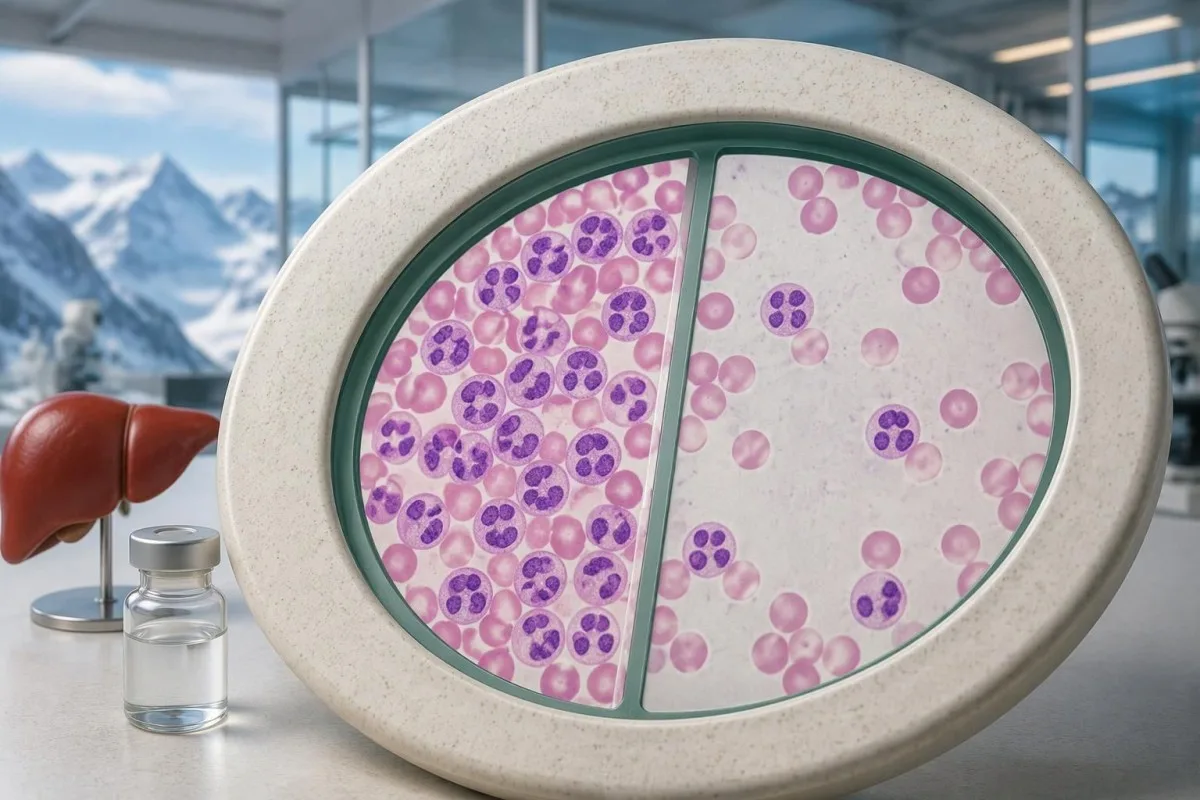
Hoskins et al. reported a dose-dependent association between *28/*28 and irinotecan-related neutropenia in their 2007 Journal of the National Cancer Institute meta-analysis. In the 150–250 mg/m² category, the pooled odds ratio was 3.22, with a 95% confidence interval of 1.52–6.81; older mixed schedules and wide uncertainty prevent treating this as a personal probability.
An odds ratio is not the percentage of patients affected. In a purely hypothetical illustration, if baseline risk were 10%, an odds ratio of 3 would correspond to approximately 25% risk—not 30%; the actual baseline varies with companion drugs, supportive care, prior treatment, and eligibility criteria, so no single percentage applies to every poor metabolizer.
Kantesti can help readers distinguish the ANC from the neutrophil percentage in routine reports, using the concepts explained in our пакрокавы даведнік па абсалютнай колькасці нейтрофілов. A pre-existing Duffy-null-associated lower ANC requires individualized interpretation, but a new chemotherapy-related fall below 0.5 × 10⁹/L still deserves prompt oncology assessment rather than reassurance based on ancestry alone.
Чаму ранняя і адтэрмінаваная дыярэя пры прыёме ірынакатэкану адрозніваюцца?
Early diarrhea occurs during or shortly after infusion, usually within 24 hours, and may accompany cholinergic symptoms such as sweating or abdominal cramping. Адтэрмінаваная дыярэя begins more than 24 hours after treatment and is more closely related to intestinal toxicity, including exposure to SN-38.
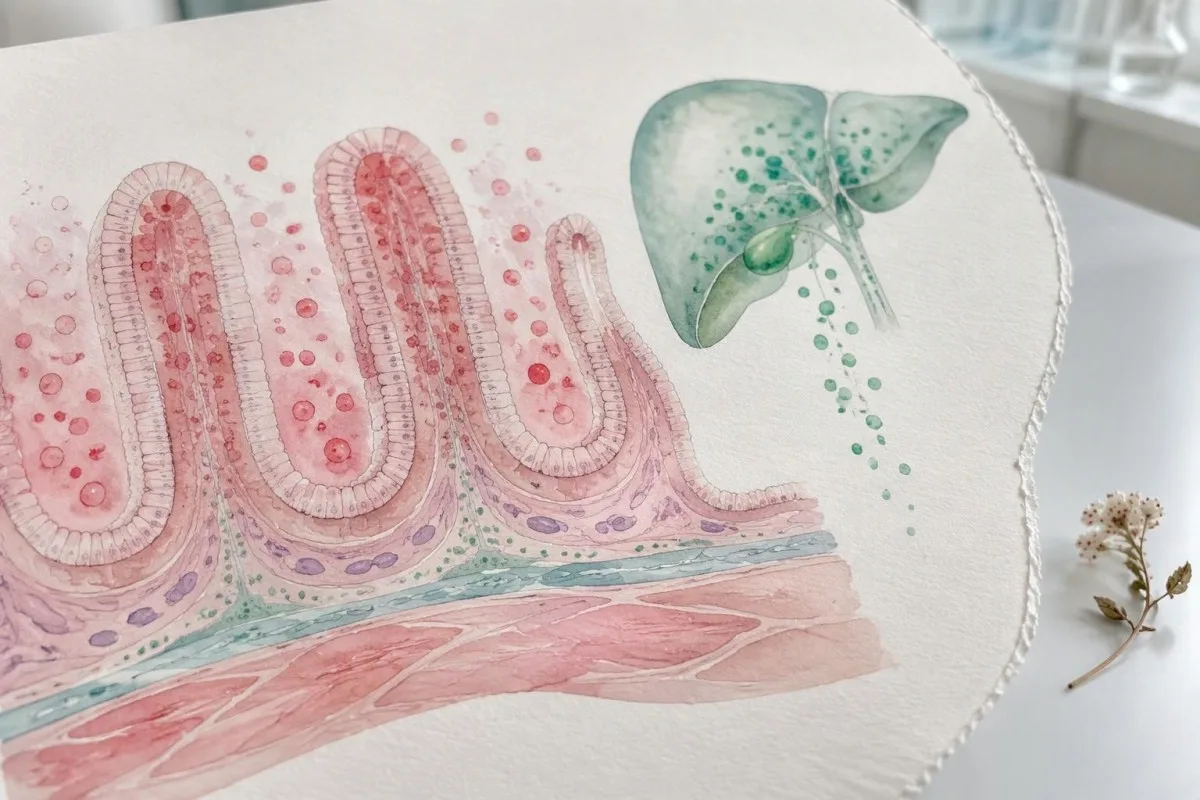
UGT1A1 genotype is more useful for anticipating delayed toxicity than predicting the immediate cholinergic syndrome. Clinicians may use atropine for early symptoms when appropriate, while delayed diarrhea requires a separate written treatment plan; intestinal bacteria can convert SN-38G back to SN-38 through beta-glucuronidase activity, illustrating why liver conjugation is not the only determinant of bowel exposure.
Grade 3 diarrhea commonly includes at least 7 additional stools per day above baseline, hospitalization being indicated, or a severe increase in ostomy output. Do not wait to reach that count before calling: persistent diarrhea despite the prescribed plan, vomiting that prevents drinking, fever, dizziness, or reduced urine output can justify urgent assessment at a much smaller stool increase.
Diarrhea during chemotherapy should not automatically be attributed to genotype, because antibiotics, infections, and accompanying drugs can produce similar symptoms; our C. difficile result guide explains one relevant diagnostic complication. If diarrhea lasts beyond 24 hours despite your oncology instructions, contact the team, and treat blood in the stool or significant abdominal pain as warning signs rather than ordinary treatment effects.
Як схема лячэння змяняе рашэнне аб пачатковай дозе?
A starting-dose decision combines UGT1A1 phenotype with the planned regimen, not genotype alone. Conventional FOLFIRI commonly uses irinotecan 180 mg/m² every 2 weeks, whereas modified combinations may use 150 mg/m² or another protocol-specific amount; those differences change baseline exposure and toxicity.

The Dutch Pharmacogenetics Working Group recommends starting poor metabolizers at 70% of the normal irinotecan dose, with subsequent increases guided by neutrophil counts and clinical tolerance (Hulshof et al., 2023). Applied hypothetically to a 180 mg/m² protocol, 70% is 126 mg/m²; the prescribing team decides whether protocol rules permit rounding, what dose level to use, and when reassessment occurs.
A 70% calculation is relative to the regimen’s usual starting dose, not a fixed universal dose. For a hypothetical protocol starting at 150 mg/m², the same calculation gives 105 mg/m²; applying the 126 mg/m² figure from a different protocol would therefore be a genuine dosing error, especially if the infusion schedule or formulation also differed.
Кантэсці — гэта Платформа AI для расшыфроўкі аналізу крыві for explaining reported laboratory values, not selecting a 180 mg/m² chemotherapy prescription; our клінічную рамку валідацыі describes the distinction between interpretation support and prescribing. In combinations containing fluorouracil or capecitabine, тэставанне DPYD перад хіміятэрапіяй addresses a separate metabolic risk that a normal UGT1A1 result cannot rule out.
Чаму рэкамендацыі па дазаванні ірынакатэкану адрозніваюцца ў розных клінічных кіраўніцтвах?
Guidelines differ because they interpret dose-dependent evidence differently and serve different clinical settings. The Dutch guideline recommends a 70% starting dose for poor metabolizers, while US conventional irinotecan prescribing information advises considering a reduction by at least 1 dose level, without defining one percentage for every regimen.
A dose level is defined by the treatment protocol rather than by the genetic test. Moving from 180 to 150 mg/m² would be approximately a 17% reduction, while moving from 180 to 120 mg/m² would be approximately a 33% reduction; these are mathematical examples, not recommendations, and explain why the phrase reduce one level needs a named protocol.
The French RNPGx/GPCO dose-stratified framework has historically distinguished doses below 180 mg/m², doses of 180–230 mg/m², and high doses of at least 240 mg/m². It recommended approximately 25–30% reduction for *28/*28 at the intermediate range and advised against high-dose use in that genotype; the Dutch recommendation is broader, including lower-dose regimens and other poor-metabolizer combinations.
The evidence is genuinely less settled at lower doses, where severe events may be less frequent and studies less able to estimate genotype effects precisely. This differs from HLA-B*57:01 drug avoidance, where the relevant recommendation is avoidance rather than a 30% reduction; ask which local guideline your team follows and whether its advice specifically covers *6/*6 or *6/*28.
Ці дзейнічаюць для ліпасомальнага ірынакатэкану тыя ж правілы дазавання з улікам UGT1A1?
Liposomal irinotecan is not interchangeable with conventional irinotecan, and its UGT1A1 instructions depend on the regimen. In the liposomal irinotecan plus fluorouracil/leucovorin setting, a usual 70 mg/m² dose is reduced to 50 mg/m² initially for known *28/*28; the NALIRIFOX regimen already starts at 50 mg/m².

Those 70 and 50 mg/m² figures refer to irinotecan free base in the relevant liposomal prescribing instructions. Some documents also express doses using the hydrochloride trihydrate equivalent, approximately 80 and 60 mg/m² respectively; the team must verify the convention rather than interpret a different-looking number as an intentional dose increase or decrease.
For NALIRIFOX—liposomal irinotecan with oxaliplatin, fluorouracil, and leucovorin—the labeled starting dose is 50 mg/m² every 2 weeks, including patients known to have *28/*28. This does not establish that every poor-metabolizer genotype has identical evidence, especially *6-containing combinations; the oncology pharmacist should check the relevant product information and local protocol rather than import conventional irinotecan rules automatically.
A medication list that says only irinotecan is insufficient for a pharmacogenetic decision: request the formulation, companion drugs, dose expression, and schedule before comparing 2 plans. Our даведніка па падрыхтоўцы да базавых лабараторных даследаванняў also explains why recording pretreatment measurements helps later interpretation, although those measurements cannot resolve a formulation or prescribing ambiguity.
Якія вынікі лабараторных аналізаў і лекі маюць значэнне разам з генатыпам?
CBC with differential, bilirubin, liver tests, kidney function, and electrolytes provide information that UGT1A1 genotype cannot supply. A bilirubin of 2.0 mg/dL is approximately 34 µmol/L; conventional irinotecan studies often excluded values above this level, so higher results require specialist assessment rather than a genotype-only calculation.
An isolated indirect bilirubin rise may fit reduced UGT1A1 activity, while rising direct bilirubin with abnormal ALP or transaminases suggests an additional hepatobiliary problem. A hypothetical total bilirubin of 1.8 mg/dL with otherwise stable tests is therefore not equivalent to 1.8 mg/dL accompanied by new jaundice and obstruction; fractionation, trends, symptoms, and imaging determine the interpretation.
Strong CYP3A4 inducers can lower irinotecan exposure, while strong CYP3A4 or UGT1A1 inhibitors can increase clinically relevant exposure; examples requiring pharmacy review include rifampicin, carbamazepine, ketoconazole, and atazanavir. Do not stop a prescription yourself, and disclose supplements such as St John’s wort before cycle 1 because changing an interacting medicine can itself change exposure.
Kantesti can help explain routine kidney and electrolyte reports, but a normal creatinine does not guarantee tolerance of delayed diarrhea. The кіраўніцтве па суадносінах BUN/крэатынін describes contextual interpretation, while our electrolyte safety guide explains why potassium or magnesium losses can matter after 24 hours of gastrointestinal symptoms.
Які маніторынг патрэбны і якія сімптомы патрабуюць неадкладных дзеянняў?
Monitoring remains necessary for every genotype, with CBC checks before treatment and additional measurements when clinically indicated. A temperature of 38,0°C або вышэй during chemotherapy warrants immediate contact with the oncology service unless the team has supplied a different threshold; follow a stricter local instruction.

Formal definitions of febrile neutropenia often use a single temperature of 38.3°C or a temperature of 38.0°C sustained for 1 hour, together with a low or falling ANC. These definitions are not instructions to wait at home: chemotherapy services often use simpler, more cautious telephone thresholds, and shaking chills, confusion, or sudden deterioration can be urgent without a documented fever.
A falling ANC can precede symptoms, so a patient feeling well should still attend the scheduled laboratory check. Our borderline neutrophil interpretation guide explains why a result near a cutoff needs context; during treatment, a change from 2.5 to 0.7 × 10⁹/L carries different significance from a stable longstanding count near 1.4 × 10⁹/L.
Dose escalation after a reduced start should follow a predefined plan based on counts, diarrhea, other toxicity, and treatment goals—not simply the absence of nausea after cycle 1. G-CSF may reduce neutropenia risk when indicated, but it does not prevent intestinal toxicity; urgent assessment is needed for diarrhea with fever, severe abdominal pain, inability to drink, or markedly reduced urination.
Чаму нават пры нармальным генатыпе могуць узнікнуць цяжкія пабочныя эфекты?
A normal UGT1A1 result does not guarantee safe treatment because irinotecan toxicity has multiple causes. Genotype does not adequately predict every episode of nausea, fatigue, hair loss, infusion symptoms, or toxicity from companion drugs; even *1/*1 patients can develop severe neutropenia or diarrhea.
A narrow assay may miss uncommon reduced-function variants, while liver impairment, interacting medicines, treatment intensity, and previous chemotherapy can increase risk independently. Thus, 2 patients both reported as *1/*1 may have different exposures and different marrow reserve; a phenotype assignment only describes the genetic information captured by the test, not every biological factor affecting treatment.
Companion drugs create additional attribution problems: oxaliplatin can cause neuropathy, and fluoropyrimidines can contribute diarrhea, mucositis, and marrow suppression. A hypothetical patient on a 4-drug combination with severe diarrhea cannot have the culprit assigned from UGT1A1 alone; timing, the complete regimen, microbiological testing when indicated, and other pharmacogenetic results may alter the clinical explanation.
Kantesti’s role in laboratory trend interpretation is to support understanding, not establish which drug caused a change between 2 cycles. Genetic reports also contain durable personal information, so review our правіламі прыватнасці і апрацоўкі даных before sharing them; an inherited metabolic variant is not a complete forecast of your future health.
Пра што варта спытаць сваю анкалагічную каманду перад лячэннем ірынакатэканам?
Before treatment, ask which formulation and regimen you will receive, whether *28 and *6 were tested, and how the result changes the first dose. Also obtain a written diarrhea plan, a temperature threshold, and a 24-hour contact route; these practical details matter even when the genotype is normal.

Request the actual dose in mg/m² and the planned total dose in mg, because they answer different questions. For example, a hypothetical 126 mg/m² order for a body surface area of 1.8 m² gives 226.8 mg before institutional rounding; patients should not perform their own adjustment, but this distinction helps identify whether 2 documents describe the same prescription.
Ask how the team will judge tolerance after cycle 1, whether an interim CBC is planned, and what would justify later escalation. Your written diarrhea instructions may use a loperamide schedule different from ordinary over-the-counter directions, so follow the oncology prescription rather than inventing a schedule; fever, abdominal pain, or persistent symptoms may require assessment instead of additional self-treatment.
Кантэсці — гэта Інструмент аналізу вынікаў аналізу крыві з падтрымкай AI that can help explain routine reports alongside your own treatment notes; our кіраўніцтва па тэхналогіі AI explains the supporting technology rather than a chemotherapy dosing system. Keep 3 items accessible: the genetic report, the current regimen sheet, and the emergency contact instructions, with the prescribing team verifying all clinical decisions.
Навуковыя публікацыі: што пацвярджае гэтыя рэкамендацыі, а што — не?
The dosing advice rests on drug-specific pharmacogenetic guidance and irinotecan studies, not on general blood-test education publications. The 2023 Dutch guideline recommends a 70% start for poor metabolizers, while the 2007 studies cited here help explain dose dependence and the relevance of both *28 and *6.
Hulshof et al. translate pharmacokinetic and toxicity evidence into prescribing guidance, whereas Hoskins et al. quantify associations across older dose categories, and Minami et al. examine relevant variants in Japanese patients. These 3 sources answer complementary questions; none supplies an individualized toxicity percentage for every contemporary combination, and observational associations should not be presented as proof that one starting dose suits everyone.
Kantesti’s 2 Zenodo publications listed below are educational resources on RDW and the BUN/creatinine ratio, not trials of UGT1A1-guided irinotecan dosing. Our RDW and CBC interpretation resource can explain accompanying red-cell indices, but RDW does not replace ANC, genotype, or a chemotherapy protocol; a DOI is a persistent identifier, not an automatic guarantee of clinical relevance or peer review.
The unresolved question is often how best to preserve treatment intensity while preventing a severe event in cycle 1, particularly in lower-dose combinations and less-studied genotypes. Our стандарты медыцынскага кантэнту require separating established guidance, hypothetical calculations, and genuine uncertainty; the oncology team should confirm the current local product information and protocol before applying any published recommendation.
Часта задаваныя пытанні
Ці варта ўсім праходзіць тэст на UGT1A1 перад прыёмам ірынаэтэкана?
Палітыка тэсціравання адрозніваецца ў залежнасці ад краіны, установы і схемы лячэння, але Нідэрландская рабочая група па фармакагенетыцы рэкамендуе перад пачаткам лячэння праводзіць тэсціраванне UGT1A1 для ірынатэкану. Вынік асабліва карысны да першага цыклу, бо дазваляе выявіць павольных метабалізатараў да развіцця цяжкай таксічнасці. Тэст павінен вызначаць наяўнасць як *28, так і *6, а не проста паведамляць пра адсутнасць *28. Ваша анкалагічная каманда павінна растлумачыць, ці паўплывае тэсціраванне на вашу канкрэтную пачатковую дозу і ці мэтазгодна чакаць выніку.
Што азначае UGT1A1 *28/*28 для дазавання ірынакатэкану?
UGT1A1 *28/*28 звычайна сведчыць пра статус павольнага метабалізатара і павышаную рызыку цяжкай нейтрапеніі, звязанай з ірынацеканам. Нідэрландскія рэкамендацыі раяць прызначаць 70% звычайнай пачатковай дозы, пасля чаго клініцыст карэктуе дозу ў залежнасці ад пераноснасці і колькасці нейтрафілаў. Для гіпатэтычнай стандартнай схемы з дозай 180 mg/m² гэты разлік дае 126 mg/m² да ўліку рашэнняў, абумоўленых канкрэтным пратаколам, або акруглення. У інструкцыях ЗША па прызначэнні прэпарата і ў схемах з ліпасомальнай формай выкарыстоўваюцца іншыя падыходы, таму гэты разлік не з'яўляецца персанальнай рэкамендацыяй па лячэнні.
Ці мае UGT1A1 *6 такое ж значэнне, як *28, перад прызначэннем ірынаатэкану?
UGT1A1 *6 — гэта клінічна значны варыянт са зніжанай функцыяй, які можа змяншаць інактывацыю SN-38. Вынікі накшталт *6/*6 або *6/*28 звычайна сведчаць пра статус павольнага метабалізатара, бо ўтрымліваюць 2 алелі са зніжанай функцыяй. Гэты варыянт часцей сустракаецца ў некалькіх папуляцыях Усходняй Азіі, але толькі паводле паходжання нельга вызначыць, ці ёсць ён у чалавека. Перш чым інтэрпрэтаваць адмоўны вынік на *28 як нармальны метабалізм, удакладніце, ці праводзіла ваша лабараторыя аналіз на *6.
Ці патрабуе генатып UGT1A1 *1/*28 аўтаматычнага зніжэння дозы?
UGT1A1 *1/*28 звычайна сведчыць пра прамежкавы, а не нізкі ўзровень метабалізму. Галандскія рэкамендацыі не раяць аўтаматычна зніжаць пачатковую дозу толькі на падставе генатыпу для пацыентаў з прамежкавым метабалізмам. Аднак пацыенту, якому прызначана 180 мг/м², можа спатрэбіцца іншы план з улікам білірубіну, папярэдняга лячэння, узаемадзейных прэпаратаў або камбінаванай схемы лячэння. Прамежкавы метабалізм не адмяняе неабходнасці кантролю CBC або плана бяспечных дзеянняў пры дыярэі.
Ці можа нармальны ўзровень білірубіну замяніць генетычнае тэставанне UGT1A1?
Нармальны ўзровень білірубіну не выключае генатып UGT1A1 са зніжанай функцыяй, а павышаны ўзровень білірубіну не дазваляе вызначыць канкрэтны алель. Узровень білірубіну залежыць ад некалькіх працэсаў, у тым ліку кан’югацыі, функцыі печані, абструкцыі і абароту эрытрацытаў. Агульны білірубін 2,0 mg/dL складае прыблізна 34 µmol/L і патрабуе інтэрпрэтацыі ў межах адпаведнага пратаколу прымянення ірына-тэкана. Генетычнае даследаванне і вымярэнне білірубіну даюць узаемадапаўняльную інфармацыю, а не ўзаемазамяняльныя адказы.
Калі мне варта патэлефанаваць з нагоды дыярэі або павышанай тэмпературы пасля ірынацэтану?
Неадкладна звярніцеся ў сваю анкалагічную службу, калі падчас хіміятэрапіі тэмпература дасягне 38,0°C або вышэй, калі толькі каманда не паведаміла іншы парог, і выконвайце любыя больш строгія інструкцыі. Адтэрмінаваная дыярэя, выкліканая ірынацэтанам, пачынаецца больш чым праз 24 гадзіны пасля лячэння і можа прывесці да абязводжвання або страты электралітаў. Неадкладна патэлефануйце, калі дыярэя працягваецца нягледзячы на прызначаны план, калі вы не можаце піць, мачыцеся радзей, заўважылі кроў у кале або адчуваеце моцны боль у жываце. Не чакайце, пакуль колькасць выпаражненняў павялічыцца на 7 за дзень або настане час прызначанага аналізу крыві, перш чым звярнуцца па дапамогу.
Атрымайце тлумачэнне вынікаў аналізу крыві
Загрузіце свой лабараторны справаздачу, і AI Kantesti за некалькі секунд простай мовай растлумачыць кожны біямаркер. Ім карыстаюцца больш за 2 мільёны чалавек па ўсім свеце.
Спасылкі
- Кляйн, Т., Мітчэл, С., і Вебер, Х. (2026). Аналіз крыві на RDW: поўнае кіраўніцтва па RDW-CV, MCV і MCHC. Kantesti AI Medical Research. DOI
- Кляйн, Т., Мітчэл, С., і Вебер, Х. (2026). Падрабязнае тлумачэнне суадносін BUN/Крэатініну: гіда па тэсту функцыі нырак. Kantesti AI Medical Research. DOI
- Hulshof DP et al. (2023). Dutch pharmacogenetics working group (DPWG) guideline for the gene–drug interaction between UGT1A1 and irinotecan. European Journal of Human Genetics.
- Hoskins JM et al. (2007). UGT1A1*28 genotype and irinotecan-induced neutropenia: dose matters. Journal of the National Cancer Institute. DOI
- Minami H et al. (2007). Irinotecan pharmacokinetics/pharmacodynamics and UGT1A genetic polymorphisms in Japanese: roles of UGT1A1*6 and *28. Pharmacogenetics and Genomics.
- 2 млн+Прааналізаваныя тэсты
- 127+Краіны
- 100+Мовы
Пра медыцынскую каманду


Сігналы даверу E-E-A-T
Вопыт
Клінічны агляд, які вядзе лекар, працэсаў інтэрпрэтацыі лабараторных паказчыкаў.
Экспертыза
Фокус лабараторнай медыцыны на тым, як біямаркеры паводзяць сябе ў клінічным кантэксце.
Аўтарытэтнасць
Медыцынскую рэцэнзію правёў доктар Томас Кляйн пры ўдзеле доктара Сары Мітчэл і прафесара, доктара Ганса Вэбера.
Надзейнасць
Інтэрпрэтацыя на аснове доказаў з выразнымі шляхамі далейшых дзеянняў, каб паменшыць трывогу.






Медыцынская адмова ад адказнасці
Гэты артыкул прызначаны толькі для адукацыйных мэт і не з’яўляецца медычнай парадай. Заўсёды кансультуйцеся з кваліфікаваным спецыялістам аховы здароўя для прыняцця рашэнняў па дыягностыцы і лячэнні.
Апублікавана · Звязацца з рэдакцыйнай камандай
Апублікавана кампаніяй Kantesti Ltd, зарэгістраванай у Англіі і Уэльсе, нумар кампаніі. 17090423, Лондан, Злучанае Каралеўства.
