Канцэнтрацыю топірамату звычайна не правяраюць, бо рэакцыя на лячэнне і пабочныя эфекты ненадзейна суадносяцца з адным мэтавым паказчыкам. Аналіз можа дапамагчы ацаніць уздзеянне прэпарату або змяненне яго клірансу; аналіз на бікарбанат і даследаванні функцыі нырак даюць адказы на асобныя пытанні бяспекі.

Асноўныя высновы
- Узровень топірамату звычайна вызначаюць толькі для адказу на канкрэтнае пытанне, напрыклад пры нечаканых прыступах, падазрэнні на пропуск доз, узаемадзеянні прэпаратаў або змене функцыі нырак.
- Тэрапеўтычны дыяпазон топірамату звычайна складае 5–20 mg/L, але некаторыя лабараторыі выкарыстоўваюць дыяпазон 2–10 mg/L; ніводны з гэтых дыяпазонаў не гарантуе эфектыўнасці або бяспекі.
- Час забору пробы перад прыёмам дозы азначае збор пробы непасрэдна перад наступнай запланаванай дозай з дакументаваннем часу прыёму апошняй дозы.
- Стацыянарны стан звычайна дасягаецца прыкладна за 4 дні пры нармальнай функцыі нырак і нязменнай дозе; пры зніжаным клірансе гэты інтэрвал можа павялічыцца.
- Пераўтварэнне адзінак проста: 1 мг/л роўна 1 мкг/мл, таму 8 мг/л і 8 мкг/мл апісваюць аднолькавую канцэнтрацыю.
- Ацэнка таксічнасці патрабуе ўліку сімптомаў, вынікаў агляду, гісторыі прыёму лекаў і адпаведных лабараторных даных; універсальная канцэнтрацыя топірамату, якая пацвярджала б таксічнасць, не вызначана.
- Маніторынг бікарбанату выяўляе метабалічны ацыдоз — вядомы эфект тапірамату, які можа ўзнікнуць, нават калі канцэнтрацыя знаходзіцца ў межах лабараторнага інтэрвалу.
- Кантроль функцыі нырак дапамагае ацаніць вывядзенне прэпарату; у інструкцыі па прызначэнні рэкамендуецца карэкціраваць дозу, калі кліранс крэатыніну ў дарослага ніжэйшы за 70 mL/min/1.73 m².
Чаму ўзровень топірамату звычайна не правяраюць?
A узровень тапірамату звычайна не правяраюць, бо сувязь паміж канцэнтрацыяй, карысцю і пабочнымі эфектамі істотна адрозніваецца ў розных людзей. Часта згадваны інтэрвал 5–20 mg/L — гэта лабараторны даведачны арыенцір, а не паказчык, якога павінен дасягнуць кожны пацыент, і не мяжа, якая надзейна аддзяляе бяспечнае лячэнне ад таксічнасці.
Не даказана, што звычайнае карэкціраванне дозы паводле канцэнтрацыі паляпшае вынікі лячэння для кожнага чалавека, які прымае тапірамат. У пазіцыйным дакуменце ILAE падтрымліваецца тэрапеўтычны маніторынг лекавых сродкаў, калі вынік можа даць адказ на канкрэтнае клінічнае пытанне, а не аўтаматычнае прызначэнне аналізу на ўзровень усіх супрацьсутаргавых прэпаратаў (Patsalos et al., 2008); частата прыступаў, колькасць дзён з мігрэнню і пераноснасць застаюцца ключавымі фактарамі пры прыняцці рашэнняў аб лячэнні.
Напрыклад, даросламу з гіпатэтычнага прыкладу, у якога мігрэнь палягчаецца пры прыёме 50 mg два разы на дзень, неабавязкова павышаць дозу толькі таму, што лабараторыя пазначыла канцэнтрацыю ніжэй за 5 mg/L. Для прафілактыкі мігрэні няма добра вызначанай мэтавай канцэнтрацыі ў сыроватцы; павышэнне дозы выключна для выпраўлення гэтага адхілення можа пагоршыць падбор слоў або знізіць апетыт, не дадаўшы істотнай карысці.
Kantesti — гэта аналізатар аналізаў крыві на базе AI, які дапамагае зразумець, чаму лабараторны інтэрвал 5–20 mg/L не замяняе ацэнку сімптомаў і часу ўзяцця ўзору. Наша арганізацыя і мэта апісвае нашу ролю ў інтэрпрэтацыі вынікаў аналізаў; мы не прызначаем лекі, і тлумачэнне ад AI не павінна быць падставай самастойна змяняць стабільную схему лячэння.
Што насамрэч вымярае аналіз на ўзровень Топамаксу?
A Аналіз на ўзровень Топамаксу вымярае канцэнтрацыю тапірамату ў лабараторным узоры, звычайна сыроватцы або плазме. Ён паказвае ўзровень прэпарату на момант узяцця ўзору, а не прызначаную дозу, абарону ад прыступаў або ўзровень бікарбанату; 1 mg/L роўны 1 µg/mL, што дазваляе пазбегнуць распаўсюджанай памылкі пры чытанні адзінак вымярэння.
У многіх лабараторыях тапірамат вымяраюць метадам вадкаснай храматаграфіі з тандэмнай мас-спектраметрыяй, хоць метады і прымальныя ёмістасці для ўзораў могуць адрознівацца. Вынік 8 µg/mL — гэта дакладна тая ж канцэнтрацыя, што і 8 mg/L; у адрозненне ад гэтага, прызначэнне 100 mg апісвае прынятую колькасць прэпарату, якую нельга непасрэдна параўноўваць з канцэнтрацыяй у любой з гэтых адзінак.
Тапірамат мае адносна нізкую ступень звязвання з вавёркамі; у інструкцыі па прызначэнні пазначана звязванне прыблізна 15–41%. Пры звычайным аналізе, як правіла, вымяраюць агульную канцэнтрацыю; стандартнай формулы карэкцыі па альбуміне, эквівалентнай тым, што часам выкарыстоўваюць для фенітаіну, няма; наша тлумачэнне свабоднага і агульнага фенітаіну паказвае, чаму правілы інтэрпрэтацыі не варта без разбору пераносіць з аднаго прэпарату на іншы.
У лабараторным выніку, дзе ўзровень тапірамату складае 6 mg/L, а агульнага CO2 — 19 mmol/L, прыведзены 2 прынцыпова розныя вымярэнні. Першае паказвае ўзровень прэпарату; другое звычайна прыблізна адпавядае ўзроўню бікарбанату ў сыроватцы і можа ўказваць на парушэнне кіслотна-шчолачнага балансу, таму канцэнтрацыя ў межах надрукаванага інтэрвалу не дазваляе ігнараваць ненармальны біяхімічны паказчык.
Які тэрапеўтычны дыяпазон топірамату?
Часта згадваны тэрапеўтычны дыяпазон тапірамату складае 5–20 mg/L, але некаторыя еўрапейскія лабараторыі выкарыстоўваюць 2–10 mg/L. These intervals mainly support epilepsy-related interpretation; they are not universally validated treatment targets, and there is no widely accepted serum concentration target for migraine prevention.
Jacob and Nair's review lists a topiramate reference concentration of 5–20 mg/L while emphasizing selective use of monitoring and variable concentration–response relationships (Jacob and Nair, 2016). A reference interval summarizes concentrations considered useful in a population; it does not establish that every individual below its lower limit needs more medication.
Different laboratory intervals can produce different flags for the same number. A hypothetical trough of 12 mg/L sits within a 5–20 mg/L interval but above a 2–10 mg/L interval; that disagreement should trigger review of the laboratory's convention and the patient's clinical state, not an assumption that the medicine became toxic between reports.
An individual's previously effective, well-tolerated concentration can be more informative than the population interval. If someone remained seizure-free at a correctly timed trough of 4 mg/L, that documented baseline may help interpret a later change; the same individual-baseline principle appears in інтэрпрэтацыі вынікаў леветырацэтаму, although the numerical ranges are different.
| Узровень | Дыяпазон | Што гэта значыць |
|---|---|---|
| Типовий лабораторний інтервал | 5–20 mg/L | A frequently quoted epilepsy-related reference interval, not a guaranteed effective or safe target. |
| Alternative laboratory interval | 2–10 mg/L | Used by some European laboratories; interpretation must follow the reporting laboratory and clinical context. |
| Above a 5–20 interval | >20 мг/л | Prompts review of symptoms, timing, dose, interactions, and clearance; does not establish toxicity by itself. |
| Individual reference concentration | Patient-specific; no universal cutoff | A prior correctly timed concentration obtained during effective, tolerated treatment can guide later comparisons. |
Калі маніторынг канцэнтрацыі топірамату можа быць карысным?
Topiramate concentration monitoring helps when clinicians need to distinguish changed medication exposure from other causes of worsening control or new adverse effects. Comparing 2 similarly timed samples can be useful after suspected missed doses, kidney-function changes, interacting medicines, pregnancy-related clearance changes, or an unexplained treatment failure.
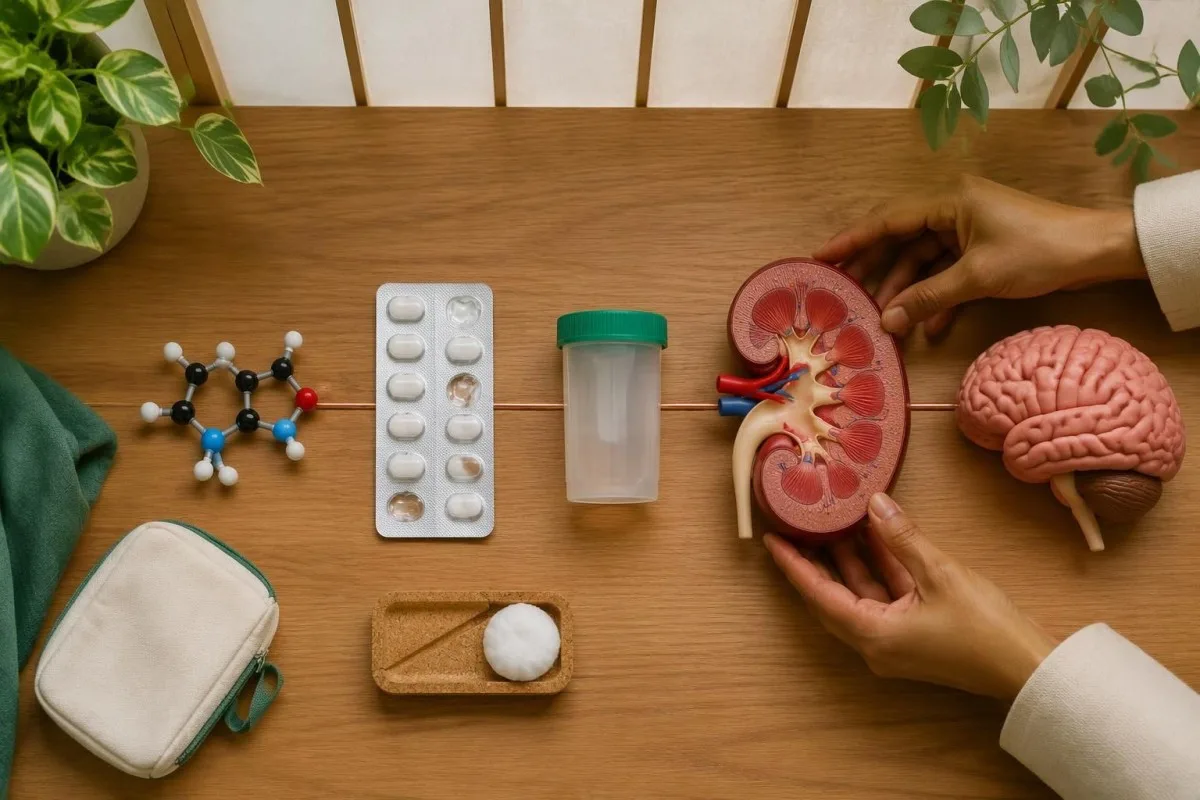
Unexpected breakthrough seizures are one reason to investigate exposure, but the concentration cannot diagnose the cause of the event. The ILAE position paper identifies situations such as suspected nonadherence, toxicity, pharmacokinetic variability, and changing treatment conditions as appropriate reasons to consider monitoring (Patsalos et al., 2008); sleep deprivation, illness, and seizure classification still need separate assessment.
Establishing a personal reference concentration can help before an anticipated change. For a hypothetical person stable on 100 mg twice daily, a trough obtained during seizure control provides a comparison if kidney function later declines or another antiseizure drug is withdrawn; without that baseline, a later isolated result may be harder to interpret.
A test is less helpful if nobody can state what management decision it might change. Before requesting a concentration of 7 mg/L or any other result, ask whether the question concerns adherence, clearance, or possible adverse effects; our lacosamide monitoring explanation illustrates why selective monitoring is not the same as having no monitoring strategy.
Калі трэба браць пробу для вызначэння канцэнтрацыі топірамату?
For planned monitoring, a trough sample immediately before the next scheduled dose is usually the most comparable measurement. Topiramate's elimination half-life is approximately 21 hours in adults with normal kidney function, and steady state is generally reached in about 4 дзён after an unchanged regimen begins.
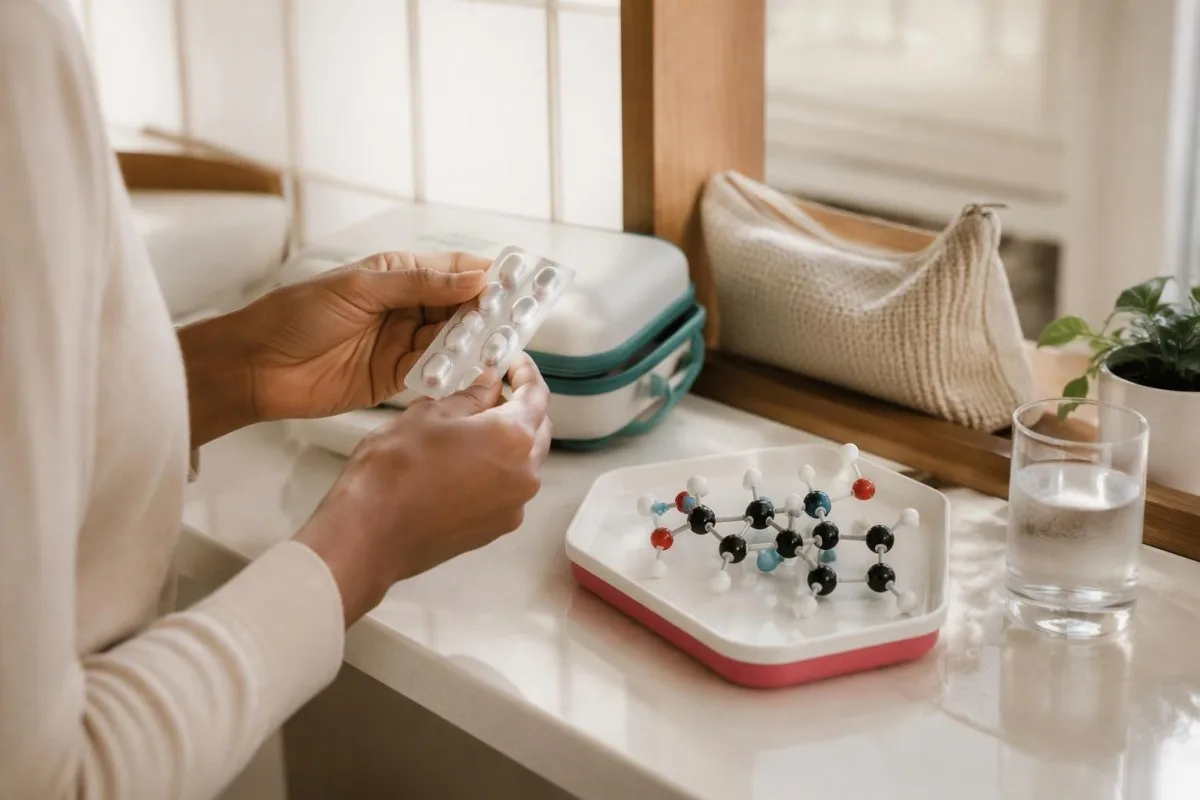
Collection timing depends on the regimen, not on a universal morning rule. A twice-daily schedule may produce a trough around 12 hours after the preceding dose, whereas once-daily extended-release treatment involves a different interval; document the actual formulation, last dose time, collection time, and any recent missed doses rather than assuming the schedule was followed.
Steady state takes approximately 4–5 elimination half-lives, so reduced kidney clearance can make the usual 4-day estimate too short. A sample taken 1 day after a dose increase may not reflect the eventual concentration; Jacob and Nair discuss the pharmacokinetic basis for timing interpretation rather than treating every sample as equivalent (Jacob and Nair, 2016).
Kantesti AI helps distinguish a reported topiramate concentration of 10 mg/L from the circumstances needed to interpret it, including whether the sample was a trough. Our guide to trough timing principles explains the general concept, but tacrolimus targets and sampling protocols must not be applied to topiramate; urgent assessment should never wait for an ideal trough.
Ці даказвае нізкі ўзровень топірамату, што дозы прапускаліся?
A low topiramate level does not prove nonadherence. Вынік ніжэй за 5 мг/л could reflect a modest dose, faster clearance, an interacting medicine, recent treatment changes, or collection timing; a fall from the person's own comparable baseline is often more informative than a low flag alone.

Consider a hypothetical trough that falls from 8 mg/L to 3 mg/L on an apparently unchanged prescription. That pattern warrants checking missed doses and refill access, but also whether an enzyme-inducing medicine was added, whether the earlier sample was actually post-dose, and whether the daily dose or formulation changed without being reflected in the laboratory request.
An undetectable result can strengthen suspicion of little recent exposure, but the assay's detection limit and elapsed time still matter. With an approximately 21-hour half-life, topiramate does not disappear immediately after 1 missed dose; a single concentration cannot reconstruct weeks of medication-taking behavior or distinguish intentional omission from vomiting, supply problems, or misunderstanding instructions.
The practical response is to review barriers before escalating treatment. If a dose is increased after a low result and regular dosing then resumes, exposure may rise unexpectedly; our lamotrigine concentration guide discusses a related monitoring problem, but each medicine requires its own missed-dose and restarting instructions rather than a shared numerical rule.
Ці можа высокі ўзровень топірамату пацвердзіць таксічнасць?
A high topiramate level cannot establish toxicity by itself, and a result inside the laboratory interval cannot exclude it. A concentration above 20 мг/л may support concern about excessive exposure, but clinicians must assess symptoms, dosing history, kidney function, acid–base status, and other medicines.
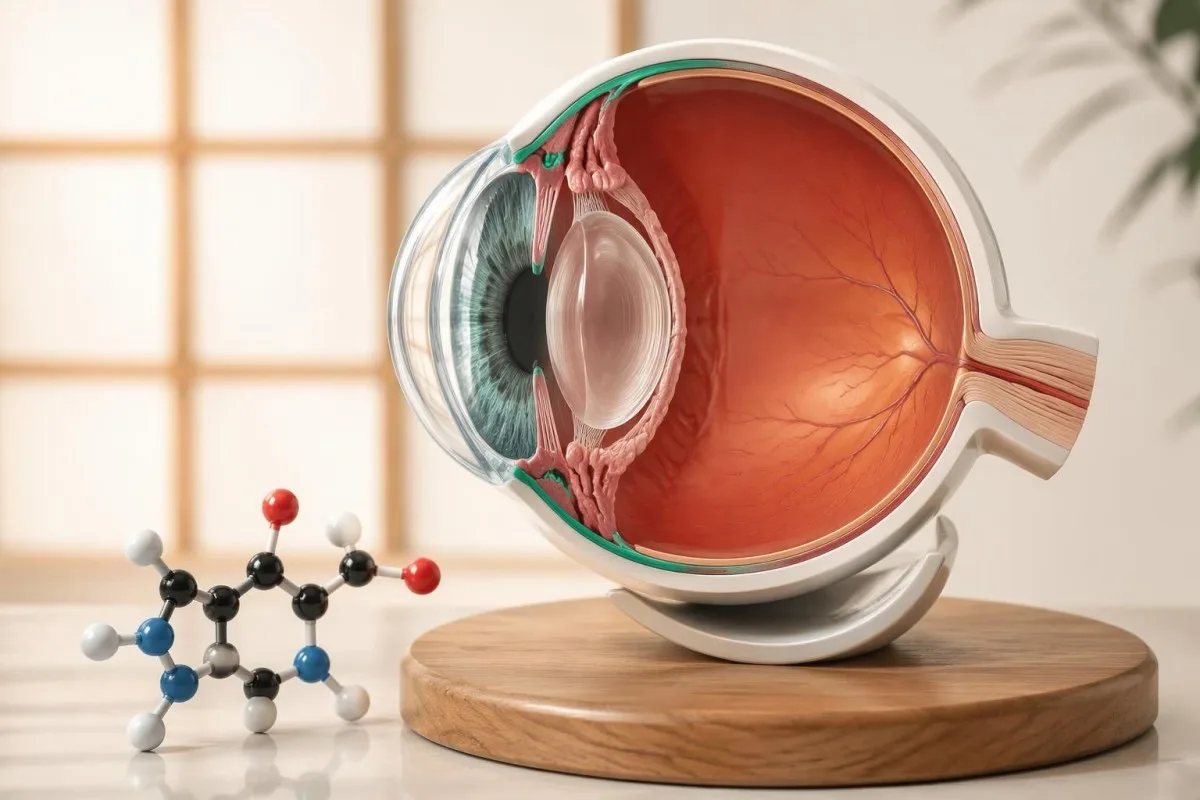
Two hypothetical results show the limitation: 22 mg/L in an alert person after a post-dose sample is not equivalent to 10 mg/L in someone with new severe confusion and low bicarbonate. Neither situation should be interpreted from the number alone; cognitive slowing, dizziness, and impaired coordination may be medication-related even at concentrations the laboratory does not flag.
Sudden eye pain or blurred vision during topiramate treatment needs urgent assessment because acute myopia and secondary angle closure can occur, often within the first month of treatment. A level of 6 mg/L would not make that presentation safe to observe at home; glaucoma assessment methods address eye pressure and anatomy, which a drug concentration cannot measure.
Suspected overdose, markedly reduced alertness, breathing difficulty, or a prolonged seizure requires emergency evaluation without waiting for a send-out concentration result. A seizure lasting 5 minutes is an emergency threshold, and sudden one-sided weakness or new speech difficulty should also prompt emergency action rather than being attributed to topiramate; our папераджальных прыкметах інсульту тлумачаць гэта адрозненне.
Як функцыя нырак уплывае на кліранс топірамату?
Reduced kidney function can increase topiramate serum concentration , таму што прыблізна 70% of an administered dose is eliminated unchanged in urine. Adult prescribing information recommends a reduced dose when creatinine clearance is below 70 mL/min/1.73 m², but a clinician must apply that advice to the indication and individual circumstances.
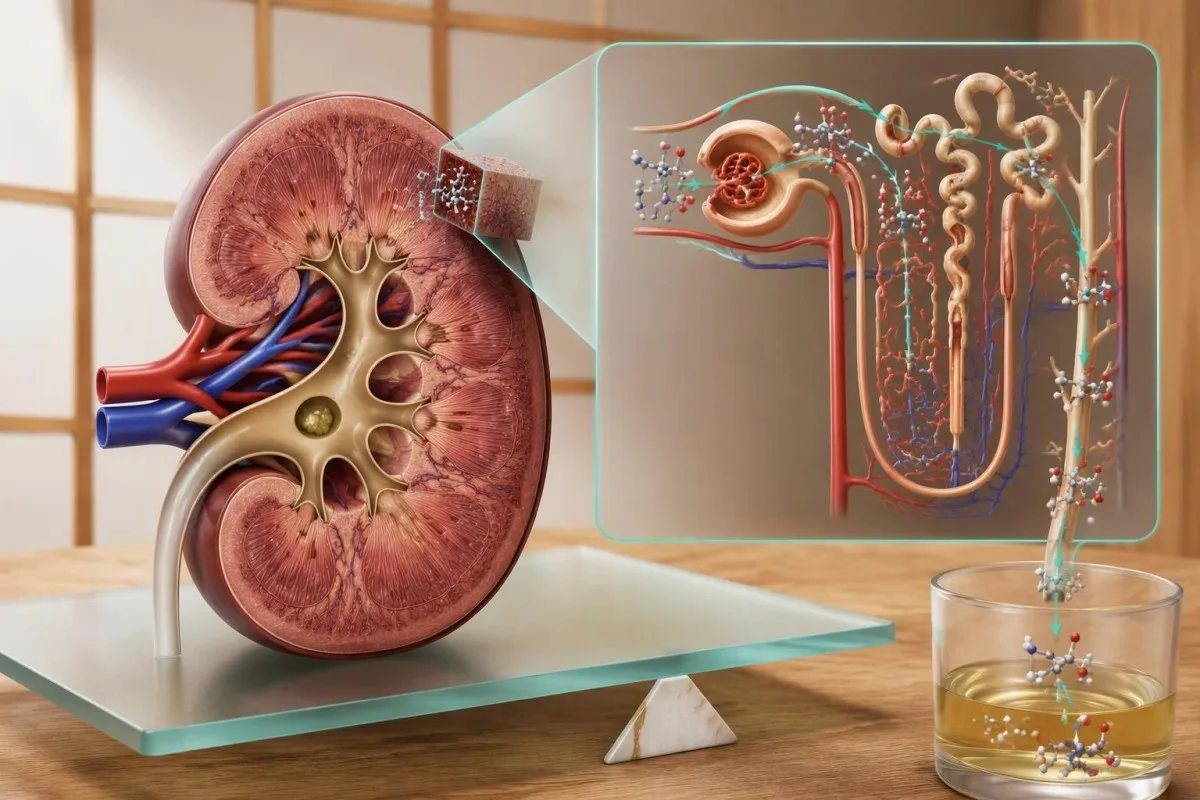
A hypothetical adult with an estimated creatinine clearance of 50 mL/min/1.73 m² may need a different regimen from someone with normal clearance, even if both have the same seizure type. Labeling commonly recommends one-half of the usual adult dose in renal impairment below the stated threshold; that is prescribing guidance, not permission to halve an existing prescription without review.
Creatinine-based eGFR and creatinine clearance are not automatically interchangeable, especially at unusual body sizes or during acute kidney injury. An eGFR of 45 mL/min/1.73 m² signals a need to review clearance, but the appropriate dosing calculation and the reliability of a rapidly changing creatinine require clinical judgment; our даведнік па ацэнцы нізкага eGFR explains when changes need prompt attention.
Kantesti is an AI blood test interpretation platform that helps separate a topiramate result of 14 mg/L from the kidney measurements that may explain it. Our гід па BUN і креатыніну adds context, but a creatinine concentration alone cannot prove medication accumulation; sample timing, hydration, previous results, and the actual dosing history still matter.
Якія лекі могуць змяніць вынік аналізу на топірамат?
Enzyme-inducing antiseizure medicines can lower topiramate concentrations, while some other combinations increase exposure or adverse-effect risk without a predictable level change. Prescribing-information interaction studies report approximately 40% lower topiramate concentrations with carbamazepine і 48% lower concentrations with phenytoin, although individual effects vary.
Stopping an inducing medicine can raise topiramate exposure even when the topiramate prescription stays unchanged. For example, a hypothetical person taking 100 mg twice daily may develop more cognitive adverse effects after carbamazepine is withdrawn; our carbamazepine monitoring guide explains that medicine's own concentration monitoring, which remains separate from assessing its effect on topiramate clearance.
Hydrochlorothiazide increased topiramate exposure by approximately 29% in a pharmacokinetic study described in prescribing information, and the combination can also increase potassium loss. That percentage describes the studied group, not a guaranteed change for every patient; checking potassium and symptoms may be useful even if a repeat topiramate concentration remains inside a 5–20 mg/L interval.
Topiramate with valproate can be associated with hyperammonemia and encephalopathy, sometimes despite otherwise unremarkable routine laboratory results. New unexplained lethargy, vomiting, or altered mental status on these 2 medicines warrants prompt assessment and consideration of ammonia testing; a topiramate level is not a substitute, and our valproate result explanation describes why valproate concentrations also have interpretation limits.
Чаму маніторынг бікарбанату — гэта іншае даследаванне бяспекі?
Bicarbonate monitoring checks for metabolic acidosis, not topiramate exposure. Topiramate can cause renal bicarbonate loss through carbonic anhydrase inhibition; many laboratories use an adult bicarbonate interval around 22–29 ммоль/л, and prescribing information recommends baseline and periodic measurement rather than relying on a drug level.
Topiramate typically causes a hyperchloremic, normal-anion-gap metabolic acidosis, although other conditions can create mixed patterns. Mirza and colleagues describe impaired renal acid–base handling and note that evidence for the optimal monitoring strategy is limited (Mirza et al., 2009); our шаблоны тубулярнага ацыдозу нырак explain why bicarbonate must be read with chloride, potassium, and the clinical history.
For a hypothetical chemistry panel with sodium 138 mmol/L, chloride 111 mmol/L, and bicarbonate 18 mmol/L, the anion gap excluding potassium is 138 − 111 − 18 = 9 mmol/L. That calculation is compatible with a normal-gap pattern in many laboratories, but it does not identify topiramate as the cause; diarrhea, other renal disorders, albumin changes, and mixed acid–base disturbances need consideration.
Kantesti AI explains why bicarbonate of 18 mmol/L deserves attention even when topiramate is 7 mg/L, while avoiding a diagnosis from those 2 numbers alone. Prescribing information uses bicarbonate below 17 mmol/L with a fall greater than 5 mmol/L as a trial definition of markedly low bicarbonate—not a universal emergency cutoff; our тлумачэнне панэлі электралітаў helps interpret associated abnormalities.
Якія праверкі бяспекі нырак не замяняе аналіз на ўзровень прэпарату?
A topiramate concentration cannot detect kidney stones, measure urinary citrate, or establish renal tubular acidosis. Adult epilepsy development trials reported kidney stones in approximately 1.5% of topiramate-treated participants; risk depends on treatment context, and a concentration inside 5–20 mg/L does not eliminate the possibility.
Topiramate can increase urine pH and reduce urinary citrate, a combination that favors calcium phosphate stones. Mirza and colleagues link these urinary changes to carbonic anhydrase inhibition (Mirza et al., 2009); our кіраўніцтве па нізкім цытраце ў мочы explains why a 24-hour urine assessment may become relevant after recurrent stones rather than being automatically required for every user.
Monitoring creatinine serves a different purpose from checking urinary stone risk. A hypothetical person with a topiramate level of 9 mg/L, normal creatinine, and recurrent flank pain still needs evaluation for stones; normal filtration does not guarantee normal urinary citrate, and persistent pain with fever, vomiting, or difficulty passing urine should not wait for a repeat drug concentration.
Adequate fluid intake is commonly advised, but there is no single safe target such as 3 liters daily for everyone. People with heart failure, advanced kidney disease, or a prescribed fluid restriction need individualized guidance; potassium citrate or bicarbonate treatment also requires clinician oversight because changing urine chemistry and potassium intake can create different risks from those measured by topiramate testing.
Каму можа спатрэбіцца больш індывідуалізаваны маніторынг канцэнтрацыі?
Pregnancy, childhood, older age, and changing kidney function can make topiramate exposure less predictable. A personal pre-pregnancy concentration and 2 similarly timed follow-up samples may be more useful than chasing a population interval, but monitoring does not remove topiramate's pregnancy-related risks or replace specialist treatment planning.
Pregnancy can increase topiramate clearance, so a concentration may fall despite consistent dosing. Pregnancy also changes the interpretation of creatinine, and standard eGFR equations are not reliable for assessing filtration during pregnancy; our pregnancy kidney-function explanation explains why a apparently reassuring result should not be used to estimate drug clearance mechanically.
In the UK, topiramate is subject to a Pregnancy Prevention Programme for people who can become pregnant; it is contraindicated for migraine prevention during pregnancy and for epilepsy in pregnancy unless no suitable alternative exists. A level of 5 mg/L does not establish fetal safety, and someone who becomes pregnant should contact the prescriber promptly rather than abruptly stopping an antiseizure regimen.
Children may have higher weight-normalized clearance than adults, while older adults may clear the medicine more slowly because of reduced renal function. The adult 5–20 mg/L interval therefore needs context rather than a new age-based cutoff invented from a single report; pediatric dose decisions require specialist assessment, and post-pregnancy monitoring may matter if a dose was increased when clearance was higher.
Як інтэрпрэтаваць вынік з улікам іншых дадзеных?
Interpret a topiramate result by combining concentration, collection timing, symptoms, and safety chemistry. At minimum, compare 4 pieces of information: the current regimen, the last dose and sample times, the reason testing was ordered, and bicarbonate plus kidney-function results when available.
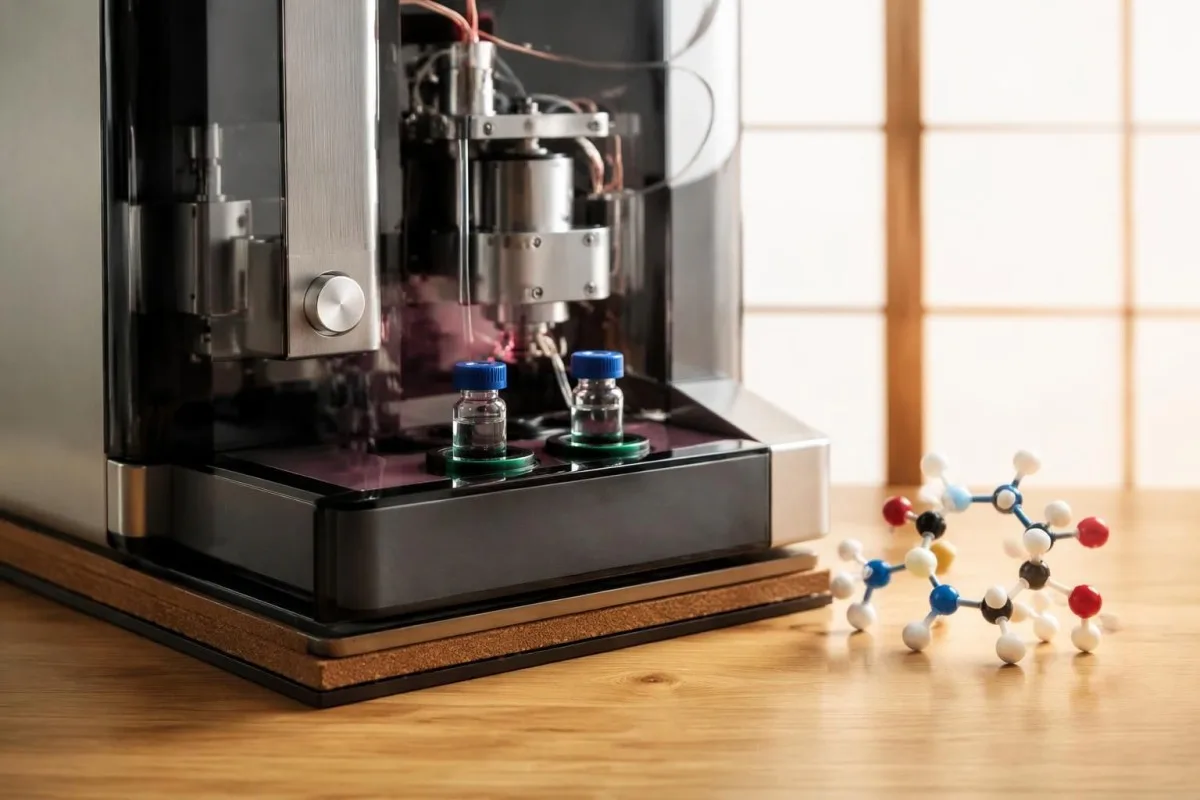
Hypothetical pattern 1: a trough falls from 8 to 3 mg/L, kidney function is stable, and seizures recur after several prescription refills were delayed. Reduced exposure is plausible, but the response should include a medication-access review and seizure assessment; raising the dose without addressing intermittent use could create excessive exposure when regular dosing resumes.
Hypothetical pattern 2: a trough rises from 9 to 16 mg/L while creatinine worsens and new coordination problems appear. Reduced clearance is a reasonable concern even though 16 mg/L remains inside a 5–20 mg/L interval; pattern 3, a level of 7 mg/L with bicarbonate of 18 mmol/L, instead highlights a possible acid–base effect that concentration monitoring alone would miss.
Kantesti is an AI-powered blood test analysis tool that helps organize these 3 patterns without treating any one as a confirmed diagnosis. Our кіраўніцтва па трэндах бяспекі лекаў explains how serial results support follow-up; keep the original laboratory interval and dates visible, because changing laboratories, formulations, or collection timing can make an apparent trend misleading.
Што рабіць далей і якія доказы абгрунтоўваюць правядзенне аналізу?
The next step is to ask what the topiramate result changes—not to adjust treatment from the number alone. Bring 2 справаздачы з датамі, if available, and a medication timeline to the prescriber; monitoring recommendations rely on pharmacology, expert guidance, and clinical context rather than a universally validated toxicity threshold.
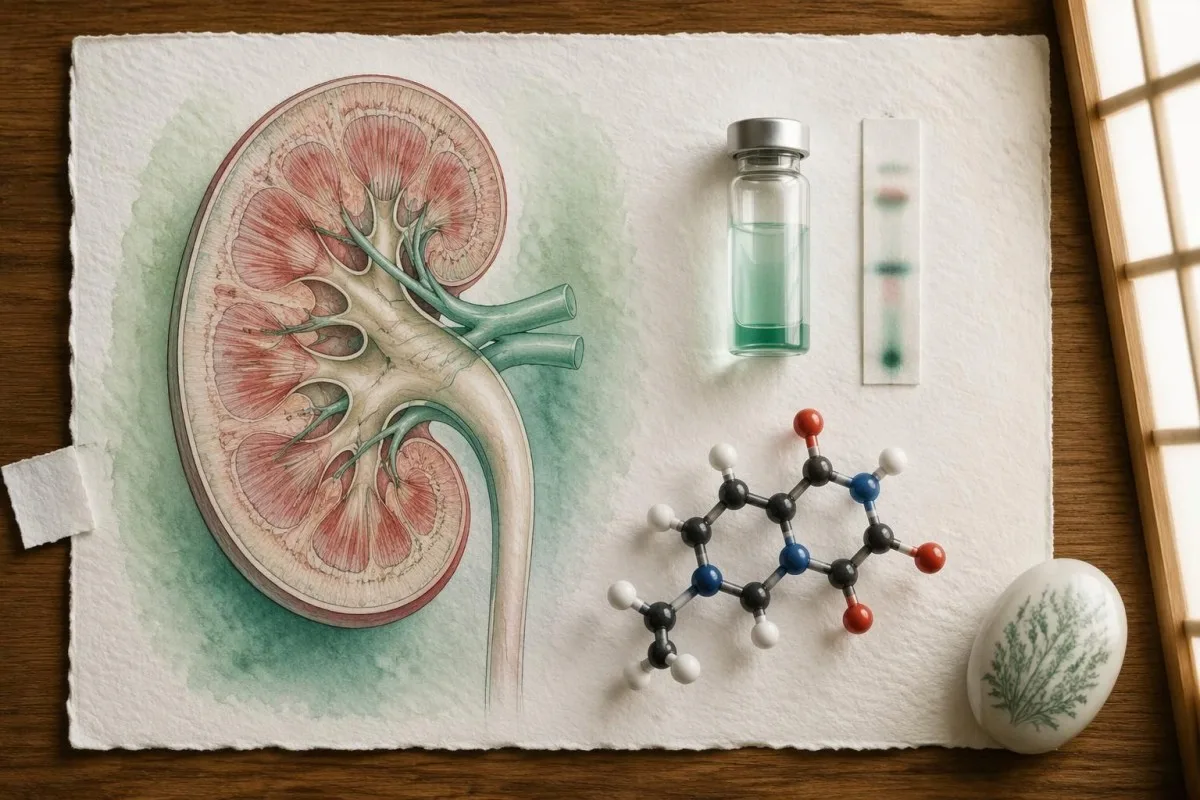
Ask the prescriber whether a repeat trough, bicarbonate check, kidney-function assessment, or medication review would answer the unresolved question. There is no evidence-based rule that every patient needs a topiramate concentration every 3 or 6 months; persistent low bicarbonate, new adverse effects, or changing clearance may justify a different follow-up plan from an isolated laboratory flag.
Kantesti helps explain reports, but our прынцыпы адказнага выкарыстання ШІ distinguish educational interpretation from diagnosis and prescribing. Our падыход да клінічнай валідацыі provides methodology context; neither an AI confidence estimate nor a concentration of 10 mg/L can exclude toxicity, replace an examination, or authorize an independent dose change.
The 2 Zenodo publications listed below concern serum proteins and complement testing; they are not topiramate therapeutic-monitoring studies and should not be used to validate its concentration cutoffs. Our даведнік па інтэрпрэтацыі бялкоў сыроваткі offers background for understanding albumin and other medicines, while the directly relevant external references support this article's discussion of selective monitoring, pharmacokinetics, and acid–base effects.
Часта задаваныя пытанні
Які ўзровень топірамату лічыцца нармальным?
Часта цытуемы рэферэнтны інтэрвал топірамату складае 5–20 mg/L, хоць некаторыя лабараторыі выкарыстоўваюць 2–10 mg/L. Гэтыя інтэрвалы дапамагаюць інтэрпрэтацыі, галоўным чынам пры эпілепсіі, а не вызначаюць універсальную нармальную або бяспечную канцэнтрацыю. У людзей можа назірацца адказ пры ўзроўні ніжэйшым за ўказаны інтэрвал або пабочныя эфекты ў яго межах. Варта ўлічваць разам лабараторны рэферэнтны дыяпазон, час забору ўзору, сімптомы і ранейшую эфектыўную канцэнтрацыю.
Ці трэба рэгулярна правяраць узровень топірамату?
Большасці людзей не патрэбны рэгулярны кантроль канцэнтрацыі топірамату паводле фіксаванага графіка. Аналіз можа дапамагчы пры прарыўных прыступах, падазрэнні на пропуск доз, узаемадзеючых лекавых сродках, зменах, звязаных з цяжарнасцю, або зніжэнні нырачнага клірансу. Не існуе агульнапрынятага інтэрвалу для вымярэння канцэнтрацыі, напрыклад кожныя 3 ці 6 месяцаў, які рэкамендаваўся б усім пацыентам. Зыходны і перыядычны кантроль бікарбанату тычыцца асобнай праблемы бяспекі і можа быць дарэчным нават тады, калі ўзровень прэпарату не вымяраюць.
Калі трэба здаваць аналіз на ўзровень Topamax?
Запланаваны аналіз на ўзровень Topamax звычайна найбольш супастаўны, калі пробу бяруць непасрэдна перад наступнай запланаванай дозай. Пры нармальнай функцыі нырак топірамат звычайна дасягае раўнаважнай канцэнтрацыі прыкладна праз 4 дні пасля пачатку прыёму нязменнай схемы, але зніжаны кліранс можа падоўжыць гэты тэрмін. Зафіксуйце час апошняй дозы, час узяцця пробы, дозу і лекавую форму. Пры падазрэнні на перадазіроўку або сур’ёзныя пабочныя эфекты неабходна неадкладнае абследаванне, а не чаканне правільна разлічанай мінімальнай канцэнтрацыі.
Ці азначае нізкая канцэнтрацыя топірамату ў сыроватцы крыві, што я прапускаў(ла) прыёмы прэпарату?
Нізкая канцэнтрацыя топірамату ў сыроватцы не даказвае, што дозы прапускаліся. Вынік ніжэй за 5 мг/л можа быць звязаны з невялікай дозай, павышаным клірансам, прыёмам прэпарата, які індукуе ферменты, нядаўнімі зменамі дозы або часам узяцця ўзору. Зніжэнне паказчыка ў параўнанні з папярэдняй супастаўнай мінімальнай канцэнтрацыяй, напрыклад з 8 да 3 мг/л, можа служыць больш важкім доказам змены экспазіцыі. Перш чым вырашаць, ці трэба карэктаваць схему лячэння, клініцыстам варта праверыць даступнасць прэпарата і гісторыю прыёму доз.
Які ўзровень топірамату з'яўляецца таксічным?
Не існуе агульнапрызнанай валідзіраванай канцэнтрацыі топірамату, якая пацвярджае таксічнасць. Вынік вышэйшы за 20 mg/L можа стаць падставай для больш уважлівай ацэнкі, але некаторыя пабочныя эфекты ўзнікаюць у межах часта ўказаных лабараторных інтэрвалаў. Клінічнае значэнне вызначаюць сімптомы, вынікі абследавання, функцыя нырак, узровень бікарбанату, іншыя лекавыя сродкі і час узяцця ўзору. Пры падазрэнні на перадазіроўку, моцнай спутанасці свядомасці, цяжкасці дыхання або раптоўным болі ў вачах ці змене зроку неабходна тэрмінова прайсці абследаванне незалежна ад вымеранага ўзроўню.
Ці можа топірамат выклікаць нізкі ўзровень бікарбанату пры нармальнай канцэнтрацыі прэпарату?
Топірамат можа зніжаць узровень бікарбанату, нават калі яго канцэнтрацыя знаходзіцца ў межах лабараторнага інтэрвалу, напрыклад 5–20 mg/L. Інгібіраванне карбангідразы можа павялічваць страту бікарбанату ныркамі і выклікаць гіперхларэмічны метабалічны ацыдоз з нармальным аніённым інтэрвалам. Вынік аналізу на бікарбанат 18 mmol/L патрабуе клінічнай інтэрпрэтацыі, але сам па сабе не даказвае, што прычынай з'яўляецца топірамат, і не вызначае ступень неадкладнай небяспекі. Таму аналіз на бікарбанат і ацэнку функцыі нырак нельга замяніць аналізам узроўню Topamax.
Атрымайце тлумачэнне вынікаў аналізу крыві
Загрузіце свой лабараторны справаздачу, і AI Kantesti за некалькі секунд простай мовай растлумачыць кожны біямаркер. Ім карыстаюцца больш за 2 мільёны чалавек па ўсім свеце.
Спасылкі
- Кляйн, Т., Мітчэл, С., і Вебер, Х. (2026). Кіраўніцтва па бялках сыроваткі: глабуліны, альбумін і суадносіны A/G у аналізе крыві. Kantesti AI Medical Research. DOI
- Кляйн, Т., Мітчэл, С., і Вебер, Х. (2026). Дапаможнік па аналізах крыві на C3, C4, камплемент і тытр ANA. Kantesti AI Medical Research. DOI
- Patsalos PN et al. (2008). Antiepileptic drugs—best practice guidelines for therapeutic drug monitoring: a position paper by the subcommission on therapeutic drug monitoring, ILAE Commission on Therapeutic Strategies. Epilepsia. DOI
- Jacob S and Nair AB (2016). An Updated Overview on Therapeutic Drug Monitoring of Recent Antiepileptic Drugs. Drugs in R&D. DOI
- Mirza N et al. (2009). Effect of topiramate on acid–base balance: extent, mechanism and effects. British Journal of Clinical Pharmacology. DOI
- 2 млн+Прааналізаваныя тэсты
- 127+Краіны
- 100+Мовы
Пра медыцынскую каманду


Сігналы даверу E-E-A-T
Вопыт
Клінічны агляд, які вядзе лекар, працэсаў інтэрпрэтацыі лабараторных паказчыкаў.
Экспертыза
Фокус лабараторнай медыцыны на тым, як біямаркеры паводзяць сябе ў клінічным кантэксце.
Аўтарытэтнасць
Медыцынскую рэцэнзію правёў доктар Томас Кляйн пры ўдзеле доктара Сары Мітчэл і прафесара, доктара Ганса Вэбера.
Надзейнасць
Інтэрпрэтацыя на аснове доказаў з выразнымі шляхамі далейшых дзеянняў, каб паменшыць трывогу.






Медыцынская адмова ад адказнасці
Гэты артыкул прызначаны толькі для адукацыйных мэт і не з’яўляецца медычнай парадай. Заўсёды кансультуйцеся з кваліфікаваным спецыялістам аховы здароўя для прыняцця рашэнняў па дыягностыцы і лячэнні.
Апублікавана · Звязацца з рэдакцыйнай камандай
Апублікавана кампаніяй Kantesti Ltd, зарэгістраванай у Англіі і Уэльсе, нумар кампаніі. 17090423, Лондан, Злучанае Каралеўства.
