โดยทั่วไปจะไม่ตรวจวัดความเข้มข้นของโทพิราเมตเป็นประจำ เนื่องจากการตอบสนองต่อการรักษาและผลข้างเคียงไม่ได้สัมพันธ์อย่างน่าเชื่อถือกับค่าตัวเลขเป้าหมายค่าใดค่าหนึ่ง การตรวจอาจช่วยประเมินการได้รับยาหรือการกำจัดยาที่เปลี่ยนแปลงไป ส่วนการตรวจไบคาร์บอเนตและการทำงานของไตใช้ตอบคำถามด้านความปลอดภัยคนละประเด็น.

ประเด็นสำคัญ
- ระดับโทพิราเมต โดยปกติจะตรวจเฉพาะเมื่อมีคำถามเฉพาะ เช่น อาการชักที่ไม่คาดคิด สงสัยว่าลืมรับประทานยา เกิดปฏิกิริยาระหว่างยา หรือการทำงานของไตเปลี่ยนแปลง.
- ช่วงการรักษาด้วยโทพิราเมต โดยทั่วไปมีรายงานอยู่ที่ 5–20 mg/L แต่ห้องปฏิบัติการบางแห่งใช้ช่วง 2–10 mg/L; ไม่ว่าช่วงใดก็ไม่รับประกันประสิทธิผลหรือความปลอดภัย.
- เวลาเก็บตัวอย่างก่อนรับประทานยาครั้งถัดไป หมายถึงการเก็บตัวอย่างทันทีก่อนถึงเวลารับประทานยาครั้งถัดไป โดยบันทึกเวลาที่รับประทานครั้งล่าสุดไว้.
- สภาวะคงที่ โดยปกติจะเข้าสู่ระดับคงที่ภายในประมาณ 4 วันเมื่อการทำงานของไตเป็นปกติและขนาดยาไม่เปลี่ยนแปลง; การกำจัดยาที่ลดลงอาจทำให้ช่วงเวลานี้ยาวนานขึ้น.
- การแปลงหน่วย ตรงไปตรงมา: 1 mg/L เท่ากับ 1 µg/mL ดังนั้น 8 mg/L และ 8 µg/mL จึงอธิบายความเข้มข้นเดียวกัน.
- การประเมินภาวะพิษจากยา ต้องพิจารณาอาการ การตรวจร่างกาย ประวัติการใช้ยา และผลตรวจทางห้องปฏิบัติการที่เกี่ยวข้อง; ไม่มีความเข้มข้นของโทพิราเมตค่าใดค่าหนึ่งที่ใช้ยืนยันภาวะพิษจากยาได้ในทุกกรณี.
- การติดตามไบคาร์บอเนต ตรวจภาวะเลือดเป็นกรดจากเมแทบอลิซึม ซึ่งเป็นผลจากโทพิราเมตที่พบได้และเป็นที่ยอมรับ แม้ความเข้มข้นจะอยู่ในช่วงอ้างอิงของห้องปฏิบัติการ.
- การติดตามการทำงานของไต ช่วยประเมินการกำจัดยา; ข้อมูลการสั่งใช้ยาแนะนำให้ปรับขนาดยาเมื่อค่าการกวาดล้างครีเอตินีนในผู้ใหญ่ต่ำกว่า 70 mL/min/1.73 m².
เหตุใดจึงไม่ตรวจระดับโทพิราเมตเป็นประจำ?
A ระดับโทพิราเมต ไม่ได้ตรวจเป็นประจำ เพราะความสัมพันธ์ระหว่างความเข้มข้น ประโยชน์ และอาการไม่พึงประสงค์แตกต่างกันมากในแต่ละคน ช่วงที่มักมีการอ้างถึงคือ 5–20 mg/L เป็นเครื่องมืออ้างอิงทางห้องปฏิบัติการ ไม่ใช่ค่าที่ผู้ป่วยทุกรายต้องไปให้ถึง และไม่ใช่ขอบเขตที่แบ่งการรักษาที่ปลอดภัยออกจากภาวะพิษได้อย่างน่าเชื่อถือ.
ยังไม่มีหลักฐานว่าการปรับขนาดยาโดยอิงความเข้มข้นเป็นประจำช่วยให้ผลการรักษาดีขึ้นในผู้ที่ใช้โทพิราเมตทุกราย เอกสารแสดงจุดยืนของ ILAE สนับสนุนการติดตามระดับยาเพื่อการรักษาเมื่อผลตรวจสามารถตอบคำถามทางคลินิกที่ชัดเจนได้ แทนการสั่งตรวจระดับยาโดยอัตโนมัติสำหรับยากันชักทุกชนิด (Patsalos et al., 2008); ความถี่ของอาการชัก จำนวนวันที่เป็นไมเกรน และความสามารถในการทนต่อยา ยังคงเป็นปัจจัยสำคัญในการตัดสินใจรักษา.
ตัวอย่างเช่น ผู้ใหญ่สมมติรายหนึ่งที่อาการไมเกรนดีขึ้นเมื่อใช้ยา 50 mg วันละสองครั้ง ไม่จำเป็นต้องเพิ่มขนาดยาเพียงเพราะห้องปฏิบัติการระบุว่าความเข้มข้นต่ำกว่า 5 mg/L การป้องกันไมเกรนยังไม่มีค่าเป้าหมายในซีรัมที่กำหนดไว้อย่างชัดเจน; การเพิ่มการรักษาเพียงเพื่อแก้ค่าที่ถูกระบุไว้อาจทำให้มีปัญหาในการนึกหาคำหรือเบื่ออาหารมากขึ้น โดยไม่ได้เพิ่มประโยชน์ที่มีนัยสำคัญ.
Kantesti เป็นเครื่องวิเคราะห์ผลตรวจเลือดด้วย AI ที่ช่วยอธิบายว่าเหตุใดช่วงอ้างอิง 5–20 mg/L ของห้องปฏิบัติการจึงใช้แทนการประเมินอาการและเวลาที่เก็บตัวอย่างไม่ได้ บทบาทของเรา และวัตถุประสงค์ของเรา อธิบายบทบาทของเราในการแปลผลรายงาน; เราไม่ได้สั่งจ่ายยา และคำอธิบายจาก AI ไม่ควรเป็นเหตุให้เปลี่ยนแผนการรักษาที่คงที่ด้วยตนเอง.
การตรวจระดับ Topamax วัดอะไรจริง ๆ?
A การตรวจระดับ Topamax วัดความเข้มข้นของโทพิราเมตในตัวอย่างจากห้องปฏิบัติการ ซึ่งโดยทั่วไปเป็นซีรัมหรือพลาสมา โดยรายงานระดับยาที่ร่างกายได้รับ ณ เวลาเก็บตัวอย่าง ไม่ใช่ขนาดยาที่สั่งจ่าย การป้องกันอาการชัก หรือสถานะไบคาร์บอเนต; 1 mg/L เท่ากับ 1 µg/mL, ซึ่งช่วยป้องกันความผิดพลาดที่พบบ่อยในการอ่านหน่วย.
ห้องปฏิบัติการหลายแห่งวัดโทพิราเมตด้วยเทคนิคโครมาโทกราฟีของเหลวควบคู่กับแมสสเปกโทรเมทรีแบบแทนเดม แม้ว่าวิธีการและภาชนะเก็บตัวอย่างที่ยอมรับได้จะแตกต่างกัน ผลตรวจ 8 µg/mL มีความเข้มข้นเท่ากับ 8 mg/L ทุกประการ; ในทางตรงกันข้าม ใบสั่งยา 100 mg หมายถึงปริมาณยาที่ให้ และไม่สามารถนำไปเปรียบเทียบโดยตรงกับหน่วยความเข้มข้นทั้งสองหน่วยนี้.
โทพิราเมตจับกับโปรตีนค่อนข้างน้อย โดยข้อมูลการสั่งใช้ยาระบุว่ามีการจับประมาณ 15–41% การตรวจเป็นประจำโดยทั่วไปวัดความเข้มข้นรวม และไม่มีสมการมาตรฐานสำหรับปรับตามอัลบูมินที่เทียบเท่ากับแนวทางที่บางครั้งใช้กับฟีนิโทอิน; คำอธิบายของเราเรื่อง ฟีนิโทอินอิสระเทียบกับฟีนิโทอินรวม แสดงให้เห็นว่าไม่ควรนำหลักเกณฑ์การแปลผลจากยาชนิดหนึ่งไปใช้กับยาอื่นโดยไม่พิจารณา.
รายงานจากห้องปฏิบัติการที่ระบุโทพิราเมต 6 mg/L และ CO2 รวม 19 mmol/L ประกอบด้วยผลตรวจ 2 รายการที่แตกต่างกันโดยพื้นฐาน รายการแรกสะท้อนระดับยาที่ร่างกายได้รับ; รายการที่สองมักใช้ประมาณระดับไบคาร์บอเนตในซีรัมและอาจบ่งชี้ปัญหาสมดุลกรด–ด่าง ดังนั้น ความเข้มข้นที่อยู่ในช่วงอ้างอิงที่พิมพ์ไว้จึงไม่อาจใช้ตัดความเป็นไปได้ที่ผลตรวจทางเคมีผิดปกติได้.
ช่วงการรักษาด้วยโทพิราเมตคือเท่าใด?
ช่วงที่มักมีการอ้างถึง ช่วงระดับโทพิราเมตเพื่อการรักษาคือ 5–20 mg/L, แต่ห้องปฏิบัติการบางแห่งในยุโรปใช้ 2–10 mg/L. These intervals mainly support epilepsy-related interpretation; they are not universally validated treatment targets, and there is no widely accepted serum concentration target for migraine prevention.
Jacob and Nair's review lists a topiramate reference concentration of 5–20 mg/L while emphasizing selective use of monitoring and variable concentration–response relationships (Jacob and Nair, 2016). A reference interval summarizes concentrations considered useful in a population; it does not establish that every individual below its lower limit needs more medication.
Different laboratory intervals can produce different flags for the same number. A hypothetical trough of 12 mg/L sits within a 5–20 mg/L interval but above a 2–10 mg/L interval; that disagreement should trigger review of the laboratory's convention and the patient's clinical state, not an assumption that the medicine became toxic between reports.
An individual's previously effective, well-tolerated concentration can be more informative than the population interval. If someone remained seizure-free at a correctly timed trough of 4 mg/L, that documented baseline may help interpret a later change; the same individual-baseline principle appears in การแปลผลตรวจ levetiracetam, although the numerical ranges are different.
| ระดับ | ช่วง | ความหมาย |
|---|---|---|
| ช่วงอ้างอิงที่พบบ่อยในห้องปฏิบัติการ | 5–20 mg/L | A frequently quoted epilepsy-related reference interval, not a guaranteed effective or safe target. |
| Alternative laboratory interval | 2–10 mg/L | Used by some European laboratories; interpretation must follow the reporting laboratory and clinical context. |
| Above a 5–20 interval | >20 มก./ล. | Prompts review of symptoms, timing, dose, interactions, and clearance; does not establish toxicity by itself. |
| Individual reference concentration | Patient-specific; no universal cutoff | A prior correctly timed concentration obtained during effective, tolerated treatment can guide later comparisons. |
การติดตามความเข้มข้นของโทพิราเมตมีประโยชน์เมื่อใด?
Topiramate concentration monitoring helps when clinicians need to distinguish changed medication exposure from other causes of worsening control or new adverse effects. Comparing 2 similarly timed samples can be useful after suspected missed doses, kidney-function changes, interacting medicines, pregnancy-related clearance changes, or an unexplained treatment failure.
Unexpected breakthrough seizures are one reason to investigate exposure, but the concentration cannot diagnose the cause of the event. The ILAE position paper identifies situations such as suspected nonadherence, toxicity, pharmacokinetic variability, and changing treatment conditions as appropriate reasons to consider monitoring (Patsalos et al., 2008); sleep deprivation, illness, and seizure classification still need separate assessment.
Establishing a personal reference concentration can help before an anticipated change. For a hypothetical person stable on 100 mg twice daily, a trough obtained during seizure control provides a comparison if kidney function later declines or another antiseizure drug is withdrawn; without that baseline, a later isolated result may be harder to interpret.
A test is less helpful if nobody can state what management decision it might change. Before requesting a concentration of 7 mg/L or any other result, ask whether the question concerns adherence, clearance, or possible adverse effects; our lacosamide monitoring explanation illustrates why selective monitoring is not the same as having no monitoring strategy.
ควรเก็บตัวอย่างตรวจความเข้มข้นของโทพิราเมตเมื่อใด?
For planned monitoring, a trough sample immediately before the next scheduled dose is usually the most comparable measurement. Topiramate's elimination half-life is approximately 21 hours in adults with normal kidney function, and steady state is generally reached in about 4 วัน after an unchanged regimen begins.
Collection timing depends on the regimen, not on a universal morning rule. A twice-daily schedule may produce a trough around 12 hours after the preceding dose, whereas once-daily extended-release treatment involves a different interval; document the actual formulation, last dose time, collection time, and any recent missed doses rather than assuming the schedule was followed.
Steady state takes approximately 4–5 elimination half-lives, so reduced kidney clearance can make the usual 4-day estimate too short. A sample taken 1 day after a dose increase may not reflect the eventual concentration; Jacob and Nair discuss the pharmacokinetic basis for timing interpretation rather than treating every sample as equivalent (Jacob and Nair, 2016).
Kantesti AI helps distinguish a reported topiramate concentration of 10 mg/L from the circumstances needed to interpret it, including whether the sample was a trough. Our guide to trough timing principles explains the general concept, but tacrolimus targets and sampling protocols must not be applied to topiramate; urgent assessment should never wait for an ideal trough.
ระดับโทพิราเมตที่ต่ำพิสูจน์ได้หรือไม่ว่าลืมรับประทานยา?
A low topiramate level does not prove nonadherence. ผลที่ต่ำกว่า 5 mg/L could reflect a modest dose, faster clearance, an interacting medicine, recent treatment changes, or collection timing; a fall from the person's own comparable baseline is often more informative than a low flag alone.
Consider a hypothetical trough that falls from 8 mg/L to 3 mg/L on an apparently unchanged prescription. That pattern warrants checking missed doses and refill access, but also whether an enzyme-inducing medicine was added, whether the earlier sample was actually post-dose, and whether the daily dose or formulation changed without being reflected in the laboratory request.
An undetectable result can strengthen suspicion of little recent exposure, but the assay's detection limit and elapsed time still matter. With an approximately 21-hour half-life, topiramate does not disappear immediately after 1 missed dose; a single concentration cannot reconstruct weeks of medication-taking behavior or distinguish intentional omission from vomiting, supply problems, or misunderstanding instructions.
The practical response is to review barriers before escalating treatment. If a dose is increased after a low result and regular dosing then resumes, exposure may rise unexpectedly; our lamotrigine concentration guide discusses a related monitoring problem, but each medicine requires its own missed-dose and restarting instructions rather than a shared numerical rule.
ระดับโทพิราเมตที่สูงยืนยันภาวะพิษจากยาได้หรือไม่?
A high topiramate level cannot establish toxicity by itself, and a result inside the laboratory interval cannot exclude it. A concentration above 20 mg/L may support concern about excessive exposure, but clinicians must assess symptoms, dosing history, kidney function, acid–base status, and other medicines.
Two hypothetical results show the limitation: 22 mg/L in an alert person after a post-dose sample is not equivalent to 10 mg/L in someone with new severe confusion and low bicarbonate. Neither situation should be interpreted from the number alone; cognitive slowing, dizziness, and impaired coordination may be medication-related even at concentrations the laboratory does not flag.
Sudden eye pain or blurred vision during topiramate treatment needs urgent assessment because acute myopia and secondary angle closure can occur, often within the first month of treatment. A level of 6 mg/L would not make that presentation safe to observe at home; glaucoma assessment methods address eye pressure and anatomy, which a drug concentration cannot measure.
Suspected overdose, markedly reduced alertness, breathing difficulty, or a prolonged seizure requires emergency evaluation without waiting for a send-out concentration result. A seizure lasting 5 minutes is an emergency threshold, and sudden one-sided weakness or new speech difficulty should also prompt emergency action rather than being attributed to topiramate; our สัญญาณเตือนโรคหลอดเลือดสมอง อธิบายความแตกต่างนั้น.
การทำงานของไตส่งผลต่อการกำจัดโทพิราเมตอย่างไร?
Reduced kidney function can increase topiramate serum concentration เนื่องจากยาประมาณ 70% of an administered dose is eliminated unchanged in urine. Adult prescribing information recommends a reduced dose when creatinine clearance is below 70 mL/min/1.73 m², but a clinician must apply that advice to the indication and individual circumstances.
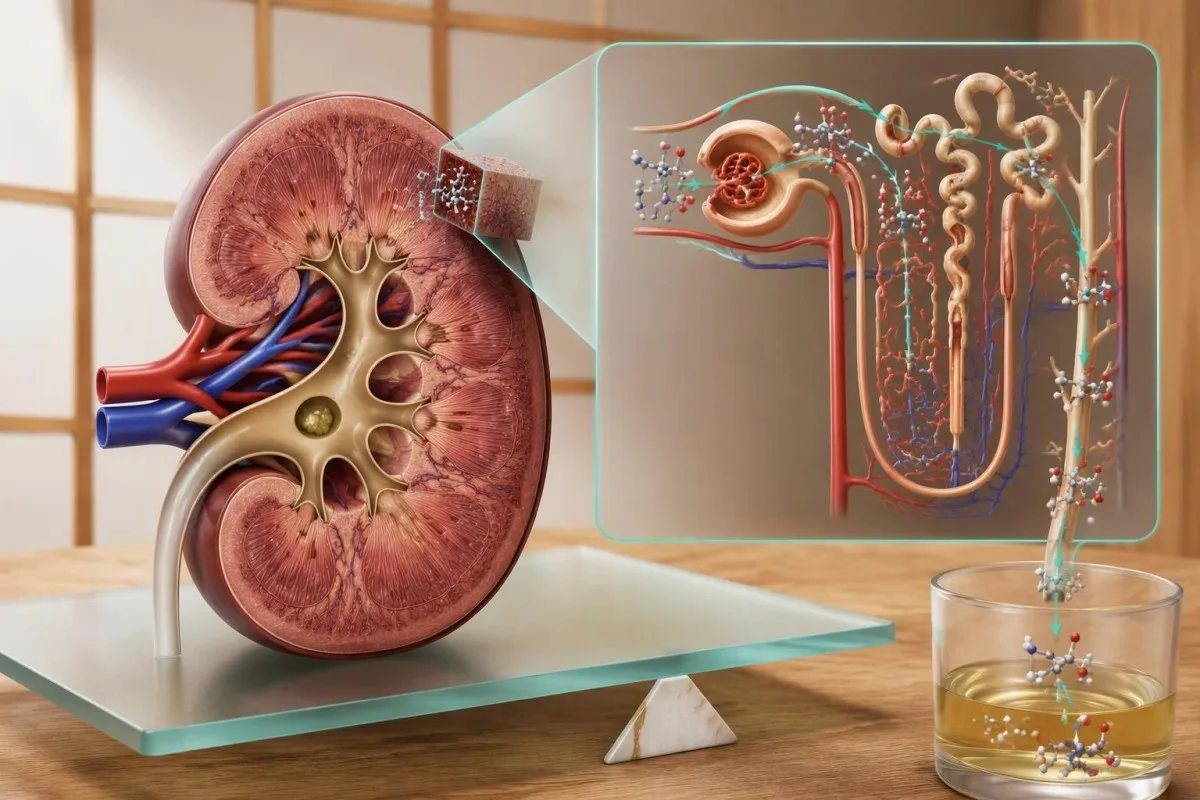
A hypothetical adult with an estimated creatinine clearance of 50 mL/min/1.73 m² may need a different regimen from someone with normal clearance, even if both have the same seizure type. Labeling commonly recommends one-half of the usual adult dose in renal impairment below the stated threshold; that is prescribing guidance, not permission to halve an existing prescription without review.
Creatinine-based eGFR and creatinine clearance are not automatically interchangeable, especially at unusual body sizes or during acute kidney injury. An eGFR of 45 mL/min/1.73 m² signals a need to review clearance, but the appropriate dosing calculation and the reliability of a rapidly changing creatinine require clinical judgment; our คู่มือประเมิน eGFR ต่ำ explains when changes need prompt attention.
Kantesti is an AI blood test interpretation platform that helps separate a topiramate result of 14 mg/L from the kidney measurements that may explain it. Our คำแนะนำ BUN และครีเอตินิน adds context, but a creatinine concentration alone cannot prove medication accumulation; sample timing, hydration, previous results, and the actual dosing history still matter.
ยาชนิดใดบ้างที่เปลี่ยนแปลงผลตรวจโทพิราเมตได้?
Enzyme-inducing antiseizure medicines can lower topiramate concentrations, while some other combinations increase exposure or adverse-effect risk without a predictable level change. Prescribing-information interaction studies report approximately 40% lower topiramate concentrations with carbamazepine และ 48% lower concentrations with phenytoin, although individual effects vary.
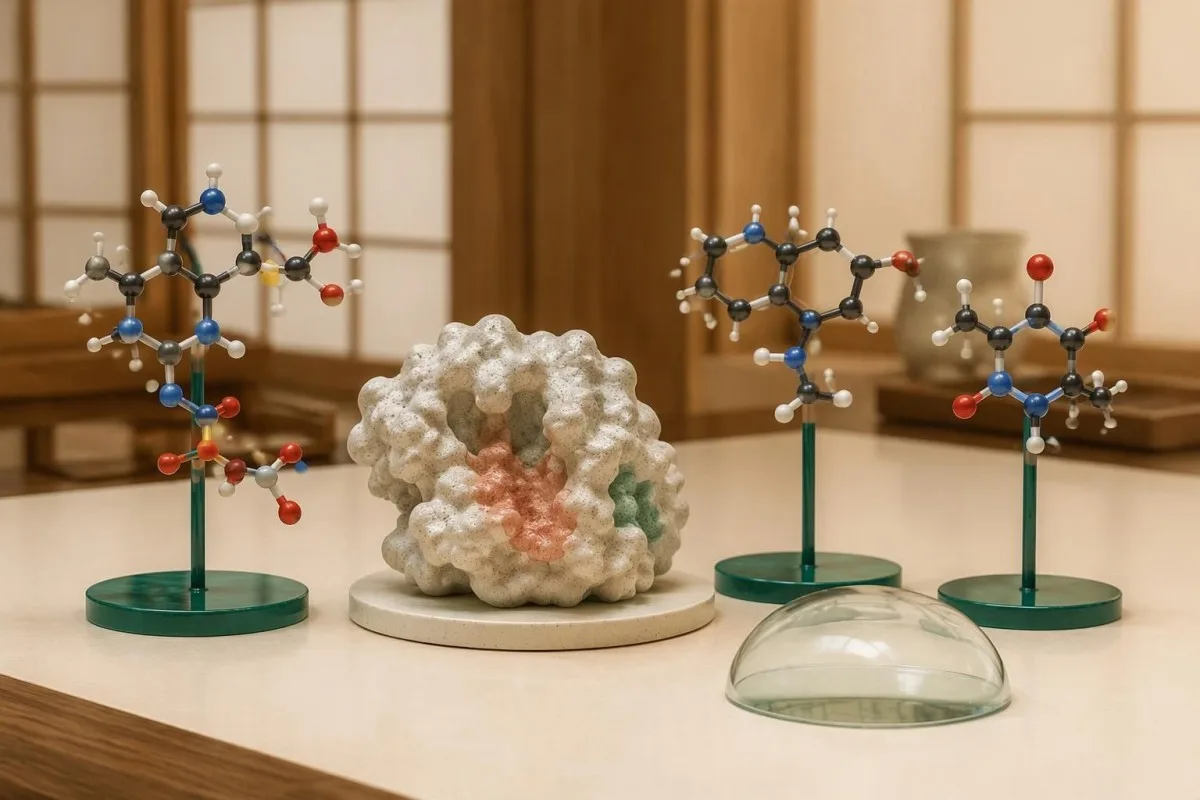
Stopping an inducing medicine can raise topiramate exposure even when the topiramate prescription stays unchanged. For example, a hypothetical person taking 100 mg twice daily may develop more cognitive adverse effects after carbamazepine is withdrawn; our carbamazepine monitoring guide explains that medicine's own concentration monitoring, which remains separate from assessing its effect on topiramate clearance.
Hydrochlorothiazide increased topiramate exposure by approximately 29% in a pharmacokinetic study described in prescribing information, and the combination can also increase potassium loss. That percentage describes the studied group, not a guaranteed change for every patient; checking potassium and symptoms may be useful even if a repeat topiramate concentration remains inside a 5–20 mg/L interval.
Topiramate with valproate can be associated with hyperammonemia and encephalopathy, sometimes despite otherwise unremarkable routine laboratory results. New unexplained lethargy, vomiting, or altered mental status on these 2 medicines warrants prompt assessment and consideration of ammonia testing; a topiramate level is not a substitute, and our valproate result explanation describes why valproate concentrations also have interpretation limits.
เหตุใดการติดตามไบคาร์บอเนตจึงเป็นการตรวจความปลอดภัยคนละประเภท?
Bicarbonate monitoring checks for metabolic acidosis, not topiramate exposure. Topiramate can cause renal bicarbonate loss through carbonic anhydrase inhibition; many laboratories use an adult bicarbonate interval around 22–29 mmol/L, and prescribing information recommends baseline and periodic measurement rather than relying on a drug level.
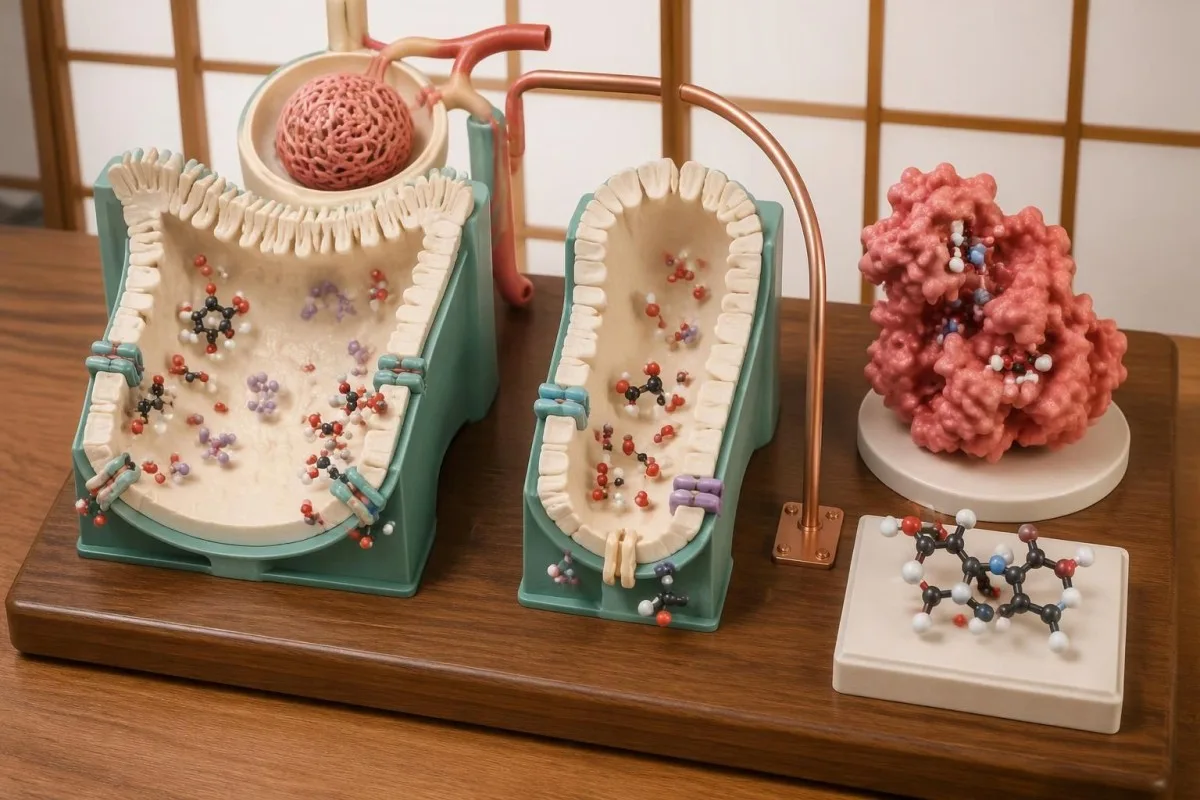
Topiramate typically causes a hyperchloremic, normal-anion-gap metabolic acidosis, although other conditions can create mixed patterns. Mirza and colleagues describe impaired renal acid–base handling and note that evidence for the optimal monitoring strategy is limited (Mirza et al., 2009); our รูปแบบภาวะเลือดเป็นกรดของหลอดไต explain why bicarbonate must be read with chloride, potassium, and the clinical history.
For a hypothetical chemistry panel with sodium 138 mmol/L, chloride 111 mmol/L, and bicarbonate 18 mmol/L, the anion gap excluding potassium is 138 − 111 − 18 = 9 mmol/L. That calculation is compatible with a normal-gap pattern in many laboratories, but it does not identify topiramate as the cause; diarrhea, other renal disorders, albumin changes, and mixed acid–base disturbances need consideration.
Kantesti AI explains why bicarbonate of 18 mmol/L deserves attention even when topiramate is 7 mg/L, while avoiding a diagnosis from those 2 numbers alone. Prescribing information uses bicarbonate below 17 mmol/L with a fall greater than 5 mmol/L as a trial definition of markedly low bicarbonate—not a universal emergency cutoff; our คำอธิบายผลตรวจอิเล็กโทรไลต์ helps interpret associated abnormalities.
การตรวจระดับยามองข้ามการตรวจความปลอดภัยของไตข้อใดบ้าง?
A topiramate concentration cannot detect kidney stones, measure urinary citrate, or establish renal tubular acidosis. Adult epilepsy development trials reported kidney stones in approximately 1.5% of topiramate-treated participants; risk depends on treatment context, and a concentration inside 5–20 mg/L does not eliminate the possibility.
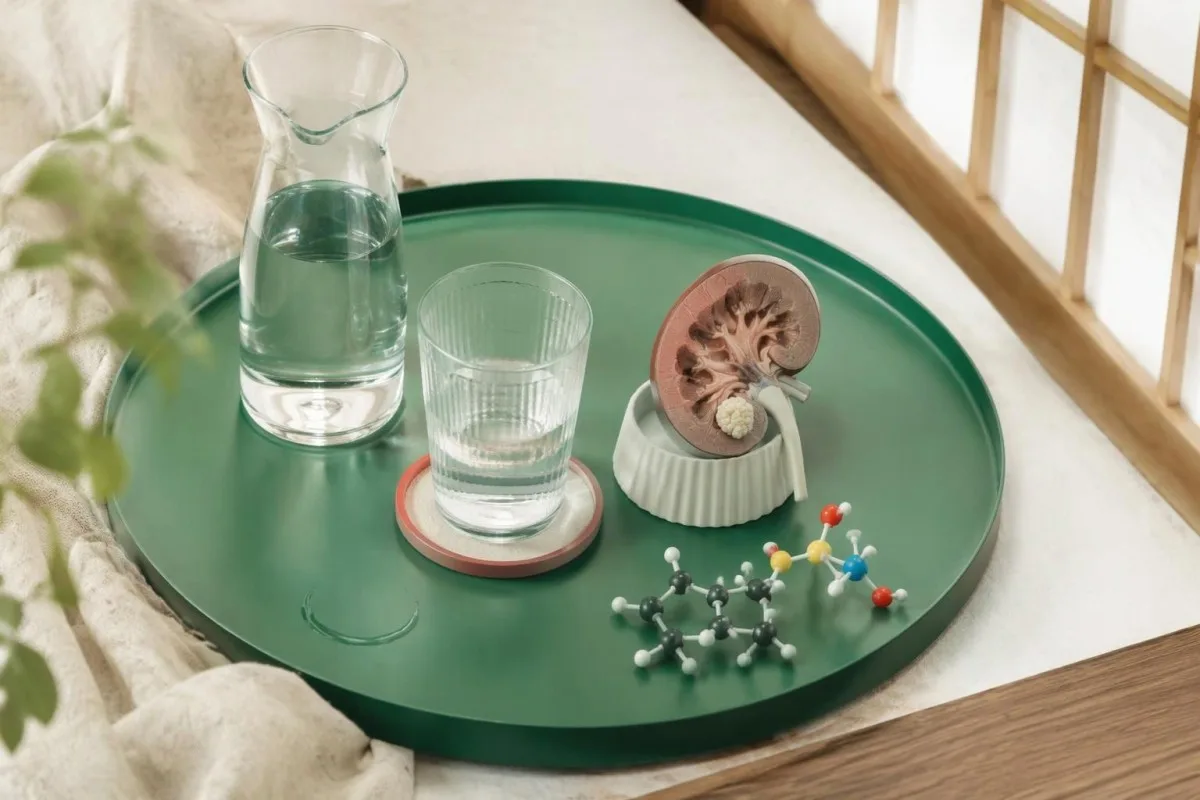
Topiramate can increase urine pH and reduce urinary citrate, a combination that favors calcium phosphate stones. Mirza and colleagues link these urinary changes to carbonic anhydrase inhibition (Mirza et al., 2009); our คู่มือภาวะซิเตรตในปัสสาวะต่ำ explains why a 24-hour urine assessment may become relevant after recurrent stones rather than being automatically required for every user.
Monitoring creatinine serves a different purpose from checking urinary stone risk. A hypothetical person with a topiramate level of 9 mg/L, normal creatinine, and recurrent flank pain still needs evaluation for stones; normal filtration does not guarantee normal urinary citrate, and persistent pain with fever, vomiting, or difficulty passing urine should not wait for a repeat drug concentration.
Adequate fluid intake is commonly advised, but there is no single safe target such as 3 liters daily for everyone. People with heart failure, advanced kidney disease, or a prescribed fluid restriction need individualized guidance; potassium citrate or bicarbonate treatment also requires clinician oversight because changing urine chemistry and potassium intake can create different risks from those measured by topiramate testing.
ใครบ้างที่อาจต้องติดตามความเข้มข้นของยาแบบเฉพาะบุคคลมากขึ้น?
Pregnancy, childhood, older age, and changing kidney function can make topiramate exposure less predictable. A personal pre-pregnancy concentration and 2 similarly timed follow-up samples may be more useful than chasing a population interval, but monitoring does not remove topiramate's pregnancy-related risks or replace specialist treatment planning.
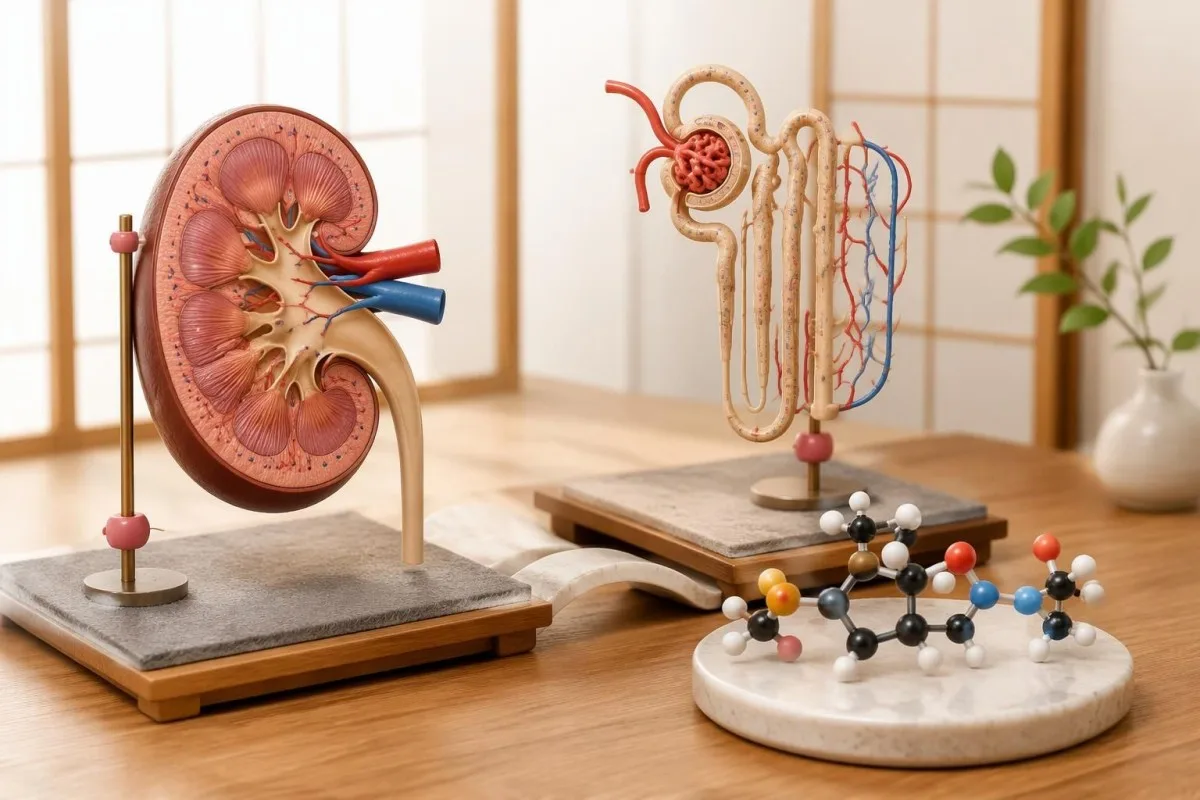
Pregnancy can increase topiramate clearance, so a concentration may fall despite consistent dosing. Pregnancy also changes the interpretation of creatinine, and standard eGFR equations are not reliable for assessing filtration during pregnancy; our pregnancy kidney-function explanation explains why a apparently reassuring result should not be used to estimate drug clearance mechanically.
In the UK, topiramate is subject to a Pregnancy Prevention Programme for people who can become pregnant; it is contraindicated for migraine prevention during pregnancy and for epilepsy in pregnancy unless no suitable alternative exists. A level of 5 mg/L does not establish fetal safety, and someone who becomes pregnant should contact the prescriber promptly rather than abruptly stopping an antiseizure regimen.
Children may have higher weight-normalized clearance than adults, while older adults may clear the medicine more slowly because of reduced renal function. The adult 5–20 mg/L interval therefore needs context rather than a new age-based cutoff invented from a single report; pediatric dose decisions require specialist assessment, and post-pregnancy monitoring may matter if a dose was increased when clearance was higher.
ควรแปลผลตรวจร่วมกับข้อมูลอื่นอย่างไร?
Interpret a topiramate result by combining concentration, collection timing, symptoms, and safety chemistry. At minimum, compare 4 pieces of information: the current regimen, the last dose and sample times, the reason testing was ordered, and bicarbonate plus kidney-function results when available.
Hypothetical pattern 1: a trough falls from 8 to 3 mg/L, kidney function is stable, and seizures recur after several prescription refills were delayed. Reduced exposure is plausible, but the response should include a medication-access review and seizure assessment; raising the dose without addressing intermittent use could create excessive exposure when regular dosing resumes.
Hypothetical pattern 2: a trough rises from 9 to 16 mg/L while creatinine worsens and new coordination problems appear. Reduced clearance is a reasonable concern even though 16 mg/L remains inside a 5–20 mg/L interval; pattern 3, a level of 7 mg/L with bicarbonate of 18 mmol/L, instead highlights a possible acid–base effect that concentration monitoring alone would miss.
Kantesti is an AI-powered blood test analysis tool that helps organize these 3 patterns without treating any one as a confirmed diagnosis. Our แนวโน้มความปลอดภัยของยา explains how serial results support follow-up; keep the original laboratory interval and dates visible, because changing laboratories, formulations, or collection timing can make an apparent trend misleading.
ควรทำอย่างไรต่อ และมีหลักฐานใดสนับสนุนการตรวจ?
The next step is to ask what the topiramate result changes—not to adjust treatment from the number alone. Bring 2 ฉบับที่ระบุวันที่, if available, and a medication timeline to the prescriber; monitoring recommendations rely on pharmacology, expert guidance, and clinical context rather than a universally validated toxicity threshold.
Ask the prescriber whether a repeat trough, bicarbonate check, kidney-function assessment, or medication review would answer the unresolved question. There is no evidence-based rule that every patient needs a topiramate concentration every 3 or 6 months; persistent low bicarbonate, new adverse effects, or changing clearance may justify a different follow-up plan from an isolated laboratory flag.
Kantesti helps explain reports, but our ขอบเขตการใช้ AI อย่างรับผิดชอบ distinguish educational interpretation from diagnosis and prescribing. Our แนวทางการยืนยันความถูกต้องทางคลินิก provides methodology context; neither an AI confidence estimate nor a concentration of 10 mg/L can exclude toxicity, replace an examination, or authorize an independent dose change.
The 2 Zenodo publications listed below concern serum proteins and complement testing; they are not topiramate therapeutic-monitoring studies and should not be used to validate its concentration cutoffs. Our คู่มือการตีความโปรตีนในซีรั่ม offers background for understanding albumin and other medicines, while the directly relevant external references support this article's discussion of selective monitoring, pharmacokinetics, and acid–base effects.
คำถามที่พบบ่อย
ระดับโทพิราเมตปกติคือเท่าใด?
ช่วงอ้างอิงของยาโทพิราเมตที่มักมีการอ้างถึงคือ 5–20 mg/L แม้ว่าห้องปฏิบัติการบางแห่งจะใช้ช่วง 2–10 mg/L ก็ตาม ช่วงเหล่านี้ช่วยในการแปลผล โดยเฉพาะในโรคลมชัก มากกว่าที่จะกำหนดความเข้มข้นที่ปกติหรือปลอดภัยสำหรับทุกคน ผู้ป่วยอาจตอบสนองต่อยาได้แม้ระดับยาต่ำกว่าช่วงที่ระบุ หรือเกิดอาการไม่พึงประสงค์ทั้งที่ระดับยาอยู่ในช่วงดังกล่าว ควรพิจารณาช่วงอ้างอิงของห้องปฏิบัติการ ช่วงเวลาที่เก็บตัวอย่าง อาการ และความเข้มข้นของยาที่เคยให้ผลดีร่วมกัน.
ฉันจำเป็นต้องตรวจระดับยาโทพิราเมตเป็นประจำหรือไม่?
คนส่วนใหญ่ไม่จำเป็นต้องตรวจระดับความเข้มข้นของ topiramate เป็นประจำตามกำหนดเวลาแน่นอน การตรวจอาจเป็นประโยชน์เมื่อมีอาการชักแทรกซ้อน สงสัยว่าลืมรับประทานยา มียาที่เกิดปฏิกิริยาระหว่างกัน การเปลี่ยนแปลงที่เกี่ยวข้องกับการตั้งครรภ์ หรือการขับยาออกทางไตลดลง ไม่มีช่วงเวลาการตรวจระดับความเข้มข้นที่แนะนำเป็นการทั่วไป เช่น ทุก 3 หรือ 6 เดือน สำหรับผู้ใช้ทุกคน การตรวจ bicarbonate ตั้งต้นและเป็นระยะเป็นการติดตามประเด็นความปลอดภัยอีกด้านหนึ่ง และอาจเหมาะสมแม้ไม่ได้ตรวจระดับยา.
ควรตรวจระดับยา Topamax เมื่อใด?
การตรวจระดับ Topamax ตามแผนมักเปรียบเทียบกันได้ดีที่สุดเมื่อเก็บตัวอย่างทันทีก่อนถึงเวลารับประทานครั้งถัดไปตามกำหนด ในผู้ที่มีการทำงานของไตปกติ โดยทั่วไป topiramate จะเข้าสู่ภาวะคงที่ภายในประมาณ 4 วันหลังเริ่มใช้สูตรการรักษาที่ไม่มีการเปลี่ยนแปลง แต่การกำจัดยาที่ลดลงอาจทำให้ใช้เวลานานขึ้น ให้บันทึกเวลาที่รับประทานครั้งล่าสุด เวลาเก็บตัวอย่าง ขนาดยา และรูปแบบยา หากสงสัยว่าได้รับยาเกินขนาดหรือมีผลข้างเคียงร้ายแรง ควรเข้ารับการประเมินทันที แทนที่จะรอให้ถึงเวลาเก็บตัวอย่างระดับยาต่ำสุดที่ถูกต้อง.
ระดับยาโทพิราเมตในเลือดต่ำหมายความว่าฉันลืมรับประทานยาหรือไม่?
ความเข้มข้นของโทพิราเมตในซีรัมที่ต่ำไม่ได้พิสูจน์ว่าลืมรับประทานยา ผลตรวจที่ต่ำกว่า 5 mg/L อาจสะท้อนถึงขนาดยาที่ไม่สูง การกำจัดยาที่เพิ่มขึ้น ยาที่กระตุ้นเอนไซม์ การเปลี่ยนแปลงขนาดยาเมื่อไม่นานมานี้ หรือเวลาที่เก็บตัวอย่าง การลดลงจากระดับต่ำสุดก่อนหน้าที่เทียบเคียงกันได้ เช่น จาก 8 เป็น 3 mg/L อาจเป็นหลักฐานของการเปลี่ยนแปลงระดับยาที่ได้รับที่ชัดเจนกว่า แพทย์ควรทบทวนการเข้าถึงยาและประวัติการใช้ยาก่อนตัดสินใจว่าจำเป็นต้องปรับสูตรยาหรือไม่.
ระดับโทพิราเมตเท่าใดจึงเป็นพิษ?
ไม่มีความเข้มข้นของโทพิราเมตที่ผ่านการตรวจสอบความถูกต้องอย่างเป็นสากลเพื่อใช้ยืนยันภาวะเป็นพิษ ผลที่สูงกว่า 20 mg/L อาจทำให้ต้องทบทวนอย่างใกล้ชิดยิ่งขึ้น แต่ผลข้างเคียงบางอย่างเกิดขึ้นได้แม้ระดับจะอยู่ในช่วงที่รายงานกันโดยทั่วไปในห้องปฏิบัติการ อาการ ผลการตรวจร่างกาย การทำงานของไต ไบคาร์บอเนต ยาอื่น ๆ และช่วงเวลาที่เก็บตัวอย่าง ล้วนเป็นปัจจัยกำหนดความหมายทางคลินิก หากสงสัยว่าได้รับยาเกินขนาด มีอาการสับสนรุนแรง หายใจลำบาก หรือปวดตาหรือการมองเห็นเปลี่ยนแปลงอย่างฉับพลัน ต้องได้รับการประเมินอย่างเร่งด่วนโดยไม่คำนึงถึงระดับยาที่วัดได้.
โทพิราเมตทำให้ไบคาร์บอเนตต่ำทั้งที่ระดับยาอยู่ในเกณฑ์ปกติได้หรือไม่?
โทพิราเมตอาจทำให้ไบคาร์บอเนตต่ำได้ แม้ความเข้มข้นจะอยู่ในช่วงอ้างอิงของห้องปฏิบัติการ เช่น 5–20 mg/L การยับยั้งคาร์บอนิกแอนไฮเดรสอาจเพิ่มการสูญเสียไบคาร์บอเนตทางไตและทำให้เกิดภาวะเลือดเป็นกรดจากเมแทบอลิซึมชนิดคลอไรด์สูงและช่องว่างแอนไอออนปกติ ผลไบคาร์บอเนตที่ 18 mmol/L ควรได้รับการแปลผลทางคลินิก แต่เพียงอย่างเดียวไม่ได้พิสูจน์ว่าโทพิราเมตเป็นสาเหตุหรือระบุระดับความรุนแรงที่เป็นเหตุฉุกเฉิน ดังนั้นจึงไม่สามารถใช้การตรวจระดับไบคาร์บอเนตและการทำงานของไตแทนการตรวจระดับ Topamax ได้.
อ่านผลตรวจเลือดอย่างไร
อัปโหลดรายงานผลตรวจของคุณ แล้ว AI ของ Kantesti จะอธิบายตัวบ่งชี้ทางชีวภาพแต่ละรายการด้วยภาษาที่เข้าใจง่ายภายในไม่กี่วินาที มีผู้ใช้ทั่วโลกมากกว่า 2 ล้านคน.
เอกสารอ้างอิง
- ไคลน์, ที., มิตเชลล์, เอส., & เวเบอร์, เอช. (2026). คู่มือโปรตีนในซีรัม: การตรวจเลือดหาโกลบูลิน อัลบูมิน และอัตราส่วน A/G. Kantesti AI การวิจัยทางการแพทย์. โดอิ
- ไคลน์, ที., มิตเชลล์, เอส., & เวเบอร์, เอช. (2026). คู่มือการตรวจเลือด C3 C4 คอมพลีเมนต์และไตเตอร์ ANA. Kantesti AI การวิจัยทางการแพทย์. โดอิ
- Patsalos PN et al. (2008). Antiepileptic drugs—best practice guidelines for therapeutic drug monitoring: a position paper by the subcommission on therapeutic drug monitoring, ILAE Commission on Therapeutic Strategies. Epilepsia. โดอิ
- Jacob S and Nair AB (2016). An Updated Overview on Therapeutic Drug Monitoring of Recent Antiepileptic Drugs. Drugs in R&D. โดอิ
- Mirza N et al. (2009). Effect of topiramate on acid–base balance: extent, mechanism and effects. British Journal of Clinical Pharmacology. โดอิ
- 2 ล้าน+การตรวจที่วิเคราะห์
- 127+ประเทศ
- 100+ภาษา
เกี่ยวกับทีมแพทย์


สัญญาณความน่าเชื่อถือ E-E-A-T
ประสบการณ์
การทบทวนเชิงคลินิกโดยแพทย์ที่นำโดยกระบวนการตีความผลตรวจในห้องแล็บ.
ความเชี่ยวชาญ
โฟกัสด้านเวชศาสตร์ห้องปฏิบัติการเกี่ยวกับพฤติกรรมของไบโอมาร์กเกอร์ในบริบททางคลินิก.
อำนาจ
ทบทวนทางการแพทย์โดย นพ. Thomas Klein พร้อมผลงานจาก นพ. Sarah Mitchell และศาสตราจารย์ ดร. Hans Weber.
ความน่าเชื่อถือ
การตีความที่อิงหลักฐาน พร้อมเส้นทางการติดตามที่ชัดเจนเพื่อลดความตื่นตระหนก.






ข้อจำกัดความรับผิดชอบทางการแพทย์
บทความนี้จัดทำเพื่อวัตถุประสงค์ด้านการศึกษาเท่านั้น และไม่ถือเป็นคำแนะนำทางการแพทย์ โปรดปรึกษาผู้ให้บริการด้านสุขภาพที่มีคุณสมบัติเหมาะสมเสมอสำหรับการตัดสินใจด้านการวินิจฉัยและการรักษา.
เผยแพร่แล้ว · ติดต่อทีมบรรณาธิการ
เผยแพร่โดย Kantesti Ltd จดทะเบียนในอังกฤษและเวลส์ เลขทะเบียนบริษัท. 17090423, ลอนดอน สหราชอาณาจักร.
