Las concentracions de topiramat se contraròtlan pas de costuma, perque la responsa al tractament e los efèctes segondaris correspondon pas de biais fisable a una valor cibla. L’analisi pòt precisar l’exposicion al medicament o una eliminacion alterada; lo bicarbonat e los tèsts de foncion renala respondon a de questions de seguretat diferentas.

Punts essencials
- Taus de topiramat lo tèst es generalament reservat a una question precisa, coma de crisis inesperadas, una omision de dòsis sospieitada, d’interaccions o una foncion renala cambiada.
- Interval terapeutic del topiramat es sovent indicat coma 5–20 mg/L, mas certans laboratòris utilizan 2–10 mg/L; cap d’aqueles intervals garantís l’eficacitat o la seguretat.
- Moment de la valada significa de recuélher l’escandalhon immediatament abans de la dòsi seguenta prevista, en documentant l’ora de la darrièra dòsi.
- Estat estacionari apareis generalament en aperaquí 4 jorns quand la foncion renala es normala e que la dòsi a pas cambiat; una eliminacion reducha pòt alongar aqueste interval.
- Conversió d’unitats es simpla: 1 mg/L es egal a 1 µg/mL, doncas 8 mg/L e 8 µg/mL descrivon la meteissa concentracion.
- Avaluacion de la toxicitat requerís de simptòmas, un examen clinic, l’istoric dels medicaments e de resultats de laboratòri pertinents; cap de concentracion de topiramat universala establís una toxicitat.
- Contraròtle del bicarbonat contraròtla l'acidosi metabolica, un efièch conegut del topiramat que pòt aparéisser malgrat una concentracion situada dins l'interval del laboratòri.
- Contraròtle de la foncion renala ajuda a avalorar l'eliminacion del medicament; l'informacion de prescripcion recomanda d'adaptar la dòsi quand la clearance de la creatinina es inferiora a 70 mL/min/1.73 m² chez l'adulte.
Perqué lo taus de topiramat es pas contrarotlat de costuma?
A nivèl de topiramat es pas contrarotlat de manièra sistematica, perque la relacion entre la concentracion, lo benefici e los efièches indesirables varia fòrça d'una persona a l'autra. Un interval sovent citat de 5–20 mg/L es un instrument de referéncia de laboratòri, pas un nombre que cada pacient deu aténher, ni una frontièra que separe de manièra fisabla un tractament segur de la toxicitat.
S'es pas demostrat que l'ajustament de la dòsi guidat de manièra sistematica per la concentracion melhora los resultats per cada persona que pren de topiramat. Lo document de posicion de l'ILAE sosten lo monitoratge terapeutic dels medicaments quand un resultat pòt respondre a una question clinica definida, puslèu que de demandar automaticament de dosatges per totes los medicaments antiseizuras (Patsalos et al., 2008); la frequéncia de las crisis, lo nombre de jorns amb migrana e la tolerabilitat demòran centrals per las decisions terapeuticas.
Per exemple, un adulte hipotetic que sas migranas s'amelioran amb 50 mg dos còps per jorn a pas necessàriament besonh d'aumentar la dòsi perque lo laboratòri senhala una concentracion inferiora a 5 mg/L. La prevencion de las migranas a pas de valor ciba serica plan establida; aumentar lo tractament sonque per corregir lo senhalament poiriá agravar las dificultats per trobar los mots o la pèrda de la talent sens aportar de benefici significatiu.
Kantesti es un analizador de tèsts sanguins basat sus l'IA que ajuda a explicar perqué un interval de laboratòri de 5–20 mg/L pòt pas remplaçar l'avaloracion dels simptòmas e del moment de la presa de l'escandalh. Nostres organizacion e scòpa descrivon nòstre ròtle dins l'interpretacion dels rapòrts; prescrivèm pas de medicaments, e una explicacion per IA deu pas venir un motiu per modificar de son pròpri un tractament estable.
De qué mesura vertadièrament un tèst del taus de Topamax?
A Test del nivèl de Topamax mesura la concentracion de topiramat dins un escandalh de laboratòri, generalament de sèrum o de plasma. Indica l'exposicion al medicament al moment del prélèvement, pas la dòsi prescricha, la proteccion contra las crisis ni l'estat dels bicarbonats; 1 mg/L correspond a 1 µg/mL, çò que permet d'evitar una confusion correnta dins la lectura de las unitats.
Fòrça laboratòris mesuran lo topiramat per cromatografia liquida acoblada a l'espectrometria de massa en tandem, encara que los metòdes e los recipients d'escandalh acceptables varian. Un resultat de 8 µg/mL correspond exactament a la meteissa concentracion que 8 mg/L; en cambi, una prescripcion de 100 mg descriu una quantitat administrada e pòt pas èsser comparada dirèctament amb cap d'aquestas unitats de concentracion.
Lo topiramat es relativament pauc ligat a las proteïnas, e l'informacion de prescripcion descriu una ligason d'aproximativament 15–41%. Los tèsts de rotina mesuran generalament la concentracion totala, e existís pas d'equacion normalizada de correccion segon l'albumina equivalentas a las aproximacions de còps utilizadas per la fenitoïna; nòstra explicacion de fenitoïna liura e totala mòstra perqué las règlas d'interpretacion deurián pas èsser aplicadas indistinctament d'un medicament a l'autre.
Un rapòrt de laboratòri que senhala un topiramat a 6 mg/L e un CO2 total a 19 mmol/L conten 2 mesuraments fondamentalament diferents. Lo primièr reflectís l'exposicion al medicament; lo segond aproxima generalament los bicarbonats serics e pòt indicar un problèma d'equilibri acidobasic, de biais qu'una concentracion situada dins l'interval imprimit pòt pas descartar un resultat anormal de la bioquimia.
Quin es l’interval terapeutic del topiramat?
Un interval terapeutic del topiramat sovent citat es de 5–20 mg/L, mas qualques laboratòris europèus utilizan 2–10 mg/L. These intervals mainly support epilepsy-related interpretation; they are not universally validated treatment targets, and there is no widely accepted serum concentration target for migraine prevention.
Jacob and Nair's review lists a topiramate reference concentration of 5–20 mg/L while emphasizing selective use of monitoring and variable concentration–response relationships (Jacob and Nair, 2016). A reference interval summarizes concentrations considered useful in a population; it does not establish that every individual below its lower limit needs more medication.
Different laboratory intervals can produce different flags for the same number. A hypothetical trough of 12 mg/L sits within a 5–20 mg/L interval but above a 2–10 mg/L interval; that disagreement should trigger review of the laboratory's convention and the patient's clinical state, not an assumption that the medicine became toxic between reports.
An individual's previously effective, well-tolerated concentration can be more informative than the population interval. If someone remained seizure-free at a correctly timed trough of 4 mg/L, that documented baseline may help interpret a later change; the same individual-baseline principle appears in l'interpretacion dels resultats del levetiracetam, although the numerical ranges are different.
| Nivèl | Interval | Significacion |
|---|---|---|
| Interval comun de laboratòri | 5–20 mg/L | A frequently quoted epilepsy-related reference interval, not a guaranteed effective or safe target. |
| Alternative laboratory interval | 2–10 mg/L | Used by some European laboratories; interpretation must follow the reporting laboratory and clinical context. |
| Above a 5–20 interval | >20 mg/L | Prompts review of symptoms, timing, dose, interactions, and clearance; does not establish toxicity by itself. |
| Individual reference concentration | Patient-specific; no universal cutoff | A prior correctly timed concentration obtained during effective, tolerated treatment can guide later comparisons. |
Quand lo contraròtle de la concentracion de topiramat pòt ajudar?
Topiramate concentration monitoring helps when clinicians need to distinguish changed medication exposure from other causes of worsening control or new adverse effects. Comparing 2 similarly timed samples can be useful after suspected missed doses, kidney-function changes, interacting medicines, pregnancy-related clearance changes, or an unexplained treatment failure.
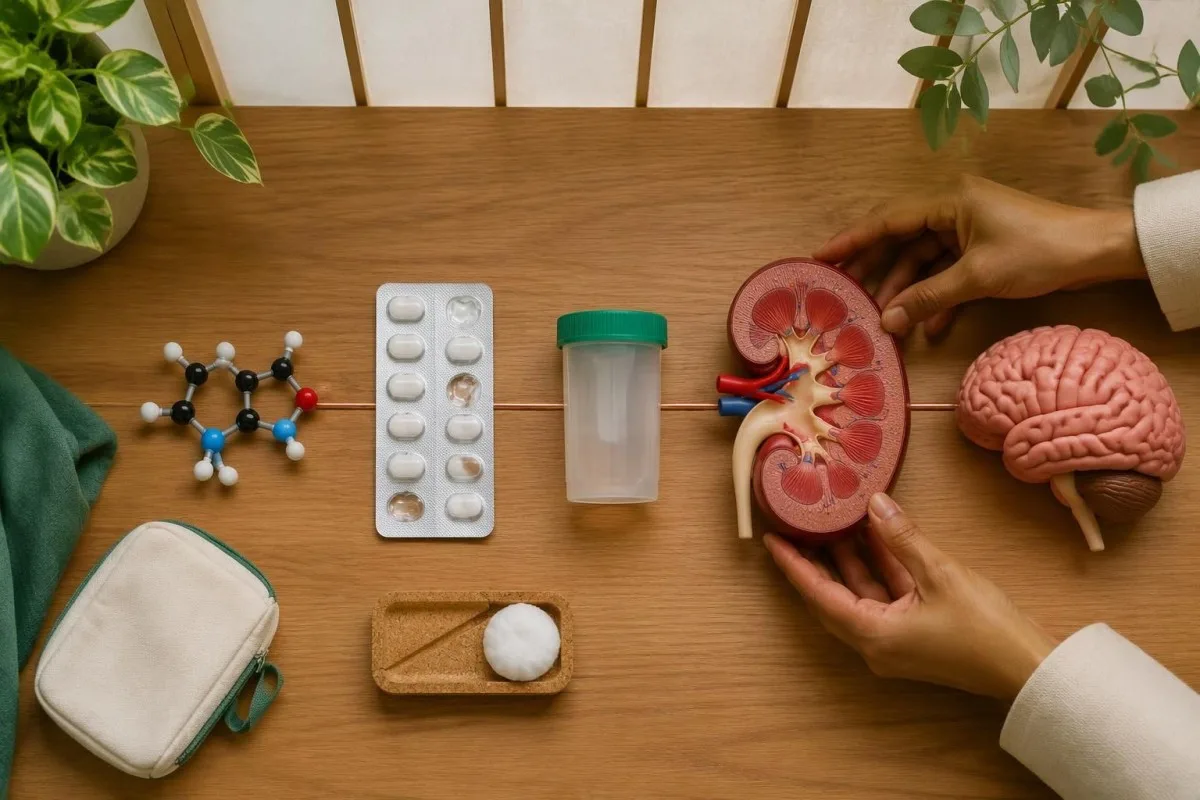
Unexpected breakthrough seizures are one reason to investigate exposure, but the concentration cannot diagnose the cause of the event. The ILAE position paper identifies situations such as suspected nonadherence, toxicity, pharmacokinetic variability, and changing treatment conditions as appropriate reasons to consider monitoring (Patsalos et al., 2008); sleep deprivation, illness, and seizure classification still need separate assessment.
Establishing a personal reference concentration can help before an anticipated change. For a hypothetical person stable on 100 mg twice daily, a trough obtained during seizure control provides a comparison if kidney function later declines or another antiseizure drug is withdrawn; without that baseline, a later isolated result may be harder to interpret.
A test is less helpful if nobody can state what management decision it might change. Before requesting a concentration of 7 mg/L or any other result, ask whether the question concerns adherence, clearance, or possible adverse effects; our lacosamide monitoring explanation illustrates why selective monitoring is not the same as having no monitoring strategy.
Quand cal recuélher l’escandalhon de topiramat?
For planned monitoring, a trough sample immediately before the next scheduled dose is usually the most comparable measurement. Topiramate's elimination half-life is approximately 21 hours in adults with normal kidney function, and steady state is generally reached in about 4 jorns after an unchanged regimen begins.
Collection timing depends on the regimen, not on a universal morning rule. A twice-daily schedule may produce a trough around 12 hours after the preceding dose, whereas once-daily extended-release treatment involves a different interval; document the actual formulation, last dose time, collection time, and any recent missed doses rather than assuming the schedule was followed.
Steady state takes approximately 4–5 elimination half-lives, so reduced kidney clearance can make the usual 4-day estimate too short. A sample taken 1 day after a dose increase may not reflect the eventual concentration; Jacob and Nair discuss the pharmacokinetic basis for timing interpretation rather than treating every sample as equivalent (Jacob and Nair, 2016).
Kantesti AI helps distinguish a reported topiramate concentration of 10 mg/L from the circumstances needed to interpret it, including whether the sample was a trough. Our guide to trough timing principles explains the general concept, but tacrolimus targets and sampling protocols must not be applied to topiramate; urgent assessment should never wait for an ideal trough.
Un taus bas de topiramat prova que de dòsis son estadas omesas?
A low topiramate level does not prove nonadherence. Un resultat jos 5 mg/L could reflect a modest dose, faster clearance, an interacting medicine, recent treatment changes, or collection timing; a fall from the person's own comparable baseline is often more informative than a low flag alone.
Consider a hypothetical trough that falls from 8 mg/L to 3 mg/L on an apparently unchanged prescription. That pattern warrants checking missed doses and refill access, but also whether an enzyme-inducing medicine was added, whether the earlier sample was actually post-dose, and whether the daily dose or formulation changed without being reflected in the laboratory request.
An undetectable result can strengthen suspicion of little recent exposure, but the assay's detection limit and elapsed time still matter. With an approximately 21-hour half-life, topiramate does not disappear immediately after 1 missed dose; a single concentration cannot reconstruct weeks of medication-taking behavior or distinguish intentional omission from vomiting, supply problems, or misunderstanding instructions.
The practical response is to review barriers before escalating treatment. If a dose is increased after a low result and regular dosing then resumes, exposure may rise unexpectedly; our lamotrigine concentration guide discusses a related monitoring problem, but each medicine requires its own missed-dose and restarting instructions rather than a shared numerical rule.
Un taus naut de topiramat permet d’establir una toxicitat?
A high topiramate level cannot establish toxicity by itself, and a result inside the laboratory interval cannot exclude it. A concentration above 20 mg/L may support concern about excessive exposure, but clinicians must assess symptoms, dosing history, kidney function, acid–base status, and other medicines.
Two hypothetical results show the limitation: 22 mg/L in an alert person after a post-dose sample is not equivalent to 10 mg/L in someone with new severe confusion and low bicarbonate. Neither situation should be interpreted from the number alone; cognitive slowing, dizziness, and impaired coordination may be medication-related even at concentrations the laboratory does not flag.
Sudden eye pain or blurred vision during topiramate treatment needs urgent assessment because acute myopia and secondary angle closure can occur, often within the first month of treatment. A level of 6 mg/L would not make that presentation safe to observe at home; glaucoma assessment methods address eye pressure and anatomy, which a drug concentration cannot measure.
Suspected overdose, markedly reduced alertness, breathing difficulty, or a prolonged seizure requires emergency evaluation without waiting for a send-out concentration result. A seizure lasting 5 minutes is an emergency threshold, and sudden one-sided weakness or new speech difficulty should also prompt emergency action rather than being attributed to topiramate; our signes d’alerta d’AVC explican aquela distincion.
Cossí la foncion renala afecta l’eliminacion del topiramat?
Reduced kidney function can increase topiramate serum concentration perque aproximativament 70% of an administered dose is eliminated unchanged in urine. Adult prescribing information recommends a reduced dose when creatinine clearance is below 70 mL/min/1.73 m², but a clinician must apply that advice to the indication and individual circumstances.
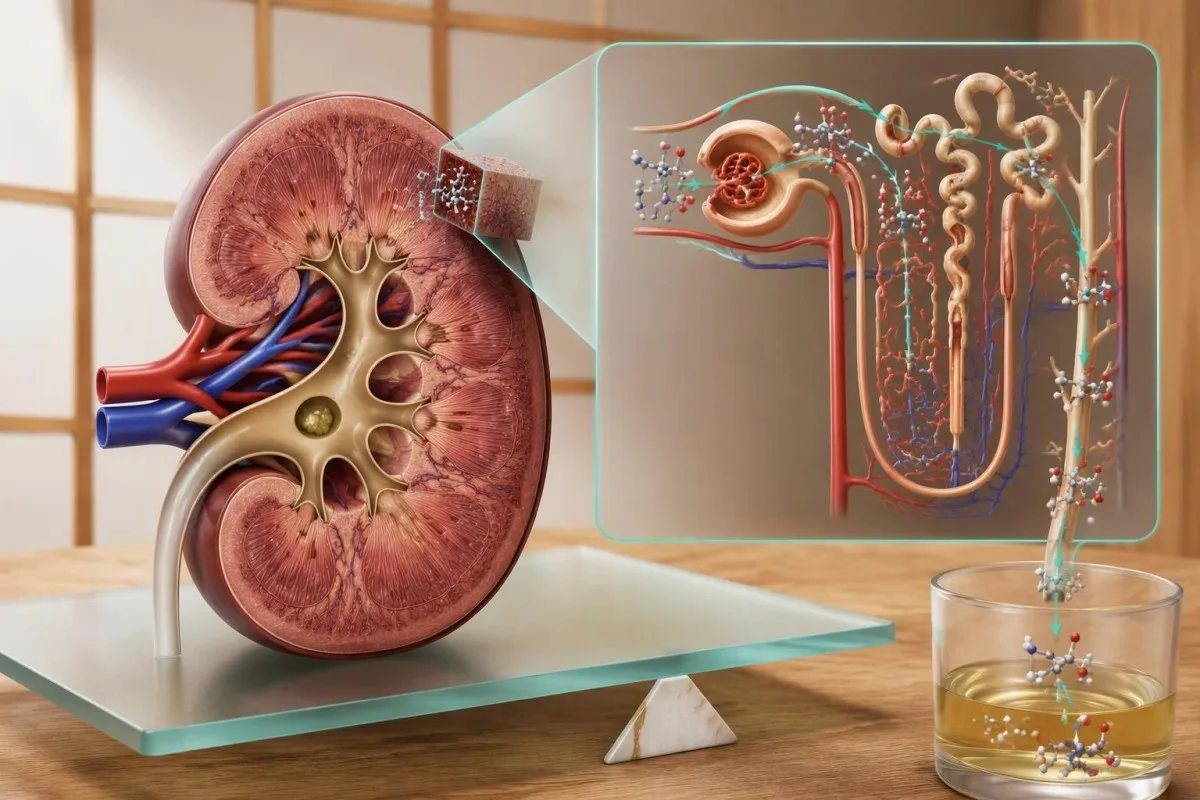
A hypothetical adult with an estimated creatinine clearance of 50 mL/min/1.73 m² may need a different regimen from someone with normal clearance, even if both have the same seizure type. Labeling commonly recommends one-half of the usual adult dose in renal impairment below the stated threshold; that is prescribing guidance, not permission to halve an existing prescription without review.
Creatinine-based eGFR and creatinine clearance are not automatically interchangeable, especially at unusual body sizes or during acute kidney injury. An eGFR of 45 mL/min/1.73 m² signals a need to review clearance, but the appropriate dosing calculation and the reliability of a rapidly changing creatinine require clinical judgment; our guida d’avaloracion d’un eGFR bas explains when changes need prompt attention.
Kantesti is an AI blood test interpretation platform that helps separate a topiramate result of 14 mg/L from the kidney measurements that may explain it. Our Guia BUN e creatinina adds context, but a creatinine concentration alone cannot prove medication accumulation; sample timing, hydration, previous results, and the actual dosing history still matter.
Quins medicaments pòdon modificar un resultat de topiramat?
Enzyme-inducing antiseizure medicines can lower topiramate concentrations, while some other combinations increase exposure or adverse-effect risk without a predictable level change. Prescribing-information interaction studies report approximately 40% lower topiramate concentrations with carbamazepine e 48% lower concentrations with phenytoin, although individual effects vary.
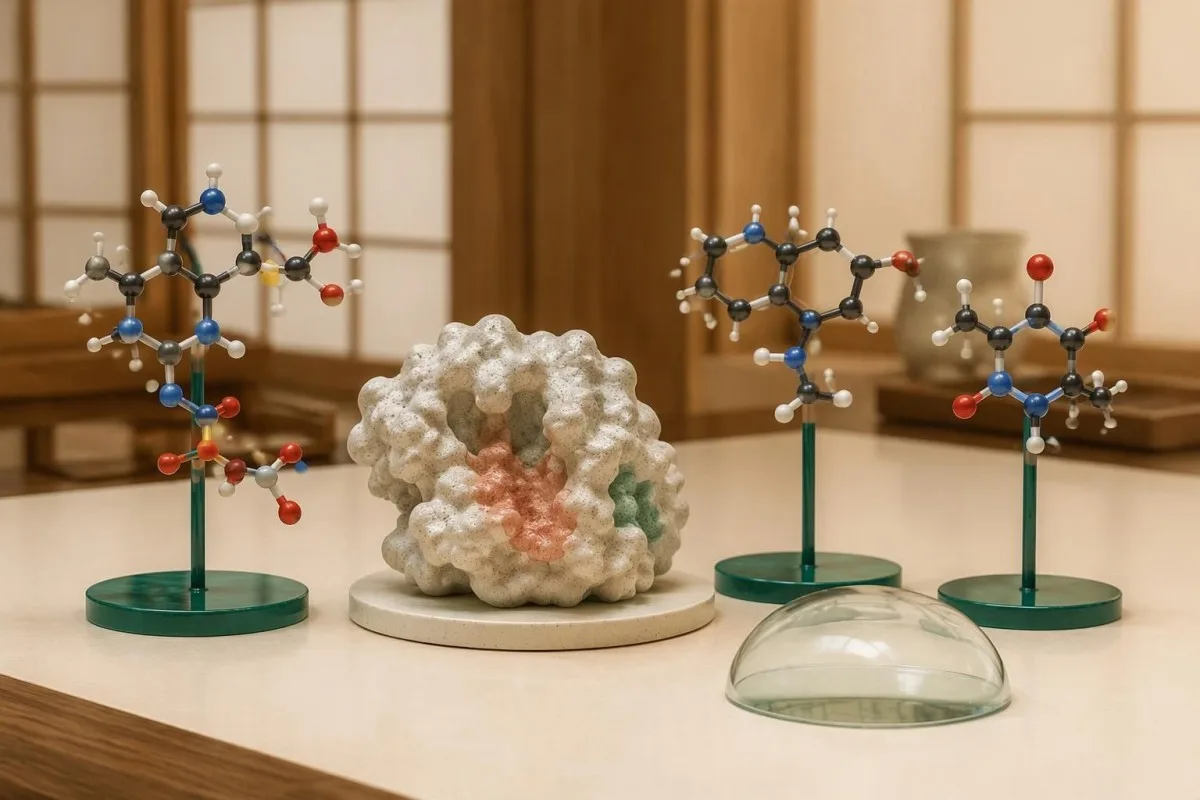
Stopping an inducing medicine can raise topiramate exposure even when the topiramate prescription stays unchanged. For example, a hypothetical person taking 100 mg twice daily may develop more cognitive adverse effects after carbamazepine is withdrawn; our carbamazepine monitoring guide explains that medicine's own concentration monitoring, which remains separate from assessing its effect on topiramate clearance.
Hydrochlorothiazide increased topiramate exposure by approximately 29% in a pharmacokinetic study described in prescribing information, and the combination can also increase potassium loss. That percentage describes the studied group, not a guaranteed change for every patient; checking potassium and symptoms may be useful even if a repeat topiramate concentration remains inside a 5–20 mg/L interval.
Topiramate with valproate can be associated with hyperammonemia and encephalopathy, sometimes despite otherwise unremarkable routine laboratory results. New unexplained lethargy, vomiting, or altered mental status on these 2 medicines warrants prompt assessment and consideration of ammonia testing; a topiramate level is not a substitute, and our valproate result explanation describes why valproate concentrations also have interpretation limits.
Perqué lo contraròtle del bicarbonat es un tèst de seguretat diferent?
Bicarbonate monitoring checks for metabolic acidosis, not topiramate exposure. Topiramate can cause renal bicarbonate loss through carbonic anhydrase inhibition; many laboratories use an adult bicarbonate interval around 22–29 mmol/L, and prescribing information recommends baseline and periodic measurement rather than relying on a drug level.
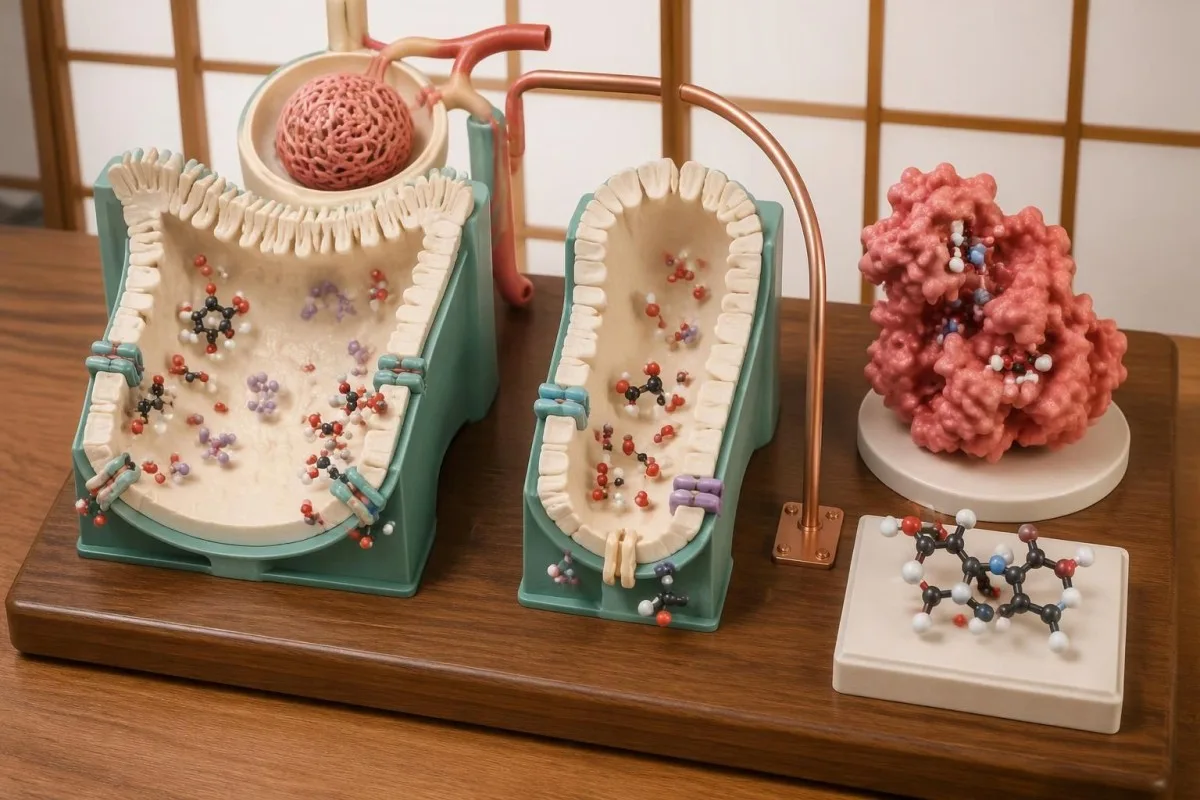
Topiramate typically causes a hyperchloremic, normal-anion-gap metabolic acidosis, although other conditions can create mixed patterns. Mirza and colleagues describe impaired renal acid–base handling and note that evidence for the optimal monitoring strategy is limited (Mirza et al., 2009); our patrons d'acidòsi tubulara renala explain why bicarbonate must be read with chloride, potassium, and the clinical history.
For a hypothetical chemistry panel with sodium 138 mmol/L, chloride 111 mmol/L, and bicarbonate 18 mmol/L, the anion gap excluding potassium is 138 − 111 − 18 = 9 mmol/L. That calculation is compatible with a normal-gap pattern in many laboratories, but it does not identify topiramate as the cause; diarrhea, other renal disorders, albumin changes, and mixed acid–base disturbances need consideration.
Kantesti AI explains why bicarbonate of 18 mmol/L deserves attention even when topiramate is 7 mg/L, while avoiding a diagnosis from those 2 numbers alone. Prescribing information uses bicarbonate below 17 mmol/L with a fall greater than 5 mmol/L as a trial definition of markedly low bicarbonate—not a universal emergency cutoff; our explicacion del panèl d’electròlits helps interpret associated abnormalities.
Quins contraròtles de seguretat renala son pas detectats per un taus del medicament?
A topiramate concentration cannot detect kidney stones, measure urinary citrate, or establish renal tubular acidosis. Adult epilepsy development trials reported kidney stones in approximately 1.5% of topiramate-treated participants; risk depends on treatment context, and a concentration inside 5–20 mg/L does not eliminate the possibility.
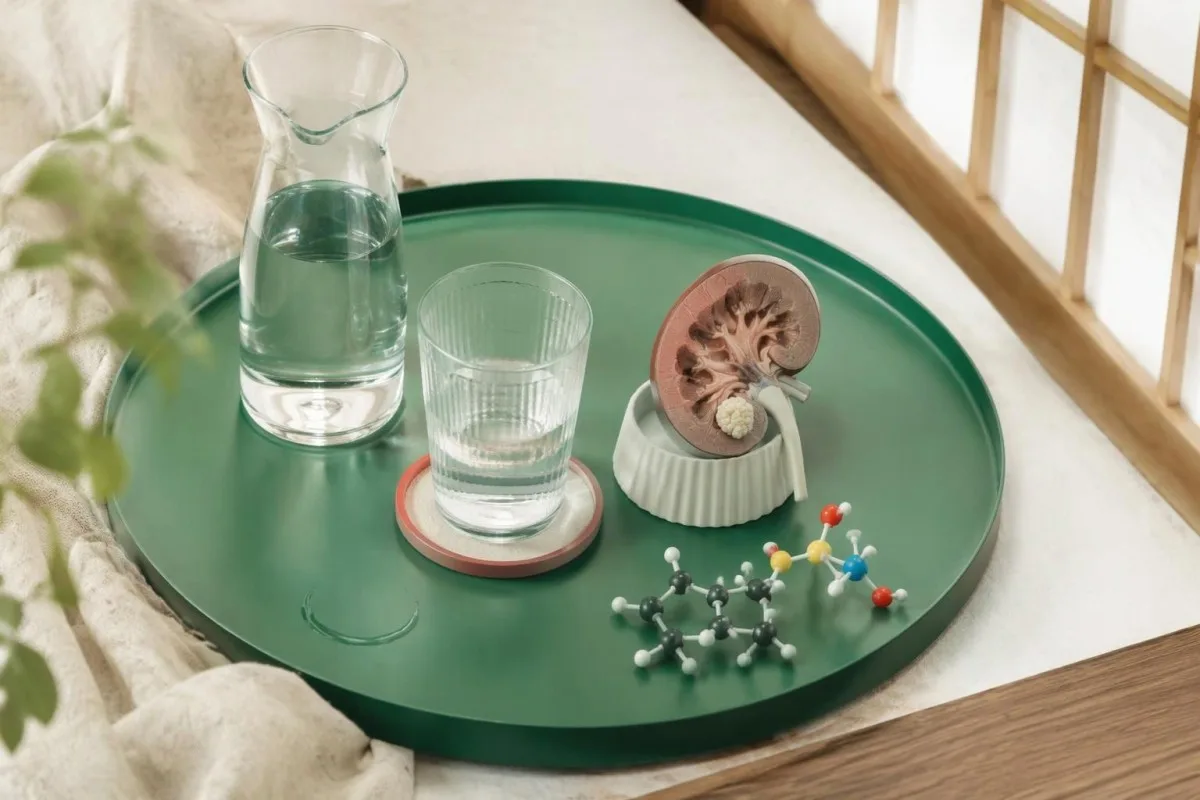
Topiramate can increase urine pH and reduce urinary citrate, a combination that favors calcium phosphate stones. Mirza and colleagues link these urinary changes to carbonic anhydrase inhibition (Mirza et al., 2009); our guia sul citrat urinari bas explains why a 24-hour urine assessment may become relevant after recurrent stones rather than being automatically required for every user.
Monitoring creatinine serves a different purpose from checking urinary stone risk. A hypothetical person with a topiramate level of 9 mg/L, normal creatinine, and recurrent flank pain still needs evaluation for stones; normal filtration does not guarantee normal urinary citrate, and persistent pain with fever, vomiting, or difficulty passing urine should not wait for a repeat drug concentration.
Adequate fluid intake is commonly advised, but there is no single safe target such as 3 liters daily for everyone. People with heart failure, advanced kidney disease, or a prescribed fluid restriction need individualized guidance; potassium citrate or bicarbonate treatment also requires clinician oversight because changing urine chemistry and potassium intake can create different risks from those measured by topiramate testing.
Qual pòt aver besonh d’un contraròtle de la concentracion mai personalizat?
Pregnancy, childhood, older age, and changing kidney function can make topiramate exposure less predictable. A personal pre-pregnancy concentration and 2 similarly timed follow-up samples may be more useful than chasing a population interval, but monitoring does not remove topiramate's pregnancy-related risks or replace specialist treatment planning.
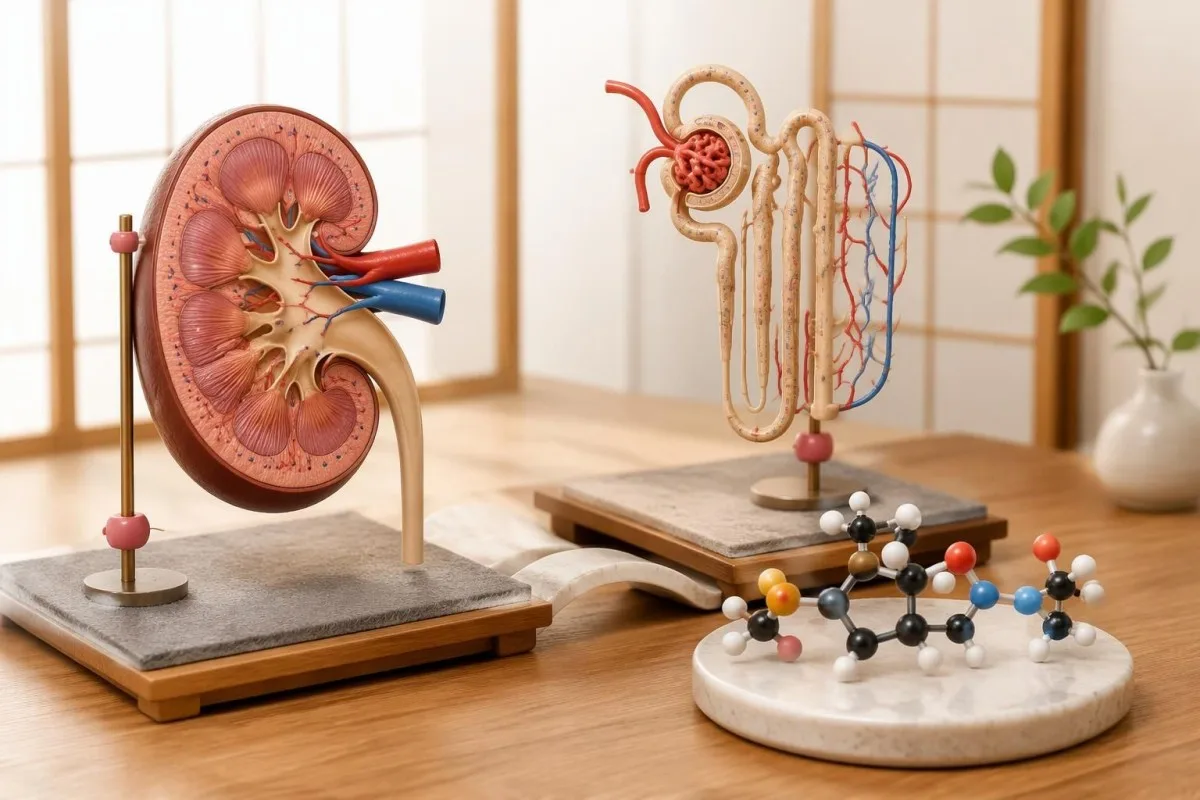
Pregnancy can increase topiramate clearance, so a concentration may fall despite consistent dosing. Pregnancy also changes the interpretation of creatinine, and standard eGFR equations are not reliable for assessing filtration during pregnancy; our pregnancy kidney-function explanation explains why a apparently reassuring result should not be used to estimate drug clearance mechanically.
In the UK, topiramate is subject to a Pregnancy Prevention Programme for people who can become pregnant; it is contraindicated for migraine prevention during pregnancy and for epilepsy in pregnancy unless no suitable alternative exists. A level of 5 mg/L does not establish fetal safety, and someone who becomes pregnant should contact the prescriber promptly rather than abruptly stopping an antiseizure regimen.
Children may have higher weight-normalized clearance than adults, while older adults may clear the medicine more slowly because of reduced renal function. The adult 5–20 mg/L interval therefore needs context rather than a new age-based cutoff invented from a single report; pediatric dose decisions require specialist assessment, and post-pregnancy monitoring may matter if a dose was increased when clearance was higher.
Cossí interpretar un resultat amb los autres elements observats?
Interpret a topiramate result by combining concentration, collection timing, symptoms, and safety chemistry. At minimum, compare 4 pieces of information: the current regimen, the last dose and sample times, the reason testing was ordered, and bicarbonate plus kidney-function results when available.
Hypothetical pattern 1: a trough falls from 8 to 3 mg/L, kidney function is stable, and seizures recur after several prescription refills were delayed. Reduced exposure is plausible, but the response should include a medication-access review and seizure assessment; raising the dose without addressing intermittent use could create excessive exposure when regular dosing resumes.
Hypothetical pattern 2: a trough rises from 9 to 16 mg/L while creatinine worsens and new coordination problems appear. Reduced clearance is a reasonable concern even though 16 mg/L remains inside a 5–20 mg/L interval; pattern 3, a level of 7 mg/L with bicarbonate of 18 mmol/L, instead highlights a possible acid–base effect that concentration monitoring alone would miss.
Kantesti is an AI-powered blood test analysis tool that helps organize these 3 patterns without treating any one as a confirmed diagnosis. Our guida de tendéncia de la seguretat dels medicaments explains how serial results support follow-up; keep the original laboratory interval and dates visible, because changing laboratories, formulations, or collection timing can make an apparent trend misleading.
De qué cal far puèi, e quinas pròvas sostenon lo tèst?
The next step is to ask what the topiramate result changes—not to adjust treatment from the number alone. Bring 2 comptes renduts datats, if available, and a medication timeline to the prescriber; monitoring recommendations rely on pharmacology, expert guidance, and clinical context rather than a universally validated toxicity threshold.
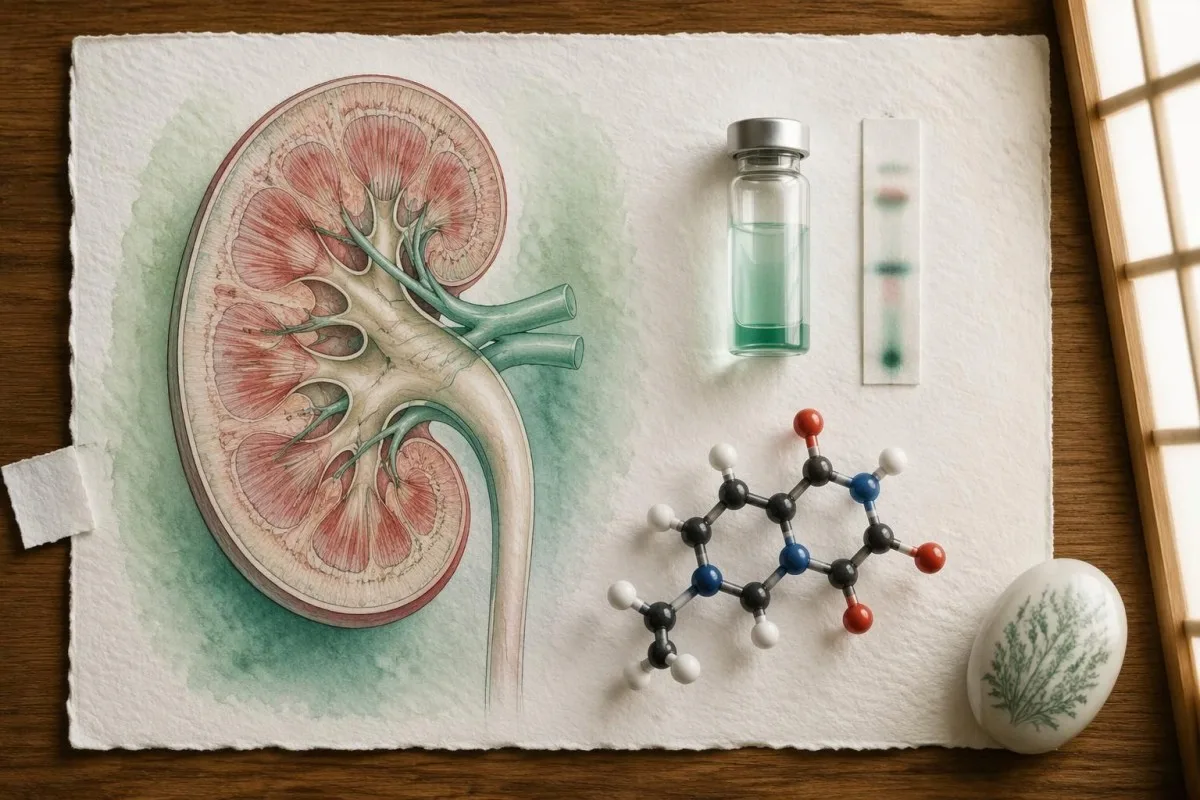
Ask the prescriber whether a repeat trough, bicarbonate check, kidney-function assessment, or medication review would answer the unresolved question. There is no evidence-based rule that every patient needs a topiramate concentration every 3 or 6 months; persistent low bicarbonate, new adverse effects, or changing clearance may justify a different follow-up plan from an isolated laboratory flag.
Kantesti helps explain reports, but our limitas d’una IA responsabla distinguish educational interpretation from diagnosis and prescribing. Our nòstra estratègia de validacion clinica provides methodology context; neither an AI confidence estimate nor a concentration of 10 mg/L can exclude toxicity, replace an examination, or authorize an independent dose change.
The 2 Zenodo publications listed below concern serum proteins and complement testing; they are not topiramate therapeutic-monitoring studies and should not be used to validate its concentration cutoffs. Our guida d'interpretacion de las proteïnas sericas offers background for understanding albumin and other medicines, while the directly relevant external references support this article's discussion of selective monitoring, pharmacokinetics, and acid–base effects.
Preguntes més freqüents
Quin es un taus normal de topiramat ?
Un interval de referéncia del topiramat sovent citat es de 5–20 mg/L, encara que certans laboratòris utilizan 2–10 mg/L. Aquestes intervals ajudan a l’interpretacion, subretot en epilepsia, puslèu que de definir una concentracion universalament normala o segura. Las personas pòdon respondre per dejós de l’interval indicat o experimentar d’efièches indesirables dedins. Lo domeni del laboratòri, lo moment del prélèvement, los simptòmas e una concentracion precedenta eficaça se devon considerar ensems.
Me cal verificar regularament los nivèls de topiramat?
0 La màger part de las personas an pas besonh d'un contraròtle rutinari de la concentracion de topiramate a interval fix. Lo contraròtle pòt èsser util en cas de crisis epilèpticas de ruptura, de dòsis probablament omesas, de medicaments que pòdon interagir, de cambiaments ligats a la grossessa o de diminucion de l'eliminacion renala. I a pas cap d'interval de contraròtle de la concentracion recomandat universalament, coma cada 3 o 6 meses, per totes los usatgièrs. Lo contraròtle de basa e periodic del bicarbonat de sòdi tracta un problèma de seguretat diferent e pòt èsser indicat quitament quand los nivèls del medicament son pas mesurats.
Quand cal far una analisi del nivèl de Topamax?
0 Un tèst planificat del nivèl de Topamax es pòt generalament comparar melhor quand es recuelhit immediatament abans de la pròcha dòsi prevista. Amb una foncion renala normala, lo topiramat atenh generalament l’estat d’equilibri en aperaquí 4 jorns après l’inici d’un esquèma de tractament inalterat, mas una eliminacion reducha pòt prolongar aquel delai. Notatz l’ora de la darrièra dòsi, l’ora del prélèvament, la dòsi e la formulacion. Una suspècta de surdòsi o d’efièches indirables grèus exigís una evaluacion immediata puslèu que d’esperar un prélèvament de valada plan temporizat.
0 Una concentracion serica bassa de topiramat vòl dire qu’ai mancat de prene de dòsis?
Una concentracion serica bassa de topiramat demòstra pas que de presas de dòsis son estadas omesas. Un resultat inferior a 5 mg/L pòt èsser degut a una dòsi modèsta, una eliminacion aumentada, un medicament que n'indusís los enzims, de cambiaments recents de dòsi o lo moment de la presa de l'espròva. Una diminucion per rapòrt a una concentracion minimala anteriora comparable, per exemple de 8 a 3 mg/L, pòt constituir una pròva mai solida d'un cambiament de l'exposicion. Los clinicians deurián verificar l'accès als medicaments e l'istoric de las presas de dòsis abans de decidir se lo regim terapeutic deu èsser ajustat.
Quin es lo nivèl toxic de topiramat ?
0 I a pas de concentracion de topiramat validada universalament que establisca una toxicitat. Un resultat superior a 20 mg/L pòt menar a una avaloracion mai atentiva, mas d’unes efièches indesirables se produsisson dins d’intervals de laboratòri correntament reportats. Los simptòmas, l’examen, la foncion renala, los bicarbonats, los autres medicaments e lo moment de la presa de la mòstra determinan la significacion clinica. Una sospècha de subredòsi, una confusion grèva, una dificultat respiratòria o una dolor ocular sobta o un cambiament de la vision exigisson una avaloracion d’urgéncia, independentament del nivèl mesurat.
Lo topiramat pòt causar una concentracion bassa de bicarbonat amb un nivèl de medicament normal?
0 Topiramat pòt causar una baissa dels bicarbonats quitament quand sa concentracion se situa dins un interval de laboratòri coma 5–20 mg/L. L’inibicion de l’anhidrasa carbonica pòt aumentar las pèrdas renalas de bicarbonats e provocar una acidosi metabolica ipercloremica amb trauc anionic normal. Un resultat de bicarbonats de 18 mmol/L requerís una interpretacion clinica, mas demòstra pas, a el sol, que lo topiramat ne siá la causa ni determina la gravetat de l’urgéncia. Per aquò, los tests dels bicarbonats e de la foncion renala pòdon pas èsser remplaçats per un test del taus de Topamax.
Fasètz-vos explicar los resultats analisi de sang
Telecargatz vòstre compte rendut de laboratòri e l’IA de Kantesti explica cada biomarcador en lenga simpla en qualques segondas. Utilizat per mai de 2 milions de personas dins lo mond.
Referéncias
- Klein, T., Mitchell, S., & Weber, H. (2026). Guida sus las proteïnas sericas: globulinas, albumina e tèst sanguin del rapòrt A/G. Recèrca medicala per IA de Kantesti. DOI
- Klein, T., Mitchell, S., & Weber, H. (2026). Guida del tèst sanguinari del complement C3 C4 e del taus d'ANA. Recèrca medicala per IA de Kantesti. DOI
- Patsalos PN et al. (2008). Antiepileptic drugs—best practice guidelines for therapeutic drug monitoring: a position paper by the subcommission on therapeutic drug monitoring, ILAE Commission on Therapeutic Strategies. Epilepsia. DOI
- Jacob S and Nair AB (2016). An Updated Overview on Therapeutic Drug Monitoring of Recent Antiepileptic Drugs. Drugs in R&D. DOI
- Mirza N et al. (2009). Effect of topiramate on acid–base balance: extent, mechanism and effects. British Journal of Clinical Pharmacology. DOI
- 2M+Tèsts analisats
- 127+Païses
- 100+Lengas
A prepaus de l’equipa medicala


Senhals de confiança E-E-A-T
Experiéncia
Revisión clinica menada pel metge de las practicas d’interpretacion de las analisis.
Expertisa
Fòcus sus la medicina de laboratòri sus cossí los biomarcadors se comportan dins un contèxte clinic.
Autoritat
Revisat medicalament pel Dr Thomas Klein, amb de contribucions de la Dr Sarah Mitchell e del Prof. Dr Hans Weber.
Fisança
Interpretacion basada sus d’evidéncias amb de camins de seguiment clars per reduzir l’alarmisme.






Avís medical
Aqueste article es solament per tòcas educatius e constituís pas de conselh medical. Consultatz totjorn un professional de la sant qualificat per las decisions de diagnostica e de tractament.
Publicat · Contactar l’equipa editoriala
Publicat per Kantesti Ltd, enregistrada en Anglatèrra e País de Galas, n° d’entrepresa. 17090423, Londres, Reialme Unit.
