Topiramato-kontzentrazioak ez dira ohikotasunez aztertzen, tratamenduaren erantzuna eta albo-ondorioak ez baitatoz modu fidagarrian bat helburu-kopuru bakar batekin. Probak medikamentuarekiko esposizioa edo garbiketa aldatua argitu dezake; bikarbonatoaren eta giltzurrun-funtzioaren probek segurtasunari buruzko beste galdera batzuei erantzuten diete.

Ondorio nagusiak
- Topiramato-maila proba egoera jakin baterako baino ez da egin ohi; adibidez, espero gabeko krisiak, ustez dosiak hartzea ahaztu izana, interakzioak edo giltzurrun-funtzioaren aldaketak daudenean.
- Topiramatoaren tarte terapeutikoa normalean 5–20 mg/L gisa ematen da, baina laborategi batzuek 2–10 mg/L erabiltzen dute; tarte bietako batek ere ez du bermatzen eraginkortasuna edo segurtasuna.
- Dosi-aurreko lagina hartzeko uneak lagina hurrengo dosi programatua hartu aurretik berehala biltzea esan nahi du, azken dosia hartu zen ordua dokumentatuta.
- Egoera egonkorra normalean 4 egun inguru behar dira maila egonkorra lortzeko, giltzurrun-funtzioa normala denean eta dosia aldatu gabe dagoenean; garbiketa murriztuak tarte hori luzatu dezake.
- Unitate-bihurketa zuzena da: 1 mg/L eta 1 µg/mL berdin dira, beraz, 8 mg/L eta 8 µg/mL kontzentrazio bera adierazten dute.
- Toxikotasunaren ebaluazioak sintomak, azterketa, medikazio-historia eta laborategiko aurkikuntza egokiak behar ditu; ez dago toxikotasuna ezartzen duen topiramato-kontzentrazio unibertsalik.
- Bikarbonatoaren monitorizazioa azidosi metabolikoa aztertzen du; topiramatoaren eragin ezaguna da, eta laborategiko tartearen barruko kontzentrazioarekin ere gerta daiteke.
- Giltzurrun-funtzioaren monitorizazioa farmakoaren argitzea ebaluatzen laguntzen du; preskripzio-informazioak dosia doitzea gomendatzen du helduen kreatinina-argitzea 70 mL/min/1.73 m² baino txikiagoa denean.
Zergatik ez da ohikotasunez aztertzen topiramato-maila?
A topiramato-maila ez da ohikotasunez neurtzen, kontzentrazioaren, onuraren eta ondorio kaltegarrien arteko harremana asko aldatzen baita pertsona batetik bestera. Askotan aipatzen den 5–20 mg/L laborategiko erreferentzia-tresna bat da, ez paziente guztiek lortu beharreko kopurua, eta ez tratamendu segurua eta toxikotasuna fidagarritasunez bereizten dituen muga.
Ez da frogatu kontzentrazioak gidatutako dosifikazio arruntak topiramatoa hartzen duten pertsona guztien emaitzak hobetzen dituenik. ILAEren jarrera-dokumentuak farmakoen monitorizazio terapeutikoa babesten du emaitza batek galdera kliniko zehatz bati erantzun diezaiokeenean, krisien aurkako sendagai guztien mailak automatikoki eskatu beharrean (Patsalos et al., 2008); krisien maiztasuna, migraina-egunak eta tolerantzia funtsezkoak dira oraindik tratamendu-erabakietan.
Esate baterako, egunean bitan 50 mg hartuta migrainak hobetzen zaizkion heldu hipotetiko batek ez du zertan dosia handitu behar laborategiak 5 mg/L-tik beherako kontzentrazioa adierazten duelako. Migrainaren prebentziorako ez dago serumeko helburu-maila ondo finkaturik; abisua zuzentzeko tratamendua soilik handitzeak hitzak aurkitzeko zailtasuna edo gosea galtzea okertu lezake, onura esanguratsurik gehitu gabe.
Kantesti AI bidezko odol-analizatzaile bat da, eta 5–20 mg/L-ko laborategiko tarte batek sintomen eta lagina hartzeko unearen ebaluazioa zergatik ezin duen ordezkatu azaltzen laguntzen du. Gure erakundea eta helburua txostenak interpretatzean dugun eginkizuna deskribatzen dute; ez dugu botikarik preskribatzen, eta AI bidezko azalpenak ez luke izan behar tratamendu egonkorra norberak bere kabuz aldatzeko arrazoia.
Zer neurtzen du, benetan, Topamax mailaren probak?
A Topamax-mailaren azterketa laborategiko lagin batean topiramatoaren kontzentrazioa neurtzen du, normalean serumean edo plasman. Lagina hartzeko unean botikarekiko esposizioaren berri ematen du, ez agindutako dosiaren, krisien aurkako babesaren edo bikarbonato-egoeraren berri; 1 mg/L 1 µg/mL-ren baliokidea da, unitateak irakurtzean ohikoa den akats bat saihesteko.
Laborategi askok kromatografia likidoa tandemeko masa-espektrometriarekin erabiltzen dute topiramatoa neurtzeko, baina metodoak eta laginak biltzeko ontzi onargarriak aldatu egiten dira. 8 µg/mL-ko emaitza 8 mg/L-ko kontzentrazio bera da; aldiz, 100 mg-ko preskripzioak emandako kantitatea adierazten du, eta ezin da zuzenean kontzentrazio-unitate horietako batekin alderatu.
Topiramatoa nahiko ahul lotzen da proteinei; preskripzio-informazioaren arabera, lotura –41% ingurukoa da. Ohiko probek, oro har, kontzentrazio osoa neurtzen dute, eta ez dago fenitoinarentzat batzuetan erabiltzen diren ikuspegien baliokide den albumina-zuzenketarako ekuazio estandarrik; gure azalpenak fenitoina askea eta osoa erakusten du zergatik ez diren interpretazio-arauak bereizi gabe sendagai batetik bestera eraman behar.
Topiramato-maila 6 mg/L eta CO2 totala 19 mmol/L jasotzen dituen laborategiko txosten batek funtsean desberdinak diren 2 neurketa ditu. Lehenak botikarekiko esposizioa islatzen du; bigarrenak, normalean, serumeko bikarbonatoa gutxi gorabehera adierazten du, eta azido-base arazo bat iradoki dezake. Beraz, inprimatutako tartearen barruko kontzentrazio batek ezin du baztertu kimikako emaitza anormal bat.
Zein da topiramatoaren tarte terapeutikoa?
Askotan aipatzen den topiramatoaren tarte terapeutikoa 5–20 mg/L da, baina Europako laborategi batzuek 2–10 mg/L erabiltzen dute. These intervals mainly support epilepsy-related interpretation; they are not universally validated treatment targets, and there is no widely accepted serum concentration target for migraine prevention.
Jacob and Nair's review lists a topiramate reference concentration of 5–20 mg/L while emphasizing selective use of monitoring and variable concentration–response relationships (Jacob and Nair, 2016). A reference interval summarizes concentrations considered useful in a population; it does not establish that every individual below its lower limit needs more medication.
Different laboratory intervals can produce different flags for the same number. A hypothetical trough of 12 mg/L sits within a 5–20 mg/L interval but above a 2–10 mg/L interval; that disagreement should trigger review of the laboratory's convention and the patient's clinical state, not an assumption that the medicine became toxic between reports.
An individual's previously effective, well-tolerated concentration can be more informative than the population interval. If someone remained seizure-free at a correctly timed trough of 4 mg/L, that documented baseline may help interpret a later change; the same individual-baseline principle appears in levetirazetamaren emaitzen interpretazioari buruzko gidak, although the numerical ranges are different.
| Maila | Tartea | Zer esan nahi duen |
|---|---|---|
| Ohiko laborategi-tartea | 5–20 mg/L | A frequently quoted epilepsy-related reference interval, not a guaranteed effective or safe target. |
| Alternative laboratory interval | 2–10 mg/L erabiltzen dute | Used by some European laboratories; interpretation must follow the reporting laboratory and clinical context. |
| Above a 5–20 interval | >20 mg/L | Prompts review of symptoms, timing, dose, interactions, and clearance; does not establish toxicity by itself. |
| Individual reference concentration | Patient-specific; no universal cutoff | A prior correctly timed concentration obtained during effective, tolerated treatment can guide later comparisons. |
Noiz lagun dezake topiramato-kontzentrazioaren monitorizazioak?
Topiramate concentration monitoring helps when clinicians need to distinguish changed medication exposure from other causes of worsening control or new adverse effects. Comparing 2 similarly timed samples can be useful after suspected missed doses, kidney-function changes, interacting medicines, pregnancy-related clearance changes, or an unexplained treatment failure.
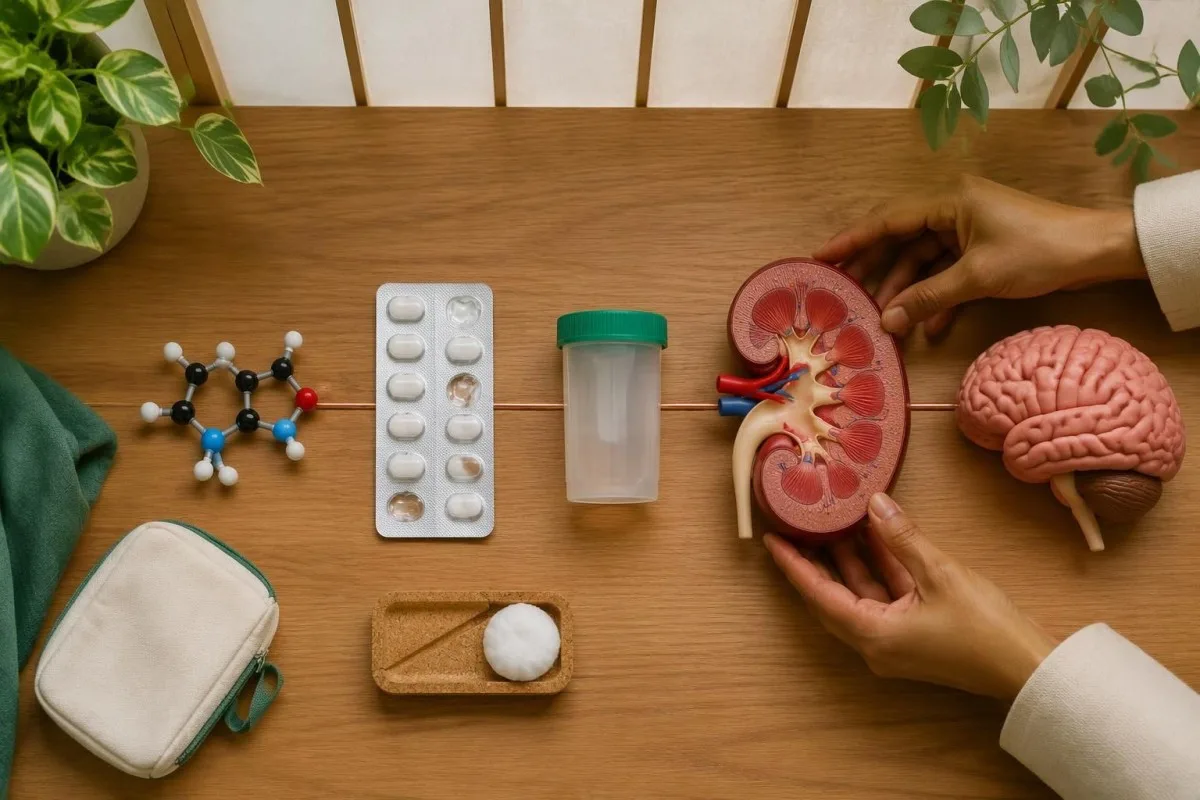
Unexpected breakthrough seizures are one reason to investigate exposure, but the concentration cannot diagnose the cause of the event. The ILAE position paper identifies situations such as suspected nonadherence, toxicity, pharmacokinetic variability, and changing treatment conditions as appropriate reasons to consider monitoring (Patsalos et al., 2008); sleep deprivation, illness, and seizure classification still need separate assessment.
Establishing a personal reference concentration can help before an anticipated change. For a hypothetical person stable on 100 mg twice daily, a trough obtained during seizure control provides a comparison if kidney function later declines or another antiseizure drug is withdrawn; without that baseline, a later isolated result may be harder to interpret.
A test is less helpful if nobody can state what management decision it might change. Before requesting a concentration of 7 mg/L or any other result, ask whether the question concerns adherence, clearance, or possible adverse effects; our lacosamide monitoring explanation illustrates why selective monitoring is not the same as having no monitoring strategy.
Noiz hartu behar da topiramato-lagina?
For planned monitoring, a trough sample immediately before the next scheduled dose is usually the most comparable measurement. Topiramate's elimination half-life is approximately 21 hours in adults with normal kidney function, and steady state is generally reached in about 4 egunetik after an unchanged regimen begins.
Collection timing depends on the regimen, not on a universal morning rule. A twice-daily schedule may produce a trough around 12 hours after the preceding dose, whereas once-daily extended-release treatment involves a different interval; document the actual formulation, last dose time, collection time, and any recent missed doses rather than assuming the schedule was followed.
Steady state takes approximately 4–5 elimination half-lives, so reduced kidney clearance can make the usual 4-day estimate too short. A sample taken 1 day after a dose increase may not reflect the eventual concentration; Jacob and Nair discuss the pharmacokinetic basis for timing interpretation rather than treating every sample as equivalent (Jacob and Nair, 2016).
Kantesti AI helps distinguish a reported topiramate concentration of 10 mg/L from the circumstances needed to interpret it, including whether the sample was a trough. Our guide to trough timing principles explains the general concept, but tacrolimus targets and sampling protocols must not be applied to topiramate; urgent assessment should never wait for an ideal trough.
Topiramato-maila baxuak frogatzen al du dosiak hartzea ahaztu dela?
A low topiramate level does not prove nonadherence. Emaitza behekoa bada 5 mg/L could reflect a modest dose, faster clearance, an interacting medicine, recent treatment changes, or collection timing; a fall from the person's own comparable baseline is often more informative than a low flag alone.
Consider a hypothetical trough that falls from 8 mg/L to 3 mg/L on an apparently unchanged prescription. That pattern warrants checking missed doses and refill access, but also whether an enzyme-inducing medicine was added, whether the earlier sample was actually post-dose, and whether the daily dose or formulation changed without being reflected in the laboratory request.
An undetectable result can strengthen suspicion of little recent exposure, but the assay's detection limit and elapsed time still matter. With an approximately 21-hour half-life, topiramate does not disappear immediately after 1 missed dose; a single concentration cannot reconstruct weeks of medication-taking behavior or distinguish intentional omission from vomiting, supply problems, or misunderstanding instructions.
The practical response is to review barriers before escalating treatment. If a dose is increased after a low result and regular dosing then resumes, exposure may rise unexpectedly; our lamotrigine concentration guide discusses a related monitoring problem, but each medicine requires its own missed-dose and restarting instructions rather than a shared numerical rule.
Topiramato-maila altu batek toxikotasuna ezar al dezake?
A high topiramate level cannot establish toxicity by itself, and a result inside the laboratory interval cannot exclude it. A concentration above 20 mg/L may support concern about excessive exposure, but clinicians must assess symptoms, dosing history, kidney function, acid–base status, and other medicines.
Two hypothetical results show the limitation: 22 mg/L in an alert person after a post-dose sample is not equivalent to 10 mg/L in someone with new severe confusion and low bicarbonate. Neither situation should be interpreted from the number alone; cognitive slowing, dizziness, and impaired coordination may be medication-related even at concentrations the laboratory does not flag.
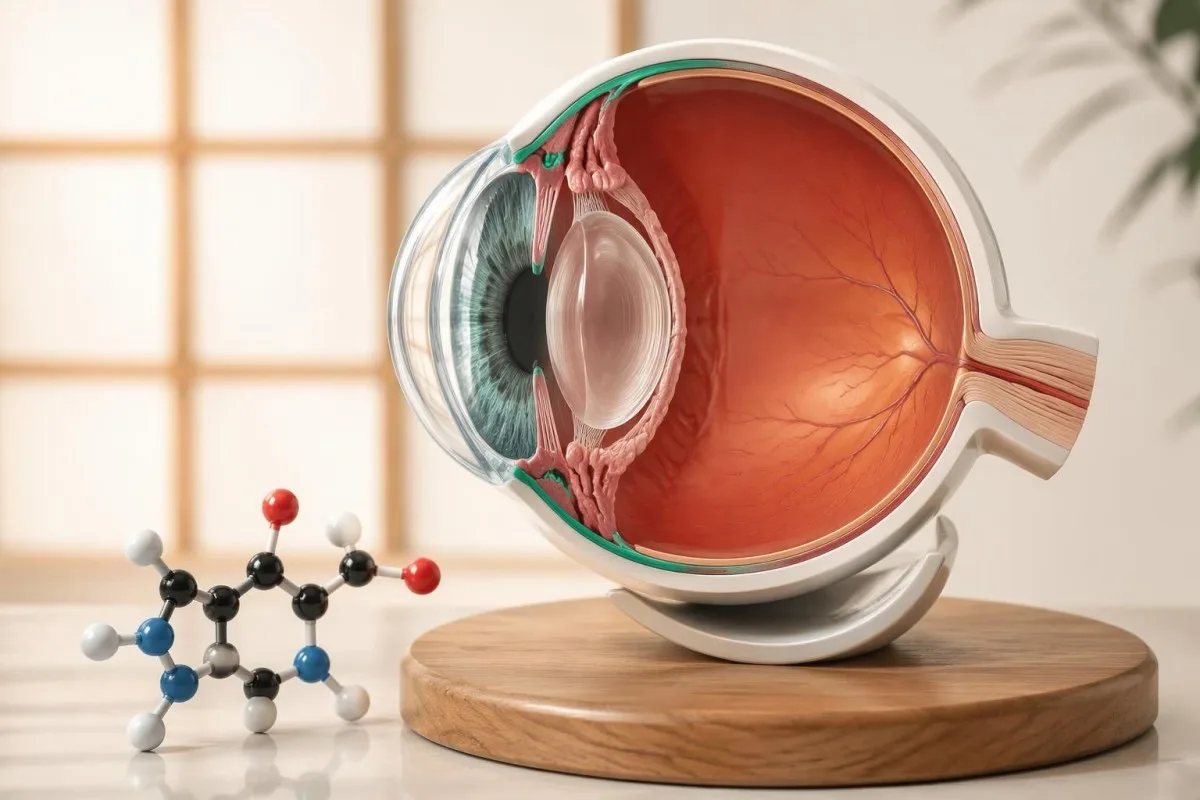
Sudden eye pain or blurred vision during topiramate treatment needs urgent assessment because acute myopia and secondary angle closure can occur, often within the first month of treatment. A level of 6 mg/L would not make that presentation safe to observe at home; glaucoma assessment methods address eye pressure and anatomy, which a drug concentration cannot measure.
Suspected overdose, markedly reduced alertness, breathing difficulty, or a prolonged seizure requires emergency evaluation without waiting for a send-out concentration result. A seizure lasting 5 minutes is an emergency threshold, and sudden one-sided weakness or new speech difficulty should also prompt emergency action rather than being attributed to topiramate; our iktusaren ohartarazpen-zeinuetan bereizketa hori azaltzen dute.
Nola eragiten dio giltzurrun-funtzioak topiramatoaren garbiketari?
Reduced kidney function can increase topiramate serum concentration dosiaren gutxi gorabehera 70% of an administered dose is eliminated unchanged in urine. Adult prescribing information recommends a reduced dose when creatinine clearance is below 70 mL/min/1.73 m², but a clinician must apply that advice to the indication and individual circumstances.
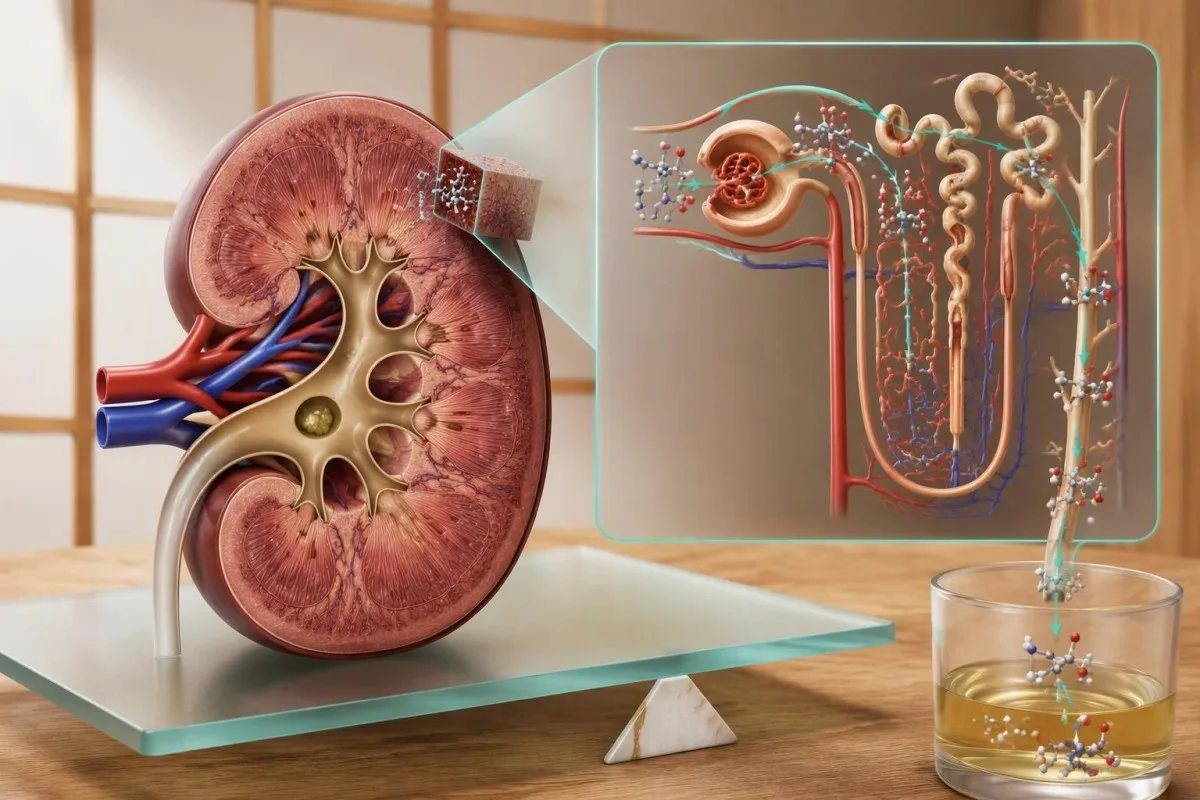
A hypothetical adult with an estimated creatinine clearance of 50 mL/min/1.73 m² may need a different regimen from someone with normal clearance, even if both have the same seizure type. Labeling commonly recommends one-half of the usual adult dose in renal impairment below the stated threshold; that is prescribing guidance, not permission to halve an existing prescription without review.
Creatinine-based eGFR and creatinine clearance are not automatically interchangeable, especially at unusual body sizes or during acute kidney injury. An eGFR of 45 mL/min/1.73 m² signals a need to review clearance, but the appropriate dosing calculation and the reliability of a rapidly changing creatinine require clinical judgment; our eGFR baxua ebaluatzeko gidaliburuak explains when changes need prompt attention.
Kantesti is an AI blood test interpretation platform that helps separate a topiramate result of 14 mg/L from the kidney measurements that may explain it. Our BUN eta kreatinina gida adds context, but a creatinine concentration alone cannot prove medication accumulation; sample timing, hydration, previous results, and the actual dosing history still matter.
Zein sendagaik alda dezakete topiramatoaren emaitza?
Enzyme-inducing antiseizure medicines can lower topiramate concentrations, while some other combinations increase exposure or adverse-effect risk without a predictable level change. Prescribing-information interaction studies report approximately 40% lower topiramate concentrations with carbamazepine eta 48% lower concentrations with phenytoin, although individual effects vary.
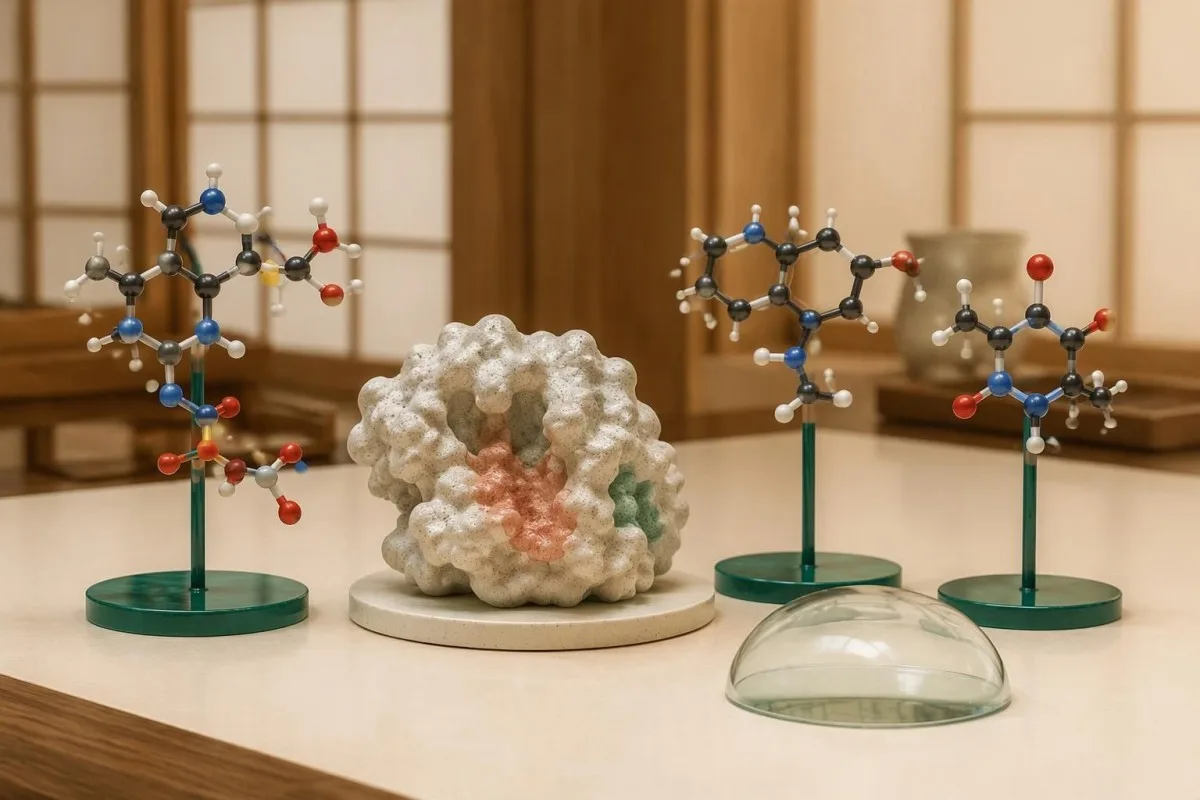
Stopping an inducing medicine can raise topiramate exposure even when the topiramate prescription stays unchanged. For example, a hypothetical person taking 100 mg twice daily may develop more cognitive adverse effects after carbamazepine is withdrawn; our carbamazepine monitoring guide explains that medicine's own concentration monitoring, which remains separate from assessing its effect on topiramate clearance.
Hydrochlorothiazide increased topiramate exposure by approximately 29% in a pharmacokinetic study described in prescribing information, and the combination can also increase potassium loss. That percentage describes the studied group, not a guaranteed change for every patient; checking potassium and symptoms may be useful even if a repeat topiramate concentration remains inside a 5–20 mg/L interval.
Topiramate with valproate can be associated with hyperammonemia and encephalopathy, sometimes despite otherwise unremarkable routine laboratory results. New unexplained lethargy, vomiting, or altered mental status on these 2 medicines warrants prompt assessment and consideration of ammonia testing; a topiramate level is not a substitute, and our valproate result explanation describes why valproate concentrations also have interpretation limits.
Zergatik da bikarbonatoaren monitorizazioa beste segurtasun-proba mota bat?
Bicarbonate monitoring checks for metabolic acidosis, not topiramate exposure. Topiramate can cause renal bicarbonate loss through carbonic anhydrase inhibition; many laboratories use an adult bicarbonate interval around 22–29 mmol/L, and prescribing information recommends baseline and periodic measurement rather than relying on a drug level.
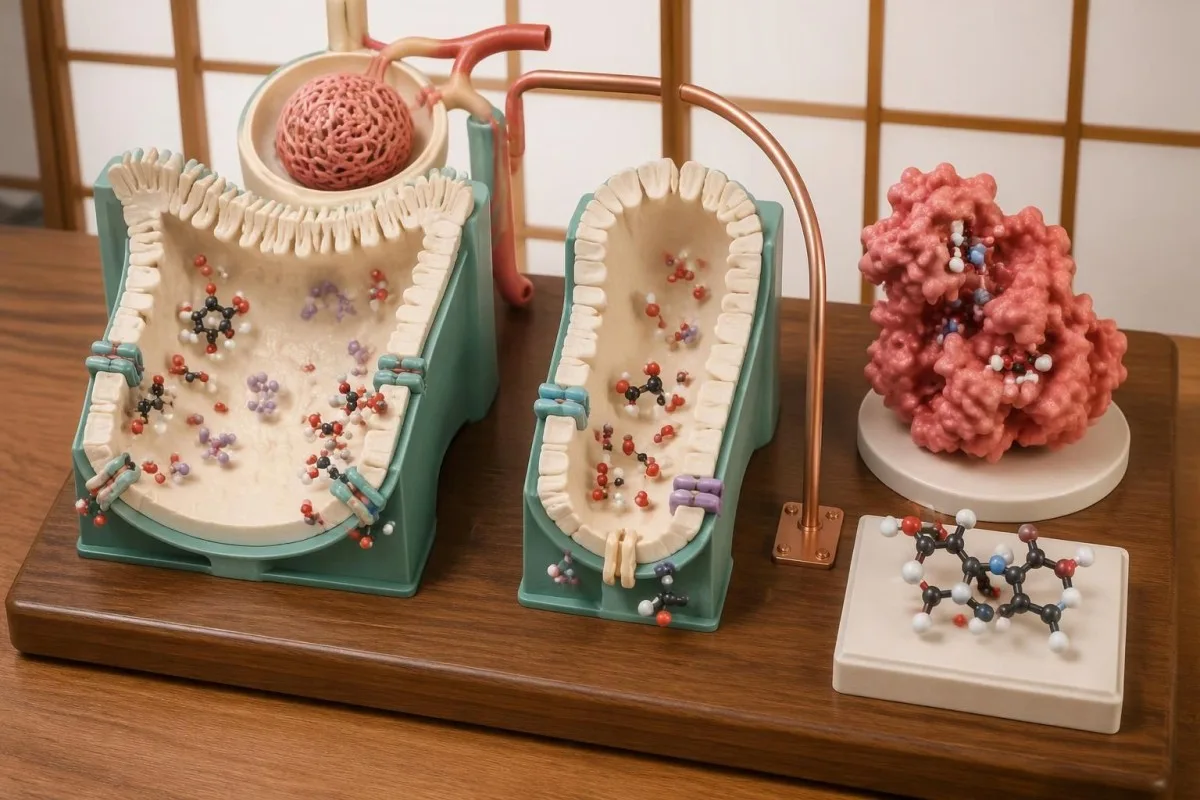
Topiramate typically causes a hyperchloremic, normal-anion-gap metabolic acidosis, although other conditions can create mixed patterns. Mirza and colleagues describe impaired renal acid–base handling and note that evidence for the optimal monitoring strategy is limited (Mirza et al., 2009); our giltzurrun-hodien azidosiaren ereduak explain why bicarbonate must be read with chloride, potassium, and the clinical history.
For a hypothetical chemistry panel with sodium 138 mmol/L, chloride 111 mmol/L, and bicarbonate 18 mmol/L, the anion gap excluding potassium is 138 − 111 − 18 = 9 mmol/L. That calculation is compatible with a normal-gap pattern in many laboratories, but it does not identify topiramate as the cause; diarrhea, other renal disorders, albumin changes, and mixed acid–base disturbances need consideration.
Kantesti AI explains why bicarbonate of 18 mmol/L deserves attention even when topiramate is 7 mg/L, while avoiding a diagnosis from those 2 numbers alone. Prescribing information uses bicarbonate below 17 mmol/L with a fall greater than 5 mmol/L as a trial definition of markedly low bicarbonate—not a universal emergency cutoff; our elektrolito-panelaren azalpena helps interpret associated abnormalities.
Zer giltzurrun-segurtasuneko egiaztapen ez ditu atzematen sendagai-mailaren probak?
A topiramate concentration cannot detect kidney stones, measure urinary citrate, or establish renal tubular acidosis. Adult epilepsy development trials reported kidney stones in approximately 1.5% of topiramate-treated participants; risk depends on treatment context, and a concentration inside 5–20 mg/L does not eliminate the possibility.
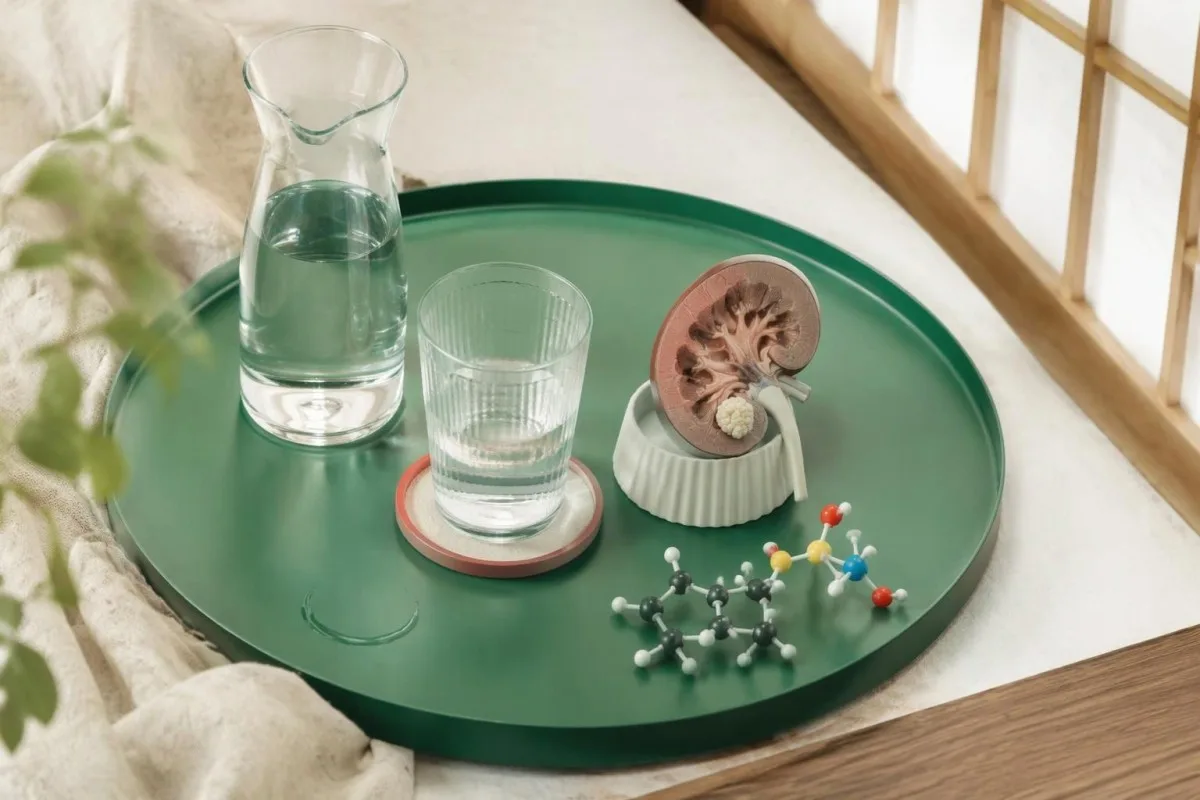
Topiramate can increase urine pH and reduce urinary citrate, a combination that favors calcium phosphate stones. Mirza and colleagues link these urinary changes to carbonic anhydrase inhibition (Mirza et al., 2009); our gernu zitriko baxua gida explains why a 24-hour urine assessment may become relevant after recurrent stones rather than being automatically required for every user.
Monitoring creatinine serves a different purpose from checking urinary stone risk. A hypothetical person with a topiramate level of 9 mg/L, normal creatinine, and recurrent flank pain still needs evaluation for stones; normal filtration does not guarantee normal urinary citrate, and persistent pain with fever, vomiting, or difficulty passing urine should not wait for a repeat drug concentration.
Adequate fluid intake is commonly advised, but there is no single safe target such as 3 liters daily for everyone. People with heart failure, advanced kidney disease, or a prescribed fluid restriction need individualized guidance; potassium citrate or bicarbonate treatment also requires clinician oversight because changing urine chemistry and potassium intake can create different risks from those measured by topiramate testing.
Nork behar izan dezake kontzentrazioaren monitorizazio indibidualizatuagoa?
Pregnancy, childhood, older age, and changing kidney function can make topiramate exposure less predictable. A personal pre-pregnancy concentration and 2 similarly timed follow-up samples may be more useful than chasing a population interval, but monitoring does not remove topiramate's pregnancy-related risks or replace specialist treatment planning.
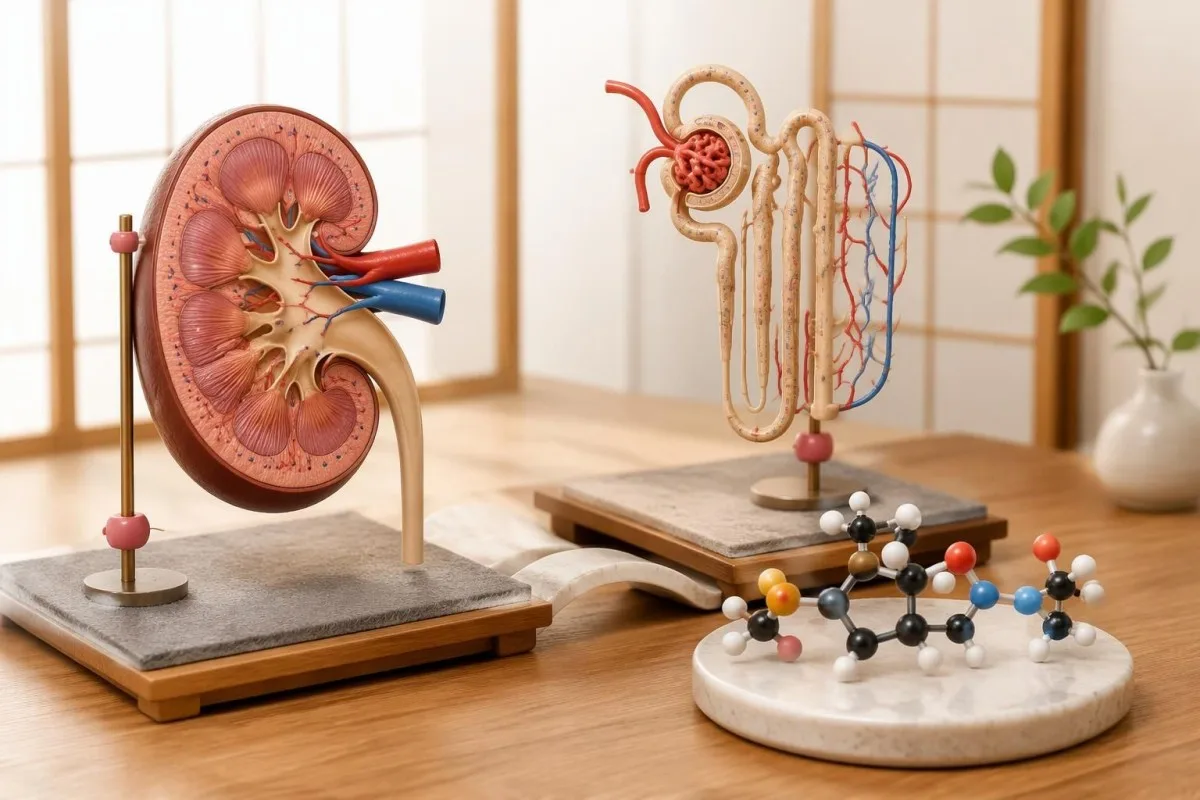
Pregnancy can increase topiramate clearance, so a concentration may fall despite consistent dosing. Pregnancy also changes the interpretation of creatinine, and standard eGFR equations are not reliable for assessing filtration during pregnancy; our pregnancy kidney-function explanation explains why a apparently reassuring result should not be used to estimate drug clearance mechanically.
In the UK, topiramate is subject to a Pregnancy Prevention Programme for people who can become pregnant; it is contraindicated for migraine prevention during pregnancy and for epilepsy in pregnancy unless no suitable alternative exists. A level of 5 mg/L does not establish fetal safety, and someone who becomes pregnant should contact the prescriber promptly rather than abruptly stopping an antiseizure regimen.
Children may have higher weight-normalized clearance than adults, while older adults may clear the medicine more slowly because of reduced renal function. The adult 5–20 mg/L interval therefore needs context rather than a new age-based cutoff invented from a single report; pediatric dose decisions require specialist assessment, and post-pregnancy monitoring may matter if a dose was increased when clearance was higher.
Nola interpretatu behar da emaitza beste aurkikuntza batzuekin batera?
Interpret a topiramate result by combining concentration, collection timing, symptoms, and safety chemistry. At minimum, compare 4 pieces of information: the current regimen, the last dose and sample times, the reason testing was ordered, and bicarbonate plus kidney-function results when available.
Hypothetical pattern 1: a trough falls from 8 to 3 mg/L, kidney function is stable, and seizures recur after several prescription refills were delayed. Reduced exposure is plausible, but the response should include a medication-access review and seizure assessment; raising the dose without addressing intermittent use could create excessive exposure when regular dosing resumes.
Hypothetical pattern 2: a trough rises from 9 to 16 mg/L while creatinine worsens and new coordination problems appear. Reduced clearance is a reasonable concern even though 16 mg/L remains inside a 5–20 mg/L interval; pattern 3, a level of 7 mg/L with bicarbonate of 18 mmol/L, instead highlights a possible acid–base effect that concentration monitoring alone would miss.
Kantesti is an AI-powered blood test analysis tool that helps organize these 3 patterns without treating any one as a confirmed diagnosis. Our botiken segurtasun-joeren gida explains how serial results support follow-up; keep the original laboratory interval and dates visible, because changing laboratories, formulations, or collection timing can make an apparent trend misleading.
Zer egin behar duzu ondoren, eta zer ebidentziak babesten du proba egitea?
The next step is to ask what the topiramate result changes—not to adjust treatment from the number alone. Bring 2 txosten, datekin, if available, and a medication timeline to the prescriber; monitoring recommendations rely on pharmacology, expert guidance, and clinical context rather than a universally validated toxicity threshold.
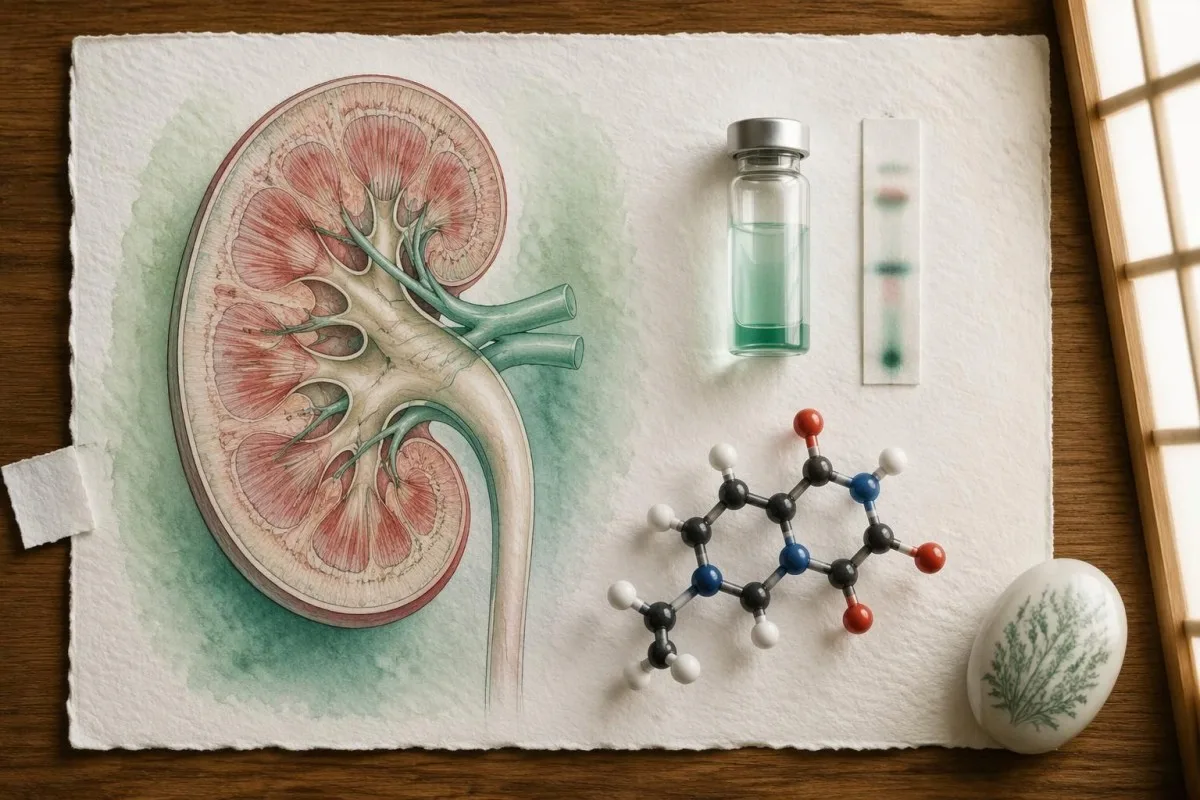
Ask the prescriber whether a repeat trough, bicarbonate check, kidney-function assessment, or medication review would answer the unresolved question. There is no evidence-based rule that every patient needs a topiramate concentration every 3 or 6 months; persistent low bicarbonate, new adverse effects, or changing clearance may justify a different follow-up plan from an isolated laboratory flag.
Kantesti helps explain reports, but our IA arduratsuaren mugak distinguish educational interpretation from diagnosis and prescribing. Our baliozkotze klinikoaren ikuspegia provides methodology context; neither an AI confidence estimate nor a concentration of 10 mg/L can exclude toxicity, replace an examination, or authorize an independent dose change.
The 2 Zenodo publications listed below concern serum proteins and complement testing; they are not topiramate therapeutic-monitoring studies and should not be used to validate its concentration cutoffs. Our serumeko proteina interpretatzeko gida offers background for understanding albumin and other medicines, while the directly relevant external references support this article's discussion of selective monitoring, pharmacokinetics, and acid–base effects.
Ohiko galderak
Zein da topiramato-maila normala?
0 A commonly quoted topiramate reference interval is 5–20 mg/L, although some laboratories use 2–10 mg/L. Tarte horiek interpretazioa laguntzen dute, batez ere epilepsian, eta ez dute kontzentrazio unibertsal normal edo segururik zehazten. Pertsona batzuek inprimatutako tartetik behera erantzun dezakete, edo haren barruan ondorio kaltegarriak izan. Laborategiko tartea, lagina hartzeko unea, sintomak eta aurretik eraginkorra izan den kontzentrazio bat batera hartu behar dira kontuan.
Topiramato-mailak aldizka egiaztatu behar al dizkidate?
Jende gehienek ez dute topiramato-kontzentrazioa aldian-aldian, ordutegi finko bati jarraituz, aztertu beharrik. Azterketak lagungarriak izan daitezke krisi epileptikoak berriro agertzen badira, dosiak hartu ez direla susmatzen bada, elkarreragiten duten sendagaiak erabiltzen badira, haurdunaldiarekin lotutako aldaketak badaude edo giltzurrun bidezko garbiketa murrizten bada. Ez dago erabiltzaile guztientzat gomendatutako kontzentrazio-azterketen maiztasun unibertsalik, hala nola 3 edo 6 hilean behin. Bikarbonatoaren hasierako eta aldizkako monitorizazioak beste segurtasun-arazo bati heltzen dio, eta egokia izan daiteke sendagaiaren mailak neurtzen ez direnean ere.
Noiz egin behar da Topamax mailaren proba?
0 Aurreikusitako Topamax mailaren azterketa alderagarriena izan ohi da hurrengo dosia hartu aurretik berehala jasotzen denean. Giltzurrun-funtzio normala izanik, topiramatoak oro har 4 egun inguru behar ditu egoera egonkorrera iristeko, tratamendu-erregimen aldatu gabea hasi ondoren, baina argitze murriztuak denbora hori luzatu dezake. Erregistratu azken dosiaren ordua, lagina jasotzeko ordua, dosia eta formulazioa. Gaindosiaren susmoak edo ondorio kaltegarri larriek berehalako ebaluazioa eskatzen dute, behar bezala unean hartutako gutxieneko kontzentrazioaren zain egon beharrean.
Topiramatoaren serum-kontzentrazio baxuak dosiak hartu ez ditudala esan nahi al du?
Topiramatoaren serum-kontzentrazio baxu batek ez du frogatzen dosiak hartu gabe utzi direnik. 5 mg/L-tik beherako emaitzak dosi txiki bat, garbiketa areagotua, entzima-induzitzaile den sendagai bat, azkenaldiko dosi-aldaketak edo lagina noiz hartu den isla ditzake. Aurreko haran-kontzentrazio konparagarri batekin alderatuta izandako beherakadak, adibidez 8tik 3 mg/L-ra, esposizioa aldatu izanaren ebidentzia sendoagoa eman dezake. Klinikariek sendagaia eskuratzeko aukera eta dosien historia aztertu beharko lituzkete, erregimena egokitu behar den erabaki aurretik.
Zein topiramato-maila da toxikoa?
0 Ez dago topiramato-kontzentrazio unibertsal eta baliozkoturik toxikotasuna ezartzen duenik. 20 mg/L-tik gorako emaitza batek berrikuspen zehatzagoa eragin dezake, baina kontrako efektu batzuk ohiko laborategi-tarte jakin batzuen barruan gertatzen dira. Sintomek, azterketak, giltzurrun-funtzioak, bikarbonatoak, beste sendagaiek eta lagina hartzeko uneak zehazten dute emaitzaren esanahi klinikoa. Gaindosiaren susmoak, nahasmen larriak, arnasa hartzeko zailtasunak edo begiko bat-bateko minak edo ikusmen-aldaketak berehalako ebaluazioa eskatzen dute, neurtutako maila edozein dela ere.
Topiramatak bikarbonato-maila baxua eragin dezake sendagai-maila normala denean?
Topiramatoak bikarbonato-maila baxua eragin dezake, nahiz eta haren kontzentrazioa laborategiko erreferentzia-tarte baten barruan egon, hala nola 5–20 mg/L. Anhidrasa karbonikoaren inhibizioak giltzurrunetako bikarbonato-galera handitu eta azidosi metaboliko hiperkloremikoa sor dezake, anioi-tarte normala izanik. 18 mmol/L-ko bikarbonato-emaitzak interpretazio klinikoa behar du, baina horrek bakarrik ez du frogatzen topiramatoa denik kausa, eta ez du larrialdiaren larritasuna zehazten. Beraz, bikarbonatoaren eta giltzurrun-funtzioaren azterketak ezin dira Topamax mailaren azterketa batekin ordezkatu.
Jaso odol-analisien emaitzak nola irakurri
Kargatu zure laborategiko txostena, eta Kantesti-ren AIak biomarkatzaile bakoitza hizkera arruntean azalduko du segundo gutxitan. Mundu osoan 2 milioi pertsona baino gehiagok erabiltzen dute.
Erreferentziak
- Klein, T., Mitchell, S., & Weber, H. (2026). Serumeko proteinen gida: globulinak, albumina eta A/G ratioaren odol-analisia. Kantesti AI Ikerketa Medikoa. DOI
- Klein, T., Mitchell, S., & Weber, H. (2026). C3 C4 Osagarriaren Odol-analisiaren eta ANA Tituluaren Gida. Kantesti AI Ikerketa Medikoa. DOI
- Patsalos PN et al. (2008). Antiepileptic drugs—best practice guidelines for therapeutic drug monitoring: a position paper by the subcommission on therapeutic drug monitoring, ILAE Commission on Therapeutic Strategies. Epilepsia. DOI
- Jacob S and Nair AB (2016). An Updated Overview on Therapeutic Drug Monitoring of Recent Antiepileptic Drugs. Drugs in R&D. DOI
- Mirza N et al. (2009). Effect of topiramate on acid–base balance: extent, mechanism and effects. British Journal of Clinical Pharmacology. DOI
- 2M+Aztertutako probak
- 127+Herrialdeak
- 100+Hizkuntzak
Medikuntza-taldeari buruz


E-E-A-T Konfiantza-seinaleak
Esperientzia
Medikuek gidatutako berrikuspen klinikoa laborategiko interpretazioaren lan-fluxuei buruz.
Espezializazioa
Laborategiko medikuntzaren ikuspegia biomarkatzaileek testuinguru klinikoan nola jokatzen duten aztertzean.
Autoritatea
Thomas Klein doktoreak medikoki berrikusia, Sarah Mitchell doktorearen eta Hans Weber irakasle doktorearen ekarpenekin.
Fidagarritasuna
Ebidentzian oinarritutako interpretazioa, alarma murrizteko jarraipen-bide argiekin.






Ohar medikoa
Artikulu hau hezkuntza-helburuetarako da soilik eta ez du mediku-aholkurik ematen. Diagnostiko- eta tratamendu-erabakietarako, beti kontsultatu osasun-profesional kualifikatu bati.
Argitaratua · Jarri harremanetan erredakzio-taldearekin
Kantesti Ltd-k argitaratua, Ingalaterran eta Galesen erregistratua, enpresa zk. 17090423, Londres, Erresuma Batua.
