Topiramaatkonsintraasjes wurde net routinemjittich kontrolearre, om't de behannelingsreaksje en bywurkingen net betrouber oerienkomme mei ien doelwearde. In test kin dúdlik meitsje hoefolle medisyn oanwêzich is of oft de klaring feroare is; bikarbonaat- en nierfunksjetests beantwurdzje aparte feiligensfragen.

Wichtichste punten
- Topiramaatnivo testen wurdt meastal allinnich dien om in spesifike fraach te beantwurdzjen, lykas ûnferwachte oanfallen, it fermoeden fan oersleine doses, ynteraksjes of feroare nierfunksje.
- Terapeutysk berik fan topiramaat wurdt faak rapportearre as 5–20 mg/L, mar guon laboratoaria brûke 2–10 mg/L; gjin fan beide yntervallen garandearret effektiviteit of feiligens.
- Tiidstip fan it dalnivo betsjut dat it monster fuort foar de folgjende plande dosis ôfnommen wurdt, wêrby't it tiidstip fan de lêste dosis fêstlein wurdt.
- Stabile steat wurdt ornaris yn sa'n 4 dagen berikt as de nierfunksje normaal is en de dosis net feroaret; by fermindere klaring kin dit langer duorje.
- Ienheid omrekkenjen is ienfâldich: 1 mg/L is gelyk oan 1 µg/mL, dus 8 mg/L en 8 µg/mL beskriuwe deselde konsintraasje.
- Beoardieling fan toksisiteit fereasket symptomen, ûndersyk, medikaasjeskiednis en relevante laboratoariumbefiningen; gjin universele topiramaatkonsintraasje stelt toksisiteit fêst.
- Bikarbonaatkontrôle kontrolearret op metabolyske acidose, in erkend effekt fan topiramaat dat foarkomme kin nettsjinsteande in konsintraasje binnen it laboratoariumberik.
- Monitoaring fan de nierfunksje helpt by it beoardieljen fan de klaring fan it medisyn; de foarskriuwynformaasje advisearret in dose-oanpassing as de kreatinineklaring by folwoeksenen leger is as 70 mL/min/1.73 m².
Wêrom wurdt in topiramaatnivo net routinemjittich kontrolearre?
A topiramaatnivo wurdt net routinemjittich kontrolearre, om't de relaasje tusken konsintraasje, foardiel en neidielige effekten bot ferskilt tusken minsken. In faak neamd berik fan 5–20 mg/L is in helpmiddel foar laboratoariumreferinsje—net in nivo dat elke pasjint berikke moat en ek gjin grins dy't betrouber feilich gebrûk fan toksisiteit ûnderskiedt.
It is net oantoand dat routine dosearring op basis fan konsintraasjes de útkomsten ferbetteret foar elkenien dy't topiramaat nimt. It stânpuntpapier fan de ILAE stipet terapeutyske medisynmonitoring as in resultaat in omskreaune klinyske fraach beantwurdzje kin, ynstee fan automatysk nivo's te bepalen foar alle medisinen tsjin krampen (Patsalos et al., 2008); de frekwinsje fan krampen, it tal migraïnedagen en de tolerânsje bliuwe sintraal by behannelingsbesluten.
Bygelyks, in hypotetyske folwoeksene waans migraïne ferbetteret mei 50 mg twa kear deis hoecht net needsaaklik de doasis te ferheegjen om't it laboratoarium in konsintraasje ûnder 5 mg/L oanjout. Foar migraïneprevinsje is gjin goed fêststeld serumdoelnivo; de behanneling inkeld ferheegje om de markearring te korrizjearjen kin swierrichheden mei wurdfinen of ferlies fan appetit slimmer meitsje sûnder in betsjuttingsfol foardiel op te leverjen.
Kantesti is in AI-bloedtestanalysator dy't helpt út te lizzen wêrom't in laboratoariumberik fan 5–20 mg/L de beoardieling fan symptomen en it tiidstip fan de ôfname net ferfange kin. Us organisaasje en doel beskriuwe ús rol by it ynterpretearjen fan rapporten; wy skriuwe gjin medisinen foar, en in útlis fan AI mei gjin reden wurde om selsstannich in stabile behanneling te feroarjen.
Wat mjit in Topamax-nivotest eins?
A Topamax-nivotest mjit de konsintraasje fan topiramaat yn in laboratoariummeunster, meastal serum of plasma. It jout de medisynblootstelling op it tiidstip fan de ôfname wer—net de foarskreaune doasis, beskerming tsjin krampen of de bicarbonaatstatus; 1 mg/L is lyk oan 1 µg/mL, wat in faak foarkommende flater by it lêzen fan ienheden foarkomt.
In protte laboratoaria mjitte topiramaat mei floeistofchromatografy mei tandem-massaspektrometry, hoewol't metoaden en akseptabele monsterfetten ferskille. In resultaat fan 8 µg/mL is presys deselde konsintraasje as 8 mg/L; dêrfoaroer beskriuwt in foarskrift fan 100 mg in tatsjinne hoemannichte en kin dy net streekrjocht ferlike wurde mei ien fan beide konsintraasje-ienheden.
Topiramaat bindet relatyf swak oan aaiwiten; yn de foarskriuwynformaasje wurdt in bining fan likernôch 15–41% beskreaun. By routineûndersyk wurdt oer it generaal de totale konsintraasje metten, en der is gjin standertformule foar albuminekorreksje dy't lykweardich is oan de metoaden dy't soms foar fenytoïne brûkt wurde; ús útlis fan frije en totale fenytoïne lit sjen wêrom't ynterpretaasjeregels net sûnder ûnderskied fan it iene medisyn op it oare tapast wurde moatte.
In laboratoariumrapport mei in topiramaatnivo fan 6 mg/L en totaal CO2 fan 19 mmol/L befettet 2 wêzentlik ferskillende mjittingen. De earste wjerspegelet de medisynblootstelling; de twadde is meastal in benadering fan serum-bikarbonaat en kin op in soer-baseprobleem wize, dus in konsintraasje binnen it printe berik kin in ôfwikende gemyske testútslach net út sluten.
Wat is it terapeutyske berik fan topiramaat?
In faak neamd terapeutysk berik foar topiramaat is 5–20 mg/L, mar guon Europeeske laboratoaria brûke 2–10 mg/L. These intervals mainly support epilepsy-related interpretation; they are not universally validated treatment targets, and there is no widely accepted serum concentration target for migraine prevention.
Jacob and Nair's review lists a topiramate reference concentration of 5–20 mg/L while emphasizing selective use of monitoring and variable concentration–response relationships (Jacob and Nair, 2016). A reference interval summarizes concentrations considered useful in a population; it does not establish that every individual below its lower limit needs more medication.
Different laboratory intervals can produce different flags for the same number. A hypothetical trough of 12 mg/L sits within a 5–20 mg/L interval but above a 2–10 mg/L interval; that disagreement should trigger review of the laboratory's convention and the patient's clinical state, not an assumption that the medicine became toxic between reports.
An individual's previously effective, well-tolerated concentration can be more informative than the population interval. If someone remained seizure-free at a correctly timed trough of 4 mg/L, that documented baseline may help interpret a later change; the same individual-baseline principle appears in ynterpretaasje fan levetiracetam-resultaten, although the numerical ranges are different.
| Nivo | Berik | Wat it betsjut |
|---|---|---|
| Algemien laboratoarium-ynterval | 5–20 mg/L | A frequently quoted epilepsy-related reference interval, not a guaranteed effective or safe target. |
| Alternative laboratory interval | 2–10 mg/L | Used by some European laboratories; interpretation must follow the reporting laboratory and clinical context. |
| Above a 5–20 interval | >20 mg/L | Prompts review of symptoms, timing, dose, interactions, and clearance; does not establish toxicity by itself. |
| Individual reference concentration | Patient-specific; no universal cutoff | A prior correctly timed concentration obtained during effective, tolerated treatment can guide later comparisons. |
Wannear kin it kontrolearjen fan de topiramaatkonsintraasje helpe?
Topiramate concentration monitoring helps when clinicians need to distinguish changed medication exposure from other causes of worsening control or new adverse effects. Comparing 2 similarly timed samples can be useful after suspected missed doses, kidney-function changes, interacting medicines, pregnancy-related clearance changes, or an unexplained treatment failure.
Unexpected breakthrough seizures are one reason to investigate exposure, but the concentration cannot diagnose the cause of the event. The ILAE position paper identifies situations such as suspected nonadherence, toxicity, pharmacokinetic variability, and changing treatment conditions as appropriate reasons to consider monitoring (Patsalos et al., 2008); sleep deprivation, illness, and seizure classification still need separate assessment.
Establishing a personal reference concentration can help before an anticipated change. For a hypothetical person stable on 100 mg twice daily, a trough obtained during seizure control provides a comparison if kidney function later declines or another antiseizure drug is withdrawn; without that baseline, a later isolated result may be harder to interpret.
A test is less helpful if nobody can state what management decision it might change. Before requesting a concentration of 7 mg/L or any other result, ask whether the question concerns adherence, clearance, or possible adverse effects; our lacosamide monitoring explanation illustrates why selective monitoring is not the same as having no monitoring strategy.
Wannear moat it topiramaatmonster ôfnommen wurde?
For planned monitoring, a trough sample immediately before the next scheduled dose is usually the most comparable measurement. Topiramate's elimination half-life is approximately 21 hours in adults with normal kidney function, and steady state is generally reached in about 4 dagen after an unchanged regimen begins.
Collection timing depends on the regimen, not on a universal morning rule. A twice-daily schedule may produce a trough around 12 hours after the preceding dose, whereas once-daily extended-release treatment involves a different interval; document the actual formulation, last dose time, collection time, and any recent missed doses rather than assuming the schedule was followed.
Steady state takes approximately 4–5 elimination half-lives, so reduced kidney clearance can make the usual 4-day estimate too short. A sample taken 1 day after a dose increase may not reflect the eventual concentration; Jacob and Nair discuss the pharmacokinetic basis for timing interpretation rather than treating every sample as equivalent (Jacob and Nair, 2016).
Kantesti AI helps distinguish a reported topiramate concentration of 10 mg/L from the circumstances needed to interpret it, including whether the sample was a trough. Our guide to trough timing principles explains the general concept, but tacrolimus targets and sampling protocols must not be applied to topiramate; urgent assessment should never wait for an ideal trough.
Bewiist in leech topiramaatnivo dat doses oerslein binne?
A low topiramate level does not prove nonadherence. In resultaat ûnder 5 mg/L could reflect a modest dose, faster clearance, an interacting medicine, recent treatment changes, or collection timing; a fall from the person's own comparable baseline is often more informative than a low flag alone.
Consider a hypothetical trough that falls from 8 mg/L to 3 mg/L on an apparently unchanged prescription. That pattern warrants checking missed doses and refill access, but also whether an enzyme-inducing medicine was added, whether the earlier sample was actually post-dose, and whether the daily dose or formulation changed without being reflected in the laboratory request.
An undetectable result can strengthen suspicion of little recent exposure, but the assay's detection limit and elapsed time still matter. With an approximately 21-hour half-life, topiramate does not disappear immediately after 1 missed dose; a single concentration cannot reconstruct weeks of medication-taking behavior or distinguish intentional omission from vomiting, supply problems, or misunderstanding instructions.
The practical response is to review barriers before escalating treatment. If a dose is increased after a low result and regular dosing then resumes, exposure may rise unexpectedly; our lamotrigine concentration guide discusses a related monitoring problem, but each medicine requires its own missed-dose and restarting instructions rather than a shared numerical rule.
Kin in heech topiramaatnivo fêststelle dat der sprake is fan toksisiteit?
A high topiramate level cannot establish toxicity by itself, and a result inside the laboratory interval cannot exclude it. A concentration above 20 mg/L may support concern about excessive exposure, but clinicians must assess symptoms, dosing history, kidney function, acid–base status, and other medicines.
Two hypothetical results show the limitation: 22 mg/L in an alert person after a post-dose sample is not equivalent to 10 mg/L in someone with new severe confusion and low bicarbonate. Neither situation should be interpreted from the number alone; cognitive slowing, dizziness, and impaired coordination may be medication-related even at concentrations the laboratory does not flag.
Sudden eye pain or blurred vision during topiramate treatment needs urgent assessment because acute myopia and secondary angle closure can occur, often within the first month of treatment. A level of 6 mg/L would not make that presentation safe to observe at home; glaucoma assessment methods address eye pressure and anatomy, which a drug concentration cannot measure.
Suspected overdose, markedly reduced alertness, breathing difficulty, or a prolonged seizure requires emergency evaluation without waiting for a send-out concentration result. A seizure lasting 5 minutes is an emergency threshold, and sudden one-sided weakness or new speech difficulty should also prompt emergency action rather than being attributed to topiramate; our warskôgingstekens fan in beroerte ferklearje dat ûnderskie.
Hokker ynfloed hat de nierfunksje op de klaring fan topiramaat?
Reduced kidney function can increase topiramate serum concentration om't likernôch 70% of an administered dose is eliminated unchanged in urine. Adult prescribing information recommends a reduced dose when creatinine clearance is below 70 mL/min/1.73 m², but a clinician must apply that advice to the indication and individual circumstances.
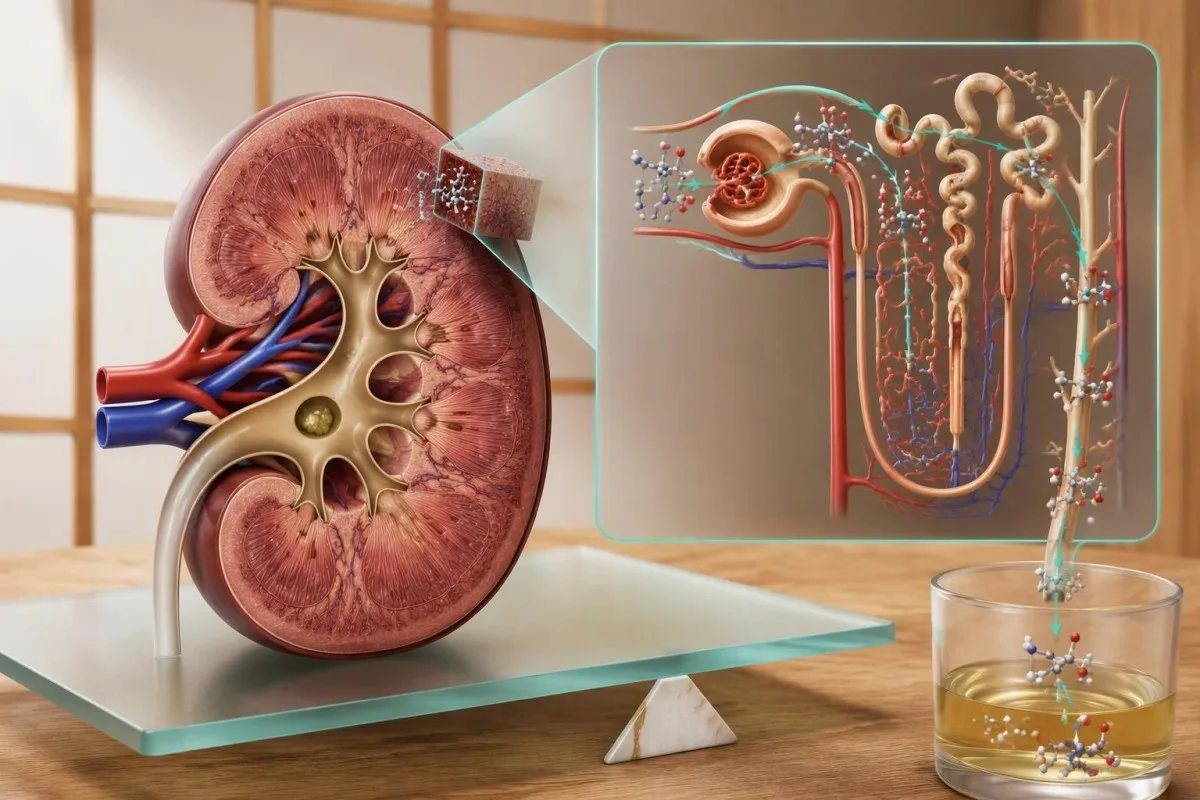
A hypothetical adult with an estimated creatinine clearance of 50 mL/min/1.73 m² may need a different regimen from someone with normal clearance, even if both have the same seizure type. Labeling commonly recommends one-half of the usual adult dose in renal impairment below the stated threshold; that is prescribing guidance, not permission to halve an existing prescription without review.
Creatinine-based eGFR and creatinine clearance are not automatically interchangeable, especially at unusual body sizes or during acute kidney injury. An eGFR of 45 mL/min/1.73 m² signals a need to review clearance, but the appropriate dosing calculation and the reliability of a rapidly changing creatinine require clinical judgment; our hantlieding foar beoardieling by lege eGFR explains when changes need prompt attention.
Kantesti is an AI blood test interpretation platform that helps separate a topiramate result of 14 mg/L from the kidney measurements that may explain it. Our BUN- en kreatininegids adds context, but a creatinine concentration alone cannot prove medication accumulation; sample timing, hydration, previous results, and the actual dosing history still matter.
Hokker medisinen kinne in topiramaatresultaat feroarje?
Enzyme-inducing antiseizure medicines can lower topiramate concentrations, while some other combinations increase exposure or adverse-effect risk without a predictable level change. Prescribing-information interaction studies report approximately 40% lower topiramate concentrations with carbamazepine en 48% lower concentrations with phenytoin, although individual effects vary.
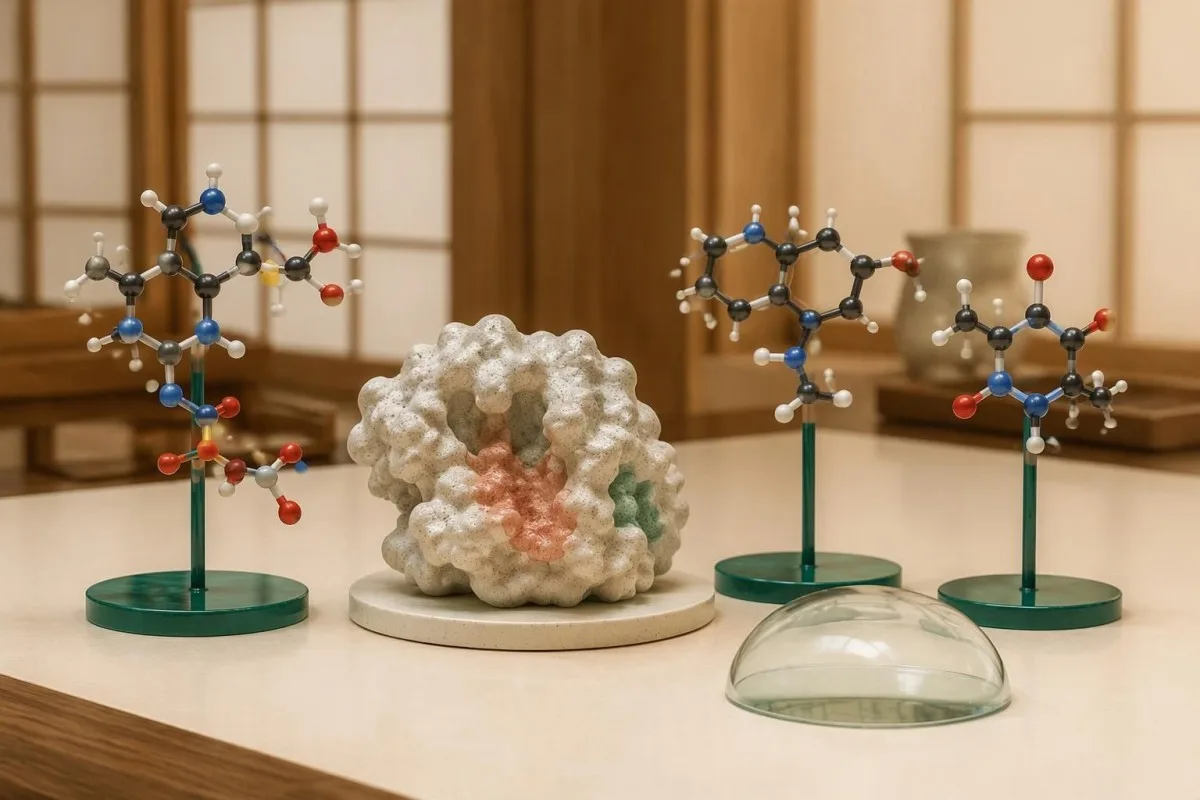
Stopping an inducing medicine can raise topiramate exposure even when the topiramate prescription stays unchanged. For example, a hypothetical person taking 100 mg twice daily may develop more cognitive adverse effects after carbamazepine is withdrawn; our carbamazepine monitoring guide explains that medicine's own concentration monitoring, which remains separate from assessing its effect on topiramate clearance.
Hydrochlorothiazide increased topiramate exposure by approximately 29% in a pharmacokinetic study described in prescribing information, and the combination can also increase potassium loss. That percentage describes the studied group, not a guaranteed change for every patient; checking potassium and symptoms may be useful even if a repeat topiramate concentration remains inside a 5–20 mg/L interval.
Topiramate with valproate can be associated with hyperammonemia and encephalopathy, sometimes despite otherwise unremarkable routine laboratory results. New unexplained lethargy, vomiting, or altered mental status on these 2 medicines warrants prompt assessment and consideration of ammonia testing; a topiramate level is not a substitute, and our valproate result explanation describes why valproate concentrations also have interpretation limits.
Wêrom is it kontrolearjen fan bikarbonaat in oare feiligenstest?
Bicarbonate monitoring checks for metabolic acidosis, not topiramate exposure. Topiramate can cause renal bicarbonate loss through carbonic anhydrase inhibition; many laboratories use an adult bicarbonate interval around 22–29 mmol/L, and prescribing information recommends baseline and periodic measurement rather than relying on a drug level.
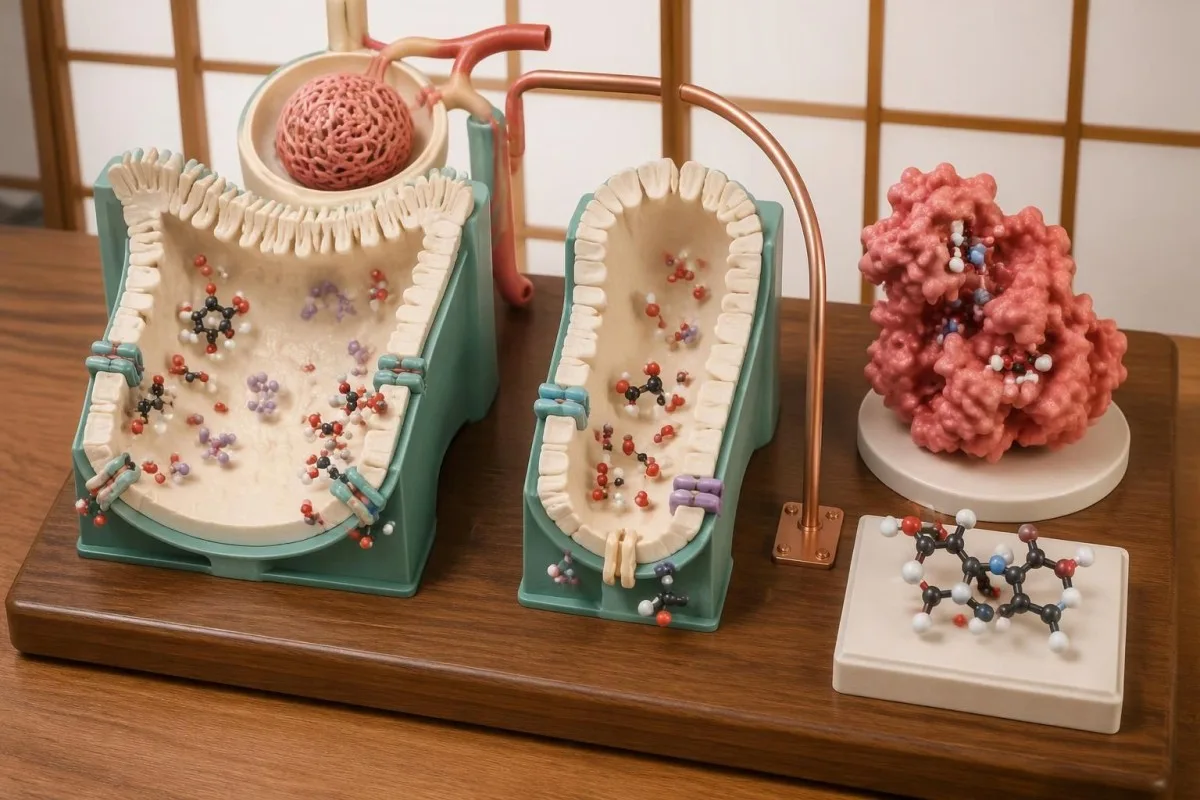
Topiramate typically causes a hyperchloremic, normal-anion-gap metabolic acidosis, although other conditions can create mixed patterns. Mirza and colleagues describe impaired renal acid–base handling and note that evidence for the optimal monitoring strategy is limited (Mirza et al., 2009); our renale tubulêre acidose patronen explain why bicarbonate must be read with chloride, potassium, and the clinical history.
For a hypothetical chemistry panel with sodium 138 mmol/L, chloride 111 mmol/L, and bicarbonate 18 mmol/L, the anion gap excluding potassium is 138 − 111 − 18 = 9 mmol/L. That calculation is compatible with a normal-gap pattern in many laboratories, but it does not identify topiramate as the cause; diarrhea, other renal disorders, albumin changes, and mixed acid–base disturbances need consideration.
Kantesti AI explains why bicarbonate of 18 mmol/L deserves attention even when topiramate is 7 mg/L, while avoiding a diagnosis from those 2 numbers alone. Prescribing information uses bicarbonate below 17 mmol/L with a fall greater than 5 mmol/L as a trial definition of markedly low bicarbonate—not a universal emergency cutoff; our útlis oer it elektrolytpaniel helps interpret associated abnormalities.
Hokker nierfeiligenskontrôles lit in medisynnivo net sjen?
A topiramate concentration cannot detect kidney stones, measure urinary citrate, or establish renal tubular acidosis. Adult epilepsy development trials reported kidney stones in approximately 1.5% of topiramate-treated participants; risk depends on treatment context, and a concentration inside 5–20 mg/L does not eliminate the possibility.
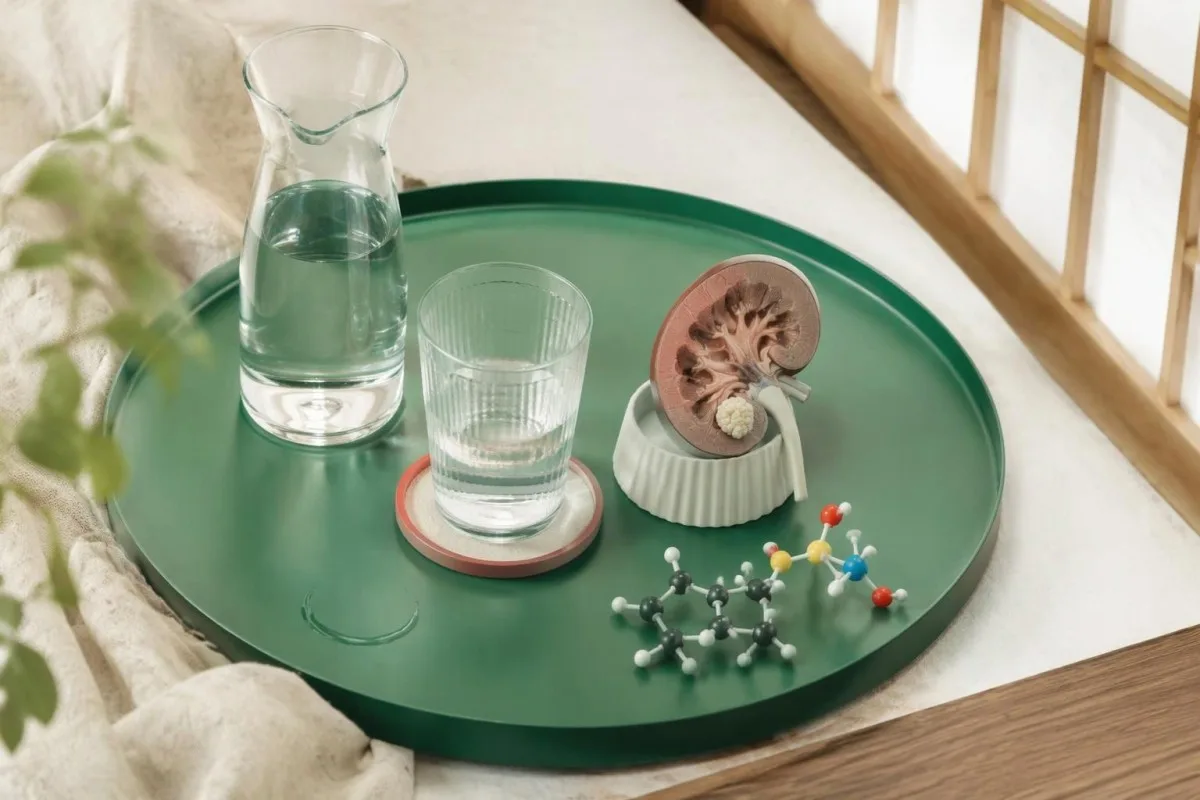
Topiramate can increase urine pH and reduce urinary citrate, a combination that favors calcium phosphate stones. Mirza and colleagues link these urinary changes to carbonic anhydrase inhibition (Mirza et al., 2009); our rjochtline foar lege sitraat yn urine explains why a 24-hour urine assessment may become relevant after recurrent stones rather than being automatically required for every user.
Monitoring creatinine serves a different purpose from checking urinary stone risk. A hypothetical person with a topiramate level of 9 mg/L, normal creatinine, and recurrent flank pain still needs evaluation for stones; normal filtration does not guarantee normal urinary citrate, and persistent pain with fever, vomiting, or difficulty passing urine should not wait for a repeat drug concentration.
Adequate fluid intake is commonly advised, but there is no single safe target such as 3 liters daily for everyone. People with heart failure, advanced kidney disease, or a prescribed fluid restriction need individualized guidance; potassium citrate or bicarbonate treatment also requires clinician oversight because changing urine chemistry and potassium intake can create different risks from those measured by topiramate testing.
Wa kin mear yndividualisearre kontrôle fan de konsintraasje nedich hawwe?
Pregnancy, childhood, older age, and changing kidney function can make topiramate exposure less predictable. A personal pre-pregnancy concentration and 2 similarly timed follow-up samples may be more useful than chasing a population interval, but monitoring does not remove topiramate's pregnancy-related risks or replace specialist treatment planning.
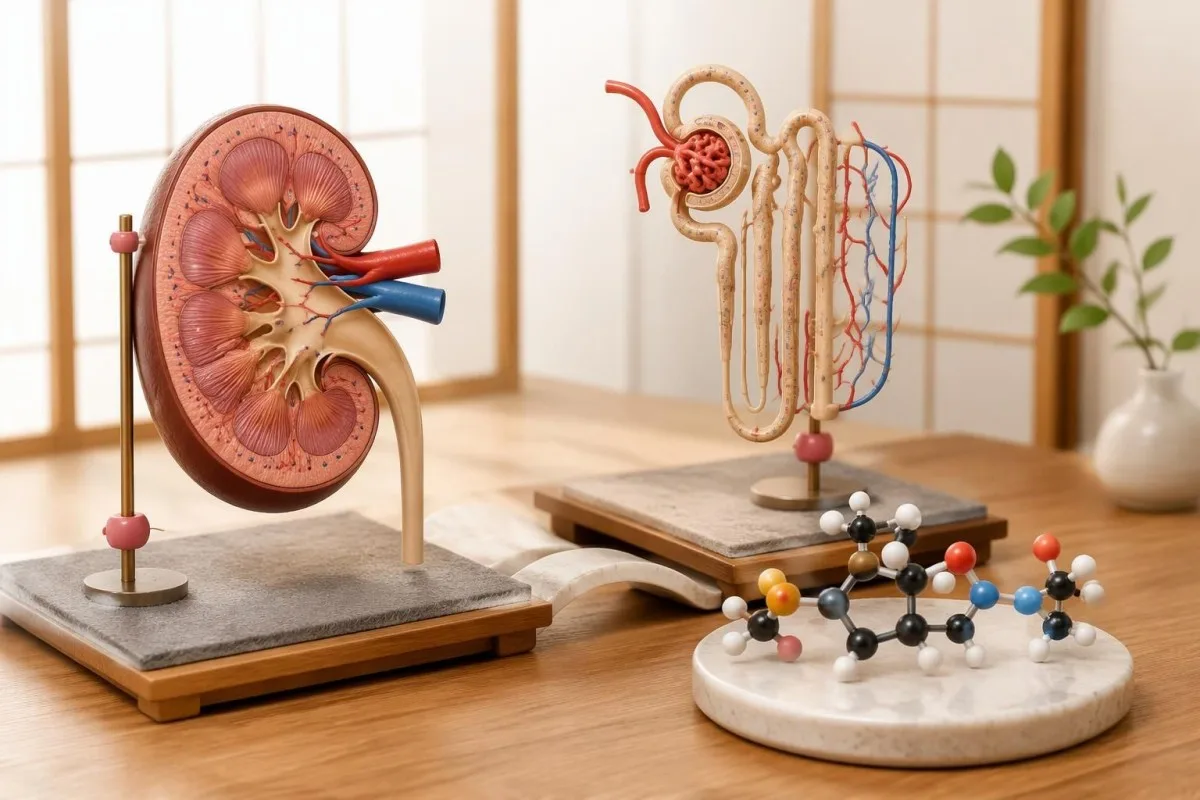
Pregnancy can increase topiramate clearance, so a concentration may fall despite consistent dosing. Pregnancy also changes the interpretation of creatinine, and standard eGFR equations are not reliable for assessing filtration during pregnancy; our pregnancy kidney-function explanation explains why a apparently reassuring result should not be used to estimate drug clearance mechanically.
In the UK, topiramate is subject to a Pregnancy Prevention Programme for people who can become pregnant; it is contraindicated for migraine prevention during pregnancy and for epilepsy in pregnancy unless no suitable alternative exists. A level of 5 mg/L does not establish fetal safety, and someone who becomes pregnant should contact the prescriber promptly rather than abruptly stopping an antiseizure regimen.
Children may have higher weight-normalized clearance than adults, while older adults may clear the medicine more slowly because of reduced renal function. The adult 5–20 mg/L interval therefore needs context rather than a new age-based cutoff invented from a single report; pediatric dose decisions require specialist assessment, and post-pregnancy monitoring may matter if a dose was increased when clearance was higher.
Hoe moatte jo in resultaat ynterpretearje yn kombinaasje mei oare befiningen?
Interpret a topiramate result by combining concentration, collection timing, symptoms, and safety chemistry. At minimum, compare 4 pieces of information: the current regimen, the last dose and sample times, the reason testing was ordered, and bicarbonate plus kidney-function results when available.
Hypothetical pattern 1: a trough falls from 8 to 3 mg/L, kidney function is stable, and seizures recur after several prescription refills were delayed. Reduced exposure is plausible, but the response should include a medication-access review and seizure assessment; raising the dose without addressing intermittent use could create excessive exposure when regular dosing resumes.
Hypothetical pattern 2: a trough rises from 9 to 16 mg/L while creatinine worsens and new coordination problems appear. Reduced clearance is a reasonable concern even though 16 mg/L remains inside a 5–20 mg/L interval; pattern 3, a level of 7 mg/L with bicarbonate of 18 mmol/L, instead highlights a possible acid–base effect that concentration monitoring alone would miss.
Kantesti is an AI-powered blood test analysis tool that helps organize these 3 patterns without treating any one as a confirmed diagnosis. Our listet de resultaatferoarings dy't de muoite wurdich binne om te dokumintearjen. explains how serial results support follow-up; keep the original laboratory interval and dates visible, because changing laboratories, formulations, or collection timing can make an apparent trend misleading.
Wat moatte jo dêrnei dwaan, en hokker bewiis stipet testen?
The next step is to ask what the topiramate result changes—not to adjust treatment from the number alone. Bring 2 datearre rapporten op, if available, and a medication timeline to the prescriber; monitoring recommendations rely on pharmacology, expert guidance, and clinical context rather than a universally validated toxicity threshold.
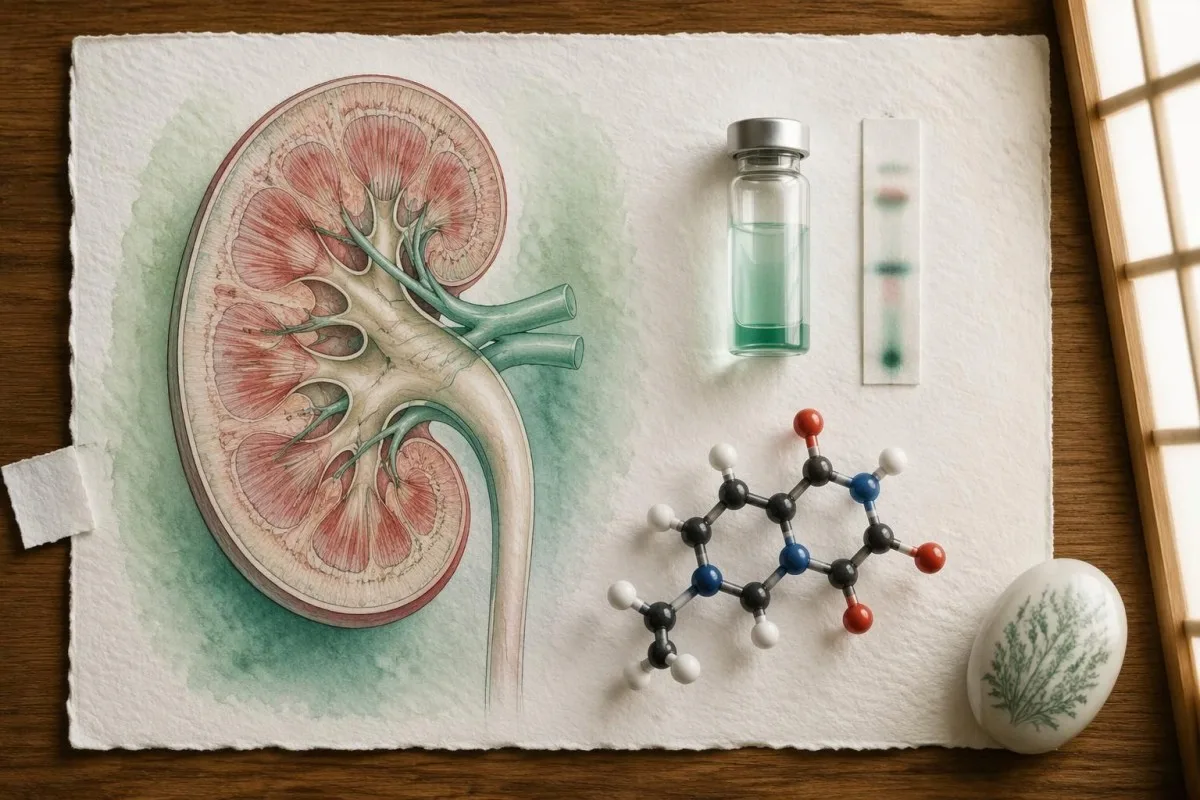
Ask the prescriber whether a repeat trough, bicarbonate check, kidney-function assessment, or medication review would answer the unresolved question. There is no evidence-based rule that every patient needs a topiramate concentration every 3 or 6 months; persistent low bicarbonate, new adverse effects, or changing clearance may justify a different follow-up plan from an isolated laboratory flag.
Kantesti helps explain reports, but our grinzen foar ferantwurde AI distinguish educational interpretation from diagnosis and prescribing. Our oanpak foar klinyske falidaasje provides methodology context; neither an AI confidence estimate nor a concentration of 10 mg/L can exclude toxicity, replace an examination, or authorize an independent dose change.
The 2 Zenodo publications listed below concern serum proteins and complement testing; they are not topiramate therapeutic-monitoring studies and should not be used to validate its concentration cutoffs. Our gids foar it ynterpretearen fan serumeiwiten offers background for understanding albumin and other medicines, while the directly relevant external references support this article's discussion of selective monitoring, pharmacokinetics, and acid–base effects.
Faak stelde fragen
Wat is in normale topiramaatspiegel?
In faak oanhelle referinsje-ynterfal foar topiramaat is 5–20 mg/L, hoewol't guon laboratoaria 2–10 mg/L brûke. Dizze yntervallen helpe by de ynterpretaasje, benammen by epilepsy, ynstee fan dat se in universeel normale of feilige konsintraasje fêststelle. Minsken kinne al ûnder it oanjûne ynterfal reagearje of binnen dat ynterfal bywurkingen ûnderfine. It berik fan it laboratoarium, it tiidstip fan it ôfnimmen fan it stekproef, de symptomen en in earder effektive konsintraasje moatte tegearre yn acht nommen wurde.
Moatte myn topiramaatnivo's regelmjittich kontrolearre wurde?
De measte minsken hawwe gjin reguliere topiramaat-konsintraasjetests neffens in fêst skema nedich. Testen kin helpe by trochbraaksepilepsy-oanfallen, fermoeden fan miste doses, ynteraksjonearjende medisinen, feroaringen yn ferbân mei swangerskip of fermindere nierklaring. Der is gjin universeel oanrikkemandearre ynterfal foar konsintraasjetests, lykas om de 3 of 6 moannen, foar alle brûkers. In basis- en periodike monitoaring fan bikarbonaat behannelet in apart feiligensprobleem en kin passend wêze, ek as medisinenivo's net mjitten wurde.
Wannear moat in Topamax-nivautest dien wurde?
0 In plande Topamax-nivo-test is meastentiids it bêste te fergelykjen as it monster fuort foar de folgjende plande doasis ôfnommen wurdt. By normale nierfunksje berikt topiramaat oer it algemien nei sa'n 4 dagen in steady state nei't in ûnferoare behannelingskema begûn is, mar fermindere klaring kin dy tiid ferlingje. Notearje it tiidstip fan 'e lêste doasis, it tiidstip fan monsterôfname, de doasis en de formulearring. By fertinking op in oerdoasis of serieuze bywurkingen is direkte beoardieling nedich ynstee fan te wachtsjen op in goed op it tiidstip ôfnommen dalnivo.
Betsjut in lege topiramaatkonsintraasje yn it bloedserum dat ik doses mist haw?
In lege topiramaatkonsintraasje yn it serum bewiist net dat doses oerslein binne. In resultaat ûnder 5 mg/L kin wize op in beskieden doasis, ferhege klaring, in enzymyndusearjend medisyn, resinte doasisoanpassingen of it tiidstip fan de bloedôfname. In delgong fan in earder ferlykber dalnivo, lykas fan 8 nei 3 mg/L, kin sterker bewiis leverje foar in feroare bleatstelling. Klinisy moatte de tagong ta medisinen en de doasisskiednis beoardielje foardat se beslute oft it skema oanpast wurde moat.
Hokker topiramaatnivo is giftich?
Der is gjin universeel falidearre topiramaatkonsintraasje dy't fêststelt dat der sprake is fan toksisiteit. In resultaat boppe 20 mg/L kin oanlieding jaan ta neier ûndersyk, mar guon bywurkingen komme foar binnen faak rapporteare laboratoariumyntervallen. De symptomen, it ûndersyk, de nierfunksje, it bikarbonaat, oare medisinen en it tiidstip fan de ôfname bepale de klinyske betsjutting. By fertinking op in oerdoasis, slimme betizing, sykheljenproblemen of hommelse eachpine of feroaring yn it sicht is driuwende beoardieling nedich, ûnôfhinklik fan de mjitten wearde.
Kin topiramaat in lege bikarbonaatwearde feroarsaakje by in normale medisynspegel?
Topiramaat kin in leech bikarbonaat feroarsaakje, sels as de konsintraasje binnen in laboratoariumreferinsje-ynterfal leit, lykas 5–20 mg/L. Remming fan koalstofanhydrase kin it renale ferlies fan bikarbonaat fergrutsje en hyperchloreemyske metabolike acidose mei in normale anioongap feroarsaakje. In bikarbonaatresultaat fan 18 mmol/L freget om klinyske ynterpretaasje, mar bewiist op himsels net dat topiramaat de oarsaak is en bepaalt ek net de earnst fan in needgefal. Dêrom kinne testen fan bikarbonaat en nierfunksje net ferfongen wurde troch in Topamax-nivo-test.
Lit jo bloedtest resultaten útlizze
Laad jo laboratoariumrapport op en de AI fan Kantesti leit elke biomarker binnen sekonden út yn gewoane taal. Brûkt troch mear as 2 miljoen minsken wrâldwiid.
Referinsjes
- Klein, T., Mitchell, S., & Weber, H. (2026). Gids foar serumproteïnen: Globulinen, albumine en de A/G-ferhâlding yn in bloedtest. Kantesti AI Medysk Undersyk. DOI
- Klein, T., Mitchell, S., & Weber, H. (2026). Gids foar C3 C4-komplementbloedtests en ANA-titers. Kantesti AI Medysk Undersyk. DOI
- Patsalos PN et al. (2008). Antiepileptic drugs—best practice guidelines for therapeutic drug monitoring: a position paper by the subcommission on therapeutic drug monitoring, ILAE Commission on Therapeutic Strategies. Epilepsia. DOI
- Jacob S and Nair AB (2016). An Updated Overview on Therapeutic Drug Monitoring of Recent Antiepileptic Drugs. Drugs in R&D. DOI
- Mirza N et al. (2009). Effect of topiramate on acid–base balance: extent, mechanism and effects. British Journal of Clinical Pharmacology. DOI
- 2M+Analysearre tests
- 127+Lannen
- 100+Talen
Oer it medyske team


E-E-A-T fertrouwensignalen
Ûnderfining
Dokter-oandreaune klinyske resinsje fan lab-ynterpretaasje-wurkprosessen.
Ekspertize
Fokus fan laboratoariummedisyne op hoe’t biomarkers har gedrage yn in klinyske kontekst.
Autoriteit
Medysk beoardiele troch Dr. Thomas Klein, mei bydragen fan Dr. Sarah Mitchell en prof. dr. Hans Weber.
Betrouberens
Bewiis-basearre ynterpretaasje mei dúdlike ferfolchpaadkes om alarm te ferminderjen.






Medyske disclaimer
Dit artikel is allinnich foar ûnderwiisdoelen en foarmet gjin medysk advys. Rieplachtsje altyd in kwalifisearre soarchferliener foar besluten oer diagnoaze en behanneling.
Publisearre · Nim kontakt op mei it redaksjeteam
Publisearre troch Kantesti Ltd, registrearre yn Ingelân en Wales, bedriuwsnûmer. 17090423, Londen, Feriene Keninkryk.
