In hege HScore fergruttet it fermoeden op sekundêre HLH by folwoeksenen; it befêstiget de diagnoaze net. Oanhâldende koarts, ôfnimmende bloedsellen en minder wurkjende organen freegje om in driuwende beoardieling, ek as de skoare leech of ûnfolslein is.

Wichtichste punten
- Betsjutting fan in hege HScore betsjut in ferhege kâns op sekundêre HLH by folwoeksenen, net bewiis foar de oandwaning; de skoare kombinearret 9 klinyske en laboratoariumfariabelen.
- De grinswearde fan 169 hie yn it oarspronklike ûndersyk in gefoelichheid fan likernôch 93% en in spesifisiteit fan 86%, mar dy sifers jilde net foar elke sikehûspopulaasje.
- Kânsskattingen ûnder 90 kamen oerien mei minder as 1%, en skoares boppe 250 mei mear as 99%, yn it oarspronklike model — gjin garandearre persoanlike kânsen.
- Allinnich ferritine kin HLH net diagnostisearje; 500 ng/mL foldocht oan ien HLH-2004-kritearium, wylst de HScore ferritinepunten begjint ta te kennen by 2,000 ng/mL.
- Ferskillende kritearia binne fan belang: de HScore-grinzen foar cytopeny binne hemoglobine ≤9.2 g/dL, trombositen ≤110 × 10^9/L, en totale wite bloedsellen ≤5.0 × 10^9/L.
- De diagnoaze fan HLH-2004 brûkt in oerienkommende molekulêre diagnoaze of it foldwaan oan 5 fan de 8 kritearia, ynterpretearre yn it ljocht fan it klinyske ferrin en it oardiel fan in spesjalist.
- Untbrekkende testen binne gjin negative testresultaten; in net ûndersocht bienmurch kin 35 mooglike HScore-punten ûnoplost litte.
- Dringende beoardieling is nedich by oanhâldende koarts mei ôfnimmende bloedselentallen of orgaandysfunksje; betizing, slimme sykheljen, ynstoarten of flinke bloedingen fereaskje spoedsoarch.
Betsjut in hege HScore dat jo HLH hawwe?
Nee. A in hege HScore wiist op in gruttere kâns op sekundêre hemofagosytyske lymfohistiocytose, of HLH, mar kin dy op himsels net befêstigje. De faak brûkte grinswearde fan 169 stipet fierder ûndersyk; oanhâldende koarts, ôfnimmende bloedselentallen en minder wurkjende organen meitsje in driuwende beoardieling troch in spesjalist needsaaklik, likefolle oft dy grinswearde berikt is.
Sekundêre HLH is in mooglik libbensgefaarlik syndroom fan ûnkontrolearre ymmúnaktivearring, ynstee fan ien abnormale laboratoariumútkomst of ien spesifike ynfeksje. De skoare mei 9 fariabelen is ûntwikkele foar folwoeksenen dy't ûndersocht wurde op reaktive hemofagosytyske syndroom, dus as dy tapast wurdt op in sûn persoan mei in tafallich fêststelde ferritineferheging, feroaret dat de kontekst dêr't de skatting yn brûkt wurdt.
In skoare fan 180 by in folwoeksene mei koarts dy't yn it sikehûs leit, betsjut wat oars as in online resultaat gearstald út net-relatearre poliklinyske rapporten. Klinisy freegje earst oft de waarnimmingen by deselde sykte-episoade hearre, oft in alternative diagnoaze se ferklearret en oft de persoan efterútgiet—want in wiskundich korrekte totaalskoare kin noch altyd de ferkearde klinyske fraach beäntwurdzje.
Kantesti is in AI bloedtestanalysator dy't helpt om befiningen te ferklearjen, lykas ferritine boppe 2,000 ng/mL neist oare laboratoariumresultaten; it kin gjin HLH-diagnoaze fêststelle en gjin needbeoardieling ferfange. Us bedriuwsachtergrûn beskriuwt de organisaasje efter dizze útlis, wylst besluten oer fertochte HLH by it behanneljende klinyske team lizze.
Hoe moatte jo HScore-grinswearden en persintaazjes ynterpretearje?
In HScore fan 169 of heger is in faak brûkte screeninggrins, gjin diagnostyske skieding tusken it wol of net hawwen fan HLH. Fardet et al. (2014) rapportearren by dizze grins in gefoelichheid fan likernôch 93% en in spesifisiteit fan 86%; de kâns dy't in rekkenmasine toant, is in aparte útkomst fan it ûnderlizzende model.
Gefoelichheid fan 93% betsjut dat likernôch 7% fan de troffen pasjinten ûnder de oarspronklike stúdzjebetingsten ûnder de grins falle kinne. In spesifisiteit fan 86% betsjut dat likernôch 14% fan de net-troffen pasjinten de grins berikke of oerskriuwe kinne; gjin fan beide sifers betsjut dat in yndividu mei in positive skoare in kâns fan 93% hat op HLH.
In dúdlik hypotetysk Bayesiaansk foarbyld lit sjen wêrom't de ferwizingspopulaasje fan belang is: mei in pretestkâns fan 5%, in gefoelichheid fan 93% en in spesifisiteit fan 86% jout in positive grinswearde in positive foarsizzende wearde fan likernôch 26%. Mei in pretestkâns fan 50% jout deselde berekkening likernôch 87%; dizze foarbylden binne gjin ferfanging foar it model fan de HScore-rekkenmasine of foar skatten dy't yn in oare populaasje falidearre binne.
De oarspronklike ûntwikkelingsstúdzje omfette 312 pasjinten dy't ûndersocht waarden op fertochte reaktive hemofagosytyske syndroom, net in algemiene screeningpopulaasje. In persintaazje fan in rekkenmasine beskriuwt dêrom in modelbasearre skatting dy't ôfhinklik is fan de ynfierwearden en de ûntwikkelingskontekst; ús útlis fan numerike tsjin kategoaryske resultaten helpt om in kâns te ûnderskieden fan in positive of negative diagnoaze.
| Nivo | Berik | Wat it betsjut |
|---|---|---|
| Low model estimate | HScore <90 | Less than 1% estimated probability in the original model; not an absolute exclusion rule. |
| Below common screening threshold | HScore 90–168 | Below the commonly used 169 cutoff; early disease, missing inputs, or treatment can limit reassurance. |
| At or above screening threshold | HScore 169–250 | Increasing concern for HLH; probability varies substantially within this interval. |
| Very high model estimate | HScore >250 | Greater than 99% estimated probability in the original model; urgent clinical assessment is appropriate, but the score is not independent confirmation. |
Hokker njoggen befiningen brûkt in HScore-rekkenmasine?
In HScore calculator combines immunosuppression, temperature, organ enlargement, cytopenias, ferritin, triglycerides, fibrinogen, AST, and bone-marrow hemophagocytosis. The maximum total is 337 points; several inputs require examination, imaging, medication history, or tissue findings and cannot be recovered from a routine blood report alone.
HScore cytopenia thresholds are hemoglobin ≤9.2 g/dL, platelets ≤110 × 10^9/L, and total white cells ≤5.0 × 10^9/L. Zero or 1 qualifying lineage earns no cytopenia points; 2 earn 24 and 3 earn 34, so an isolated platelet reduction is not scored like a simultaneous reduction across all three lineages.
A white-cell count of 4.8 × 10^9/L can qualify for the HScore even when it falls within a laboratory's reference interval. These are model thresholds, not universal definitions of an abnormal CBC; our hemoglobin and hematocrit explanation also explains why hemoglobin—not hematocrit or red-cell count—is the anemia input.
Fibrinogen ≤2.5 g/L contributes 30 points, whereas AST ≥30 IU/L contributes 19; neither finding is specific to HLH. Kantesti's bloedbiomarker-referinsjegids supports understanding the measurements, but the original score definitions must take precedence over a laboratory's high or low flags when a clinician calculates the HScore.
| Nivo | Berik | Wat it betsjut |
|---|---|---|
| Known immunosuppression | Absent: 0; present: 18 points | Use the original definition, including HIV or long-term immunosuppressive therapy; do not infer it from feeling run down. |
| Temperature | <38.4°C: 0; 38.4–39.4°C: 33; >39.4°C: 49 points | Document the temperature and its timing relative to fever-reducing medicines. |
| Organ enlargement | Neither: 0; liver or spleen: 23; both: 38 points | Requires documented hepatomegaly or splenomegaly, not abdominal discomfort alone. |
| Qualifying cytopenic lineages | 0–1: 0; 2: 24; 3: 34 points | Use hemoglobin ≤9.2 g/dL, platelets ≤110 × 10^9/L, and total white cells ≤5.0 × 10^9/L. |
| Ferritine | <2,000: 0; 2,000–6,000: 35; >6,000 ng/mL: 50 points | Ferritin points are capped; increasingly extreme values above 6,000 do not add further points. |
| Triglyceriden | <1.5: 0; 1.5–4.0: 44; >4.0 mmol/L: 64 points | Equivalent boundaries are approximately 133 and 354 mg/dL. |
| Fibrinogeen | >2.5: 0; ≤2.5 g/L: 30 points | 2.5 g/L equals 250 mg/dL. |
| AST | <30: 0; ≥30 IU/L: 19 points | Use AST, not ALT; muscle injury and sample hemolysis can affect interpretation. |
| Bone-marrow hemophagocytosis | Absent: 0; present: 35 points | Not assessed is unresolved information, even if a calculator defaults it to zero. |
Wat kin in HScore-rekkenmasineresultaat misliedend meitsje?
Missing information, incorrect units, and measurements from different illness stages can make an HScore misleading. A calculator that assigns zero to an unexamined marrow leaves 35 potential points unresolved; the total may be a useful provisional estimate, but it is not equivalent to a fully documented assessment.
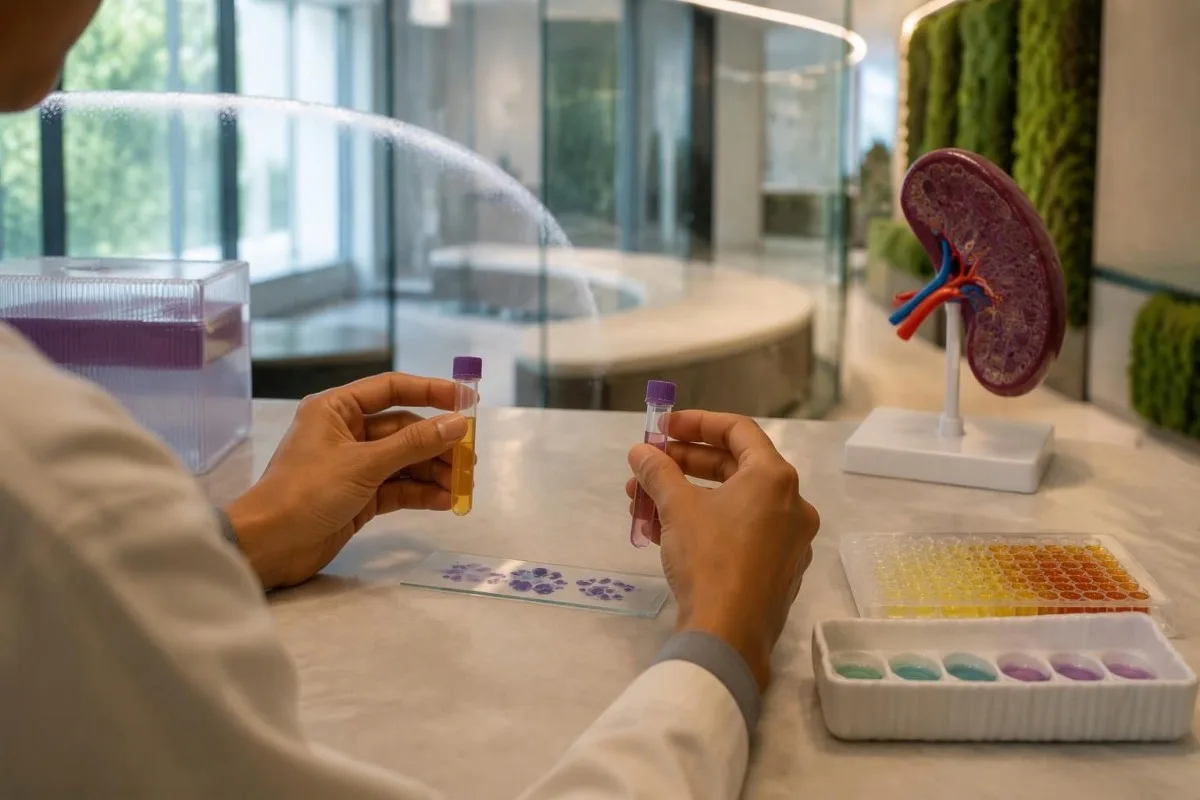
Ferritin in ng/mL and µg/L has the same numerical value, but fibrinogen in mg/dL and g/L does not: 250 mg/dL equals 2.5 g/L. Triglycerides require another conversion, with mmol/L multiplied by approximately 88.6 to obtain mg/dL; entering 250 mg/dL as 250 mmol/L can force a falsely high triglyceride category.
A platelet count of 85 × 10^9/L may be genuine, but platelet clumping can create a falsely low automated result. Laboratory comments and the cell review matter before that value is counted as a qualifying lineage; our explanation of EDTA-related platelet clumping describes how an alternative collection method may clarify the count.
AST ≥30 IU/L earns points even when the increase is small, so a compromised sample can alter the total without adding evidence of immune overactivation. A hege hemolyse-yndeks can help explain an unreliable AST result; suspected HLH still requires prompt assessment while clinicians resolve specimen problems, rather than waiting for a perfect dataset.
Hoe ferskilt HScore fan de diagnostyske kritearia fan HLH-2004?
HScore is a weighted adult probability model; HLH-2004 is a diagnostic framework with 8 criteria. HLH-2004 permits diagnosis through a compatible molecular diagnosis or fulfillment of 5 of 8 criteria, but adult specialists also consider the trajectory and may act before all criteria are documented (Henter et al., 2007; La Rosée et al., 2019).
The first 3 HLH-2004 findings are fever, splenomegaly, and cytopenias affecting at least 2 lineages: hemoglobin <9 g/dL, platelets <100 × 10^9/L, or neutrophils <1.0 × 10^9/L in the usual non-neonatal thresholds. Unlike the HScore, HLH-2004 uses neutrophils rather than total white cells and does not award extra points for liver enlargement.
Another criterion is fasting triglycerides ≥3.0 mmol/L, approximately 265 mg/dL, and/or fibrinogen ≤1.5 g/L. The remaining 4 criteria are hemophagocytosis in marrow, spleen, or lymph nodes; low or absent natural-killer-cell activity; ferritin ≥500 ng/mL; and soluble CD25, also called soluble IL-2 receptor, ≥2,400 U/mL using an appropriate assay.
A fibrinogen result of 2.0 g/L earns 30 HScore points but does not meet the HLH-2004 fibrinogen threshold, illustrating why the two systems cannot be interchanged. HLH-2004 arose from pediatric treatment guidance; our discussion of children's interpretation safety explains why adult models should not be transferred casually to children, including those with possible inherited immune disorders.
Betsjut in tige hege ferritinewearde HLH?
Very high ferritin increases concern for serious illness but does not identify HLH by itself. Ferritin ≥500 ng/mL meets one HLH-2004 criterion, while the HScore awards ferritin points only from 2,000 ng/mL; even values above 10,000 ng/mL can occur in adults with other illnesses.
Ferritin is both an iron-storage marker and an acute-phase reactant, so infection, liver injury, inflammatory disease, and some malignancies can raise it without HLH. Adult recommendations caution against treating a single ferritin threshold as diagnostic; La Rosée et al. (2019) emphasize the overall clinical picture, particularly when extreme elevations coexist with cytopenias and organ dysfunction.
Consider a hypothetical well adult with ferritin 650 ng/mL after a recent illness and no fever, falling counts, or organ dysfunction: that result is not equivalent to ferritin 6,500 ng/mL during rapid clinical deterioration. Our exercise-related ferritin discussion concerns stable outpatient interpretation, not a reason to attribute an acutely unwell person's extreme ferritin to training.
The HScore ferritin contribution is capped at 50 points above 6,000 ng/mL, so a rise from 8,000 to 25,000 may convey deterioration that the total score does not capture. Transferrin saturation and the broader izerûndersyk útslach help investigate iron loading, but iron overload assessment and urgent HLH assessment answer different questions and can require different timelines.
Hokker kombinaasjes fan befiningen meitsje HLH mear soarchwekkend?
Persistent fever plus falling blood counts, rising ferritin, and worsening liver or coagulation results is more concerning for HLH than any isolated abnormality. Fibrinogen falling toward 2.5 g/L can be especially informative during a strong inflammatory response, because inflammation often raises fibrinogen rather than lowering it.
A hypothetical platelet decline from 210 to 95 × 10^9/L over 48 hours deserves attention even before all 3 lineages cross HScore thresholds. The rate of change may signal evolving consumption, marrow suppression, or immune disease; the reason clinicians examine laboratoariumpatroanen by DIC is that disseminated intravascular coagulation can coexist with HLH or result from another critical illness.
A high CRP does not exclude HLH, and a white-cell count of 4.5 × 10^9/L does not establish it. Cytopenias can reflect medicines, infection, marrow disease, or baseline variation, so clinicians use the differential count, smear, previous results, and the WBC-versus-CRP relationship to ask whether several abnormalities share one evolving explanation.
Kantesti is in AI bloedtest-útslachplatfoarm that can help organize patterns across 2 or more reports, but an apparent trend must be checked against sampling dates, treatment, and laboratory methods. A falling fibrinogen with rising ferritin is a reason to contact the clinical team promptly—not proof that the platform, or the patient reading the report, has identified HLH.
Wannear fereasket fertinking op HLH in driuwende beoardieling troch in spesjalist?
Suspected HLH requires urgent hospital-based assessment when fever accompanies falling counts or organ dysfunction; do not wait for an HScore of 169. Confusion, seizures, severe breathlessness, collapse, significant bleeding, or rapidly worsening jaundice require emergency care because HLH, sepsis, and other dangerous conditions can present similarly.

Fever with an absolute neutrophil count below 0.5 × 10^9/L is an emergency pattern, whether or not HLH is the eventual diagnosis. A person receiving chemotherapy or immunosuppressive treatment should follow their urgent-care instructions immediately; fever-reducing medicines may lower the measured temperature without making the underlying illness safe to monitor at home.
New breathlessness during a febrile illness can reflect lung involvement, anemia, fluid problems, or infection rather than the HScore itself. Our syktestopping testgids explains why oxygenation and clinical examination matter alongside laboratory values; a reassuring ferritin or a score below 169 should never override severe respiratory symptoms.
A high HScore with persistent fever and deteriorating results merits same-day discussion with the treating team, commonly involving hematology and other relevant specialists. Bring available reports, but do not delay seeking care to retrieve all 9 inputs or wait for a marrow appointment; in the UK, call 999 for life-threatening symptoms, or use the local emergency number elsewhere.
Kin in lege HScore betide of behannele HLH útslute?
A low HScore cannot reliably exclude HLH when the illness is early, key inputs are missing, or treatment has changed the findings. The original 169 threshold had approximately 93% sensitivity, not 100%; clinical deterioration can justify reassessment even when a first calculation falls below that cutoff.
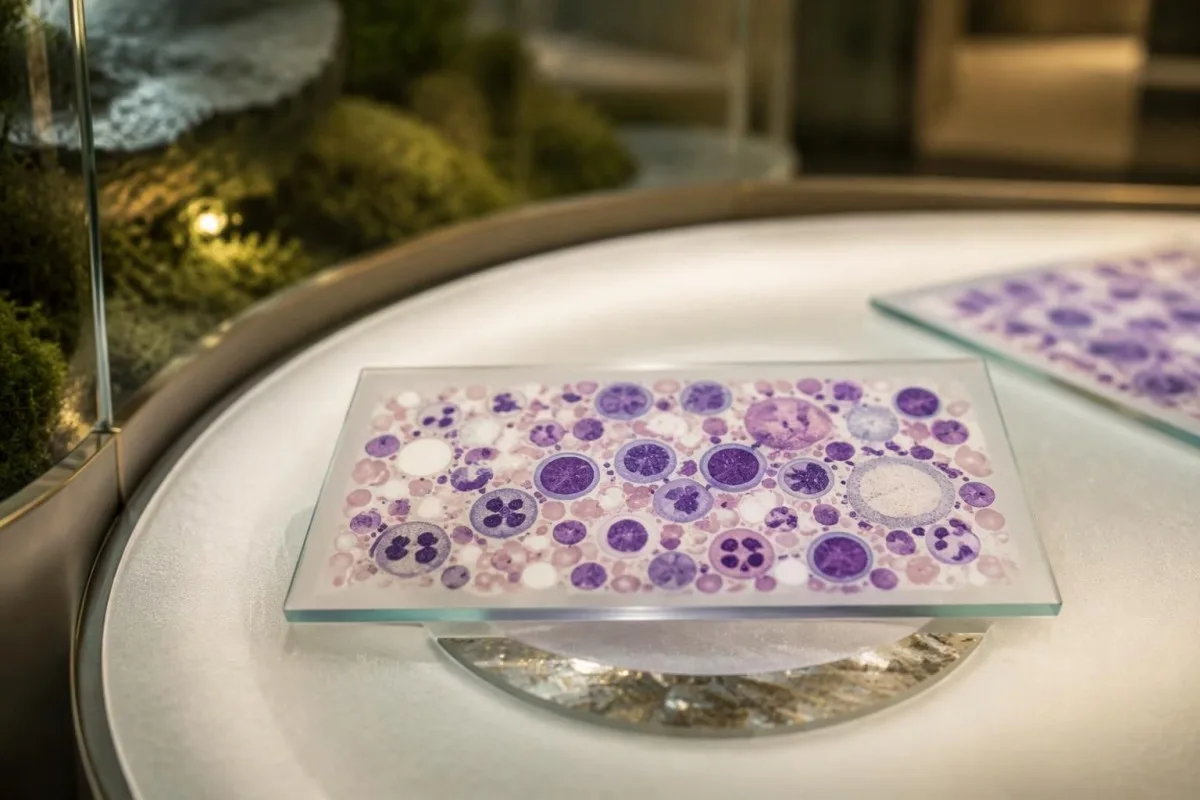
Glucocorticoids and fever-reducing treatment can suppress some score inputs, while transfusion can raise hemoglobin and plasma products can alter coagulation measurements. A temperature of 37.8°C after treatment is not interchangeable with an untreated peak of 39.6°C; clinicians need the treatment timeline to interpret the score rather than assuming the lower total demonstrates recovery.
An unexamined marrow, unknown organ size, and absent triglyceride measurement leave 3 different areas of uncertainty. Recalculation should use clinically appropriate observations from the same assessment window, not a patchwork of worst-ever values selected from unrelated admissions; our medisinen-feiligens trend hantlieding explains why treatment dates belong beside laboratory trends.
De ynformaasje oer klinyske validaasje concerns interpretation standards and limitations; it should not be read as validation of an HScore cutoff for every setting. The original 169 operating point cannot automatically be assumed to retain the same accuracy in intensive care, rheumatology-associated macrophage activation syndrome, or patients already receiving immune-directed treatment.
Wat kin sekundêre HLH by folwoeksenen útlokje?
Infections, malignancies, and autoimmune or autoinflammatory disease are major trigger groups for secondary HLH in adults. An HScore of 200 does not tell clinicians which trigger is present; identifying the cause matters because controlling immune activation and treating the underlying disease often need to happen together.
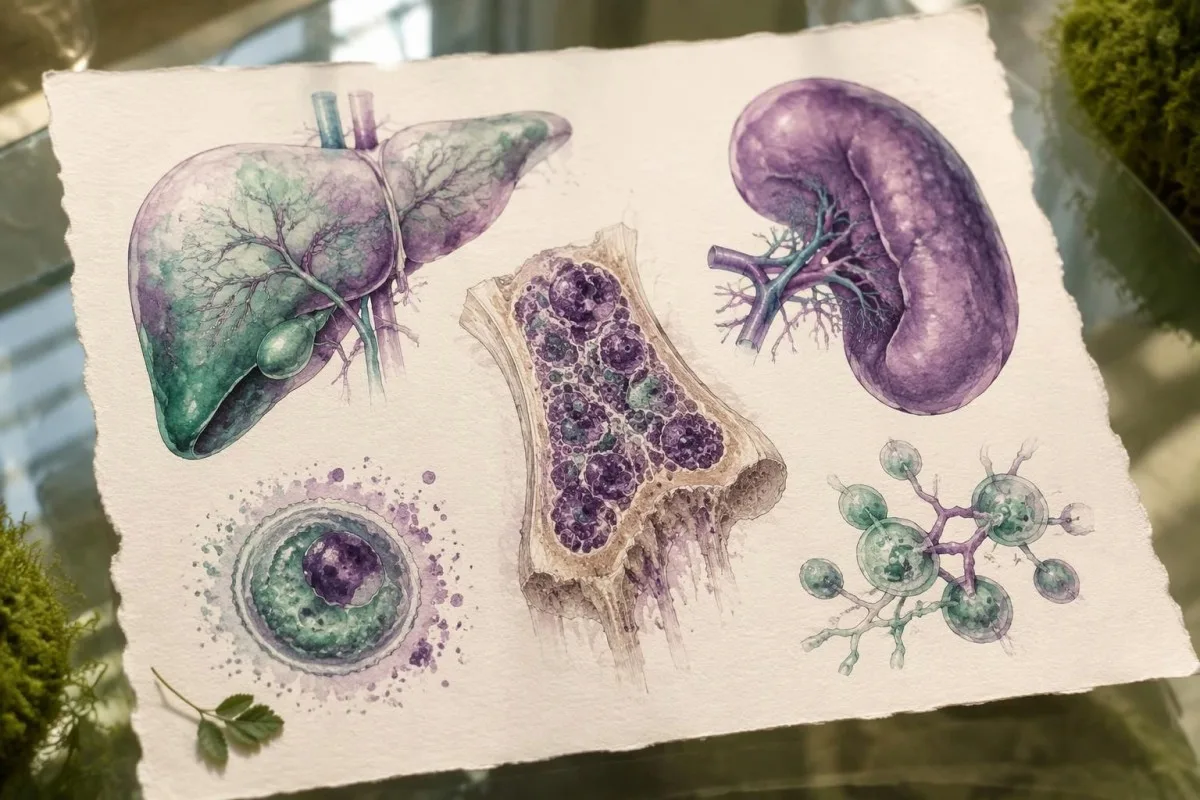
Epstein–Barr virus is a recognized HLH trigger, but positive EBV IgG often reflects past exposure rather than the cause of an acute syndrome. A hypothetical adult with ferritin 12,000 ng/mL and positive VCA IgG still needs an appropriately selected infection workup; our EBV antistofpatroan gids explains why antibody history is not the same as active viral disease.
Certain treatable infections can cause fever, cytopenias, and liver-test abnormalities that resemble or trigger HLH, making exposure history medically useful. For example, a platelet count of 70 × 10^9/L after tick exposure changes the questions clinicians ask; our discussion of ehrlichiosis testing timing shows why early PCR and later antibodies may provide different information.
Macrophage activation syndrome, often associated with rheumatic disease, overlaps with secondary HLH but may need disease-specific assessment rather than rigid dependence on HScore 169. Lymphoma and other hematologic malignancies also warrant investigation when appropriate; adult presentation does not exclude inherited susceptibility, particularly when there are recurrent episodes, a suggestive family history, or unusual immune-function findings.
Hoe sjogge hypotetyske hege en ûnfolsleine HScores derút?
Worked examples show how the total is assembled, not how to diagnose yourself. A hypothetical adult with documented fever, spleen enlargement, 3 qualifying cytopenias, high ferritin, elevated triglycerides, low fibrinogen, and elevated AST can accumulate 264 points before marrow findings are known.
Suppose a hypothetical 52-year-old adult has no known immunosuppression, temperature 39.6°C, splenomegaly without hepatomegaly, hemoglobin 8.7 g/dL, platelets 80 × 10^9/L, and white cells 3.2 × 10^9/L. Those inputs contribute 0 + 49 + 23 + 34 = 106 points; the clinical pattern already deserves urgent attention before the remaining measurements are added.
Add ferritin 8,500 ng/mL, triglycerides 3.1 mmol/L, fibrinogen 1.8 g/L, and AST 120 IU/L: their contributions are 50 + 44 + 30 + 19 = 143, producing a subtotal of 249, not 264. If both liver and spleen were enlarged instead, the organ contribution would rise by 15 points to produce 264; unexamined marrow leaves a further 35 points unresolved in either example.
For contrast, ferritin 4,200 ng/mL and AST 45 IU/L contribute only 54 points between them; they do not establish a complete low HScore when the other 7 inputs are unknown. Kantesti uses these hypothetical calculations to show why missingness and exact definitions matter; our blood-test timeline explanation helps organize the observations before a clinician interprets the total.
Wat bart der neidat kliïnten HLH fermoedzje?
Clinicians investigate HLH and its trigger in parallel, usually repeating blood counts, ferritin, liver tests, triglycerides, and coagulation measurements while considering marrow examination and specialist immune tests. Soluble CD25 ≥2,400 U/mL is one HLH-2004 criterion, but assay units and delayed turnaround can complicate interpretation.
Hemophagocytosis is neither necessary nor sufficient for HLH diagnosis: it may be absent early and can occur in other severe illnesses. A positive marrow result contributes 35 HScore points, but marrow examination may be just as valuable for detecting a malignancy, infection, or alternative explanation for cytopenias; our MDS diagnostic limits guide illustrates why a CBC cannot replace tissue-based investigation.
Specialist tests can include soluble IL-2 receptor, natural-killer-cell function, selected genetic studies, and targeted microbiological testing, depending on the presentation. A laboratory reporting soluble CD25 in pg/mL cannot be compared directly with the original 2,400 U/mL threshold without assay-specific interpretation; asking which method and reference system were used can prevent a misleading criterion count.
Treatment may begin before 5 HLH-2004 criteria are documented when the clinical team judges the syndrome sufficiently likely and organ dysfunction is progressing. La Rosée et al. (2019) describe individualized adult management that may involve glucocorticoids, selected cytokine-directed treatment, or etoposide-containing regimens; an HScore alone does not determine a drug, dose, or safe treatment pathway.
Hoe kinne jo jo feilich tariede op in besprekken oer HScore?
Kantesti is in AI-oandreaune ark foar analyse fan bloedtests for understanding laboratory reports, not a service that confirms HLH or manages emergency deterioration. Before discussing an HScore near or above 169, gather the original reports, their dates and units, recent treatments, and any documented liver or spleen findings.
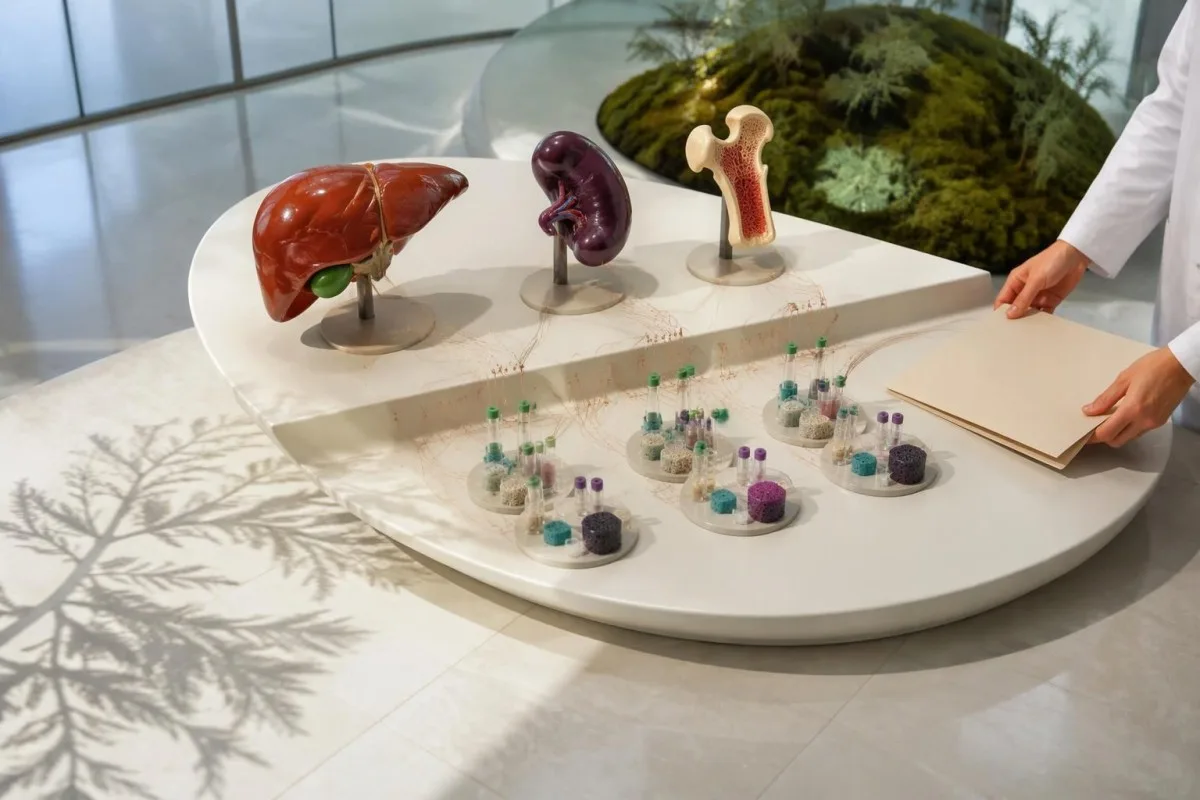
A useful appointment summary separates measured, documented, and unknown information across all 9 HScore inputs. Record the highest relevant temperature with its timing, whether imaging documented organ enlargement, and whether marrow was examined; write 'not assessed' rather than 'negative' when a test or examination has not happened.
Ask 3 focused questions: Is this pattern concerning for HLH or another urgent condition, which missing investigations could change the assessment, and what symptoms should trigger immediate return? If you are clinically stable with ferritin 700 ng/mL and no systemic warning signs, ask about ordinary iron, liver, and inflammatory causes rather than assuming an HLH workup is automatically required.
Diet, supplements, and iron avoidance do not treat suspected HLH, even when ferritin exceeds 6,000 ng/mL. Our ferplichtingen oangeande ferantwurdlike AI explain the boundary between educational interpretation and medical decision-making; the practical next step for a high, unexplained score is clinician contact, not repeated online calculations intended to obtain a more reassuring number.
Undersykspublikaasjes en it bewiis efter de ynterpretaasje fan HScore
The main evidence for HScore interpretation comes from its 2014 development study and adult HLH recommendations, not general laboratory guides. Fardet et al. established the model and its 169 operating threshold; Henter et al. (2007) described HLH-2004, and La Rosée et al. (2019) addressed the challenges of applying diagnostic and treatment frameworks to adults.

The 3 clinical references below answer different questions: how the score was developed, what the HLH-2004 criteria require, and how adult management differs from a purely pediatric protocol. None makes a calculator a standalone diagnostic test, and none establishes one universally reliable threshold for every patient group, treatment stage, or hospital setting.
Kantesti LTD, UK Company No. 17090423, also publishes educational laboratory guides; the 2 Zenodo records listed below concern kidney function and urinalysis, not HScore validation. Our hantlieding foar nierfunksjeferhâlding can help readers understand accompanying renal measurements when a multisystem illness affects hydration or organ function, without identifying the cause of that illness.
Urinalysis is not one of the 9 HScore inputs, although urine findings may contribute to a broader assessment of organ involvement or alternative diagnoses. The gids foar ynterpretaasje fan urinalyse is supplementary reading; our medyske ynhâldsnoarmen explain why educational publications, diagnostic studies, and clinical guidelines should be distinguished rather than presented as equivalent evidence.
Faak stelde fragen
Befêstiget in hege HScore HLH?
0 In hege HScore fergruttet de skatte kâns op sekundêre HLH by folwoeksenen, mar befêstiget de diagnoaze net op himsels. De faak brûkte drompelwearde fan 169 hie yn it oarspronklike ûndersyk in gefoelichheid fan likernôch 93% en in spesifisiteit fan 86%. Klinisy moatte it ferrin fan de sykte, alternative diagnoazes, ûntbrekkende ynfiergegevens en stypjende ûndersiken beoardielje. Oanhâldende koarts mei ôfnimmende seltellingen of orgaandysfunksje freget om driuwende beoardieling ynstee fan te wachtsjen op noch in berekkeningsresultaat.
Hokker HScore wurdt as heech beskôge?
In HScore fan 169 of heger wurdt faak brûkt as drompel om fierder ûndersyk nei sekundêre HLH by folwoeksenen te stypjen. Skoares boppe 250 kamen yn it oarspronklike model oerien mei in skatte kâns fan mear as 99%%, mar dat persintaazje is net in garandearre yndividuele kâns yn elke klinyske situaasje. HScore-wearden ûnder 169 kinne noch foarkomme by HLH yn in ier stadium, dy't net folslein ûndersocht is of al behannele wurdt. De passende reaksje hinget ôf fan it klinyske patroan en oft de persoan efterútgiet.
Kin ferritine boppe de 10.000 wat oars betsjutte as HLH?
Ferritine boppe 10,000 ng/mL kin foarkomme by folwoeksenen sûnder HLH, ek by minsken mei in slimme ynfeksje, leverskea, in maligne oandwaning of oare inflammatoire oandwaningen. Ferritine ≥500 ng/mL foldocht mar oan ien HLH-2004-kritearium, en de HScore beheint ferritine ta 50 punten boppe 6,000 ng/mL. Ekstreem hege ferritinewearden binne mear reden ta soarch as se begelaat wurde troch oanhâldende koarts, ôfnimmende bloedtellingen, leech fibrinogeen of orgaandysfunksje. Dit moat oanlieding wêze foar klinysk ûndersyk, net foar in automatyske diagnoaze fan HLH of izeroerbelêsting.
Kinne jo in HScore berekkenje sûnder in bienmurchûndersyk?
In foarlopige HScore kin berekkene wurde foardat it bienmurchûndersyk dien is, mar net ûndersocht bienmurch is ûnbekend en net negatyf. Hemofagosytose yn it bienmurch draacht 35 punten by, dus kin de ûnwissichheid omskreaun wurde as in mooglike tafoeging fan 35 punten as alle oare ynfiergegevens dokumintearre binne. It ûntbrekken fan hemofagosytose yn in ûndersocht stekproef slút HLH net út, en de oanwêzigens dêrfan befêstiget HLH net op himsels. In urgente beoardieling mei net útsteld wurde allinnich om dizze ynfier kompleet te meitsjen.
Wat is it ferskil tusken de HScore- en de HLH-2004-kritearia?
HScore is in woegen kânsmodel dat 9 ynfierfariabelen brûkt, wylst HLH-2004 in kompatibele molekulêre diagnoaze of it foldwaan oan 5 fan de 8 diagnostyske kritearia brûkt. Harren laboratoariumdrompels ferskille: HScore jout punten foar fibrinogeen by ≤2.5 g/L, wylst de fibrinogeendrompel fan HLH-2004 ≤1.5 g/L is. HLH-2004 omfettet ek de aktiviteit fan natuerlike-killersellen en oplosber CD25, dy't by HScore ûntbrekke. Spesjalisten foar folwoeksenen brûke dizze kaders neist klinysk oardiel, ynstee fan se as útwikselbere tests te behanneljen.
Kin in lege HScore HLH útslute?
0 In lege HScore kin HLH net feilich útslute as wichtige befiningen ûntbrekke, de behanneling de resultaten feroare hat, of it syndroom noch yn ûntwikkeling is. De oarspronklike drompel fan 169 hie in gefoelichheid fan likernôch 93%, net 100%, en de prestaasjes kinne yn oare populaasjes ferskille. In skoare ûnder 90 betsjutte yn it oarspronklike model in rûsde kâns fan minder as 1%, gjin absolute útslutingsregel. Nije betizing, slimme sykheljen, ynstoarten, wichtige bloedingen of in efterútgeande oargelfunksje moatte swierder weagje as de gerêststelling fan in lege skoare.
Lit jo bloedtest resultaten útlizze
Laad jo laboratoariumrapport op en de AI fan Kantesti leit elke biomarker binnen sekonden út yn gewoane taal. Brûkt troch mear as 2 miljoen minsken wrâldwiid.
Referinsjes
- Klein, T., Mitchell, S., & Weber, H. (2026). BUN/Kreatinine Ratio Útlein: Gids foar Nierfunksje Test. Kantesti AI Medysk Undersyk. DOI
- Klein, T., Mitchell, S., & Weber, H. (2026). Urobilinogen yn Urine Test: Folsleine Urinalysis Gids 2026. Kantesti AI Medysk Undersyk. DOI
- Fardet L et al. (2014). Development and validation of the HScore, a score for the diagnosis of reactive hemophagocytic syndrome. Arthritis & Rheumatology. DOI PubMed
- Henter JI et al. (2007). HLH-2004: Diagnostic and therapeutic guidelines for hemophagocytic lymphohistiocytosis. Pediatric Blood & Cancer. DOI PubMed
- La Rosée P et al. (2019). Recommendations for the management of hemophagocytic lymphohistiocytosis in adults. Blood. DOI PubMed
- 2M+Analysearre tests
- 127+Lannen
- 100+Talen
Oer it medyske team


E-E-A-T fertrouwensignalen
Ûnderfining
Dokter-oandreaune klinyske resinsje fan lab-ynterpretaasje-wurkprosessen.
Ekspertize
Fokus fan laboratoariummedisyne op hoe’t biomarkers har gedrage yn in klinyske kontekst.
Autoriteit
Medysk beoardiele troch Dr. Thomas Klein, mei bydragen fan Dr. Sarah Mitchell en prof. dr. Hans Weber.
Betrouberens
Bewiis-basearre ynterpretaasje mei dúdlike ferfolchpaadkes om alarm te ferminderjen.






Medyske disclaimer
Dit artikel is allinnich foar ûnderwiisdoelen en foarmet gjin medysk advys. Rieplachtsje altyd in kwalifisearre soarchferliener foar besluten oer diagnoaze en behanneling.
Publisearre · Nim kontakt op mei it redaksjeteam
Publisearre troch Kantesti Ltd, registrearre yn Ingelân en Wales, bedriuwsnûmer. 17090423, Londen, Feriene Keninkryk.
