HScore ya juu huongeza shaka ya HLH ya sekondari kwa watu wazima; haithibitishi utambuzi. Homa inayoendelea, idadi ya seli za damu inayopungua, na utendaji wa viungo unaozidi kuzorota huhitaji tathmini ya haraka hata alama ikiwa ya chini au haijakamilika.

Mambo muhimu ya kukumbuka
- Maana ya HScore ya juu ni uwezekano mkubwa zaidi wa HLH ya sekondari kwa watu wazima, si uthibitisho wa hali hiyo; alama hii huchanganya vigezo 9 vya kliniki na maabara.
- Kiwango cha ukataji cha 169 kilikuwa na unyeti wa takriban 93% na umahususi wa 86% katika utafiti wa awali, lakini takwimu hizo haziwakilishi kila kundi la wagonjwa hospitalini.
- Makadirio ya uwezekano ya chini ya 90 yalilingana na chini ya 1%, na alama za zaidi ya 250 zililingana na zaidi ya 99%, katika modeli ya awali—si uwezekano wa kibinafsi uliohakikishwa.
- Ferritin pekee haiwezi kutambua HLH; 500 ng/mL hutimiza kigezo kimoja cha HLH-2004, ilhali HScore huanza kutoa pointi za ferritin kuanzia 2,000 ng/mL.
- Vigezo tofauti ni muhimu: viwango vya HScore vya kupungua kwa idadi ya seli za damu ni hemoglobini ≤9.2 g/dL, sahani za damu ≤110 × 10^9/L, na jumla ya seli nyeupe za damu ≤5.0 × 10^9/L.
- Utambuzi wa HLH-2004 hutegemea utambuzi wa kijenetiki unaolingana au kutimiza vigezo 5 kati ya 8, vinavyotafsiriwa kwa kuzingatia mwenendo wa ugonjwa na uamuzi wa mtaalamu.
- Vipimo ambavyo havijafanywa si vipimo hasi; kutofanyiwa uchunguzi wa uboho kunaweza kuacha alama 35 zinazowezekana za HScore bila kutatuliwa.
- Tathmini ya haraka inahitajika kwa homa inayoendelea pamoja na kupungua kwa hesabu za seli za damu au kutofanya kazi vizuri kwa viungo; kuchanganyikiwa, kushindwa kupumua kwa shida, kuzimia au kuvuja damu kwa kiasi kikubwa kunahitaji huduma ya dharura.
Je, HScore ya juu inamaanisha una HLH?
Hapana. A HScore ya juu hukadiria uwezekano mkubwa wa limfohistiocytosis ya hemofagositiki ya sekondari, au HLH, lakini haiwezi kuthibitisha hali hiyo peke yake. Kizingiti kinachotumiwa kwa kawaida cha 169 kinaunga mkono tathmini zaidi; homa inayoendelea, kupungua kwa hesabu za seli za damu na kuzorota kwa utendaji wa viungo kunahitaji tathmini ya haraka ya mtaalamu bila kujali kama kizingiti hicho kimefikiwa.
HLH ya sekondari ni dalili za ugonjwa zinazoweza kuhatarisha maisha za uanzishaji usiodhibitiwa wa mfumo wa kinga, badala ya matokeo moja yasiyo ya kawaida ya maabara au maambukizi mahususi. Alama yake yenye vigezo 9 ilibuniwa kwa watu wazima wanaofanyiwa tathmini ya dalili ya hemofagositiki tendaji, kwa hiyo kuitumia kwa mtu mwenye afya njema aliye na ongezeko la ferritin lililobainika kwa bahati hubadilisha mazingira ambayo makadirio hayo yanatumika.
Alama ya 180 kwa mtu mzima mwenye homa aliyelazwa hospitalini ina maana tofauti na matokeo ya mtandaoni yaliyokusanywa kutoka ripoti za wagonjwa wa nje zisizohusiana. Madaktari huanza kwa kuuliza ikiwa matokeo hayo yanahusiana na kipindi kilekile cha ugonjwa, ikiwa utambuzi mwingine unayaeleza, na ikiwa hali ya mtu inazidi kuwa mbaya—kwa sababu jumla iliyo sahihi kihisabati bado inaweza kujibu swali lisilo sahihi la kitabibu.
Kantesti ni Mchambuzi wa mtihani wa damu wa AI inayosaidia kueleza matokeo kama vile ferritin iliyo juu ya 2,000 ng/mL pamoja na matokeo mengine ya maabara; haiwezi kuthibitisha utambuzi wa HLH au kuchukua nafasi ya tathmini ya dharura. Yetu historia ya kampuni inaeleza shirika lililo nyuma ya maelezo haya, ilhali maamuzi kuhusu HLH inayoshukiwa yako mikononi mwa timu ya kliniki inayotoa matibabu.
Unapaswa kutafsiri vipi viwango vya ukataji na asilimia za HScore?
An HScore ya 169 au zaidi ni kizingiti cha uchunguzi wa awali kinachotumiwa kwa kawaida, si mpaka wa utambuzi unaotofautisha kuwa na HLH na kutokuwa nayo. Fardet et al. (2014) waliripoti unyeti wa takriban 93% na umaalumu wa 86% katika kiwango hiki cha kukata; uwezekano unaoonyeshwa na kikokotoo ni matokeo tofauti na yale ya modeli ya msingi.
Unyeti wa 93% inamaanisha kuwa takriban 7% ya wagonjwa walioathirika wanaweza kuwa chini ya kizingiti hicho katika hali za utafiti wa awali. Umaalumu wa 86% unamaanisha kuwa takriban 14% ya watu wasioathirika wanaweza kufikia au kuvuka kizingiti hicho; hakuna kati ya nambari hizi inayomaanisha kuwa mtu binafsi mwenye alama chanya ana uwezekano wa 93% wa kuwa na HLH.
Mfano wa wazi wa kinadharia wa Bayes unaonyesha kwa nini kundi linaloelekezwa kwa uchunguzi ni muhimu: kwa uwezekano wa kabla ya kipimo wa 5%, unyeti wa 93% na umaalumu wa 86%, kizingiti chanya hutoa thamani tabiri chanya ya takriban 26%. Kwa uwezekano wa kabla ya kipimo wa 50%, hesabu hiyo hiyo hutoa takriban 87%; mifano hii si mbadala wa modeli ya kikokotoo cha HScore au makadirio yaliyothibitishwa katika kundi jingine.
Utafiti wa awali wa uundaji ulihusisha wagonjwa 312 waliotathminiwa kwa kushukiwa kuwa na dalili ya hemofagositiki tendaji, si kundi la jumla la uchunguzi wa awali. Kwa hiyo, asilimia ya kikokotoo hueleza makadirio yanayotegemea modeli kulingana na vigezo vyake na mazingira ya uundaji; maelezo yetu kuhusu matokeo ya nambari dhidi ya matokeo ya kategoria husaidia kutofautisha uwezekano na utambuzi chanya au hasi.
| Kiwango | Wigo | Maana yake |
|---|---|---|
| Low model estimate | HScore <90 | Less than 1% estimated probability in the original model; not an absolute exclusion rule. |
| Below common screening threshold | HScore 90–168 | Below the commonly used 169 cutoff; early disease, missing inputs, or treatment can limit reassurance. |
| At or above screening threshold | HScore 169–250 | Increasing concern for HLH; probability varies substantially within this interval. |
| Very high model estimate | HScore >250 | Greater than 99% estimated probability in the original model; urgent clinical assessment is appropriate, but the score is not independent confirmation. |
Kikokotoo cha HScore hutumia matokeo yapi tisa?
An HScore calculator combines immunosuppression, temperature, organ enlargement, cytopenias, ferritin, triglycerides, fibrinogen, AST, and bone-marrow hemophagocytosis. The maximum total is 337 points; several inputs require examination, imaging, medication history, or tissue findings and cannot be recovered from a routine blood report alone.
HScore cytopenia thresholds are hemoglobin ≤9.2 g/dL, platelets ≤110 × 10^9/L, and total white cells ≤5.0 × 10^9/L. Zero or 1 qualifying lineage earns no cytopenia points; 2 earn 24 and 3 earn 34, so an isolated platelet reduction is not scored like a simultaneous reduction across all three lineages.
A white-cell count of 4.8 × 10^9/L can qualify for the HScore even when it falls within a laboratory's reference interval. These are model thresholds, not universal definitions of an abnormal CBC; our hemoglobin and hematocrit explanation also explains why hemoglobin—not hematocrit or red-cell count—is the anemia input.
Fibrinogen ≤2.5 g/L contributes 30 points, whereas AST ≥30 IU/L contributes 19; neither finding is specific to HLH. Kantesti's mwongozo wa marejeo wa viashiria vya damu supports understanding the measurements, but the original score definitions must take precedence over a laboratory's high or low flags when a clinician calculates the HScore.
| Kiwango | Wigo | Maana yake |
|---|---|---|
| Known immunosuppression | Absent: 0; present: 18 points | Use the original definition, including HIV or long-term immunosuppressive therapy; do not infer it from feeling run down. |
| Temperature | <38.4°C: 0; 38.4–39.4°C: 33; >39.4°C: 49 points | Document the temperature and its timing relative to fever-reducing medicines. |
| Organ enlargement | Neither: 0; liver or spleen: 23; both: 38 points | Requires documented hepatomegaly or splenomegaly, not abdominal discomfort alone. |
| Qualifying cytopenic lineages | 0–1: 0; 2: 24; 3: 34 points | Use hemoglobin ≤9.2 g/dL, platelets ≤110 × 10^9/L, and total white cells ≤5.0 × 10^9/L. |
| Ferritin | <2,000: 0; 2,000–6,000: 35; >6,000 ng/mL: 50 points | Ferritin points are capped; increasingly extreme values above 6,000 do not add further points. |
| Triglycerides | <1.5: 0; 1.5–4.0: 44; >4.0 mmol/L: 64 points | Equivalent boundaries are approximately 133 and 354 mg/dL. |
| Fibrinogen | >2.5: 0; ≤2.5 g/L: 30 points | 2.5 g/L equals 250 mg/dL. |
| AST | <30: 0; ≥30 IU/L: 19 points | Use AST, not ALT; muscle injury and sample hemolysis can affect interpretation. |
| Bone-marrow hemophagocytosis | Absent: 0; present: 35 points | Not assessed is unresolved information, even if a calculator defaults it to zero. |
Ni nini kinachoweza kufanya matokeo ya kikokotoo cha HScore yapotoshe?
Missing information, incorrect units, and measurements from different illness stages can make an HScore misleading. A calculator that assigns zero to an unexamined marrow leaves 35 potential points unresolved; the total may be a useful provisional estimate, but it is not equivalent to a fully documented assessment.
Ferritin in ng/mL and µg/L has the same numerical value, but fibrinogen in mg/dL and g/L does not: 250 mg/dL equals 2.5 g/L. Triglycerides require another conversion, with mmol/L multiplied by approximately 88.6 to obtain mg/dL; entering 250 mg/dL as 250 mmol/L can force a falsely high triglyceride category.
A platelet count of 85 × 10^9/L may be genuine, but platelet clumping can create a falsely low automated result. Laboratory comments and the cell review matter before that value is counted as a qualifying lineage; our explanation of EDTA-related platelet clumping describes how an alternative collection method may clarify the count.
AST ≥30 IU/L earns points even when the increase is small, so a compromised sample can alter the total without adding evidence of immune overactivation. A kiwango cha juu cha hemolysis can help explain an unreliable AST result; suspected HLH still requires prompt assessment while clinicians resolve specimen problems, rather than waiting for a perfect dataset.
HScore inatofautianaje na vigezo vya utambuzi vya HLH-2004?
HScore is a weighted adult probability model; HLH-2004 is a diagnostic framework with 8 criteria. HLH-2004 permits diagnosis through a compatible molecular diagnosis or fulfillment of 5 of 8 criteria, but adult specialists also consider the trajectory and may act before all criteria are documented (Henter et al., 2007; La Rosée et al., 2019).
The first 3 HLH-2004 findings are fever, splenomegaly, and cytopenias affecting at least 2 lineages: hemoglobin <9 g/dL, platelets <100 × 10^9/L, or neutrophils <1.0 × 10^9/L in the usual non-neonatal thresholds. Unlike the HScore, HLH-2004 uses neutrophils rather than total white cells and does not award extra points for liver enlargement.
Another criterion is fasting triglycerides ≥3.0 mmol/L, approximately 265 mg/dL, and/or fibrinogen ≤1.5 g/L. The remaining 4 criteria are hemophagocytosis in marrow, spleen, or lymph nodes; low or absent natural-killer-cell activity; ferritin ≥500 ng/mL; and soluble CD25, also called soluble IL-2 receptor, ≥2,400 U/mL using an appropriate assay.
A fibrinogen result of 2.0 g/L earns 30 HScore points but does not meet the HLH-2004 fibrinogen threshold, illustrating why the two systems cannot be interchanged. HLH-2004 arose from pediatric treatment guidance; our discussion of children's interpretation safety explains why adult models should not be transferred casually to children, including those with possible inherited immune disorders.
Je, ferritin ya juu sana inamaanisha HLH?
Very high ferritin increases concern for serious illness but does not identify HLH by itself. Ferritin ≥500 ng/mL meets one HLH-2004 criterion, while the HScore awards ferritin points only from 2,000 ng/mL; even values above 10,000 ng/mL can occur in adults with other illnesses.
Ferritin is both an iron-storage marker and an acute-phase reactant, so infection, liver injury, inflammatory disease, and some malignancies can raise it without HLH. Adult recommendations caution against treating a single ferritin threshold as diagnostic; La Rosée et al. (2019) emphasize the overall clinical picture, particularly when extreme elevations coexist with cytopenias and organ dysfunction.
Consider a hypothetical well adult with ferritin 650 ng/mL after a recent illness and no fever, falling counts, or organ dysfunction: that result is not equivalent to ferritin 6,500 ng/mL during rapid clinical deterioration. Our exercise-related ferritin discussion concerns stable outpatient interpretation, not a reason to attribute an acutely unwell person's extreme ferritin to training.
The HScore ferritin contribution is capped at 50 points above 6,000 ng/mL, so a rise from 8,000 to 25,000 may convey deterioration that the total score does not capture. Transferrin saturation and the broader vipimo vya madini ya chuma help investigate iron loading, but iron overload assessment and urgent HLH assessment answer different questions and can require different timelines.
Ni michanganyiko gani ya matokeo inayofanya HLH iwe na shaka zaidi?
Persistent fever plus falling blood counts, rising ferritin, and worsening liver or coagulation results is more concerning for HLH than any isolated abnormality. Fibrinogen falling toward 2.5 g/L can be especially informative during a strong inflammatory response, because inflammation often raises fibrinogen rather than lowering it.
A hypothetical platelet decline from 210 to 95 × 10^9/L over 48 hours deserves attention even before all 3 lineages cross HScore thresholds. The rate of change may signal evolving consumption, marrow suppression, or immune disease; the reason clinicians examine mifumo ya vipimo vya maabara ya DIC is that disseminated intravascular coagulation can coexist with HLH or result from another critical illness.
A high CRP does not exclude HLH, and a white-cell count of 4.5 × 10^9/L does not establish it. Cytopenias can reflect medicines, infection, marrow disease, or baseline variation, so clinicians use the differential count, smear, previous results, and the WBC-versus-CRP relationship to ask whether several abnormalities share one evolving explanation.
Kantesti ni jukwaa la tafsiri ya vipimo vya damu la AI that can help organize patterns across 2 or more reports, but an apparent trend must be checked against sampling dates, treatment, and laboratory methods. A falling fibrinogen with rising ferritin is a reason to contact the clinical team promptly—not proof that the platform, or the patient reading the report, has identified HLH.
Ni lini HLH inayoshukiwa huhitaji tathmini ya haraka ya mtaalamu?
Suspected HLH requires urgent hospital-based assessment when fever accompanies falling counts or organ dysfunction; do not wait for an HScore of 169. Confusion, seizures, severe breathlessness, collapse, significant bleeding, or rapidly worsening jaundice require emergency care because HLH, sepsis, and other dangerous conditions can present similarly.

Fever with an absolute neutrophil count below 0.5 × 10^9/L is an emergency pattern, whether or not HLH is the eventual diagnosis. A person receiving chemotherapy or immunosuppressive treatment should follow their urgent-care instructions immediately; fever-reducing medicines may lower the measured temperature without making the underlying illness safe to monitor at home.
New breathlessness during a febrile illness can reflect lung involvement, anemia, fluid problems, or infection rather than the HScore itself. Our vipimo vya upungufu wa pumzi explains why oxygenation and clinical examination matter alongside laboratory values; a reassuring ferritin or a score below 169 should never override severe respiratory symptoms.
A high HScore with persistent fever and deteriorating results merits same-day discussion with the treating team, commonly involving hematology and other relevant specialists. Bring available reports, but do not delay seeking care to retrieve all 9 inputs or wait for a marrow appointment; in the UK, call 999 for life-threatening symptoms, or use the local emergency number elsewhere.
Je, HScore ya chini inaweza kuondoa uwezekano wa HLH ya awali au iliyotibiwa?
A low HScore cannot reliably exclude HLH when the illness is early, key inputs are missing, or treatment has changed the findings. The original 169 threshold had approximately 93% sensitivity, not 100%; clinical deterioration can justify reassessment even when a first calculation falls below that cutoff.
Glucocorticoids and fever-reducing treatment can suppress some score inputs, while transfusion can raise hemoglobin and plasma products can alter coagulation measurements. A temperature of 37.8°C after treatment is not interchangeable with an untreated peak of 39.6°C; clinicians need the treatment timeline to interpret the score rather than assuming the lower total demonstrates recovery.
An unexamined marrow, unknown organ size, and absent triglyceride measurement leave 3 different areas of uncertainty. Recalculation should use clinically appropriate observations from the same assessment window, not a patchwork of worst-ever values selected from unrelated admissions; our mwongozo wa mwenendo wa usalama wa dawa explains why treatment dates belong beside laboratory trends.
Nyenzo za Kantesti uthibitisho wa kimatibabu wa Kantesti concerns interpretation standards and limitations; it should not be read as validation of an HScore cutoff for every setting. The original 169 operating point cannot automatically be assumed to retain the same accuracy in intensive care, rheumatology-associated macrophage activation syndrome, or patients already receiving immune-directed treatment.
Ni nini kinachoweza kuchochea HLH ya sekondari kwa watu wazima?
Infections, malignancies, and autoimmune or autoinflammatory disease are major trigger groups for secondary HLH in adults. An HScore of 200 does not tell clinicians which trigger is present; identifying the cause matters because controlling immune activation and treating the underlying disease often need to happen together.
Epstein–Barr virus is a recognized HLH trigger, but positive EBV IgG often reflects past exposure rather than the cause of an acute syndrome. A hypothetical adult with ferritin 12,000 ng/mL and positive VCA IgG still needs an appropriately selected infection workup; our Mwongozo wa ruwaza ya kingamwili ya EBV explains why antibody history is not the same as active viral disease.
Certain treatable infections can cause fever, cytopenias, and liver-test abnormalities that resemble or trigger HLH, making exposure history medically useful. For example, a platelet count of 70 × 10^9/L after tick exposure changes the questions clinicians ask; our discussion of ehrlichiosis testing timing shows why early PCR and later antibodies may provide different information.
Macrophage activation syndrome, often associated with rheumatic disease, overlaps with secondary HLH but may need disease-specific assessment rather than rigid dependence on HScore 169. Lymphoma and other hematologic malignancies also warrant investigation when appropriate; adult presentation does not exclude inherited susceptibility, particularly when there are recurrent episodes, a suggestive family history, or unusual immune-function findings.
HScore za juu za kinadharia na ambazo hazijakamilika huonekanaje?
Worked examples show how the total is assembled, not how to diagnose yourself. A hypothetical adult with documented fever, spleen enlargement, 3 qualifying cytopenias, high ferritin, elevated triglycerides, low fibrinogen, and elevated AST can accumulate 264 points before marrow findings are known.
Suppose a hypothetical 52-year-old adult has no known immunosuppression, temperature 39.6°C, splenomegaly without hepatomegaly, hemoglobin 8.7 g/dL, platelets 80 × 10^9/L, and white cells 3.2 × 10^9/L. Those inputs contribute 0 + 49 + 23 + 34 = 106 points; the clinical pattern already deserves urgent attention before the remaining measurements are added.
Add ferritin 8,500 ng/mL, triglycerides 3.1 mmol/L, fibrinogen 1.8 g/L, and AST 120 IU/L: their contributions are 50 + 44 + 30 + 19 = 143, producing a subtotal of 249, not 264. If both liver and spleen were enlarged instead, the organ contribution would rise by 15 points to produce 264; unexamined marrow leaves a further 35 points unresolved in either example.
For contrast, ferritin 4,200 ng/mL and AST 45 IU/L contribute only 54 points between them; they do not establish a complete low HScore when the other 7 inputs are unknown. Kantesti uses these hypothetical calculations to show why missingness and exact definitions matter; our blood-test timeline explanation helps organize the observations before a clinician interprets the total.
Ni nini hutokea baada ya matabibu kushuku HLH?
Clinicians investigate HLH and its trigger in parallel, usually repeating blood counts, ferritin, liver tests, triglycerides, and coagulation measurements while considering marrow examination and specialist immune tests. Soluble CD25 ≥2,400 U/mL is one HLH-2004 criterion, but assay units and delayed turnaround can complicate interpretation.
Hemophagocytosis is neither necessary nor sufficient for HLH diagnosis: it may be absent early and can occur in other severe illnesses. A positive marrow result contributes 35 HScore points, but marrow examination may be just as valuable for detecting a malignancy, infection, or alternative explanation for cytopenias; our MDS diagnostic limits guide illustrates why a CBC cannot replace tissue-based investigation.
Specialist tests can include soluble IL-2 receptor, natural-killer-cell function, selected genetic studies, and targeted microbiological testing, depending on the presentation. A laboratory reporting soluble CD25 in pg/mL cannot be compared directly with the original 2,400 U/mL threshold without assay-specific interpretation; asking which method and reference system were used can prevent a misleading criterion count.
Treatment may begin before 5 HLH-2004 criteria are documented when the clinical team judges the syndrome sufficiently likely and organ dysfunction is progressing. La Rosée et al. (2019) describe individualized adult management that may involve glucocorticoids, selected cytokine-directed treatment, or etoposide-containing regimens; an HScore alone does not determine a drug, dose, or safe treatment pathway.
Unawezaje kujiandaa kwa usalama kwa majadiliano kuhusu HScore?
Kantesti ni Zana ya uchambuzi wa vipimo vya damu inayotumia AI for understanding laboratory reports, not a service that confirms HLH or manages emergency deterioration. Before discussing an HScore near or above 169, gather the original reports, their dates and units, recent treatments, and any documented liver or spleen findings.
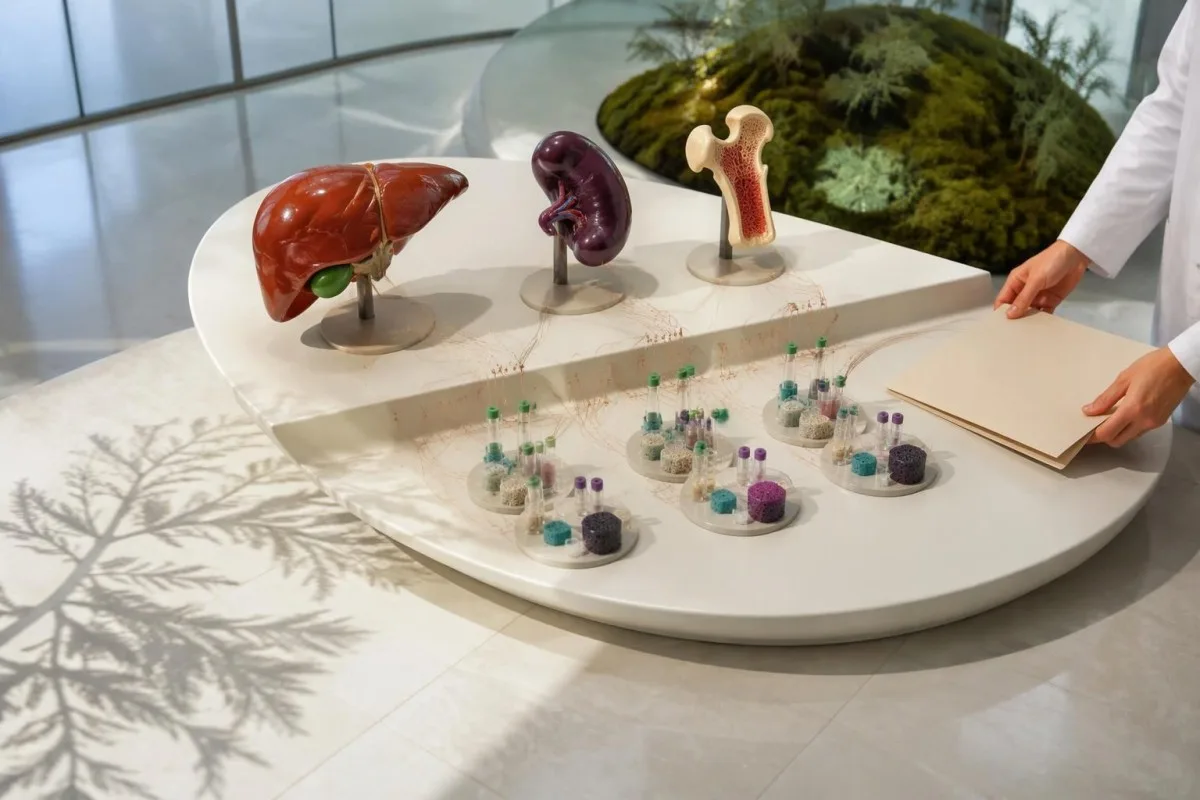
A useful appointment summary separates measured, documented, and unknown information across all 9 HScore inputs. Record the highest relevant temperature with its timing, whether imaging documented organ enlargement, and whether marrow was examined; write 'not assessed' rather than 'negative' when a test or examination has not happened.
Ask 3 focused questions: Is this pattern concerning for HLH or another urgent condition, which missing investigations could change the assessment, and what symptoms should trigger immediate return? If you are clinically stable with ferritin 700 ng/mL and no systemic warning signs, ask about ordinary iron, liver, and inflammatory causes rather than assuming an HLH workup is automatically required.
Diet, supplements, and iron avoidance do not treat suspected HLH, even when ferritin exceeds 6,000 ng/mL. Our AI inayowajibika explain the boundary between educational interpretation and medical decision-making; the practical next step for a high, unexplained score is clinician contact, not repeated online calculations intended to obtain a more reassuring number.
Machapisho ya utafiti na ushahidi unaotokana na tafsiri ya HScore
The main evidence for HScore interpretation comes from its 2014 development study and adult HLH recommendations, not general laboratory guides. Fardet et al. established the model and its 169 operating threshold; Henter et al. (2007) described HLH-2004, and La Rosée et al. (2019) addressed the challenges of applying diagnostic and treatment frameworks to adults.

The 3 clinical references below answer different questions: how the score was developed, what the HLH-2004 criteria require, and how adult management differs from a purely pediatric protocol. None makes a calculator a standalone diagnostic test, and none establishes one universally reliable threshold for every patient group, treatment stage, or hospital setting.
Kantesti LTD, UK Company No. 17090423, also publishes educational laboratory guides; the 2 Zenodo records listed below concern kidney function and urinalysis, not HScore validation. Our mwongozo wa uwiano wa utendaji kazi wa figo can help readers understand accompanying renal measurements when a multisystem illness affects hydration or organ function, without identifying the cause of that illness.
Urinalysis is not one of the 9 HScore inputs, although urine findings may contribute to a broader assessment of organ involvement or alternative diagnoses. The wa tafsiri ya urinalysis is supplementary reading; our viwango vya maudhui ya matibabu explain why educational publications, diagnostic studies, and clinical guidelines should be distinguished rather than presented as equivalent evidence.
Maswali ya mara kwa mara
Je, HScore ya juu inathibitisha HLH?
0 HScore ya juu huongeza uwezekano unaokadiriwa wa HLH ya sekondari kwa watu wazima, lakini yenyewe haiwezi kuthibitisha utambuzi. Kizingiti kinachotumiwa kwa kawaida cha 169 kilikuwa na unyeti wa takriban 93% na umaalumu wa 86% katika utafiti wa awali. Madaktari lazima watathmini mwenendo wa ugonjwa, utambuzi mbadala, taarifa zinazokosekana na vipimo saidizi. Homa inayoendelea pamoja na kupungua kwa hesabu za seli au hitilafu ya utendaji wa viungo inahitaji tathmini ya haraka badala ya kusubiri matokeo mengine ya kikokotozi.
Ni HScore gani inayochukuliwa kuwa ya juu?
Alama ya HScore ya 169 au zaidi hutumiwa kwa kawaida kama kizingiti cha kuunga mkono tathmini zaidi ya HLH ya sekondari kwa watu wazima. Alama zilizo juu ya 250 zililingana na uwezekano uliokadiriwa wa zaidi ya 99% katika modeli ya awali, lakini asilimia hiyo si uwezekano wa kibinafsi uliohakikishwa katika kila mazingira ya kliniki. Thamani za HScore zilizo chini ya 169 bado zinaweza kutokea katika HLH ya awali, iliyotathminiwa kwa sehemu tu, au inayotibiwa. Hatua inayofaa hutegemea muundo wa kliniki na iwapo hali ya mtu inazidi kuwa mbaya.
Je, ferritini iliyo juu ya 10,000 inaweza kumaanisha kitu kingine isipokuwa HLH?
Ferritini inayozidi 10,000 ng/mL inaweza kutokea kwa watu wazima wasio na HLH, wakiwemo wale walio na maambukizi makali, jeraha la ini, saratani, au matatizo mengine ya uchochezi. Ferritini ≥500 ng/mL inatimiza kigezo kimoja tu cha HLH-2004, na HScore huweka kiwango cha juu cha alama za ferritini kuwa 50 inapozidi 6,000 ng/mL. Ferritini iliyopitiliza kiwango hicho inatia wasiwasi zaidi inapoambatana na homa inayoendelea, kupungua kwa hesabu za seli za damu, fibrinojeni ya chini, au kutofanya kazi kwa viungo. Inapaswa kuchochea uchunguzi wa kimatibabu, si utambuzi wa moja kwa moja wa HLH au wingi wa chuma mwilini.
Je, unaweza kukokotoa HScore bila uchunguzi wa uboho?
HScore ya awali inaweza kuhesabiwa kabla ya uchunguzi wa uboho, lakini uboho ambao haujachunguzwa haujulikani badala ya kuwa hasi. Hemofagositisi ya uboho huchangia pointi 35, kwa hivyo hali hii ya kutokuwa na uhakika inaweza kuelezwa kama uwezekano wa kuongeza pointi 35 ikiwa taarifa nyingine zote zimeandikwa. Kutokuwepo kwa hemofagositisi katika sampuli iliyochunguzwa hakuondoi uwezekano wa HLH, na kuwepo kwake hakuthibitishi HLH peke yake. Tathmini ya haraka haipaswi kucheleweshwa kwa sababu tu ya kukamilisha kipengele hiki.
Kuna tofauti gani kati ya HScore na vigezo vya HLH-2004?
HScore ni modeli ya uwezekano yenye uzito inayotumia vigezo 9, ilhali HLH-2004 hutumia utambuzi wa kijenetiki unaolingana au utimilifu wa vigezo 5 kati ya 8 vya utambuzi. Vizingiti vyake vya maabara vinatofautiana: HScore hutoa pointi za fibrinojeni kwa kiwango cha ≤2.5 g/L, ilhali kizingiti cha fibrinojeni cha HLH-2004 ni ≤1.5 g/L. HLH-2004 pia inajumuisha shughuli za seli za asili za kuua na CD25 mumunyifu, ambazo hazipo kwenye HScore. Wataalamu wa watu wazima hutumia mifumo hii pamoja na uamuzi wa kitabibu badala ya kuichukulia kama vipimo vinavyoweza kubadilishana.
Je, alama ya chini ya HScore inaweza kuondoa uwezekano wa HLH?
HScore ya chini haiwezi kuondoa HLH kwa usalama wakati viashiria muhimu havipo, matibabu yameathiri matokeo, au hali hiyo bado inaendelea kubadilika. Kiwango cha awali cha 169 kilikuwa na unyeti wa takriban 93%, si 100%, na utendaji wake unaweza kutofautiana katika makundi mengine ya watu. Alama ya chini ya 90 iliwakilisha uwezekano uliokadiriwa wa chini ya 1% katika modeli ya awali, wala haikuwa kanuni ya kuiondoa kabisa. Kuchanganyikiwa kupya, upungufu mkubwa wa pumzi, kuanguka, kutokwa na damu kwa kiasi kikubwa, au kuzorota kwa utendaji wa viungo kunapaswa kuchukua kipaumbele kuliko uhakikisho unaotokana na alama ya chini.
Pata maelezo ya jinsi ya kusoma matokeo ya vipimo vya damu
Pakia ripoti yako ya maabara na AI ya Kantesti itaeleza kila kiashiria cha kibayolojia kwa lugha rahisi ndani ya sekunde chache. Inatumiwa na zaidi ya watu milioni 2 duniani kote.
Marejeleo
- Klein, T., Mitchell, S., & Weber, H. (2026). Ufafanuzi wa Mbadala wa BUN/Creatinine: Mwongozo wa Kipimo cha Utendaji wa Kifua. Utafiti wa Kimatibabu wa AI ya Kantesti. DOI
- Klein, T., Mitchell, S., & Weber, H. (2026). Urobilinogen katika Kipimo cha Mnywaji: Mwongozo kamili wa Urinalysis 2026. Utafiti wa Kimatibabu wa AI ya Kantesti. DOI
- Fardet L et al. (2014). Development and validation of the HScore, a score for the diagnosis of reactive hemophagocytic syndrome. Arthritis & Rheumatology. DOI PubMed
- Henter JI et al. (2007). HLH-2004: Diagnostic and therapeutic guidelines for hemophagocytic lymphohistiocytosis. Pediatric Blood & Cancer. DOI PubMed
- La Rosée P et al. (2019). Recommendations for the management of hemophagocytic lymphohistiocytosis in adults. Blood. DOI PubMed
- 2M+Vipimo vilivyochanganuliwa
- 127+Nchi
- 100+Lugha
Kuhusu timu ya matibabu


E-E-A-T Trust Signals
Uzoefu
Mapitio ya kimatibabu inayoongozwa na daktari ya mifumo ya tafsiri ya maabara.
Utaalamu
Kuzingatia dawa za maabara kuhusu jinsi viashiria (biomarkers) vinavyobadilika katika muktadha wa kliniki.
Mamlaka
Imekaguliwa kimatibabu na Dkt. Thomas Klein, kwa michango kutoka kwa Dkt. Sarah Mitchell na Prof. Dkt. Hans Weber.
Uaminifu
Tafsiri inayotegemea ushahidi yenye njia zilizo wazi za ufuatiliaji ili kupunguza tahadhari za hofu.






Kanusho la kimatibabu
Makala haya ni kwa madhumuni ya elimu tu na si ushauri wa kimatibabu. Wasiliana na mtoa huduma aliyehitimu kila wakati kwa maamuzi ya utambuzi na matibabu.
Imechapishwa · Wasiliana na timu ya uhariri
Imechapishwa na Kantesti Ltd, imesajiliwa nchini Uingereza na Wales, nambari ya kampuni. 17090423, London, Uingereza.
