A high HScore increases suspicion for adult secondary HLH; it does not confirm the diagnosis. Persistent fever, falling blood counts, and worsening organ function require urgent assessment even when the score is low or incomplete.

Prìomh phuingean
- High HScore meaning is increased likelihood of secondary HLH in adults, not proof of the condition; the score combines 9 clinical and laboratory variables.
- The 169 cutoff had approximately 93% sensitivity and 86% specificity in the original study, but those figures do not describe every hospital population.
- Probability estimates below 90 corresponded to less than 1%, and scores above 250 to greater than 99%, in the original model—not guaranteed personal probabilities.
- Ferritin alone cannot diagnose HLH; 500 ng/mL meets one HLH-2004 criterion, while the HScore starts awarding ferritin points at 2,000 ng/mL.
- Different criteria matter: HScore cytopenia thresholds are hemoglobin ≤9.2 g/dL, platelets ≤110 × 10^9/L, and total white cells ≤5.0 × 10^9/L.
- HLH-2004 diagnosis uses a compatible molecular diagnosis or fulfillment of 5 of 8 criteria, interpreted with the clinical course and specialist judgment.
- Missing tests are not negative tests; an unexamined bone marrow can leave 35 potential HScore points unresolved.
- Measadh èiginneach is needed for persistent fever with falling counts or organ dysfunction; confusion, severe breathlessness, collapse, or significant bleeding require emergency care.
Does a high HScore mean you have HLH?
Chan eil. A high HScore estimates an increased likelihood of secondary hemophagocytic lymphohistiocytosis, or HLH, but cannot confirm it alone. The commonly used threshold of 169 supports further assessment; persistent fever, falling blood counts, and worsening organ function warrant urgent specialist evaluation regardless of whether that threshold has been reached.
Secondary HLH is a potentially life-threatening syndrome of uncontrolled immune activation, rather than a single abnormal laboratory result or one specific infection. Its 9-variable score was developed for adults being evaluated for reactive hemophagocytic syndrome, so applying it to a well person with an incidental ferritin elevation changes the setting in which the estimate is being used.
A score of 180 in a febrile hospitalized adult means something different from an online result assembled from unrelated outpatient reports. Clinicians first ask whether the observations belong to the same illness episode, whether an alternative diagnosis explains them, and whether the person is deteriorating—because a mathematically correct total can still answer the wrong clinical question.
Tha Kantesti na Anailisiche deuchainn fala AI that helps explain findings such as ferritin above 2,000 ng/mL alongside other laboratory results; it cannot establish an HLH diagnosis or replace emergency assessment. Our cùl-fhiosrachadh companaidh describes the organization behind these explanations, while decisions about suspected HLH belong to the treating clinical team.
How should you interpret HScore cutoffs and percentages?
An HScore of 169 or higher is a commonly used screening threshold, not a diagnostic boundary between having and not having HLH. Fardet et al. (2014) reported approximately 93% sensitivity and 86% specificity at this cutoff; the probability displayed by a calculator is a separate output from the underlying model.
Cugallachd de 93% means that approximately 7% of affected patients could fall below the threshold under the original study conditions. Specificity of 86% means approximately 14% of unaffected patients could reach or exceed it; neither number means that an individual with a positive score has a 93% chance of HLH.
A clearly hypothetical Bayesian example shows why the referral population matters: with a 5% pretest probability, 93% sensitivity, and 86% specificity, a positive threshold produces a positive predictive value of about 26%. With a 50% pretest probability, the same calculation gives about 87%; these illustrations are not substitutes for the HScore calculator's model or estimates validated in another population.
The original development study included 312 patients evaluated for suspected reactive hemophagocytic syndrome, not a general screening population. A calculator percentage therefore describes a model-based estimate conditional on its inputs and development setting; our explanation of numeric versus categorical results helps distinguish a probability from a positive or negative diagnosis.
| Ìre | Raon | Na tha e a’ ciallachadh |
|---|---|---|
| Low model estimate | HScore <90 | Less than 1% estimated probability in the original model; not an absolute exclusion rule. |
| Below common screening threshold | HScore 90–168 | Below the commonly used 169 cutoff; early disease, missing inputs, or treatment can limit reassurance. |
| At or above screening threshold | HScore 169–250 | Increasing concern for HLH; probability varies substantially within this interval. |
| Very high model estimate | HScore >250 | Greater than 99% estimated probability in the original model; urgent clinical assessment is appropriate, but the score is not independent confirmation. |
Which nine findings does an HScore calculator use?
An HScore calculator combines immunosuppression, temperature, organ enlargement, cytopenias, ferritin, triglycerides, fibrinogen, AST, and bone-marrow hemophagocytosis. The maximum total is 337 points; several inputs require examination, imaging, medication history, or tissue findings and cannot be recovered from a routine blood report alone.
HScore cytopenia thresholds are hemoglobin ≤9.2 g/dL, platelets ≤110 × 10^9/L, and total white cells ≤5.0 × 10^9/L. Zero or 1 qualifying lineage earns no cytopenia points; 2 earn 24 and 3 earn 34, so an isolated platelet reduction is not scored like a simultaneous reduction across all three lineages.
A white-cell count of 4.8 × 10^9/L can qualify for the HScore even when it falls within a laboratory's reference interval. These are model thresholds, not universal definitions of an abnormal CBC; our hemoglobin and hematocrit explanation also explains why hemoglobin—not hematocrit or red-cell count—is the anemia input.
Fibrinogen ≤2.5 g/L contributes 30 points, whereas AST ≥30 IU/L contributes 19; neither finding is specific to HLH. Kantesti's iùl iomraidh airson bith-chomharraidhean fala supports understanding the measurements, but the original score definitions must take precedence over a laboratory's high or low flags when a clinician calculates the HScore.
| Ìre | Raon | Na tha e a’ ciallachadh |
|---|---|---|
| Known immunosuppression | Absent: 0; present: 18 points | Use the original definition, including HIV or long-term immunosuppressive therapy; do not infer it from feeling run down. |
| Temperature | <38.4°C: 0; 38.4–39.4°C: 33; >39.4°C: 49 points | Document the temperature and its timing relative to fever-reducing medicines. |
| Organ enlargement | Neither: 0; liver or spleen: 23; both: 38 points | Requires documented hepatomegaly or splenomegaly, not abdominal discomfort alone. |
| Qualifying cytopenic lineages | 0–1: 0; 2: 24; 3: 34 points | Use hemoglobin ≤9.2 g/dL, platelets ≤110 × 10^9/L, and total white cells ≤5.0 × 10^9/L. |
| Ferritin | <2,000: 0; 2,000–6,000: 35; >6,000 ng/mL: 50 points | Ferritin points are capped; increasingly extreme values above 6,000 do not add further points. |
| Triglycerides | <1.5: 0; 1.5–4.0: 44; >4.0 mmol/L: 64 points | Equivalent boundaries are approximately 133 and 354 mg/dL. |
| Fibrinogen | >2.5: 0; ≤2.5 g/L: 30 points | 2.5 g/L equals 250 mg/dL. |
| AST | <30: 0; ≥30 IU/L: 19 points | Use AST, not ALT; muscle injury and sample hemolysis can affect interpretation. |
| Bone-marrow hemophagocytosis | Absent: 0; present: 35 points | Not assessed is unresolved information, even if a calculator defaults it to zero. |
What can make an HScore calculator result misleading?
Missing information, incorrect units, and measurements from different illness stages can make an HScore misleading. A calculator that assigns zero to an unexamined marrow leaves 35 potential points unresolved; the total may be a useful provisional estimate, but it is not equivalent to a fully documented assessment.
Ferritin in ng/mL and µg/L has the same numerical value, but fibrinogen in mg/dL and g/L does not: 250 mg/dL equals 2.5 g/L. Triglycerides require another conversion, with mmol/L multiplied by approximately 88.6 to obtain mg/dL; entering 250 mg/dL as 250 mmol/L can force a falsely high triglyceride category.
A platelet count of 85 × 10^9/L may be genuine, but platelet clumping can create a falsely low automated result. Laboratory comments and the cell review matter before that value is counted as a qualifying lineage; our explanation of EDTA-related platelet clumping describes how an alternative collection method may clarify the count.
AST ≥30 IU/L earns points even when the increase is small, so a compromised sample can alter the total without adding evidence of immune overactivation. A clàr-amais leòthas àrd can help explain an unreliable AST result; suspected HLH still requires prompt assessment while clinicians resolve specimen problems, rather than waiting for a perfect dataset.
How does HScore differ from HLH-2004 diagnostic criteria?
HScore is a weighted adult probability model; HLH-2004 is a diagnostic framework with 8 criteria. HLH-2004 permits diagnosis through a compatible molecular diagnosis or fulfillment of 5 of 8 criteria, but adult specialists also consider the trajectory and may act before all criteria are documented (Henter et al., 2007; La Rosée et al., 2019).
The first 3 HLH-2004 findings are fever, splenomegaly, and cytopenias affecting at least 2 lineages: hemoglobin <9 g/dL, platelets <100 × 10^9/L, or neutrophils <1.0 × 10^9/L in the usual non-neonatal thresholds. Unlike the HScore, HLH-2004 uses neutrophils rather than total white cells and does not award extra points for liver enlargement.
Another criterion is fasting triglycerides ≥3.0 mmol/L, approximately 265 mg/dL, and/or fibrinogen ≤1.5 g/L. The remaining 4 criteria are hemophagocytosis in marrow, spleen, or lymph nodes; low or absent natural-killer-cell activity; ferritin ≥500 ng/mL; and soluble CD25, also called soluble IL-2 receptor, ≥2,400 U/mL using an appropriate assay.
A fibrinogen result of 2.0 g/L earns 30 HScore points but does not meet the HLH-2004 fibrinogen threshold, illustrating why the two systems cannot be interchanged. HLH-2004 arose from pediatric treatment guidance; our discussion of children's interpretation safety explains why adult models should not be transferred casually to children, including those with possible inherited immune disorders.
Does very high ferritin mean HLH?
Very high ferritin increases concern for serious illness but does not identify HLH by itself. Ferritin ≥500 ng/mL meets one HLH-2004 criterion, while the HScore awards ferritin points only from 2,000 ng/mL; even values above 10,000 ng/mL can occur in adults with other illnesses.
Ferritin is both an iron-storage marker and an acute-phase reactant, so infection, liver injury, inflammatory disease, and some malignancies can raise it without HLH. Adult recommendations caution against treating a single ferritin threshold as diagnostic; La Rosée et al. (2019) emphasize the overall clinical picture, particularly when extreme elevations coexist with cytopenias and organ dysfunction.
Consider a hypothetical well adult with ferritin 650 ng/mL after a recent illness and no fever, falling counts, or organ dysfunction: that result is not equivalent to ferritin 6,500 ng/mL during rapid clinical deterioration. Our exercise-related ferritin discussion concerns stable outpatient interpretation, not a reason to attribute an acutely unwell person's extreme ferritin to training.
The HScore ferritin contribution is capped at 50 points above 6,000 ng/mL, so a rise from 8,000 to 25,000 may convey deterioration that the total score does not capture. Transferrin saturation and the broader mìneachadh sgrùdaidhean iarainn help investigate iron loading, but iron overload assessment and urgent HLH assessment answer different questions and can require different timelines.
Which combinations of findings make HLH more concerning?
Persistent fever plus falling blood counts, rising ferritin, and worsening liver or coagulation results is more concerning for HLH than any isolated abnormality. Fibrinogen falling toward 2.5 g/L can be especially informative during a strong inflammatory response, because inflammation often raises fibrinogen rather than lowering it.
A hypothetical platelet decline from 210 to 95 × 10^9/L over 48 hours deserves attention even before all 3 lineages cross HScore thresholds. The rate of change may signal evolving consumption, marrow suppression, or immune disease; the reason clinicians examine pàtrain obair-lann DIC is that disseminated intravascular coagulation can coexist with HLH or result from another critical illness.
A high CRP does not exclude HLH, and a white-cell count of 4.5 × 10^9/L does not establish it. Cytopenias can reflect medicines, infection, marrow disease, or baseline variation, so clinicians use the differential count, smear, previous results, and the WBC-versus-CRP relationship to ask whether several abnormalities share one evolving explanation.
Tha Kantesti na àrd-ùrlar mìneachaidh deuchainn fala AI that can help organize patterns across 2 or more reports, but an apparent trend must be checked against sampling dates, treatment, and laboratory methods. A falling fibrinogen with rising ferritin is a reason to contact the clinical team promptly—not proof that the platform, or the patient reading the report, has identified HLH.
When does suspected HLH require urgent specialist assessment?
Suspected HLH requires urgent hospital-based assessment when fever accompanies falling counts or organ dysfunction; do not wait for an HScore of 169. Confusion, seizures, severe breathlessness, collapse, significant bleeding, or rapidly worsening jaundice require emergency care because HLH, sepsis, and other dangerous conditions can present similarly.

Fever with an absolute neutrophil count below 0.5 × 10^9/L is an emergency pattern, whether or not HLH is the eventual diagnosis. A person receiving chemotherapy or immunosuppressive treatment should follow their urgent-care instructions immediately; fever-reducing medicines may lower the measured temperature without making the underlying illness safe to monitor at home.
New breathlessness during a febrile illness can reflect lung involvement, anemia, fluid problems, or infection rather than the HScore itself. Our Stiùireadh deuchainn giorraidh anail explains why oxygenation and clinical examination matter alongside laboratory values; a reassuring ferritin or a score below 169 should never override severe respiratory symptoms.
A high HScore with persistent fever and deteriorating results merits same-day discussion with the treating team, commonly involving hematology and other relevant specialists. Bring available reports, but do not delay seeking care to retrieve all 9 inputs or wait for a marrow appointment; in the UK, call 999 for life-threatening symptoms, or use the local emergency number elsewhere.
Can a low HScore rule out early or treated HLH?
A low HScore cannot reliably exclude HLH when the illness is early, key inputs are missing, or treatment has changed the findings. The original 169 threshold had approximately 93% sensitivity, not 100%; clinical deterioration can justify reassessment even when a first calculation falls below that cutoff.
Glucocorticoids and fever-reducing treatment can suppress some score inputs, while transfusion can raise hemoglobin and plasma products can alter coagulation measurements. A temperature of 37.8°C after treatment is not interchangeable with an untreated peak of 39.6°C; clinicians need the treatment timeline to interpret the score rather than assuming the lower total demonstrates recovery.
An unexamined marrow, unknown organ size, and absent triglyceride measurement leave 3 different areas of uncertainty. Recalculation should use clinically appropriate observations from the same assessment window, not a patchwork of worst-ever values selected from unrelated admissions; our stiùireadh gluasad sàbhailteachd cungaidh-leigheis explains why treatment dates belong beside laboratory trends.
Kantesti mu dhearbhadh clionaigeach Kantesti concerns interpretation standards and limitations; it should not be read as validation of an HScore cutoff for every setting. The original 169 operating point cannot automatically be assumed to retain the same accuracy in intensive care, rheumatology-associated macrophage activation syndrome, or patients already receiving immune-directed treatment.
What can trigger secondary HLH in adults?
Infections, malignancies, and autoimmune or autoinflammatory disease are major trigger groups for secondary HLH in adults. An HScore of 200 does not tell clinicians which trigger is present; identifying the cause matters because controlling immune activation and treating the underlying disease often need to happen together.
Epstein–Barr virus is a recognized HLH trigger, but positive EBV IgG often reflects past exposure rather than the cause of an acute syndrome. A hypothetical adult with ferritin 12,000 ng/mL and positive VCA IgG still needs an appropriately selected infection workup; our stiùireadh airson pàtran antibody EBV explains why antibody history is not the same as active viral disease.
Certain treatable infections can cause fever, cytopenias, and liver-test abnormalities that resemble or trigger HLH, making exposure history medically useful. For example, a platelet count of 70 × 10^9/L after tick exposure changes the questions clinicians ask; our discussion of ehrlichiosis testing timing shows why early PCR and later antibodies may provide different information.
Macrophage activation syndrome, often associated with rheumatic disease, overlaps with secondary HLH but may need disease-specific assessment rather than rigid dependence on HScore 169. Lymphoma and other hematologic malignancies also warrant investigation when appropriate; adult presentation does not exclude inherited susceptibility, particularly when there are recurrent episodes, a suggestive family history, or unusual immune-function findings.
What do hypothetical high and incomplete HScores look like?
Worked examples show how the total is assembled, not how to diagnose yourself. A hypothetical adult with documented fever, spleen enlargement, 3 qualifying cytopenias, high ferritin, elevated triglycerides, low fibrinogen, and elevated AST can accumulate 264 points before marrow findings are known.
Suppose a hypothetical 52-year-old adult has no known immunosuppression, temperature 39.6°C, splenomegaly without hepatomegaly, hemoglobin 8.7 g/dL, platelets 80 × 10^9/L, and white cells 3.2 × 10^9/L. Those inputs contribute 0 + 49 + 23 + 34 = 106 points; the clinical pattern already deserves urgent attention before the remaining measurements are added.
Add ferritin 8,500 ng/mL, triglycerides 3.1 mmol/L, fibrinogen 1.8 g/L, and AST 120 IU/L: their contributions are 50 + 44 + 30 + 19 = 143, producing a subtotal of 249, not 264. If both liver and spleen were enlarged instead, the organ contribution would rise by 15 points to produce 264; unexamined marrow leaves a further 35 points unresolved in either example.
For contrast, ferritin 4,200 ng/mL and AST 45 IU/L contribute only 54 points between them; they do not establish a complete low HScore when the other 7 inputs are unknown. Kantesti uses these hypothetical calculations to show why missingness and exact definitions matter; our blood-test timeline explanation helps organize the observations before a clinician interprets the total.
What happens after clinicians suspect HLH?
Clinicians investigate HLH and its trigger in parallel, usually repeating blood counts, ferritin, liver tests, triglycerides, and coagulation measurements while considering marrow examination and specialist immune tests. Soluble CD25 ≥2,400 U/mL is one HLH-2004 criterion, but assay units and delayed turnaround can complicate interpretation.
Hemophagocytosis is neither necessary nor sufficient for HLH diagnosis: it may be absent early and can occur in other severe illnesses. A positive marrow result contributes 35 HScore points, but marrow examination may be just as valuable for detecting a malignancy, infection, or alternative explanation for cytopenias; our MDS diagnostic limits guide illustrates why a CBC cannot replace tissue-based investigation.
Specialist tests can include soluble IL-2 receptor, natural-killer-cell function, selected genetic studies, and targeted microbiological testing, depending on the presentation. A laboratory reporting soluble CD25 in pg/mL cannot be compared directly with the original 2,400 U/mL threshold without assay-specific interpretation; asking which method and reference system were used can prevent a misleading criterion count.
Treatment may begin before 5 HLH-2004 criteria are documented when the clinical team judges the syndrome sufficiently likely and organ dysfunction is progressing. La Rosée et al. (2019) describe individualized adult management that may involve glucocorticoids, selected cytokine-directed treatment, or etoposide-containing regimens; an HScore alone does not determine a drug, dose, or safe treatment pathway.
How can you prepare for an HScore discussion safely?
Tha Kantesti na Inneal mion-sgrùdaidh deuchainn fala le cumhachd AI for understanding laboratory reports, not a service that confirms HLH or manages emergency deterioration. Before discussing an HScore near or above 169, gather the original reports, their dates and units, recent treatments, and any documented liver or spleen findings.
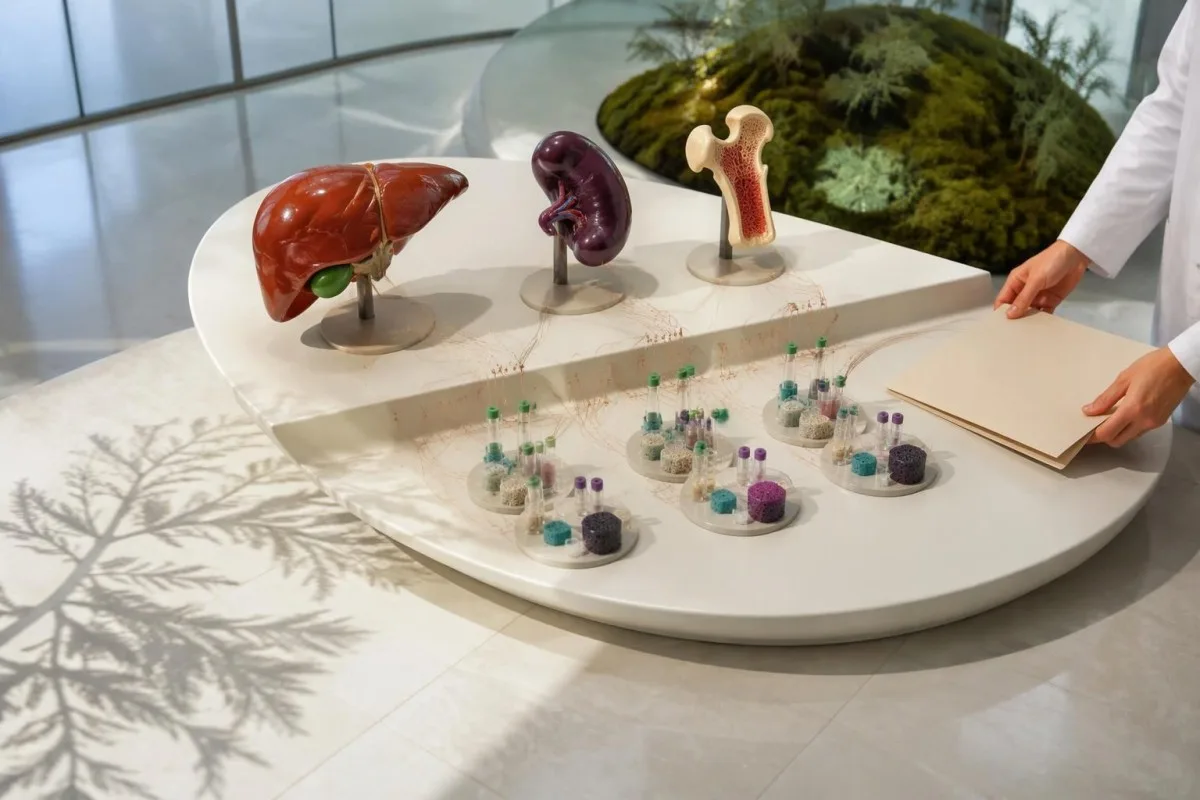
A useful appointment summary separates measured, documented, and unknown information across all 9 HScore inputs. Record the highest relevant temperature with its timing, whether imaging documented organ enlargement, and whether marrow was examined; write 'not assessed' rather than 'negative' when a test or examination has not happened.
Ask 3 focused questions: Is this pattern concerning for HLH or another urgent condition, which missing investigations could change the assessment, and what symptoms should trigger immediate return? If you are clinically stable with ferritin 700 ng/mL and no systemic warning signs, ask about ordinary iron, liver, and inflammatory causes rather than assuming an HLH workup is automatically required.
Diet, supplements, and iron avoidance do not treat suspected HLH, even when ferritin exceeds 6,000 ng/mL. Our geallaidhean a thaobh AI cunntachail explain the boundary between educational interpretation and medical decision-making; the practical next step for a high, unexplained score is clinician contact, not repeated online calculations intended to obtain a more reassuring number.
Research publications and the evidence behind HScore interpretation
The main evidence for HScore interpretation comes from its 2014 development study and adult HLH recommendations, not general laboratory guides. Fardet et al. established the model and its 169 operating threshold; Henter et al. (2007) described HLH-2004, and La Rosée et al. (2019) addressed the challenges of applying diagnostic and treatment frameworks to adults.

The 3 clinical references below answer different questions: how the score was developed, what the HLH-2004 criteria require, and how adult management differs from a purely pediatric protocol. None makes a calculator a standalone diagnostic test, and none establishes one universally reliable threshold for every patient group, treatment stage, or hospital setting.
Kantesti LTD, UK Company No. 17090423, also publishes educational laboratory guides; the 2 Zenodo records listed below concern kidney function and urinalysis, not HScore validation. Our treòir co-mheas gnìomh nan dubhagan can help readers understand accompanying renal measurements when a multisystem illness affects hydration or organ function, without identifying the cause of that illness.
Urinalysis is not one of the 9 HScore inputs, although urine findings may contribute to a broader assessment of organ involvement or alternative diagnoses. The stiùireadh eadar-mhìneachaidh urinalysis nas fharsainge is supplementary reading; our inbhean susbaint mheidigeach explain why educational publications, diagnostic studies, and clinical guidelines should be distinguished rather than presented as equivalent evidence.
Ceistean cumanta
A bheil HScore àrd a’ dearbhadh HLH?
0 Tha àrd-ìre HScore a’ cur ris a’ choltachd mheasta gum bi HLH àrd-sgoile ann an inbhich, ach chan eil e leis fhèin a’ dearbhadh a’ bhreithneachaidh. Bha cugallachd de mu 93% agus sònrachas de 86% aig an stairsneach 169 a thathar a’ cleachdadh gu cumanta san sgrùdadh thùsail. Feumaidh luchd-clionaigeach measadh a dhèanamh air mar a tha an tinneas a’ dol air adhart, breithneachaidhean eile, dàta a tha a dhìth agus sgrùdaidhean taiceil. Tha feum air measadh èiginneach ma mhaireas an fhiabhras agus ma tha na cunntasan a’ tuiteam no ma tha mì-obrachadh organ ann, seach a bhith a’ feitheamh ri toradh àireamhair eile.
Dè an sgòr H a thathar a’ meas àrd?
Tha HScore de 169 no nas àirde air a chleachdadh gu cumanta mar stairsneach a tha a’ toirt taic do mheasadh a bharrachd airson HLH àrd-sgoile ann an inbhich. Bha sgòran os cionn 250 co-cheangailte ri coltachd mheasta nas àirde na 99% sa mhodail thùsail, ach chan eil an ceudad sin na ghealladh air coltachd phearsanta anns gach suidheachadh clionaigeach. Faodaidh luachan HScore nas ìsle na 169 nochdadh fhathast ann an HLH tràth, nach deach a mheasadh gu h-iomlan, no a chaidh a làimhseachadh. Tha am freagairt iomchaidh an urra ris a’ phàtran clionaigeach agus ri co-dhiù a tha an neach a’ fàs nas miosa.
Am faod ferritin os cionn 10,000 a bhith a’ ciallachadh rudeigin eile seach HLH?
Faodaidh ferritin os cionn 10,000 ng/mL tachairt ann an inbhich aig nach eil HLH, a’ gabhail a-steach daoine le fìor dhroch ghalar, leòn grùtha, aillse, no eas-òrdughan sèididh eile. Chan eil ferritin ≥500 ng/mL a’ coileanadh ach aon shlat-tomhais HLH-2004, agus tha an HScore a’ cur crìoch air ferritin aig 50 puing nuair a tha e os cionn 6,000 ng/mL. Tha ferritin anabarrach àrd na adhbhar nas motha dragh nuair a tha fiabhras leantainneach, cunntasan cheallan fala a’ tuiteam, fibrinogen ìosal, no mì-ghnìomhachd nam ball-bodhaig na chois. Bu chòir dha sgrùdadh clionaigeach a bhrosnachadh, chan e breithneachadh fèin-obrachail air HLH no cus iarainn.
An urrainn dhut HScore obrachadh a-mach gun sgrùdadh air smior cnàimh?
Faodar HScore sealach obrachadh a-mach mus tèid sgrùdadh a dhèanamh air smior cnàimh, ach tha smior nach deach a sgrùdadh neo-aithnichte seach àicheil. Tha hemophagocytosis smior a’ cur 35 puing ris, agus mar sin faodar an neo-chinnt a mhìneachadh mar 35 puing a dh’fhaodadh a bhith air an cur ris ma tha na h-inputan eile uile air an clàradh. Chan eil dìth hemophagocytosis ann an sampall a chaidh a sgrùdadh a’ dùnadh a-mach HLH, agus chan eil a làthaireachd a’ dearbhadh HLH leis fhèin. Cha bu chòir dàil a chur air measadh èiginneach dìreach gus an input seo a choileanadh.
Dè an diofar eadar HScore agus slatan-tomhais HLH-2004?
’S e modail coltachd le cuideaman a th’ ann an HScore, a bhios a’ cleachdadh 9 inntearan, ach bidh HLH-2004 a’ cleachdadh breithneachadh moileciuil co-fhreagarrach no coileanadh 5 de na 8 slatan-tomhais breithneachaidh. Tha na stairsneachan obair-lann aca eadar-dhealaichte: tha HScore a’ toirt puingean airson fibrinogen aig ≤2.5 g/L, agus ’s e ≤1.5 g/L stairsneach fibrinogen HLH-2004. Tha HLH-2004 cuideachd a’ gabhail a-steach gnìomhachd cheallan-marbhadh nàdarra agus CD25 so-sgaoilte, nach eil ann an HScore. Bidh eòlaichean a tha ag obair le inbhich a’ cleachdadh nam frèaman seo còmhla ri breithneachadh clionaigeach, seach a bhith gan làimhseachadh mar dheuchainnean a ghabhas iomlaid.
Can a low HScore rule out HLH?
A low HScore cannot safely rule out HLH when key findings are missing, treatment has altered the results, or the syndrome is still evolving. The original threshold of 169 had approximately 93% sensitivity, not 100%, and its performance may differ in other populations. A score below 90 represented less than 1% estimated probability in the original model, not an absolute exclusion rule. New confusion, severe breathlessness, collapse, significant bleeding, or worsening organ function should override reassurance from a low score.
Faigh mìneachadh air na toraidhean deuchainn fala agad
Luchdaich suas aithisg an obair-lann agad agus mìnichidh AI Kantesti gach bith-chomharradh ann an cànan soilleir taobh a-staigh diogan. Air a chleachdadh le còrr is 2 mhillean neach air feadh an t-saoghail.
Tùsan
- Klein, T., Mitchell, S., & Weber, H. (2026). BUN/Ratio Creatinine air a mhìneachadh: Stiùiridh Deuchainn Feum Glaodh. Rannsachadh Meidigeach AI Kantesti. DOI
- Klein, T., Mitchell, S., & Weber, H. (2026). Urobilinogen ann an Deuchainn Urine: Stiùiridh Coileir-urine Làn 2026. Rannsachadh Meidigeach AI Kantesti. DOI
- Fardet L et al. (2014). Development and validation of the HScore, a score for the diagnosis of reactive hemophagocytic syndrome. Arthritis & Rheumatology. DOI PubMed
- Henter JI et al. (2007). HLH-2004: Diagnostic and therapeutic guidelines for hemophagocytic lymphohistiocytosis. Pediatric Blood & Cancer. DOI PubMed
- La Rosée P et al. (2019). Recommendations for the management of hemophagocytic lymphohistiocytosis in adults. Blood. DOI PubMed
- 2M+Deuchainnean air an sgrùdadh
- 127+Dùthchannan
- 100+Cànanan
Mu dheidhinn an sgioba mheidigeach


Comharran earbsa E-E-A-T
Eòlas
Lèirmheas clionaigeach air a stiùireadh le lighiche air sruthan-obrach mìneachaidh obair-lann.
Eòlas
Fòcas air leigheas obair-lann air mar a bhios bith-chomharraidhean (biomarkers) a’ giùlan ann an co-theacsa clionaigeach.
Ùghdarrasachd
Ath-sgrùdadh meidigeach leis an Dr Thomas Klein, le tabhartasan bhon Dr Sarah Mitchell agus an t-Oll. Dr Hans Weber.
Earbsachd
Mìneachadh stèidhichte air fianais le slighean leanmhainn soilleir gus dragh a lughdachadh.






Àicheadh meidigeach
Tha an artaigil seo dìreach airson adhbharan foghlaim agus chan eil e a’ dèanamh comhairle mheidigeach. Cuir fios an-còmhnaidh gu solaraiche cùram slàinte teisteanasach airson co-dhùnaidhean breithneachaidh is leigheis.
Foillsichte · Cuir fios chun sgioba dheasachaidh
Foillsichte le Kantesti Ltd, clàraichte ann an Sasainn agus sa Chuimrigh, àireamh companaidh. 17090423, Lunnainn, an Rìoghachd Aonaichte.
