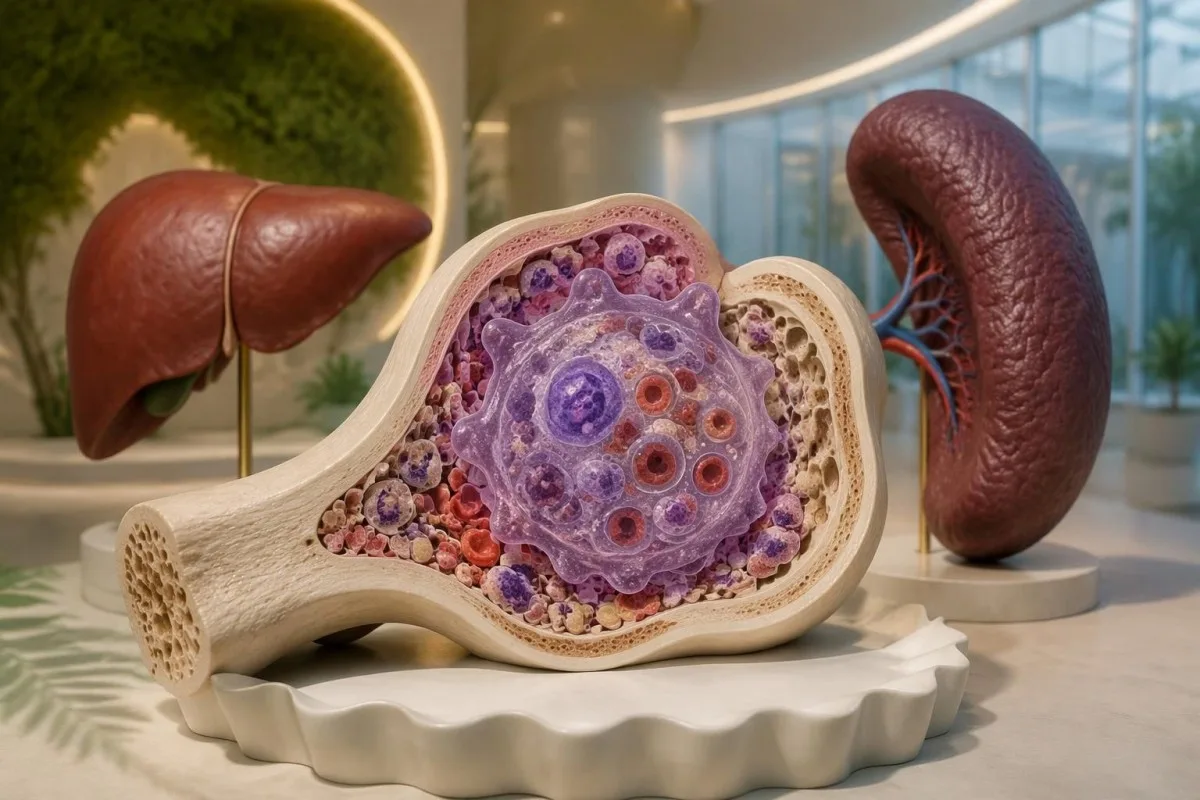
Një HScore i lartë rrit dyshimin për HLH sekondare te të rriturit; nuk e konfirmon diagnozën. Temperatura e vazhdueshme, rënia e numrit të qelizave të gjakut dhe përkeqësimi i funksionit të organeve kërkojnë vlerësim urgjent edhe kur rezultati është i ulët ose i paplotë.

Përfundimet kryesore
- Kuptimi i një HScore të lartë është rritje e mundësisë së HLH-së sekondare te të rriturit, jo provë e gjendjes; rezultati ndërthur 9 variabla klinike dhe laboratorike.
- Pragu 169 kishte ndjeshmëri afërsisht 93% dhe specificitet 86% në studimin origjinal, por këto shifra nuk përshkruajnë çdo popullatë spitalore.
- Vlerësimet e probabilitetit nën 90 korrespondonin me më pak se 1%, dhe rezultatet mbi 250 me më shumë se 99%, në modelin origjinal—jo me probabilitete personale të garantuara.
- Ferritina e vetme nuk mund ta diagnostikojë HLH-në; 500 ng/mL përmbush një kriter HLH-2004, ndërsa HScore fillon të japë pikë për ferritinën nga 2,000 ng/mL e lart.
- Kritere të ndryshme kanë rëndësi: pragjet e citopenisë sipas HScore janë hemoglobina ≤9.2 g/dL, trombocitet ≤110 × 10^9/L dhe leukocitet totale ≤5.0 × 10^9/L.
- Diagnoza sipas HLH-2004 bazohet në një diagnozë molekulare të përputhshme ose në plotësimin e 5 nga 8 kriteret, të interpretuara në kontekstin e ecurisë klinike dhe gjykimit të specialistit.
- Analizat që mungojnë nuk janë analiza negative; ekzaminimi i pamjaftueshëm i palcës së kockave mund të lërë të pazgjidhura 35 pikë të mundshme të HScore.
- Vlerësim urgjent nevojitet për ethe të vazhdueshme me rënie të numrit të qelizave ose me mosfunksionim të organeve; konfuzioni, vështirësia e rëndë në frymëmarrje, kolapsi ose gjakderdhja e konsiderueshme kërkojnë kujdes urgjent.
A do të thotë një HScore i lartë se keni HLH?
Nr. A HScore i lartë vlerëson një gjasë të shtuar për limfohistiocitozë hemofagocitare sekondare, ose HLH, por nuk mund ta konfirmojë i vetëm. Pragu i përdorur zakonisht prej 169 mbështet vlerësimin e mëtejshëm; ethet e vazhdueshme, rënia e numrit të qelizave të gjakut dhe përkeqësimi i funksionit të organeve kërkojnë vlerësim urgjent nga specialisti, pavarësisht nëse është arritur ky prag.
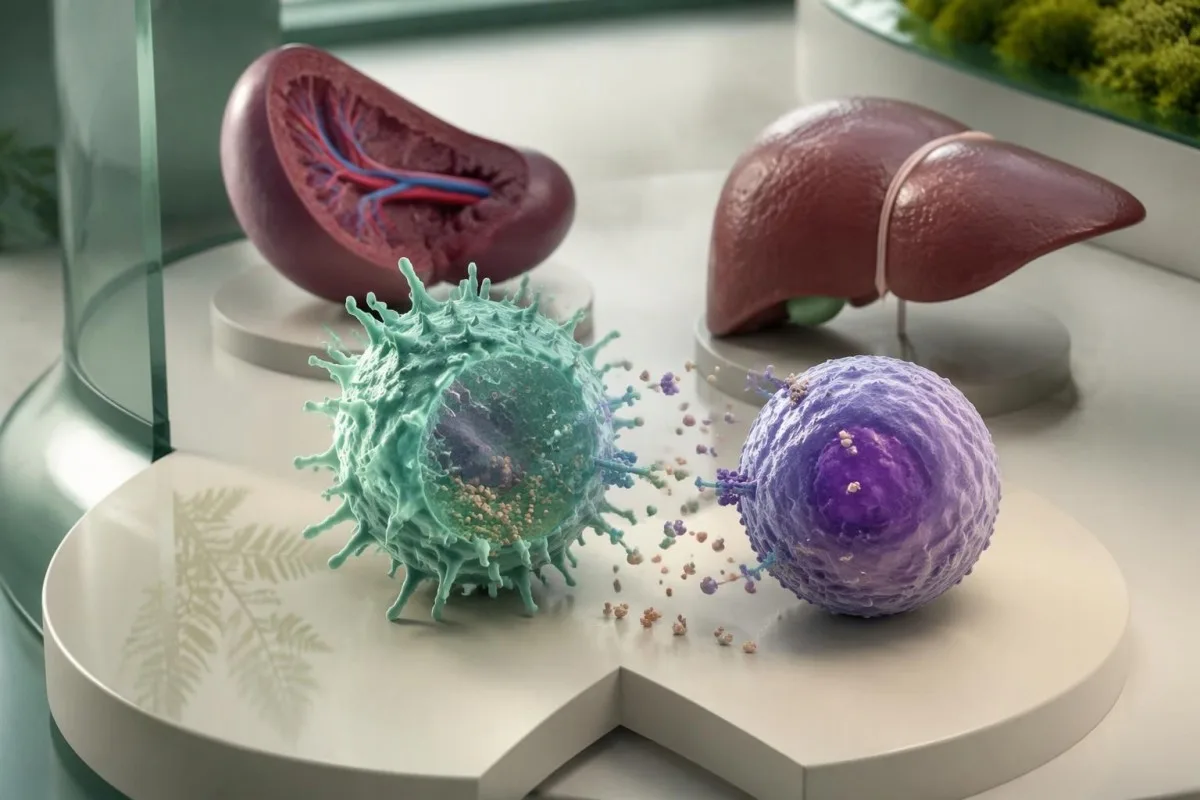
HLH sekondare është një sindromë potencialisht kërcënuese për jetën, e shkaktuar nga aktivizimi i pakontrolluar imunitar, dhe jo një rezultat i vetëm laboratorik jonormal apo një infeksion specifik. Rezultati i saj me 9 variabla u zhvillua për të rriturit që vlerësohen për sindromën hemofagocitare reaktive, ndaj zbatimi i tij te një person i shëndetshëm me rritje rastësore të ferritinës e ndryshon kontekstin në të cilin përdoret vlerësimi.
Një rezultat prej 180 te një i rritur me ethe i shtruar në spital nënkupton diçka ndryshe nga një rezultat online i përllogaritur nga raporte ambulatore pa lidhje me njëra-tjetrën. Mjekët fillimisht pyesin nëse vëzhgimet lidhen me të njëjtin episod sëmundjeje, nëse një diagnozë alternative i shpjegon dhe nëse gjendja e personit po përkeqësohet—sepse edhe një total matematikisht i saktë mund t'i përgjigjet pyetjes së gabuar klinike.
Kantesti është një Analizues i testeve të gjakut AI që ndihmon të shpjegohen gjetje të tilla si ferritina mbi 2,000 ng/mL krahas rezultateve të tjera laboratorike; ai nuk mund të përcaktojë diagnozën e HLH-së dhe as të zëvendësojë vlerësimin urgjent. Materiali ynë sfondin e kompanisë përshkruan organizatën që qëndron pas këtyre shpjegimeve, ndërsa vendimet për HLH të dyshuar i merr ekipi klinik përgjegjës për trajtimin.
Si duhet t’i interpretoni pragjet dhe përqindjet e HScore?
Një HScore prej 169 ose më shumë është një prag kontrolli i përdorur zakonisht, jo një kufi diagnostik midis pranisë dhe mungesës së HLH-së. Fardet et al. (2014) raportuan ndjeshmëri prej afërsisht 93% dhe specificitet prej 86% në këtë pikëprerje; probabiliteti i shfaqur nga një kalkulator është rezultat i veçantë nga modeli themelor.
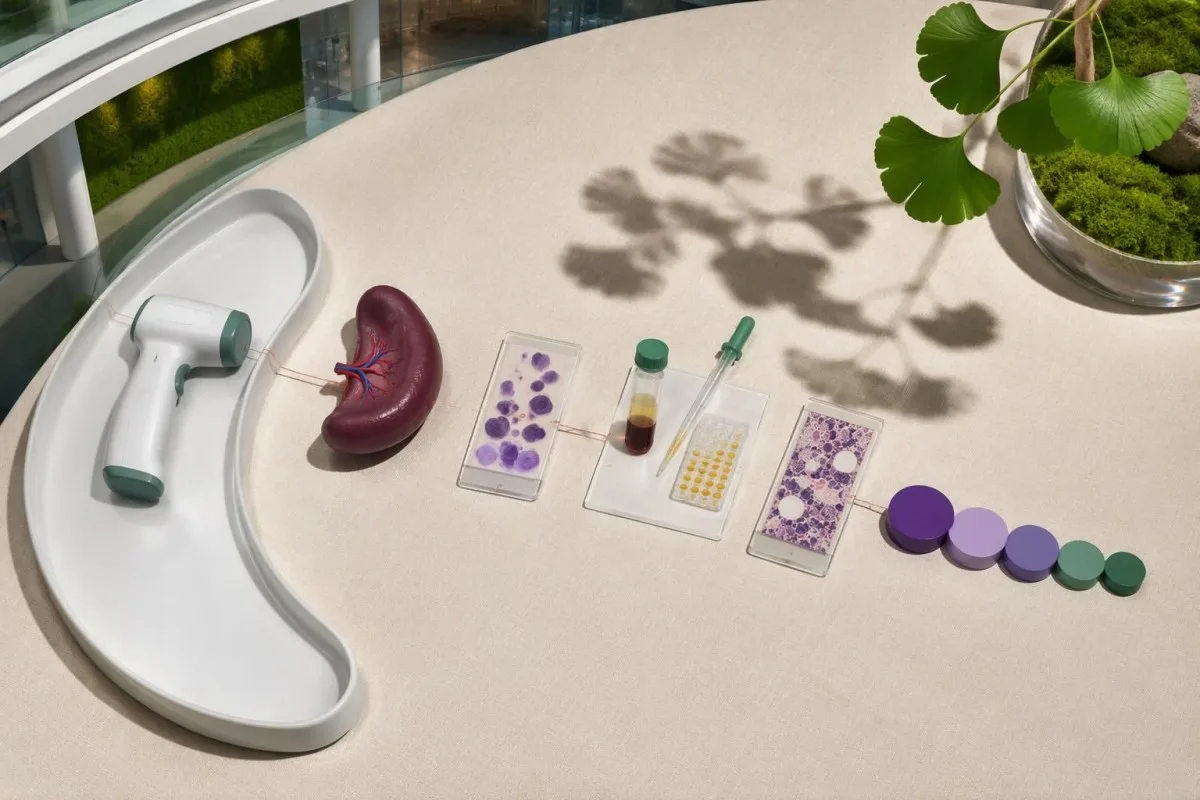
Ndjeshmëria prej 93% do të thotë se afërsisht 7% e pacientëve të prekur mund të kishin rezultat nën prag në kushtet e studimit fillestar. Specificiteti prej 86% do të thotë se afërsisht 14% e pacientëve të paprekur mund të arrinin ose ta kalonin atë; asnjëri numër nuk do të thotë se një individ me rezultat pozitiv ka 93% gjasa të ketë HLH.
Një shembull qartësisht hipotetik i Bayes-it tregon pse ka rëndësi popullata e referimit: me një probabilitet para testit prej 5%, ndjeshmëri prej 93% dhe specificitet prej 86%, një prag pozitiv jep një vlerë parashikuese pozitive prej rreth 26%. Me një probabilitet para testit prej 50%, e njëjta llogaritje jep rreth 87%; këto ilustrime nuk zëvendësojnë modelin e kalkulatorit HScore ose vlerësimet e validuara në një popullatë tjetër.
Studimi fillestar i zhvillimit përfshinte 312 pacientë të vlerësuar për sindromë hemofagocitare reaktive të dyshuar, jo një popullatë të përgjithshme për kontroll. Prandaj, përqindja e kalkulatorit përshkruan një vlerësim të bazuar në model, të kushtëzuar nga të dhënat hyrëse dhe konteksti i zhvillimit; shpjegimi ynë për rezultatet numerike kundrejt atyre kategorike ndihmon të bëhet dallimi midis një probabiliteti dhe një diagnoze pozitive ose negative.
| Niveli | Intervali | Çfarë do të thotë |
|---|---|---|
| Low model estimate | HScore <90 | Less than 1% estimated probability in the original model; not an absolute exclusion rule. |
| Below common screening threshold | HScore 90–168 | Below the commonly used 169 cutoff; early disease, missing inputs, or treatment can limit reassurance. |
| At or above screening threshold | HScore 169–250 | Increasing concern for HLH; probability varies substantially within this interval. |
| Very high model estimate | HScore >250 | Greater than 99% estimated probability in the original model; urgent clinical assessment is appropriate, but the score is not independent confirmation. |
Cilat janë nëntë gjetjet që përdor një kalkulator HScore?
Një HScore calculator combines immunosuppression, temperature, organ enlargement, cytopenias, ferritin, triglycerides, fibrinogen, AST, and bone-marrow hemophagocytosis. The maximum total is 337 points; several inputs require examination, imaging, medication history, or tissue findings and cannot be recovered from a routine blood report alone.
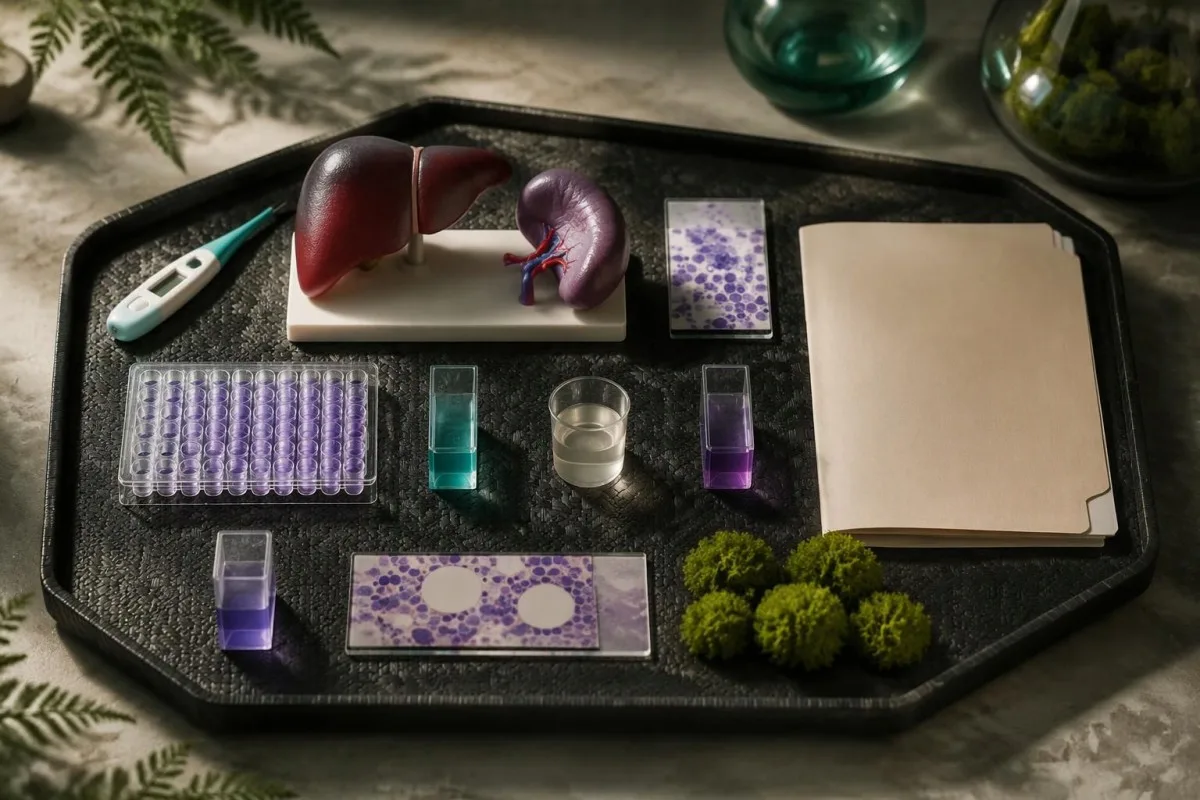
HScore cytopenia thresholds are hemoglobin ≤9.2 g/dL, platelets ≤110 × 10^9/L, and total white cells ≤5.0 × 10^9/L. Zero or 1 qualifying lineage earns no cytopenia points; 2 earn 24 and 3 earn 34, so an isolated platelet reduction is not scored like a simultaneous reduction across all three lineages.
A white-cell count of 4.8 × 10^9/L can qualify for the HScore even when it falls within a laboratory's reference interval. These are model thresholds, not universal definitions of an abnormal CBC; our hemoglobin and hematocrit explanation also explains why hemoglobin—not hematocrit or red-cell count—is the anemia input.
Fibrinogen ≤2.5 g/L contributes 30 points, whereas AST ≥30 IU/L contributes 19; neither finding is specific to HLH. Kantesti's udhëzuesi i referencës së biomarkerëve të gjakut supports understanding the measurements, but the original score definitions must take precedence over a laboratory's high or low flags when a clinician calculates the HScore.
| Niveli | Intervali | Çfarë do të thotë |
|---|---|---|
| Known immunosuppression | Absent: 0; present: 18 points | Use the original definition, including HIV or long-term immunosuppressive therapy; do not infer it from feeling run down. |
| Temperature | <38.4°C: 0; 38.4–39.4°C: 33; >39.4°C: 49 points | Document the temperature and its timing relative to fever-reducing medicines. |
| Organ enlargement | Neither: 0; liver or spleen: 23; both: 38 points | Requires documented hepatomegaly or splenomegaly, not abdominal discomfort alone. |
| Qualifying cytopenic lineages | 0–1: 0; 2: 24; 3: 34 points | Use hemoglobin ≤9.2 g/dL, platelets ≤110 × 10^9/L, and total white cells ≤5.0 × 10^9/L. |
| Ferritinë | <2,000: 0; 2,000–6,000: 35; >6,000 ng/mL: 50 points | Ferritin points are capped; increasingly extreme values above 6,000 do not add further points. |
| Trigliceridet | <1.5: 0; 1.5–4.0: 44; >4.0 mmol/L: 64 points | Equivalent boundaries are approximately 133 and 354 mg/dL. |
| Fibrinogjen | >2.5: 0; ≤2.5 g/L: 30 points | 2.5 g/L equals 250 mg/dL. |
| AST | <30: 0; ≥30 IU/L: 19 points | Use AST, not ALT; muscle injury and sample hemolysis can affect interpretation. |
| Bone-marrow hemophagocytosis | Absent: 0; present: 35 points | Not assessed is unresolved information, even if a calculator defaults it to zero. |
Çfarë mund ta bëjë çorientues rezultatin e një kalkulatori HScore?
Missing information, incorrect units, and measurements from different illness stages can make an HScore misleading. A calculator that assigns zero to an unexamined marrow leaves 35 potential points unresolved; the total may be a useful provisional estimate, but it is not equivalent to a fully documented assessment.
Ferritin in ng/mL and µg/L has the same numerical value, but fibrinogen in mg/dL and g/L does not: 250 mg/dL equals 2.5 g/L. Triglycerides require another conversion, with mmol/L multiplied by approximately 88.6 to obtain mg/dL; entering 250 mg/dL as 250 mmol/L can force a falsely high triglyceride category.
A platelet count of 85 × 10^9/L may be genuine, but platelet clumping can create a falsely low automated result. Laboratory comments and the cell review matter before that value is counted as a qualifying lineage; our explanation of EDTA-related platelet clumping describes how an alternative collection method may clarify the count.
AST ≥30 IU/L earns points even when the increase is small, so a compromised sample can alter the total without adding evidence of immune overactivation. A indeks i lartë hemolize can help explain an unreliable AST result; suspected HLH still requires prompt assessment while clinicians resolve specimen problems, rather than waiting for a perfect dataset.
Si ndryshon HScore nga kriteret diagnostikuese HLH-2004?
HScore is a weighted adult probability model; HLH-2004 is a diagnostic framework with 8 criteria. HLH-2004 permits diagnosis through a compatible molecular diagnosis or fulfillment of 5 of 8 criteria, but adult specialists also consider the trajectory and may act before all criteria are documented (Henter et al., 2007; La Rosée et al., 2019).
The first 3 HLH-2004 findings are fever, splenomegaly, and cytopenias affecting at least 2 lineages: hemoglobin <9 g/dL, platelets <100 × 10^9/L, or neutrophils <1.0 × 10^9/L in the usual non-neonatal thresholds. Unlike the HScore, HLH-2004 uses neutrophils rather than total white cells and does not award extra points for liver enlargement.
Another criterion is fasting triglycerides ≥3.0 mmol/L, approximately 265 mg/dL, and/or fibrinogen ≤1.5 g/L. The remaining 4 criteria are hemophagocytosis in marrow, spleen, or lymph nodes; low or absent natural-killer-cell activity; ferritin ≥500 ng/mL; and soluble CD25, also called soluble IL-2 receptor, ≥2,400 U/mL using an appropriate assay.
A fibrinogen result of 2.0 g/L earns 30 HScore points but does not meet the HLH-2004 fibrinogen threshold, illustrating why the two systems cannot be interchanged. HLH-2004 arose from pediatric treatment guidance; our discussion of children's interpretation safety explains why adult models should not be transferred casually to children, including those with possible inherited immune disorders.
A do të thotë ferritina shumë e lartë se keni HLH?
Very high ferritin increases concern for serious illness but does not identify HLH by itself. Ferritin ≥500 ng/mL meets one HLH-2004 criterion, while the HScore awards ferritin points only from 2,000 ng/mL; even values above 10,000 ng/mL can occur in adults with other illnesses.
Ferritin is both an iron-storage marker and an acute-phase reactant, so infection, liver injury, inflammatory disease, and some malignancies can raise it without HLH. Adult recommendations caution against treating a single ferritin threshold as diagnostic; La Rosée et al. (2019) emphasize the overall clinical picture, particularly when extreme elevations coexist with cytopenias and organ dysfunction.
Consider a hypothetical well adult with ferritin 650 ng/mL after a recent illness and no fever, falling counts, or organ dysfunction: that result is not equivalent to ferritin 6,500 ng/mL during rapid clinical deterioration. Our exercise-related ferritin discussion concerns stable outpatient interpretation, not a reason to attribute an acutely unwell person's extreme ferritin to training.
The HScore ferritin contribution is capped at 50 points above 6,000 ng/mL, so a rise from 8,000 to 25,000 may convey deterioration that the total score does not capture. Transferrin saturation and the broader interpretimi i studimeve të hekurit help investigate iron loading, but iron overload assessment and urgent HLH assessment answer different questions and can require different timelines.
Cilat kombinime gjetjesh e bëjnë HLH-në më shqetësuese?
Persistent fever plus falling blood counts, rising ferritin, and worsening liver or coagulation results is more concerning for HLH than any isolated abnormality. Fibrinogen falling toward 2.5 g/L can be especially informative during a strong inflammatory response, because inflammation often raises fibrinogen rather than lowering it.
A hypothetical platelet decline from 210 to 95 × 10^9/L over 48 hours deserves attention even before all 3 lineages cross HScore thresholds. The rate of change may signal evolving consumption, marrow suppression, or immune disease; the reason clinicians examine modelet laboratorike të DIC-së is that disseminated intravascular coagulation can coexist with HLH or result from another critical illness.
A high CRP does not exclude HLH, and a white-cell count of 4.5 × 10^9/L does not establish it. Cytopenias can reflect medicines, infection, marrow disease, or baseline variation, so clinicians use the differential count, smear, previous results, and the WBC-versus-CRP relationship to ask whether several abnormalities share one evolving explanation.
Kantesti është një platformë e interpretimit të analizave të gjakut AI that can help organize patterns across 2 or more reports, but an apparent trend must be checked against sampling dates, treatment, and laboratory methods. A falling fibrinogen with rising ferritin is a reason to contact the clinical team promptly—not proof that the platform, or the patient reading the report, has identified HLH.
Kur kërkon HLH-ja e dyshuar vlerësim urgjent nga specialisti?
Suspected HLH requires urgent hospital-based assessment when fever accompanies falling counts or organ dysfunction; do not wait for an HScore of 169. Confusion, seizures, severe breathlessness, collapse, significant bleeding, or rapidly worsening jaundice require emergency care because HLH, sepsis, and other dangerous conditions can present similarly.

Fever with an absolute neutrophil count below 0.5 × 10^9/L is an emergency pattern, whether or not HLH is the eventual diagnosis. A person receiving chemotherapy or immunosuppressive treatment should follow their urgent-care instructions immediately; fever-reducing medicines may lower the measured temperature without making the underlying illness safe to monitor at home.
New breathlessness during a febrile illness can reflect lung involvement, anemia, fluid problems, or infection rather than the HScore itself. Our testin e gulçimit explains why oxygenation and clinical examination matter alongside laboratory values; a reassuring ferritin or a score below 169 should never override severe respiratory symptoms.
A high HScore with persistent fever and deteriorating results merits same-day discussion with the treating team, commonly involving hematology and other relevant specialists. Bring available reports, but do not delay seeking care to retrieve all 9 inputs or wait for a marrow appointment; in the UK, call 999 for life-threatening symptoms, or use the local emergency number elsewhere.
A mund ta përjashtojë një HScore i ulët HLH-në në fazë të hershme ose të trajtuar?
A low HScore cannot reliably exclude HLH when the illness is early, key inputs are missing, or treatment has changed the findings. The original 169 threshold had approximately 93% sensitivity, not 100%; clinical deterioration can justify reassessment even when a first calculation falls below that cutoff.
Glucocorticoids and fever-reducing treatment can suppress some score inputs, while transfusion can raise hemoglobin and plasma products can alter coagulation measurements. A temperature of 37.8°C after treatment is not interchangeable with an untreated peak of 39.6°C; clinicians need the treatment timeline to interpret the score rather than assuming the lower total demonstrates recovery.
An unexamined marrow, unknown organ size, and absent triglyceride measurement leave 3 different areas of uncertainty. Recalculation should use clinically appropriate observations from the same assessment window, not a patchwork of worst-ever values selected from unrelated admissions; our udhëzuesi ynë për trendin e sigurisë së medikamenteve explains why treatment dates belong beside laboratory trends.
Materialet e Kantesti validimit klinik të Kantesti concerns interpretation standards and limitations; it should not be read as validation of an HScore cutoff for every setting. The original 169 operating point cannot automatically be assumed to retain the same accuracy in intensive care, rheumatology-associated macrophage activation syndrome, or patients already receiving immune-directed treatment.
Çfarë mund ta shkaktojë HLH-në sekondare te të rriturit?
Infections, malignancies, and autoimmune or autoinflammatory disease are major trigger groups for secondary HLH in adults. An HScore of 200 does not tell clinicians which trigger is present; identifying the cause matters because controlling immune activation and treating the underlying disease often need to happen together.
Epstein–Barr virus is a recognized HLH trigger, but positive EBV IgG often reflects past exposure rather than the cause of an acute syndrome. A hypothetical adult with ferritin 12,000 ng/mL and positive VCA IgG still needs an appropriately selected infection workup; our Udhëzuesi i modelit të antitrupave EBV explains why antibody history is not the same as active viral disease.
Certain treatable infections can cause fever, cytopenias, and liver-test abnormalities that resemble or trigger HLH, making exposure history medically useful. For example, a platelet count of 70 × 10^9/L after tick exposure changes the questions clinicians ask; our discussion of ehrlichiosis testing timing shows why early PCR and later antibodies may provide different information.
Macrophage activation syndrome, often associated with rheumatic disease, overlaps with secondary HLH but may need disease-specific assessment rather than rigid dependence on HScore 169. Lymphoma and other hematologic malignancies also warrant investigation when appropriate; adult presentation does not exclude inherited susceptibility, particularly when there are recurrent episodes, a suggestive family history, or unusual immune-function findings.
Si duken HScore-të hipotetike të larta dhe të paplota?
Worked examples show how the total is assembled, not how to diagnose yourself. A hypothetical adult with documented fever, spleen enlargement, 3 qualifying cytopenias, high ferritin, elevated triglycerides, low fibrinogen, and elevated AST can accumulate 264 points before marrow findings are known.
Suppose a hypothetical 52-year-old adult has no known immunosuppression, temperature 39.6°C, splenomegaly without hepatomegaly, hemoglobin 8.7 g/dL, platelets 80 × 10^9/L, and white cells 3.2 × 10^9/L. Those inputs contribute 0 + 49 + 23 + 34 = 106 points; the clinical pattern already deserves urgent attention before the remaining measurements are added.
Add ferritin 8,500 ng/mL, triglycerides 3.1 mmol/L, fibrinogen 1.8 g/L, and AST 120 IU/L: their contributions are 50 + 44 + 30 + 19 = 143, producing a subtotal of 249, not 264. If both liver and spleen were enlarged instead, the organ contribution would rise by 15 points to produce 264; unexamined marrow leaves a further 35 points unresolved in either example.
For contrast, ferritin 4,200 ng/mL and AST 45 IU/L contribute only 54 points between them; they do not establish a complete low HScore when the other 7 inputs are unknown. Kantesti uses these hypothetical calculations to show why missingness and exact definitions matter; our blood-test timeline explanation helps organize the observations before a clinician interprets the total.
Çfarë ndodh pasi mjekët dyshojnë për HLH?
Clinicians investigate HLH and its trigger in parallel, usually repeating blood counts, ferritin, liver tests, triglycerides, and coagulation measurements while considering marrow examination and specialist immune tests. Soluble CD25 ≥2,400 U/mL is one HLH-2004 criterion, but assay units and delayed turnaround can complicate interpretation.
Hemophagocytosis is neither necessary nor sufficient for HLH diagnosis: it may be absent early and can occur in other severe illnesses. A positive marrow result contributes 35 HScore points, but marrow examination may be just as valuable for detecting a malignancy, infection, or alternative explanation for cytopenias; our MDS diagnostic limits guide illustrates why a CBC cannot replace tissue-based investigation.
Specialist tests can include soluble IL-2 receptor, natural-killer-cell function, selected genetic studies, and targeted microbiological testing, depending on the presentation. A laboratory reporting soluble CD25 in pg/mL cannot be compared directly with the original 2,400 U/mL threshold without assay-specific interpretation; asking which method and reference system were used can prevent a misleading criterion count.
Treatment may begin before 5 HLH-2004 criteria are documented when the clinical team judges the syndrome sufficiently likely and organ dysfunction is progressing. La Rosée et al. (2019) describe individualized adult management that may involve glucocorticoids, selected cytokine-directed treatment, or etoposide-containing regimens; an HScore alone does not determine a drug, dose, or safe treatment pathway.
Si mund të përgatiteni në mënyrë të sigurt për një diskutim rreth HScore?
Kantesti është një Mjet për analizën e testeve të gjakut me AI for understanding laboratory reports, not a service that confirms HLH or manages emergency deterioration. Before discussing an HScore near or above 169, gather the original reports, their dates and units, recent treatments, and any documented liver or spleen findings.
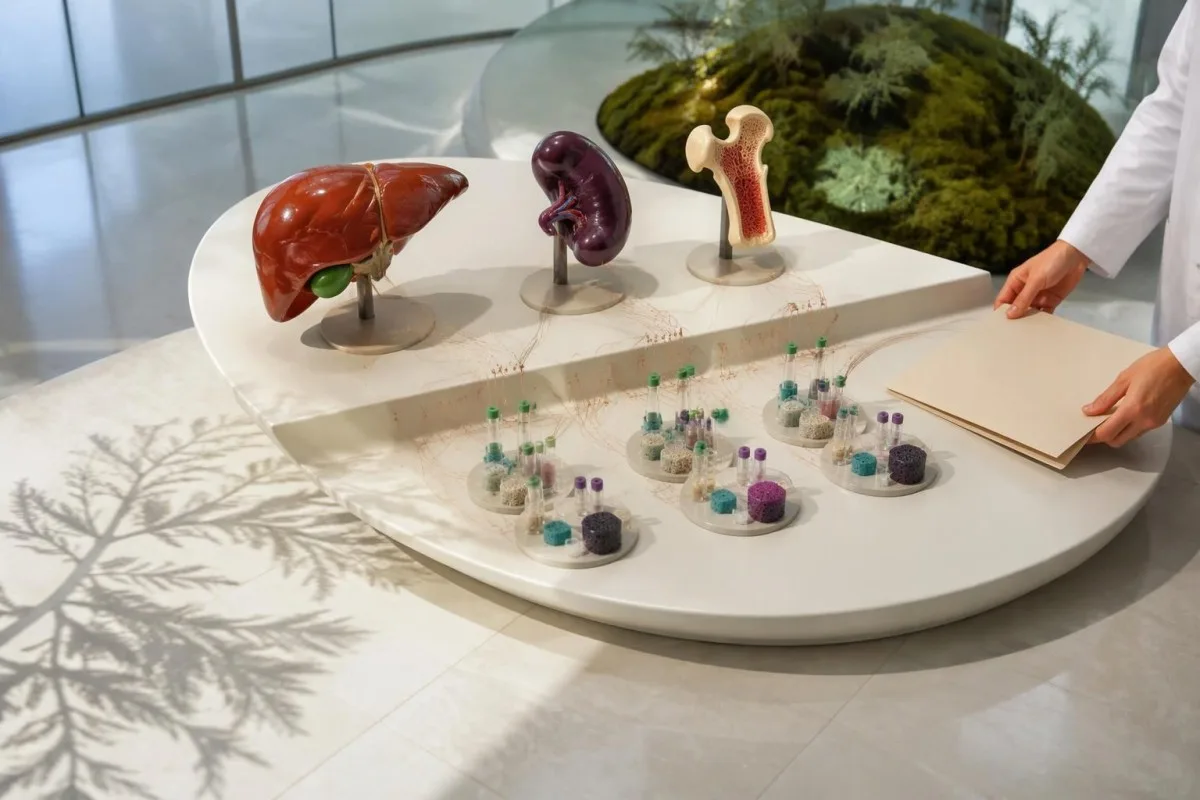
A useful appointment summary separates measured, documented, and unknown information across all 9 HScore inputs. Record the highest relevant temperature with its timing, whether imaging documented organ enlargement, and whether marrow was examined; write 'not assessed' rather than 'negative' when a test or examination has not happened.
Ask 3 focused questions: Is this pattern concerning for HLH or another urgent condition, which missing investigations could change the assessment, and what symptoms should trigger immediate return? If you are clinically stable with ferritin 700 ng/mL and no systemic warning signs, ask about ordinary iron, liver, and inflammatory causes rather than assuming an HLH workup is automatically required.
Diet, supplements, and iron avoidance do not treat suspected HLH, even when ferritin exceeds 6,000 ng/mL. Our IA-në e përgjegjshme explain the boundary between educational interpretation and medical decision-making; the practical next step for a high, unexplained score is clinician contact, not repeated online calculations intended to obtain a more reassuring number.
Publikime kërkimore dhe provat që qëndrojnë pas interpretimit të HScore
The main evidence for HScore interpretation comes from its 2014 development study and adult HLH recommendations, not general laboratory guides. Fardet et al. established the model and its 169 operating threshold; Henter et al. (2007) described HLH-2004, and La Rosée et al. (2019) addressed the challenges of applying diagnostic and treatment frameworks to adults.

The 3 clinical references below answer different questions: how the score was developed, what the HLH-2004 criteria require, and how adult management differs from a purely pediatric protocol. None makes a calculator a standalone diagnostic test, and none establishes one universally reliable threshold for every patient group, treatment stage, or hospital setting.
Kantesti LTD, UK Company No. 17090423, also publishes educational laboratory guides; the 2 Zenodo records listed below concern kidney function and urinalysis, not HScore validation. Our udhëzues për raportin e funksionit të veshkave can help readers understand accompanying renal measurements when a multisystem illness affects hydration or organ function, without identifying the cause of that illness.
Urinalysis is not one of the 9 HScore inputs, although urine findings may contribute to a broader assessment of organ involvement or alternative diagnoses. The udhëzues për interpretimin e analizës së urinës is supplementary reading; our standardet e përmbajtjes mjekësore explain why educational publications, diagnostic studies, and clinical guidelines should be distinguished rather than presented as equivalent evidence.
Pyetjet e bëra shpesh
A e konfirmon HLH-në një rezultat i lartë HScore?
0 Një HScore i lartë rrit gjasat e vlerësuara për HLH sekondare te të rriturit, por nuk e konfirmon diagnozën më vete. Pragu i përdorur zakonisht prej 169 kishte ndjeshmëri afërsisht 93% dhe specificitet 86% në studimin origjinal. Klinikët duhet të vlerësojnë ecurinë e sëmundjes, diagnozat alternative, të dhënat që mungojnë dhe ekzaminimet mbështetëse. Ethet e vazhdueshme me rënie të numrit të qelizave ose me mosfunksionim të organeve kërkojnë vlerësim urgjent, në vend që të pritet rezultati i një kalkulatori tjetër.
Çfarë vlere e HScore konsiderohet e lartë?
Një rezultat HScore prej 169 ose më shumë përdoret zakonisht si prag që mbështet vlerësimin e mëtejshëm për HLH sekondare te të rriturit. Rezultatet mbi 250 korrespondonin me një probabilitet të vlerësuar mbi 99% në modelin origjinal, por kjo përqindje nuk është një probabilitet personal i garantuar në çdo mjedis klinik. Vlerat e HScore nën 169 mund të shfaqen ende në rastet e HLH-së në fazë të hershme, të vlerësuara në mënyrë jo të plotë ose të trajtuara. Përgjigjja e duhur varet nga modeli klinik dhe nga fakti nëse personi po përkeqësohet.
A mund të nënkuptojë ferritina mbi 10 000 diçka tjetër përveç HLH-së?
Ferritina mbi 10,000 ng/mL mund të shfaqet te të rriturit pa HLH, përfshirë ata me infeksion të rëndë, dëmtim të mëlçisë, malinjitet ose çrregullime të tjera inflamatore. Ferritina ≥500 ng/mL përmbush vetëm një kriter të HLH-2004, ndërsa HScore e kufizon ferritinën në 50 pikë kur ajo është mbi 6,000 ng/mL. Nivelet jashtëzakonisht të larta të ferritinës janë më shqetësuese kur shoqërohen me ethe të vazhdueshme, ulje të numrit të qelizave të gjakut, fibrinogjen të ulët ose mosfunksionim të organeve. Kjo duhet të nxisë hetime klinike, jo një diagnozë automatike të HLH-së ose mbingarkesës me hekur.
A mund ta llogaritni HScore pa një ekzaminim të palcës së kockave?
Një HScore paraprak mund të llogaritet përpara ekzaminimit të palcës së eshtrave, por palca e paekzaminuar është e panjohur dhe jo negative. Hemofagocitoza në palcën e eshtrave jep 35 pikë, ndaj pasiguria mund të përshkruhet si një shtesë e mundshme prej 35 pikësh nëse të gjitha të dhënat e tjera janë dokumentuar. Mungesa e hemofagocitozës në një mostër të ekzaminuar nuk e përjashton HLH-në, dhe prania e saj nuk e konfirmon HLH-në në mënyrë të pavarur. Vlerësimi urgjent nuk duhet të shtyhet vetëm për të plotësuar këtë të dhënë.
Cili është ndryshimi midis HScore dhe kritereve HLH-2004?
HScore është një model probabiliteti i ponderuar që përdor 9 të dhëna hyrëse, ndërsa HLH-2004 përdor një diagnozë molekulare përkatëse ose plotësimin e 5 nga 8 kritereve diagnostikuese. Pragjet laboratorike ndryshojnë: HScore jep pikë për fibrinogjenin në ≤2.5 g/L, ndërsa pragu i fibrinogjenit sipas HLH-2004 është ≤1.5 g/L. HLH-2004 përfshin gjithashtu aktivitetin e qelizave vrasëse natyrore dhe CD25 të tretshëm, të cilat nuk përfshihen në HScore. Specialistët e të rriturve i përdorin këto korniza krahas gjykimit klinik, në vend që t’i trajtojnë si teste të këmbyeshme.
A mund ta përjashtojë HLH-në një HScore i ulët?
0 Një rezultat i ulët në HScore nuk mund ta përjashtojë me siguri HLH-në kur mungojnë gjetje kyçe, trajtimi ka ndryshuar rezultatet ose sindroma është ende në zhvillim. Pragu fillestar prej 169 kishte ndjeshmëri prej afërsisht 93%, jo 100%, dhe performanca e tij mund të ndryshojë në popullata të tjera. Një rezultat nën 90 përfaqësonte probabilitet të vlerësuar prej më pak se 1% në modelin fillestar, jo një rregull absolut përjashtimi. Konfuzioni i ri, vështirësia e rëndë në frymëmarrje, kolapsi, gjakderdhja e konsiderueshme ose përkeqësimi i funksionit të organeve duhet të kenë përparësi ndaj sigurisë së rreme që ofron një rezultat i ulët.
Merrni shpjegimin e rezultateve të analizave të gjakut
Ngarkoni raportin tuaj laboratorik dhe AI e Kantesti shpjegon çdo biomarker me gjuhë të thjeshtë brenda pak sekondash. Përdoret nga më shumë se 2 milionë njerëz në mbarë botën.
Referencat
- Klein, T., Mitchell, S., & Weber, H. (2026). Raportimi i Raportit BUN/Creatinine: Udhëzuesi i testimit të funksionit të veshkave. Kërkim mjekësor me Kantesti AI. DOI
- Klein, T., Mitchell, S., & Weber, H. (2026). Urobilinogeni në testin urin: Udhëzuesi i plotë i analizës urinare 2026. Kërkim mjekësor me Kantesti AI. DOI
- Fardet L et al. (2014). Development and validation of the HScore, a score for the diagnosis of reactive hemophagocytic syndrome. Arthritis & Rheumatology. DOI PubMed
- Henter JI et al. (2007). HLH-2004: Diagnostic and therapeutic guidelines for hemophagocytic lymphohistiocytosis. Pediatric Blood & Cancer. DOI PubMed
- La Rosée P et al. (2019). Recommendations for the management of hemophagocytic lymphohistiocytosis in adults. Blood. DOI PubMed
- 2M+Analizat e kryera
- 127+Vendet
- 100+Gjuhët
Rreth ekipit mjekësor


Sinjalet e Besimit E-E-A-T
Përvoja
Rishikim klinik i udhëhequr nga mjeku i flukseve të punës për interpretimin e analizave.
Ekspertizë
Fokus i mjekësisë laboratorike mbi mënyrën se si sillen biomarkerët në kontekstin klinik.
Autoritariteti
Rishikuar nga ana mjekësore nga Dr. Thomas Klein, me kontribute nga Dr. Sarah Mitchell dhe Prof. Dr. Hans Weber.
Besueshmëria
Interpretim i bazuar në prova, me rrugë të qarta për ndjekje për të reduktuar alarmin.






Mohim përgjegjësie mjekësore
Ky artikull është vetëm për qëllime edukative dhe nuk përbën këshilla mjekësore. Gjithmonë konsultohuni me një ofrues të kualifikuar të kujdesit shëndetësor për vendimet e diagnozës dhe trajtimit.
Botuar · Kontaktoni ekipin redaktues
Botuar nga Kantesti Ltd, e regjistruar në Angli dhe Uells, nr. i kompanisë. 17090423, Londër, Mbretëria e Bashkuar.
