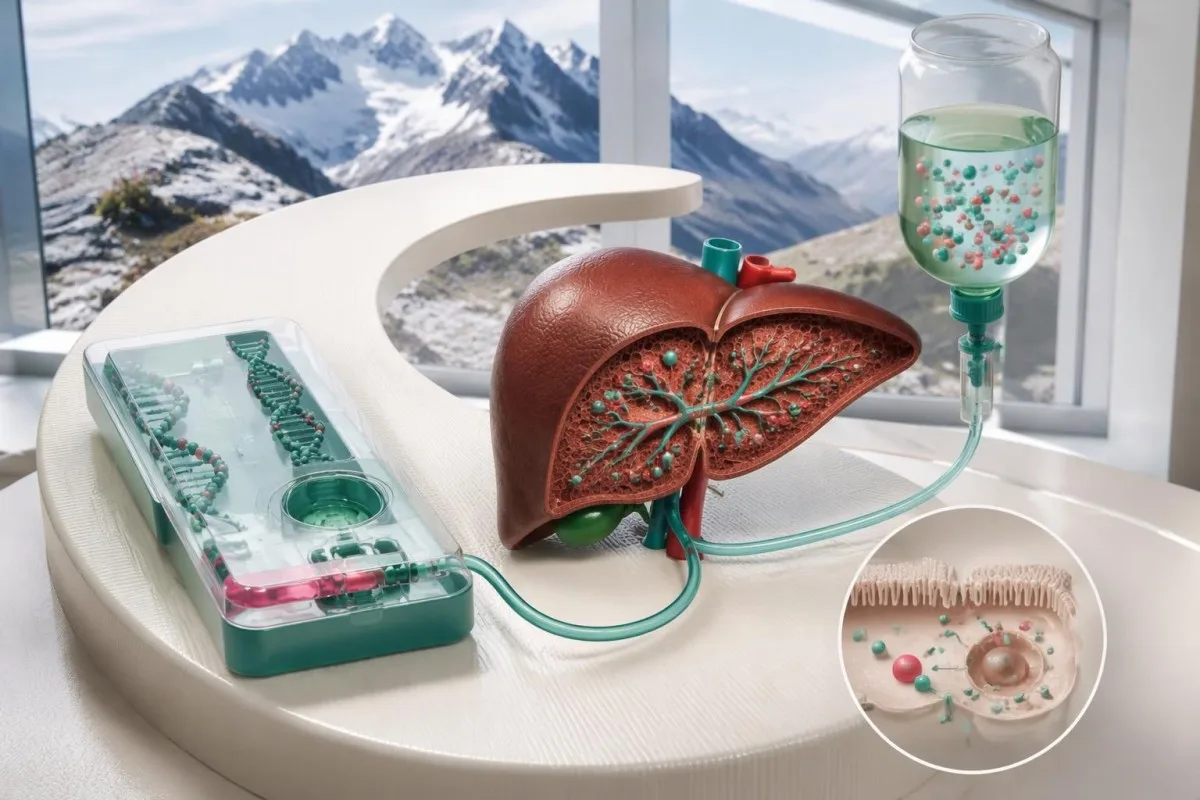
UGT1A1検査により、イリノテカンの活性代謝物のクリアランス低下を特定し、より安全な初回投与量の設定に役立てることができます。すべての反応を予測できるわけではなく、判断は正確な製剤、レジメン、腫瘍科チームの評価によって異なります。.

要点
- UGT1A1検査 は、SN-38の不活化における遺伝性の差異を特定します。通常のビリルビン検査や肝機能検査で遺伝子検査の結果を代用することはできません。.
- 低代謝型 は一般に*28/*28、*6/*6、または*6/*28の結果を示し、イリノテカン関連の重度の好中球減少症リスクを高めます。.
- 中間代謝型 は一般に*1/*28または*1/*6の結果を示します。オランダ薬理遺伝学作業部会は、これらの患者に対する遺伝子型のみを根拠とした一律の減量を推奨していません。.
- 初回投与量の指針 は異なります。オランダのガイドラインは、低代謝型では通常のイリノテカン初回投与量の70%を推奨し、その後は臨床医の判断で調整します。.
- レジメンが重要 なのは、一般的なFOLFIRIでは通常180 mg/m²を2週間ごとに投与する一方、他の投与スケジュールやリポソーム製剤では用量が異なるためです。.
- リポソーム型イリノテカン 製剤固有の指示があります。70 mg/m²のレジメンと50 mg/m²のレジメンを互換性があるものとして扱ってはいけません。.
- 遅発性下痢 イリノテカン投与から24時間を超えてから始まり、脱水、電解質の喪失、または好中球減少症の併発によって危険な状態になることがあります。.
- 緊急の評価 化学療法中に38.0°C以上の発熱があった場合は、腫瘍科チームから別の、より厳格な基準値を示されていない限り、必要です。.
初回投与前にUGT1A1検査で何が変わりますか?
A イリノテカン投与前のUGT1A1検査 薬物の活性代謝物であるSN-38を不活化する能力の低下を特定します。次のような結果は 28/*28、*6/*6、または*6/*28 開始用量を低くし、重度の好中球減少症と遅発性下痢をより注意深くモニタリングする根拠となります。腫瘍科チームは、その結果を実際のレジメンに当てはめる必要があります。.

遺伝性のクリアランスの差は治療に関連する症状が現れる前から存在するため、検査はサイクル1開始前に最も有用です。結果は現在体内を循環しているイリノテカンの量を測定するものではなく、化学療法が奏効するかどうかを示すものでもありません。これらは別の問いであり、治療反応、臨床評価、場合によっては専門的な薬物動態学的手法によって判断されます。.
通常のイリノテカンを180 mg/m²で投与予定の仮想患者は、代謝能低下型という結果を受けて別の開始計画となる場合があります。一方、同じ遺伝子型の別の患者には、すでに低用量の併用療法が行われていることもあります。結果が陽性かどうかだけを尋ねるのではなく、その結果によって開始用量、モニタリングの予定、および増量基準がどう変わるのかを確認することが重要です。.
カンテスティは AI血液検査分析装置 定期的なCBCおよびビリルビンの検査報告を理解するのに役立つものであり、UGT1A1遺伝子型検査を実施する検査機関や化学療法を処方するサービスではありません。当社の 組織と臨床目的 は、腫瘍科チームが担う処方の役割とは別のものです。遺伝子検査報告書と各サイクルの検査結果は、治療記録の別々の2つの項目として保管してください。.
UGT1A1 *28および*6はイリノテカンの代謝にどう影響しますか?
UGT1A1 *28 は酵素発現を低下させ、一方、 UGT1A1 *6変異 はコード領域の変化によって酵素機能を低下させます。どちらも、活性型SN-38から活性がはるかに低いグルクロン酸抱合体SN-38Gへの変換を遅らせる可能性があり、ALTやASTの異常値を伴わなくても曝露量が増加します。.

イリノテカンはまずカルボキシルエステラーゼによってSN-38に変換されます。続いてUGT1A1が関与するのはSN-38の不活化であり、初期の活性化ではありません。*28アレルは通常、*1に関連する6回ではなく、プロモーターのTA反復配列を7回含みます。一方、*6は一般にc.211G>Aと記載され、p.Gly71Arg置換を生じます。.
同じ酵素はビリルビンも抱合するため、以下との関連が説明できます。 ジルベール症候群とビリルビン. 。ただし、ビリルビン値が正常でも機能低下型の遺伝子型は否定できず、値が高くてもどの変異が存在するかは特定できません。絶食、疾患、閉塞、肝機能障害によって、単回測定の解釈が変わることがあります。.
Minamiらは日本人患者において*6と*28の両方を調べ、UGT1Aの変異とイリノテカンの薬物動態および毒性との関連を示しました(Pharmacogenetics and Genomics, 2007)。この研究が重要なのは、*28のみを対象とする検査では、臨床的に重要な*6アレルを見落とす可能性があるためです。*28陰性と判定された2人の患者が、同じSN-38クリアランス能を有するとは限りません。.
どの検査結果がUGT1A1低代謝型を示しますか?
A UGT1A1代謝能低下型 generally carries 2 decreased-function alleles, including 28/*28、*6/*6、または*6/*28. A person with *1/*28 or *1/*6 usually has an intermediate-metabolizer phenotype; *1/*1 is usually classified as normal when the test adequately covers relevant variants.

The slash separates the 2 inherited gene copies; it is not a fraction or a drug concentration. A *6/*28 result usually means one decreased-function allele came from each parent, creating a compound-heterozygous poor-metabolizer result; possessing 2 different allele names does not make the result less clinically relevant than *28/*28.
Intermediate metabolism is not the same as zero risk. Although the Dutch guideline does not recommend an automatic reduction for *1/*28 or *1/*6, a patient starting at 180 mg/m² may still need modification because of elevated bilirubin, limited marrow reserve, previous toxicity, or the accompanying drugs; the phenotype is one input, not permission to ignore the rest.
Pharmacogenetic recommendations are drug-specific, as our explanation of SLCO1B1-related medication risk also illustrates. A reduced-function result does not mean every medicine is unsafe, and *28/*28 does not itself diagnose a hereditary cancer syndrome; ask the laboratory to provide the diplotype, assigned phenotype, and variants tested rather than a 1-word positive result.
遺伝子検査には何を含めるべきで、いつ必要ですか?
The test should clearly state whether it detects both *28 and *6, how it assigns the 2 alleles, and which other variants it evaluates. Testing before the first irinotecan dose allows the result to influence prevention rather than merely explain toxicity after it occurs.
UGT1A1 *6 is more frequent in several East Asian populations, while *28 occurs across multiple ancestry groups; ancestry can inform test coverage but cannot substitute for testing. Some assays also distinguish the 5-repeat *36 and 8-repeat *37 alleles, so reports from 2 laboratories may differ because their analytical scope differs—not because your inherited genotype changed.
A laboratory may use a blood-derived DNA sample or a validated saliva or cheek-cell method; fasting is not ordinarily required for the genetic analysis itself. Recent allogeneic stem-cell transplantation needs special discussion because circulating DNA may reflect the donor, and turnaround time must be checked locally rather than assumed to fit a treatment appointment in 2 days.
Genotyping and enzyme-activity testing are not interchangeable, a distinction also relevant to TPMT test interpretation. UGT1A1 genotype generally needs testing only once, but a narrow panel may warrant additional analysis if the clinical picture is unexpected; a report listing only 1 tested variant should not be read as proof that every other reduced-function allele is absent.
UGT1A1により重度の好中球減少症リスクはどの程度高まりますか?
Poor-metabolizer genotypes increase the likelihood of 重度の好中球減少症, but the size of the increase depends on dose and regimen. Grade 3 neutropenia generally means an absolute neutrophil count below 1.0 down to 0.5 × 10⁹/L; grade 4 means below 0.5 × 10⁹/L.
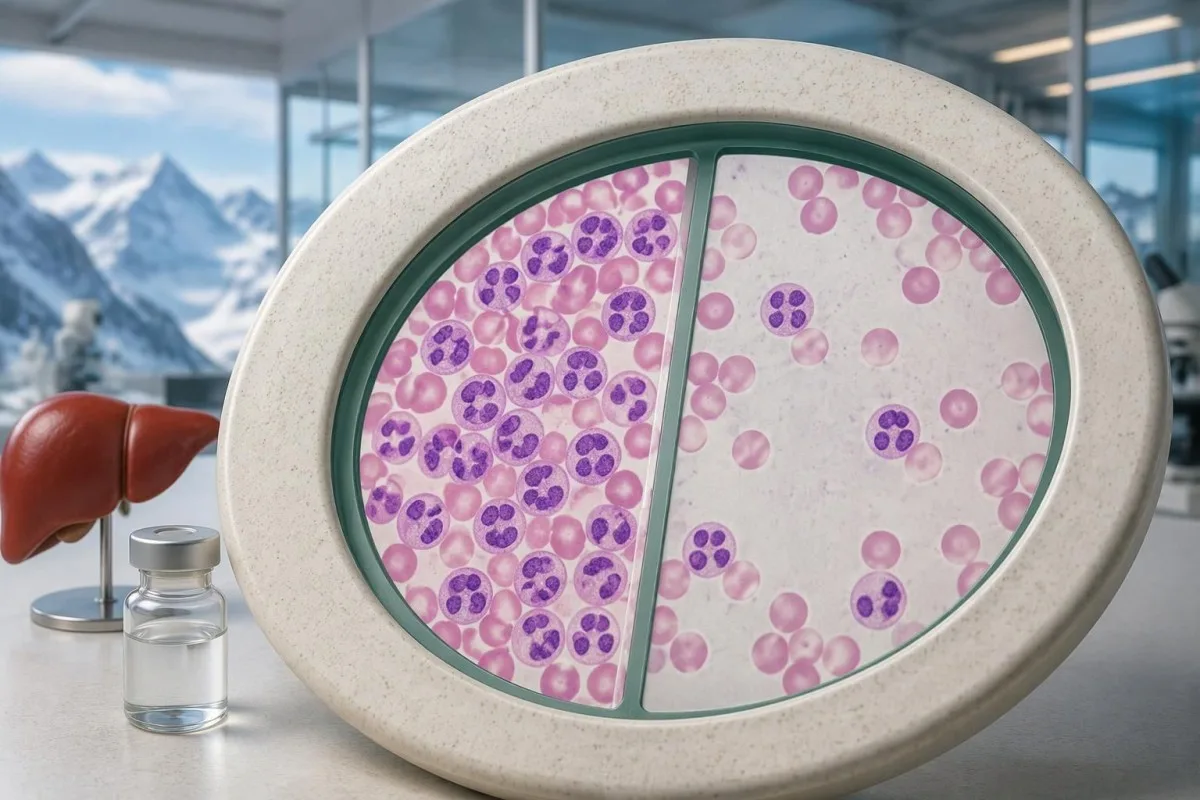
Hoskins et al. reported a dose-dependent association between *28/*28 and irinotecan-related neutropenia in their 2007 Journal of the National Cancer Institute meta-analysis. In the 150–250 mg/m² category, the pooled odds ratio was 3.22, with a 95% confidence interval of 1.52–6.81; older mixed schedules and wide uncertainty prevent treating this as a personal probability.
An odds ratio is not the percentage of patients affected. In a purely hypothetical illustration, if baseline risk were 10%, an odds ratio of 3 would correspond to approximately 25% risk—not 30%; the actual baseline varies with companion drugs, supportive care, prior treatment, and eligibility criteria, so no single percentage applies to every poor metabolizer.
Kantesti can help readers distinguish the ANC from the neutrophil percentage in routine reports, using the concepts explained in our 絶対好中球数ガイド. A pre-existing Duffy-null-associated lower ANC requires individualized interpretation, but a new chemotherapy-related fall below 0.5 × 10⁹/L still deserves prompt oncology assessment rather than reassurance based on ancestry alone.
イリノテカンによる早発性下痢と遅発性下痢はなぜ異なるのですか?
Early diarrhea occurs during or shortly after infusion, usually within 24 hours, and may accompany cholinergic symptoms such as sweating or abdominal cramping. 遅発性下痢 begins more than 24 hours after treatment and is more closely related to intestinal toxicity, including exposure to SN-38.
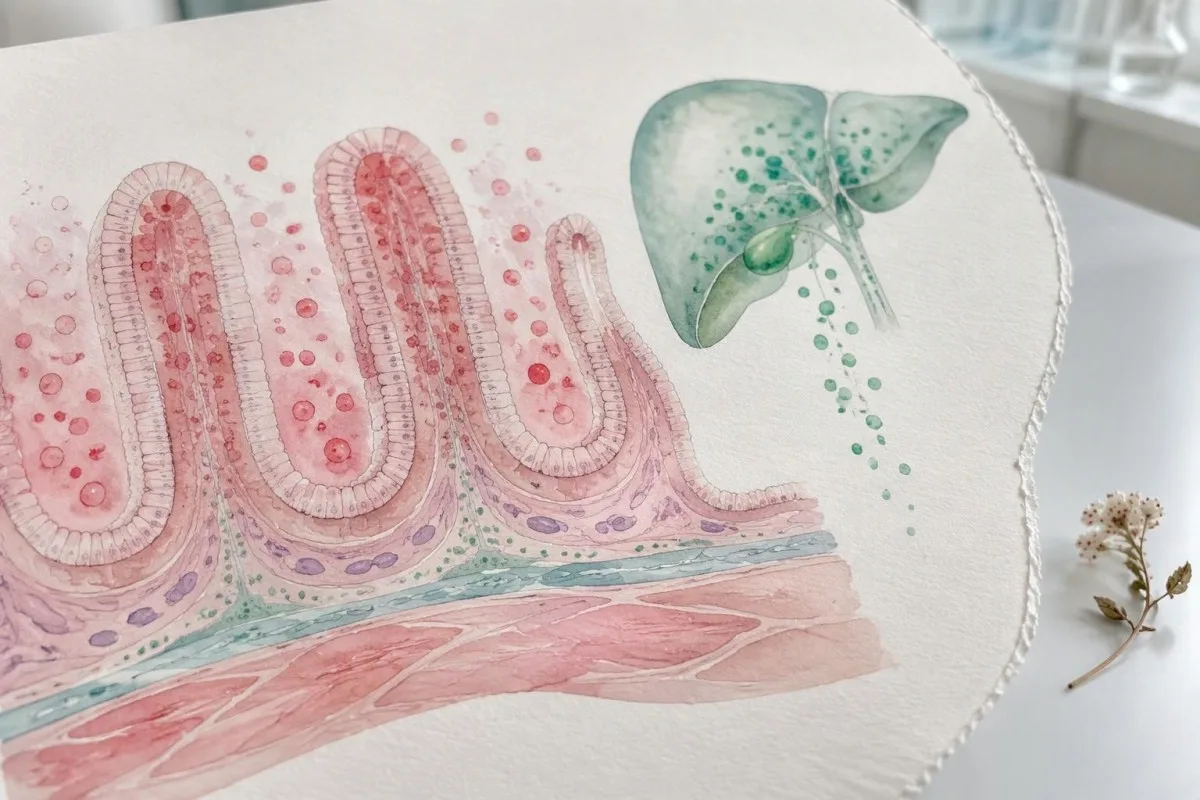
UGT1A1 genotype is more useful for anticipating delayed toxicity than predicting the immediate cholinergic syndrome. Clinicians may use atropine for early symptoms when appropriate, while delayed diarrhea requires a separate written treatment plan; intestinal bacteria can convert SN-38G back to SN-38 through beta-glucuronidase activity, illustrating why liver conjugation is not the only determinant of bowel exposure.
Grade 3 diarrhea commonly includes at least 7 additional stools per day above baseline, hospitalization being indicated, or a severe increase in ostomy output. Do not wait to reach that count before calling: persistent diarrhea despite the prescribed plan, vomiting that prevents drinking, fever, dizziness, or reduced urine output can justify urgent assessment at a much smaller stool increase.
Diarrhea during chemotherapy should not automatically be attributed to genotype, because antibiotics, infections, and accompanying drugs can produce similar symptoms; our C. difficile result guide explains one relevant diagnostic complication. If diarrhea lasts beyond 24 hours despite your oncology instructions, contact the team, and treat blood in the stool or significant abdominal pain as warning signs rather than ordinary treatment effects.
治療レジメンによって初回投与量の判断はどう変わりますか?
A starting-dose decision combines UGT1A1 phenotype with the planned regimen, not genotype alone. Conventional FOLFIRI commonly uses irinotecan 180 mg/m² every 2 weeks, whereas modified combinations may use 150 mg/m² or another protocol-specific amount; those differences change baseline exposure and toxicity.

The Dutch Pharmacogenetics Working Group recommends starting poor metabolizers at 70% of the normal irinotecan dose, with subsequent increases guided by neutrophil counts and clinical tolerance (Hulshof et al., 2023). Applied hypothetically to a 180 mg/m² protocol, 70% is 126 mg/m²; the prescribing team decides whether protocol rules permit rounding, what dose level to use, and when reassessment occurs.
A 70% calculation is relative to the regimen’s usual starting dose, not a fixed universal dose. For a hypothetical protocol starting at 150 mg/m², the same calculation gives 105 mg/m²; applying the 126 mg/m² figure from a different protocol would therefore be a genuine dosing error, especially if the infusion schedule or formulation also differed.
カンテスティは AI血液検査の読み方プラットフォーム for explaining reported laboratory values, not selecting a 180 mg/m² chemotherapy prescription; our 臨床検証フレームワーク describes the distinction between interpretation support and prescribing. In combinations containing fluorouracil or capecitabine, 化学療法前のDPYD検査 addresses a separate metabolic risk that a normal UGT1A1 result cannot rule out.
イリノテカンの投与量に関する推奨がガイドライン間で異なるのはなぜですか?
Guidelines differ because they interpret dose-dependent evidence differently and serve different clinical settings. The Dutch guideline recommends a 70% starting dose for poor metabolizers, while US conventional irinotecan prescribing information advises considering a reduction by at least 1 dose level, without defining one percentage for every regimen.
A dose level is defined by the treatment protocol rather than by the genetic test. Moving from 180 to 150 mg/m² would be approximately a 17% reduction, while moving from 180 to 120 mg/m² would be approximately a 33% reduction; these are mathematical examples, not recommendations, and explain why the phrase reduce one level needs a named protocol.
The French RNPGx/GPCO dose-stratified framework has historically distinguished doses below 180 mg/m², doses of 180–230 mg/m², and high doses of at least 240 mg/m². It recommended approximately 25–30% reduction for *28/*28 at the intermediate range and advised against high-dose use in that genotype; the Dutch recommendation is broader, including lower-dose regimens and other poor-metabolizer combinations.
The evidence is genuinely less settled at lower doses, where severe events may be less frequent and studies less able to estimate genotype effects precisely. This differs from HLA-B*57:01 drug avoidance, where the relevant recommendation is avoidance rather than a 30% reduction; ask which local guideline your team follows and whether its advice specifically covers *6/*6 or *6/*28.
リポソーム化イリノテカンにも同じUGT1A1用量ルールが適用されますか?
Liposomal irinotecan is not interchangeable with conventional irinotecan, and its UGT1A1 instructions depend on the regimen. In the liposomal irinotecan plus fluorouracil/leucovorin setting, a usual 70 mg/m² dose is reduced to 50 mg/m² initially for known *28/*28; the NALIRIFOX regimen already starts at 50 mg/m².

Those 70 and 50 mg/m² figures refer to irinotecan free base in the relevant liposomal prescribing instructions. Some documents also express doses using the hydrochloride trihydrate equivalent, approximately 80 and 60 mg/m² respectively; the team must verify the convention rather than interpret a different-looking number as an intentional dose increase or decrease.
For NALIRIFOX—liposomal irinotecan with oxaliplatin, fluorouracil, and leucovorin—the labeled starting dose is 50 mg/m² every 2 weeks, including patients known to have *28/*28. This does not establish that every poor-metabolizer genotype has identical evidence, especially *6-containing combinations; the oncology pharmacist should check the relevant product information and local protocol rather than import conventional irinotecan rules automatically.
A medication list that says only irinotecan is insufficient for a pharmacogenetic decision: request the formulation, companion drugs, dose expression, and schedule before comparing 2 plans. Our ベースライン検査準備ガイド also explains why recording pretreatment measurements helps later interpretation, although those measurements cannot resolve a formulation or prescribing ambiguity.
遺伝子型に加えて、どの検査結果や薬剤が重要ですか?
CBC with differential, bilirubin, liver tests, kidney function, and electrolytes provide information that UGT1A1 genotype cannot supply. A bilirubin of 2.0 mg/dL is approximately 34 µmol/L; conventional irinotecan studies often excluded values above this level, so higher results require specialist assessment rather than a genotype-only calculation.
An isolated indirect bilirubin rise may fit reduced UGT1A1 activity, while rising direct bilirubin with abnormal ALP or transaminases suggests an additional hepatobiliary problem. A hypothetical total bilirubin of 1.8 mg/dL with otherwise stable tests is therefore not equivalent to 1.8 mg/dL accompanied by new jaundice and obstruction; fractionation, trends, symptoms, and imaging determine the interpretation.
Strong CYP3A4 inducers can lower irinotecan exposure, while strong CYP3A4 or UGT1A1 inhibitors can increase clinically relevant exposure; examples requiring pharmacy review include rifampicin, carbamazepine, ketoconazole, and atazanavir. Do not stop a prescription yourself, and disclose supplements such as St John’s wort before cycle 1 because changing an interacting medicine can itself change exposure.
Kantesti can help explain routine kidney and electrolyte reports, but a normal creatinine does not guarantee tolerance of delayed diarrhea. The 検査上のアーティファクトは軽視できません。毎週、人々をだますからです。EDTA依存性の血小板凝集は、見かけ上の低値を生み出すことがあります。末梢血塗抹標本、またはクエン酸チューブでの再検は、しばしば謎を解決します。より広いパネルでも腎疾患、肝疾患、または蛋白異常が示唆される場合、読者は私たちの describes contextual interpretation, while our electrolyte safety guide explains why potassium or magnesium losses can matter after 24 hours of gastrointestinal symptoms.
どのようなモニタリングが必要で、どのような症状があれば緊急対応が必要ですか?
Monitoring remains necessary for every genotype, with CBC checks before treatment and additional measurements when clinically indicated. A temperature of 38.0°C以上の発熱は、
during chemotherapy warrants immediate contact with the oncology service unless the team has supplied a different threshold; follow a stricter local instruction.

Formal definitions of febrile neutropenia often use a single temperature of 38.3°C or a temperature of 38.0°C sustained for 1 hour, together with a low or falling ANC. These definitions are not instructions to wait at home: chemotherapy services often use simpler, more cautious telephone thresholds, and shaking chills, confusion, or sudden deterioration can be urgent without a documented fever.
A falling ANC can precede symptoms, so a patient feeling well should still attend the scheduled laboratory check. Our borderline neutrophil interpretation guide explains why a result near a cutoff needs context; during treatment, a change from 2.5 to 0.7 × 10⁹/L carries different significance from a stable longstanding count near 1.4 × 10⁹/L.
Dose escalation after a reduced start should follow a predefined plan based on counts, diarrhea, other toxicity, and treatment goals—not simply the absence of nausea after cycle 1. G-CSF may reduce neutropenia risk when indicated, but it does not prevent intestinal toxicity; urgent assessment is needed for diarrhea with fever, severe abdominal pain, inability to drink, or markedly reduced urination.
遺伝子型が正常でも重い副作用が起こることがあるのはなぜですか?
A normal UGT1A1 result does not guarantee safe treatment because irinotecan toxicity has multiple causes. Genotype does not adequately predict every episode of nausea, fatigue, hair loss, infusion symptoms, or toxicity from companion drugs; even *1/*1 patients can develop severe neutropenia or diarrhea.
A narrow assay may miss uncommon reduced-function variants, while liver impairment, interacting medicines, treatment intensity, and previous chemotherapy can increase risk independently. Thus, 2 patients both reported as *1/*1 may have different exposures and different marrow reserve; a phenotype assignment only describes the genetic information captured by the test, not every biological factor affecting treatment.
Companion drugs create additional attribution problems: oxaliplatin can cause neuropathy, and fluoropyrimidines can contribute diarrhea, mucositis, and marrow suppression. A hypothetical patient on a 4-drug combination with severe diarrhea cannot have the culprit assigned from UGT1A1 alone; timing, the complete regimen, microbiological testing when indicated, and other pharmacogenetic results may alter the clinical explanation.
Kantesti’s role in laboratory trend interpretation is to support understanding, not establish which drug caused a change between 2 cycles. Genetic reports also contain durable personal information, so review our プライバシーとデータの取り扱い before sharing them; an inherited metabolic variant is not a complete forecast of your future health.
イリノテカン投与前に腫瘍科チームへ何を尋ねるべきですか?
Before treatment, ask which formulation and regimen you will receive, whether *28 and *6 were tested, and how the result changes the first dose. Also obtain a written diarrhea plan, a temperature threshold, and a 24-hour contact route; these practical details matter even when the genotype is normal.

Request the actual dose in mg/m² and the planned total dose in mg, because they answer different questions. For example, a hypothetical 126 mg/m² order for a body surface area of 1.8 m² gives 226.8 mg before institutional rounding; patients should not perform their own adjustment, but this distinction helps identify whether 2 documents describe the same prescription.
Ask how the team will judge tolerance after cycle 1, whether an interim CBC is planned, and what would justify later escalation. Your written diarrhea instructions may use a loperamide schedule different from ordinary over-the-counter directions, so follow the oncology prescription rather than inventing a schedule; fever, abdominal pain, or persistent symptoms may require assessment instead of additional self-treatment.
カンテスティは AI搭載の血液検査解析ツール that can help explain routine reports alongside your own treatment notes; our AIテクノロジーガイド explains the supporting technology rather than a chemotherapy dosing system. Keep 3 items accessible: the genetic report, the current regimen sheet, and the emergency contact instructions, with the prescribing team verifying all clinical decisions.
研究論文:助言を裏付けるものと、裏付けないものは何ですか?
The dosing advice rests on drug-specific pharmacogenetic guidance and irinotecan studies, not on general blood-test education publications. The 2023 Dutch guideline recommends a 70% start for poor metabolizers, while the 2007 studies cited here help explain dose dependence and the relevance of both *28 and *6.
Hulshof et al. translate pharmacokinetic and toxicity evidence into prescribing guidance, whereas Hoskins et al. quantify associations across older dose categories, and Minami et al. examine relevant variants in Japanese patients. These 3 sources answer complementary questions; none supplies an individualized toxicity percentage for every contemporary combination, and observational associations should not be presented as proof that one starting dose suits everyone.
Kantesti’s 2 Zenodo publications listed below are educational resources on RDW and the BUN/creatinine ratio, not trials of UGT1A1-guided irinotecan dosing. Our RDW and CBC interpretation resource can explain accompanying red-cell indices, but RDW does not replace ANC, genotype, or a chemotherapy protocol; a DOI is a persistent identifier, not an automatic guarantee of clinical relevance or peer review.
The unresolved question is often how best to preserve treatment intensity while preventing a severe event in cycle 1, particularly in lower-dose combinations and less-studied genotypes. Our 医療コンテンツ基準 require separating established guidance, hypothetical calculations, and genuine uncertainty; the oncology team should confirm the current local product information and protocol before applying any published recommendation.
よくある質問
イリノテカン投与前に全員がUGT1A1検査を受けるべきですか?
検査方針は国、施設、レジメンによって異なりますが、オランダ薬理遺伝学ワーキンググループはイリノテカン投与前のUGT1A1検査を推奨しています。検査結果は、重篤な毒性が発現する前に低代謝能者を特定できるため、特に第1サイクル前に有用です。検査では、*28がないと報告するだけでなく、*28と*6の両方が対象となっていることを確認してください。検査によってあなたの具体的な開始用量が変わるか、また結果を待つのが適切かどうかは、担当の腫瘍診療チームに説明を求めてください。.
UGT1A1 *28/*28はイリノテカンの投与量にどのような意味がありますか?
UGT1A1 *28/*28は一般に低代謝能を示し、イリノテカン関連の重度好中球減少症のリスク上昇を伴います。オランダのガイドラインでは、通常の開始用量の70%を推奨し、その後は忍容性と好中球数に応じて医療従事者が用量を調整します。仮に従来の180 mg/m²レジメンを用いる場合、プロトコル固有の判断や丸めを行う前の計算値は126 mg/m²です。米国の処方指示およびリポソーム製剤のレジメンでは異なるアプローチが用いられるため、この計算値は個人向けの処方ではありません。.
イリノテカン投与前において、UGT1A1 *6は*28と同程度に重要ですか?
UGT1A1 *6は臨床的に重要な機能低下型バリアントであり、SN-38の不活化を低下させる可能性があります。*6/*6や*6/*28などの結果は、機能低下型アレルを2つ有するため、一般に低代謝型を示します。このバリアントは複数の東アジア集団でより高頻度ですが、祖先だけでは保有の有無を判断できません。*28陰性の結果を正常な代謝と解釈する前に、検査機関が*6を検査したかどうか確認してください。.
UGT1A1 *1/*28の場合、自動的な減量が必要ですか?
0 UGT1A1 *1/*28は一般に、低代謝型ではなく中間代謝型を示します。オランダのガイドラインでは、中間代謝型に対して遺伝子型のみを根拠とする一律の開始用量減量は推奨されていません。180 mg/m²の投与が予定されている患者でも、ビリルビン値、過去の治療、相互作用のある薬剤、または併用レジメンを理由に、別の計画が必要となる場合があります。中間代謝型であっても、CBCによるモニタリングや下痢への安全対策が不要になるわけではありません。.
正常なビリルビン値でUGT1A1遺伝子検査の代わりになりますか?
ビリルビン値が正常でも機能低下型UGT1A1遺伝子型を除外できず、ビリルビン値の上昇から特定のアレルを特定することもできません。ビリルビン値には、抱合、肝機能、胆道閉塞、赤血球の代謝回転など、複数の過程が反映されます。総ビリルビン値2.0 mg/dLは約34 µmol/Lに相当し、該当するイリノテカンのプロトコルに照らして解釈する必要があります。遺伝子検査とビリルビン測定は相互に補完する情報を提供するものであり、相互に置き換えられるものではありません。.
0 下痢や発熱がある場合、イリノテカン投与後いつ連絡すればよいですか?
化学療法中に38.0°C以上の発熱があった場合は、チームから別の基準が示されていない限り、直ちに腫瘍科に連絡し、より厳しい指示があればそれに従ってください。イリノテカンによる遅発性の下痢は、治療後24時間を過ぎてから始まり、脱水や電解質の喪失を引き起こすことがあります。処方された対処法を行っても下痢が続く場合、水分を飲めない場合、排尿量が減った場合、便に血が混じる場合、または強い腹痛がある場合は、速やかに連絡してください。1日に下痢便がさらに7回増えるのを待ったり、予定されている血液検査まで待ったりせず、助けを求めてください。.
血液検査結果の見方を確認しましょう
検査報告書をアップロードすると、KantestiのAIが数秒で各バイオマーカーを平易な言葉で説明します。世界中で200万人以上が利用しています。.
参考文献
- Klein, T., Mitchell, S., & Weber, H. (2026). RDW血液検査:RDW-CV、MCV、MCHCの完全ガイド。. Kantesti AI医学研究。. 掲載日
- Klein, T., Mitchell, S., & Weber, H. (2026). BUN/クレアチニン比の説明:腎機能検査ガイド。. Kantesti AI医学研究。. 掲載日
- Hulshof DP et al. (2023). Dutch pharmacogenetics working group (DPWG) guideline for the gene–drug interaction between UGT1A1 and irinotecan. European Journal of Human Genetics.
- Hoskins JM et al. (2007). UGT1A1*28 genotype and irinotecan-induced neutropenia: dose matters. Journal of the National Cancer Institute. 掲載日
- Minami H et al. (2007). Irinotecan pharmacokinetics/pharmacodynamics and UGT1A genetic polymorphisms in Japanese: roles of UGT1A1*6 and *28. Pharmacogenetics and Genomics.
- 200万以上分析対象の検査
- 127+国
- 100+言語
医療チームについて


E-E-A-T 信頼性シグナル
経験
医師主導による、検査結果解釈ワークフローの臨床レビュー。.
専門知識
臨床的な文脈においてバイオマーカーがどのように振る舞うかに焦点を当てた検査医学。.
権威
Thomas Klein医師による医学的レビュー。Sarah Mitchell医師およびHans Weber教授の協力。.
信頼性
アラームを減らすための明確なフォローアップ経路を備えた、エビデンスに基づく解釈。.






医療免責事項
この記事は教育目的のみを対象としており、医療助言を構成するものではありません。診断や治療の判断を行う際は、必ず有資格の医療提供者にご相談ください。.
公開 · 編集チームにお問い合わせください
Kantesti Ltdが発行。イングランドおよびウェールズで登録、会社番号. 17090423, 、英国ロンドン。.
