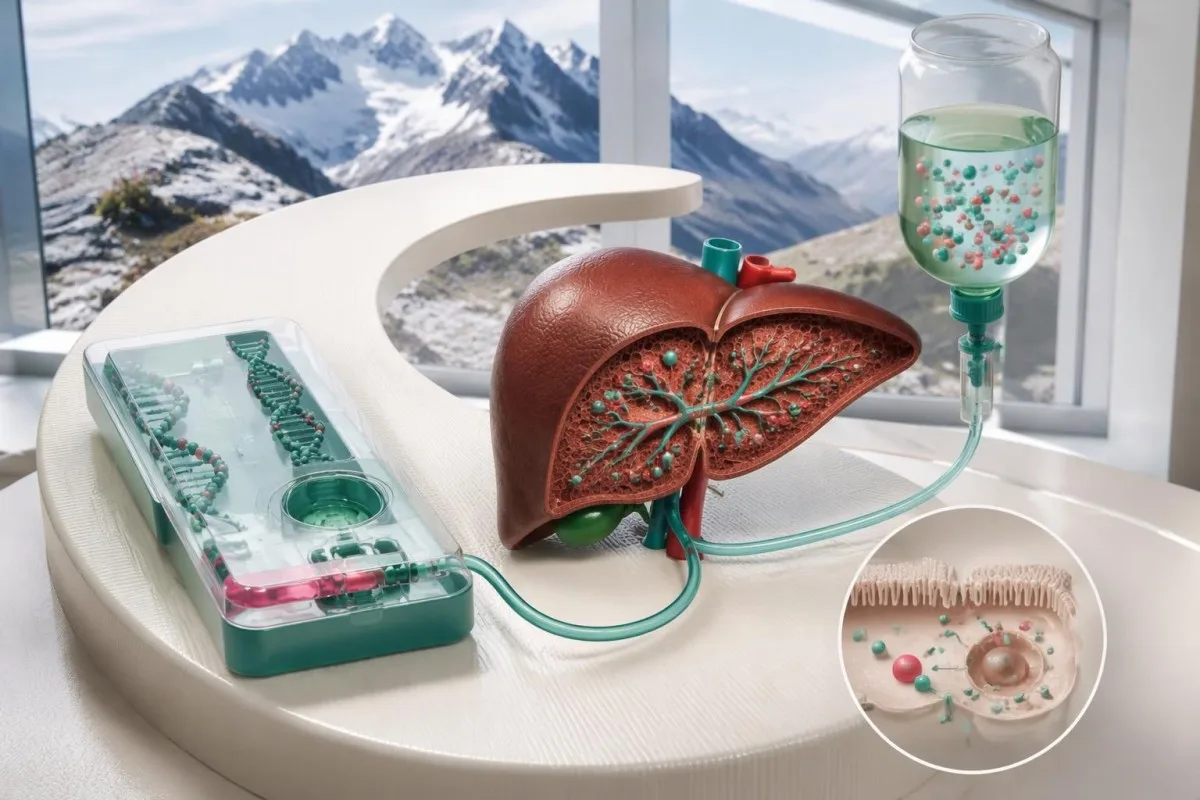
UGT1A1 azterketak irinotekanaren metabolito aktiboaren garbiketa murriztua identifika dezake, eta hasierako dosi seguruago bat ezartzen lagundu. Ezin du erreakzio oro aurreikusi, eta erabakia formulazio zehatzaren, tratamendu-erregimenaren eta onkologia-taldearen ebaluazioaren araberakoa da.

Ondorio nagusiak
- UGT1A1 azterketak SN-38ren inaktibazioan heredatutako aldeak identifikatzen ditu; bilirrubinaren edo gibeleko ohiko azterketek ezin dute emaitza genetikoa ordezkatu.
- Metabolizatzaile eskasek *28/*28, *6/*6 edo *6/*28 emaitzak izaten dituzte maiz; emaitza horiek irinotekanak eragindako neutropenia larria izateko arriskua handitzen dute.
- Bitarteko metabolizatzaileek *1/*28 edo *1/*6 emaitzak izaten dituzte maiz; Herbehereetako Farmakogenetika Lantaldeak ez du gomendatzen paziente horiei genotipoan soilik oinarritutako dosi-murrizketa automatikoa egitea.
- Hasierako dosiari buruzko jarraibideak desberdinak dira: Herbehereetako jarraibideak metabolizatzaile eskasei irinotekanaren ohiko hasierako dosiaren 70% ematea gomendatzen du, eta ondoren medikuak doitzea.
- Tratamendu-erregimenak badu garrantzia, FOLFIRI konbentzionalak 180 mg/m² bi astean behin erabiltzen baitu maiz; beste pauta batzuek eta formulazio liposomikoek dosi desberdinak erabiltzen dituzte.
- Irinotekan liposomikoa formulazioaren araberako jarraibideak ditu; 70 mg/m²-ko pauta eta 50 mg/m²-ko pauta ezin dira trukagarritzat hartu.
- Beherakoa, atzeratua irinotekan hartu eta 24 ordu baino gehiago igarotakoan hasten da, eta arriskutsua izan daiteke deshidratazioaren, elektrolito-galeraren edo neutropenia bateratuaren ondorioz.
- Urgent assessment beharrezkoa da kimioterapian 38.0°C-ko edo gehiagoko tenperatura izanez gero, onkologia-taldeak beste atalase zorrotzago bat eman ez badizu.
Zer aldatzen du UGT1A1 azterketak lehen infusioa eman aurretik?
A Irinotekan hartu aurreko UGT1A1 proba SN-38, farmakoaren metabolito aktiboa, inaktibatzeko gaitasun murriztua identifikatzen du. Honelako emaitzek: 28/*28, *6/*6 edo *6/*28 hasierako dosi txikiagoa eta neutropenia larria zein beherako atzeratua gertutik monitorizatzea justifika ditzakete; onkologia-taldeak emaitza benetako pautari aplikatu behar dio.

Proba zikloaren aurretik egitea da erabilgarriena, 1. zikloa baino lehen, herentziazko garbiketa-desberdintasuna tratamenduarekin lotutako sintomak agertu aurretik baitago. Emaitzak ez du neurtzen gaur egun zenbat irinotekan dagoen zirkulazioan, eta ez du zehazten kimioterapiak funtzionatuko duen; bestelako galderak dira, tratamenduaren erantzunaren, ebaluazio klinikoaren eta, noizean behin, metodo farmakokinetiko espezializatuen bidez erantzuten direnak.
Irudizko paziente bati, 180 mg/m²-ko irinotekan konbentzionala hartzekoa bada, hasierako plan desberdina eman dakioke metabolizatzaile motelen emaitza jaso ondoren; beste paziente bat, genotipo bera izan arren, dosi txikiagoko konbinazio bat hartzen egon daiteke dagoeneko. Galdera erabilgarria ez da emaitza positiboa den ala ez soilik: galdetu zer hasierako dosi, monitorizazio-egutegi eta dosia handitzeko irizpide aldatzen dituen emaitzak.
Kantesti bat da. AI odol-analisi analizatzailea CBC eta bilirrubinaren ohiko txostenak ulertzen laguntzen duen hori, ez UGT1A1 genotipizazioa egiten duen laborategia, ezta kimioterapia agintzen duen zerbitzua ere. Gure erakundea eta helburu klinikoa zure onkologia-taldearen preskribatzeko eginkizunetik bereizita daude; gorde txosten genetikoa eta ziklo bakoitzeko laborategiko emaitzak tratamendu-erregistroaren 2 atal bereizi gisa.
Nola eragiten diote UGT1A1 *28 eta *6 aldaerek irinotekanaren metabolismoari?
UGT1A1 *28 entzima-adierazpena murrizten du; aldiz, UGT1A1 *6 aldaerak entzimaren funtzioa murrizten du, kodetze-aldaketa baten bidez. Biek moteldu dezakete SN-38 aktiboa askoz inaktiboagoa den glukuronido, SN-38G, bihurtzea; horrek esposizioa handitzen du, ALT edo AST emaitzak anormalak izan beharrik gabe.

Karboxilesterasek SN-38 bihurtzen dute lehenik irinotekana; ondoren, UGT1A1ek SN-38ren inaktibazioan parte hartzen du, ez hasierako aktibazioan. *28 aleloak, oro har, *1 aleloarekin lotutako 6en ordez 7 TA errepikapen ditu sustatzailean; *6, berriz, c.211G>A gisa deskribatzen da maiz, eta p.Gly71Arg ordezkapena eragiten du.
Entzima berak bilirrubina ere konjugatzen du; horrek azaltzen du lotura hau: Gilbert sindromea eta bilirrubina. Hala ere, bilirrubina-emaitza normal batek ez du funtzio murriztuko genotipoa baztertzen, eta emaitza altu batek ez du zehazten zein aldaera dagoen; baraualdiak, gaixotasunak, buxadurak eta gibeleko urritasunak neurketa bakar baten interpretazioa alda dezakete.
Minami et al.-ek *6 eta *28 aztertu zituzten Japoniako pazienteengan, eta UGT1Aren aldaerak irinotekanaren farmakokinetikarekin eta toxikotasunarekin lotu zituzten (Pharmacogenetics and Genomics, 2007). Haien lana garrantzitsua da, *28 bakarrik aztertzen duen proba batek klinikoki esanguratsua den *6 alelo bat ez hauteman baitezake; *28-negatibo gisa deskribatutako 2 pazientek ez dute zertan SN-38 garbitzeko gaitasun bera izan.
Zein emaitzek adierazten dute UGT1A1 metabolizatzaile eskasa dela?
A UGT1A1 metabolizatzaile motela generally carries 2 decreased-function alleles, including 28/*28, *6/*6 edo *6/*28. A person with *1/*28 or *1/*6 usually has an intermediate-metabolizer phenotype; *1/*1 is usually classified as normal when the test adequately covers relevant variants.

The slash separates the 2 inherited gene copies; it is not a fraction or a drug concentration. A *6/*28 result usually means one decreased-function allele came from each parent, creating a compound-heterozygous poor-metabolizer result; possessing 2 different allele names does not make the result less clinically relevant than *28/*28.
Intermediate metabolism is not the same as zero risk. Although the Dutch guideline does not recommend an automatic reduction for *1/*28 or *1/*6, a patient starting at 180 mg/m² may still need modification because of elevated bilirubin, limited marrow reserve, previous toxicity, or the accompanying drugs; the phenotype is one input, not permission to ignore the rest.
Pharmacogenetic recommendations are drug-specific, as our explanation of SLCO1B1-related medication risk also illustrates. A reduced-function result does not mean every medicine is unsafe, and *28/*28 does not itself diagnose a hereditary cancer syndrome; ask the laboratory to provide the diplotype, assigned phenotype, and variants tested rather than a 1-word positive result.
Zer jaso behar du azterketa genetikoak, eta noiz behar da?
The test should clearly state whether it detects both *28 and *6, how it assigns the 2 alleles, and which other variants it evaluates. Testing before the first irinotecan dose allows the result to influence prevention rather than merely explain toxicity after it occurs.
UGT1A1 *6 is more frequent in several East Asian populations, while *28 occurs across multiple ancestry groups; ancestry can inform test coverage but cannot substitute for testing. Some assays also distinguish the 5-repeat *36 and 8-repeat *37 alleles, so reports from 2 laboratories may differ because their analytical scope differs—not because your inherited genotype changed.
A laboratory may use a blood-derived DNA sample or a validated saliva or cheek-cell method; fasting is not ordinarily required for the genetic analysis itself. Recent allogeneic stem-cell transplantation needs special discussion because circulating DNA may reflect the donor, and turnaround time must be checked locally rather than assumed to fit a treatment appointment in 2 days.
Genotyping and enzyme-activity testing are not interchangeable, a distinction also relevant to TPMT test interpretation. UGT1A1 genotype generally needs testing only once, but a narrow panel may warrant additional analysis if the clinical picture is unexpected; a report listing only 1 tested variant should not be read as proof that every other reduced-function allele is absent.
Zenbateraino handitzen du UGT1A1ek neutropenia larriaren arriskua?
Poor-metabolizer genotypes increase the likelihood of neutropenia larria, but the size of the increase depends on dose and regimen. Grade 3 neutropenia generally means an absolute neutrophil count below 1.0 down to 0.5 × 10⁹/L; grade 4 means below 0.5 × 10⁹/L.
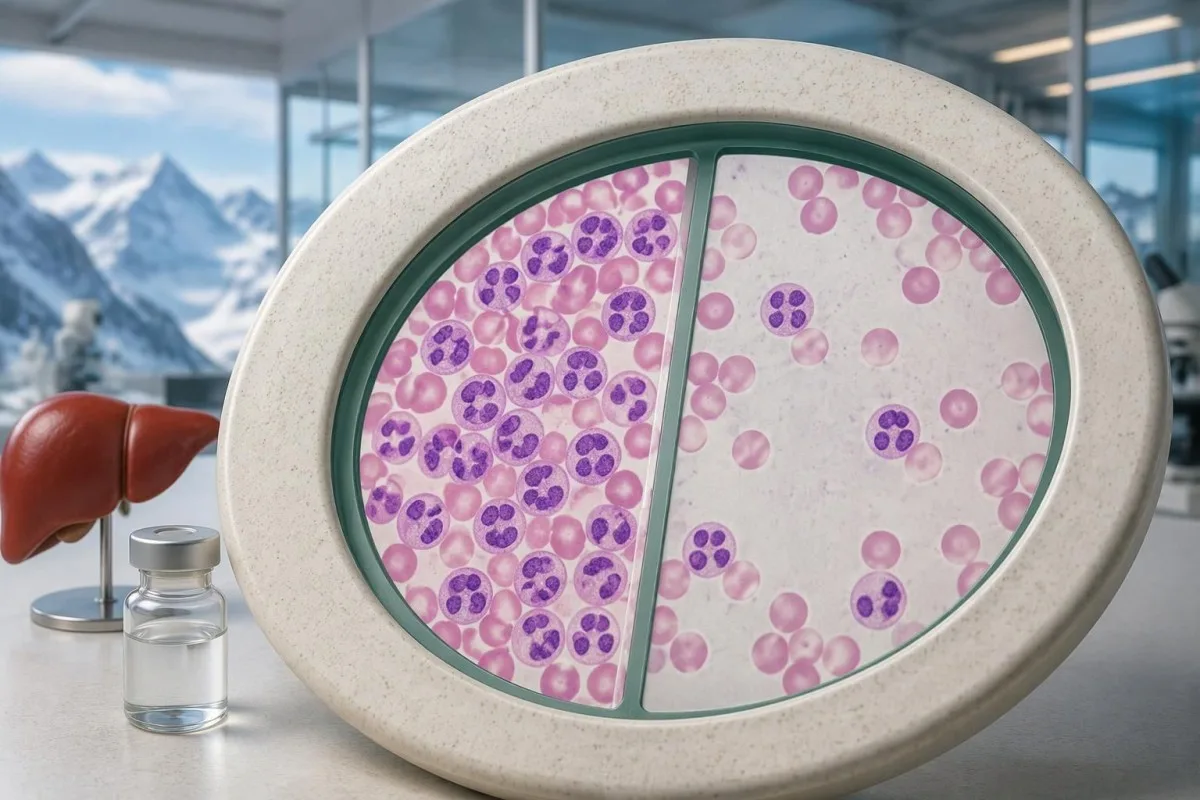
Hoskins et al. reported a dose-dependent association between *28/*28 and irinotecan-related neutropenia in their 2007 Journal of the National Cancer Institute meta-analysis. In the 150–250 mg/m² category, the pooled odds ratio was 3.22, with a 95% confidence interval of 1.52–6.81; older mixed schedules and wide uncertainty prevent treating this as a personal probability.
An odds ratio is not the percentage of patients affected. In a purely hypothetical illustration, if baseline risk were 10%, an odds ratio of 3 would correspond to approximately 25% risk—not 30%; the actual baseline varies with companion drugs, supportive care, prior treatment, and eligibility criteria, so no single percentage applies to every poor metabolizer.
Kantesti can help readers distinguish the ANC from the neutrophil percentage in routine reports, using the concepts explained in our neutrofilo absolutu kopurua gida. A pre-existing Duffy-null-associated lower ANC requires individualized interpretation, but a new chemotherapy-related fall below 0.5 × 10⁹/L still deserves prompt oncology assessment rather than reassurance based on ancestry alone.
Zergatik dira desberdinak irinotekanak eragindako beherako goiztiarra eta berantiarra?
Early diarrhea occurs during or shortly after infusion, usually within 24 hours, and may accompany cholinergic symptoms such as sweating or abdominal cramping. Beherakoa, atzeratua begins more than 24 hours after treatment and is more closely related to intestinal toxicity, including exposure to SN-38.
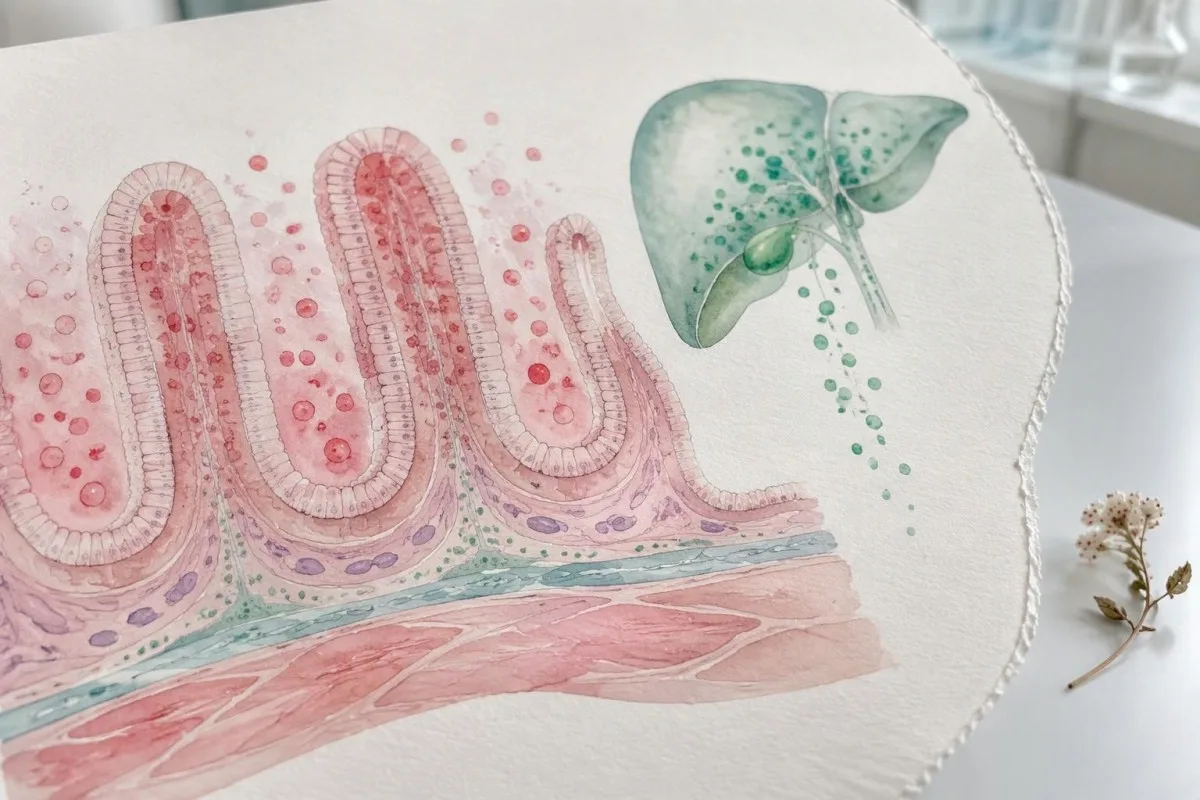
UGT1A1 genotype is more useful for anticipating delayed toxicity than predicting the immediate cholinergic syndrome. Clinicians may use atropine for early symptoms when appropriate, while delayed diarrhea requires a separate written treatment plan; intestinal bacteria can convert SN-38G back to SN-38 through beta-glucuronidase activity, illustrating why liver conjugation is not the only determinant of bowel exposure.
Grade 3 diarrhea commonly includes at least 7 additional stools per day above baseline, hospitalization being indicated, or a severe increase in ostomy output. Do not wait to reach that count before calling: persistent diarrhea despite the prescribed plan, vomiting that prevents drinking, fever, dizziness, or reduced urine output can justify urgent assessment at a much smaller stool increase.
Diarrhea during chemotherapy should not automatically be attributed to genotype, because antibiotics, infections, and accompanying drugs can produce similar symptoms; our C. difficile result guide explains one relevant diagnostic complication. If diarrhea lasts beyond 24 hours despite your oncology instructions, contact the team, and treat blood in the stool or significant abdominal pain as warning signs rather than ordinary treatment effects.
Nola aldatzen du tratamendu-erregimenak hasierako dosiari buruzko erabakia?
A starting-dose decision combines UGT1A1 phenotype with the planned regimen, not genotype alone. Conventional FOLFIRI commonly uses irinotecan 180 mg/m² every 2 weeks, whereas modified combinations may use 150 mg/m² or another protocol-specific amount; those differences change baseline exposure and toxicity.

The Dutch Pharmacogenetics Working Group recommends starting poor metabolizers at 70% of the normal irinotecan dose, with subsequent increases guided by neutrophil counts and clinical tolerance (Hulshof et al., 2023). Applied hypothetically to a 180 mg/m² protocol, 70% is 126 mg/m²; the prescribing team decides whether protocol rules permit rounding, what dose level to use, and when reassessment occurs.
A 70% calculation is relative to the regimen’s usual starting dose, not a fixed universal dose. For a hypothetical protocol starting at 150 mg/m², the same calculation gives 105 mg/m²; applying the 126 mg/m² figure from a different protocol would therefore be a genuine dosing error, especially if the infusion schedule or formulation also differed.
Kantesti bat da. AI odol-analisien interpretazio-plataforma for explaining reported laboratory values, not selecting a 180 mg/m² chemotherapy prescription; our baliozkotze-esparru klinikoa describes the distinction between interpretation support and prescribing. In combinations containing fluorouracil or capecitabine, kimioterapiaren aurreko DPYD probak addresses a separate metabolic risk that a normal UGT1A1 result cannot rule out.
Zergatik dira desberdinak irinotekanaren dosifikazio-gomendioak jarraibideen arabera?
Guidelines differ because they interpret dose-dependent evidence differently and serve different clinical settings. The Dutch guideline recommends a 70% starting dose for poor metabolizers, while US conventional irinotecan prescribing information advises considering a reduction by at least 1 dose level, without defining one percentage for every regimen.
A dose level is defined by the treatment protocol rather than by the genetic test. Moving from 180 to 150 mg/m² would be approximately a 17% reduction, while moving from 180 to 120 mg/m² would be approximately a 33% reduction; these are mathematical examples, not recommendations, and explain why the phrase reduce one level needs a named protocol.
The French RNPGx/GPCO dose-stratified framework has historically distinguished doses below 180 mg/m², doses of 180–230 mg/m², and high doses of at least 240 mg/m². It recommended approximately 25–30% reduction for *28/*28 at the intermediate range and advised against high-dose use in that genotype; the Dutch recommendation is broader, including lower-dose regimens and other poor-metabolizer combinations.
The evidence is genuinely less settled at lower doses, where severe events may be less frequent and studies less able to estimate genotype effects precisely. This differs from HLA-B*57:01 drug avoidance, where the relevant recommendation is avoidance rather than a 30% reduction; ask which local guideline your team follows and whether its advice specifically covers *6/*6 or *6/*28.
Irinotekan liposomikoak UGT1A1en dosifikazio-arau berak erabiltzen al ditu?
Liposomal irinotecan is not interchangeable with conventional irinotecan, and its UGT1A1 instructions depend on the regimen. In the liposomal irinotecan plus fluorouracil/leucovorin setting, a usual 70 mg/m² dose is reduced to 50 mg/m² initially for known *28/*28; the NALIRIFOX regimen already starts at 50 mg/m².

Those 70 and 50 mg/m² figures refer to irinotecan free base in the relevant liposomal prescribing instructions. Some documents also express doses using the hydrochloride trihydrate equivalent, approximately 80 and 60 mg/m² respectively; the team must verify the convention rather than interpret a different-looking number as an intentional dose increase or decrease.
For NALIRIFOX—liposomal irinotecan with oxaliplatin, fluorouracil, and leucovorin—the labeled starting dose is 50 mg/m² every 2 weeks, including patients known to have *28/*28. This does not establish that every poor-metabolizer genotype has identical evidence, especially *6-containing combinations; the oncology pharmacist should check the relevant product information and local protocol rather than import conventional irinotecan rules automatically.
A medication list that says only irinotecan is insufficient for a pharmacogenetic decision: request the formulation, companion drugs, dose expression, and schedule before comparing 2 plans. Our oinarrizko laborategi-prestaketarako gidako also explains why recording pretreatment measurements helps later interpretation, although those measurements cannot resolve a formulation or prescribing ambiguity.
Zein laborategiko emaitza eta sendagai hartu behar dira kontuan genotipoaz gain?
CBC with differential, bilirubin, liver tests, kidney function, and electrolytes provide information that UGT1A1 genotype cannot supply. A bilirubin of 2.0 mg/dL is approximately 34 µmol/L; conventional irinotecan studies often excluded values above this level, so higher results require specialist assessment rather than a genotype-only calculation.
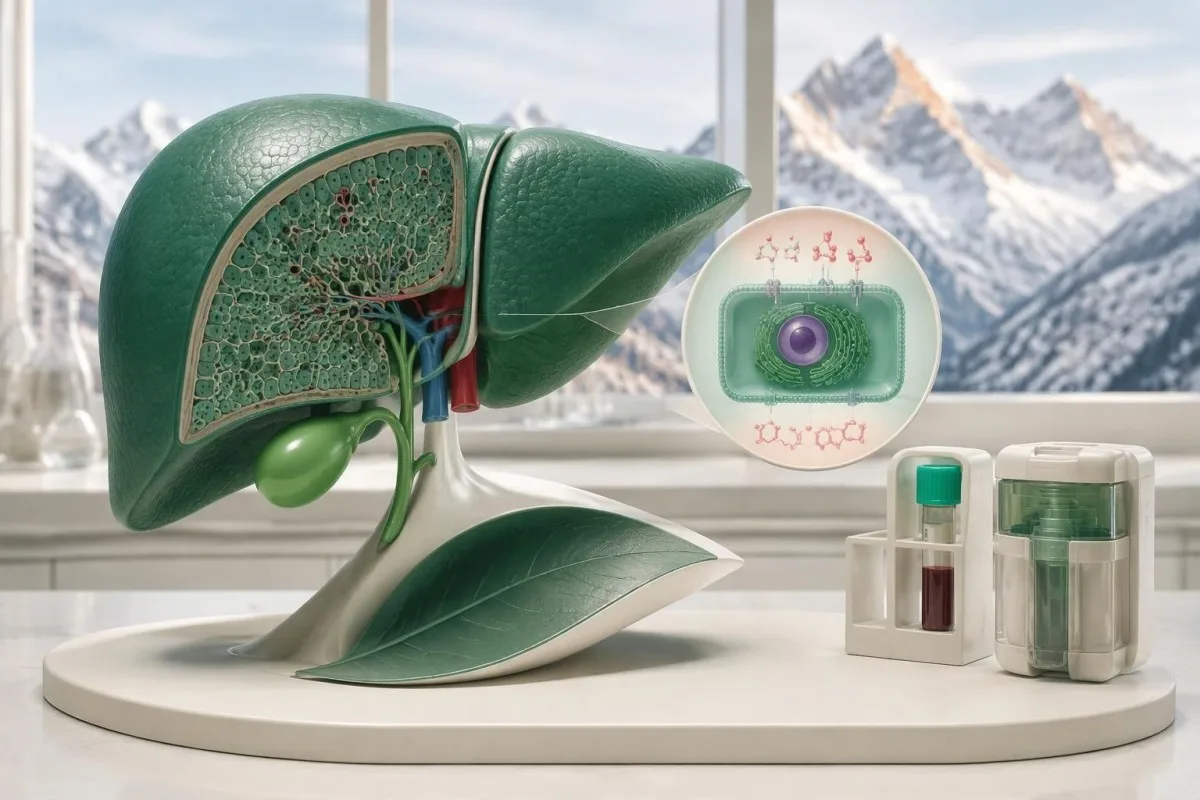
An isolated indirect bilirubin rise may fit reduced UGT1A1 activity, while rising direct bilirubin with abnormal ALP or transaminases suggests an additional hepatobiliary problem. A hypothetical total bilirubin of 1.8 mg/dL with otherwise stable tests is therefore not equivalent to 1.8 mg/dL accompanied by new jaundice and obstruction; fractionation, trends, symptoms, and imaging determine the interpretation.
Strong CYP3A4 inducers can lower irinotecan exposure, while strong CYP3A4 or UGT1A1 inhibitors can increase clinically relevant exposure; examples requiring pharmacy review include rifampicin, carbamazepine, ketoconazole, and atazanavir. Do not stop a prescription yourself, and disclose supplements such as St John’s wort before cycle 1 because changing an interacting medicine can itself change exposure.
Kantesti can help explain routine kidney and electrolyte reports, but a normal creatinine does not guarantee tolerance of delayed diarrhea. The BUN/kreainina ratioaren gida describes contextual interpretation, while our electrolyte safety guide explains why potassium or magnesium losses can matter after 24 hours of gastrointestinal symptoms.
Zer monitorizazio egin behar da, eta zer sintomak eskatzen dute berehalako neurriak hartzea?
Monitoring remains necessary for every genotype, with CBC checks before treatment and additional measurements when clinically indicated. A temperature of 38,0°C edo handiagoa bada during chemotherapy warrants immediate contact with the oncology service unless the team has supplied a different threshold; follow a stricter local instruction.
Formal definitions of febrile neutropenia often use a single temperature of 38.3°C or a temperature of 38.0°C sustained for 1 hour, together with a low or falling ANC. These definitions are not instructions to wait at home: chemotherapy services often use simpler, more cautious telephone thresholds, and shaking chills, confusion, or sudden deterioration can be urgent without a documented fever.
A falling ANC can precede symptoms, so a patient feeling well should still attend the scheduled laboratory check. Our borderline neutrophil interpretation guide explains why a result near a cutoff needs context; during treatment, a change from 2.5 to 0.7 × 10⁹/L carries different significance from a stable longstanding count near 1.4 × 10⁹/L.
Dose escalation after a reduced start should follow a predefined plan based on counts, diarrhea, other toxicity, and treatment goals—not simply the absence of nausea after cycle 1. G-CSF may reduce neutropenia risk when indicated, but it does not prevent intestinal toxicity; urgent assessment is needed for diarrhea with fever, severe abdominal pain, inability to drink, or markedly reduced urination.
Zergatik ager daitezke albo-ondorio larriak genotipo normala izan arren?
A normal UGT1A1 result does not guarantee safe treatment because irinotecan toxicity has multiple causes. Genotype does not adequately predict every episode of nausea, fatigue, hair loss, infusion symptoms, or toxicity from companion drugs; even *1/*1 patients can develop severe neutropenia or diarrhea.
A narrow assay may miss uncommon reduced-function variants, while liver impairment, interacting medicines, treatment intensity, and previous chemotherapy can increase risk independently. Thus, 2 patients both reported as *1/*1 may have different exposures and different marrow reserve; a phenotype assignment only describes the genetic information captured by the test, not every biological factor affecting treatment.
Companion drugs create additional attribution problems: oxaliplatin can cause neuropathy, and fluoropyrimidines can contribute diarrhea, mucositis, and marrow suppression. A hypothetical patient on a 4-drug combination with severe diarrhea cannot have the culprit assigned from UGT1A1 alone; timing, the complete regimen, microbiological testing when indicated, and other pharmacogenetic results may alter the clinical explanation.
Kantesti’s role in laboratory trend interpretation is to support understanding, not establish which drug caused a change between 2 cycles. Genetic reports also contain durable personal information, so review our pribatutasunari eta datuen tratamenduari before sharing them; an inherited metabolic variant is not a complete forecast of your future health.
Zer galdetu behar diozu onkologia-taldeari irinotekana hartu aurretik?
Before treatment, ask which formulation and regimen you will receive, whether *28 and *6 were tested, and how the result changes the first dose. Also obtain a written diarrhea plan, a temperature threshold, and a 24-hour contact route; these practical details matter even when the genotype is normal.

Request the actual dose in mg/m² and the planned total dose in mg, because they answer different questions. For example, a hypothetical 126 mg/m² order for a body surface area of 1.8 m² gives 226.8 mg before institutional rounding; patients should not perform their own adjustment, but this distinction helps identify whether 2 documents describe the same prescription.
Ask how the team will judge tolerance after cycle 1, whether an interim CBC is planned, and what would justify later escalation. Your written diarrhea instructions may use a loperamide schedule different from ordinary over-the-counter directions, so follow the oncology prescription rather than inventing a schedule; fever, abdominal pain, or persistent symptoms may require assessment instead of additional self-treatment.
Kantesti bat da. AI bidezko odol-analisien analisi-tresna that can help explain routine reports alongside your own treatment notes; our AI teknologiaren gida explains the supporting technology rather than a chemotherapy dosing system. Keep 3 items accessible: the genetic report, the current regimen sheet, and the emergency contact instructions, with the prescribing team verifying all clinical decisions.
Ikerketa-argitalpenak: zer ebidentziak sostengatzen ditu gomendioak, eta zer ez?
The dosing advice rests on drug-specific pharmacogenetic guidance and irinotecan studies, not on general blood-test education publications. The 2023 Dutch guideline recommends a 70% start for poor metabolizers, while the 2007 studies cited here help explain dose dependence and the relevance of both *28 and *6.
Hulshof et al. translate pharmacokinetic and toxicity evidence into prescribing guidance, whereas Hoskins et al. quantify associations across older dose categories, and Minami et al. examine relevant variants in Japanese patients. These 3 sources answer complementary questions; none supplies an individualized toxicity percentage for every contemporary combination, and observational associations should not be presented as proof that one starting dose suits everyone.
Kantesti’s 2 Zenodo publications listed below are educational resources on RDW and the BUN/creatinine ratio, not trials of UGT1A1-guided irinotecan dosing. Our RDW and CBC interpretation resource can explain accompanying red-cell indices, but RDW does not replace ANC, genotype, or a chemotherapy protocol; a DOI is a persistent identifier, not an automatic guarantee of clinical relevance or peer review.
The unresolved question is often how best to preserve treatment intensity while preventing a severe event in cycle 1, particularly in lower-dose combinations and less-studied genotypes. Our eduki medikoaren estandarrak require separating established guidance, hypothetical calculations, and genuine uncertainty; the oncology team should confirm the current local product information and protocol before applying any published recommendation.
Ohiko galderak
Denek egin beharko lukete UGT1A1 proba irinotekana hartu aurretik?
0 Probak egiteko politika herrialdearen, erakundearen eta tratamendu-erregimenaren arabera aldatzen da, baina Herbehereetako Farmakogenetikako Lantaldeak irinotekanarekin tratamendua hasi aurretik UGT1A1 probatzea gomendatzen du. Emaitza bereziki erabilgarria da 1. zikloa baino lehen, toxikotasun larria agertu aurretik metabolizatzaile eskasak identifika baititzake. Probak *28 eta *6 aleloak biak hartzen dituela argitu behar da, eta ez *28 falta dela soilik jakinarazi. Onkologia-taldeak azaldu behar dizu probak zure hasierako dosi espezifikoa aldatzen duen eta emaitzaren zain egotea egokia den.
Zer esan nahi du UGT1A1 *28/*28 genotipoak irinotekanaren dosifikazioan?
UGT1A1 *28/*28 genotipoak, oro har, metabolizatzaile eskasaren egoera adierazten du, eta irinotekanarekin lotutako neutropenia larria izateko arrisku handiagoa dakar. Herbehereetako gidalerroak ohiko hasierako dosiaren 70% gomendatzen du; ondoren, medikuak doikuntzak egiten ditu tolerantziaren eta neutrofilo-kopuruaren arabera. 180 mg/m²-ko pauta konbentzional hipotetiko baterako, kalkulu horrek 126 mg/m² ematen du, protokoloaren araberako erabakiak edo biribiltzea aplikatu aurretik. AEBetako preskripzio-jarraibideek eta formulazio liposomikoek beste ikuspegi batzuk erabiltzen dituzte; beraz, kalkulu hau ez da preskripzio pertsonal bat.
UGT1A1 *6 *28 bezain garrantzitsua al da irinotekanaren aurretik?
UGT1A1 *6 funtzio gutxituko aldaera klinikoki esanguratsua da, eta SN-38ren inaktibazioa murriztu dezake. *6/*6 edo *6/*28 bezalako emaitzek, oro har, metabolizatzaile eskasaren egoera adierazten dute, funtzio gutxituko 2 alelo baitituzte. Aldaera ohikoagoa da Asiako ekialdeko hainbat populaziotan, baina arbasoen jatorriak bakarrik ezin du zehaztu pertsona batek aldaera hori duen. Galdetu ea zure laborategiak *6 aztertu duen, *28-ren emaitza negatiboa metabolismo normaltzat interpretatu aurretik.
UGT1A1 *1/*28 genotipoak dosia automatikoki murriztea eskatzen al du?
0 UGT1A1 *1/*28-k, oro har, metabolizatzaile ertainaren egoera adierazten du, eta ez metabolizatzaile eskasaren egoera. Herbehereetako gidalerroak ez du gomendatzen metabolizatzaile ertainentzat genotipoan soilik oinarritutako hasierako dosia automatikoki murriztea. 180 mg/m² jasotzeko programatuta dagoen paziente batek, hala ere, beste plan bat behar izan dezake bilirrubinaren, aurretiko tratamenduaren, elkarreragiten duten sendagaien edo konbinazio-erregimenaren ondorioz. Metabolismo ertainak ez du ezabatzen CBC monitorizatzeko edo beherakoari aurre egiteko segurtasun-plan bat izateko beharra.
Bilirrubina normalak UGT1A1 proba genetikoak ordezka ditzake?
Bilirrubina-maila normalak ezin du baztertu funtzio murriztuko UGT1A1 genotipo bat, eta bilirrubina-maila altuak ezin du alelo espezifikoa identifikatu. Bilirrubinak hainbat prozesu islatzen ditu, besteak beste, konjugazioa, gibelaren funtzioa, buxadura eta globulu gorrien suntsipena. 2,0 mg/dL-ko bilirrubina osoa 34 µmol/L inguru da, eta irinotekanaren protokolo egokiaren barruan interpretatu behar da. Proba genetikoek eta bilirrubina-neurketak informazio osagarria ematen dute, ez erantzun trukagarriak.
Noiz deitu behar dut irinotekanaren ondoren beherakoa edo sukarra badut?
Jarri berehala harremanetan onkologia-zerbitzuarekin kimioterapian 38,0 °C-ko edo hortik gorako tenperatura baduzu, taldeak beste atalase bat eman ez badizu, eta bete jarraibide zorrotzagoak ere. Irinotekanaren ondorengo beherakoa tratamendua hartu eta 24 ordu baino gehiago igaro ondoren hasten da, eta deshidratazioa edo elektrolito-galera eragin dezake. Deitu berehala beherakoak agindutako plana bete arren jarraitzen badu, edan ezin baduzu, ohi baino gutxiago pixa egiten baduzu, gorozkietan odola badago edo sabeleko min handia baduzu. Ez itxaron egunean 7 gorozki gehiago egin arte edo programatutako odol-analisia egin arte laguntza eskatzeko.
Jaso odol-analisien emaitzak nola irakurri
Kargatu zure laborategiko txostena, eta Kantesti-ren AIak biomarkatzaile bakoitza hizkera arruntean azalduko du segundo gutxitan. Mundu osoan 2 milioi pertsona baino gehiagok erabiltzen dute.
Erreferentziak
- Klein, T., Mitchell, S., & Weber, H. (2026). RDW odol-analisia: RDW-CV, MCV eta MCHCren gida osoa. Kantesti AI Ikerketa Medikoa. DOI
- Klein, T., Mitchell, S., & Weber, H. (2026). BUN/Kreatinina Ratio Azalduta: Galtzak Funtzioaren Proba Gida. Kantesti AI Ikerketa Medikoa. DOI
- Hulshof DP et al. (2023). Dutch pharmacogenetics working group (DPWG) guideline for the gene–drug interaction between UGT1A1 and irinotecan. European Journal of Human Genetics.
- Hoskins JM et al. (2007). UGT1A1*28 genotype and irinotecan-induced neutropenia: dose matters. Journal of the National Cancer Institute. DOI
- Minami H et al. (2007). Irinotecan pharmacokinetics/pharmacodynamics and UGT1A genetic polymorphisms in Japanese: roles of UGT1A1*6 and *28. Pharmacogenetics and Genomics.
- 2M+Aztertutako probak
- 127+Herrialdeak
- 100+Hizkuntzak
Medikuntza-taldeari buruz


E-E-A-T Konfiantza-seinaleak
Esperientzia
Medikuek gidatutako berrikuspen klinikoa laborategiko interpretazioaren lan-fluxuei buruz.
Espezializazioa
Laborategiko medikuntzaren ikuspegia biomarkatzaileek testuinguru klinikoan nola jokatzen duten aztertzean.
Autoritatea
Thomas Klein doktoreak medikoki berrikusia, Sarah Mitchell doktorearen eta Hans Weber irakasle doktorearen ekarpenekin.
Fidagarritasuna
Ebidentzian oinarritutako interpretazioa, alarma murrizteko jarraipen-bide argiekin.






Ohar medikoa
Artikulu hau hezkuntza-helburuetarako da soilik eta ez du mediku-aholkurik ematen. Diagnostiko- eta tratamendu-erabakietarako, beti kontsultatu osasun-profesional kualifikatu bati.
Argitaratua · Jarri harremanetan erredakzio-taldearekin
Kantesti Ltd-k argitaratua, Ingalaterran eta Galesen erregistratua, enpresa zk. 17090423, Londres, Erresuma Batua.
