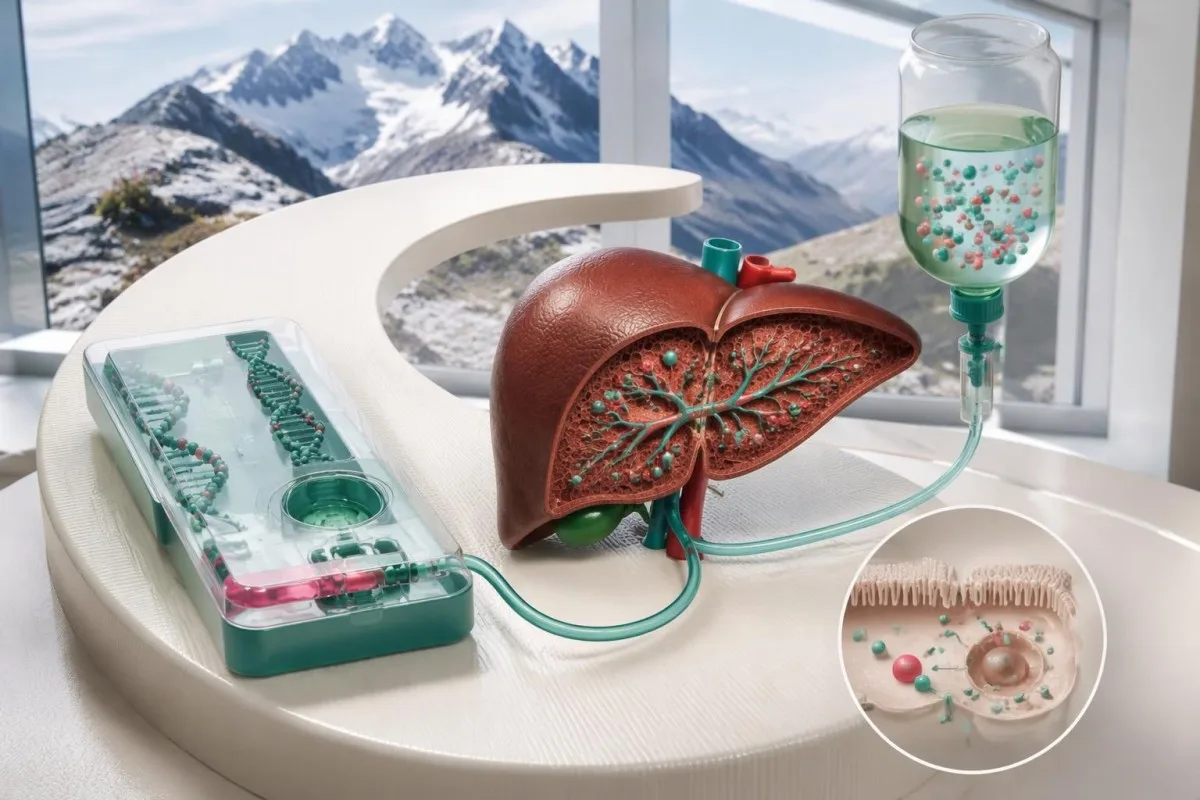
Тестирањето на UGT1A1 може да открие намалено разградување на активниот метаболит на иринотекан и да помогне да се избере побезбедна почетна доза. Не може да ја предвиди секоја реакција, а одлуката зависи од точната формулација, режимот и процената на вашиот онколошки тим.

Клучни заклучоци
- Тестирање на UGT1A1 открива наследни разлики во инактивирањето на SN-38; рутинските тестови за билирубин или функцијата на црниот дроб не можат да го заменат генетскиот резултат.
- Слаби метаболизатори најчесто имаат резултати *28/*28, *6/*6 или *6/*28, кои го зголемуваат ризикот од тешка неутропенија поврзана со иринотекан.
- Средни метаболизатори најчесто имаат резултати *1/*28 или *1/*6; Холандската работна група за фармакогенетика не препорачува автоматско намалување на дозата само врз основа на генотипот кај овие пациенти.
- Препораки за почетната доза се разликуваат: холандското упатство препорачува 70% од вообичаената почетна доза на иринотекан кај слабите метаболизатори, по што следуваат корекции под надзор на лекар.
- Режимот е важен бидејќи во стандардниот FOLFIRI најчесто се користат 180 mg/m² на секои 2 недели, додека за другите распореди и липозомалните формулации се користат различни дози.
- Липозомски иринотекан има специфични упатства за формулацијата; режим од 70 mg/m² и режим од 50 mg/m² не смеат да се сметаат за заменливи.
- Одложена дијареја започнува повеќе од 24 часа по иринотекан и може да стане опасна поради дехидратација, губење електролити или придружна неутропенија.
- Потребна е итна проценка е потребен при температура од 38.0°C или повисока за време на хемотерапијата, освен ако вашиот онколошки тим не ви дал поинаков, построг праг.
Што менува тестот за UGT1A1 пред првата инфузија?
A Тестирање на UGT1A1 пред иринотекан ја открива намалената способност за инактивирање на SN-38, активниот метаболит на лекот. Резултати како 28/*28, *6/*6 или *6/*28 може да поддржат пониска почетна доза и повнимателно следење за тешка неутропенија и одложена дијареја; онколошкиот тим мора да го примени резултатот на конкретниот режим.

Тестирањето е најкорисно пред циклус 1 бидејќи наследната разлика во клиренсот е присутна пред да се појават какви било симптоми поврзани со третманот. Резултатот не мери колку иринотекан моментално циркулира во организмот и не утврдува дали хемотерапијата ќе делува; тоа се различни прашања на кои се одговара преку одговорот на третманот, клиничката проценка и повремено специјализирани фармакокинетички методи.
На хипотетички пациент кому му е планиран конвенционален иринотекан во доза од 180 mg/m² може да му се одреди поинаков почетен план по резултат што укажува на бавен метаболизатор, додека друг пациент со истиот генотип можеби веќе прима комбинација со пониска доза. Корисното прашање не е само дали резултатот е позитивен: прашајте кои почетна доза, распоред на следење и критериуми за зголемување на дозата ги менува резултатот.
Кантести е анализатор на крвна слика со вештачка интелигенција што помага да се објаснат рутинските извештаи за CBC и билирубин, а не лабораторија што врши генотипизација на UGT1A1 или служба што пропишува хемотерапија. Нашите организација и клиничка цел се одвоени од улогата на вашиот онколошки тим во пропишувањето терапија; чувајте ги генетскиот извештај и лабораториските резултати за секој циклус како 2 одделни дела од евиденцијата за третманот.
Како UGT1A1 *28 и *6 влијаат врз метаболизмот на иринотекан?
UGT1A1 *28 ја намалува експресијата на ензимот, додека варијантата UGT1A1 *6 ја намалува функцијата на ензимот преку промена во кодирачкиот регион. И двете може да ја забават конверзијата на активниот SN-38 во неговиот многу помалку активен глукуронид SN-38G; ова ја зголемува изложеноста без да бара абнормални резултати за ALT или AST.

Иринотекан најпрво се претвора во SN-38 со дејство на карбоксилестеразите; потоа UGT1A1 учествува во инактивацијата на SN-38, а не во неговата првична активација. Алелот *28 обично содржи 7 TA-повторувања во промоторот наместо 6, поврзани со *1, додека *6 најчесто се опишува како c.211G>A, што ја предизвикува замената p.Gly71Arg.
Истиот ензим го конјугира и билирубинот, што ја објаснува поврзаноста со Гилбертов синдром и билирубин. Сепак, нормален резултат за билирубин не исклучува генотип со намалена функција, а покачен резултат не утврдува која варијанта е присутна; гладувањето, болеста, опструкцијата и нарушената функција на црниот дроб можат да влијаат врз толкувањето на едно мерење.
Минами и сор. ги испитувале и *6 и *28 кај јапонски пациенти и ја поврзале варијацијата на UGT1A со фармакокинетиката и токсичноста на иринотекан (Pharmacogenetics and Genomics, 2007). Нивната работа е важна бидејќи тест ограничен само на *28 може да превиди клинички значаен алел *6; 2 пациенти опишани како *28-негативни не мора да имаат иста способност за клиренс на SN-38.
Кои резултати укажуваат на слаб метаболизатор на UGT1A1?
A Бавен метаболизатор на UGT1A1 generally carries 2 decreased-function alleles, including 28/*28, *6/*6 или *6/*28. A person with *1/*28 or *1/*6 usually has an intermediate-metabolizer phenotype; *1/*1 is usually classified as normal when the test adequately covers relevant variants.

The slash separates the 2 inherited gene copies; it is not a fraction or a drug concentration. A *6/*28 result usually means one decreased-function allele came from each parent, creating a compound-heterozygous poor-metabolizer result; possessing 2 different allele names does not make the result less clinically relevant than *28/*28.
Intermediate metabolism is not the same as zero risk. Although the Dutch guideline does not recommend an automatic reduction for *1/*28 or *1/*6, a patient starting at 180 mg/m² may still need modification because of elevated bilirubin, limited marrow reserve, previous toxicity, or the accompanying drugs; the phenotype is one input, not permission to ignore the rest.
Pharmacogenetic recommendations are drug-specific, as our explanation of SLCO1B1-related medication risk also illustrates. A reduced-function result does not mean every medicine is unsafe, and *28/*28 does not itself diagnose a hereditary cancer syndrome; ask the laboratory to provide the diplotype, assigned phenotype, and variants tested rather than a 1-word positive result.
Што треба да опфати генетскиот тест и кога е потребен?
The test should clearly state whether it detects both *28 and *6, how it assigns the 2 alleles, and which other variants it evaluates. Testing before the first irinotecan dose allows the result to influence prevention rather than merely explain toxicity after it occurs.
UGT1A1 *6 is more frequent in several East Asian populations, while *28 occurs across multiple ancestry groups; ancestry can inform test coverage but cannot substitute for testing. Some assays also distinguish the 5-repeat *36 and 8-repeat *37 alleles, so reports from 2 laboratories may differ because their analytical scope differs—not because your inherited genotype changed.
A laboratory may use a blood-derived DNA sample or a validated saliva or cheek-cell method; fasting is not ordinarily required for the genetic analysis itself. Recent allogeneic stem-cell transplantation needs special discussion because circulating DNA may reflect the donor, and turnaround time must be checked locally rather than assumed to fit a treatment appointment in 2 days.
Genotyping and enzyme-activity testing are not interchangeable, a distinction also relevant to TPMT test interpretation. UGT1A1 genotype generally needs testing only once, but a narrow panel may warrant additional analysis if the clinical picture is unexpected; a report listing only 1 tested variant should not be read as proof that every other reduced-function allele is absent.
Колку UGT1A1 го зголемува ризикот од тешка неутропенија?
Poor-metabolizer genotypes increase the likelihood of тешка неутропенија, but the size of the increase depends on dose and regimen. Grade 3 neutropenia generally means an absolute neutrophil count below 1.0 down to 0.5 × 10⁹/L; grade 4 means below 0.5 × 10⁹/L.
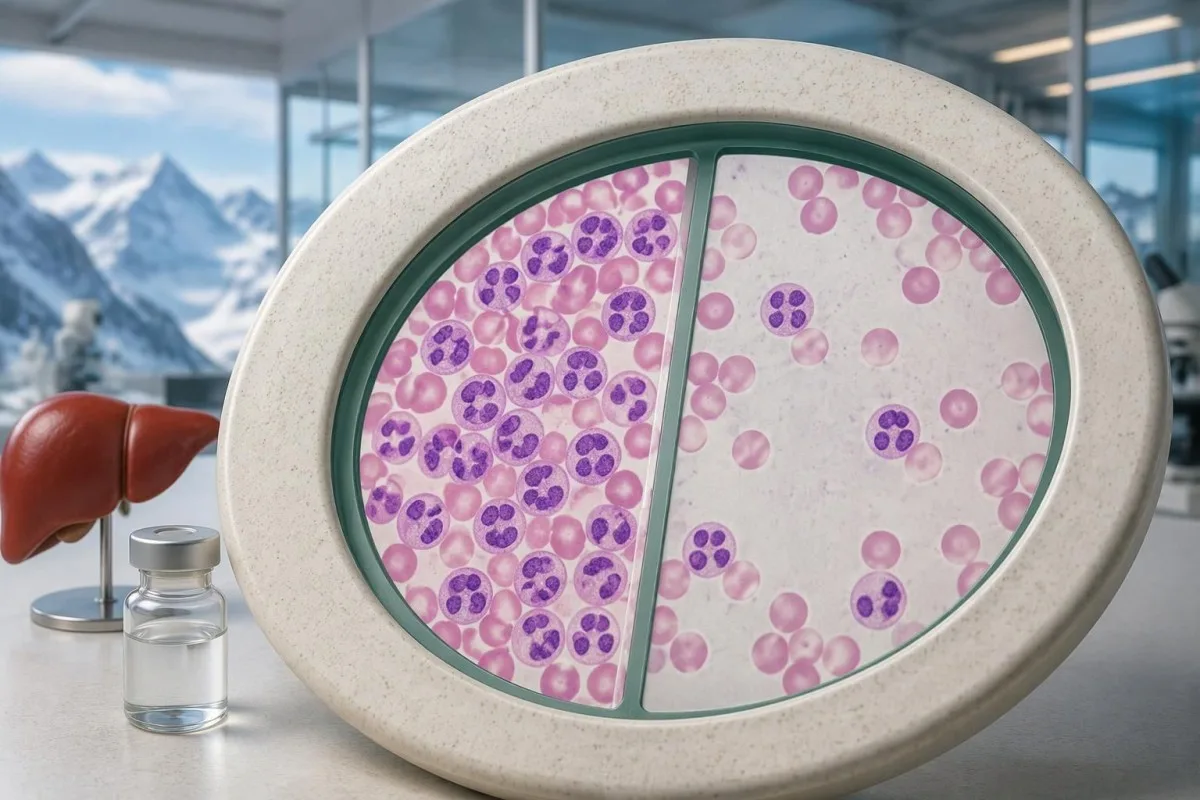
Hoskins et al. reported a dose-dependent association between *28/*28 and irinotecan-related neutropenia in their 2007 Journal of the National Cancer Institute meta-analysis. In the 150–250 mg/m² category, the pooled odds ratio was 3.22, with a 95% confidence interval of 1.52–6.81; older mixed schedules and wide uncertainty prevent treating this as a personal probability.
An odds ratio is not the percentage of patients affected. In a purely hypothetical illustration, if baseline risk were 10%, an odds ratio of 3 would correspond to approximately 25% risk—not 30%; the actual baseline varies with companion drugs, supportive care, prior treatment, and eligibility criteria, so no single percentage applies to every poor metabolizer.
Kantesti can help readers distinguish the ANC from the neutrophil percentage in routine reports, using the concepts explained in our водич за апсолутен број на неутрофили. A pre-existing Duffy-null-associated lower ANC requires individualized interpretation, but a new chemotherapy-related fall below 0.5 × 10⁹/L still deserves prompt oncology assessment rather than reassurance based on ancestry alone.
Зошто раната и одложената дијареја од иринотекан се разликуваат?
Early diarrhea occurs during or shortly after infusion, usually within 24 hours, and may accompany cholinergic symptoms such as sweating or abdominal cramping. Одложена дијареја begins more than 24 hours after treatment and is more closely related to intestinal toxicity, including exposure to SN-38.
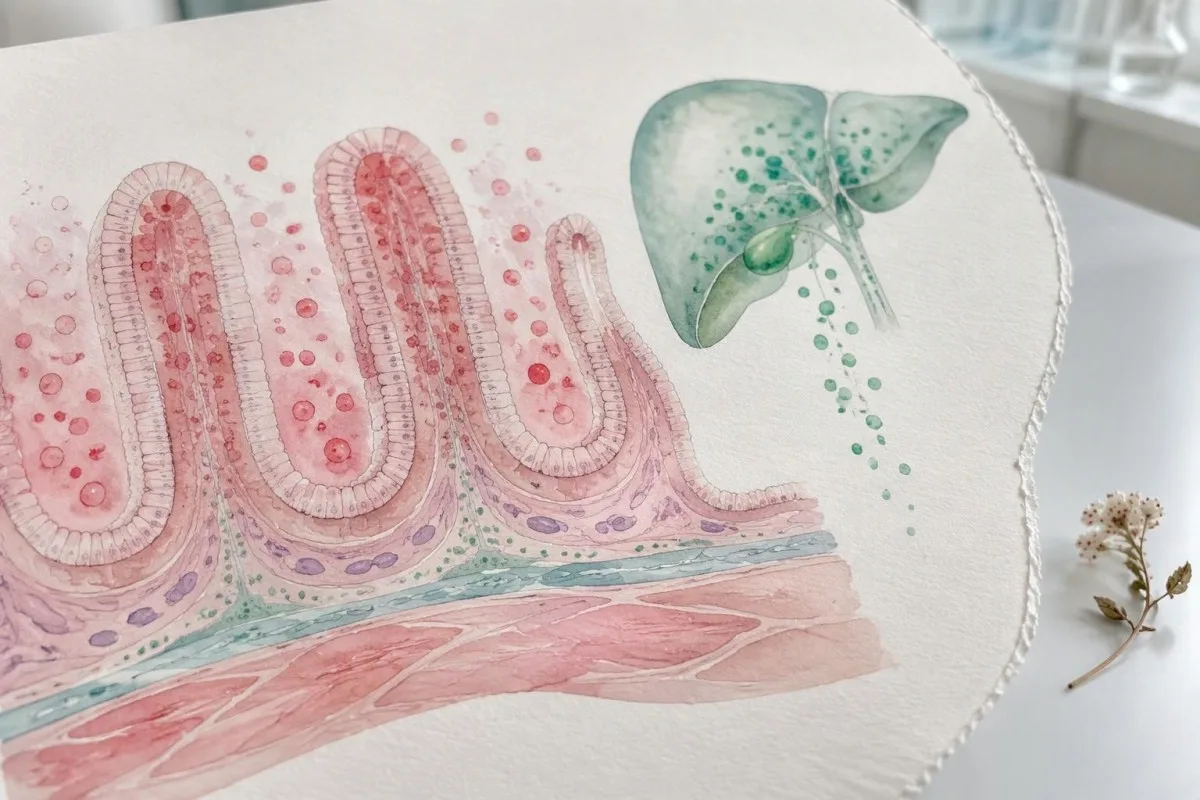
UGT1A1 genotype is more useful for anticipating delayed toxicity than predicting the immediate cholinergic syndrome. Clinicians may use atropine for early symptoms when appropriate, while delayed diarrhea requires a separate written treatment plan; intestinal bacteria can convert SN-38G back to SN-38 through beta-glucuronidase activity, illustrating why liver conjugation is not the only determinant of bowel exposure.
Grade 3 diarrhea commonly includes at least 7 additional stools per day above baseline, hospitalization being indicated, or a severe increase in ostomy output. Do not wait to reach that count before calling: persistent diarrhea despite the prescribed plan, vomiting that prevents drinking, fever, dizziness, or reduced urine output can justify urgent assessment at a much smaller stool increase.
Diarrhea during chemotherapy should not automatically be attributed to genotype, because antibiotics, infections, and accompanying drugs can produce similar symptoms; our C. difficile result guide explains one relevant diagnostic complication. If diarrhea lasts beyond 24 hours despite your oncology instructions, contact the team, and treat blood in the stool or significant abdominal pain as warning signs rather than ordinary treatment effects.
Како режимот на лекување влијае врз одлуката за почетната доза?
A starting-dose decision combines UGT1A1 phenotype with the planned regimen, not genotype alone. Conventional FOLFIRI commonly uses irinotecan 180 mg/m² every 2 weeks, whereas modified combinations may use 150 mg/m² or another protocol-specific amount; those differences change baseline exposure and toxicity.

The Dutch Pharmacogenetics Working Group recommends starting poor metabolizers at 70% of the normal irinotecan dose, with subsequent increases guided by neutrophil counts and clinical tolerance (Hulshof et al., 2023). Applied hypothetically to a 180 mg/m² protocol, 70% is 126 mg/m²; the prescribing team decides whether protocol rules permit rounding, what dose level to use, and when reassessment occurs.
A 70% calculation is relative to the regimen’s usual starting dose, not a fixed universal dose. For a hypothetical protocol starting at 150 mg/m², the same calculation gives 105 mg/m²; applying the 126 mg/m² figure from a different protocol would therefore be a genuine dosing error, especially if the infusion schedule or formulation also differed.
Кантести е AI платформа за толкување крвна слика for explaining reported laboratory values, not selecting a 180 mg/m² chemotherapy prescription; our клиничка рамка за валидација describes the distinction between interpretation support and prescribing. In combinations containing fluorouracil or capecitabine, тестирањето на DPYD пред хемотерапија addresses a separate metabolic risk that a normal UGT1A1 result cannot rule out.
Зошто препораките за дозирање иринотекан се разликуваат меѓу упатствата?
Guidelines differ because they interpret dose-dependent evidence differently and serve different clinical settings. The Dutch guideline recommends a 70% starting dose for poor metabolizers, while US conventional irinotecan prescribing information advises considering a reduction by at least 1 dose level, without defining one percentage for every regimen.
A dose level is defined by the treatment protocol rather than by the genetic test. Moving from 180 to 150 mg/m² would be approximately a 17% reduction, while moving from 180 to 120 mg/m² would be approximately a 33% reduction; these are mathematical examples, not recommendations, and explain why the phrase reduce one level needs a named protocol.
The French RNPGx/GPCO dose-stratified framework has historically distinguished doses below 180 mg/m², doses of 180–230 mg/m², and high doses of at least 240 mg/m². It recommended approximately 25–30% reduction for *28/*28 at the intermediate range and advised against high-dose use in that genotype; the Dutch recommendation is broader, including lower-dose regimens and other poor-metabolizer combinations.
The evidence is genuinely less settled at lower doses, where severe events may be less frequent and studies less able to estimate genotype effects precisely. This differs from HLA-B*57:01 drug avoidance, where the relevant recommendation is avoidance rather than a 30% reduction; ask which local guideline your team follows and whether its advice specifically covers *6/*6 or *6/*28.
Дали за липозомалниот иринотекан важат истите правила за дозирање според UGT1A1?
Liposomal irinotecan is not interchangeable with conventional irinotecan, and its UGT1A1 instructions depend on the regimen. In the liposomal irinotecan plus fluorouracil/leucovorin setting, a usual 70 mg/m² dose is reduced to 50 mg/m² initially for known *28/*28; the NALIRIFOX regimen already starts at 50 mg/m².

Those 70 and 50 mg/m² figures refer to irinotecan free base in the relevant liposomal prescribing instructions. Some documents also express doses using the hydrochloride trihydrate equivalent, approximately 80 and 60 mg/m² respectively; the team must verify the convention rather than interpret a different-looking number as an intentional dose increase or decrease.
For NALIRIFOX—liposomal irinotecan with oxaliplatin, fluorouracil, and leucovorin—the labeled starting dose is 50 mg/m² every 2 weeks, including patients known to have *28/*28. This does not establish that every poor-metabolizer genotype has identical evidence, especially *6-containing combinations; the oncology pharmacist should check the relevant product information and local protocol rather than import conventional irinotecan rules automatically.
A medication list that says only irinotecan is insufficient for a pharmacogenetic decision: request the formulation, companion drugs, dose expression, and schedule before comparing 2 plans. Our водич за основна лабораториска подготовка also explains why recording pretreatment measurements helps later interpretation, although those measurements cannot resolve a formulation or prescribing ambiguity.
Кои лабораториски резултати и лекови се важни покрај генотипот?
CBC with differential, bilirubin, liver tests, kidney function, and electrolytes provide information that UGT1A1 genotype cannot supply. A bilirubin of 2.0 mg/dL is approximately 34 µmol/L; conventional irinotecan studies often excluded values above this level, so higher results require specialist assessment rather than a genotype-only calculation.
An isolated indirect bilirubin rise may fit reduced UGT1A1 activity, while rising direct bilirubin with abnormal ALP or transaminases suggests an additional hepatobiliary problem. A hypothetical total bilirubin of 1.8 mg/dL with otherwise stable tests is therefore not equivalent to 1.8 mg/dL accompanied by new jaundice and obstruction; fractionation, trends, symptoms, and imaging determine the interpretation.
Strong CYP3A4 inducers can lower irinotecan exposure, while strong CYP3A4 or UGT1A1 inhibitors can increase clinically relevant exposure; examples requiring pharmacy review include rifampicin, carbamazepine, ketoconazole, and atazanavir. Do not stop a prescription yourself, and disclose supplements such as St John’s wort before cycle 1 because changing an interacting medicine can itself change exposure.
Kantesti can help explain routine kidney and electrolyte reports, but a normal creatinine does not guarantee tolerance of delayed diarrhea. The водич за односот BUN/креатинин describes contextual interpretation, while our electrolyte safety guide explains why potassium or magnesium losses can matter after 24 hours of gastrointestinal symptoms.
Кое следење и кои симптоми бараат итна реакција?
Monitoring remains necessary for every genotype, with CBC checks before treatment and additional measurements when clinically indicated. A temperature of 38.0°C или повисока during chemotherapy warrants immediate contact with the oncology service unless the team has supplied a different threshold; follow a stricter local instruction.
Formal definitions of febrile neutropenia often use a single temperature of 38.3°C or a temperature of 38.0°C sustained for 1 hour, together with a low or falling ANC. These definitions are not instructions to wait at home: chemotherapy services often use simpler, more cautious telephone thresholds, and shaking chills, confusion, or sudden deterioration can be urgent without a documented fever.
A falling ANC can precede symptoms, so a patient feeling well should still attend the scheduled laboratory check. Our borderline neutrophil interpretation guide explains why a result near a cutoff needs context; during treatment, a change from 2.5 to 0.7 × 10⁹/L carries different significance from a stable longstanding count near 1.4 × 10⁹/L.
Dose escalation after a reduced start should follow a predefined plan based on counts, diarrhea, other toxicity, and treatment goals—not simply the absence of nausea after cycle 1. G-CSF may reduce neutropenia risk when indicated, but it does not prevent intestinal toxicity; urgent assessment is needed for diarrhea with fever, severe abdominal pain, inability to drink, or markedly reduced urination.
Зошто и при нормален генотип може да се појават тешки несакани ефекти?
A normal UGT1A1 result does not guarantee safe treatment because irinotecan toxicity has multiple causes. Genotype does not adequately predict every episode of nausea, fatigue, hair loss, infusion symptoms, or toxicity from companion drugs; even *1/*1 patients can develop severe neutropenia or diarrhea.
A narrow assay may miss uncommon reduced-function variants, while liver impairment, interacting medicines, treatment intensity, and previous chemotherapy can increase risk independently. Thus, 2 patients both reported as *1/*1 may have different exposures and different marrow reserve; a phenotype assignment only describes the genetic information captured by the test, not every biological factor affecting treatment.
Companion drugs create additional attribution problems: oxaliplatin can cause neuropathy, and fluoropyrimidines can contribute diarrhea, mucositis, and marrow suppression. A hypothetical patient on a 4-drug combination with severe diarrhea cannot have the culprit assigned from UGT1A1 alone; timing, the complete regimen, microbiological testing when indicated, and other pharmacogenetic results may alter the clinical explanation.
Kantesti’s role in laboratory trend interpretation is to support understanding, not establish which drug caused a change between 2 cycles. Genetic reports also contain durable personal information, so review our приватност и ракување со податоци before sharing them; an inherited metabolic variant is not a complete forecast of your future health.
Што треба да го прашате вашиот онколошки тим пред да примите иринотекан?
Before treatment, ask which formulation and regimen you will receive, whether *28 and *6 were tested, and how the result changes the first dose. Also obtain a written diarrhea plan, a temperature threshold, and a 24-hour contact route; these practical details matter even when the genotype is normal.

Request the actual dose in mg/m² and the planned total dose in mg, because they answer different questions. For example, a hypothetical 126 mg/m² order for a body surface area of 1.8 m² gives 226.8 mg before institutional rounding; patients should not perform their own adjustment, but this distinction helps identify whether 2 documents describe the same prescription.
Ask how the team will judge tolerance after cycle 1, whether an interim CBC is planned, and what would justify later escalation. Your written diarrhea instructions may use a loperamide schedule different from ordinary over-the-counter directions, so follow the oncology prescription rather than inventing a schedule; fever, abdominal pain, or persistent symptoms may require assessment instead of additional self-treatment.
Кантести е Алатка за анализа на крвни тестови со вештачка интелигенција (AI) that can help explain routine reports alongside your own treatment notes; our Водич за AI технологија explains the supporting technology rather than a chemotherapy dosing system. Keep 3 items accessible: the genetic report, the current regimen sheet, and the emergency contact instructions, with the prescribing team verifying all clinical decisions.
Истражувачки публикации: што ги поткрепува препораките, а што не?
The dosing advice rests on drug-specific pharmacogenetic guidance and irinotecan studies, not on general blood-test education publications. The 2023 Dutch guideline recommends a 70% start for poor metabolizers, while the 2007 studies cited here help explain dose dependence and the relevance of both *28 and *6.
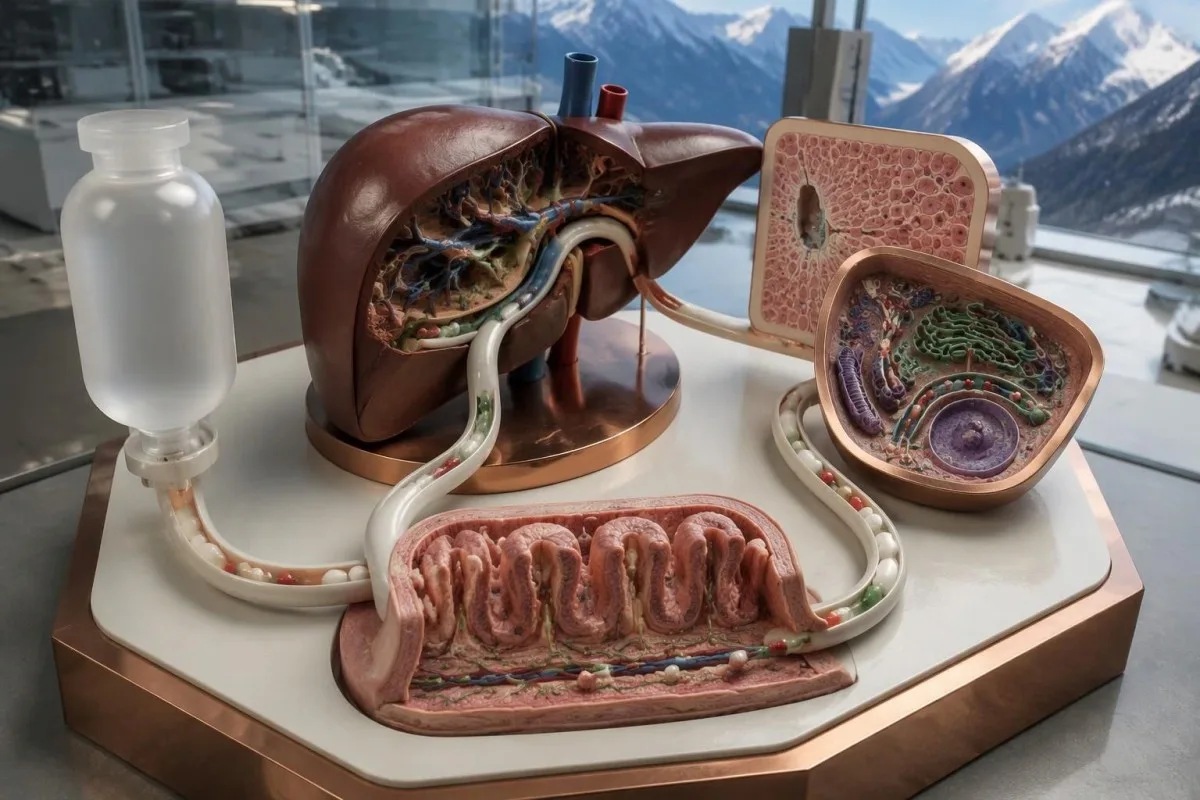
Hulshof et al. translate pharmacokinetic and toxicity evidence into prescribing guidance, whereas Hoskins et al. quantify associations across older dose categories, and Minami et al. examine relevant variants in Japanese patients. These 3 sources answer complementary questions; none supplies an individualized toxicity percentage for every contemporary combination, and observational associations should not be presented as proof that one starting dose suits everyone.
Kantesti’s 2 Zenodo publications listed below are educational resources on RDW and the BUN/creatinine ratio, not trials of UGT1A1-guided irinotecan dosing. Our RDW and CBC interpretation resource can explain accompanying red-cell indices, but RDW does not replace ANC, genotype, or a chemotherapy protocol; a DOI is a persistent identifier, not an automatic guarantee of clinical relevance or peer review.
The unresolved question is often how best to preserve treatment intensity while preventing a severe event in cycle 1, particularly in lower-dose combinations and less-studied genotypes. Our стандарди за медицинска содржина require separating established guidance, hypothetical calculations, and genuine uncertainty; the oncology team should confirm the current local product information and protocol before applying any published recommendation.
Најчесто поставувани прашања
Дали секој треба да направи тест за UGT1A1 пред примена на иринотекан?
Политиката за тестирање се разликува во зависност од земјата, установата и режимот на лекување, но Холандската работна група за фармакогенетика препорачува тестирање на UGT1A1 пред почетокот на терапијата со иринотекан. Резултатот е особено корисен пред првиот циклус, бидејќи може да открие бавни метаболизатори пред да се развие тешка токсичност. Тестот треба да потврди дека се опфатени и *28 и *6, а не само да пријави дека *28 отсуствува. Вашиот онколошки тим треба да ви објасни дали тестирањето ја менува вашата конкретна почетна доза и дали е соодветно да се почека резултатот.
Што значи UGT1A1 *28/*28 за дозирањето на иринотекан?
UGT1A1 *28/*28 генерално укажува на статус на слаб метаболизатор и зголемен ризик од тешка неутропенија поврзана со иринотекан. Холандското упатство препорачува 70% од вообичаената почетна доза, по што следува приспособување од страна на лекарот според подносливоста и бројот на неутрофили. За хипотетички конвенционален режим од 180 mg/m², пресметката изнесува 126 mg/m² пред одлуките специфични за протоколот или заокружувањето. Американските упатства за пропишување и липозомалните режими користат различни пристапи, така што оваа пресметка не е личен рецепт.
Дали UGT1A1 *6 е исто толку релевантен како *28 пред иринотекан?
UGT1A1 *6 е клинички релевантна варијанта со намалена функција, која може да ја намали инактивацијата на SN-38. Резултатите како *6/*6 или *6/*28 обично укажуваат на статус на слаб метаболизатор бидејќи содржат 2 алели со намалена функција. Варијантата е почеста кај неколку источноазиски популации, но само потеклото не може да утврди дали некое лице ја носи. Прашајте дали вашата лабораторија тестирала *6 пред да го толкувате негативниот резултат за *28 како нормален метаболизам.
Дали UGT1A1 *1/*28 бара автоматско намалување на дозата?
UGT1A1 *1/*28 генерално укажува на статус на интермедијарен метаболизатор, а не на статус на слаб метаболизатор. Холандското упатство не препорачува автоматско намалување на почетната доза само врз основа на генотипот кај интермедијарни метаболизатори. Сепак, за пациент кај кого е планирана доза од 180 mg/m² може да биде потребен поинаков план поради билирубинот, претходниот третман, лековите со кои има интеракции или комбинираниот режим. Интермедијарниот метаболизам не ја отстранува потребата од следење на CBC или од план за безбедност при дијареја.
Може ли нормалниот билирубин да го замени генетското тестирање за UGT1A1?
Нормалниот билирубин не може да исклучи генотип UGT1A1 со намалена функција, а покачениот билирубин не може да го идентификува конкретниот алел. Билирубинот одразува неколку процеси, вклучувајќи конјугација, функција на црниот дроб, опструкција и промет на црвените крвни клетки. Вкупен билирубин од 2,0 mg/dL е приближно 34 µmol/L и треба да се толкува во рамките на релевантниот протокол за иринотекан. Генетското тестирање и мерењето на билирубинот даваат комплементарни информации, а не заменливи одговори.
Кога треба да се јавам поради дијареја или треска по иринотекан?
Веднаш контактирајте ја онколошката служба ако за време на хемотерапијата имате температура од 38,0 °C или повисока, освен ако тимот не ви одредил друг праг, и следете ги сите построги упатства. Одложената дијареја од иринотекан започнува повеќе од 24 часа по терапијата и може да предизвика дехидрација или губење електролити. Веднаш јавете се ако дијарејата продолжува и покрај пропишаниот план, ако не можете да пиете, ако мокрите поретко, ако имате крв во столицата или значителна абдоминална болка. Не чекајте да имате 7 дополнителни столици дневно или закажан тест на крвта пред да побарате помош.
Дознајте како да ги читате крвните резултати
Поставете го вашиот лабораториски извештај и AI на Kantesti ќе го објасни секој биомаркер на разбирлив јазик за неколку секунди. Го користат повеќе од 2 милиони луѓе ширум светот.
Референци
- Клајн, Т., Мичел, С., & Вебер, Х. (2026). Крвен тест за RDW: целосен водич за RDW-CV, MCV и MCHC. Kantesti AI за медицински истражувања. ДОИ
- Клајн, Т., Мичел, С., & Вебер, Х. (2026). Објаснување на BUN/Креатинин соотношение: водич за тест на функцијата на бубреците. Kantesti AI за медицински истражувања. ДОИ
- Hulshof DP et al. (2023). Dutch pharmacogenetics working group (DPWG) guideline for the gene–drug interaction between UGT1A1 and irinotecan. European Journal of Human Genetics.
- Hoskins JM et al. (2007). UGT1A1*28 genotype and irinotecan-induced neutropenia: dose matters. Journal of the National Cancer Institute. ДОИ
- Minami H et al. (2007). Irinotecan pharmacokinetics/pharmacodynamics and UGT1A genetic polymorphisms in Japanese: roles of UGT1A1*6 and *28. Pharmacogenetics and Genomics.
- 2 милиони+Анализирани тестови
- 127+Земји
- 100+Јазици
За медицинскиот тим


Сигнали за доверба E-E-A-T
Искуство
Клиничка ревизија водена од лекар за работните текови на толкување на лабораториски резултати.
Експертиза
Фокус на лабораториска медицина за тоа како биомаркерите се однесуваат во клинички контекст.
Авторитивност
Медицински рецензирано од д-р Thomas Klein, со придонес од д-р Sarah Mitchell и проф. д-р Hans Weber.
Доверливост
Толкување засновано на докази со јасни патеки за следење за да се намали алармирањето.






Медицинско одрекување од одговорност
Овој напис е само за едукативни цели и не претставува медицински совет. Секогаш консултирајте се со квалификуван здравствен работник за одлуки за дијагноза и третман.
Објавено · Контактирајте го уредничкиот тим
Објавено од Kantesti Ltd, регистрирана во Англија и Велс, регистарски број на компанијата. 17090423, Лондон, Обединето Кралство.
