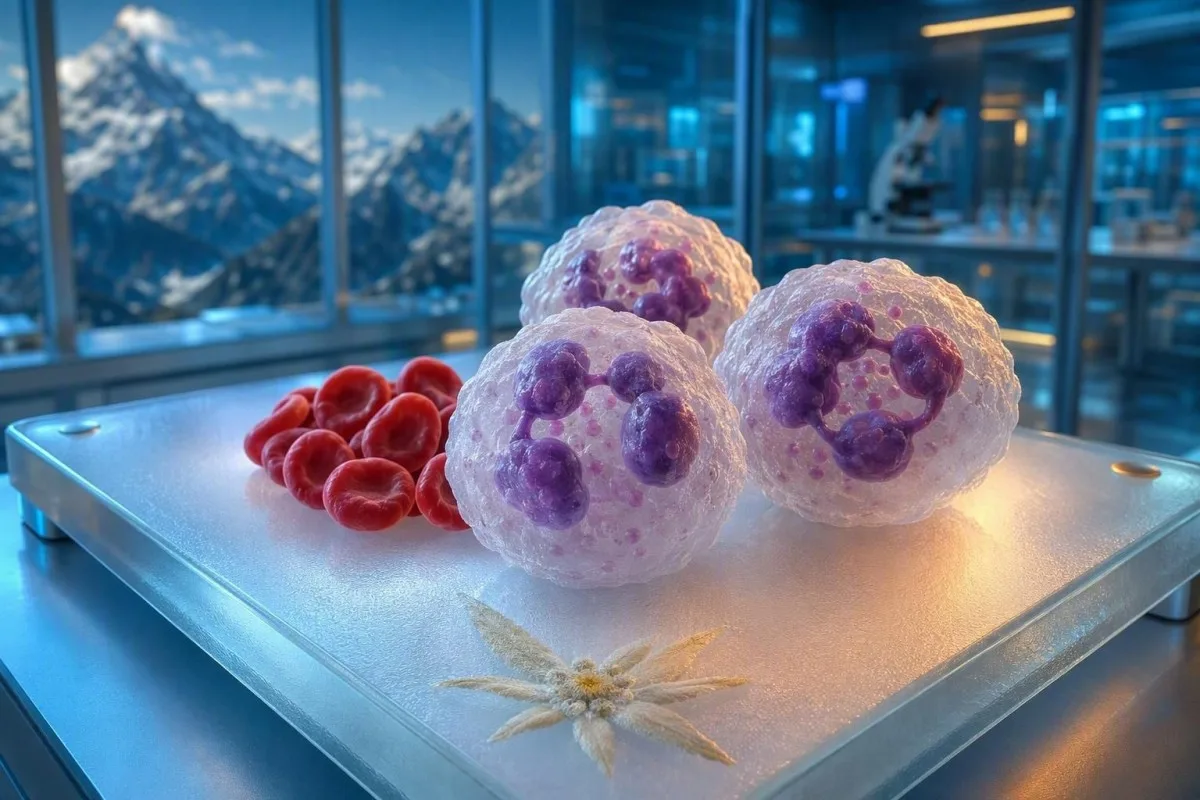
Matokeo ya juu kidogo ya chembechembe nyeupe za damu (neutrophils) mara nyingi huwa ya muda, lakini idadi kamili ya chembechembe nyeupe za damu, sehemu iliyobaki ya CBC, dalili na mienendo huamua ikiwa inahitaji kuchukuliwa hatua.


- Chembechembe nyeupe za damu zenye mipaka mipaka kwa kawaida huashiria ANC ikiwa juu kidogo ya kiwango cha juu cha maabara, mara nyingi karibu 7.0-7.5 × 10⁹/L kwa watu wazima.
- Hesabu ya neutrophil kwa jumla (absolute neutrophil count) ni yenye taarifa zaidi kuliko asilimia ya neutrophils; hesabu ya ANC ni WBC × asilimia ya neutrophils ÷ 100.
- Neutrophilia ya upole chini ya 15 × 10⁹/L bila dalili za kutisha kwa kawaida huathirika na inaweza kufuatia maambukizi, kuvuta sigara, mazoezi au matibabu ya steroid.
- Muda wa kurudia kwa kawaida huwa wiki 2-6 baada ya kupona kutokana na ugonjwa mfupi, mazoezi makali, chanjo au mabadiliko ya dawa.
- mapitio ya haraka inafaa kwa homa yenye ugonjwa mbaya, kupumua kwa shida, kuchanganyikiwa, ongezeko la kasi la hesabu, blasts, upungufu wa damu au chembechembe za damu chache.
- Steroids na adrenaline huweza kuongeza chembechembe nyeupe za damu zinazozunguka ndani ya saa kwa kuhamisha seli kutoka kuta za mishipa kuingia kwenye damu inayopimwa.
- kuendelea kuongezeka kwa zaidi ya miezi 3, hasa juu ya 15-20 × 10⁹/L, kunastahili mapitio yanayoongozwa na daktari na mara nyingi uchunguzi wa damu.
- Ujauzito kawaida huweza kuongeza hesabu za neutrophils, hasa katika miezi mitatu ya mwisho, kwa hivyo safu za marejeleo za watu wazima wasio wajawazito zinaweza kudanganya.
Maana Halisi ya Matokeo Yenye Mipaka Mipaka ya Chembechembe Nyeupe za Damu
Neutrophils za mpakani kwa kawaida huashiria ongezeko dogo katika hesabu kamili ya neutrophil (ANC), sio utambuzi. Kwa watu wazima wengi walio na afya, ANC iliyo juu kidogo tu ya kiwango cha maabara hutulia wakati kirusi cha muda kinapopita; kazi ya kwanza ni kuangalia hesabu kamili, hesabu nyeupe kamili na dalili badala ya kuitikia asilimia iliyoangaziwa.
Vipindi vya marejeleo vya ANC vya watu wazima kawaida huanzia takriban 1.5 hadi 7.5 × 10⁹/L, ingawa kikomo cha juu kinatofautiana kulingana na kichanganuzi, ukoo, hali ya ujauzito na mbinu ya maabara ya mahali. Thamani ya 7.8 × 10⁹/L inatofautiana sana kiafya kutoka 28 × 10⁹/L, hata ingawa zote zinaweza kuonyeshwa kama juu; angalia mwongozo wetu kwa kiwango cha kawaida cha neutrophil.
The asilimia ya neutrophil inaweza kuonekana kuwa ya juu kwa sababu tu lymphocytes zilipungua baada ya mafadhaiko au kukabiliwa na corticosteroids. Kwa mfano, WBC ya 6.0 × 10⁹/L na neutrophils 78% huwezesha ANC ya 4.68 × 10⁹/L, ambayo ni ya kawaida licha ya asilimia ya juu.
Kantesti ni Mchambuzi wa mtihani wa damu wa AI ambayo inasoma utofauti wa CBC pamoja na jumla ya WBC, hemoglobin, platelets na matokeo ya awali badala ya kutibu bendera moja ya rangi ya machungwa kama lebo ya ugonjwa. Kufikia Agosti 28, 2026, mbinu hiyo ya muundo-kwanza inabaki kuwa njia salama zaidi ya kutafsiri matokeo ya mpakani.
Kwa nini bendera za maabara sio utambuzi
Vipindi vya marejeleo hufunika sehemu ya kati ya idadi ya watu waliochaguliwa, kwa hivyo kama 1 kati ya 20 vipimo vya afya vinaweza kukaa nje ya kiwango kilichosemwa kwa bahati. Bendera ni dalili ya muktadha, sio ushahidi kwamba kuna kitu kibaya.
Kwa Nini Hesabu Kamili ya Chembechembe Nyeupe za Damu Ni Muhimu Kuliko Asilimia
ANC ni hesabu ambayo madaktari hutumia kuhukumu ongezeko la neutrophil kwa sababu inajumuisha jumla ya WBC na tofauti. Asilimia ya juu ya neutrophil na ANC ya kawaida mara nyingi ni mabadiliko ya uwiano, wakati ANC ya juu inathibitisha neutrophilia halisi.
Mfumo huo ni rahisi: ANC = WBC × (% neutrophils + % bands) ÷ 100. Pamoja na WBC 12.0 × 10⁹/L na neutrophils 75%, ANC ni 9.0 × 10⁹/L; hii ni neutrophilia kali, sio dharura pekee.
Mara nyingi huona wasiwasi unaoweza kuepukwa wakati mlango unaripoti neutrophils 82% lakini hauonyeshi hesabu kwa uwazi. Njia ya vitendo ya Dk. Thomas Klein ni kuandika WBC, ANC, hemoglobin, hesabu ya sahani na bendera yoyote ya granulocyte isiyoiva kabla ya kuamua matokeo yanamaanisha nini; yetu Mwongozo wa sehemu za CBC husaidia na maneno.
WBC iliyo juu ya 11 × 10⁹/L mara nyingi huitwa leukocytosis kwa watu wazima wasio wajawazito, lakini sababu haiwezi kutolewa kutoka kwa nambari hiyo pekee. Riley na Rupert (2015) wanashauri waganga kurudia CBC na kukagua smear ya pembeni wakati leukocytosis haijulikani au inayoendelea.
Sababu za Kawaida za Muda za Kuwa na Chembechembe Nyeupe za Damu Nyingi (Neutrophilia) Kidogo
Neutrophilia kali mara nyingi huonyesha mchakato wa muda mfupi unaoitikia: maambukizi ya hivi karibuni, dhiki ya mwili, uvutaji sigara, uchochezi, athari za dawa au ujauzito. Sababu hizi huongeza neutrophils zinazozunguka bila lazima kumaanisha uti wa mgongo unazalisha seli zisizo za kawaida.
Baridi, uchochezi wa meno, dalili za mkojo, kuongezeka kwa ngozi au hata siku za kwanza baada ya ugonjwa wa virusi unaweza kuinua ANC hadi 8-14 × 10⁹/L safu. Neutrophils zinaweza kubaki zimeinuliwa kidogo kwa siku baada ya homa kupotea kwa sababu kutolewa kwa uti wa mgongo na kupona kwa tishu hazikomi kwa wakati mmoja.
Kipindi kigumu cha mafunzo, marathon, tukio la hofu au maumivu makali yanaweza kusababisha demargination—seli zilizokuwa zimepumzika kando ya kuta za mishipa zinaingia kwenye sampuli inayozunguka. Ongezeko hili linaweza kutokea ndani ya dakika hadi masaa na ni moja ya sababu ninawauliza wanariadha kuepuka mafunzo magumu sana kwa masaa 24-48 kabla ya CBC iliyopangwa; yetu mwongozo wa muda wa maabara unaohusiana na mazoezi unaelezea ruwaza pana zaidi.
Uvutaji sigara unahusishwa na hesabu za juu za WBC na neutrophils, wakati unene kupita kiasi, ugonjwa sugu wa ufizi na matatizo ya ngozi yanayosababisha uchochezi yanaweza kudumisha ongezeko la wastani. Kwa hivyo, maana ya neutrophils iliyoimarishwa kidogo mara nyingi huwa juu ya kuathiriwa na fizikia, sio maambukizi ya bakteria yaliyofichwa.
Dawa, Chanjo na Matukio ya Maisha Ambayo Huweza Kuongeza Chembechembe Nyeupe za Damu
Corticosteroids, inhaler za beta-agonist, lithiamu na dawa za kuchochea koloni zinaweza kuongeza neutrophils, wakati mwingine kwa kiasi kikubwa. Usisimamishe dawa iliyowekwa kwa sababu ya bendera ya CBC; badala yake, weka kumbukumbu ya dawa, kipimo na muda kwa daktari anayekagua matokeo.
Prednisone na viini mfumo wa glucocorticoids huenda ikiongeza chembe za damu nyeupe, neutrophils katika damu saa 4-6 kupitia kuondoa uondoaji, kuchelewesha kusonga kwa tishu na kupunguza utolewaji wa seli. Neutrophilia inayohusiana na steroid mara nyingi hupungukiwa na punje zenye sumu au mabadiliko makubwa ya kushoto ambayo yanaweza kuambatana na maambukizi makali ya bakteria, ingawa filamu ya damu inahitajika kutathmini hii ipasavyo.
Lithium inaweza kuongeza uzalishaji wa granulocyte, wakati filgrastim na matibabu yanayohusiana huinua kwa makusudi idadi ya neutrophils; upasuaji wa hivi karibuni, majeraha na kuzaa pia huchochea mwitikio wa mafadhaiko. Chanjo inaweza kubadilisha muda mwingine tofauti, kwa hivyo jaribio la kawaida lililochukuliwa ndani ya Siku 7-14 baada ya chanjo inaweza kuwa si mwakilishi wa hali ya msingi; soma zaidi kuhusu mabadiliko ya maabara baada ya chanjo.
Kantesti ni jukwaa la tafsiri ya vipimo vya damu la AI ambayo huruhusu watu kuhifadhi dawa na muktadha wa ugonjwa na matokeo, ambayo ni muhimu kwa matibabu kuliko kulinganisha nambari tupu. Orodha ya dawa inapaswa kujumuisha inhalers, mafuta ya steroid, sindano na bidhaa za “asili”—si vidonge tu.
Lini Irudiwe CBC kwa Chembechembe Nyeupe za Damu Zenye Mipaka Mipaka
Kwa mtu ambaye hana matatizo mengine na neutrophilia kidogo, kurudia CBC na tofauti katika wiki 2-6 kwa kawaida ni busara baada ya sababu inayowezekana kutoweka. Pima tena mapema—ndani ya siku—ikiwa dalili zinazidi kuwa mbaya, idadi inaongezeka, au matokeo ya awali yalikuwa ya juu sana.
Chagua siku tulivu kwa kuchukua tena sampuli: hakuna homa, hakuna mazoezi makali kwa masaa 24-48, ulaji wa kawaida wa maji, na hakuna steroid iliyoanza hivi karibuni isipokuwa daktari aseme vinginevyo. Kufunga kwa ujumla hakuhitajiki kwa CBC, lakini kulinganisha muda wa siku na hali hufanya mabadiliko kuwa rahisi kutafsiri; yetu mwongozo wa ratiba ya vipimo vya damu details why.
Ikiwa ANC ni 7.6-12 × 10⁹/L na mistari mingine yote ya seli ni ya kawaida, mimi huongea kupendelea uchunguzi mmoja uliopangwa badala ya kupima mfululizo kila baada ya siku chache. Kurudia baada ya wiki 4 kunaweza kudanganya ikiwa mgonjwa bado anapona nimonia, ameanza prednisolone, au amefunzwa kwa hafla ya uvumilivu.
Kudumu kuna umuhimu zaidi kuliko nambari moja ya pekee. Neutrophilia inayodumu zaidi ya miezi, bila maelezo ya wazi ya kuguswa, kwa ujumla hufai ukaguzi wa msingi wa huduma, filamu ya damu ya mwongozo na upimaji unaolengwa kulingana na dalili.
Miundo ya CBC Ambayo Hufanya Ongezeko la Chembechembe Nyeupe za Damu Kuwa la Kutia Wasiwasi Zaidi au Kidogo
Kupanda kwa ANC kidogo pekee na hemoglobin na platelets za kawaida kwa kawaida kunatia wasiwasi mdogo kuliko neutrophilia inayoambatana na upungufu wa damu, thrombocytopenia, thrombocytosis au seli ambazo hazijakomaa. Muundo wa CBC unaozunguka unatoa nambari maana yake ya kimatibabu.
Kuongezeka kwa ANC pamoja na platelets za juu zaidi ya 450 × 10⁹/L, upungufu wa damu usioelezeka, basophilia au filamu ya damu ya leukoerythroblastic huongeza wasiwasi kwa mchakato wa marongo. Hakuna hata moja ya mchanganyiko huu inayogundua saratani, lakini huonyesha uhalali wa ukaguzi wa daktari wa haraka badala ya kurudia kwa bahati nasibu miezi baadaye; tazama muhtasari wetu wa njia ya tathmini ya saratani ya damu.
“Kushoto kuhama” inamaanisha bendi, metamyelocytes au myelocytes zipo katika damu ya pembeni. Idadi ndogo inaweza kutokea katika mafadhaiko makubwa ya kuguswa, lakini mabadiliko makubwa ya kushoto yanahitaji ukaguzi wa filamu ya damu kwa sababu vipima otomatiki havifafanui kila wakati kupona kwa faida kutoka kwa mchakato wa clonal.
Kantesti AI hukagua vipengele vidogo vya chembe nyeupe pamoja na fahirisi za chembe nyekundu na mielekeo ya chembe za sahani, kisha huashiria mchanganyiko kwa ajili ya ufuatiliaji wa matibabu badala ya kujaribu kugundua leukemia kutoka kwa CBC. Mbinu hii inalingana na iliyochapishwa kanuni za uhakiki wa kimatibabu.
Maambukizi, Kuvimba au Msongo: Kusoma dalili za Kimatibabu
Homa, dalili za sehemu na CRP iliyoinuliwa inaweza kuunga mkono maambukizi, lakini kuongezeka kwa idadi ya neutrophils pekee haiwezi kutofautisha maambukizi ya bakteria kutoka kwa mafadhaiko au kuvimba. Madaktari hugundua mtu aliye mbele yao, si hesabu tofauti pekee.
Kwa nimonia ya bakteria, pyelonephritis au appendicitis, ANC inaweza kupanda juu ya 15 × 10⁹/L, hata hivyo maambukizi makubwa mengine yana vipimo vya kawaida au vya chini vya WBC—hasa kwa wazee au watu walio na kinga dhaifu. Dalili, viashiria muhimu, uchunguzi na tamaduni mara nyingi huathiri zaidi kuliko kama ANC ni 11 au 13.
CRP huinuka na kushuka kwa kasi zaidi kuliko ESR, lakini hakuna kati yao inayoeleweka kuwa ni maalum kwa maambukizi. Ikiwa neutrophilia inakua pamoja na CRP ya juu, uvimbe wa viungo, dalili za matumbo au upele, utofauti unapanuka hadi hali za kiotomatiki na za kuvimba; maelezo yetu ya mifumo ya ESR ya juu yanaweza kusaidia kuunda majadiliano hayo.
Kwa uzoefu wangu, mgonjwa mwenye ANC 10.5 × 10⁹/L, bila homa na CRP ya kawaida baada ya kutokulala vizuri katika chumba cha dharura kwa kawaida huhitaji uangalizi mtulivu, sio viuavijasumu. Kinyume chake, mtu mgonjwa mwenye homa kali na ANC ya 6.5 × 10⁹/L anaweza kuhitaji huduma ya haraka licha ya hesabu ya kawaida.
Mimba, Umri na Mfumo wa Kawaida wa Binafsi Hubadilisha Tafsiri
Mimba huleta neutrophilia ya kawaida, hasa mwishoni mwa ujauzito, na watoto wanahitaji vipimo vinavyofaa umri. Kiwango cha kawaida cha mtu mzima ambaye hajapata mimba hakipaswi kutumiwa kuashiria CBC ya mjamzito kuwa si ya kawaida bila muktadha.
Wakati wa ujauzito, thamani jumla za WBC zinaweza kufikia 12-15 × 10⁹/L na zinaweza kuongezeka zaidi wakati wa kuzaa, hasa kutokana na neutrophils. Hesabu iliyoongezeka bila homa, maumivu ya mfuko wa uzazi, dalili za mfumo wa mkojo au ishara nyingine za ugonjwa inaweza kuwa ya kawaida, lakini timu za uzazi hutumia picha kamili ya kimatibabu.
Watoto wachanga na watoto wadogo wanaweza kuwa na hesabu za neutrophil ambazo zingeonekana si za kawaida kwenye ripoti ya mtu mzima, wakati wazee wanaweza kuwa na mwitikio mdogo wa chembe nyeupe za damu wakati wa maambukizi. Tafsiri matokeo ya mtoto dhidi ya kiwango cha maabara kinachofaa umri; mwongozo wetu wa kiwango cha watoto wachanga mwongozo wa kiwango cha watoto wachanga unaeleza kwa nini ulinganishaji wa watu wazima haufanyi kazi.
CBC zako za zamani mara nyingi ndizo bora zaidi za kulinganisha. ANC imara karibu 7.8 × 10⁹/L kwa miaka mitano kwa mtu mwenye afya njema ina maana tofauti na ongezeko jipya kutoka 3.2 hadi 12.8 × 10⁹/L.
Kuvuta Sigara, Sababu za Kimetaboliki na Chembechembe Nyeupe za Damu Nyingi za Kudumu za Kiwango cha Chini
Kuvuta sigara, unene na kuathiriwa na magonjwa sugu ya kuvimba kunaweza kusababisha neutrophilia ya kiwango cha chini ambayo hudumu baada ya mafua kupona. Mambo haya bado yanastahili umakini kwa sababu yanaweza kuathiri afya zaidi ya matokeo ya CBC yenyewe.
Leukocytosis inayohusiana na uvutaji sigara inaweza kujumuisha neutrophils, lymphocytes na monocytes, kwa hivyo inaweza isijitokeze kama ongezeko la neutrophil pekee. Rudia CBC wiki 8-12 baada ya kuacha kuvuta sigara inaweza kuwa na taarifa, ingawa matokeo ya kawaida hayahitajiki kabla ya kusherehekea manufaa ya kiafya ya kuacha.
Unene wa kati, apnea ya usingizi na ugonjwa sugu wa fizi huweza kuchangia ishara za kuvimba na ongezeko la wastani la idadi ya WBC. Uhusiano huu ni halisi lakini si maalum; haupaswi kutumiwa kupuuza dalili mpya au ongezeko la haraka la idadi.
Kantesti, ambayo Zana ya uchambuzi wa vipimo vya damu inayotumia AI, inaweza kulinganisha uchambuzi wa sasa na ripoti kadhaa za awali na kuonyesha mabadiliko polepole ambayo matokeo moja ya kila mwaka huficha. Kwa ufuatiliaji wa vitendo, rekodi hali ya uvutaji sigara, mabadiliko ya uzito, maambukizi ya hivi karibuni na matumizi ya steroid karibu na kila kipimo katika rekodi ya maabara ya muda mrefu.
Lini Kuhangaika Kuhusu Chembechembe Nyeupe za Damu na Kutafuta Msaada wa Haraka
Tafuta tathmini ya matibabu siku hiyo hiyo kwa matokeo ya juu ya neutrophil pamoja na ugonjwa mbaya, homa na kuchanganyikiwa, ugumu wa kupumua, maumivu ya kifua, shingo ngumu, au dalili zinazozorota kwa kasi. Uhaba unatoka kwa uwezekano wa maambukizi au ugonjwa wa mfumo, sio tu kutoka kwa ANC iliyo karibu na kiwango.
WBC au ANC iliyo juu ya 25-30 × 10⁹/L inastahili mawasiliano ya haraka ya kimatibabu, hasa ikiwa ni mpya, inapoongezeka, au inalinganishwa na granulocytes ambazo hazikukomaa. Hesabu zilizo juu ya 50 × 10⁹/L zinaweza kuwakilisha mmenyuko wa leukemoid au ugonjwa wa damu na hazipaswi kusubiri miadi ya kawaida ya kila mwaka.
Jasho la usiku lisiloeleweka, kupoteza uzito, maambukizo yanayojirudia, michubuko kirahisi, nodi za limfu zilizojaa au kinyama kilichojaa ni sababu za kupanga mapitio ya daktari kwa wakati unaofaa. Wasiwasi huongezeka wakati dalili zinapoambatana na upungufu wa damu, chembechembi za damu chache, basophilia au seli zisizo za kawaida kwenye tahadhari ya kiuchanganuzi.
Ikiwa hujisikii vizuri baada ya kusafiri, chemotherapy, matibabu ya kupandikiza au dawa zinazokandamiza mfumo wa kinga, tumia kiwango cha chini cha tathmini ya haraka. Yetu mwongozo wa kipimo cha sepsis unaeleza kwa nini maadili ya maabara yanayoonekana kawaida hayafuti ugonjwa mbaya.
Madaktari Huangalia Nini Wakati Chembechembe Nyeupe za Damu Nyingi Zinapoendelea
Neutrophilia isiyo na maelezo inayojirudia kwa kawaida hutathminiwa kwa historia, uchunguzi, CBC rudufu, filamu ya damu ya pembeni na vipimo vilivyolengwa vya kuvimba au maambukizo. Vipimo vya molekuli huhifadhiwa kwa ruwaza zinazodokeza ugonjwa wa mfumo wa uzalishaji wa myeloid, sio kwa kila matokeo ya juu kidogo.
Daktari anaweza kuuliza kuhusu uvutaji sigara, kukosa usingizi, maumivu ya muda mrefu, dalili za ugonjwa wa utumbo, matumizi ya steroidi, upasuaji wa hivi karibuni wa wengu na magonjwa ya damu ya familia. Wanaweza kuagiza CRP, ESR, vipimo vya ini na figo, tamaduni au uchunguzi wa picha tu wakati historia inaelekeza huko—upimaji mpana bila swali la kimatibabu mara nyingi husababisha kengele bandia.
Filamu ya mikono inaweza kutambua granulation ya sumu, mabadiliko ya kiini cha Döhle, mabadiliko ya kushoto, basophilia au vijidudu ambavyo hesabu za kiotomatiki za tofauti zinaweza kuashiria vibaya. Uainishaji wa WHO wa 2022 unaelezea leukemia ya muda mrefu ya neutrophilic kama ugonjwa adimu wa myeloid unaohitaji neutrophilia ya kudumu na vigezo maalum vya molekuli na umbo; haitambuliwi kutoka kwa matokeo ya mpakani (Khoury et al., 2022).
Upimaji wa BCR::ABL1, upimaji wa JAK2 au upimaji wa CSF3R unaweza kuzingatiwa na hematolojia katika visa vilivyochaguliwa. Vipimo hivyo vina maana wakati ruwaza ya CBC na matokeo ya kimatibabu yanapovisaidia, sio kama uhakiki wa uhakikisho kwa ANC ya 8.1 × 10⁹/L.
Maoni ya Filamu ya Damu na Chembechembe Changa Huweza Kukuambia Nini
Maoni ya filamu ya damu huongeza umbo—mwonekano na ukomavu wa seli—kwenye hesabu ya CBC. “Mabadiliko ya sumu” yanaweza kuunga mkono mchakato mkali wa kurejesha, huku vijidudu au aina zisizo za kawaida zinazojirudia bila maelezo zinahitaji tathmini ya haraka ya wataalam.
Vipande ni neutrophils zisizo za kawaida, na wachache wanaweza kuonekana wakati wa maambukizo, upasuaji au urejesho wa marongo. Maabara hutofautiana katika jinsi wanavyoripoti vipande, kwa hivyo asilimia haipaswi kulinganishwa moja kwa moja kati ya mifumo bila kuangalia njia ya ripoti.
Granulation ya sumu na utando wa cytoplasmic ni matokeo ya filamu ya maelezo, sio utambuzi. Wanaweza kuambatana na mwitikio mkali wa tishu, lakini tafsiri hutegemea mazingira ya kimatibabu, CRP na ikiwa kuna mabadiliko ya kushoto; kiwezeshaji chetu kuhusu granulation ya sumu ya neutrophil kinashughulikia maneno haya.
Vijidudu kwenye ripoti, simu ya maabara inayoomba mapitio ya sampuli ya haraka, au maoni mapya ya “seli zisizo za kawaida” yanapaswa kujadiliwa na daktari anayeagiza siku hiyo. Hii ni hali moja ambapo kusubiri kwa ukaguzi wa kawaida ni hatua mbaya.
Jinsi Ya Kujiandaa Kwa Vipimo Vyenye Faida vya Chembechembe Nyeupe za Damu
CBC rudufu yenye manufaa huchukuliwa wakati wewe ni mgonjwa kimatibabu na unajumuisha muktadha wa kutosha kuelezea mwinuko wowote uliobaki. Huwezi “kupunguza” neutrophils kwa ajili ya kipimo kwa usalama, lakini unaweza kuepuka kelele zinazoweza kuzuiwa.
Kwa upangaji wa upimaji upya usio wa haraka, epuka mafunzo makali kwa saa 24-48, fika ukiwa na maji ya kutosha mwilini, na umwambie timu ya uchukuaji damu kuhusu vipimo vya steroid, viboreshaji hewa, chanjo na maambukizi ya hivi karibuni. Usikatishe dawa ulizoagizwa au usinywe maji mengi kwa makusudi ili kubadilisha thamani ya maabara.
Tumia maabara sawa inapowezekana kwa sababu vipimo vya kiwango cha maabara maalum kwa ajili ya uchanganuzi na mbinu tofauti hutofautiana. Tofauti ya 0.5-1.0 × 10⁹/L inaweza kuonyesha mabadiliko ya kawaida ya kibaolojia na ya uchanganuzi, hasa wakati matokeo yamekaribia kiwango cha juu; makala yetu kuhusu mabadiliko halisi dhidi ya yale ya kawaida ya maabara inachunguza suala hili.
Leta ripoti ya awali au weka picha yake. Tarehe ya homa, kozi ya viuavijasumu, kipimo cha steroid au mazoezi makubwa mara nyingi huelezea zaidi kuliko kuchukua damu mara moja tu.
Kutumia Tafsiri ya AI Kwa Usalama Pamoja na Utunzaji wa Kimatibabu
AI inaweza kupanga mabadiliko ya CBC na kutambua maswali ya kufuatilia, lakini haiwezi kutathmini viashiria muhimu vya mwili, kuchunguza nodi za limfu au kuthibitisha maambukizi ya dharura. Tafsiri ya hali ya juu inapaswa kueleza kutokuwa na uhakika, kuonyesha hesabu ya ANC na kuelekeza dalili za dharura kwa huduma ya binadamu.
Kantesti AI hufafanua matokeo ya neutrophils kwa kuchanganua hesabu kamili, leukositi jumla, mistari mingine ya seli, kiwango cha maabara na mabadiliko ya muda mrefu. Imeundwa kusaidia watumiaji kuandaa maswali bora zaidi kwa daktari wao, si kuchukua nafasi ya tathmini ya dharura au kuagiza matibabu.
Faragha ni muhimu kwa rekodi za maabara kwa sababu CBC inaweza kufichua matumizi ya dawa, mabadiliko yanayohusiana na ujauzito na ugonjwa sugu unaowezekana. Kantesti inasaidia tafsiri salama ya matokeo katika lugha nyingi, huku madaktari wetu wakitoa uangalizi kupitia Bodi ya Ushauri wa Matibabu.
Ujumbe wa daktari Thomas Klein ni rahisi: kupanda kidogo kwa pekee kwa kawaida ni tatizo la kupimwa tena na la muktadha, wakati ANC ya juu au inayopanda pamoja na dalili au upungufu mwingine wa CBC ni tatizo la uchunguzi wa kimatibabu. Ikiwa ripoti inaonekana kutokulingana na unavyojisikia, omba daktari akague waraka asili wa maabara—si picha ya skrini tu.
Mpango Bora Wa Hatua Zinazofuata Kwa Matokeo Yenye Mipaka Mipaka
Watu wengi wenye neutrophils za mpakani wanaweza kufuata mpango wa hatua tatu: kuthibitisha ANC, kutambua sababu ya muda, na kupanga kipimo cha kurudia kwa wakati unaofaa. Ongeza mara moja ikiwa dalili za hatari nyekundu au upungufu mkuu wa CBC zipo.
Kwanza, angalia ikiwa thamani iliyowekwa alama ni asilimia au ANC, na kumbuka kitengo kamili. Pili, andika ugonjwa katika muda uliopita wiki 2, mazoezi makali katika saa 48 zilizopita, uvutaji sigara, hali ya ujauzito, dawa na muda wa chanjo.
Tatu, ikiwa unajisikia vizuri na ANC ina ongezeko dogo na hemoglobin na platelets za kawaida, panga CBC ya kurudia ndani ya wiki 2-6 kupitia daktari wako wa kawaida. Ikiwa itaendelea kuwa juu baada ya miezi 3 au itaongezeka hadi 15 × 10⁹/L, uliza ikiwa uchunguzi wa filamu na uchunguzi maalum unafaa; yetu orodha ya kukagua ya maoni ya pili inaweza kusaidia kuandaa ziara.
Kwa habari zaidi kuhusu jinsi mbinu yetu inavyoshughulikia mabadiliko na kutokuwa na uhakika, kagua mwongozo wa teknolojia ya AI. Bendera ya mpakani inapaswa kusababisha ufuatiliaji wenye busara, sio utafutaji wa uchunguzi wa usiku kucha.
Maswali Yanayoulizwa Mara Kwa Mara
Neutrophils kidogo kuongezeka maana yake nini?
Neutrophils zilizoinuka kidogo kwa kawaida huashiria hesabu kamili ya neutrophils kuwa juu kidogo ya kiwango cha juu cha maabara ya eneo hilo, mara nyingi karibu 7.5 × 10⁹/L kwa watu wazima. Maambukizi ya hivi karibuni, mazoezi, uvutaji sigara, mafadhaiko ya kihisia, ujauzito na corticosteroids ni maelezo ya kawaida. Ikiwa ANC iko chini ya 15 × 10⁹/L, hemoglobin na platelets ni za kawaida, na unajisikia vizuri, kurudiwa kwa CBC baada ya wiki 2-6 kawaida hufaa. Matokeo yanapaswa kutathminiwa dhidi ya kiwango cha maabara na CBC zako za awali.
Ni lini nitakiwa kuwa na wasiwasi kuhusu neutrophils nyingi?
Neutrophils nyingi zinahitaji tathmini ya haraka zinapotokea na homa kali, kuchanganyikiwa, ugumu wa kupumua, maumivu ya kifua, shingo ngumu, hali kuzorota haraka au kiwango cha juu sana. ANC ya juu ya 25-30 × 10⁹/L, hasa ikiwa inapanda au inahusishwa na seli ambazo hazijaiva, upungufu wa damu au chembechembe za damu chache, inapaswa kumwita daktari haraka. ANC ya wastani ya 8-12 × 10⁹/L kwa mtu mwenye afya njema haitishii sana. Dalili na CBC iliyobaki huamua uharaka kwa uaminifu zaidi kuliko asilimia pekee.
Neutrophils huendelea kuwa juu kwa muda gani baada ya maambukizi?
Neutrophils zinaweza kubaki zimeongezeka kidogo kwa siku kadhaa hadi wiki chache baada ya maambukizi kuboreka, kulingana na ukali wake na matibabu yoyote yaliyotumika. CBC ya marudio baada ya wiki 2-6 baada ya kupona kabisa mara nyingi huwa na taarifa zaidi kuliko kupima tena siku inayofuata. Kuongezeka kwa muda mrefu zaidi ya miezi 3 bila sababu dhahiri kunahitaji tathmini ya daktari. Matibabu ya steroidi yanaweza kuchelewesha au kuigiza matokeo yaliyoongezeka kwa kuongeza neutrophils zinazozunguka ndani ya masaa.
Je, mafadhaiko au mazoezi yanaweza kusababisha wingi wa chembechembe nyeupe za damu za basophils?
Ndiyo, msongo mkali wa kihisia, maumivu, na mazoezi makali yanaweza kuongeza kwa muda idadi ya neutrophils kupitia demargination, ambapo seli huhamia kutoka kando za mishipa hadi kwenye sampuli inayozunguka. Mabadiliko yanaweza kutokea ndani ya dakika hadi masaa na mara nyingi hutulia ndani ya masaa 24-48 baada ya chanzo cha msongo kupita. Kuepuka mazoezi magumu sana kwa masaa 24-48 kabla ya kurudia CBC kunaweza kupunguza chanzo hiki cha utofauti. Athari hii haimaanishi kuwa mazoezi yana madhara au kuwa kuna maambukizi.
Je, asilimia kubwa ya neutrophils ni sawa na ANC kubwa?
Hapana, asilimia kubwa ya newutrofili sio lazima iwe na idadi kubwa ya newutrofili. ANC inalingana na jumla ya WBC iliyoongezeka kwa asilimia ya newutrofili kugawanywa na 100, kwa hivyo WBC ya 6.0 × 10⁹/L na newutrofili 78% hutoa ANC ya kawaida ya 4.68 × 10⁹/L. Asilimia ndogo ya limfositiki inaweza kufanya asilimia ya newutrofili ionekane kuwa kubwa hata wakati idadi kamili ya newutrofili ni ya kawaida. Madaktari kwa ujumla hutumia ANC kuamua neutrophilia ya kweli.
Je, saratani inaweza kusababisha neutrophils kuwa nyingi?
Baadhi ya saratani za damu na uvimbe dhabiti huweza kusababisha neutrophilia, lakini mara nyingi si sababu kuu za matokeo moja yenye mpaka. Wasiwasi huongezeka neutrophilia inapokuwa endelevu na inaambatana na upungufu wa damu (anemia), hitilafu za chembechembe za damu (platelets), basophilia, chembechembe zisizo kawaida ambazo hazijakomaa, ongezeko la wengu, jasho la usiku au kupungua uzito bila kukusudia. Uainishaji wa WHO wa 2022 unahitaji dalili mahususi za kimatibabu, filamu ya damu na molekuli ili kugundua uvimbe wa myeloid. Kuinuka kidogo kwa ANC pekee hakugundui saratani.
Pata Uchambuzi wa Vipimo vya Damu kwa AI Leo
Jiunge na zaidi ya watumiaji 2 milioni duniani kote wanaoamini Kantesti kwa uchambuzi wa papo hapo na sahihi wa vipimo vya maabara. Pakia matokeo yako ya vipimo vya damu na upate tafsiri ya kina ya viashiria vya 15,000+ ndani ya sekunde.
📚 Machapisho ya Utafiti Yanayorejelewa
Klein, T., Mitchell, S., & Weber, H. (2026). Kantesti LTD. (2026). Mwongozo wa Protini za Serum: Globulins, Albumin & A/G Ratio Kipimo cha Damu. Zenodo. Inapatikana kupitia DOI; wasifu zinazohusiana za waandishi zinaweza kutafutwa kupitia ResearchGate na Academia.edu.. Kantesti uchambuzi wa damu kwa AI ya utafiti wa matibabu.
Klein, T., Mitchell, S., & Weber, H. (2026). Kantesti LTD. (2026). C3 C4 Kipimo cha Damu cha Tenganishi & Mwongozo wa Kima cha ANA. Zenodo. Inapatikana kupitia DOI; wasifu zinazohusiana za waandishi zinaweza kutafutwa kupitia ResearchGate na Academia.edu.. Kantesti uchambuzi wa damu kwa AI ya utafiti wa matibabu.
📖 Marejeo ya Nje ya Tiba
Riley LK, Rupert J (2015). Tathmini ya Wagonjwa wenye Leukocytosis. American Family Physician.
⚕️ Kanusho la Kimatibabu
Makala haya ni kwa madhumuni ya elimu tu na si ushauri wa kimatibabu. Wasiliana na mtoa huduma aliyehitimu kila wakati kwa maamuzi ya utambuzi na matibabu.
E-E-A-T Trust Signals
Uzoefu
Mapitio ya kimatibabu inayoongozwa na daktari ya mifumo ya tafsiri ya maabara.
Utaalamu
Kuzingatia dawa za maabara kuhusu jinsi viashiria (biomarkers) vinavyobadilika katika muktadha wa kliniki.
Mamlaka
Imeandikwa na Dk. Thomas Klein kwa mapitio ya Dk. Sarah Mitchell na Prof. Dk. Hans Weber.
Uaminifu
Tafsiri inayotegemea ushahidi yenye njia zilizo wazi za ufuatiliaji ili kupunguza tahadhari za hofu.