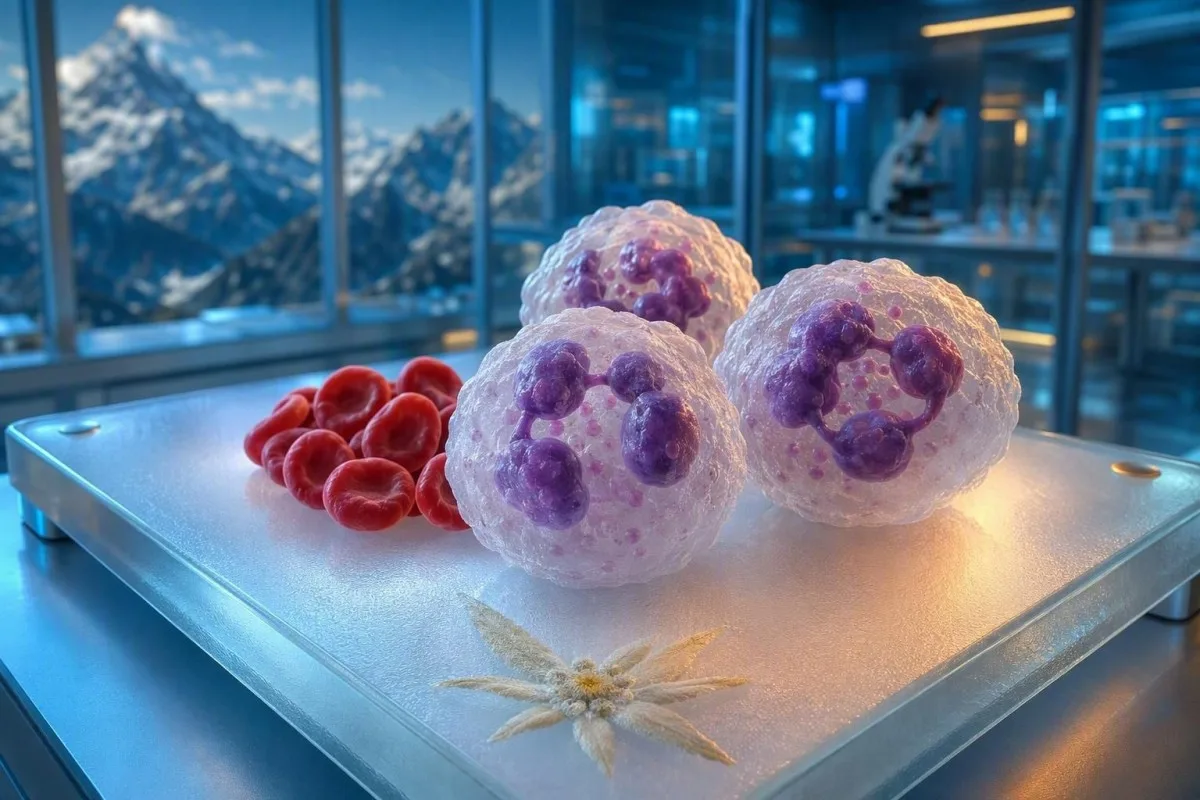
Šiek tiek padidėjęs neutrofilų rodiklis dažnai būna laikinas, tačiau absoliutus neutrofilų skaičius, likusi CBC dalis, simptomai ir tendencija lemia, ar jam reikia veiksmų.


- Ribiniai neutrofilai paprastai reiškia ANC šiek tiek viršijantį laboratorijos viršutinę ribą, dažnai apie 7,0–7,5 × 10⁹/L suaugusiems.
- Absoliutus neutrofilų skaičius yra informatyvesnis nei neutrofilų procentas; ANC skaičiuojamas kaip WBC × neutrofilų procentas ÷ 100.
- Lengva neutrofilija žemiau 15 × 10⁹/L be nerimą keliančių simptomų dažnai yra reaktyvinis ir gali atsirasti po infekcijos, rūkymo, fizinio krūvio ar steroidinio gydymo.
- Pakartojimo laikas paprastai būna 2–6 savaites po trumpalaikės ligos, intensyvaus fizinio krūvio, skiepijimo ar vaistų pakeitimo.
- Skubus įvertinimas yra tinkamas karščiuojant, esant sunkiai ligai, dusuliui, sumišimui, greitai didėjantiems rodikliams, blastams, anemijai ar mažam trombocitų kiekiui.
- Steroidai ir adrenalinas gali padidinti cirkuliuojančių neutrofilų kiekį per kelias valandas, perkeldami ląsteles iš kraujagyslių sienelių į matuojamą kraujo tūrį.
- Nuolatinis padidėjimas ilgiau nei 3 mėnesius, ypač viršijant 15–20 × 10⁹/L, reikia gydytojo apžiūros ir dažnai kraujo tepinėlio.
- Nėštumas gali PAPRASTAI PADIDĖTI NEUTROFILŲ KIEKĮ, YPAČ KAI KURIE TREČIAME TRIMESTRE, TAIGI NEŠČIŲ SUAUGUSIŲJŲ REFERENCINIAI REIKŠMIŲ INTERVALAI GALI BŪTI KLAIDINGI.
Ką reiškia ribinis neutrofilų rodiklis
RIBINIAI NEUTROFILAI PAPRASTAI REIKŠKIA MAŽĄ ABSOLIUTINIO NEUTROFILŲ KIEKIO (ANC) PADIDĖJIMĄ, O NE DIAGNOSTIKĄ. Daugeliui sveikių suaugusiųjų ANC, tik šiek tiek viršijančio laboratorinį intervalą, stabilizuojasi, kai praeina laikinas dirgiklis; pirmiausia reikia patikrinti absoliutinį kiekį, bendrą baltųjų kraujo ląstelių kiekį ir simptomus, o ne reaguoti į paryškintą procentą.
Suaugusiųjų ANC referenciniai intervalai paprastai svyruoja nuo maždaug 1,5 iki 7,5 × 10⁹/L, nors viršutinė riba skiriasi priklausomai nuo analizatoriaus, kilmės, nėštumo būklės ir vietinės laboratorijos metodo. Reikšmė 7,8 × 10⁹/L kliniškai labai skiriasi nuo 28 × 10⁹/L, nors abi gali būti pažymėtos kaip aukštos; žr. mūsų vadovą normalus neutrofilų diapazonas.
The neutrofilų procentas GALI ATRODYTI DIDELIS TIK DĖL TO, KAD LIMOCITAI SUMAŽĖJO PO STRESO AR KORTIKOSTEROIDŲ POVEIKIO. PAVYZDŽIUI, WBC 6,0 × 10⁹/L SU 78% NEUTROFILŲ DUODA 4,68 × 10⁹/L ANC, KAS YRA NORMALU, NET IR DIDELIS PROCENTAS.
Kantesti yra AI kraujo tyrimo analizatorius KURI TIKRINA KRAUJO KAIČIUS (CBC) DIFERENCIALĄ DRAUGE SU BENDRA WBC, HEMOGLOBINU, TROMBOCITAIS IR ANKSTESNIAIS REZULTATAIS, UŽuot VIENĄ ORANŽINĘ VĖLIAVĖLĘ LAIKIUI LIGOS ETIKETE. 2026 M. RUGPJŪČIO 28 D. TOKS PRIEŽASTINIO MODELIO POŽIŪRIS TEBĖRA SAUGIAUSIAS BŪDAS INTERPRETUOTI RIBINIUS REZULTATUS.
Kodėl laboratoriniai pažymėjimai nėra diagnozės
Referenciniai intervalai apima centrinę pasirinktos populiacijos dalį, todėl apie 1 iš 20 sveiki matavimai gali atsitiktinai patekti už nurodyto intervalo ribų. Pažymėjimas yra raginimas kontekstualizuoti, o ne įrodymas, kad kažkas negerai.
Kodėl absoliutus neutrofilų skaičius svarbesnis nei procentas
ANC yra skaičius, kurį klinikai naudoja vertindami neutrofilų padidėjimą, nes jis apjungia bendrą WBC su diferenciniu skaičiavimu. Aukštas neutrofilų procentas esant normaliam ANC dažnai yra proporcingas pokytis, o aukštas ANC patvirtina tikrą neutrofiliją.
Formulė paprasta: ANC = WBC × (% neutrofilai + % juostos) ÷ 100. Su leukocitų (WBC) kiekiu 12,0 × 10⁹/L ir neutrofilų 75%, absoliutus neutrofilų skaičius (ANC) yra 9,0 × 10⁹/L; tai yra lengva neutrofilija, savaime nepaprastoji padėtis.
Aš dažnai pastebiu nereikalingos nerimo, kai portale pateikiami 82% neutrofilai, bet nėra aiškiai parodytas skaičiavimas. Dr. Thomaso Kleino praktinė taisyklė yra užsirašyti WBC, ANC, hemoglobiną, trombocitų skaičių ir bet kokį nebrandžių granulocitų žymenį prieš nusprendžiant, ką reiškia rezultatas; mūsų CBC komponentų vadovas padeda su terminais.
WBC, viršijantis 11 × 10⁹/L suaugusiems ne nėščioms moterims dažniausiai vadinama leukocitoze, tačiau priežasties negalima spręsti vien tik iš šio skaičiaus. Riley ir Rupert (2015) pataria gydytojams pakartoti KKS ir peržiūrėti periferinio kraujo tepinėlį, kai leukocitozė yra nepaaiškinama arba nuolatinė.
Dažnos laikinos nežymios neutrofilijos priežastys
Lengva neutrofilija dažniausiai rodo laikinus reaktyvinius procesus: neseniai įvykusią infekciją, fizinį stresą, rūkymą, uždegimą, vaistų poveikį ar nėštumą. Šios priežastys didina cirkuliuojančių neutrofilų kiekį, nebūtinai reikšdamos, kad kaulų čiulpai gamina nenormalias ląsteles.
Peršalimas, dantų uždegimas, šlapimo takų simptomai, odos sudirginimas ar net pirmosios dienos po virusinės ligos gali pakelti ANC iki 8–14 × 10⁹/L diapazono. Neutrofilų kiekis gali likti šiek tiek padidėjęs kelias dienas po karščiavimo išnykimo, nes kaulų čiulpų išsiskyrimas ir audinių atstatymas nesustoja tuo pačiu metu.
Sunki intervalinė treniruotė, maratonas, panikos priepuolis ar ūminis skausmas gali sukelti demarginalizaciją– ląstelės, anksčiau buvusios ramiai palei kraujagyslių sieneles, patenka į cirkuliuojančią mėginį. Šis pakilimas gali įvykti per kelias minutes ar valandas ir yra viena iš priežasčių, kodėl aš prašau sportininkų vengti neįprastai sunkių treniruočių 24–48 valandas prieš planuojamą KKS; mūsų su fiziniu krūviu susijęs laboratorinių tyrimų laiko vadovas paaiškina platesnį modelį.
Rūkymas siejamas su didesniu WBC ir neutrofilų kiekiu, o nutukimas, lėtinė dantenų liga ir uždegiminės odos ligos gali palaikyti vidutiniškai padidėjusį kiekį. Todėl šiek tiek padidėjęs neutrofilų kiekis dažnai rodo poveikį ir fiziologiją, o ne paslėptą bakterinę infekciją.
Vaistai, vakcinos ir gyvenimo įvykiai, galintys padidinti neutrofilų kiekį
Kortikosteroidai, beta-agonistiniai inhaliatoriai, litis ir stimuliuojančios kolagenų gamybos vaistai gali padidinti neutrofilų kiekį, kartais žymiai. Nenutraukite paskirto vaisto dėl KKS ženklo; vietoj to užrašykite vaistą, dozę ir laiką gydytojui, peržiūrinčiam rezultatą.
Prednizonas ir panašūs gliukokortikoidai gali padidinti cirkuliuojančių neutrofilų kiekį per 4–6 val. demarginalizacijos, lėto judėjimo į audinius ir sumažėjusio ląstelių klirenso dėka. Steroidų sukeltai neutrofilijai dažnai trūksta toksinės granuliacijos ar ryškaus kairinio poslinkio, kuris gali lydėti sunkią bakterinę infekciją, nors kraujo tepinėlis yra reikalingas tinkamai įvertinti.
Litis gali padidinti granulocitų gamybą, o filgrastimas ir susiję gydymai sąmoningai didina neutrofilų kiekį; neseniai atlikta operacija, trauma ir gimdymas taip pat sukelia stresinę reakciją. Vakcina gali trumpam pakeisti diferenciaciją, todėl rutininis tyrimas, atliktas per 7–14 dienų po skiepijimo, gali būti mažiau reprezentatyvus bazinei linijai; skaitykite daugiau apie poskiepinės laboratorinės pokyčių.
Kantesti yra AI kraujo tyrimo rezultatų interpretavimo platforma ypatybes, leidžiančias žmonėms išsaugoti vaistų ir ligos kontekstą su rezultatu, o tai yra kliniškai naudingiau nei lyginti tik skaičius. Vaistų sąraše turėtų būti inhaliatoriai, steroidiniai kremai, injekcijos ir “natūralūs” produktai – ne tik tabletės.
Kada pakartoti CBC, esant ribiniams neutrofilams
Asmeniui, kuris yra gerai savijautos ir turi lengvą izoliuotą neutrofiliją, paprastai yra pagrįsta pakartoti KKS su diferenciacija po 2–6 savaičių, kai tikėtinas sukėlėjas yra praėjęs. Pakartokite tyrimą anksčiau – per kelias dienas – jei simptomai blogėja, rodiklis didėja arba pirminis rezultatas buvo labai aukštas.
Pasirinkite stabilią dieną pakartotiniam tyrimui: be karščiavimo, be intensyvaus fizinio krūvio 24–48 valandas, normalus skysčių suvartojimas ir nepradėtas vartoti naujas steroidas, nebent gydytojas nurodė kitaip. Greitas badavimas paprastai nereikalingas CBC tyrimui, tačiau derinant paros laiką ir sąlygas, pokyčius lengviau interpretuoti; mūsų kraujo tyrimų laiko vadovas paaiškina kodėl.
Jei ANC yra 7,6–12 × 10⁹/L ir visos kitos ląstelių eilutės yra normalios, aš dažnai rekomenduoju vieną planuojamą pakartotinį tyrimą, o ne nuolatinius tyrimus kas kelias dienas. Pakartotinis tyrimas po 4 savaičių gali būti klaidinantis, jei pacientui vis dar sveiksta po plaučių uždegimo, pradėtas vartoti prednizolonas arba ruošiamasi ištvermės renginiui.
Nuolatinis rodiklis svarbesnis nei vienas izoliuotas skaičius. Neutrofilija, trunkanti ilgiau nei 3 mėnesius, be aiškios reaktyvinės priežasties, paprastai reikalauja pirminės priežiūros gydytojo konsultacijos, manualinio kraujo tepinėlio ir tikslinių tyrimų, atsižvelgiant į simptomus.
CBC modeliai, dėl kurių neutrofilų padidėjimas tampa labiau ar mažiau nerimą keliančiu
Izoliuotas lengvas ANC padidėjimas su normaliu hemoglobinu ir trombocitais paprastai kelia mažiau susirūpinimo nei neutrofilija, kartu su mažakraujyste, trombocitopenija, trombocitoze ar nebrandžiais ląstelėmis. Aplinkinis CBC vaizdas suteikia skaičiui klinikinę reikšmę.
Padidėjęs ANC ir padidėję trombocitai virš 450 × 10⁹/L, nepaaiškinta mažakraujystė, bazofilija ar leukoeritroblastiškas kraujo tepinėlis didina susirūpinimą dėl kaulų čiulpų proceso. Nė vienas iš šių derinių nediagnozuoja vėžio, tačiau jie pateisina greitą gydytojo konsultaciją, o ne atsitiktinį pakartojimą po kelių mėnesių; žr. mūsų apžvalgą kraujo vėžio vertinimo kelias.
“Kairysis poslinkis” reiškia, kad periferiniame kraujyje yra nebrandžių neutrofilų (band), metamiilocitų ar miilocitų. Maži kiekiai gali pasitaikyti esant dideliam reaktyviam stresui, tačiau nuolatinis kairysis poslinkis reikalauja kraujo tepinėlio peržiūros, nes automatiniai skaitikliai ne visada atskiria gerybinį atsigavimą nuo kloninio proceso.
Kantesti AI peržiūri baltųjų kraujo ląstelių pogrupius kartu su raudonųjų kraujo ląstelių indeksais ir trombocitų tendencijomis, tada pažymi derinius medicininei tolesnei priežiūrai, o ne bando diagnozuoti leukemiją iš CBC. Šis metodas atitinka mūsų paskelbtus klinikinius validavimo principus.
Infekcija, uždegimas ar stresas: klinikiniai požymiai
Karščiavimas, židininiai simptomai ir didėjantis CRP gali rodyti infekciją, tačiau vien tik padidėjęs neutrofilų skaičius negali atskirti bakterinės infekcijos nuo streso ar uždegimo. Gydytojai diagnozuoja prieš juos esantį asmenį, o ne izoliuotą diferencialinę ląstelių analizę.
Esant bakterinei pneumonijai, pielonefritui ar apendicitui, ANC gali pakilti virš 15 × 10⁹/L, tačiau kai kuriose sunkiose infekcijose WBC kiekis gali būti normalus arba žemas – ypač vyresnio amžiaus žmonėms ar imuninę sistemą slopinantiems asmenims. Simptomai, gyvybiniai požymiai, apžiūra ir pasėliai dažnai svarbesni nei tai, ar ANC yra 11 ar 13.
CRP kyla ir krinta greičiau nei ESR, tačiau nė vienas iš jų nėra specifinis infekcijai. Jei neutrofilija derinama su aukštu CRP, sąnarių patinimu, žarnyno simptomais ar išbėrimu, diferencialinė diagnozė išplečiama iki autoimuninių ir uždegiminių būklių; mūsų paaiškinimas apie didelio ESR modelius gali padėti apibrėžti tą diskusiją.
Mano patirtimi, pacientui, kuriam ANC yra 10,5 × 10⁹/L, nėra karščiavimo ir normalus CRP po nemiegotos skubios pagalbos skyriaus lankymosi, paprastai reikia ramių stebėjimų, o ne antibiotikų. Atvirkščiai, sunkiai sergantis žmogus su šaltkrėčiu ir ANC 6,5 × 10⁹/L gali prireikti skubios pagalbos, nepaisant techniškai normalaus rodmens.
Nėštumas, amžius ir asmeninis bazinis lygis keičia interpretaciją
Nėštumas dažnai sukelia fiziologinę neutrofiliją, ypač vėlyvuoju nėštumo laikotarpiu, o vaikams reikia amžiui specifinių intervalų. Nenėščios suaugusiosios referencinis intervalas neturėtų būti naudojamas nėščiosios CBC laikyti nenormaliu be konteksto.
Nėštumo metu bendrasis WBC kiekis gali siekti 12–15 × 10⁹/L ir gali dar labiau padidėti gimdymo metu, daugiausia dėl neutrofilų. Padidėjęs kiekis be karščiavimo, gimdos jautrumo, šlapinimosi sutrikimų ar kitų ligos požymių gali būti fiziologinis, tačiau akušerijos komandos vertina visą klinikinį vaizdą.
Naujagimiai ir maži vaikai gali turėti neutrofilų kiekį, kuris suaugusiojo ataskaitoje atrodytų nenormalus, o vyresni suaugusieji infekcijos metu gali silpnai reaguoti baltaisiais kraujo kūneliais. Vaikų rezultatus vertinkite pagal laboratorijos amžiaus grupę; mūsų kūdikių intervalų vadovas paaiškina, kodėl suaugusiųjų palyginimai nepavyksta.
Jūsų ankstesni CBC dažnai yra geriausias palyginimo pagrindas. Stabilus ANC apie 7,8 × 10⁹/L per penkerius metus gerai besijaučiančiam asmeniui turi kitokį tikimybinį profilį nei naujas padidėjimas nuo 3,2 iki 12,8 × 10⁹/L.
Rūkymas, metaboliniai veiksniai ir lėtinė mažo laipsnio neutrofilija
Rūkymas, nutukimas ir lėtinės uždegiminės reakcijos gali sukelti mažo laipsnio neutrofiliją, kuri išlieka pasibaigus peršalimui. Šie veiksniai vis tiek nusipelno dėmesio, nes jie gali turėti įtakos sveikatai, be paties CBC rezultato.
Su rūkymu susijusi leukocitozė gali apimti neutrofilus, limfocitus ir monocitus, todėl ji gali pasireikšti ne tik grynu neutrofilų padidėjimu. Pakartotinis CBC 8–12 savaičių po rūkymo metimo gali būti informatyvus, nors normalaus rezultato nereikia prieš džiaugiantis sveikatos nauda metant rūkyti.
Centrinis nutukimas, miego apnėja ir lėtinė periodontologinė liga gali prisidėti prie uždegiminės signalizacijos ir šiek tiek didesnio WBC kiekio. Šie ryšiai yra realūs, bet nespecifiniai; jų neturėtų būti naudojama naujiems simptomams ar greitai didėjančiam kiekiui atmesti.
Kantesti, AI pagrindu veikiantis kraujo tyrimų analizės įrankis, gali palyginti dabartinį diferencialą su keliais ankstesniais pranešimais ir išryškinti lėtus pokyčius, kurių vienas metinis rezultatas neatskleidžia. Praktiniam stebėjimui, šalia kiekvieno testo įrašykite rūkymo statusą, svorio pokyčius, neseniai persirgtas infekcijas ir steroidų vartojimą ilgalaikiame laboratorinių tyrimų įraše.
Kada nerimauti dėl neutrofilų ir ieškoti skubios pagalbos
Kreipkitės medicininės pagalbos tą pačią dieną, jei neutrofilų kiekis yra didelis, kartu su sunkia liga, karščiavimu ir sumišimu, dusuliu, krūtinės skausmu, sustingusia sprando raumenimis arba greitai blogėjančiais simptomais. Skubumas atsiranda dėl galimos infekcijos ar sisteminės ligos, o ne vien dėl ribinio ANC.
WBC arba ANC didesnis nei 25–30 × 10⁹/L nusipelno neatidėliotino klinikinio kontakto, ypač jei jis yra naujas, didėjantis arba kartu su nebrandžiais granulocitais. Kai kurių rodiklių skaičius viršija 50 × 10⁹/L gali reikšti leukemoidinę reakciją arba hematologinę ligą, todėl nereikėtų laukti įprasto metinio vizito.
Neaiškus naktinis prakaitavimas, svorio metimas, pasikartojančios infekcijos, lengvas kraujosruvos atsiradimas, padidėję limfmazgiai ar pilvo pilnumas yra priežastys susitarti dėl savalaikio gydytojo apžiūros. Nerimą didina, kai simptomai sutampa su anemija, mažu trombocitų kiekiu, bazofilija ar neįprastais ląstelėmis, kurias aptinka analizatorius.
Jei blogai jaučiatės po kelionės, chemoterapijos, persodinimo procedūros ar vartojant imunosupresinius vaistus, būkite jautresni skubiam vertinimui. Mūsų sepsio žymenų vadovas paaiškina, kodėl normaliai atrodančios laboratorinės vertės niekada neatmeta sunkios ligos.
Ką klinicistai tikrina, kai neutrofilija išlieka
Nuolatinė nepaaiškinta neutrofilija paprastai vertinama atsižvelgiant į anamnezę, apžiūrą, pakartotiną CBC, periferinio kraujo tepinėlį ir tikslinius uždegimo ar infekcijos tyrimus. Molekuliniai tyrimai skiriami tik tais atvejais, kai nustatyti modeliai rodo mieloproliferacinį naviką, o ne kiekvienam šiek tiek padidėjusiam rezultatui.
Gydytojas gali paklausti apie rūkymą, miego apnėją, lėtinį skausmą, uždegimines žarnyno ligas, steroidų vartojimą, neseniai atliktą splenektomiją ir šeimos kraujo ligas. Jis gali paskirti CRP, ESR, kepenų ir inkstų žymenis, pasėlius ar vaizdinius tyrimus tik tada, kai anamnezė tai nurodo – platus tyrimų atlikimas be klinikinio klausimo dažnai sukelia klaidingus aliarmus.
Rankinis tepinėlio tyrimas gali nustatyti toksinę granuliaciją, Döhle kūnelius, kairįjį poslinkį, bazofiliją ar blastus, kurių automatiniai diferencialiniai skaičiavimai gali nenumatyti visiškai. 2022 m. WHO klasifikacijoje lėtinė neutrofilinė leukemija apibrėžiama kaip retas mieloidinis navikas, reikalaujantis nuolatinės neutrofilijos ir specifinių molekulinių bei morfologinių kriterijų; ji nenustatoma pagal ribinį rezultatą (Khoury ir kt., 2022).
BCR::ABL1 tyrimas, JAK2 tyrimas arba CSF3R tyrimas gali būti svarstomas hematologijoje pasirinktais atvejais. Šie tyrimai yra reikšmingi, kai CBC ir klinikiniai duomenys juos patvirtina, o ne kaip patvirtinimo atranka, kai ANC yra 8,1 × 10⁹/L.
Ką gali pasakyti kraujo tepinėlio komentarai ir nebrandūs ląstelės
Kraujo tepinėlio komentaras papildo CBC skaičių morfologiniais duomenimis – ląstelių išvaizda ir brandumu. “Toksiniai pakitimai” gali patvirtinti intensyvų reaktyvų procesą, o blastai ar nuolatinės nepaaiškintos nebrandžios formos reikalauja greito specialistų įvertinimo.
Lazdelės yra mažiau subrendę neutrofilai, ir keletas jų gali atsirasti infekcijos, operacijos ar kaulų čiulpų atsistatymo metu. Laboratorijos skiriasi tuo, kaip jos praneša apie lazdelės, todėl procentinė dalis neturėtų būti tiesiogiai lyginama tarp sistemų, nepatikrinus ataskaitos metodo.
Toksinė granuliacija ir citoplazminė vakuolizacija yra aprašomieji tepinėlio radiniai, o ne diagnozės. Jie gali atsirasti kartu su sunkia audinių reakcija, tačiau interpretacija priklauso nuo klinikinio konteksto, CRP ir to, ar yra kairysis poslinkis; mūsų paaiškinimas apie toksinę neutrofilų granuliaciją apima šiuos terminus.
Blastai ataskaitoje, laboratorijos prašymas skubiai peržiūrėti mėginį arba naujas komentaras “atipiniai ląsteliai” turėtų būti aptariami su paskyrusiu gydytoju tą pačią dieną. Tai viena iš situacijų, kai laukti įprastinio pakartotinio tyrimo yra neteisingas sprendimas.
Kaip pasiruošti naudingam neutrofilų pakartotiniam tyrimui
Naudingas pakartotinis CBC atliekamas, kai esate kliniškai stabilus ir apima pakankamai konteksto, kad būtų paaiškintas bet koks likęs pakilimas. Negalite saugiai “sumažinti” neutrofilų skaičiaus tyrimui, bet galite išvengti prevencinio triukšmo.
Planuojant ne skubų pakartotinį tyrimą, venkite intensyvių treniruočių prieš per 24–48 val., atvykite normaliai hidratuoti ir informuokite kraujo paėmimo komandą apie steroidų dozes, inhaliatorius, vakcinas ir neseniai buvusias infekcijas. Neatsisakykite paskirtų vaistų ar sąmoningai negerkite per daug vandens, kad pakeistumėte laboratorinę vertę.
Naudokite tą pačią laboratoriją, kai praktiška, nes analizatorių specifiniai referentiniai intervalai ir diferenciniai metodai skiriasi. 0,5–1,0 × 10⁹/L skirtumas gali atspindėti įprastus biologinius ir analitinius pokyčius, ypač kai rezultatai yra arti viršutinės ribos; mūsų straipsnyje apie realius ir atsitiktinius laboratorinius pokyčius nagrinėjama ši problema.
Atsineškite ankstesnę ataskaitą arba pasilikite jos nuotrauką. Karščiavimo, antibiotikų kurso, steroidų vartojimo ar intensyvaus fizinio krūvio data dažnai paaiškina daugiau nei vienas papildomas kraujo mėginys.
Dirbtinio intelekto interpretacijos naudojimas saugiai kartu su klinikine priežiūra
DI gali organizuoti CBC tendencijas ir nustatyti tolesnius klausimus, tačiau negali įvertinti gyvybinių požymių, apžiūrėti limfmazgių ar atmesti ūminės infekcijos. Aukštos kokybės interpretacijoje turėtų būti nurodomas neapibrėžtumas, parodytas ANC skaičiavimas ir tiesioginiai skubūs simptomai žmogaus priežiūrai.
Kantesti DI interpretuoja neutrofilų rezultatus analizuodamas absoliutų kiekį, bendrą leukocitų kiekį, kitas ląstelių linijas, laboratorinį intervalą ir ilgalaikius pokyčius. Jis sukurtas tam, kad padėtų vartotojams geriau pasiruošti klausimus savo gydytojui, o ne pakeisti skubų vertinimą ar skirti gydymą.
Privatumo klausimai, susiję su laboratoriniais įrašais, nes CBC gali atskleisti medikamentų vartojimą, nėštumo sukeltus pokyčius ir galimas lėtines ligas. Kantesti palaiko saugią rezultatų interpretaciją keliomis kalbomis, o mūsų gydytojai prižiūri per Medicinos patariamoji taryba.
Daktaro Thomaso Kleino pagrindinė mintis paprasta: nedidelis izoliuotas pakilimas dažniausiai yra pakartotinio tyrimo ir konteksto problema, o aukštas ar kylantis ANC kartu su simptomais ar kitais CBC nenormalumais yra medicininio vertinimo problema. Jei ataskaita atrodo nesuderinama su tuo, kaip jaučiatės, paprašykite, kad gydytojas peržiūrėtų originalų laboratorinį dokumentą – ne tik ekrano kopiją.
Praktinis kitų veiksmų planas, esant ribiniam rodikliui
Dauguma žmonių, turinčių ribinius neutrofilus, gali laikytis trijų žingsnių plano: patvirtinti ANC, nustatyti laikino pobūdžio veiksnius ir susitarti dėl tinkamai laiku pakartotinio tyrimo. Nedelsdami imkitės veiksmų, jei yra raudonos vėliavos simptomų ar didelių CBC nenormalumų.
Pirma, patikrinkite, ar pažymėta reikšmė yra procentas ar ANC, ir užsirašykite tikslų vienetą. Antra, užsirašykite ligą per pastarąjį 2 savaičių, sunkų fizinį krūvį per pastarąsias 48 valandas, rūkymą, nėštumo būklę, vaistus ir skiepijimo laiką.
Trečia, jei jaučiatės gerai ir ANC yra šiek tiek padidėjęs, o hemoglobinas ir trombocitai yra normalūs, susitarkite dėl pakartotinio CBC tyrimo po 2–6 savaičių per savo įprastą gydytoją. Jei jis lieka padidėjęs po 3 mėnesių arba kyla link 15 × 10⁹/L, paklauskite, ar būtų tinkamas plokštelių peržiūra ir tikslinis tyrimas; mūsų antros nuomonės kontrolinis sąrašas gali padėti pasiruošti vizitui.
Daugiau informacijos apie tai, kaip mūsų metodologija tvarko tendencijas ir neapibrėžtumą, rasite AI technologijų gidas. Ribinė vėliava turėtų paskatinti protingus tolesnius veiksmus, o ne naktinį diagnostikos ieškojimą.
Dažnai užduodami klausimai
Ką reiškia šiek tiek padidėjęs neutrofilų skaičius?
Šiek tiek padidėję neutrofilai paprastai reiškia, kad absoliutus neutrofilų skaičius šiek tiek viršija vietinio laboratorinio nustatytą viršutinę ribą, suaugusiems dažnai apie 7,5 × 10⁹/L. Dažniausiai tai paaiškinama nesenia infekcija, fiziniu krūviu, rūkymu, emociniu stresu, nėštumu ir kortikosteroidais. Jei ANC yra mažesnis nei 15 × 10⁹/L, hemoglobinas ir trombocitai yra normalūs, o Jūs jaučiatės gerai, dažnai tinka pakartoti CBC po 2–6 savaičių. Rezultatas turėtų būti vertinamas atsižvelgiant į laboratorijos ribas ir Jūsų ankstesnius CBC.
Kada turėčiau nerimauti dėl padidėjusio neutrofilų kiekio?
Padidėjęs neutrofilų skaičius reikalauja skubaus įvertinimo, kai pasireiškia kartu su aukšta temperatūra, sumišimu, dusuliu, krūtinės skausmu, sprando rigidiškumu, greitai blogėjančia būkle arba esant žymiai padidėjusiam skaičiui. ANC, viršijantis 25–30 × 10⁹/L, ypač jei jis didėja arba yra susijęs su nebrandžiomis ląstelėmis, anemija ar mažu trombocitų kiekiu, turėtų paskatinti nedelsiant susisiekti su gydytoju. Nedidelis izoliuotas ANC nuo 8–12 × 10⁹/L, gerai besijaučiančiam asmeniui, kelia daug mažesnį susirūpinimą. Simptomai ir likusi CBC tyrimų dalis patikimiau nei vien tik procentas lemia skubumą.
Kiek laiko neutrofilai išlieka aukšti po infekcijos?
Neutrofilai gali išlikti šiek tiek padidėję kelias dienas ar kelias savaites po infekcijos pagerėjimo, priklausomai nuo jos sunkumo ir taikyto gydymo. Kartotinis kraujo tyrimas (CBC) praėjus 2–6 savaitėms po visiško pasveikimo dažnai būna informatyvesnis nei pakartotinis tyrimas kitą dieną. Patvarus padidėjimas ilgiau nei 3 mėnesius be akivaizdžios priežasties reikalauja gydytojo įvertinimo. Steroidinis gydymas gali prailginti arba imituoti padidėjusį rezultatą, per kelias valandas padidindamas cirkuliuojančių neutrofilų kiekį.
Ar stresas ar fizinis krūvis gali sukelti padidėjusį neutrofilų skaičių?
Taip, ūmus emocinis stresas, skausmas ir intensyvus fizinis krūvis gali laikinai padidinti neutrofilų skaičių dėl demarginalizacijos, kai ląstelės pereina nuo kraujagyslių sienelių į cirkuliuojantį mėginį. Pokytis gali įvykti per kelias minutes ar valandas ir dažnai susinormalizuoja per 24–48 valandas po streso pašalinimo. 24–48 valandų prieš planuojamą pakartotinį CBC vengimas intensyvaus fizinio krūvio gali sumažinti šį variacijos šaltinį. Šis poveikis nereiškia, kad fizinis krūvis yra žalingas arba kad yra infekcija.
Ar didelis neutrofilų procentas yra tas pats, kas didelis ANC?
Ne, didelis neutrofilų procentas nebūtinai reiškia didelį neutrofilų kiekį. ANC (absoliutus neutrofilų kiekis) apskaičiuojamas padauginus bendrą WBC (Baltųjų kraujo kūnelių) kiekį iš neutrofilų procento ir padalijus iš 100. Taigi, 6.0 × 10⁹/L WBC ir 78% neutrofilų duoda normalų ANC, lygų 4.68 × 10⁹/L. Mažas limfocitų procentas gali sudaryti įspūdį, kad neutrofilų procentas yra didelis, net jei absoliutus neutrofilų skaičius yra normalus. Gydytojai paprastai naudoja ANC, norėdami nustatyti tikrąją neutrofiliją.
Ar vėžys gali sukelti neutrofilų padidėjimą?
Kai kurie kraujo vėžiniai susirgimai ir kietieji navikai gali sukelti neutrofiliją, tačiau jie retai paaiškina vieną ribinį rezultatą. Susirūpinimą kelia nuolatinė neutrofilija, kartu pasireiškianti anemija, trombocitų anomalijomis, bazofilija, nenormaliais nesubrendusiais ląstelėmis, padidėjusia blužnimi, prakaitavimu naktį ar neplanuotu svorio kritimu. 2022 m. PSO klasifikacija diagnozuojant mieloidinius navikus reikalauja specifinių klinikinių, kraujo tepinėlio ir molekulinių radinių. Nedidelis izoliuotas ANC padidėjimas nenurodo vėžio.
Gaukite AI pagrįstą kraujo tyrimo analizę jau šiandien
Prisijunkite prie daugiau nei 2 milijonų naudotojų visame pasaulyje, kurie pasitiki Kantesti dėl momentinės, tikslios laboratorinių tyrimų analizės. Įkelkite savo kraujo tyrimo rezultatus ir per kelias sekundes gaukite išsamią 15,000+ biomarkerių interpretaciją.
📚 Nuorodomis pagrįsti moksliniai leidiniai
Klein, T., Mitchell, S., & Weber, H. (2026). Kantesti LTD. (2026). Serum Proteins Guide: Globulins, Albumin & A/G Ratio Blood Test. Zenodo. Galima rasti per DOI; susijusius autorių profilius galima ieškoti per ResearchGate ir Academia.edu.. Kantesti AI Medical Research.
Klein, T., Mitchell, S., & Weber, H. (2026). Kantesti LTD. (2026). C3 C4 Complement Blood Test & ANA Titer Guide. Zenodo. Galima rasti per DOI; susijusius autorių profilius galima ieškoti per ResearchGate ir Academia.edu.. Kantesti AI Medical Research.
📖 Išorinės medicininės nuorodos
Riley LK, Rupert J (2015). Pacientų, sergančių leukocitoze, įvertinimas. American Family Physician.
⚕️ Medicininis atsakomybės apribojimas
Šis straipsnis skirtas tik mokymo tikslais ir nesudaro medicininės konsultacijos. Visada kreipkitės į kvalifikuotą sveikatos priežiūros specialistą dėl diagnozės ir gydymo sprendimų.
E-E-A-T patikimumo signalai
Patirtis
Gydytojo vadovaujama klinikinė laboratorinių tyrimų interpretavimo darbo eigų peržiūra.
Ekspertizė
Laboratorinės medicinos dėmesys tam, kaip biomarkeriai elgiasi klinikiniame kontekste.
Autoritetas
Parašyta dr. Thomas Klein, peržiūrėjo dr. Sarah Mitchell ir prof. dr. Hans Weber.
Patikimumas
Įrodymais pagrįsta interpretacija su aiškiais tolesnių veiksmų keliais, siekiant sumažinti nerimą.