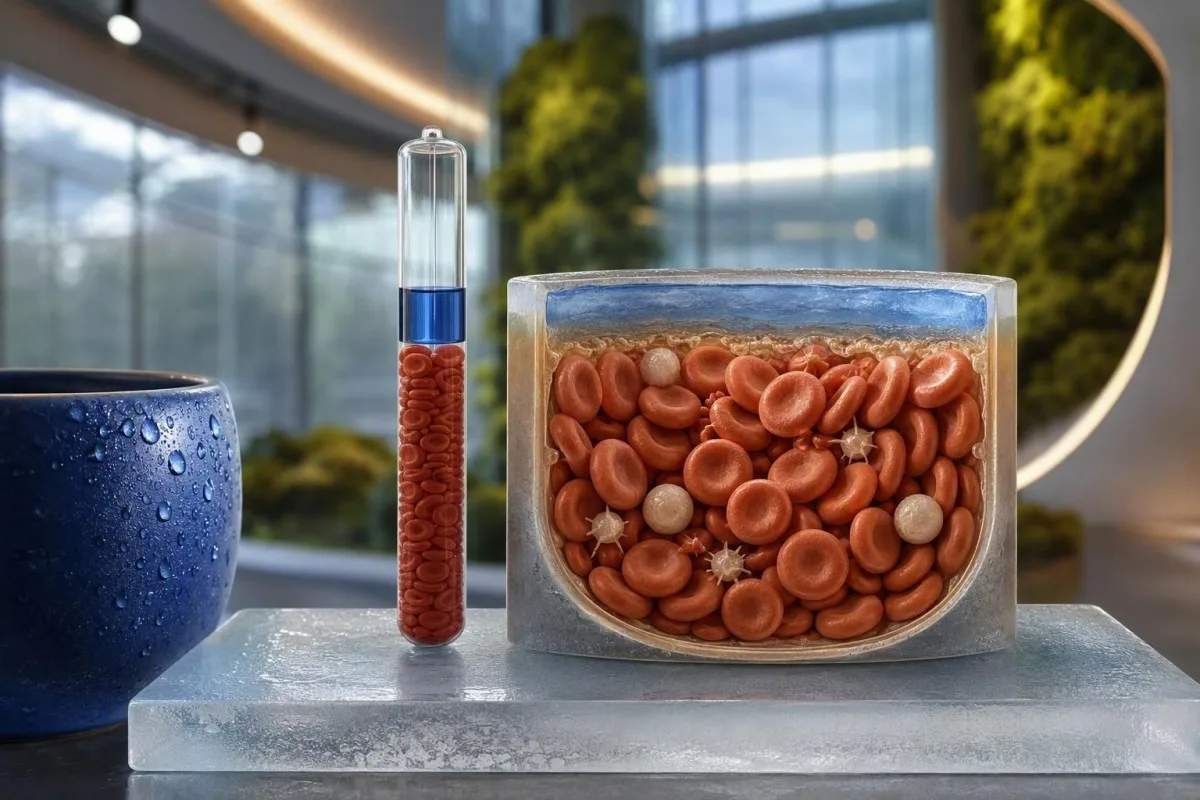
Kiraan sel darah merah yang tinggi boleh mencerminkan darah yang pekat dan bukannya sel darah merah yang berlebihan. Tugas pertama ialah memisahkan kehilangan cecair sementara daripada peningkatan berterusan yang memerlukan pemeriksaan rapi.


- Eritrositosis relatif bermaksud air plasma telah menurun, menjadikan kiraan RBC, hemoglobin, dan hematokrit kelihatan tinggi tanpa menghasilkan sel baharu.
- Ambang WHO nilai yang menyokong kemungkinan polisitemia vera ialah hemoglobin melebihi 16.5 g/dL bagi lelaki atau 16.0 g/dL bagi wanita, atau hematokrit melebihi 49% dan 48% masing-masing.
- Ujian semula hidrasi biasanya munasabah untuk peningkatan ringan yang terpencil selepas muntah, cirit-birit, pendedahan haba, berpuasa, atau senaman berat—jika anda sihat dari segi lain.
- Diuretik boleh meningkatkan hematokrit melalui kehilangan cecair; jangan berhenti mengambil ubat yang ditetapkan tanpa merujuk doktor yang menetapkannya.
- corak adalah penting: albumin tinggi, jumlah protein, natrium, nisbah BUN/kreatinin, dan graviti spesifik air kencing lebih menyokong dehidrasi berbanding pengeluaran berlebihan sel darah merah yang sebenar.
- Ulang masa biasanya 1–2 minggu selepas pulih, pengambilan cecair normal, dan 24–48 jam tanpa senaman yang terlalu berat, melainkan terdapat gejala kecemasan.
- peningkatan berterusan selepas hidrasi yang baik memerlukan penilaian untuk pendedahan asap rokok, gangguan pernafasan semasa tidur, altitud, testosteron, penyakit paru-paru atau buah pinggang, eritropoietin, dan sering kali ujian JAK2.
- Gejala yang mendesak termasuk sakit dada, sesak nafas baharu, kelemahan sebelah badan, kehilangan penglihatan, kekeliruan, atau kaki bengkak yang menyakitkan; ini memerlukan rawatan segera, bukan ujian semula di rumah.
Apakah maksud keputusan RBC yang tinggi biasanya
Kiraan RBC yang tinggi boleh menjadi tinggi palsu akibat dehidrasi apabila kehilangan cecair memekatkan bahagian selular darah; ini tidak bermakna sumsum anda secara automatik menghasilkan terlalu banyak sel darah merah. Petunjuknya adalah sama ada hemoglobin dan hematokrit kembali normal selepas sembuh dan minum seperti biasa, bukannya kekal tinggi pada CBC ulangan yang disediakan dengan rapi.
Kiraan RBC melaporkan bilangan sel darah merah seliter, manakala hematokrit melaporkan pecahan darah keseluruhan yang diduduki oleh sel-sel tersebut. Selang rujukan dewasa berbeza mengikut makmal, tetapi ramai yang menggunakan kira-kira 4.5–5.9 × 10¹²/L untuk lelaki dan 4.1–5.1 × 10¹²/L untuk wanita. Nilai yang sedikit melebihi julat selalunya kurang bermaklumat berbanding hemoglobin dan hematokrit di sebelahnya; panduan kami untuk apa yang termasuk dalam CBC menerangkan sebabnya.
Dehidrasi merendahkan komponen cecair darah dalam masa beberapa jam, jadi jisim sel darah merah yang sama menduduki isi padu terukur yang lebih kecil. Di klinik, saya sering melihat ini selepas sakit perut: RBC 5.8 × 10¹²/L, hemoglobin 17.1 g/dL, hematokrit 51%, kemudian nilai normal selepas sembuh. Ini adalah eritrositosis relatif, bukan kesilapan makmal dan tidak semestinya suatu penyakit.
Kantesti ialah seorang Penganalisis ujian darah AI yang membaca RBC, hemoglobin, hematokrit, indeks sel darah merah, penanda buah pinggang, dan keputusan terdahulu secara bersama. Mulai 5 September 2026, aliran kerja semakan klinikal kami melayan satu bendera CBC sempadan sebagai gesaan untuk menyemak penyediaan dan arah aliran—bukan sebagai diagnosis.
Kiraan RBC tidak sama dengan jisim sel darah merah
CBC tidak boleh mengukur jisim sel darah merah secara langsung. Ia mengukur kepekatan, yang meningkat apabila isi padu plasma mengecut; kajian jisim sel darah merah isotop khusus kini jarang diperlukan, tetapi ia menggambarkan mengapa CBC yang pekat boleh kelihatan membimbangkan tanpa peningkatan sel yang sebenar.
Eritrositosis relatif berbanding lebihan sel darah merah sebenar
Eritrositosis relatif ialah RBC, hemoglobin, atau hematokrit yang tinggi yang disebabkan oleh pengurangan isi padu plasma, manakala eritrositosis mutlak mencerminkan peningkatan jisim sel darah merah yang sebenar. Penghidratan boleh membetulkan corak pertama tetapi tidak akan membetulkan corak kedua.
Eritrositosis sebenar mungkin primer, seperti dalam polisitemia vera, atau sekunder kepada peningkatan eritropoietin daripada oksigen rendah, ubat-ubatan, atau jarang sekali proses buah pinggang. Kriteria WHO 2016 menggunakan hemoglobin melebihi 16.5 g/dL bagi lelaki atau 16.0 g/dL bagi wanita sebagai ambang yang sepatutnya menimbulkan persoalan tentang polisitemia vera, terutamanya apabila berterusan (Arber et al., 2016). Nilai tunggal tidak mencukupi untuk mendiagnosisnya.
Perbezaan praktikalnya ialah bahagian panel yang lain. Kiraan RBC tinggi akibat dehidrasi corak sering termasuk albumin tinggi, jumlah protein, urea/BUN, natrium, dan air kencing yang pekat; eritrositosis mutlak mungkin menyebabkan penanda ini tidak menunjukkan kelainan. Semak artikel tertumpu kami mengenai hemoglobin yang sedikit tinggi jika hemoglobin, bukannya RBC sahaja, adalah keputusan yang ditandakan.
Kiraan RBC yang normal tidak menolak kemungkinan eritrositosis jika hemoglobin atau hematokrit tinggi, dan kiraan RBC yang tinggi sahaja boleh berlaku dengan sel darah merah kecil akibat kekurangan zat besi atau sifat talasemia. Inilah sebabnya mengapa MCV dan feritin penting; RBC yang tinggi dengan MCV di bawah 80 fL adalah perbincangan klinikal yang berbeza.
Bagaimana dehidrasi mengubah CBC dan penanda buah pinggang
Dehidrasi biasanya meningkatkan kiraan RBC, hemoglobin, dan hematokrit secara serentak, dan ia sering meningkatkan albumin, jumlah protein, urea/BUN, kreatinin, dan kepekatan air kencing. Keputusan yang tidak sepadan—contohnya, RBC tinggi dengan hemoglobin rendah—tidak begitu sesuai dengan hemokepekatan biasa.
Nisbah BUN/kreatinin melebihi kira-kira 20:1 dalam unit AS boleh menyokong pengurangan perfusi buah pinggang akibat kehilangan cecair, walaupun pendarahan gastrousus, pengambilan protein, kortikosteroid dan jisim otot yang rendah boleh mengubah nisbah. Kreatinin mungkin meningkat secara sederhana selepas terdedah kepada haba atau larian yang panjang kerana kedua-dua penapisan dan metabolisme otot berubah. Kami panduan dehidrasi dan eGFR meliputi apabila eGFR yang rendah perlu diulang.
Graviti tentu air kencing 1.025 atau lebih tinggi adalah bersesuaian dengan air kencing yang pekat, tetapi ia bukan meter penghidratan langsung. Glukosa, protein dan beberapa agen kontras pengimejan juga boleh meningkatkannya, jadi pakar klinikal harus mentafsirkannya dengan gejala dan elektrolit. Rujukan graviti tentu air kencing adalah berguna apabila CBC dan urinalisis dikumpulkan pada hari yang sama.
Saya menasihatkan agar tidak cuba memaksa menormalkan ujian dengan meminum beberapa liter air serta-merta sebelum pengambilan darah. Minum air secara berlebihan dengan cepat boleh merendahkan natrium, dan ia menghasilkan satu lagi sampel yang tidak mewakili keadaan sebenar; pemakanan biasa dan cecair yang diambil berdasarkan rasa dahaga selama 24–48 jam secara amnya adalah lebih selamat bagi orang yang tidak mempunyai sekatan cecair.
Muntah, cirit-birit, haba, berpuasa, dan diuretik
Muntah, cirit-birit, berpeluh banyak, berpuasa berpanjangan, dan ubat diuretik semuanya boleh menyebabkan kepekatan RBC tinggi sementara dengan mengurangkan air plasma. Tahap peningkatan lebih bergantung kepada kehilangan dan penggantian cecair daripada rasa tidak sihat seseorang itu.
Muntah akut selalunya menghasilkan klorida rendah dan kadang-kadang bikarbonat tinggi kerana asid dan cecair gastrik hilang. Diuretik gelung seperti furosemida dan tiazid boleh menghasilkan profil yang serupa dengan penguncupan isipadu, terutamanya pada orang dewasa yang lebih tua. Keputusan klorida rendah harus diletakkan dalam bingkai klinikal yang sama; lihat petunjuk klorida muntah dan diuretik tersebut.
Jangan hentikan diuretik yang ditetapkan untuk memperbaiki CBC tanpa nasihat perubatan. Orang yang mengambil ubat ini untuk kegagalan jantung, sirosis, hipertensi tahan rawatan, atau penyakit buah pinggang mungkin memerlukan pelan cecair yang disesuaikan, kerana minum tanpa kawalan boleh memburukkan bengkak atau sesak nafas. Soalan yang betul adalah sama ada dos, gejala, berat badan, tekanan darah, dan keputusan renal sepadan antara satu sama lain.
Rasa dahaga adalah membantu tetapi tidak sempurna pada orang dewasa berusia lebih 65 tahun dan pada orang yang menghidap diabetes, penyakit buah pinggang, atau keadaan neurologi tertentu. Air kencing berwarna kuning gelap, mulut kering, pening semasa berdiri, pengurangan kencing, dan penurunan berat badan sebanyak 1 kg dalam masa 24 jam boleh menyokong kehilangan cecair, tetapi gejala yang teruk memerlukan penilaian dan bukannya rawatan sendiri.
Senaman boleh memekatkan darah anda buat sementara waktu
Senaman lasak yang berterusan boleh meningkatkan hematokrit dan hemoglobin selama beberapa jam melalui kehilangan peluh dan anjakan isipadu plasma, walaupun latihan berulang mungkin merendahkan hematokrit asas melalui isipadu plasma yang berkembang. Oleh itu, masa adalah sangat penting bagi atlet.
Larian selama 90 minit dalam cuaca panas boleh menyingkirkan 1–3 liter cecair, bergantung kepada saiz badan, iklim, dan kadar peluh. Pengambilan sampel sejurus selepas perlumbaan juga mungkin menunjukkan kreatinin, CK, albumin, dan protein jumlah yang lebih tinggi; kelompok itu lebih berguna berbanding keputusan RBC sahaja. panduan masa ujian darah maraton kami membincangkan penanda pemulihan yang sering berubah.
Untuk pemantauan rutin, saya biasanya mencadangkan supaya mengelakkan senaman yang terlalu intensif selama 24–48 jam sebelum pengambilan sampel, datang dalam keadaan rehat, dan minum seperti biasa pada hari sebelumnya. Ini bukan peraturan makmal yang universal, dan pemantauan atlet elit mungkin sengaja dilakukan di bawah bebanan—tetapi konsistensi lebih penting daripada kesempurnaan. Dr. Thomas Klein telah melihat banyak rujukan yang tidak perlu hilang setelah atlet diuji semula selepas minggu pemulihan yang biasa.
Kantesti’s Panduan penyelidikan BUN dan kreatinin sangat membantu apabila atlet daya tahan mempunyai hematokrit yang tinggi dan tanda amaran buah pinggang yang berada di tahap sempadan. Berat badan yang menurun, graviti spesifik air kencing yang tinggi, dan selang pemulihan yang singkat menjadikan hemokonsentrasi sesuatu yang munasabah; sakit otot, air kencing berwarna cola, atau CK yang sangat tinggi memerlukan tahap berwaspada yang berbeza.
Pelan yang selamat untuk mengulang CBC yang tinggi sedikit
Kiraan RBC yang meningkat sedikit biasanya boleh diulang selepas 1–2 minggu pemulihan, hidrasi biasa, dan penggunaan ubat yang stabil apabila anda tidak mempunyai gejala bendera merah. Ulang lebih awal hanya jika doktor anda memintanya atau keputusan awal meningkat dengan ketara.
Sebelum ulangan, rekodkan sama ada anda mengalami cirit-birit, muntah, demam, pengambilan alkohol, sauna, perjalanan jauh, pendedahan altitud, berpuasa, atau senaman intensif dalam tempoh 72 jam sebelumnya. Kekalkan diet dan jadual ubat biasa anda kecuali doktor anda memberitahu sebaliknya. Ini panduan penyediaan ujian darah asas mempunyai senarai semak praktikal untuk mengelakkan variasi yang tidak disengajakan.
Gunakan makmal yang sama jika boleh, kerana kaedah penganalisis dan julat rujukan adalah berbeza. Minta CBC dengan hemoglobin, hematokrit, MCV, RDW, kiraan sel darah putih, dan platlet; peningkatan berterusan yang disertai dengan platlet atau sel putih yang tinggi lebih membimbangkan untuk proses sumsum tulang berbanding eritrositosis terpencil. Penyakit baru-baru ini boleh menjejaskan garis-garis ini dalam arah yang bertentangan, jadi panel penuh itu penting.
Kantesti ialah seorang perkhidmatan tafsiran ujian makmal AI yang membandingkan CBC baharu dengan nilai terdahulu dan menandakan perubahan yang melebihi variasi biasa. Pendekatan trend kami tidak menggantikan doktor, tetapi ia boleh mengekalkan konteks penting—senaman, penyakit, ubat-ubatan, dan hematokrit terdahulu—yang sering hilang apabila satu keputusan dilihat secara sendirian.
Bilakah keputusan tinggi yang berulang memerlukan ujian eritrositosis
Hemoglobin yang tinggi secara berterusan melebihi 16.5 g/dL bagi lelaki atau 16.0 g/dL bagi wanita, atau hematokrit melebihi 49% atau 48%, harus mendorong doktor untuk menilai eritrositosis selepas penyahhidratan diketepikan. Ujian pertama yang biasa adalah CBC ulangan, tahap eritropoietin, penilaian oksigen, dan ujian mutasi JAK2 apabila sesuai.
Polycythemia vera adalah neoplasma mieloproliferatif di mana mutasi JAK2 ditemui dalam kira-kira 1% pesakit yang terjejas. Eritropoietin serum yang rendah menyokong pengeluaran berlebihan sumsum tulang primer, tetapi tiada ujian darah tunggal harus ditafsirkan secara sendirian. Garis panduan British Society for Haematology mengesyorkan pendekatan berstruktur yang memisahkan eritrositosis primer daripada sekunder (McMullin et al., 2019).
Gejala boleh menjadi halus: sakit kepala, penglihatan kabur, gatal selepas mandi air panas, kemerahan muka yang luar biasa, keletihan, atau pembekuan darah yang lalu mungkin lebih penting daripada nilai RBC yang tepat. Untuk penjelasan yang lebih lengkap tentang hematokrit, eritropoietin, dan JAK2, baca kami panduan simptom polisitemia. Ramai orang dengan peningkatan makmal yang ringan tidak mempunyai mana-mana ciri ini.
Saya berhati-hati untuk tidak membayangkan bahawa setiap kiraan tinggi yang berterusan adalah kanser. Pendedahan karbon monoksida berkaitan merokok, apnea tidur yang tidak dirawat, penyakit paru-paru, testosteron, altitud tinggi, dan beberapa keadaan buah pinggang adalah penjelasan yang lebih biasa dalam banyak amalan. Walau bagaimanapun, ketekalan adalah sebab mengapa CBC ulangan tidak sepatutnya menjadi kitaran ujian semula yang santai tanpa henti.
Oksigen rendah, merokok, dan apnea tidur sebagai punca RBC tinggi
Oksigen rendah kronik boleh merangsang eritropoietin dan menyebabkan kiraan sel darah merah yang benar-benar tinggi; apnea tidur, pendedahan karbon monoksida berkaitan merokok, dan penyakit paru-paru adalah punca yang kerap. Ketepuan oksigen siang hari yang normal tidak mengecualikan sepenuhnya penurunan oksigen waktu malam.
Obstructive sleep apnea boleh menyebabkan eritrositosis sederhana, terutamanya apabila terdapat penyahtepuan oksigen waktu malam yang ketara. Berdengkur kuat, jeda pernafasan yang disaksikan, sakit kepala waktu pagi, hipertensi yang tahan rawatan, dan rasa mengantuk pada waktu siang harus mencetuskan sejarah fokus tidur dan bukannya andaian bahawa penyahhidratan menjelaskan segala-galanya. A menjelaskan mengapa saturasi oksigen, feritin, fungsi tiroid, dan konteks jantung juga mungkin relevan. menggariskan konteks kardiopulmonari yang lebih luas.
Merokok sigaret meningkatkan karboksihemoglobin, yang mengurangkan penghantaran oksigen walaupun oksimeter nadi mungkin kelihatan meyakinkan. Vaping tidak menghasilkan pendedahan karbon monoksida yang sama seperti tembakau boleh bakar, tetapi ia mempunyai risiko kesihatan lain dan harus tetap dibincangkan dengan jujur. Ujian karbon monoksida atau ko-oksimetri kadangkala lebih berguna daripada ketepuan oksigen rutin.
AI kami mentafsir keputusan RBC yang tinggi bersama-sama dengan hemoglobin, hematokrit, penanda buah pinggang, dan faktor tidur atau merokok yang dilaporkan dan bukannya memberikan senarai punca generik. Bacaan kontekstual itu amat berharga apabila hematokrit berada pada 50% selepas hidrasi dan pesakit melaporkan tidur yang tidak menyegarkan.
Altitud, testosteron, dan ubat-ubatan yang meningkatkan RBC
Tinggal atau berlatih di altitud dan menggunakan testosteron boleh meningkatkan pengeluaran sel darah merah, jadi peningkatan tersebut mungkin adalah benar dan bukannya berkaitan dengan dehidrasi. Masa pendedahan selalunya menjawab lebih banyak perkara daripada angka awal.
Pada altitud, tekanan oksigen yang lebih rendah merangsang eritropoietin dan meningkatkan hemoglobin dalam tempoh beberapa hari hingga minggu; julat yang dijangkakan bergantung pada ketinggian, tempoh, keturunan, dan data rujukan makmal. CBC yang diambil semasa atau sejurus selepas berada di pergunungan harus ditafsirkan berdasarkan pendedahan tersebut. Kami panduan ujian semula hemoglobin altitud menjelaskan mengapa masa untuk kembali ke paras laut adalah penting.
Suntikan testosteron, gel, pelet, dan beberapa agen anabolik boleh menyebabkan eritrositosis. Banyak protokol preskripsi mengurangkan atau menghentikan terapi apabila hematokrit mencapai 54%, walaupun keputusan risiko individu berbeza, terutamanya bagi mereka yang mempunyai penyakit kardiovaskular atau apnea tidur. Jangan sekali-kali menderma darah atau mengubah dos yang ditetapkan sebagai ganti kepada membincangkan keputusan tersebut dengan doktor yang menetapkan ubat.
Kurang kerap, ubat diabetes SGLT2 boleh menyebabkan sedikit peningkatan dalam hematokrit, sebahagiannya melalui kesan isi padu plasma dan mungkin isyarat eritropoietin. Senarai ubat harus merangkumi produk androgen yang dijual bebas, rawatan suntikan, dan perubahan terkini—bukan sekadar ubat yang dicetak dalam rekod elektronik.
Petunjuk CBC yang mengubah tahap kebimbangan
RBC yang tinggi lebih membimbangkan apabila hemoglobin dan hematokrit juga tinggi, terutamanya dengan platelet yang meningkat, sel darah putih, eritropoietin yang rendah, atau sel yang tidak normal pada calitan darah. RBC yang tinggi dengan MCV yang rendah selalunya menunjukkan gangguan sel kecil.
MCV di bawah 80 fL dengan kiraan RBC yang agak tinggi boleh berlaku dalam trait talasemia, di mana sel adalah kecil tetapi banyak. Kekurangan zat besi juga boleh menurunkan MCV, walaupun ia lebih kerap menurunkan hemoglobin dari masa ke masa; feritin dan ketepuan transferin menjelaskan perbezaannya. Kami Perbandingan MCV dan MCH menjelaskan mengapa angka RBC sahaja mengelirukan.
Sel darah putih atau platelet yang tinggi bersama-sama dengan hematokrit yang tinggi tidak mendiagnosis polisitemia vera, tetapi ia merendahkan ambang untuk semakan hematologi. Calitan darah periferi, feritin, eritropoietin, ujian JAK2, dan kadangkala penilaian sumsum tulang mungkin menyusul. Kami laluan pemeriksaan kanser darah menunjukkan mengapa ujian-ujian ini dijujurkan dan bukannya dipesan secara semberono.
Peraturan praktikal Dr. Thomas Klein adalah mudah: cari persetujuan merentas isyarat bebas. Hematokrit 52%, platelet 520 × 10⁹/L, dan eritropoietin rendah adalah corak yang berbeza secara fundamental daripada hematokrit 50% selepas gelombang haba dengan albumin 5.3 g/dL dan air kencing yang pekat.
Gejala dan risiko pembekuan: bilakah RBC tinggi menjadi kecemasan
Dapatkan rawatan segera untuk keputusan RBC yang tinggi dengan sakit dada, sesak nafas secara tiba-tiba, batuk berdarah, pitam, kelemahan baru, kesukaran bertutur, kehilangan penglihatan, atau kaki bengkak yang menyakitkan. Gejala-gejala ini boleh menggambarkan pembekuan darah atau keadaan akut lain dan tidak sepatutnya menunggu untuk CBC ulangan.
Hematokrit yang lebih tinggi boleh meningkatkan kelikatan darah, tetapi gejala dan risiko vaskular keseluruhan menentukan tahap kecemasan dengan lebih dipercayai daripada peningkatan terpencil yang sederhana. Polisitemia vera membawa risiko trombotik yang diiktiraf, terutamanya dengan usia yang lebih tua, trombosis terdahulu, faktor risiko kardiovaskular, dan kiraan yang tidak terkawal. Kajian tahun 2021 oleh Tefferi dan Barbui menerangkan rawatan yang disesuaikan dengan risiko dan bukannya merawat setiap kiraan yang tinggi dengan cara yang sama.
Sakit kepala sahaja adalah perkara biasa dan tidak spesifik; sakit kepala dengan gejala visual, kelemahan, atau kekeliruan yang baru adalah tidak normal. Begitu juga, kegatalan selepas mandi air panas boleh berlaku dalam polisitemia vera tetapi juga disebabkan oleh kulit kering dan alahan, jadi ia adalah petunjuk, bukan bukti. Semak tanda amaran ujian darah untuk sakit dada jika gejala adalah sebahagian daripada sebab ujian dipesan.
Jangan ambil aspirin semata-mata kerana kiraan RBC tinggi melainkan doktor anda mengesyorkannya. Aspirin mempunyai risiko pendarahan dan mungkin tidak sesuai jika terdapat ulser, antikoagulan, platelet rendah, atau sejarah perubatan tertentu. Perkhidmatan kecemasan adalah pilihan yang lebih selamat apabila gejala neurologi fokus atau kardiopulmonari berkembang.
Mengapa CBC terdahulu anda mungkin menjawab soalan tersebut
Kiraan RBC yang tinggi secara stabil selama bertahun-tahun mempunyai makna yang berbeza daripada peningkatan mendadak dalam beberapa minggu, dan aliran (trends) boleh membezakan garis dasar peribadi daripada penyakit baharu. Bandingkan keputusan menggunakan hemoglobin, hematokrit, MCV, dan makmal yang sama jika boleh.
Variasi biologi dan variasi penganalisis bermakna perubahan kecil tidak selalunya merupakan perubahan fisiologi yang sebenar. Perbezaan hemoglobin sebanyak 0.3 g/dL antara dua kali pengambilan sampel mungkin mencerminkan hidrasi, postur, masa, atau variasi biasa; peningkatan berterusan daripada 15.2 kepada 17.3 g/dL memerlukan perhatian lanjut. Artikel kami tentang perubahan makmal yang bermakna menerangkan konsep nilai perubahan rujukan (reference-change-value).
Simpan rekod ringkas tentang altitud, status merokok, dos testosteron, penyakit, senaman berat, pendarahan haid, dan kehilangan cecair pada setiap pengambilan sampel. Rekod itu lebih berguna secara klinikal daripada mengejar satu kiraan RBC “ideal” yang tepat. Berdasarkan pengalaman saya, ketiadaan konteks ini adalah sebab mengapa pesakit menerima penjelasan yang bercanggah daripada temu janji yang berbeza.
Kantesti, sebuah platform tafsiran biomarker AI, boleh memaparkan nilai CBC bersiri di samping penanda buah pinggang dan protein untuk mengenal pasti corak kepekatan. Kami menggalakkan pengguna untuk menganggap analisis aliran sebagai persediaan untuk perbualan dengan doktor, bukan sebagai pengganti untuk pemeriksaan atau ujian sasaran.
Pertimbangan kehamilan, usia lanjut, dan penyakit kronik
Kehamilan biasanya merendahkan hemoglobin dan hematokrit melalui pengembangan isipadu plasma, jadi nilai yang tinggi semasa hamil memerlukan semakan doktor dan bukannya andaian dehidrasi secara santai. Dalam kalangan orang dewasa yang lebih tua dan individu yang mempunyai penyakit jantung atau buah pinggang, nasihat mengenai pengambilan cecair mestilah bersifat individu.
Semasa kehamilan, isipadu plasma berkembang sekitar 40–50%, mewujudkan pencairan fisiologi; banyak perkhidmatan materniti menyiasat hemoglobin melebihi 16.0 g/dL kerana ia mungkin menandakan pengembangan plasma yang tidak mencukupi atau kebimbangan lain. Muntah yang teruk pada awal kehamilan masih boleh memekatkan CBC, tetapi peningkatan yang berterusan harus dibincangkan dengan pasukan materniti. Lihat kehamilan untuk senario hari yang sama.
Orang dewasa yang lebih tua mungkin tidak melaporkan rasa haus dengan tepat, manakala kegagalan jantung dan penyakit buah pinggang yang lanjut boleh menjadikan pengambilan cecair berlebihan berbahaya. Perubahan mendadak pada bengkak buku lali, berat badan, sesak nafas, atau pengeluaran air kencing lebih penting daripada cuba mencapai sasaran air yang umum. Pelarasan diuretik terletak di bawah tanggungjawab doktor yang menguruskan keadaan asas pesakit.
Kanak-kanak mempunyai julat hemoglobin khusus mengikut umur, dan nilai yang kelihatan tinggi pada portal orang dewasa mungkin sesuai pada usia atau altitud tertentu. Doktor pediatrik harus mentafsir peningkatan yang berterusan, terutamanya dengan sianosis, penyakit jantung kongenital, atau tumbesaran yang lemah.
Soalan untuk diajukan kepada doktor anda selepas kiraan RBC tinggi
Tanya sama ada keputusan anda mewakili hemokepekatan, sama ada hemoglobin dan hematokrit juga tinggi, dan apakah syarat ulangan yang sesuai untuk sejarah kesihatan anda. Soalan yang baik dapat mengelakkan kedua-dua penggera pramatang dan eritositosis berterusan yang terlepas pandang.
Bawa laporan lengkap, bukan sahaja nilai RBC yang ditandakan, ditambah dengan CBC sebelumnya dan senarai ubat semasa. Tanya: “Adakah albumin, jumlah protein, natrium, kreatinin, BUN/urea, dan kepekatan air kencing konsisten dengan kehilangan cecair?” Ini panduan protein serum boleh membantu anda memahami mengapa albumin perlu ada dalam perbincangan tersebut.
Jika peningkatan berterusan, tanya sama ada penilaian oksigen, ujian tidur, eritropoietin, feritin, ujian JAK2, atau rujukan hematologi sesuai dengan corak anda. Jawapannya akan berbeza bagi atlet ketahanan berusia 28 tahun dengan hematokrit 50% dan perokok berusia 67 tahun dengan hematokrit 55% serta sejarah pembekuan darah. Sejarah khusus mengubah cara kerja (work-up).
Metodologi klinikal [T] dipantau dengan piawaian kualiti yang diterbitkan dan input doktor; pembaca boleh menyemak untuk pengesahan perubatan kami sebelum menggunakan sebarang tafsiran automatik. Rumusan Dr. Thomas Klein ialah hidrasi merupakan pemeriksaan pertama yang munasabah untuk keputusan terpencil yang ringan, tetapi nilai tinggi yang berterusan memerlukan penjelasan sebenar.
Kesimpulan praktikal mengenai dehidrasi dan RBC tinggi
Dehidrasi boleh menyebabkan keputusan RBC kelihatan tinggi secara palsu kerana memekatkan darah, tetapi ia hanya patut dianggap sebagai penjelasan sementara apabila konteks klinikal dan penanda makmal berkaitan menunjukkan keselarasan. Ulangan normal selepas pulih adalah meyakinkan; peningkatan yang berterusan perlu disiasat.
Bagi peningkatan terpencil dan ringan selepas terdedah kepada haba, penyakit gastrousus, berpuasa atau senaman berat, pulih seperti biasa dan ulangi CBC dalam keadaan yang konsisten dalam kira-kira 1–2 minggu. Elakkan pengambilan air secara berlebihan, dan jangan ubah diuretik, testosteron atau ubat preskripsi lain tanpa nasihat. Jika anda tidak pasti sama ada keputusan anda hanya meningkat sedikit, kami keputusan di luar julat menerangkan tanda-tanda makmal.
Jika hematokrit berulang kali melebihi 49% pada lelaki atau 48% pada wanita, atau hemoglobin melebihi 16.5 g/dL atau 16.0 g/dL, minta penilaian terarah dan bukannya mengulanginya tanpa henti. Pendedahan kepada asap rokok, apnea tidur, altitud, kesan ubat, eritropoietin dan status JAK2 lazimnya dipertimbangkan dalam fasa seterusnya. Gejala yang menunjukkan pembekuan darah atau strok memerlukan rawatan segera.
Kantesti ialah seorang Alat analisis ujian darah berkuasa AI direka untuk menyusun keputusan ini dan perubahannya bagi perbincangan perubatan yang bermaklumat. Penyemak doktor kami dan Lembaga Penasihat Perubatan menekankan prinsip yang sama: utamakan konteks, ulangi ujian apabila selamat, dan dapatkan penilaian klinikal segera apabila corak tersebut berterusan.
Soalan Lazim
Bolehkah dehidrasi menyebabkan kiraan RBC yang tinggi?
Ya. Dehidrasi boleh menyebabkan kiraan RBC yang tinggi kerana kehilangan air plasma memekatkan sel darah merah dalam isipadu darah yang lebih kecil, satu corak yang dipanggil eritrositosis relatif. Hemoglobin dan hematokrit biasanya meningkat seiring dengan kiraan RBC, dan albumin, jumlah protein, BUN/urea, atau graviti tentu air kencing mungkin juga tinggi. Peningkatan terpencil yang ringan biasanya kembali normal selepas pemulihan dan hidrasi biasa, tetapi hematokrit yang berterusan melebihi 49% bagi lelaki atau 48% bagi wanita memerlukan penilaian klinikal.
Berapakah jumlah air yang perlu saya minum sebelum mengulangi ujian RBC yang tinggi?
Kebanyakan orang dewasa harus minum seperti jumlah biasa mengikut rasa dahaga selama 24–48 jam sebelum menjalani ujian CBC ulangan, bukannya sengaja minum dalam jumlah yang berlebihan. Sasaran yang praktikal ialah air kencing berwarna kuning pucat dan kekerapan membuang air kecil yang normal, bukan air kencing yang benar-benar jernih atau pengambilan air secara paksa. Individu yang menghidap kegagalan jantung, penyakit buah pinggang tahap lanjut, sirosis, atau mereka yang mempunyai had cecair yang ditetapkan harus mendapatkan pelan individu daripada doktor mereka. Minum beberapa liter air dengan cepat boleh merendahkan tahap natrium dan menghasilkan keputusan yang tidak mewakili keadaan sebenar.
Berapa lamakah selepas dehidrasi saya perlu mengulang CBC?
CBC ulangan lazimnya dilakukan 1–2 minggu selepas muntah, cirit-birit, demam, pendedahan kepada haba, atau senaman berat yang ketara telah reda. Bagi perubahan berkaitan senaman, elakkan latihan yang luar biasa berat selama 24–48 jam sebelum pengambilan sampel dan kekalkan pengambilan cecair seperti biasa. Tempoh masa mungkin lebih awal apabila hematokrit sangat tinggi, terdapat simptom, atau penanda buah pinggang tidak normal. Gunakan makmal yang sama jika boleh supaya julat rujukan dan kaedah penganalisis adalah setara.
Berapakah kiraan RBC yang dianggap terlalu tinggi sehingga membahayakan?
Tiada kiraan RBC tunggal yang menentukan bahaya kerana risiko lebih bergantung kepada hematokrit, hemoglobin, gejala, punca, dan sejarah pembekuan darah. Nilai hematokrit sekitar 50% atau lebih tinggi secara amnya memerlukan penilaian klinikal segera pada hari yang sama, manakala nilai berterusan melebihi 49% bagi lelaki atau 48% bagi wanita mewajarkan pemeriksaan eritrositosis. Sakit dada, sesak nafas secara tiba-tiba, kehilangan penglihatan, kelemahan, kesukaran bertutur, atau kaki yang bengkak dan sakit adalah keadaan kecemasan tanpa mengira angka yang tepat. Gejala-gejala ini memerlukan penilaian kecemasan dan bukannya menunggu untuk menghidrat atau melakukan ujian semula.
Bolehkah diuretik menyebabkan peningkatan sel darah merah?
Diuretik boleh menyebabkan kepekatan sel darah merah meningkat dengan mengurangkan isi padu plasma, terutamanya selepas peningkatan dos, cuaca panas, pengambilan cecair yang kurang, muntah, atau cirit-birit. Ia biasanya tidak menyebabkan sumsum tulang menghasilkan sel darah merah tambahan, jadi kesan ini mungkin berbalik apabila keseimbangan cecair diperbetulkan. Jangan hentikan furosemide, hydrochlorothiazide, atau diuretik lain yang dipreskripsikan atas keputusan sendiri kerana ubat-ubatan ini mungkin mengawal kegagalan jantung, tekanan darah, atau bengkak. Bincangkan CBC bersama berat badan, tekanan darah, kreatinin, natrium, kalium, dan simptom.
Adakah kiraan RBC yang tinggi sentiasa bermakna polisitemia vera?
Tidak. Kebanyakan keputusan RBC yang tinggi tidak bermakna anda menghidap polycythemia vera secara automatik; dehidrasi, karbon monoksida berkaitan merokok, apnea tidur, altitud, penyakit paru-paru, dan testosteron adalah alternatif biasa. Polycythemia vera menjadi lebih berkemungkinan apabila hemoglobin kekal melebihi 16.5 g/dL bagi lelaki atau 16.0 g/dL bagi wanita, hematokrit kekal melebihi 49%, erythropoietin adalah rendah, dan ujian JAK2 adalah positif. Polycythemia vera mempunyai mutasi JAK2 dalam kira-kira 97% kes. Seorang doktor harus mentafsir ujian ini sebagai satu corak, bukan membuat diagnosis daripada satu tanda amaran CBC.
Dapatkan Analisis Ujian Darah Berkuasa AI Hari Ini
Sertai lebih 2 juta pengguna di seluruh dunia yang mempercayai Kantesti untuk analisis ujian makmal segera dan tepat. Muat naik keputusan ujian darah anda dan terima tafsiran menyeluruh biomarker 15,000+ dalam beberapa saat.
📚 Penerbitan Penyelidikan Dirujuk
Klein, T., Mitchell, S., & Weber, H. (2026). Penjelasan Nisbah BUN/Kreatinin: Panduan Ujian Fungsi Buah Pinggang. Kantesti Penyelidikan Perubatan AI.
Klein, T., Mitchell, S., & Weber, H. (2026). Ujian Urobilinogen dalam Urin: Panduan Urinalisis Lengkap 2026. Kantesti Penyelidikan Perubatan AI.
📖 Rujukan Perubatan Luaran
⚕️ Penafian Perubatan
Artikel ini adalah untuk tujuan pendidikan sahaja dan tidak merupakan nasihat perubatan. Sentiasa rujuk pembekal penjagaan kesihatan yang berkelayakan untuk keputusan diagnosis dan rawatan.
Isyarat Kepercayaan E-E-A-T
Pengalaman
Semakan klinikal yang diketuai oleh doktor terhadap aliran kerja tafsiran makmal.
Kepakaran
Fokus perubatan makmal tentang bagaimana biomarker berkelakuan dalam konteks klinikal.
Kewibawaan
Ditulis oleh Dr. Thomas Klein dengan semakan oleh Dr. Sarah Mitchell dan Prof. Dr. Hans Weber.
Kebolehpercayaan
Tafsiran berasaskan bukti dengan laluan susulan yang jelas untuk mengurangkan kebimbangan.