クロザピンのモニタリングでは、危険な好中球減少症を検出するために絶対好中球数(ANC)を用います。低値の場合、追加検査、専門医による評価、または医師の判断による治療の中断が必要になることがあります。検査スケジュールは国や治療段階によって異なります。発熱、喉の痛み、または突然の体調不良がある場合は、検査結果が問題なかった場合でも、緊急の評価が必要です。自分の判断でクロザピンを変更しないでください。.

要点
- ANCの単位: 1.0 × 10⁹/Lは1,000 cells/µLに相当します。治療基準値と結果を比較する前に単位を確認してください。.
- 米国の一般的な基準値: ANCが1,000–1,499 cells/µLの場合、モニタリングを強化して治療を継続できることがあります。クロザピン誘発性好中球減少症が疑われる場合、500–999 cells/µLでは通常、医師の判断による治療の中断が必要になります。.
- 重度の好中球減少症: ANCが500 cells/µL未満の場合は緊急の臨床的対応が必要で、通常は治療の中断と血液内科の関与を要します。.
- Duffy-nullの好中球数: Duffy-null関連好中球数であることが記録されていれば、異なる治療経路が妥当となる場合があります。祖先の系統だけでは適格性は判断できません。.
- 米国のスケジュール: 処方情報に基づくモニタリングは通常、6か月間は毎週、その後6か月間は2週間ごと、その後は毎月開始します。.
- 管理上の変更: FDAは2025年6月13日に米国のクロザピンREMSを廃止しました。これにより登録要件はなくなりましたが、ANCモニタリングの臨床的な必要性はなくなっていません。.
- 国際的なスケジュール: 従来の英国の経路では、18週間は毎週、その後1年目までは2週間ごと、それ以降は4週間ごとに検査を行います。改訂された欧州の推奨では、条件を満たす安定した患者について、検査間隔を延長できる場合があります。.
- 緊急症状: 38.0°C以上の発熱、新たな咽頭痛、口内炎、悪寒戦慄、または急激で顕著な体調不良がある場合は、同日中に緊急評価を受けてください。錯乱、呼吸困難、または倒れた場合は、救急要請が必要です。.
クロザピンのモニタリングでは、実際に何が判断されるのですか?
クロザピンのモニタリングではANCの結果を用いて、治療を継続できるか、より厳重な監視が必要か、または中断しなければならないかを臨床医が判断します。. ANCが500 cells/µL未満の場合は重大な安全上の所見ですが、それより高い数値での判断は、国ごとのプロトコル、過去の結果、患者について記録されたベースラインによって異なります。.
ANCの結果だけで処方指示が決まるわけではありません。1,200 cells/µLという数値で、一方の経路では治療継続が認められても、別の経路では異なる対応が必要になることがあります。数値を解釈する前に、処方者は適用すべきプロトコルを特定しなければなりません。英国のモニタリングサービスからの警告に米国の閾値を適用すると、回避可能な薬剤供給上の問題が生じるおそれがあります。.
Kantestiは、ANC 1.2 × 10⁹/Lを1,200 cells/µLと説明できるAI血液検査アナライザーですが、当社の解釈によってクロザピンの調剤が認められるわけではなく、処方チームに代わるものでもありません。当社の 会社情報は、より広範な医療AIのミッション、認証、および製品の範囲を説明しています。実用的な約束はシンプルです。迅速な解釈であっても、慎重な解釈であるべきです。 は、クロザピンのモニタリング登録機関ではなく、その教育サービスを提供する組織を示しています。.
治療閾値を下回る前であっても、数値の低下には注意が必要です。仮に4,000から1,700 cells/µLに低下した場合は、長期間にわたって1,700前後がベースラインである場合とは異なります。当社の ALCの低下と好中球の低下は複合細胞減少症と呼ばれ、薬剤、ウイルスによる骨髄抑制、自己免疫疾患、または骨髄疾患に続く可能性があります。好中球数が少ない場合の発熱は、この組み合わせにおける緊急の要素です。 ガイドでは通常の変動について説明していますが、クロザピンを使用している方は、一般的な再検査スケジュールに従うのではなく、薬剤に特化した助言を受けてください。.
ANCの単位はどう読み取り、数をどう計算しますか?
ANCは、白血球に占める割合ではなく、好中球の絶対数を測定します。. 換算は正確です。1.0 × 10⁹/Lは1,000 cells/µLに相当します。検査室の基準範囲とクロザピン治療の閾値は異なる問いに答えるものなので、異常値のフラグが付いた結果があっても、治療を中止しなければならないとは限りません。.
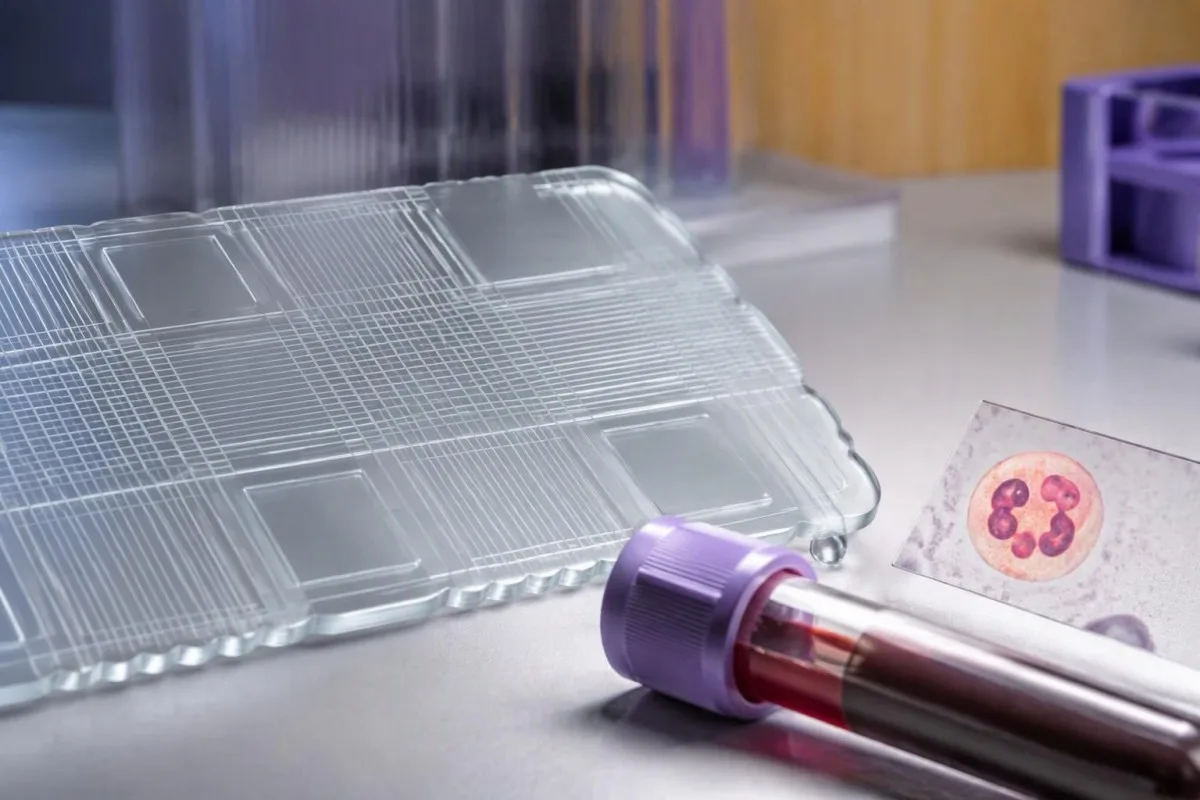
ほとんどの最新の検査室では、ANCを好中球、好中球絶対数、またはNEUT#として直接報告しています。計算が必要な場合は、桿状核球が別途報告されているときはそれも含め、総WBCに好中球の割合を掛けます。たとえば、4,000 cells/µL × 0.40の場合、ANCは40 cells/µLではなく1,600 cells/µLです。.
仮にWBCが6,000 cells/µLで、好中球が15%の場合、総WBCが検査室の基準範囲内に収まっていてもANCは900 cells/µLになります。この食い違いが、 好中球基準範囲ガイド で絶対数と白血球分画に占める割合を区別している理由です。.
小数点表記の誤解は危険につながるおそれがあります。0.8 × 10⁹/Lは800 cells/µLを意味し、8.0 × 10⁹/Lは8,000 cells/µLを意味します。切り抜かれたスクリーンショットや手入力された数値ではなく、元の検査報告書、採血日、単位を確認してください。また、処方に結果を使用する前に、曖昧な点があれば検査室またはモニタリングチームに問い合わせて確認してください。.
| レベル | 範囲 | 意味 |
|---|---|---|
| 一般的な好中球減少症のカットオフ値を上回る | ≥1.5 × 10⁹/L;≥1,500 cells/µL | Usually outside the conventional adult neutropenia definition; this is not a universal laboratory reference interval or dispensing rule. |
| 軽度の好中球減少 | 1.0–1.499 × 10⁹/L; 1,000–1,499 cells/µL | Requires interpretation against baseline, symptoms and the applicable clozapine pathway. |
| 中等度の好中球減少 | 0.5–0.999 × 10⁹/L; 500–999 cells/µL | Often requires urgent prescriber review; treatment actions differ for general and documented Duffy-null pathways. |
| 重度の好中球減少 | <0.5 × 10⁹/L; <500 cells/µL | High-risk finding requiring urgent clinical management, usually hematology involvement and clinician-directed interruption. |
米国の治療経路では、どのANC結果が治療の変更につながりますか?
The US general-population pathway usually permits clozapine initiation at ANC ≥1,500 cells/µL. During treatment, ANC of 1,000–1,499 cells/µL can allow continuation with intensified monitoring; 500–999 cells/µL generally requires interruption when clozapine-induced neutropenia is suspected. These are clinician actions, not instructions for patients to adjust medication.
For mild neutropenia, the US prescribing-information approach commonly increases ANC checks to 3 times weekly until recovery to at least 1,500 cells/µL. Correll et al. (2022), in CNS Drugs, reproduce these management pathways and emphasize that clozapine's substantial psychiatric benefits must be considered alongside hematological risk rather than treating every low result identically.
For ANC of 500–999 cells/µL in the general pathway, clinicians usually arrange hematology input and daily testing initially, with treatment resumption considered after recovery according to the label. A repeat sample can clarify an unexpected result, but a symptomatic patient or a rapidly falling count should not wait 24 hours merely to obtain a more convenient number.
A count below 500 cells/µL enters the severe-neutropenia pathway, where any later rechallenge requires an explicit specialist risk–benefit decision. Total WBC or CRP cannot substitute for ANC; our explanation of WBCとCRPの不一致 shows why apparently reassuring results elsewhere in the panel do not cancel a low neutrophil count.
| レベル | 範囲 | 意味 |
|---|---|---|
| US general-pathway initiation threshold | ANC ≥1,500 cells/µL | Usually eligible for initiation from a hematological perspective, subject to the full prescribing assessment. |
| Mild neutropenia during treatment | ANC 1,000–1,499 cells/µL | Treatment can often continue under prescriber direction with ANC monitoring 3 times weekly. |
| Moderate neutropenia during treatment | ANC 500–999 cells/µL | Usually interrupt if clozapine-induced neutropenia is suspected; obtain hematology advice and intensified monitoring. |
| Severe neutropenia during treatment | ANC <500 cells/µL | Interrupt under urgent clinical management; any future rechallenge needs specialist justification. |
Duffy-null関連の好中球数は判断にどのような影響を及ぼしますか?
Documented Duffy-null-associated neutrophil counts can justify lower clozapine ANC thresholds because a stable lower circulating count does not necessarily indicate impaired immunity. US prescribing information has historically called this the benign ethnic neutropenia, or BEN, pathway; its usual initiation threshold is ANC ≥1,000 cells/µL with at least 2 baseline measurements.
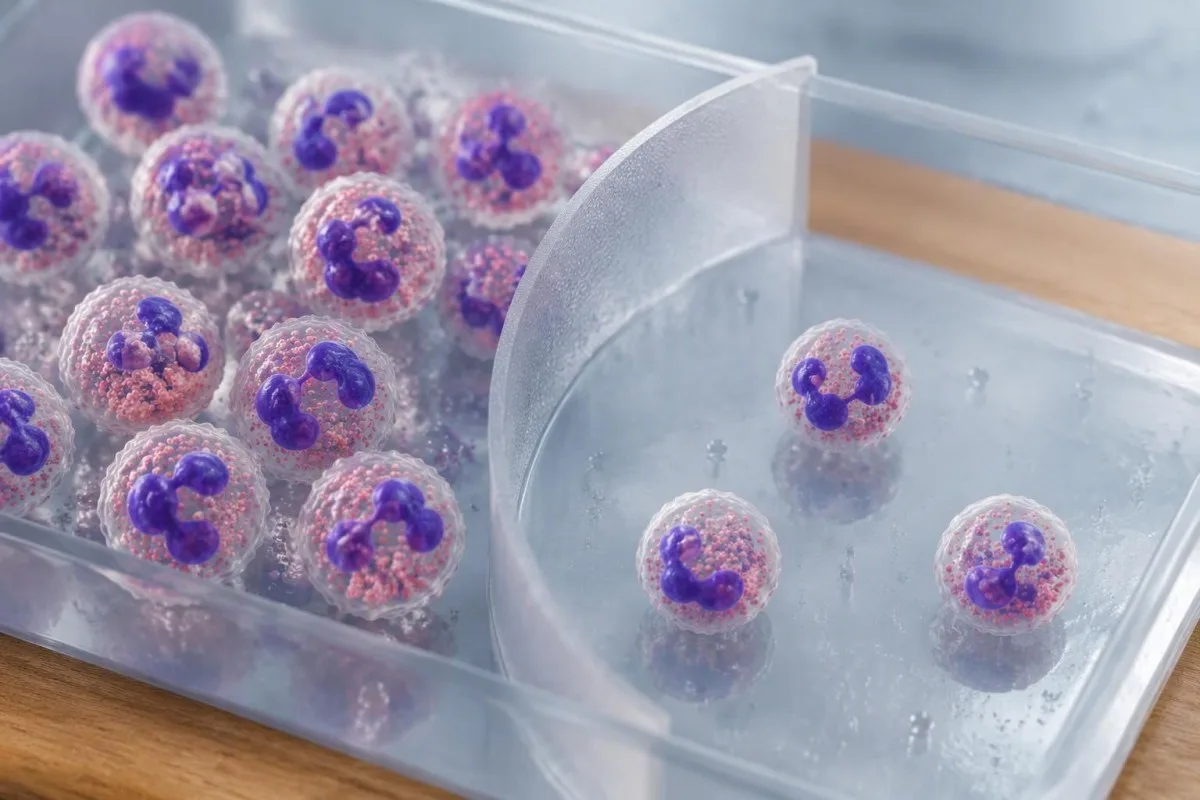
Under the US documented BEN pathway, an ANC of 500–999 cells/µL may permit continued clozapine with hematology consultation and monitoring 3 times weekly. This differs from the general pathway at the same number; the distinction must already be established clinically, not inferred after an alarming result simply to avoid an interruption.
Ancestry is not a diagnostic test for Duffy-null status, and 2 people with similar ancestry may have different baseline ANC patterns. Our Duffy-null count explanation discusses phenotype or genotype evidence, historical counts and assessment for other causes; genetic testing is not universally required, but a clinician-documented explanation is needed for an alternative treatment pathway.
A hypothetical stable baseline of 1,200 cells/µL does not make a new fall to 450 cells/µL harmless: that result meets the severe-neutropenia threshold even in the US BEN pathway. Fever, recurrent unusual infections, anemia or low platelets also weakens the assumption that a low ANC is an isolated constitutional finding and warrants a broader assessment.
クロザピンによる好中球減少症のリスクは、経時的にどの程度ですか?
Clozapine neutropenia risk is concentrated early in treatment, especially during the first 18 weeks to 6 months, but it does not disappear later. Correll et al. (2022) describe agranulocytosis as affecting approximately 1% of treated patients; estimates vary across populations, monitoring systems and definitions, so this is not an individual prediction.

Approximately 1% means roughly 1 in 100 treated people in that broad estimate, not a 1% risk every month and not a 1% risk after every dose. Mild neutropenia is more frequent than agranulocytosis, and studies that combine the two outcomes can make the risk of life-threatening neutrophil depletion appear larger than it actually is.
Early intensive testing reflects the concentration of events during the first 6 months, rather than an assumption that each additional tablet causes predictable cumulative marrow damage. Severe clozapine-associated neutropenia is not reliably prevented by choosing a low dose alone, and a previously normal count cannot guarantee that the next count will remain normal.
After 2 years of stable treatment, the absolute risk is generally much lower than during initiation, which helps explain proposals for less frequent routine testing. Late neutropenia still needs investigation for medication effects, illness and marrow disease; our guide to よくある感染症の検査 explains why symptoms and other cell lines can reveal risks that an ANC-only schedule misses.
REMS後の米国におけるクロザピンのモニタリングスケジュールは?
The US prescribing-information ANC schedule generally remains weekly for 6 months, every 2 weeks for the next 6 months, then monthly. The FDA removed the clozapine REMS on June 13, 2025, ending its enrollment and ANC-reporting requirements; that administrative change did not remove the clinical recommendation to monitor neutrophils.

The FDA's 2025 clozapine REMS removal communication separates access restrictions from safe prescribing: prescribers, pharmacies and patients no longer need to participate in that federal registry. A pharmacy no longer needs the former REMS dispensing authorization, but the prescriber may still require a recent ANC and a local service may still use an electronic safety workflow.
For a hypothetical patient completing 6 months without a concerning ANC event, the usual label pathway moves from weekly to every-2-week monitoring rather than immediately to monthly testing. Neutropenia, a treatment interruption or a relevant medication change can alter that plan; ask which event starts the next monitoring period instead of counting months independently.
Kantesti can help explain a trend across 3 dated ANC reports, but our platform does not determine the next legally or clinically acceptable dispensing date. Our 薬剤安全性トレンドガイド explains why the original collection dates and the prescribing team's schedule must remain attached to any AI-generated summary.
英国のモニタリングサービスで異なるスケジュールが用いられることがあるのはなぜですか?
Traditional UK clozapine monitoring pathways use weekly testing for 18 weeks, every 2 weeks until 1 year, then every 4 weeks. UK dispensing has also depended on product-linked monitoring-service clearance; revised recommendations and local implementation can change the pathway, so the patient's own service must confirm the schedule and action thresholds.

An older UK pathway may classify ANC of 1.5–2.0 × 10⁹/L as amber and below 1.5 × 10⁹/L as red in patients without an approved lower-baseline pathway. Those thresholds are not interchangeable with the US continuation algorithm, and legacy UK systems may also consider total WBC; the relevant service must state which rules it currently applies.
Every 4 weeks means every 28 days, not simply once in each calendar month, so a missed appointment can affect a supply window even when the previous result was satisfactory. A useful baseline testing plan should include who books the sample, who receives it and who contacts the patient if the monitoring service cannot release medication.
Administrative alerts can arise from an overdue sample, an unprocessed sample or a genuinely low count—3 different problems with different solutions. Contact the prescribing team and pharmacy promptly if supply is threatened; do not stretch doses, borrow tablets or assume that a policy change in another country has automatically changed your own monitoring-service rules.
改訂された欧州のANC推奨事項では何が変更されましたか?
Revised European recommendations allow less frequent ANC testing in eligible stable patients: weekly for 18 weeks, monthly through the first year, every 12 weeks after 1 year and annually after 2 years. These longer intervals depend on the specified absence of neutropenia and the locally implemented product information; they are not a universal schedule.
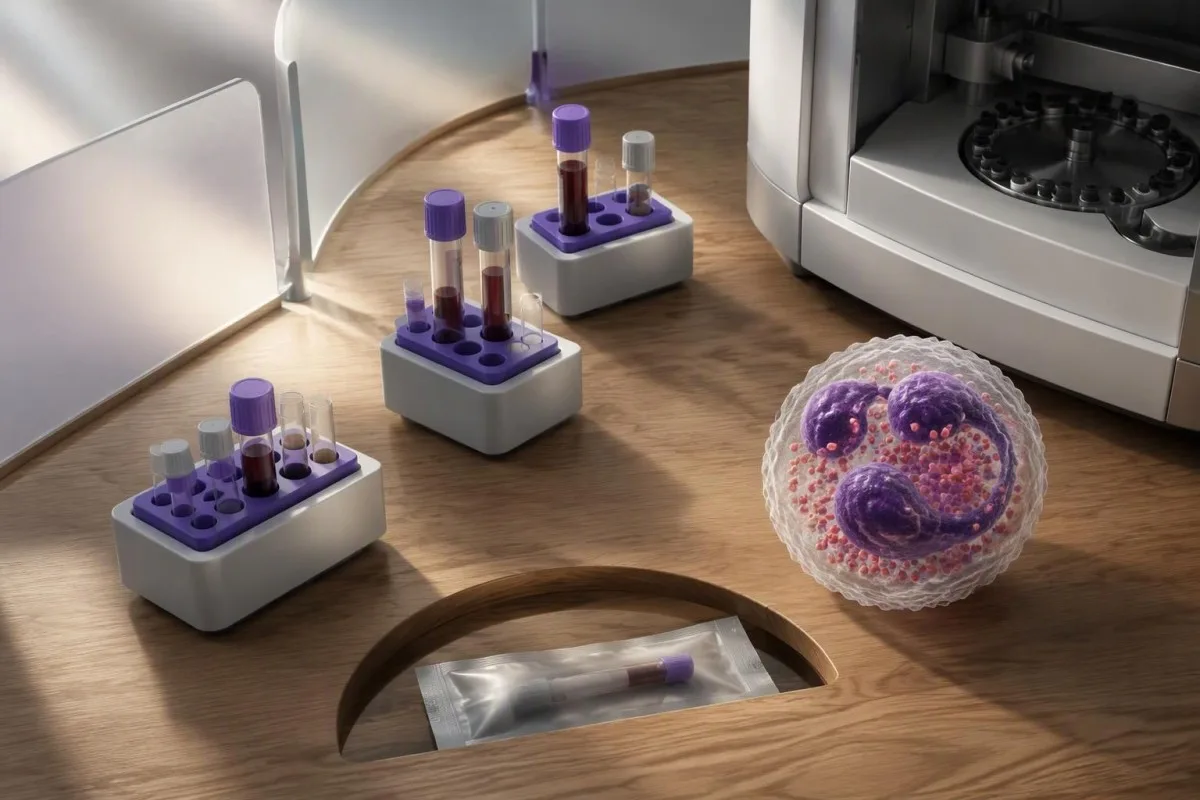
The European Medicines Agency's 2025 communication on revised routine blood count monitoring shifts the principal hematological measure toward ANC rather than combined WBC and ANC surveillance. The revised approach generally uses baseline ANC of at least 1,500 cells/µL, or at least 1,000 cells/µL in an established BEN pathway, while lowering some treatment-interruption thresholds compared with older European systems.
In the revised European approach, ANC below 1,000 cells/µL generally triggers stopping treatment in the standard pathway, whereas below 500 cells/µL is the corresponding threshold for an established BEN pathway. Results above those stopping thresholds can still require intensified surveillance; a hypothetical count of 1,100 cells/µL is not a reason to ignore a new downward trend.
Country authorization, the particular product information and service implementation can differ, even when patients have each taken clozapine for 2 years. Our guide to blood-test timing and changes explains why historical stability matters; obtain written confirmation before assuming that an annual European schedule applies to a UK, US or other national pathway.
予想外のANC低値が出た後、何をすべきですか?
An unexpected low ANC needs prompt prescriber review, confirmation when appropriate and assessment for causes other than clozapine. In the US label pathway, an initial ANC below 1,500 cells/µL is generally confirmed within 24 hours, but severe neutropenia or infection symptoms require immediate management rather than waiting for a routine repeat.
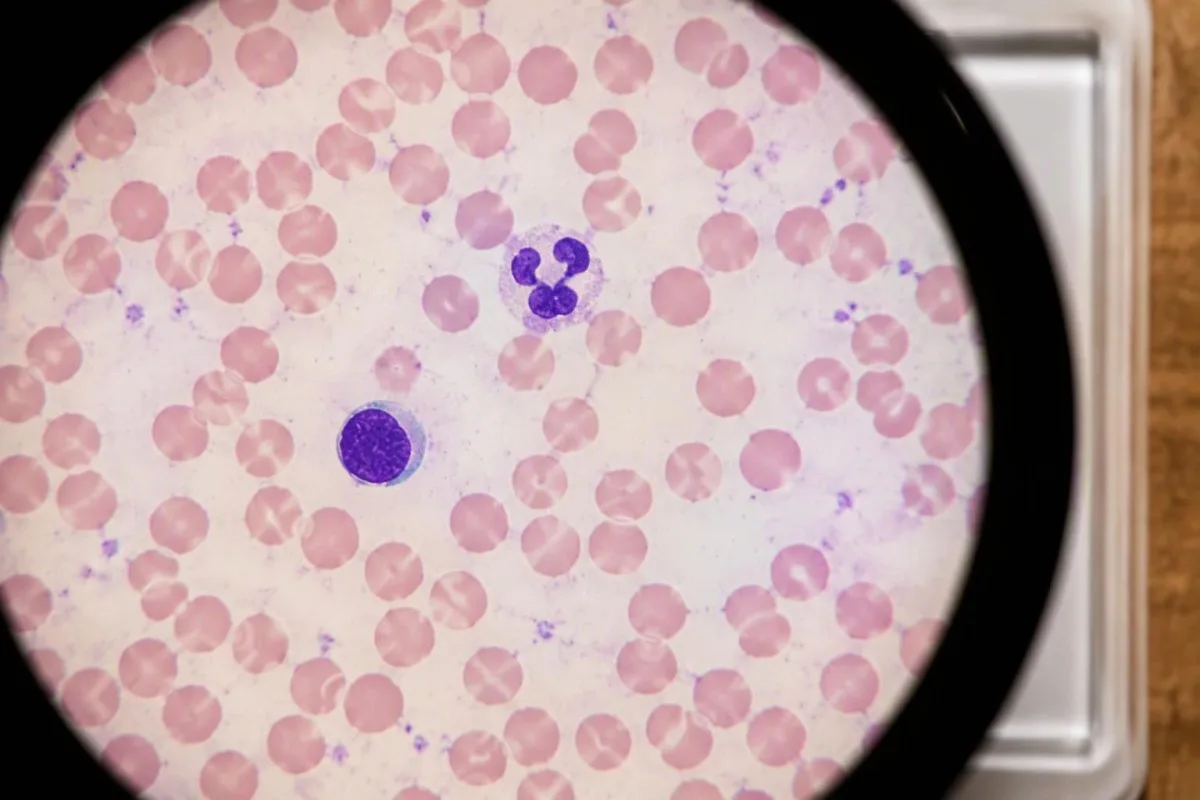
Recent viral illness, other medicines, autoimmune disease and nutritional deficiency can all lower ANC; a count of 900 cells/µL establishes neutropenia but does not establish its cause. Clinicians review the timing of drug exposure and may examine hemoglobin, platelets and a cell sample slide; concurrent abnormalities can justify evaluation for possible marrow disorders.
Kantesti is an AI blood test interpretation platform that can place an ANC of 0.9 × 10⁹/L beside platelet and hemoglobin trends, while leaving causation and medication decisions to clinicians. Our broader 血液学マーカーガイド explains why a normal red-cell result does not erase an isolated neutrophil problem.
Sampling time and temporary physiological variation can affect a borderline result, but there is no safe rule that an afternoon repeat will always normalize an ANC of 1,400 cells/µL. If a clinician requests a repeat at a consistent time, follow that plan without delaying necessary care; exercise, supplements or deliberate timing changes should not be used to manipulate a treatment-clearance result.
どの感染症状があれば緊急の評価が必要ですか?
During clozapine treatment, fever of 38.0°C or higher, new sore throat, mouth sores, shaking chills or sudden marked illness warrants urgent same-day clinical assessment. A known ANC below 500 cells/µL makes possible infection especially urgent. Confusion, breathing difficulty, fainting or rapidly worsening illness requires emergency help, regardless of the last count.
Formal febrile-neutropenia definitions often use a single temperature of at least 38.3°C or at least 38.0°C sustained for 1 hour, together with severe or impending severe neutropenia. Those definitions support clinical classification—not a home instruction to wait an hour; tell the urgent-care team that you take clozapine and provide your last ANC if available.
An ANC of 2,000 cells/µL measured 7 days ago cannot exclude a new fall today, and severe neutropenia can weaken usual local signs such as redness or discharge. Assessment may include an urgent CBC with differential, cultures and examination; our procalcitonin interpretation guide explains why a low infection biomarker cannot independently rule out an early serious infection.
New fever may also signal pneumonia, myocarditis or another illness that raises clozapine concentrations, creating 2 linked safety questions: immune protection and medication toxicity. Call the prescribing team's urgent number immediately for advice about the next dose; if you cannot reach them promptly while significantly unwell, seek urgent care rather than waiting for an app interpretation or routine appointment.
他の薬、喫煙、病気はモニタリングにどう影響しますか?
Other medicines can increase neutropenia risk or change clozapine concentrations, and those are different problems requiring different tests. ANC is measured in cells/µL, whereas clozapine concentration is commonly measured in ng/mL; a normal ANC does not exclude excessive drug exposure, and a therapeutic concentration does not exclude neutropenia.

Carbamazepine is generally avoided with clozapine because of marrow-suppression risk and clinically relevant interactions; concurrent valproate has also been associated with neutropenia in observational studies. A hypothetical ANC decline from 2,600 to 1,300 cells/µL after adding another medicine warrants a complete medication review, not a conclusion that clozapine is necessarily the sole cause; valproate level interpretation addresses the separate issue of drug exposure.
Stopping combustible smoking can raise clozapine concentrations because smoke components—not nicotine itself—induce CYP1A2 metabolism. A person who stops smoking during a 3-day hospital admission may therefore need prescriber-directed concentration monitoring and dose review; our nicotine test explanation clarifies why cotinine alone does not measure the smoke-related enzyme effect.
Kantesti can explain why an ANC of 2,100 cells/µL and a clozapine level of 900 ng/mL describe different risks, but we cannot select a safer dose. Fever, major caffeine changes and interacting medicines such as ciprofloxacin can alter exposure; report new excessive sedation, confusion or muscle jerks promptly, even if the neutrophil result is reassuring.
検査を受け忘れたり、治療を中断したりするとどうなりますか?
A missed ANC appointment can create a supply problem, while a clozapine treatment break can create a separate restarting hazard. After more than 48 hours without clozapine, many protocols require supervised re-titration beginning at 12.5 mg once or twice daily rather than immediate return to the previous dose; exact instructions depend on the prescribing information.
Tolerance to clozapine's blood-pressure effects can be lost quickly, so restarting a previous 300 mg daily regimen after a break may cause profound hypotension or collapse. US prescribing information also specifies reduced restart doses for shorter interruptions; patients should contact the prescribing team after missed doses rather than using a remembered 48-hour rule to decide what to take.
A treatment break does not always reset ANC surveillance to the beginning, because monitoring rules depend on interruption duration and the reason treatment stopped. In the US normal-ANC pathway, interruptions of 30 days or longer generally return patients to initiation-style monitoring; national monitoring services may use different interruption rules, especially after an abnormal count.
After a hypothetical 5-day admission, confirm the last dose, current prescription, latest ANC and who will supervise the next dose before leaving hospital. Our explanation of 退院後の結果について helps organize altered laboratory values, but it cannot reconcile prescriptions or authorize restarting after neutropenia.
ANCのモニタリングでは、クロザピンの安全性について何を把握できませんか?
ANC monitoring does not detect clozapine-related myocarditis, constipation, metabolic complications or excessive drug concentrations. Some initiation protocols add weekly troponin and CRP during the first 4 weeks, while ongoing care assesses bowel function, weight, glucose and lipids. A satisfactory ANC therefore confirms only one part of medication safety.
New chest pain, breathlessness or persistent unexplained tachycardia during the first 4 weeks needs prompt clinical assessment rather than reassurance from a normal ANC. Troponin and CRP can support a myocarditis investigation, but thresholds and screening practices vary; our myocarditis testing explanation describes why laboratory results must be interpreted with symptoms and cardiac evaluation.
Clozapine-related bowel slowing can become dangerous even when stool is still passing, and severe abdominal pain, distension or vomiting requires urgent assessment. Record bowel frequency and stool consistency rather than asking only whether constipation is present; the 便の形状に関するガイド provides a shared description, while a change lasting 48 hours should prompt contact according to the patient's bowel-management plan.
Correll et al. (2022) describe a clozapine plasma reference range of approximately 350–600 ng/mL for many treatment-response decisions, while emphasizing individual variation and adverse effects. That range is not an ANC target or a universal safe-dose boundary; concentration samples usually need defined timing relative to the last dose, whereas routine ANC collection generally does not require a trough sample.
次回のクロザピン診察に向けて、どのような準備をすればよいですか?
Bring the latest ANC, its units, earlier counts and a complete medication list to every clozapine review. Ask which national and service-specific pathway applies, what happens below its thresholds and whom to contact urgently. Keeping at least 3 dated results available helps distinguish a stable baseline from a new decline.

For a hypothetical sequence of 2,400, 1,900 and 1,400 cells/µL, useful questions concern the trend, recent illness, interacting medicines and the required next sample—not simply whether the latest value is red. Also ask who receives results outside office hours and whether the pharmacy needs monitoring-service clearance; these practical details can prevent an avoidable treatment gap.
Kantesti is an AI biomarker interpretation platform that helps translate an ANC of 1.4 × 10⁹/L into an understandable count and a list of clinician questions. Our 技術的・臨床的監督 describes the boundaries of interpretation; it does not establish that an automated answer is a validated clozapine prescribing decision or a substitute for hematology advice.
Kantesti's educational workflow should preserve 3 essentials: the source result, the applicable clinical protocol and the human decision-maker. Our 責任あるAIの原則 explain why urgent symptoms take priority over automated analysis, while our プライバシーとデータに関する情報を確認し、 explains considerations when sharing sensitive psychiatric and laboratory records.
研究出版物とエビデンスの適用範囲
The 2 Kantesti publications listed in the research publication section concern digestive symptoms and women's health, not clozapine ANC thresholds or monitoring schedules. Their Figshare DOIs identify those publications but do not establish peer review or provide evidence for clozapine decisions; the directly relevant medical and regulatory sources are listed separately below.
よくある質問
クロザピンの投与を継続できないANCの低値はどの程度ですか?
The ANC threshold for continuing clozapine depends on the country and the patient's documented baseline pathway. In the US general pathway, ANC of 1,000–1,499 cells/µL can allow continuation with increased monitoring, while 500–999 cells/µL usually requires interruption when clozapine-induced neutropenia is suspected. A documented BEN or Duffy-null-associated pathway can permit continuation at 500–999 cells/µL under specialist supervision. ANC below 500 cells/µL requires urgent clinical management; patients should obtain immediate prescriber instructions rather than change treatment themselves.
クロザピンのREMSが廃止された後も、ANC(絶対好中球数)の血液検査は必要ですか?
はい、米国のクロザピンREMSが廃止されても、ANCモニタリングの臨床上の推奨はなくなっていません。FDAは2025年6月13日に登録制度を廃止し、登録、報告、調剤承認の要件を終了しました。処方情報に記載された検査スケジュールは、通常、最初の6か月は毎週、次の6か月は2週間ごと、その後は毎月のままです。好中球減少症、投与中断、その他関連する臨床的変化があった場合、処方医が追加検査を求めることがあります。.
Why is my clozapine blood test schedule different from someone else's?
クロザピンの血液検査スケジュールは、各国の製品情報、モニタリング体制、治療期間、過去のANC異常が同一ではないため異なります。従来の英国の手順では、18週間は毎週、その後1年までは2週間ごと、以降は4週間ごとに検査を行います。改訂された欧州の推奨では、対象となる状態の安定した患者について、地域での導入状況を条件に、1年後から12週間ごと、2年後から年1回の検査が認められる場合があります。予約を変更する前に、ご自身の処方医療機関に適用されるスケジュールを確認してください。.
クロザピンは、何年も検査結果が正常だった後に好中球減少症を引き起こすことがありますか?
クロザピン関連の好中球減少症は、検査値が何年も正常であった後に発生することがありますが、治療初期のリスクははるかに高くなります。重篤な事象の多くは、最初の18週間から6か月の間に集中しています。2年後に新たな低値がみられた場合も、クロザピン、他の薬剤、感染症、骨髄疾患または自己免疫疾患について評価する必要があります。以前のANCが問題のない値であっても、発熱や急な体調不良が生じた場合は、緊急の評価が必要です。.
クロザピン服用中に発熱した場合は、どうすればよいですか?
クロザピン服用中に38.0°C以上の発熱がある場合は、特に喉の痛み、口内炎、震えるほどの悪寒、または著しい脱力感を伴う場合、当日中に緊急の臨床評価を受ける必要があります。クロザピンを服用していることを医療従事者に伝え、入手できる場合は最新のANC値を提示してください。ANCが500 cells/µL未満と分かっている場合は、感染の可能性について特に緊急の対応が必要です。また、錯乱、呼吸困難、または意識を失って倒れた場合は、救急要請が必要です。次回の定期検査を待ったり、自己判断で服薬を変更したりせず、次の服用について直ちに処方医の指示を受けてください。.
2日間飲み忘れた後、通常のクロザピンの用量を再開してもよいですか?
処方チームの指示なしに、休薬後に通常のクロザピン用量を再開してはいけません。48時間を超えて治療を中断した場合、多くのプロトコルでは、血圧への影響に対する耐性が失われる可能性があるため、12.5 mgを1日1回または2回から開始して再漸増する必要があります。処方情報によっては、より短い中断後にも減量が必要とされています。適切な再開計画とANCのスケジュールは、中断の正確な期間と理由によって異なるため、速やかにチームに連絡してください。.
白血球数が正常なら、クロザピン服用中のANCは安全ということですか?
総白血球数が正常でも、クロザピン治療に適したANCであるとは限りません。たとえば、WBCが6,000 cells/µLで好中球が15%の場合、ANCは900 cells/µLとなります。治療方針の決定には、WBCのみではなく、好中球絶対数、該当するプロトコルおよび臨床的状況を考慮する必要があります。ANCが正常でも、心筋炎、重度の腸管運動低下、またはクロザピン濃度の過度な上昇を除外することはできません。.
血液検査結果の見方を確認しましょう
検査報告書をアップロードすると、KantestiのAIが数秒で各バイオマーカーを平易な言葉で説明します。世界中で200万人以上が利用しています。.
参考文献
- Klein, T., Mitchell, S., & Weber, H. (2026). 断食後の下痢、便中の黒い粒子、消化器ガイド2026。. Kantesti AI医学研究。. 掲載日
- Klein, T., Mitchell, S., & Weber, H. (2026). 女性の健康ガイド:排卵、更年期、ホルモン関連症状。. Kantesti AI医学研究。. 掲載日
- Correll CU et al. (2022). A Guideline and Checklist for Initiating and Managing Clozapine Treatment in Patients with Treatment-Resistant Schizophrenia. CNS Drugs. 掲載日
- US Food and Drug Administration (2025). FDA removes risk evaluation and mitigation strategy (REMS) program for the antipsychotic drug Clozapine. FDA Drug Safety and Availability.
- European Medicines Agency (2025). Clozapine: revised recommendations for routine blood count monitoring. Direct healthcare professional communication.
- 200万以上分析対象の検査
- 127+国
- 100+言語
医療チームについて


E-E-A-T 信頼性シグナル
経験
医師主導による、検査結果解釈ワークフローの臨床レビュー。.
専門知識
臨床的な文脈においてバイオマーカーがどのように振る舞うかに焦点を当てた検査医学。.
権威
Thomas Klein医師による医学的レビュー。Sarah Mitchell医師およびHans Weber教授の協力。.
信頼性
アラームを減らすための明確なフォローアップ経路を備えた、エビデンスに基づく解釈。.





医療免責事項
この記事は教育目的のみを対象としており、医療助言を構成するものではありません。診断や治療の判断を行う際は、必ず有資格の医療提供者にご相談ください。.
公開 · 編集チームにお問い合わせください
Kantesti Ltdが発行。イングランドおよびウェールズで登録、会社番号. 17090423, 、英国ロンドン。.
