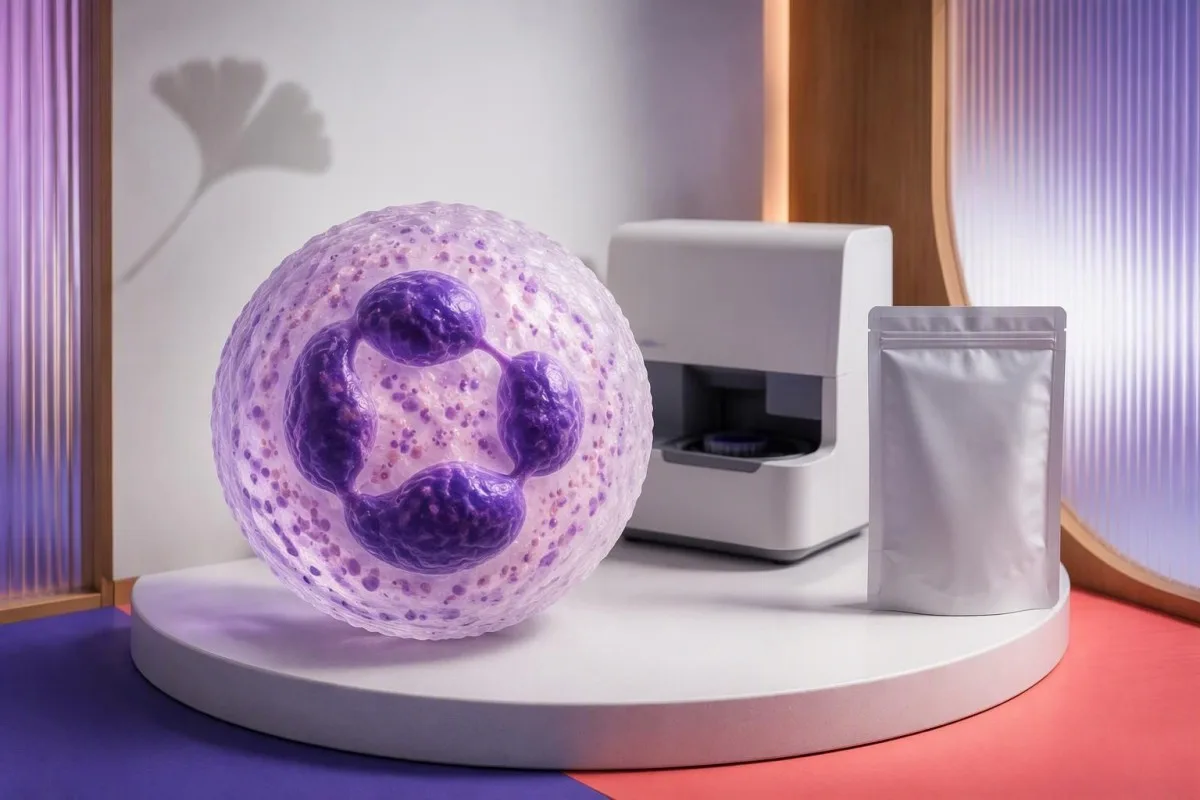
Theo dõi clozapine sử dụng số lượng bạch cầu trung tính tuyệt đối (ANC) để phát hiện tình trạng giảm bạch cầu trung tính nguy hiểm; kết quả thấp có thể dẫn đến xét nghiệm bổ sung, bác sĩ chuyên khoa đánh giá hoặc tạm ngừng điều trị theo chỉ định của bác sĩ. Lịch theo dõi thay đổi tùy quốc gia và giai đoạn điều trị. Sốt, đau họng hoặc đột ngột bị ốm cần được đánh giá khẩn cấp—ngay cả sau khi có kết quả đáng yên tâm. Không tự ý thay đổi clozapine.

Những điểm chính cần ghi nhớ
- Đơn vị ANC: 1.0 × 10⁹/L bằng 1,000 tế bào/µL; hãy kiểm tra đơn vị trước khi so sánh kết quả với các ngưỡng điều trị.
- Ngưỡng chung tại Hoa Kỳ: ANC từ 1,000–1,499 tế bào/µL có thể cho phép tiếp tục điều trị với tần suất theo dõi tăng lên; mức 500–999 tế bào/µL thường dẫn đến tạm ngừng điều trị theo chỉ định của bác sĩ khi nghi ngờ giảm bạch cầu trung tính do clozapine.
- Giảm bạch cầu trung tính nghiêm trọng: ANC dưới 500 tế bào/µL cần được xử trí lâm sàng khẩn cấp, thường là tạm ngừng điều trị và có sự tham gia của chuyên khoa huyết học.
- Số lượng ở người Duffy-null: Tình trạng giảm bạch cầu trung tính liên quan đến Duffy-null đã được ghi nhận có thể là căn cứ áp dụng phác đồ điều trị khác; chỉ riêng nguồn gốc tổ tiên không đủ để xác định người bệnh có đủ điều kiện.
- Lịch tại Hoa Kỳ: Theo thông tin kê đơn, việc theo dõi thường bắt đầu hằng tuần trong 6 tháng, sau đó 2 tuần một lần trong 6 tháng, rồi hằng tháng.
- Thay đổi về mặt hành chính: FDA đã gỡ bỏ REMS đối với clozapine tại Hoa Kỳ vào ngày 13 tháng 6 năm 2025; việc này gỡ bỏ yêu cầu đăng ký, chứ không loại bỏ nhu cầu theo dõi ANC trên lâm sàng.
- Lịch trình quốc tế: Các quy trình truyền thống tại Anh áp dụng xét nghiệm hằng tuần trong 18 tuần, hai tuần một lần cho đến đủ 1 năm, rồi 4 tuần một lần; các khuyến nghị sửa đổi của châu Âu có thể cho phép kéo dài khoảng cách xét nghiệm ở bệnh nhân ổn định đủ điều kiện.
- Triệu chứng cần cấp cứu: Sốt từ 38.0°C trở lên, đau họng mới xuất hiện, loét miệng, rét run hoặc đột ngột ốm nặng rõ rệt cần được đánh giá khẩn cấp trong ngày. Lú lẫn, khó thở hoặc ngã quỵ cần được cấp cứu.
Việc theo dõi clozapine thực sự quyết định điều gì?
Theo dõi clozapine sử dụng kết quả ANC để giúp bác sĩ quyết định liệu có thể tiếp tục điều trị, cần theo dõi sát hơn hay phải tạm ngừng. ANC dưới 500 cells/µL là một phát hiện nghiêm trọng về an toàn, nhưng các quyết định khi số lượng cao hơn phụ thuộc vào quy trình của quốc gia, kết quả trước đây và mức nền đã được ghi nhận của bệnh nhân.

Kết quả ANC không phải là chỉ dẫn kê đơn độc lập: số lượng 1,200 cells/µL có thể cho phép tiếp tục điều trị theo quy trình này nhưng dẫn đến cách xử trí khác theo quy trình khác. Người kê đơn phải xác định đúng quy trình trước khi diễn giải con số; áp dụng ngưỡng của Hoa Kỳ cho cảnh báo từ dịch vụ theo dõi tại Anh có thể gây ra vấn đề cấp phát thuốc có thể tránh được.
Kantesti là máy phân tích xét nghiệm máu AI có thể giải thích ANC 1.2 × 10⁹/L là 1,200 cells/µL, nhưng phần diễn giải của chúng tôi không thể cho phép cấp phát clozapine hay thay thế nhóm kê đơn. Của chúng tôi mô tả sứ mệnh AI y tế rộng hơn, các chứng nhận và phạm vi sản phẩm. Lời hứa thực tiễn rất đơn giản: diễn giải nhanh vẫn phải là diễn giải cẩn thận. xác định tổ chức cung cấp dịch vụ giáo dục đó, chứ không phải một cơ quan đăng ký theo dõi clozapine.
Số lượng giảm cần được lưu ý ngay cả trước khi xuống dưới ngưỡng điều trị: mức giảm giả định từ 4,000 xuống 1,700 cells/µL khác với mức nền lâu dài gần 1,700. Hướng dẫn của chúng tôi về kết quả bạch cầu trung tính giới hạn giải thích biến thiên thông thường, nhưng người dùng clozapine nên xin tư vấn cụ thể về thuốc thay vì tuân theo lịch xét nghiệm lại chung.
Cách đọc đơn vị ANC và tính số lượng này như thế nào?
ANC đo số lượng tuyệt đối bạch cầu trung tính, không phải tỷ lệ của chúng trong số bạch cầu. Phép chuyển đổi là chính xác: 1.0 × 10⁹/L tương đương 1,000 cells/µL. Khoảng tham chiếu của phòng xét nghiệm và ngưỡng điều trị clozapine trả lời những câu hỏi khác nhau, vì vậy kết quả bị đánh dấu bất thường không tự động có nghĩa là phải ngừng điều trị.

Hầu hết các phòng xét nghiệm hiện đại báo cáo trực tiếp ANC, thường dưới tên bạch cầu trung tính, bạch cầu trung tính tuyệt đối hoặc NEUT#. Nếu cần tính, hãy nhân tổng WBC với tỷ lệ bạch cầu trung tính, bao gồm cả bạch cầu đũa nếu được báo cáo riêng; ví dụ, 4,000 cells/µL × 0.40 cho ANC là 1,600 cells/µL, không phải 40 cells/µL.
WBC giả định là 6,000 cells/µL với bạch cầu trung tính ở mức 15% cho ANC là 900 cells/µL, dù tổng WBC có thể nằm trong khoảng tham chiếu của phòng xét nghiệm. Sự khác biệt đó giải thích vì sao hướng dẫn về khoảng tham chiếu bạch cầu trung tính phân biệt số lượng tuyệt đối với tỷ lệ phần trăm trong công thức bạch cầu.
Cách ghi số thập phân có thể gây hiểu lầm nguy hiểm: 0.8 × 10⁹/L nghĩa là 800 cells/µL, trong khi 8.0 × 10⁹/L nghĩa là 8,000 cells/µL. Hãy đối chiếu phiếu xét nghiệm gốc, ngày lấy mẫu và đơn vị—không dựa vào ảnh chụp màn hình bị cắt hoặc con số nhập thủ công—và yêu cầu phòng xét nghiệm hoặc nhóm theo dõi làm rõ mọi điểm mơ hồ trước khi dùng kết quả để kê đơn.
| Mức | Khoảng | Ý nghĩa |
|---|---|---|
| Trên ngưỡng giảm bạch cầu trung tính quy ước | ≥1.5 × 10⁹/L; ≥1,500 cells/µL | Usually outside the conventional adult neutropenia definition; this is not a universal laboratory reference interval or dispensing rule. |
| Giảm bạch cầu trung tính nhẹ | 1.0–1.499 × 10⁹/L; 1,000–1,499 cells/µL | Requires interpretation against baseline, symptoms and the applicable clozapine pathway. |
| Giảm bạch cầu trung tính mức độ trung bình | 0.5–0.999 × 10⁹/L; 500–999 cells/µL | Often requires urgent prescriber review; treatment actions differ for general and documented Duffy-null pathways. |
| Giảm bạch cầu trung tính nặng | <0.5 × 10⁹/L; <500 cells/µL | High-risk finding requiring urgent clinical management, usually hematology involvement and clinician-directed interruption. |
Kết quả ANC nào làm thay đổi điều trị theo phác đồ của Hoa Kỳ?
The US general-population pathway usually permits clozapine initiation at ANC ≥1,500 cells/µL. During treatment, ANC of 1,000–1,499 cells/µL can allow continuation with intensified monitoring; 500–999 cells/µL generally requires interruption when clozapine-induced neutropenia is suspected. These are clinician actions, not instructions for patients to adjust medication.
For mild neutropenia, the US prescribing-information approach commonly increases ANC checks to 3 times weekly until recovery to at least 1,500 cells/µL. Correll et al. (2022), in CNS Drugs, reproduce these management pathways and emphasize that clozapine's substantial psychiatric benefits must be considered alongside hematological risk rather than treating every low result identically.
For ANC of 500–999 cells/µL in the general pathway, clinicians usually arrange hematology input and daily testing initially, with treatment resumption considered after recovery according to the label. A repeat sample can clarify an unexpected result, but a symptomatic patient or a rapidly falling count should not wait 24 hours merely to obtain a more convenient number.
A count below 500 cells/µL enters the severe-neutropenia pathway, where any later rechallenge requires an explicit specialist risk–benefit decision. Total WBC or CRP cannot substitute for ANC; our explanation of sự bất đồng giữa WBC và CRP shows why apparently reassuring results elsewhere in the panel do not cancel a low neutrophil count.
| Mức | Khoảng | Ý nghĩa |
|---|---|---|
| US general-pathway initiation threshold | ANC ≥1,500 cells/µL | Usually eligible for initiation from a hematological perspective, subject to the full prescribing assessment. |
| Mild neutropenia during treatment | ANC 1,000–1,499 cells/µL | Treatment can often continue under prescriber direction with ANC monitoring 3 times weekly. |
| Moderate neutropenia during treatment | ANC 500–999 cells/µL | Usually interrupt if clozapine-induced neutropenia is suspected; obtain hematology advice and intensified monitoring. |
| Severe neutropenia during treatment | ANC <500 cells/µL | Interrupt under urgent clinical management; any future rechallenge needs specialist justification. |
Số lượng liên quan đến Duffy-null làm thay đổi các quyết định như thế nào?
Documented Duffy-null-associated neutrophil counts can justify lower clozapine ANC thresholds because a stable lower circulating count does not necessarily indicate impaired immunity. US prescribing information has historically called this the benign ethnic neutropenia, or BEN, pathway; its usual initiation threshold is ANC ≥1,000 cells/µL with at least 2 baseline measurements.
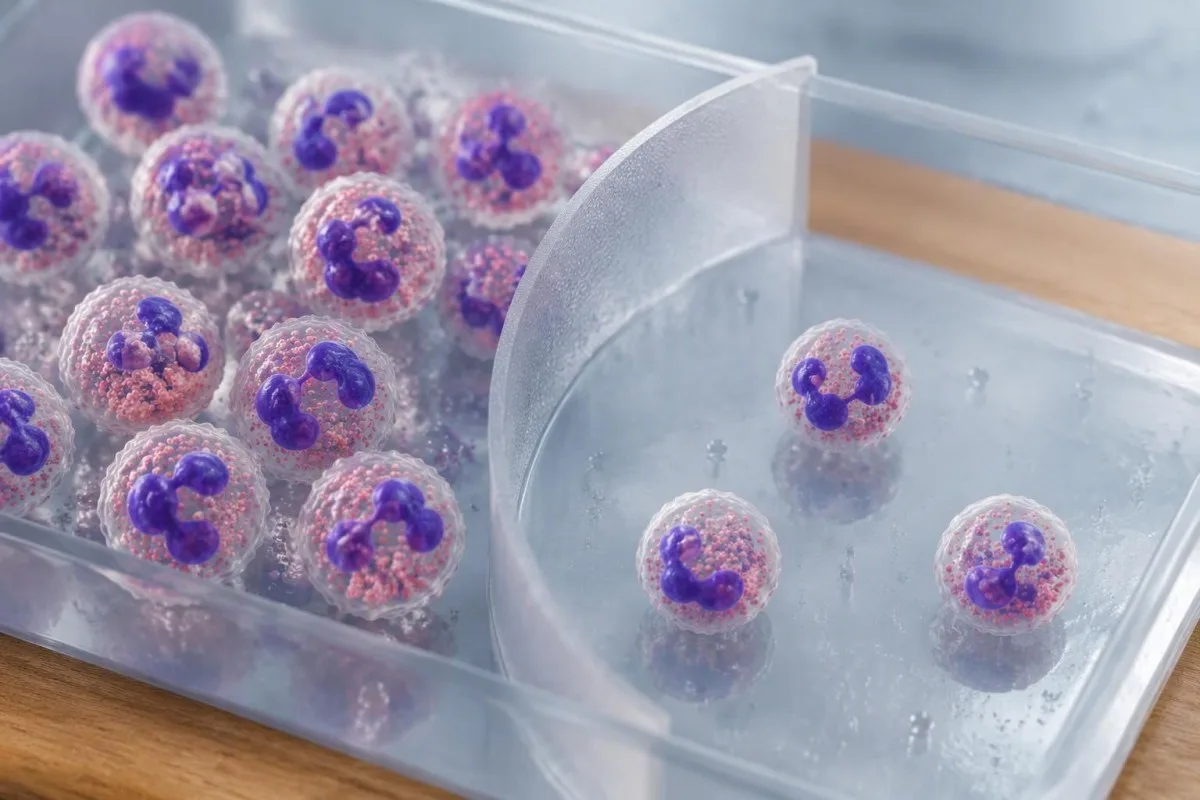
Under the US documented BEN pathway, an ANC of 500–999 cells/µL may permit continued clozapine with hematology consultation and monitoring 3 times weekly. This differs from the general pathway at the same number; the distinction must already be established clinically, not inferred after an alarming result simply to avoid an interruption.
Ancestry is not a diagnostic test for Duffy-null status, and 2 people with similar ancestry may have different baseline ANC patterns. Our Duffy-null count explanation discusses phenotype or genotype evidence, historical counts and assessment for other causes; genetic testing is not universally required, but a clinician-documented explanation is needed for an alternative treatment pathway.
A hypothetical stable baseline of 1,200 cells/µL does not make a new fall to 450 cells/µL harmless: that result meets the severe-neutropenia threshold even in the US BEN pathway. Fever, recurrent unusual infections, anemia or low platelets also weakens the assumption that a low ANC is an isolated constitutional finding and warrants a broader assessment.
Nguy cơ giảm bạch cầu trung tính do clozapine tăng theo thời gian đến mức nào?
Clozapine neutropenia risk is concentrated early in treatment, especially during the first 18 weeks to 6 months, but it does not disappear later. Correll et al. (2022) describe agranulocytosis as affecting approximately 1% of treated patients; estimates vary across populations, monitoring systems and definitions, so this is not an individual prediction.

Approximately 1% means roughly 1 in 100 treated people in that broad estimate, not a 1% risk every month and not a 1% risk after every dose. Mild neutropenia is more frequent than agranulocytosis, and studies that combine the two outcomes can make the risk of life-threatening neutrophil depletion appear larger than it actually is.
Early intensive testing reflects the concentration of events during the first 6 months, rather than an assumption that each additional tablet causes predictable cumulative marrow damage. Severe clozapine-associated neutropenia is not reliably prevented by choosing a low dose alone, and a previously normal count cannot guarantee that the next count will remain normal.
After 2 years of stable treatment, the absolute risk is generally much lower than during initiation, which helps explain proposals for less frequent routine testing. Late neutropenia still needs investigation for medication effects, illness and marrow disease; our guide to xét nghiệm các bệnh nhiễm trùng thường gặp explains why symptoms and other cell lines can reveal risks that an ANC-only schedule misses.
Lịch theo dõi clozapine tại Hoa Kỳ sau khi kết thúc REMS là gì?
The US prescribing-information ANC schedule generally remains weekly for 6 months, every 2 weeks for the next 6 months, then monthly. The FDA removed the clozapine REMS on June 13, 2025, ending its enrollment and ANC-reporting requirements; that administrative change did not remove the clinical recommendation to monitor neutrophils.

The FDA's 2025 clozapine REMS removal communication separates access restrictions from safe prescribing: prescribers, pharmacies and patients no longer need to participate in that federal registry. A pharmacy no longer needs the former REMS dispensing authorization, but the prescriber may still require a recent ANC and a local service may still use an electronic safety workflow.
For a hypothetical patient completing 6 months without a concerning ANC event, the usual label pathway moves from weekly to every-2-week monitoring rather than immediately to monthly testing. Neutropenia, a treatment interruption or a relevant medication change can alter that plan; ask which event starts the next monitoring period instead of counting months independently.
Kantesti can help explain a trend across 3 dated ANC reports, but our platform does not determine the next legally or clinically acceptable dispensing date. Our hướng dẫn xu hướng an toàn thuốc explains why the original collection dates and the prescribing team's schedule must remain attached to any AI-generated summary.
Vì sao các dịch vụ theo dõi tại Vương quốc Anh có thể áp dụng lịch khác?
Traditional UK clozapine monitoring pathways use weekly testing for 18 weeks, every 2 weeks until 1 year, then every 4 weeks. UK dispensing has also depended on product-linked monitoring-service clearance; revised recommendations and local implementation can change the pathway, so the patient's own service must confirm the schedule and action thresholds.

An older UK pathway may classify ANC of 1.5–2.0 × 10⁹/L as amber and below 1.5 × 10⁹/L as red in patients without an approved lower-baseline pathway. Those thresholds are not interchangeable with the US continuation algorithm, and legacy UK systems may also consider total WBC; the relevant service must state which rules it currently applies.
Every 4 weeks means every 28 days, not simply once in each calendar month, so a missed appointment can affect a supply window even when the previous result was satisfactory. A useful baseline testing plan should include who books the sample, who receives it and who contacts the patient if the monitoring service cannot release medication.
Administrative alerts can arise from an overdue sample, an unprocessed sample or a genuinely low count—3 different problems with different solutions. Contact the prescribing team and pharmacy promptly if supply is threatened; do not stretch doses, borrow tablets or assume that a policy change in another country has automatically changed your own monitoring-service rules.
Các khuyến nghị ANC sửa đổi của châu Âu có thay đổi gì?
Revised European recommendations allow less frequent ANC testing in eligible stable patients: weekly for 18 weeks, monthly through the first year, every 12 weeks after 1 year and annually after 2 years. These longer intervals depend on the specified absence of neutropenia and the locally implemented product information; they are not a universal schedule.
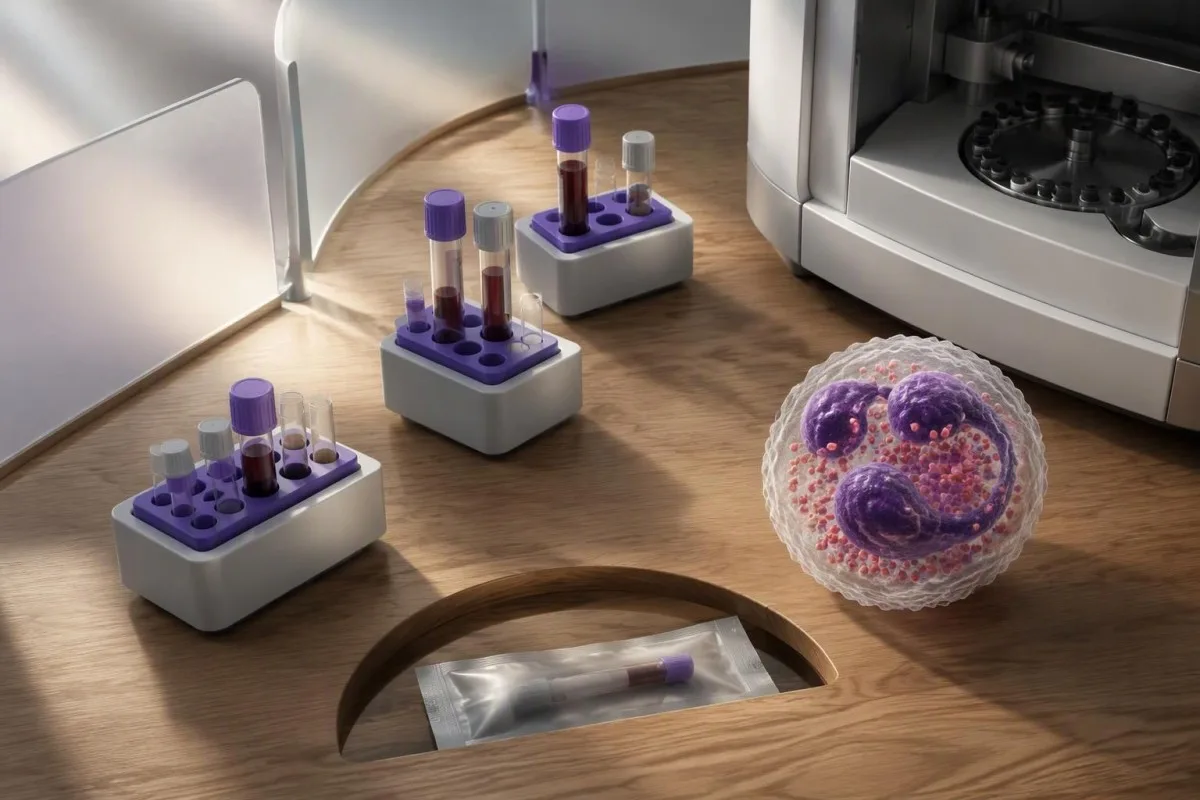
The European Medicines Agency's 2025 communication on revised routine blood count monitoring shifts the principal hematological measure toward ANC rather than combined WBC and ANC surveillance. The revised approach generally uses baseline ANC of at least 1,500 cells/µL, or at least 1,000 cells/µL in an established BEN pathway, while lowering some treatment-interruption thresholds compared with older European systems.
In the revised European approach, ANC below 1,000 cells/µL generally triggers stopping treatment in the standard pathway, whereas below 500 cells/µL is the corresponding threshold for an established BEN pathway. Results above those stopping thresholds can still require intensified surveillance; a hypothetical count of 1,100 cells/µL is not a reason to ignore a new downward trend.
Country authorization, the particular product information and service implementation can differ, even when patients have each taken clozapine for 2 years. Our guide to blood-test timing and changes explains why historical stability matters; obtain written confirmation before assuming that an annual European schedule applies to a UK, US or other national pathway.
Cần làm gì sau khi ANC thấp bất ngờ?
An unexpected low ANC needs prompt prescriber review, confirmation when appropriate and assessment for causes other than clozapine. In the US label pathway, an initial ANC below 1,500 cells/µL is generally confirmed within 24 hours, but severe neutropenia or infection symptoms require immediate management rather than waiting for a routine repeat.
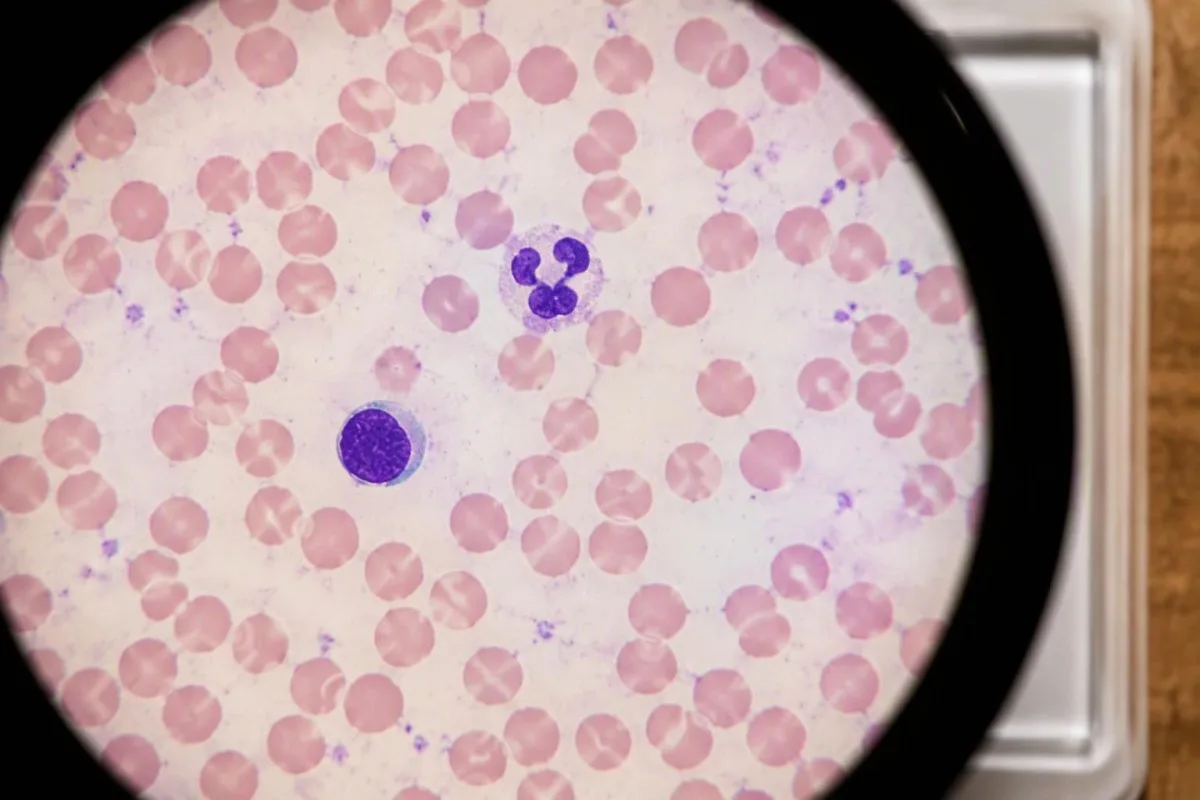
Recent viral illness, other medicines, autoimmune disease and nutritional deficiency can all lower ANC; a count of 900 cells/µL establishes neutropenia but does not establish its cause. Clinicians review the timing of drug exposure and may examine hemoglobin, platelets and a cell sample slide; concurrent abnormalities can justify evaluation for possible marrow disorders.
Kantesti is an AI blood test interpretation platform that can place an ANC of 0.9 × 10⁹/L beside platelet and hemoglobin trends, while leaving causation and medication decisions to clinicians. Our broader hướng dẫn marker huyết học explains why a normal red-cell result does not erase an isolated neutrophil problem.
Sampling time and temporary physiological variation can affect a borderline result, but there is no safe rule that an afternoon repeat will always normalize an ANC of 1,400 cells/µL. If a clinician requests a repeat at a consistent time, follow that plan without delaying necessary care; exercise, supplements or deliberate timing changes should not be used to manipulate a treatment-clearance result.
Triệu chứng nhiễm trùng nào cần được đánh giá khẩn cấp?
During clozapine treatment, fever of 38.0°C or higher, new sore throat, mouth sores, shaking chills or sudden marked illness warrants urgent same-day clinical assessment. A known ANC below 500 cells/µL makes possible infection especially urgent. Confusion, breathing difficulty, fainting or rapidly worsening illness requires emergency help, regardless of the last count.

Formal febrile-neutropenia definitions often use a single temperature of at least 38.3°C or at least 38.0°C sustained for 1 hour, together with severe or impending severe neutropenia. Those definitions support clinical classification—not a home instruction to wait an hour; tell the urgent-care team that you take clozapine and provide your last ANC if available.
An ANC of 2,000 cells/µL measured 7 days ago cannot exclude a new fall today, and severe neutropenia can weaken usual local signs such as redness or discharge. Assessment may include an urgent CBC with differential, cultures and examination; our procalcitonin interpretation guide explains why a low infection biomarker cannot independently rule out an early serious infection.
New fever may also signal pneumonia, myocarditis or another illness that raises clozapine concentrations, creating 2 linked safety questions: immune protection and medication toxicity. Call the prescribing team's urgent number immediately for advice about the next dose; if you cannot reach them promptly while significantly unwell, seek urgent care rather than waiting for an app interpretation or routine appointment.
Các thuốc khác, hút thuốc và tình trạng bệnh ảnh hưởng đến việc theo dõi như thế nào?
Other medicines can increase neutropenia risk or change clozapine concentrations, and those are different problems requiring different tests. ANC is measured in cells/µL, whereas clozapine concentration is commonly measured in ng/mL; a normal ANC does not exclude excessive drug exposure, and a therapeutic concentration does not exclude neutropenia.

Carbamazepine is generally avoided with clozapine because of marrow-suppression risk and clinically relevant interactions; concurrent valproate has also been associated with neutropenia in observational studies. A hypothetical ANC decline from 2,600 to 1,300 cells/µL after adding another medicine warrants a complete medication review, not a conclusion that clozapine is necessarily the sole cause; valproate level interpretation addresses the separate issue of drug exposure.
Stopping combustible smoking can raise clozapine concentrations because smoke components—not nicotine itself—induce CYP1A2 metabolism. A person who stops smoking during a 3-day hospital admission may therefore need prescriber-directed concentration monitoring and dose review; our nicotine test explanation clarifies why cotinine alone does not measure the smoke-related enzyme effect.
Kantesti can explain why an ANC of 2,100 cells/µL and a clozapine level of 900 ng/mL describe different risks, but we cannot select a safer dose. Fever, major caffeine changes and interacting medicines such as ciprofloxacin can alter exposure; report new excessive sedation, confusion or muscle jerks promptly, even if the neutrophil result is reassuring.
Điều gì xảy ra sau khi bỏ lỡ xét nghiệm hoặc gián đoạn điều trị?
A missed ANC appointment can create a supply problem, while a clozapine treatment break can create a separate restarting hazard. After more than 48 hours without clozapine, many protocols require supervised re-titration beginning at 12.5 mg once or twice daily rather than immediate return to the previous dose; exact instructions depend on the prescribing information.
Tolerance to clozapine's blood-pressure effects can be lost quickly, so restarting a previous 300 mg daily regimen after a break may cause profound hypotension or collapse. US prescribing information also specifies reduced restart doses for shorter interruptions; patients should contact the prescribing team after missed doses rather than using a remembered 48-hour rule to decide what to take.
A treatment break does not always reset ANC surveillance to the beginning, because monitoring rules depend on interruption duration and the reason treatment stopped. In the US normal-ANC pathway, interruptions of 30 days or longer generally return patients to initiation-style monitoring; national monitoring services may use different interruption rules, especially after an abnormal count.
After a hypothetical 5-day admission, confirm the last dose, current prescription, latest ANC and who will supervise the next dose before leaving hospital. Our explanation of kết quả sau khi xuất viện helps organize altered laboratory values, but it cannot reconcile prescriptions or authorize restarting after neutropenia.
Việc theo dõi ANC không phát hiện được khía cạnh nào về độ an toàn của clozapine?
ANC monitoring does not detect clozapine-related myocarditis, constipation, metabolic complications or excessive drug concentrations. Some initiation protocols add weekly troponin and CRP during the first 4 weeks, while ongoing care assesses bowel function, weight, glucose and lipids. A satisfactory ANC therefore confirms only one part of medication safety.

New chest pain, breathlessness or persistent unexplained tachycardia during the first 4 weeks needs prompt clinical assessment rather than reassurance from a normal ANC. Troponin and CRP can support a myocarditis investigation, but thresholds and screening practices vary; our myocarditis testing explanation describes why laboratory results must be interpreted with symptoms and cardiac evaluation.
Clozapine-related bowel slowing can become dangerous even when stool is still passing, and severe abdominal pain, distension or vomiting requires urgent assessment. Record bowel frequency and stool consistency rather than asking only whether constipation is present; the độ đặc của phân provides a shared description, while a change lasting 48 hours should prompt contact according to the patient's bowel-management plan.
Correll et al. (2022) describe a clozapine plasma reference range of approximately 350–600 ng/mL for many treatment-response decisions, while emphasizing individual variation and adverse effects. That range is not an ANC target or a universal safe-dose boundary; concentration samples usually need defined timing relative to the last dose, whereas routine ANC collection generally does not require a trough sample.
Bạn nên chuẩn bị như thế nào cho lần tái khám clozapine tiếp theo?
Bring the latest ANC, its units, earlier counts and a complete medication list to every clozapine review. Ask which national and service-specific pathway applies, what happens below its thresholds and whom to contact urgently. Keeping at least 3 dated results available helps distinguish a stable baseline from a new decline.

For a hypothetical sequence of 2,400, 1,900 and 1,400 cells/µL, useful questions concern the trend, recent illness, interacting medicines and the required next sample—not simply whether the latest value is red. Also ask who receives results outside office hours and whether the pharmacy needs monitoring-service clearance; these practical details can prevent an avoidable treatment gap.
Kantesti is an AI biomarker interpretation platform that helps translate an ANC of 1.4 × 10⁹/L into an understandable count and a list of clinician questions. Our giám sát kỹ thuật và lâm sàng describes the boundaries of interpretation; it does not establish that an automated answer is a validated clozapine prescribing decision or a substitute for hematology advice.
Kantesti's educational workflow should preserve 3 essentials: the source result, the applicable clinical protocol and the human decision-maker. Our nguyên tắc AI có trách nhiệm explain why urgent symptoms take priority over automated analysis, while our thông tin về quyền riêng tư và dữ liệu explains considerations when sharing sensitive psychiatric and laboratory records.
Các ấn phẩm nghiên cứu và giới hạn của bằng chứng
The 2 Kantesti publications listed in the research publication section concern digestive symptoms and women's health, not clozapine ANC thresholds or monitoring schedules. Their Figshare DOIs identify those publications but do not establish peer review or provide evidence for clozapine decisions; the directly relevant medical and regulatory sources are listed separately below.
Câu hỏi thường gặp
0 ANC bao nhiêu là quá thấp để tiếp tục dùng clozapine?
The ANC threshold for continuing clozapine depends on the country and the patient's documented baseline pathway. In the US general pathway, ANC of 1,000–1,499 cells/µL can allow continuation with increased monitoring, while 500–999 cells/µL usually requires interruption when clozapine-induced neutropenia is suspected. A documented BEN or Duffy-null-associated pathway can permit continuation at 500–999 cells/µL under specialist supervision. ANC below 500 cells/µL requires urgent clinical management; patients should obtain immediate prescriber instructions rather than change treatment themselves.
Tôi vẫn cần xét nghiệm máu ANC sau khi chương trình REMS về clozapine bị bãi bỏ chứ?
0 Có, việc loại bỏ chương trình REMS clozapine của Hoa Kỳ không loại bỏ khuyến nghị lâm sàng về theo dõi ANC. FDA đã loại bỏ sổ đăng ký vào ngày 13 tháng 6 năm 2025, chấm dứt các yêu cầu về đăng ký, báo cáo và cấp phép cấp phát thuốc. Lịch theo dõi trong thông tin kê đơn nhìn chung vẫn là hằng tuần trong 6 tháng, 2 tuần một lần trong 6 tháng tiếp theo, sau đó hằng tháng. Bác sĩ kê đơn có thể yêu cầu xét nghiệm bổ sung sau khi bị giảm bạch cầu trung tính, gián đoạn điều trị hoặc có thay đổi lâm sàng liên quan khác.
Why is my clozapine blood test schedule different from someone else's?
0 Clozapine: lịch xét nghiệm máu khác nhau do thông tin sản phẩm quốc gia, dịch vụ theo dõi, thời gian điều trị và các biến cố ANC trước đây không giống nhau. Các phác đồ truyền thống tại Vương quốc Anh sử dụng xét nghiệm hàng tuần trong 18 tuần, hai tuần một lần cho đến 1 năm và sau đó 4 tuần một lần. Các khuyến nghị sửa đổi của châu Âu có thể cho phép xét nghiệm mỗi 12 tuần sau 1 năm và hàng năm sau 2 năm ở những bệnh nhân ổn định đủ điều kiện, tùy thuộc vào việc triển khai tại địa phương. Hãy yêu cầu đơn vị kê đơn của bạn xác nhận lịch áp dụng trước khi thay đổi bất kỳ lịch hẹn nào.
Clozapin có thể gây giảm bạch cầu trung tính sau nhiều năm có kết quả bình thường không?
0 Giảm bạch cầu trung tính liên quan đến clozapine có thể xảy ra sau nhiều năm có kết quả bình thường, mặc dù nguy cơ cao hơn nhiều trong giai đoạn đầu điều trị. 18 tuần đến 6 tháng đầu chiếm phần lớn các biến cố nghiêm trọng. Số lượng bạch cầu thấp mới xuất hiện sau 2 năm vẫn cần được đánh giá về clozapine, các thuốc khác, nhiễm trùng và tình trạng ở tủy xương hoặc tự miễn. Chỉ số ANC trước đây đáng yên tâm không loại bỏ nhu cầu đánh giá khẩn cấp khi xuất hiện sốt hoặc bệnh đột ngột.
Tôi nên làm gì nếu bị sốt khi đang dùng clozapine?
Sốt từ 38,0°C trở lên khi đang dùng clozapine cần được đánh giá lâm sàng khẩn cấp trong ngày, đặc biệt nếu kèm đau họng, loét miệng, rét run hoặc yếu mệt rõ rệt. Hãy cho nhân viên y tế biết bạn đang dùng clozapine và cung cấp kết quả ANC gần nhất nếu có. ANC đã biết dưới 500 tế bào/µL khiến khả năng nhiễm trùng càng cần được xử trí khẩn cấp; lú lẫn, khó thở hoặc ngã quỵ cần được cấp cứu. Hãy hỏi ý kiến người kê đơn ngay về liều tiếp theo thay vì chờ đến lần xét nghiệm định kỳ kế tiếp hoặc tự ý thay đổi thuốc.
Tôi có thể dùng lại liều clozapine thông thường sau khi bỏ lỡ hai ngày không?
Bạn không nên dùng lại liều clozapine thông thường sau khi gián đoạn điều trị nếu chưa có hướng dẫn từ nhóm kê đơn. Sau hơn 48 giờ không điều trị, nhiều phác đồ yêu cầu tăng liều lại từ đầu, bắt đầu với 12.5 mg một hoặc hai lần mỗi ngày, vì khả năng dung nạp các ảnh hưởng lên huyết áp có thể bị mất. Một số thông tin kê đơn cũng yêu cầu giảm liều sau những lần gián đoạn ngắn hơn. Hãy liên hệ ngay với nhóm điều trị, vì kế hoạch dùng lại thuốc phù hợp và lịch xét nghiệm ANC phụ thuộc vào thời gian chính xác và lý do gián đoạn.
Số lượng bạch cầu bình thường có nghĩa là chỉ số ANC khi dùng clozapine của tôi an toàn không?
Tổng số lượng bạch cầu bình thường không đảm bảo ANC đạt yêu cầu để điều trị bằng clozapine. Ví dụ, WBC 6.000 tế bào/µL với 15% bạch cầu trung tính tạo ra ANC 900 tế bào/µL. Các quyết định điều trị cần dựa vào số lượng bạch cầu trung tính tuyệt đối, phác đồ áp dụng và bối cảnh lâm sàng, chứ không chỉ dựa vào WBC. ANC bình thường cũng không thể loại trừ viêm cơ tim, giảm nhu động ruột nghiêm trọng hoặc nồng độ clozapine quá cao.
Tìm hiểu cách đọc kết quả xét nghiệm máu của bạn
Tải lên báo cáo xét nghiệm của bạn và AI của Kantesti sẽ giải thích từng dấu ấn sinh học bằng ngôn ngữ dễ hiểu chỉ trong vài giây. Được hơn 2 triệu người trên toàn thế giới sử dụng.
Tài liệu tham khảo
- Klein, T., Mitchell, S., & Weber, H. (2026). Tiêu chảy sau khi nhịn ăn, đốm đen trong phân & Hướng dẫn tiêu hóa 2026. Nghiên cứu y khoa của Kantesti AI. DOI
- Klein, T., Mitchell, S., & Weber, H. (2026). Cẩm nang Sức khỏe Phụ nữ: Rụng trứng, Mãn kinh và Các triệu chứng nội tiết tố. Nghiên cứu y khoa của Kantesti AI. DOI
- Correll CU et al. (2022). A Guideline and Checklist for Initiating and Managing Clozapine Treatment in Patients with Treatment-Resistant Schizophrenia. CNS Drugs. DOI
- US Food and Drug Administration (2025). FDA removes risk evaluation and mitigation strategy (REMS) program for the antipsychotic drug Clozapine. FDA Drug Safety and Availability.
- European Medicines Agency (2025). Clozapine: revised recommendations for routine blood count monitoring. Direct healthcare professional communication.
- 2 triệu+Các xét nghiệm được phân tích
- 127+Các quốc gia
- 100+Ngôn ngữ
Về đội ngũ y tế


Tín hiệu tin cậy E-E-A-T
Kinh nghiệm
Đánh giá lâm sàng do bác sĩ phụ trách đối với quy trình diễn giải kết quả xét nghiệm.
Chuyên môn
Tập trung vào y học xét nghiệm: cách các chỉ dấu sinh học (biomarker) hoạt động trong bối cảnh lâm sàng.
Tính uy quyền
Được Tiến sĩ Thomas Klein đánh giá về mặt y khoa, với sự đóng góp của Tiến sĩ Sarah Mitchell và Giáo sư, Tiến sĩ Hans Weber.
Độ tin cậy
Diễn giải dựa trên bằng chứng, kèm các lộ trình theo dõi rõ ràng để giảm mức độ báo động.





Tuyên bố miễn trừ trách nhiệm y tế
Bài viết này chỉ nhằm mục đích giáo dục và không cấu thành lời khuyên y tế. Luôn tham khảo ý kiến của nhà cung cấp dịch vụ chăm sóc sức khỏe đủ năng lực để đưa ra quyết định chẩn đoán và điều trị.
Đã xuất bản · Liên hệ với ban biên tập
Xuất bản bởi Kantesti Ltd, đăng ký tại Anh và xứ Wales, số công ty. 17090423, London, Vương quốc Anh.
