Клозапин мониторингі қауіпті нейтропенияны анықтау үшін нейтрофилдердің абсолюттік санын (ANC) пайдаланады; төмен көрсеткіштер қосымша тексеруге, маманның бағалауына немесе дәрігердің нұсқауы бойынша емді уақытша тоқтатуға себеп болуы мүмкін. Тексеру кестесі елге және емдеу кезеңіне қарай өзгереді. Нәтиже қалыпты болса да, қызба, тамақтың ауыруы немесе кенеттен сырқаттану шұғыл бағалауды қажет етеді. Клозапинді қабылдауды өз бетіңізше өзгертпеңіз.

Негізгі тұжырымдар
- ANC өлшем бірліктері: 1.0 × 10⁹/L 1,000 жасуша/µL-ге тең; нәтижелерді емдеу шектерімен салыстырмас бұрын өлшем бірліктерін тексеріңіз.
- АҚШ-тағы жалпы шекті мәндер: ANC 1,000–1,499 жасуша/µL болса, мониторингті жиілете отырып емді жалғастыруға болады; 500–999 жасуша/µL көрсеткіші клозапиннен туындаған нейтропенияға күдік болғанда, әдетте дәрігердің нұсқауы бойынша емді уақытша тоқтатуға себеп болады.
- Ауыр нейтропения: ANC 500 жасуша/µL-ден төмен болса, шұғыл клиникалық басқару қажет; әдетте ем уақытша тоқтатылып, гематолог тартылады.
- Duffy-null көрсеткіштері: Құжатпен расталған Duffy-null-ассоциацияланған нейтрофилдер саны емдеудің басқа алгоритмін қолдануға негіз бола алады; адамның шыққан тегі ғана талаптарға сәйкестігін анықтамайды.
- АҚШ-тағы кесте: Тағайындау жөніндегі ақпаратта мониторинг әдетте алғашқы 6 айда апта сайын, кейінгі 6 айда әр 2 апта сайын, одан соң ай сайын жүргізіледі.
- Әкімшілік өзгерістер: FDA 2025 жылғы 13 маусымда АҚШ-тағы clozapine REMS бағдарламасын алып тастады; бұл тіркеу талаптарын жойды, бірақ ANC мониторингінің клиникалық қажеттілігін жойған жоқ.
- Халықаралық кестелер: Ұлыбританияның дәстүрлі тәртібі бойынша алғашқы 18 аптада апта сайын, 1 жылға дейін екі апта сайын, содан кейін әр 4 апта сайын тексеріледі; Еуропаның жаңартылған ұсынымдары жағдайы тұрақты пациенттерге тексеру аралығын ұзарта алады.
- Шұғыл симптомдар: Дене қызуының 38.0°C немесе одан жоғары болуы, жаңадан пайда болған тамақ ауруы, ауыздағы жаралар, қалтырау немесе кенеттен қатты сырқаттану сол күні шұғыл тексерілуді қажет етеді. Сананың шатасуы, тыныс алудың қиындауы немесе естен тану кезінде жедел көмек шақыру қажет.
Клозапин мониторингі нақты нені анықтайды?
Clozapine мониторингінде ANC нәтижелері дәрігерлерге емді жалғастыруға болатынын, бақылауды күшейту қажеттігін немесе емді тоқтату керектігін анықтауға көмектеседі. ANC 500 жасуша/µL-ден төмен болса, бұл қауіпсіздікке қатысты елеулі белгі, алайда бұдан жоғары көрсеткіштерге қатысты шешім елдің хаттамасына, алдыңғы нәтижелерге және пациенттің құжатталған бастапқы деңгейіне байланысты.
ANC нәтижесі ем тағайындау жөніндегі жеке нұсқау емес: бір тәртіпте 1,200 жасуша/µL көрсеткіші емді жалғастыруға мүмкіндік беруі мүмкін, ал басқа тәртіпте өзге әрекетті қажет етуі ықтимал. Көрсеткішті түсіндірмес бұрын тағайындаушы дәрігер дұрыс хаттаманы анықтауы керек; Ұлыбританиядағы мониторинг қызметінің дабылына АҚШ шегін қолдану дәрінің берілуіне жол бермеуге болатын мәселе туғызуы мүмкін.
Kantesti — ANC 1.2 × 10⁹/L көрсеткішін 1,200 жасуша/µL деп түсіндіре алатын AI қан талдағышы, бірақ біздің түсіндіруіміз clozapine беруге рұқсат бере алмайды және тағайындаушы топтың орнын алмастырмайды. Біздің компания туралы ақпаратымыз clozapine мониторингінің тізілімін емес, осы ақпараттық қызметті ұсынатын ұйымды көрсетеді.
Көрсеткіш емдеу шегінен төмендемей тұрып-ақ оның азаюына назар аудару қажет: шартты түрде 4,000-нан 1,700 жасуша/µL-ге төмендеу бұрыннан 1,700 шамасында болған бастапқы деңгейден өзгеше. Біздің шекаралық нейтрофил нәтижелері нұсқаулығымыз қалыпты ауытқуларды түсіндіреді, бірақ clozapine қабылдайтындар жалпы қайта тексеру кестесін ұстанбай, дәріге қатысты нақты кеңес алуы керек.
ANC өлшем бірліктерін қалай түсініп, көрсеткішті қалай есептейді?
ANC ақ қан жасушаларының ішіндегі нейтрофилдердің пайызын емес, олардың абсолюттік санын өлшейді. Аударымы дәл: 1.0 × 10⁹/L 1,000 жасуша/µL-ге тең. Зертхананың референстік аралығы мен clozapine емдеу шегі әртүрлі сұрақтарға жауап береді, сондықтан белгіленген нәтиже емді міндетті түрде тоқтату керек дегенді білдірмейді.
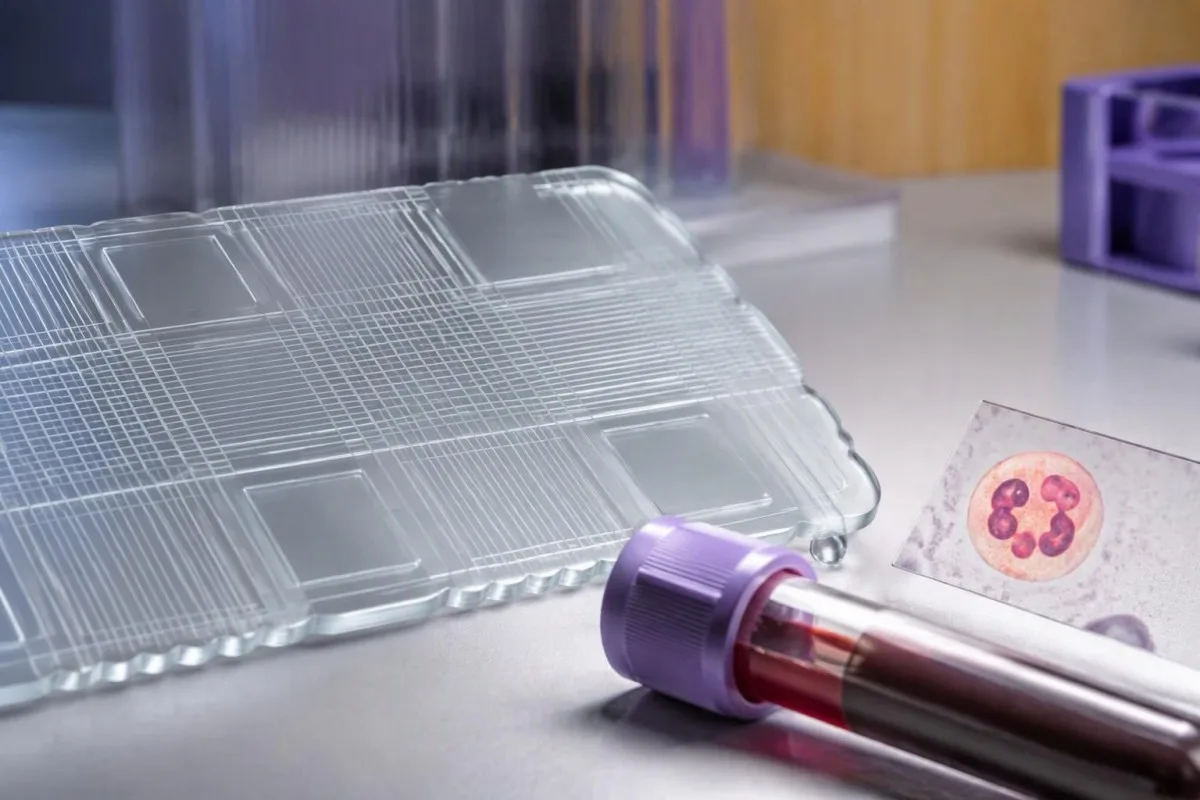
Қазіргі зертханалардың көбі ANC көрсеткішін тікелей, әдетте neutrophils, absolute neutrophils немесе NEUT# деп береді. Есептеу қажет болса, жалпы WBC көрсеткішін нейтрофилдер үлесіне, бөлек көрсетілген жағдайда таяқша ядролы нейтрофилдерді де қосып, көбейтіңіз; мысалы, 4,000 жасуша/µL × 0.40 болса, ANC 40 жасуша/µL емес, 1,600 жасуша/µL болады.
Шартты түрде WBC 6,000 жасуша/µL, ал нейтрофилдер 15% болғанда, жалпы WBC зертхананың референстік аралығында жатуы мүмкін болса да, ANC 900 жасуша/µL болады. Осы сәйкессіздік неліктен нейтрофилдердің референстік аралығы жөніндегі нұсқаулық абсолюттік санды дифференциалдық пайыздан ажырататынын түсіндіреді.
Ондық бөлшектерді жазу қауіпті түсінбеушілікке әкелуі мүмкін: 0.8 × 10⁹/L дегеніміз 800 жасуша/µL, ал 8.0 × 10⁹/L дегеніміз 8,000 жасуша/µL. Қиылып алынған скриншотты немесе қолмен енгізілген санды емес, бастапқы есепті, үлгі алынған күнді және өлшем бірліктерін салыстырыңыз; нәтижені ем тағайындауда қолданбас бұрын түсініксіз тұстарды зертханадан немесе мониторинг тобынан нақтылауды сұраңыз.
| Деңгей | Аралық | Мағынасы |
|---|---|---|
| Нейтропенияның дәстүрлі шегінен жоғары | ≥1.5 × 10⁹/L; ≥1,500 жасуша/µL | Usually outside the conventional adult neutropenia definition; this is not a universal laboratory reference interval or dispensing rule. |
| Жеңіл нейтропения | 1.0–1.499 × 10⁹/L; 1,000–1,499 cells/µL | Requires interpretation against baseline, symptoms and the applicable clozapine pathway. |
| Орташа нейтропения | 0.5–0.999 × 10⁹/L; 500–999 cells/µL | Often requires urgent prescriber review; treatment actions differ for general and documented Duffy-null pathways. |
| Ауыр нейтропения | <0.5 × 10⁹/L; <500 cells/µL | High-risk finding requiring urgent clinical management, usually hematology involvement and clinician-directed interruption. |
АҚШ-тағы емдеу алгоритмінде қандай ANC нәтижелері емді өзгертеді?
The US general-population pathway usually permits clozapine initiation at ANC ≥1,500 cells/µL. During treatment, ANC of 1,000–1,499 cells/µL can allow continuation with intensified monitoring; 500–999 cells/µL generally requires interruption when clozapine-induced neutropenia is suspected. These are clinician actions, not instructions for patients to adjust medication.
For mild neutropenia, the US prescribing-information approach commonly increases ANC checks to 3 times weekly until recovery to at least 1,500 cells/µL. Correll et al. (2022), in CNS Drugs, reproduce these management pathways and emphasize that clozapine's substantial psychiatric benefits must be considered alongside hematological risk rather than treating every low result identically.
For ANC of 500–999 cells/µL in the general pathway, clinicians usually arrange hematology input and daily testing initially, with treatment resumption considered after recovery according to the label. A repeat sample can clarify an unexpected result, but a symptomatic patient or a rapidly falling count should not wait 24 hours merely to obtain a more convenient number.
A count below 500 cells/µL enters the severe-neutropenia pathway, where any later rechallenge requires an explicit specialist risk–benefit decision. Total WBC or CRP cannot substitute for ANC; our explanation of WBC және CRP сәйкессіздігі shows why apparently reassuring results elsewhere in the panel do not cancel a low neutrophil count.
| Деңгей | Аралық | Мағынасы |
|---|---|---|
| US general-pathway initiation threshold | ANC ≥1,500 cells/µL | Usually eligible for initiation from a hematological perspective, subject to the full prescribing assessment. |
| Mild neutropenia during treatment | ANC 1,000–1,499 cells/µL | Treatment can often continue under prescriber direction with ANC monitoring 3 times weekly. |
| Moderate neutropenia during treatment | ANC 500–999 cells/µL | Usually interrupt if clozapine-induced neutropenia is suspected; obtain hematology advice and intensified monitoring. |
| Severe neutropenia during treatment | ANC <500 cells/µL | Interrupt under urgent clinical management; any future rechallenge needs specialist justification. |
Duffy-null-ассоциацияланған көрсеткіш шешімдерге қалай әсер етеді?
Documented Duffy-null-associated neutrophil counts can justify lower clozapine ANC thresholds because a stable lower circulating count does not necessarily indicate impaired immunity. US prescribing information has historically called this the benign ethnic neutropenia, or BEN, pathway; its usual initiation threshold is ANC ≥1,000 cells/µL with at least 2 baseline measurements.
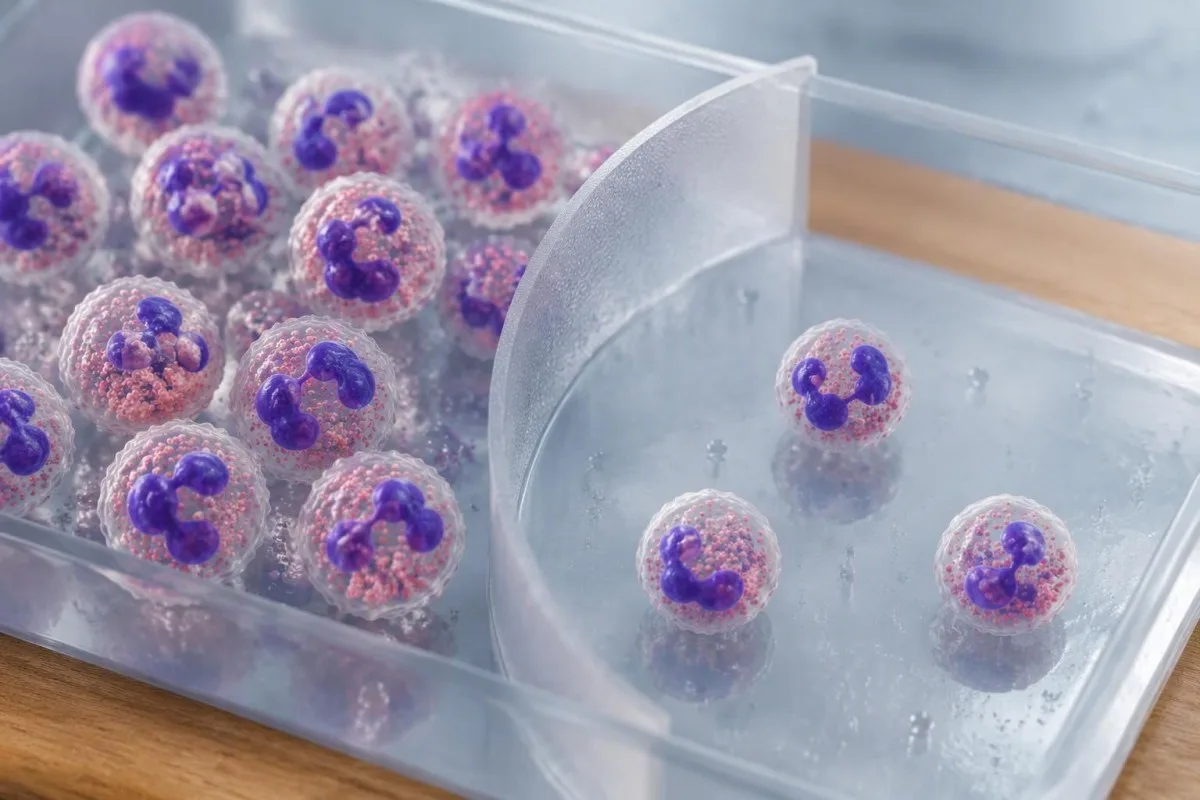
Under the US documented BEN pathway, an ANC of 500–999 cells/µL may permit continued clozapine with hematology consultation and monitoring 3 times weekly. This differs from the general pathway at the same number; the distinction must already be established clinically, not inferred after an alarming result simply to avoid an interruption.
Ancestry is not a diagnostic test for Duffy-null status, and 2 people with similar ancestry may have different baseline ANC patterns. Our Duffy-null count explanation discusses phenotype or genotype evidence, historical counts and assessment for other causes; genetic testing is not universally required, but a clinician-documented explanation is needed for an alternative treatment pathway.
A hypothetical stable baseline of 1,200 cells/µL does not make a new fall to 450 cells/µL harmless: that result meets the severe-neutropenia threshold even in the US BEN pathway. Fever, recurrent unusual infections, anemia or low platelets also weakens the assumption that a low ANC is an isolated constitutional finding and warrants a broader assessment.
Уақыт өте келе клозапинге байланысты нейтропения қаупі қаншалықты жоғары?
Clozapine neutropenia risk is concentrated early in treatment, especially during the first 18 weeks to 6 months, but it does not disappear later. Correll et al. (2022) describe agranulocytosis as affecting approximately 1% of treated patients; estimates vary across populations, monitoring systems and definitions, so this is not an individual prediction.

Approximately 1% means roughly 1 in 100 treated people in that broad estimate, not a 1% risk every month and not a 1% risk after every dose. Mild neutropenia is more frequent than agranulocytosis, and studies that combine the two outcomes can make the risk of life-threatening neutrophil depletion appear larger than it actually is.
Early intensive testing reflects the concentration of events during the first 6 months, rather than an assumption that each additional tablet causes predictable cumulative marrow damage. Severe clozapine-associated neutropenia is not reliably prevented by choosing a low dose alone, and a previously normal count cannot guarantee that the next count will remain normal.
After 2 years of stable treatment, the absolute risk is generally much lower than during initiation, which helps explain proposals for less frequent routine testing. Late neutropenia still needs investigation for medication effects, illness and marrow disease; our guide to жиі инфекцияларды тексеру explains why symptoms and other cell lines can reveal risks that an ANC-only schedule misses.
REMS-тен кейін АҚШ-та клозапин мониторингінің кестесі қандай?
The US prescribing-information ANC schedule generally remains weekly for 6 months, every 2 weeks for the next 6 months, then monthly. The FDA removed the clozapine REMS on June 13, 2025, ending its enrollment and ANC-reporting requirements; that administrative change did not remove the clinical recommendation to monitor neutrophils.

The FDA's 2025 clozapine REMS removal communication separates access restrictions from safe prescribing: prescribers, pharmacies and patients no longer need to participate in that federal registry. A pharmacy no longer needs the former REMS dispensing authorization, but the prescriber may still require a recent ANC and a local service may still use an electronic safety workflow.
For a hypothetical patient completing 6 months without a concerning ANC event, the usual label pathway moves from weekly to every-2-week monitoring rather than immediately to monthly testing. Neutropenia, a treatment interruption or a relevant medication change can alter that plan; ask which event starts the next monitoring period instead of counting months independently.
Kantesti can help explain a trend across 3 dated ANC reports, but our platform does not determine the next legally or clinically acceptable dispensing date. Our дәрі-дәрмек қауіпсіздігі тенденциясы анықтамалығы explains why the original collection dates and the prescribing team's schedule must remain attached to any AI-generated summary.
Неліктен Ұлыбританиядағы мониторинг қызметтері басқа кестені қолдануы мүмкін?
Traditional UK clozapine monitoring pathways use weekly testing for 18 weeks, every 2 weeks until 1 year, then every 4 weeks. UK dispensing has also depended on product-linked monitoring-service clearance; revised recommendations and local implementation can change the pathway, so the patient's own service must confirm the schedule and action thresholds.

An older UK pathway may classify ANC of 1.5–2.0 × 10⁹/L as amber and below 1.5 × 10⁹/L as red in patients without an approved lower-baseline pathway. Those thresholds are not interchangeable with the US continuation algorithm, and legacy UK systems may also consider total WBC; the relevant service must state which rules it currently applies.
Every 4 weeks means every 28 days, not simply once in each calendar month, so a missed appointment can affect a supply window even when the previous result was satisfactory. A useful baseline testing plan should include who books the sample, who receives it and who contacts the patient if the monitoring service cannot release medication.
Administrative alerts can arise from an overdue sample, an unprocessed sample or a genuinely low count—3 different problems with different solutions. Contact the prescribing team and pharmacy promptly if supply is threatened; do not stretch doses, borrow tablets or assume that a policy change in another country has automatically changed your own monitoring-service rules.
Еуропадағы ANC жөніндегі қайта қаралған ұсынымдарда не өзгерді?
Revised European recommendations allow less frequent ANC testing in eligible stable patients: weekly for 18 weeks, monthly through the first year, every 12 weeks after 1 year and annually after 2 years. These longer intervals depend on the specified absence of neutropenia and the locally implemented product information; they are not a universal schedule.
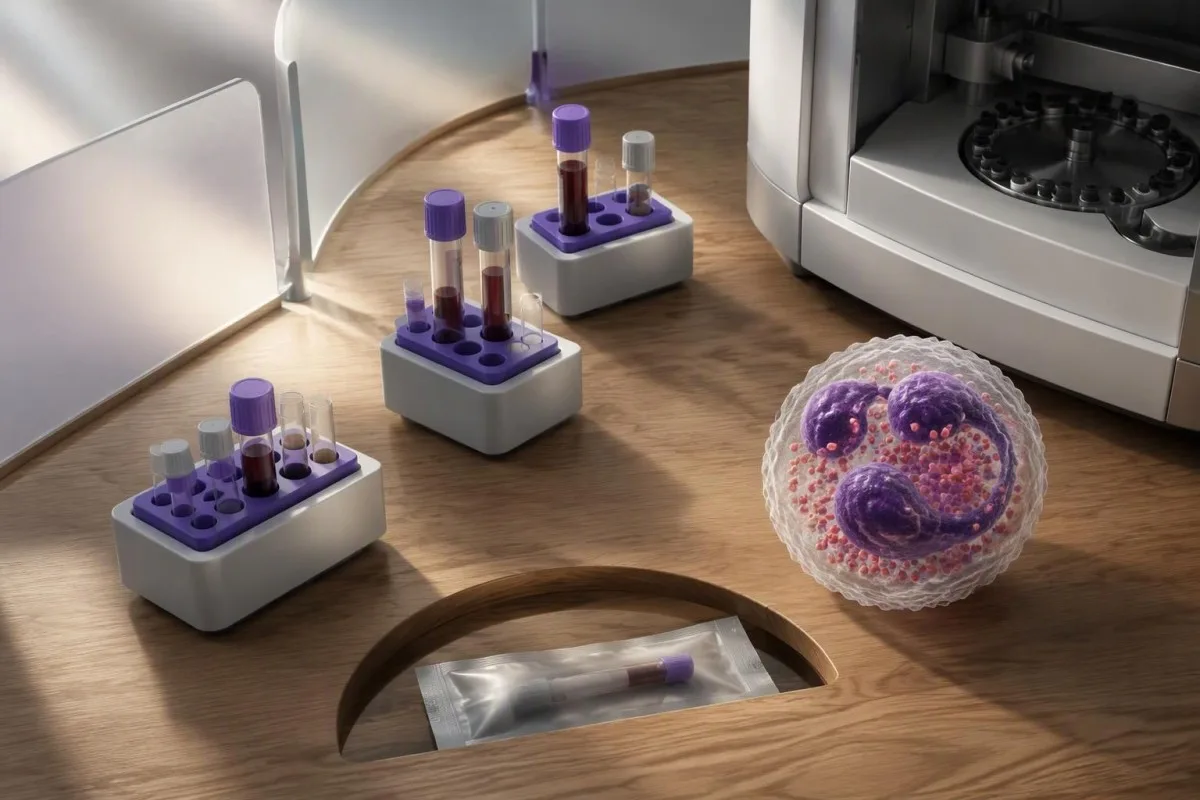
The European Medicines Agency's 2025 communication on revised routine blood count monitoring shifts the principal hematological measure toward ANC rather than combined WBC and ANC surveillance. The revised approach generally uses baseline ANC of at least 1,500 cells/µL, or at least 1,000 cells/µL in an established BEN pathway, while lowering some treatment-interruption thresholds compared with older European systems.
In the revised European approach, ANC below 1,000 cells/µL generally triggers stopping treatment in the standard pathway, whereas below 500 cells/µL is the corresponding threshold for an established BEN pathway. Results above those stopping thresholds can still require intensified surveillance; a hypothetical count of 1,100 cells/µL is not a reason to ignore a new downward trend.
Country authorization, the particular product information and service implementation can differ, even when patients have each taken clozapine for 2 years. Our guide to blood-test timing and changes explains why historical stability matters; obtain written confirmation before assuming that an annual European schedule applies to a UK, US or other national pathway.
ANC күтпеген жерден төмен болса, не істеу керек?
An unexpected low ANC needs prompt prescriber review, confirmation when appropriate and assessment for causes other than clozapine. In the US label pathway, an initial ANC below 1,500 cells/µL is generally confirmed within 24 hours, but severe neutropenia or infection symptoms require immediate management rather than waiting for a routine repeat.
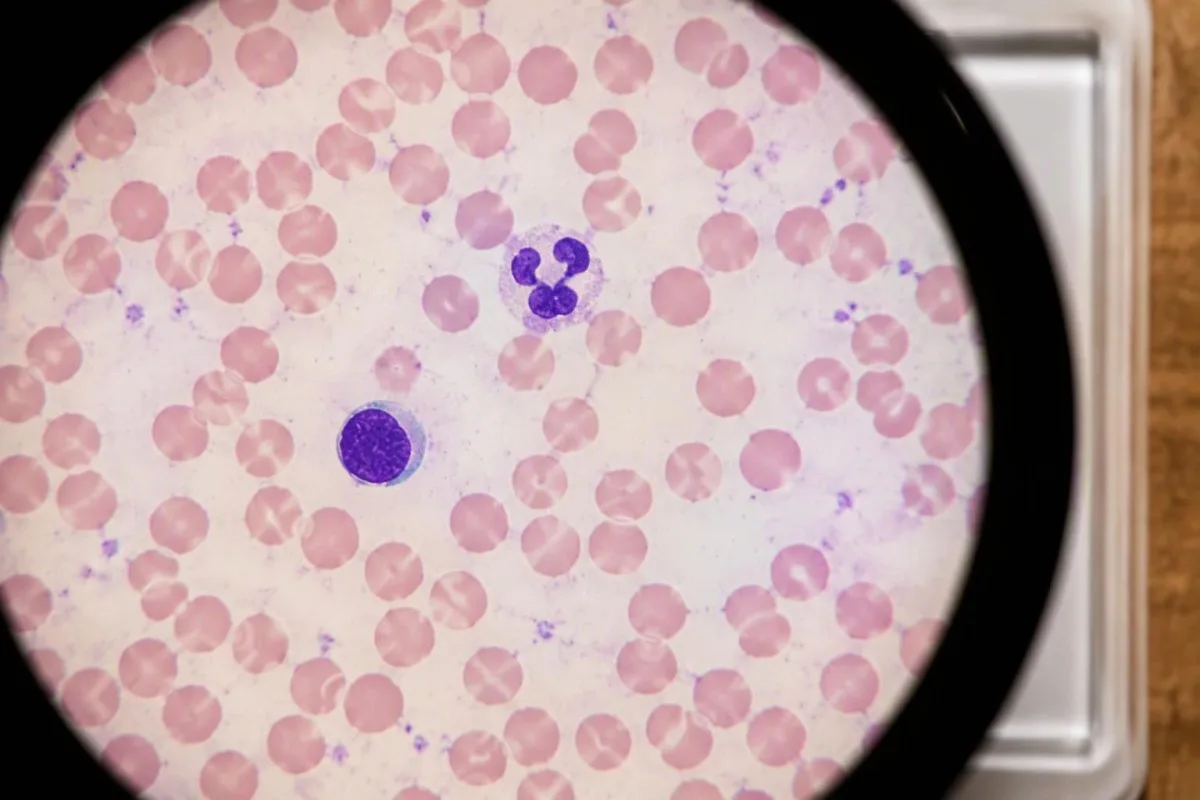
Recent viral illness, other medicines, autoimmune disease and nutritional deficiency can all lower ANC; a count of 900 cells/µL establishes neutropenia but does not establish its cause. Clinicians review the timing of drug exposure and may examine hemoglobin, platelets and a cell sample slide; concurrent abnormalities can justify evaluation for possible marrow disorders.
Kantesti is an AI blood test interpretation platform that can place an ANC of 0.9 × 10⁹/L beside platelet and hemoglobin trends, while leaving causation and medication decisions to clinicians. Our broader гематология маркері жөніндегі нұсқаулық explains why a normal red-cell result does not erase an isolated neutrophil problem.
Sampling time and temporary physiological variation can affect a borderline result, but there is no safe rule that an afternoon repeat will always normalize an ANC of 1,400 cells/µL. If a clinician requests a repeat at a consistent time, follow that plan without delaying necessary care; exercise, supplements or deliberate timing changes should not be used to manipulate a treatment-clearance result.
Инфекцияның қандай белгілері шұғыл бағалауды қажет етеді?
During clozapine treatment, fever of 38.0°C or higher, new sore throat, mouth sores, shaking chills or sudden marked illness warrants urgent same-day clinical assessment. A known ANC below 500 cells/µL makes possible infection especially urgent. Confusion, breathing difficulty, fainting or rapidly worsening illness requires emergency help, regardless of the last count.
Formal febrile-neutropenia definitions often use a single temperature of at least 38.3°C or at least 38.0°C sustained for 1 hour, together with severe or impending severe neutropenia. Those definitions support clinical classification—not a home instruction to wait an hour; tell the urgent-care team that you take clozapine and provide your last ANC if available.
An ANC of 2,000 cells/µL measured 7 days ago cannot exclude a new fall today, and severe neutropenia can weaken usual local signs such as redness or discharge. Assessment may include an urgent CBC with differential, cultures and examination; our procalcitonin interpretation guide explains why a low infection biomarker cannot independently rule out an early serious infection.
New fever may also signal pneumonia, myocarditis or another illness that raises clozapine concentrations, creating 2 linked safety questions: immune protection and medication toxicity. Call the prescribing team's urgent number immediately for advice about the next dose; if you cannot reach them promptly while significantly unwell, seek urgent care rather than waiting for an app interpretation or routine appointment.
Басқа дәрілер, темекі шегу және ауру мониторингке қалай әсер етеді?
Other medicines can increase neutropenia risk or change clozapine concentrations, and those are different problems requiring different tests. ANC is measured in cells/µL, whereas clozapine concentration is commonly measured in ng/mL; a normal ANC does not exclude excessive drug exposure, and a therapeutic concentration does not exclude neutropenia.

Carbamazepine is generally avoided with clozapine because of marrow-suppression risk and clinically relevant interactions; concurrent valproate has also been associated with neutropenia in observational studies. A hypothetical ANC decline from 2,600 to 1,300 cells/µL after adding another medicine warrants a complete medication review, not a conclusion that clozapine is necessarily the sole cause; valproate level interpretation addresses the separate issue of drug exposure.
Stopping combustible smoking can raise clozapine concentrations because smoke components—not nicotine itself—induce CYP1A2 metabolism. A person who stops smoking during a 3-day hospital admission may therefore need prescriber-directed concentration monitoring and dose review; our nicotine test explanation clarifies why cotinine alone does not measure the smoke-related enzyme effect.
Kantesti can explain why an ANC of 2,100 cells/µL and a clozapine level of 900 ng/mL describe different risks, but we cannot select a safer dose. Fever, major caffeine changes and interacting medicines such as ciprofloxacin can alter exposure; report new excessive sedation, confusion or muscle jerks promptly, even if the neutrophil result is reassuring.
Талдаулар өткізілмей қалса немесе емдеуде үзіліс болса, не болады?
A missed ANC appointment can create a supply problem, while a clozapine treatment break can create a separate restarting hazard. After more than 48 hours without clozapine, many protocols require supervised re-titration beginning at 12.5 mg once or twice daily rather than immediate return to the previous dose; exact instructions depend on the prescribing information.
Tolerance to clozapine's blood-pressure effects can be lost quickly, so restarting a previous 300 mg daily regimen after a break may cause profound hypotension or collapse. US prescribing information also specifies reduced restart doses for shorter interruptions; patients should contact the prescribing team after missed doses rather than using a remembered 48-hour rule to decide what to take.
A treatment break does not always reset ANC surveillance to the beginning, because monitoring rules depend on interruption duration and the reason treatment stopped. In the US normal-ANC pathway, interruptions of 30 days or longer generally return patients to initiation-style monitoring; national monitoring services may use different interruption rules, especially after an abnormal count.
After a hypothetical 5-day admission, confirm the last dose, current prescription, latest ANC and who will supervise the next dose before leaving hospital. Our explanation of ауруханадан шыққаннан кейінгі нәтижелер helps organize altered laboratory values, but it cannot reconcile prescriptions or authorize restarting after neutropenia.
ANC мониторингі клозапин қауіпсіздігінің қай аспектілерін қамтымайды?
ANC monitoring does not detect clozapine-related myocarditis, constipation, metabolic complications or excessive drug concentrations. Some initiation protocols add weekly troponin and CRP during the first 4 weeks, while ongoing care assesses bowel function, weight, glucose and lipids. A satisfactory ANC therefore confirms only one part of medication safety.
New chest pain, breathlessness or persistent unexplained tachycardia during the first 4 weeks needs prompt clinical assessment rather than reassurance from a normal ANC. Troponin and CRP can support a myocarditis investigation, but thresholds and screening practices vary; our myocarditis testing explanation describes why laboratory results must be interpreted with symptoms and cardiac evaluation.
Clozapine-related bowel slowing can become dangerous even when stool is still passing, and severe abdominal pain, distension or vomiting requires urgent assessment. Record bowel frequency and stool consistency rather than asking only whether constipation is present; the нұсқаулығымыз provides a shared description, while a change lasting 48 hours should prompt contact according to the patient's bowel-management plan.
Correll et al. (2022) describe a clozapine plasma reference range of approximately 350–600 ng/mL for many treatment-response decisions, while emphasizing individual variation and adverse effects. That range is not an ANC target or a universal safe-dose boundary; concentration samples usually need defined timing relative to the last dose, whereas routine ANC collection generally does not require a trough sample.
Клозапин қабылдау бойынша келесі тексеріске қалай дайындалу керек?
Bring the latest ANC, its units, earlier counts and a complete medication list to every clozapine review. Ask which national and service-specific pathway applies, what happens below its thresholds and whom to contact urgently. Keeping at least 3 dated results available helps distinguish a stable baseline from a new decline.

For a hypothetical sequence of 2,400, 1,900 and 1,400 cells/µL, useful questions concern the trend, recent illness, interacting medicines and the required next sample—not simply whether the latest value is red. Also ask who receives results outside office hours and whether the pharmacy needs monitoring-service clearance; these practical details can prevent an avoidable treatment gap.
Kantesti is an AI biomarker interpretation platform that helps translate an ANC of 1.4 × 10⁹/L into an understandable count and a list of clinician questions. Our техникалық және клиникалық қадағалау describes the boundaries of interpretation; it does not establish that an automated answer is a validated clozapine prescribing decision or a substitute for hematology advice.
Kantesti's educational workflow should preserve 3 essentials: the source result, the applicable clinical protocol and the human decision-maker. Our жауапты AI қағидаттарымыз explain why urgent symptoms take priority over automated analysis, while our құпиялылық және деректер туралы ақпаратты explains considerations when sharing sensitive psychiatric and laboratory records.
Зерттеу жарияланымдары және дәлелдемелердің шектері
The 2 Kantesti publications listed in the research publication section concern digestive symptoms and women's health, not clozapine ANC thresholds or monitoring schedules. Their Figshare DOIs identify those publications but do not establish peer review or provide evidence for clozapine decisions; the directly relevant medical and regulatory sources are listed separately below.
Жиі қойылатын сұрақтар
Клозапин қабылдауды жалғастыру үшін ANC көрсеткіші қаншалықты төмен болуы мүмкін?
The ANC threshold for continuing clozapine depends on the country and the patient's documented baseline pathway. In the US general pathway, ANC of 1,000–1,499 cells/µL can allow continuation with increased monitoring, while 500–999 cells/µL usually requires interruption when clozapine-induced neutropenia is suspected. A documented BEN or Duffy-null-associated pathway can permit continuation at 500–999 cells/µL under specialist supervision. ANC below 500 cells/µL requires urgent clinical management; patients should obtain immediate prescriber instructions rather than change treatment themselves.
Клозапинге арналған REMS бағдарламасы жойылғаннан кейін де маған ANC қан талдауларын тапсыру қажет пе?
0 Иә, АҚШ-тағы клозапинге арналған REMS бағдарламасының жойылуы ANC мониторингі жөніндегі клиникалық ұсынымды жойған жоқ. FDA 2025 жылғы 13 маусымда тізілімді жойып, оған тіркелу, есептілік және дәріні беруге рұқсат алу талаптарын тоқтатты. Дәріні тағайындау жөніндегі нұсқаулықта белгіленген кесте, әдетте, алғашқы 6 айда апта сайын, келесі 6 айда 2 апта сайын, одан кейін ай сайын тексеруді көздейді. Нейтропениядан, емдеудегі үзілістен немесе клиникалық тұрғыдан маңызды басқа өзгерістен кейін дәрігеріңіз қосымша талдау талап етуі мүмкін.
Why is my clozapine blood test schedule different from someone else's?
Клозапин деңгейін қаннан тексеру кестелері елдердің препарат туралы ресми ақпараты, мониторинг қызметтері, емдеу ұзақтығы және бұрын болған ANC оқиғалары бірдей болмағандықтан ерекшеленеді. Ұлыбританияның дәстүрлі бақылау жолдары алғашқы 18 апта бойы апта сайын, 1 жылға дейін екі апта сайын және одан кейін әр 4 апта сайын тексеруді қарастырады. Еуропаның жаңартылған ұсынымдары жергілікті деңгейде енгізілуіне қарай, жағдайы тұрақты әрі талаптарға сай пациенттерге 1 жылдан кейін әр 12 апта сайын, ал 2 жылдан кейін жыл сайын тексеруге мүмкіндік беруі мүмкін. Кез келген қабылдау уақытын өзгертпес бұрын, өзіңізге дәрі тағайындайтын қызметтен қолданылатын кестені нақтылап алыңыз.
Клозапин бірнеше жыл бойы нәтижелері қалыпты болғаннан кейін нейтропенияны тудыруы мүмкін бе?
Клозапинмен байланысты нейтропения бірнеше жыл бойы көрсеткіштер қалыпты болғаннан кейін де туындауы мүмкін, дегенмен емнің бастапқы кезеңінде қауіп әлдеқайда жоғары болады. Ауыр жағдайлардың басым бөлігі алғашқы 18 аптадан 6 айға дейінгі кезеңде кездеседі. 2 жылдан кейін қан жасушалары санының жаңадан төмендеуі клозапинді, басқа дәрілерді, инфекцияны және сүйек кемігіне қатысты немесе аутоиммундық жағдайларды бағалауды әлі де қажет етеді. Бұрын ANC көрсеткішінің алаңдаушылық тудырмауы қызба немесе кенеттен сырқаттану дамығанда шұғыл бағалау қажеттілігін жоймайды.
Клозапин қабылдап жүргенде дене қызуым көтерілсе, не істеуім керек?
Клозапин қабылдап жүрген кезде дене қызуының 38.0°C немесе одан жоғары болуы сол күні шұғыл клиникалық тексеруден өтуді қажет етеді, әсіресе тамақ ауырса, ауызда жаралар пайда болса, қатты қалтырау немесе айқын әлсіздік байқалса. Дәрігерге клозапин қабылдайтыныңызды айтып, қолда болса, соңғы ANC көрсеткішін хабарлаңыз. ANC көрсеткішінің 500 жасуша/µL-ден төмен екені белгілі болса, ықтимал инфекцияға байланысты шұғыл көмекке жүгіну ерекше маңызды, ал сананың шатасуы, тыныс алудың қиындауы немесе талып қалу шұғыл медициналық көмекті қажет етеді. Келесі жоспарлы талдауды күтпей немесе дәріні өз бетіңізше өзгертпей, келесі дозаны қабылдау жөнінде дереу дәрі тағайындаған маманнан кеңес алыңыз.
Екі күн қабылдамай қойғаннан кейін клозапиннің әдеттегі дозасын қайта қабылдай аламын ба?
Емдеуші топтың нұсқауынсыз емдеудегі үзілістен кейін клозапиннің әдеттегі дозасын қайта бастамауыңыз керек. Емді 48 сағаттан астам уақытқа тоқтатқаннан кейін көптеген хаттамалар бойынша дозаны қайта титрлеу қажет, оны күніне бір немесе екі рет 12.5 мг-нан бастайды, себебі қан қысымына әсеріне төзімділік жоғалуы мүмкін. Кейбір тағайындау жөніндегі нұсқаулықтар қысқарақ үзілістен кейін де дозаны азайтуды талап етеді. Емдеуші топқа дереу хабарласыңыз, өйткені емді қайта бастау жоспары мен ANC бақылау кестесі үзілістің нақты ұзақтығы мен себебіне байланысты.
Лейкоциттер саны қалыпты болуы клозапин қабылдағанда ANC көрсеткішім қауіпсіз екенін білдіре ме?
Жалпы лейкоциттер санының қалыпты болуы клопазинмен емдеу үшін ANC көрсеткіші жеткілікті екенін білдірмейді. Мысалы, нейтрофилдер үлесі 15% болғанда, WBC көрсеткіші 6,000 cells/µL болса, ANC 900 cells/µL болады. Емдеу туралы шешім қабылдағанда тек WBC көрсеткішіне емес, абсолютті нейтрофилдер санына, қолданыстағы хаттамаға және клиникалық жағдайға сүйену қажет. ANC көрсеткішінің қалыпты болуы миокардитті, ішек перистальтикасының күрт баяулауын немесе клопазин концентрациясының шамадан тыс жоғары болуын да жоққа шығармайды.
Қан анализінің нәтижесін түсіндіріп алыңыз
Зертханалық есепті жүктеңіз, сонда Kantesti AI әр биомаркерді бірнеше секунд ішінде қарапайым тілмен түсіндіреді. Әлем бойынша 2 миллионнан астам адам қолданады.
Сілтемелер
- Klein, T., Mitchell, S., & Weber, H. (2026). Ашыққаннан кейінгі диарея, нәжістегі қара дақтар және асқазан-ішек жолдары жөніндегі нұсқаулық, 2026. Kantesti AI медициналық зерттеулері. DOI
- Klein, T., Mitchell, S., & Weber, H. (2026). Әйелдер денсаулығына арналған нұсқаулық: овуляция, менопауза және гормондық симптомдар. Kantesti AI медициналық зерттеулері. DOI
- Correll CU et al. (2022). A Guideline and Checklist for Initiating and Managing Clozapine Treatment in Patients with Treatment-Resistant Schizophrenia. CNS Drugs. DOI
- US Food and Drug Administration (2025). FDA removes risk evaluation and mitigation strategy (REMS) program for the antipsychotic drug Clozapine. FDA Drug Safety and Availability.
- European Medicines Agency (2025). Clozapine: revised recommendations for routine blood count monitoring. Direct healthcare professional communication.
- 2 млн+Талданған тесттер
- 127+Елдер
- 100+Тілдер
Медициналық топ туралы


E-E-A-T сенім сигналдары
Тәжірибе
Дәрігер басқаратын зертханалық талдауды түсіндіру жұмыс ағындарын клиникалық шолу.
Сараптама
Биомаркерлердің клиникалық контексте қалай әрекет ететініне зертханалық медицина фокусы.
Билік
Доктор Томас Кляйн медициналық тұрғыдан тексерген, доктор Сара Митчелл мен профессор доктор Ханс Вебердің үлесімен.
Сенімділік
Дабыл қаупін азайту үшін айқын бақылау жолдарымен дәлелге негізделген түсіндіру.





Медициналық ескерту
Бұл мақала тек білім беру мақсатында ғана және медициналық кеңес болып табылмайды. Диагноз және ем туралы шешімдер үшін әрдайым білікті медицина қызметкеріне жүгініңіз.
Жарияланды · Редакция тобына хабарласыңыз
Англия мен Уэльсте тіркелген Kantesti Ltd басып шығарған, компания №. 17090423, Лондон, Біріккен Корольдік.
