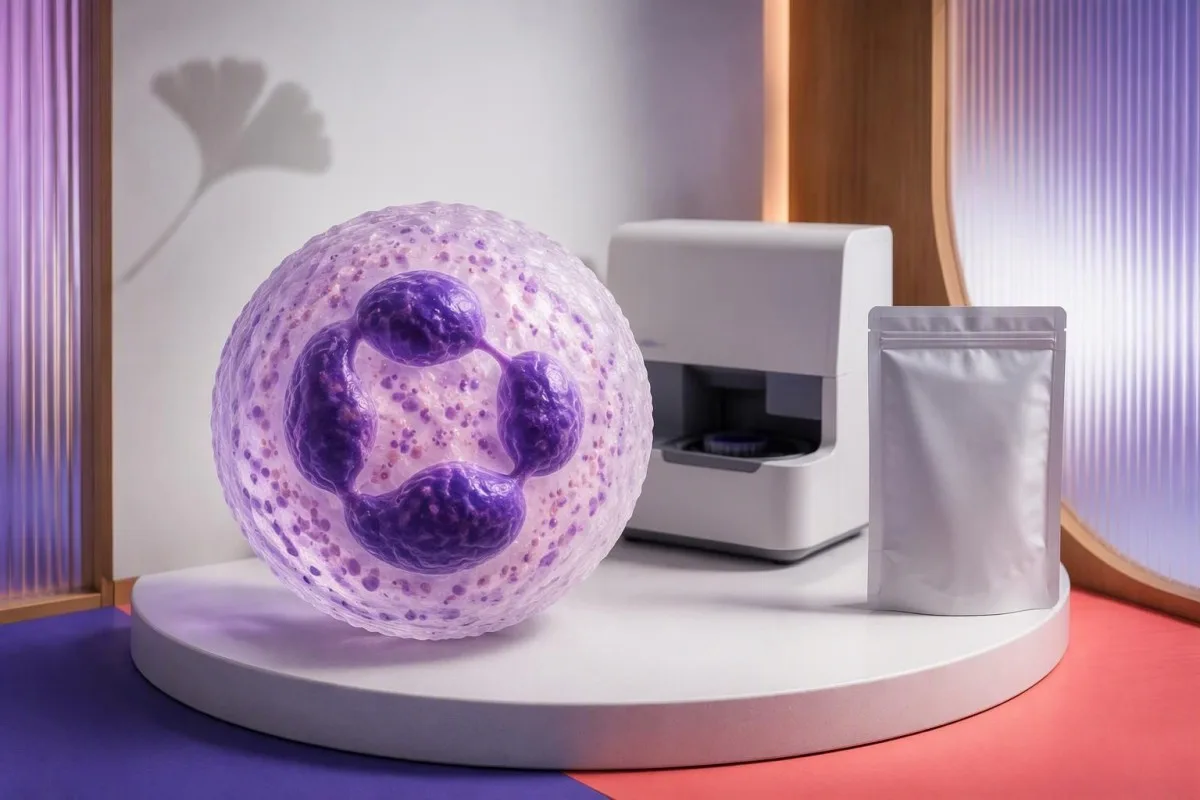
Klozapīna uzraudzībā izmanto absolūto neitrofilu skaitu (ANC), lai konstatētu bīstamu neitropēniju; zemi rādītāji var būt iemesls papildu pārbaudēm, speciālista izvērtējumam vai klīnicista noteiktam ārstēšanas pārtraukumam. Pārbaužu grafiks atšķiras atkarībā no valsts un ārstēšanas posma. Drudzis, kakla sāpes vai pēkšņa saslimšana prasa steidzamu izvērtēšanu — pat pēc iepriekšēja pārliecinoša rezultāta. Nemainiet klozapīna lietošanu patstāvīgi.

Galvenie secinājumi
- ANC mērvienības: 1,0 × 10⁹/L atbilst 1 000 šūnām/µL; pirms rezultātu salīdzināšanas ar ārstēšanas robežvērtībām pārbaudiet mērvienības.
- Vispārīgās robežvērtības ASV: Ja ANC ir 1 000–1 499 šūnas/µL, ārstēšanu var turpināt, palielinot uzraudzības biežumu; ja ANC ir 500–999 šūnas/µL, parasti tiek sākts klīnicista noteikts ārstēšanas pārtraukums, ja ir aizdomas par klozapīna izraisītu neitropēniju.
- Smaga neitropēnija: Ja ANC ir zem 500 šūnām/µL, nepieciešama steidzama klīniska aprūpe, parasti ārstēšanas pārtraukšana un hematologa iesaiste.
- Duffy-null neitrofilu skaits: Dokumentēts Duffy-null saistīts neitrofilu skaits var pamatot atšķirīgu ārstēšanas ceļu; ar izcelsmi vien nepietiek, lai noteiktu atbilstību.
- Grafiks ASV: Informācijā par zāļu izrakstīšanu norādītā uzraudzība parasti sākas ar iknedēļas pārbaudēm 6 mēnešus, pēc tam pārbaudēm ik pēc 2 nedēļām 6 mēnešus, bet vēlāk — reizi mēnesī.
- Administratīvās izmaiņas: FDA 2025. gada 13. jūnijā atcēla ASV klozapīna REMS programmu; tas atcēla prasību reģistrēties reģistrā, nevis klīnisko nepieciešamību uzraudzīt ANC.
- Starptautiskie grafiki: Tradicionālajos Apvienotās Karalistes uzraudzības ceļos pārbaudes veic katru nedēļu 18 nedēļas, pēc tam ik pēc divām nedēļām līdz 1 gadam, bet vēlāk — ik pēc 4 nedēļām; pārskatītie Eiropas ieteikumi atbilstošiem stabiliem pacientiem var pieļaut garākus intervālus.
- Steidzami simptomi: Drudzis 38,0 °C vai augstāks, jaunas kakla sāpes, čūlas mutē, drebuļi vai pēkšņa izteikta saslimšana ir iemesls steidzamai apskatei tajā pašā dienā. Apjukuma, apgrūtinātas elpošanas vai samaņas zuduma gadījumā nepieciešama neatliekamā palīdzība.
Ko patiesībā nosaka klozapīna uzraudzība?
Klozapīna uzraudzībā ANC rezultāti palīdz ārstiem izlemt, vai ārstēšanu var turpināt, nepieciešama stingrāka uzraudzība vai tā jāpārtrauc. ANC, kas ir zemāks par 500 šūnām/µL, ir nopietns drošības rādītājs, taču lēmumi par augstākiem rādītājiem ir atkarīgi no valsts protokola, iepriekšējiem rezultātiem un pacienta dokumentētā sākotnējā līmeņa.
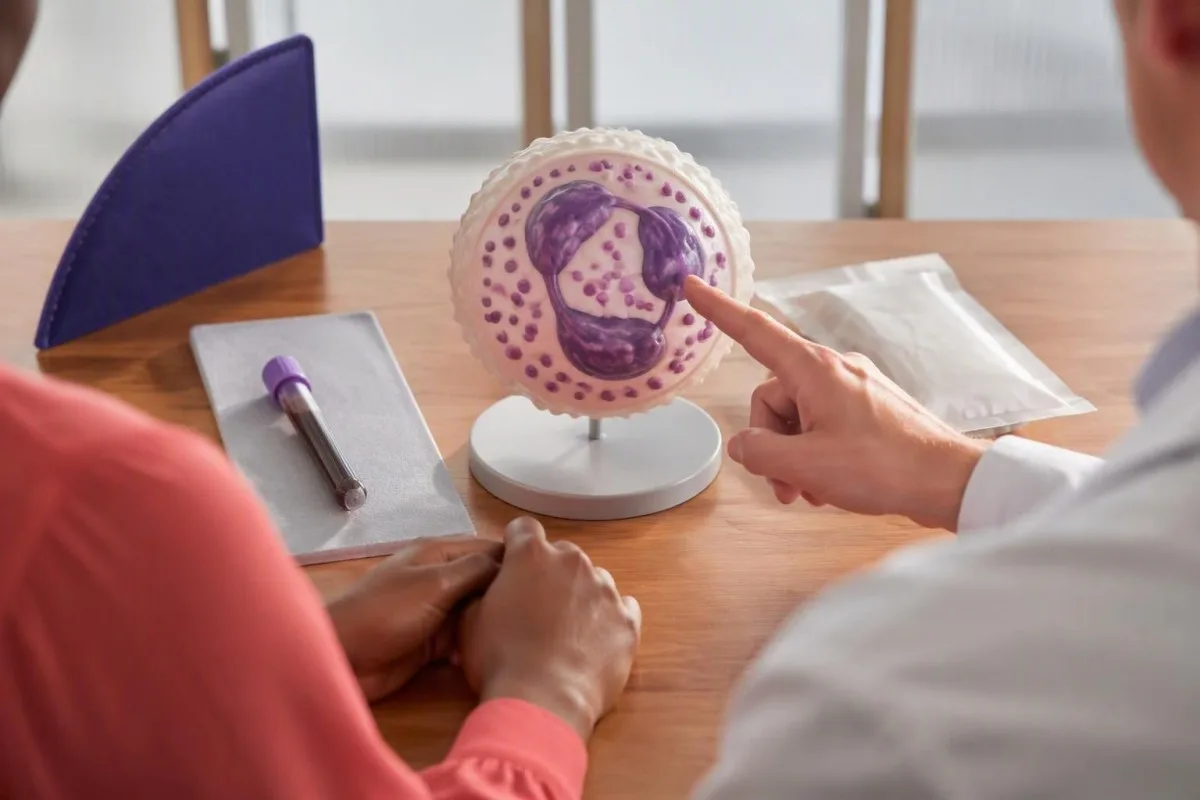
ANC rezultāts pats par sevi nav norādījums zāļu izrakstīšanai: ANC 1 200 šūnu/µL var ļaut turpināt ārstēšanu vienā uzraudzības ceļā, bet citā var būt nepieciešama citāda rīcība. Pirms šī skaitļa interpretēšanas ārstam, kurš izraksta zāles, jānosaka pareizais protokols; ASV sliekšņa piemērošana Apvienotās Karalistes uzraudzības dienesta brīdinājumam var radīt novēršamu problēmu ar zāļu piegādi.
Kantesti ir AI asins analīžu analizators, kas var paskaidrot, ka ANC 1,2 × 10⁹/L atbilst 1 200 šūnām/µL, taču mūsu interpretācija nevar atļaut klozapīna izsniegšanu vai aizstāt ārstēšanas komandu. Mūsu uzņēmuma informācija norāda organizāciju, kas sniedz šo izglītojošo pakalpojumu, nevis klozapīna uzraudzības reģistru.
Lejupejošam rādītājam jāpievērš uzmanība vēl pirms tas sasniedz ārstēšanas slieksni: hipotētisks kritums no 4 000 līdz 1 700 šūnām/µL atšķiras no ilgstoši pastāvoša sākotnējā līmeņa ap 1 700. Mūsu ceļvedis par robežvērtību neitrofilu rezultāti skaidro parastās svārstības, taču klozapīna lietotājiem jāsaņem konkrēti ieteikumi par zālēm, nevis jāievēro vispārējs atkārtotas pārbaudes grafiks.
Kā nolasīt ANC mērvienības un aprēķināt skaitu?
ANC mēra absolūto neitrofilu skaitu, nevis to procentuālo īpatsvaru leikocītu vidū. Pārrēķins ir precīzs: 1,0 × 10⁹/L ir vienāds ar 1 000 šūnām/µL. Laboratorijas references intervāls un klozapīna terapijas slieksnis atbild uz dažādiem jautājumiem, tāpēc atzīmēts rezultāts automātiski nenozīmē, ka ārstēšana jāpārtrauc.
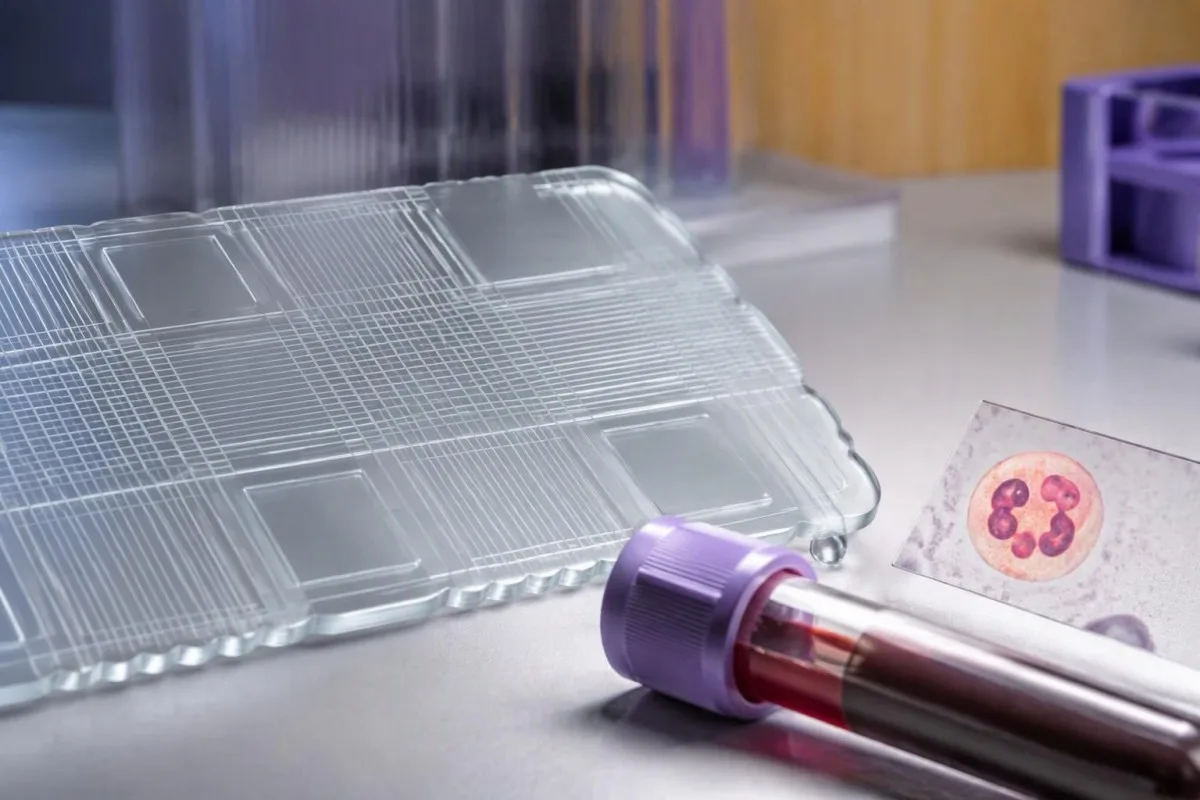
Lielākā daļa mūsdienu laboratoriju ANC norāda tieši, parasti kā neitrofilus, absolūtos neitrofilus vai NEUT#. Ja nepieciešams aprēķins, kopējo WBC reizina ar neitrofilu daļu, ieskaitot stabiņkodolainos neitrofilus, ja tie norādīti atsevišķi; piemēram, 4 000 šūnas/µL × 0,40 dod ANC 1 600 šūnas/µL, nevis 40 šūnas/µL.
Hipotētisks WBC 6 000 šūnu/µL ar neitrofilu īpatsvaru 15% dod ANC 900 šūnas/µL, lai gan kopējais WBC var būt laboratorijas references intervālā. Šī neatbilstība izskaidro, kāpēc neitrofilu references intervāla ceļvedis nošķir absolūto skaitu no diferencētā skaita procentuālā īpatsvara.
Decimālatdalītāja pieraksts var izraisīt bīstamus pārpratumus: 0,8 × 10⁹/L nozīmē 800 šūnas/µL, savukārt 8,0 × 10⁹/L nozīmē 8 000 šūnu/µL. Salīdziniet sākotnējo ziņojumu, parauga ņemšanas datumu un mērvienības, nevis apgrieztu ekrānuzņēmumu vai manuāli ievadītu skaitli, un lūdziet laboratorijai vai uzraudzības komandai novērst jebkādas neskaidrības, pirms rezultātu izmanto zāļu izrakstīšanai.
| Līmenis | Diapazons | Ko tas nozīmē |
|---|---|---|
| Virs parastā neitropēnijas sliekšņa | ≥1,5 × 10⁹/L; ≥1 500 šūnas/µL | Usually outside the conventional adult neutropenia definition; this is not a universal laboratory reference interval or dispensing rule. |
| Viegla neitropēnija | 1.0–1.499 × 10⁹/L; 1,000–1,499 cells/µL | Requires interpretation against baseline, symptoms and the applicable clozapine pathway. |
| Mērena neitropēnija | 0.5–0.999 × 10⁹/L; 500–999 cells/µL | Often requires urgent prescriber review; treatment actions differ for general and documented Duffy-null pathways. |
| Smaga neitropēnija | <0.5 × 10⁹/L; <500 cells/µL | High-risk finding requiring urgent clinical management, usually hematology involvement and clinician-directed interruption. |
Kuri ANC rezultāti maina ārstēšanu ASV aprūpes ceļā?
The US general-population pathway usually permits clozapine initiation at ANC ≥1,500 cells/µL. During treatment, ANC of 1,000–1,499 cells/µL can allow continuation with intensified monitoring; 500–999 cells/µL generally requires interruption when clozapine-induced neutropenia is suspected. These are clinician actions, not instructions for patients to adjust medication.
For mild neutropenia, the US prescribing-information approach commonly increases ANC checks to 3 times weekly until recovery to at least 1,500 cells/µL. Correll et al. (2022), in CNS Drugs, reproduce these management pathways and emphasize that clozapine's substantial psychiatric benefits must be considered alongside hematological risk rather than treating every low result identically.
For ANC of 500–999 cells/µL in the general pathway, clinicians usually arrange hematology input and daily testing initially, with treatment resumption considered after recovery according to the label. A repeat sample can clarify an unexpected result, but a symptomatic patient or a rapidly falling count should not wait 24 hours merely to obtain a more convenient number.
A count below 500 cells/µL enters the severe-neutropenia pathway, where any later rechallenge requires an explicit specialist risk–benefit decision. Total WBC or CRP cannot substitute for ANC; our explanation of WBC un CRP nesaskaņām shows why apparently reassuring results elsewhere in the panel do not cancel a low neutrophil count.
| Līmenis | Diapazons | Ko tas nozīmē |
|---|---|---|
| US general-pathway initiation threshold | ANC ≥1,500 cells/µL | Usually eligible for initiation from a hematological perspective, subject to the full prescribing assessment. |
| Mild neutropenia during treatment | ANC 1,000–1,499 cells/µL | Treatment can often continue under prescriber direction with ANC monitoring 3 times weekly. |
| Moderate neutropenia during treatment | ANC 500–999 cells/µL | Usually interrupt if clozapine-induced neutropenia is suspected; obtain hematology advice and intensified monitoring. |
| Severe neutropenia during treatment | ANC <500 cells/µL | Interrupt under urgent clinical management; any future rechallenge needs specialist justification. |
Kā Duffy-null saistīts neitrofilu skaits maina lēmumus?
Documented Duffy-null-associated neutrophil counts can justify lower clozapine ANC thresholds because a stable lower circulating count does not necessarily indicate impaired immunity. US prescribing information has historically called this the benign ethnic neutropenia, or BEN, pathway; its usual initiation threshold is ANC ≥1,000 cells/µL with at least 2 baseline measurements.
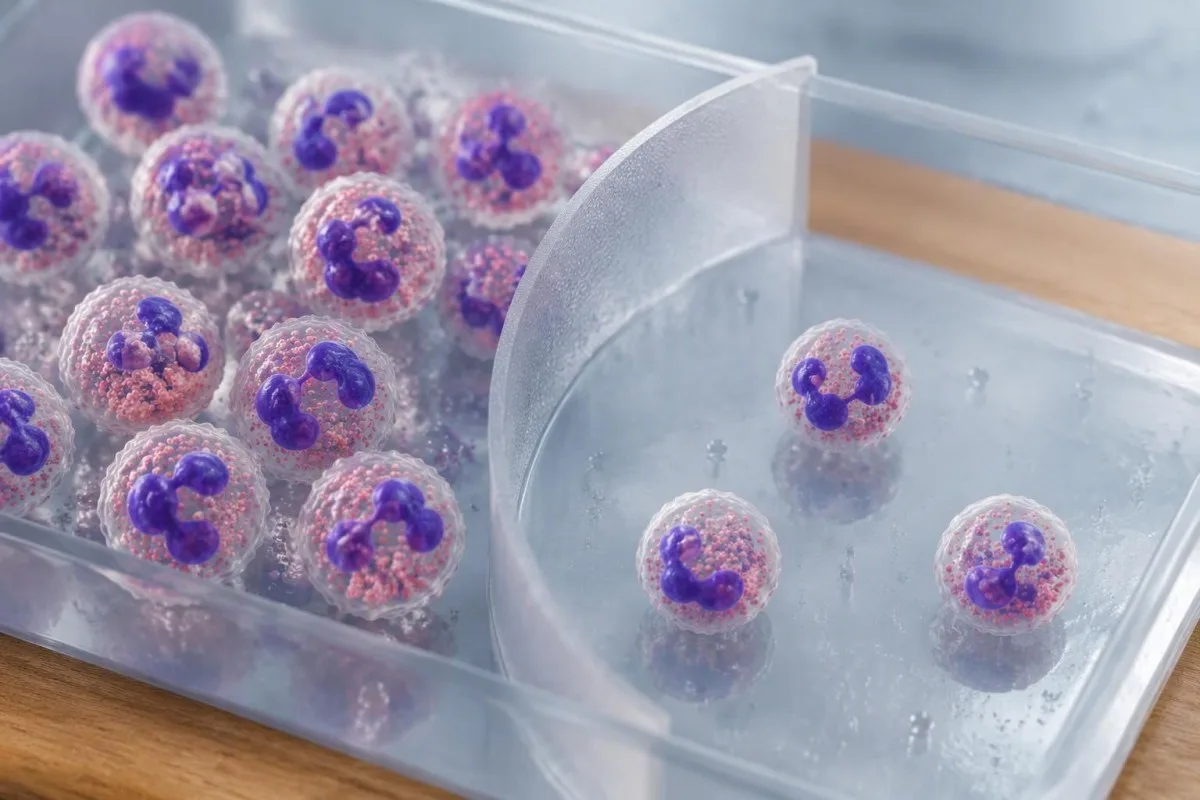
Under the US documented BEN pathway, an ANC of 500–999 cells/µL may permit continued clozapine with hematology consultation and monitoring 3 times weekly. This differs from the general pathway at the same number; the distinction must already be established clinically, not inferred after an alarming result simply to avoid an interruption.
Ancestry is not a diagnostic test for Duffy-null status, and 2 people with similar ancestry may have different baseline ANC patterns. Our Duffy-null count explanation discusses phenotype or genotype evidence, historical counts and assessment for other causes; genetic testing is not universally required, but a clinician-documented explanation is needed for an alternative treatment pathway.
A hypothetical stable baseline of 1,200 cells/µL does not make a new fall to 450 cells/µL harmless: that result meets the severe-neutropenia threshold even in the US BEN pathway. Fever, recurrent unusual infections, anemia or low platelets also weakens the assumption that a low ANC is an isolated constitutional finding and warrants a broader assessment.
Cik liels laika gaitā ir klozapīna izraisītas neitropēnijas risks?
Clozapine neutropenia risk is concentrated early in treatment, especially during the first 18 weeks to 6 months, but it does not disappear later. Correll et al. (2022) describe agranulocytosis as affecting approximately 1% of treated patients; estimates vary across populations, monitoring systems and definitions, so this is not an individual prediction.

Approximately 1% means roughly 1 in 100 treated people in that broad estimate, not a 1% risk every month and not a 1% risk after every dose. Mild neutropenia is more frequent than agranulocytosis, and studies that combine the two outcomes can make the risk of life-threatening neutrophil depletion appear larger than it actually is.
Early intensive testing reflects the concentration of events during the first 6 months, rather than an assumption that each additional tablet causes predictable cumulative marrow damage. Severe clozapine-associated neutropenia is not reliably prevented by choosing a low dose alone, and a previously normal count cannot guarantee that the next count will remain normal.
After 2 years of stable treatment, the absolute risk is generally much lower than during initiation, which helps explain proposals for less frequent routine testing. Late neutropenia still needs investigation for medication effects, illness and marrow disease; our guide to biežu infekciju testēšanai explains why symptoms and other cell lines can reveal risks that an ANC-only schedule misses.
Kāds ir klozapīna uzraudzības grafiks ASV pēc REMS?
The US prescribing-information ANC schedule generally remains weekly for 6 months, every 2 weeks for the next 6 months, then monthly. The FDA removed the clozapine REMS on June 13, 2025, ending its enrollment and ANC-reporting requirements; that administrative change did not remove the clinical recommendation to monitor neutrophils.

The FDA's 2025 clozapine REMS removal communication separates access restrictions from safe prescribing: prescribers, pharmacies and patients no longer need to participate in that federal registry. A pharmacy no longer needs the former REMS dispensing authorization, but the prescriber may still require a recent ANC and a local service may still use an electronic safety workflow.
For a hypothetical patient completing 6 months without a concerning ANC event, the usual label pathway moves from weekly to every-2-week monitoring rather than immediately to monthly testing. Neutropenia, a treatment interruption or a relevant medication change can alter that plan; ask which event starts the next monitoring period instead of counting months independently.
Kantesti can help explain a trend across 3 dated ANC reports, but our platform does not determine the next legally or clinically acceptable dispensing date. Our rokasgrāmata par medikamentu drošības tendencēm explains why the original collection dates and the prescribing team's schedule must remain attached to any AI-generated summary.
Kāpēc Apvienotās Karalistes uzraudzības dienesti var izmantot atšķirīgu grafiku?
Traditional UK clozapine monitoring pathways use weekly testing for 18 weeks, every 2 weeks until 1 year, then every 4 weeks. UK dispensing has also depended on product-linked monitoring-service clearance; revised recommendations and local implementation can change the pathway, so the patient's own service must confirm the schedule and action thresholds.

An older UK pathway may classify ANC of 1.5–2.0 × 10⁹/L as amber and below 1.5 × 10⁹/L as red in patients without an approved lower-baseline pathway. Those thresholds are not interchangeable with the US continuation algorithm, and legacy UK systems may also consider total WBC; the relevant service must state which rules it currently applies.
Every 4 weeks means every 28 days, not simply once in each calendar month, so a missed appointment can affect a supply window even when the previous result was satisfactory. A useful baseline testing plan should include who books the sample, who receives it and who contacts the patient if the monitoring service cannot release medication.
Administrative alerts can arise from an overdue sample, an unprocessed sample or a genuinely low count—3 different problems with different solutions. Contact the prescribing team and pharmacy promptly if supply is threatened; do not stretch doses, borrow tablets or assume that a policy change in another country has automatically changed your own monitoring-service rules.
Kas mainījās pārskatītajos Eiropas ANC ieteikumos?
Revised European recommendations allow less frequent ANC testing in eligible stable patients: weekly for 18 weeks, monthly through the first year, every 12 weeks after 1 year and annually after 2 years. These longer intervals depend on the specified absence of neutropenia and the locally implemented product information; they are not a universal schedule.
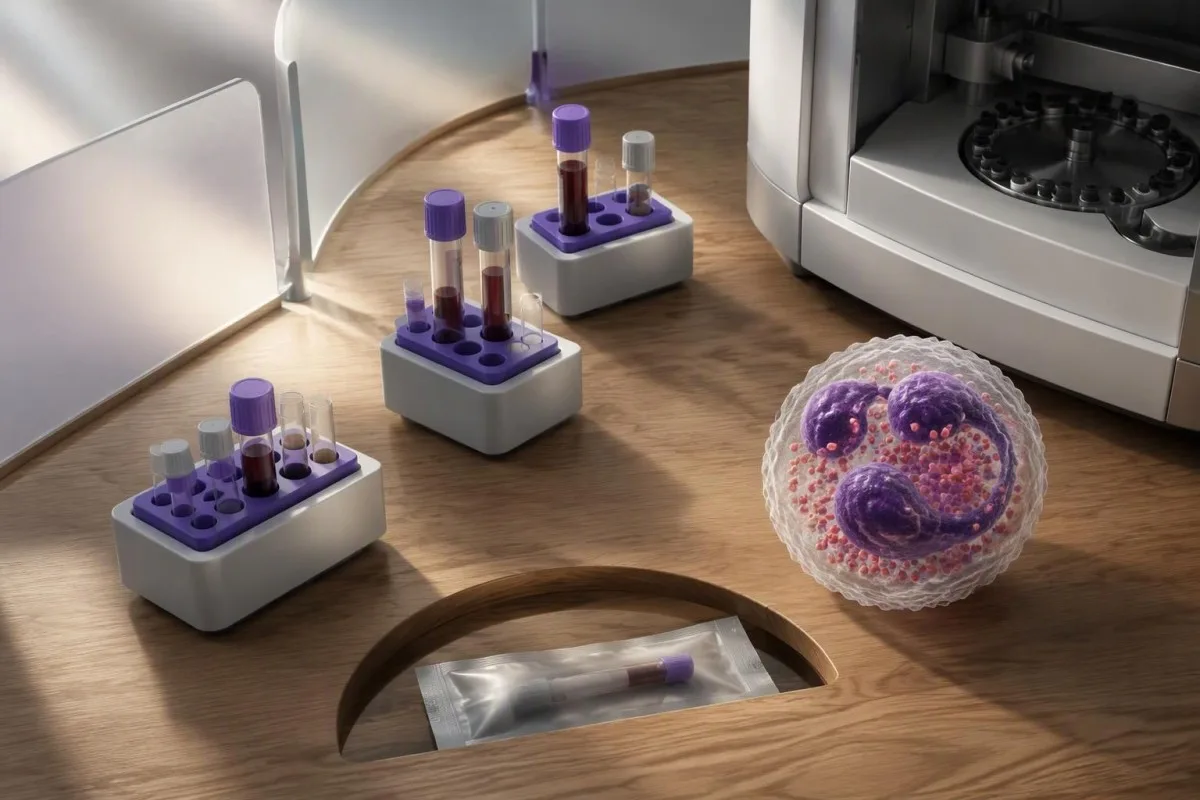
The European Medicines Agency's 2025 communication on revised routine blood count monitoring shifts the principal hematological measure toward ANC rather than combined WBC and ANC surveillance. The revised approach generally uses baseline ANC of at least 1,500 cells/µL, or at least 1,000 cells/µL in an established BEN pathway, while lowering some treatment-interruption thresholds compared with older European systems.
In the revised European approach, ANC below 1,000 cells/µL generally triggers stopping treatment in the standard pathway, whereas below 500 cells/µL is the corresponding threshold for an established BEN pathway. Results above those stopping thresholds can still require intensified surveillance; a hypothetical count of 1,100 cells/µL is not a reason to ignore a new downward trend.
Country authorization, the particular product information and service implementation can differ, even when patients have each taken clozapine for 2 years. Our guide to blood-test timing and changes explains why historical stability matters; obtain written confirmation before assuming that an annual European schedule applies to a UK, US or other national pathway.
Kā jārīkojas pēc negaidīti zema ANC rezultāta?
An unexpected low ANC needs prompt prescriber review, confirmation when appropriate and assessment for causes other than clozapine. In the US label pathway, an initial ANC below 1,500 cells/µL is generally confirmed within 24 hours, but severe neutropenia or infection symptoms require immediate management rather than waiting for a routine repeat.
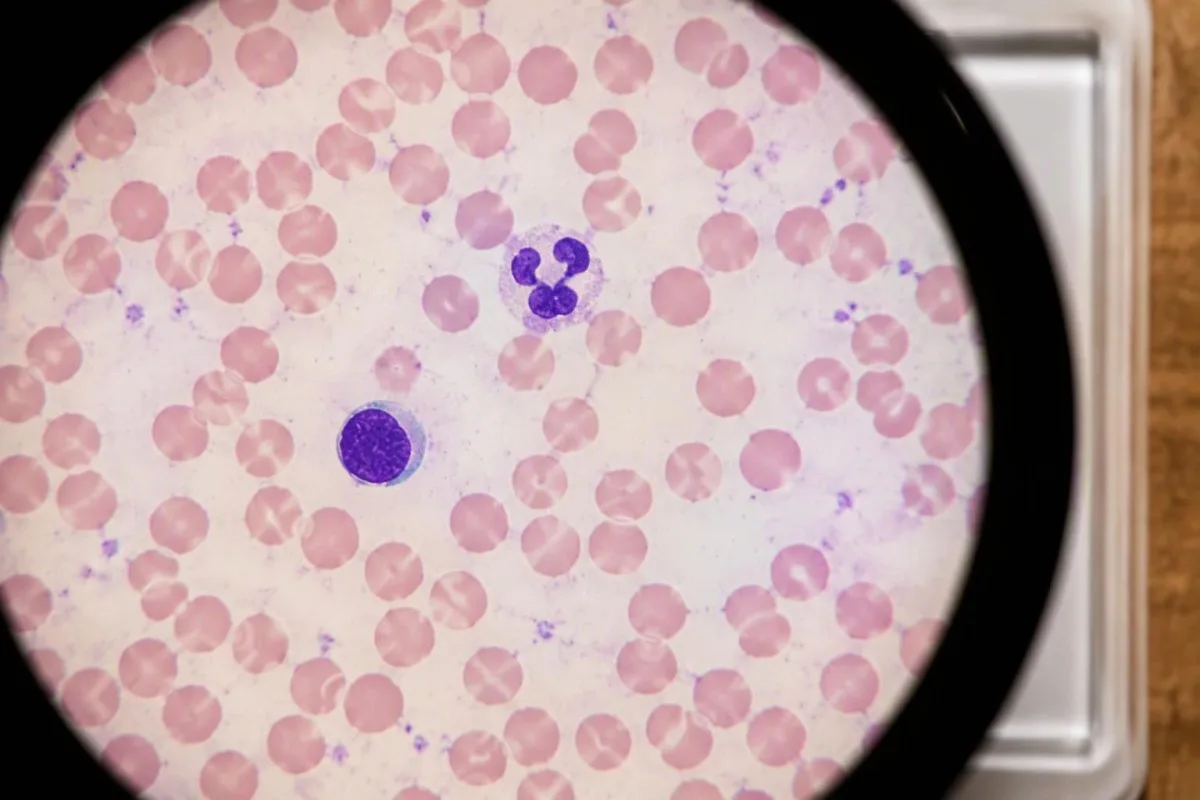
Recent viral illness, other medicines, autoimmune disease and nutritional deficiency can all lower ANC; a count of 900 cells/µL establishes neutropenia but does not establish its cause. Clinicians review the timing of drug exposure and may examine hemoglobin, platelets and a cell sample slide; concurrent abnormalities can justify evaluation for possible marrow disorders.
Kantesti is an AI blood test interpretation platform that can place an ANC of 0.9 × 10⁹/L beside platelet and hemoglobin trends, while leaving causation and medication decisions to clinicians. Our broader hematoloģijas marķieru ceļvedis explains why a normal red-cell result does not erase an isolated neutrophil problem.
Sampling time and temporary physiological variation can affect a borderline result, but there is no safe rule that an afternoon repeat will always normalize an ANC of 1,400 cells/µL. If a clinician requests a repeat at a consistent time, follow that plan without delaying necessary care; exercise, supplements or deliberate timing changes should not be used to manipulate a treatment-clearance result.
Kuru infekcijas simptomu gadījumā nepieciešama steidzama izvērtēšana?
During clozapine treatment, fever of 38.0°C or higher, new sore throat, mouth sores, shaking chills or sudden marked illness warrants urgent same-day clinical assessment. A known ANC below 500 cells/µL makes possible infection especially urgent. Confusion, breathing difficulty, fainting or rapidly worsening illness requires emergency help, regardless of the last count.
Formal febrile-neutropenia definitions often use a single temperature of at least 38.3°C or at least 38.0°C sustained for 1 hour, together with severe or impending severe neutropenia. Those definitions support clinical classification—not a home instruction to wait an hour; tell the urgent-care team that you take clozapine and provide your last ANC if available.
An ANC of 2,000 cells/µL measured 7 days ago cannot exclude a new fall today, and severe neutropenia can weaken usual local signs such as redness or discharge. Assessment may include an urgent CBC with differential, cultures and examination; our procalcitonin interpretation guide explains why a low infection biomarker cannot independently rule out an early serious infection.
New fever may also signal pneumonia, myocarditis or another illness that raises clozapine concentrations, creating 2 linked safety questions: immune protection and medication toxicity. Call the prescribing team's urgent number immediately for advice about the next dose; if you cannot reach them promptly while significantly unwell, seek urgent care rather than waiting for an app interpretation or routine appointment.
Kā citas zāles, smēķēšana un saslimšana ietekmē uzraudzību?
Other medicines can increase neutropenia risk or change clozapine concentrations, and those are different problems requiring different tests. ANC is measured in cells/µL, whereas clozapine concentration is commonly measured in ng/mL; a normal ANC does not exclude excessive drug exposure, and a therapeutic concentration does not exclude neutropenia.

Carbamazepine is generally avoided with clozapine because of marrow-suppression risk and clinically relevant interactions; concurrent valproate has also been associated with neutropenia in observational studies. A hypothetical ANC decline from 2,600 to 1,300 cells/µL after adding another medicine warrants a complete medication review, not a conclusion that clozapine is necessarily the sole cause; valproate level interpretation addresses the separate issue of drug exposure.
Stopping combustible smoking can raise clozapine concentrations because smoke components—not nicotine itself—induce CYP1A2 metabolism. A person who stops smoking during a 3-day hospital admission may therefore need prescriber-directed concentration monitoring and dose review; our nicotine test explanation clarifies why cotinine alone does not measure the smoke-related enzyme effect.
Kantesti can explain why an ANC of 2,100 cells/µL and a clozapine level of 900 ng/mL describe different risks, but we cannot select a safer dose. Fever, major caffeine changes and interacting medicines such as ciprofloxacin can alter exposure; report new excessive sedation, confusion or muscle jerks promptly, even if the neutrophil result is reassuring.
Kas notiek pēc izlaistām pārbaudēm vai ārstēšanas pārtraukuma?
A missed ANC appointment can create a supply problem, while a clozapine treatment break can create a separate restarting hazard. After more than 48 hours without clozapine, many protocols require supervised re-titration beginning at 12.5 mg once or twice daily rather than immediate return to the previous dose; exact instructions depend on the prescribing information.
Tolerance to clozapine's blood-pressure effects can be lost quickly, so restarting a previous 300 mg daily regimen after a break may cause profound hypotension or collapse. US prescribing information also specifies reduced restart doses for shorter interruptions; patients should contact the prescribing team after missed doses rather than using a remembered 48-hour rule to decide what to take.
A treatment break does not always reset ANC surveillance to the beginning, because monitoring rules depend on interruption duration and the reason treatment stopped. In the US normal-ANC pathway, interruptions of 30 days or longer generally return patients to initiation-style monitoring; national monitoring services may use different interruption rules, especially after an abnormal count.
After a hypothetical 5-day admission, confirm the last dose, current prescription, latest ANC and who will supervise the next dose before leaving hospital. Our explanation of rezultātiem pēc izrakstīšanas no slimnīcas helps organize altered laboratory values, but it cannot reconcile prescriptions or authorize restarting after neutropenia.
Ko ANC uzraudzība neatklāj par klozapīna drošumu?
ANC monitoring does not detect clozapine-related myocarditis, constipation, metabolic complications or excessive drug concentrations. Some initiation protocols add weekly troponin and CRP during the first 4 weeks, while ongoing care assesses bowel function, weight, glucose and lipids. A satisfactory ANC therefore confirms only one part of medication safety.
New chest pain, breathlessness or persistent unexplained tachycardia during the first 4 weeks needs prompt clinical assessment rather than reassurance from a normal ANC. Troponin and CRP can support a myocarditis investigation, but thresholds and screening practices vary; our myocarditis testing explanation describes why laboratory results must be interpreted with symptoms and cardiac evaluation.
Clozapine-related bowel slowing can become dangerous even when stool is still passing, and severe abdominal pain, distension or vomiting requires urgent assessment. Record bowel frequency and stool consistency rather than asking only whether constipation is present; the izkārnījumu konsistences ceļvedis provides a shared description, while a change lasting 48 hours should prompt contact according to the patient's bowel-management plan.
Correll et al. (2022) describe a clozapine plasma reference range of approximately 350–600 ng/mL for many treatment-response decisions, while emphasizing individual variation and adverse effects. That range is not an ANC target or a universal safe-dose boundary; concentration samples usually need defined timing relative to the last dose, whereas routine ANC collection generally does not require a trough sample.
Kā sagatavoties nākamajai klozapīna terapijas pārskatīšanai?
Bring the latest ANC, its units, earlier counts and a complete medication list to every clozapine review. Ask which national and service-specific pathway applies, what happens below its thresholds and whom to contact urgently. Keeping at least 3 dated results available helps distinguish a stable baseline from a new decline.

For a hypothetical sequence of 2,400, 1,900 and 1,400 cells/µL, useful questions concern the trend, recent illness, interacting medicines and the required next sample—not simply whether the latest value is red. Also ask who receives results outside office hours and whether the pharmacy needs monitoring-service clearance; these practical details can prevent an avoidable treatment gap.
Kantesti is an AI biomarker interpretation platform that helps translate an ANC of 1.4 × 10⁹/L into an understandable count and a list of clinician questions. Our tehniskās un klīniskās uzraudzības aprakstā describes the boundaries of interpretation; it does not establish that an automated answer is a validated clozapine prescribing decision or a substitute for hematology advice.
Kantesti's educational workflow should preserve 3 essentials: the source result, the applicable clinical protocol and the human decision-maker. Our atbildīga MI principi explain why urgent symptoms take priority over automated analysis, while our informāciju par privātumu un datiem explains considerations when sharing sensitive psychiatric and laboratory records.
Pētniecības publikācijas un pierādījumu robežas
The 2 Kantesti publications listed in the research publication section concern digestive symptoms and women's health, not clozapine ANC thresholds or monitoring schedules. Their Figshare DOIs identify those publications but do not establish peer review or provide evidence for clozapine decisions; the directly relevant medical and regulatory sources are listed separately below.
Bieži uzdotie jautājumi
Kāds ANC rādītājs ir pārāk zems, lai turpinātu lietot klozapīnu?
The ANC threshold for continuing clozapine depends on the country and the patient's documented baseline pathway. In the US general pathway, ANC of 1,000–1,499 cells/µL can allow continuation with increased monitoring, while 500–999 cells/µL usually requires interruption when clozapine-induced neutropenia is suspected. A documented BEN or Duffy-null-associated pathway can permit continuation at 500–999 cells/µL under specialist supervision. ANC below 500 cells/µL requires urgent clinical management; patients should obtain immediate prescriber instructions rather than change treatment themselves.
Vai man joprojām jāveic ANC asins analīzes pēc klosapīna REMS atcelšanas?
Jā, ASV klozapīna REMS programmas atcelšana neatcēla klīnisko ieteikumu uzraudzīt absolūto neitrofilu skaitu (ANC). FDA 2025. gada 13. jūnijā likvidēja reģistru, tādējādi izbeidzot prasības par reģistrāciju, ziņošanu un atļauju izsniegšanu zāļu izsniegšanai. Zāļu aprakstā noteiktais grafiks parasti joprojām paredz analīzes reizi nedēļā pirmos 6 mēnešus, reizi 2 nedēļās nākamos 6 mēnešus un pēc tam reizi mēnesī. Pēc neitropēnijas, ārstēšanas pārtraukuma vai citām nozīmīgām klīniskām izmaiņām ārsts, kurš izraksta zāles, var pieprasīt papildu analīzes.
Why is my clozapine blood test schedule different from someone else's?
Klozapīna asins analīžu grafiki atšķiras, jo valstu zāļu apraksti, uzraudzības dienesti, ārstēšanas ilgums un iepriekšējie ANC rādītāju notikumi nav vienādi. Tradicionālie Apvienotās Karalistes uzraudzības plāni paredz analīzes katru nedēļu 18 nedēļas, ik pēc divām nedēļām līdz 1 gadam un pēc tam ik pēc 4 nedēļām. Pārskatītie Eiropas ieteikumi var atļaut analīzes ik pēc 12 nedēļām pēc 1 gada un reizi gadā pēc 2 gadiem atbilstošiem pacientiem ar stabilu stāvokli, ja tas tiek īstenots vietējā līmenī. Pirms jebkuras vizītes maiņas lūdziet savam zāļu izrakstīšanas dienestam apstiprināt piemērojamo grafiku.
Vai klosapīns var izraisīt neitropēniju pēc gadiem ilgiem normāliem rezultātiem?
Ar klzapīnu saistīta neitropēnija var rasties arī pēc gadiem ilgiem normāliem rezultātiem, lai gan risks ir daudz lielāks ārstēšanas sākumā. Pirmajās 18 nedēļās līdz 6 mēnešos novēro lielāko daļu smagu gadījumu. Ja pēc 2 gadiem konstatēts jauns zems asins šūnu skaits, joprojām jāizvērtē klzapīna, citu zāļu, infekcijas un kaulu smadzeņu vai autoimūnu slimību iespējamā nozīme. Iepriekš rassinošs ANC neatceļ nepieciešamību pēc steidzamas izvērtēšanas, ja rodas drudzis vai pēkšņa saslimšana.
Ko darīt, ja klosapīna lietošanas laikā man ir drudzis?
Drudzis 38,0 °C vai augstāks, lietojot klozapīnu, prasa steidzamu ārsta izvērtējumu tajā pašā dienā, īpaši tad, ja ir iekaisis kakls, čūlas mutē, drebuļi vai izteikts vājums. Informējiet ārstu, ka lietojat klozapīnu, un, ja iespējams, norādiet jaunāko absolūto neitrofilu skaitu (ANC). Ja zināmais ANC ir zemāks par 500 šūnām/µL, iespējamā infekcija ir īpaši steidzama, bet apjukuma, apgrūtinātas elpošanas vai samaņas zuduma gadījumā nepieciešama neatliekamā palīdzība. Nekavējoties saņemiet ārsta norādījumus par nākamo devu, nevis gaidiet nākamo plānoto analīzi vai patstāvīgi mainiet zāļu lietošanu.
Vai varu atsākt lietot savu parasto klozapīna devu pēc divu dienu izlaišanas?
Pēc ārstēšanas pārtraukuma nevajadzētu atsākt parasto klozapīna devu bez norādījumiem no zāles izrakstījušās komandas. Ja ārstēšana nav saņemta ilgāk par 48 stundām, daudzos protokolos nepieciešams atkārtoti pakāpeniski palielināt devu, sākot ar 12,5 mg vienu vai divas reizes dienā, jo var zust tolerance pret ietekmi uz asinsspiedienu. Dažādu zāļu izrakstīšanas informācijā arī pēc īsākiem pārtraukumiem var būt prasība samazināt devu. Nekavējoties sazinieties ar komandu, jo pareizais atsākšanas plāns un ANC pārbaužu grafiks ir atkarīgs no precīza pārtraukuma ilguma un iemesla.
Vai normāls balto asins šūnu skaits nozīmē, ka mans klozapīna absolūtais neitrofilu skaits (ANC) ir drošs?
Normāls kopējais balto asins šūnu skaits negarantē, ka ANC ir pietiekams klozapīna terapijai. Piemēram, WBC 6 000 šūnu/µL un 15% neitrofilu gadījumā ANC ir 900 šūnu/µL. Lēmumos par terapiju jāņem vērā absolūtais neitrofilu skaits, piemērojamais protokols un klīniskā situācija, nevis tikai WBC. Normāls ANC arī neizslēdz miokardītu, smagu zarnu darbības palēnināšanos vai pārmērīgu klozapīna koncentrāciju.
Uzziniet, kā lasīt asins analīžu rezultātus
Augšupielādējiet laboratorijas pārskatu, un Kantesti mākslīgais intelekts dažu sekunžu laikā vienkāršā valodā izskaidros katru biomarķieri. To izmanto vairāk nekā 2 miljoni cilvēku visā pasaulē.
Atsauces
- Klein, T., Mitchell, S., & Weber, H. (2026). Caureja pēc badošanās, melni plankumi izkārnījumos un kuņģa-zarnu trakta ceļvedis, 2026. Kantesti mākslīgā intelekta medicīniskie pētījumi. DOI
- Klein, T., Mitchell, S., & Weber, H. (2026). Sievietes veselības ceļvedis: ovulācija, menopauze un hormonālie simptomi. Kantesti mākslīgā intelekta medicīniskie pētījumi. DOI
- Correll CU et al. (2022). A Guideline and Checklist for Initiating and Managing Clozapine Treatment in Patients with Treatment-Resistant Schizophrenia. CNS Drugs. DOI
- US Food and Drug Administration (2025). FDA removes risk evaluation and mitigation strategy (REMS) program for the antipsychotic drug Clozapine. FDA Drug Safety and Availability.
- European Medicines Agency (2025). Clozapine: revised recommendations for routine blood count monitoring. Direct healthcare professional communication.
- 2M+Analizētie testi
- 127+Valstis
- 100+Valodas
Par medicīnas komandu


E-E-A-T uzticēšanās signāli
Pieredze
Ārstu vadīta klīniskā laboratorijas interpretācijas darbplūsmu pārskatīšana.
Ekspertīze
Laboratorijas medicīnas fokuss uz to, kā biomarķieri uzvedas klīniskā kontekstā.
Autoritāte
Medicīniski recenzējis Dr. Thomas Klein, piedaloties Dr. Sarah Mitchell un Prof. Dr. Hans Weber.
Uzticamība
Uz pierādījumiem balstīta interpretācija ar skaidriem turpmākās rīcības ceļiem, lai mazinātu trauksmi.





Medicīniskā atruna
Šis raksts ir paredzēts tikai izglītojošiem nolūkiem un nav medicīnisks padoms. Vienmēr konsultējieties ar kvalificētu veselības aprūpes speciālistu, lai pieņemtu lēmumus par diagnostiku un ārstēšanu.
Publicēts · Sazinieties ar redakcijas komandu
Publicējis Kantesti Ltd, reģistrēts Anglijā un Velsā, uzņēmuma reģistrācijas Nr. 17090423, Londona, Apvienotā Karaliste.
