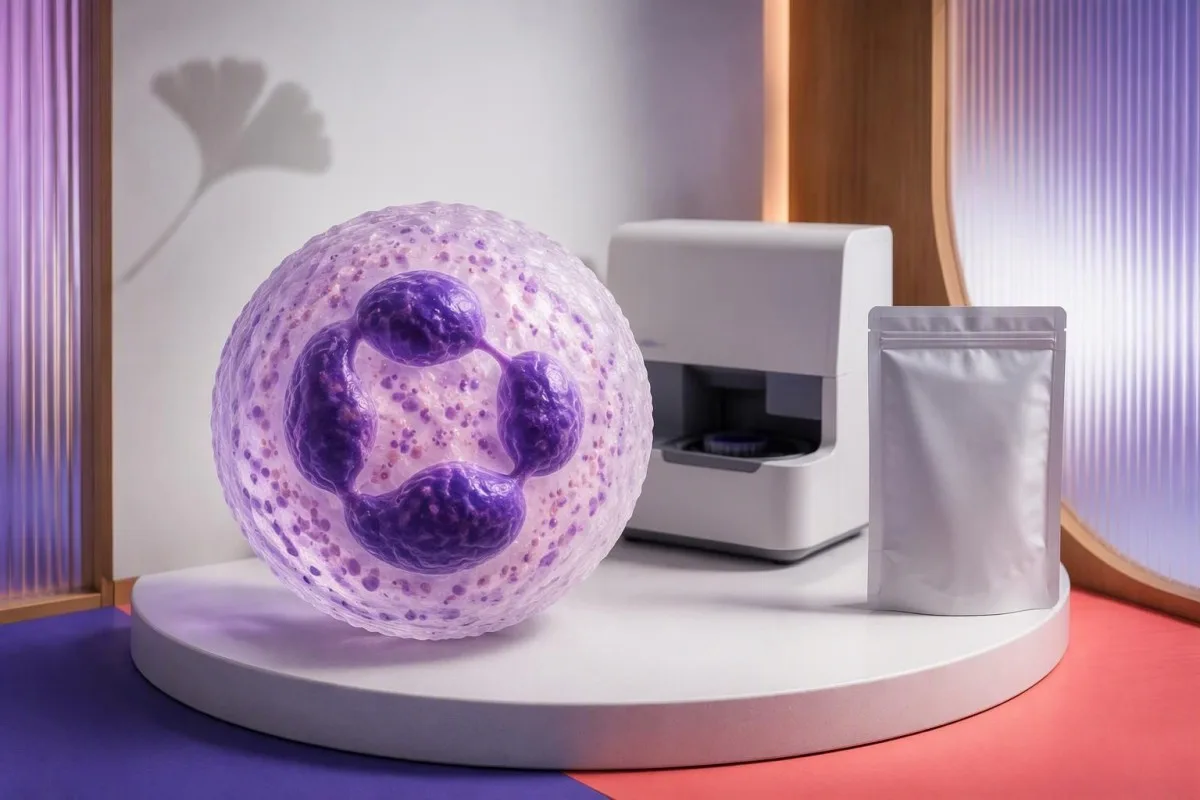
Klotsapiinin seurannassa käytetään absoluuttista neutrofiilimäärää (ANC) vaarallisen neutropenian havaitsemiseen; matala tulos voi johtaa lisätutkimuksiin, erikoislääkärin arvioon tai terveydenhuollon ammattilaisen määräämään hoitotaukoon. Aikataulut vaihtelevat maittain ja hoidon vaiheen mukaan. Kuume, kurkkukipu tai äkillinen sairastuminen vaatii kiireellisen arvion – myös rauhoittavan tuloksen jälkeen. Älä muuta klotsapiinihoitoasi itse.

Keskeiset huomiot
- ANC-yksiköt: 1,0 × 10⁹/l vastaa 1 000 solua/µl; tarkista yksiköt ennen tulosten vertaamista hoidon raja-arvoihin.
- Yhdysvaltain yleiset raja-arvot: ANC-arvolla 1 000–1 499 solua/µl hoitoa voidaan jatkaa tihennetyllä seurannalla; arvot 500–999 solua/µl johtavat yleensä terveydenhuollon ammattilaisen määräämään hoitotaukoon, kun epäillään klotsapiinin aiheuttamaa neutropeniaa.
- Vaikea neutropenia: Alle 500 solun/µl ANC-arvo edellyttää kiireellistä kliinistä hoitoa, johon yleensä kuuluu hoidon keskeyttäminen ja hematologin osallistuminen.
- Duffy-null-neutrofiilimäärät: Dokumentoitu Duffy-null-assosioitunut neutrofiilimäärä voi oikeuttaa poikkeavaan hoitopolkuun; pelkkä syntyperä ei osoita hoitopolkuun kuulumista.
- Yhdysvaltain aikataulu: Valmisteyhteenvedon mukainen seuranta alkaa yleensä viikoittaisilla mittauksilla 6 kuukauden ajan, sitten mittauksilla 2 viikon välein 6 kuukauden ajan ja sen jälkeen kuukausittain.
- Hallinnolliset muutokset: FDA poisti Yhdysvaltain klotsapiinin REMS-ohjelman 13. kesäkuuta 2025; tämä poisti rekisteröintivaatimukset, ei kliinistä tarvetta ANC-seurantaan.
- Kansainväliset aikataulut: Perinteisissä Yhdistyneen kuningaskunnan käytännöissä käytetään viikoittaisia mittauksia 18 viikon ajan, mittauksia kahden viikon välein 1 vuoteen asti ja sen jälkeen 4 viikon välein; tarkistetut eurooppalaiset suositukset voivat sallia pidemmät mittausvälit soveltuville, vakaille potilaille.
- Kiireelliset oireet: Kuume, joka on vähintään 38,0 °C, uusi kurkkukipu, suun haavaumat, voimakkaat vilunväristykset tai äkillinen huomattava sairastuminen edellyttävät kiireellistä saman päivän arviota. Sekavuus, hengitysvaikeudet tai tajunnan menetys edellyttävät hätäapua.
Mihin klotsapiinin seurannassa oikeastaan perustuvat hoitopäätökset?
Klotsapiinin seurannassa ANC-tuloksia käytetään kliinisen päätöksenteon tukena, jotta voidaan ratkaista, voiko hoitoa jatkaa, tarvitaanko tiiviimpää seurantaa vai onko hoito keskeytettävä. ANC-arvo alle 500 solua/µl on vakava turvallisuuteen liittyvä löydös, mutta suurempien arvojen kohdalla päätökset riippuvat maan käytännöistä, aiemmista tuloksista ja potilaan dokumentoidusta lähtötasosta.
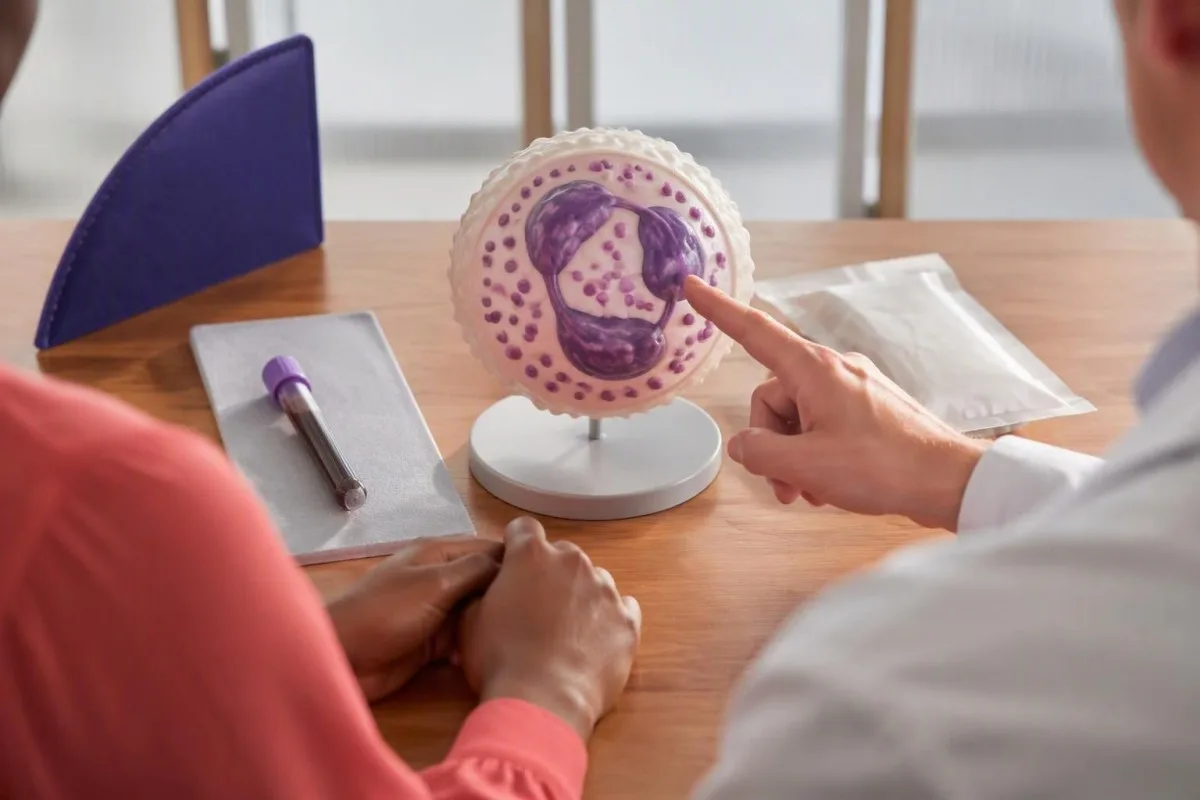
ANC-tulos ei yksinään ole lääkemääräysohje: 1 200 solun/µl arvo voi sallia hoidon jatkamisen yhden käytännön mukaan mutta johtaa toisenlaiseen toimenpiteeseen toisessa käytännössä. Lääkkeen määrääjän on selvitettävä oikea käytäntö ennen luvun tulkintaa; Yhdysvaltain raja-arvon soveltaminen Yhdistyneen kuningaskunnan seurantapalvelun hälytykseen voi aiheuttaa vältettävissä olevan ongelman lääkkeen saatavuudessa.
Kantesti on tekoälypohjainen verianalysaattori, joka voi selittää, että ANC-arvo 1,2 × 10⁹/l vastaa 1 200 solua/µl, mutta tulkintamme ei oikeuta klotsapiinin toimittamiseen eikä korvaa hoitotiimiä. Meidän yritystietomme kertoo koulutuspalvelua tarjoavan organisaation, ei klotsapiinin seurantarekisteriä.
Laskevaan arvoon on syytä kiinnittää huomiota jo ennen kuin se alittaa hoitokynnyksen: hypoteettinen lasku arvosta 4 000 arvoon 1 700 solua/µl poikkeaa tilanteesta, jossa lähtötaso on pitkään ollut lähellä 1 700:aa. Oppaamme, joka käsittelee rajatapaus neutrofiilitulokset selittää tavanomaista vaihtelua, mutta klotsapiinin käyttäjien tulee pyytää lääkekohtaista neuvontaa sen sijaan, että he noudattaisivat yleistä uusintamittausten aikataulua.
Miten ANC-yksiköt luetaan ja solumäärä lasketaan?
ANC mittaa neutrofiilien absoluuttisen määrän, ei niiden osuutta valkosoluista. Muunnos on tarkka: 1,0 × 10⁹/l vastaa 1 000 solua/µl. Laboratorion viiteväli ja klotsapiinihoidon raja-arvo vastaavat eri kysymyksiin, joten poikkeavaksi merkitty tulos ei automaattisesti tarkoita, että hoito on lopetettava.
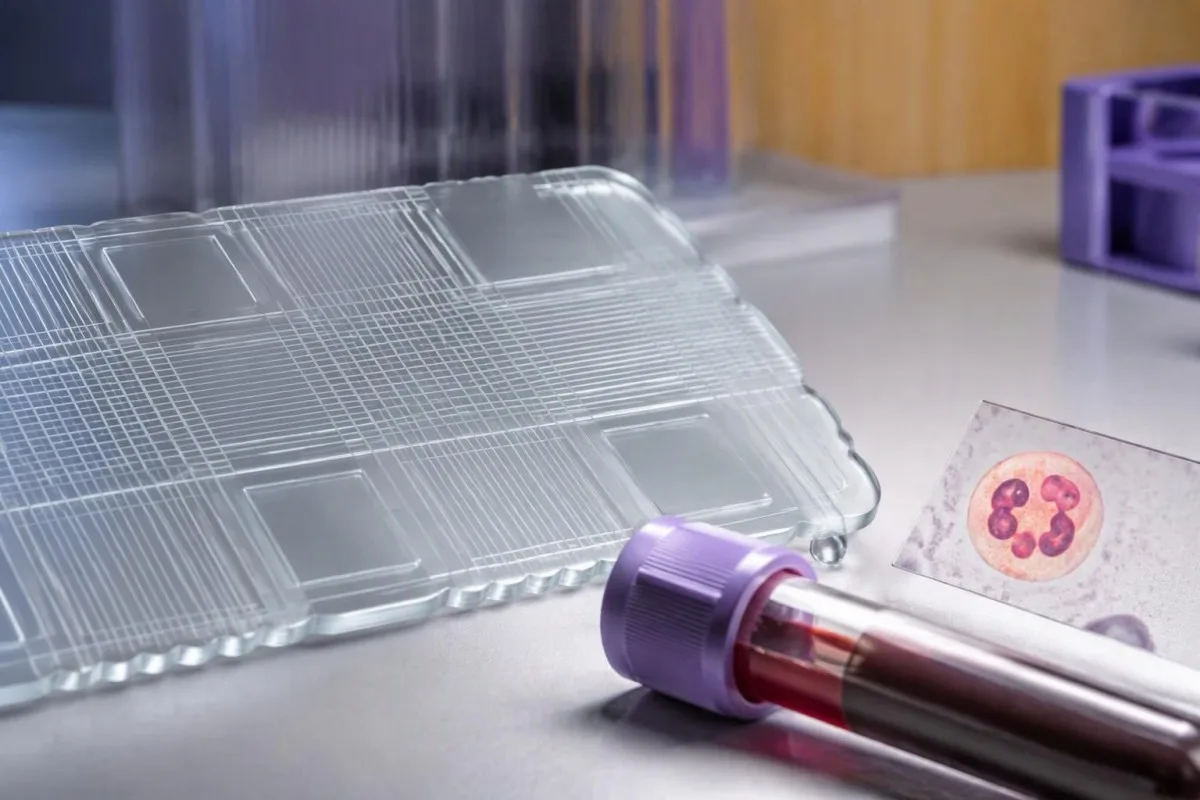
Useimmat nykyaikaiset laboratoriot ilmoittavat ANC-arvon suoraan, yleensä neutrofiileinä, absoluuttisina neutrofiileinä tai merkinnällä NEUT#. Jos laskeminen on tarpeen, kerro WBC neutrofiiliosuudella ja sisällytä sauvatumaiset neutrofiilit, jos ne ilmoitetaan erikseen; esimerkiksi 4 000 solua/µl × 0,40 antaa ANC-arvoksi 1 600 solua/µl, ei 40 solua/µl.
Hypoteettinen WBC-arvo 6 000 solua/µl ja neutrofiiliosuus 15% tuottavat ANC-arvoksi 900 solua/µl, vaikka WBC-arvo saattaa olla laboratorion viitevälin sisällä. Tämä ristiriita selittää, miksi neutrofiilien viiteväliä käsittelevä opas erottaa absoluuttisen määrän erittelylaskennan prosenttiosuudesta.
Desimaalimerkintä voi aiheuttaa vaarallisia väärinkäsityksiä: 0,8 × 10⁹/l tarkoittaa 800 solua/µl, kun taas 8,0 × 10⁹/l tarkoittaa 8 000 solua/µl. Vertaa alkuperäistä raporttia, näytteenottopäivää ja yksiköitä, älä rajattua kuvakaappausta tai käsin syötettyä lukua, ja pyydä laboratoriota tai seurantatiimiä selvittämään kaikki epäselvyydet ennen tuloksen käyttämistä lääkkeen määräämiseen.
| Taso | Vaihteluväli | Mitä se tarkoittaa |
|---|---|---|
| Tavanomaisen neutropeniarajan yläpuolella | ≥1,5 × 10⁹/l; ≥1 500 solua/µl | Usually outside the conventional adult neutropenia definition; this is not a universal laboratory reference interval or dispensing rule. |
| Lievä neutropenia | 1.0–1.499 × 10⁹/L; 1,000–1,499 cells/µL | Requires interpretation against baseline, symptoms and the applicable clozapine pathway. |
| Keskivaikea neutropenia | 0.5–0.999 × 10⁹/L; 500–999 cells/µL | Often requires urgent prescriber review; treatment actions differ for general and documented Duffy-null pathways. |
| Vaikea neutropenia | <0.5 × 10⁹/L; <500 cells/µL | High-risk finding requiring urgent clinical management, usually hematology involvement and clinician-directed interruption. |
Mitkä ANC-tulokset muuttavat hoitoa Yhdysvaltain hoitopolussa?
The US general-population pathway usually permits clozapine initiation at ANC ≥1,500 cells/µL. During treatment, ANC of 1,000–1,499 cells/µL can allow continuation with intensified monitoring; 500–999 cells/µL generally requires interruption when clozapine-induced neutropenia is suspected. These are clinician actions, not instructions for patients to adjust medication.
For mild neutropenia, the US prescribing-information approach commonly increases ANC checks to 3 times weekly until recovery to at least 1,500 cells/µL. Correll et al. (2022), in CNS Drugs, reproduce these management pathways and emphasize that clozapine's substantial psychiatric benefits must be considered alongside hematological risk rather than treating every low result identically.
For ANC of 500–999 cells/µL in the general pathway, clinicians usually arrange hematology input and daily testing initially, with treatment resumption considered after recovery according to the label. A repeat sample can clarify an unexpected result, but a symptomatic patient or a rapidly falling count should not wait 24 hours merely to obtain a more convenient number.
A count below 500 cells/µL enters the severe-neutropenia pathway, where any later rechallenge requires an explicit specialist risk–benefit decision. Total WBC or CRP cannot substitute for ANC; our explanation of WBC ja CRP -ristiriita shows why apparently reassuring results elsewhere in the panel do not cancel a low neutrophil count.
| Taso | Vaihteluväli | Mitä se tarkoittaa |
|---|---|---|
| US general-pathway initiation threshold | ANC ≥1,500 cells/µL | Usually eligible for initiation from a hematological perspective, subject to the full prescribing assessment. |
| Mild neutropenia during treatment | ANC 1,000–1,499 cells/µL | Treatment can often continue under prescriber direction with ANC monitoring 3 times weekly. |
| Moderate neutropenia during treatment | ANC 500–999 cells/µL | Usually interrupt if clozapine-induced neutropenia is suspected; obtain hematology advice and intensified monitoring. |
| Severe neutropenia during treatment | ANC <500 cells/µL | Interrupt under urgent clinical management; any future rechallenge needs specialist justification. |
Miten Duffy-null-assosioitunut neutrofiilimäärä muuttaa päätöksentekoa?
Documented Duffy-null-associated neutrophil counts can justify lower clozapine ANC thresholds because a stable lower circulating count does not necessarily indicate impaired immunity. US prescribing information has historically called this the benign ethnic neutropenia, or BEN, pathway; its usual initiation threshold is ANC ≥1,000 cells/µL with at least 2 baseline measurements.
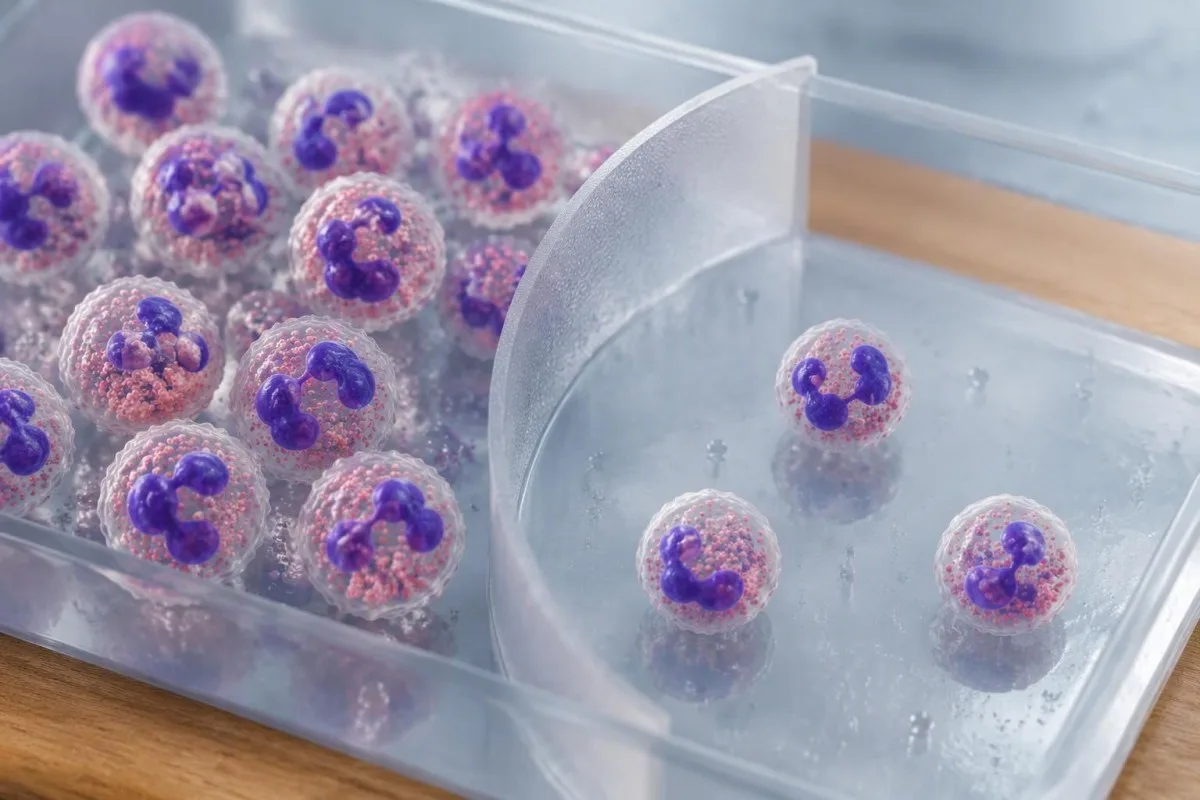
Under the US documented BEN pathway, an ANC of 500–999 cells/µL may permit continued clozapine with hematology consultation and monitoring 3 times weekly. This differs from the general pathway at the same number; the distinction must already be established clinically, not inferred after an alarming result simply to avoid an interruption.
Ancestry is not a diagnostic test for Duffy-null status, and 2 people with similar ancestry may have different baseline ANC patterns. Our Duffy-null count explanation discusses phenotype or genotype evidence, historical counts and assessment for other causes; genetic testing is not universally required, but a clinician-documented explanation is needed for an alternative treatment pathway.
A hypothetical stable baseline of 1,200 cells/µL does not make a new fall to 450 cells/µL harmless: that result meets the severe-neutropenia threshold even in the US BEN pathway. Fever, recurrent unusual infections, anemia or low platelets also weakens the assumption that a low ANC is an isolated constitutional finding and warrants a broader assessment.
Kuinka suuri klotsapiiniin liittyvän neutropenian riski on ajan myötä?
Clozapine neutropenia risk is concentrated early in treatment, especially during the first 18 weeks to 6 months, but it does not disappear later. Correll et al. (2022) describe agranulocytosis as affecting approximately 1% of treated patients; estimates vary across populations, monitoring systems and definitions, so this is not an individual prediction.

Approximately 1% means roughly 1 in 100 treated people in that broad estimate, not a 1% risk every month and not a 1% risk after every dose. Mild neutropenia is more frequent than agranulocytosis, and studies that combine the two outcomes can make the risk of life-threatening neutrophil depletion appear larger than it actually is.
Early intensive testing reflects the concentration of events during the first 6 months, rather than an assumption that each additional tablet causes predictable cumulative marrow damage. Severe clozapine-associated neutropenia is not reliably prevented by choosing a low dose alone, and a previously normal count cannot guarantee that the next count will remain normal.
After 2 years of stable treatment, the absolute risk is generally much lower than during initiation, which helps explain proposals for less frequent routine testing. Late neutropenia still needs investigation for medication effects, illness and marrow disease; our guide to yleisten infektioiden testaamiseen explains why symptoms and other cell lines can reveal risks that an ANC-only schedule misses.
Millainen on klotsapiinin seuranta-aikataulu Yhdysvalloissa REMS-ohjelman jälkeen?
The US prescribing-information ANC schedule generally remains weekly for 6 months, every 2 weeks for the next 6 months, then monthly. The FDA removed the clozapine REMS on June 13, 2025, ending its enrollment and ANC-reporting requirements; that administrative change did not remove the clinical recommendation to monitor neutrophils.

The FDA's 2025 clozapine REMS removal communication separates access restrictions from safe prescribing: prescribers, pharmacies and patients no longer need to participate in that federal registry. A pharmacy no longer needs the former REMS dispensing authorization, but the prescriber may still require a recent ANC and a local service may still use an electronic safety workflow.
For a hypothetical patient completing 6 months without a concerning ANC event, the usual label pathway moves from weekly to every-2-week monitoring rather than immediately to monthly testing. Neutropenia, a treatment interruption or a relevant medication change can alter that plan; ask which event starts the next monitoring period instead of counting months independently.
Kantesti can help explain a trend across 3 dated ANC reports, but our platform does not determine the next legally or clinically acceptable dispensing date. Our lääketurvatrendiopas explains why the original collection dates and the prescribing team's schedule must remain attached to any AI-generated summary.
Miksi Ison-Britannian seurantapalveluissa voidaan käyttää eri aikataulua?
Traditional UK clozapine monitoring pathways use weekly testing for 18 weeks, every 2 weeks until 1 year, then every 4 weeks. UK dispensing has also depended on product-linked monitoring-service clearance; revised recommendations and local implementation can change the pathway, so the patient's own service must confirm the schedule and action thresholds.

An older UK pathway may classify ANC of 1.5–2.0 × 10⁹/L as amber and below 1.5 × 10⁹/L as red in patients without an approved lower-baseline pathway. Those thresholds are not interchangeable with the US continuation algorithm, and legacy UK systems may also consider total WBC; the relevant service must state which rules it currently applies.
Every 4 weeks means every 28 days, not simply once in each calendar month, so a missed appointment can affect a supply window even when the previous result was satisfactory. A useful baseline testing plan should include who books the sample, who receives it and who contacts the patient if the monitoring service cannot release medication.
Administrative alerts can arise from an overdue sample, an unprocessed sample or a genuinely low count—3 different problems with different solutions. Contact the prescribing team and pharmacy promptly if supply is threatened; do not stretch doses, borrow tablets or assume that a policy change in another country has automatically changed your own monitoring-service rules.
Mitä muutoksia tarkistetuissa eurooppalaisissa ANC-suosituksissa tehtiin?
Revised European recommendations allow less frequent ANC testing in eligible stable patients: weekly for 18 weeks, monthly through the first year, every 12 weeks after 1 year and annually after 2 years. These longer intervals depend on the specified absence of neutropenia and the locally implemented product information; they are not a universal schedule.
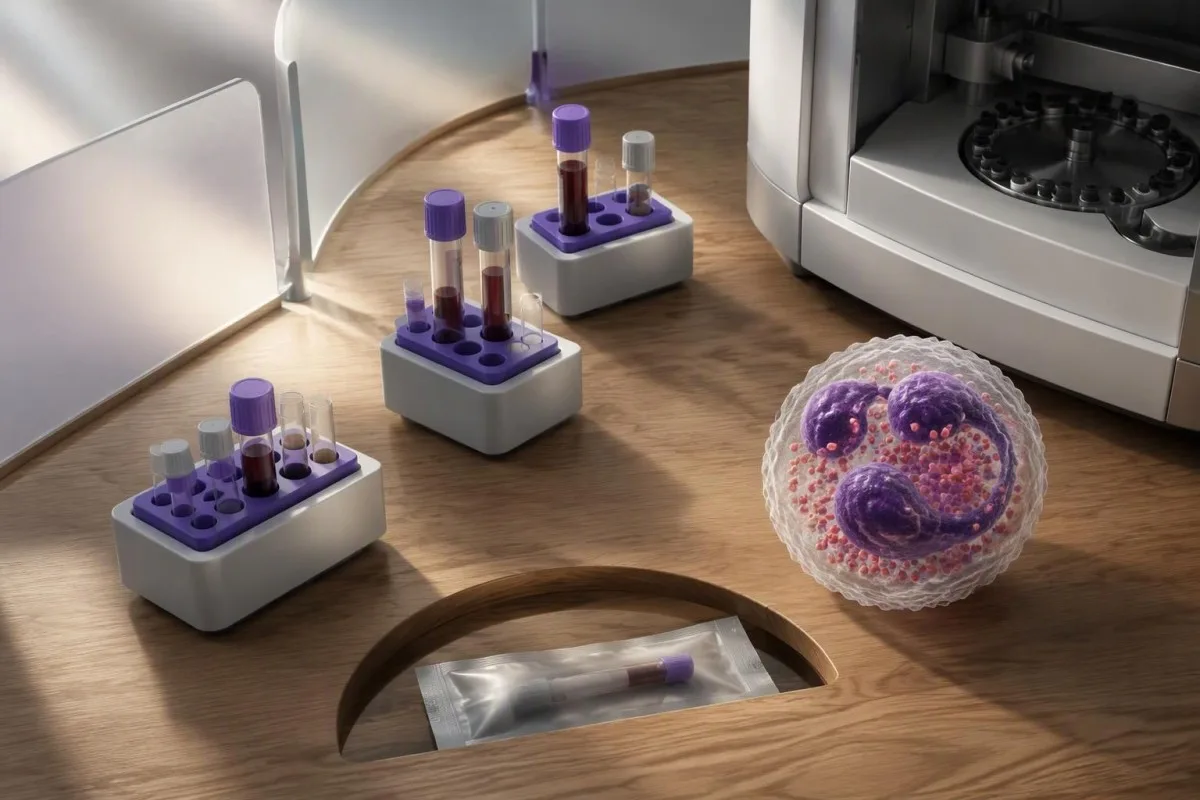
The European Medicines Agency's 2025 communication on revised routine blood count monitoring shifts the principal hematological measure toward ANC rather than combined WBC and ANC surveillance. The revised approach generally uses baseline ANC of at least 1,500 cells/µL, or at least 1,000 cells/µL in an established BEN pathway, while lowering some treatment-interruption thresholds compared with older European systems.
In the revised European approach, ANC below 1,000 cells/µL generally triggers stopping treatment in the standard pathway, whereas below 500 cells/µL is the corresponding threshold for an established BEN pathway. Results above those stopping thresholds can still require intensified surveillance; a hypothetical count of 1,100 cells/µL is not a reason to ignore a new downward trend.
Country authorization, the particular product information and service implementation can differ, even when patients have each taken clozapine for 2 years. Our guide to blood-test timing and changes explains why historical stability matters; obtain written confirmation before assuming that an annual European schedule applies to a UK, US or other national pathway.
Mitä odottamattoman matalan ANC-arvon jälkeen pitäisi tehdä?
An unexpected low ANC needs prompt prescriber review, confirmation when appropriate and assessment for causes other than clozapine. In the US label pathway, an initial ANC below 1,500 cells/µL is generally confirmed within 24 hours, but severe neutropenia or infection symptoms require immediate management rather than waiting for a routine repeat.
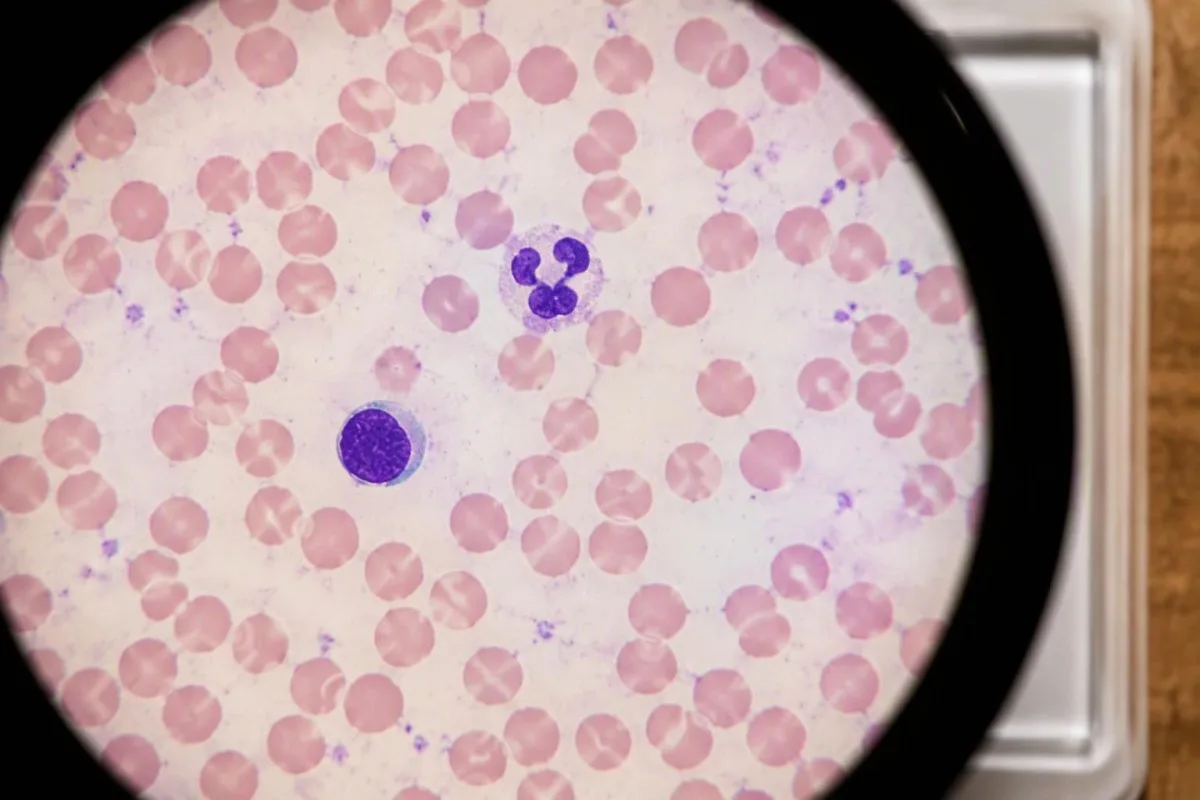
Recent viral illness, other medicines, autoimmune disease and nutritional deficiency can all lower ANC; a count of 900 cells/µL establishes neutropenia but does not establish its cause. Clinicians review the timing of drug exposure and may examine hemoglobin, platelets and a cell sample slide; concurrent abnormalities can justify evaluation for possible marrow disorders.
Kantesti is an AI blood test interpretation platform that can place an ANC of 0.9 × 10⁹/L beside platelet and hemoglobin trends, while leaving causation and medication decisions to clinicians. Our broader hematologiamarkkeriopas explains why a normal red-cell result does not erase an isolated neutrophil problem.
Sampling time and temporary physiological variation can affect a borderline result, but there is no safe rule that an afternoon repeat will always normalize an ANC of 1,400 cells/µL. If a clinician requests a repeat at a consistent time, follow that plan without delaying necessary care; exercise, supplements or deliberate timing changes should not be used to manipulate a treatment-clearance result.
Mitkä infektion oireet vaativat kiireellisen arvion?
During clozapine treatment, fever of 38.0°C or higher, new sore throat, mouth sores, shaking chills or sudden marked illness warrants urgent same-day clinical assessment. A known ANC below 500 cells/µL makes possible infection especially urgent. Confusion, breathing difficulty, fainting or rapidly worsening illness requires emergency help, regardless of the last count.
Formal febrile-neutropenia definitions often use a single temperature of at least 38.3°C or at least 38.0°C sustained for 1 hour, together with severe or impending severe neutropenia. Those definitions support clinical classification—not a home instruction to wait an hour; tell the urgent-care team that you take clozapine and provide your last ANC if available.
An ANC of 2,000 cells/µL measured 7 days ago cannot exclude a new fall today, and severe neutropenia can weaken usual local signs such as redness or discharge. Assessment may include an urgent CBC with differential, cultures and examination; our procalcitonin interpretation guide explains why a low infection biomarker cannot independently rule out an early serious infection.
New fever may also signal pneumonia, myocarditis or another illness that raises clozapine concentrations, creating 2 linked safety questions: immune protection and medication toxicity. Call the prescribing team's urgent number immediately for advice about the next dose; if you cannot reach them promptly while significantly unwell, seek urgent care rather than waiting for an app interpretation or routine appointment.
Miten muut lääkkeet, tupakointi ja sairaudet vaikuttavat seurantaan?
Other medicines can increase neutropenia risk or change clozapine concentrations, and those are different problems requiring different tests. ANC is measured in cells/µL, whereas clozapine concentration is commonly measured in ng/mL; a normal ANC does not exclude excessive drug exposure, and a therapeutic concentration does not exclude neutropenia.
Carbamazepine is generally avoided with clozapine because of marrow-suppression risk and clinically relevant interactions; concurrent valproate has also been associated with neutropenia in observational studies. A hypothetical ANC decline from 2,600 to 1,300 cells/µL after adding another medicine warrants a complete medication review, not a conclusion that clozapine is necessarily the sole cause; valproate level interpretation addresses the separate issue of drug exposure.
Stopping combustible smoking can raise clozapine concentrations because smoke components—not nicotine itself—induce CYP1A2 metabolism. A person who stops smoking during a 3-day hospital admission may therefore need prescriber-directed concentration monitoring and dose review; our nicotine test explanation clarifies why cotinine alone does not measure the smoke-related enzyme effect.
Kantesti can explain why an ANC of 2,100 cells/µL and a clozapine level of 900 ng/mL describe different risks, but we cannot select a safer dose. Fever, major caffeine changes and interacting medicines such as ciprofloxacin can alter exposure; report new excessive sedation, confusion or muscle jerks promptly, even if the neutrophil result is reassuring.
Mitä tapahtuu, jos tutkimuksia jää väliin tai hoito keskeytyy?
A missed ANC appointment can create a supply problem, while a clozapine treatment break can create a separate restarting hazard. After more than 48 hours without clozapine, many protocols require supervised re-titration beginning at 12.5 mg once or twice daily rather than immediate return to the previous dose; exact instructions depend on the prescribing information.
Tolerance to clozapine's blood-pressure effects can be lost quickly, so restarting a previous 300 mg daily regimen after a break may cause profound hypotension or collapse. US prescribing information also specifies reduced restart doses for shorter interruptions; patients should contact the prescribing team after missed doses rather than using a remembered 48-hour rule to decide what to take.
A treatment break does not always reset ANC surveillance to the beginning, because monitoring rules depend on interruption duration and the reason treatment stopped. In the US normal-ANC pathway, interruptions of 30 days or longer generally return patients to initiation-style monitoring; national monitoring services may use different interruption rules, especially after an abnormal count.
After a hypothetical 5-day admission, confirm the last dose, current prescription, latest ANC and who will supervise the next dose before leaving hospital. Our explanation of tuloksista sairaalasta kotiutumisen jälkeen helps organize altered laboratory values, but it cannot reconcile prescriptions or authorize restarting after neutropenia.
Mitä klotsapiinin turvallisuuteen liittyvää ANC-seurannassa ei havaita?
ANC monitoring does not detect clozapine-related myocarditis, constipation, metabolic complications or excessive drug concentrations. Some initiation protocols add weekly troponin and CRP during the first 4 weeks, while ongoing care assesses bowel function, weight, glucose and lipids. A satisfactory ANC therefore confirms only one part of medication safety.
New chest pain, breathlessness or persistent unexplained tachycardia during the first 4 weeks needs prompt clinical assessment rather than reassurance from a normal ANC. Troponin and CRP can support a myocarditis investigation, but thresholds and screening practices vary; our myocarditis testing explanation describes why laboratory results must be interpreted with symptoms and cardiac evaluation.
Clozapine-related bowel slowing can become dangerous even when stool is still passing, and severe abdominal pain, distension or vomiting requires urgent assessment. Record bowel frequency and stool consistency rather than asking only whether constipation is present; the ulosteen koostumuksesta provides a shared description, while a change lasting 48 hours should prompt contact according to the patient's bowel-management plan.
Correll et al. (2022) describe a clozapine plasma reference range of approximately 350–600 ng/mL for many treatment-response decisions, while emphasizing individual variation and adverse effects. That range is not an ANC target or a universal safe-dose boundary; concentration samples usually need defined timing relative to the last dose, whereas routine ANC collection generally does not require a trough sample.
Miten sinun tulisi valmistautua seuraavaan klotsapiinihoidon seurantakäyntiin?
Bring the latest ANC, its units, earlier counts and a complete medication list to every clozapine review. Ask which national and service-specific pathway applies, what happens below its thresholds and whom to contact urgently. Keeping at least 3 dated results available helps distinguish a stable baseline from a new decline.

For a hypothetical sequence of 2,400, 1,900 and 1,400 cells/µL, useful questions concern the trend, recent illness, interacting medicines and the required next sample—not simply whether the latest value is red. Also ask who receives results outside office hours and whether the pharmacy needs monitoring-service clearance; these practical details can prevent an avoidable treatment gap.
Kantesti is an AI biomarker interpretation platform that helps translate an ANC of 1.4 × 10⁹/L into an understandable count and a list of clinician questions. Our tekninen ja kliininen valvontamme describes the boundaries of interpretation; it does not establish that an automated answer is a validated clozapine prescribing decision or a substitute for hematology advice.
Kantesti's educational workflow should preserve 3 essentials: the source result, the applicable clinical protocol and the human decision-maker. Our vastuullisen tekoälyn periaatteemme explain why urgent symptoms take priority over automated analysis, while our tutustu tietosuojaan ja tietoja koskeviin käytäntöihin explains considerations when sharing sensitive psychiatric and laboratory records.
Tutkimusjulkaisut ja näytön rajat
The 2 Kantesti publications listed in the research publication section concern digestive symptoms and women's health, not clozapine ANC thresholds or monitoring schedules. Their Figshare DOIs identify those publications but do not establish peer review or provide evidence for clozapine decisions; the directly relevant medical and regulatory sources are listed separately below.
Usein kysytyt kysymykset
0 Mikä neutrofiilien absoluuttinen määrä (ANC) on liian pieni klotsapiinihoidon jatkamiseksi?
The ANC threshold for continuing clozapine depends on the country and the patient's documented baseline pathway. In the US general pathway, ANC of 1,000–1,499 cells/µL can allow continuation with increased monitoring, while 500–999 cells/µL usually requires interruption when clozapine-induced neutropenia is suspected. A documented BEN or Duffy-null-associated pathway can permit continuation at 500–999 cells/µL under specialist supervision. ANC below 500 cells/µL requires urgent clinical management; patients should obtain immediate prescriber instructions rather than change treatment themselves.
Tarvitsenko edelleen ANC-verikokeita sen jälkeen, kun klotsapiinin REMS-ohjelma poistettiin?
Kyllä, Yhdysvaltain klotsapiinin REMS-ohjelman poistaminen ei poistanut kliinistä suositusta neutrofiilien absoluuttisen määrän (ANC) seurannasta. FDA poisti rekisterin 13. kesäkuuta 2025, jolloin päättyivät ilmoittautumis-, raportointi- ja lääkkeen jakeluun liittyvän valtuutuksen vaatimukset. Valmisteyhteenvedon mukainen seuranta-aikataulu on yleensä viikoittain 6 kuukauden ajan, kahden viikon välein seuraavien 6 kuukauden ajan ja sen jälkeen kuukausittain. Lääkkeen määrääjäsi voi vaatia lisätutkimuksia neutropenian, hoitokatkon tai muun asiaankuuluvan kliinisen muutoksen jälkeen.
Why is my clozapine blood test schedule different from someone else's?
Klotsapiinin verikokeiden aikataulut vaihtelevat, sillä kansalliset valmisteyhteenvedot, seurantaohjelmat, hoidon kesto ja aiemmat neutrofiilien absoluuttisen määrän (ANC) tapahtumat eivät ole yhteneväisiä. Perinteisissä Ison-Britannian hoitopoluissa verikokeita tehdään viikoittain 18 viikon ajan, kahden viikon välein 1 vuoteen asti ja sen jälkeen 4 viikon välein. Tarkistettujen eurooppalaisten suositusten mukaan vakaassa tilassa oleville soveltuville potilaille voidaan sallia verikokeet 12 viikon välein 1 vuoden jälkeen ja vuosittain 2 vuoden jälkeen paikallisesta käyttöönotosta riippuen. Pyydä omaa lääkkeenmääräämispalveluasi vahvistamaan sovellettava aikataulu ennen minkään ajanvarauksen muuttamista.
Voiko klotsapiini aiheuttaa neutropeniaa vuosien normaalien tulosten jälkeen?
0 Klotsapiiniin liittyvää neutropeniaa voi ilmetä vuosien normaalien tulosten jälkeen, vaikka riski on huomattavasti suurempi hoidon alkuvaiheessa. Suuri osa vaikeista tapahtumista ajoittuu ensimmäisten 18 viikon ja 6 kuukauden välille. Uusi matala verenkuva-arvo 2 vuoden jälkeenkin edellyttää arviota klotsapiinin, muiden lääkkeiden, infektion sekä luuytimeen tai autoimmuunisairauksiin liittyvien syiden varalta. Aiemmin rauhoittava ANC-tulos ei poista kiireellisen arvion tarvetta kuumeen tai äkillisen sairastumisen yhteydessä.
Mitä minun pitäisi tehdä, jos minulla on kuumetta klotsapiinihoidon aikana?
Clozapiinihoidon aikana vähintään 38,0 °C:n kuume edellyttää kiireellistä kliinistä arviota saman päivän aikana, etenkin jos siihen liittyy kurkkukipua, suun haavaumia, voimakkaita vilunväristyksiä tai huomattavaa heikkoutta. Kerro lääkärille, että käytät klotsapiinia, ja ilmoita viimeisin ANC-arvosi, jos se on saatavilla. Jos ANC-arvon tiedetään olevan alle 500 solua/µl, mahdollinen infektio on erityisen kiireellinen, ja sekavuus, hengitysvaikeudet tai tajunnan menetys edellyttävät hätäapua. Pyydä heti lääkkeen määrääjältä neuvoa seuraavan annoksen suhteen sen sijaan, että odottaisit seuraavaa säännöllistä tutkimusta tai muuttaisit lääkitystä omin päin.
0 Voinko aloittaa tavanomaisen klotsapiiniannokseni uudelleen, kun olen jättänyt kaksi päivää väliin?
Sinun ei pidä aloittaa tavanomaista klotsapiiniannostasi uudelleen hoitotauon jälkeen ilman hoitavan tiimin ohjeita. Yli 48 tunnin hoitotauon jälkeen monissa hoitokäytännöissä edellytetään uudelleentitrausta, joka aloitetaan annoksella 12,5 mg kerran tai kahdesti vuorokaudessa, koska verenpainevaikutuksiin kehittynyt toleranssi voi heikentyä. Joissakin valmisteyhteenvedoissa edellytetään pienempiä annoksia myös lyhyempien keskeytysten jälkeen. Ota viipymättä yhteyttä hoitavaan tiimiin, sillä oikea hoidon uudelleenaloitussuunnitelma ja ANC-seuranta riippuvat tauon tarkasta kestosta ja syystä.
Tarkoittaako normaali valkosolumäärä, että klotsapiinihoitoni ANC-arvo on turvallinen?
Normaali valkosolujen kokonaismäärä ei takaa, että ANC on klotsapiinihoidon kannalta riittävä. Esimerkiksi WBC-arvo 6 000 solua/µl ja 15% neutrofiilejä tuottavat ANC-arvon 900 solua/µl. Hoitopäätöksissä on huomioitava absoluuttinen neutrofiilimäärä, sovellettava protokolla ja kliininen tilanne eikä pelkästään WBC-arvo. Normaali ANC ei myöskään sulje pois sydänlihastulehdusta, vaikeaa suolen toiminnan hidastumista tai klotsapiinipitoisuuden liiallista suurenemista.
Saat verikoetulokset selitettyinä
Lataa laboratoriolausuntosi, niin Kantesti:n tekoäly selittää jokaisen biomarkkerin selkokielellä sekunneissa. Yli 2 miljoonaa käyttäjää maailmanlaajuisesti.
Viitteet
- Klein, T., Mitchell, S. & Weber, H. (2026). Ripuli paaston jälkeen, mustat pilkut ulosteessa ja ruoansulatuskanavan opas 2026. Kantesti AI Medical Research. DOI-koodi
- Klein, T., Mitchell, S. & Weber, H. (2026). Naisten terveysopas: ovulaatio, vaihdevuodet ja hormonaaliset oireet. Kantesti AI Medical Research. DOI-koodi
- Correll CU et al. (2022). A Guideline and Checklist for Initiating and Managing Clozapine Treatment in Patients with Treatment-Resistant Schizophrenia. CNS Drugs. DOI-koodi
- US Food and Drug Administration (2025). FDA removes risk evaluation and mitigation strategy (REMS) program for the antipsychotic drug Clozapine. FDA Drug Safety and Availability.
- European Medicines Agency (2025). Clozapine: revised recommendations for routine blood count monitoring. Direct healthcare professional communication.
- 2 kk+Analysoidut testit
- 127+Maat
- 100+Kielet
Tietoa lääketieteellisestä tiimistä


E-E-A-T-luottamussignaalit
Kokea
Lääkärin johtama kliininen arviointi laboratoriotulkinnan työnkuluista.
Asiantuntemus
Laboratoriolääketiede keskittyy siihen, miten biomarkkerit käyttäytyvät kliinisessä kontekstissa.
Auktoriteetti
Lääketieteellisen tarkastuksen on tehnyt tohtori Thomas Klein, ja siihen ovat osallistuneet tohtori Sarah Mitchell ja professori Hans Weber.
Luotettavuus
Näyttöön perustuva tulkinta selkeillä jatkopoluilla, jotka vähentävät hälytystä.





Lääketieteellinen vastuuvapauslauseke
Tämä artikkeli on tarkoitettu vain koulutustarkoituksiin eikä se muodosta lääketieteellistä neuvontaa. Ota aina yhteyttä pätevään terveydenhuollon ammattilaiseen diagnoosi- ja hoitopäätöksiä varten.
Julkaistu · Ota yhteyttä toimitukseen
Julkaisija: Kantesti Ltd, rekisteröity Englannissa ja Walesissa, yrityksen nro. 17090423, Lontoo, Yhdistynyt kuningaskunta.
