
Oikea-aikainen vorikonatsorin jäännöspitoisuuden mittaus auttaa arvioimaan, onko sienilääkealtistus riittävä muuttumatta liialliseksi. Monissa hoitoprotokollissa käytetään noin 1–5,5 mg/l:n pitoisuutta, mutta infektio, ehkäisysuunnitelma ja haittavaikutukset määrittävät henkilökohtaisen tavoitearvosi.

Keskeiset huomiot
- Vorikonatsorin jäännöspitoisuus on lääkeainepitoisuus juuri ennen seuraavaa aikataulun mukaista annosta; se mittaa lääkealtistusta, ei sitä, onko infektio parantunut.
- Hoidon tavoitteet vaativat yleensä yli 1–1,5 mg/l:n jäännöspitoisuuden, ja vaikeissa tai vakavissa infektioissa jotkin hoitotiimit tavoittelevat vähintään 2 mg/l:n pitoisuutta.
- Ylärajat ovat yleensä noin 5–6 mg/l, koska liiallinen altistus lisää huolta neurologisista ja muista haittavaikutuksista.
- Ehkäisyn tavoitepitoisuudet määräytyvät hoitoprotokollan mukaan; estohoidossa käytettyä alempaa raja-arvoa ei pidä automaattisesti soveltaa todetun infektion hoitoon.
- Pitoajankohta tarkoittaa yleensä näytteenottoa noin 30 minuutin kuluessa ennen seuraavaa annosta laboratorion ohjeiden mukaisesti.
- Yksikkömuunnos on täsmällinen: 1 mg/L = 1 µg/mL ja 1 000 ng/mL.
- Pieni altistus voi johtua annosten väliin jäämisestä, ruoan vaikutuksesta, heikentyneestä imeytymisestä, yhteisvaikutuksista muiden lääkkeiden kanssa tai nopeammasta aineenvaihdunnasta – ei pelkästään liian pienestä lääkemääräyksestä.
- Annosturvallisuus edellyttää hoitavan lääkärin tekemiä muutoksia, koska 25%-annoksen suurentaminen voi johtaa suhteettoman suureen pitoisuuden nousuun.
Mitä vorikonatsorin jäännöspitoisuus oikeastaan kertoo?
A vorikonatsolin jäännöspitoisuus kertoo lääkärille, kuinka paljon sienilääkettä on jäljellä juuri ennen seuraavaa annosta. Oikein otettu tulos noin 1–5,5 mg/L sopii usein hoitoprotokollaan, mutta tehokas annos riippuu myös sienen herkkyydestä, infektion sijainnista ja kliinisestä paranemisesta.

Jäännöspitoisuus on käytännöllinen altistuksen mittari annosvälin aikana, ei suora mittaus lääkkeen määrästä infektoituneessa keuhkossa tai aivoissa. Kun henkilö ottaa vorikonatsolia 12 tunnin välein, ennen annosta mitattu pitoisuus auttaa havaitsemaan, voiko altistus laskea liian pieneksi annosten välillä.
Lääkeainepitoisuuksien seurannalla on kaksi erillistä tavoitetta: riittävän altistuksen ylläpitäminen sienilääkkeen tehon varmistamiseksi ja liian suuren altistuksen välttäminen. IDSA:n aspergilloosiohjeistuksessa hoidon aikana käytettäviksi asiantuntijatavoitteiksi kuvataan yleisesti yli 1–1,5 mg/L:n ja alle 5–6 mg/L:n jäännöspitoisuuksia, erityisesti keskushermostotoksisuuden rajoittamiseksi (Patterson et al., 2016).
Kantesti on Tekoälyinen verikoeanalysaattori joka voi auttaa tulkitsemaan ladattua vorikonatsolitulosta maksa-arvojen yhteydessä, kun taas hoitava tiimisi määrittää tavoitearvon. Tulos 1,2 mg/L edellyttää käyttöaiheen ja näytteenottoajan huomioimista; selityksemme ei pidä muuttaa tätä lukua annostusohjeeksi.
Laboratorion poikkeamamerkintä ei ole tuomio hoidon onnistumisesta. Toisin kuin monissa tavanomaisissa kemian tutkimusten viiteväleissä, lääkeainepitoisuuksien seurannan viiteväli kuvaa kliinistä altistustavoitetta; selityksemme ulkona-alueen laboratoriotulokset auttaa erottamaan poikkeamamerkinnän diagnoosista.
Milloin vorikonatsoripitoisuus tulisi mitata?
Oikea vorikonatsolipitoisuuden näytteenottoajankohta tarkoittaa näytteen ottamista juuri ennen seuraavaa suunniteltua annosta, tavallisesti enintään 30 minuuttia ennen sitä. Ensimmäinen rutiininomainen pitoisuusmittaus tehdään usein hoitopäivinä 4–7, vaikka latausannokset, vakava sairaus ja paikalliset käytännöt voivat puoltaa aiempaa mittausta.

Oletetaan esimerkiksi, että määrätty annostus on klo 8 ja klo 20. Klo 7.45 ennen aamun lääkeannosta otettu näyte vastaa hyvin jäännöspitoisuutta; klo 10 annoksen ottamisen jälkeen otettu näyte ei vastaa sitä, vaikka laboratorion lausunnossa näytettä kutsuttaisiin jäännöspitoisuusnäytteeksi.
Myöhästynyt annos voi myös vääristää tulkintaa päinvastaiseen suuntaan. Jos seuraava annos oli määrä ottaa klo 8 mutta näyte otettiin klo 11, ylimääräiset 3 tuntia ilman lääkettä voivat pienentää mitattua pitoisuutta; hoitotiimi tarvitsee todelliset kellonajat, ei vain suunniteltua aikataulua.
Myös suonensisäisesti annettavasta vorikonatsolista tarvitaan ennen annosta otettu näyte, tavallisesti ennen seuraavan infuusion aloittamista. Lääkkeen annosteluun käytetystä letkusta otettuun näytteeseen voi liittyä kontaminaatiovaara, joten laboratorion tai infuusiotiimin tulisi valita näytteenottotapa sen sijaan, että oletettaisiin jokaisen käytettävissä olevan letkun antavan vastaavan tuloksen.
Yön yli paastoaminen ei ole pitoisuusmäärityksen kannalta välttämätöntä, mutta suun kautta otettavalla vorikonatsolilla on omat ruokailua koskevat ajoitusohjeensa. Tarkista näytteenottosuunnitelma etukäteen; lääkeainekohtaiset näytteenotto-ohjeet selittävät, miksi yhdelle lääkkeelle sopivaa ajoitussääntöä ei voi soveltaa toiseen lääkkeeseen.
Mikä on vorikonatsorin terapeuttinen pitoisuusalue?
The vorikonatsolin terapeuttinen pitoisuusalue is commonly approximately 1–5.5 mg/L for treatment, but there is no universal interval suitable for every patient. IDSA guidance discusses a lower goal above 1–1.5 mg/L and an upper boundary below 5–6 mg/L; some difficult infections prompt a higher minimum.

These boundaries describe probabilities, not biological switches. A trough of 0.9 mg/L does not prove failure, and 5.6 mg/L does not prove toxicity; repeated results, symptoms and organism susceptibility help determine whether a small boundary crossing is clinically meaningful or simply requires confirmation.
For invasive aspergillosis, the British Society for Medical Mycology recommends a treatment trough above 1 mg/L and discusses higher exposure goals for poor-prognosis situations, including central nervous system disease (Ashbee et al., 2014). A team may therefore consider 1.3 mg/L acceptable for one indication but insufficient for another.
The reason for a higher minimum is that the concentration needed to inhibit a less-susceptible fungus may exceed the concentration needed for a susceptible organism. Raising exposure indefinitely is not a safe solution: a trough approaching 5–6 mg/L can leave little room between a desired antifungal effect and adverse effects.
Always read the units before comparing reports. A result of 2 µg/mL is exactly 2 mg/L, not twice or half that value; the biomarker and units guide provides context for comparing laboratory values without mistaking a therapeutic target for a healthy-population range.
| Taso | Vaihteluväli | Mitä se tarkoittaa |
|---|---|---|
| Below many treatment targets | <1 mg/l | Check collection timing, dosing history, absorption and interactions; not proof of treatment failure. |
| Lower treatment exposure | 1–<2 mg/L | May meet the prescribed target, but severe disease or reduced fungal susceptibility can require a higher minimum. |
| Common treatment exposure window | 2–5.5 mg/L | Often compatible with treatment goals when correctly timed; does not guarantee efficacy or freedom from toxicity. |
| Above many local upper limits | >5.5 mg/L | Requires review of symptoms, liver tests, timing and the local protocol; there is no universal emergency cutoff. |
Miksi hoidon ja ehkäisyn tavoitepitoisuudet voivat erota?
Treatment targets may be more demanding than prevention targets because an established fungal infection must be controlled, not merely prevented. Some local prophylaxis protocols accept 0.5 mg/L, whereas British guidance recommends a prophylaxis trough above 1 mg/L; these thresholds are not interchangeable.

Prophylaxis studies are harder to interpret because breakthrough fungal disease may be uncommon and heavily influenced by immune status. A threshold of 0.5 mg/L used in one prevention programme cannot establish equivalent protection for every stem-cell transplant recipient, particularly during prolonged neutropenia or intensive immunosuppression.
The British Society for Medical Mycology's prophylaxis recommendation above 1 mg/L carries a weaker evidence base than some treatment recommendations (Ashbee et al., 2014). The uncertainty is genuine: the exact preventive minimum is less settled than the principle that persistently very low exposure deserves investigation.
Consider a hypothetical result of 0.8 mg/L in two people. One is receiving prevention under a documented local protocol; the other has confirmed invasive aspergillosis. The same concentration can lead to different discussions because the indication, fungal burden and acceptable risk of inadequate exposure differ.
Transplant recipients often have several parallel monitoring plans, not one combined 'infection score.' Voriconazole does not prevent every opportunistic infection, and CMV results after transplantation answer a different question; a satisfactory antifungal trough does not replace viral surveillance or other prescribed prophylaxis.
Mikä voi aiheuttaa pienen vorikonatsoripitoisuuden?
A low voriconazole level can result from missed or delayed doses, food effects, impaired gastrointestinal absorption, enzyme-inducing medicines or faster metabolism. Before changing treatment, clinicians verify whether a result below 1 mg/L is a correctly timed trough and whether the prescribed doses actually reached the patient.
Oral voriconazole is generally taken at least 1 hour before or 1 hour after a meal, following the product instructions. Food can reduce exposure, but a low result should not be blamed on breakfast without checking the complete dosing history, formulation, vomiting and other medicines.
Imagine a hypothetical adult prescribed 200 mg every 12 hours whose trough is 0.6 mg/L. Taking each dose with a substantial meal and vomiting one evening dose creates two plausible explanations for low exposure; automatically escalating the prescription could cause excessive exposure once those problems resolve.
Severe diarrhoea, mucositis, gastrointestinal surgery and feeding-tube administration can make oral delivery less predictable. Clinicians may review the formulation or route rather than simply the milligram amount; testing for impaired fat absorption explains why gastrointestinal dysfunction needs its own assessment rather than being diagnosed from one drug level.
Acid-suppressing medicines deserve a medication review, but voriconazole should not be treated like an antifungal whose absorption always requires stomach acid. Some proton pump inhibitors inhibit metabolism and can raise exposure; our reflux treatment context helps readers identify these medicines without stopping them independently.
Miksi pieni annosmuutos muuttaa joskus pitoisuutta huomattavasti?
Voriconazole has nonlinear metabolism in adults, meaning a dose increase can produce a more-than-proportional concentration increase. Changing a prescribed dose from 200 mg to 250 mg is a 25% increase, but the resulting trough cannot safely be predicted by multiplying the old result by 1.25.
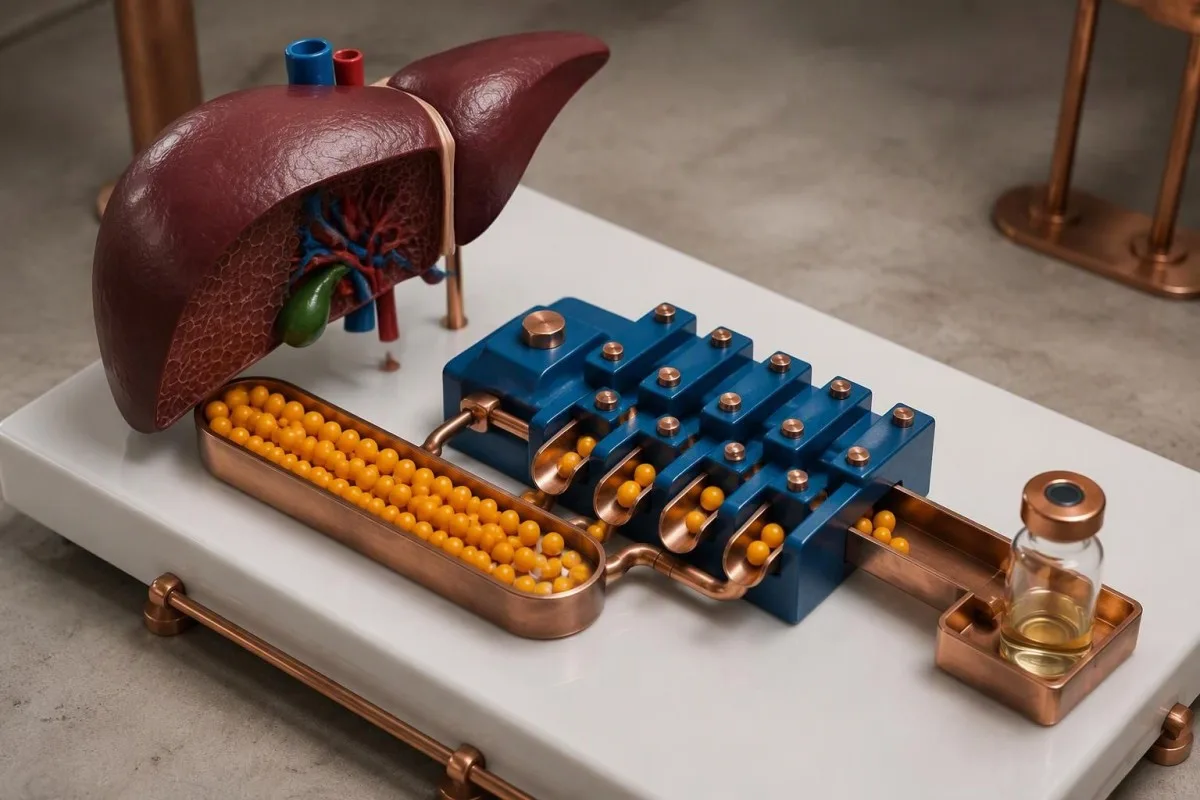
Metabolising enzymes can approach their processing capacity as exposure rises, so each additional milligram may be cleared less efficiently. A hypothetical rise from 2 mg/L to 4 mg/L after a modest dose adjustment is therefore plausible, but no single example provides a reliable formula for an individual patient.
The reverse calculation is unreliable too. A dose reduction of 25% does not guarantee a 25% concentration reduction, particularly when liver function or interacting medicines are changing; clinicians use repeat monitoring rather than assuming that the prescription and laboratory result move along a straight line.
A trough also reflects conditions during the preceding doses, not only the dose taken most recently. If a new prescription began 1 day before collection, the result may not represent the eventual exposure on that regimen, and an early result should be labelled as such rather than interpreted as settled.
This is a major reason not to borrow another person's adjustment advice. Nonlinear phenytoin monitoring illustrates a related principle, although phenytoin's free-versus-total measurement issues and target intervals are different; the shared lesson is that arithmetic alone cannot determine a safe drug dose.
Miten CYP2C19 vaikuttaa vorikonatsorialtistukseen?
CYP2C19 genetic variation can influence voriconazole clearance: rapid and ultrarapid metabolisers may have low exposure, while poor metabolisers may develop higher concentrations. A genetic result can help explain a repeated trough below 1 mg/L or above the prescribed ceiling, but it does not replace drug monitoring.
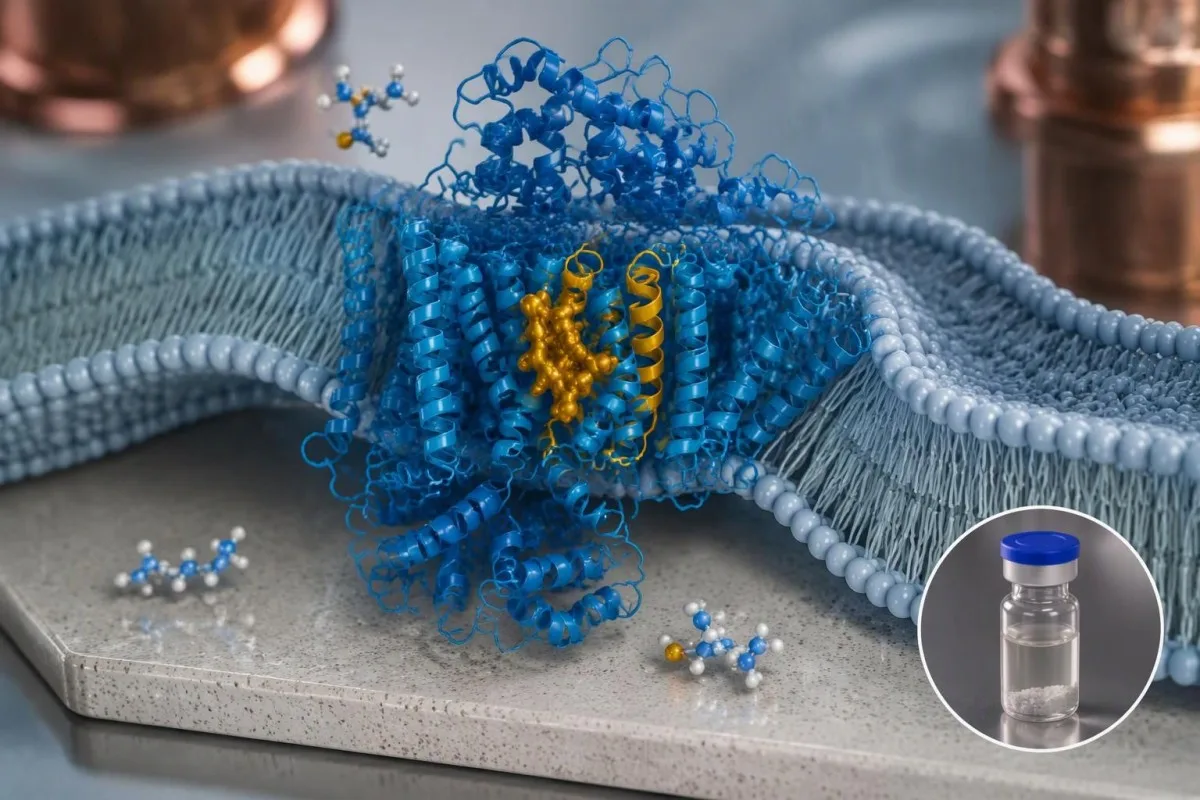
CPIC guidance recommends considering an alternative antifungal for certain CYP2C19 phenotypes when achieving reliable voriconazole exposure is difficult or adverse-effect risk is increased (Moriyama et al., 2017). This is a clinician-led choice between suitable treatments, not an instruction to stop an effective medicine after seeing a genetic category.
Genotype is only one input because liver illness, interacting medicines and systemic inflammatory responses can alter enzyme activity. A person genetically classified as a rapid metaboliser can still develop a trough of 6 mg/L under changed clinical conditions; inherited tendency does not establish a permanent, safe dose.
CYP2C19 influences more than one medicine, but the consequences are drug-specific. An enzyme variant that reduces activation of a prodrug can have a different clinical meaning from a variant that slows clearance of an active antifungal; 'fast metaboliser' is not automatically a favourable or unfavourable label.
Kantesti on AI verikoe-tulkinta-alusta that can help organise the laboratory and medication context around a reported voriconazole concentration. Our Tekoälyteknologian selitys describes the interpretation workflow; a chemistry panel cannot reveal CYP2C19 genotype unless a separate genetic test has actually been performed.
Mitkä lääkeyhteisvaikutukset voivat muuttaa tulosta?
Voriconazole interactions can either lower its concentration or increase exposure to voriconazole and other medicines. Rifampicin and carbamazepine are major enzyme-inducing concerns, while voriconazole can substantially increase tacrolimus exposure; a satisfactory trough of 2 mg/L does not make the combination automatically safe.

Rifampicin, carbamazepine and St John's wort can substantially reduce voriconazole exposure, and some combinations are contraindicated. Phenytoin creates a particularly complicated bidirectional interaction; any specialist exception requires an explicit monitoring plan rather than the assumption that increasing voriconazole will reliably overcome induction.
Starting or stopping an interacting medicine can matter as much as adding a new voriconazole dose. Enzyme induction and its reversal do not necessarily disappear within 24 hours, so clinicians need medication start and stop dates when explaining a concentration that changes despite an unchanged antifungal prescription.
Tacrolimus is a separate safety priority because voriconazole inhibits pathways involved in its clearance. A transplant team may need to adjust and closely monitor tacrolimus when voriconazole starts or stops; our tacrolimus trough interpretation guide explains why both drug concentrations must be reviewed independently.
Warfarin and medicines that prolong the QT interval also require attention even when the antifungal trough is within range. Voriconazole can increase anticoagulant effect, so understanding INR monitoring is useful; an antifungal level does not substitute for coagulation testing or an electrocardiogram.
Miten maksa-arvot vaikuttavat jäännöspitoisuuden tulkintaan?
Liver dysfunction can reduce voriconazole clearance and increase exposure, while voriconazole itself can cause liver injury. A rising trough above 5–6 mg/L together with increasing ALT or bilirubin deserves prompt clinical review, but an isolated liver-test abnormality does not prove the antifungal caused it.
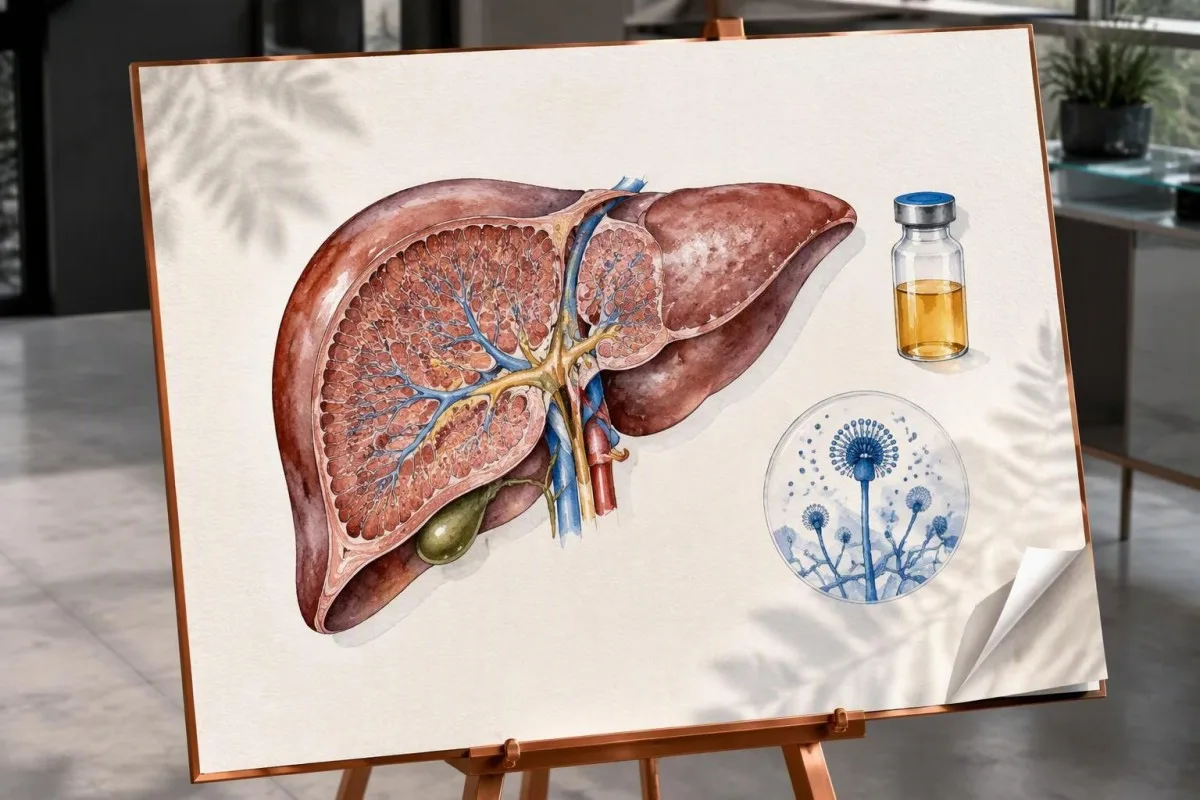
Product information recommends halving the usual maintenance dose in adults with mild-to-moderate cirrhosis, classified as Child–Pugh A or B, while retaining the standard loading regimen. That is prescribing guidance for clinicians, not a self-adjustment rule; severe hepatic impairment has less-established dosing evidence and needs specialist assessment.
Liver-test monitoring is generally recommended at least weekly during the first month, with frequency potentially reduced to monthly if results remain stable. The maksan toimintakokeiden selityksestä distinguishes injury markers from synthetic-function measures; ALT alone does not quantify the liver's capacity to clear voriconazole.
For example, ALT of 180 IU/L with a laboratory upper limit of 40 IU/L is 4.5 times that limit. Clinicians compare the change with baseline, bilirubin, ALP, symptoms and alternative causes; our ALT:n jatkoseurantaohje explains why a multiple of the upper limit is more informative than a raw number.
At Kantesti, we explain why a seemingly acceptable total concentration can still need context when albumin is markedly low. An albumin result of 22 g/L can affect drug binding, but there is no universally adopted albumin-correction formula for voriconazole; the seerumin proteiinitulkintaopas helps separate binding concerns from a diagnosis of cirrhosis.
Tarkoittavatko näköhäiriöt, että jäännöspitoisuus on liian suuri?
Visual disturbances are a recognised voriconazole effect and do not automatically mean the trough exceeds 5.5 mg/L. Temporary changes in brightness, colour perception or blurred vision can occur at otherwise acceptable exposure, whereas persistent visual loss, hallucinations or confusion require a different level of concern.

Clinical-trial information describes visual disturbances in approximately 30% of recipients, often occurring early in treatment and resolving within about 30 minutes. The frequency varies across populations and reporting methods, and the symptom alone cannot establish whether a result of 2 mg/L or 6 mg/L is responsible.
Repeated brief brightness changes soon after a dose differ from continuous loss of vision throughout the day. A pre-dose trough may not capture the maximum post-dose concentration associated with an episode; write down when symptoms start, how long they last and whether both eyes are affected.
New hallucinations, marked confusion or worsening visual impairment warrant prompt medical assessment, especially alongside a high concentration. Sudden loss of vision, severe eye pain or a new neurological deficit requires urgent evaluation regardless of the trough; do not wait 4–7 days for routine repeat monitoring.
For treatment continuing beyond 28 days, product information recommends monitoring visual function, including acuity, visual fields and colour perception. Formal eye-function testing illustrates some of these assessments, although voriconazole symptoms do not by themselves diagnose glaucoma; avoid driving while vision is affected.
Milloin suuri vorikonatsoripitoisuus vaatii kiireellistä huomiota?
A trough above approximately 5–6 mg/L raises concern for excessive exposure, particularly when accompanied by confusion, hallucinations or worsening liver tests. Urgency depends on symptoms and organ effects, not a universal critical concentration; serious adverse effects can also occur below this numerical boundary.

A hypothetical trough of 7.2 mg/L with new hallucinations needs prompt contact with the prescribing team rather than a routine appointment weeks later. The team may change or temporarily interrupt treatment, but the patient should not independently halve the dose, skip repeated doses or wait for an AI explanation.
Fainting, sustained palpitations, seizures, severe confusion, a serious rash or jaundice with systemic illness warrant urgent assessment. Voriconazole can prolong the QT interval, and low potassium or magnesium adds risk; an electrolyte panel safety review addresses hazards that the antifungal concentration does not measure.
Kidney function affects the intravenous formulation differently from the active antifungal's liver metabolism. The cyclodextrin vehicle can accumulate when creatinine clearance is below 50 mL/min, prompting a route-specific risk–benefit review; a normal voriconazole trough cannot establish that the intravenous vehicle is harmless.
Long courses introduce problems not reliably predicted by a single trough, including photosensitivity and fluoride-associated periostitis. New persistent bone pain during a hypothetical 6-month course deserves review even at 3 mg/L, and sun-protection advice remains relevant when the drug concentration falls within the intended treatment window.
Voiko pitoisuus olla terapeuttinen, vaikka infektio pahenee?
Yes—a therapeutic voriconazole trough does not guarantee treatment success because fungal resistance, an incorrect diagnosis, inadequate source control or profound immunosuppression can overcome adequate exposure. A result of 3 mg/L confirms neither fungal susceptibility nor sufficient drug delivery to every affected site.

The organism's minimum inhibitory concentration, or MIC, helps describe how much drug inhibits growth under laboratory conditions. If the fungal MIC is 2 mg/L rather than 0.25 mg/L, the same trough has a different exposure-to-susceptibility relationship; a trough-to-MIC ratio is not a self-dosing calculator.
Clinicians review imaging, cultures, susceptibility testing and relevant fungal markers alongside the concentration. A galactomannan result interpretation can clarify another piece of the assessment, but neither one positive marker nor one therapeutic trough independently proves active aspergillosis or its resolution.
Voriconazole lacks reliable activity against Mucorales, the fungi responsible for mucormycosis. A trough of 4 mg/L therefore cannot solve a mismatch between the medicine and the organism; persistent deterioration may require diagnostic reassessment and a different antifungal strategy rather than progressively increasing exposure.
Early imaging changes are also not always equivalent to failure because inflammatory responses can change as immune function recovers. Nonetheless, worsening breathing, new neurological symptoms or fever during severe neutropenia needs prompt clinical assessment; the infection team decides whether a 1-week trend reflects expected evolution or an inadequate treatment plan.
Milloin jäännöspitoisuus tulisi mitata uudelleen?
Voriconazole monitoring is commonly repeated after a dose change, a major interaction change, altered liver function, a route change or suspected treatment failure. A routine reassessment often occurs within 4–7 days, but concerning neurological symptoms or liver deterioration justify earlier clinical action rather than waiting for steady exposure.
Two concentrations are meaningfully comparable only when the dosing interval and collection conditions are documented. A change from 1.1 mg/L to 3.4 mg/L may represent improved exposure, but it may instead compare a delayed trough with a post-dose sample; the size of the difference cannot correct a timing error.
Changing from intravenous to oral treatment can alter exposure even when the intended prescription seems equivalent. Clinicians may repeat the level after the switch, especially if eating, vomiting or tube feeding has changed; the route belongs beside the concentration in the monitoring record, not only in the medication history.
Kantesti on AI-pohjainen verikokeiden analyysityökalu that can help organise uploaded drug levels alongside liver-test trends and reported dose times. Our medication-safety trend workflow supports preparation for review, but a rise from 2 mg/L to 6 mg/L still requires clinician-led interpretation and treatment decisions.
Stable treatment does not create one universal long-term testing interval. The team balances infection risk, treatment duration, prior variability and access to testing; keep a record of at least the previous dose time, collection time, current prescription, formulation and medication changes so the next result answers a usable question.
Mitä sinun tulisi ottaa mukaan seurantakäynnille, ja mihin tämä ohje perustuu?
Bring the actual dose and collection times, the prescribed treatment goal, recent liver results and a complete medication list to your voriconazole review. Ask whether a result such as 1.4 mg/L meets your specific indication—not whether it fits a single internet range—and do not adjust the prescription yourself.

A practical review has three questions: was the sample a true trough, is exposure appropriate for this infection or prevention plan, and are there adverse effects or interactions? Include missed doses and meal timing honestly; a 12-hour prescription does not mean every dose was actually separated by 12 hours.
The clinical recommendations here draw on the 2016 IDSA aspergillosis guideline, the 2014 British Society for Medical Mycology monitoring guideline and the 2017 CPIC voriconazole guideline. These sources address different questions—clinical treatment, concentration monitoring and pharmacogenetics—so their recommendations should be combined thoughtfully rather than presented as one identical range.
Kantesti Ltd's role is to help readers understand laboratory information, not to prescribe antifungal treatment. Our organisation and purpose are described separately; technical evaluation on 100,000 synthetic cases cannot establish that a particular voriconazole dose improves clinical outcomes in a patient with invasive fungal disease.
The two research publications listed below describe an automated technical benchmark and a clinical-validation framework, not a voriconazole therapeutic-monitoring trial. Our validation methodology and limits explain that distinction; use our interpretation to prepare questions, while your infection specialist or prescribing team determines the dose and follow-up plan.
Usein kysytyt kysymykset
Mikä on vorikonatsolin normaali jäännöspitoisuus?
Voriconazole does not have a healthy-population 'normal' concentration; it has a therapeutic exposure target. Many treatment protocols use approximately 1–5.5 mg/L, while IDSA guidance discusses a minimum above 1–1.5 mg/L and an upper boundary below 5–6 mg/L. Severe disease, fungal susceptibility and prevention protocols can change the intended target. Your prescribing team should interpret the result using the actual collection time and clinical indication.
Kuinka kauan ennen annostani vorikonatsolipitoisuus tulee mitata?
Vorikonatsolin jäännöspitoisuusnäyte otetaan yleensä välittömästi ennen seuraavaa suunniteltua annosta, tavallisesti 30 minuutin sisällä paikallisen laboratorion ohjeiden mukaisesti. Jos annos otetaan klo 8.00, näytteen ottaminen klo 7.45 ennen lääkkeen ottamista olisi yleensä sopivaa. Annoksen ottaminen ensin voi johtaa annoksen jälkeiseen tulokseen, jota ei pidä verrata suoraan jäännöspitoisuuden tavoitearvoihin. Sopikaa näytteenottojärjestelyistä hoitotiimin kanssa sen sijaan, että viivästyttäisitte annosta useita tunteja ilman ohjeita.
Mitä pieni vorikonatsolipitoisuus tarkoittaa?
Vorikonatsolin jäännöspitoisuus alle 1 mg/l jää monien hoitotavoitteiden alapuolelle, mutta se ei todista, että määrätty annos olisi liian pieni. Annoksia on voinut jäädä ottamatta, näyte on voitu ottaa viiveellä, ruoka voi vaikuttaa imeytymiseen, oksentelu, heikentynyt imeytyminen ja entsyymejä indusoivat lääkkeet voivat kaikki selittää pienen altistuksen. Suun kautta otettava vorikonatsoli otetaan yleensä vähintään 1 tunti ennen ateriaa tai sen jälkeen valmisteen ohjeiden mukaisesti. Ota yhteyttä lääkkeen määränneeseen hoitotiimiin asian arvioimiseksi sen sijaan, että suurentaisit annosta itse.
Ovatko vorikonatsolipitoisuudet samoja yksiköissä mg/l ja µg/ml?
Vorikonatsolin pitoisuuksilla yksiköissä mg/L ja µg/mL on sama lukuarvo. Tulos 2 mg/L on täsmälleen 2 µg/mL, mikä vastaa myös arvoa 2 000 ng/mL. Laboratoriot voivat käyttää eri yksiköitä ja tavoitevälejä, joten tarkista molemmat ennen tulosten vertailua. Tämä yksikkömuunnos ei korjaa väärään aikaan otettua näytettä.
Tarkoittavatko näön hämärtyminen tai hallusinaatiot vorikonatsolin toksisuutta?
0 Lyhytaikaisia näköhäiriöitä voi esiintyä vorikonatsolin käytön yhteydessä, vaikka jäännöspitoisuus olisi tavoitealueella, kun taas hallusinaatiot tai sekavuus herättävät enemmän huolta liiallisesta altistuksesta tai muusta lääketieteellisestä ongelmasta. Valmisteyhteenvedon mukaan näköhäiriöitä esiintyy noin 30%:llä käyttäjistä, ja ne häviävät usein noin 30 minuutissa. Uusista hallusinaatioista, jatkuvasta toimintakyvyn heikkenemisestä tai pahenevista oireista on otettava viipymättä yhteyttä lääkkeen määränneeseen hoitotiimiin; äkillinen näönmenetys tai vakavat neurologiset oireet edellyttävät kiireellistä arviota. Älä aja, jos näkösi on häiriintynyt, äläkä muuta sienilääkkeen annosta omin päin.
Milloin vorikonatsolipitoisuudet tulisi tarkistaa uudelleen annosmuutoksen jälkeen?
Vorikonatsolin pohjapitoisuus mitataan usein uudelleen 4–7 päivän kuluttua annosmuutoksesta hoito-ohjelman, kyllästysannosten ja paikallisen käytännön mukaan. Aiempi mittaus tai kliininen toimenpide voi olla tarpeen, jos epäillään toksisuutta, maksan toiminta muuttuu tai ilmenee merkittäviä lääkeaineyhteisvaikutuksia. Epälineaarisen metabolian vuoksi 25%:n annoksen suurentaminen ei takaa, että pitoisuus suurenee vain 25%. Lääkkeen määräävän hoitotiimin tulee päättää uusintamittauksen ajankohta ja tulkita tulos ennen lisämuutosten tekemistä.
Saat verikoetulokset selitettyinä
Lataa laboratoriolausuntosi, niin Kantesti:n tekoäly selittää jokaisen biomarkkerin selkokielellä sekunneissa. Yli 2 miljoonaa käyttäjää maailmanlaajuisesti.
Viitteet
- Klein, T., Mitchell, S. & Weber, H. (2026). Ennalta rekisteröity, rubriikkiperusteinen automatisoitu tekninen vertailu Kantesti-veritestin tulkintaenginen suorituskyvystä 100 000 synteettisessä testitapauksessa. Kantesti AI Medical Research. DOI-koodi
- Klein, T., Mitchell, S. & Weber, H. (2026). Kliinisen validoinnin viitekehys v2.0 (lääketieteellinen validointisivu). Kantesti AI Medical Research. DOI-koodi
- Patterson TF ym. (2016). Aspergilloosin diagnosointia ja hoitoa koskevat käytännön ohjeet: Infectious Diseases Society of American vuoden 2016 päivitys. Clinical Infectious Diseases. DOI-koodi
- Ashbee HR et al. (2014). Therapeutic drug monitoring (TDM) of antifungal agents: guidelines from the British Society for Medical Mycology. Journal of Antimicrobial Chemotherapy. DOI-koodi
- Moriyama B et al. (2017). Clinical Pharmacogenetics Implementation Consortium (CPIC) Guidelines for CYP2C19 and Voriconazole Therapy. Clinical Pharmacology & Therapeutics. DOI-koodi
- 2 kk+Analysoidut testit
- 127+Maat
- 100+Kielet
Tietoa lääketieteellisestä tiimistä


E-E-A-T-luottamussignaalit
Kokea
Lääkärin johtama kliininen arviointi laboratoriotulkinnan työnkuluista.
Asiantuntemus
Laboratoriolääketiede keskittyy siihen, miten biomarkkerit käyttäytyvät kliinisessä kontekstissa.
Auktoriteetti
Lääketieteellisen tarkastuksen on tehnyt tohtori Thomas Klein, ja siihen ovat osallistuneet tohtori Sarah Mitchell ja professori Hans Weber.
Luotettavuus
Näyttöön perustuva tulkinta selkeillä jatkopoluilla, jotka vähentävät hälytystä.
Lääketieteellinen vastuuvapauslauseke
Tämä artikkeli on tarkoitettu vain koulutustarkoituksiin eikä se muodosta lääketieteellistä neuvontaa. Ota aina yhteyttä pätevään terveydenhuollon ammattilaiseen diagnoosi- ja hoitopäätöksiä varten.
Julkaistu · Ota yhteyttä toimitukseen
Julkaisija: Kantesti Ltd, rekisteröity Englannissa ja Walesissa, yrityksen nro. 17090423, Lontoo, Yhdistynyt kuningaskunta.
