Правильно взятая минимальная концентрация вориконазола помогает оценить, достаточна ли противогрибковая экспозиция и не становится ли она чрезмерной. Во многих протоколах лечения используют диапазон приблизительно 1–5,5 мг/л, но целевой показатель для вас зависит от инфекции, плана профилактики и побочных эффектов.

Основные выводы
- Минимальная концентрация вориконазола — это концентрация препарата непосредственно перед следующей запланированной дозой; она измеряет экспозицию, а не то, вылечена ли инфекция.
- Цели лечения обычно требуется минимальная концентрация выше 1–1,5 мг/л; некоторые специалисты стремятся к показателю не менее 2 мг/л при трудно поддающихся лечению или тяжёлых инфекциях.
- Верхние пределы обычно составляют около 5–6 мг/л, поскольку чрезмерная экспозиция повышает риск неврологических и других побочных эффектов.
- Целевые показатели для профилактики зависят от протокола; нижний порог, используемый для профилактики, не следует автоматически применять для лечения уже возникшей инфекции.
- Время забора уровня обычно означает сбор образца примерно за 30 минут до следующей дозы, согласно инструкциям лаборатории.
- Перевод единиц измерения Точное соотношение: 1 мг/л равен 1 мкг/мл и 1 000 нг/мл.
- Низкая экспозиция может быть связана с пропуском доз, влиянием пищи, нарушением всасывания, взаимодействующими лекарствами или ускоренным метаболизмом, а не просто с недостаточной назначенной дозой.
- Безопасность дозировки требует изменений под контролем врача, поскольку увеличение дозы на 25% может привести к непропорционально большому повышению концентрации.
Что именно показывает минимальная концентрация вориконазола?
A минимальная концентрация вориконазола показывает врачам, сколько противогрибкового препарата остаётся в организме непосредственно перед следующей дозой. Правильно собранный образец с результатом около 1–5,5 мг/л часто соответствует протоколу лечения, но эффективная доза также зависит от чувствительности грибка, локализации инфекции и клинического улучшения.
Минимальная концентрация — это практический показатель экспозиции на протяжении интервала дозирования, а не прямое измерение количества препарата в поражённом лёгком или головном мозге. Для человека, принимающего вориконазол каждые 12 часов, концентрация перед приёмом дозы помогает определить, не становится ли экспозиция слишком низкой между дозами.
Терапевтический лекарственный мониторинг преследует две отдельные цели: поддерживать достаточную экспозицию для противогрибкового действия и избегать чрезмерной экспозиции. В рекомендациях IDSA по лечению аспергиллёза в качестве обычно применяемых целевых значений минимальной концентрации при лечении указаны уровни выше 1–1,5 мг/л и ниже 5–6 мг/л, в частности для снижения риска токсического воздействия на центральную нервную систему (Patterson et al., 2016).
Кантести — это Анализатор анализа крови на основе искусственного интеллекта что может помочь объяснить результат анализа на вориконазол, загруженный вместе с печёночными пробами, тогда как целевое значение определяет ваша лечащая команда. К результату 1,2 мг/л необходимо указать показание и время взятия образца; наше пояснение не должно превращать это число в указание по дозировке.
Отметка лаборатории — не вердикт об успехе лечения. В отличие от многих референсных интервалов для стандартных биохимических анализов, интервал лекарственного мониторинга отражает клиническую цель по экспозиции; наше пояснение о внедиапазонным лабораторным результатам помогает отличить отметку от диагноза.
Когда следует сдавать анализ на концентрацию вориконазола?
Правильное время измерения уровня вориконазола означает сбор образца непосредственно перед следующей запланированной дозой, обычно в пределах 30 минут до неё. Первый плановый анализ часто проводят на 4–7-й день, хотя нагрузочные дозы, тяжёлое состояние и местные протоколы могут обосновывать более раннее обследование.
Например, представьте назначенный график приёма в 8 утра и 8 вечера. Образец, взятый в 7:45 утра, до утреннего приёма лекарства, близко отражает минимальную концентрацию; образец, взятый в 10 утра после приёма дозы, — нет, даже если в лабораторном заключении указано, что это минимальная концентрация.
Отсрочка приёма дозы также может исказить интерпретацию в противоположную сторону. Если следующую дозу следовало принять в 8 утра, а образец был взят в 11 утра, дополнительные 3 часа без лекарства могут снизить измеренную концентрацию; лечащей команде нужны фактические значения времени, а не только запланированный график.
При внутривенном введении вориконазола также требуется взять образец перед дозой, обычно до начала следующей инфузии. Забор из линии, использованной для введения препарата, может привести к загрязнению образца, поэтому способ забора должны выбрать лаборатория или инфузионная команда, а не исходить из того, что любой доступный катетер обеспечит эквивалентный результат.
Ночное голодание само по себе не является обязательным условием анализа на концентрацию, однако для перорального вориконазола предусмотрены отдельные инструкции по времени приёма пищи. Заранее уточните порядок забора образца; правила забора образцов для конкретного препарата объясняют, почему правильное правило выбора времени для одного препарата нельзя переносить на другой.
Каков терапевтический диапазон вориконазола?
The терапевтический диапазон вориконазола is commonly approximately 1–5.5 mg/L for treatment, but there is no universal interval suitable for every patient. IDSA guidance discusses a lower goal above 1–1.5 mg/L and an upper boundary below 5–6 mg/L; some difficult infections prompt a higher minimum.

These boundaries describe probabilities, not biological switches. A trough of 0.9 mg/L does not prove failure, and 5.6 mg/L does not prove toxicity; repeated results, symptoms and organism susceptibility help determine whether a small boundary crossing is clinically meaningful or simply requires confirmation.
For invasive aspergillosis, the British Society for Medical Mycology recommends a treatment trough above 1 mg/L and discusses higher exposure goals for poor-prognosis situations, including central nervous system disease (Ashbee et al., 2014). A team may therefore consider 1.3 mg/L acceptable for one indication but insufficient for another.
The reason for a higher minimum is that the concentration needed to inhibit a less-susceptible fungus may exceed the concentration needed for a susceptible organism. Raising exposure indefinitely is not a safe solution: a trough approaching 5–6 mg/L can leave little room between a desired antifungal effect and adverse effects.
Always read the units before comparing reports. A result of 2 µg/mL is exactly 2 mg/L, not twice or half that value; the biomarker and units guide provides context for comparing laboratory values without mistaking a therapeutic target for a healthy-population range.
| Уровень | Диапазон | Значение |
|---|---|---|
| Below many treatment targets | <1 мг/л | Check collection timing, dosing history, absorption and interactions; not proof of treatment failure. |
| Lower treatment exposure | 1–<2 mg/L | May meet the prescribed target, but severe disease or reduced fungal susceptibility can require a higher minimum. |
| Common treatment exposure window | 2–5.5 mg/L | Often compatible with treatment goals when correctly timed; does not guarantee efficacy or freedom from toxicity. |
| Above many local upper limits | >5.5 mg/L | Requires review of symptoms, liver tests, timing and the local protocol; there is no universal emergency cutoff. |
Почему целевые показатели для лечения и профилактики могут различаться?
Treatment targets may be more demanding than prevention targets because an established fungal infection must be controlled, not merely prevented. Some local prophylaxis protocols accept 0.5 mg/L, whereas British guidance recommends a prophylaxis trough above 1 mg/L; these thresholds are not interchangeable.

Prophylaxis studies are harder to interpret because breakthrough fungal disease may be uncommon and heavily influenced by immune status. A threshold of 0.5 mg/L used in one prevention programme cannot establish equivalent protection for every stem-cell transplant recipient, particularly during prolonged neutropenia or intensive immunosuppression.
The British Society for Medical Mycology's prophylaxis recommendation above 1 mg/L carries a weaker evidence base than some treatment recommendations (Ashbee et al., 2014). The uncertainty is genuine: the exact preventive minimum is less settled than the principle that persistently very low exposure deserves investigation.
Consider a hypothetical result of 0.8 mg/L in two people. One is receiving prevention under a documented local protocol; the other has confirmed invasive aspergillosis. The same concentration can lead to different discussions because the indication, fungal burden and acceptable risk of inadequate exposure differ.
Transplant recipients often have several parallel monitoring plans, not one combined 'infection score.' Voriconazole does not prevent every opportunistic infection, and CMV results after transplantation answer a different question; a satisfactory antifungal trough does not replace viral surveillance or other prescribed prophylaxis.
Что может вызывать низкую концентрацию вориконазола?
A low voriconazole level can result from missed or delayed doses, food effects, impaired gastrointestinal absorption, enzyme-inducing medicines or faster metabolism. Before changing treatment, clinicians verify whether a result below 1 mg/L is a correctly timed trough and whether the prescribed doses actually reached the patient.
Oral voriconazole is generally taken at least 1 hour before or 1 hour after a meal, following the product instructions. Food can reduce exposure, but a low result should not be blamed on breakfast without checking the complete dosing history, formulation, vomiting and other medicines.
Imagine a hypothetical adult prescribed 200 mg every 12 hours whose trough is 0.6 mg/L. Taking each dose with a substantial meal and vomiting one evening dose creates two plausible explanations for low exposure; automatically escalating the prescription could cause excessive exposure once those problems resolve.
Severe diarrhoea, mucositis, gastrointestinal surgery and feeding-tube administration can make oral delivery less predictable. Clinicians may review the formulation or route rather than simply the milligram amount; testing for impaired fat absorption explains why gastrointestinal dysfunction needs its own assessment rather than being diagnosed from one drug level.
Acid-suppressing medicines deserve a medication review, but voriconazole should not be treated like an antifungal whose absorption always requires stomach acid. Some proton pump inhibitors inhibit metabolism and can raise exposure; our reflux treatment context helps readers identify these medicines without stopping them independently.
Почему небольшое изменение дозы иногда значительно меняет концентрацию?
Voriconazole has nonlinear metabolism in adults, meaning a dose increase can produce a more-than-proportional concentration increase. Changing a prescribed dose from 200 mg to 250 mg is a 25% increase, but the resulting trough cannot safely be predicted by multiplying the old result by 1.25.
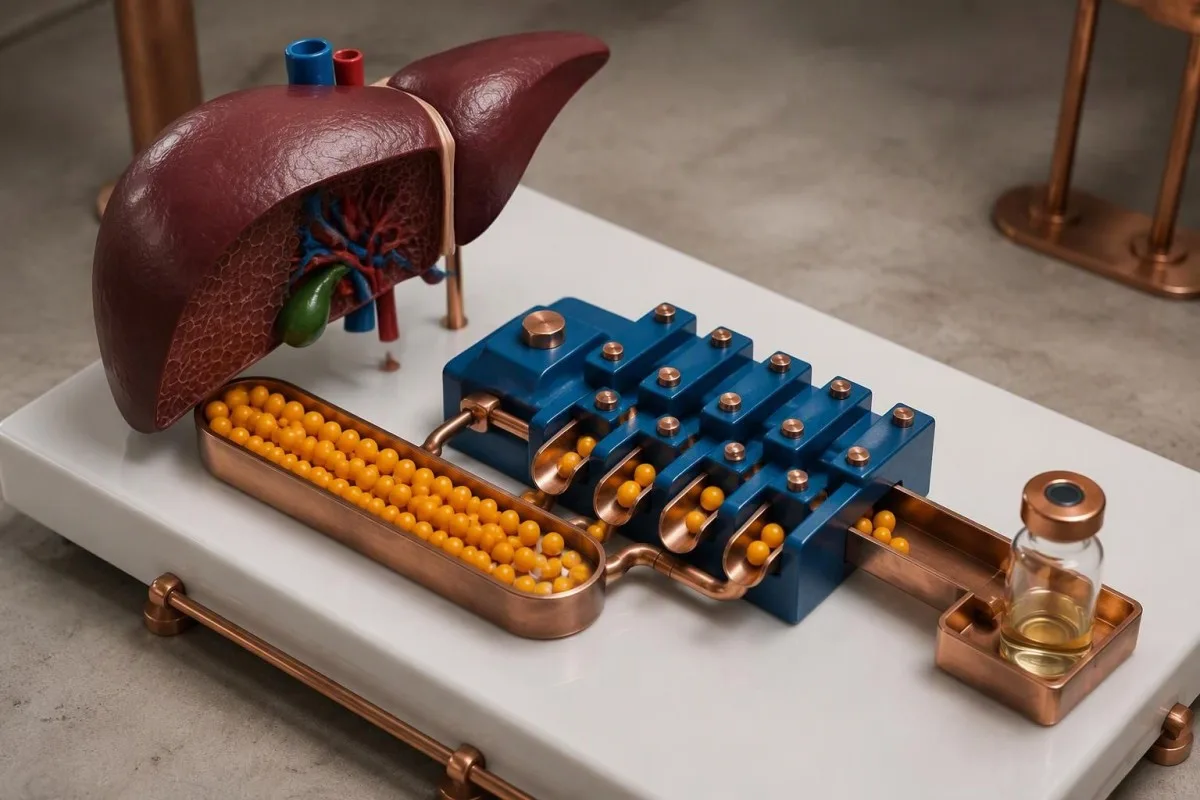
Metabolising enzymes can approach their processing capacity as exposure rises, so each additional milligram may be cleared less efficiently. A hypothetical rise from 2 mg/L to 4 mg/L after a modest dose adjustment is therefore plausible, but no single example provides a reliable formula for an individual patient.
The reverse calculation is unreliable too. A dose reduction of 25% does not guarantee a 25% concentration reduction, particularly when liver function or interacting medicines are changing; clinicians use repeat monitoring rather than assuming that the prescription and laboratory result move along a straight line.
A trough also reflects conditions during the preceding doses, not only the dose taken most recently. If a new prescription began 1 day before collection, the result may not represent the eventual exposure on that regimen, and an early result should be labelled as such rather than interpreted as settled.
This is a major reason not to borrow another person's adjustment advice. Nonlinear phenytoin monitoring illustrates a related principle, although phenytoin's free-versus-total measurement issues and target intervals are different; the shared lesson is that arithmetic alone cannot determine a safe drug dose.
Как CYP2C19 влияет на экспозицию вориконазола?
CYP2C19 genetic variation can influence voriconazole clearance: rapid and ultrarapid metabolisers may have low exposure, while poor metabolisers may develop higher concentrations. A genetic result can help explain a repeated trough below 1 mg/L or above the prescribed ceiling, but it does not replace drug monitoring.
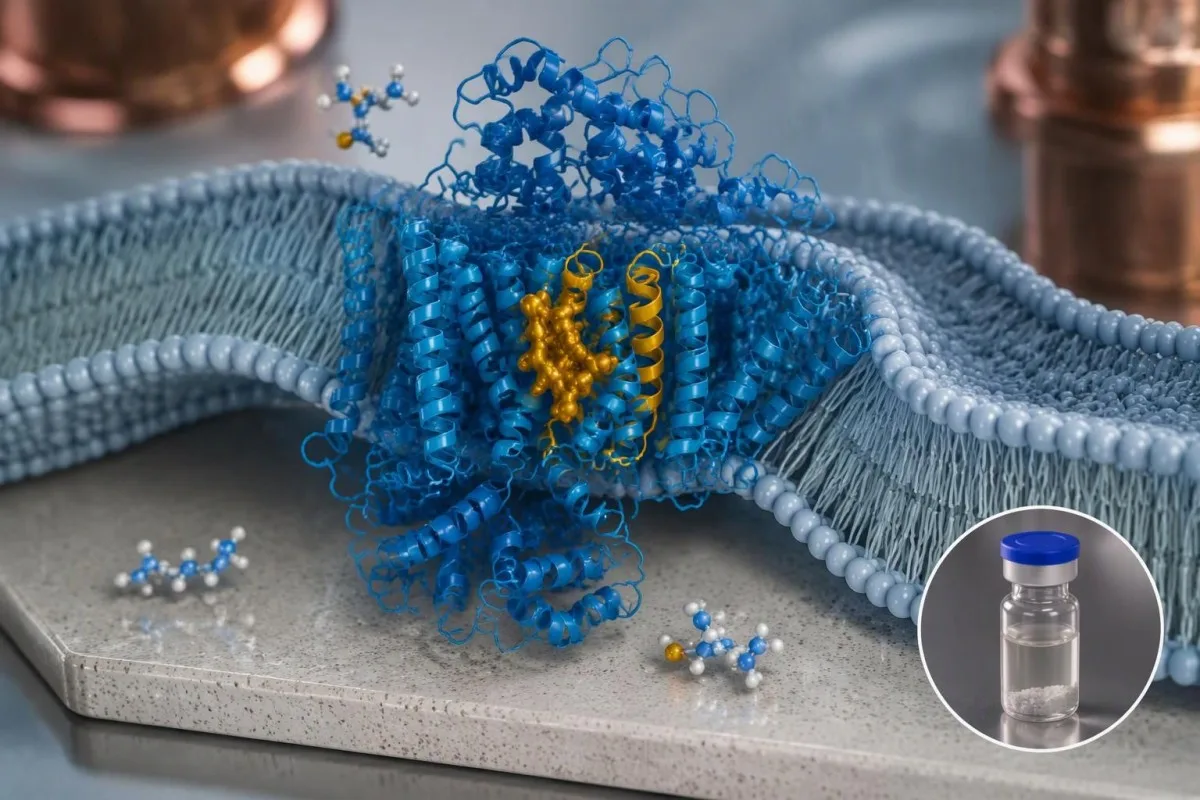
CPIC guidance recommends considering an alternative antifungal for certain CYP2C19 phenotypes when achieving reliable voriconazole exposure is difficult or adverse-effect risk is increased (Moriyama et al., 2017). This is a clinician-led choice between suitable treatments, not an instruction to stop an effective medicine after seeing a genetic category.
Genotype is only one input because liver illness, interacting medicines and systemic inflammatory responses can alter enzyme activity. A person genetically classified as a rapid metaboliser can still develop a trough of 6 mg/L under changed clinical conditions; inherited tendency does not establish a permanent, safe dose.
CYP2C19 influences more than one medicine, but the consequences are drug-specific. An enzyme variant that reduces activation of a prodrug can have a different clinical meaning from a variant that slows clearance of an active antifungal; 'fast metaboliser' is not automatically a favourable or unfavourable label.
Кантести — это Платформа для расшифровки анализа крови AI that can help organise the laboratory and medication context around a reported voriconazole concentration. Our объяснение технологии ИИ describes the interpretation workflow; a chemistry panel cannot reveal CYP2C19 genotype unless a separate genetic test has actually been performed.
Какие лекарственные взаимодействия могут изменить результат?
Voriconazole interactions can either lower its concentration or increase exposure to voriconazole and other medicines. Rifampicin and carbamazepine are major enzyme-inducing concerns, while voriconazole can substantially increase tacrolimus exposure; a satisfactory trough of 2 mg/L does not make the combination automatically safe.

Rifampicin, carbamazepine and St John's wort can substantially reduce voriconazole exposure, and some combinations are contraindicated. Phenytoin creates a particularly complicated bidirectional interaction; any specialist exception requires an explicit monitoring plan rather than the assumption that increasing voriconazole will reliably overcome induction.
Starting or stopping an interacting medicine can matter as much as adding a new voriconazole dose. Enzyme induction and its reversal do not necessarily disappear within 24 hours, so clinicians need medication start and stop dates when explaining a concentration that changes despite an unchanged antifungal prescription.
Tacrolimus is a separate safety priority because voriconazole inhibits pathways involved in its clearance. A transplant team may need to adjust and closely monitor tacrolimus when voriconazole starts or stops; our tacrolimus trough interpretation guide explains why both drug concentrations must be reviewed independently.
Warfarin and medicines that prolong the QT interval also require attention even when the antifungal trough is within range. Voriconazole can increase anticoagulant effect, so understanding INR monitoring is useful; an antifungal level does not substitute for coagulation testing or an electrocardiogram.
Как результаты печёночных проб влияют на интерпретацию минимальной концентрации?
Liver dysfunction can reduce voriconazole clearance and increase exposure, while voriconazole itself can cause liver injury. A rising trough above 5–6 mg/L together with increasing ALT or bilirubin deserves prompt clinical review, but an isolated liver-test abnormality does not prove the antifungal caused it.
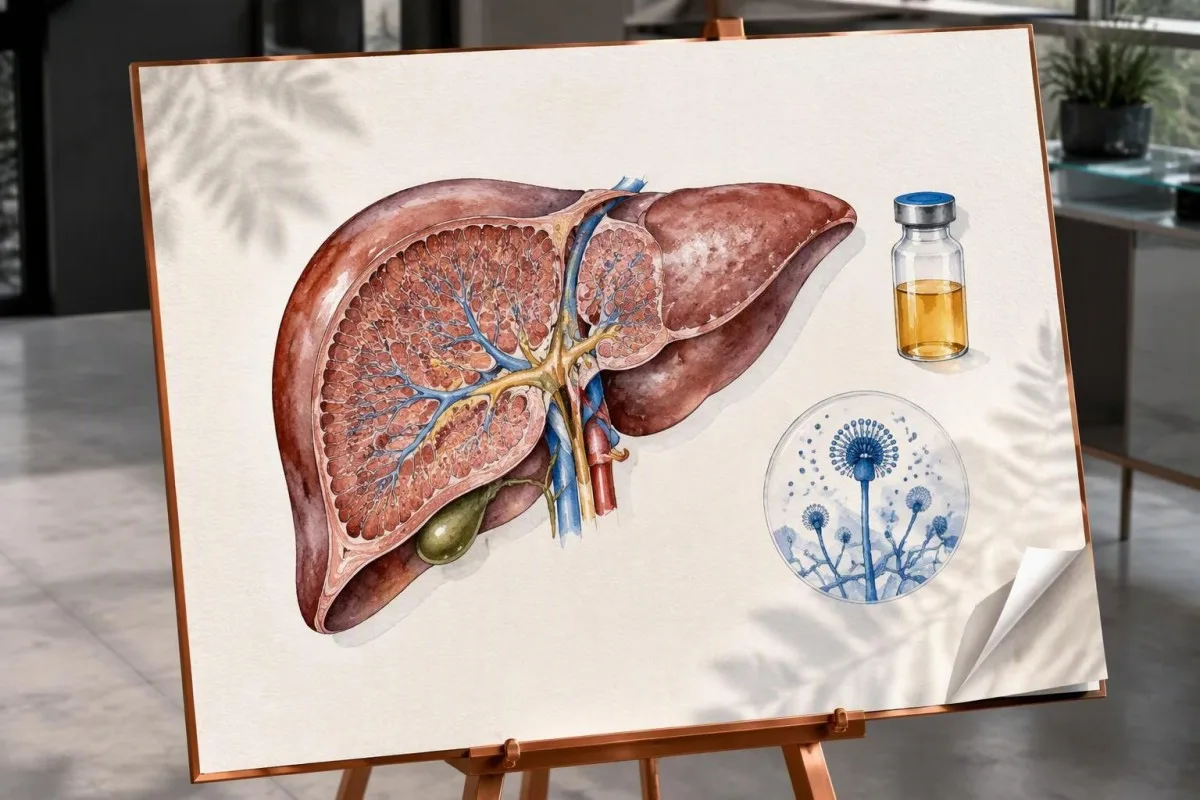
Product information recommends halving the usual maintenance dose in adults with mild-to-moderate cirrhosis, classified as Child–Pugh A or B, while retaining the standard loading regimen. That is prescribing guidance for clinicians, not a self-adjustment rule; severe hepatic impairment has less-established dosing evidence and needs specialist assessment.
Liver-test monitoring is generally recommended at least weekly during the first month, with frequency potentially reduced to monthly if results remain stable. The объяснения печеночной панели distinguishes injury markers from synthetic-function measures; ALT alone does not quantify the liver's capacity to clear voriconazole.
For example, ALT of 180 IU/L with a laboratory upper limit of 40 IU/L is 4.5 times that limit. Clinicians compare the change with baseline, bilirubin, ALP, symptoms and alternative causes; our Руководство по повторному контролю ALT explains why a multiple of the upper limit is more informative than a raw number.
At Kantesti, we explain why a seemingly acceptable total concentration can still need context when albumin is markedly low. An albumin result of 22 g/L can affect drug binding, but there is no universally adopted albumin-correction formula for voriconazole; the руководство по интерпретации сывороточных белков helps separate binding concerns from a diagnosis of cirrhosis.
Означают ли нарушения зрения, что минимальная концентрация слишком высока?
Visual disturbances are a recognised voriconazole effect and do not automatically mean the trough exceeds 5.5 mg/L. Temporary changes in brightness, colour perception or blurred vision can occur at otherwise acceptable exposure, whereas persistent visual loss, hallucinations or confusion require a different level of concern.

Clinical-trial information describes visual disturbances in approximately 30% of recipients, often occurring early in treatment and resolving within about 30 minutes. The frequency varies across populations and reporting methods, and the symptom alone cannot establish whether a result of 2 mg/L or 6 mg/L is responsible.
Repeated brief brightness changes soon after a dose differ from continuous loss of vision throughout the day. A pre-dose trough may not capture the maximum post-dose concentration associated with an episode; write down when symptoms start, how long they last and whether both eyes are affected.
New hallucinations, marked confusion or worsening visual impairment warrant prompt medical assessment, especially alongside a high concentration. Sudden loss of vision, severe eye pain or a new neurological deficit requires urgent evaluation regardless of the trough; do not wait 4–7 days for routine repeat monitoring.
For treatment continuing beyond 28 days, product information recommends monitoring visual function, including acuity, visual fields and colour perception. Formal eye-function testing illustrates some of these assessments, although voriconazole symptoms do not by themselves diagnose glaucoma; avoid driving while vision is affected.
Когда высокая концентрация вориконазола требует срочного внимания?
A trough above approximately 5–6 mg/L raises concern for excessive exposure, particularly when accompanied by confusion, hallucinations or worsening liver tests. Urgency depends on symptoms and organ effects, not a universal critical concentration; serious adverse effects can also occur below this numerical boundary.
A hypothetical trough of 7.2 mg/L with new hallucinations needs prompt contact with the prescribing team rather than a routine appointment weeks later. The team may change or temporarily interrupt treatment, but the patient should not independently halve the dose, skip repeated doses or wait for an AI explanation.
Fainting, sustained palpitations, seizures, severe confusion, a serious rash or jaundice with systemic illness warrant urgent assessment. Voriconazole can prolong the QT interval, and low potassium or magnesium adds risk; an electrolyte panel safety review addresses hazards that the antifungal concentration does not measure.
Kidney function affects the intravenous formulation differently from the active antifungal's liver metabolism. The cyclodextrin vehicle can accumulate when creatinine clearance is below 50 mL/min, prompting a route-specific risk–benefit review; a normal voriconazole trough cannot establish that the intravenous vehicle is harmless.
Long courses introduce problems not reliably predicted by a single trough, including photosensitivity and fluoride-associated periostitis. New persistent bone pain during a hypothetical 6-month course deserves review even at 3 mg/L, and sun-protection advice remains relevant when the drug concentration falls within the intended treatment window.
Может ли концентрация быть терапевтической, даже если инфекция усугубляется?
Yes—a therapeutic voriconazole trough does not guarantee treatment success because fungal resistance, an incorrect diagnosis, inadequate source control or profound immunosuppression can overcome adequate exposure. A result of 3 mg/L confirms neither fungal susceptibility nor sufficient drug delivery to every affected site.

The organism's minimum inhibitory concentration, or MIC, helps describe how much drug inhibits growth under laboratory conditions. If the fungal MIC is 2 mg/L rather than 0.25 mg/L, the same trough has a different exposure-to-susceptibility relationship; a trough-to-MIC ratio is not a self-dosing calculator.
Clinicians review imaging, cultures, susceptibility testing and relevant fungal markers alongside the concentration. A galactomannan result interpretation can clarify another piece of the assessment, but neither one positive marker nor one therapeutic trough independently proves active aspergillosis or its resolution.
Voriconazole lacks reliable activity against Mucorales, the fungi responsible for mucormycosis. A trough of 4 mg/L therefore cannot solve a mismatch between the medicine and the organism; persistent deterioration may require diagnostic reassessment and a different antifungal strategy rather than progressively increasing exposure.
Early imaging changes are also not always equivalent to failure because inflammatory responses can change as immune function recovers. Nonetheless, worsening breathing, new neurological symptoms or fever during severe neutropenia needs prompt clinical assessment; the infection team decides whether a 1-week trend reflects expected evolution or an inadequate treatment plan.
Когда следует повторить анализ на минимальную концентрацию?
Voriconazole monitoring is commonly repeated after a dose change, a major interaction change, altered liver function, a route change or suspected treatment failure. A routine reassessment often occurs within 4–7 days, but concerning neurological symptoms or liver deterioration justify earlier clinical action rather than waiting for steady exposure.
Two concentrations are meaningfully comparable only when the dosing interval and collection conditions are documented. A change from 1.1 mg/L to 3.4 mg/L may represent improved exposure, but it may instead compare a delayed trough with a post-dose sample; the size of the difference cannot correct a timing error.
Changing from intravenous to oral treatment can alter exposure even when the intended prescription seems equivalent. Clinicians may repeat the level after the switch, especially if eating, vomiting or tube feeding has changed; the route belongs beside the concentration in the monitoring record, not only in the medication history.
Кантести — это Инструмент анализа результатов анализа крови с ИИ that can help organise uploaded drug levels alongside liver-test trends and reported dose times. Our medication-safety trend workflow supports preparation for review, but a rise from 2 mg/L to 6 mg/L still requires clinician-led interpretation and treatment decisions.
Stable treatment does not create one universal long-term testing interval. The team balances infection risk, treatment duration, prior variability and access to testing; keep a record of at least the previous dose time, collection time, current prescription, formulation and medication changes so the next result answers a usable question.
Что нужно принести на консультацию и чем подтверждаются эти рекомендации?
Bring the actual dose and collection times, the prescribed treatment goal, recent liver results and a complete medication list to your voriconazole review. Ask whether a result such as 1.4 mg/L meets your specific indication—not whether it fits a single internet range—and do not adjust the prescription yourself.
A practical review has three questions: was the sample a true trough, is exposure appropriate for this infection or prevention plan, and are there adverse effects or interactions? Include missed doses and meal timing honestly; a 12-hour prescription does not mean every dose was actually separated by 12 hours.
The clinical recommendations here draw on the 2016 IDSA aspergillosis guideline, the 2014 British Society for Medical Mycology monitoring guideline and the 2017 CPIC voriconazole guideline. These sources address different questions—clinical treatment, concentration monitoring and pharmacogenetics—so their recommendations should be combined thoughtfully rather than presented as one identical range.
Kantesti Ltd's role is to help readers understand laboratory information, not to prescribe antifungal treatment. Our organisation and purpose are described separately; technical evaluation on 100,000 synthetic cases cannot establish that a particular voriconazole dose improves clinical outcomes in a patient with invasive fungal disease.
The two research publications listed below describe an automated technical benchmark and a clinical-validation framework, not a voriconazole therapeutic-monitoring trial. Our validation methodology and limits explain that distinction; use our interpretation to prepare questions, while your infection specialist or prescribing team determines the dose and follow-up plan.
Часто задаваемые вопросы
Какой уровень минимальной концентрации вориконазола в норме?
Voriconazole does not have a healthy-population 'normal' concentration; it has a therapeutic exposure target. Many treatment protocols use approximately 1–5.5 mg/L, while IDSA guidance discusses a minimum above 1–1.5 mg/L and an upper boundary below 5–6 mg/L. Severe disease, fungal susceptibility and prevention protocols can change the intended target. Your prescribing team should interpret the result using the actual collection time and clinical indication.
За сколько времени до приема дозы следует измерить уровень вориконазола?
Минимальную концентрацию вориконазола обычно измеряют непосредственно перед следующей запланированной дозой, как правило, в течение 30 минут до неё, согласно инструкциям местной лаборатории. Если приём препарата назначен на 8 утра, обычно целесообразно сдать анализ в 7:45 утра до приёма лекарства. Если сначала принять дозу, результат будет отражать концентрацию после приёма, и его не следует напрямую сравнивать с целевыми минимальными концентрациями. Согласуйте план сдачи анализа с лечащей командой, а не откладывайте приём дозы на несколько часов без указаний.
Что означает низкий уровень вориконазола?
Минимальная концентрация вориконазола ниже 1 мг/л не достигает многих целевых значений лечения, однако это не доказывает, что назначенная доза слишком мала. Низкая экспозиция может быть обусловлена пропуском доз, несвоевременным взятием пробы, влиянием пищи, рвотой, нарушением всасывания и приёмом препаратов, индуцирующих ферменты. Пероральный вориконазол обычно принимают не менее чем за 1 час до или после еды, согласно инструкции к препарату. Обратитесь к лечащей команде для оценки ситуации, а не увеличивайте дозу самостоятельно.
Совпадают ли результаты анализа на вориконазол, выраженные в мг/л и мкг/мл?
Концентрации вориконазола в мг/л и мкг/мл имеют одинаковое числовое значение. Результат 2 мг/л точно равен 2 мкг/мл, что также соответствует 2000 нг/мл. Лаборатории могут использовать разные единицы измерения и целевые интервалы, поэтому перед сравнением результатов проверьте и то и другое. Пересчёт единиц не исправляет ошибку в выборе времени взятия образца.
Означают ли затуманенное зрение или галлюцинации токсическое действие вориконазола?
При применении вориконазола могут возникать кратковременные нарушения зрения даже при целевой минимальной концентрации препарата, тогда как галлюцинации или спутанность сознания вызывают больше опасений в связи с чрезмерной экспозицией препарата или другой медицинской проблемой. В информации о препарате указано, что нарушения зрения возникают примерно у 30% пациентов и часто проходят примерно в течение 30 минут. При появлении новых галлюцинаций, стойких нарушений или усилении симптомов необходимо незамедлительно связаться с лечащей командой; внезапная потеря зрения или тяжёлые неврологические симптомы требуют срочного обследования. Не садитесь за руль, пока зрение нарушено, и не корректируйте дозу противогрибкового препарата самостоятельно.
Когда следует повторно проверить концентрацию вориконазола после изменения дозы?
Минимальную концентрацию вориконазола часто проверяют повторно через 4–7 дней после изменения дозы в зависимости от режима лечения, нагрузочных доз и местного протокола. При подозрении на токсичность, изменении функции печени или серьёзных лекарственных взаимодействиях может потребоваться более раннее тестирование или клиническое вмешательство. Нелинейный метаболизм означает, что увеличение дозы на 25% не гарантирует увеличения концентрации только на 25%. Лечащая команда должна назначить дату повторного тестирования и интерпретировать результат, прежде чем вносить дальнейшие изменения.
Получите объяснение результатов анализа крови
Загрузите отчёт лаборатории, и ИИ Kantesti за считаные секунды объяснит каждый биомаркер простым языком. Им пользуются более 2 миллионов человек по всему миру.
Ссылки
- Кляйн, Т., Митчелл, С., и Вебер, Х. (2026). Предварительно зарегистрированный, основанный на рубриках автоматизированный технический бенчмарк интерпретации анализа крови Kantesti на 100 000 синтетических тестовых случаев. Kantesti AI Медицинские исследования. DOI
- Кляйн, Т., Митчелл, С., и Вебер, Х. (2026). Клиническая рамка валидации v2.0 (страница медицинской валидации). Kantesti AI Медицинские исследования. DOI
- Patterson TF и др. (2016). Практические рекомендации по диагностике и лечению аспергиллёза: обновление 2016 года от Американского общества инфекционных болезней. Clinical Infectious Diseases. DOI
- Ashbee HR et al. (2014). Therapeutic drug monitoring (TDM) of antifungal agents: guidelines from the British Society for Medical Mycology. Journal of Antimicrobial Chemotherapy. DOI
- Moriyama B et al. (2017). Clinical Pharmacogenetics Implementation Consortium (CPIC) Guidelines for CYP2C19 and Voriconazole Therapy. Clinical Pharmacology & Therapeutics. DOI
- 2М+Проанализированные исследования
- 127+Страны
- 100+Языки
О медицинской команде


Сигналы доверия E-E-A-T
Опыт
Клинический обзор рабочих процессов интерпретации лабораторных данных под руководством врача.
Экспертиза
Акцент на лабораторной медицине: как биомаркеры ведут себя в клиническом контексте.
Авторитетность
Медицинскую проверку провёл доктор Томас Кляйн при участии доктора Сары Митчелл и профессора, доктора Ганса Вебера.
Доверие
Интерпретация на основе доказательств с понятными маршрутами дальнейших действий, чтобы снизить тревожность.
Медицинская оговорка
Эта статья предназначена только для образовательных целей и не является медицинской консультацией. Всегда консультируйтесь с квалифицированным специалистом здравоохранения по вопросам диагностики и решений по лечению.
Опубликовано · Связаться с редакцией
Издатель — Kantesti Ltd, зарегистрированная в Англии и Уэльсе компания, рег. №. 17090423, Лондон, Великобритания.
