Tinkamu laiku nustatyta vorikonazolo koncentracija prieš kitą dozę padeda įvertinti, ar vaisto ekspozicija yra pakankama ir netampa per didelė. Daugelyje gydymo protokolų taikomas maždaug 1–5,5 mg/L intervalas, tačiau individualų tikslą lemia infekcija, profilaktikos planas ir šalutinis poveikis.

Svarbiausios išvados
- Vorikonazolo koncentracija prieš kitą dozę yra vaisto koncentracija prieš pat kitą suplanuotą dozę; ji parodo ekspoziciją, bet ne tai, ar infekcija išgydyta.
- Gydymo tikslai paprastai reikia, kad koncentracija prieš kitą dozę būtų didesnė nei 1–1,5 mg/L; kai kurios gydymo komandos, gydydamos sudėtingas ar sunkias infekcijas, siekia bent 2 mg/L.
- Viršutinės ribos paprastai yra maždaug 5–6 mg/L, nes dėl per didelės ekspozicijos labiau nerimaujama dėl neurologinio ir kito nepageidaujamo poveikio.
- Profilaktikos tikslinės koncentracijos priklauso nuo konkretaus protokolo; profilaktikai taikomos mažesnės ribinės vertės nereikėtų automatiškai taikyti jau diagnozuotos infekcijos gydymui.
- Koncentracijos nustatymo laikas paprastai reiškia, kad mėginys paimamas maždaug likus 30 minučių iki kitos dozės, laikantis laboratorijos nurodymų.
- Vienetų konversija yra tikslus: 1 mg/L lygu 1 µg/mL ir 1 000 ng/mL.
- Maža ekspozicija gali rodyti praleistas dozes, maisto poveikį, sutrikusį absorbcijos procesą, sąveikaujančius vaistus arba greitesnę medžiagų apykaitą, o ne vien nepakankamą paskirtą dozę.
- Dozės saugumas būtina keisti prižiūrint gydytojui, nes 25% dozės padidinimas gali lemti neproporcingai didelį koncentracijos padidėjimą.
Ką iš tikrųjų rodo vorikonazolo koncentracija prieš kitą dozę?
A vorikonazolo koncentracija prieš kitą dozę parodo gydytojams, kiek priešgrybelinio vaisto lieka iškart prieš kitą dozę. Tinkamai paimto mėginio rezultatas, maždaug 1–5,5 mg/L, dažnai atitinka gydymo protokolą, tačiau veiksminga dozė taip pat priklauso nuo grybelio jautrumo, infekcijos vietos ir klinikinio pagerėjimo.
Koncentracija prieš kitą dozę yra praktiškas ekspozicijos dozavimo intervale rodiklis, o ne tiesioginis vaisto kiekio pažeistame plautyje ar smegenyse matavimas. Kas 12 valandų vorikonazolą vartojančiam žmogui koncentracija prieš kitą dozę padeda nustatyti, ar ekspozicija tarp dozių gali tapti per maža.
Terapinis vaistų koncentracijos stebėjimas turi du atskirus tikslus: užtikrinti pakankamą ekspoziciją priešgrybeliniam poveikiui ir išvengti pernelyg didelės ekspozicijos. IDSA aspergiliozės gydymo gairėse nurodoma, kad gydymo metu dažnai taikomi ekspertų tikslai – didesnė nei 1–1,5 mg/L koncentracija prieš kitą dozę ir mažesnė nei 5–6 mg/L koncentracija, ypač siekiant riboti centrinės nervų sistemos toksinį poveikį (Patterson et al., 2016).
Kantesti yra AI kraujo tyrimo analizatorius tai gali padėti paaiškinti įkeltą vorikonazolo tyrimo rezultatą ir kepenų tyrimus, o gydymo tikslą nustato vaistą paskyrusi komanda. Vertinant 1,2 mg/L rezultatą, būtina žinoti vaisto vartojimo indikaciją ir mėginio paėmimo laiką; mūsų paaiškinimas neturėtų paversti šio skaičiaus dozavimo nurodymu.
Laboratorijos pažyma nėra gydymo sėkmės nuosprendis. Kitaip nei daugelis įprastų biocheminių tyrimų normos intervalų, vaistų koncentracijos stebėjimo intervalas atspindi klinikinį ekspozicijos tikslą; mūsų paaiškinimas apie neįprasti laboratoriniai rezultatai padeda atskirti pažymą nuo diagnozės.
Kada reikėtų paimti mėginį vorikonazolo koncentracijai nustatyti?
Tinkamas vorikonazolo koncentracijos tyrimo laikas reiškia, kad mėginys paimamas iškart prieš kitą suplanuotą dozę, paprastai likus ne daugiau kaip 30 minučių. Pirmasis įprastas tyrimas dažnai atliekamas 4–7 gydymo dieną, nors įsotinamosios dozės, sunki liga ir vietiniai protokolai gali pagrįsti ankstesnį tyrimą.
Pavyzdžiui, įsivaizduokite, kad vaistą paskirta vartoti 8 val. ryto ir 8 val. vakaro. 7.45 val. ryto, prieš išgeriant rytinį vaistą, paimtas mėginys gerai atspindi koncentraciją prieš kitą dozę; 10 val. ryto, jau išgėrus dozę, paimtas mėginys jos neatspindi, net jei laboratorijos atsakyme jis vadinamas mėginiu prieš kitą dozę.
Pavėluota dozė taip pat gali iškreipti rezultatą priešinga kryptimi. Jei kitą dozę reikėjo išgerti 8 val. ryto, bet mėginys paimtas 11 val., papildomos 3 valandos be vaisto gali sumažinti išmatuotą koncentraciją; gydymo komandai reikia žinoti tikrąjį laiką, o ne vien numatytą grafiką.
Net ir į veną vartojant vorikonazolą, mėginį reikia paimti prieš dozę, paprastai prieš pradedant kitą infuziją. Mėginį paėmus iš vaistui suleisti naudotos linijos, gali kilti užteršimo problemų, todėl mėginio paėmimo būdą turėtų parinkti laboratorija arba infuzijų komanda, o ne manyti, kad bet kuri prieinama linija duos lygiavertį rezultatą.
Visą naktį badauti nebūtina norint atlikti koncentracijos tyrimą, tačiau geriamajam vorikonazolui taikomi atskiri nurodymai dėl vartojimo valgant. Iš anksto pasitikrinkite mėginio paėmimo planą; konkrečiam vaistui taikomos mėginio paėmimo taisyklės paaiškina, kodėl vienam vaistui tinkamo laiko taisyklės negalima taikyti kitam vaistui.
Koks yra vorikonazolo terapinis intervalas?
The vorikonazolo terapinis intervalas gydymo metu paprastai yra maždaug 1–5,5 mg/L, tačiau nėra universalaus intervalo, tinkamo kiekvienam pacientui. IDSA gairėse aptariamas mažesnės nei 1–1,5 mg/L ribos tikslas ir viršutinė riba, mažesnė nei 5–6 mg/L; kai kurių sunkiai gydomų infekcijų atveju siekiama didesnės minimalios koncentracijos.

These boundaries describe probabilities, not biological switches. A trough of 0.9 mg/L does not prove failure, and 5.6 mg/L does not prove toxicity; repeated results, symptoms and organism susceptibility help determine whether a small boundary crossing is clinically meaningful or simply requires confirmation.
For invasive aspergillosis, the British Society for Medical Mycology recommends a treatment trough above 1 mg/L and discusses higher exposure goals for poor-prognosis situations, including central nervous system disease (Ashbee et al., 2014). A team may therefore consider 1.3 mg/L acceptable for one indication but insufficient for another.
The reason for a higher minimum is that the concentration needed to inhibit a less-susceptible fungus may exceed the concentration needed for a susceptible organism. Raising exposure indefinitely is not a safe solution: a trough approaching 5–6 mg/L can leave little room between a desired antifungal effect and adverse effects.
Always read the units before comparing reports. A result of 2 µg/mL is exactly 2 mg/L, not twice or half that value; the biomarker and units guide provides context for comparing laboratory values without mistaking a therapeutic target for a healthy-population range.
| Lygis | Diapazonas | Ką tai reiškia |
|---|---|---|
| Below many treatment targets | <1 mg/l | Check collection timing, dosing history, absorption and interactions; not proof of treatment failure. |
| Lower treatment exposure | 1–<2 mg/L | May meet the prescribed target, but severe disease or reduced fungal susceptibility can require a higher minimum. |
| Common treatment exposure window | 2–5.5 mg/L | Often compatible with treatment goals when correctly timed; does not guarantee efficacy or freedom from toxicity. |
| Above many local upper limits | >5.5 mg/L | Requires review of symptoms, liver tests, timing and the local protocol; there is no universal emergency cutoff. |
Kodėl gydymo ir profilaktikos tikslinės koncentracijos gali skirtis?
Treatment targets may be more demanding than prevention targets because an established fungal infection must be controlled, not merely prevented. Some local prophylaxis protocols accept 0.5 mg/L, whereas British guidance recommends a prophylaxis trough above 1 mg/L; these thresholds are not interchangeable.

Prophylaxis studies are harder to interpret because breakthrough fungal disease may be uncommon and heavily influenced by immune status. A threshold of 0.5 mg/L used in one prevention programme cannot establish equivalent protection for every stem-cell transplant recipient, particularly during prolonged neutropenia or intensive immunosuppression.
The British Society for Medical Mycology's prophylaxis recommendation above 1 mg/L carries a weaker evidence base than some treatment recommendations (Ashbee et al., 2014). The uncertainty is genuine: the exact preventive minimum is less settled than the principle that persistently very low exposure deserves investigation.
Consider a hypothetical result of 0.8 mg/L in two people. One is receiving prevention under a documented local protocol; the other has confirmed invasive aspergillosis. The same concentration can lead to different discussions because the indication, fungal burden and acceptable risk of inadequate exposure differ.
Transplant recipients often have several parallel monitoring plans, not one combined 'infection score.' Voriconazole does not prevent every opportunistic infection, and CMV results after transplantation answer a different question; a satisfactory antifungal trough does not replace viral surveillance or other prescribed prophylaxis.
Dėl ko vorikonazolo koncentracija gali būti maža?
A low voriconazole level can result from missed or delayed doses, food effects, impaired gastrointestinal absorption, enzyme-inducing medicines or faster metabolism. Before changing treatment, clinicians verify whether a result below 1 mg/L is a correctly timed trough and whether the prescribed doses actually reached the patient.
Oral voriconazole is generally taken at least 1 hour before or 1 hour after a meal, following the product instructions. Food can reduce exposure, but a low result should not be blamed on breakfast without checking the complete dosing history, formulation, vomiting and other medicines.
Imagine a hypothetical adult prescribed 200 mg every 12 hours whose trough is 0.6 mg/L. Taking each dose with a substantial meal and vomiting one evening dose creates two plausible explanations for low exposure; automatically escalating the prescription could cause excessive exposure once those problems resolve.
Severe diarrhoea, mucositis, gastrointestinal surgery and feeding-tube administration can make oral delivery less predictable. Clinicians may review the formulation or route rather than simply the milligram amount; testing for impaired fat absorption explains why gastrointestinal dysfunction needs its own assessment rather than being diagnosed from one drug level.
Acid-suppressing medicines deserve a medication review, but voriconazole should not be treated like an antifungal whose absorption always requires stomach acid. Some proton pump inhibitors inhibit metabolism and can raise exposure; our reflux treatment context helps readers identify these medicines without stopping them independently.
Kodėl kartais net nedidelis dozės pakeitimas labai pakeičia koncentraciją?
Voriconazole has nonlinear metabolism in adults, meaning a dose increase can produce a more-than-proportional concentration increase. Changing a prescribed dose from 200 mg to 250 mg is a 25% increase, but the resulting trough cannot safely be predicted by multiplying the old result by 1.25.
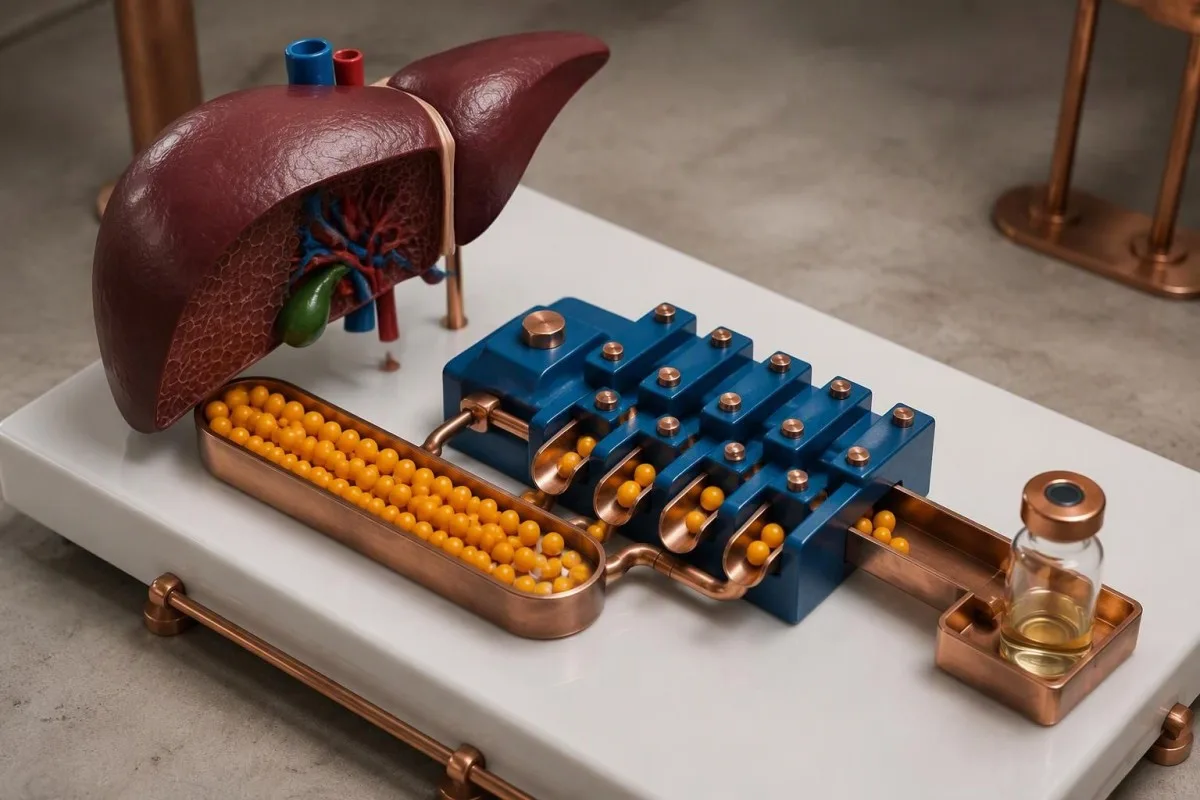
Metabolising enzymes can approach their processing capacity as exposure rises, so each additional milligram may be cleared less efficiently. A hypothetical rise from 2 mg/L to 4 mg/L after a modest dose adjustment is therefore plausible, but no single example provides a reliable formula for an individual patient.
The reverse calculation is unreliable too. A dose reduction of 25% does not guarantee a 25% concentration reduction, particularly when liver function or interacting medicines are changing; clinicians use repeat monitoring rather than assuming that the prescription and laboratory result move along a straight line.
A trough also reflects conditions during the preceding doses, not only the dose taken most recently. If a new prescription began 1 day before collection, the result may not represent the eventual exposure on that regimen, and an early result should be labelled as such rather than interpreted as settled.
This is a major reason not to borrow another person's adjustment advice. Nonlinear phenytoin monitoring illustrates a related principle, although phenytoin's free-versus-total measurement issues and target intervals are different; the shared lesson is that arithmetic alone cannot determine a safe drug dose.
Kaip CYP2C19 veikia vorikonazolo ekspoziciją?
CYP2C19 genetic variation can influence voriconazole clearance: rapid and ultrarapid metabolisers may have low exposure, while poor metabolisers may develop higher concentrations. A genetic result can help explain a repeated trough below 1 mg/L or above the prescribed ceiling, but it does not replace drug monitoring.
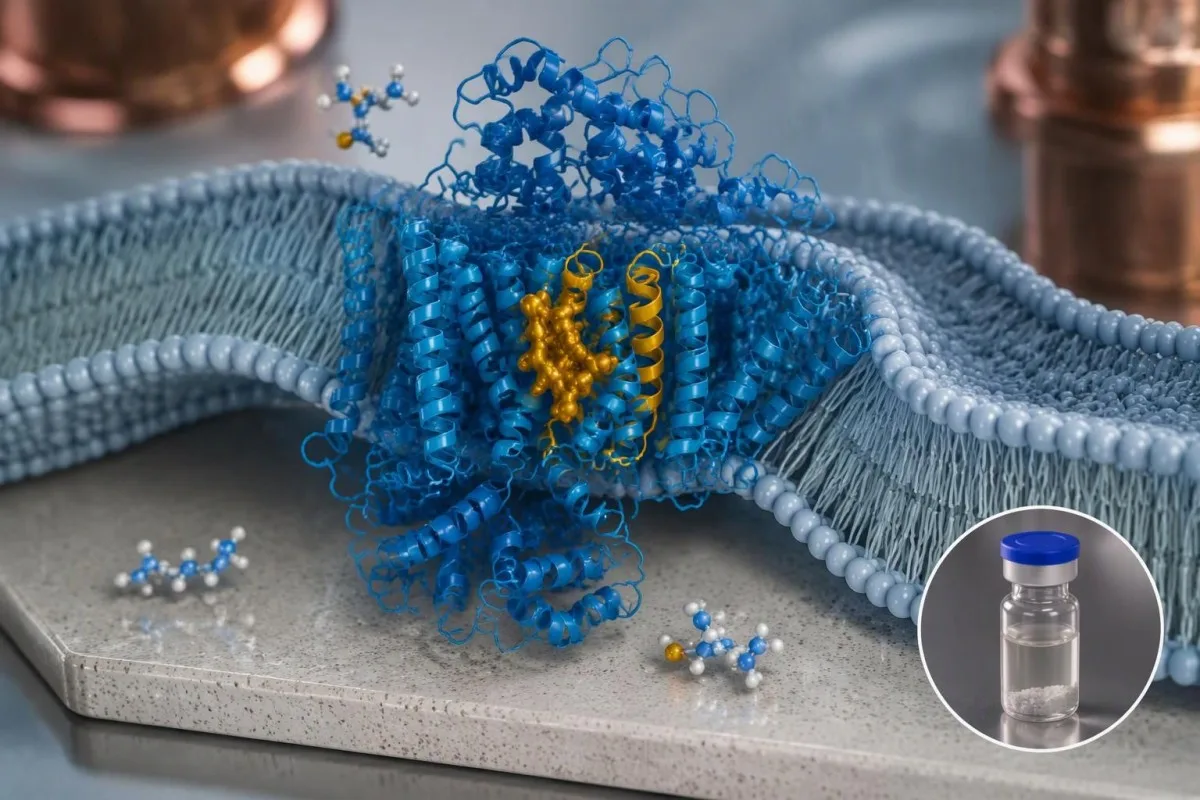
CPIC guidance recommends considering an alternative antifungal for certain CYP2C19 phenotypes when achieving reliable voriconazole exposure is difficult or adverse-effect risk is increased (Moriyama et al., 2017). This is a clinician-led choice between suitable treatments, not an instruction to stop an effective medicine after seeing a genetic category.
Genotype is only one input because liver illness, interacting medicines and systemic inflammatory responses can alter enzyme activity. A person genetically classified as a rapid metaboliser can still develop a trough of 6 mg/L under changed clinical conditions; inherited tendency does not establish a permanent, safe dose.
CYP2C19 influences more than one medicine, but the consequences are drug-specific. An enzyme variant that reduces activation of a prodrug can have a different clinical meaning from a variant that slows clearance of an active antifungal; 'fast metaboliser' is not automatically a favourable or unfavourable label.
Kantesti yra AI kraujo tyrimo rezultatų interpretavimo platforma that can help organise the laboratory and medication context around a reported voriconazole concentration. Our Dirbtinio intelekto technologijos paaiškinimas describes the interpretation workflow; a chemistry panel cannot reveal CYP2C19 genotype unless a separate genetic test has actually been performed.
Kokia vaistų sąveika gali pakeisti tyrimo rezultatą?
Voriconazole interactions can either lower its concentration or increase exposure to voriconazole and other medicines. Rifampicin and carbamazepine are major enzyme-inducing concerns, while voriconazole can substantially increase tacrolimus exposure; a satisfactory trough of 2 mg/L does not make the combination automatically safe.

Rifampicin, carbamazepine and St John's wort can substantially reduce voriconazole exposure, and some combinations are contraindicated. Phenytoin creates a particularly complicated bidirectional interaction; any specialist exception requires an explicit monitoring plan rather than the assumption that increasing voriconazole will reliably overcome induction.
Starting or stopping an interacting medicine can matter as much as adding a new voriconazole dose. Enzyme induction and its reversal do not necessarily disappear within 24 hours, so clinicians need medication start and stop dates when explaining a concentration that changes despite an unchanged antifungal prescription.
Tacrolimus is a separate safety priority because voriconazole inhibits pathways involved in its clearance. A transplant team may need to adjust and closely monitor tacrolimus when voriconazole starts or stops; our tacrolimus trough interpretation guide explains why both drug concentrations must be reviewed independently.
Warfarin and medicines that prolong the QT interval also require attention even when the antifungal trough is within range. Voriconazole can increase anticoagulant effect, so understanding INR monitoring is useful; an antifungal level does not substitute for coagulation testing or an electrocardiogram.
Kaip kepenų tyrimų rezultatai keičia koncentracijos prieš kitą dozę interpretaciją?
Liver dysfunction can reduce voriconazole clearance and increase exposure, while voriconazole itself can cause liver injury. A rising trough above 5–6 mg/L together with increasing ALT or bilirubin deserves prompt clinical review, but an isolated liver-test abnormality does not prove the antifungal caused it.
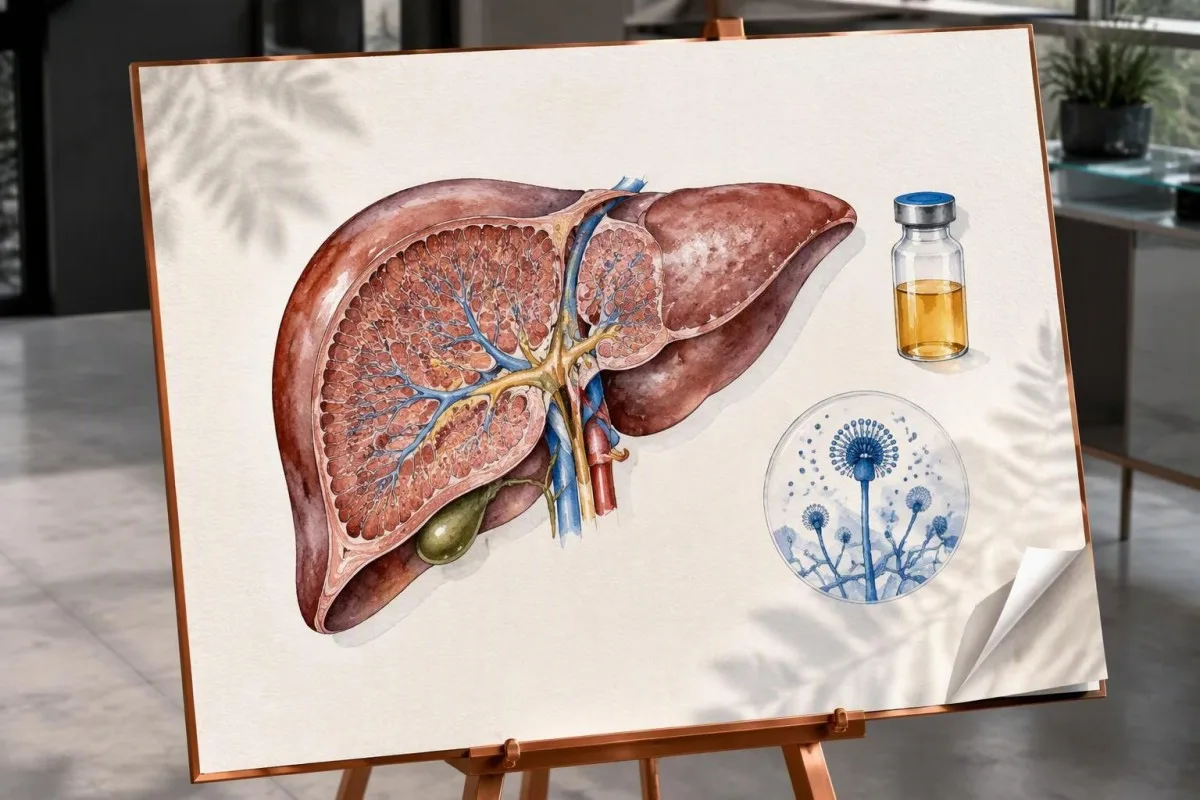
Product information recommends halving the usual maintenance dose in adults with mild-to-moderate cirrhosis, classified as Child–Pugh A or B, while retaining the standard loading regimen. That is prescribing guidance for clinicians, not a self-adjustment rule; severe hepatic impairment has less-established dosing evidence and needs specialist assessment.
Liver-test monitoring is generally recommended at least weekly during the first month, with frequency potentially reduced to monthly if results remain stable. The kepenų funkcijos tyrimų (kepenų panelės) paaiškinimo distinguishes injury markers from synthetic-function measures; ALT alone does not quantify the liver's capacity to clear voriconazole.
For example, ALT of 180 IU/L with a laboratory upper limit of 40 IU/L is 4.5 times that limit. Clinicians compare the change with baseline, bilirubin, ALP, symptoms and alternative causes; our ALT tolesnio stebėjimo gidas explains why a multiple of the upper limit is more informative than a raw number.
At Kantesti, we explain why a seemingly acceptable total concentration can still need context when albumin is markedly low. An albumin result of 22 g/L can affect drug binding, but there is no universally adopted albumin-correction formula for voriconazole; the serumo baltymų interpretacijos vadovas helps separate binding concerns from a diagnosis of cirrhosis.
Ar regėjimo sutrikimai reiškia, kad koncentracija prieš kitą dozę yra per didelė?
Visual disturbances are a recognised voriconazole effect and do not automatically mean the trough exceeds 5.5 mg/L. Temporary changes in brightness, colour perception or blurred vision can occur at otherwise acceptable exposure, whereas persistent visual loss, hallucinations or confusion require a different level of concern.

Clinical-trial information describes visual disturbances in approximately 30% of recipients, often occurring early in treatment and resolving within about 30 minutes. The frequency varies across populations and reporting methods, and the symptom alone cannot establish whether a result of 2 mg/L or 6 mg/L is responsible.
Repeated brief brightness changes soon after a dose differ from continuous loss of vision throughout the day. A pre-dose trough may not capture the maximum post-dose concentration associated with an episode; write down when symptoms start, how long they last and whether both eyes are affected.
New hallucinations, marked confusion or worsening visual impairment warrant prompt medical assessment, especially alongside a high concentration. Sudden loss of vision, severe eye pain or a new neurological deficit requires urgent evaluation regardless of the trough; do not wait 4–7 days for routine repeat monitoring.
For treatment continuing beyond 28 days, product information recommends monitoring visual function, including acuity, visual fields and colour perception. Formal eye-function testing illustrates some of these assessments, although voriconazole symptoms do not by themselves diagnose glaucoma; avoid driving while vision is affected.
Kada dėl didelės vorikonazolo koncentracijos reikia skubiai kreiptis pagalbos?
A trough above approximately 5–6 mg/L raises concern for excessive exposure, particularly when accompanied by confusion, hallucinations or worsening liver tests. Urgency depends on symptoms and organ effects, not a universal critical concentration; serious adverse effects can also occur below this numerical boundary.
A hypothetical trough of 7.2 mg/L with new hallucinations needs prompt contact with the prescribing team rather than a routine appointment weeks later. The team may change or temporarily interrupt treatment, but the patient should not independently halve the dose, skip repeated doses or wait for an AI explanation.
Fainting, sustained palpitations, seizures, severe confusion, a serious rash or jaundice with systemic illness warrant urgent assessment. Voriconazole can prolong the QT interval, and low potassium or magnesium adds risk; an electrolyte panel safety review addresses hazards that the antifungal concentration does not measure.
Kidney function affects the intravenous formulation differently from the active antifungal's liver metabolism. The cyclodextrin vehicle can accumulate when creatinine clearance is below 50 mL/min, prompting a route-specific risk–benefit review; a normal voriconazole trough cannot establish that the intravenous vehicle is harmless.
Long courses introduce problems not reliably predicted by a single trough, including photosensitivity and fluoride-associated periostitis. New persistent bone pain during a hypothetical 6-month course deserves review even at 3 mg/L, and sun-protection advice remains relevant when the drug concentration falls within the intended treatment window.
Ar koncentracija gali būti terapinė, nors infekcija sunkėja?
Yes—a therapeutic voriconazole trough does not guarantee treatment success because fungal resistance, an incorrect diagnosis, inadequate source control or profound immunosuppression can overcome adequate exposure. A result of 3 mg/L confirms neither fungal susceptibility nor sufficient drug delivery to every affected site.

The organism's minimum inhibitory concentration, or MIC, helps describe how much drug inhibits growth under laboratory conditions. If the fungal MIC is 2 mg/L rather than 0.25 mg/L, the same trough has a different exposure-to-susceptibility relationship; a trough-to-MIC ratio is not a self-dosing calculator.
Clinicians review imaging, cultures, susceptibility testing and relevant fungal markers alongside the concentration. A galactomannan result interpretation can clarify another piece of the assessment, but neither one positive marker nor one therapeutic trough independently proves active aspergillosis or its resolution.
Voriconazole lacks reliable activity against Mucorales, the fungi responsible for mucormycosis. A trough of 4 mg/L therefore cannot solve a mismatch between the medicine and the organism; persistent deterioration may require diagnostic reassessment and a different antifungal strategy rather than progressively increasing exposure.
Early imaging changes are also not always equivalent to failure because inflammatory responses can change as immune function recovers. Nonetheless, worsening breathing, new neurological symptoms or fever during severe neutropenia needs prompt clinical assessment; the infection team decides whether a 1-week trend reflects expected evolution or an inadequate treatment plan.
Kada reikėtų pakartoti koncentracijos prieš kitą dozę tyrimą?
Voriconazole monitoring is commonly repeated after a dose change, a major interaction change, altered liver function, a route change or suspected treatment failure. A routine reassessment often occurs within 4–7 days, but concerning neurological symptoms or liver deterioration justify earlier clinical action rather than waiting for steady exposure.
Two concentrations are meaningfully comparable only when the dosing interval and collection conditions are documented. A change from 1.1 mg/L to 3.4 mg/L may represent improved exposure, but it may instead compare a delayed trough with a post-dose sample; the size of the difference cannot correct a timing error.
Changing from intravenous to oral treatment can alter exposure even when the intended prescription seems equivalent. Clinicians may repeat the level after the switch, especially if eating, vomiting or tube feeding has changed; the route belongs beside the concentration in the monitoring record, not only in the medication history.
Kantesti yra AI pagrindu veikiantis kraujo tyrimų analizės įrankis that can help organise uploaded drug levels alongside liver-test trends and reported dose times. Our medication-safety trend workflow supports preparation for review, but a rise from 2 mg/L to 6 mg/L still requires clinician-led interpretation and treatment decisions.
Stable treatment does not create one universal long-term testing interval. The team balances infection risk, treatment duration, prior variability and access to testing; keep a record of at least the previous dose time, collection time, current prescription, formulation and medication changes so the next result answers a usable question.
Ką reikėtų atsinešti į konsultaciją ir kuo pagrįsta ši rekomendacija?
Bring the actual dose and collection times, the prescribed treatment goal, recent liver results and a complete medication list to your voriconazole review. Ask whether a result such as 1.4 mg/L meets your specific indication—not whether it fits a single internet range—and do not adjust the prescription yourself.
A practical review has three questions: was the sample a true trough, is exposure appropriate for this infection or prevention plan, and are there adverse effects or interactions? Include missed doses and meal timing honestly; a 12-hour prescription does not mean every dose was actually separated by 12 hours.
The clinical recommendations here draw on the 2016 IDSA aspergillosis guideline, the 2014 British Society for Medical Mycology monitoring guideline and the 2017 CPIC voriconazole guideline. These sources address different questions—clinical treatment, concentration monitoring and pharmacogenetics—so their recommendations should be combined thoughtfully rather than presented as one identical range.
Kantesti Ltd's role is to help readers understand laboratory information, not to prescribe antifungal treatment. Our organisation and purpose are described separately; technical evaluation on 100,000 synthetic cases cannot establish that a particular voriconazole dose improves clinical outcomes in a patient with invasive fungal disease.
The two research publications listed below describe an automated technical benchmark and a clinical-validation framework, not a voriconazole therapeutic-monitoring trial. Our validation methodology and limits explain that distinction; use our interpretation to prepare questions, while your infection specialist or prescribing team determines the dose and follow-up plan.
Dažnai užduodami klausimai
Kokia yra normali vorikonazolo koncentracija prieš kitą dozę?
Voriconazole does not have a healthy-population 'normal' concentration; it has a therapeutic exposure target. Many treatment protocols use approximately 1–5.5 mg/L, while IDSA guidance discusses a minimum above 1–1.5 mg/L and an upper boundary below 5–6 mg/L. Severe disease, fungal susceptibility and prevention protocols can change the intended target. Your prescribing team should interpret the result using the actual collection time and clinical indication.
Kiek laiko prieš vartojant dozę reikia paimti vorikonazolo koncentracijos tyrimo mėginį?
Vorikonazolo mažiausia koncentracija paprastai nustatoma mėginį paėmus prieš pat kitą numatytą dozę, dažniausiai per 30 minučių laikotarpį, laikantis vietos laboratorijos nurodymų. Jei dozė vartojama 8 val. ryto, paprastai tinka mėginį paimti 7:45 val. ryto, prieš išgeriant vaistą. Pirmiausia išgėrus dozę, galima gauti koncentraciją po dozės, kurios nereikėtų tiesiogiai lyginti su mažiausios koncentracijos tikslinėmis vertėmis. Dėl mėginio paėmimo plano susitarkite su gydymo komanda, užuot be nurodymų kelioms valandoms atidėję dozę.
0 Ką reiškia mažas vorikonazolo kiekis?
Mažesnė nei 1 mg/l vorikonazolo koncentracija prieš pat kitą dozę nesiekia daugelio gydymo tikslinių koncentracijų, tačiau tai neįrodo, kad paskirta dozė yra per maža. Maža ekspozicija gali būti susijusi su praleistomis dozėmis, per vėlai paimtu mėginiu, maisto poveikiu, vėmimu, sutrikusia absorbcija ar fermentus indukuojančiais vaistais. Geriamąjį vorikonazolą paprastai reikia vartoti likus bent 1 valandai iki valgio arba praėjus bent 1 valandai po jo, laikantis vaisto vartojimo instrukcijų. Kreipkitės į vaistą paskyrusią komandą, kad ji įvertintų situaciją, ir patys dozės nedidinkite.
Ar vorikonazolo rezultatai mg/L ir µg/mL yra vienodi?
Vorikonazolo koncentracijų, išreikštų mg/L ir µg/mL, skaitinės vertės yra tokios pačios. 2 mg/L rezultatas tiksliai atitinka 2 µg/mL, o tai taip pat yra 2 000 ng/mL. Laboratorijos gali naudoti skirtingus matavimo vienetus ir tikslinius intervalus, todėl prieš lygindami tyrimų rezultatus patikrinkite abu dalykus. Šis vienetų perskaičiavimas neištaiso netinkamu laiku paimto mėginio.
0 Ar neryškus matymas arba haliucinacijos reiškia, kad vorikonazolas yra toksiškas?
Vartojant vorikonazolą gali pasireikšti trumpalaikių regos sutrikimų, net jei mažiausia koncentracija kraujyje neviršija numatyto intervalo, o haliucinacijos ar sumišimas kelia didesnį susirūpinimą dėl per didelės vaisto ekspozicijos ar kitos medicininės problemos. Produkto informacijoje nurodoma, kad regos sutrikimų pasireiškia maždaug 30% vaistą vartojančių asmenų; jie dažnai praeina maždaug per 30 minučių. Apie naujai atsiradusias haliucinacijas, išliekančius sutrikimus ar simptomų stiprėjimą reikia nedelsiant pranešti vaistą paskyrusiai sveikatos priežiūros specialistų komandai; staiga praradus regėjimą ar pasireiškus sunkiems neurologiniams simptomams, būtina skubi medicininė apžiūra. Nevairuokite, kol sutrikusi rega, ir savarankiškai nekeiskite priešgrybelinio vaisto dozės.
Kada po dozės pakeitimo reikėtų dar kartą patikrinti vorikonazolo koncentraciją?
Vorikonazolo mažiausia koncentracija dažnai pakartotinai tiriama per 4–7 dienas po dozės pakeitimo, atsižvelgiant į gydymo schemą, įsotinamąsias dozes ir vietinį protokolą. Įtarus toksinį poveikį, pakitus kepenų funkcijai ar esant reikšmingai vaistų sąveikai, tyrimą gali reikėti atlikti anksčiau arba imtis klinikinių veiksmų. Dėl nelinijinio metabolizmo 25% dozės padidinimas negarantuoja, kad koncentracija padidės tik 25%. Gydymą skirianti komanda turėtų nustatyti pakartotinio tyrimo datą ir įvertinti rezultatą prieš atlikdama tolesnius pakeitimus.
Sužinokite, kaip skaityti kraujo tyrimo rezultatus
Įkelkite laboratorinio tyrimo ataskaitą ir Kantesti AI per kelias sekundes paprasta kalba paaiškins kiekvieną biomarkerį. Juo naudojasi daugiau nei 2 milijonai žmonių visame pasaulyje.
Nuorodos
- Klein, T., Mitchell, S., & Weber, H. (2026). Iš anksto registruotas, pagal rubriką pagrįstas automatizuotas Kantesti kraujo tyrimo interpretavimo variklio techninis etalonas 100 000 sintetinių testavimo atvejų. Kantesti AI medicininiai tyrimai. DOI
- Klein, T., Mitchell, S., & Weber, H. (2026). Klinikinio patvirtinimo sistema v2.0 (Medicininio patvirtinimo puslapis). Kantesti AI medicininiai tyrimai. DOI
- Patterson TF ir kt. (2016). Aspergiliozės diagnostikos ir gydymo praktinės gairės: 2016 m. atnaujinimas, parengtas Amerikos infekcinių ligų draugijos. Clinical Infectious Diseases. DOI
- Ashbee HR et al. (2014). Therapeutic drug monitoring (TDM) of antifungal agents: guidelines from the British Society for Medical Mycology. Journal of Antimicrobial Chemotherapy. DOI
- Moriyama B et al. (2017). Clinical Pharmacogenetics Implementation Consortium (CPIC) Guidelines for CYP2C19 and Voriconazole Therapy. Clinical Pharmacology & Therapeutics. DOI
- 2M+Ištirti tyrimai
- 127+Šalys
- 100+Kalbos
Apie medicinos komandą


E-E-A-T patikimumo signalai
Patirtis
Gydytojo vadovaujama klinikinė laboratorinių tyrimų interpretavimo darbo eigų peržiūra.
Ekspertizė
Laboratorinės medicinos dėmesys tam, kaip biomarkeriai elgiasi klinikiniame kontekste.
Autoritetas
Mediciniškai peržiūrėjo dr. Thomas Klein, prisidėjo dr. Sarah Mitchell ir prof. dr. Hans Weber.
Patikimumas
Įrodymais pagrįsta interpretacija su aiškiais tolesnių veiksmų keliais, siekiant sumažinti nerimą.

Medicininė atsakomybės ribojimo nuostata
Šis straipsnis skirtas tik mokymo tikslais ir nesudaro medicininės konsultacijos. Visada kreipkitės į kvalifikuotą sveikatos priežiūros specialistą dėl diagnozės ir gydymo sprendimų.
Paskelbta · Susisiekite su redakcine komanda
Išleido Kantesti Ltd, registruota Anglijoje ir Velse, įmonės Nr. 17090423, Londonas, Jungtinė Karalystė.
