
Cuidichidh tomhas ceart-ùine den ìre as ìsle de voriconazole le measadh a bheil an ìre nochdaidh don antifungal iomchaidh gun a bhith ro àrd. Bidh mòran phròtacalan leigheis a’ cleachdadh mu 1–5.5 mg/L, ach ’s e an galar, am plana bacaidh agus na fo-bhuaidhean a shuidhicheas an targaid phearsanta agad.

Prìomh phuingean
- Tomhas na h-ìre as ìsle de voriconazole ’s e dùmhlachd a’ chungaidh dìreach ron ath dòs a tha clàraichte a th’ ann; tha e a’ tomhas na h-ìre nochdaidh, chan e a bheil galar air a leigheas.
- Targaidean làimhseachaidh gu tric feumar tomhas na h-ìre as ìsle os cionn 1–1.5 mg/L, agus bidh cuid de sgiobaidhean ag amas air co-dhiù 2 mg/L airson galairean doirbh no dona.
- Crìochan àrda mar as trice tha iad mu 5–6 mg/L oir tha cus nochdaidh ag àrdachadh na dragha mu dhroch bhuaidhean eanchainneil agus eile.
- Targaidean bacaidh tha iad sònraichte do gach pròtacal; cha bu chòir crìoch nas ìsle a thathar a’ cleachdadh airson prophylaxis a chur an sàs gu fèin-obrachail ann an làimhseachadh galair a tha stèidhichte mar-thà.
- Ùineachadh ìre mar as trice tha sin a’ ciallachadh gun tèid an sampall a thional taobh a-staigh mu 30 mionaid ron ath dòs, a rèir stiùireadh an obair-lann.
- Tionndadh aonadan tha e mionaideach: tha 1 mg/L co-ionann ri 1 µg/mL agus 1,000 ng/mL.
- Foillseachadh ìosal faodaidh e nochdadh gun deach dòsan a chall, buaidh bìdh, droch ghabhail a-steach, cungaidhean a tha ag eadar-obrachadh no meata-bolachd nas luaithe—chan e dìreach òrdugh-leigheis mì-fhreagarrach.
- Sàbhailteachd dòs tha feum air atharrachaidhean fo stiùir clionaigiche, oir faodaidh àrdachadh dòis 25% àrdachadh ro mhòr ann an dùmhlachd adhbharachadh.
Dè dìreach a dh’innseas tomhas na h-ìre as ìsle de voriconazole dhut?
A ìre a’ ghlinne voriconazole innseas i do chlinigichean dè an ìre de chungaidh antifungach a tha air fhàgail dìreach ron ath dòs. Bidh toradh a tha air a chruinneachadh gu ceart, timcheall air 1–5.5 mg/L, gu tric a’ freagairt ri pròtacal làimhseachaidh, ach tha dòs èifeachdach cuideachd an urra ri so-leòntachd an fhungais, far a bheil an galar agus an adhartas clionaigeach.

Tha ìre a’ ghlinne na chomharra practaigeach air foillseachadh rè eadar-ama dòsachaidh, chan e tomhas dìreach den chungaidh ann an sgamhan no eanchainn air a bheil buaidh. Do neach a tha a’ gabhail voriconazole gach 12 uair, cuidichidh an dùmhlachd ron dòs le bhith a’ dearbhadh am faodadh am foillseachadh tuiteam ro ìosal eadar dòsan.
Tha dà amas fa leth aig sgrùdadh teirpeach dhrogaichean: foillseachadh gu leòr a chumail suas airson gnìomhachd antifungach agus cus foillseachaidh a sheachnadh. Tha stiùireadh IDSA airson aspergillosis a’ mìneachadh ìrean glinne làimhseachaidh os cionn 1–1.5 mg/L agus fo 5–6 mg/L mar thargaidean eòlach a thathar a’ cleachdadh gu cumanta, gu h-àraidh gus puinnseanta an t-siostaim nearbhach mheadhain a lùghdachadh (Patterson et al., 2016).
Tha Kantesti na Anailisiche deuchainn fala AI a chuidicheas le bhith a’ mìneachadh toradh voriconazole a chaidh a luchdadh suas, còmhla ri deuchainnean grùthan, agus an sgioba a tha ag òrdachadh an leigheis agad a’ dearbhadh na targaid. Feumar fios a bhith dè an t-adhbhar agus dè an t-àm cruinneachaidh a bha aig toradh 1.2 mg/L; cha bu chòir don mhìneachadh againn an àireamh sin a thionndadh gu stiùireadh dòis.
Chan e breithneachadh deireannach a tha ann an comharra obair-lainn a thaobh soirbheachas an làimhseachaidh. Eu-coltach ri mòran raointean iomraidh àbhaisteach airson ceimigeachd, tha raon sgrùdaidh dhrogaichean a’ riochdachadh amas clionaigeach airson foillseachadh; tha am mìneachadh againn air toraidhean obair-lann a tha taobh a-muigh raon a’ cuideachadh le bhith ag aithneachadh an eadar-dhealachaidh eadar comharra agus breithneachadh.
Cuin a bu chòir an ìre voriconazole agad a thomhas?
Ceart àm tomhais ìre voriconazole tha sin a’ ciallachadh gun tèid an sampall a chruinneachadh dìreach ron ath dòs a tha clàraichte, mar as trice taobh a-staigh 30 mionaid dheth. Gu tric gheibhear a’ chiad ìre àbhaisteach rè làithean 4–7, ged a dh’fhaodadh dòsan-luchdachaidh, droch thinneas agus pròtacalan ionadail measadh nas tràithe a fhìreanachadh.

Mar eisimpleir, smaoinich air clàr òrdaichte de 8 sa mhadainn agus 8 san fheasgar. Tha sampall a thèid a chruinneachadh aig 7:45 sa mhadainn, ron chungaidh maidne, a’ riochdachadh ìre a’ ghlinne gu dlùth; chan eil sampall a thèid a chruinneachadh aig 10 sa mhadainn às dèidh an dòis a ghabhail a’ dèanamh sin, fiù ’s ma chanas aithisg an obair-lainn gur e ìre a’ ghlinne a th’ ann.
Faodaidh dàil dòis cuideachd an eadar-mhìneachadh a shaobhadh an taobh eile. Ma bha an ath dòs ri ghabhail aig 8 sa mhadainn ach gun deach an sampall a chruinneachadh aig 11 sa mhadainn, dh’fhaodadh na 3 uairean a bharrachd gun chungaidh an dùmhlachd a chaidh a thomhas ìsleachadh; feumaidh an sgioba na h-amannan fìor, chan e dìreach an clàr a bha san amharc.
Tha feum fhathast air sampall ron dòs airson voriconazole intravenous, mar as trice mus tòisich an ath fhilleadh. Faodaidh cruinneachadh bho loidhne a chaidh a chleachdadh airson a’ chungaidh a thoirt seachad draghan truailleadh adhbharachadh, agus mar sin bu chòir don obair-lann no don sgioba-fhilleadh slighe an t-samplachaidh a thaghadh seach a bhith a’ gabhail ris gu bheil gach loidhne ruigsinneach a’ toirt toradh co-ionann.
Chan eil feum ghnèitheach air fastadh fad na h-oidhche airson an deuchainn dùmhlachd, ach tha stiùireadh fhèin aig voriconazole beòil a thaobh àm bìdh. Thoir sùil air a’ phlana cruinneachaidh ro làimh; riaghailtean samplachaidh a tha sònraichte do chungaidh mìnicheadh iad carson nach gabh riaghailt ùineachaidh dhligheach airson aon dhroga a chur an sàs ann an droga eile.
Dè an raon leigheasach airson voriconazole?
An raon teirpeach voriconazole is commonly approximately 1–5.5 mg/L for treatment, but there is no universal interval suitable for every patient. IDSA guidance discusses a lower goal above 1–1.5 mg/L and an upper boundary below 5–6 mg/L; some difficult infections prompt a higher minimum.

These boundaries describe probabilities, not biological switches. A trough of 0.9 mg/L does not prove failure, and 5.6 mg/L does not prove toxicity; repeated results, symptoms and organism susceptibility help determine whether a small boundary crossing is clinically meaningful or simply requires confirmation.
For invasive aspergillosis, the British Society for Medical Mycology recommends a treatment trough above 1 mg/L and discusses higher exposure goals for poor-prognosis situations, including central nervous system disease (Ashbee et al., 2014). A team may therefore consider 1.3 mg/L acceptable for one indication but insufficient for another.
The reason for a higher minimum is that the concentration needed to inhibit a less-susceptible fungus may exceed the concentration needed for a susceptible organism. Raising exposure indefinitely is not a safe solution: a trough approaching 5–6 mg/L can leave little room between a desired antifungal effect and adverse effects.
Always read the units before comparing reports. A result of 2 µg/mL is exactly 2 mg/L, not twice or half that value; the biomarker and units guide provides context for comparing laboratory values without mistaking a therapeutic target for a healthy-population range.
| Ìre | Raon | Na tha e a’ ciallachadh |
|---|---|---|
| Below many treatment targets | <1 mg/L | Check collection timing, dosing history, absorption and interactions; not proof of treatment failure. |
| Lower treatment exposure | 1–<2 mg/L | May meet the prescribed target, but severe disease or reduced fungal susceptibility can require a higher minimum. |
| Common treatment exposure window | 2–5.5 mg/L | Often compatible with treatment goals when correctly timed; does not guarantee efficacy or freedom from toxicity. |
| Above many local upper limits | >5.5 mg/L | Requires review of symptoms, liver tests, timing and the local protocol; there is no universal emergency cutoff. |
Carson a dh’fhaodas na targaidean airson leigheas agus bacadh a bhith eadar-dhealaichte?
Treatment targets may be more demanding than prevention targets because an established fungal infection must be controlled, not merely prevented. Some local prophylaxis protocols accept 0.5 mg/L, whereas British guidance recommends a prophylaxis trough above 1 mg/L; these thresholds are not interchangeable.

Prophylaxis studies are harder to interpret because breakthrough fungal disease may be uncommon and heavily influenced by immune status. A threshold of 0.5 mg/L used in one prevention programme cannot establish equivalent protection for every stem-cell transplant recipient, particularly during prolonged neutropenia or intensive immunosuppression.
The British Society for Medical Mycology's prophylaxis recommendation above 1 mg/L carries a weaker evidence base than some treatment recommendations (Ashbee et al., 2014). The uncertainty is genuine: the exact preventive minimum is less settled than the principle that persistently very low exposure deserves investigation.
Consider a hypothetical result of 0.8 mg/L in two people. One is receiving prevention under a documented local protocol; the other has confirmed invasive aspergillosis. The same concentration can lead to different discussions because the indication, fungal burden and acceptable risk of inadequate exposure differ.
Transplant recipients often have several parallel monitoring plans, not one combined 'infection score.' Voriconazole does not prevent every opportunistic infection, and CMV results after transplantation answer a different question; a satisfactory antifungal trough does not replace viral surveillance or other prescribed prophylaxis.
Dè dh’fhaodas ìre ìosal de voriconazole adhbharachadh?
A low voriconazole level can result from missed or delayed doses, food effects, impaired gastrointestinal absorption, enzyme-inducing medicines or faster metabolism. Before changing treatment, clinicians verify whether a result below 1 mg/L is a correctly timed trough and whether the prescribed doses actually reached the patient.

Oral voriconazole is generally taken at least 1 hour before or 1 hour after a meal, following the product instructions. Food can reduce exposure, but a low result should not be blamed on breakfast without checking the complete dosing history, formulation, vomiting and other medicines.
Imagine a hypothetical adult prescribed 200 mg every 12 hours whose trough is 0.6 mg/L. Taking each dose with a substantial meal and vomiting one evening dose creates two plausible explanations for low exposure; automatically escalating the prescription could cause excessive exposure once those problems resolve.
Severe diarrhoea, mucositis, gastrointestinal surgery and feeding-tube administration can make oral delivery less predictable. Clinicians may review the formulation or route rather than simply the milligram amount; testing for impaired fat absorption explains why gastrointestinal dysfunction needs its own assessment rather than being diagnosed from one drug level.
Acid-suppressing medicines deserve a medication review, but voriconazole should not be treated like an antifungal whose absorption always requires stomach acid. Some proton pump inhibitors inhibit metabolism and can raise exposure; our reflux treatment context helps readers identify these medicines without stopping them independently.
Carson a dh’atharraicheas ìre gu mòr uaireannan le atharrachadh beag san dòs?
Voriconazole has nonlinear metabolism in adults, meaning a dose increase can produce a more-than-proportional concentration increase. Changing a prescribed dose from 200 mg to 250 mg is a 25% increase, but the resulting trough cannot safely be predicted by multiplying the old result by 1.25.
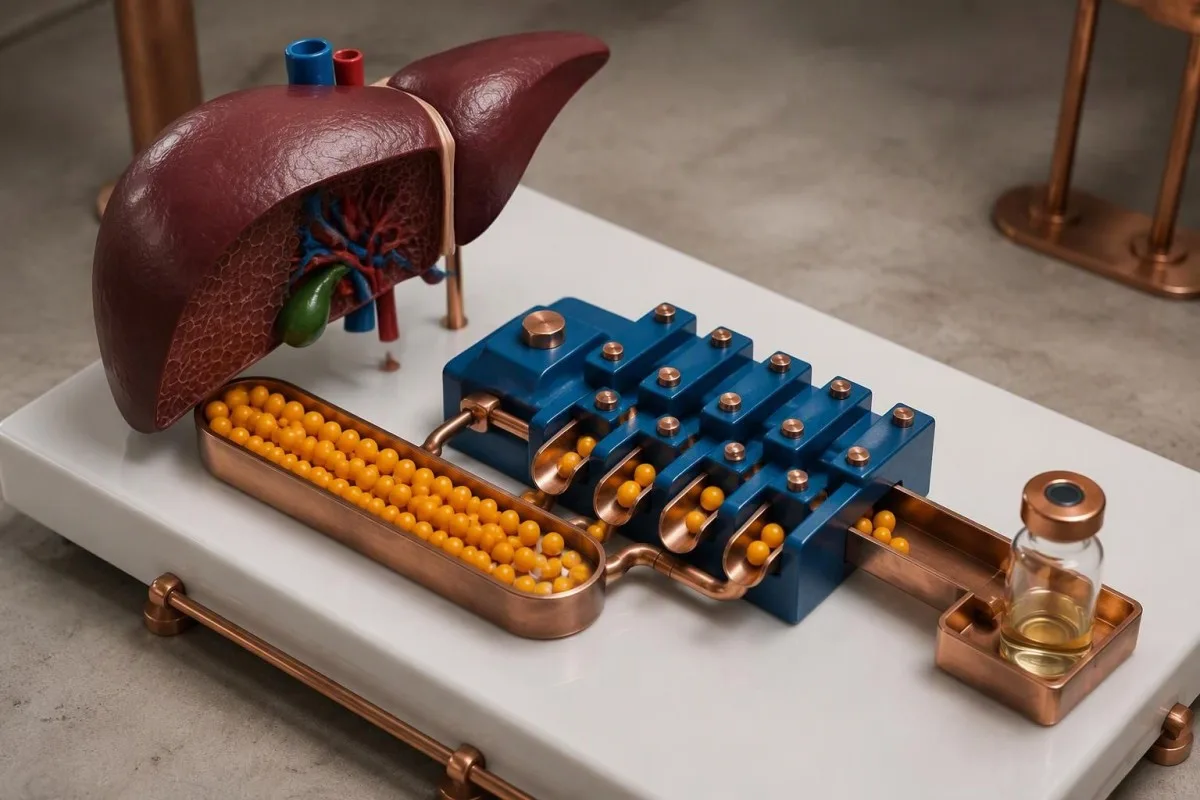
Metabolising enzymes can approach their processing capacity as exposure rises, so each additional milligram may be cleared less efficiently. A hypothetical rise from 2 mg/L to 4 mg/L after a modest dose adjustment is therefore plausible, but no single example provides a reliable formula for an individual patient.
The reverse calculation is unreliable too. A dose reduction of 25% does not guarantee a 25% concentration reduction, particularly when liver function or interacting medicines are changing; clinicians use repeat monitoring rather than assuming that the prescription and laboratory result move along a straight line.
A trough also reflects conditions during the preceding doses, not only the dose taken most recently. If a new prescription began 1 day before collection, the result may not represent the eventual exposure on that regimen, and an early result should be labelled as such rather than interpreted as settled.
This is a major reason not to borrow another person's adjustment advice. Nonlinear phenytoin monitoring illustrates a related principle, although phenytoin's free-versus-total measurement issues and target intervals are different; the shared lesson is that arithmetic alone cannot determine a safe drug dose.
Ciamar a bheir CYP2C19 buaidh air an ìre nochdaidh do voriconazole?
CYP2C19 genetic variation can influence voriconazole clearance: rapid and ultrarapid metabolisers may have low exposure, while poor metabolisers may develop higher concentrations. A genetic result can help explain a repeated trough below 1 mg/L or above the prescribed ceiling, but it does not replace drug monitoring.
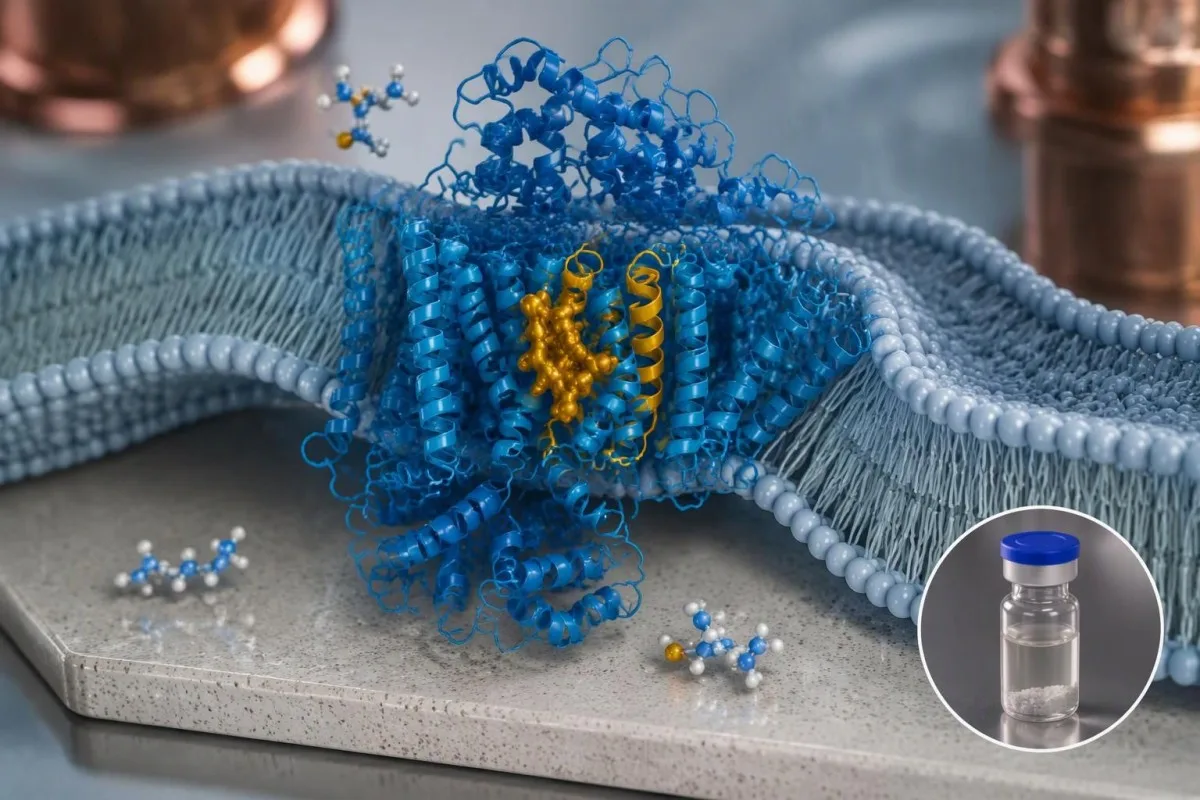
CPIC guidance recommends considering an alternative antifungal for certain CYP2C19 phenotypes when achieving reliable voriconazole exposure is difficult or adverse-effect risk is increased (Moriyama et al., 2017). This is a clinician-led choice between suitable treatments, not an instruction to stop an effective medicine after seeing a genetic category.
Genotype is only one input because liver illness, interacting medicines and systemic inflammatory responses can alter enzyme activity. A person genetically classified as a rapid metaboliser can still develop a trough of 6 mg/L under changed clinical conditions; inherited tendency does not establish a permanent, safe dose.
CYP2C19 influences more than one medicine, but the consequences are drug-specific. An enzyme variant that reduces activation of a prodrug can have a different clinical meaning from a variant that slows clearance of an active antifungal; 'fast metaboliser' is not automatically a favourable or unfavourable label.
Tha Kantesti na àrd-ùrlar mìneachaidh deuchainn fala AI that can help organise the laboratory and medication context around a reported voriconazole concentration. Our mìneachadh teicneòlas AI describes the interpretation workflow; a chemistry panel cannot reveal CYP2C19 genotype unless a separate genetic test has actually been performed.
Dè na h-eadar-obrachaidhean eadar cungaidhean a dh’fhaodas an toradh atharrachadh?
Voriconazole interactions can either lower its concentration or increase exposure to voriconazole and other medicines. Rifampicin and carbamazepine are major enzyme-inducing concerns, while voriconazole can substantially increase tacrolimus exposure; a satisfactory trough of 2 mg/L does not make the combination automatically safe.

Rifampicin, carbamazepine and St John's wort can substantially reduce voriconazole exposure, and some combinations are contraindicated. Phenytoin creates a particularly complicated bidirectional interaction; any specialist exception requires an explicit monitoring plan rather than the assumption that increasing voriconazole will reliably overcome induction.
Starting or stopping an interacting medicine can matter as much as adding a new voriconazole dose. Enzyme induction and its reversal do not necessarily disappear within 24 hours, so clinicians need medication start and stop dates when explaining a concentration that changes despite an unchanged antifungal prescription.
Tacrolimus is a separate safety priority because voriconazole inhibits pathways involved in its clearance. A transplant team may need to adjust and closely monitor tacrolimus when voriconazole starts or stops; our tacrolimus trough interpretation guide explains why both drug concentrations must be reviewed independently.
Warfarin and medicines that prolong the QT interval also require attention even when the antifungal trough is within range. Voriconazole can increase anticoagulant effect, so understanding INR monitoring is useful; an antifungal level does not substitute for coagulation testing or an electrocardiogram.
Ciamar a bheir deuchainnean grùthan buaidh air mìneachadh tomhas na h-ìre as ìsle?
Liver dysfunction can reduce voriconazole clearance and increase exposure, while voriconazole itself can cause liver injury. A rising trough above 5–6 mg/L together with increasing ALT or bilirubin deserves prompt clinical review, but an isolated liver-test abnormality does not prove the antifungal caused it.
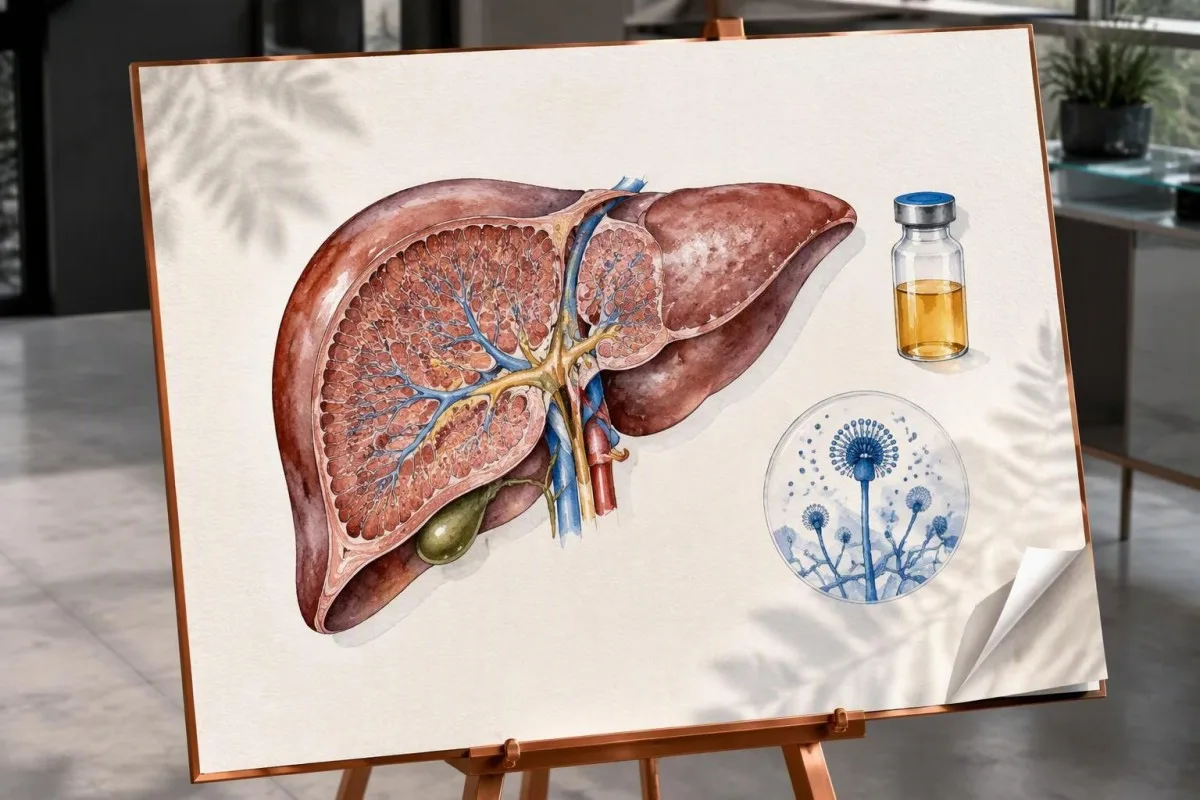
Product information recommends halving the usual maintenance dose in adults with mild-to-moderate cirrhosis, classified as Child–Pugh A or B, while retaining the standard loading regimen. That is prescribing guidance for clinicians, not a self-adjustment rule; severe hepatic impairment has less-established dosing evidence and needs specialist assessment.
Liver-test monitoring is generally recommended at least weekly during the first month, with frequency potentially reduced to monthly if results remain stable. The mìneachadh pannal grùthan distinguishes injury markers from synthetic-function measures; ALT alone does not quantify the liver's capacity to clear voriconazole.
For example, ALT of 180 IU/L with a laboratory upper limit of 40 IU/L is 4.5 times that limit. Clinicians compare the change with baseline, bilirubin, ALP, symptoms and alternative causes; our stiùireadh leanmhainn ALT explains why a multiple of the upper limit is more informative than a raw number.
At Kantesti, we explain why a seemingly acceptable total concentration can still need context when albumin is markedly low. An albumin result of 22 g/L can affect drug binding, but there is no universally adopted albumin-correction formula for voriconazole; the stiùireadh mìneachaidh pròtain serum helps separate binding concerns from a diagnosis of cirrhosis.
A bheil buairidhean lèirsinneach a’ ciallachadh gu bheil an ìre as ìsle ro àrd?
Visual disturbances are a recognised voriconazole effect and do not automatically mean the trough exceeds 5.5 mg/L. Temporary changes in brightness, colour perception or blurred vision can occur at otherwise acceptable exposure, whereas persistent visual loss, hallucinations or confusion require a different level of concern.

Clinical-trial information describes visual disturbances in approximately 30% of recipients, often occurring early in treatment and resolving within about 30 minutes. The frequency varies across populations and reporting methods, and the symptom alone cannot establish whether a result of 2 mg/L or 6 mg/L is responsible.
Repeated brief brightness changes soon after a dose differ from continuous loss of vision throughout the day. A pre-dose trough may not capture the maximum post-dose concentration associated with an episode; write down when symptoms start, how long they last and whether both eyes are affected.
New hallucinations, marked confusion or worsening visual impairment warrant prompt medical assessment, especially alongside a high concentration. Sudden loss of vision, severe eye pain or a new neurological deficit requires urgent evaluation regardless of the trough; do not wait 4–7 days for routine repeat monitoring.
For treatment continuing beyond 28 days, product information recommends monitoring visual function, including acuity, visual fields and colour perception. Formal eye-function testing illustrates some of these assessments, although voriconazole symptoms do not by themselves diagnose glaucoma; avoid driving while vision is affected.
Cuin a dh’fheumas ìre àrd de voriconazole aire èiginneach?
A trough above approximately 5–6 mg/L raises concern for excessive exposure, particularly when accompanied by confusion, hallucinations or worsening liver tests. Urgency depends on symptoms and organ effects, not a universal critical concentration; serious adverse effects can also occur below this numerical boundary.

A hypothetical trough of 7.2 mg/L with new hallucinations needs prompt contact with the prescribing team rather than a routine appointment weeks later. The team may change or temporarily interrupt treatment, but the patient should not independently halve the dose, skip repeated doses or wait for an AI explanation.
Fainting, sustained palpitations, seizures, severe confusion, a serious rash or jaundice with systemic illness warrant urgent assessment. Voriconazole can prolong the QT interval, and low potassium or magnesium adds risk; an electrolyte panel safety review addresses hazards that the antifungal concentration does not measure.
Kidney function affects the intravenous formulation differently from the active antifungal's liver metabolism. The cyclodextrin vehicle can accumulate when creatinine clearance is below 50 mL/min, prompting a route-specific risk–benefit review; a normal voriconazole trough cannot establish that the intravenous vehicle is harmless.
Long courses introduce problems not reliably predicted by a single trough, including photosensitivity and fluoride-associated periostitis. New persistent bone pain during a hypothetical 6-month course deserves review even at 3 mg/L, and sun-protection advice remains relevant when the drug concentration falls within the intended treatment window.
Am faod an ìre a bhith taobh a-staigh an raoin leigheasaich fhad ’s a tha an galar a’ fàs nas miosa?
Yes—a therapeutic voriconazole trough does not guarantee treatment success because fungal resistance, an incorrect diagnosis, inadequate source control or profound immunosuppression can overcome adequate exposure. A result of 3 mg/L confirms neither fungal susceptibility nor sufficient drug delivery to every affected site.

The organism's minimum inhibitory concentration, or MIC, helps describe how much drug inhibits growth under laboratory conditions. If the fungal MIC is 2 mg/L rather than 0.25 mg/L, the same trough has a different exposure-to-susceptibility relationship; a trough-to-MIC ratio is not a self-dosing calculator.
Clinicians review imaging, cultures, susceptibility testing and relevant fungal markers alongside the concentration. A galactomannan result interpretation can clarify another piece of the assessment, but neither one positive marker nor one therapeutic trough independently proves active aspergillosis or its resolution.
Voriconazole lacks reliable activity against Mucorales, the fungi responsible for mucormycosis. A trough of 4 mg/L therefore cannot solve a mismatch between the medicine and the organism; persistent deterioration may require diagnostic reassessment and a different antifungal strategy rather than progressively increasing exposure.
Early imaging changes are also not always equivalent to failure because inflammatory responses can change as immune function recovers. Nonetheless, worsening breathing, new neurological symptoms or fever during severe neutropenia needs prompt clinical assessment; the infection team decides whether a 1-week trend reflects expected evolution or an inadequate treatment plan.
Cuin a bu chòir tomhas na h-ìre as ìsle a dhèanamh a-rithist?
Voriconazole monitoring is commonly repeated after a dose change, a major interaction change, altered liver function, a route change or suspected treatment failure. A routine reassessment often occurs within 4–7 days, but concerning neurological symptoms or liver deterioration justify earlier clinical action rather than waiting for steady exposure.
Two concentrations are meaningfully comparable only when the dosing interval and collection conditions are documented. A change from 1.1 mg/L to 3.4 mg/L may represent improved exposure, but it may instead compare a delayed trough with a post-dose sample; the size of the difference cannot correct a timing error.
Changing from intravenous to oral treatment can alter exposure even when the intended prescription seems equivalent. Clinicians may repeat the level after the switch, especially if eating, vomiting or tube feeding has changed; the route belongs beside the concentration in the monitoring record, not only in the medication history.
Tha Kantesti na Inneal mion-sgrùdaidh deuchainn fala le cumhachd AI that can help organise uploaded drug levels alongside liver-test trends and reported dose times. Our medication-safety trend workflow supports preparation for review, but a rise from 2 mg/L to 6 mg/L still requires clinician-led interpretation and treatment decisions.
Stable treatment does not create one universal long-term testing interval. The team balances infection risk, treatment duration, prior variability and access to testing; keep a record of at least the previous dose time, collection time, current prescription, formulation and medication changes so the next result answers a usable question.
Dè bu chòir dhut a thoirt leat airson ath-sgrùdadh, agus dè a tha a’ cur taic ris a’ chomhairle seo?
Bring the actual dose and collection times, the prescribed treatment goal, recent liver results and a complete medication list to your voriconazole review. Ask whether a result such as 1.4 mg/L meets your specific indication—not whether it fits a single internet range—and do not adjust the prescription yourself.

A practical review has three questions: was the sample a true trough, is exposure appropriate for this infection or prevention plan, and are there adverse effects or interactions? Include missed doses and meal timing honestly; a 12-hour prescription does not mean every dose was actually separated by 12 hours.
The clinical recommendations here draw on the 2016 IDSA aspergillosis guideline, the 2014 British Society for Medical Mycology monitoring guideline and the 2017 CPIC voriconazole guideline. These sources address different questions—clinical treatment, concentration monitoring and pharmacogenetics—so their recommendations should be combined thoughtfully rather than presented as one identical range.
Kantesti Ltd's role is to help readers understand laboratory information, not to prescribe antifungal treatment. Our organisation and purpose are described separately; technical evaluation on 100,000 synthetic cases cannot establish that a particular voriconazole dose improves clinical outcomes in a patient with invasive fungal disease.
The two research publications listed below describe an automated technical benchmark and a clinical-validation framework, not a voriconazole therapeutic-monitoring trial. Our validation methodology and limits explain that distinction; use our interpretation to prepare questions, while your infection specialist or prescribing team determines the dose and follow-up plan.
Ceistean cumanta
Dè an ìre trough àbhaisteach de voriconazole?
Voriconazole does not have a healthy-population 'normal' concentration; it has a therapeutic exposure target. Many treatment protocols use approximately 1–5.5 mg/L, while IDSA guidance discusses a minimum above 1–1.5 mg/L and an upper boundary below 5–6 mg/L. Severe disease, fungal susceptibility and prevention protocols can change the intended target. Your prescribing team should interpret the result using the actual collection time and clinical indication.
Dè cho fada ron dòs agam a bu chòir ìre voriconazole a thomhas?
Mar as trice bithear a’ cruinneachadh ìre trough voriconazole dìreach ron ath dòs a tha clàraichte, mar as trice taobh a-staigh 30 mionaid, a rèir stiùireadh an obair-lann ionadail. Airson dòs aig 8 a.m., bhiodh cruinneachadh aig 7:45 a.m. mus gabh thu an stuth-leigheis iomchaidh mar as trice. Ma ghabhas tu an dòs an toiseach, dh’fhaodadh toradh às dèidh na dòise a bhith ann, agus cha bu chòir a choimeas gu dìreach ri targaidean trough. Cuir air dòigh am plana cruinneachaidh leis an sgioba seach dàil a chur air an dòs airson grunn uairean a thìde gun stiùireadh.
0 Dè tha ìre ìosal de voriconazole a’ ciallachadh?
Tha ìre roghnach voriconazole fo 1 mg/L nas ìsle na iomadh targaid leigheis, ach chan eil sin a’ dearbhadh gu bheil an dòs òrdaichte ro ìosal. Faodaidh dòsan a chaidh a chall, sampall a chaidh a ghabhail ro anmoch, buaidh bìdh, cur a-mach, droch ghabhail a-steach agus cungaidhean a bhrosnaicheas einnseanan uile mìneachadh a thoirt air an ìre ìosal sa bhodhaig. Mar as trice thèid voriconazole beòil a ghabhail co-dhiù 1 uair ro no às dèidh bìdh, a rèir stiùireadh an toraidh. Cuir fios chun sgioba òrdachaidh airson ath-sgrùdadh seach an dòs àrdachadh leat fhèin.
A bheil toraidhean voriconazole ann am mg/L agus µg/mL co-ionann?
Tha an aon luach àireamhach aig dùmhlachdan voriconazole ann am mg/L agus µg/mL. Tha toradh de 2 mg/L co-ionann gu dìreach ri 2 µg/mL, agus sin cuideachd 2,000 ng/mL. Faodaidh aonadan agus raointean targaid eadar-dhealaichte a bhith aig deuchainn-lannan, mar sin thoir sùil air an dà chuid mus dèan thu coimeas eadar aithisgean. Cha dèan an tionndadh aonadan seo ceartachadh air sampall a chaidh a thogail aig an àm cheàrr.
A bheil lèirsinn neo-shoilleir no breugan lèirsinneach a’ ciallachadh puinnseanta bho voriconazole?
Faodaidh buairidhean lèirsinneach goirid tachairt le voriconazole fiù ’s nuair a tha an ìre trough taobh a-staigh an raoin a tha san amharc, ach tha breugan no troimh-chèile nan adhbhar nas motha dragh mu nochdadh ro àrd no duilgheadas meidigeach eile. Tha fiosrachadh an toraidh a’ mìneachadh gun tachair buairidhean lèirsinneach ann an timcheall air 30% de na daoine a gheibh e, agus gum bi iad tric a’ dol seachad taobh a-staigh mu 30 mionaid. Feumar fios a chur gu sgioba an òrdaicheir gu sgiobalta ma nochdas breugan ùra, ma mhaireas an droch bhuaidh no ma dh’fhàsas na comharraidhean nas miosa; tha feum air measadh èiginneach ma thig call lèirsinn gu h-obann no ma nochdas fìor chomharran eanchainneach. Na dràibh fhad ’s a tha buaidh air do lèirsinn no na atharraich dòs an antifungal leat fhèin.
Cuin a bu chòir ìrean voriconazole a sgrùdadh a-rithist às dèidh atharrachadh dòs?
Thèid ìre trough de voriconazole a sgrùdadh a-rithist gu tric taobh a-staigh 4–7 làithean às dèidh atharrachadh dòis, a rèir an rèim, nan dòsan luchdaidh agus a’ phròtacail ionadail. Dh’fhaodadh gum bi feum air deuchainn nas tràithe no gnìomh clionaigeach ma tha amharas ann air puinnseantas, ma tha gnìomhachd an adha ag atharrachadh no ma tha prìomh eadar-obrachaidhean dhrogaichean ann. Tha metabolism neo-loidhneach a’ ciallachadh nach eil àrdachadh dòis de 25% a’ gealltainn ach àrdachadh dùmhlachd de 25%. Bu chòir don sgioba a tha ag òrdachadh an ceann-là airson ath-dheuchainn a shuidheachadh agus an toradh a mhìneachadh mus dèan iad tuilleadh atharrachaidhean.
Faigh mìneachadh air na toraidhean deuchainn fala agad
Luchdaich suas aithisg an obair-lann agad agus mìnichidh AI Kantesti gach bith-chomharradh ann an cànan soilleir taobh a-staigh diogan. Air a chleachdadh le còrr is 2 mhillean neach air feadh an t-saoghail.
Tùsan
- Klein, T., Mitchell, S., & Weber, H. (2026). Measadh Teicnigeach fèin-ghluasadach ro-ìreichte, stèidhichte air Rubric den Kantesti Inneal Mìneachaidh Deuchainn fala air 100,000 cùis deuchainn Synthetic. Rannsachadh Meidigeach AI Kantesti. DOI
- Klein, T., Mitchell, S., & Weber, H. (2026). Frèam Dearbhaidh Clionaigeach v2.0 (Duilleag Dearbhaidh Meidigeach). Rannsachadh Meidigeach AI Kantesti. DOI
- Patterson TF et al. (2016). Stiùiridhean Cleachdaidh airson Aspergillosis a Bhreithneachadh agus a Làimhseachadh: Ùrachadh 2016 le Comann Ghalaran Gabhaltach Ameireagaidh. Galaran Clionaigeach Gabhaltach. DOI
- Ashbee HR et al. (2014). Therapeutic drug monitoring (TDM) of antifungal agents: guidelines from the British Society for Medical Mycology. Journal of Antimicrobial Chemotherapy. DOI
- Moriyama B et al. (2017). Clinical Pharmacogenetics Implementation Consortium (CPIC) Guidelines for CYP2C19 and Voriconazole Therapy. Clinical Pharmacology & Therapeutics. DOI
- 2M+Deuchainnean air an sgrùdadh
- 127+Dùthchannan
- 100+Cànanan
Mu dheidhinn an sgioba mheidigeach


Comharran earbsa E-E-A-T
Eòlas
Lèirmheas clionaigeach air a stiùireadh le lighiche air sruthan-obrach mìneachaidh obair-lann.
Eòlas
Fòcas air leigheas obair-lann air mar a bhios bith-chomharraidhean (biomarkers) a’ giùlan ann an co-theacsa clionaigeach.
Ùghdarrasachd
Ath-sgrùdadh meidigeach leis an Dr Thomas Klein, le tabhartasan bhon Dr Sarah Mitchell agus an t-Oll. Dr Hans Weber.
Earbsachd
Mìneachadh stèidhichte air fianais le slighean leanmhainn soilleir gus dragh a lughdachadh.



Àicheadh meidigeach
Tha an artaigil seo dìreach airson adhbharan foghlaim agus chan eil e a’ dèanamh comhairle mheidigeach. Cuir fios an-còmhnaidh gu solaraiche cùram slàinte teisteanasach airson co-dhùnaidhean breithneachaidh is leigheis.
Foillsichte · Cuir fios chun sgioba dheasachaidh
Foillsichte le Kantesti Ltd, clàraichte ann an Sasainn agus sa Chuimrigh, àireamh companaidh. 17090423, Lunnainn, an Rìoghachd Aonaichte.
