په سم وخت کې اخیستل شوی د ووریکونازول ټراف د دې ارزولو کې مرسته کوي چې د فنګس ضد درملو کچه کافي ده، خو تر حده زیاته نه ده. د درملنې په ډېرو پروتوکولونو کې نږدې 1–5.5 mg/L کارول کېږي، خو انتان، د مخنیوي پلان او جانبي عوارض ستاسو شخصي هدف ټاکي.

مهم ټکي
- د ووریکونازول ټراف د راتلونکي ټاکل شوي دوز له اخیستو سمدستي مخکې د درملو غلظت دی؛ دا د درملو کچه اندازه کوي، نه دا چې انتان رغېدلی دی که نه.
- د درملنې هدفونه عموماً د 1–1.5 mg/L څخه لوړ ټراف ته اړتیا لري، او ځینې ډلې د سختو یا شدیدو انتانونو لپاره لږ تر لږه 2 mg/L غواړي.
- پورته حدونه عموماً د 5–6 mg/L شاوخوا وي، ځکه چې د درملو ډېره لوړه کچه د عصبي او نورو ناوړه اغېزو اندېښنه زیاتوي.
- د مخنیوي هدفونه په پروتوکول پورې تړلي دي؛ د مخنیوي لپاره کارېدونکی ټیټ حد باید په اتومات ډول د موجود انتان د درملنې لپاره ونه کارول شي.
- د کچې د نمونې اخیستلو وخت عموماً دا معنا لري چې نمونه د راتلونکي دوز له اخیستو شاوخوا ۳۰ دقیقې مخکې، د لابراتوار د لارښوونو له مخې واخیستل شي.
- د واحدونو بدلول دقیق دی: 1 mg/L له 1 µg/mL او 1,000 ng/mL سره برابر دی.
- ټیټ درملیز تماس د دوزونو هېرول، د خوړو اغېزې، د جذب کمزورتیا، له نورو درملو سره تعامل یا چټک میتابولیزم ښودلای شي—نه دا چې یوازې نسخه شوې اندازه کافي نه وي.
- دوز خوندیتوب د ډاکټر تر لارښوونې لاندې بدلونونو ته اړتیا لري، ځکه د 25% دوز زیاتول ښايي د غلظت د نامتناسب لوی زیاتوالي لامل شي.
د ووریکونازول ټراف په رښتیا څه درته وايي؟
A د ووریکونازول ټراف ډاکټرانو ته ښيي چې د راتلونکي دوز له اخیستو سمدستي مخکې څومره د فنګس ضد درمل پاتې دي. په سمه توګه اخیستل شوې پایله چې شاوخوا 1–5.5 mg/L وي، ډېری وخت د درملنې له پروتوکول سره برابره وي؛ خو اغېزمن دوز د فنګس پر حساسیت، د انتان پر ځای او کلینیکي ښهوالي هم پورې تړلی دی.
ټراف د دوزونو ترمنځ د درملو د تماس عملي شاخص دی، نه په اغېزمن شوي سږي یا مغز کې د درملو مستقیمه اندازه. د هغه کس لپاره چې ووریکونازول هر 12 ساعتونو کې اخلي، له دوز مخکې غلظت مرسته کوي معلومه کړي چې ایا د دوزونو ترمنځ تماس ډېر ټیټېدای شي.
د درملو د درملیزې څارنې دوه جلا موخې دي: د فنګس ضد اغېز لپاره د کافي تماس ساتل او له ډېر تماس څخه ډډه کول. د IDSA د اسپرژیلوس لارښود د درملنې لپاره له 1–1.5 mg/L څخه د لوړو او له 5–6 mg/L څخه د ټیټو ټراف کچو یادونه کوي، چې د کارپوهانو له عامو هدفونو څخه دي؛ په ځانګړي ډول د مرکزي عصبي سیستم د زهریت د محدودولو لپاره (Patterson et al., 2016).
کانټیسټي یو دی د AI د وینې معاینې شنونکی چې د ځیګر له ازموینو سره یوځای د پورته شوي ووریکونازول د پایلې په تشریح کې مرسته کولای شي، په داسې حال کې چې ستاسو د نسخې درملنې ټیم هدف ټاکي. د 1.2 mg/L پایله باید د درملو د استعمال له دلیل او د نمونې د اخیستو له وخت سره یوځای وارزول شي؛ زموږ تشریح باید دا شمېره د دوز په لارښوونه بدله نه کړي.
د لابراتوار نښه د درملنې د بریا په اړه وروستۍ پرېکړه نه ده. د ډېرو معمول کیمیاوي ازموینو د مرجع واټنونو برعکس، د درملو د څارنې واټن د درملو د تماس کلینیکي هدف څرګندوي؛ زموږ د تشریح د حد څخه بهر لابراتواري پایلې مرسته کوي چې د نښې او تشخیص ترمنځ توپیر وشي.
د ووریکونازول کچه باید کله واخیستل شي؟
سمه د ووریکونازول د کچې د نمونې اخیستلو وخت معنا یې دا ده چې نمونه د راتلونکي ټاکل شوي دوز له اخیستو سمدستي مخکې، عموماً تر 30 دقیقو دننه، واخیستل شي. د لومړۍ معمولې کچې نمونه ډېری وخت د 4–7 ورځو په ترڅ کې اخیستل کېږي، خو د بارولو دوزونه، سخته ناروغي او سیمهییز پروتوکولونه د دې ارزونه تر دې مخکې هم توجیه کولای شي.

د بېلګې په توګه، د 8 a.m. او 8 p.m. ټاکل شوی مهالویش په پام کې ونیسئ. د سهار د درملو له اخیستو مخکې، د 7:45 a.m. پر مهال اخیستل شوې نمونه د ټراف کچه ښه څرګندوي؛ خو د دوز تر اخیستو وروسته د 10 a.m. پر مهال اخیستل شوې نمونه داسې نه ده، که څه هم د لابراتوار راپور یې ټراف بولي.
د دوز ځنډېدل هم د پایلې تعبیر په مخالف لوري کې ګډوډولای شي. که راتلونکی دوز د 8 a.m. لپاره ټاکل شوی و، خو نمونه د 11 a.m. پر مهال واخیستل شوه، له درملو پرته اضافي 3 ساعته ښايي اندازه شوې غلظت راټیټ کړي؛ ټیم باید د واقعي وختونو په اړه معلومات ولري، نه یوازې د ټاکل شوي مهالویش.
د ووریکونازول د ورید له لارې ورکول کې هم له دوز مخکې نمونه اړینه ده، چې عموماً د راتلونکې انفیوژن له پیل مخکې اخیستل کېږي. له هغې لاین څخه د نمونې اخیستل چې د درملو د ورکولو لپاره کارول شوی وي، د ککړتیا اندېښنې پیدا کولای شي؛ نو لابراتوار یا د انفیوژن ټیم باید د نمونې اخیستو لاره وټاکي، نه دا چې هر لاسرسیوړ لاین ورته پایله ورکوي.
ټوله شپه روژه پاتې کېدل د غلظت د ازموینې لپاره په ذاتي ډول اړین نه دي، خو د خولې له لارې د ووریکونازول اخیستل د خوړو د وخت خپلې لارښوونې لري. د نمونې د اخیستو پلان مخکې له مخکې وګورئ؛; د درملو د ځانګړو نمونو اخیستلو اصول روښانوي چې ولې د یوه درمل لپاره د وخت معتبره قاعده بل درمل ته نه شي لېږدول کېدای.
د ووریکونازول د درملیزې کچې حد څه دی؟
د د ووریکونازول درملیز واټن is commonly approximately 1–5.5 mg/L for treatment, but there is no universal interval suitable for every patient. IDSA guidance discusses a lower goal above 1–1.5 mg/L and an upper boundary below 5–6 mg/L; some difficult infections prompt a higher minimum.

These boundaries describe probabilities, not biological switches. A trough of 0.9 mg/L does not prove failure, and 5.6 mg/L does not prove toxicity; repeated results, symptoms and organism susceptibility help determine whether a small boundary crossing is clinically meaningful or simply requires confirmation.
For invasive aspergillosis, the British Society for Medical Mycology recommends a treatment trough above 1 mg/L and discusses higher exposure goals for poor-prognosis situations, including central nervous system disease (Ashbee et al., 2014). A team may therefore consider 1.3 mg/L acceptable for one indication but insufficient for another.
The reason for a higher minimum is that the concentration needed to inhibit a less-susceptible fungus may exceed the concentration needed for a susceptible organism. Raising exposure indefinitely is not a safe solution: a trough approaching 5–6 mg/L can leave little room between a desired antifungal effect and adverse effects.
Always read the units before comparing reports. A result of 2 µg/mL is exactly 2 mg/L, not twice or half that value; the biomarker and units guide provides context for comparing laboratory values without mistaking a therapeutic target for a healthy-population range.
| کچه | حد | مانا یې څه ده |
|---|---|---|
| Below many treatment targets | <1 ملی ګرامه/لیتر | Check collection timing, dosing history, absorption and interactions; not proof of treatment failure. |
| Lower treatment exposure | 1–<2 mg/L | May meet the prescribed target, but severe disease or reduced fungal susceptibility can require a higher minimum. |
| Common treatment exposure window | 2–5.5 mg/L | Often compatible with treatment goals when correctly timed; does not guarantee efficacy or freedom from toxicity. |
| Above many local upper limits | >5.5 mg/L | Requires review of symptoms, liver tests, timing and the local protocol; there is no universal emergency cutoff. |
ولې د درملنې او مخنیوي هدفونه توپیر کولی شي؟
Treatment targets may be more demanding than prevention targets because an established fungal infection must be controlled, not merely prevented. Some local prophylaxis protocols accept 0.5 mg/L, whereas British guidance recommends a prophylaxis trough above 1 mg/L; these thresholds are not interchangeable.

Prophylaxis studies are harder to interpret because breakthrough fungal disease may be uncommon and heavily influenced by immune status. A threshold of 0.5 mg/L used in one prevention programme cannot establish equivalent protection for every stem-cell transplant recipient, particularly during prolonged neutropenia or intensive immunosuppression.
The British Society for Medical Mycology's prophylaxis recommendation above 1 mg/L carries a weaker evidence base than some treatment recommendations (Ashbee et al., 2014). The uncertainty is genuine: the exact preventive minimum is less settled than the principle that persistently very low exposure deserves investigation.
Consider a hypothetical result of 0.8 mg/L in two people. One is receiving prevention under a documented local protocol; the other has confirmed invasive aspergillosis. The same concentration can lead to different discussions because the indication, fungal burden and acceptable risk of inadequate exposure differ.
Transplant recipients often have several parallel monitoring plans, not one combined 'infection score.' Voriconazole does not prevent every opportunistic infection, and CMV results after transplantation answer a different question; a satisfactory antifungal trough does not replace viral surveillance or other prescribed prophylaxis.
د ووریکونازول د ټیټې کچې لامل څه کېدای شي؟
A low voriconazole level can result from missed or delayed doses, food effects, impaired gastrointestinal absorption, enzyme-inducing medicines or faster metabolism. Before changing treatment, clinicians verify whether a result below 1 mg/L is a correctly timed trough and whether the prescribed doses actually reached the patient.
Oral voriconazole is generally taken at least 1 hour before or 1 hour after a meal, following the product instructions. Food can reduce exposure, but a low result should not be blamed on breakfast without checking the complete dosing history, formulation, vomiting and other medicines.
Imagine a hypothetical adult prescribed 200 mg every 12 hours whose trough is 0.6 mg/L. Taking each dose with a substantial meal and vomiting one evening dose creates two plausible explanations for low exposure; automatically escalating the prescription could cause excessive exposure once those problems resolve.
Severe diarrhoea, mucositis, gastrointestinal surgery and feeding-tube administration can make oral delivery less predictable. Clinicians may review the formulation or route rather than simply the milligram amount; testing for impaired fat absorption explains why gastrointestinal dysfunction needs its own assessment rather than being diagnosed from one drug level.
Acid-suppressing medicines deserve a medication review, but voriconazole should not be treated like an antifungal whose absorption always requires stomach acid. Some proton pump inhibitors inhibit metabolism and can raise exposure; our reflux treatment context helps readers identify these medicines without stopping them independently.
ولې کله ناکله دوز کې لږ بدلون کچه په ډېرې اندازې بدلوي؟
Voriconazole has nonlinear metabolism in adults, meaning a dose increase can produce a more-than-proportional concentration increase. Changing a prescribed dose from 200 mg to 250 mg is a 25% increase, but the resulting trough cannot safely be predicted by multiplying the old result by 1.25.
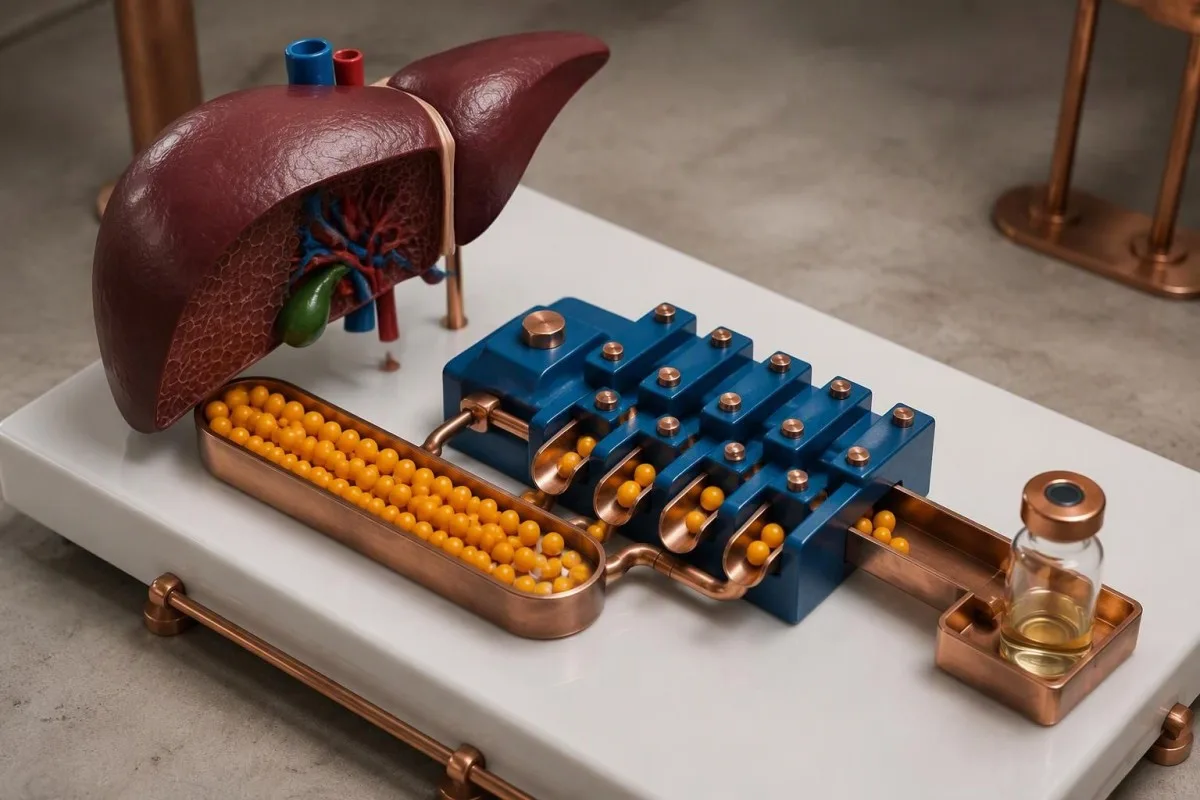
Metabolising enzymes can approach their processing capacity as exposure rises, so each additional milligram may be cleared less efficiently. A hypothetical rise from 2 mg/L to 4 mg/L after a modest dose adjustment is therefore plausible, but no single example provides a reliable formula for an individual patient.
The reverse calculation is unreliable too. A dose reduction of 25% does not guarantee a 25% concentration reduction, particularly when liver function or interacting medicines are changing; clinicians use repeat monitoring rather than assuming that the prescription and laboratory result move along a straight line.
A trough also reflects conditions during the preceding doses, not only the dose taken most recently. If a new prescription began 1 day before collection, the result may not represent the eventual exposure on that regimen, and an early result should be labelled as such rather than interpreted as settled.
This is a major reason not to borrow another person's adjustment advice. Nonlinear phenytoin monitoring illustrates a related principle, although phenytoin's free-versus-total measurement issues and target intervals are different; the shared lesson is that arithmetic alone cannot determine a safe drug dose.
CYP2C19 د ووریکونازول پر کچه څه اغېز لري؟
CYP2C19 genetic variation can influence voriconazole clearance: rapid and ultrarapid metabolisers may have low exposure, while poor metabolisers may develop higher concentrations. A genetic result can help explain a repeated trough below 1 mg/L or above the prescribed ceiling, but it does not replace drug monitoring.
CPIC guidance recommends considering an alternative antifungal for certain CYP2C19 phenotypes when achieving reliable voriconazole exposure is difficult or adverse-effect risk is increased (Moriyama et al., 2017). This is a clinician-led choice between suitable treatments, not an instruction to stop an effective medicine after seeing a genetic category.
Genotype is only one input because liver illness, interacting medicines and systemic inflammatory responses can alter enzyme activity. A person genetically classified as a rapid metaboliser can still develop a trough of 6 mg/L under changed clinical conditions; inherited tendency does not establish a permanent, safe dose.
CYP2C19 influences more than one medicine, but the consequences are drug-specific. An enzyme variant that reduces activation of a prodrug can have a different clinical meaning from a variant that slows clearance of an active antifungal; 'fast metaboliser' is not automatically a favourable or unfavourable label.
کانټیسټي یو دی AI د وینې ازموینې تشریح پلیټفارم that can help organise the laboratory and medication context around a reported voriconazole concentration. Our شرح تقنية الذكاء الاصطناعي describes the interpretation workflow; a chemistry panel cannot reveal CYP2C19 genotype unless a separate genetic test has actually been performed.
د درملو کوم تعاملونه پایله بدلولی شي؟
Voriconazole interactions can either lower its concentration or increase exposure to voriconazole and other medicines. Rifampicin and carbamazepine are major enzyme-inducing concerns, while voriconazole can substantially increase tacrolimus exposure; a satisfactory trough of 2 mg/L does not make the combination automatically safe.

Rifampicin, carbamazepine and St John's wort can substantially reduce voriconazole exposure, and some combinations are contraindicated. Phenytoin creates a particularly complicated bidirectional interaction; any specialist exception requires an explicit monitoring plan rather than the assumption that increasing voriconazole will reliably overcome induction.
Starting or stopping an interacting medicine can matter as much as adding a new voriconazole dose. Enzyme induction and its reversal do not necessarily disappear within 24 hours, so clinicians need medication start and stop dates when explaining a concentration that changes despite an unchanged antifungal prescription.
Tacrolimus is a separate safety priority because voriconazole inhibits pathways involved in its clearance. A transplant team may need to adjust and closely monitor tacrolimus when voriconazole starts or stops; our tacrolimus trough interpretation guide explains why both drug concentrations must be reviewed independently.
Warfarin and medicines that prolong the QT interval also require attention even when the antifungal trough is within range. Voriconazole can increase anticoagulant effect, so understanding INR monitoring is useful; an antifungal level does not substitute for coagulation testing or an electrocardiogram.
د ځیګر ازموینې د ټراف پر تفسیر څه اغېز لري؟
Liver dysfunction can reduce voriconazole clearance and increase exposure, while voriconazole itself can cause liver injury. A rising trough above 5–6 mg/L together with increasing ALT or bilirubin deserves prompt clinical review, but an isolated liver-test abnormality does not prove the antifungal caused it.
Product information recommends halving the usual maintenance dose in adults with mild-to-moderate cirrhosis, classified as Child–Pugh A or B, while retaining the standard loading regimen. That is prescribing guidance for clinicians, not a self-adjustment rule; severe hepatic impairment has less-established dosing evidence and needs specialist assessment.
Liver-test monitoring is generally recommended at least weekly during the first month, with frequency potentially reduced to monthly if results remain stable. The د ځیګر پینل (liver panel) تشریح سره پیل وکړئ distinguishes injury markers from synthetic-function measures; ALT alone does not quantify the liver's capacity to clear voriconazole.
For example, ALT of 180 IU/L with a laboratory upper limit of 40 IU/L is 4.5 times that limit. Clinicians compare the change with baseline, bilirubin, ALP, symptoms and alternative causes; our د ALT تعقيب لارښود explains why a multiple of the upper limit is more informative than a raw number.
At Kantesti, we explain why a seemingly acceptable total concentration can still need context when albumin is markedly low. An albumin result of 22 g/L can affect drug binding, but there is no universally adopted albumin-correction formula for voriconazole; the د سیرم پروټین تفسیر لارښود helps separate binding concerns from a diagnosis of cirrhosis.
ایا د لید ګډوډۍ معنا دا ده چې ټراف ډېر لوړ دی؟
Visual disturbances are a recognised voriconazole effect and do not automatically mean the trough exceeds 5.5 mg/L. Temporary changes in brightness, colour perception or blurred vision can occur at otherwise acceptable exposure, whereas persistent visual loss, hallucinations or confusion require a different level of concern.

Clinical-trial information describes visual disturbances in approximately 30% of recipients, often occurring early in treatment and resolving within about 30 minutes. The frequency varies across populations and reporting methods, and the symptom alone cannot establish whether a result of 2 mg/L or 6 mg/L is responsible.
Repeated brief brightness changes soon after a dose differ from continuous loss of vision throughout the day. A pre-dose trough may not capture the maximum post-dose concentration associated with an episode; write down when symptoms start, how long they last and whether both eyes are affected.
New hallucinations, marked confusion or worsening visual impairment warrant prompt medical assessment, especially alongside a high concentration. Sudden loss of vision, severe eye pain or a new neurological deficit requires urgent evaluation regardless of the trough; do not wait 4–7 days for routine repeat monitoring.
For treatment continuing beyond 28 days, product information recommends monitoring visual function, including acuity, visual fields and colour perception. Formal eye-function testing illustrates some of these assessments, although voriconazole symptoms do not by themselves diagnose glaucoma; avoid driving while vision is affected.
د ووریکونازول لوړه کچه کله بېړنۍ پاملرنې ته اړتیا لري؟
A trough above approximately 5–6 mg/L raises concern for excessive exposure, particularly when accompanied by confusion, hallucinations or worsening liver tests. Urgency depends on symptoms and organ effects, not a universal critical concentration; serious adverse effects can also occur below this numerical boundary.
A hypothetical trough of 7.2 mg/L with new hallucinations needs prompt contact with the prescribing team rather than a routine appointment weeks later. The team may change or temporarily interrupt treatment, but the patient should not independently halve the dose, skip repeated doses or wait for an AI explanation.
Fainting, sustained palpitations, seizures, severe confusion, a serious rash or jaundice with systemic illness warrant urgent assessment. Voriconazole can prolong the QT interval, and low potassium or magnesium adds risk; an electrolyte panel safety review addresses hazards that the antifungal concentration does not measure.
Kidney function affects the intravenous formulation differently from the active antifungal's liver metabolism. The cyclodextrin vehicle can accumulate when creatinine clearance is below 50 mL/min, prompting a route-specific risk–benefit review; a normal voriconazole trough cannot establish that the intravenous vehicle is harmless.
Long courses introduce problems not reliably predicted by a single trough, including photosensitivity and fluoride-associated periostitis. New persistent bone pain during a hypothetical 6-month course deserves review even at 3 mg/L, and sun-protection advice remains relevant when the drug concentration falls within the intended treatment window.
ایا کچه د درملیز حد دننه کېدای شي، خو انتان لا هم خرابېدای شي؟
Yes—a therapeutic voriconazole trough does not guarantee treatment success because fungal resistance, an incorrect diagnosis, inadequate source control or profound immunosuppression can overcome adequate exposure. A result of 3 mg/L confirms neither fungal susceptibility nor sufficient drug delivery to every affected site.

The organism's minimum inhibitory concentration, or MIC, helps describe how much drug inhibits growth under laboratory conditions. If the fungal MIC is 2 mg/L rather than 0.25 mg/L, the same trough has a different exposure-to-susceptibility relationship; a trough-to-MIC ratio is not a self-dosing calculator.
Clinicians review imaging, cultures, susceptibility testing and relevant fungal markers alongside the concentration. A galactomannan result interpretation can clarify another piece of the assessment, but neither one positive marker nor one therapeutic trough independently proves active aspergillosis or its resolution.
Voriconazole lacks reliable activity against Mucorales, the fungi responsible for mucormycosis. A trough of 4 mg/L therefore cannot solve a mismatch between the medicine and the organism; persistent deterioration may require diagnostic reassessment and a different antifungal strategy rather than progressively increasing exposure.
Early imaging changes are also not always equivalent to failure because inflammatory responses can change as immune function recovers. Nonetheless, worsening breathing, new neurological symptoms or fever during severe neutropenia needs prompt clinical assessment; the infection team decides whether a 1-week trend reflects expected evolution or an inadequate treatment plan.
ټراف باید کله بیا وکتل شي؟
Voriconazole monitoring is commonly repeated after a dose change, a major interaction change, altered liver function, a route change or suspected treatment failure. A routine reassessment often occurs within 4–7 days, but concerning neurological symptoms or liver deterioration justify earlier clinical action rather than waiting for steady exposure.
Two concentrations are meaningfully comparable only when the dosing interval and collection conditions are documented. A change from 1.1 mg/L to 3.4 mg/L may represent improved exposure, but it may instead compare a delayed trough with a post-dose sample; the size of the difference cannot correct a timing error.
Changing from intravenous to oral treatment can alter exposure even when the intended prescription seems equivalent. Clinicians may repeat the level after the switch, especially if eating, vomiting or tube feeding has changed; the route belongs beside the concentration in the monitoring record, not only in the medication history.
کانټیسټي یو دی د AI پر بنسټ د وینې ازموینې تحلیل وسیله that can help organise uploaded drug levels alongside liver-test trends and reported dose times. Our medication-safety trend workflow supports preparation for review, but a rise from 2 mg/L to 6 mg/L still requires clinician-led interpretation and treatment decisions.
Stable treatment does not create one universal long-term testing interval. The team balances infection risk, treatment duration, prior variability and access to testing; keep a record of at least the previous dose time, collection time, current prescription, formulation and medication changes so the next result answers a usable question.
د بیاکتنې لپاره څه باید له ځان سره یوسئ، او دا سپارښتنه پر څه ولاړه ده؟
Bring the actual dose and collection times, the prescribed treatment goal, recent liver results and a complete medication list to your voriconazole review. Ask whether a result such as 1.4 mg/L meets your specific indication—not whether it fits a single internet range—and do not adjust the prescription yourself.
A practical review has three questions: was the sample a true trough, is exposure appropriate for this infection or prevention plan, and are there adverse effects or interactions? Include missed doses and meal timing honestly; a 12-hour prescription does not mean every dose was actually separated by 12 hours.
The clinical recommendations here draw on the 2016 IDSA aspergillosis guideline, the 2014 British Society for Medical Mycology monitoring guideline and the 2017 CPIC voriconazole guideline. These sources address different questions—clinical treatment, concentration monitoring and pharmacogenetics—so their recommendations should be combined thoughtfully rather than presented as one identical range.
Kantesti Ltd's role is to help readers understand laboratory information, not to prescribe antifungal treatment. Our organisation and purpose are described separately; technical evaluation on 100,000 synthetic cases cannot establish that a particular voriconazole dose improves clinical outcomes in a patient with invasive fungal disease.
The two research publications listed below describe an automated technical benchmark and a clinical-validation framework, not a voriconazole therapeutic-monitoring trial. Our validation methodology and limits explain that distinction; use our interpretation to prepare questions, while your infection specialist or prescribing team determines the dose and follow-up plan.
پرله پسې پوښتل شوي پوښتنې
د ووریکونازول د ټراف کچه څومره عادي ده؟
Voriconazole does not have a healthy-population 'normal' concentration; it has a therapeutic exposure target. Many treatment protocols use approximately 1–5.5 mg/L, while IDSA guidance discusses a minimum above 1–1.5 mg/L and an upper boundary below 5–6 mg/L. Severe disease, fungal susceptibility and prevention protocols can change the intended target. Your prescribing team should interpret the result using the actual collection time and clinical indication.
د ووریکونازول کچه باید زما د دوز له اخیستو څخه څومره وخت مخکې اندازه شي؟
د voriconazole ټراف عموماً د راتلونکي ټاکل شوي دوز څخه سمدستي مخکې، معمولاً د ۳۰ دقیقو په دننه کې، د محلي لابراتوار د لارښوونو له مخې راټولېږي. د سهار د ۸ بجو دوز لپاره، د درملو له اخیستلو مخکې د سهار په ۷:۴۵ بجو نمونه اخیستل عموماً مناسب وي. لومړی دوز اخیستل دوز وروسته پایله رامنځته کولای شي، چې باید د ټراف له موخو سره مستقیمه پرتله نه شي. د راټولولو پلان له ټیم سره تنظیم کړئ، د دې پر ځای چې د لارښوونې پرته دوز د څو ساعتونو لپاره وځنډوئ.
د ووریکونازول ټیټه کچه څه معنا لري؟
د ووریکونازول تر ټولو ټیټ غلظت چې له 1 mg/L څخه کم وي، د درملنې له ډېرو هدفونو ټیټ دی، خو دا نه ثابتوي چې ټاکل شوی دوز ډېر کم دی. دوزونه له لاسه ورکول، د نمونې ناوخته اخیستل، د خوړو اغېزې، کانګې، د جذب کمزوري او د انزایمونو القاکوونکي درمل، ټول د درملو ټیټ تماس تشریح کولی شي. د خولې له لارې ووریکونازول عموماً د محصول د لارښوونو سره سم، لږ تر لږه د خوړو 1 ساعت مخکې یا وروسته اخیستل کېږي. د بیاکتنې لپاره له تجویز کوونکي ټیم سره اړیکه ونیسئ، نه دا چې پخپله دوز زیات کړئ.
ایا د voriconazole پایلې په mg/L او µg/mL کې یو شان دي؟
د ووریکونازول غلظتونه په mg/L او µg/mL کې یو شان عددي ارزښت لري. د 2 mg/L پایله په دقیقه توګه 2 µg/mL ده، چې 2,000 ng/mL هم کېږي. لابراتوارونه بېلابېل واحدونه او هدفمندې لړۍ کارولی شي، نو د راپورونو له پرتله کولو مخکې دواړه وګورئ. د واحدونو دا بدلون د ناسم وخت اخیستل شوې نمونه نه سموي.
ایا تت لید یا وهمونه د ووریکونازول د زهریت نښه ده؟
له voriconazole سره لنډمهاله بصري ګډوډۍ رامنځته کېدای شي، حتی که د trough کچه په ټاکل شوې کچه کې وي؛ خو وهمونه یا ګډوډي د ډېر زیات درملیز تماس یا بلې طبي ستونزې په اړه د لا ډېرې اندېښنې لامل کېږي. د محصول په معلوماتو کې راغلي چې د درملو د ترلاسه کوونکو په شاوخوا 30% کې بصري ګډوډۍ رامنځته کېږي، او ډېر ځله په شاوخوا 30 دقیقو کې له منځه ځي. نوي وهمونه، دوامداره د لید کمزوري یا د نښو خرابېدل د تجویز کوونکې طبي ډلې سره د سمدستي اړیکې غوښتنه کوي؛ د لید ناڅاپي له لاسه ورکول یا سخت عصبي علایم بېړنۍ ارزونې ته اړتیا لري. تر هغو موټر مه چلوئ چې لید مو اغېزمن وي او د فنګس ضد درملو دوز په خپل سر مه بدلوئ.
د دوز له بدلون وروسته باید د ووریکونازول کچه بیا کله وکتل شي؟
د ووریکونازول د ټراف کچه عموماً د دوز تر بدلون ۴–۷ ورځې وروسته بیا کتل کېږي، چې د درملنې پر تګلارې، د بارولو پر دوزونو او محلي پروتوکول پورې اړه لري. که د مسمومیت شک وي، د ځیګر فعالیت بدلېږي یا د درملو مهم تعاملات موجود وي، ښايي تر دې مخکې ازموینې یا کلینیکي اقدام ته اړتیا وي. غیرخطّي میتابولیزم دا مانا لري چې د 25% دوز زیاتوالی دا تضمین نه کوي چې د غلظت زیاتوالی به هم یوازې 25% وي. د درملو د تجویز ټیم باید د بیا ازموینې نېټه وټاکي او د نورو بدلونونو تر کولو مخکې پایله تفسیر کړي.
د وینې ازموینې پایلې څنګه ولولئ
خپل لابراتواري راپور پورته کړئ، او د Kantesti AI به په څو ثانیو کې هر بایومارکر په ساده ژبه تشریح کړي. په ټوله نړۍ کې له 2 میلیونو څخه زیاتو کسانو ترې کار اخیستی.
ماخذونه
- کلاین، ټي.، میچل، ایس.، او وېبر، ایچ. (۲۰۲۶). د Kantesti Blood-Test Interpretation Engine لپاره د 100,000 مصنوعي ازموینې قضیو (synthetic test cases) پر بنسټ یو Pre-Registered، Rubric-Based اتوماتیک تخنیکي بنچمارک. د Kantesti AI طبي څېړنه. د دفاع وزارت
- کلاین، ټي.، میچل، ایس.، او وېبر، ایچ. (۲۰۲۶). د کلینیکي تایید چوکاټ v2.0 (د طبي تایید پاڼه). د Kantesti AI طبي څېړنه. د دفاع وزارت
- Patterson TF او نور (2016). د اسپرژیلوسس د تشخیص او درملنې عملي لارښود: د امریکا د ساري ناروغیو ټولنې د 2016 کال تازهکونه. Clinical Infectious Diseases. د دفاع وزارت
- Ashbee HR et al. (2014). Therapeutic drug monitoring (TDM) of antifungal agents: guidelines from the British Society for Medical Mycology. Journal of Antimicrobial Chemotherapy. د دفاع وزارت
- Moriyama B et al. (2017). Clinical Pharmacogenetics Implementation Consortium (CPIC) Guidelines for CYP2C19 and Voriconazole Therapy. Clinical Pharmacology & Therapeutics. د دفاع وزارت
- ۲ میلیونه+تحلیل شوې ازموینې
- 127+هېوادونه
- 100+ژبې
د طبي ټیم په اړه


د E-E-A-T باور نښې
تجربه
د ډاکټر تر مشرۍ لاندې کلینیکي بیاکتنه د لابراتواري تفسیر د کاري بهیرونو لپاره.
تخصص
د لابراتواري طب تمرکز پر دې چې بایومارکرونه په کلینیکي شرایطو کې څنګه چلند کوي.
واک ورکول
د ډاکټر توماس کلاین له خوا طبي بیاکتنه شوې، د ډاکټر سارا میچل او پروفیسور ډاکټر هانس وېبر په مرسته.
اعتبار
د شواهدو پر بنسټ تفسیر د روښانه تعقیبي لارو چارو سره، تر څو اندیښنه کمه شي.

طبي سلبِ مسئولیت
دا مقاله یوازې د زده کړې لپاره ده او طبي مشوره نه جوړوي. د تشخیص او درملنې د پرېکړو لپاره تل د وړ روغتیايي خدمت وړاندې کوونکي سره سلا وکړئ.
خپور شوی · له تحریري ټیم سره اړیکه ونیسئ
خپروونکی یې Kantesti Ltd دی، چې په انګلستان او وېلز کې ثبت شوی، د شرکت شمېره. 17090423, ، لندن، بریتانیا.
