
Правилно темпираното минимално ниво на вориконазол помага да се процени дали изложеноста на антимикотикот е соодветна без да стане прекумерна. Во многу протоколи се користи приближно 1–5,5 mg/L, но инфекцијата, планот за превенција и несаканите ефекти ја одредуваат вашата целна вредност.

Клучни заклучоци
- Минималното ниво на вориконазол е концентрацијата на лекот непосредно пред следната планирана доза; тоа ја мери изложеноста, а не дали инфекцијата е излекувана.
- Цели на третманот обично бараат минимално ниво над 1–1,5 mg/L, а некои тимови целат најмалку 2 mg/L кај тешки инфекции или инфекции што тешко се лекуваат.
- Горните граници обично се околу 5–6 mg/L бидејќи прекумерната изложеност ја зголемува загриженоста за невролошки и други несакани ефекти.
- Целните вредности за превенција зависат од протоколот; пониска гранична вредност што се користи за профилакса не треба автоматски да се применува при лекување на веќе постоечка инфекција.
- Времето на земање примерок за мерење на нивото обично значи земање примерок во рок од околу 30 минути пред следната доза, согласно упатствата на лабораторијата.
- Претворање на единици е точно: 1 mg/L е еднакво на 1 µg/mL и 1.000 ng/mL.
- Ниска изложеност може да укажува на пропуштени дози, влијание на храната, нарушена апсорпција, интеракции со лекови или побрз метаболизам — не само на недоволно пропишана доза.
- Безбедност на дозата бара промени под надзор на лекар, бидејќи зголемување на дозата за 25% може да предизвика несразмерно големо зголемување на концентрацијата.
Што всушност ви кажува минималното ниво на вориконазол?
A најниска концентрација на вориконазол им кажува на лекарите колку антифунгален лек останува непосредно пред следната доза. Правилно земен резултат од околу 1–5.5 mg/L често е во согласност со протокол за лекување, но ефективната доза зависи и од чувствителноста на габата, местото на инфекцијата и клиничкото подобрување.
Најниската концентрација е практичен показател за изложеноста во текот на дозниот интервал, а не директно мерење на лекот во засегнатото белодробно или мозочно ткиво. Кај лице што зема вориконазол на секои 12 часа, концентрацијата пред дозата помага да се утврди дали изложеноста може да стане премала меѓу дозите.
Терапевтското следење на лекови има две одделни цели: одржување доволна изложеност за антифунгално дејство и избегнување прекумерна изложеност. Упатството на IDSA за аспергилоза наведува дека како вообичаени стручни цели при лекување се користат најниски концентрации над 1–1.5 mg/L и под 5–6 mg/L, особено за ограничување на токсичноста на централниот нервен систем (Patterson et al., 2016).
Кантести е анализатор на крвна слика со вештачка интелигенција што може да помогне во толкувањето на доставениот резултат за вориконазол заедно со тестовите за функцијата на црниот дроб, додека тимот што го пропишува лекувањето ја одредува целната вредност. Резултатот од 1.2 mg/L треба да се разгледува заедно со индикацијата и времето на земање на примерокот; нашето објаснување не треба да ја претвори таа бројка во упатство за дозирање.
Лабораториското предупредување не е пресуда за успешноста на лекувањето. За разлика од многу референтни интервали за рутинска биохемија, интервалот за следење на лекови претставува клиничка цел за изложеноста; нашето објаснување на вонредни лабораториски резултати помага да се разликува предупредување од дијагноза.
Кога треба да ви се измери нивото на вориконазол?
Правилно време за мерење на нивото на вориконазол значи примерокот да се земе непосредно пред следната закажана доза, вообичаено во рок од 30 минути пред неа. Првото рутинско мерење често се прави во текот на деновите 4–7, иако ударни дози, сериозна болест и локални протоколи може да оправдаат порано проценување.
На пример, замислете пропишан распоред со дози во 8 часот наутро и 8 часот навечер. Примерок земен во 7:45 наутро, пред утринската доза, добро ја претставува најниската концентрација; примерок земен во 10 часот наутро по земањето на дозата не ја претставува, дури и ако лабораторискиот извештај го нарекува најниска концентрација.
И одложена доза може да го наруши толкувањето во спротивна насока. Ако следната доза требало да се земе во 8 часот наутро, но примерокот бил земен во 11 часот, дополнителните 3 часа без лек може да ја намалат измерената концентрација; на тимот му се потребни вистинските времиња, а не само планираниот распоред.
И за интравенскиот вориконазол е потребен примерок пред дозата, обично пред да започне следната инфузија. Земањето примерок од линија што се користи за давање на лекот може да создаде ризик од контаминација, па лабораторијата или тимот за инфузија треба да го изберат начинот на земање примерок, наместо да се претпоставува дека секоја достапна линија дава еквивалентен резултат.
Не е задолжително да се пости цела ноќ за анализата на концентрацијата, но оралниот вориконазол има посебни упатства за земање во однос на оброците. Проверете го планот за земање примерок однапред; правила за земање примероци специфични за лекот објаснуваат зошто правилото за точно време кај еден лек не може да се примени на друг.
Кој е терапевтскиот опсег на вориконазол?
На терапевтски опсег на вориконазол вообичаено е приближно 1–5.5 mg/L при лекување, но не постои универзален интервал соодветен за секој пациент. Упатствата на IDSA наведуваат долна цел над 1–1.5 mg/L и горна граница под 5–6 mg/L; кај некои тешки инфекции може да биде потребна повисока минимална вредност.

These boundaries describe probabilities, not biological switches. A trough of 0.9 mg/L does not prove failure, and 5.6 mg/L does not prove toxicity; repeated results, symptoms and organism susceptibility help determine whether a small boundary crossing is clinically meaningful or simply requires confirmation.
For invasive aspergillosis, the British Society for Medical Mycology recommends a treatment trough above 1 mg/L and discusses higher exposure goals for poor-prognosis situations, including central nervous system disease (Ashbee et al., 2014). A team may therefore consider 1.3 mg/L acceptable for one indication but insufficient for another.
The reason for a higher minimum is that the concentration needed to inhibit a less-susceptible fungus may exceed the concentration needed for a susceptible organism. Raising exposure indefinitely is not a safe solution: a trough approaching 5–6 mg/L can leave little room between a desired antifungal effect and adverse effects.
Always read the units before comparing reports. A result of 2 µg/mL is exactly 2 mg/L, not twice or half that value; the biomarker and units guide provides context for comparing laboratory values without mistaking a therapeutic target for a healthy-population range.
| Ниво | Опсег | Што значи |
|---|---|---|
| Below many treatment targets | <1 мг/л | Check collection timing, dosing history, absorption and interactions; not proof of treatment failure. |
| Lower treatment exposure | 1–<2 mg/L | May meet the prescribed target, but severe disease or reduced fungal susceptibility can require a higher minimum. |
| Common treatment exposure window | 2–5.5 mg/L | Often compatible with treatment goals when correctly timed; does not guarantee efficacy or freedom from toxicity. |
| Above many local upper limits | >5.5 mg/L | Requires review of symptoms, liver tests, timing and the local protocol; there is no universal emergency cutoff. |
Зошто целните вредности за лекување и превенција може да се разликуваат?
Treatment targets may be more demanding than prevention targets because an established fungal infection must be controlled, not merely prevented. Some local prophylaxis protocols accept 0.5 mg/L, whereas British guidance recommends a prophylaxis trough above 1 mg/L; these thresholds are not interchangeable.

Prophylaxis studies are harder to interpret because breakthrough fungal disease may be uncommon and heavily influenced by immune status. A threshold of 0.5 mg/L used in one prevention programme cannot establish equivalent protection for every stem-cell transplant recipient, particularly during prolonged neutropenia or intensive immunosuppression.
The British Society for Medical Mycology's prophylaxis recommendation above 1 mg/L carries a weaker evidence base than some treatment recommendations (Ashbee et al., 2014). The uncertainty is genuine: the exact preventive minimum is less settled than the principle that persistently very low exposure deserves investigation.
Consider a hypothetical result of 0.8 mg/L in two people. One is receiving prevention under a documented local protocol; the other has confirmed invasive aspergillosis. The same concentration can lead to different discussions because the indication, fungal burden and acceptable risk of inadequate exposure differ.
Transplant recipients often have several parallel monitoring plans, not one combined 'infection score.' Voriconazole does not prevent every opportunistic infection, and CMV results after transplantation answer a different question; a satisfactory antifungal trough does not replace viral surveillance or other prescribed prophylaxis.
Што може да предизвика ниско ниво на вориконазол?
A low voriconazole level can result from missed or delayed doses, food effects, impaired gastrointestinal absorption, enzyme-inducing medicines or faster metabolism. Before changing treatment, clinicians verify whether a result below 1 mg/L is a correctly timed trough and whether the prescribed doses actually reached the patient.
Oral voriconazole is generally taken at least 1 hour before or 1 hour after a meal, following the product instructions. Food can reduce exposure, but a low result should not be blamed on breakfast without checking the complete dosing history, formulation, vomiting and other medicines.
Imagine a hypothetical adult prescribed 200 mg every 12 hours whose trough is 0.6 mg/L. Taking each dose with a substantial meal and vomiting one evening dose creates two plausible explanations for low exposure; automatically escalating the prescription could cause excessive exposure once those problems resolve.
Severe diarrhoea, mucositis, gastrointestinal surgery and feeding-tube administration can make oral delivery less predictable. Clinicians may review the formulation or route rather than simply the milligram amount; testing for impaired fat absorption explains why gastrointestinal dysfunction needs its own assessment rather than being diagnosed from one drug level.
Acid-suppressing medicines deserve a medication review, but voriconazole should not be treated like an antifungal whose absorption always requires stomach acid. Some proton pump inhibitors inhibit metabolism and can raise exposure; our reflux treatment context helps readers identify these medicines without stopping them independently.
Зошто мала промена на дозата понекогаш предизвикува голема промена на нивото?
Voriconazole has nonlinear metabolism in adults, meaning a dose increase can produce a more-than-proportional concentration increase. Changing a prescribed dose from 200 mg to 250 mg is a 25% increase, but the resulting trough cannot safely be predicted by multiplying the old result by 1.25.
Metabolising enzymes can approach their processing capacity as exposure rises, so each additional milligram may be cleared less efficiently. A hypothetical rise from 2 mg/L to 4 mg/L after a modest dose adjustment is therefore plausible, but no single example provides a reliable formula for an individual patient.
The reverse calculation is unreliable too. A dose reduction of 25% does not guarantee a 25% concentration reduction, particularly when liver function or interacting medicines are changing; clinicians use repeat monitoring rather than assuming that the prescription and laboratory result move along a straight line.
A trough also reflects conditions during the preceding doses, not only the dose taken most recently. If a new prescription began 1 day before collection, the result may not represent the eventual exposure on that regimen, and an early result should be labelled as such rather than interpreted as settled.
This is a major reason not to borrow another person's adjustment advice. Nonlinear phenytoin monitoring illustrates a related principle, although phenytoin's free-versus-total measurement issues and target intervals are different; the shared lesson is that arithmetic alone cannot determine a safe drug dose.
Како CYP2C19 влијае врз изложеноста на вориконазол?
CYP2C19 genetic variation can influence voriconazole clearance: rapid and ultrarapid metabolisers may have low exposure, while poor metabolisers may develop higher concentrations. A genetic result can help explain a repeated trough below 1 mg/L or above the prescribed ceiling, but it does not replace drug monitoring.
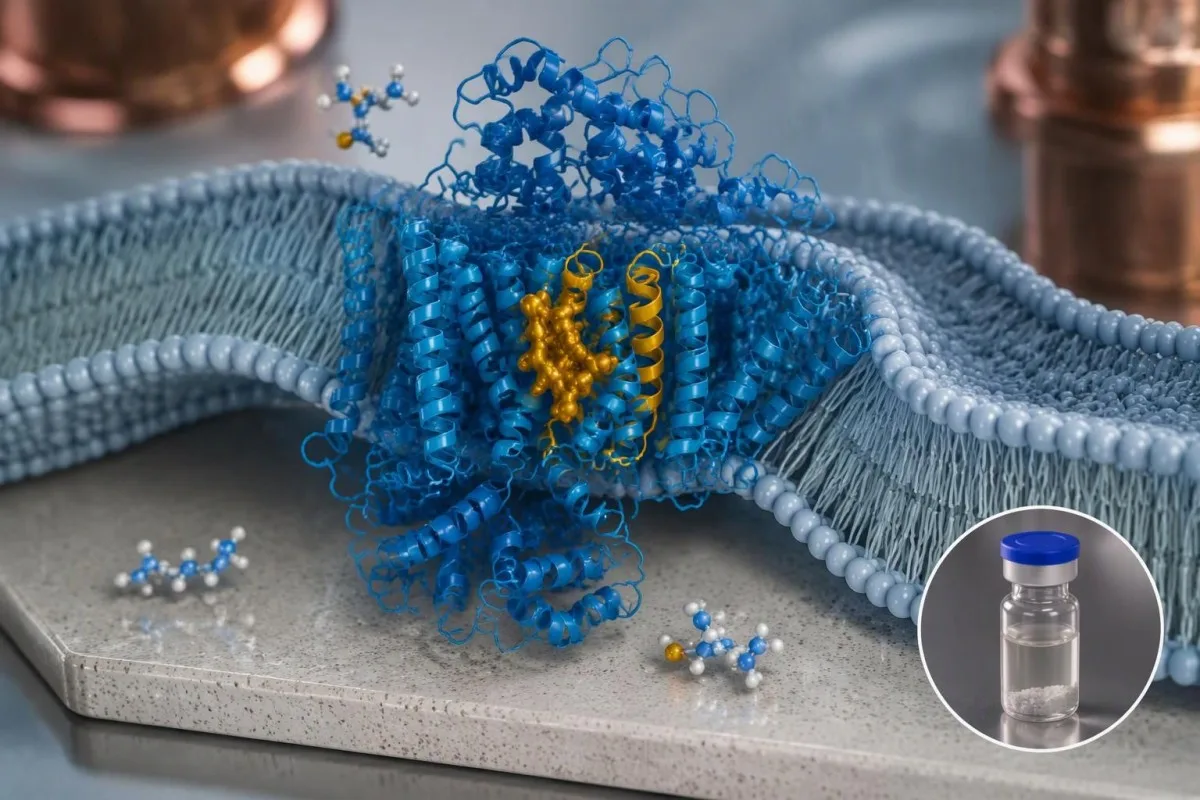
CPIC guidance recommends considering an alternative antifungal for certain CYP2C19 phenotypes when achieving reliable voriconazole exposure is difficult or adverse-effect risk is increased (Moriyama et al., 2017). This is a clinician-led choice between suitable treatments, not an instruction to stop an effective medicine after seeing a genetic category.
Genotype is only one input because liver illness, interacting medicines and systemic inflammatory responses can alter enzyme activity. A person genetically classified as a rapid metaboliser can still develop a trough of 6 mg/L under changed clinical conditions; inherited tendency does not establish a permanent, safe dose.
CYP2C19 influences more than one medicine, but the consequences are drug-specific. An enzyme variant that reduces activation of a prodrug can have a different clinical meaning from a variant that slows clearance of an active antifungal; 'fast metaboliser' is not automatically a favourable or unfavourable label.
Кантести е AI платформа за толкување крвна слика that can help organise the laboratory and medication context around a reported voriconazole concentration. Our објаснување на AI технологијата describes the interpretation workflow; a chemistry panel cannot reveal CYP2C19 genotype unless a separate genetic test has actually been performed.
Кои интеракции со лекови може да го променат резултатот?
Voriconazole interactions can either lower its concentration or increase exposure to voriconazole and other medicines. Rifampicin and carbamazepine are major enzyme-inducing concerns, while voriconazole can substantially increase tacrolimus exposure; a satisfactory trough of 2 mg/L does not make the combination automatically safe.

Rifampicin, carbamazepine and St John's wort can substantially reduce voriconazole exposure, and some combinations are contraindicated. Phenytoin creates a particularly complicated bidirectional interaction; any specialist exception requires an explicit monitoring plan rather than the assumption that increasing voriconazole will reliably overcome induction.
Starting or stopping an interacting medicine can matter as much as adding a new voriconazole dose. Enzyme induction and its reversal do not necessarily disappear within 24 hours, so clinicians need medication start and stop dates when explaining a concentration that changes despite an unchanged antifungal prescription.
Tacrolimus is a separate safety priority because voriconazole inhibits pathways involved in its clearance. A transplant team may need to adjust and closely monitor tacrolimus when voriconazole starts or stops; our tacrolimus trough interpretation guide explains why both drug concentrations must be reviewed independently.
Warfarin and medicines that prolong the QT interval also require attention even when the antifungal trough is within range. Voriconazole can increase anticoagulant effect, so understanding INR monitoring is useful; an antifungal level does not substitute for coagulation testing or an electrocardiogram.
Како тестовите на црниот дроб влијаат врз толкувањето на минималното ниво?
Liver dysfunction can reduce voriconazole clearance and increase exposure, while voriconazole itself can cause liver injury. A rising trough above 5–6 mg/L together with increasing ALT or bilirubin deserves prompt clinical review, but an isolated liver-test abnormality does not prove the antifungal caused it.
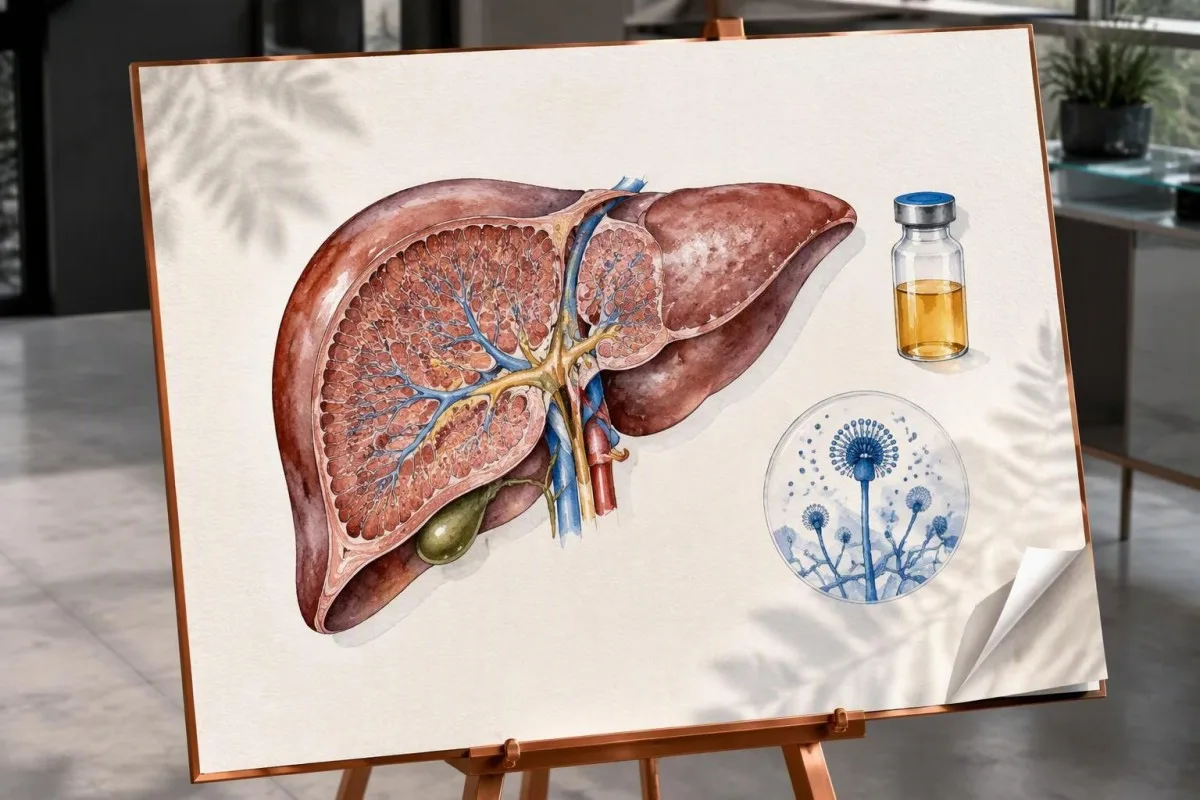
Product information recommends halving the usual maintenance dose in adults with mild-to-moderate cirrhosis, classified as Child–Pugh A or B, while retaining the standard loading regimen. That is prescribing guidance for clinicians, not a self-adjustment rule; severe hepatic impairment has less-established dosing evidence and needs specialist assessment.
Liver-test monitoring is generally recommended at least weekly during the first month, with frequency potentially reduced to monthly if results remain stable. The објаснување на панел за црн дроб distinguishes injury markers from synthetic-function measures; ALT alone does not quantify the liver's capacity to clear voriconazole.
For example, ALT of 180 IU/L with a laboratory upper limit of 40 IU/L is 4.5 times that limit. Clinicians compare the change with baseline, bilirubin, ALP, symptoms and alternative causes; our Водич за следење на ALT explains why a multiple of the upper limit is more informative than a raw number.
At Kantesti, we explain why a seemingly acceptable total concentration can still need context when albumin is markedly low. An albumin result of 22 g/L can affect drug binding, but there is no universally adopted albumin-correction formula for voriconazole; the водич за толкување на серумски протеини helps separate binding concerns from a diagnosis of cirrhosis.
Дали нарушувањата на видот значат дека минималното ниво е превисоко?
Visual disturbances are a recognised voriconazole effect and do not automatically mean the trough exceeds 5.5 mg/L. Temporary changes in brightness, colour perception or blurred vision can occur at otherwise acceptable exposure, whereas persistent visual loss, hallucinations or confusion require a different level of concern.

Clinical-trial information describes visual disturbances in approximately 30% of recipients, often occurring early in treatment and resolving within about 30 minutes. The frequency varies across populations and reporting methods, and the symptom alone cannot establish whether a result of 2 mg/L or 6 mg/L is responsible.
Repeated brief brightness changes soon after a dose differ from continuous loss of vision throughout the day. A pre-dose trough may not capture the maximum post-dose concentration associated with an episode; write down when symptoms start, how long they last and whether both eyes are affected.
New hallucinations, marked confusion or worsening visual impairment warrant prompt medical assessment, especially alongside a high concentration. Sudden loss of vision, severe eye pain or a new neurological deficit requires urgent evaluation regardless of the trough; do not wait 4–7 days for routine repeat monitoring.
For treatment continuing beyond 28 days, product information recommends monitoring visual function, including acuity, visual fields and colour perception. Formal eye-function testing illustrates some of these assessments, although voriconazole symptoms do not by themselves diagnose glaucoma; avoid driving while vision is affected.
Кога високото ниво на вориконазол бара итно внимание?
A trough above approximately 5–6 mg/L raises concern for excessive exposure, particularly when accompanied by confusion, hallucinations or worsening liver tests. Urgency depends on symptoms and organ effects, not a universal critical concentration; serious adverse effects can also occur below this numerical boundary.

A hypothetical trough of 7.2 mg/L with new hallucinations needs prompt contact with the prescribing team rather than a routine appointment weeks later. The team may change or temporarily interrupt treatment, but the patient should not independently halve the dose, skip repeated doses or wait for an AI explanation.
Fainting, sustained palpitations, seizures, severe confusion, a serious rash or jaundice with systemic illness warrant urgent assessment. Voriconazole can prolong the QT interval, and low potassium or magnesium adds risk; an electrolyte panel safety review addresses hazards that the antifungal concentration does not measure.
Kidney function affects the intravenous formulation differently from the active antifungal's liver metabolism. The cyclodextrin vehicle can accumulate when creatinine clearance is below 50 mL/min, prompting a route-specific risk–benefit review; a normal voriconazole trough cannot establish that the intravenous vehicle is harmless.
Long courses introduce problems not reliably predicted by a single trough, including photosensitivity and fluoride-associated periostitis. New persistent bone pain during a hypothetical 6-month course deserves review even at 3 mg/L, and sun-protection advice remains relevant when the drug concentration falls within the intended treatment window.
Може ли нивото да биде во терапевтскиот опсег, а инфекцијата да се влошува?
Yes—a therapeutic voriconazole trough does not guarantee treatment success because fungal resistance, an incorrect diagnosis, inadequate source control or profound immunosuppression can overcome adequate exposure. A result of 3 mg/L confirms neither fungal susceptibility nor sufficient drug delivery to every affected site.

The organism's minimum inhibitory concentration, or MIC, helps describe how much drug inhibits growth under laboratory conditions. If the fungal MIC is 2 mg/L rather than 0.25 mg/L, the same trough has a different exposure-to-susceptibility relationship; a trough-to-MIC ratio is not a self-dosing calculator.
Clinicians review imaging, cultures, susceptibility testing and relevant fungal markers alongside the concentration. A galactomannan result interpretation can clarify another piece of the assessment, but neither one positive marker nor one therapeutic trough independently proves active aspergillosis or its resolution.
Voriconazole lacks reliable activity against Mucorales, the fungi responsible for mucormycosis. A trough of 4 mg/L therefore cannot solve a mismatch between the medicine and the organism; persistent deterioration may require diagnostic reassessment and a different antifungal strategy rather than progressively increasing exposure.
Early imaging changes are also not always equivalent to failure because inflammatory responses can change as immune function recovers. Nonetheless, worsening breathing, new neurological symptoms or fever during severe neutropenia needs prompt clinical assessment; the infection team decides whether a 1-week trend reflects expected evolution or an inadequate treatment plan.
Кога треба повторно да се измери минималното ниво?
Voriconazole monitoring is commonly repeated after a dose change, a major interaction change, altered liver function, a route change or suspected treatment failure. A routine reassessment often occurs within 4–7 days, but concerning neurological symptoms or liver deterioration justify earlier clinical action rather than waiting for steady exposure.
Two concentrations are meaningfully comparable only when the dosing interval and collection conditions are documented. A change from 1.1 mg/L to 3.4 mg/L may represent improved exposure, but it may instead compare a delayed trough with a post-dose sample; the size of the difference cannot correct a timing error.
Changing from intravenous to oral treatment can alter exposure even when the intended prescription seems equivalent. Clinicians may repeat the level after the switch, especially if eating, vomiting or tube feeding has changed; the route belongs beside the concentration in the monitoring record, not only in the medication history.
Кантести е Алатка за анализа на крвни тестови со вештачка интелигенција (AI) that can help organise uploaded drug levels alongside liver-test trends and reported dose times. Our medication-safety trend workflow supports preparation for review, but a rise from 2 mg/L to 6 mg/L still requires clinician-led interpretation and treatment decisions.
Stable treatment does not create one universal long-term testing interval. The team balances infection risk, treatment duration, prior variability and access to testing; keep a record of at least the previous dose time, collection time, current prescription, formulation and medication changes so the next result answers a usable question.
Што треба да понесете на контролниот преглед и кои докази ги поткрепуваат овие совети?
Bring the actual dose and collection times, the prescribed treatment goal, recent liver results and a complete medication list to your voriconazole review. Ask whether a result such as 1.4 mg/L meets your specific indication—not whether it fits a single internet range—and do not adjust the prescription yourself.
A practical review has three questions: was the sample a true trough, is exposure appropriate for this infection or prevention plan, and are there adverse effects or interactions? Include missed doses and meal timing honestly; a 12-hour prescription does not mean every dose was actually separated by 12 hours.
The clinical recommendations here draw on the 2016 IDSA aspergillosis guideline, the 2014 British Society for Medical Mycology monitoring guideline and the 2017 CPIC voriconazole guideline. These sources address different questions—clinical treatment, concentration monitoring and pharmacogenetics—so their recommendations should be combined thoughtfully rather than presented as one identical range.
Kantesti Ltd's role is to help readers understand laboratory information, not to prescribe antifungal treatment. Our organisation and purpose are described separately; technical evaluation on 100,000 synthetic cases cannot establish that a particular voriconazole dose improves clinical outcomes in a patient with invasive fungal disease.
The two research publications listed below describe an automated technical benchmark and a clinical-validation framework, not a voriconazole therapeutic-monitoring trial. Our validation methodology and limits explain that distinction; use our interpretation to prepare questions, while your infection specialist or prescribing team determines the dose and follow-up plan.
Најчесто поставувани прашања
Кое е нормално ниво на најниската концентрација на вориконазол?
Voriconazole does not have a healthy-population 'normal' concentration; it has a therapeutic exposure target. Many treatment protocols use approximately 1–5.5 mg/L, while IDSA guidance discusses a minimum above 1–1.5 mg/L and an upper boundary below 5–6 mg/L. Severe disease, fungal susceptibility and prevention protocols can change the intended target. Your prescribing team should interpret the result using the actual collection time and clinical indication.
Колку време пред дозата треба да се измери нивото на вориконазол?
Минималната концентрација на вориконазол обично се зема непосредно пред следната планирана доза, најчесто во рок од 30 минути, согласно упатствата на локалната лабораторија. За доза во 8 часот наутро, земање примерок во 7:45 часот, пред да го земете лекот, обично би било соодветно. Ако прво ја земете дозата, може да се добие резултат по дозата, кој не треба директно да се споредува со целните минимални концентрации. Договорете го планот за земање примерок со тимот, наместо да ја одложувате дозата неколку часа без упатства.
Што значи ниско ниво на вориконазол?
Минималната концентрација на вориконазол под 1 mg/L е пониска од многу целни вредности за лекување, но тоа не докажува дека пропишаната доза е премала. Пропуштени дози, предоцна земен примерок, влијанието на храната, повраќање, нарушена апсорпција и лекови што индуцираат ензими може да објаснат ниска изложеност. Оралниот вориконазол обично се зема најмалку 1 час пред или по оброк, согласно упатствата за производот. Контактирајте го тимот што го пропишал лекот за процена, наместо сами да ја зголемувате дозата.
Дали резултатите за вориконазол во mg/L и µg/mL се исти?
Концентрациите на вориконазол во mg/L и µg/mL имаат иста нумеричка вредност. Резултат од 2 mg/L е точно 2 µg/mL, што е исто така 2.000 ng/mL. Лабораториите може да користат различни единици и целни интервали, затоа проверете ги и двете пред да ги споредувате извештаите. Ова претворање на единиците не коригира неправилно временски земен примерок.
Дали заматениот вид или халуцинациите значат токсичност од вориконазол?
Краткотрајни нарушувања на видот може да се појават при употреба на voriconazole дури и кога најниската концентрација пред дозата е во предвидениот опсег, додека халуцинациите или конфузијата се поголема причина за загриженост поради прекумерна изложеност или друг медицински проблем. Во информациите за производот се опишуваат нарушувања на видот кај приближно 30% од примателите, кои често се повлекуваат во рок од околу 30 минути. Новопојавени халуцинации, трајно нарушување или влошување на симптомите бараат брз контакт со тимот што ја препишал терапијата; ненадејно губење на видот или тешки невролошки симптоми бараат итна процена. Не возете додека ви е нарушен видот и не ја менувајте самостојно дозата на антифунгалниот лек.
Кога треба повторно да се проверат нивоата на вориконазол по промена на дозата?
0 Воронaзолотскиот минимум често повторно се проверува во рок од 4–7 дена по промена на дозата, во зависност од режимот, ударните дози и локалниот протокол. Може да биде потребно порано тестирање или клиничко постапување при сомневање за токсичност, промени во функцијата на црниот дроб или значајни интеракции со лекови. Нелинеарниот метаболизам значи дека зголемување на дозата за 25% не гарантира зголемување на концентрацијата само за 25%. Тимот што го пропишува лекот треба да го одреди датумот за повторно тестирање и да го протолкува резултатот пред да направи понатамошни промени.
Дознајте како да ги читате крвните резултати
Поставете го вашиот лабораториски извештај и AI на Kantesti ќе го објасни секој биомаркер на разбирлив јазик за неколку секунди. Го користат повеќе од 2 милиони луѓе ширум светот.
Референци
- Клајн, Т., Мичел, С., & Вебер, Х. (2026). Претходно регистриран, автоматизиран технички бенчмарк базиран на рубрика на Kantesti моторот за интерпретација на резултати од крвни тестови на 100.000 синтетички тест-случаи. Kantesti AI за медицински истражувања. ДОИ
- Клајн, Т., Мичел, С., & Вебер, Х. (2026). Клиничка рамка за валидација v2.0 (Страница за медицинска валидација). Kantesti AI за медицински истражувања. ДОИ
- Patterson TF и сор. (2016). Практични насоки за дијагностицирање и лекување на аспергилоза: ажурирање од 2016 година од Здружението за инфективни болести на Америка. Clinical Infectious Diseases. ДОИ
- Ashbee HR et al. (2014). Therapeutic drug monitoring (TDM) of antifungal agents: guidelines from the British Society for Medical Mycology. Journal of Antimicrobial Chemotherapy. ДОИ
- Moriyama B et al. (2017). Clinical Pharmacogenetics Implementation Consortium (CPIC) Guidelines for CYP2C19 and Voriconazole Therapy. Clinical Pharmacology & Therapeutics. ДОИ
- 2 милиони+Анализирани тестови
- 127+Земји
- 100+Јазици
За медицинскиот тим


Сигнали за доверба E-E-A-T
Искуство
Клиничка ревизија водена од лекар за работните текови на толкување на лабораториски резултати.
Експертиза
Фокус на лабораториска медицина за тоа како биомаркерите се однесуваат во клинички контекст.
Авторитивност
Медицински рецензирано од д-р Thomas Klein, со придонес од д-р Sarah Mitchell и проф. д-р Hans Weber.
Доверливост
Толкување засновано на докази со јасни патеки за следење за да се намали алармирањето.

Медицинско одрекување од одговорност
Овој напис е само за едукативни цели и не претставува медицински совет. Секогаш консултирајте се со квалификуван здравствен работник за одлуки за дијагноза и третман.
Објавено · Контактирајте го уредничкиот тим
Објавено од Kantesti Ltd, регистрирана во Англија и Велс, регистарски број на компанијата. 17090423, Лондон, Обединето Кралство.
