Vaxtı düzgün seçilmiş vorikonazolun minimum konsentrasiyası göbələkəleyhinə preparata məruzqalmanın yetərli, lakin həddindən artıq olmadığını qiymətləndirməyə kömək edir. Bir çox müalicə protokolunda təxminən 1–5,5 mg/L istifadə olunur, lakin şəxsi hədəfinizi infeksiya, profilaktika planı və əlavə təsirlər müəyyən edir.

Əsas nəticələr
- Vorikonazolun minimum konsentrasiyası növbəti planlaşdırılmış dozadan dərhal əvvəl dərmanın konsentrasiyasıdır; o, infeksiyanın sağalıb-sağalmadığını deyil, dərmana məruzqalmanı ölçür.
- Müalicə hədəfləri adətən minimum konsentrasiyanın 1–1,5 mg/L-dən yüksək olmasını tələb edir; çətin və ya ağır infeksiyalarda bəzi müalicə qrupları ən azı 2 mg/L hədəfləyir.
- Yuxarı hədlər adətən 5–6 mg/L civarında olur, çünki həddindən artıq məruzqalma nevroloji və digər əlavə təsirlərlə bağlı narahatlığı artırır.
- Profilaktika hədəfləri protokola xasdır; profilaktika üçün istifadə olunan daha aşağı hədd təsdiqlənmiş infeksiyanın müalicəsinə avtomatik tətbiq edilməməlidir.
- Səviyyənin ölçülmə vaxtı adətən laboratoriyanın təlimatlarına uyğun olaraq növbəti dozadan təxminən 30 dəqiqə əvvəl nümunənin götürülməsi deməkdir.
- Vahid çevirmə dəqiqdir: 1 mg/L, 1 µg/mL və 1,000 ng/mL-ə bərabərdir.
- Aşağı ekspozisiya buraxılmış dozaları, qidanın təsirini, sorulmanın pozulmasını, qarşılıqlı təsir göstərən dərmanları və ya sürətlənmiş metabolizmi əks etdirə bilər — sadəcə reseptdə dozanın yetərsiz olmasını deyil.
- Doza təhlükəsizliyi həkimin rəhbərliyi ilə dəyişikliklər edilməsini tələb edir, çünki dozanın 25% artırılması konsentrasiyanın qeyri-mütənasib dərəcədə yüksəlməsinə səbəb ola bilər.
Vorikonazolun minimum konsentrasiyası əslində nəyi göstərir?
A vorikonazolun minimal konsentrasiyası növbəti dozadan dərhal əvvəl orqanizmdə nə qədər göbələk əleyhinə dərman qaldığını həkimlərə göstərir. Düzgün vaxtda götürülmüş nəticənin təxminən 1–5.5 mg/L olması çox vaxt müalicə protokoluna uyğundur, lakin effektiv doza həmçinin göbələyin həssaslığından, infeksiyanın yerləşdiyi yerdən və klinik yaxşılaşmadan asılıdır.
Minimal konsentrasiya dozalararası interval boyunca ekspozisiyanın praktik göstəricisidir; zədələnmiş ağciyər və ya beyindəki dərmanın birbaşa ölçülməsi deyil. Vorikonazolu hər 12 saatdan bir qəbul edən şəxs üçün dozadan əvvəl ölçülən konsentrasiya dozalar arasında ekspozisiyanın həddən artıq aşağı düşə biləcəyini müəyyən etməyə kömək edir.
Dərmanların terapevtik monitorinqinin iki ayrı məqsədi var: göbələk əleyhinə təsir üçün kifayət qədər ekspozisiyanı təmin etmək və həddən artıq ekspozisiyadan yayınmaq. IDSA-nın aspergilloz üzrə təlimatında müalicə zamanı minimal konsentrasiyanın 1–1.5 mg/L-dən yuxarı və 5–6 mg/L-dən aşağı olması, xüsusilə mərkəzi sinir sisteminə toksikliyi məhdudlaşdırmaq üçün, ekspertlərin çox istifadə etdiyi hədəflər kimi təsvir edilir (Patterson et al., 2016).
Kantesti bir AI qan testi analizatoru yüklənmiş vorikonazol nəticəsini qaraciyər testləri ilə birlikdə izah etməyə kömək edə bilər, hədəfi isə preparatı təyin edən komanda müəyyən edir. 1.2 mg/L nəticəsi onun göstərişi və nümunənin götürülmə vaxtı ilə birlikdə nəzərdən keçirilməlidir; izahımız bu rəqəmi doza göstərişinə çevirməməlidir.
Laboratoriya xəbərdarlığı müalicənin uğurlu olub-olmadığı barədə qəti hökm deyil. Bir çox rutin biokimyəvi analizlərdəki referens intervallardan fərqli olaraq, dərman monitorinqi intervalı klinik ekspozisiya hədəfini göstərir; izahımız diapazon xarici laboratoriya nəticələri xəbərdarlıq işarəsini diaqnozdan fərqləndirməyə kömək edir.
Vorikonazol səviyyəniz nə vaxt ölçülməlidir?
Düzgün vorikonazol səviyyəsinin ölçülmə vaxtı nümunənin növbəti planlaşdırılmış dozadan dərhal əvvəl, adətən həmin dozadan 30 dəqiqə ərzində götürülməsi deməkdir. İlk rutin səviyyə çox vaxt 4–7-ci günlərdə ölçülür, lakin yükləmə dozaları, ağır xəstəlik və yerli protokollar daha erkən qiymətləndirməyə əsas verə bilər.
Məsələn, təyin edilmiş qrafikin səhər saat 8 və axşam saat 8 olduğunu düşünək. Səhər dərmanı qəbul etməzdən əvvəl, saat 7:45-də götürülən nümunə minimal konsentrasiyanı dəqiq əks etdirir; doza qəbul edildikdən sonra saat 10-da götürülən nümunə isə laboratoriya hesabatında minimal konsentrasiya adlandırılsa belə, bunu etmir.
Dozanın gecikdirilməsi nəticənin şərhini əks istiqamətdə də təhrif edə bilər. Növbəti doza səhər saat 8-də qəbul edilməli idisə, lakin nümunə saat 11-də götürülübsə, dərmansız əlavə 3 saat ölçülən konsentrasiyanı azalda bilər; komandaya təkcə nəzərdə tutulan qrafik deyil, faktiki vaxtlar lazımdır.
Vorikonazol venadaxili tətbiq edildikdə də dozadan əvvəl nümunə götürülməlidir; adətən növbəti infuziya başlamazdan əvvəl. Dərmanın tətbiqi üçün istifadə olunan xəttdən nümunə götürülməsi kontaminasiya riski yarada bilər, buna görə hər əlçatan xəttin eyni nəticəni verəcəyini güman etməkdənsə, nümunənin götürülmə yolunu laboratoriya və ya infuziya komandası seçməlidir.
Konsentrasiya analizindən ötrü bütün gecəni ac qalmaq öz-özlüyündə vacib deyil, lakin oral vorikonazolun qida qəbulunun vaxtına dair ayrıca təlimatları var. Nümunə götürülmə planını əvvəlcədən dəqiqləşdirin; dərmana xas nümunəgötürmə qaydaları bir dərman üçün düzgün olan vaxt qaydasının niyə başqa dərmana tətbiq edilə bilməyəcəyini izah edir.
Vorikonazolun terapevtik diapazonu nədir?
The vorikonazolun terapevtik diapazonu is commonly approximately 1–5.5 mg/L for treatment, but there is no universal interval suitable for every patient. IDSA guidance discusses a lower goal above 1–1.5 mg/L and an upper boundary below 5–6 mg/L; some difficult infections prompt a higher minimum.

These boundaries describe probabilities, not biological switches. A trough of 0.9 mg/L does not prove failure, and 5.6 mg/L does not prove toxicity; repeated results, symptoms and organism susceptibility help determine whether a small boundary crossing is clinically meaningful or simply requires confirmation.
For invasive aspergillosis, the British Society for Medical Mycology recommends a treatment trough above 1 mg/L and discusses higher exposure goals for poor-prognosis situations, including central nervous system disease (Ashbee et al., 2014). A team may therefore consider 1.3 mg/L acceptable for one indication but insufficient for another.
The reason for a higher minimum is that the concentration needed to inhibit a less-susceptible fungus may exceed the concentration needed for a susceptible organism. Raising exposure indefinitely is not a safe solution: a trough approaching 5–6 mg/L can leave little room between a desired antifungal effect and adverse effects.
Always read the units before comparing reports. A result of 2 µg/mL is exactly 2 mg/L, not twice or half that value; the biomarker and units guide provides context for comparing laboratory values without mistaking a therapeutic target for a healthy-population range.
| Səviyyə | Diapazon | Nə deməkdir |
|---|---|---|
| Below many treatment targets | <1 mq/L | Check collection timing, dosing history, absorption and interactions; not proof of treatment failure. |
| Lower treatment exposure | 1–<2 mg/L | May meet the prescribed target, but severe disease or reduced fungal susceptibility can require a higher minimum. |
| Common treatment exposure window | 2–5.5 mg/L | Often compatible with treatment goals when correctly timed; does not guarantee efficacy or freedom from toxicity. |
| Above many local upper limits | >5.5 mg/L | Requires review of symptoms, liver tests, timing and the local protocol; there is no universal emergency cutoff. |
Müalicə və profilaktika hədəfləri niyə fərqlənə bilər?
Treatment targets may be more demanding than prevention targets because an established fungal infection must be controlled, not merely prevented. Some local prophylaxis protocols accept 0.5 mg/L, whereas British guidance recommends a prophylaxis trough above 1 mg/L; these thresholds are not interchangeable.

Prophylaxis studies are harder to interpret because breakthrough fungal disease may be uncommon and heavily influenced by immune status. A threshold of 0.5 mg/L used in one prevention programme cannot establish equivalent protection for every stem-cell transplant recipient, particularly during prolonged neutropenia or intensive immunosuppression.
The British Society for Medical Mycology's prophylaxis recommendation above 1 mg/L carries a weaker evidence base than some treatment recommendations (Ashbee et al., 2014). The uncertainty is genuine: the exact preventive minimum is less settled than the principle that persistently very low exposure deserves investigation.
Consider a hypothetical result of 0.8 mg/L in two people. One is receiving prevention under a documented local protocol; the other has confirmed invasive aspergillosis. The same concentration can lead to different discussions because the indication, fungal burden and acceptable risk of inadequate exposure differ.
Transplant recipients often have several parallel monitoring plans, not one combined 'infection score.' Voriconazole does not prevent every opportunistic infection, and CMV results after transplantation answer a different question; a satisfactory antifungal trough does not replace viral surveillance or other prescribed prophylaxis.
Vorikonazol səviyyəsinin aşağı olmasına nə səbəb ola bilər?
A low voriconazole level can result from missed or delayed doses, food effects, impaired gastrointestinal absorption, enzyme-inducing medicines or faster metabolism. Before changing treatment, clinicians verify whether a result below 1 mg/L is a correctly timed trough and whether the prescribed doses actually reached the patient.
Oral voriconazole is generally taken at least 1 hour before or 1 hour after a meal, following the product instructions. Food can reduce exposure, but a low result should not be blamed on breakfast without checking the complete dosing history, formulation, vomiting and other medicines.
Imagine a hypothetical adult prescribed 200 mg every 12 hours whose trough is 0.6 mg/L. Taking each dose with a substantial meal and vomiting one evening dose creates two plausible explanations for low exposure; automatically escalating the prescription could cause excessive exposure once those problems resolve.
Severe diarrhoea, mucositis, gastrointestinal surgery and feeding-tube administration can make oral delivery less predictable. Clinicians may review the formulation or route rather than simply the milligram amount; testing for impaired fat absorption explains why gastrointestinal dysfunction needs its own assessment rather than being diagnosed from one drug level.
Acid-suppressing medicines deserve a medication review, but voriconazole should not be treated like an antifungal whose absorption always requires stomach acid. Some proton pump inhibitors inhibit metabolism and can raise exposure; our reflux treatment context helps readers identify these medicines without stopping them independently.
Kiçik doza dəyişikliyi bəzən səviyyəni niyə xeyli dəyişir?
Voriconazole has nonlinear metabolism in adults, meaning a dose increase can produce a more-than-proportional concentration increase. Changing a prescribed dose from 200 mg to 250 mg is a 25% increase, but the resulting trough cannot safely be predicted by multiplying the old result by 1.25.
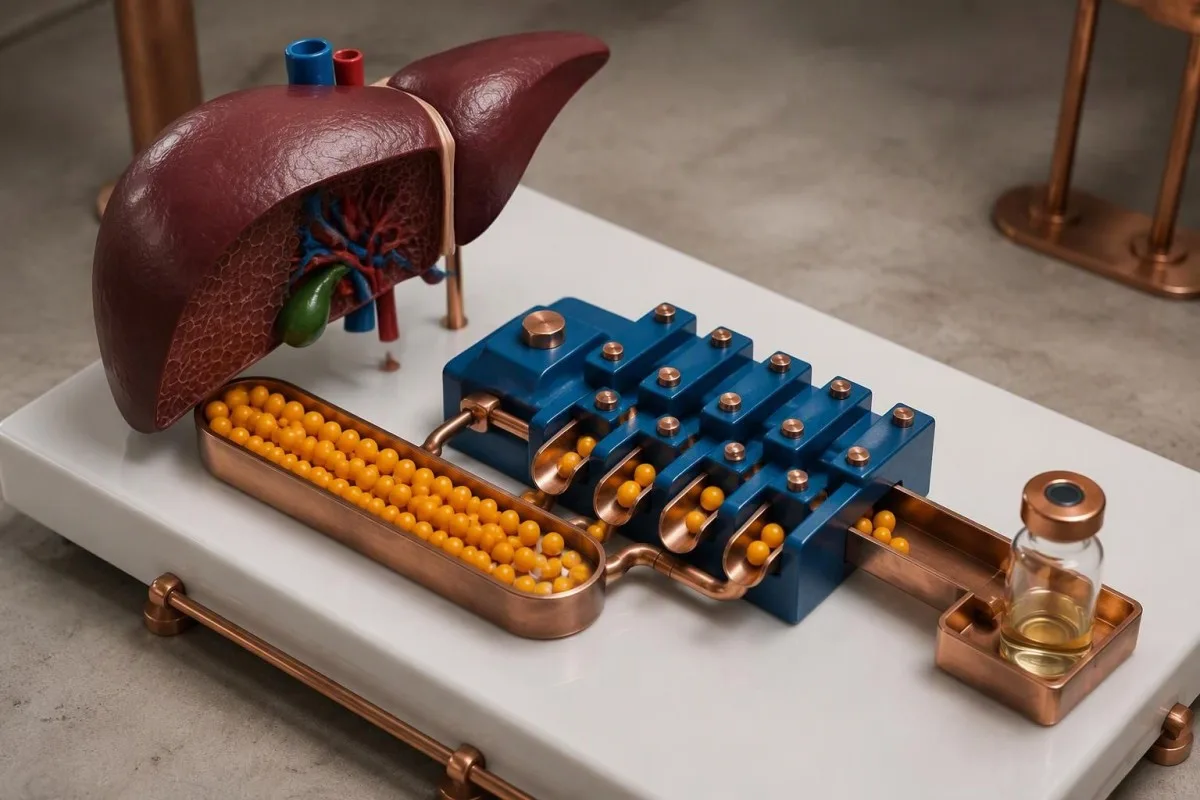
Metabolising enzymes can approach their processing capacity as exposure rises, so each additional milligram may be cleared less efficiently. A hypothetical rise from 2 mg/L to 4 mg/L after a modest dose adjustment is therefore plausible, but no single example provides a reliable formula for an individual patient.
The reverse calculation is unreliable too. A dose reduction of 25% does not guarantee a 25% concentration reduction, particularly when liver function or interacting medicines are changing; clinicians use repeat monitoring rather than assuming that the prescription and laboratory result move along a straight line.
A trough also reflects conditions during the preceding doses, not only the dose taken most recently. If a new prescription began 1 day before collection, the result may not represent the eventual exposure on that regimen, and an early result should be labelled as such rather than interpreted as settled.
This is a major reason not to borrow another person's adjustment advice. Nonlinear phenytoin monitoring illustrates a related principle, although phenytoin's free-versus-total measurement issues and target intervals are different; the shared lesson is that arithmetic alone cannot determine a safe drug dose.
CYP2C19 vorikonazola məruzqalmaya necə təsir edir?
CYP2C19 genetic variation can influence voriconazole clearance: rapid and ultrarapid metabolisers may have low exposure, while poor metabolisers may develop higher concentrations. A genetic result can help explain a repeated trough below 1 mg/L or above the prescribed ceiling, but it does not replace drug monitoring.
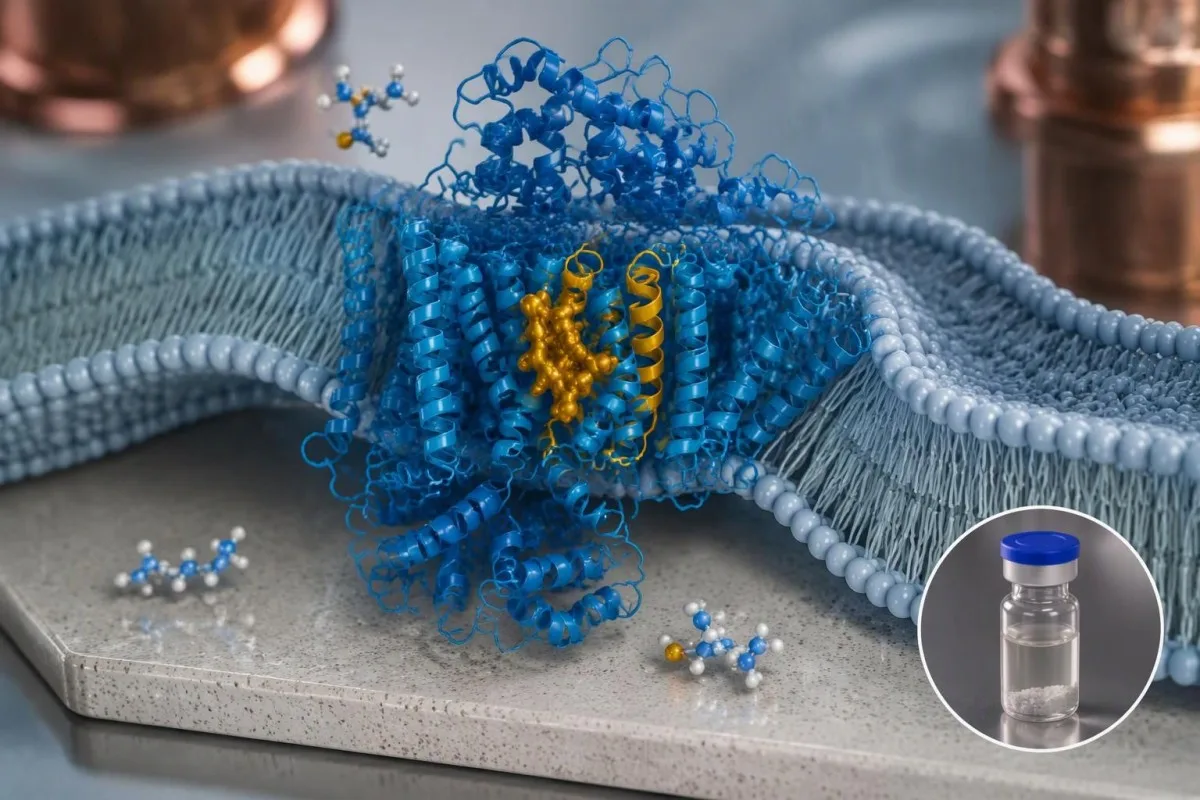
CPIC guidance recommends considering an alternative antifungal for certain CYP2C19 phenotypes when achieving reliable voriconazole exposure is difficult or adverse-effect risk is increased (Moriyama et al., 2017). This is a clinician-led choice between suitable treatments, not an instruction to stop an effective medicine after seeing a genetic category.
Genotype is only one input because liver illness, interacting medicines and systemic inflammatory responses can alter enzyme activity. A person genetically classified as a rapid metaboliser can still develop a trough of 6 mg/L under changed clinical conditions; inherited tendency does not establish a permanent, safe dose.
CYP2C19 influences more than one medicine, but the consequences are drug-specific. An enzyme variant that reduces activation of a prodrug can have a different clinical meaning from a variant that slows clearance of an active antifungal; 'fast metaboliser' is not automatically a favourable or unfavourable label.
Kantesti bir AI qan analizi nəticələrinin şərhi platforması that can help organise the laboratory and medication context around a reported voriconazole concentration. Our AI texnologiyası izahı describes the interpretation workflow; a chemistry panel cannot reveal CYP2C19 genotype unless a separate genetic test has actually been performed.
Hansı dərman qarşılıqlı təsirləri nəticəni dəyişə bilər?
Voriconazole interactions can either lower its concentration or increase exposure to voriconazole and other medicines. Rifampicin and carbamazepine are major enzyme-inducing concerns, while voriconazole can substantially increase tacrolimus exposure; a satisfactory trough of 2 mg/L does not make the combination automatically safe.

Rifampicin, carbamazepine and St John's wort can substantially reduce voriconazole exposure, and some combinations are contraindicated. Phenytoin creates a particularly complicated bidirectional interaction; any specialist exception requires an explicit monitoring plan rather than the assumption that increasing voriconazole will reliably overcome induction.
Starting or stopping an interacting medicine can matter as much as adding a new voriconazole dose. Enzyme induction and its reversal do not necessarily disappear within 24 hours, so clinicians need medication start and stop dates when explaining a concentration that changes despite an unchanged antifungal prescription.
Tacrolimus is a separate safety priority because voriconazole inhibits pathways involved in its clearance. A transplant team may need to adjust and closely monitor tacrolimus when voriconazole starts or stops; our tacrolimus trough interpretation guide explains why both drug concentrations must be reviewed independently.
Warfarin and medicines that prolong the QT interval also require attention even when the antifungal trough is within range. Voriconazole can increase anticoagulant effect, so understanding INR monitoring is useful; an antifungal level does not substitute for coagulation testing or an electrocardiogram.
Qaraciyər testləri minimum konsentrasiyanın şərhinə necə təsir edir?
Liver dysfunction can reduce voriconazole clearance and increase exposure, while voriconazole itself can cause liver injury. A rising trough above 5–6 mg/L together with increasing ALT or bilirubin deserves prompt clinical review, but an isolated liver-test abnormality does not prove the antifungal caused it.
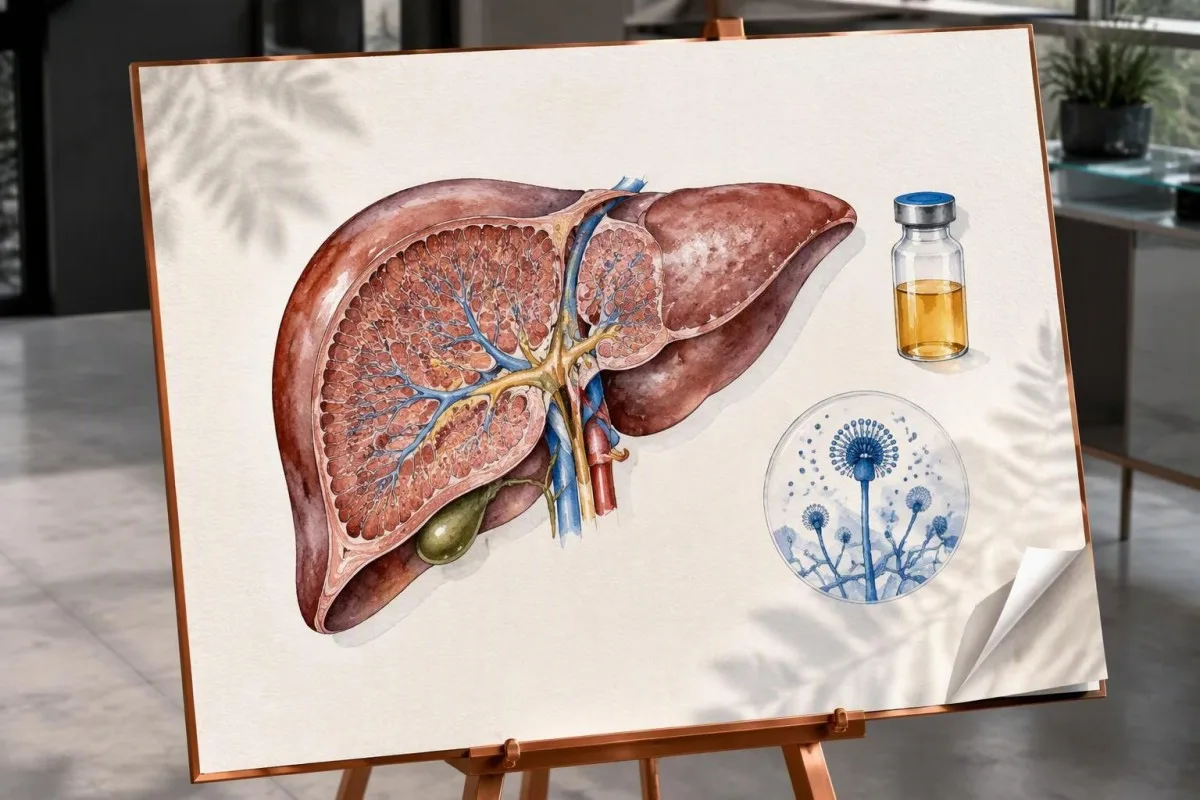
Product information recommends halving the usual maintenance dose in adults with mild-to-moderate cirrhosis, classified as Child–Pugh A or B, while retaining the standard loading regimen. That is prescribing guidance for clinicians, not a self-adjustment rule; severe hepatic impairment has less-established dosing evidence and needs specialist assessment.
Liver-test monitoring is generally recommended at least weekly during the first month, with frequency potentially reduced to monthly if results remain stable. The qaraciyər paneli izahı distinguishes injury markers from synthetic-function measures; ALT alone does not quantify the liver's capacity to clear voriconazole.
For example, ALT of 180 IU/L with a laboratory upper limit of 40 IU/L is 4.5 times that limit. Clinicians compare the change with baseline, bilirubin, ALP, symptoms and alternative causes; our ALT təqib bələdçisi explains why a multiple of the upper limit is more informative than a raw number.
At Kantesti, we explain why a seemingly acceptable total concentration can still need context when albumin is markedly low. An albumin result of 22 g/L can affect drug binding, but there is no universally adopted albumin-correction formula for voriconazole; the serum zülallarının interpretasiya bələdçisi helps separate binding concerns from a diagnosis of cirrhosis.
Görmə pozğunluqları minimum konsentrasiyanın çox yüksək olduğu anlamına gəlirmi?
Visual disturbances are a recognised voriconazole effect and do not automatically mean the trough exceeds 5.5 mg/L. Temporary changes in brightness, colour perception or blurred vision can occur at otherwise acceptable exposure, whereas persistent visual loss, hallucinations or confusion require a different level of concern.

Clinical-trial information describes visual disturbances in approximately 30% of recipients, often occurring early in treatment and resolving within about 30 minutes. The frequency varies across populations and reporting methods, and the symptom alone cannot establish whether a result of 2 mg/L or 6 mg/L is responsible.
Repeated brief brightness changes soon after a dose differ from continuous loss of vision throughout the day. A pre-dose trough may not capture the maximum post-dose concentration associated with an episode; write down when symptoms start, how long they last and whether both eyes are affected.
New hallucinations, marked confusion or worsening visual impairment warrant prompt medical assessment, especially alongside a high concentration. Sudden loss of vision, severe eye pain or a new neurological deficit requires urgent evaluation regardless of the trough; do not wait 4–7 days for routine repeat monitoring.
For treatment continuing beyond 28 days, product information recommends monitoring visual function, including acuity, visual fields and colour perception. Formal eye-function testing illustrates some of these assessments, although voriconazole symptoms do not by themselves diagnose glaucoma; avoid driving while vision is affected.
Yüksək vorikonazol səviyyəsi nə vaxt təcili diqqət tələb edir?
A trough above approximately 5–6 mg/L raises concern for excessive exposure, particularly when accompanied by confusion, hallucinations or worsening liver tests. Urgency depends on symptoms and organ effects, not a universal critical concentration; serious adverse effects can also occur below this numerical boundary.
A hypothetical trough of 7.2 mg/L with new hallucinations needs prompt contact with the prescribing team rather than a routine appointment weeks later. The team may change or temporarily interrupt treatment, but the patient should not independently halve the dose, skip repeated doses or wait for an AI explanation.
Fainting, sustained palpitations, seizures, severe confusion, a serious rash or jaundice with systemic illness warrant urgent assessment. Voriconazole can prolong the QT interval, and low potassium or magnesium adds risk; an electrolyte panel safety review addresses hazards that the antifungal concentration does not measure.
Kidney function affects the intravenous formulation differently from the active antifungal's liver metabolism. The cyclodextrin vehicle can accumulate when creatinine clearance is below 50 mL/min, prompting a route-specific risk–benefit review; a normal voriconazole trough cannot establish that the intravenous vehicle is harmless.
Long courses introduce problems not reliably predicted by a single trough, including photosensitivity and fluoride-associated periostitis. New persistent bone pain during a hypothetical 6-month course deserves review even at 3 mg/L, and sun-protection advice remains relevant when the drug concentration falls within the intended treatment window.
İnfeksiya ağırlaşarkən səviyyə terapevtik diapazonda qala bilərmi?
Yes—a therapeutic voriconazole trough does not guarantee treatment success because fungal resistance, an incorrect diagnosis, inadequate source control or profound immunosuppression can overcome adequate exposure. A result of 3 mg/L confirms neither fungal susceptibility nor sufficient drug delivery to every affected site.

The organism's minimum inhibitory concentration, or MIC, helps describe how much drug inhibits growth under laboratory conditions. If the fungal MIC is 2 mg/L rather than 0.25 mg/L, the same trough has a different exposure-to-susceptibility relationship; a trough-to-MIC ratio is not a self-dosing calculator.
Clinicians review imaging, cultures, susceptibility testing and relevant fungal markers alongside the concentration. A galactomannan result interpretation can clarify another piece of the assessment, but neither one positive marker nor one therapeutic trough independently proves active aspergillosis or its resolution.
Voriconazole lacks reliable activity against Mucorales, the fungi responsible for mucormycosis. A trough of 4 mg/L therefore cannot solve a mismatch between the medicine and the organism; persistent deterioration may require diagnostic reassessment and a different antifungal strategy rather than progressively increasing exposure.
Early imaging changes are also not always equivalent to failure because inflammatory responses can change as immune function recovers. Nonetheless, worsening breathing, new neurological symptoms or fever during severe neutropenia needs prompt clinical assessment; the infection team decides whether a 1-week trend reflects expected evolution or an inadequate treatment plan.
Minimum konsentrasiya nə vaxt təkrar ölçülməlidir?
Voriconazole monitoring is commonly repeated after a dose change, a major interaction change, altered liver function, a route change or suspected treatment failure. A routine reassessment often occurs within 4–7 days, but concerning neurological symptoms or liver deterioration justify earlier clinical action rather than waiting for steady exposure.
Two concentrations are meaningfully comparable only when the dosing interval and collection conditions are documented. A change from 1.1 mg/L to 3.4 mg/L may represent improved exposure, but it may instead compare a delayed trough with a post-dose sample; the size of the difference cannot correct a timing error.
Changing from intravenous to oral treatment can alter exposure even when the intended prescription seems equivalent. Clinicians may repeat the level after the switch, especially if eating, vomiting or tube feeding has changed; the route belongs beside the concentration in the monitoring record, not only in the medication history.
Kantesti bir Süni intellektlə işləyən qan testi analizi aləti that can help organise uploaded drug levels alongside liver-test trends and reported dose times. Our medication-safety trend workflow supports preparation for review, but a rise from 2 mg/L to 6 mg/L still requires clinician-led interpretation and treatment decisions.
Stable treatment does not create one universal long-term testing interval. The team balances infection risk, treatment duration, prior variability and access to testing; keep a record of at least the previous dose time, collection time, current prescription, formulation and medication changes so the next result answers a usable question.
Nəzarət müayinəsinə nə gətirməli və bu tövsiyəni nə dəstəkləyir?
Bring the actual dose and collection times, the prescribed treatment goal, recent liver results and a complete medication list to your voriconazole review. Ask whether a result such as 1.4 mg/L meets your specific indication—not whether it fits a single internet range—and do not adjust the prescription yourself.
A practical review has three questions: was the sample a true trough, is exposure appropriate for this infection or prevention plan, and are there adverse effects or interactions? Include missed doses and meal timing honestly; a 12-hour prescription does not mean every dose was actually separated by 12 hours.
The clinical recommendations here draw on the 2016 IDSA aspergillosis guideline, the 2014 British Society for Medical Mycology monitoring guideline and the 2017 CPIC voriconazole guideline. These sources address different questions—clinical treatment, concentration monitoring and pharmacogenetics—so their recommendations should be combined thoughtfully rather than presented as one identical range.
Kantesti Ltd's role is to help readers understand laboratory information, not to prescribe antifungal treatment. Our organisation and purpose are described separately; technical evaluation on 100,000 synthetic cases cannot establish that a particular voriconazole dose improves clinical outcomes in a patient with invasive fungal disease.
The two research publications listed below describe an automated technical benchmark and a clinical-validation framework, not a voriconazole therapeutic-monitoring trial. Our validation methodology and limits explain that distinction; use our interpretation to prepare questions, while your infection specialist or prescribing team determines the dose and follow-up plan.
Tez-tez verilən suallar
Vorikonazolun normal minimal səviyyəsi nədir?
Voriconazole does not have a healthy-population 'normal' concentration; it has a therapeutic exposure target. Many treatment protocols use approximately 1–5.5 mg/L, while IDSA guidance discusses a minimum above 1–1.5 mg/L and an upper boundary below 5–6 mg/L. Severe disease, fungal susceptibility and prevention protocols can change the intended target. Your prescribing team should interpret the result using the actual collection time and clinical indication.
Vorikonazolun səviyyəsi doza qəbul etməzdən nə qədər əvvəl ölçülməlidir?
Vorikonazolun minimum konsentrasiyası, adətən, növbəti planlaşdırılmış dozadan dərhal əvvəl, çox vaxt yerli laboratoriyanın təlimatlarına uyğun olaraq 30 dəqiqə ərzində götürülür. Saat 8-də qəbul edilən doza üçün dərmanı qəbul etməzdən əvvəl saat 7:45-də nümunənin götürülməsi, adətən, uyğun olar. Dozanı əvvəlcə qəbul etmək, minimum konsentrasiya hədəfləri ilə birbaşa müqayisə edilməməli olan, dozadan sonrakı nəticə verə bilər. Təlimat olmadan dozanı bir neçə saat gecikdirmək əvəzinə, nümunənin götürülmə vaxtını tibbi komanda ilə razılaşdırın.
Aşağı vorikonazol səviyyəsi nə deməkdir?
Vorikonazolun 1 mq/L-dən aşağı olan minimal konsentrasiyası bir çox müalicə hədəflərindən aşağıdır, lakin bu, təyin edilmiş dozanın çox aşağı olduğunu sübut etmir. Dozaların qəbul edilməməsi, nümunənin gec götürülməsi, qidanın təsiri, qusma, sorulmanın pozulması və fermentləri induksiya edən dərmanlar aşağı ekspozisiyanı izah edə bilər. Oral vorikonazol, preparatın təlimatına uyğun olaraq, adətən yeməkdən ən azı 1 saat əvvəl və ya sonra qəbul edilir. Dozanı özünüz artırmaq əvəzinə, vəziyyətin nəzərdən keçirilməsi üçün təyinatı verən tibbi heyətlə əlaqə saxlayın.
Vorikonazolun mg/L və µg/mL ilə ifadə olunan nəticələri eynidirmi?
Vorikonazolun mg/L və µg/mL ilə ifadə olunan konsentrasiyalarının ədədi qiyməti eynidir. 2 mg/L nəticəsi dəqiq olaraq 2 µg/mL-ə, bu da 2 000 ng/mL-ə bərabərdir. Laboratoriyalar fərqli vahidlərdən və hədəf diapazonlarından istifadə edə bilər, buna görə hesabatları müqayisə etməzdən əvvəl hər ikisini yoxlayın. Bu vahid çevirməsi nümunənin yanlış vaxtda götürülməsini düzəltmir.
Görmənin bulanıqlaşması və ya hallüsinasiyalar vorikonazol toksikliyi deməkdirmi?
Vorikonazolla qısa müddətli görmə pozuntuları, hətta dərmanın ən aşağı konsentrasiyası hədəf diapazonda olduqda belə, baş verə bilər; hallüsinasiyalar və ya çaşqınlıq isə həddindən artıq dərman təsiri və ya başqa tibbi problem ehtimalı ilə bağlı daha çox narahatlıq doğurur. Preparat haqqında məlumatda görmə pozuntularının qəbul edənlərin təxminən 30%-də baş verdiyi və çox vaxt təxminən 30 dəqiqə ərzində keçdiyi bildirilir. Yeni hallüsinasiyalar, davamlı görmə pozuntusu və ya simptomların pisləşməsi barədə dərmanı təyin edən tibb heyətinə dərhal məlumat verilməlidir; qəfil görmə itkisi və ya ağır nevroloji simptomlar təcili qiymətləndirmə tələb edir. Görməniz pozulmuş halda avtomobil idarə etməyin və göbələkəleyhinə preparatın dozasını özünüz dəyişməyin.
Doza dəyişdirildikdən sonra vorikonazolun səviyyəsi nə vaxt yenidən yoxlanılmalıdır?
Vorikonazolun minimal konsentrasiyası doza dəyişikliyindən 4–7 gün sonra, müalicə rejimindən, yükləmə dozalarından və yerli protokoldan asılı olaraq, adətən yenidən yoxlanılır. Toksiklik şübhəsi, qaraciyər funksiyasının dəyişməsi və ya dərmanlarla ciddi qarşılıqlı təsirlər zamanı daha erkən test və ya klinik müdaxilə tələb oluna bilər. Qeyri-xətti metabolizm dozanın 25% artırılmasının konsentrasiyanı yalnız 25% artıracağına zəmanət vermir. Müalicəni təyin edən komanda təkrar testin tarixini müəyyən etməli və sonrakı dəyişikliklər etməzdən əvvəl nəticəni şərh etməlidir.
Qan analizinin nəticələrini necə oxumaq
Laboratoriya hesabatınızı yükləyin, Kantesti-nin AI-si isə saniyələr ərzində hər biomarkeri sadə dildə izah etsin. Dünyada 2 milyondan çox insan istifadə edir.
İstinadlar
- Klein, T., Mitchell, S., & Weber, H. (2026). Kantesti Qan Testi Şərh Mühərrikinin 100,000 Sintetik Test Halında Pre-Registered, Rubrik-Əsaslı Avtomatlaşdırılmış Texniki Benchmarku. Kantesti AI tibbi araşdırmaları. DOI
- Klein, T., Mitchell, S., & Weber, H. (2026). Klinik Təsdiqləmə Çərçivəsi v2.0 (Tibbi Təsdiqləmə Səhifəsi). Kantesti AI tibbi araşdırmaları. DOI
- Patterson TF və b. (2016). Aspergillozun diaqnostikası və müalicəsi üzrə təcrübə təlimatları: Amerika İnfeksion Xəstəliklər Cəmiyyətinin 2016-cı il yenilənməsi. Clinical Infectious Diseases. DOI
- Ashbee HR et al. (2014). Therapeutic drug monitoring (TDM) of antifungal agents: guidelines from the British Society for Medical Mycology. Journal of Antimicrobial Chemotherapy. DOI
- Moriyama B et al. (2017). Clinical Pharmacogenetics Implementation Consortium (CPIC) Guidelines for CYP2C19 and Voriconazole Therapy. Clinical Pharmacology & Therapeutics. DOI
- 2M+Təhlil edilmiş testlər
- 127+ölkələr
- 100+Dillər
Tibbi komanda haqqında


E-E-A-T Etibar Siqnalları
Təcrübə
Həkim rəhbərliyi ilə laborator şərh iş axınlarının klinik icmalı.
Ekspertiza
Biomarkerlərin klinik kontekstdə necə davrandığına dair laboratoriya təbabəti diqqəti.
Səlahiyyətlilik
Dr. Thomas Klein tərəfindən tibbi baxımdan nəzərdən keçirilib; Dr. Sarah Mitchell və Prof. Dr. Hans Weber töhfə veriblər.
Etibarlılıq
Aydın izləmə yolları ilə həyəcanı azaltmağa yönəlmiş sübuta əsaslanan şərh.

Tibbi məsuliyyətdən imtina bildirişi
Bu məqalə yalnız təhsil məqsədlidir və tibbi məsləhət təşkil etmir. Diaqnoz və müalicə qərarları üçün həmişə ixtisaslı səhiyyə işçisi ilə məsləhətləşin.
Dərc edilmişdir · Redaksiya komandası ilə əlaqə saxlayın
İngiltərə və Uelsdə qeydiyyatdan keçmiş Kantesti Ltd tərəfindən nəşr olunub, şirkət №. 17090423, London, Birləşmiş Krallıq.
