
Un val de voriconazole pres al moment adequat ajuda a avalorar se l’exposicion a l’antifongic es sufisenta sens venir excessiva. Fòrça protocòls de tractament utilizan aproximativament 1–5.5 mg/L, mas l’infeccion, lo plan de prevencion e los efièches segondaris determinan vòstre objectiu personal.

Punts essencials
- Val de voriconazole es la concentracion del medicament immediatament abans de la dòsi programada seguenta; mesura l’exposicion, pas se una infeccion es estada garida.
- Objectius del tractament necessitan comunament un val superior a 1–1.5 mg/L, amb qualques equipas que cèrcan almens 2 mg/L per las infeccions dificilas o grèvas.
- Limits superiors se situan comunament a l’entorn de 5–6 mg/L, perque una exposicion excessiva aumenta lo risc d’efièches neurologics e d’autres efièches indesirables.
- Objectius de prevencion son especifics a cada protocòl; un lindal mai bas utilizat per la profilaxi deu pas èsser aplicat automaticament al tractament d’una infeccion ja establida.
- Cronometratge dels nivèls significa generalament una recòlta dins los 30 minutas abans de la dòsi seguenta, en seguint las instruccions del laboratòri.
- Conversió d’unitats es exacte: 1 mg/L equival a 1 µg/mL e 1,000 ng/mL.
- Exposicion febla pòt reflèxar de dòsis omesas, d’efièches dels aliments, una absorpcion alterada, de medicaments en interaccion o un metabolisme mai rapid — pas simplament una prescripcion insufisenta.
- Seguretat de la dòsi exigís de modificacions supervisadas per un professional de santat, perque una aumentacion de dòsi de 25% pòt provocar una aumentacion de concentracion desproporcionadament granda.
Qué vos indica vertadièrament un val de voriconazole?
A concentracion minimala de voriconazòl indica als clinicians quina quantitat de medicament antifongic demòra just abans de la dòsi seguenta. Un resultat obtengut corrèctament d’aperaquí 1–5.5 mg/L correspond sovent a un protocòl de tractament, mas una dòsi eficaça depend tanben de la sensibilitat fungica, de la localizacion de l’infeccion e de l’amelioracion clinica.
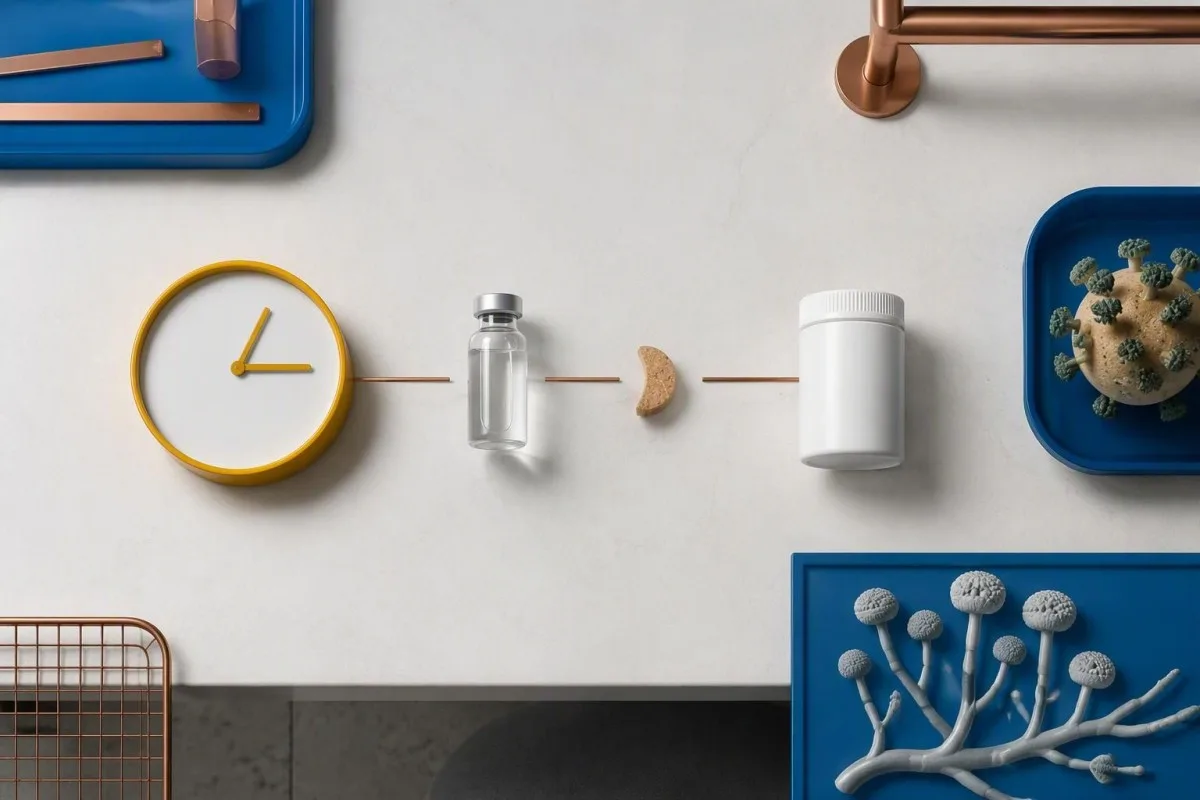
Una concentracion minimala es un indicator practic de l’exposicion pendent un interval de posologia, e non pas una mesura dirècta del medicament dins un paumon o un cervèl afectats. Per una persona que pren de voriconazòl cada 12 oras, la concentracion abans la dòsi ajuda a determinar se l’exposicion pòt davalar tròp bas entre las dòsis.
Lo seguit terapeutic dels medicaments a dos objectius distinctes: manténer una exposicion sufisenta per l’activitat antifongica e evitar una exposicion excessiva. La guida IDSA sus l’aspergillòsi descriu coma objectius experts d’usatge corrent de concentracions minimales de tractament superioras a 1–1.5 mg/L e inferioras a 5–6 mg/L, en particular per limitar la toxicitat del sistèma nerviós central (Patterson et al., 2016).
Kantesti es un Analizador de tèst de sang d'IA que pòt ajudar a explicar un resultat de voriconazòl telecargat al costat dels tests epatics, mentre que vòstra equipa prescriptora determina l’objectiu. Un resultat de 1.2 mg/L deu èsser acompanhat de l’indicacion e de l’ora de recòlta; nòstra explicacion deu pas transformar aquel nombre en instruccion de posologia.
Un senhalament del laboratòri es pas un verdict sus l’escasuda del tractament. A la diferéncia de fòrça intervals de referéncia de bioquimia correnta, un interval de seguit d’un medicament representa un objectiu clinic d’exposicion; nòstra explicacion de resultats de laboratòri en defòra de l'interval ajuda a destriar un senhalament d’un diagnostic.
Quand cal far lo prélèvement del vòstre taus de voriconazole?
Corrècte cronometratge del nivèl de voriconazòl significa que l’escandalh es pres just abans de la dòsi programada seguenta, generalament dins los 30 minutas que la precedisson. Lo primièr nivèl de rutina es sovent mesurat entre los jorns 4–7, encara que de dòsis de carga, una malautiá grèva e los protocòls locals pòscan justificar una avaloracion mai precòça.

Per exemple, imaginatz un orari prescrit a las 8 del matin e a las 8 del ser. Un escandalh pres a 7:45 del matin, abans lo medicament del matin, representa de pròche una concentracion minimala; un escandalh pres a 10 del matin après la presa de la dòsi o representa pas, quitament se lo rapòrt del laboratòri lo qualifica de concentracion minimala.
Una dòsi retardada pòt tanben faussar l’interpretacion dins l’autre sens. Se la dòsi seguenta èra prevista a 8 del matin mas que la recòlta a agut luòc a 11 del matin, las 3 oras suplementàrias sens medicament pòdon abaissar la concentracion mesurada; l’equipa a besonh de las oras realas, pas solament de l’orari previst.
Lo voriconazòl intravenós requerís totjorn un escandalh pres abans la dòsi, generalament abans que comence la perfusion seguenta. La recòlta dempuèi una linha utilizada per administrar lo medicament pòt crear un risc de contaminacion; es doncas al laboratòri o a l’equipa de perfusion de causir la via de recòlta, puslèu que de supausar que totas las linhas accessiblas donan un resultat equivalent.
Junar tota la nuèch es pas intrinsecament necessari per l’analisi de la concentracion, mas lo voriconazòl oral a sas pròprias instruccions sul moment de la presa per rapòrt als repaisses. Verificatz lo plan de recòlta abans; règlas de recòlta especificas al medicament explican perqué una règla de cronometratge valida per un medicament pòt pas èsser aplicada a un autre.
Quina es la gamma terapeutica del voriconazole?
Lo interval terapeutic del voriconazòl is commonly approximately 1–5.5 mg/L for treatment, but there is no universal interval suitable for every patient. IDSA guidance discusses a lower goal above 1–1.5 mg/L and an upper boundary below 5–6 mg/L; some difficult infections prompt a higher minimum.

These boundaries describe probabilities, not biological switches. A trough of 0.9 mg/L does not prove failure, and 5.6 mg/L does not prove toxicity; repeated results, symptoms and organism susceptibility help determine whether a small boundary crossing is clinically meaningful or simply requires confirmation.
For invasive aspergillosis, the British Society for Medical Mycology recommends a treatment trough above 1 mg/L and discusses higher exposure goals for poor-prognosis situations, including central nervous system disease (Ashbee et al., 2014). A team may therefore consider 1.3 mg/L acceptable for one indication but insufficient for another.
The reason for a higher minimum is that the concentration needed to inhibit a less-susceptible fungus may exceed the concentration needed for a susceptible organism. Raising exposure indefinitely is not a safe solution: a trough approaching 5–6 mg/L can leave little room between a desired antifungal effect and adverse effects.
Always read the units before comparing reports. A result of 2 µg/mL is exactly 2 mg/L, not twice or half that value; the biomarker and units guide provides context for comparing laboratory values without mistaking a therapeutic target for a healthy-population range.
| Nivèl | Interval | Significacion |
|---|---|---|
| Below many treatment targets | <1 mg/L | Check collection timing, dosing history, absorption and interactions; not proof of treatment failure. |
| Lower treatment exposure | 1–<2 mg/L | May meet the prescribed target, but severe disease or reduced fungal susceptibility can require a higher minimum. |
| Common treatment exposure window | 2–5.5 mg/L | Often compatible with treatment goals when correctly timed; does not guarantee efficacy or freedom from toxicity. |
| Above many local upper limits | >5.5 mg/L | Requires review of symptoms, liver tests, timing and the local protocol; there is no universal emergency cutoff. |
Perqué los objectius de tractament e de prevencion pòdon diferir?
Treatment targets may be more demanding than prevention targets because an established fungal infection must be controlled, not merely prevented. Some local prophylaxis protocols accept 0.5 mg/L, whereas British guidance recommends a prophylaxis trough above 1 mg/L; these thresholds are not interchangeable.

Prophylaxis studies are harder to interpret because breakthrough fungal disease may be uncommon and heavily influenced by immune status. A threshold of 0.5 mg/L used in one prevention programme cannot establish equivalent protection for every stem-cell transplant recipient, particularly during prolonged neutropenia or intensive immunosuppression.
The British Society for Medical Mycology's prophylaxis recommendation above 1 mg/L carries a weaker evidence base than some treatment recommendations (Ashbee et al., 2014). The uncertainty is genuine: the exact preventive minimum is less settled than the principle that persistently very low exposure deserves investigation.
Consider a hypothetical result of 0.8 mg/L in two people. One is receiving prevention under a documented local protocol; the other has confirmed invasive aspergillosis. The same concentration can lead to different discussions because the indication, fungal burden and acceptable risk of inadequate exposure differ.
Transplant recipients often have several parallel monitoring plans, not one combined 'infection score.' Voriconazole does not prevent every opportunistic infection, and CMV results after transplantation answer a different question; a satisfactory antifungal trough does not replace viral surveillance or other prescribed prophylaxis.
Qué pòt causar un taus de voriconazole bas?
A low voriconazole level can result from missed or delayed doses, food effects, impaired gastrointestinal absorption, enzyme-inducing medicines or faster metabolism. Before changing treatment, clinicians verify whether a result below 1 mg/L is a correctly timed trough and whether the prescribed doses actually reached the patient.
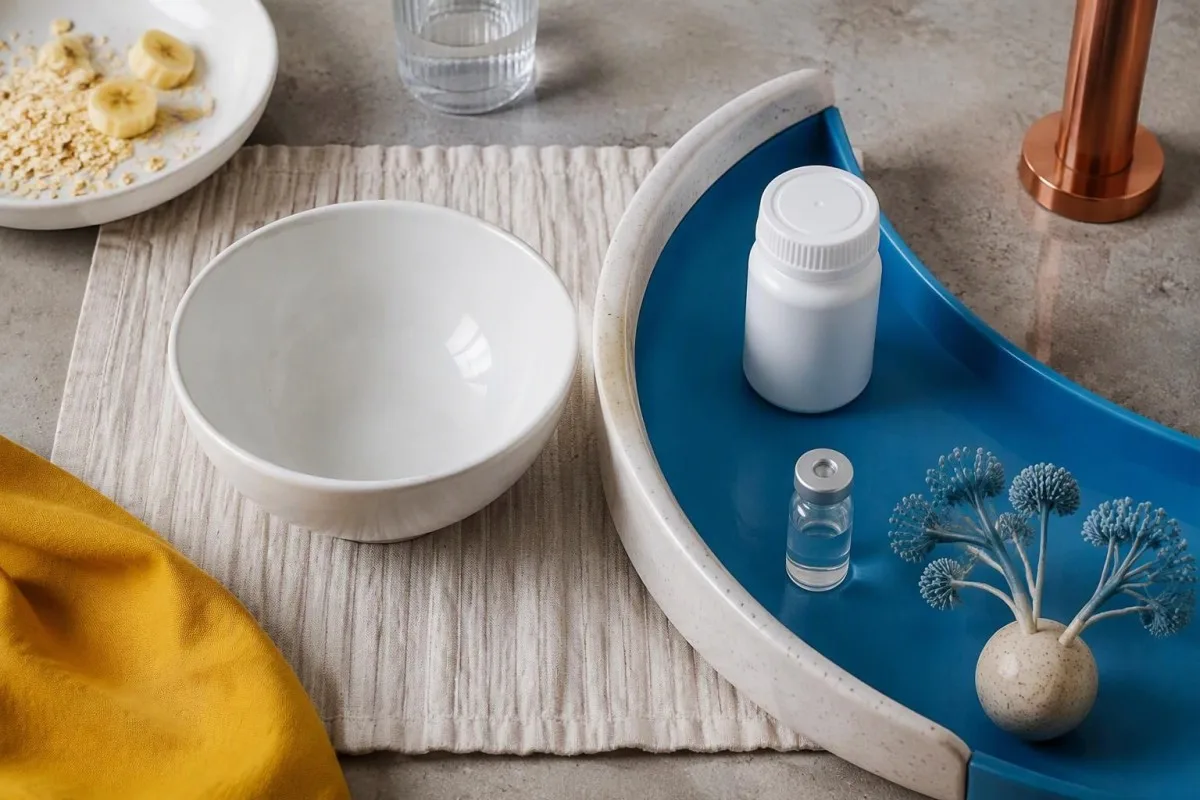
Oral voriconazole is generally taken at least 1 hour before or 1 hour after a meal, following the product instructions. Food can reduce exposure, but a low result should not be blamed on breakfast without checking the complete dosing history, formulation, vomiting and other medicines.
Imagine a hypothetical adult prescribed 200 mg every 12 hours whose trough is 0.6 mg/L. Taking each dose with a substantial meal and vomiting one evening dose creates two plausible explanations for low exposure; automatically escalating the prescription could cause excessive exposure once those problems resolve.
Severe diarrhoea, mucositis, gastrointestinal surgery and feeding-tube administration can make oral delivery less predictable. Clinicians may review the formulation or route rather than simply the milligram amount; testing for impaired fat absorption explains why gastrointestinal dysfunction needs its own assessment rather than being diagnosed from one drug level.
Acid-suppressing medicines deserve a medication review, but voriconazole should not be treated like an antifungal whose absorption always requires stomach acid. Some proton pump inhibitors inhibit metabolism and can raise exposure; our reflux treatment context helps readers identify these medicines without stopping them independently.
Perqué un pichon cambiament de dòsi pòt de còps modificar fòrça lo taus?
Voriconazole has nonlinear metabolism in adults, meaning a dose increase can produce a more-than-proportional concentration increase. Changing a prescribed dose from 200 mg to 250 mg is a 25% increase, but the resulting trough cannot safely be predicted by multiplying the old result by 1.25.
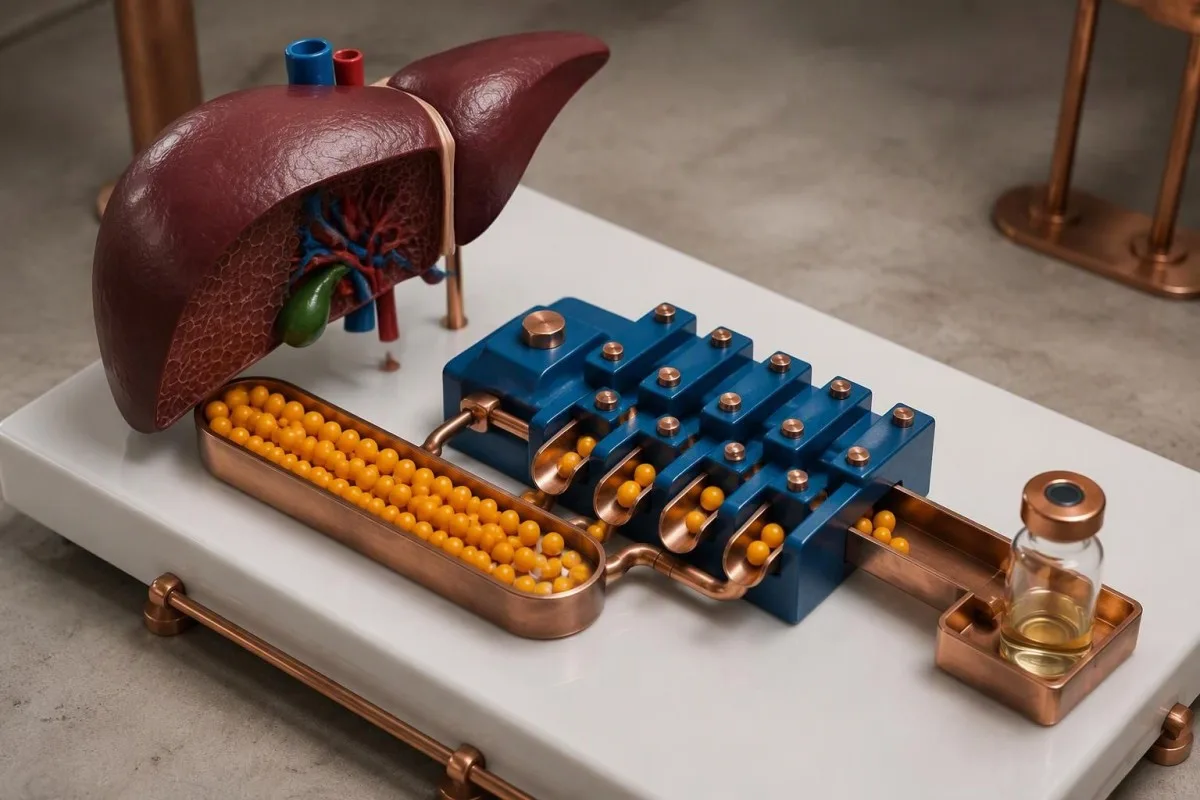
Metabolising enzymes can approach their processing capacity as exposure rises, so each additional milligram may be cleared less efficiently. A hypothetical rise from 2 mg/L to 4 mg/L after a modest dose adjustment is therefore plausible, but no single example provides a reliable formula for an individual patient.
The reverse calculation is unreliable too. A dose reduction of 25% does not guarantee a 25% concentration reduction, particularly when liver function or interacting medicines are changing; clinicians use repeat monitoring rather than assuming that the prescription and laboratory result move along a straight line.
A trough also reflects conditions during the preceding doses, not only the dose taken most recently. If a new prescription began 1 day before collection, the result may not represent the eventual exposure on that regimen, and an early result should be labelled as such rather than interpreted as settled.
This is a major reason not to borrow another person's adjustment advice. Nonlinear phenytoin monitoring illustrates a related principle, although phenytoin's free-versus-total measurement issues and target intervals are different; the shared lesson is that arithmetic alone cannot determine a safe drug dose.
Cossí CYP2C19 afècta l’exposicion al voriconazole?
CYP2C19 genetic variation can influence voriconazole clearance: rapid and ultrarapid metabolisers may have low exposure, while poor metabolisers may develop higher concentrations. A genetic result can help explain a repeated trough below 1 mg/L or above the prescribed ceiling, but it does not replace drug monitoring.
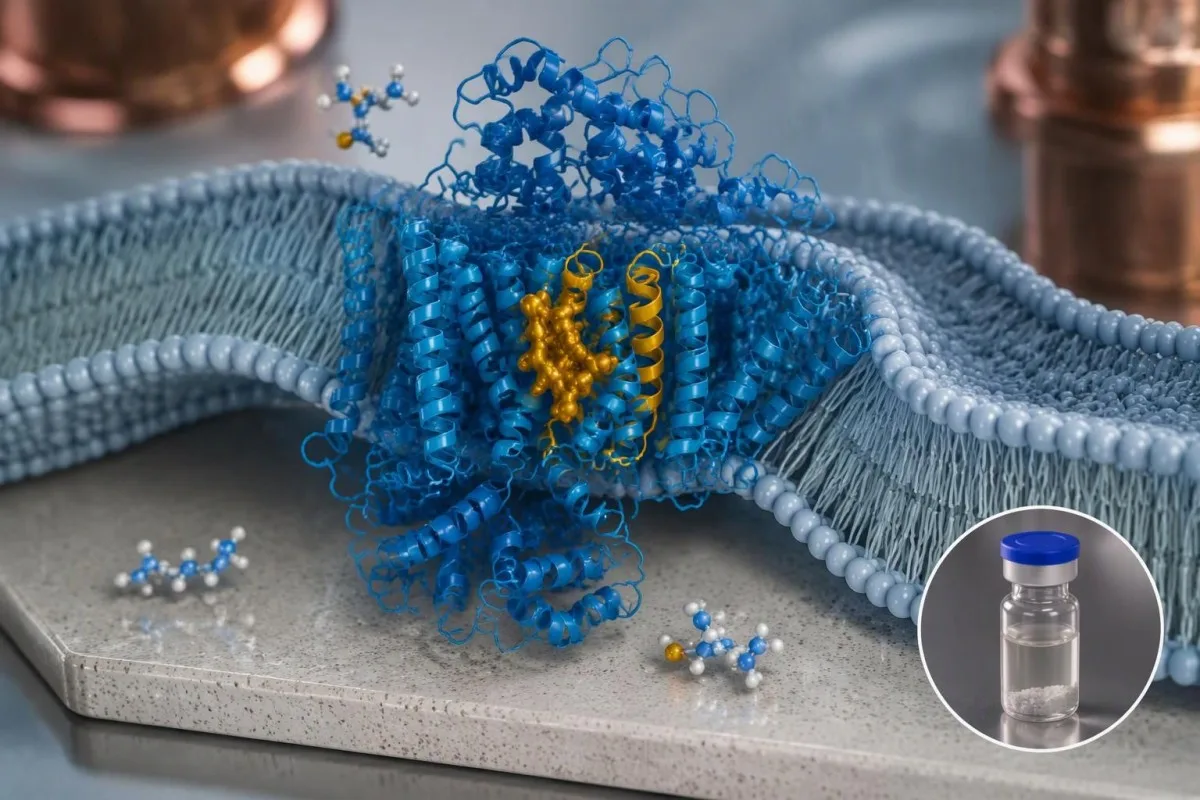
CPIC guidance recommends considering an alternative antifungal for certain CYP2C19 phenotypes when achieving reliable voriconazole exposure is difficult or adverse-effect risk is increased (Moriyama et al., 2017). This is a clinician-led choice between suitable treatments, not an instruction to stop an effective medicine after seeing a genetic category.
Genotype is only one input because liver illness, interacting medicines and systemic inflammatory responses can alter enzyme activity. A person genetically classified as a rapid metaboliser can still develop a trough of 6 mg/L under changed clinical conditions; inherited tendency does not establish a permanent, safe dose.
CYP2C19 influences more than one medicine, but the consequences are drug-specific. An enzyme variant that reduces activation of a prodrug can have a different clinical meaning from a variant that slows clearance of an active antifungal; 'fast metaboliser' is not automatically a favourable or unfavourable label.
Kantesti es un plataforma d’interpretacion d’analisi de sang d’AI that can help organise the laboratory and medication context around a reported voriconazole concentration. Our explicacion de tecnologia IA describes the interpretation workflow; a chemistry panel cannot reveal CYP2C19 genotype unless a separate genetic test has actually been performed.
Quinas interaccions medicamentosas pòdon modificar lo resultat?
Voriconazole interactions can either lower its concentration or increase exposure to voriconazole and other medicines. Rifampicin and carbamazepine are major enzyme-inducing concerns, while voriconazole can substantially increase tacrolimus exposure; a satisfactory trough of 2 mg/L does not make the combination automatically safe.

Rifampicin, carbamazepine and St John's wort can substantially reduce voriconazole exposure, and some combinations are contraindicated. Phenytoin creates a particularly complicated bidirectional interaction; any specialist exception requires an explicit monitoring plan rather than the assumption that increasing voriconazole will reliably overcome induction.
Starting or stopping an interacting medicine can matter as much as adding a new voriconazole dose. Enzyme induction and its reversal do not necessarily disappear within 24 hours, so clinicians need medication start and stop dates when explaining a concentration that changes despite an unchanged antifungal prescription.
Tacrolimus is a separate safety priority because voriconazole inhibits pathways involved in its clearance. A transplant team may need to adjust and closely monitor tacrolimus when voriconazole starts or stops; our tacrolimus trough interpretation guide explains why both drug concentrations must be reviewed independently.
Warfarin and medicines that prolong the QT interval also require attention even when the antifungal trough is within range. Voriconazole can increase anticoagulant effect, so understanding INR monitoring is useful; an antifungal level does not substitute for coagulation testing or an electrocardiogram.
Cossí los tests del fetge càmbian l’interpretacion del val?
Liver dysfunction can reduce voriconazole clearance and increase exposure, while voriconazole itself can cause liver injury. A rising trough above 5–6 mg/L together with increasing ALT or bilirubin deserves prompt clinical review, but an isolated liver-test abnormality does not prove the antifungal caused it.
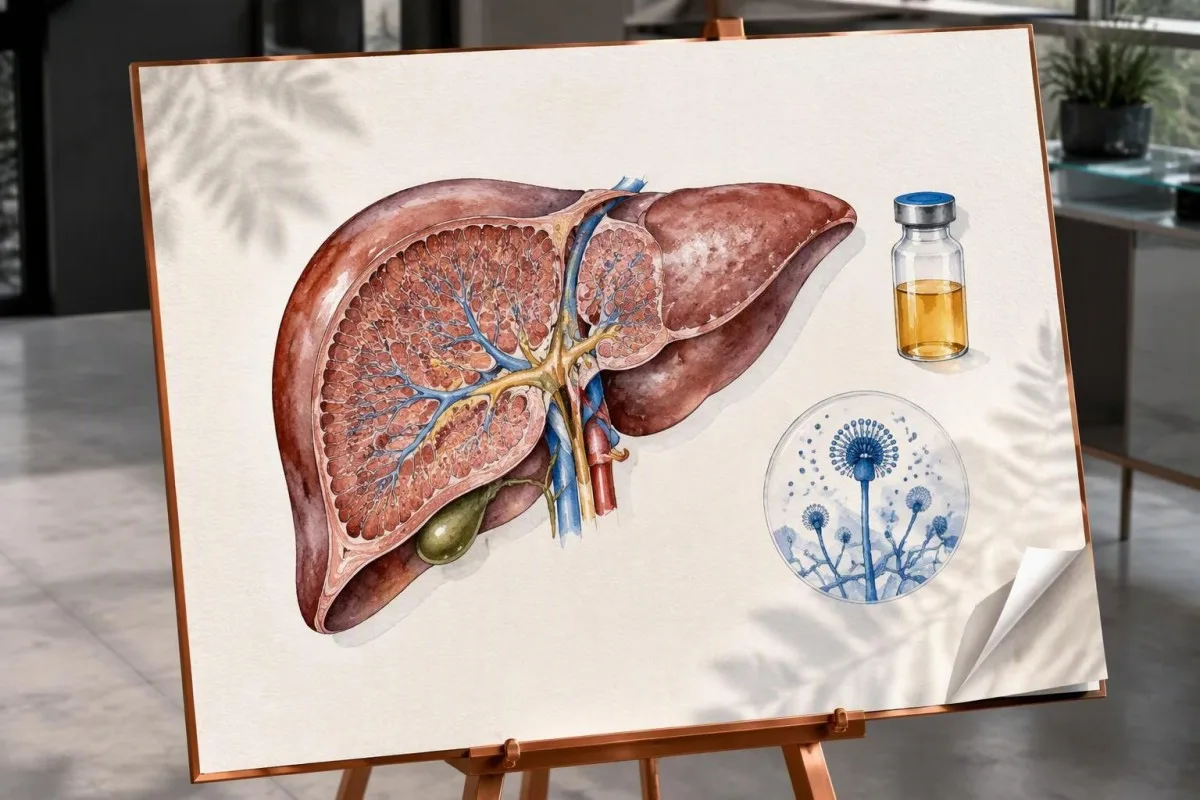
Product information recommends halving the usual maintenance dose in adults with mild-to-moderate cirrhosis, classified as Child–Pugh A or B, while retaining the standard loading regimen. That is prescribing guidance for clinicians, not a self-adjustment rule; severe hepatic impairment has less-established dosing evidence and needs specialist assessment.
Liver-test monitoring is generally recommended at least weekly during the first month, with frequency potentially reduced to monthly if results remain stable. The explicacion del panèl hepatic distinguishes injury markers from synthetic-function measures; ALT alone does not quantify the liver's capacity to clear voriconazole.
For example, ALT of 180 IU/L with a laboratory upper limit of 40 IU/L is 4.5 times that limit. Clinicians compare the change with baseline, bilirubin, ALP, symptoms and alternative causes; our Guia de seguiment d’ALT explains why a multiple of the upper limit is more informative than a raw number.
At Kantesti, we explain why a seemingly acceptable total concentration can still need context when albumin is markedly low. An albumin result of 22 g/L can affect drug binding, but there is no universally adopted albumin-correction formula for voriconazole; the guida d'interpretacion de las proteïnas sericas helps separate binding concerns from a diagnosis of cirrhosis.
Los problèmas de vision vòlon dire que lo val es tròp naut?
Visual disturbances are a recognised voriconazole effect and do not automatically mean the trough exceeds 5.5 mg/L. Temporary changes in brightness, colour perception or blurred vision can occur at otherwise acceptable exposure, whereas persistent visual loss, hallucinations or confusion require a different level of concern.

Clinical-trial information describes visual disturbances in approximately 30% of recipients, often occurring early in treatment and resolving within about 30 minutes. The frequency varies across populations and reporting methods, and the symptom alone cannot establish whether a result of 2 mg/L or 6 mg/L is responsible.
Repeated brief brightness changes soon after a dose differ from continuous loss of vision throughout the day. A pre-dose trough may not capture the maximum post-dose concentration associated with an episode; write down when symptoms start, how long they last and whether both eyes are affected.
New hallucinations, marked confusion or worsening visual impairment warrant prompt medical assessment, especially alongside a high concentration. Sudden loss of vision, severe eye pain or a new neurological deficit requires urgent evaluation regardless of the trough; do not wait 4–7 days for routine repeat monitoring.
For treatment continuing beyond 28 days, product information recommends monitoring visual function, including acuity, visual fields and colour perception. Formal eye-function testing illustrates some of these assessments, although voriconazole symptoms do not by themselves diagnose glaucoma; avoid driving while vision is affected.
Quand un taus naut de voriconazole necessita una atencion urgenta?
A trough above approximately 5–6 mg/L raises concern for excessive exposure, particularly when accompanied by confusion, hallucinations or worsening liver tests. Urgency depends on symptoms and organ effects, not a universal critical concentration; serious adverse effects can also occur below this numerical boundary.

A hypothetical trough of 7.2 mg/L with new hallucinations needs prompt contact with the prescribing team rather than a routine appointment weeks later. The team may change or temporarily interrupt treatment, but the patient should not independently halve the dose, skip repeated doses or wait for an AI explanation.
Fainting, sustained palpitations, seizures, severe confusion, a serious rash or jaundice with systemic illness warrant urgent assessment. Voriconazole can prolong the QT interval, and low potassium or magnesium adds risk; an electrolyte panel safety review addresses hazards that the antifungal concentration does not measure.
Kidney function affects the intravenous formulation differently from the active antifungal's liver metabolism. The cyclodextrin vehicle can accumulate when creatinine clearance is below 50 mL/min, prompting a route-specific risk–benefit review; a normal voriconazole trough cannot establish that the intravenous vehicle is harmless.
Long courses introduce problems not reliably predicted by a single trough, including photosensitivity and fluoride-associated periostitis. New persistent bone pain during a hypothetical 6-month course deserves review even at 3 mg/L, and sun-protection advice remains relevant when the drug concentration falls within the intended treatment window.
Lo taus pòt èsser terapeutic mentre que l’infeccion s’agreuja?
Yes—a therapeutic voriconazole trough does not guarantee treatment success because fungal resistance, an incorrect diagnosis, inadequate source control or profound immunosuppression can overcome adequate exposure. A result of 3 mg/L confirms neither fungal susceptibility nor sufficient drug delivery to every affected site.

The organism's minimum inhibitory concentration, or MIC, helps describe how much drug inhibits growth under laboratory conditions. If the fungal MIC is 2 mg/L rather than 0.25 mg/L, the same trough has a different exposure-to-susceptibility relationship; a trough-to-MIC ratio is not a self-dosing calculator.
Clinicians review imaging, cultures, susceptibility testing and relevant fungal markers alongside the concentration. A galactomannan result interpretation can clarify another piece of the assessment, but neither one positive marker nor one therapeutic trough independently proves active aspergillosis or its resolution.
Voriconazole lacks reliable activity against Mucorales, the fungi responsible for mucormycosis. A trough of 4 mg/L therefore cannot solve a mismatch between the medicine and the organism; persistent deterioration may require diagnostic reassessment and a different antifungal strategy rather than progressively increasing exposure.
Early imaging changes are also not always equivalent to failure because inflammatory responses can change as immune function recovers. Nonetheless, worsening breathing, new neurological symptoms or fever during severe neutropenia needs prompt clinical assessment; the infection team decides whether a 1-week trend reflects expected evolution or an inadequate treatment plan.
Quand cal repetir lo val?
Voriconazole monitoring is commonly repeated after a dose change, a major interaction change, altered liver function, a route change or suspected treatment failure. A routine reassessment often occurs within 4–7 days, but concerning neurological symptoms or liver deterioration justify earlier clinical action rather than waiting for steady exposure.
Two concentrations are meaningfully comparable only when the dosing interval and collection conditions are documented. A change from 1.1 mg/L to 3.4 mg/L may represent improved exposure, but it may instead compare a delayed trough with a post-dose sample; the size of the difference cannot correct a timing error.
Changing from intravenous to oral treatment can alter exposure even when the intended prescription seems equivalent. Clinicians may repeat the level after the switch, especially if eating, vomiting or tube feeding has changed; the route belongs beside the concentration in the monitoring record, not only in the medication history.
Kantesti es un Outil d’analisi de sang amb IA that can help organise uploaded drug levels alongside liver-test trends and reported dose times. Our medication-safety trend workflow supports preparation for review, but a rise from 2 mg/L to 6 mg/L still requires clinician-led interpretation and treatment decisions.
Stable treatment does not create one universal long-term testing interval. The team balances infection risk, treatment duration, prior variability and access to testing; keep a record of at least the previous dose time, collection time, current prescription, formulation and medication changes so the next result answers a usable question.
Qué deuriatz portar a la consulta de seguiment, e qu’es çò que sosten aquel conselh?
Bring the actual dose and collection times, the prescribed treatment goal, recent liver results and a complete medication list to your voriconazole review. Ask whether a result such as 1.4 mg/L meets your specific indication—not whether it fits a single internet range—and do not adjust the prescription yourself.
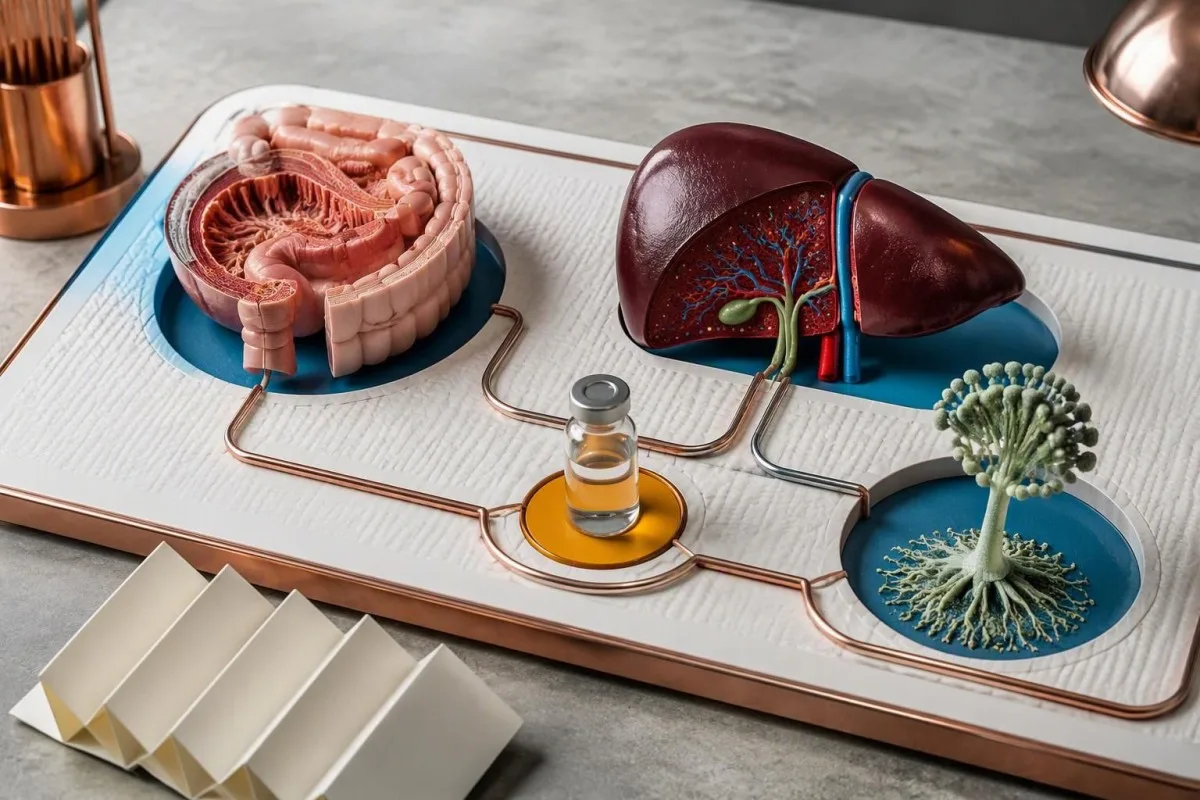
A practical review has three questions: was the sample a true trough, is exposure appropriate for this infection or prevention plan, and are there adverse effects or interactions? Include missed doses and meal timing honestly; a 12-hour prescription does not mean every dose was actually separated by 12 hours.
The clinical recommendations here draw on the 2016 IDSA aspergillosis guideline, the 2014 British Society for Medical Mycology monitoring guideline and the 2017 CPIC voriconazole guideline. These sources address different questions—clinical treatment, concentration monitoring and pharmacogenetics—so their recommendations should be combined thoughtfully rather than presented as one identical range.
Kantesti Ltd's role is to help readers understand laboratory information, not to prescribe antifungal treatment. Our organisation and purpose are described separately; technical evaluation on 100,000 synthetic cases cannot establish that a particular voriconazole dose improves clinical outcomes in a patient with invasive fungal disease.
The two research publications listed below describe an automated technical benchmark and a clinical-validation framework, not a voriconazole therapeutic-monitoring trial. Our validation methodology and limits explain that distinction; use our interpretation to prepare questions, while your infection specialist or prescribing team determines the dose and follow-up plan.
Preguntes més freqüents
Quin es lo nivèl normal de voriconazòl abans la presa seguenta ?
Voriconazole does not have a healthy-population 'normal' concentration; it has a therapeutic exposure target. Many treatment protocols use approximately 1–5.5 mg/L, while IDSA guidance discusses a minimum above 1–1.5 mg/L and an upper boundary below 5–6 mg/L. Severe disease, fungal susceptibility and prevention protocols can change the intended target. Your prescribing team should interpret the result using the actual collection time and clinical indication.
Quant de temps abans de ma dòsi cal efectuar un nivèl de voriconazòl ?
Un taus de voriconazole es generalament recampat immediatament abans de la dòsi seguenta prevista, sovent dins los 30 minuts, segon las instruccions del laboratòri local. Per una dòsi a 8 h del matin, un recampament a 7 h 45 del matin, abans de prene lo medicament, seriá generalament apropiat. Prendre la dòsi abans pòt donar un resultat postdòsi que deuriá pas èsser comparat dirèctament amb los objectius de taus résidual. Organizatz lo plan de recampament amb l’equipa puslèu que de retardar la dòsi de qualques oras sens instruccions.
0 Què significa un nivell baix de voriconazòl?
0 Un taus de voriconazòl inferior a 1 mg/L es inferior a fòrça objectius terapeutics, mas aquò prova pas que la dòsi prescricha siá tròp febla. Dòsis doblidadas, un prélèvement efectuat tard, los efièches dels aliments, los vòmis, una absorpcion alterada e los medicaments inductors d’enzims pòdon totes explicar una exposicion febla. Lo voriconazòl per via orala se pren generalament almens 1 ora abans o aprèp un repais, en seguint las instruccions del produch. Contactatz l’equipa prescriptora per una reavaloracion, puslèu que d’aumentar la dòsi vosautres meteisses.
0 Are los resultats del voriconazòl en mg/L e µg/mL los meteisses?
0) Las concentracions de voriconazòl en mg/L e µg/mL an la meteissa valor numerica. Un resultat de 2 mg/L es exactament 2 µg/mL, çò que correspond tanben a 2 000 ng/mL. Los laboratòris pòdon utilizar d’unitats e d’intervalles objectius diferents; verificatz doncas los dos abans de comparar los rapòrts. Aquesta conversion d’unitats corregís pas un prélèvement efectuat al moment incorrècte.
Una vision borróla o d’alucinacions significan una toxicitat al voriconazòl ?
0 Las alteracions visualas brèvas pòdon se produire amb lo voriconazòl quitament quand la concentracion résiduala se tròba dins l’interval previst, mentre que las allucinacions o la confusion fan mai suspectar una exposicion excessiva o un autre problèma medical. L’informacion del produch descriu d’alteracions visualas en aproximativament 30% dels receptors, que se resolvon sovent en unes 30 minutas. De novèlas allucinacions, una alteracion persistenta o un agravament dels simptòmas necessitan de contactar rapidament l’equipa que prescriu lo tractament; una pèrda subita de la vision o de simptòmas neurologics grèus requerisson una avaloracion d’urgéncia. Condugatz pas mentre que vòstra vision es afectada e ajustetz pas vosautres meteisses la dòsi de l’antifongic.
0 Quand cal cal verificar tornarmai los nivèls de voriconazole aprèp un cambiament de dòsi?
Un nivèl d’aval de voriconazòl es sovent tornat verificar dins los 4–7 jorns après un cambiament de dòsi, segon lo regim, las dòsis de carga e lo protocòl local. Un testatge mai precoç o una accion clinica pòdon èsser necessaris en cas de sospècha de toxicitat, de modificacion de la foncion epatica o d’interaccions farmacologicas importantas. Lo metabolisme non lineari significa qu’un aument de dòsi de 25% garantís pas sonque un aument de concentracion de 25%. L’equipa que prescriu deu fixar la data del testatge de contraròtle e interpretar lo resultat abans de far d’autres cambiaments.
Fasètz-vos explicar los resultats analisi de sang
Telecargatz vòstre compte rendut de laboratòri e l’IA de Kantesti explica cada biomarcador en lenga simpla en qualques segondas. Utilizat per mai de 2 milions de personas dins lo mond.
Referéncias
- Klein, T., Mitchell, S., & Weber, H. (2026). Un benchmark tècnic automatitzat preregistrat basat en rúbriques de l’Kantesti Motor d’Interpretació de la Prova de Sang en 100.000 casos de prova sintètics. Recèrca medicala per IA de Kantesti. DOI
- Klein, T., Mitchell, S., & Weber, H. (2026). Quadre de validacion clinica v2.0 (Pagina de validacion medica). Recèrca medicala per IA de Kantesti. DOI
- Patterson TF et al. (2016). Directivas de practica pel diagnostic e la presa en carga de l’aspergillòsi: actualizacion de 2016 de l’Infectious Diseases Society of America. Clinical Infectious Diseases. DOI
- Ashbee HR et al. (2014). Therapeutic drug monitoring (TDM) of antifungal agents: guidelines from the British Society for Medical Mycology. Journal of Antimicrobial Chemotherapy. DOI
- Moriyama B et al. (2017). Clinical Pharmacogenetics Implementation Consortium (CPIC) Guidelines for CYP2C19 and Voriconazole Therapy. Clinical Pharmacology & Therapeutics. DOI
- 2M+Tèsts analisats
- 127+Païses
- 100+Lengas
A prepaus de l’equipa medicala


Senhals de confiança E-E-A-T
Experiéncia
Revisión clinica menada pel metge de las practicas d’interpretacion de las analisis.
Expertisa
Fòcus sus la medicina de laboratòri sus cossí los biomarcadors se comportan dins un contèxte clinic.
Autoritat
Revisat medicalament pel Dr Thomas Klein, amb de contribucions de la Dr Sarah Mitchell e del Prof. Dr Hans Weber.
Fisança
Interpretacion basada sus d’evidéncias amb de camins de seguiment clars per reduzir l’alarmisme.


Avís medical
Aqueste article es solament per tòcas educatius e constituís pas de conselh medical. Consultatz totjorn un professional de la sant qualificat per las decisions de diagnostica e de tractament.
Publicat · Contactar l’equipa editoriala
Publicat per Kantesti Ltd, enregistrada en Anglatèrra e País de Galas, n° d’entrepresa. 17090423, Londres, Reialme Unit.
