Un taus de salicilat pòt pas establir la seguretat a el sol: los clinicians l’interprètan en foncion dels simptòmas, del pH sanguin, de la foncion renala e de mesuras repetidas. Un resultat bas precòç pòt passar per naut l’absorpcion retardada de l’aspirina, mentre que la toxicitat cronica pòt èsser grèva a de concentracions mai bassas. Una intoxicacion sospichada necessita una avaloracion immediata — esperetz pas los resultats del laboratòri.

Punts essencials
- Avaloracion immediata es necessària en cas d’intoxicacion sospichada a l’aspirina; apelatz los servicis d’urgéncia en cas de confusion, de convulsions, de pèrda de consciéncia o de dificultat respiratòria, puslèu que d’esperar un resultat.
- Interval terapèutic del salicilat s’espandís sovent d’aperaquí 10–30 mg/dL, segon l’indicacion e las convencions del laboratòri; aquò garantís pas l’abséncia de toxicitat.
- Conversió d’unitats compta: 30 mg/dL correspondon a 300 mg/L e a aperaquí 2.17 mmol/L.
- Resultats bas precòces pòdon pas exclure una intoxicacion, perque l’aspirina gastroresistenta e las ingestions importantas pòdon provocar de pics de concentracion retardats, de còps al delà de 12–24 oras.
- Mesuras serialas son comunament repetidas aperaquí cada 2 oras al començament, amb un interval adaptat als simptòmas, a la forma farmaceutica e al tractament.
- Toxicitat cronica pòt justificar de considerar la dialisi cap als 40 mg/dL quand i a manifestacions neurologicas o pulmonaras importantas.
- Estat acidobasic pòt revelar un dangièr malgrat un pH gaireben normal; un bicarbonat de 12 mmol/L amb una pression de dioxid de carbòni de 20 mmHg pòt produsir un pH pròche de 7.40.
- Sulhals de dialisi inclutz una concentracion superiora a 100 mg/dL, o superiora a 90 mg/dL amb una foncion renala alterada, segon las recomandacions EXTRIP; de simptòmas grèus pòdon justificar un tractament en dejós d’aquestes chifras.
Quand una intoxicacion sospichada a l’aspirina necessita una presa en carga immediata
Una intoxicacion sospichada als salicilats exigís una avaloracion immediata, quitament abans que lo taus de salicilat siá disponible. Una respiracion novèla e rapida, de vòmis repetits, de brunziment dins las aurelhas o de confusion aprèp una exposicion a l’aspirina devon menar a demandar d’avís urgent al servici d’informacion toxicologica o als servicis d’urgéncia; una dificultat respiratòria grèva, de convulsions o un esvaniment requerisson de contactar immediatament los servicis d’urgéncia.
Un resultat es pas qu’una part d’una avaloracion d’urgéncia. Al Reialme Unit, apelatz lo 999 o lo 112 pels simptòmas grèus; als Estats Units, apelatz 911, o Poison Control al 1-800-222-1222 per obténer immediatament de conselhs sus l’exposicion quand la persona es establa.
Portatz l’embalatge del medicament, la quantitat aproximativa, la forma farmaceutica e l’ora d’ingestion possibla la mai anciana. Un sol produch pòt conténer mai d’un analgèsic, çò que explica perqué los clinicians demandan de còps una avaloracion de la concentracion d’acetaminofèn en mai del dòsatge dels salicilats, puslèu que de supausar que cada comprimit conten pas que d’aspirina.
Indusiscatz pas lo vòmit, donetz pas de carbon activat a l’ostal e ensajetz pas de corregir l’aciditat amb de bicarbonat de sòdi. Mentre que organizatz la presa en carga, evitatz tota autra aspirina o tot autre produch que conten de salicilats; se la persona ven somnolenta, li donetz pas res per boca, perque pòt èsser vengut perilhós d’empassar.
Kantesti es un Analizador de tèst de sang d'IA que pòt ajudar a explicar un compte rendut de laboratòri ja disponible, mas que non es pas un servici d’urgéncia per las intoxicacions. Un compte rendut que mòstra 15 mg/dL pòt pas establir que la situacion es sens dangièr quand l’ora d’ingestion es incèrta, que los simptòmas evoluïsson o que lo primièr prélèvement es estat fach abans que l’absorpcion siá acabada.
Çò que mesura un taus de salicilat e quinas unitats comptan
Lo taus de salicilat mesura la concentracion de salicilat dins lo sèrum o lo plasma, generalament en mg/dL, mg/L o mmol/L. Los intervals terapeutics de laboratòri cobrisson comunament aperaquí 10–30 mg/dL, mas lo tractament visat, lo moment del dòsatge e los simptòmas determinan se un resultat donat es acceptable.
Un mg/dL equival a 10 mg/L. Pel salicilat, 1 mg/dL equival tanben aproximativament a 0.0724 mmol/L; atal, un resultat de 30 mg/dL correspond a 300 mg/L o 2.17 mmol/L; confondre mg/L amb mg/dL provòca una error d’interpretacion d’un factor de dètz.
Un interval terapeutic de salicilat es una referéncia de tractament, pas una exigéncia fisiologica normala. Las referéncias analgesicas pòdon utilizar aproximativament 10–20 mg/dL, mentre que lo contraròtle istoric dels tractaments antiinflamatòris utiliza sovent 15–30 mg/dL; l’aspirina a dòsi febla per inhibir las plaquetas a pas besonh d’aténher aquelas concentracions.
Lo senhalament del laboratòri pòt pas, a el sol, evaluar la gravitat de l’intoxicacion. Un adulte mai vièlh simptomatic amb 35 mg/dL pòt aver besonh d’una intervencion mai urgenta qu’una persona clinicament establa amb una exposicion aguda a la meteissa concentracion; nòstra explicacion de banderes de laboratori fora de rang separates reference intervals from decision thresholds.
For a clearly hypothetical comparison, 280 mg/L and 28 mg/dL describe exactly the same concentration. Neither value answers whether the level is rising, whether the blood is becoming more acidic or whether neurological symptoms have appeared—those questions require time-stamped results and bedside assessment.
| Nivèl | Interval | Significacion |
|---|---|---|
| Common treatment reference | Approximately 10–30 mg/dL | Indication-dependent therapeutic interval, not a poisoning clearance threshold; toxicity can occur within or near this interval. |
| Potentially toxic concentration | 30–50 mg/dL | Requires assessment of symptoms, exposure pattern, pH and serial results; chronic toxicity may be clinically significant. |
| Substantial toxic exposure | 50–100 mg/dL | Urgent monitored assessment is needed; serious toxicity and dialysis indications can occur below 100 mg/dL. |
| EXTRIP concentration indication | >100 mg/dL | EXTRIP recommends extracorporeal treatment; the concentration threshold is lower with impaired kidney function. |
Perqué un resultat bas precòç de salicilat pòt èsser enganaire
An early low salicylate level can be misleading because aspirin may still be in the stomach or intestine rather than fully absorbed. Enteric-coated tablets, large ingestions, slowed gastric emptying and tablet concretions can delay the peak, sometimes beyond 12–24 hours.
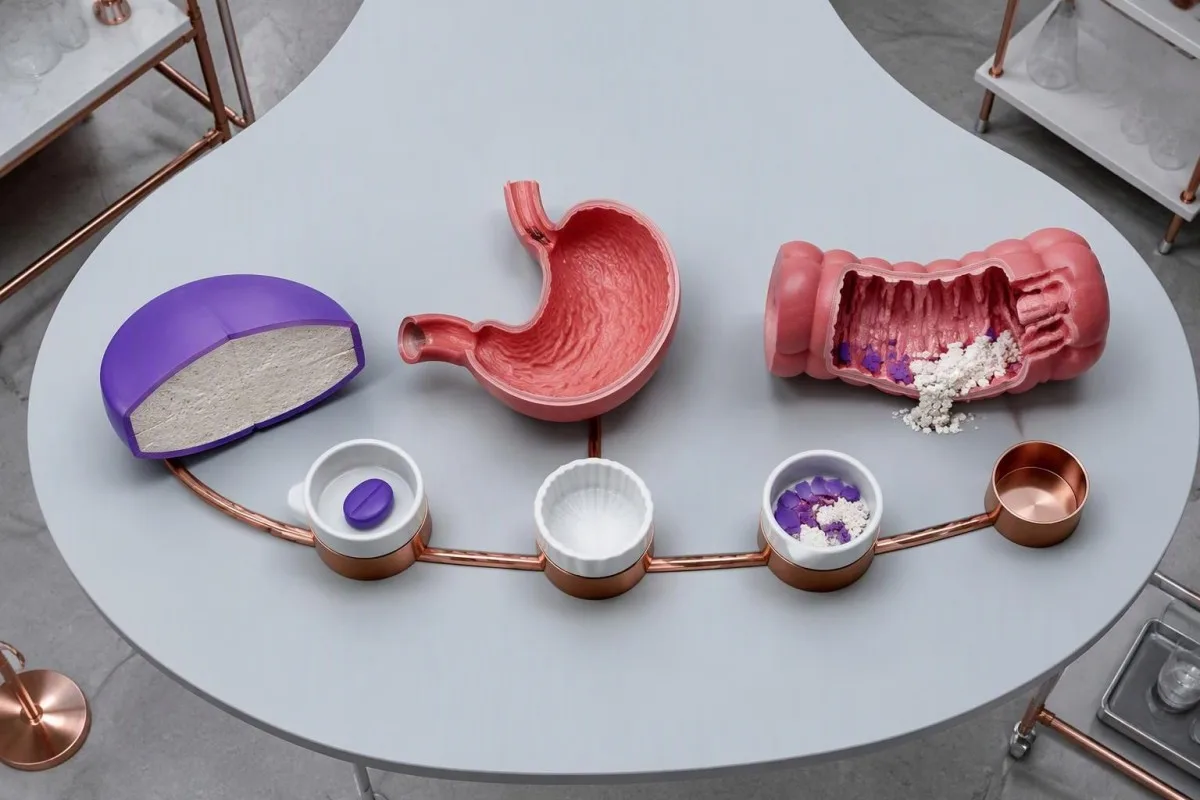
The first sample should be collected promptly, not postponed until an assumed peak time. Clinicians then repeat it according to the exposure; a result collected 1 hour after ingestion is a starting measurement, not evidence that the full dose has already entered the circulation.
Enteric coatings are designed to resist dissolution in the stomach, but overdose absorption is less predictable than ordinary dosing. Other medicines can also slow gut movement; the same need to understand formulation appears in our guide to delayed carbamazepine absorption, although its interpretation rules are different.
Consider a hypothetical sequence: 8 mg/dL at 1 hour, 24 mg/dL at 3 hours and 46 mg/dL at 5 hours. The first result was genuinely low, yet its reassuring appearance disappeared as absorption continued; treatment decisions should not depend on that isolated early number.
There is no universal 4-hour salicylate result that clears every aspirin exposure. The American College of Medical Toxicology recommends serial concentrations until they are clearly declining and ongoing absorption has been excluded; clinical deterioration still overrides an apparently favorable trend (ACMT, 2015).
Cossí lo subredòs agut d’aspirina diferís de la toxicitat cronica
Acute aspirin overdose follows a discrete large exposure, while chronic salicylate toxicity develops through repeated dosing and accumulation. Chronic toxicity often causes serious illness at lower measured concentrations because the circulating level does not fully represent salicylate already distributed into tissues.
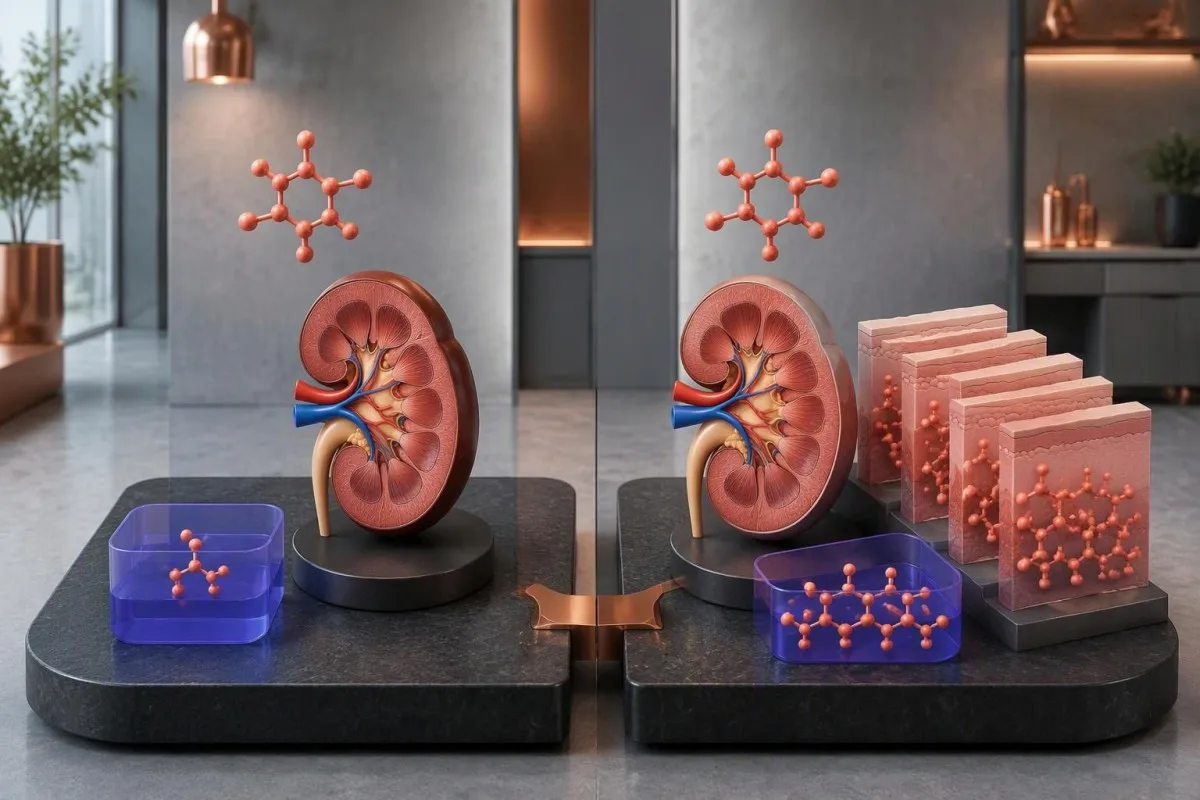
An acute-on-chronic exposure combines both patterns: a person already taking salicylates receives an additional excessive dose. A concentration of 45 mg/dL cannot be assigned the same risk in all three situations, so clinicians ask about medication use over preceding days as well as the most recent dose.
Older adults are particularly vulnerable when dehydration, fever or impaired kidney function reduces clearance. Aspirin-containing pain products may be overlooked during a medicine review; our guide to los efèits dels medicaments sus los ancians explains why nonprescription products belong on the same list as prescribed treatment.
Salicylate binding to albumin becomes saturated as concentrations increase, allowing a larger unbound fraction to circulate. Low albumin can further complicate interpretation; albumin and protein binding provide context, but there is no routinely accepted albumin-correction equation that makes a salicylate result safe.
At Kantesti, we distinguish concentration from clinical severity rather than presenting 40 mg/dL as a universal dividing line. ACMT guidance specifically describes significant chronic toxicity around this concentration as a situation where dialysis may deserve consideration, particularly with central nervous system abnormalities or lung involvement (ACMT, 2015).
Quins simptòmas de subredòs d’aspirina càmbian l’interpretacion
Aspirin overdose symptoms commonly include tinnitus, nausea, vomiting, sweating and unusually fast or deep breathing. Confusion, agitation, reduced alertness, seizures, high temperature or worsening oxygen requirements indicate more serious toxicity and can justify urgent treatment even without a very high salicylate level.
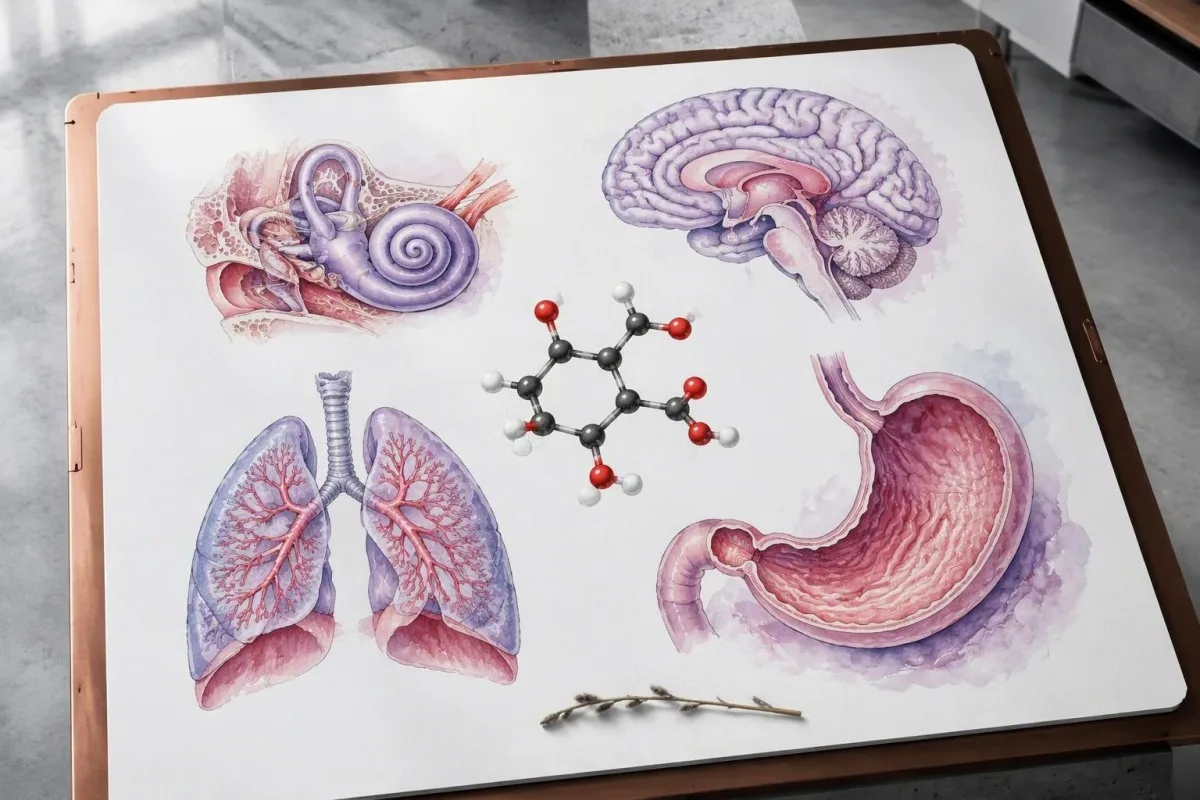
Tinnitus is a useful clue, but its absence does not exclude poisoning. A child, a person with hearing impairment or an adult becoming confused may not report ringing ears reliably; a salicylate level of 32 mg/dL therefore cannot be dismissed solely because tinnitus is absent.
Rapid breathing is partly a direct stimulation of the respiratory center and partly a response to metabolic disturbance. Do not assume it is anxiety, and do not use a paper bag to slow breathing; retaining carbon dioxide can lower blood pH and increase movement of salicylate into the brain.
Normal pulse oximetry does not rule out the metabolic effects of salicylates. Carbon monoxide exposure can also be missed by ordinary oxygen readings, but requires a different test; our carbon monoxide testing explanation helps distinguish two situations where a reassuring oxygen display can be incomplete.
A hypothetical patient with 38 mg/dL, new confusion and a respiratory rate of 32 breaths per minute needs urgent reassessment, not a label of mild poisoning. The combination suggests systemic and neurological involvement, whereas the concentration alone cannot identify tissue exposure or explain why consciousness has changed.
Cossí lo pH sanguin e lo bicarbonat revelan la toxicitat del salicilat
Salicylate toxicity classically causes respiratory alkalosis together with metabolic acidosis. A near-normal blood pH can hide these opposing abnormalities, so clinicians inspect bicarbonate, carbon dioxide pressure and the anion gap rather than reading pH as a standalone safety check.
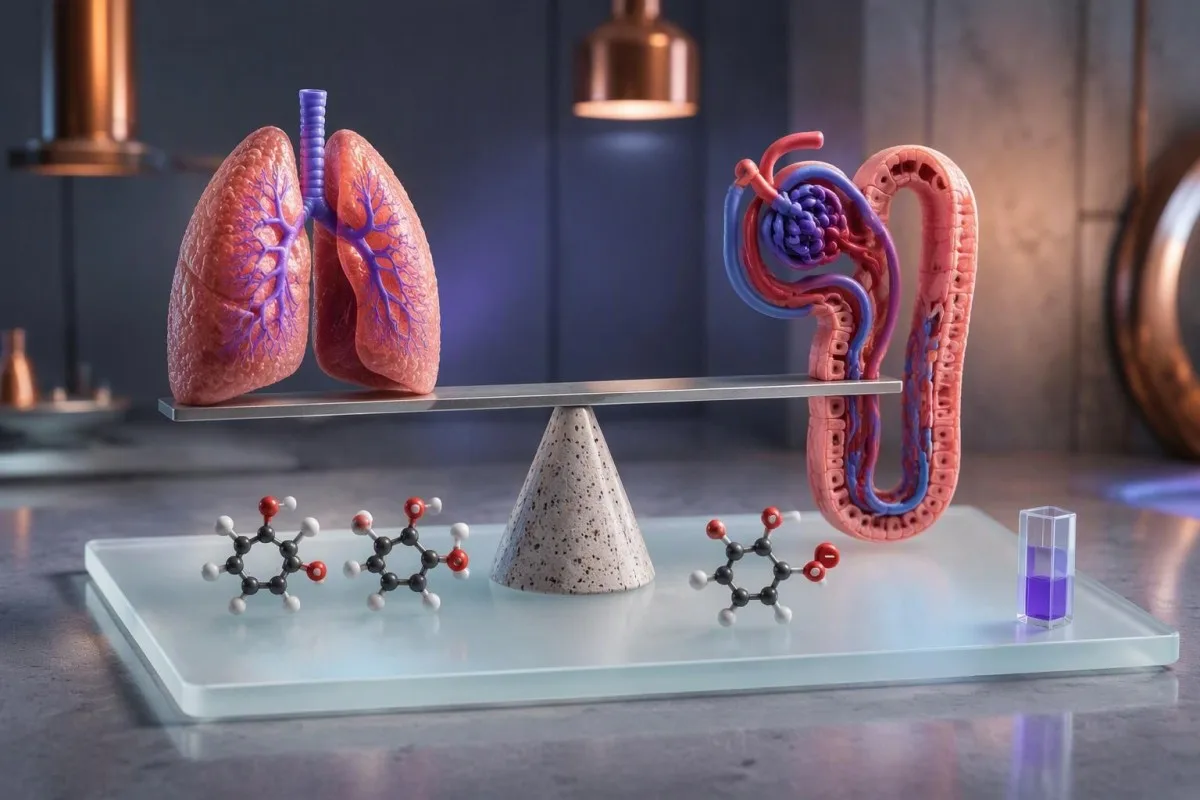
Respiratory alkalosis means carbon dioxide has fallen through increased ventilation; metabolic acidosis means bicarbonate is reduced by accumulating acids. Our arterial gas interpretation guide explains these components, but salicylate poisoning requires their interpretation alongside exposure history and serial drug measurements.
For a hypothetical arterial gas, bicarbonate of 16 mmol/L and PaCO2 of 22 mmHg yield a pH near 7.48. Winter's formula predicts a compensatory PaCO2 of approximately 32 ± 2 mmHg, so 22 mmHg indicates an additional respiratory alkalosis rather than compensation alone.
A pH near 7.40 can still be concerning when bicarbonate is 12 mmol/L and PaCO2 is 20 mmHg. These two major abnormalities nearly cancel numerically; the resulting pH does not mean the underlying metabolic disturbance is small or that treatment can wait.
Acidemia increases the proportion of uncharged salicylic acid, which enters tissues more readily. EXTRIP suggests dialysis for severe acidemia at pH 7.20 or below even without another indication; laboratory interference can also falsely elevate chloride, making a normal-looking anion gap unreliable in some assays (EXTRIP Workgroup, 2015).
Çò que significan de taus serials de salicilat en aumentacion o en diminucion
Rising serial salicylate levels suggest ongoing absorption or inadequate elimination; falling levels are reassuring only when symptoms and acid–base status also improve. Clinicians commonly repeat concentrations about every 2 hours initially, adjusting the interval for severity, formulation and treatment response.
Serial measurements should include the collection time, not just the time a result appeared online. A pair of concentrations reported together may have been collected 3 hours apart; clinicians also need to know whether bicarbonate, charcoal or dialysis began between those samples.
A declining serum concentration does not always mean salicylate is leaving the body safely. If blood pH falls, salicylate can move from the circulation into tissues; ACMT warns that clinical deterioration despite falling concentrations is an ominous pattern requiring reassessment (ACMT, 2015).
A hypothetical decline from 62 to 48 mg/dL over 2 hours is not reassuring if pH falls from 7.46 to 7.28 and confusion appears. For comparison, digoxin sampling and toxicity also require clinical context, but its distribution timing must not be substituted for aspirin rules.
Kantesti es un plataforma d’interpretacion d’analisi de sang d’AI that can explain recorded trends, not a bedside monitor that confirms poisoning resolution. Two uploaded results omit the patient's current ventilation, fluid balance and neurological examination; discharge decisions require clinicians to establish that absorption has ended and clinical abnormalities have resolved.
Quins autres tèsts de laboratòri los clinicians verifican
Clinicians usually check electrolytes, bicarbonate, kidney function, glucose and a blood gas alongside the salicylate level. Additional testing depends on the presentation, but these measurements identify impaired clearance, potassium depletion, acid–base changes and treatable metabolic problems that a salicylate concentration cannot show.
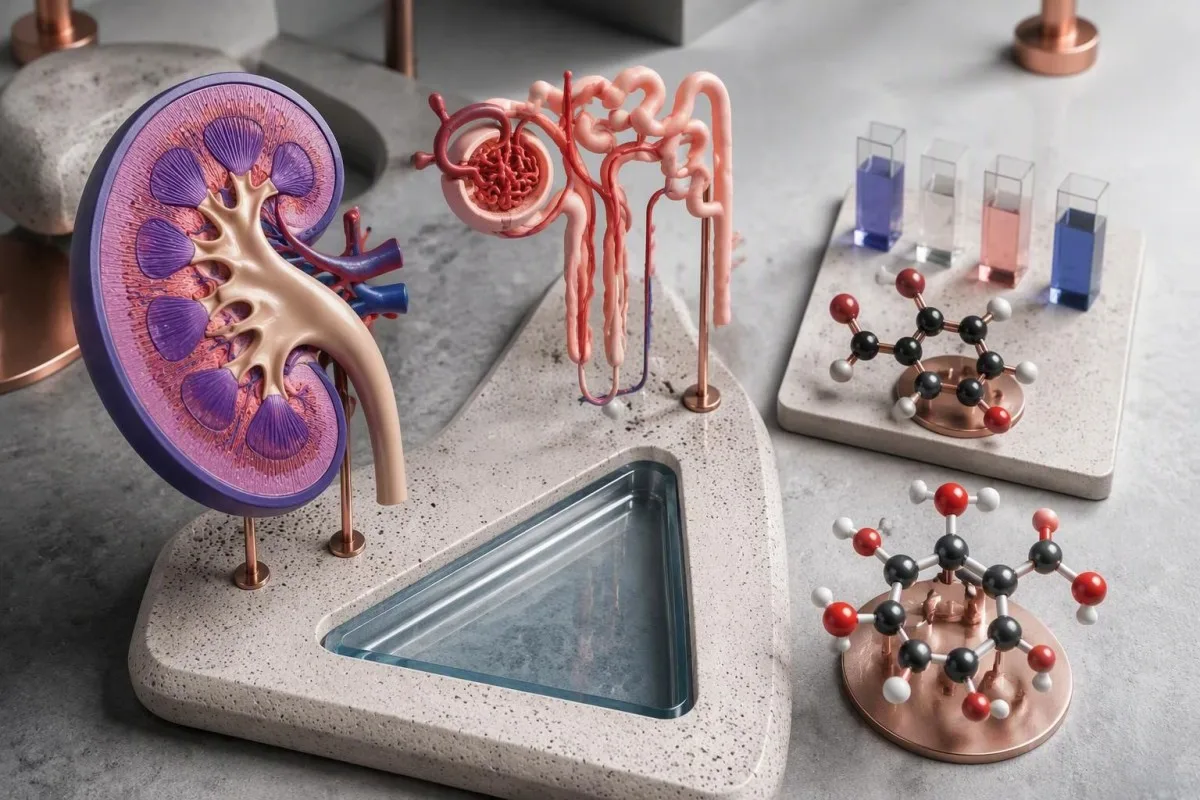
Potassium depletion can make urinary alkalinization difficult even when bicarbonate is being administered. A potassium result of 2.9 mmol/L therefore changes the treatment plan, not merely the list of abnormal flags; our explicacion del panèl d’electròlits covers the broader patterns clinicians evaluate.
An anion gap is commonly calculated as sodium minus chloride minus bicarbonate. With sodium 140, chloride 104 and bicarbonate 16 mmol/L, the gap is 20 mmol/L; local reference intervals, albumin and possible chloride-assay interference determine how strongly that finding supports metabolic acidosis.
Kidney impairment reduces salicylate elimination and can limit the ability to give fluids safely. The guida d'interpretacion BUN/creatinina explains hydration-related clues, but calculated eGFR is less dependable when creatinine is changing rapidly during an acute illness.
Glucose and lactate answer different questions: a normal serum glucose does not exclude inadequate glucose availability within the brain during salicylate toxicity. A lactate of 2.0 mmol/L also cannot rule out poisoning, and lactate collection limitations matter when a single result seems inconsistent with the clinical picture.
Quins medicaments e produches pòdon provocar una exposicion al salicilat
Salicylate exposure can come from aspirin, bismuth subsalicylate, combination pain products and methyl salicylate preparations. Clinicians ask about swallowed and topical products because the product strength, formulation, amount and route determine how an exposure should be assessed.
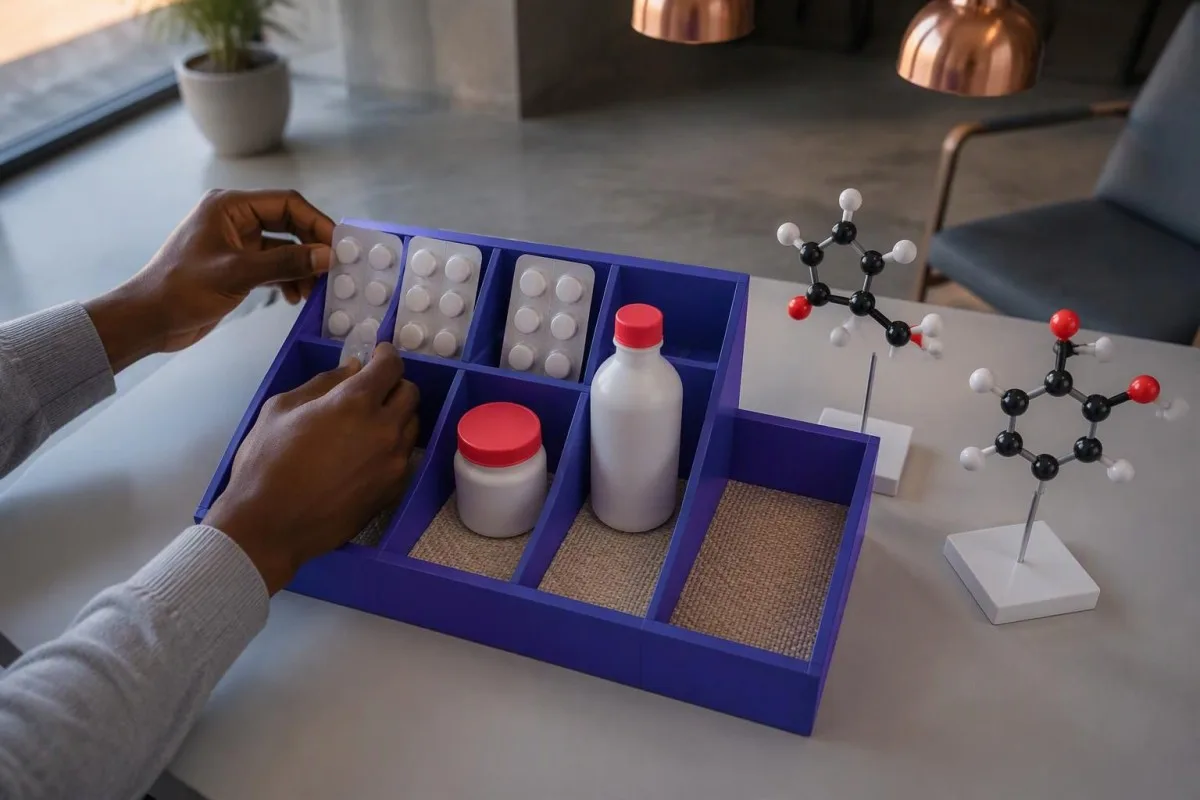
A tablet count is meaningless without tablet strength. An 81 mg aspirin tablet and a 325 mg tablet differ roughly fourfold in aspirin content; clinicians need the actual packaging rather than a description such as small tablets or regular painkillers.
Methyl salicylate is not interchangeable with ordinary aspirin tablets and can be highly concentrated in some liniments or oils. An uncertain swallowed amount needs immediate poison-service assessment; do not attempt to estimate safety by converting household teaspoons into aspirin equivalents.
Topical exposure also deserves attention when large areas are treated repeatedly, particularly under occlusive coverings or when the skin barrier is affected. A 2-day history of heavy application may matter more than a denial of aspirin tablet use, especially when unexplained rapid breathing or confusion develops.
Children need exposure-specific assessment, not adult cutoffs scaled casually by age. Our explanation of children's AI interpretation limits reinforces why an uncertain pediatric ingestion should go directly to a poison service or emergency team rather than an automated report review.
Perqué lo bicarbonat intravenós ajuda a eliminar lo salicilat
Intravenous sodium bicarbonate helps keep salicylate outside sensitive tissues and increases its elimination in urine. Treatment is hospital-based because clinicians must monitor blood pH, urinary pH, potassium, sodium, kidney function and fluid balance while adjusting the infusion.
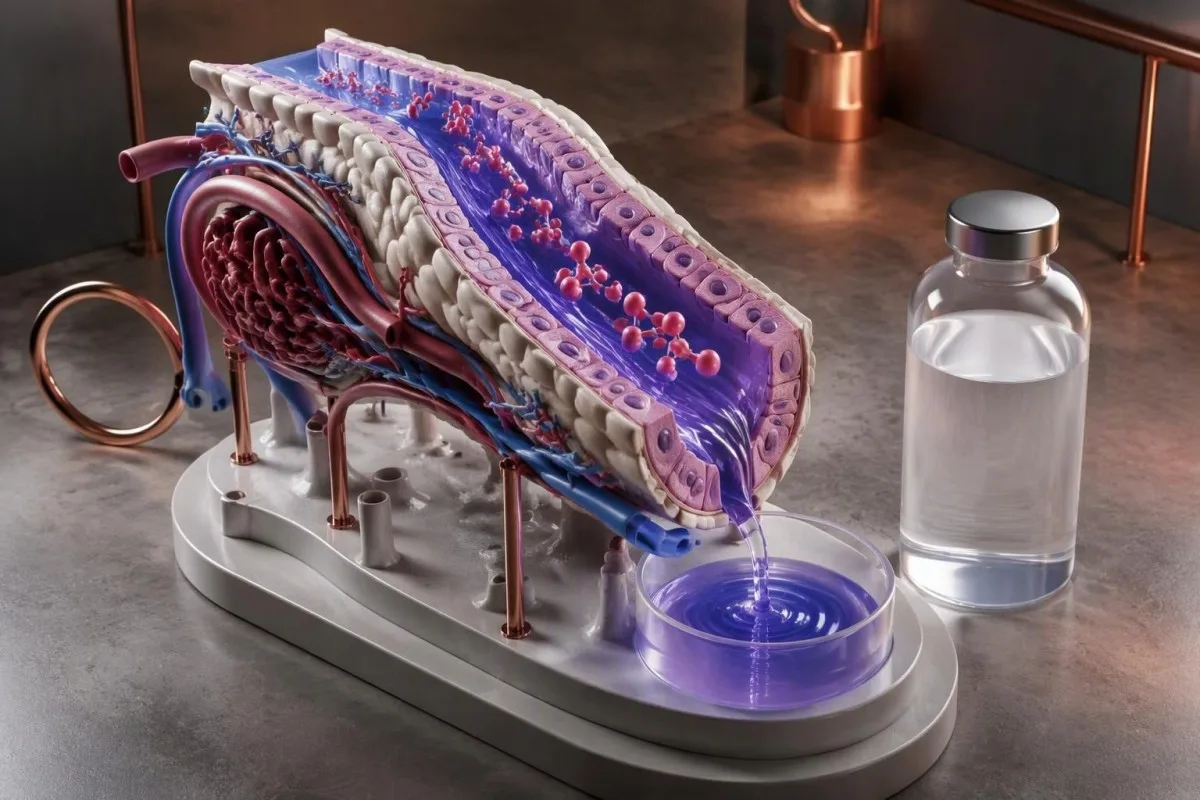
Urinary alkalinization works through ion trapping: salicylate becomes less able to move back across the renal tubule into circulation. ACMT describes a urine pH target of 7.5–8.0 and reports that effective alkalinization can increase urinary salicylate excretion more than tenfold (ACMT, 2015).
Blood and urine pH are separate treatment targets. Some hospital protocols aim for blood pH around 7.50–7.55, while adjusting for the patient's condition; a urine pH of 6.5 may show that bicarbonate treatment has not yet achieved the intended renal effect.
Low potassium encourages the kidneys to retain potassium at the expense of secreting hydrogen ions, keeping urine acidic. Clinicians therefore replace potassium when appropriate; urinary potassium interpretation explains renal handling, although urgent replacement decisions primarily use serum potassium and monitored clinical information.
A hypothetical patient with potassium 2.8 mmol/L and urine pH 6.2 may remain difficult to alkalinize despite bicarbonate administration. Heart failure, lung fluid accumulation or kidney impairment can also restrict treatment; escalating the infusion indefinitely is not a substitute for assessing whether dialysis is needed.
Cossí lo carbon activat, los fluids e la glucòsa s’intègran al tractament
Treatment may include activated charcoal, carefully managed intravenous fluids and glucose support, depending on the exposure and clinical condition. These measures complement alkalinization or dialysis; charcoal reduces gastrointestinal absorption but does not remove salicylate that has already entered the circulation.
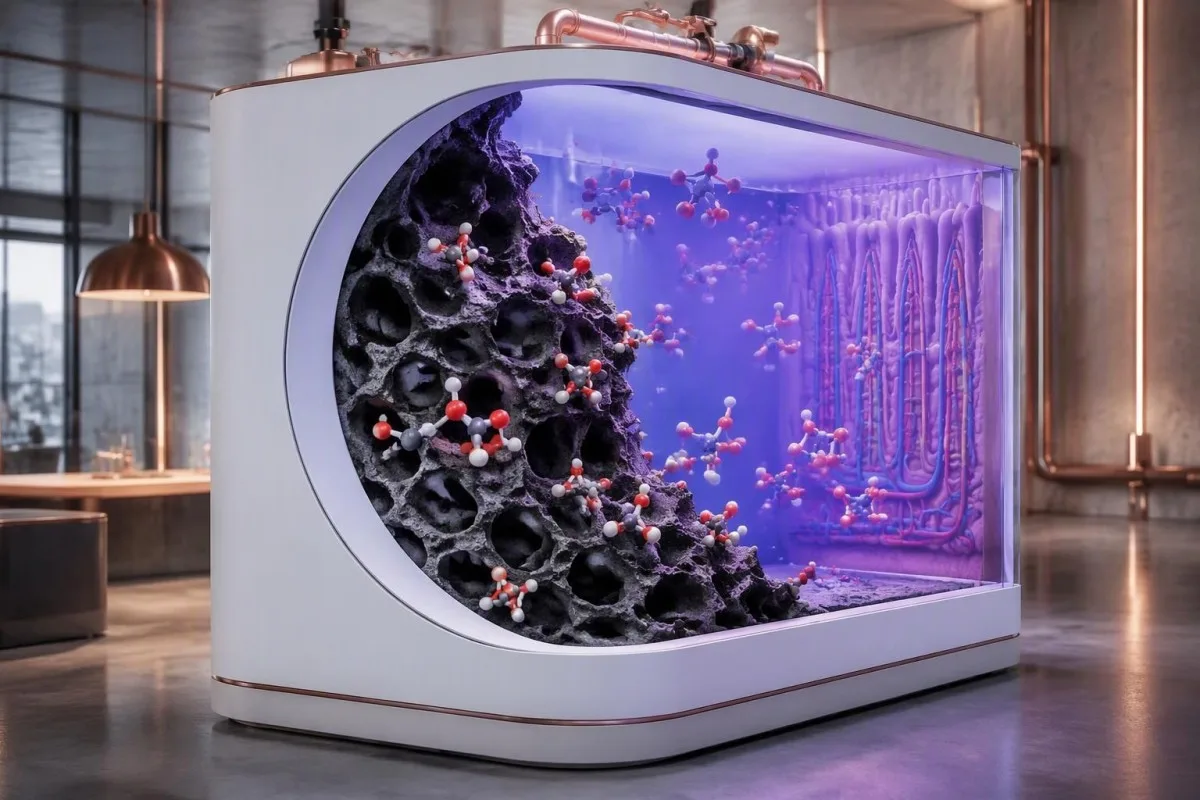
Activated charcoal is usually most useful early, but delayed absorption can create a later treatment opportunity after some aspirin exposures. A presentation beyond 1 hour does not automatically settle the question; clinicians weigh formulation, ongoing absorption, vomiting and the patient's ability to protect their airway.
Repeat-dose charcoal is not a universal requirement for salicylate poisoning. ACMT describes the evidence as mixed and advises weighing potential benefit against aspiration risk; a drowsy patient with 55 mg/dL cannot safely receive home charcoal simply because the concentration is elevated (ACMT, 2015).
Dextrose may be appropriate for neurological symptoms even when serum glucose looks normal, because central nervous system glucose availability can be inadequate. Ordinary causas de glicèmia bassa provide useful background, but a result of 100 mg/dL does not exclude this particular salicylate-related concern.
Airway management needs specialist planning because suppressing compensatory hyperventilation can rapidly lower pH. A patient maintaining PaCO2 at 20 mmHg may deteriorate if ventilation falls after sedation; necessary intubation should preserve adequate ventilation and acid–base control rather than being delayed when the airway is failing.
Quand la toxicitat del salicilat necessita una emodialisi
Hemodialysis is indicated when salicylate poisoning is severe, standard treatment is failing or specific concentration thresholds are exceeded. Altered mental status, new hypoxemia requiring supplemental oxygen and failure of supportive treatment are EXTRIP indications regardless of the measured salicylate level.
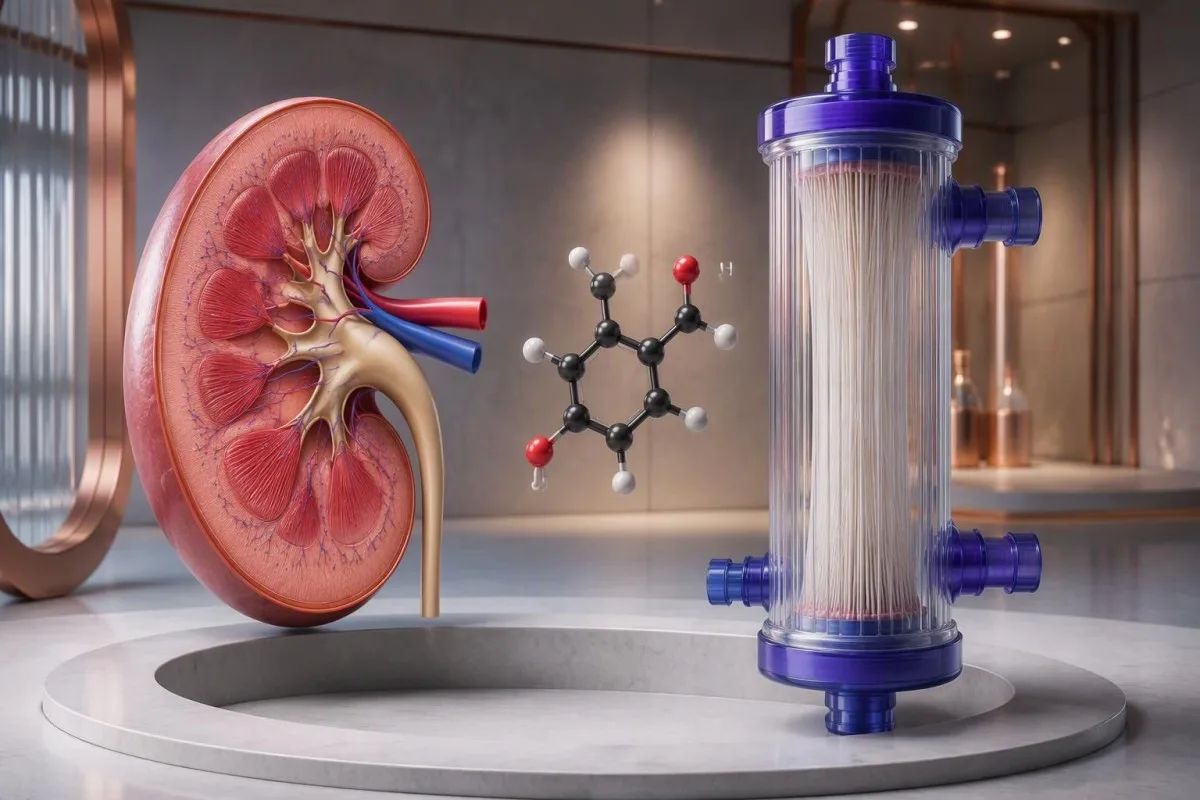
The EXTRIP Workgroup recommends extracorporeal treatment above 100 mg/dL, or above 90 mg/dL when kidney function is impaired. Its 2015 systematic review in Annals of Emergency Medicine favors intermittent hemodialysis when available, because rapid removal is valuable in a deteriorating patient (EXTRIP Workgroup, 2015).
EXTRIP also suggests treatment above 90 mg/dL without kidney impairment, above 80 mg/dL with impairment, or for pH 7.20 or below when another indication is absent. These recommendation strengths differ because the evidence is largely observational; they are not permission to wait for a patient to cross a number.
Chronic toxicity requires an especially symptom-led approach. ACMT describes significant manifestations around 40 mg/dL as sufficient to consider dialysis; our guide to urgent kidney impairment signs explains associated red flags, but a poisoning decision cannot be reduced to eGFR alone.
A hypothetical older adult at 42 mg/dL with confusion and new oxygen needs may require dialysis sooner than a stable acute-exposure patient at a higher concentration. Preparation should begin early when deterioration is foreseeable, and alkalinization can continue while dialysis is arranged if the treating team considers it appropriate.
Çò que requerisson realament una recuperacion segura e lo seguiment
Safe recovery requires clinical improvement, stable acid–base status and serial evidence that absorption has ended—not one salicylate level below a chosen cutoff. Kantesti es un Outil d’analisi de sang amb IA for understanding completed reports; emergency clearance and discharge remain decisions for the treating clinical team.
A discharge result of 18 mg/dL means something different after clearly declining measurements and resolved symptoms than it does after a solitary early sample. Hospitals also consider rebound after dialysis, delayed formulations, kidney recovery and whether bicarbonate treatment has been stopped without renewed clinical or biochemical deterioration.
After discharge, record the hospital's medication instructions rather than restarting every previous product automatically. Our guida de tendéncia de la seguretat dels medicaments explains how to organize follow-up results, but prescribed low-dose aspirin should be resumed, withheld or changed according to the treating clinician's plan.
Kantesti AI's explanations should be checked against the original report, its units and collection timestamps. Our principis d’IA responsabla describe the boundary between information support and clinical decisions; two historical values cannot show whether new tinnitus, vomiting or confusion has developed today.
A useful follow-up record preserves at least 3 details for each result: concentration, collection time and treatment underway. Our explicacion de tecnologia IA describes report interpretation workflows, but renewed symptoms after discharge require medical reassessment rather than another upload.
Recèrca sus l’interpretacion e lo tractament del salicilat
Salicylate treatment recommendations rely heavily on toxicology guidance, pharmacology and observational evidence rather than large randomized trials. The 2015 ACMT guidance and EXTRIP recommendations agree that symptoms, acid–base status and exposure pattern must accompany concentration-based decisions.
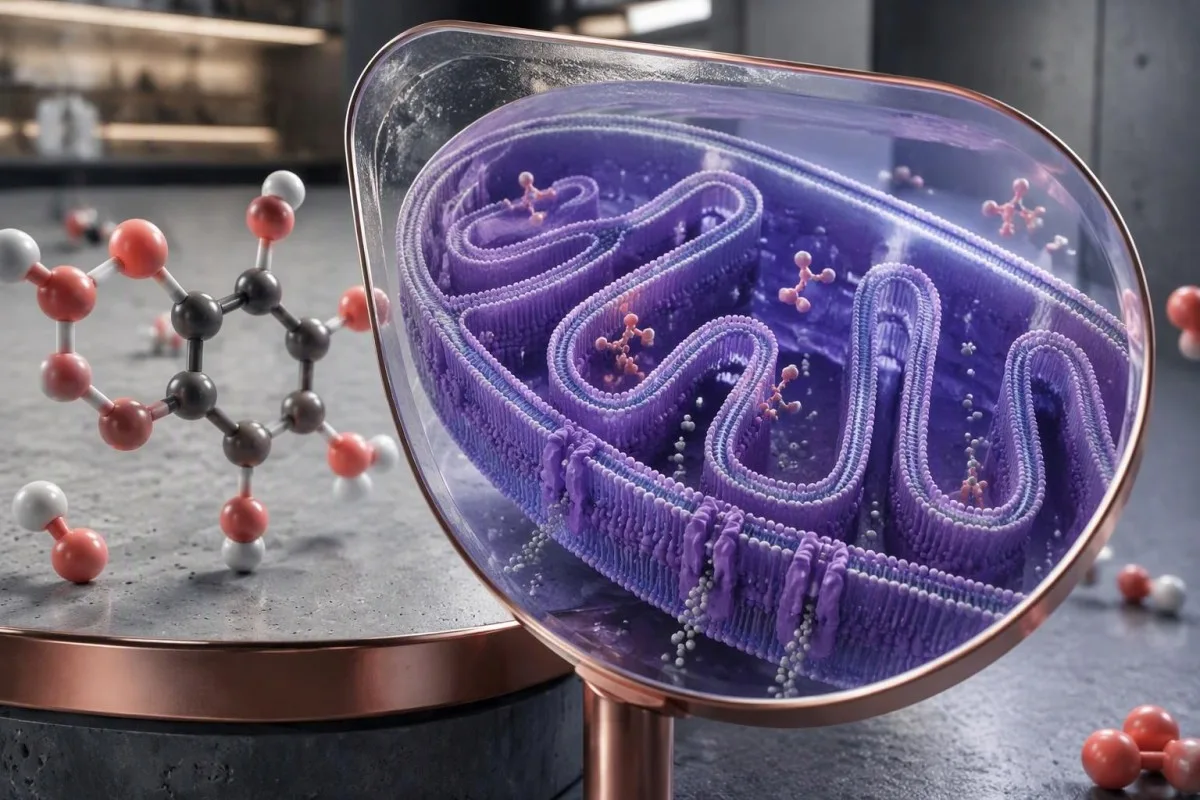
Salicylates uncouple oxidative phosphorylation, increasing energy demand and contributing to heat production and metabolic disturbance. This mechanism helps explain why 1 serum concentration cannot summarize organ effects; it does not provide a separate laboratory test that can replace serial salicylate measurements or clinical observation.
Thresholds such as 100 mg/dL are escalation recommendations, not experimentally proven boundaries between safe and unsafe patients. Our encastre de validacion medica provides context for how interpretation quality should be assessed; clinical guideline evidence must remain separate from technical testing of an AI system.
Kantesti LTD is the organization behind this educational article, as described in our foncionament de l’empresa. The 2 Zenodo publications listed below cover RDW and BUN/creatinine interpretation; neither is a salicylate poisoning trial, and neither establishes aspirin treatment thresholds.
The kidney-function publication offers background for understanding renal clearance, while the RDW publication concerns red-cell indices rather than aspirin toxicity. Our nòrmas de contengut medical explain why these 2 educational resources are distinguished from the directly relevant ACMT and EXTRIP medical references.
Preguntes més freqüents
Quin es un nivèl normal o terapeutic de salicilat?
0 Una plaja terapeutica dels salicilats compren comunament aproximativament 10–30 mg/dL, segon l’indicacion e lo laboratòri, mas aquò es pas un besonh fisiologic normal. Las personas que prenguèron pas de salicilats an generalament de concentracions indetectablas o fòrça bassas. L’aspirina a dòsi febla per l’inibicion plaquetària a pas besonh d’atenher l’interval analgesic o antiinflamatòri istoric. Los simptòmas, lo pH sanguin, la foncion renala e lo moment de l’exposicion pòdon rendre clinicament preocupanta una concentracion situada dins aquel interval o prèp d’aquel.
Un taus nivèl salicilatenc precòç pòt exclure una sobredòsi d’aspirina ?
0 Un tausanc precòç de salicilat pòt pas exclure una subredòsi d’aspirina, perque l’absorpcion pòt encara èsser incomplèta. Los comprimits gastroresistents, lo ralentiment de la vidada gastrica e las ingestacions importantas pòdon retardar lo pic, de còps al delà de 12–24 oras. Los professionals de santat recampan lèu un escandalh inicial e fan de mesuras repetidas fins que siá exclosa una absorpcion en cors. Una intoxicacion sospèchada exigís una avaloracion immediata puslèu que d’esperar a l’ostal un resultat ulterior.
A quina freqüéncia los clinicians repetisson los nivèls de salicilat?
0 Las e los salicilats son correntament mesurats de nòu aproximativament cada 2 oras inicialament quand se sospècha una intoxicacion, mas l'interval depend de la gravetat, de la formulacion e del tractament. Las mesuras repetidas son interpretadas al costat dels simptòmas, dels gases sanguins, dels electròlits e de la foncion renala. Una concentracion en diminucion es pas una garantia sufisenta se lo pH sanguin demesís o que se desvolopa una confusion. Lo contraròtle contunha fins a çò que l'equipa de tractament establisca que l'absorpcion es acabada e que las anormalitats clinicas son en resolucion.
0 Quin nivèl de salicilat necessita una dialisi ?
0 EXTRIP recomanda la dialisi o un autre tractament extracorporel apropiat quand lo salicilat depassa 100 mg/dL, o 90 mg/dL en cas d’alteracion de la foncion renala. Una alteracion de l’estat mental, una ipoxèmia novèla que necessita d’oxigèn suplementari o lo fracàs del tractament estandard pòdon justificar la dialisi per dejós d’aquestas concentracions. EXTRIP suggerís tanben la dialisi en cas d’acidèmia grèva amb un pH de 7,20 o inferior. Una toxicitat cronica significativa a l’entorn de 40 mg/dL pòt justificar de considerar la dialisi en preséncia de manifestacions neurologicas o pulmonaras.
Perqué una toxicitat cronica per l’aspirina pòt subvenir a un nivèl mai bas?
0 La toxicitat cronica a l’aspirina pòt èsser grèva a de concentracions sericas mai bassas perque las exposicions repetidas permeton al salicilat de s’acumular dins los teissuts. La desidratacion, la malautiá e una foncion renala alterada pòdon reduire l’eliminacion, particularament en las personas mai ancianas. Una concentracion de 40 mg/dL acompanhada de confusion o d’afectacion pulmonara es doncas pas equivalenta al meteis resultat dins una exposicion aguda precòça e establa. Los clinicians avaloran l’istoric dels medicaments dels jorns precedents, e pas solament la darrièra dòsi.
0 El pH sanguin pòt èsser normal pendent una intoxicacion als salicilats?
Lo pH sanguin pòt èsser gaireben normal pendent una toxicitat als salicilats, perque l’alcalòsi respiratòria e l’acidosi metabolica se pòdon compensar numericament. Per exemple, una concentracion de bicarbonat de 12 mmol/L amb una PaCO2 de 20 mmHg pòt produsir un pH pròche de 7,40 malgrat d’anomalias importantas. Los clinicians examinan doncas lo bicarbonat, la pression del dioxid de carbòni e lo gap anionic puslèu que de se fisar unicament al pH. Un resultat gasometric que sembla normal elimina pas la necessitat de mesuras seriadas dels salicilats e d’una evaluacion clinica.
Qué cal far se sospèchi una intoxicacion a l’aspirina?
Demandatzètz sul pic una avaloracion pels servicis antiverin o pels urgéncias se se sospècta una intoxicacion a l’aspirina, quitament se lo primièr taus de salicilat es bas. Apelatz lo 999 o lo 112 al Reialme Unit, o lo 911 als Estats Units, en cas de confusion, convulsions, pèrda de consciéncia o dificultat respiratòria importanta. Als Estats Units, Poison Control es disponible al 1-800-222-1222 per obténer de conselhs immediats en cas d’exposicion. Indusiscatz pas lo vomiment e donetz pas de carbon activat ni de bicarbonat de sòdi a l’ostal; portatz l’embalatge del produch e las informacions disponiblas sul moment de l’exposicion.
Fasètz-vos explicar los resultats analisi de sang
Telecargatz vòstre compte rendut de laboratòri e l’IA de Kantesti explica cada biomarcador en lenga simpla en qualques segondas. Utilizat per mai de 2 milions de personas dins lo mond.
Referéncias
- Klein, T., Mitchell, S., & Weber, H. (2026). Analisi de sang RDW: guida completa de RDW-CV, MCV e MCHC. Recèrca medicala per IA de Kantesti. DOI
- Klein, T., Mitchell, S., & Weber, H. (2026). Explicacion del rapport BUN/Creatinina : Guia de test de foncion renal. Recèrca medicala per IA de Kantesti. DOI
- American College of Medical Toxicology (2015). Guidance Document: Management Priorities in Salicylate Toxicity. Journal of Medical Toxicology. DOI
- Juurlink DN et al. (2015). Extracorporeal Treatment for Salicylate Poisoning: Systematic Review and Recommendations From the EXTRIP Workgroup. Annals of Emergency Medicine. DOI
- 2M+Tèsts analisats
- 127+Païses
- 100+Lengas
A prepaus de l’equipa medicala


Senhals de confiança E-E-A-T
Experiéncia
Revisión clinica menada pel metge de las practicas d’interpretacion de las analisis.
Expertisa
Fòcus sus la medicina de laboratòri sus cossí los biomarcadors se comportan dins un contèxte clinic.
Autoritat
Revisat medicalament pel Dr Thomas Klein, amb de contribucions de la Dr Sarah Mitchell e del Prof. Dr Hans Weber.
Fisança
Interpretacion basada sus d’evidéncias amb de camins de seguiment clars per reduzir l’alarmisme.

Avís medical
Aqueste article es solament per tòcas educatius e constituís pas de conselh medical. Consultatz totjorn un professional de la sant qualificat per las decisions de diagnostica e de tractament.
Publicat · Contactar l’equipa editoriala
Publicat per Kantesti Ltd, enregistrada en Anglatèrra e País de Galas, n° d’entrepresa. 17090423, Londres, Reialme Unit.
