سليسيليٽ جي سطح اڪيلي سر حفاظت جي تصديق نٿي ڪري سگهي: طبيب ان جي تشريح علامتن، رت جي pH، گردن جي ڪارڪردگي ۽ ورجائي ڪيل ماپن سان گڏ ڪن ٿا. شروعاتي گهٽ نتيجو ايسپرين جي دير سان جذب ٿيڻ کي ظاهر ڪرڻ ۾ ناڪام ٿي سگهي ٿو، جڏهن ته دائمي زهريت گهٽ مقدار تي به سنگين ٿي سگهي ٿي. زهريت جو شڪ هجي ته فوري جائزو ضروري آهي—ليبارٽري نتيجن جو انتظار نه ڪريو.

اهم ڳالهيون
- فوري جائزو شڪي ايسپرين زهريت لاءِ ضروري آهي؛ نتيجي جو انتظار ڪرڻ بدران مونجهاري، دورن، بيهوشي يا ساهه کڻڻ ۾ ڏکيائي جي صورت ۾ ايمرجنسي خدمتن کي سڏيو.
- سليسيليٽ جي علاج واري حد عام طور تي لڳ ڀڳ 10–30 mg/dL هوندي آهي، جيڪا علاج جي مقصد ۽ ليبارٽري جي طريقيڪار تي دارومدار رکي ٿي؛ اها زهريت نه ٿيڻ جي ضمانت ناهي.
- يونٽ تبديلي اهم آهي: 30 mg/dL برابر آهي 300 mg/L ۽ لڳ ڀڳ 2.17 mmol/L.
- شروعاتي گهٽ نتيجا زهريت کي رد نٿا ڪري سگهن، ڇاڪاڻ ته آنتر ۾ حل ٿيندڙ ڪوٽنگ واري ايسپرين ۽ وڏي مقدار جي استعمال سان ڪنسنٽريشن جي چوٽي دير سان اچي سگهي ٿي، ڪڏهن ڪڏهن 12–24 ڪلاڪن کان به پوءِ.
- سلسليوار ماپون شروعات ۾ عام طور هر 2 ڪلاڪن تي ورجايو وينديون آهن؛ وقفو علامتن، دوا جي فارموليشن ۽ علاج مطابق بدلجي ٿو.
- دائمي زهريت جڏهن اهم اعصابي يا ڦڦڙن سان لاڳاپيل علامتون موجود هجن ته 40 mg/dL جي لڳ ڀڳ ڊائلاسز تي غور ڪرڻ مناسب ٿي سگهي ٿو.
- تيزاب–بنياد جي حالت لڳ ڀڳ نارمل pH جي باوجود خطري جو پتو ڏئي سگهي ٿي؛ 12 mmol/L جو بائي ڪاربونيٽ، 20 mmHg جي ڪاربان ڊاءِ آڪسائيڊ دٻاءَ سان گڏ، لڳ ڀڳ 7.40 جو pH پيدا ڪري سگهي ٿو.
- ڊائلاسز جون حدون EXTRIP جي سفارشن موجب، 100 mg/dL کان وڌيڪ مقدار، يا گردن جي ڪم ۾ خرابي سان 90 mg/dL کان وڌيڪ مقدار، شامل آهن؛ شديد علامتون انهن انگن کان گهٽ مقدار تي به علاج جو جواز بڻجي سگهن ٿيون.
جڏهن شڪي ايسپرين زهريت لاءِ فوري طبي امداد گهربل هجي
سيلسيليٽ زهرخوراني جو شڪ هجي ته سيلسيليٽ جي سطح معلوم ٿيڻ کان اڳ به فوري جائزو وٺڻ ضروري آهي. ايسپرين وٺڻ کان پوءِ نئين تيز ساهه کڻڻ، بار بار الٽي، ڪنن ۾ گهنٽيون وڄڻ يا مونجهارو پيدا ٿيڻ تي فوراً زهر بابت خدمت يا ايمرجنسي صلاح وٺڻ گهرجي؛ ساهه کڻڻ ۾ سخت تڪليف، دورا يا بيهوش ٿي ڪرڻ جي صورت ۾ فوري طور ايمرجنسي خدمتن سان رابطو ڪريو.
نتيجو ايمرجنسي جائزي جو رڳو هڪ حصو آهي. برطانيا ۾، سخت علامتن لاءِ فون ڪريو 999 يا 112 ؛ آمريڪا ۾، فون ڪريو 911, ، يا جيڪڏهن ماڻهوءَ جي حالت مستحڪم هجي ته فوري طور دوا لڳڻ بابت صلاح لاءِ Poison Control کي 1-800-222-1222 تي فون ڪريو.
دوا جي پيڪنگ، لڳ ڀڳ مقدار، دوا جي صورت ۽ ممڪن طور سڀ کان اڳ واري وقتِ استعمال پاڻ سان آڻيو. هڪ ئي پراڊڪٽ ۾ هڪ کان وڌيڪ دردڪش دوا ٿي سگهي ٿي، انهيءَ ڪري ڊاڪٽر ڪڏهن ڪڏهن ايسٽامينوفين جي مقدار جو جائزو سيلسيليٽ جي جاچ سان گڏ ڪرائڻ لاءِ چوندا آهن، بجاءِ ان ڳالهه جي ته هر گوري ۾ رڳو ايسپرين ئي هئي.
الٽي نه ڪرايو، گهر ۾ چارڪول نه ڏيو ۽ بيڪنگ سوڊا سان تيزابيت درست ڪرڻ جي ڪوشش نه ڪريو. علاج جو بندوبست ڪندي، وڌيڪ ايسپرين يا سيلسيليٽ واريون شيون ڏيڻ کان پاسو ڪريو؛ جيڪڏهن ماڻهوءَ کي غنودگي ٿيڻ لڳي ته وات ذريعي ڪجهه به نه ڏيو، ڇاڪاڻ ته هاڻي نگلڻ محفوظ نه ٿي سگهي ٿو.
ڪينٽيسٽي هڪ آهي اي آءِ بلڊ ٽيسٽ اينالائيزر جيڪا مڪمل ٿيل ليبارٽري رپورٽ سمجهڻ ۾ مدد ڪري سگهي ٿي، پر اها ايمرجنسي زهرخوراني واري خدمت ناهي. رپورٽ ۾ 15 mg/dL اچڻ سان حفاظت ثابت نٿي ٿئي، جيڪڏهن دوا وٺڻ جو وقت غيريقيني هجي، علامتون وڌي رهيون هجن يا پهريون نمونو جذب مڪمل ٿيڻ کان اڳ ورتو ويو هجي.
سليسيليٽ جي سطح ڇا ماپي ٿي ۽ ڪهڙا يونٽ اهم آهن
سيلسيليٽ جي سطح سيرم يا پلازما ۾ سيلسيليٽ جي مقدار ماپي ٿي، جيڪا عام طور mg/dL، mg/L يا mmol/L ۾ ظاهر ڪئي ويندي آهي. ليبارٽري جا علاج وارا حدف عام طور لڳ ڀڳ 10–30 mg/dL هوندا آهن، پر ڪنهن خاص نتيجي جي قبوليت جو دارومدار علاج جي مقصد، وقت ۽ علامتن تي هوندو آهي.
هڪ mg/dL برابر آهي 10 mg/L. سيلسيليٽ لاءِ، 1 mg/dL لڳ ڀڳ 0.0724 mmol/L جي برابر پڻ آهي، تنهنڪري 30 mg/dL جو نتيجو 300 mg/L يا 2.17 mmol/L آهي؛ mg/L کي mg/dL سمجهڻ سان تشريح ۾ ڏهوڻو فرق پئجي ٿو.
سيلسيليٽ جي علاج واري حد علاج لاءِ هڪ حوالو آهي، جسماني طور گهربل نارمل مقدار نه. درد گهٽائڻ لاءِ حوالن ۾ لڳ ڀڳ 10–20 mg/dL استعمال ٿي سگهي ٿو، جڏهن ته تاريخي طور ضدِالتهاب نگراني ۾ اڪثر 15–30 mg/dL استعمال ٿيو آهي؛ پليٽليٽن جي روڪٿام لاءِ گهٽ مقدار واري ايسپرين سان اهي مقدار حاصل ڪرڻ ضروري ناهي.
ليبارٽري جو نشان اڪيلو زهرخوراني جي شدت نٿو ٻڌائي سگهي. 35 mg/dL جي سطح رکندڙ علامتن وارو پوڙهو بالغ، ساڳئي مقدار تي شديد لڳڻ واري واقعي باوجود طبي طور مستحڪم شخص جي ڀيٽ ۾ وڌيڪ تڪڙي مداخلت جو محتاج ٿي سگهي ٿو؛ اسان جي وضاحت بابت حد کان ٻاهر ليب جي نشانين (laboratory flags) بابت separates reference intervals from decision thresholds.
For a clearly hypothetical comparison, 280 mg/L and 28 mg/dL describe exactly the same concentration. Neither value answers whether the level is rising, whether the blood is becoming more acidic or whether neurological symptoms have appeared—those questions require time-stamped results and bedside assessment.
| سطح | حد | ان جو مطلب |
|---|---|---|
| Common treatment reference | Approximately 10–30 mg/dL | Indication-dependent therapeutic interval, not a poisoning clearance threshold; toxicity can occur within or near this interval. |
| Potentially toxic concentration | 30–50 mg/dL | Requires assessment of symptoms, exposure pattern, pH and serial results; chronic toxicity may be clinically significant. |
| Substantial toxic exposure | 50–100 mg/dL | Urgent monitored assessment is needed; serious toxicity and dialysis indications can occur below 100 mg/dL. |
| EXTRIP concentration indication | >100 mg/dL | EXTRIP recommends extracorporeal treatment; the concentration threshold is lower with impaired kidney function. |
شروعاتي گهٽ سليسيليٽ نتيجو گمراهه ڪندڙ ڇو ٿي سگهي ٿو
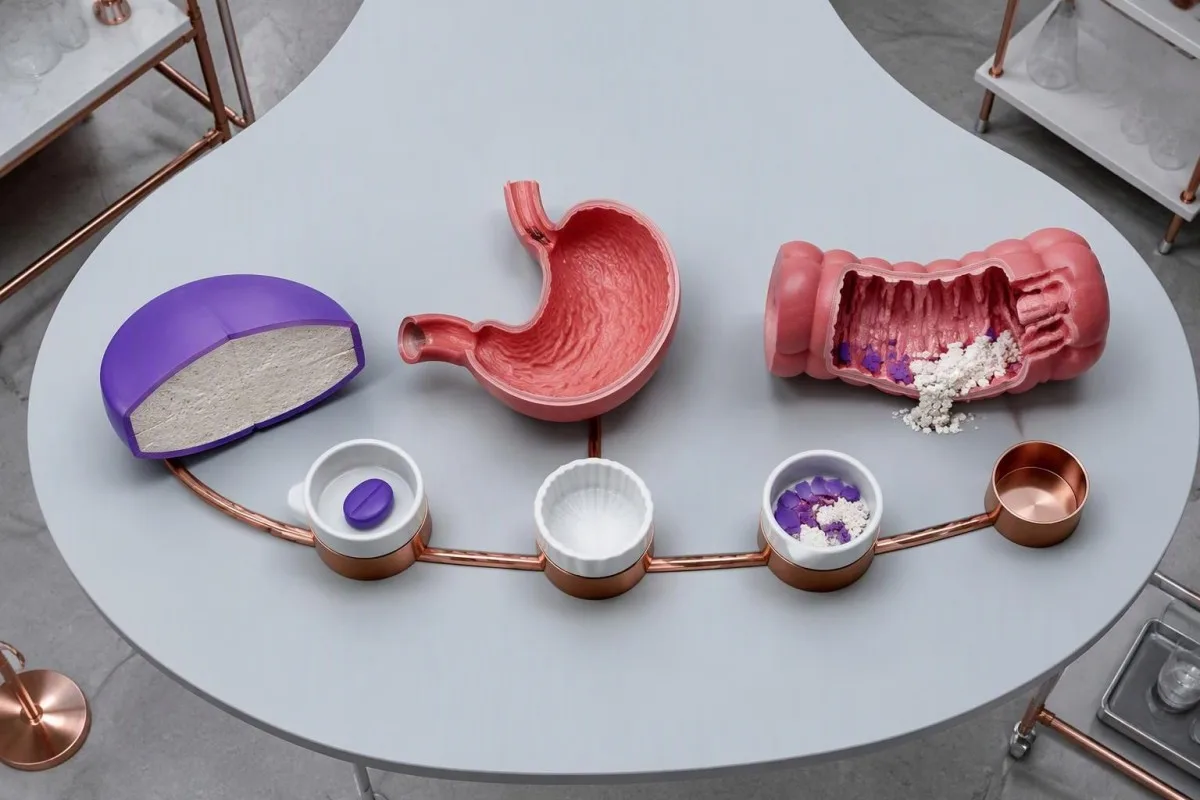
An early low salicylate level can be misleading because aspirin may still be in the stomach or intestine rather than fully absorbed. Enteric-coated tablets, large ingestions, slowed gastric emptying and tablet concretions can delay the peak, sometimes beyond 12–24 hours.
The first sample should be collected promptly, not postponed until an assumed peak time. Clinicians then repeat it according to the exposure; a result collected 1 hour after ingestion is a starting measurement, not evidence that the full dose has already entered the circulation.
Enteric coatings are designed to resist dissolution in the stomach, but overdose absorption is less predictable than ordinary dosing. Other medicines can also slow gut movement; the same need to understand formulation appears in our guide to delayed carbamazepine absorption, although its interpretation rules are different.
Consider a hypothetical sequence: 8 mg/dL at 1 hour, 24 mg/dL at 3 hours and 46 mg/dL at 5 hours. The first result was genuinely low, yet its reassuring appearance disappeared as absorption continued; treatment decisions should not depend on that isolated early number.
There is no universal 4-hour salicylate result that clears every aspirin exposure. The American College of Medical Toxicology recommends serial concentrations until they are clearly declining and ongoing absorption has been excluded; clinical deterioration still overrides an apparently favorable trend (ACMT, 2015).
شديد ايسپرين جي وڌيڪ مقدار دائمي زهريت کان ڪيئن مختلف آهي
Acute aspirin overdose follows a discrete large exposure, while chronic salicylate toxicity develops through repeated dosing and accumulation. Chronic toxicity often causes serious illness at lower measured concentrations because the circulating level does not fully represent salicylate already distributed into tissues.
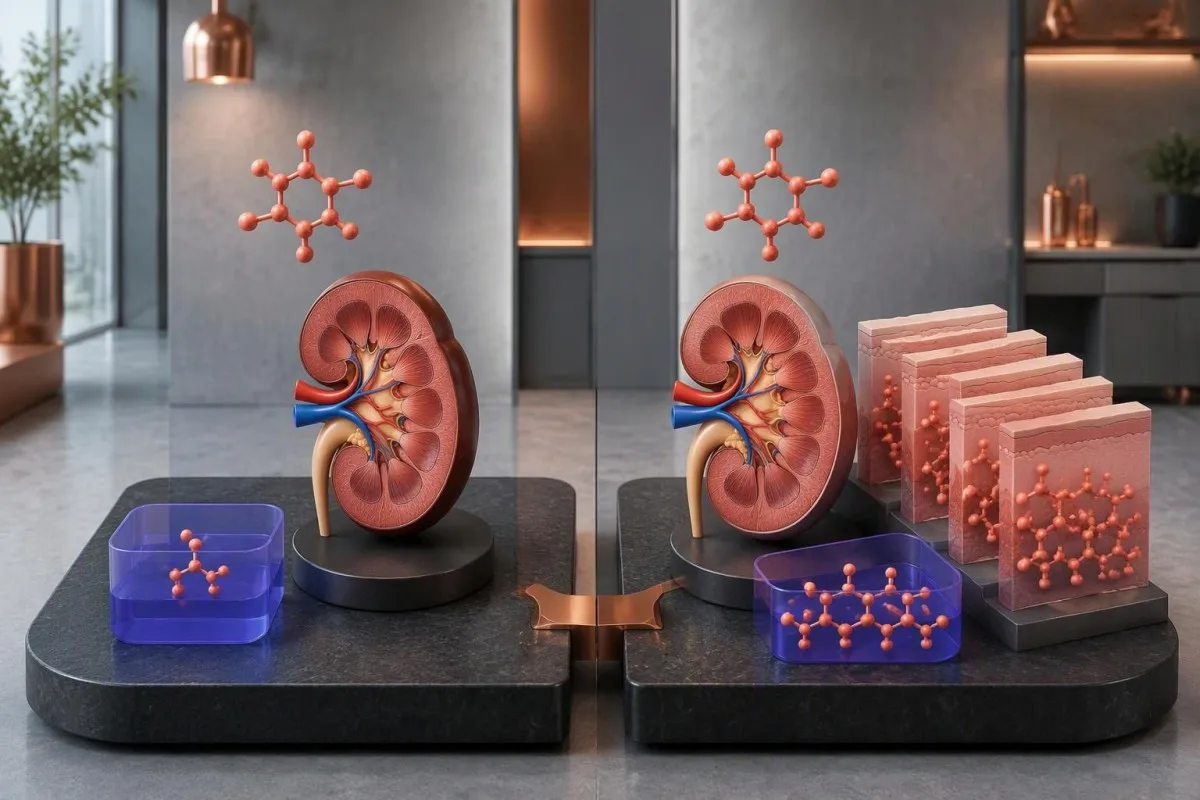
An acute-on-chronic exposure combines both patterns: a person already taking salicylates receives an additional excessive dose. A concentration of 45 mg/dL cannot be assigned the same risk in all three situations, so clinicians ask about medication use over preceding days as well as the most recent dose.
Older adults are particularly vulnerable when dehydration, fever or impaired kidney function reduces clearance. Aspirin-containing pain products may be overlooked during a medicine review; our guide to بزرگن ۾ دوا جي اثرن explains why nonprescription products belong on the same list as prescribed treatment.
Salicylate binding to albumin becomes saturated as concentrations increase, allowing a larger unbound fraction to circulate. Low albumin can further complicate interpretation; albumin and protein binding provide context, but there is no routinely accepted albumin-correction equation that makes a salicylate result safe.
At Kantesti, we distinguish concentration from clinical severity rather than presenting 40 mg/dL as a universal dividing line. ACMT guidance specifically describes significant chronic toxicity around this concentration as a situation where dialysis may deserve consideration, particularly with central nervous system abnormalities or lung involvement (ACMT, 2015).
ايسپرين جي وڌيڪ مقدار جون ڪهڙيون علامتون تشريح بدلائين ٿيون
Aspirin overdose symptoms commonly include tinnitus, nausea, vomiting, sweating and unusually fast or deep breathing. Confusion, agitation, reduced alertness, seizures, high temperature or worsening oxygen requirements indicate more serious toxicity and can justify urgent treatment even without a very high salicylate level.
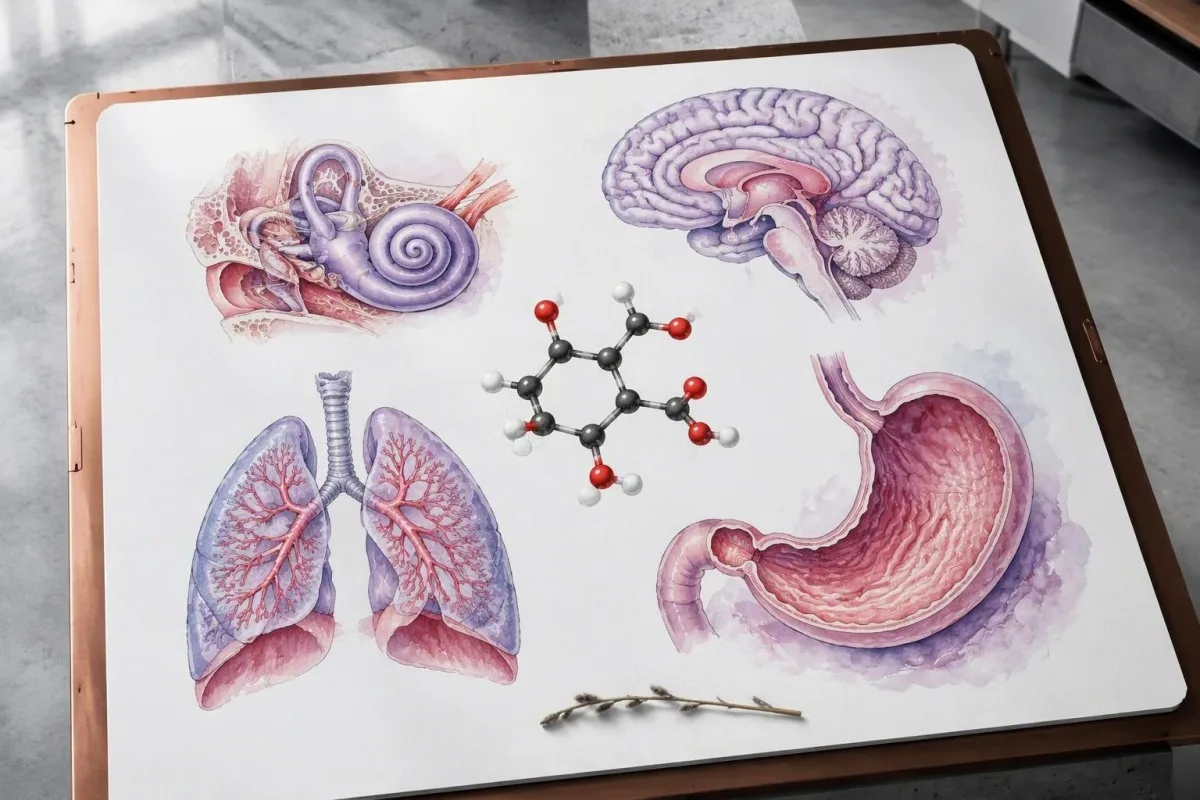
Tinnitus is a useful clue, but its absence does not exclude poisoning. A child, a person with hearing impairment or an adult becoming confused may not report ringing ears reliably; a salicylate level of 32 mg/dL therefore cannot be dismissed solely because tinnitus is absent.
Rapid breathing is partly a direct stimulation of the respiratory center and partly a response to metabolic disturbance. Do not assume it is anxiety, and do not use a paper bag to slow breathing; retaining carbon dioxide can lower blood pH and increase movement of salicylate into the brain.
Normal pulse oximetry does not rule out the metabolic effects of salicylates. Carbon monoxide exposure can also be missed by ordinary oxygen readings, but requires a different test; our carbon monoxide testing explanation helps distinguish two situations where a reassuring oxygen display can be incomplete.
A hypothetical patient with 38 mg/dL, new confusion and a respiratory rate of 32 breaths per minute needs urgent reassessment, not a label of mild poisoning. The combination suggests systemic and neurological involvement, whereas the concentration alone cannot identify tissue exposure or explain why consciousness has changed.
رت جي pH ۽ بائيڪاربونيٽ سليسيليٽ جي زهريت ڪيئن ظاهر ڪن ٿا
Salicylate toxicity classically causes respiratory alkalosis together with metabolic acidosis. A near-normal blood pH can hide these opposing abnormalities, so clinicians inspect bicarbonate, carbon dioxide pressure and the anion gap rather than reading pH as a standalone safety check.
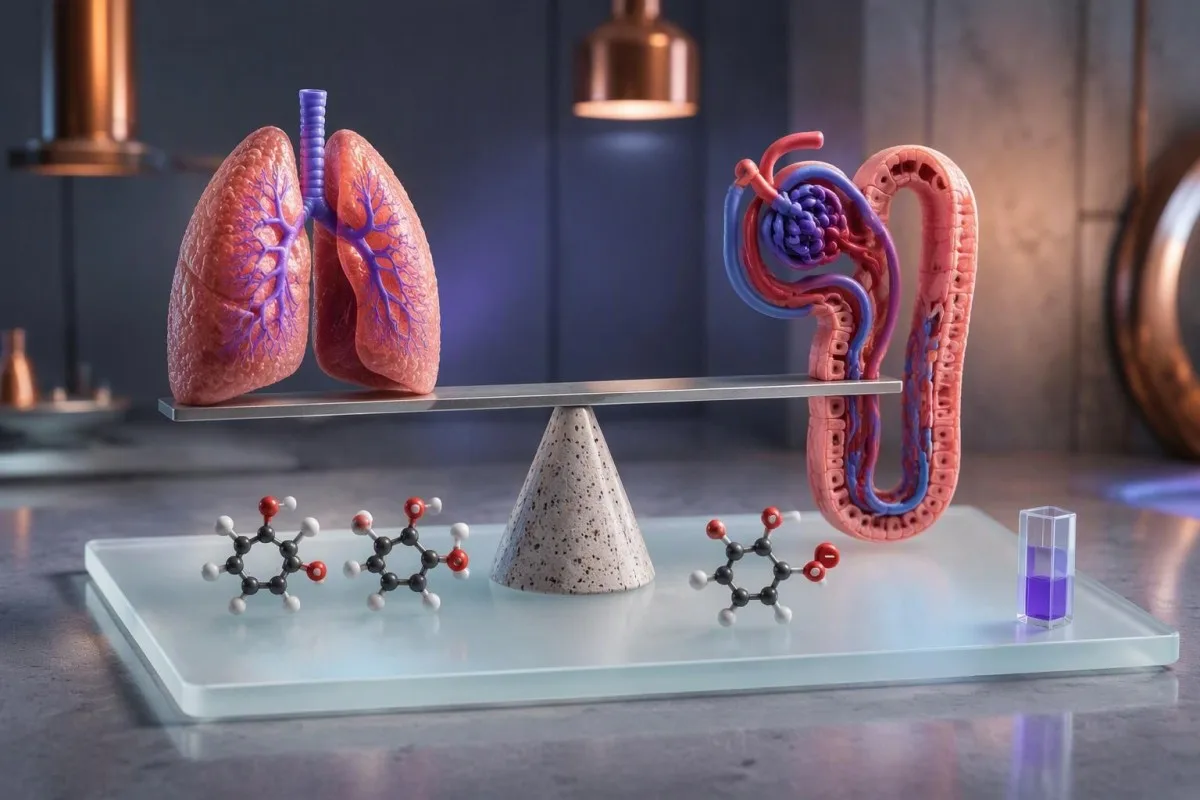
Respiratory alkalosis means carbon dioxide has fallen through increased ventilation; metabolic acidosis means bicarbonate is reduced by accumulating acids. Our arterial gas interpretation guide explains these components, but salicylate poisoning requires their interpretation alongside exposure history and serial drug measurements.
For a hypothetical arterial gas, bicarbonate of 16 mmol/L and PaCO2 of 22 mmHg yield a pH near 7.48. Winter's formula predicts a compensatory PaCO2 of approximately 32 ± 2 mmHg, so 22 mmHg indicates an additional respiratory alkalosis rather than compensation alone.
A pH near 7.40 can still be concerning when bicarbonate is 12 mmol/L and PaCO2 is 20 mmHg. These two major abnormalities nearly cancel numerically; the resulting pH does not mean the underlying metabolic disturbance is small or that treatment can wait.
Acidemia increases the proportion of uncharged salicylic acid, which enters tissues more readily. EXTRIP suggests dialysis for severe acidemia at pH 7.20 or below even without another indication; laboratory interference can also falsely elevate chloride, making a normal-looking anion gap unreliable in some assays (EXTRIP Workgroup, 2015).
سليسيليٽ جي سلسليوار وڌندڙ يا گهٽجندڙ سطحن جو مطلب ڇا آهي
Rising serial salicylate levels suggest ongoing absorption or inadequate elimination; falling levels are reassuring only when symptoms and acid–base status also improve. Clinicians commonly repeat concentrations about every 2 hours initially, adjusting the interval for severity, formulation and treatment response.
Serial measurements should include the collection time, not just the time a result appeared online. A pair of concentrations reported together may have been collected 3 hours apart; clinicians also need to know whether bicarbonate, charcoal or dialysis began between those samples.
A declining serum concentration does not always mean salicylate is leaving the body safely. If blood pH falls, salicylate can move from the circulation into tissues; ACMT warns that clinical deterioration despite falling concentrations is an ominous pattern requiring reassessment (ACMT, 2015).
A hypothetical decline from 62 to 48 mg/dL over 2 hours is not reassuring if pH falls from 7.46 to 7.28 and confusion appears. For comparison, digoxin sampling and toxicity also require clinical context, but its distribution timing must not be substituted for aspirin rules.
ڪينٽيسٽي هڪ آهي AI blood test interpretation پليٽ فارم that can explain recorded trends, not a bedside monitor that confirms poisoning resolution. Two uploaded results omit the patient's current ventilation, fluid balance and neurological examination; discharge decisions require clinicians to establish that absorption has ended and clinical abnormalities have resolved.
طبيب ٻيا ڪهڙا ليبارٽري ٽيسٽ ڪرائين ٿا
Clinicians usually check electrolytes, bicarbonate, kidney function, glucose and a blood gas alongside the salicylate level. Additional testing depends on the presentation, but these measurements identify impaired clearance, potassium depletion, acid–base changes and treatable metabolic problems that a salicylate concentration cannot show.
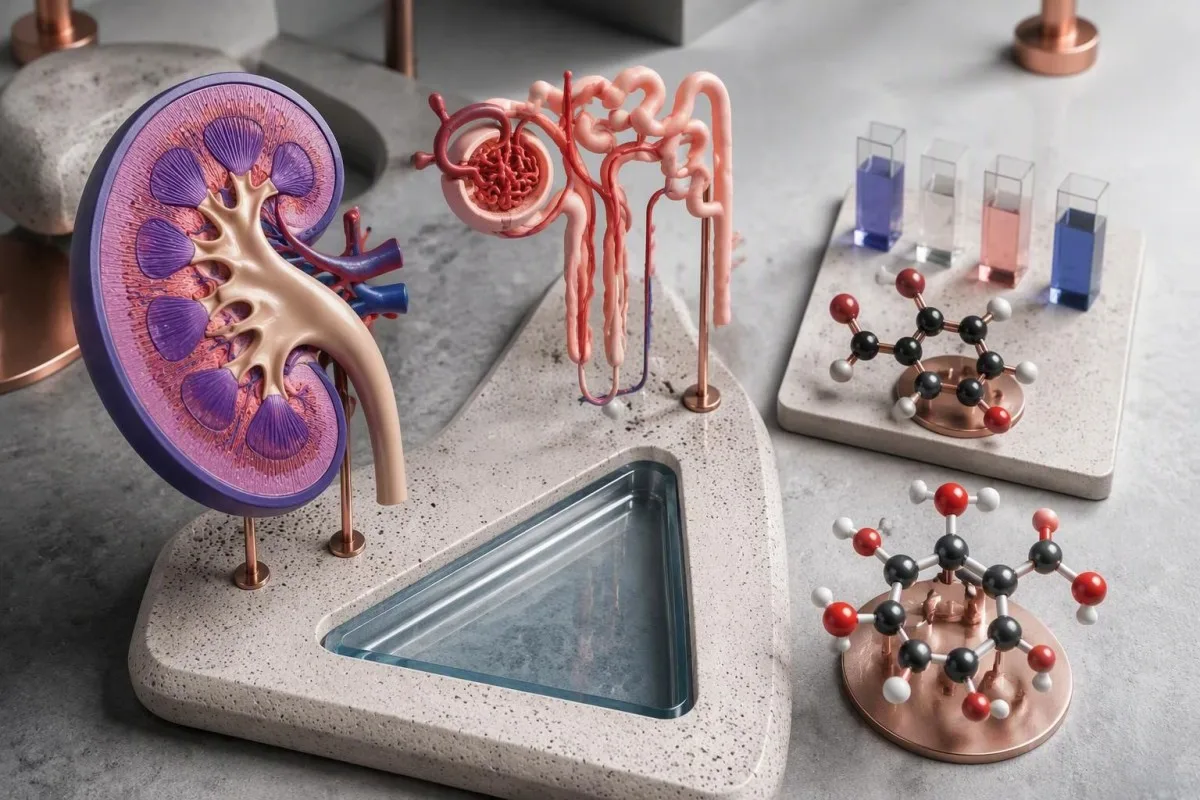
Potassium depletion can make urinary alkalinization difficult even when bicarbonate is being administered. A potassium result of 2.9 mmol/L therefore changes the treatment plan, not merely the list of abnormal flags; our اليڪٽرولائٽ پينل جي وضاحت covers the broader patterns clinicians evaluate.
An anion gap is commonly calculated as sodium minus chloride minus bicarbonate. With sodium 140, chloride 104 and bicarbonate 16 mmol/L, the gap is 20 mmol/L; local reference intervals, albumin and possible chloride-assay interference determine how strongly that finding supports metabolic acidosis.
Kidney impairment reduces salicylate elimination and can limit the ability to give fluids safely. The BUN-to-creatinine تشريح جي رهنمائي explains hydration-related clues, but calculated eGFR is less dependable when creatinine is changing rapidly during an acute illness.
Glucose and lactate answer different questions: a normal serum glucose does not exclude inadequate glucose availability within the brain during salicylate toxicity. A lactate of 2.0 mmol/L also cannot rule out poisoning, and lactate collection limitations matter when a single result seems inconsistent with the clinical picture.
ڪهڙيون دوائون ۽ شيون سليسيليٽ جي سامهون اچڻ جو سبب بڻجي سگهن ٿيون
Salicylate exposure can come from aspirin, bismuth subsalicylate, combination pain products and methyl salicylate preparations. Clinicians ask about swallowed and topical products because the product strength, formulation, amount and route determine how an exposure should be assessed.
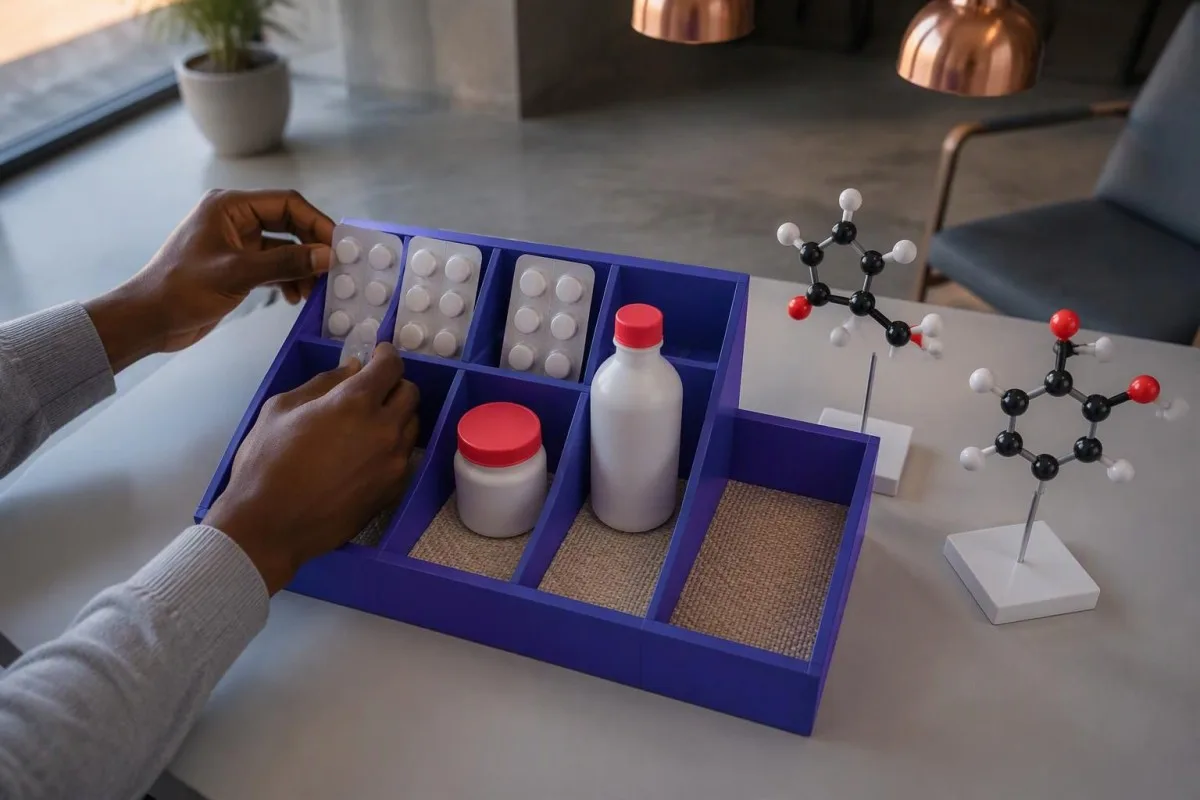
A tablet count is meaningless without tablet strength. An 81 mg aspirin tablet and a 325 mg tablet differ roughly fourfold in aspirin content; clinicians need the actual packaging rather than a description such as small tablets or regular painkillers.
Methyl salicylate is not interchangeable with ordinary aspirin tablets and can be highly concentrated in some liniments or oils. An uncertain swallowed amount needs immediate poison-service assessment; do not attempt to estimate safety by converting household teaspoons into aspirin equivalents.
Topical exposure also deserves attention when large areas are treated repeatedly, particularly under occlusive coverings or when the skin barrier is affected. A 2-day history of heavy application may matter more than a denial of aspirin tablet use, especially when unexplained rapid breathing or confusion develops.
Children need exposure-specific assessment, not adult cutoffs scaled casually by age. Our explanation of children's AI interpretation limits reinforces why an uncertain pediatric ingestion should go directly to a poison service or emergency team rather than an automated report review.
وريدن ذريعي بائيڪاربونيٽ سليسيليٽ خارج ڪرڻ ۾ ڇو مدد ڪري ٿو
Intravenous sodium bicarbonate helps keep salicylate outside sensitive tissues and increases its elimination in urine. Treatment is hospital-based because clinicians must monitor blood pH, urinary pH, potassium, sodium, kidney function and fluid balance while adjusting the infusion.
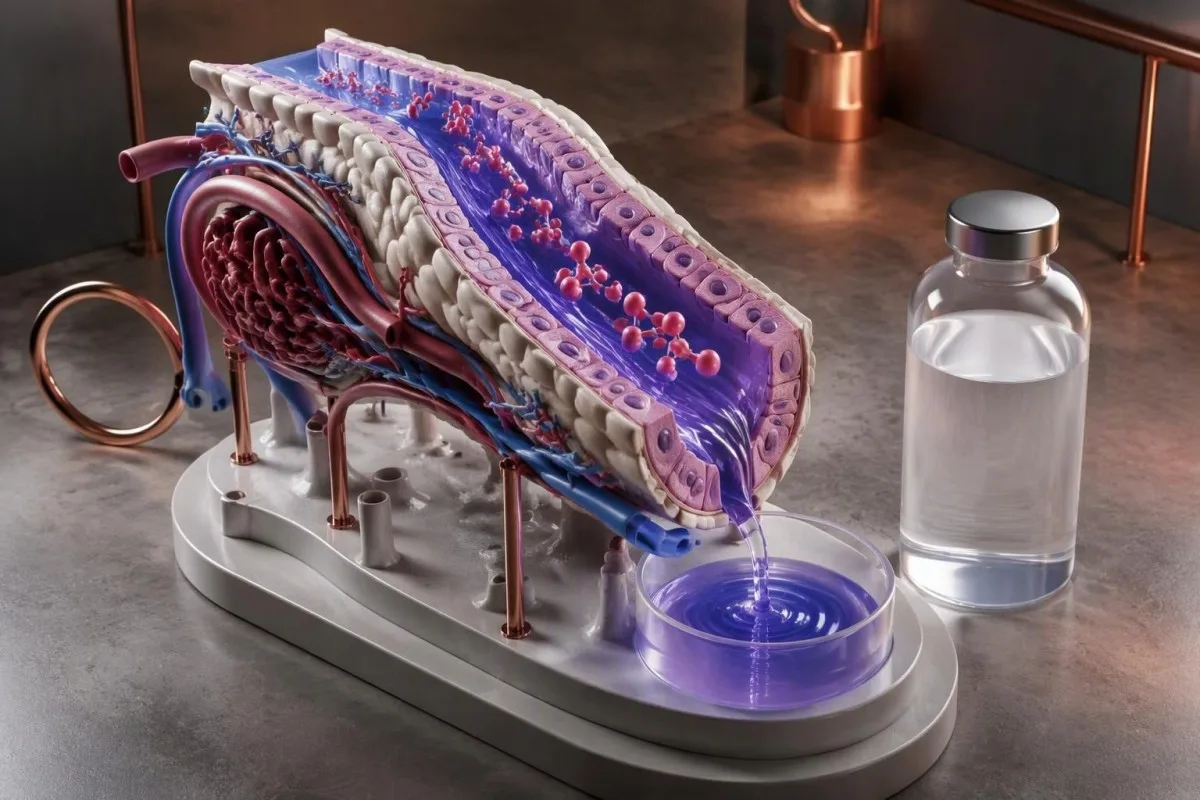
Urinary alkalinization works through ion trapping: salicylate becomes less able to move back across the renal tubule into circulation. ACMT describes a urine pH target of 7.5–8.0 and reports that effective alkalinization can increase urinary salicylate excretion more than tenfold (ACMT, 2015).
Blood and urine pH are separate treatment targets. Some hospital protocols aim for blood pH around 7.50–7.55, while adjusting for the patient's condition; a urine pH of 6.5 may show that bicarbonate treatment has not yet achieved the intended renal effect.
Low potassium encourages the kidneys to retain potassium at the expense of secreting hydrogen ions, keeping urine acidic. Clinicians therefore replace potassium when appropriate; urinary potassium interpretation explains renal handling, although urgent replacement decisions primarily use serum potassium and monitored clinical information.
A hypothetical patient with potassium 2.8 mmol/L and urine pH 6.2 may remain difficult to alkalinize despite bicarbonate administration. Heart failure, lung fluid accumulation or kidney impairment can also restrict treatment; escalating the infusion indefinitely is not a substitute for assessing whether dialysis is needed.
چارڪول، سيال ۽ گلوڪوز علاج ۾ ڪيئن شامل آهن
Treatment may include activated charcoal, carefully managed intravenous fluids and glucose support, depending on the exposure and clinical condition. These measures complement alkalinization or dialysis; charcoal reduces gastrointestinal absorption but does not remove salicylate that has already entered the circulation.
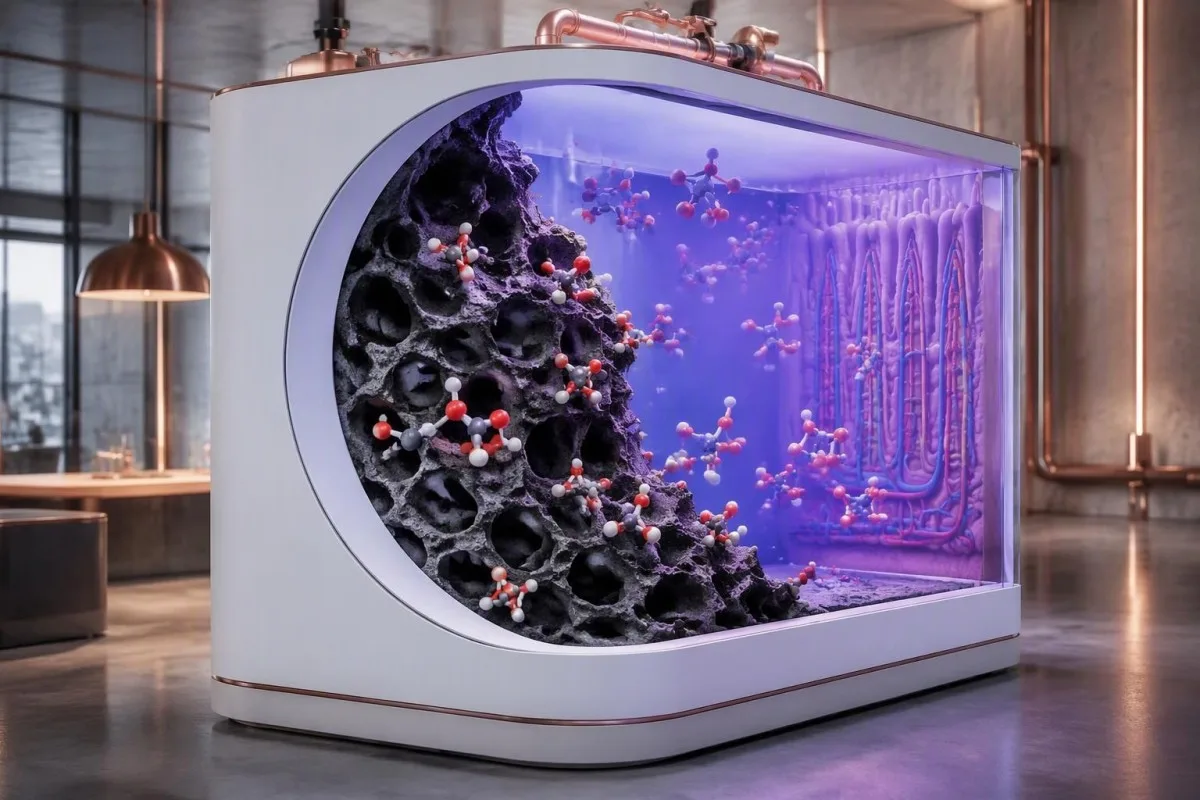
Activated charcoal is usually most useful early, but delayed absorption can create a later treatment opportunity after some aspirin exposures. A presentation beyond 1 hour does not automatically settle the question; clinicians weigh formulation, ongoing absorption, vomiting and the patient's ability to protect their airway.
Repeat-dose charcoal is not a universal requirement for salicylate poisoning. ACMT describes the evidence as mixed and advises weighing potential benefit against aspiration risk; a drowsy patient with 55 mg/dL cannot safely receive home charcoal simply because the concentration is elevated (ACMT, 2015).
Dextrose may be appropriate for neurological symptoms even when serum glucose looks normal, because central nervous system glucose availability can be inadequate. Ordinary گهٽ گلوڪوز جي سببن بابت provide useful background, but a result of 100 mg/dL does not exclude this particular salicylate-related concern.
Airway management needs specialist planning because suppressing compensatory hyperventilation can rapidly lower pH. A patient maintaining PaCO2 at 20 mmHg may deteriorate if ventilation falls after sedation; necessary intubation should preserve adequate ventilation and acid–base control rather than being delayed when the airway is failing.
سليسيليٽ جي زهريت ۾ ڪڏهن هيموڊائليسس ضروري هوندي آهي
Hemodialysis is indicated when salicylate poisoning is severe, standard treatment is failing or specific concentration thresholds are exceeded. Altered mental status, new hypoxemia requiring supplemental oxygen and failure of supportive treatment are EXTRIP indications regardless of the measured salicylate level.
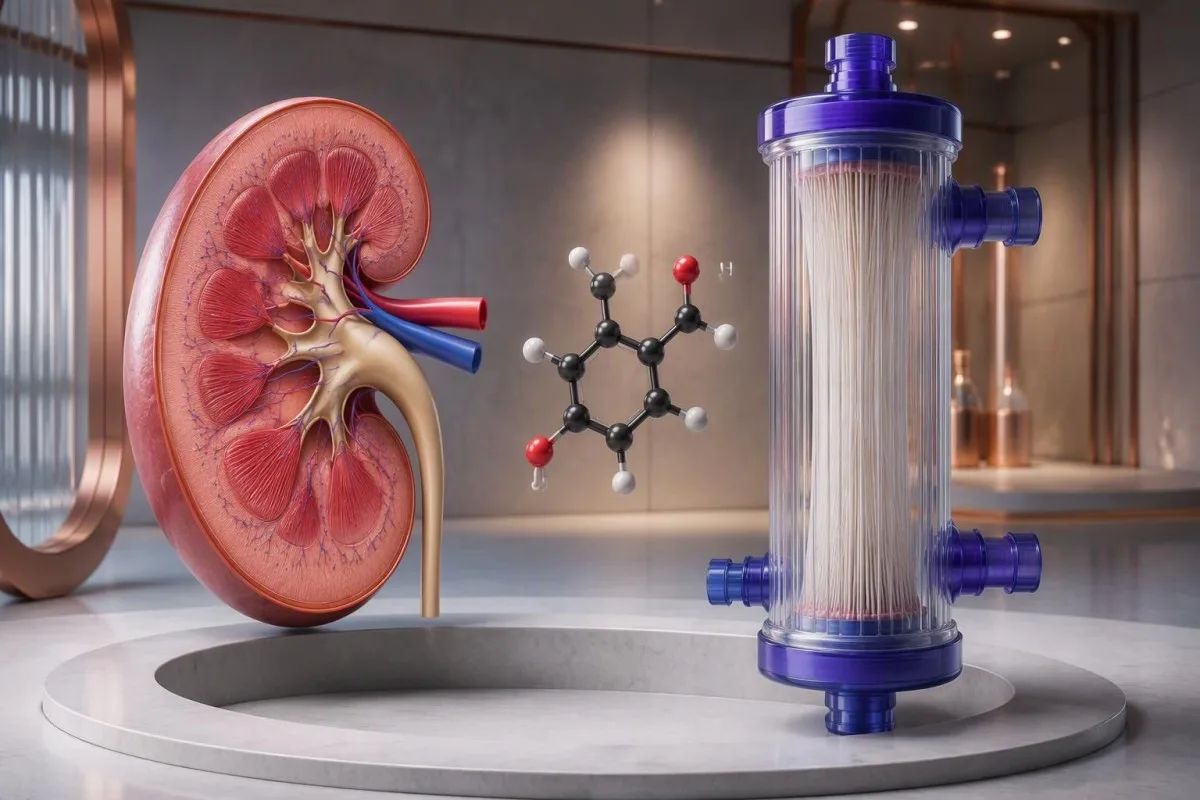
The EXTRIP Workgroup recommends extracorporeal treatment above 100 mg/dL, or above 90 mg/dL when kidney function is impaired. Its 2015 systematic review in Annals of Emergency Medicine favors intermittent hemodialysis when available, because rapid removal is valuable in a deteriorating patient (EXTRIP Workgroup, 2015).
EXTRIP also suggests treatment above 90 mg/dL without kidney impairment, above 80 mg/dL with impairment, or for pH 7.20 or below when another indication is absent. These recommendation strengths differ because the evidence is largely observational; they are not permission to wait for a patient to cross a number.
Chronic toxicity requires an especially symptom-led approach. ACMT describes significant manifestations around 40 mg/dL as sufficient to consider dialysis; our guide to urgent kidney impairment signs explains associated red flags, but a poisoning decision cannot be reduced to eGFR alone.
A hypothetical older adult at 42 mg/dL with confusion and new oxygen needs may require dialysis sooner than a stable acute-exposure patient at a higher concentration. Preparation should begin early when deterioration is foreseeable, and alkalinization can continue while dialysis is arranged if the treating team considers it appropriate.
محفوظ صحتيابي ۽ فالو اپ لاءِ حقيقت ۾ ڇا ضروري آهي
Safe recovery requires clinical improvement, stable acid–base status and serial evidence that absorption has ended—not one salicylate level below a chosen cutoff. ڪينٽيسٽي هڪ آهي AI-powered رت جي ٽيسٽ تجزيي جو اوزار for understanding completed reports; emergency clearance and discharge remain decisions for the treating clinical team.
A discharge result of 18 mg/dL means something different after clearly declining measurements and resolved symptoms than it does after a solitary early sample. Hospitals also consider rebound after dialysis, delayed formulations, kidney recovery and whether bicarbonate treatment has been stopped without renewed clinical or biochemical deterioration.
After discharge, record the hospital's medication instructions rather than restarting every previous product automatically. Our دوا جي حفاظت جي رجحان جو گائيڊ explains how to organize follow-up results, but prescribed low-dose aspirin should be resumed, withheld or changed according to the treating clinician's plan.
Kantesti AI's explanations should be checked against the original report, its units and collection timestamps. Our ذميوار AI جا اصول describe the boundary between information support and clinical decisions; two historical values cannot show whether new tinnitus, vomiting or confusion has developed today.
A useful follow-up record preserves at least 3 details for each result: concentration, collection time and treatment underway. Our AI ٽيڪنالاجي وضاحت describes report interpretation workflows, but renewed symptoms after discharge require medical reassessment rather than another upload.
سليسيليٽ جي تشريح ۽ علاج بابت تحقيق
Salicylate treatment recommendations rely heavily on toxicology guidance, pharmacology and observational evidence rather than large randomized trials. The 2015 ACMT guidance and EXTRIP recommendations agree that symptoms, acid–base status and exposure pattern must accompany concentration-based decisions.
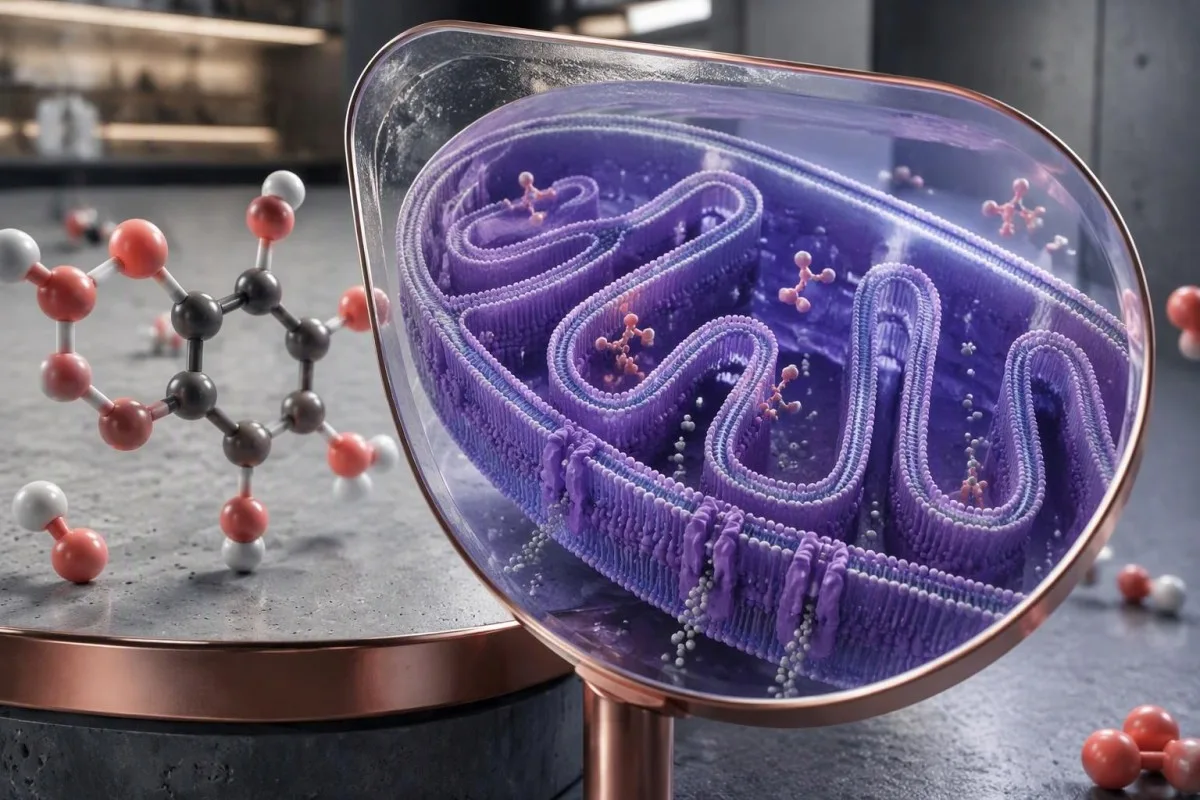
Salicylates uncouple oxidative phosphorylation, increasing energy demand and contributing to heat production and metabolic disturbance. This mechanism helps explain why 1 serum concentration cannot summarize organ effects; it does not provide a separate laboratory test that can replace serial salicylate measurements or clinical observation.
Thresholds such as 100 mg/dL are escalation recommendations, not experimentally proven boundaries between safe and unsafe patients. Our طبي تصديق جو فريم ورڪ provides context for how interpretation quality should be assessed; clinical guideline evidence must remain separate from technical testing of an AI system.
Kantesti LTD is the organization behind this educational article, as described in our ڪمپني پسمنظر. The 2 Zenodo publications listed below cover RDW and BUN/creatinine interpretation; neither is a salicylate poisoning trial, and neither establishes aspirin treatment thresholds.
The kidney-function publication offers background for understanding renal clearance, while the RDW publication concerns red-cell indices rather than aspirin toxicity. Our طبي مواد جا معيار explain why these 2 educational resources are distinguished from the directly relevant ACMT and EXTRIP medical references.
اڪثر پڇيا ويندڙ سوال
عام يا علاج لاءِ سيلسيليٽ جي سطح ڇا هوندي آهي؟
سيلسيليٽ جي علاج واري حد عام طور تي لڳ ڀڳ 10–30 mg/dL هوندي آهي، جيڪا استعمال جي سبب ۽ ليبارٽريءَ تي دارومدار رکي ٿي، پر اها ڪا عام جسماني ضرورت ناهي. جن ماڻهن سيلسيليٽ نه ورتا هوندا آهن، تن ۾ انهن جي مقدار عام طور تي معلوم نه ٿيندڙ يا تمام گهٽ هوندي آهي. پليٽليٽن کي روڪڻ لاءِ اسپرين جي گهٽ مقدار کي تاريخي دردڪش يا سوزش گهٽائيندڙ حد تائين پهچڻ جي ضرورت ناهي. علامتون، رت جو pH، گردن جو ڪم ۽ دوا وٺڻ جو وقت، ان حد اندر يا ان جي ويجهو مقدار کي طبي لحاظ کان ڳڻتي جوڳو بڻائي سگهن ٿا.
ڇا سليسائيليٽ جي شروعاتي گهٽ سطح اسپرين جي وڌيڪ مقدار کائڻ کي رد ڪري سگهي ٿي؟
0 شروعاتي گهٽ سليسيليٽ سطح ايسپرين جي اوورڊوز کي رد نٿي ڪري سگهي، ڇاڪاڻتہ جذب اڃا نامڪمل ٿي سگهي ٿو. انٽرڪ ڪوٽيڊ گوريون، معدي جي خالي ٿيڻ جي رفتار ۾ گهٽتائي ۽ وڏي مقدار ۾ کائڻ سبب سطح جي عروج ۾ دير ٿي سگهي ٿي، ڪڏهن ڪڏهن 12–24 ڪلاڪن کان به وڌيڪ. ڊاڪٽر ترت شروعاتي نمونو وٺندا آهن ۽ بار بار ماپون ڪندا آهن، جيستائين جاري جذب کي خارج نه ڪيو وڃي. شڪي زهرخوراني ۾ گهر ويهي پوءِ ايندڙ نتيجي جو انتظار ڪرڻ بدران فوري جائزو وٺڻ ضروري آهي.
ڪلينشين ساليسيليٽ جي سطح ڪيتري وقفي سان ٻيهر ماپيندا آهن؟
0 ڪلينشين عام طور تي زهرجڻ جو شڪ ٿيڻ تي شروعات ۾ تقريباً هر 2 ڪلاڪن کانپوءِ سيلسيليٽ جي سطح ٻيهر ماپيندا آهن، پر وقفو شدت، دوا جي فارموليشن ۽ علاج تي دارومدار رکي ٿو. ورجائي ڪيل ماپن جي تشريح علامتن، رت جي گيسن، اليڪٽرولائٽس ۽ گردن جي ڪم سان گڏ ڪئي ويندي آهي. جيڪڏهن رت جو pH گهٽجي يا مونجهارو پيدا ٿئي، ته گهٽجندڙ مقدار اطمينان لاءِ ڪافي نه آهي. نگراني ان وقت تائين جاري رهندي آهي، جيستائين علاج ڪندڙ ٽيم اهو طئي ڪري ته جذب ٿيڻ ختم ٿي چڪو آهي ۽ ڪلينڪي غيرمعموليتون ٺيڪ ٿي رهيون آهن.
ڪهڙي سليسيليٽ جي سطح تي ڊائلاسس جي ضرورت پوي ٿي؟
EXTRIP سفارش ڪري ٿو ته جڏهن سليسيليٽ 100 mg/dL کان وڌي وڃي، يا گردن جي ڪمزوري سان 90 mg/dL هجي، تڏهن ڊائلاسس يا ڪو ٻيو مناسب جسم کان ٻاهر علاج ڪيو وڃي. ذهني حالت ۾ تبديلي، نئين هائپوڪسيميا جنهن لاءِ اضافي آڪسيجن جي ضرورت هجي، يا معياري علاج جي ناڪامي، انهن مقدارن کان گهٽ سطح تي به ڊائلاسس جو جواز بڻجي سگهن ٿا. EXTRIP شديد ايسڊيميا ۾، pH 7.20 يا ان کان گهٽ هئڻ تي، ڊائلاسس جي پڻ صلاح ڏئي ٿو. لڳ ڀڳ 40 mg/dL جي اهم دائمي زهريت ۾، جڏهن اعصابي يا ڦڦڙن جون علامتون موجود هجن، ڊائلاسس تي غور ڪرڻ مناسب ٿي سگهي ٿو.
دائمي اسپرين جي زهريت گهٽ مقدار تي ڇو ٿي سگهي ٿي؟
ايسپرين جي دائمي زهرناڪي گهٽ سيرم مقدار تي به شديد ٿي سگهي ٿي، ڇاڪاڻ ته بار بار استعمال سان سليسيليٽ ٽشوز ۾ گڏ ٿيندو رهي ٿو. پاڻي جي کوٽ، بيماري ۽ گردن جي ڪم ۾ خرابي ان جي خارج ٿيڻ کي گهٽائي سگهن ٿا، خاص طور تي وڏي عمر وارن ماڻهن ۾. تنهن ڪري، 40 mg/dL جو مقدار، جنهن سان مونجهارو يا ڦڦڙن جو متاثر ٿيڻ گڏ هجي، مستحڪم حالت ۾، اوائلي شديد استعمال واري ساڳئي نتيجي جي برابر ناهي. ڊاڪٽر صرف تازي خوراک نه، پر گذريل ڏينهن جي دوا وٺڻ جي تاريخ جو جائزو وٺن ٿا.
ڇا سيلسيليٽ جي زهرجڻ دوران رت جو pH نارمل ٿي سگهي ٿو؟
سيلسيليٽ جي زهر جي حالت ۾ رت جو pH لڳ ڀڳ معمول مطابق ٿي سگهي ٿو، ڇاڪاڻتہ تنفسي الڪالوسس ۽ ميٽابولڪ ايسڊوسس جا عددي اثر هڪ ٻئي کي زائل ڪري سگهن ٿا. مثال طور، 12 mmol/L بائيڪاربونيٽ ۽ 20 mmHg PaCO2 سان pH لڳ ڀڳ 7.40 ٿي سگهي ٿو، باوجود ان جي ته غيرمعموليات ڪافي نمايان هجن. تنهن ڪري ڊاڪٽر صرف pH تي ڀاڙڻ بدران بائيڪاربونيٽ، ڪاربان ڊاءِ آڪسائيڊ جو دٻاءُ ۽ اينائن گيپ ڏسن ٿا. گئس جي جاچ جو نتيجو بظاهر معمول مطابق هئڻ سان سيلسيليٽ جي لڳاتار ماپن ۽ ڪلينڪل جائزي جي ضرورت ختم نٿي ٿئي.
جيڪڏهن مون کي اسپرين جي زهرجڻ جو شڪ هجي ته مون کي ڇا ڪرڻ گهرجي؟
جيڪڏهن اسپرين جي زهرجڻ جو شڪ هجي ته فوري طور زهرن جي سروس يا ايمرجنسي کاتي کان طبي جائزو وٺرايو، ڀلي پهرين سليسيليٽ جي سطح گهٽ هجي. مونجهاري، دورن، بيهوشي يا ساهه کڻڻ ۾ سخت تڪليف جي صورت ۾ برطانيا ۾ 999 يا 112، يا آمريڪا ۾ 911 تي ڪال ڪريو. آمريڪا ۾، فوري طور زهر سان واسطي بابت صلاح لاءِ Poison Control سان 1-800-222-1222 تي رابطو ڪري سگهجي ٿو. الٽي نه ڪرايو ۽ گهر ۾ موجود چارڪول يا بيڪنگ سوڊا نه ڏيو؛ دوا جي پيڪنگ ۽ موجود وقت بابت ڄاڻ پاڻ سان آڻيو.
پنهنجي رت جي جاچ جو نتيجو ڪيئن پڙهجي
پنهنجي ليبارٽري رپورٽ اپلوڊ ڪريو ۽ Kantesti جو AI سيڪنڊن اندر هر بائيو مارڪر کي سادي ٻوليءَ ۾ سمجهائيندو. سڄي دنيا ۾ 2 ملين کان وڌيڪ ماڻهن طرفان استعمال ٿيل.
حوالا
- Klein, T., Mitchell, S., & Weber, H. (2026). RDW رت جي جاچ: RDW-CV، MCV ۽ MCHC بابت مڪمل رهنمائي. Kantesti AI طبي تحقيق. ڊي او آءِ
- Klein, T., Mitchell, S., & Weber, H. (2026). BUN/Creatinine Ratio Explained: گردن جي ڪم جاچ Guide. Kantesti AI طبي تحقيق. ڊي او آءِ
- American College of Medical Toxicology (2015). Guidance Document: Management Priorities in Salicylate Toxicity. Journal of Medical Toxicology. ڊي او آءِ
- Juurlink DN et al. (2015). Extracorporeal Treatment for Salicylate Poisoning: Systematic Review and Recommendations From the EXTRIP Workgroup. Annals of Emergency Medicine. ڊي او آءِ
- 20 لک+تجزيو ڪيل ٽيسٽون
- 127+ملڪ
- 100+ٻوليون
طبي ٽيم بابت


E-E-A-T اعتماد جا سگنل
تجربو
ڊاڪٽر جي نگرانيءَ هيٺ ليبارٽري نتيجن جي تشريح واري عمل جو جائزو.
ماهر
ليبارٽري دوائن جو ڌيان ان ڳالهه تي ته بايو مارڪرز ڪلينڪل حوالي سان ڪيئن رويو ڏيکارين ٿا.
اختيار
ڊاڪٽر ٿامس ڪلائن طبي جائزو ورتو، جنهن ۾ ڊاڪٽر سارا مچل ۽ پروفيسر ڊاڪٽر هانس ويبر جون ڀاڱيداريون شامل آهن.
اعتبار
ثبوتن تي ٻڌل تشريح، جنهن سان خبرداري گهٽائڻ لاءِ واضح پيرويءَ جا رستا موجود هجن.

طبي ترديد
هي آرٽيڪل صرف تعليمي مقصدن لاءِ آهي ۽ طبي مشورو نٿو بڻجي. تشخيص ۽ علاج جي فيصلن لاءِ هميشه ڪنهن قابل صحت فراهم ڪندڙ سان صلاح ڪريو.
شايع ٿيل · ايڊيٽوريل ٽيم سان رابطو ڪريو
Kantesti Ltd پاران شايع ٿيل، انگلينڊ ۽ ويلز ۾ رجسٽرڊ، ڪمپني نمبر. 17090423, ، لنڊن، برطانيه.
