
Ein korrekt zum richtigen Zeitpunkt gemessener Voriconazol-Talspiegel hilft zu beurteilen, ob die Antimykotika-Exposition ausreichend ist, ohne übermäßig zu werden. Viele Behandlungsprotokolle verwenden ungefähr 1–5,5 mg/L, doch die Infektion, der Präventionsplan und die Nebenwirkungen bestimmen Ihren persönlichen Zielwert.

Wichtigste Erkenntnisse
- Voriconazol-Talspiegel ist die Wirkstoffkonzentration unmittelbar vor der nächsten planmäßigen Dosis; sie misst die Exposition, nicht, ob eine Infektion ausgeheilt ist.
- Behandlungsziele erfordern üblicherweise einen Talspiegel über 1–1,5 mg/L; bei schwierigen oder schweren Infektionen streben manche Behandlungsteams mindestens 2 mg/L an.
- Obere Grenzwerte liegen üblicherweise bei etwa 5–6 mg/L, da eine übermäßige Exposition die Besorgnis hinsichtlich neurologischer und anderer unerwünschter Wirkungen erhöht.
- Zielwerte für die Prävention sind protokollspezifisch; ein niedrigerer Grenzwert für die Prophylaxe sollte nicht automatisch auf die Behandlung einer bestehenden Infektion angewendet werden.
- Zeitpunkt der Spiegelbestimmung bedeutet üblicherweise eine Probenentnahme etwa 30 Minuten vor der nächsten Dosis gemäß den Anweisungen des Labors.
- Umrechnung der Einheit ist exakt: 1 mg/L entspricht 1 µg/mL und 1,000 ng/mL.
- Eine niedrige Exposition kann auf ausgelassene Dosen, Nahrungsmitteleffekte, eine beeinträchtigte Resorption, Wechselwirkungen mit anderen Arzneimitteln oder einen schnelleren Metabolismus zurückzuführen sein – nicht einfach nur auf eine unzureichende Verordnung.
- Dosis Sicherheit erfordert Änderungen unter ärztlicher Aufsicht, da eine Dosiserhöhung um 25% zu einem überproportional starken Anstieg der Konzentration führen kann.
Was sagt ein Voriconazol-Talspiegel tatsächlich aus?
A Voriconazol-Talspiegel gibt Ärzten Aufschluss darüber, wie viel Antimykotikum unmittelbar vor der nächsten Dosis noch vorhanden ist. Ein korrekt entnommener Wert von etwa 1–5.5 mg/L entspricht häufig einem Behandlungsprotokoll; eine wirksame Dosis hängt jedoch auch von der Empfindlichkeit des Pilzes, dem Infektionsort und der klinischen Besserung ab.
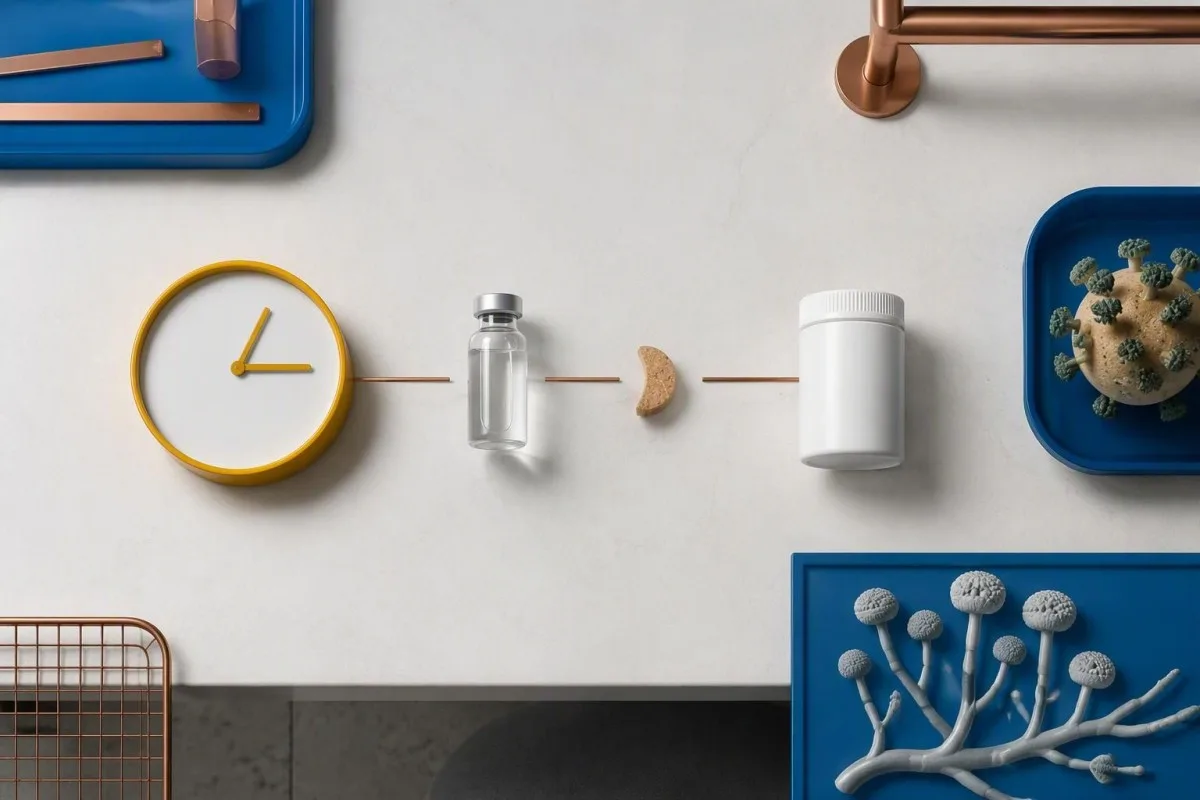
Ein Talspiegel ist ein praktischer Marker für die Exposition über ein Dosierungsintervall hinweg und keine direkte Messung des Arzneimittels in einer betroffenen Lunge oder im Gehirn. Bei einer Person, die alle 12 Stunden Voriconazol einnimmt, hilft die Konzentration vor der Dosis festzustellen, ob die Exposition zwischen den Dosen möglicherweise zu niedrig wird.
Das therapeutische Drug-Monitoring verfolgt zwei getrennte Ziele: eine ausreichende Exposition für die antimykotische Wirkung sicherzustellen und eine übermäßige Exposition zu vermeiden. Die IDSA-Leitlinie zur Aspergillose nennt Talspiegel über 1–1.5 mg/L und unter 5–6 mg/L als häufig verwendete Expertenzielwerte, insbesondere zur Begrenzung der Toxizität des Zentralnervensystems (Patterson et al., 2016).
Kantesti ist ein KI-Bluttestanalysator die dabei helfen kann, ein hochgeladenes Voriconazol-Ergebnis zusammen mit Leberwerten einzuordnen, während Ihr Behandlungsteam den Zielwert festlegt. Bei einem Ergebnis von 1.2 mg/L müssen die Indikation und der Entnahmezeitpunkt angegeben werden; unsere Erläuterung sollte aus dieser Zahl keine Dosierungsanweisung machen.
Ein Laborhinweis ist kein Urteil über den Behandlungserfolg. Anders als viele Referenzintervalle für Routineuntersuchungen der klinischen Chemie stellt ein Überwachungsintervall für Arzneimittel ein klinisches Expositionsziel dar; unsere Erläuterung zu außerhalb des Referenzbereichs liegende Laborergebnisse hilft dabei, einen Hinweis von einer Diagnose zu unterscheiden.
Wann sollte Ihr Voriconazol-Spiegel bestimmt werden?
Der korrekte Zeitpunkt der Voriconazol-Spiegelbestimmung bedeutet, die Probe unmittelbar vor der nächsten planmäßigen Dosis zu entnehmen, üblicherweise innerhalb von 30 Minuten davor. Der erste routinemäßige Spiegel wird häufig an den Tagen 4–7 bestimmt; eine frühere Untersuchung kann jedoch bei Aufsättigungsdosen, schwerer Erkrankung und nach lokalen Protokollen sinnvoll sein.

Stellen Sie sich beispielsweise einen verordneten Einnahmeplan mit Dosen um 8 Uhr und 20 Uhr vor. Eine um 7:45 Uhr vor der morgendlichen Einnahme entnommene Probe entspricht annähernd einem Talspiegel; eine um 10 Uhr nach Einnahme der Dosis entnommene Probe hingegen nicht, selbst wenn der Laborbericht sie als Talspiegel bezeichnet.
Eine verspätete Dosis kann die Interpretation auch in die entgegengesetzte Richtung verfälschen. War die nächste Dosis für 8 Uhr vorgesehen, die Probe wurde aber erst um 11 Uhr entnommen, können die zusätzlichen 3 Stunden ohne Arzneimittel die gemessene Konzentration senken; das Behandlungsteam benötigt die tatsächlichen Uhrzeiten, nicht nur den vorgesehenen Einnahmeplan.
Auch bei intravenöser Gabe von Voriconazol ist eine Probe vor der Dosis erforderlich, üblicherweise vor Beginn der nächsten Infusion. Bei einer Entnahme über einen für die Verabreichung des Arzneimittels verwendeten Zugang besteht die Gefahr einer Kontamination. Daher sollte das Labor- oder Infusionsteam den Entnahmeweg festlegen, statt anzunehmen, dass jeder zugängliche Zugang ein gleichwertiges Ergebnis liefert.
Für die Konzentrationsbestimmung ist nächtliches Fasten nicht grundsätzlich erforderlich, aber für die Einnahme von oralem Voriconazol gelten eigene Vorgaben zum zeitlichen Abstand zu Mahlzeiten. Klären Sie den Entnahmeplan vorab; arzneimittelspezifische Regeln zur Probenentnahme erklären, warum eine gültige Zeitregel für ein Arzneimittel nicht auf ein anderes übertragen werden kann.
Was ist der therapeutische Bereich für Voriconazol?
Der therapeutischer Bereich von Voriconazol is commonly approximately 1–5.5 mg/L for treatment, but there is no universal interval suitable for every patient. IDSA guidance discusses a lower goal above 1–1.5 mg/L and an upper boundary below 5–6 mg/L; some difficult infections prompt a higher minimum.

These boundaries describe probabilities, not biological switches. A trough of 0.9 mg/L does not prove failure, and 5.6 mg/L does not prove toxicity; repeated results, symptoms and organism susceptibility help determine whether a small boundary crossing is clinically meaningful or simply requires confirmation.
For invasive aspergillosis, the British Society for Medical Mycology recommends a treatment trough above 1 mg/L and discusses higher exposure goals for poor-prognosis situations, including central nervous system disease (Ashbee et al., 2014). A team may therefore consider 1.3 mg/L acceptable for one indication but insufficient for another.
The reason for a higher minimum is that the concentration needed to inhibit a less-susceptible fungus may exceed the concentration needed for a susceptible organism. Raising exposure indefinitely is not a safe solution: a trough approaching 5–6 mg/L can leave little room between a desired antifungal effect and adverse effects.
Always read the units before comparing reports. A result of 2 µg/mL is exactly 2 mg/L, not twice or half that value; the biomarker and units guide provides context for comparing laboratory values without mistaking a therapeutic target for a healthy-population range.
| Wert | Bereich | Bedeutung |
|---|---|---|
| Below many treatment targets | <1 mg/L | Check collection timing, dosing history, absorption and interactions; not proof of treatment failure. |
| Lower treatment exposure | 1–<2 mg/L | May meet the prescribed target, but severe disease or reduced fungal susceptibility can require a higher minimum. |
| Common treatment exposure window | 2–5.5 mg/L | Often compatible with treatment goals when correctly timed; does not guarantee efficacy or freedom from toxicity. |
| Above many local upper limits | >5.5 mg/L | Requires review of symptoms, liver tests, timing and the local protocol; there is no universal emergency cutoff. |
Warum können sich die Zielwerte für Behandlung und Prävention unterscheiden?
Treatment targets may be more demanding than prevention targets because an established fungal infection must be controlled, not merely prevented. Some local prophylaxis protocols accept 0.5 mg/L, whereas British guidance recommends a prophylaxis trough above 1 mg/L; these thresholds are not interchangeable.

Prophylaxis studies are harder to interpret because breakthrough fungal disease may be uncommon and heavily influenced by immune status. A threshold of 0.5 mg/L used in one prevention programme cannot establish equivalent protection for every stem-cell transplant recipient, particularly during prolonged neutropenia or intensive immunosuppression.
The British Society for Medical Mycology's prophylaxis recommendation above 1 mg/L carries a weaker evidence base than some treatment recommendations (Ashbee et al., 2014). The uncertainty is genuine: the exact preventive minimum is less settled than the principle that persistently very low exposure deserves investigation.
Consider a hypothetical result of 0.8 mg/L in two people. One is receiving prevention under a documented local protocol; the other has confirmed invasive aspergillosis. The same concentration can lead to different discussions because the indication, fungal burden and acceptable risk of inadequate exposure differ.
Transplant recipients often have several parallel monitoring plans, not one combined 'infection score.' Voriconazole does not prevent every opportunistic infection, and CMV results after transplantation answer a different question; a satisfactory antifungal trough does not replace viral surveillance or other prescribed prophylaxis.
Was kann einen niedrigen Voriconazol-Spiegel verursachen?
A low voriconazole level can result from missed or delayed doses, food effects, impaired gastrointestinal absorption, enzyme-inducing medicines or faster metabolism. Before changing treatment, clinicians verify whether a result below 1 mg/L is a correctly timed trough and whether the prescribed doses actually reached the patient.
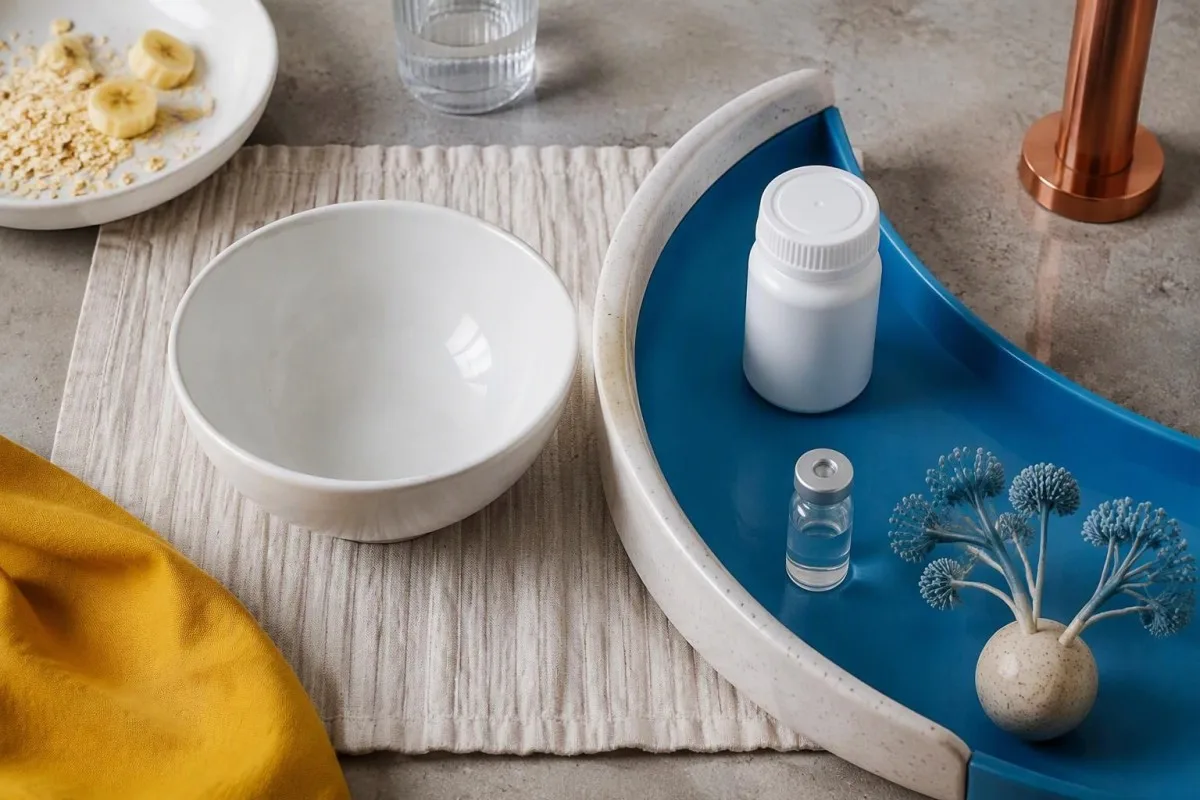
Oral voriconazole is generally taken at least 1 hour before or 1 hour after a meal, following the product instructions. Food can reduce exposure, but a low result should not be blamed on breakfast without checking the complete dosing history, formulation, vomiting and other medicines.
Imagine a hypothetical adult prescribed 200 mg every 12 hours whose trough is 0.6 mg/L. Taking each dose with a substantial meal and vomiting one evening dose creates two plausible explanations for low exposure; automatically escalating the prescription could cause excessive exposure once those problems resolve.
Severe diarrhoea, mucositis, gastrointestinal surgery and feeding-tube administration can make oral delivery less predictable. Clinicians may review the formulation or route rather than simply the milligram amount; testing for impaired fat absorption explains why gastrointestinal dysfunction needs its own assessment rather than being diagnosed from one drug level.
Acid-suppressing medicines deserve a medication review, but voriconazole should not be treated like an antifungal whose absorption always requires stomach acid. Some proton pump inhibitors inhibit metabolism and can raise exposure; our reflux treatment context helps readers identify these medicines without stopping them independently.
Warum kann eine kleine Dosisänderung den Spiegel manchmal stark verändern?
Voriconazole has nonlinear metabolism in adults, meaning a dose increase can produce a more-than-proportional concentration increase. Changing a prescribed dose from 200 mg to 250 mg is a 25% increase, but the resulting trough cannot safely be predicted by multiplying the old result by 1.25.
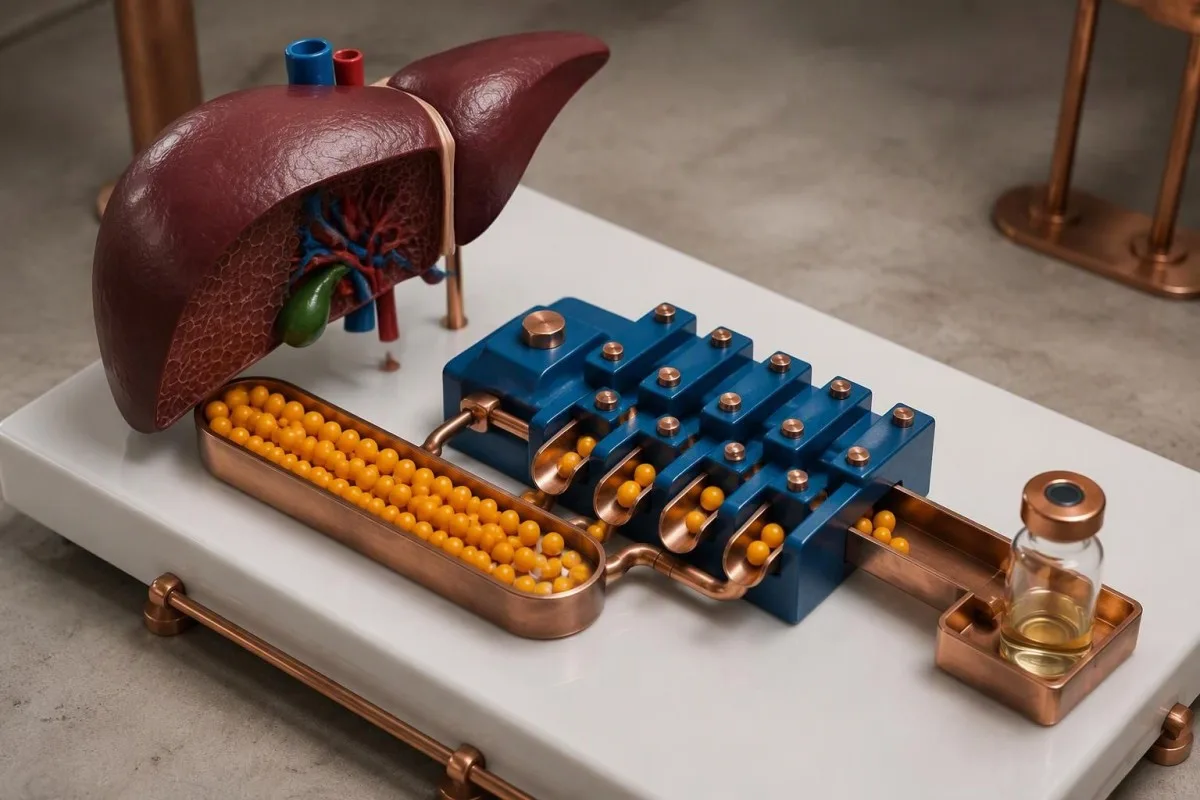
Metabolising enzymes can approach their processing capacity as exposure rises, so each additional milligram may be cleared less efficiently. A hypothetical rise from 2 mg/L to 4 mg/L after a modest dose adjustment is therefore plausible, but no single example provides a reliable formula for an individual patient.
The reverse calculation is unreliable too. A dose reduction of 25% does not guarantee a 25% concentration reduction, particularly when liver function or interacting medicines are changing; clinicians use repeat monitoring rather than assuming that the prescription and laboratory result move along a straight line.
A trough also reflects conditions during the preceding doses, not only the dose taken most recently. If a new prescription began 1 day before collection, the result may not represent the eventual exposure on that regimen, and an early result should be labelled as such rather than interpreted as settled.
This is a major reason not to borrow another person's adjustment advice. Nonlinear phenytoin monitoring illustrates a related principle, although phenytoin's free-versus-total measurement issues and target intervals are different; the shared lesson is that arithmetic alone cannot determine a safe drug dose.
Wie beeinflusst CYP2C19 die Voriconazol-Exposition?
CYP2C19 genetic variation can influence voriconazole clearance: rapid and ultrarapid metabolisers may have low exposure, while poor metabolisers may develop higher concentrations. A genetic result can help explain a repeated trough below 1 mg/L or above the prescribed ceiling, but it does not replace drug monitoring.
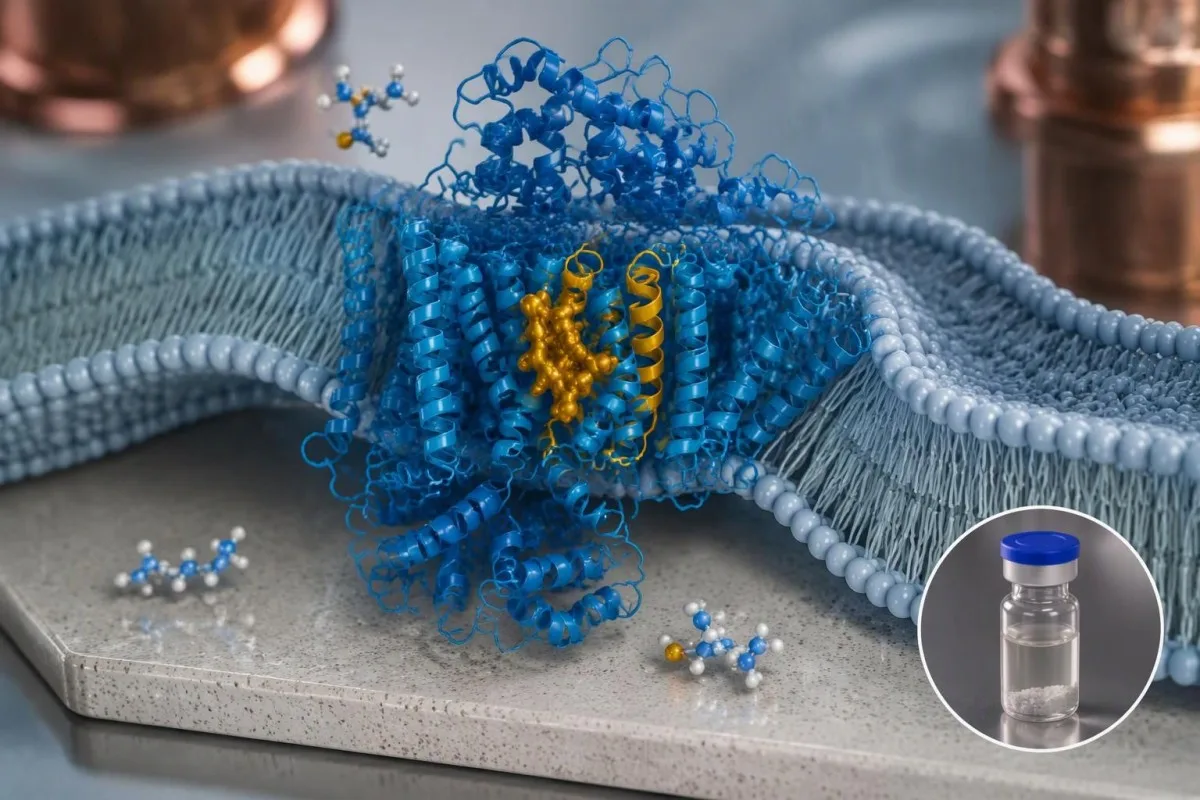
CPIC guidance recommends considering an alternative antifungal for certain CYP2C19 phenotypes when achieving reliable voriconazole exposure is difficult or adverse-effect risk is increased (Moriyama et al., 2017). This is a clinician-led choice between suitable treatments, not an instruction to stop an effective medicine after seeing a genetic category.
Genotype is only one input because liver illness, interacting medicines and systemic inflammatory responses can alter enzyme activity. A person genetically classified as a rapid metaboliser can still develop a trough of 6 mg/L under changed clinical conditions; inherited tendency does not establish a permanent, safe dose.
CYP2C19 influences more than one medicine, but the consequences are drug-specific. An enzyme variant that reduces activation of a prodrug can have a different clinical meaning from a variant that slows clearance of an active antifungal; 'fast metaboliser' is not automatically a favourable or unfavourable label.
Kantesti ist ein AI-Bluttest-Auswertungsplattform that can help organise the laboratory and medication context around a reported voriconazole concentration. Our KI-Technologieerklärung describes the interpretation workflow; a chemistry panel cannot reveal CYP2C19 genotype unless a separate genetic test has actually been performed.
Welche Arzneimittelwechselwirkungen können das Ergebnis verändern?
Voriconazole interactions can either lower its concentration or increase exposure to voriconazole and other medicines. Rifampicin and carbamazepine are major enzyme-inducing concerns, while voriconazole can substantially increase tacrolimus exposure; a satisfactory trough of 2 mg/L does not make the combination automatically safe.

Rifampicin, carbamazepine and St John's wort can substantially reduce voriconazole exposure, and some combinations are contraindicated. Phenytoin creates a particularly complicated bidirectional interaction; any specialist exception requires an explicit monitoring plan rather than the assumption that increasing voriconazole will reliably overcome induction.
Starting or stopping an interacting medicine can matter as much as adding a new voriconazole dose. Enzyme induction and its reversal do not necessarily disappear within 24 hours, so clinicians need medication start and stop dates when explaining a concentration that changes despite an unchanged antifungal prescription.
Tacrolimus is a separate safety priority because voriconazole inhibits pathways involved in its clearance. A transplant team may need to adjust and closely monitor tacrolimus when voriconazole starts or stops; our tacrolimus trough interpretation guide explains why both drug concentrations must be reviewed independently.
Warfarin and medicines that prolong the QT interval also require attention even when the antifungal trough is within range. Voriconazole can increase anticoagulant effect, so understanding INR monitoring is useful; an antifungal level does not substitute for coagulation testing or an electrocardiogram.
Wie verändern Leberwerte die Interpretation des Talspiegels?
Liver dysfunction can reduce voriconazole clearance and increase exposure, while voriconazole itself can cause liver injury. A rising trough above 5–6 mg/L together with increasing ALT or bilirubin deserves prompt clinical review, but an isolated liver-test abnormality does not prove the antifungal caused it.
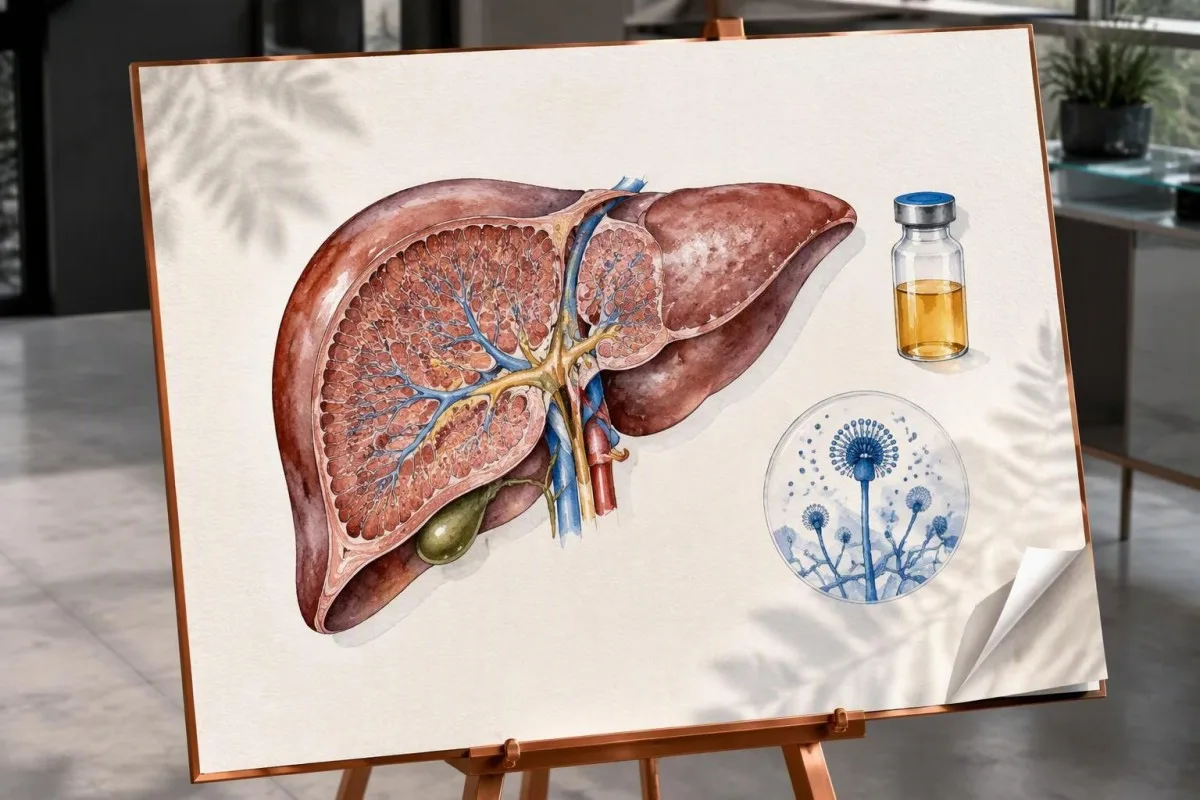
Product information recommends halving the usual maintenance dose in adults with mild-to-moderate cirrhosis, classified as Child–Pugh A or B, while retaining the standard loading regimen. That is prescribing guidance for clinicians, not a self-adjustment rule; severe hepatic impairment has less-established dosing evidence and needs specialist assessment.
Liver-test monitoring is generally recommended at least weekly during the first month, with frequency potentially reduced to monthly if results remain stable. The Erklärung des Leberpanels distinguishes injury markers from synthetic-function measures; ALT alone does not quantify the liver's capacity to clear voriconazole.
For example, ALT of 180 IU/L with a laboratory upper limit of 40 IU/L is 4.5 times that limit. Clinicians compare the change with baseline, bilirubin, ALP, symptoms and alternative causes; our ALT-Nachsorge-Leitfaden explains why a multiple of the upper limit is more informative than a raw number.
At Kantesti, we explain why a seemingly acceptable total concentration can still need context when albumin is markedly low. An albumin result of 22 g/L can affect drug binding, but there is no universally adopted albumin-correction formula for voriconazole; the Leitfaden zur Interpretation von Serumeiweißen helps separate binding concerns from a diagnosis of cirrhosis.
Bedeuten Sehstörungen, dass der Talspiegel zu hoch ist?
Visual disturbances are a recognised voriconazole effect and do not automatically mean the trough exceeds 5.5 mg/L. Temporary changes in brightness, colour perception or blurred vision can occur at otherwise acceptable exposure, whereas persistent visual loss, hallucinations or confusion require a different level of concern.

Clinical-trial information describes visual disturbances in approximately 30% of recipients, often occurring early in treatment and resolving within about 30 minutes. The frequency varies across populations and reporting methods, and the symptom alone cannot establish whether a result of 2 mg/L or 6 mg/L is responsible.
Repeated brief brightness changes soon after a dose differ from continuous loss of vision throughout the day. A pre-dose trough may not capture the maximum post-dose concentration associated with an episode; write down when symptoms start, how long they last and whether both eyes are affected.
New hallucinations, marked confusion or worsening visual impairment warrant prompt medical assessment, especially alongside a high concentration. Sudden loss of vision, severe eye pain or a new neurological deficit requires urgent evaluation regardless of the trough; do not wait 4–7 days for routine repeat monitoring.
For treatment continuing beyond 28 days, product information recommends monitoring visual function, including acuity, visual fields and colour perception. Formal eye-function testing illustrates some of these assessments, although voriconazole symptoms do not by themselves diagnose glaucoma; avoid driving while vision is affected.
Wann erfordert ein hoher Voriconazol-Spiegel dringende Aufmerksamkeit?
A trough above approximately 5–6 mg/L raises concern for excessive exposure, particularly when accompanied by confusion, hallucinations or worsening liver tests. Urgency depends on symptoms and organ effects, not a universal critical concentration; serious adverse effects can also occur below this numerical boundary.

A hypothetical trough of 7.2 mg/L with new hallucinations needs prompt contact with the prescribing team rather than a routine appointment weeks later. The team may change or temporarily interrupt treatment, but the patient should not independently halve the dose, skip repeated doses or wait for an AI explanation.
Fainting, sustained palpitations, seizures, severe confusion, a serious rash or jaundice with systemic illness warrant urgent assessment. Voriconazole can prolong the QT interval, and low potassium or magnesium adds risk; an electrolyte panel safety review addresses hazards that the antifungal concentration does not measure.
Kidney function affects the intravenous formulation differently from the active antifungal's liver metabolism. The cyclodextrin vehicle can accumulate when creatinine clearance is below 50 mL/min, prompting a route-specific risk–benefit review; a normal voriconazole trough cannot establish that the intravenous vehicle is harmless.
Long courses introduce problems not reliably predicted by a single trough, including photosensitivity and fluoride-associated periostitis. New persistent bone pain during a hypothetical 6-month course deserves review even at 3 mg/L, and sun-protection advice remains relevant when the drug concentration falls within the intended treatment window.
Kann der Spiegel im therapeutischen Bereich liegen, während sich die Infektion verschlimmert?
Yes—a therapeutic voriconazole trough does not guarantee treatment success because fungal resistance, an incorrect diagnosis, inadequate source control or profound immunosuppression can overcome adequate exposure. A result of 3 mg/L confirms neither fungal susceptibility nor sufficient drug delivery to every affected site.

The organism's minimum inhibitory concentration, or MIC, helps describe how much drug inhibits growth under laboratory conditions. If the fungal MIC is 2 mg/L rather than 0.25 mg/L, the same trough has a different exposure-to-susceptibility relationship; a trough-to-MIC ratio is not a self-dosing calculator.
Clinicians review imaging, cultures, susceptibility testing and relevant fungal markers alongside the concentration. A galactomannan result interpretation can clarify another piece of the assessment, but neither one positive marker nor one therapeutic trough independently proves active aspergillosis or its resolution.
Voriconazole lacks reliable activity against Mucorales, the fungi responsible for mucormycosis. A trough of 4 mg/L therefore cannot solve a mismatch between the medicine and the organism; persistent deterioration may require diagnostic reassessment and a different antifungal strategy rather than progressively increasing exposure.
Early imaging changes are also not always equivalent to failure because inflammatory responses can change as immune function recovers. Nonetheless, worsening breathing, new neurological symptoms or fever during severe neutropenia needs prompt clinical assessment; the infection team decides whether a 1-week trend reflects expected evolution or an inadequate treatment plan.
Wann sollte der Talspiegel erneut bestimmt werden?
Voriconazole monitoring is commonly repeated after a dose change, a major interaction change, altered liver function, a route change or suspected treatment failure. A routine reassessment often occurs within 4–7 days, but concerning neurological symptoms or liver deterioration justify earlier clinical action rather than waiting for steady exposure.
Two concentrations are meaningfully comparable only when the dosing interval and collection conditions are documented. A change from 1.1 mg/L to 3.4 mg/L may represent improved exposure, but it may instead compare a delayed trough with a post-dose sample; the size of the difference cannot correct a timing error.
Changing from intravenous to oral treatment can alter exposure even when the intended prescription seems equivalent. Clinicians may repeat the level after the switch, especially if eating, vomiting or tube feeding has changed; the route belongs beside the concentration in the monitoring record, not only in the medication history.
Kantesti ist ein KI-gestütztes Analyse-Tool für Bluttests that can help organise uploaded drug levels alongside liver-test trends and reported dose times. Our medication-safety trend workflow supports preparation for review, but a rise from 2 mg/L to 6 mg/L still requires clinician-led interpretation and treatment decisions.
Stable treatment does not create one universal long-term testing interval. The team balances infection risk, treatment duration, prior variability and access to testing; keep a record of at least the previous dose time, collection time, current prescription, formulation and medication changes so the next result answers a usable question.
Was sollten Sie zum Kontrolltermin mitbringen, und worauf stützen sich diese Empfehlungen?
Bring the actual dose and collection times, the prescribed treatment goal, recent liver results and a complete medication list to your voriconazole review. Ask whether a result such as 1.4 mg/L meets your specific indication—not whether it fits a single internet range—and do not adjust the prescription yourself.

A practical review has three questions: was the sample a true trough, is exposure appropriate for this infection or prevention plan, and are there adverse effects or interactions? Include missed doses and meal timing honestly; a 12-hour prescription does not mean every dose was actually separated by 12 hours.
The clinical recommendations here draw on the 2016 IDSA aspergillosis guideline, the 2014 British Society for Medical Mycology monitoring guideline and the 2017 CPIC voriconazole guideline. These sources address different questions—clinical treatment, concentration monitoring and pharmacogenetics—so their recommendations should be combined thoughtfully rather than presented as one identical range.
Kantesti Ltd's role is to help readers understand laboratory information, not to prescribe antifungal treatment. Our organisation and purpose are described separately; technical evaluation on 100,000 synthetic cases cannot establish that a particular voriconazole dose improves clinical outcomes in a patient with invasive fungal disease.
The two research publications listed below describe an automated technical benchmark and a clinical-validation framework, not a voriconazole therapeutic-monitoring trial. Our validation methodology and limits explain that distinction; use our interpretation to prepare questions, while your infection specialist or prescribing team determines the dose and follow-up plan.
Häufig gestellte Fragen
Was ist ein normaler Talspiegel von Voriconazol?
Voriconazole does not have a healthy-population 'normal' concentration; it has a therapeutic exposure target. Many treatment protocols use approximately 1–5.5 mg/L, while IDSA guidance discusses a minimum above 1–1.5 mg/L and an upper boundary below 5–6 mg/L. Severe disease, fungal susceptibility and prevention protocols can change the intended target. Your prescribing team should interpret the result using the actual collection time and clinical indication.
Wie lange vor meiner Dosis sollte ein Voriconazolspiegel bestimmt werden?
0 Ein Voriconazol-Talspiegel wird gemäß den Anweisungen des örtlichen Labors üblicherweise unmittelbar vor der nächsten planmäßigen Dosis abgenommen, in der Regel innerhalb von 30 Minuten davor. Bei einer Dosis um 8 Uhr wäre eine Abnahme um 7:45 Uhr vor der Einnahme des Arzneimittels normalerweise angemessen. Wird die Dosis zuerst eingenommen, kann ein Wert nach der Dosis entstehen, der nicht direkt mit Talspiegel-Zielwerten verglichen werden sollte. Stimmen Sie den Abnahmeplan mit dem Behandlungsteam ab, anstatt die Dosis ohne entsprechende Anweisung um mehrere Stunden zu verzögern.
Was bedeutet ein niedriger Voriconazolspiegel?
Ein Talspiegel von Voriconazol unter 1 mg/L liegt unter vielen Behandlungszielwerten, beweist aber nicht, dass die verordnete Dosis zu niedrig ist. Ausgelassene Dosen, eine verspätete Probenentnahme, Einflüsse durch Nahrung, Erbrechen, eine beeinträchtigte Resorption und enzyminduzierende Arzneimittel können eine niedrige Wirkstoffexposition erklären. Voriconazol zum Einnehmen wird gemäß den Produktanweisungen in der Regel mindestens 1 Stunde vor oder nach einer Mahlzeit eingenommen. Wenden Sie sich zur Überprüfung an das verordnende Behandlungsteam, anstatt die Dosis selbst zu erhöhen.
Sind Voriconazol-Ergebnisse in mg/L und µg/mL identisch?
Voriconazol-Konzentrationen in mg/L und µg/mL haben denselben Zahlenwert. Ein Ergebnis von 2 mg/L entspricht genau 2 µg/mL, also auch 2.000 ng/mL. Labore können unterschiedliche Einheiten und Zielbereiche verwenden. Prüfen Sie daher beides, bevor Sie Befunde vergleichen. Diese Einheitenumrechnung korrigiert keine Probe, die zum falschen Zeitpunkt entnommen wurde.
Bedeutet verschwommenes Sehen oder Halluzinationen eine Voriconazol-Toxizität?
Kurzzeitige Sehstörungen können unter Voriconazol auch dann auftreten, wenn der Talspiegel im angestrebten Bereich liegt, während Halluzinationen oder Verwirrtheit eher auf eine übermäßige Exposition oder ein anderes medizinisches Problem hindeuten. Laut Produktinformation treten Sehstörungen bei etwa 30% der Behandelten auf und klingen häufig innerhalb von etwa 30 Minuten ab. Neue Halluzinationen, anhaltende Beeinträchtigungen oder eine Verschlechterung der Symptome erfordern eine umgehende Kontaktaufnahme mit dem behandelnden Team; plötzlicher Sehverlust oder schwere neurologische Symptome müssen dringend abgeklärt werden. Fahren Sie nicht, solange Ihr Sehvermögen beeinträchtigt ist, und passen Sie die Dosis des Antimykotikums nicht eigenständig an.
Wann sollten die Voriconazolspiegel nach einer Dosisänderung erneut überprüft werden?
Ein Talspiegel von Voriconazol wird je nach Dosierungsschema, Aufsättigungsdosen und lokalem Protokoll häufig innerhalb von 4–7 Tagen nach einer Dosisänderung erneut bestimmt. Bei Verdacht auf Toxizität, sich verändernder Leberfunktion oder schwerwiegenden Arzneimittelwechselwirkungen können eine frühere Bestimmung oder klinische Maßnahmen erforderlich sein. Aufgrund der nichtlinearen Metabolisierung führt eine Dosiserhöhung um 25% nicht zwangsläufig nur zu einem Konzentrationsanstieg um 25%. Das behandelnde Team sollte den Termin für die erneute Bestimmung festlegen und das Ergebnis interpretieren, bevor weitere Änderungen vorgenommen werden.
Lassen Sie sich Ihre Blutwerte erklären
Laden Sie Ihren Laborbericht hoch und die KI von Kantesti erklärt jeden Biomarker innerhalb von Sekunden in einfacher Sprache. Weltweit von mehr als 2 Millionen Menschen genutzt.
Referenzen
- Klein, T., Mitchell, S. & Weber, H. (2026). Ein vorregistrierter, rubrikbasierter automatisierter technischer Benchmark der Kantesti-Bluttest-Interpretations-Engine auf 100.000 synthetischen Testfällen. Kantesti KI-Medizinrecherche. DOI
- Klein, T., Mitchell, S. & Weber, H. (2026). Klinischer Validierungsrahmen v2.0 (Seite zur medizinischen Validierung). Kantesti KI-Medizinrecherche. DOI
- Patterson TF et al. (2016). Praxisleitlinien zur Diagnose und Behandlung der Aspergillose: Aktualisierung 2016 der Infectious Diseases Society of America. Clinical Infectious Diseases. DOI
- Ashbee HR et al. (2014). Therapeutic drug monitoring (TDM) of antifungal agents: guidelines from the British Society for Medical Mycology. Journal of Antimicrobial Chemotherapy. DOI
- Moriyama B et al. (2017). Clinical Pharmacogenetics Implementation Consortium (CPIC) Guidelines for CYP2C19 and Voriconazole Therapy. Clinical Pharmacology & Therapeutics. DOI
- 2M+Analysierte Tests
- 127+Länder
- 100+Sprachen
Über das medizinische Team


E-E-A-T Vertrauenssignale
Erfahrung
Ärztlich geleitete klinische Überprüfung von Labor-Interpretations-Workflows.
Sachverstand
Fokus der Labormedizin darauf, wie Biomarker sich im klinischen Kontext verhalten.
Autorität
Medizinisch geprüft von Dr. Thomas Klein, mit Beiträgen von Dr. Sarah Mitchell und Prof. Dr. Hans Weber.
Vertrauenswürdigkeit
Evidenzbasierte Interpretation mit klaren nächsten Schritten zur Reduzierung von Alarm.



Medizinischer Haftungsausschluss
Dieser Artikel dient nur zu Bildungszwecken und stellt keine medizinische Beratung dar. Wende dich für Diagnose- und Behandlungsentscheidungen immer an eine qualifizierte medizinische Fachkraft.
Veröffentlicht · Kontaktieren Sie das Redaktionsteam
Veröffentlicht von Kantesti Ltd, eingetragen in England und Wales, Firmennr. 17090423, London, Vereinigtes Königreich.
