Pravilno časovno odvzet najnižji koncentraciji vorikonazola pomaga oceniti, ali je izpostavljenost protiglivičnemu zdravilu ustrezna in ni čezmerna. Številni protokoli zdravljenja uporabljajo približno 1–5,5 mg/L, vendar vaš ciljni razpon določajo okužba, načrt preprečevanja in neželeni učinki.

Ključne ugotovitve
- Najnižja koncentracija vorikonazola je koncentracija zdravila tik pred naslednjim predvidenim odmerkom; meri izpostavljenost, ne pa tega, ali je bila okužba ozdravljena.
- Cilji zdravljenja običajno zahtevajo najnižjo koncentracijo nad 1–1,5 mg/L, nekatere ekipe pa pri zahtevnih ali hudih okužbah želijo vsaj 2 mg/L.
- Zgornje meje so običajno okoli 5–6 mg/L, saj čezmerna izpostavljenost povečuje skrb glede nevroloških in drugih neželenih učinkov.
- Ciljne vrednosti za preprečevanje so določene v protokolu; nižje mejne vrednosti, ki se uporabljajo za profilakso, se ne sme samodejno uporabiti za zdravljenje že obstoječe okužbe.
- Čas odvzema za določitev ravni običajno pomeni odvzem približno 30 minut pred naslednjim odmerkom, skladno z navodili laboratorija.
- Pretvorba enot je natančno: 1 mg/L je enako 1 µg/mL in 1,000 ng/mL.
- Nizka izpostavljenost je lahko posledica izpuščenih odmerkov, vpliva hrane, motene absorpcije, medsebojnega delovanja zdravil ali hitrejše presnove – ne zgolj nezadostnega predpisanega odmerka.
- Varnost odmerka zahteva spremembe pod vodstvom zdravnika, saj lahko povečanje odmerka za 25% povzroči nesorazmerno veliko povečanje koncentracije.
Kaj pravzaprav pove najnižja koncentracija vorikonazola?
A najnižja koncentracija vorikonazola zdravnikom pove, koliko protiglivičnega zdravila ostane neposredno pred naslednjim odmerkom. Pravilno odvzet vzorec z rezultatom okoli 1–5.5 mg/L pogosto ustreza protokolu zdravljenja, vendar je učinkovit odmerek odvisen tudi od občutljivosti glive, mesta okužbe in kliničnega izboljšanja.
Najnižja koncentracija je praktični kazalnik izpostavljenosti v intervalu med odmerki, ne pa neposredna meritev zdravila v prizadetih pljučih ali možganih. Pri osebi, ki jemlje vorikonazol vsakih 12 ur, koncentracija pred odmerkom pomaga ugotoviti, ali lahko izpostavljenost med odmerki pade prenizko.
Terapevtsko spremljanje koncentracij ima dva ločena cilja: vzdrževanje zadostne izpostavljenosti za protiglivično delovanje in preprečevanje čezmerne izpostavljenosti. Smernice IDSA za aspergilozo navajajo, da so najnižje koncentracije med zdravljenjem nad 1–1.5 mg/L in pod 5–6 mg/L pogosto uporabljeni cilji strokovnjakov, zlasti za omejitev toksičnosti za osrednje živčevje (Patterson et al., 2016).
Kantesti je AI analizator krvi ki lahko pomaga pojasniti naloženi rezultat vorikonazola skupaj z jetrnimi testi, medtem ko cilj določi vaša zdravstvena ekipa, ki predpisuje zdravilo. Rezultat 1.2 mg/L je treba povezati z indikacijo in časom odvzema; naša razlaga te številke ne sme spremeniti v navodilo za odmerjanje.
Oznaka laboratorija ni razsodba o uspešnosti zdravljenja. Za razliko od številnih običajnih referenčnih intervalov v biokemijskih preiskavah interval pri spremljanju zdravila predstavlja cilj klinične izpostavljenosti; naša razlaga zunaj-območje laboratorijske rezultate pomaga razlikovati med oznako in diagnozo.
Kdaj je treba odvzeti vzorec za določitev koncentracije vorikonazola?
Pravilno določanje časa za merjenje ravni vorikonazola pomeni odvzem vzorca neposredno pred naslednjim načrtovanim odmerkom, običajno v 30 minutah pred njim. Prva rutinska meritev se pogosto opravi med 4. in 7. dnem, čeprav lahko polnilni odmerki, resna bolezen in lokalni protokoli upravičijo zgodnejšo oceno.
Predstavljajmo si na primer predpisani urnik z odmerkoma ob 8. in 20. uri. Vzorec, odvzet ob 7:45 pred jutranjim zdravilom, dobro predstavlja najnižjo koncentracijo; vzorec, odvzet ob 10. uri po zaužitju odmerka, pa je ne, tudi če ga laboratorijsko poročilo označuje kot najnižjo koncentracijo.
Tudi odloženi odmerek lahko izkrivlja razlago, vendar v nasprotni smeri. Če je bil naslednji odmerek predviden ob 8. uri, vzorec pa je bil odvzet ob 11. uri, lahko dodatne 3 ure brez zdravila znižajo izmerjeno koncentracijo; ekipa potrebuje dejanske čase, ne le predvidenega urnika.
Tudi pri intravenskem vorikonazolu je potreben vzorec pred odmerkom, običajno pred začetkom naslednje infuzije. Odvzem iz kanile, uporabljene za dajanje zdravila, lahko povzroči pomisleke glede kontaminacije, zato naj način odvzema izbere laboratorij ali ekipa za infundiranje, namesto da bi predpostavljali, da vsaka dostopna kanila daje enakovreden rezultat.
Celonočno stradanje pred analizo koncentracije samo po sebi ni potrebno, vendar ima peroralni vorikonazol lastna navodila glede časovnega razmika med obroki. Načrt odvzema preverite vnaprej; pravila za odvzem vzorcev, specifična za posamezno zdravilo, pojasnjujejo, zakaj veljavnega pravila za čas odvzema pri enem zdravilu ni mogoče prenesti na drugo.
Kakšno je terapevtsko območje vorikonazola?
The terapevtsko območje vorikonazola is commonly approximately 1–5.5 mg/L for treatment, but there is no universal interval suitable for every patient. IDSA guidance discusses a lower goal above 1–1.5 mg/L and an upper boundary below 5–6 mg/L; some difficult infections prompt a higher minimum.

These boundaries describe probabilities, not biological switches. A trough of 0.9 mg/L does not prove failure, and 5.6 mg/L does not prove toxicity; repeated results, symptoms and organism susceptibility help determine whether a small boundary crossing is clinically meaningful or simply requires confirmation.
For invasive aspergillosis, the British Society for Medical Mycology recommends a treatment trough above 1 mg/L and discusses higher exposure goals for poor-prognosis situations, including central nervous system disease (Ashbee et al., 2014). A team may therefore consider 1.3 mg/L acceptable for one indication but insufficient for another.
The reason for a higher minimum is that the concentration needed to inhibit a less-susceptible fungus may exceed the concentration needed for a susceptible organism. Raising exposure indefinitely is not a safe solution: a trough approaching 5–6 mg/L can leave little room between a desired antifungal effect and adverse effects.
Always read the units before comparing reports. A result of 2 µg/mL is exactly 2 mg/L, not twice or half that value; the biomarker and units guide provides context for comparing laboratory values without mistaking a therapeutic target for a healthy-population range.
| Raven | Razpon | Kaj pomeni |
|---|---|---|
| Below many treatment targets | <1 mg/l | Check collection timing, dosing history, absorption and interactions; not proof of treatment failure. |
| Lower treatment exposure | 1–<2 mg/L | May meet the prescribed target, but severe disease or reduced fungal susceptibility can require a higher minimum. |
| Common treatment exposure window | 2–5.5 mg/L | Often compatible with treatment goals when correctly timed; does not guarantee efficacy or freedom from toxicity. |
| Above many local upper limits | >5.5 mg/L | Requires review of symptoms, liver tests, timing and the local protocol; there is no universal emergency cutoff. |
Zakaj se ciljne vrednosti pri zdravljenju in preprečevanju lahko razlikujejo?
Treatment targets may be more demanding than prevention targets because an established fungal infection must be controlled, not merely prevented. Some local prophylaxis protocols accept 0.5 mg/L, whereas British guidance recommends a prophylaxis trough above 1 mg/L; these thresholds are not interchangeable.

Prophylaxis studies are harder to interpret because breakthrough fungal disease may be uncommon and heavily influenced by immune status. A threshold of 0.5 mg/L used in one prevention programme cannot establish equivalent protection for every stem-cell transplant recipient, particularly during prolonged neutropenia or intensive immunosuppression.
The British Society for Medical Mycology's prophylaxis recommendation above 1 mg/L carries a weaker evidence base than some treatment recommendations (Ashbee et al., 2014). The uncertainty is genuine: the exact preventive minimum is less settled than the principle that persistently very low exposure deserves investigation.
Consider a hypothetical result of 0.8 mg/L in two people. One is receiving prevention under a documented local protocol; the other has confirmed invasive aspergillosis. The same concentration can lead to different discussions because the indication, fungal burden and acceptable risk of inadequate exposure differ.
Transplant recipients often have several parallel monitoring plans, not one combined 'infection score.' Voriconazole does not prevent every opportunistic infection, and CMV results after transplantation answer a different question; a satisfactory antifungal trough does not replace viral surveillance or other prescribed prophylaxis.
Kaj lahko povzroči nizko koncentracijo vorikonazola?
A low voriconazole level can result from missed or delayed doses, food effects, impaired gastrointestinal absorption, enzyme-inducing medicines or faster metabolism. Before changing treatment, clinicians verify whether a result below 1 mg/L is a correctly timed trough and whether the prescribed doses actually reached the patient.
Oral voriconazole is generally taken at least 1 hour before or 1 hour after a meal, following the product instructions. Food can reduce exposure, but a low result should not be blamed on breakfast without checking the complete dosing history, formulation, vomiting and other medicines.
Imagine a hypothetical adult prescribed 200 mg every 12 hours whose trough is 0.6 mg/L. Taking each dose with a substantial meal and vomiting one evening dose creates two plausible explanations for low exposure; automatically escalating the prescription could cause excessive exposure once those problems resolve.
Severe diarrhoea, mucositis, gastrointestinal surgery and feeding-tube administration can make oral delivery less predictable. Clinicians may review the formulation or route rather than simply the milligram amount; testing for impaired fat absorption explains why gastrointestinal dysfunction needs its own assessment rather than being diagnosed from one drug level.
Acid-suppressing medicines deserve a medication review, but voriconazole should not be treated like an antifungal whose absorption always requires stomach acid. Some proton pump inhibitors inhibit metabolism and can raise exposure; our reflux treatment context helps readers identify these medicines without stopping them independently.
Zakaj se lahko koncentracija včasih močno spremeni že ob majhni spremembi odmerka?
Voriconazole has nonlinear metabolism in adults, meaning a dose increase can produce a more-than-proportional concentration increase. Changing a prescribed dose from 200 mg to 250 mg is a 25% increase, but the resulting trough cannot safely be predicted by multiplying the old result by 1.25.
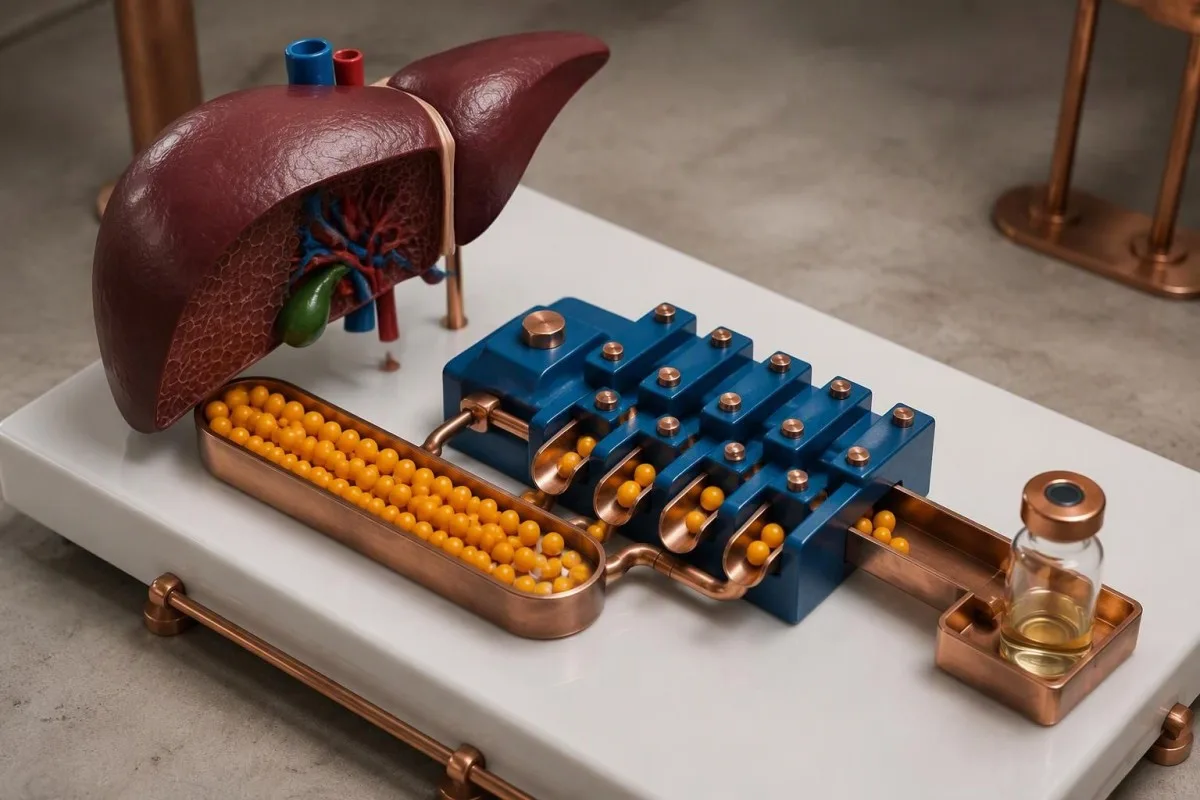
Metabolising enzymes can approach their processing capacity as exposure rises, so each additional milligram may be cleared less efficiently. A hypothetical rise from 2 mg/L to 4 mg/L after a modest dose adjustment is therefore plausible, but no single example provides a reliable formula for an individual patient.
The reverse calculation is unreliable too. A dose reduction of 25% does not guarantee a 25% concentration reduction, particularly when liver function or interacting medicines are changing; clinicians use repeat monitoring rather than assuming that the prescription and laboratory result move along a straight line.
A trough also reflects conditions during the preceding doses, not only the dose taken most recently. If a new prescription began 1 day before collection, the result may not represent the eventual exposure on that regimen, and an early result should be labelled as such rather than interpreted as settled.
This is a major reason not to borrow another person's adjustment advice. Nonlinear phenytoin monitoring illustrates a related principle, although phenytoin's free-versus-total measurement issues and target intervals are different; the shared lesson is that arithmetic alone cannot determine a safe drug dose.
Kako CYP2C19 vpliva na izpostavljenost vorikonazolu?
CYP2C19 genetic variation can influence voriconazole clearance: rapid and ultrarapid metabolisers may have low exposure, while poor metabolisers may develop higher concentrations. A genetic result can help explain a repeated trough below 1 mg/L or above the prescribed ceiling, but it does not replace drug monitoring.
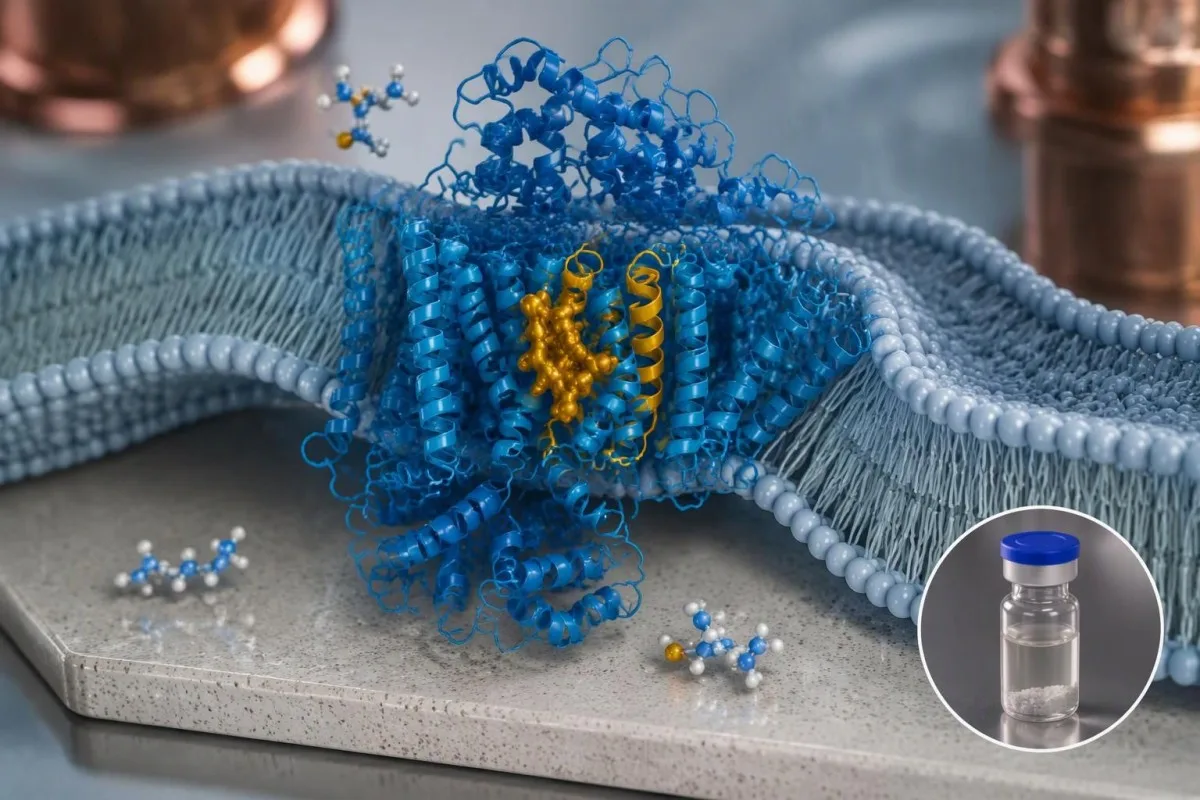
CPIC guidance recommends considering an alternative antifungal for certain CYP2C19 phenotypes when achieving reliable voriconazole exposure is difficult or adverse-effect risk is increased (Moriyama et al., 2017). This is a clinician-led choice between suitable treatments, not an instruction to stop an effective medicine after seeing a genetic category.
Genotype is only one input because liver illness, interacting medicines and systemic inflammatory responses can alter enzyme activity. A person genetically classified as a rapid metaboliser can still develop a trough of 6 mg/L under changed clinical conditions; inherited tendency does not establish a permanent, safe dose.
CYP2C19 influences more than one medicine, but the consequences are drug-specific. An enzyme variant that reduces activation of a prodrug can have a different clinical meaning from a variant that slows clearance of an active antifungal; 'fast metaboliser' is not automatically a favourable or unfavourable label.
Kantesti je platforma za razlaga krvne slike z AI that can help organise the laboratory and medication context around a reported voriconazole concentration. Our razlaga tehnologije umetne inteligence describes the interpretation workflow; a chemistry panel cannot reveal CYP2C19 genotype unless a separate genetic test has actually been performed.
Katere interakcije z zdravili lahko spremenijo rezultat?
Voriconazole interactions can either lower its concentration or increase exposure to voriconazole and other medicines. Rifampicin and carbamazepine are major enzyme-inducing concerns, while voriconazole can substantially increase tacrolimus exposure; a satisfactory trough of 2 mg/L does not make the combination automatically safe.

Rifampicin, carbamazepine and St John's wort can substantially reduce voriconazole exposure, and some combinations are contraindicated. Phenytoin creates a particularly complicated bidirectional interaction; any specialist exception requires an explicit monitoring plan rather than the assumption that increasing voriconazole will reliably overcome induction.
Starting or stopping an interacting medicine can matter as much as adding a new voriconazole dose. Enzyme induction and its reversal do not necessarily disappear within 24 hours, so clinicians need medication start and stop dates when explaining a concentration that changes despite an unchanged antifungal prescription.
Tacrolimus is a separate safety priority because voriconazole inhibits pathways involved in its clearance. A transplant team may need to adjust and closely monitor tacrolimus when voriconazole starts or stops; our tacrolimus trough interpretation guide explains why both drug concentrations must be reviewed independently.
Warfarin and medicines that prolong the QT interval also require attention even when the antifungal trough is within range. Voriconazole can increase anticoagulant effect, so understanding INR monitoring is useful; an antifungal level does not substitute for coagulation testing or an electrocardiogram.
Kako jetrni testi vplivajo na razlago najnižje koncentracije?
Liver dysfunction can reduce voriconazole clearance and increase exposure, while voriconazole itself can cause liver injury. A rising trough above 5–6 mg/L together with increasing ALT or bilirubin deserves prompt clinical review, but an isolated liver-test abnormality does not prove the antifungal caused it.
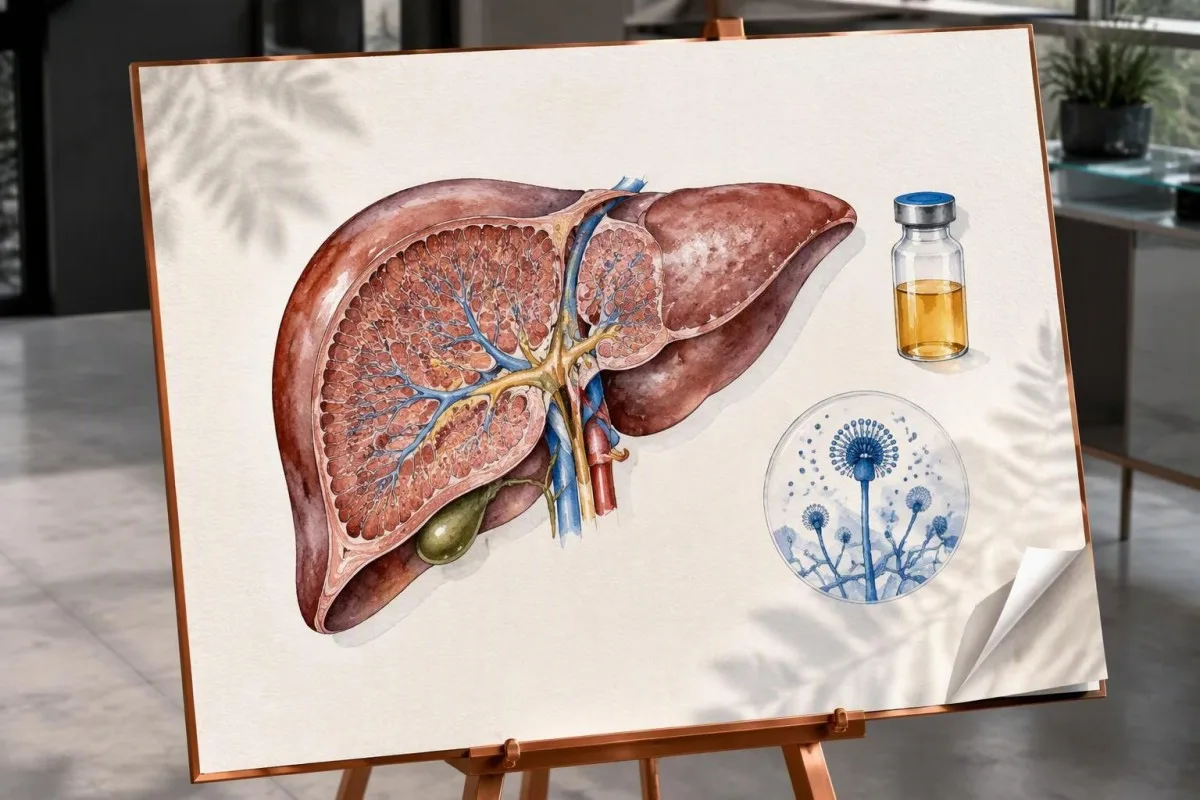
Product information recommends halving the usual maintenance dose in adults with mild-to-moderate cirrhosis, classified as Child–Pugh A or B, while retaining the standard loading regimen. That is prescribing guidance for clinicians, not a self-adjustment rule; severe hepatic impairment has less-established dosing evidence and needs specialist assessment.
Liver-test monitoring is generally recommended at least weekly during the first month, with frequency potentially reduced to monthly if results remain stable. The razlago jetrnega panela distinguishes injury markers from synthetic-function measures; ALT alone does not quantify the liver's capacity to clear voriconazole.
For example, ALT of 180 IU/L with a laboratory upper limit of 40 IU/L is 4.5 times that limit. Clinicians compare the change with baseline, bilirubin, ALP, symptoms and alternative causes; our Vodilo za nadaljnje spremljanje ALT explains why a multiple of the upper limit is more informative than a raw number.
At Kantesti, we explain why a seemingly acceptable total concentration can still need context when albumin is markedly low. An albumin result of 22 g/L can affect drug binding, but there is no universally adopted albumin-correction formula for voriconazole; the vodnik za interpretacijo serumskih proteinov helps separate binding concerns from a diagnosis of cirrhosis.
Ali motnje vida pomenijo, da je najnižja koncentracija previsoka?
Visual disturbances are a recognised voriconazole effect and do not automatically mean the trough exceeds 5.5 mg/L. Temporary changes in brightness, colour perception or blurred vision can occur at otherwise acceptable exposure, whereas persistent visual loss, hallucinations or confusion require a different level of concern.

Clinical-trial information describes visual disturbances in approximately 30% of recipients, often occurring early in treatment and resolving within about 30 minutes. The frequency varies across populations and reporting methods, and the symptom alone cannot establish whether a result of 2 mg/L or 6 mg/L is responsible.
Repeated brief brightness changes soon after a dose differ from continuous loss of vision throughout the day. A pre-dose trough may not capture the maximum post-dose concentration associated with an episode; write down when symptoms start, how long they last and whether both eyes are affected.
New hallucinations, marked confusion or worsening visual impairment warrant prompt medical assessment, especially alongside a high concentration. Sudden loss of vision, severe eye pain or a new neurological deficit requires urgent evaluation regardless of the trough; do not wait 4–7 days for routine repeat monitoring.
For treatment continuing beyond 28 days, product information recommends monitoring visual function, including acuity, visual fields and colour perception. Formal eye-function testing illustrates some of these assessments, although voriconazole symptoms do not by themselves diagnose glaucoma; avoid driving while vision is affected.
Kdaj visoka koncentracija vorikonazola zahteva nujno obravnavo?
A trough above approximately 5–6 mg/L raises concern for excessive exposure, particularly when accompanied by confusion, hallucinations or worsening liver tests. Urgency depends on symptoms and organ effects, not a universal critical concentration; serious adverse effects can also occur below this numerical boundary.
A hypothetical trough of 7.2 mg/L with new hallucinations needs prompt contact with the prescribing team rather than a routine appointment weeks later. The team may change or temporarily interrupt treatment, but the patient should not independently halve the dose, skip repeated doses or wait for an AI explanation.
Fainting, sustained palpitations, seizures, severe confusion, a serious rash or jaundice with systemic illness warrant urgent assessment. Voriconazole can prolong the QT interval, and low potassium or magnesium adds risk; an electrolyte panel safety review addresses hazards that the antifungal concentration does not measure.
Kidney function affects the intravenous formulation differently from the active antifungal's liver metabolism. The cyclodextrin vehicle can accumulate when creatinine clearance is below 50 mL/min, prompting a route-specific risk–benefit review; a normal voriconazole trough cannot establish that the intravenous vehicle is harmless.
Long courses introduce problems not reliably predicted by a single trough, including photosensitivity and fluoride-associated periostitis. New persistent bone pain during a hypothetical 6-month course deserves review even at 3 mg/L, and sun-protection advice remains relevant when the drug concentration falls within the intended treatment window.
Je lahko koncentracija v terapevtskem območju, medtem ko se okužba slabša?
Yes—a therapeutic voriconazole trough does not guarantee treatment success because fungal resistance, an incorrect diagnosis, inadequate source control or profound immunosuppression can overcome adequate exposure. A result of 3 mg/L confirms neither fungal susceptibility nor sufficient drug delivery to every affected site.

The organism's minimum inhibitory concentration, or MIC, helps describe how much drug inhibits growth under laboratory conditions. If the fungal MIC is 2 mg/L rather than 0.25 mg/L, the same trough has a different exposure-to-susceptibility relationship; a trough-to-MIC ratio is not a self-dosing calculator.
Clinicians review imaging, cultures, susceptibility testing and relevant fungal markers alongside the concentration. A galactomannan result interpretation can clarify another piece of the assessment, but neither one positive marker nor one therapeutic trough independently proves active aspergillosis or its resolution.
Voriconazole lacks reliable activity against Mucorales, the fungi responsible for mucormycosis. A trough of 4 mg/L therefore cannot solve a mismatch between the medicine and the organism; persistent deterioration may require diagnostic reassessment and a different antifungal strategy rather than progressively increasing exposure.
Early imaging changes are also not always equivalent to failure because inflammatory responses can change as immune function recovers. Nonetheless, worsening breathing, new neurological symptoms or fever during severe neutropenia needs prompt clinical assessment; the infection team decides whether a 1-week trend reflects expected evolution or an inadequate treatment plan.
Kdaj je treba ponovno določiti najnižjo koncentracijo?
Voriconazole monitoring is commonly repeated after a dose change, a major interaction change, altered liver function, a route change or suspected treatment failure. A routine reassessment often occurs within 4–7 days, but concerning neurological symptoms or liver deterioration justify earlier clinical action rather than waiting for steady exposure.
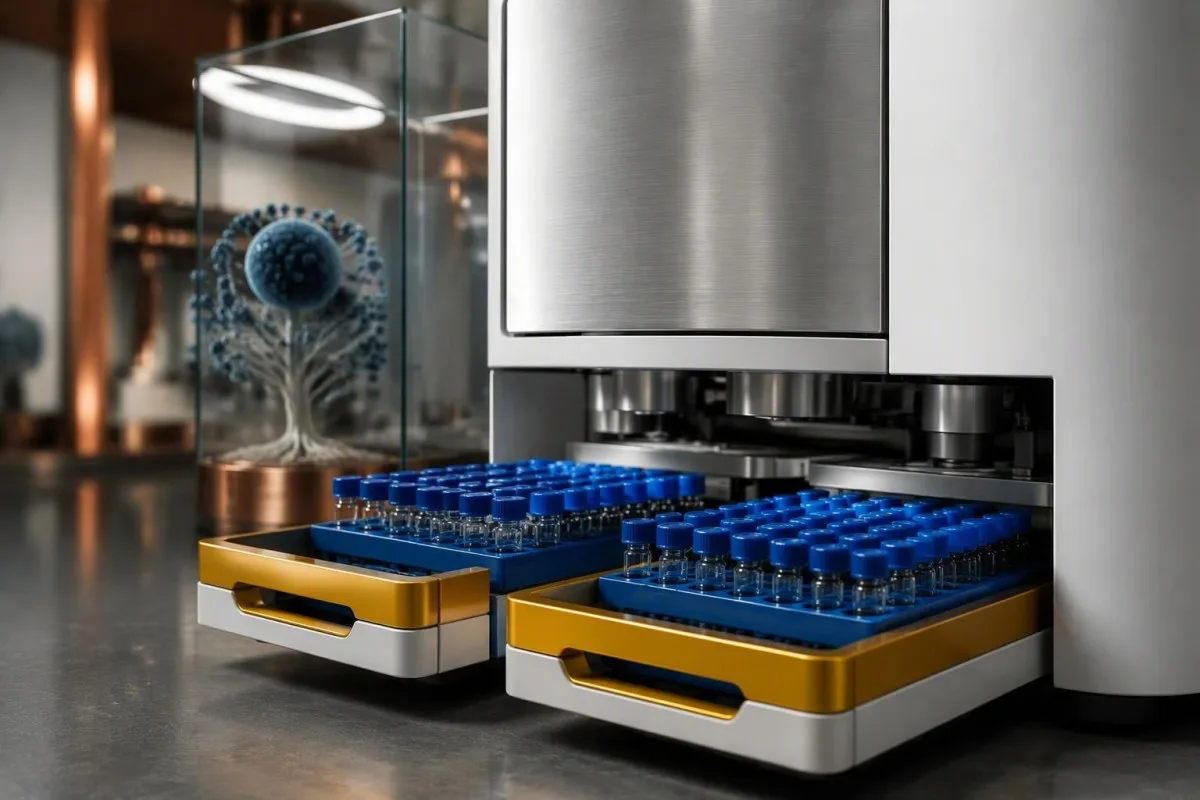
Two concentrations are meaningfully comparable only when the dosing interval and collection conditions are documented. A change from 1.1 mg/L to 3.4 mg/L may represent improved exposure, but it may instead compare a delayed trough with a post-dose sample; the size of the difference cannot correct a timing error.
Changing from intravenous to oral treatment can alter exposure even when the intended prescription seems equivalent. Clinicians may repeat the level after the switch, especially if eating, vomiting or tube feeding has changed; the route belongs beside the concentration in the monitoring record, not only in the medication history.
Kantesti je Orodje za analizo krvnih testov z umetno inteligenco that can help organise uploaded drug levels alongside liver-test trends and reported dose times. Our medication-safety trend workflow supports preparation for review, but a rise from 2 mg/L to 6 mg/L still requires clinician-led interpretation and treatment decisions.
Stable treatment does not create one universal long-term testing interval. The team balances infection risk, treatment duration, prior variability and access to testing; keep a record of at least the previous dose time, collection time, current prescription, formulation and medication changes so the next result answers a usable question.
Kaj prinesite na pregled in kaj podpira ta priporočila?
Bring the actual dose and collection times, the prescribed treatment goal, recent liver results and a complete medication list to your voriconazole review. Ask whether a result such as 1.4 mg/L meets your specific indication—not whether it fits a single internet range—and do not adjust the prescription yourself.
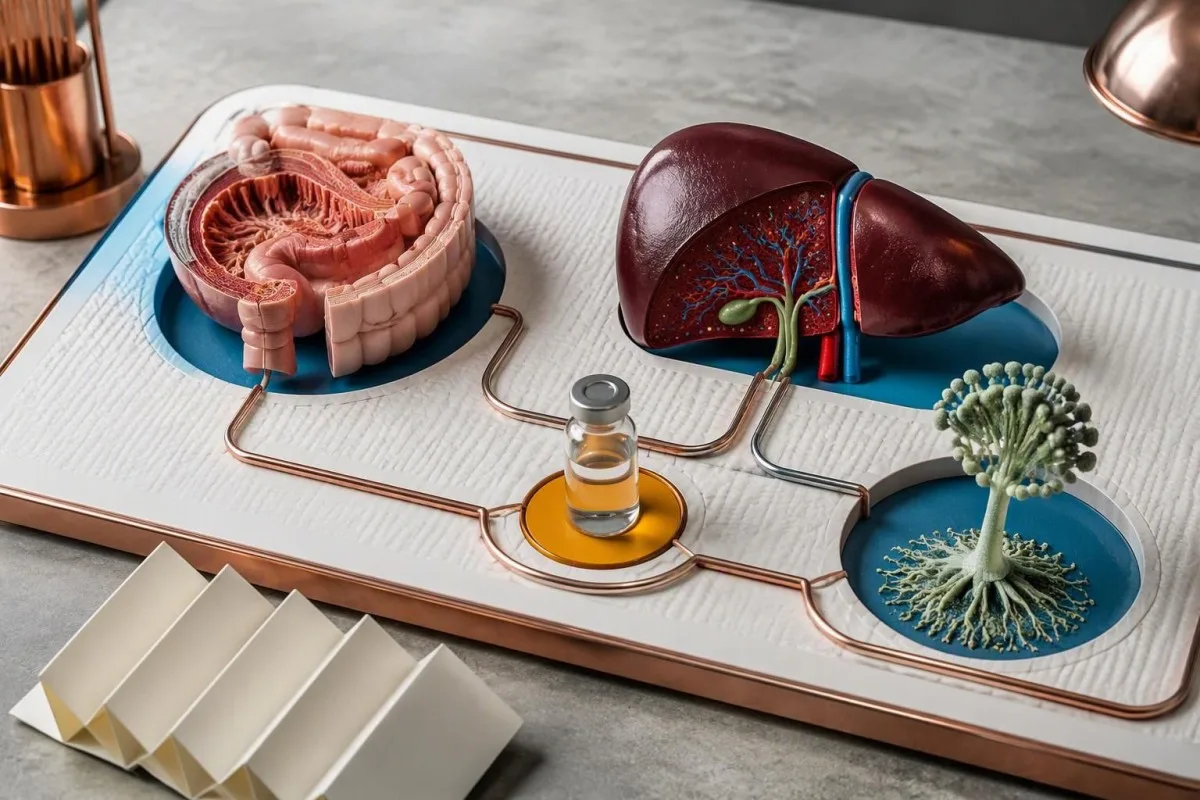
A practical review has three questions: was the sample a true trough, is exposure appropriate for this infection or prevention plan, and are there adverse effects or interactions? Include missed doses and meal timing honestly; a 12-hour prescription does not mean every dose was actually separated by 12 hours.
The clinical recommendations here draw on the 2016 IDSA aspergillosis guideline, the 2014 British Society for Medical Mycology monitoring guideline and the 2017 CPIC voriconazole guideline. These sources address different questions—clinical treatment, concentration monitoring and pharmacogenetics—so their recommendations should be combined thoughtfully rather than presented as one identical range.
Kantesti Ltd's role is to help readers understand laboratory information, not to prescribe antifungal treatment. Our organisation and purpose are described separately; technical evaluation on 100,000 synthetic cases cannot establish that a particular voriconazole dose improves clinical outcomes in a patient with invasive fungal disease.
The two research publications listed below describe an automated technical benchmark and a clinical-validation framework, not a voriconazole therapeutic-monitoring trial. Our validation methodology and limits explain that distinction; use our interpretation to prepare questions, while your infection specialist or prescribing team determines the dose and follow-up plan.
Pogosta vprašanja
Kakšna je normalna najnižja koncentracija vorikonazola?
Voriconazole does not have a healthy-population 'normal' concentration; it has a therapeutic exposure target. Many treatment protocols use approximately 1–5.5 mg/L, while IDSA guidance discusses a minimum above 1–1.5 mg/L and an upper boundary below 5–6 mg/L. Severe disease, fungal susceptibility and prevention protocols can change the intended target. Your prescribing team should interpret the result using the actual collection time and clinical indication.
Koliko časa pred odmerkom je treba odvzeti vzorec za določitev koncentracije vorikonazola?
Najnižja koncentracija vorikonazola se običajno odvzame tik pred naslednjim načrtovanim odmerkom, navadno v 30 minutah pred njim, v skladu z navodili lokalnega laboratorija. Če je odmerek predviden ob 8. uri zjutraj, je odvzem ob 7.45 pred zaužitjem zdravila običajno primeren. Če zdravilo vzamete prej, je lahko rezultat po odmerku, ki ga ne smete neposredno primerjati s ciljnimi najnižjimi koncentracijami. Načrt odvzema uskladite z ekipo, namesto da bi brez navodil odmerjanje odložili za več ur.
Kaj pomeni nizka koncentracija vorikonazola?
Najnižja koncentracija vorikonazola pod 1 mg/L je pod številnimi terapevtskimi ciljnimi vrednostmi, vendar ne dokazuje, da je predpisani odmerek premajhen. Nizko izpostavljenost lahko pojasnijo izpuščeni odmerki, prepozno odvzet vzorec, vpliv hrane, bruhanje, motena absorpcija in zdravila, ki inducirajo encime. Vorikonazol za peroralno uporabo se običajno jemlje vsaj 1 uro pred obrokom ali po njem, v skladu z navodili za zdravilo. Za pregled se obrnite na zdravstveno ekipo, ki je predpisala zdravilo, namesto da odmerek povečate sami.
Ali so rezultati vorikonazola v mg/L in µg/mL enaki?
Koncentracije vorikonazola v mg/L in µg/mL imajo enako številčno vrednost. Rezultat 2 mg/L je natančno 2 µg/mL, kar je tudi 2.000 ng/mL. Laboratoriji lahko uporabljajo različne enote in ciljne intervale, zato pred primerjavo izvidov preverite oboje. Ta pretvorba enot ne popravi nepravilno časovno odvzetega vzorca.
Ali zamegljen vid ali halucinacije pomenijo toksičnost vorikonazola?
0 Kratkotrajne motnje vida se lahko pojavijo pri uporabi vorikonazola, tudi kadar je najnižja koncentracija znotraj predvidenega razpona, medtem ko halucinacije ali zmedenost vzbujajo večjo zaskrbljenost zaradi prekomerne izpostavljenosti ali druge zdravstvene težave. V informacijah o zdravilu so motnje vida opisane pri približno 30% prejemnikov, pogosto pa izzvenijo v približno 30 minutah. Ob pojavu novih halucinacij, vztrajni okvari ali poslabšanju simptomov se nemudoma obrnite na zdravstveno ekipo, ki je predpisala zdravilo; nenadna izguba vida ali hudi nevrološki simptomi zahtevajo nujno zdravniško oceno. Ne vozite, dokler imate motnje vida, in odmerka protiglivičnega zdravila ne spreminjajte samostojno.
Kdaj je treba po spremembi odmerka ponovno preveriti koncentracijo vorikonazola?
Najnižjo koncentracijo vorikonazola se pogosto ponovno preveri v 4–7 dneh po spremembi odmerka, odvisno od režima zdravljenja, udarnih odmerkov in lokalnega protokola. Pri sumu na toksičnost, spreminjanju jetrnega delovanja ali pomembnih interakcijah z zdravili bo morda potrebno zgodnejše testiranje ali ukrepanje. Nelinearna presnova pomeni, da 25-odstotno povečanje odmerka ne zagotavlja le 25-odstotnega povečanja koncentracije. Zdravstvena ekipa, ki predpisuje zdravilo, naj določi datum ponovnega testiranja in interpretira rezultat, preden uvede nadaljnje spremembe.
Poskrbite, da vam razložijo rezultate krvnih preiskav
Naložite svoj laboratorijski izvid in AI Kantesti bo v nekaj sekundah preprosto razložil vsak biomarker. Uporablja ga več kot 2 milijona ljudi po vsem svetu.
Reference
- Klein, T., Mitchell, S., & Weber, H. (2026). Predregistrirana, na rubrikah zasnovana avtomatizirana tehnična primerjava (benchmark) interpretacijskega motorja Kantesti za analizo krvnih testov na 100.000 sintetičnih testnih primerih. Kantesti AI Medical Research. DOI
- Klein, T., Mitchell, S., & Weber, H. (2026). Klinični okvir validacije v2.0 (stran za medicinsko validacijo). Kantesti AI Medical Research. DOI
- Patterson TF et al. (2016). Smernice za prakso za diagnozo in obravnavo aspergiloze: posodobitev iz leta 2016 pri Infectious Diseases Society of America. Clinical Infectious Diseases. DOI
- Ashbee HR et al. (2014). Therapeutic drug monitoring (TDM) of antifungal agents: guidelines from the British Society for Medical Mycology. Journal of Antimicrobial Chemotherapy. DOI
- Moriyama B et al. (2017). Clinical Pharmacogenetics Implementation Consortium (CPIC) Guidelines for CYP2C19 and Voriconazole Therapy. Clinical Pharmacology & Therapeutics. DOI
- 2 milijona+Analizirani testi
- 127+Države
- 100+Jeziki
O zdravstveni ekipi


E-E-A-T zaupanja vredni signali
Izkušnje
Zdravniški klinični pregled delovnih postopkov za interpretacijo laboratorijskih izvidov.
Strokovno znanje
Laboratorijska medicina s poudarkom na tem, kako se biomarkerji obnašajo v kliničnem kontekstu.
Avtoritativnost
Zdravstveno pregledal dr. Thomas Klein, s prispevki dr. Sarah Mitchell in prof. dr. Hansa Webra.
Zanesljivost
Interpretacija na podlagi dokazov z jasnimi nadaljnjimi potmi za zmanjšanje alarmiranja.


Zdravstvena omejitev odgovornosti
Ta članek je namenjen izobraževalnim namenom in ne predstavlja medicinskega nasveta. Za odločitve o diagnozi in zdravljenju se vedno posvetujte z usposobljenim izvajalcem zdravstvenih storitev.
Objavljeno · Obrnite se na uredniško ekipo
Izdala družba Kantesti Ltd, registrirana v Angliji in Walesu, matična št. 17090423, London, Združeno kraljestvo.
