योग्य वेळी मोजलेली व्होरिकोनाझोलची ट्रफ पातळी, अँटीफंगल औषधाचा संपर्क पुरेसा आहे की तो अति होत आहे, हे तपासण्यास मदत करते. अनेक उपचार प्रोटोकॉलमध्ये साधारण 1–5.5 mg/L ही मर्यादा वापरली जाते; परंतु संसर्ग, प्रतिबंध योजना आणि दुष्परिणाम यांवर तुमची वैयक्तिक लक्ष्य पातळी ठरते.

मुख्य मुद्दे
- व्होरिकोनाझोलची ट्रफ पातळी म्हणजे पुढील नियोजित डोस घेण्याच्या अगदी आधी औषधाची एकाग्रता; ती औषधाचा संपर्क मोजते, संसर्ग बरा झाला आहे की नाही हे नाही.
- उपचारांचे लक्ष्य (Treatment targets) सामान्यतः ट्रफ पातळी 1–1.5 mg/L पेक्षा जास्त असणे आवश्यक असते; कठीण किंवा गंभीर संसर्गांसाठी काही उपचार पथके किमान 2 mg/L लक्ष्य ठेवतात.
- उच्च मर्यादा सामान्यतः 5–6 mg/L च्या आसपास असते, कारण औषधाचा अति संपर्क झाल्यास मज्जासंस्थेशी संबंधित आणि इतर दुष्परिणामांची चिंता वाढते.
- प्रतिबंधासाठीची लक्ष्य पातळी प्रोटोकॉलनुसार ठरते; प्रतिबंधक उपचारांसाठी वापरली जाणारी कमी मर्यादा, आधीच झालेल्या संसर्गाच्या उपचारांसाठी आपोआप लागू करू नये.
- पातळी तपासण्याची वेळ साधारणपणे पुढील डोसच्या सुमारे 30 मिनिटे आधी नमुना गोळा करणे अभिप्रेत असते; यासाठी प्रयोगशाळेच्या सूचनांचे पालन करा.
- युनिट रूपांतरण हे अचूक आहे: 1 mg/L म्हणजे 1 µg/mL आणि 1,000 ng/mL.
- कमी औषध-संपर्क यामागे डोस चुकणे, अन्नाचा परिणाम, शोषणातील अडथळा, परस्परसंवादी औषधे किंवा जलद चयापचय असू शकतो—केवळ अपुरे औषध लिहून दिले आहे असे नाही.
- डोस सुरक्षितता यासाठी डॉक्टरांच्या देखरेखीखाली बदल करणे आवश्यक आहे, कारण 25% डोस वाढवल्यास औषधाच्या सांद्रतेत प्रमाणाबाहेर मोठी वाढ होऊ शकते.
व्होरिकोनाझोलची ट्रफ पातळी नेमके काय सांगते?
A व्होरिकोनाझोलचा ट्रफ स्तर पुढील डोसच्या अगदी आधी शरीरात किती अँटीफंगल औषध शिल्लक आहे, हे डॉक्टरांना सांगतो. योग्य वेळी गोळा केलेला सुमारे 1–5.5 mg/L चा निकाल अनेकदा उपचार-प्रोटोकॉलशी सुसंगत असतो; परंतु प्रभावी डोस बुरशीची संवेदनशीलता, संसर्गाचे स्थान आणि क्लिनिकल सुधारणा यांवरही अवलंबून असतो.
ट्रफ हा डोस-अंतरादरम्यानच्या औषध-संपर्काचा व्यावहारिक निर्देशक आहे; प्रभावित फुफ्फुस किंवा मेंदूमधील औषधाचे थेट मोजमाप नव्हे. दर 12 तासांनी व्होरिकोनाझोल घेणाऱ्या व्यक्तीच्या बाबतीत, डोसपूर्व सांद्रतेवरून डोसांमधील काळात औषध-संपर्क खूप कमी होऊ शकतो का हे ओळखण्यास मदत होते.
उपचारात्मक औषध-निगराणीची दोन स्वतंत्र उद्दिष्टे आहेत: अँटीफंगल क्रियेसाठी पुरेसा औषध-संपर्क राखणे आणि अतिप्रमाणातील औषध-संपर्क टाळणे. IDSA च्या एस्परजिलोसिस मार्गदर्शक तत्त्वांनुसार, उपचारादरम्यान 1–1.5 mg/L पेक्षा जास्त आणि 5–6 mg/L पेक्षा कमी ट्रफ स्तर हे तज्ज्ञांकडून सामान्यतः वापरले जाणारे लक्ष्य आहेत; विशेषतः केंद्रीय मज्जासंस्थेवरील विषारी परिणाम मर्यादित ठेवण्यासाठी (Patterson et al., 2016).
कांटेस्टी हा एक एआय रक्त चाचणी विश्लेषक यामुळे अपलोड केलेल्या व्होरिकोनाझोलच्या निकालाचा यकृताच्या चाचण्यांसोबत अर्थ लावण्यास मदत होऊ शकते; लक्ष्य मात्र तुमची औषधे लिहून देणारी टीम ठरवते. 1.2 mg/L या निकालासोबत त्यामागील औषधोपचाराचे कारण आणि नमुना गोळा केल्याची वेळही नमूद करणे आवश्यक आहे; आमच्या स्पष्टीकरणातून त्या आकड्याचे डोसविषयक निर्देशात रूपांतर होता कामा नये.
प्रयोगशाळेतील धोक्याची खूण म्हणजे उपचार यशस्वी झाला की नाही याचा अंतिम निर्णय नव्हे. अनेक नियमित रसायनशास्त्रीय संदर्भ-मर्यादांपेक्षा वेगळे, औषध-निगराणीतील मर्यादा हे औषध-संपर्काचे क्लिनिकल लक्ष्य दर्शवतात; आमचे स्पष्टीकरण आउट-ऑफ-रेंज प्रयोगशाळा निकाल धोक्याची खूण आणि निदान यांतील फरक ओळखण्यास मदत करते.
व्होरिकोनाझोलची पातळी कधी तपासावी?
योग्य व्होरिकोनाझोलच्या स्तरासाठी नमुना घेण्याची वेळ म्हणजे पुढील नियोजित डोसच्या अगदी आधी नमुना गोळा करणे; सामान्यतः डोसच्या 30 मिनिटांच्या आत. पहिला नियमित स्तर बहुतेकदा चौथ्या ते सातव्या दिवशी घेतला जातो; मात्र लोडिंग डोस, गंभीर आजार आणि स्थानिक प्रोटोकॉलनुसार त्याआधी तपासणी करणे योग्य ठरू शकते.
उदाहरणार्थ, डॉक्टरांनी सकाळी 8 आणि रात्री 8 वाजताचे वेळापत्रक दिले आहे असे समजा. सकाळचे औषध घेण्यापूर्वी 7:45 वाजता घेतलेला नमुना ट्रफ स्तराचे जवळचे प्रतिनिधित्व करतो; डोस घेतल्यानंतर सकाळी 10 वाजता घेतलेला नमुना तसे करत नाही—प्रयोगशाळेच्या अहवालात त्याला ट्रफ म्हटले असले तरीही.
डोस उशिरा घेतल्यास त्याचा अर्थ उलट दिशेनेही बदलू शकतो. पुढचा डोस सकाळी 8 वाजता घ्यायचा होता, पण नमुना सकाळी 11 वाजता घेतला, तर औषधाशिवाय गेलेल्या अतिरिक्त 3 तासांमुळे मोजलेली सांद्रता कमी होऊ शकते; टीमला केवळ नियोजित वेळापत्रक नव्हे, तर प्रत्यक्ष वेळा माहीत असणे आवश्यक आहे.
अंतःशिरा व्होरिकोनाझोलसाठीही डोसपूर्व नमुना आवश्यक असतो; तो सहसा पुढील इन्फ्युजन सुरू होण्यापूर्वी घेतला जातो. औषध देण्यासाठी वापरलेल्या लाइनमधून नमुना घेतल्यास दूषित होण्याची शक्यता असते; म्हणून सहज उपलब्ध असलेल्या प्रत्येक लाइनमधून समान निकाल मिळेल असे गृहीत धरण्याऐवजी नमुना घेण्याचा मार्ग प्रयोगशाळेने किंवा इन्फ्युजन टीमने ठरवावा.
सांद्रता तपासणीसाठी रात्रभर उपाशी राहणे मुळात आवश्यक नाही; मात्र तोंडावाटे घेतल्या जाणाऱ्या व्होरिकोनाझोलसाठी जेवणाच्या वेळेबाबत स्वतंत्र सूचना आहेत. आधीच नमुना गोळा करण्याच्या योजनेची खात्री करा; औषधानुसार नमुना घेण्याचे नियम एका औषधासाठीचा योग्य वेळेचा नियम दुसऱ्या औषधाला लागू करता येत नाही, हे स्पष्ट करतात.
व्होरिकोनाझोलची उपचारात्मक मर्यादा काय आहे?
द व्होरिकोनाझोलची उपचारात्मक श्रेणी उपचारासाठी साधारणपणे सुमारे 1–5.5 mg/L असते; परंतु प्रत्येक रुग्णाला लागू होईल अशी सार्वत्रिक श्रेणी नाही. IDSA मार्गदर्शनानुसार, 1–1.5 mg/L पेक्षा जास्त हे खालचे लक्ष्य आणि 5–6 mg/L पेक्षा कमी ही वरची मर्यादा असते; काही कठीण संसर्गांमध्ये किमान स्तर अधिक ठेवण्याची गरज भासू शकते.

These boundaries describe probabilities, not biological switches. A trough of 0.9 mg/L does not prove failure, and 5.6 mg/L does not prove toxicity; repeated results, symptoms and organism susceptibility help determine whether a small boundary crossing is clinically meaningful or simply requires confirmation.
For invasive aspergillosis, the British Society for Medical Mycology recommends a treatment trough above 1 mg/L and discusses higher exposure goals for poor-prognosis situations, including central nervous system disease (Ashbee et al., 2014). A team may therefore consider 1.3 mg/L acceptable for one indication but insufficient for another.
The reason for a higher minimum is that the concentration needed to inhibit a less-susceptible fungus may exceed the concentration needed for a susceptible organism. Raising exposure indefinitely is not a safe solution: a trough approaching 5–6 mg/L can leave little room between a desired antifungal effect and adverse effects.
Always read the units before comparing reports. A result of 2 µg/mL is exactly 2 mg/L, not twice or half that value; the biomarker and units guide provides context for comparing laboratory values without mistaking a therapeutic target for a healthy-population range.
| स्तर | श्रेणी | याचा अर्थ |
|---|---|---|
| Below many treatment targets | <1 मिग्रॅ/लि | Check collection timing, dosing history, absorption and interactions; not proof of treatment failure. |
| Lower treatment exposure | 1–<2 mg/L | May meet the prescribed target, but severe disease or reduced fungal susceptibility can require a higher minimum. |
| Common treatment exposure window | 2–5.5 mg/L | Often compatible with treatment goals when correctly timed; does not guarantee efficacy or freedom from toxicity. |
| Above many local upper limits | >5.5 mg/L | Requires review of symptoms, liver tests, timing and the local protocol; there is no universal emergency cutoff. |
उपचार आणि प्रतिबंधासाठीची लक्ष्य पातळी वेगळी का असू शकते?
Treatment targets may be more demanding than prevention targets because an established fungal infection must be controlled, not merely prevented. Some local prophylaxis protocols accept 0.5 mg/L, whereas British guidance recommends a prophylaxis trough above 1 mg/L; these thresholds are not interchangeable.

Prophylaxis studies are harder to interpret because breakthrough fungal disease may be uncommon and heavily influenced by immune status. A threshold of 0.5 mg/L used in one prevention programme cannot establish equivalent protection for every stem-cell transplant recipient, particularly during prolonged neutropenia or intensive immunosuppression.
The British Society for Medical Mycology's prophylaxis recommendation above 1 mg/L carries a weaker evidence base than some treatment recommendations (Ashbee et al., 2014). The uncertainty is genuine: the exact preventive minimum is less settled than the principle that persistently very low exposure deserves investigation.
Consider a hypothetical result of 0.8 mg/L in two people. One is receiving prevention under a documented local protocol; the other has confirmed invasive aspergillosis. The same concentration can lead to different discussions because the indication, fungal burden and acceptable risk of inadequate exposure differ.
Transplant recipients often have several parallel monitoring plans, not one combined 'infection score.' Voriconazole does not prevent every opportunistic infection, and CMV results after transplantation answer a different question; a satisfactory antifungal trough does not replace viral surveillance or other prescribed prophylaxis.
व्होरिकोनाझोलची पातळी कमी कशामुळे होऊ शकते?
A low voriconazole level can result from missed or delayed doses, food effects, impaired gastrointestinal absorption, enzyme-inducing medicines or faster metabolism. Before changing treatment, clinicians verify whether a result below 1 mg/L is a correctly timed trough and whether the prescribed doses actually reached the patient.
Oral voriconazole is generally taken at least 1 hour before or 1 hour after a meal, following the product instructions. Food can reduce exposure, but a low result should not be blamed on breakfast without checking the complete dosing history, formulation, vomiting and other medicines.
Imagine a hypothetical adult prescribed 200 mg every 12 hours whose trough is 0.6 mg/L. Taking each dose with a substantial meal and vomiting one evening dose creates two plausible explanations for low exposure; automatically escalating the prescription could cause excessive exposure once those problems resolve.
Severe diarrhoea, mucositis, gastrointestinal surgery and feeding-tube administration can make oral delivery less predictable. Clinicians may review the formulation or route rather than simply the milligram amount; testing for impaired fat absorption explains why gastrointestinal dysfunction needs its own assessment rather than being diagnosed from one drug level.
Acid-suppressing medicines deserve a medication review, but voriconazole should not be treated like an antifungal whose absorption always requires stomach acid. Some proton pump inhibitors inhibit metabolism and can raise exposure; our reflux treatment context helps readers identify these medicines without stopping them independently.
डोसमध्ये थोडासा बदल केल्याने कधीकधी पातळीत मोठा बदल का होतो?
Voriconazole has nonlinear metabolism in adults, meaning a dose increase can produce a more-than-proportional concentration increase. Changing a prescribed dose from 200 mg to 250 mg is a 25% increase, but the resulting trough cannot safely be predicted by multiplying the old result by 1.25.
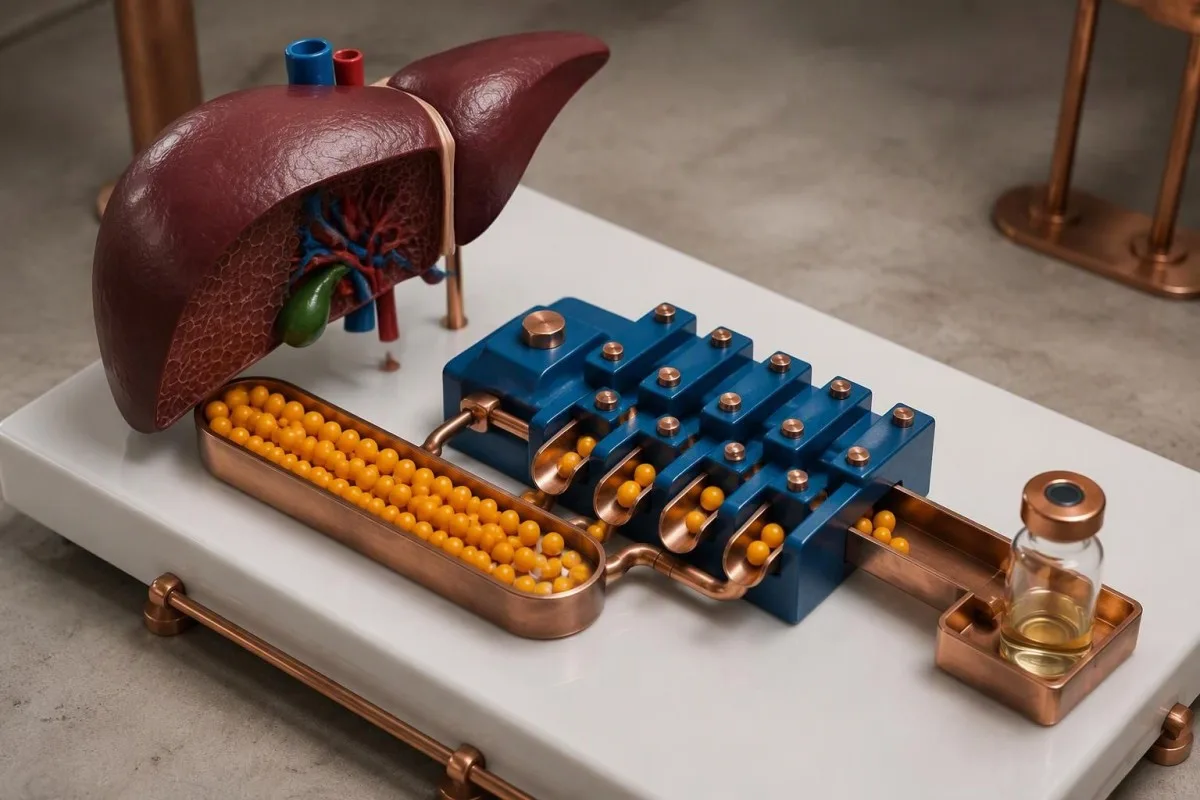
Metabolising enzymes can approach their processing capacity as exposure rises, so each additional milligram may be cleared less efficiently. A hypothetical rise from 2 mg/L to 4 mg/L after a modest dose adjustment is therefore plausible, but no single example provides a reliable formula for an individual patient.
The reverse calculation is unreliable too. A dose reduction of 25% does not guarantee a 25% concentration reduction, particularly when liver function or interacting medicines are changing; clinicians use repeat monitoring rather than assuming that the prescription and laboratory result move along a straight line.
A trough also reflects conditions during the preceding doses, not only the dose taken most recently. If a new prescription began 1 day before collection, the result may not represent the eventual exposure on that regimen, and an early result should be labelled as such rather than interpreted as settled.
This is a major reason not to borrow another person's adjustment advice. Nonlinear phenytoin monitoring illustrates a related principle, although phenytoin's free-versus-total measurement issues and target intervals are different; the shared lesson is that arithmetic alone cannot determine a safe drug dose.
CYP2C19 चा व्होरिकोनाझोलच्या औषध-संपर्कावर कसा परिणाम होतो?
CYP2C19 genetic variation can influence voriconazole clearance: rapid and ultrarapid metabolisers may have low exposure, while poor metabolisers may develop higher concentrations. A genetic result can help explain a repeated trough below 1 mg/L or above the prescribed ceiling, but it does not replace drug monitoring.
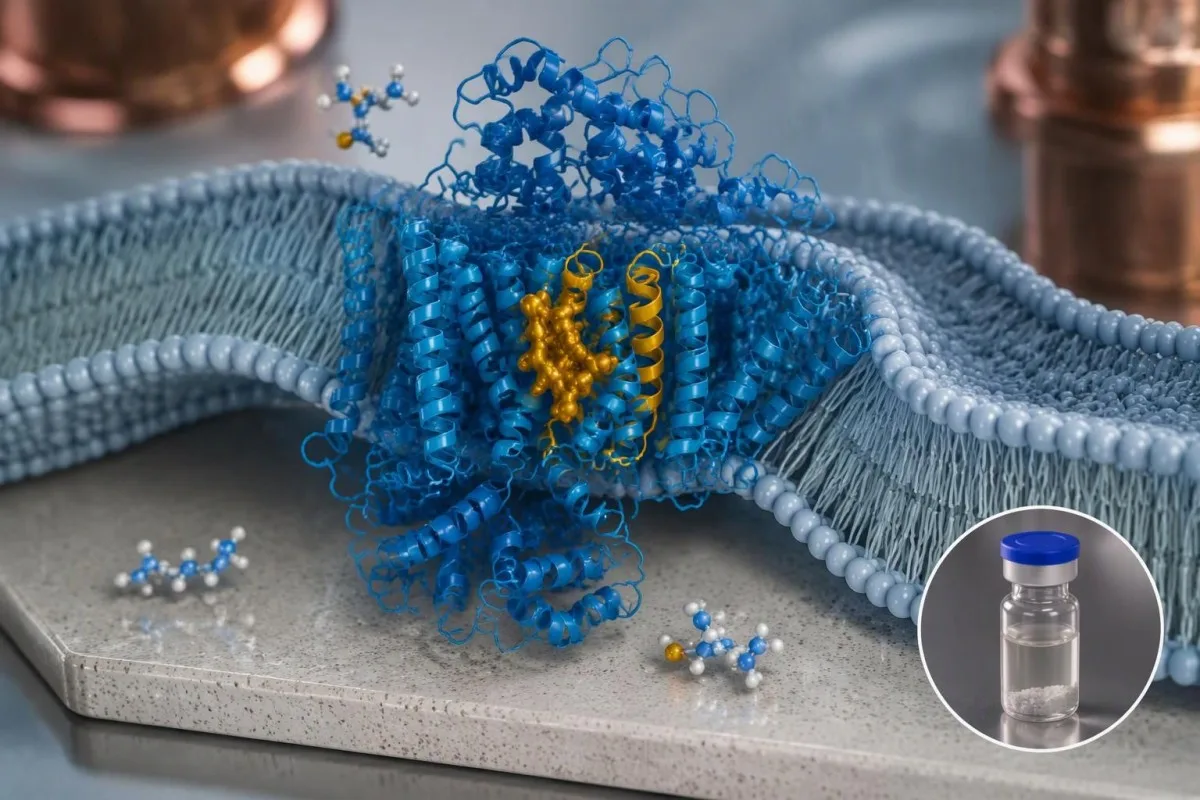
CPIC guidance recommends considering an alternative antifungal for certain CYP2C19 phenotypes when achieving reliable voriconazole exposure is difficult or adverse-effect risk is increased (Moriyama et al., 2017). This is a clinician-led choice between suitable treatments, not an instruction to stop an effective medicine after seeing a genetic category.
Genotype is only one input because liver illness, interacting medicines and systemic inflammatory responses can alter enzyme activity. A person genetically classified as a rapid metaboliser can still develop a trough of 6 mg/L under changed clinical conditions; inherited tendency does not establish a permanent, safe dose.
CYP2C19 influences more than one medicine, but the consequences are drug-specific. An enzyme variant that reduces activation of a prodrug can have a different clinical meaning from a variant that slows clearance of an active antifungal; 'fast metaboliser' is not automatically a favourable or unfavourable label.
कांटेस्टी हा एक AI रक्त तपासणी अहवाल समजून घ्या प्लॅटफॉर्म that can help organise the laboratory and medication context around a reported voriconazole concentration. Our AI तंत्रज्ञान स्पष्टीकरण describes the interpretation workflow; a chemistry panel cannot reveal CYP2C19 genotype unless a separate genetic test has actually been performed.
कोणत्या औषधांच्या परस्परक्रियांमुळे निकाल बदलू शकतो?
Voriconazole interactions can either lower its concentration or increase exposure to voriconazole and other medicines. Rifampicin and carbamazepine are major enzyme-inducing concerns, while voriconazole can substantially increase tacrolimus exposure; a satisfactory trough of 2 mg/L does not make the combination automatically safe.

Rifampicin, carbamazepine and St John's wort can substantially reduce voriconazole exposure, and some combinations are contraindicated. Phenytoin creates a particularly complicated bidirectional interaction; any specialist exception requires an explicit monitoring plan rather than the assumption that increasing voriconazole will reliably overcome induction.
Starting or stopping an interacting medicine can matter as much as adding a new voriconazole dose. Enzyme induction and its reversal do not necessarily disappear within 24 hours, so clinicians need medication start and stop dates when explaining a concentration that changes despite an unchanged antifungal prescription.
Tacrolimus is a separate safety priority because voriconazole inhibits pathways involved in its clearance. A transplant team may need to adjust and closely monitor tacrolimus when voriconazole starts or stops; our tacrolimus trough interpretation guide explains why both drug concentrations must be reviewed independently.
Warfarin and medicines that prolong the QT interval also require attention even when the antifungal trough is within range. Voriconazole can increase anticoagulant effect, so understanding INR monitoring is useful; an antifungal level does not substitute for coagulation testing or an electrocardiogram.
यकृताच्या चाचण्यांमुळे ट्रफ पातळीचा अर्थ कसा बदलतो?
Liver dysfunction can reduce voriconazole clearance and increase exposure, while voriconazole itself can cause liver injury. A rising trough above 5–6 mg/L together with increasing ALT or bilirubin deserves prompt clinical review, but an isolated liver-test abnormality does not prove the antifungal caused it.
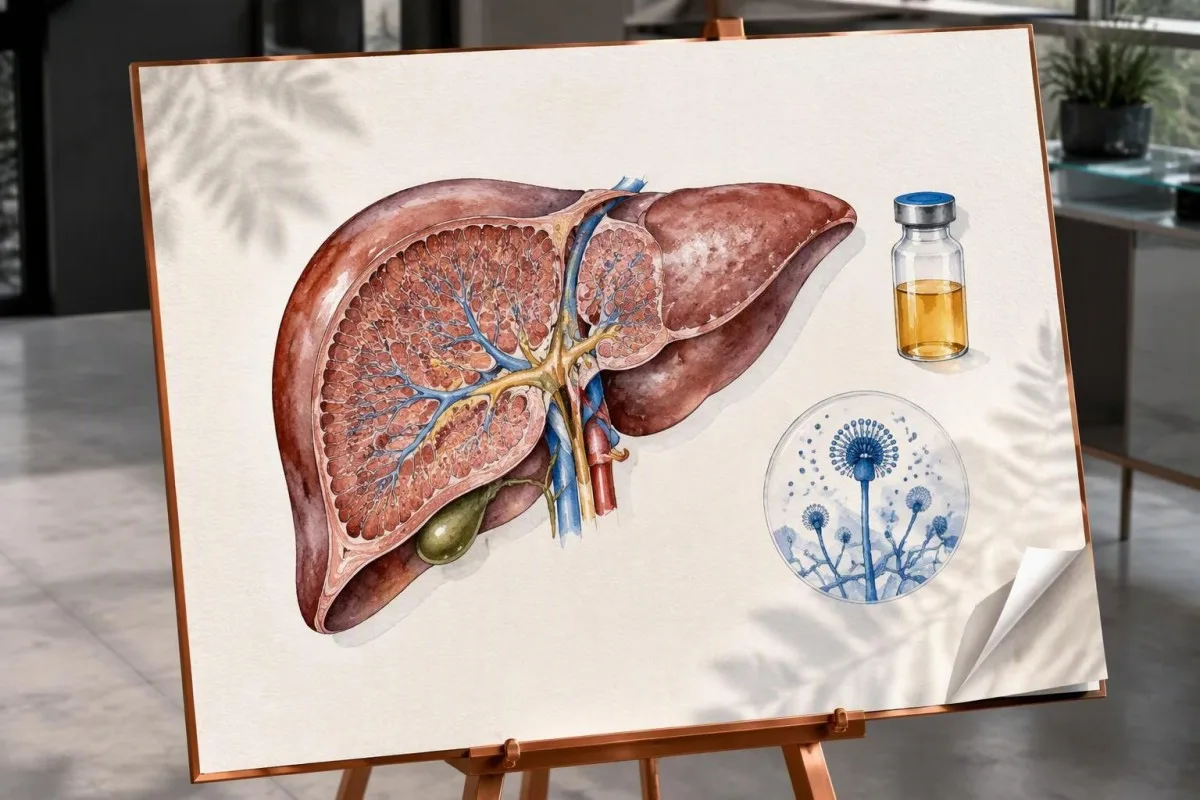
Product information recommends halving the usual maintenance dose in adults with mild-to-moderate cirrhosis, classified as Child–Pugh A or B, while retaining the standard loading regimen. That is prescribing guidance for clinicians, not a self-adjustment rule; severe hepatic impairment has less-established dosing evidence and needs specialist assessment.
Liver-test monitoring is generally recommended at least weekly during the first month, with frequency potentially reduced to monthly if results remain stable. The लिव्हर पॅनेल स्पष्टीकरण distinguishes injury markers from synthetic-function measures; ALT alone does not quantify the liver's capacity to clear voriconazole.
For example, ALT of 180 IU/L with a laboratory upper limit of 40 IU/L is 4.5 times that limit. Clinicians compare the change with baseline, bilirubin, ALP, symptoms and alternative causes; our ALT फॉलो-अप मार्गदर्शक explains why a multiple of the upper limit is more informative than a raw number.
At Kantesti, we explain why a seemingly acceptable total concentration can still need context when albumin is markedly low. An albumin result of 22 g/L can affect drug binding, but there is no universally adopted albumin-correction formula for voriconazole; the सीरम प्रोटीन विश्लेषण मार्गदर्शक helps separate binding concerns from a diagnosis of cirrhosis.
दृष्टीतील त्रास म्हणजे ट्रफ पातळी खूप जास्त आहे का?
Visual disturbances are a recognised voriconazole effect and do not automatically mean the trough exceeds 5.5 mg/L. Temporary changes in brightness, colour perception or blurred vision can occur at otherwise acceptable exposure, whereas persistent visual loss, hallucinations or confusion require a different level of concern.

Clinical-trial information describes visual disturbances in approximately 30% of recipients, often occurring early in treatment and resolving within about 30 minutes. The frequency varies across populations and reporting methods, and the symptom alone cannot establish whether a result of 2 mg/L or 6 mg/L is responsible.
Repeated brief brightness changes soon after a dose differ from continuous loss of vision throughout the day. A pre-dose trough may not capture the maximum post-dose concentration associated with an episode; write down when symptoms start, how long they last and whether both eyes are affected.
New hallucinations, marked confusion or worsening visual impairment warrant prompt medical assessment, especially alongside a high concentration. Sudden loss of vision, severe eye pain or a new neurological deficit requires urgent evaluation regardless of the trough; do not wait 4–7 days for routine repeat monitoring.
For treatment continuing beyond 28 days, product information recommends monitoring visual function, including acuity, visual fields and colour perception. Formal eye-function testing illustrates some of these assessments, although voriconazole symptoms do not by themselves diagnose glaucoma; avoid driving while vision is affected.
व्होरिकोनाझोलची पातळी जास्त असल्यास तातडीने लक्ष देण्याची गरज कधी असते?
A trough above approximately 5–6 mg/L raises concern for excessive exposure, particularly when accompanied by confusion, hallucinations or worsening liver tests. Urgency depends on symptoms and organ effects, not a universal critical concentration; serious adverse effects can also occur below this numerical boundary.
A hypothetical trough of 7.2 mg/L with new hallucinations needs prompt contact with the prescribing team rather than a routine appointment weeks later. The team may change or temporarily interrupt treatment, but the patient should not independently halve the dose, skip repeated doses or wait for an AI explanation.
Fainting, sustained palpitations, seizures, severe confusion, a serious rash or jaundice with systemic illness warrant urgent assessment. Voriconazole can prolong the QT interval, and low potassium or magnesium adds risk; an electrolyte panel safety review addresses hazards that the antifungal concentration does not measure.
Kidney function affects the intravenous formulation differently from the active antifungal's liver metabolism. The cyclodextrin vehicle can accumulate when creatinine clearance is below 50 mL/min, prompting a route-specific risk–benefit review; a normal voriconazole trough cannot establish that the intravenous vehicle is harmless.
Long courses introduce problems not reliably predicted by a single trough, including photosensitivity and fluoride-associated periostitis. New persistent bone pain during a hypothetical 6-month course deserves review even at 3 mg/L, and sun-protection advice remains relevant when the drug concentration falls within the intended treatment window.
पातळी उपचारात्मक मर्यादेत असतानाही संसर्ग बळावू शकतो का?
Yes—a therapeutic voriconazole trough does not guarantee treatment success because fungal resistance, an incorrect diagnosis, inadequate source control or profound immunosuppression can overcome adequate exposure. A result of 3 mg/L confirms neither fungal susceptibility nor sufficient drug delivery to every affected site.

The organism's minimum inhibitory concentration, or MIC, helps describe how much drug inhibits growth under laboratory conditions. If the fungal MIC is 2 mg/L rather than 0.25 mg/L, the same trough has a different exposure-to-susceptibility relationship; a trough-to-MIC ratio is not a self-dosing calculator.
Clinicians review imaging, cultures, susceptibility testing and relevant fungal markers alongside the concentration. A galactomannan result interpretation can clarify another piece of the assessment, but neither one positive marker nor one therapeutic trough independently proves active aspergillosis or its resolution.
Voriconazole lacks reliable activity against Mucorales, the fungi responsible for mucormycosis. A trough of 4 mg/L therefore cannot solve a mismatch between the medicine and the organism; persistent deterioration may require diagnostic reassessment and a different antifungal strategy rather than progressively increasing exposure.
Early imaging changes are also not always equivalent to failure because inflammatory responses can change as immune function recovers. Nonetheless, worsening breathing, new neurological symptoms or fever during severe neutropenia needs prompt clinical assessment; the infection team decides whether a 1-week trend reflects expected evolution or an inadequate treatment plan.
ट्रफ पातळीची पुन्हा तपासणी कधी करावी?
Voriconazole monitoring is commonly repeated after a dose change, a major interaction change, altered liver function, a route change or suspected treatment failure. A routine reassessment often occurs within 4–7 days, but concerning neurological symptoms or liver deterioration justify earlier clinical action rather than waiting for steady exposure.
Two concentrations are meaningfully comparable only when the dosing interval and collection conditions are documented. A change from 1.1 mg/L to 3.4 mg/L may represent improved exposure, but it may instead compare a delayed trough with a post-dose sample; the size of the difference cannot correct a timing error.
Changing from intravenous to oral treatment can alter exposure even when the intended prescription seems equivalent. Clinicians may repeat the level after the switch, especially if eating, vomiting or tube feeding has changed; the route belongs beside the concentration in the monitoring record, not only in the medication history.
कांटेस्टी हा एक AI-चालित रक्त चाचणी विश्लेषण साधन that can help organise uploaded drug levels alongside liver-test trends and reported dose times. Our medication-safety trend workflow supports preparation for review, but a rise from 2 mg/L to 6 mg/L still requires clinician-led interpretation and treatment decisions.
Stable treatment does not create one universal long-term testing interval. The team balances infection risk, treatment duration, prior variability and access to testing; keep a record of at least the previous dose time, collection time, current prescription, formulation and medication changes so the next result answers a usable question.
तपासणीसाठी तुम्ही काय सोबत आणावे आणि या सल्ल्याला कोणता आधार आहे?
Bring the actual dose and collection times, the prescribed treatment goal, recent liver results and a complete medication list to your voriconazole review. Ask whether a result such as 1.4 mg/L meets your specific indication—not whether it fits a single internet range—and do not adjust the prescription yourself.
A practical review has three questions: was the sample a true trough, is exposure appropriate for this infection or prevention plan, and are there adverse effects or interactions? Include missed doses and meal timing honestly; a 12-hour prescription does not mean every dose was actually separated by 12 hours.
The clinical recommendations here draw on the 2016 IDSA aspergillosis guideline, the 2014 British Society for Medical Mycology monitoring guideline and the 2017 CPIC voriconazole guideline. These sources address different questions—clinical treatment, concentration monitoring and pharmacogenetics—so their recommendations should be combined thoughtfully rather than presented as one identical range.
Kantesti Ltd's role is to help readers understand laboratory information, not to prescribe antifungal treatment. Our organisation and purpose are described separately; technical evaluation on 100,000 synthetic cases cannot establish that a particular voriconazole dose improves clinical outcomes in a patient with invasive fungal disease.
The two research publications listed below describe an automated technical benchmark and a clinical-validation framework, not a voriconazole therapeutic-monitoring trial. Our validation methodology and limits explain that distinction; use our interpretation to prepare questions, while your infection specialist or prescribing team determines the dose and follow-up plan.
वारंवार विचारले जाणारे प्रश्न
व्होरिकोनाझोलची सामान्य ट्रफ पातळी किती असते?
Voriconazole does not have a healthy-population 'normal' concentration; it has a therapeutic exposure target. Many treatment protocols use approximately 1–5.5 mg/L, while IDSA guidance discusses a minimum above 1–1.5 mg/L and an upper boundary below 5–6 mg/L. Severe disease, fungal susceptibility and prevention protocols can change the intended target. Your prescribing team should interpret the result using the actual collection time and clinical indication.
व्होरिकोनाझोलची पातळी मोजण्यासाठी माझा डोस घेण्यापूर्वी किती वेळ आधी नमुना घ्यावा?
व्होरिकोनाझोलची ट्रफ पातळी सामान्यतः पुढील नियोजित डोसच्या अगदी आधी, म्हणजेच स्थानिक प्रयोगशाळेच्या सूचनांनुसार साधारणपणे 30 मिनिटांच्या आत तपासण्यासाठी नमुना घेतला जातो. सकाळी 8 वाजताच्या डोससाठी, औषध घेण्यापूर्वी सकाळी 7:45 वाजता नमुना देणे सहसा योग्य ठरेल. आधी डोस घेतल्यास डोसनंतरचा परिणाम मिळू शकतो, ज्याची ट्रफ पातळीच्या लक्ष्यांशी थेट तुलना करू नये. कोणत्याही सूचनेशिवाय डोस अनेक तास उशिरा घेण्याऐवजी, नमुना देण्याची योजना उपचारपथकाशी ठरवा.
व्होरिकोनाझोलची कमी पातळी म्हणजे काय?
1 mg/L पेक्षा कमी व्होरिकोनाझोल ट्रफ पातळी अनेक उपचार लक्ष्यांपेक्षा कमी असते, परंतु यावरून निर्धारित मात्रा खूप कमी आहे हे सिद्ध होत नाही. मात्रा चुकणे, नमुना उशिरा घेणे, अन्नाचा परिणाम, उलट्या, शोषणात अडथळा आणि एन्झाइम-प्रेरक औषधे या सर्वांमुळे औषधाचे कमी प्रमाण स्पष्ट होऊ शकते. उत्पादनाच्या सूचनांनुसार, तोंडावाटे घेतले जाणारे व्होरिकोनाझोल साधारणपणे जेवणाच्या किमान 1 तास आधी किंवा नंतर घेतले जाते. स्वतःहून मात्रा वाढवण्याऐवजी पुनरावलोकनासाठी औषध लिहून देणाऱ्या उपचार पथकाशी संपर्क साधा.
व्होरिकोनाझोलचे mg/L आणि µg/mL मधील निकाल सारखे आहेत का?
mg/L आणि µg/mL मधील व्होरिकोनाझोलची सांद्रता समान संख्यात्मक मूल्याची असते. 2 mg/L चा निकाल म्हणजे नेमके 2 µg/mL, जे 2,000 ng/mL देखील आहे. प्रयोगशाळा वेगवेगळी एकके आणि लक्ष्य मर्यादा वापरू शकतात, त्यामुळे अहवालांची तुलना करण्यापूर्वी दोन्ही तपासा. एककांचे हे रूपांतर चुकीच्या वेळी घेतलेल्या नमुन्याची दुरुस्ती करत नाही.
अंधुक दृष्टी किंवा भास होणे म्हणजे व्होरिकोनाझोलची विषाक्तता आहे का?
व्होरिकोनाझोल घेत असताना ट्रफ पातळी निर्धारित मर्यादेत असली तरी दृष्टीमध्ये अल्पकालीन त्रास होऊ शकतो; मात्र भास होणे किंवा गोंधळल्यासारखे वाटणे हे औषधाचे प्रमाण जास्त असण्याची किंवा अन्य वैद्यकीय समस्येची अधिक चिंता निर्माण करते. औषधाच्या माहितीनुसार, सुमारे 30% रुग्णांमध्ये दृष्टीसंबंधी त्रास होतो आणि तो अनेकदा सुमारे 30 मिनिटांत दूर होतो. नवीन भास होणे, त्रास कायम राहणे किंवा लक्षणे बिघडणे याबाबत औषध लिहून देणाऱ्या पथकाशी त्वरित संपर्क साधा; अचानक दृष्टी जाणे किंवा गंभीर मज्जासंस्थेसंबंधी लक्षणे दिसल्यास तातडीने तपासणी करून घ्या. दृष्टीवर परिणाम झालेला असताना वाहन चालवू नका किंवा बुरशीविरोधी औषधाचा डोस स्वतःहून बदलू नका.
डोस बदलल्यानंतर व्होरिकोनाझोलची पातळी पुन्हा कधी तपासावी?
डोस बदलल्यानंतर, उपचारपद्धती, लोडिंग डोस आणि स्थानिक प्रोटोकॉलनुसार व्होरिकोनाझोलची ट्रफ पातळी अनेकदा 4–7 दिवसांत पुन्हा तपासली जाते. विषारी परिणामांचा संशय असल्यास, यकृताच्या कार्यात बदल झाल्यास किंवा औषधांच्या गंभीर परस्परक्रिया असल्यास यापूर्वी तपासणी किंवा वैद्यकीय कृती आवश्यक असू शकते. नॉनलिनिअर चयापचयामुळे डोसमध्ये 25% वाढ केल्याने एकाग्रतेत फक्त 25% वाढ होईल याची खात्री नसते. पुढील बदल करण्यापूर्वी पुन्हा तपासणीची तारीख उपचार करणाऱ्या पथकाने ठरवावी आणि निकालाचा अर्थ लावावा.
तुमचे रक्त तपासणी अहवाल कसे वाचावेत
तुमचा प्रयोगशाळा अहवाल अपलोड करा आणि Kantesti चे AI काही सेकंदांत प्रत्येक जैवचिन्ह सोप्या भाषेत समजावून सांगेल. जगभरातील 2 दशलक्षांहून अधिक लोक वापरतात.
संदर्भ
- Klein, T., Mitchell, S., & Weber, H. (2026). Kantesti Blood-Test Interpretation Engine साठी 100,000 कृत्रिम (Synthetic) चाचणी प्रकरणांवर Pre-Registered, Rubric-Based Automated Technical Benchmark. Kantesti AI वैद्यकीय संशोधन. डीओआय
- Klein, T., Mitchell, S., & Weber, H. (2026). क्लिनिकल सत्यापन फ्रेमवर्क v2.0 (वैद्यकीय सत्यापन पृष्ठ). Kantesti AI वैद्यकीय संशोधन. डीओआय
- Patterson TF et al. (2016). एस्परजिलोसिसचे निदान आणि व्यवस्थापन यांसाठीची सराव मार्गदर्शक तत्त्वे: Infectious Diseases Society of America कडून 2016 चे अद्यतन. Clinical Infectious Diseases. डीओआय
- Ashbee HR et al. (2014). Therapeutic drug monitoring (TDM) of antifungal agents: guidelines from the British Society for Medical Mycology. Journal of Antimicrobial Chemotherapy. डीओआय
- Moriyama B et al. (2017). Clinical Pharmacogenetics Implementation Consortium (CPIC) Guidelines for CYP2C19 and Voriconazole Therapy. Clinical Pharmacology & Therapeutics. डीओआय
- २० लाख+विश्लेषित केलेल्या चाचण्या
- 127+देश
- 100+भाषा
वैद्यकीय पथकाविषयी


E-E-A-T विश्वास संकेत
अनुभव
प्रयोगशाळेतील अहवाल समजून घेण्याच्या कार्यप्रवाहांचे डॉक्टरांच्या नेतृत्वाखालील क्लिनिकल पुनरावलोकन.
कौशल्य
बायोमार्कर्स क्लिनिकल संदर्भात कसे वागतात यावर प्रयोगशाळा वैद्यकाचा भर.
अधिकृतता
डॉ. Thomas Klein यांनी वैद्यकीय पुनरावलोकन केले; डॉ. Sarah Mitchell आणि प्रा. डॉ. Hans Weber यांचे योगदान.
विश्वासार्हता
पुराव्यावर आधारित अर्थ लावणे, घाबरवणाऱ्या सूचना कमी करण्यासाठी स्पष्ट पुढील मार्गांसह.

वैद्यकीय अस्वीकरण
हा लेख केवळ शैक्षणिक उद्देशांसाठी आहे आणि वैद्यकीय सल्ला ठरत नाही. निदान आणि उपचार निर्णयांसाठी नेहमी पात्र आरोग्यसेवा प्रदात्याशी सल्लामसलत करा.
प्रकाशित · संपादकीय पथकाशी संपर्क साधा
Kantesti Ltd द्वारे प्रकाशित, इंग्लंड आणि वेल्समध्ये नोंदणीकृत, कंपनी क्रमांक. 17090423, लंडन, युनायटेड किंगडम.
