Правільна вызначаны мінімальны ўзровень варыканазолу перад наступнай дозай дапамагае ацаніць, ці дастатковая супрацьгрыбковая экспазіцыя і ці не стала яна празмернай. У многіх пратаколах лячэння выкарыстоўваюць прыблізны дыяпазон 1–5,5 mg/L, але ваша мэтавае значэнне залежыць ад інфекцыі, плана прафілактыкі і пабочных эфектаў.

Асноўныя высновы
- Мінімальны ўзровень варыканазолу перад наступнай дозай — гэта канцэнтрацыя прэпарату непасрэдна перад наступнай запланаванай дозай; яна вымярае экспазіцыю, а не паказвае, ці вылечана інфекцыя.
- Мэты лячэння звычайна патрабуюць мінімальнага ўзроўню вышэй за 1–1,5 mg/L, а некаторыя медыцынскія каманды імкнуцца да значэння не менш за 2 mg/L пры цяжкіх інфекцыях або інфекцыях, якія цяжка паддаюцца лячэнню.
- Верхнія межы звычайна складаюць каля 5–6 mg/L, бо празмерная экспазіцыя павышае рызыку неўралагічных і іншых пабочных эфектаў.
- Мэтавыя значэнні для прафілактыкі залежаць ад пратаколу; ніжнюю мяжу, якая выкарыстоўваецца для прафілактыкі, не варта аўтаматычна прымяняць пры лячэнні ўжо наяўнай інфекцыі.
- Час вызначэння ўзроўню звычайна азначае забор пробы прыкладна за 30 хвілін да наступнай дозы, згодна з інструкцыямі лабараторыі.
- Пераўтварэнне адзінак дакладнае: 1 mg/L роўна 1 µg/mL і 1,000 ng/mL.
- Нізкая экспазіцыя можа сведчыць аб прапушчаных дозах, уплыве ежы, парушэнні ўсмоктвання, узаемадзейных лекавых сродках або паскораным метабалізме, а не толькі аб недастатковай прызначанай дозе.
- Бяспека дозы патрабуе змен пад кіраўніцтвам клініцыста, бо павелічэнне дозы 25% можа прывесці да непрапарцыйна вялікага павышэння канцэнтрацыі.
Што паказвае мінімальны ўзровень варыканазолу перад наступнай дозай?
A мінімальная канцэнтрацыя варыканазолу паказвае клініцыстам, колькі супрацьгрыбковага прэпарату застаецца непасрэдна перад наступнай дозай. Правільна сабраны вынік у межах каля 1–5.5 mg/L часта адпавядае пратаколу лячэння, але эфектыўная доза таксама залежыць ад адчувальнасці грыба, лакалізацыі інфекцыі і клінічнага паляпшэння.
Мінімальная канцэнтрацыя — практычны паказчык экспазіцыі на працягу інтэрвалу паміж дозамі, а не прамое вымярэнне колькасці прэпарату ў здзіўленай лёгкай або мозгу. Для чалавека, які прымае варыканазол кожныя 12 гадзін, канцэнтрацыя перад дозай дапамагае вызначыць, ці не можа экспазіцыя стаць занадта нізкай паміж дозамі.
Тэрапеўтычны маніторынг лекавых сродкаў мае дзве асобныя мэты: падтрымліваць экспазіцыю, дастатковую для супрацьгрыбковага дзеяння, і пазбягаць празмернай экспазіцыі. У рэкамендацыях IDSA па аспергілёзе ўзровень мінімальнай канцэнтрацыі падчас лячэння вышэй за 1–1.5 mg/L і ніжэй за 5–6 mg/L апісаны як часта ўжываемыя мэтавыя значэнні, асабліва для абмежавання таксічнасці для цэнтральнай нервовай сістэмы (Patterson et al., 2016).
Кантэсці — гэта Аналізатар крыві са штучным інтэлектам што можа дапамагчы растлумачыць загружаны вынік аналізу на варыканазол разам з пячоначнымі пробамі, у той час як мэтавы ўзровень вызначае каманда, якая прызначыла лячэнне. Да выніку 1.2 mg/L неабходна дадаць паказанне і час забору пробы; наша тлумачэнне не павінна ператвараць гэтую лічбу ў інструкцыю па дозе.
Пазнака лабараторыі не з'яўляецца вердыктам аб паспяховасці лячэння. У адрозненне ад многіх рэферэнтных інтэрвалаў для звычайных біяхімічных аналізаў, інтэрвал маніторынгу лекавых сродкаў адлюстроўвае мэтавую клінічную экспазіцыю; наша тлумачэнне пазадыяпазонныя лабараторныя вынікі дапамагае адрозніць пазнаку ад дыягназу.
Калі трэба здаваць аналіз на ўзровень варыканазолу?
Правільны час вызначэння ўзроўню варыканазолу азначае забор пробы непасрэдна перад наступнай запланаванай дозай, звычайна не больш чым за 30 хвілін да яе. Першы планавы аналіз часта праводзяць на працягу 4–7-га дня, хоць нагрузачныя дозы, цяжкі стан і мясцовыя пратаколы могуць абгрунтаваць больш раннюю ацэнку.
Напрыклад, уявім прызначаны графік прыёму: 8 раніцы і 8 вечара. Проба, сабраная ў 7:45 раніцы перад ранішнім прыёмам прэпарату, добра адлюстроўвае мінімальную канцэнтрацыю; проба, сабраная ў 10 раніцы пасля прыёму дозы, — не, нават калі ў лабараторным заключэнні яна названа мінімальнай канцэнтрацыяй.
Затрымка з прыёмам дозы таксама можа сказіць інтэрпрэтацыю ў адваротны бок. Калі наступную дозу трэба было прыняць у 8 раніцы, але пробу сабралі ў 11 раніцы, дадатковыя 3 гадзіны без прэпарату могуць знізіць вымераную канцэнтрацыю; камандзе патрэбныя фактычныя часы, а не толькі запланаваны графік.
Пры нутравенным увядзенні варыканазолу таксама патрэбна проба перад дозай, звычайна да пачатку наступнай інфузіі. Забор пробы з лініі, якая выкарыстоўваецца для ўвядзення прэпарату, можа прывесці да забруджвання, таму шлях забору павінна выбраць лабараторыя або інфузійная каманда, а не меркаваць, што кожная даступная лінія дае эквівалентны вынік.
Начное галаданне само па сабе не патрабуецца для аналізу канцэнтрацыі, але для пероральнага варыканазолу ёсць асобныя інструкцыі адносна часу прыёму ежы. Загадзя ўдакладніце план забору пробы; правілы забору пробы для канкрэтнага прэпарату тлумачаць, чаму правіла вызначэння часу, прыдатнае для аднаго прэпарату, нельга пераносіць на іншы.
Які тэрапеўтычны дыяпазон варыканазолу?
Гэты тэрапеўтычны дыяпазон варыканазолу is commonly approximately 1–5.5 mg/L for treatment, but there is no universal interval suitable for every patient. IDSA guidance discusses a lower goal above 1–1.5 mg/L and an upper boundary below 5–6 mg/L; some difficult infections prompt a higher minimum.

These boundaries describe probabilities, not biological switches. A trough of 0.9 mg/L does not prove failure, and 5.6 mg/L does not prove toxicity; repeated results, symptoms and organism susceptibility help determine whether a small boundary crossing is clinically meaningful or simply requires confirmation.
For invasive aspergillosis, the British Society for Medical Mycology recommends a treatment trough above 1 mg/L and discusses higher exposure goals for poor-prognosis situations, including central nervous system disease (Ashbee et al., 2014). A team may therefore consider 1.3 mg/L acceptable for one indication but insufficient for another.
The reason for a higher minimum is that the concentration needed to inhibit a less-susceptible fungus may exceed the concentration needed for a susceptible organism. Raising exposure indefinitely is not a safe solution: a trough approaching 5–6 mg/L can leave little room between a desired antifungal effect and adverse effects.
Always read the units before comparing reports. A result of 2 µg/mL is exactly 2 mg/L, not twice or half that value; the biomarker and units guide provides context for comparing laboratory values without mistaking a therapeutic target for a healthy-population range.
| Узровень | Дыяпазон | Што гэта значыць |
|---|---|---|
| Below many treatment targets | <1 мг/л | Check collection timing, dosing history, absorption and interactions; not proof of treatment failure. |
| Lower treatment exposure | 1–<2 mg/L | May meet the prescribed target, but severe disease or reduced fungal susceptibility can require a higher minimum. |
| Common treatment exposure window | 2–5.5 mg/L | Often compatible with treatment goals when correctly timed; does not guarantee efficacy or freedom from toxicity. |
| Above many local upper limits | >5.5 mg/L | Requires review of symptoms, liver tests, timing and the local protocol; there is no universal emergency cutoff. |
Чаму мэтавыя значэнні пры лячэнні і прафілактыцы могуць адрознівацца?
Treatment targets may be more demanding than prevention targets because an established fungal infection must be controlled, not merely prevented. Some local prophylaxis protocols accept 0.5 mg/L, whereas British guidance recommends a prophylaxis trough above 1 mg/L; these thresholds are not interchangeable.

Prophylaxis studies are harder to interpret because breakthrough fungal disease may be uncommon and heavily influenced by immune status. A threshold of 0.5 mg/L used in one prevention programme cannot establish equivalent protection for every stem-cell transplant recipient, particularly during prolonged neutropenia or intensive immunosuppression.
The British Society for Medical Mycology's prophylaxis recommendation above 1 mg/L carries a weaker evidence base than some treatment recommendations (Ashbee et al., 2014). The uncertainty is genuine: the exact preventive minimum is less settled than the principle that persistently very low exposure deserves investigation.
Consider a hypothetical result of 0.8 mg/L in two people. One is receiving prevention under a documented local protocol; the other has confirmed invasive aspergillosis. The same concentration can lead to different discussions because the indication, fungal burden and acceptable risk of inadequate exposure differ.
Transplant recipients often have several parallel monitoring plans, not one combined 'infection score.' Voriconazole does not prevent every opportunistic infection, and CMV results after transplantation answer a different question; a satisfactory antifungal trough does not replace viral surveillance or other prescribed prophylaxis.
Што можа выклікаць нізкі ўзровень варыканазолу?
A low voriconazole level can result from missed or delayed doses, food effects, impaired gastrointestinal absorption, enzyme-inducing medicines or faster metabolism. Before changing treatment, clinicians verify whether a result below 1 mg/L is a correctly timed trough and whether the prescribed doses actually reached the patient.
Oral voriconazole is generally taken at least 1 hour before or 1 hour after a meal, following the product instructions. Food can reduce exposure, but a low result should not be blamed on breakfast without checking the complete dosing history, formulation, vomiting and other medicines.
Imagine a hypothetical adult prescribed 200 mg every 12 hours whose trough is 0.6 mg/L. Taking each dose with a substantial meal and vomiting one evening dose creates two plausible explanations for low exposure; automatically escalating the prescription could cause excessive exposure once those problems resolve.
Severe diarrhoea, mucositis, gastrointestinal surgery and feeding-tube administration can make oral delivery less predictable. Clinicians may review the formulation or route rather than simply the milligram amount; testing for impaired fat absorption explains why gastrointestinal dysfunction needs its own assessment rather than being diagnosed from one drug level.
Acid-suppressing medicines deserve a medication review, but voriconazole should not be treated like an antifungal whose absorption always requires stomach acid. Some proton pump inhibitors inhibit metabolism and can raise exposure; our reflux treatment context helps readers identify these medicines without stopping them independently.
Чаму невялікая змена дозы часам значна змяняе ўзровень?
Voriconazole has nonlinear metabolism in adults, meaning a dose increase can produce a more-than-proportional concentration increase. Changing a prescribed dose from 200 mg to 250 mg is a 25% increase, but the resulting trough cannot safely be predicted by multiplying the old result by 1.25.
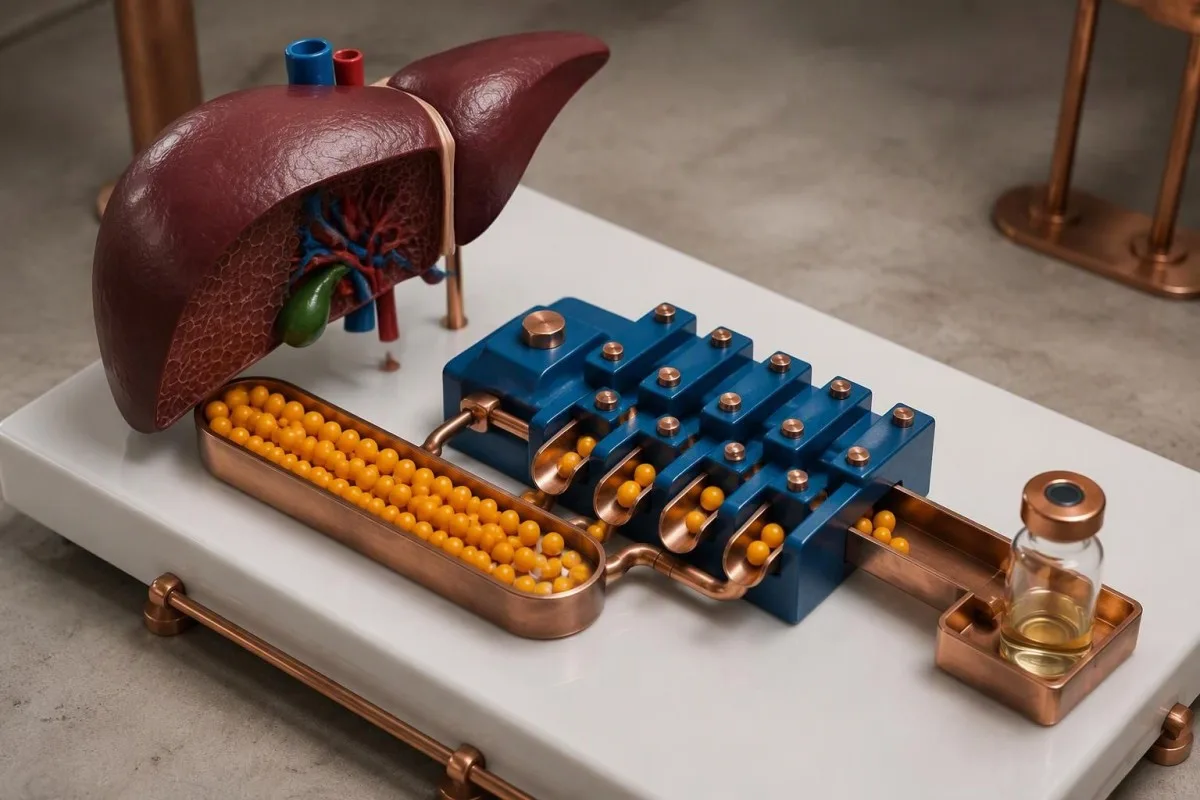
Metabolising enzymes can approach their processing capacity as exposure rises, so each additional milligram may be cleared less efficiently. A hypothetical rise from 2 mg/L to 4 mg/L after a modest dose adjustment is therefore plausible, but no single example provides a reliable formula for an individual patient.
The reverse calculation is unreliable too. A dose reduction of 25% does not guarantee a 25% concentration reduction, particularly when liver function or interacting medicines are changing; clinicians use repeat monitoring rather than assuming that the prescription and laboratory result move along a straight line.
A trough also reflects conditions during the preceding doses, not only the dose taken most recently. If a new prescription began 1 day before collection, the result may not represent the eventual exposure on that regimen, and an early result should be labelled as such rather than interpreted as settled.
This is a major reason not to borrow another person's adjustment advice. Nonlinear phenytoin monitoring illustrates a related principle, although phenytoin's free-versus-total measurement issues and target intervals are different; the shared lesson is that arithmetic alone cannot determine a safe drug dose.
Як CYP2C19 уплывае на экспазіцыю варыканазолу?
CYP2C19 genetic variation can influence voriconazole clearance: rapid and ultrarapid metabolisers may have low exposure, while poor metabolisers may develop higher concentrations. A genetic result can help explain a repeated trough below 1 mg/L or above the prescribed ceiling, but it does not replace drug monitoring.
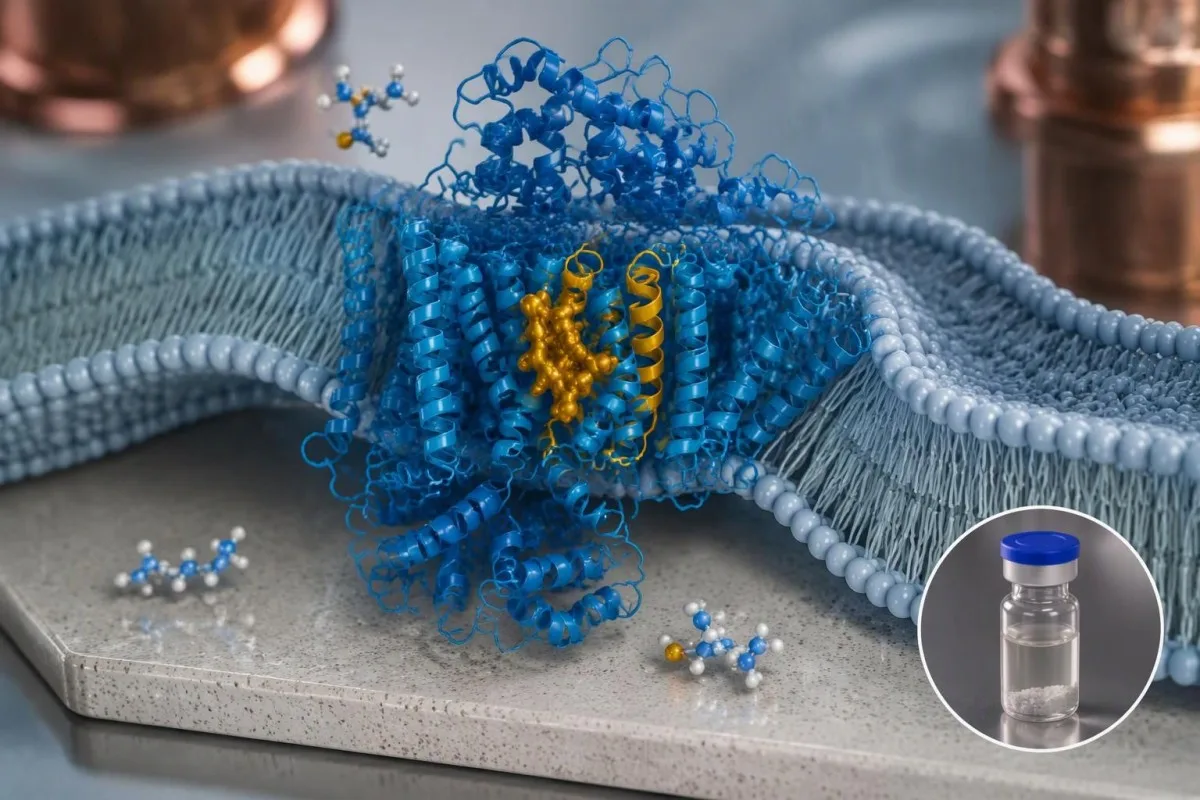
CPIC guidance recommends considering an alternative antifungal for certain CYP2C19 phenotypes when achieving reliable voriconazole exposure is difficult or adverse-effect risk is increased (Moriyama et al., 2017). This is a clinician-led choice between suitable treatments, not an instruction to stop an effective medicine after seeing a genetic category.
Genotype is only one input because liver illness, interacting medicines and systemic inflammatory responses can alter enzyme activity. A person genetically classified as a rapid metaboliser can still develop a trough of 6 mg/L under changed clinical conditions; inherited tendency does not establish a permanent, safe dose.
CYP2C19 influences more than one medicine, but the consequences are drug-specific. An enzyme variant that reduces activation of a prodrug can have a different clinical meaning from a variant that slows clearance of an active antifungal; 'fast metaboliser' is not automatically a favourable or unfavourable label.
Кантэсці — гэта Платформа AI для расшыфроўкі аналізу крыві that can help organise the laboratory and medication context around a reported voriconazole concentration. Our тлумачэнне тэхналогіі ШІ describes the interpretation workflow; a chemistry panel cannot reveal CYP2C19 genotype unless a separate genetic test has actually been performed.
Якія ўзаемадзеянні з лекамі могуць змяніць вынік?
Voriconazole interactions can either lower its concentration or increase exposure to voriconazole and other medicines. Rifampicin and carbamazepine are major enzyme-inducing concerns, while voriconazole can substantially increase tacrolimus exposure; a satisfactory trough of 2 mg/L does not make the combination automatically safe.

Rifampicin, carbamazepine and St John's wort can substantially reduce voriconazole exposure, and some combinations are contraindicated. Phenytoin creates a particularly complicated bidirectional interaction; any specialist exception requires an explicit monitoring plan rather than the assumption that increasing voriconazole will reliably overcome induction.
Starting or stopping an interacting medicine can matter as much as adding a new voriconazole dose. Enzyme induction and its reversal do not necessarily disappear within 24 hours, so clinicians need medication start and stop dates when explaining a concentration that changes despite an unchanged antifungal prescription.
Tacrolimus is a separate safety priority because voriconazole inhibits pathways involved in its clearance. A transplant team may need to adjust and closely monitor tacrolimus when voriconazole starts or stops; our tacrolimus trough interpretation guide explains why both drug concentrations must be reviewed independently.
Warfarin and medicines that prolong the QT interval also require attention even when the antifungal trough is within range. Voriconazole can increase anticoagulant effect, so understanding INR monitoring is useful; an antifungal level does not substitute for coagulation testing or an electrocardiogram.
Як вынікі пячоначных проб змяняюць інтэрпрэтацыю мінімальнага ўзроўню?
Liver dysfunction can reduce voriconazole clearance and increase exposure, while voriconazole itself can cause liver injury. A rising trough above 5–6 mg/L together with increasing ALT or bilirubin deserves prompt clinical review, but an isolated liver-test abnormality does not prove the antifungal caused it.
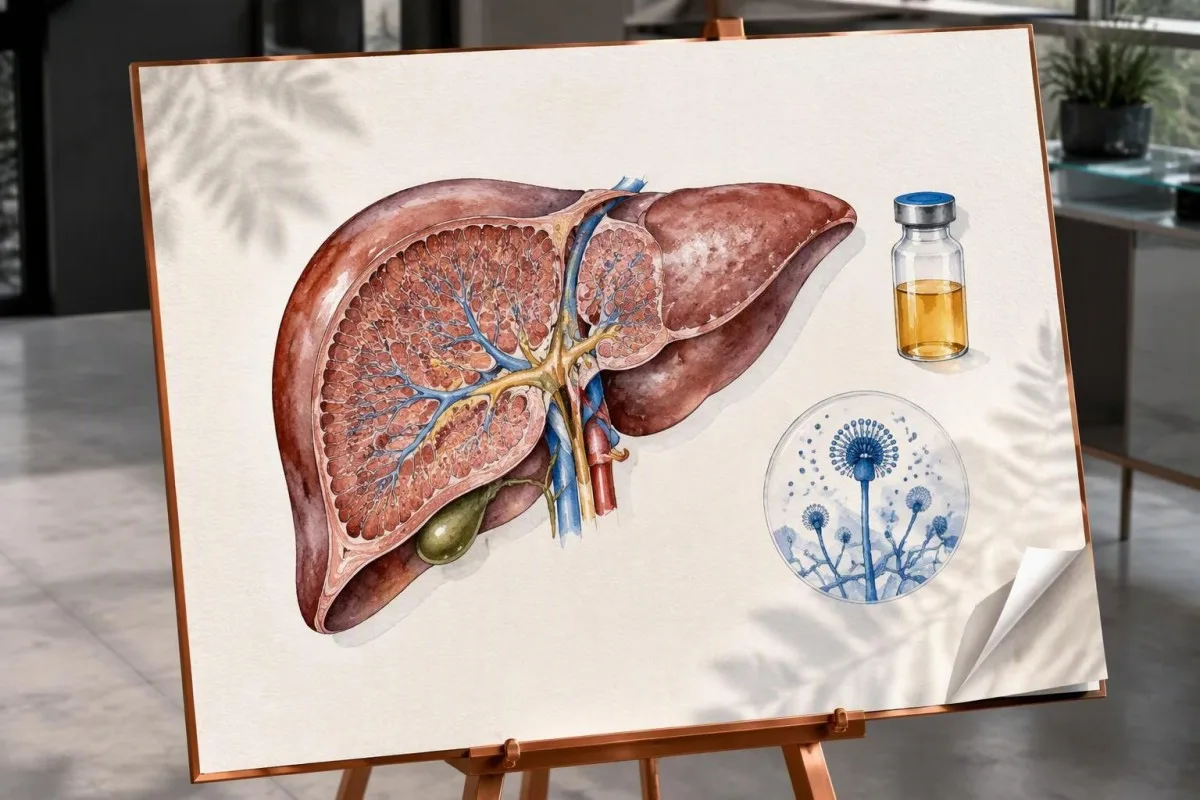
Product information recommends halving the usual maintenance dose in adults with mild-to-moderate cirrhosis, classified as Child–Pugh A or B, while retaining the standard loading regimen. That is prescribing guidance for clinicians, not a self-adjustment rule; severe hepatic impairment has less-established dosing evidence and needs specialist assessment.
Liver-test monitoring is generally recommended at least weekly during the first month, with frequency potentially reduced to monthly if results remain stable. The тлумачэння печанкавай панэлі distinguishes injury markers from synthetic-function measures; ALT alone does not quantify the liver's capacity to clear voriconazole.
For example, ALT of 180 IU/L with a laboratory upper limit of 40 IU/L is 4.5 times that limit. Clinicians compare the change with baseline, bilirubin, ALP, symptoms and alternative causes; our Кіраўніцтва па кантролі ALT explains why a multiple of the upper limit is more informative than a raw number.
At Kantesti, we explain why a seemingly acceptable total concentration can still need context when albumin is markedly low. An albumin result of 22 g/L can affect drug binding, but there is no universally adopted albumin-correction formula for voriconazole; the даведнік па інтэрпрэтацыі бялкоў сыроваткі helps separate binding concerns from a diagnosis of cirrhosis.
Ці азначаюць парушэнні зроку, што мінімальны ўзровень занадта высокі?
Visual disturbances are a recognised voriconazole effect and do not automatically mean the trough exceeds 5.5 mg/L. Temporary changes in brightness, colour perception or blurred vision can occur at otherwise acceptable exposure, whereas persistent visual loss, hallucinations or confusion require a different level of concern.

Clinical-trial information describes visual disturbances in approximately 30% of recipients, often occurring early in treatment and resolving within about 30 minutes. The frequency varies across populations and reporting methods, and the symptom alone cannot establish whether a result of 2 mg/L or 6 mg/L is responsible.
Repeated brief brightness changes soon after a dose differ from continuous loss of vision throughout the day. A pre-dose trough may not capture the maximum post-dose concentration associated with an episode; write down when symptoms start, how long they last and whether both eyes are affected.
New hallucinations, marked confusion or worsening visual impairment warrant prompt medical assessment, especially alongside a high concentration. Sudden loss of vision, severe eye pain or a new neurological deficit requires urgent evaluation regardless of the trough; do not wait 4–7 days for routine repeat monitoring.
For treatment continuing beyond 28 days, product information recommends monitoring visual function, including acuity, visual fields and colour perception. Formal eye-function testing illustrates some of these assessments, although voriconazole symptoms do not by themselves diagnose glaucoma; avoid driving while vision is affected.
Калі высокі ўзровень варыканазолу патрабуе неадкладнай увагі?
A trough above approximately 5–6 mg/L raises concern for excessive exposure, particularly when accompanied by confusion, hallucinations or worsening liver tests. Urgency depends on symptoms and organ effects, not a universal critical concentration; serious adverse effects can also occur below this numerical boundary.
A hypothetical trough of 7.2 mg/L with new hallucinations needs prompt contact with the prescribing team rather than a routine appointment weeks later. The team may change or temporarily interrupt treatment, but the patient should not independently halve the dose, skip repeated doses or wait for an AI explanation.
Fainting, sustained palpitations, seizures, severe confusion, a serious rash or jaundice with systemic illness warrant urgent assessment. Voriconazole can prolong the QT interval, and low potassium or magnesium adds risk; an electrolyte panel safety review addresses hazards that the antifungal concentration does not measure.
Kidney function affects the intravenous formulation differently from the active antifungal's liver metabolism. The cyclodextrin vehicle can accumulate when creatinine clearance is below 50 mL/min, prompting a route-specific risk–benefit review; a normal voriconazole trough cannot establish that the intravenous vehicle is harmless.
Long courses introduce problems not reliably predicted by a single trough, including photosensitivity and fluoride-associated periostitis. New persistent bone pain during a hypothetical 6-month course deserves review even at 3 mg/L, and sun-protection advice remains relevant when the drug concentration falls within the intended treatment window.
Ці можа ўзровень быць у тэрапеўтычным дыяпазоне, а інфекцыя пагаршацца?
Yes—a therapeutic voriconazole trough does not guarantee treatment success because fungal resistance, an incorrect diagnosis, inadequate source control or profound immunosuppression can overcome adequate exposure. A result of 3 mg/L confirms neither fungal susceptibility nor sufficient drug delivery to every affected site.

The organism's minimum inhibitory concentration, or MIC, helps describe how much drug inhibits growth under laboratory conditions. If the fungal MIC is 2 mg/L rather than 0.25 mg/L, the same trough has a different exposure-to-susceptibility relationship; a trough-to-MIC ratio is not a self-dosing calculator.
Clinicians review imaging, cultures, susceptibility testing and relevant fungal markers alongside the concentration. A galactomannan result interpretation can clarify another piece of the assessment, but neither one positive marker nor one therapeutic trough independently proves active aspergillosis or its resolution.
Voriconazole lacks reliable activity against Mucorales, the fungi responsible for mucormycosis. A trough of 4 mg/L therefore cannot solve a mismatch between the medicine and the organism; persistent deterioration may require diagnostic reassessment and a different antifungal strategy rather than progressively increasing exposure.
Early imaging changes are also not always equivalent to failure because inflammatory responses can change as immune function recovers. Nonetheless, worsening breathing, new neurological symptoms or fever during severe neutropenia needs prompt clinical assessment; the infection team decides whether a 1-week trend reflects expected evolution or an inadequate treatment plan.
Калі трэба паўтарыць аналіз на мінімальны ўзровень?
Voriconazole monitoring is commonly repeated after a dose change, a major interaction change, altered liver function, a route change or suspected treatment failure. A routine reassessment often occurs within 4–7 days, but concerning neurological symptoms or liver deterioration justify earlier clinical action rather than waiting for steady exposure.
Two concentrations are meaningfully comparable only when the dosing interval and collection conditions are documented. A change from 1.1 mg/L to 3.4 mg/L may represent improved exposure, but it may instead compare a delayed trough with a post-dose sample; the size of the difference cannot correct a timing error.
Changing from intravenous to oral treatment can alter exposure even when the intended prescription seems equivalent. Clinicians may repeat the level after the switch, especially if eating, vomiting or tube feeding has changed; the route belongs beside the concentration in the monitoring record, not only in the medication history.
Кантэсці — гэта Інструмент аналізу вынікаў аналізу крыві з падтрымкай AI that can help organise uploaded drug levels alongside liver-test trends and reported dose times. Our medication-safety trend workflow supports preparation for review, but a rise from 2 mg/L to 6 mg/L still requires clinician-led interpretation and treatment decisions.
Stable treatment does not create one universal long-term testing interval. The team balances infection risk, treatment duration, prior variability and access to testing; keep a record of at least the previous dose time, collection time, current prescription, formulation and medication changes so the next result answers a usable question.
Што ўзяць з сабой на кансультацыю і што пацвярджае гэтыя рэкамендацыі?
Bring the actual dose and collection times, the prescribed treatment goal, recent liver results and a complete medication list to your voriconazole review. Ask whether a result such as 1.4 mg/L meets your specific indication—not whether it fits a single internet range—and do not adjust the prescription yourself.
A practical review has three questions: was the sample a true trough, is exposure appropriate for this infection or prevention plan, and are there adverse effects or interactions? Include missed doses and meal timing honestly; a 12-hour prescription does not mean every dose was actually separated by 12 hours.
The clinical recommendations here draw on the 2016 IDSA aspergillosis guideline, the 2014 British Society for Medical Mycology monitoring guideline and the 2017 CPIC voriconazole guideline. These sources address different questions—clinical treatment, concentration monitoring and pharmacogenetics—so their recommendations should be combined thoughtfully rather than presented as one identical range.
Kantesti Ltd's role is to help readers understand laboratory information, not to prescribe antifungal treatment. Our organisation and purpose are described separately; technical evaluation on 100,000 synthetic cases cannot establish that a particular voriconazole dose improves clinical outcomes in a patient with invasive fungal disease.
The two research publications listed below describe an automated technical benchmark and a clinical-validation framework, not a voriconazole therapeutic-monitoring trial. Our validation methodology and limits explain that distinction; use our interpretation to prepare questions, while your infection specialist or prescribing team determines the dose and follow-up plan.
Часта задаваныя пытанні
Які нармальны мінімальны ўзровень варыканазолу?
Voriconazole does not have a healthy-population 'normal' concentration; it has a therapeutic exposure target. Many treatment protocols use approximately 1–5.5 mg/L, while IDSA guidance discusses a minimum above 1–1.5 mg/L and an upper boundary below 5–6 mg/L. Severe disease, fungal susceptibility and prevention protocols can change the intended target. Your prescribing team should interpret the result using the actual collection time and clinical indication.
0 Колькі часу да прыёму дозы трэба здаць аналіз на ўзровень варыканазолу?
Траговую канцэнтрацыю варыканазолу звычайна вызначаюць непасрэдна перад наступнай запланаванай дозай, як правіла, у межах 30 хвілін, згодна з інструкцыямі мясцовай лабараторыі. Калі доза запланавана на 8:00, забор крыві ў 7:45 да прыёму прэпарату звычайна будзе дарэчным. Прыём дозы спачатку можа прывесці да атрымання выніку пасля прыёму, які не варта непасрэдна параўноўваць з мэтавымі значэннямі трагавай канцэнтрацыі. Узгадніце план забору крыві з медыцынскай камандай, а не адкладайце прыём дозы на некалькі гадзін без адпаведных указанняў.
Што азначае нізкі ўзровень ворыканацолу?
Мінімальная канцэнтрацыя вориконазолу ніжэй за 1 мг/л не дасягае многіх мэтавых паказчыкаў лячэння, але гэта не даказвае, што прызначаная доза занадта малая. Непрынятыя дозы, затрымка з узяццем пробы, уплыў ежы, ваніты, парушэнне ўсмоктвання і прэпараты, якія індукуюць ферменты, могуць растлумачыць нізкую экспазіцыю. Пероральны вориконазол звычайна прымаюць не менш чым за 1 гадзіну да або пасля ежы, згодна з інструкцыяй да прэпарата. Звяжыцеся з камандай, якая прызначыла прэпарат, каб абмеркаваць лячэнне, замест таго каб самастойна павялічваць дозу.
Ці аднолькавыя вынікі для варыканазолу ў мг/л і мкг/мл?
Канцэнтрацыі варыканазолу ў мг/л і мкг/мл маюць аднолькавае лікавае значэнне. Вынік 2 мг/л — гэта дакладна 2 мкг/мл, што таксама складае 2 000 нг/мл. Лабараторыі могуць выкарыстоўваць розныя адзінкі вымярэння і мэтавыя інтэрвалы, таму перад параўнаннем вынікаў праверце і тое, і другое. Гэты пералік адзінак не выпраўляе памылкова выбраны час забору ўзору.
Ці азначаюць затуманены зрок або галюцынацыі таксічнасць варыканазолу?
Кароткачасовыя парушэнні зроку могуць узнікаць пры прыёме варыканазолу, нават калі мінімальная канцэнтрацыя знаходзіцца ў мэтавым дыяпазоне, тады як галюцынацыі або спутанасць свядомасці выклікаюць большую занепакоенасць празмернай экспазіцыяй прэпарата або іншай медыцынскай праблемай. У інфармацыі пра прэпарат указана, што парушэнні зроку ўзнікаюць прыкладна ў 30% пацыентаў і часта праходзяць прыблізна за 30 хвілін. Пра новыя галюцынацыі, устойлівае парушэнне або пагаршэнне сімптомаў трэба неадкладна паведаміць камандзе, якая прызначыла прэпарат; раптоўная страта зроку або цяжкія неўралагічныя сімптомы патрабуюць тэрміновай медыцынскай ацэнкі. Не кіруйце аўтамабілем, пакуль зрок парушаны, і не змяняйце дозу супрацьгрыбковага прэпарата самастойна.
Калі пасля змены дозы варыніканазолу варта паўторна праверыць яго ўзровень?
Мінімальную канцэнтрацыю варыканазолу часта правяраюць паўторна праз 4–7 дзён пасля змены дозы — у залежнасці ад схемы лячэння, нагрузачных доз і мясцовага пратаколу. Пры падазрэнні на таксічнасць, змене функцыі печані або значных узаемадзеяннях з іншымі прэпаратамі можа спатрэбіцца ранейшае даследаванне або клінічнае ўмяшанне. Нелінейны метабалізм азначае, што павелічэнне дозы на 25% не гарантуе павелічэння канцэнтрацыі толькі на 25%. Каманда, якая прызначае лячэнне, павінна вызначыць дату паўторнага аналізу і інтэрпрэтаваць вынік, перш чым уносіць далейшыя змены.
Атрымайце тлумачэнне вынікаў аналізу крыві
Загрузіце свой лабараторны справаздачу, і AI Kantesti за некалькі секунд простай мовай растлумачыць кожны біямаркер. Ім карыстаюцца больш за 2 мільёны чалавек па ўсім свеце.
Спасылкі
- Кляйн, Т., Мітчэл, С., і Вебер, Х. (2026). Передреєстрований, рубрикатор-орієнтований автоматизований технічний бенчмарк інтерпретаційного рушія Kantesti для аналізу крові на 100 000 синтетичних тестових випадків. Kantesti AI Medical Research. DOI
- Кляйн, Т., Мітчэл, С., і Вебер, Х. (2026). Clinical Validation Framework v2.0 (старонка медыцынскай валідацыі). Kantesti AI Medical Research. DOI
- Patterson TF et al. (2016). Практычныя рэкамендацыі па дыягностыцы і лячэнні аспергілёзу: абнаўленне 2016 года ад Амерыканскага таварыства інфекцыйных хвароб. Clinical Infectious Diseases. DOI
- Ashbee HR et al. (2014). Therapeutic drug monitoring (TDM) of antifungal agents: guidelines from the British Society for Medical Mycology. Journal of Antimicrobial Chemotherapy. DOI
- Moriyama B et al. (2017). Clinical Pharmacogenetics Implementation Consortium (CPIC) Guidelines for CYP2C19 and Voriconazole Therapy. Clinical Pharmacology & Therapeutics. DOI
- 2 млн+Прааналізаваныя тэсты
- 127+Краіны
- 100+Мовы
Пра медыцынскую каманду


Сігналы даверу E-E-A-T
Вопыт
Клінічны агляд, які вядзе лекар, працэсаў інтэрпрэтацыі лабараторных паказчыкаў.
Экспертыза
Фокус лабараторнай медыцыны на тым, як біямаркеры паводзяць сябе ў клінічным кантэксце.
Аўтарытэтнасць
Медыцынскую рэцэнзію правёў доктар Томас Кляйн пры ўдзеле доктара Сары Мітчэл і прафесара, доктара Ганса Вэбера.
Надзейнасць
Інтэрпрэтацыя на аснове доказаў з выразнымі шляхамі далейшых дзеянняў, каб паменшыць трывогу.

Медыцынская адмова ад адказнасці
Гэты артыкул прызначаны толькі для адукацыйных мэт і не з’яўляецца медычнай парадай. Заўсёды кансультуйцеся з кваліфікаваным спецыялістам аховы здароўя для прыняцця рашэнняў па дыягностыцы і лячэнні.
Апублікавана · Звязацца з рэдакцыйнай камандай
Апублікавана кампаніяй Kantesti Ltd, зарэгістраванай у Англіі і Уэльсе, нумар кампаніі. 17090423, Лондан, Злучанае Каралеўства.
