
సరైన సమయంలో సేకరించిన voriconazole ట్రఫ్, యాంటీఫంగల్ ఔషధానికి గురికావడం తగినంతగా ఉందా, అదే సమయంలో అధికం కాకుండా ఉందా అని అంచనా వేయడంలో సహాయపడుతుంది. అనేక చికిత్స ప్రోటోకాల్లు సుమారు 1–5.5 mg/Lను ఉపయోగిస్తాయి, అయితే మీకు వర్తించే లక్ష్య స్థాయిని ఇన్ఫెక్షన్, నివారణ ప్రణాళిక, దుష్ప్రభావాలు నిర్ణయిస్తాయి.

ముఖ్యాంశాలు
- Voriconazole ట్రఫ్ అంటే తదుపరి నిర్ణీత మోతాదుకు వెంటనే ముందు ఉండే ఔషధ సాంద్రత; ఇది ఔషధానికి గురికావడాన్ని కొలుస్తుంది, ఇన్ఫెక్షన్ నయమైందా లేదా అన్నది కాదు.
- చికిత్స లక్ష్యాలు (Treatment targets) సాధారణంగా ట్రఫ్ స్థాయి 1–1.5 mg/L కంటే ఎక్కువగా ఉండాలి; కష్టమైన లేదా తీవ్రమైన ఇన్ఫెక్షన్లకు కొన్ని బృందాలు కనీసం 2 mg/L లక్ష్యంగా పెట్టుకుంటాయి.
- గరిష్ఠ పరిమితులు సాధారణంగా 5–6 mg/L పరిధిలో ఉంటాయి, ఎందుకంటే అధిక ఔషధానికి గురికావడం వల్ల నాడీ సంబంధిత, ఇతర దుష్ప్రభావాలపై ఆందోళన పెరుగుతుంది.
- నివారణ లక్ష్యాలు ప్రోటోకాల్ను బట్టి ఉంటాయి; నివారణ కోసం ఉపయోగించే తక్కువ పరిమితిని ఇప్పటికే ఉన్న ఇన్ఫెక్షన్ చికిత్సకు యథాతథంగా వర్తింపజేయకూడదు.
- స్థాయి పరీక్ష సమయం సాధారణంగా తదుపరి మోతాదుకు సుమారు 30 నిమిషాల ముందు నమూనా సేకరించడాన్ని సూచిస్తుంది; ప్రయోగశాల సూచనలను అనుసరించాలి.
- యూనిట్ మార్పిడి ఖచ్చితమైనది: 1 mg/L అంటే 1 µg/mL మరియు 1,000 ng/mL.
- తక్కువ ఔషధ ఎక్స్పోజర్ మోతాదులు తీసుకోవడం మానేయడం, ఆహార ప్రభావాలు, శోషణ లోపం, పరస్పర చర్య కలిగించే మందులు లేదా వేగవంతమైన జీవక్రియ కారణంగా ఉండవచ్చు—కేవలం సూచించిన మోతాదు సరిపోకపోవడం వల్ల మాత్రమే కాదు.
- మోతాదు భద్రత వైద్యుని పర్యవేక్షణలోనే మార్పులు చేయాలి, ఎందుకంటే 25% మోతాదు పెంపు వల్ల ఔషధ సాంద్రత అసమానంగా పెద్ద మొత్తంలో పెరగవచ్చు.
voriconazole ట్రఫ్ వాస్తవంగా ఏమి తెలియజేస్తుంది?
A voriconazole ట్రఫ్ స్థాయి తదుపరి మోతాదుకు తక్షణం ముందు శరీరంలో ఎంత యాంటీఫంగల్ ఔషధం మిగిలి ఉందో వైద్యులకు తెలియజేస్తుంది. సరిగ్గా సేకరించిన ఫలితం సుమారు 1–5.5 mg/L ఉంటే తరచుగా చికిత్స ప్రోటోకాల్కు అనుగుణంగా ఉంటుంది; అయితే ప్రభావవంతమైన మోతాదు ఫంగస్ ఔషధసున్నితత్వం, సంక్రమణ స్థానం, వైద్యపరమైన మెరుగుదలపై కూడా ఆధారపడి ఉంటుంది.

ట్రఫ్ స్థాయి అనేది మోతాదుల మధ్య వ్యవధిలో ఔషధ ఎక్స్పోజర్కు ఒక ఆచరణాత్మక సూచిక; ప్రభావిత ఊపిరితిత్తి లేదా మెదడులోని ఔషధ పరిమాణాన్ని నేరుగా కొలవదు. ప్రతి 12 గంటలకు voriconazole తీసుకునే వ్యక్తిలో, మోతాదుకు ముందరి సాంద్రత మోతాదుల మధ్య ఎక్స్పోజర్ మరీ తక్కువగా పడిపోవచ్చో లేదో గుర్తించడంలో సహాయపడుతుంది.
చికిత్సా ఔషధ పర్యవేక్షణకు రెండు వేర్వేరు లక్ష్యాలు ఉన్నాయి: యాంటీఫంగల్ ప్రభావానికి తగినంత ఎక్స్పోజర్ను కొనసాగించడం, అధిక ఎక్స్పోజర్ను నివారించడం. IDSA ఆస్పెర్జిలోసిస్ మార్గదర్శకం, ముఖ్యంగా కేంద్ర నాడీ వ్యవస్థ విషప్రభావాన్ని పరిమితం చేయడానికి, చికిత్స సమయంలో 1–1.5 mg/L కంటే ఎక్కువ మరియు 5–6 mg/L కంటే తక్కువ ట్రఫ్ స్థాయిలను సాధారణంగా ఉపయోగించే నిపుణుల లక్ష్యాలుగా పేర్కొంటుంది (Patterson et al., 2016).
కాంటెస్టి అనేది ఒక AI రక్త పరీక్ష విశ్లేషణకారి అప్లోడ్ చేసిన voriconazole ఫలితాన్ని కాలేయ పరీక్షలతో పాటు అర్థం చేసుకోవడంలో ఇది సహాయపడవచ్చు; అయితే లక్ష్య స్థాయిని మీకు మందు సూచించిన బృందం నిర్ణయిస్తుంది. 1.2 mg/L ఫలితానికి దాని చికిత్సా సూచన మరియు నమూనా సేకరణ సమయం జతచేయాలి; మా వివరణ ఆ సంఖ్యను మోతాదు సూచనగా మార్చకూడదు.
ప్రయోగశాల గుర్తు చికిత్స విజయవంతమైందా అనే తుది తీర్పు కాదు. అనేక సాధారణ రసాయన పరీక్షల సూచన పరిధుల్లా కాకుండా, ఔషధ పర్యవేక్షణ పరిధి క్లినికల్ ఎక్స్పోజర్ లక్ష్యాన్ని సూచిస్తుంది; మా వివరణ పరిధి వెలుపల ఉన్న ప్రయోగశాల ఫలితాలు ఒక గుర్తును నిర్ధారణగా పొరబడకుండా తేడాను గుర్తించడంలో సహాయపడుతుంది.
మీ voriconazole స్థాయిని ఎప్పుడు సేకరించాలి?
సరైన voriconazole స్థాయి పరీక్ష సమయం అంటే తదుపరి షెడ్యూల్ చేసిన మోతాదుకు తక్షణం ముందు, సాధారణంగా దానికి 30 నిమిషాల లోపు, నమూనా సేకరించడం. మొదటి సాధారణ స్థాయి పరీక్షను తరచుగా 4–7వ రోజుల మధ్య చేస్తారు; అయితే లోడింగ్ మోతాదులు, తీవ్రమైన అనారోగ్యం, స్థానిక ప్రోటోకాల్ల కారణంగా ముందుగానే పరీక్షించడం సముచితం కావచ్చు.

ఉదాహరణకు, 8 a.m. మరియు 8 p.m.లకు మందు తీసుకునే షెడ్యూల్ ఉందని ఊహించండి. ఉదయం మందు తీసుకునే ముందు 7:45 a.m.కు సేకరించిన నమూనా ట్రఫ్ స్థాయిని దగ్గరగా సూచిస్తుంది; మోతాదు తీసుకున్న తర్వాత 10 a.m.కు సేకరించిన నమూనా అలా సూచించదు—ప్రయోగశాల నివేదిక దాన్ని ట్రఫ్ అని పేర్కొన్నప్పటికీ.
మోతాదు ఆలస్యం కావడం కూడా వ్యతిరేక దిశలో ఫలిత అర్థాన్ని వక్రీకరించవచ్చు. తదుపరి మోతాదు 8 a.m.కు తీసుకోవాల్సి ఉండగా నమూనా 11 a.m.కు సేకరిస్తే, మందు లేకుండా అదనంగా గడిచిన 3 గంటల వల్ల కొలిచిన సాంద్రత తగ్గవచ్చు; బృందానికి ఉద్దేశించిన షెడ్యూల్ మాత్రమే కాకుండా వాస్తవ సమయాలు కూడా అవసరం.
శిరామార్గంలో voriconazole ఇచ్చినా మోతాదుకు ముందు నమూనా అవసరం; సాధారణంగా తదుపరి ఇన్ఫ్యూషన్ ప్రారంభమయ్యే ముందు తీసుకోవాలి. మందు ఇచ్చేందుకు ఉపయోగించిన లైన్ నుంచే నమూనా తీసుకుంటే కలుషితమయ్యే అవకాశం ఉంది. అందువల్ల అందుబాటులో ఉన్న ప్రతి లైన్ నుంచి సమానమైన ఫలితం వస్తుందని భావించకుండా, నమూనా సేకరణ మార్గాన్ని ప్రయోగశాల లేదా ఇన్ఫ్యూషన్ బృందం నిర్ణయించాలి.
సాంద్రత పరీక్ష కోసం రాత్రంతా ఉపవాసం ఉండటం తప్పనిసరి కాదు; అయితే నోటిద్వారా తీసుకునే voriconazoleకు భోజన సమయానికి సంబంధించిన ప్రత్యేక సూచనలు ఉన్నాయి. ముందుగానే నమూనా సేకరణ ప్రణాళికను తనిఖీ చేయండి; ఔషధ-నిర్దిష్ట నమూనా సేకరణ నియమాలు ఒక ఔషధానికి వర్తించే సరైన సమయ నియమాన్ని మరొక ఔషధానికి ఎందుకు వర్తింపజేయలేమో వివరిస్తాయి.
voriconazole చికిత్సా పరిధి ఎంత?
ది voriconazole చికిత్సా పరిధి is commonly approximately 1–5.5 mg/L for treatment, but there is no universal interval suitable for every patient. IDSA guidance discusses a lower goal above 1–1.5 mg/L and an upper boundary below 5–6 mg/L; some difficult infections prompt a higher minimum.

These boundaries describe probabilities, not biological switches. A trough of 0.9 mg/L does not prove failure, and 5.6 mg/L does not prove toxicity; repeated results, symptoms and organism susceptibility help determine whether a small boundary crossing is clinically meaningful or simply requires confirmation.
For invasive aspergillosis, the British Society for Medical Mycology recommends a treatment trough above 1 mg/L and discusses higher exposure goals for poor-prognosis situations, including central nervous system disease (Ashbee et al., 2014). A team may therefore consider 1.3 mg/L acceptable for one indication but insufficient for another.
The reason for a higher minimum is that the concentration needed to inhibit a less-susceptible fungus may exceed the concentration needed for a susceptible organism. Raising exposure indefinitely is not a safe solution: a trough approaching 5–6 mg/L can leave little room between a desired antifungal effect and adverse effects.
Always read the units before comparing reports. A result of 2 µg/mL is exactly 2 mg/L, not twice or half that value; the biomarker and units guide provides context for comparing laboratory values without mistaking a therapeutic target for a healthy-population range.
| స్థాయి | పరిధి | దాని అర్థం |
|---|---|---|
| Below many treatment targets | <1 మి.గ్రా/లీ. | Check collection timing, dosing history, absorption and interactions; not proof of treatment failure. |
| Lower treatment exposure | 1–<2 mg/L | May meet the prescribed target, but severe disease or reduced fungal susceptibility can require a higher minimum. |
| Common treatment exposure window | 2–5.5 mg/L | Often compatible with treatment goals when correctly timed; does not guarantee efficacy or freedom from toxicity. |
| Above many local upper limits | >5.5 mg/L | Requires review of symptoms, liver tests, timing and the local protocol; there is no universal emergency cutoff. |
చికిత్స, నివారణ లక్ష్యాలు ఎందుకు వేర్వేరుగా ఉండవచ్చు?
Treatment targets may be more demanding than prevention targets because an established fungal infection must be controlled, not merely prevented. Some local prophylaxis protocols accept 0.5 mg/L, whereas British guidance recommends a prophylaxis trough above 1 mg/L; these thresholds are not interchangeable.

Prophylaxis studies are harder to interpret because breakthrough fungal disease may be uncommon and heavily influenced by immune status. A threshold of 0.5 mg/L used in one prevention programme cannot establish equivalent protection for every stem-cell transplant recipient, particularly during prolonged neutropenia or intensive immunosuppression.
The British Society for Medical Mycology's prophylaxis recommendation above 1 mg/L carries a weaker evidence base than some treatment recommendations (Ashbee et al., 2014). The uncertainty is genuine: the exact preventive minimum is less settled than the principle that persistently very low exposure deserves investigation.
Consider a hypothetical result of 0.8 mg/L in two people. One is receiving prevention under a documented local protocol; the other has confirmed invasive aspergillosis. The same concentration can lead to different discussions because the indication, fungal burden and acceptable risk of inadequate exposure differ.
Transplant recipients often have several parallel monitoring plans, not one combined 'infection score.' Voriconazole does not prevent every opportunistic infection, and CMV results after transplantation answer a different question; a satisfactory antifungal trough does not replace viral surveillance or other prescribed prophylaxis.
voriconazole స్థాయి తగ్గడానికి కారణమేమిటి?
A low voriconazole level can result from missed or delayed doses, food effects, impaired gastrointestinal absorption, enzyme-inducing medicines or faster metabolism. Before changing treatment, clinicians verify whether a result below 1 mg/L is a correctly timed trough and whether the prescribed doses actually reached the patient.
Oral voriconazole is generally taken at least 1 hour before or 1 hour after a meal, following the product instructions. Food can reduce exposure, but a low result should not be blamed on breakfast without checking the complete dosing history, formulation, vomiting and other medicines.
Imagine a hypothetical adult prescribed 200 mg every 12 hours whose trough is 0.6 mg/L. Taking each dose with a substantial meal and vomiting one evening dose creates two plausible explanations for low exposure; automatically escalating the prescription could cause excessive exposure once those problems resolve.
Severe diarrhoea, mucositis, gastrointestinal surgery and feeding-tube administration can make oral delivery less predictable. Clinicians may review the formulation or route rather than simply the milligram amount; testing for impaired fat absorption explains why gastrointestinal dysfunction needs its own assessment rather than being diagnosed from one drug level.
Acid-suppressing medicines deserve a medication review, but voriconazole should not be treated like an antifungal whose absorption always requires stomach acid. Some proton pump inhibitors inhibit metabolism and can raise exposure; our reflux treatment context helps readers identify these medicines without stopping them independently.
మోతాదులో చిన్న మార్పు కొన్నిసార్లు స్థాయిని గణనీయంగా ఎందుకు మార్చుతుంది?
Voriconazole has nonlinear metabolism in adults, meaning a dose increase can produce a more-than-proportional concentration increase. Changing a prescribed dose from 200 mg to 250 mg is a 25% increase, but the resulting trough cannot safely be predicted by multiplying the old result by 1.25.
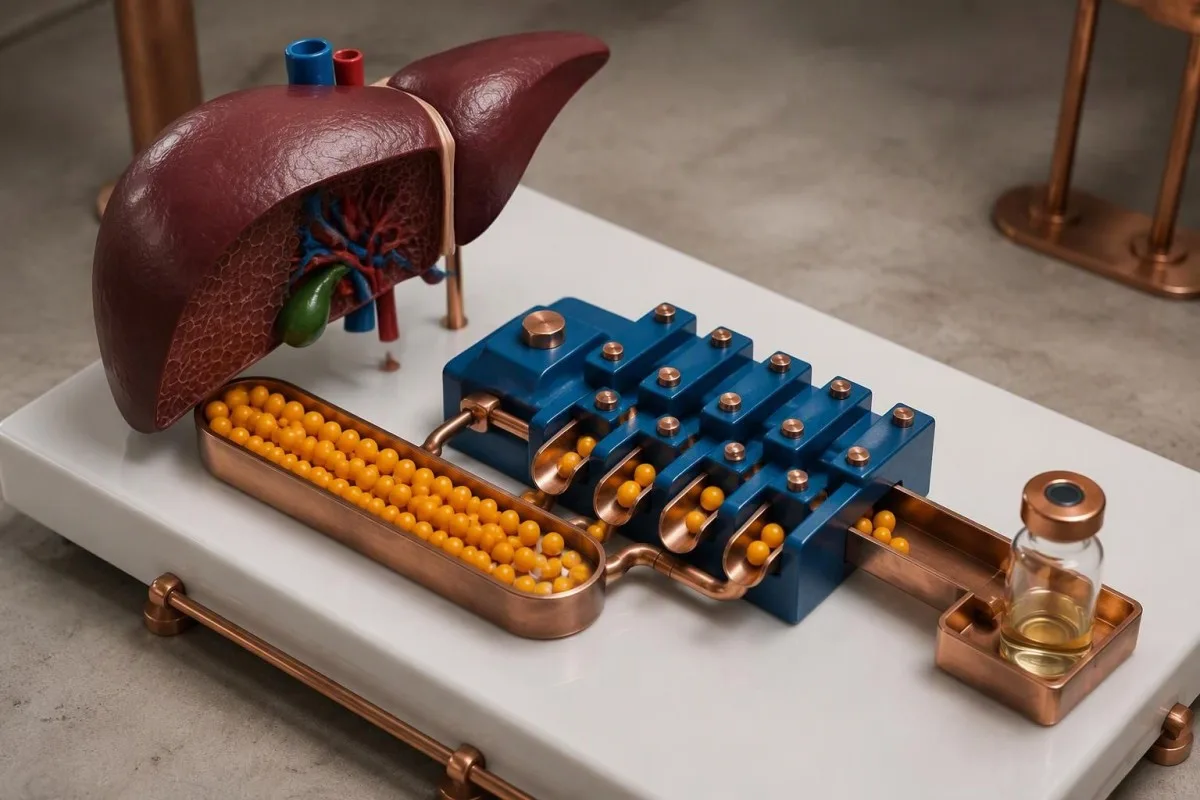
Metabolising enzymes can approach their processing capacity as exposure rises, so each additional milligram may be cleared less efficiently. A hypothetical rise from 2 mg/L to 4 mg/L after a modest dose adjustment is therefore plausible, but no single example provides a reliable formula for an individual patient.
The reverse calculation is unreliable too. A dose reduction of 25% does not guarantee a 25% concentration reduction, particularly when liver function or interacting medicines are changing; clinicians use repeat monitoring rather than assuming that the prescription and laboratory result move along a straight line.
A trough also reflects conditions during the preceding doses, not only the dose taken most recently. If a new prescription began 1 day before collection, the result may not represent the eventual exposure on that regimen, and an early result should be labelled as such rather than interpreted as settled.
This is a major reason not to borrow another person's adjustment advice. Nonlinear phenytoin monitoring illustrates a related principle, although phenytoin's free-versus-total measurement issues and target intervals are different; the shared lesson is that arithmetic alone cannot determine a safe drug dose.
CYP2C19 voriconazole ఔషధానికి గురికావడాన్ని ఎలా ప్రభావితం చేస్తుంది?
CYP2C19 genetic variation can influence voriconazole clearance: rapid and ultrarapid metabolisers may have low exposure, while poor metabolisers may develop higher concentrations. A genetic result can help explain a repeated trough below 1 mg/L or above the prescribed ceiling, but it does not replace drug monitoring.
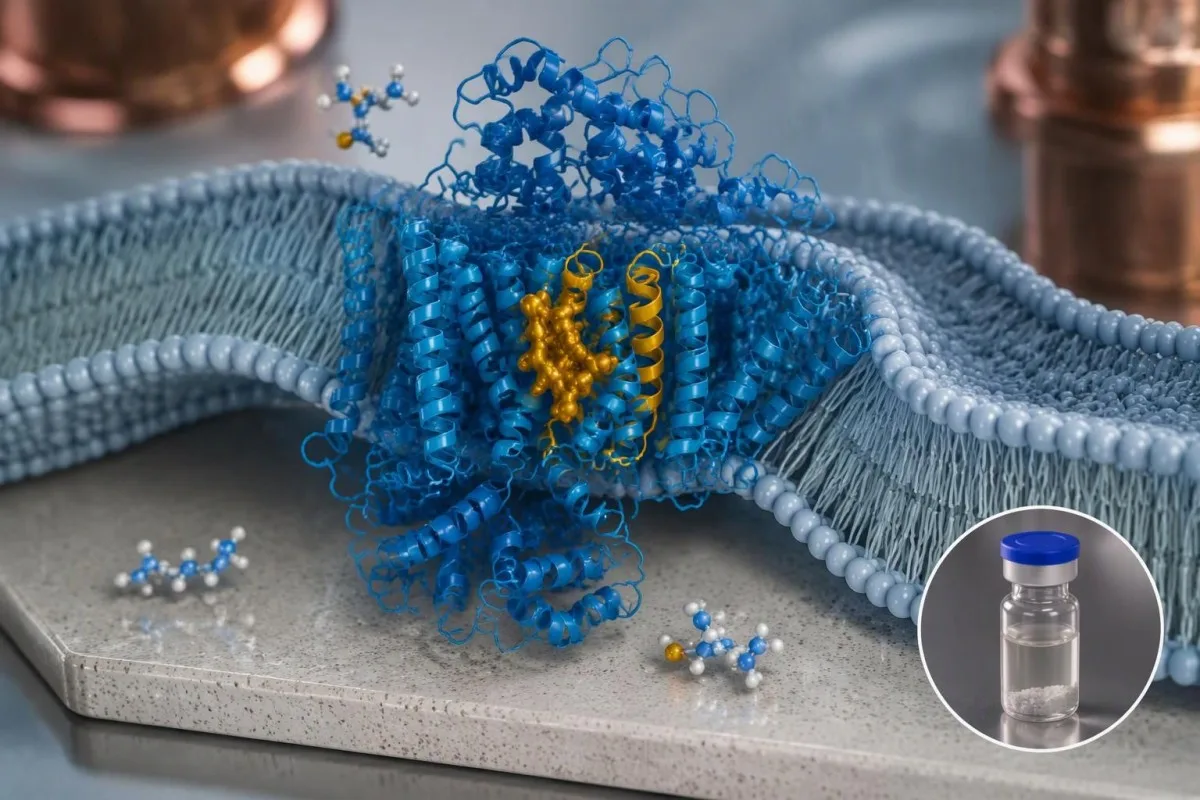
CPIC guidance recommends considering an alternative antifungal for certain CYP2C19 phenotypes when achieving reliable voriconazole exposure is difficult or adverse-effect risk is increased (Moriyama et al., 2017). This is a clinician-led choice between suitable treatments, not an instruction to stop an effective medicine after seeing a genetic category.
Genotype is only one input because liver illness, interacting medicines and systemic inflammatory responses can alter enzyme activity. A person genetically classified as a rapid metaboliser can still develop a trough of 6 mg/L under changed clinical conditions; inherited tendency does not establish a permanent, safe dose.
CYP2C19 influences more than one medicine, but the consequences are drug-specific. An enzyme variant that reduces activation of a prodrug can have a different clinical meaning from a variant that slows clearance of an active antifungal; 'fast metaboliser' is not automatically a favourable or unfavourable label.
కాంటెస్టి అనేది ఒక AI రక్త పరీక్ష ఫలితాలు అర్థం ప్లాట్ఫారమ్ that can help organise the laboratory and medication context around a reported voriconazole concentration. Our AI టెక్నాలజీ వివరణ describes the interpretation workflow; a chemistry panel cannot reveal CYP2C19 genotype unless a separate genetic test has actually been performed.
ఏ ఔషధ పరస్పర చర్యలు ఫలితాన్ని మార్చగలవు?
Voriconazole interactions can either lower its concentration or increase exposure to voriconazole and other medicines. Rifampicin and carbamazepine are major enzyme-inducing concerns, while voriconazole can substantially increase tacrolimus exposure; a satisfactory trough of 2 mg/L does not make the combination automatically safe.

Rifampicin, carbamazepine and St John's wort can substantially reduce voriconazole exposure, and some combinations are contraindicated. Phenytoin creates a particularly complicated bidirectional interaction; any specialist exception requires an explicit monitoring plan rather than the assumption that increasing voriconazole will reliably overcome induction.
Starting or stopping an interacting medicine can matter as much as adding a new voriconazole dose. Enzyme induction and its reversal do not necessarily disappear within 24 hours, so clinicians need medication start and stop dates when explaining a concentration that changes despite an unchanged antifungal prescription.
Tacrolimus is a separate safety priority because voriconazole inhibits pathways involved in its clearance. A transplant team may need to adjust and closely monitor tacrolimus when voriconazole starts or stops; our tacrolimus trough interpretation guide explains why both drug concentrations must be reviewed independently.
Warfarin and medicines that prolong the QT interval also require attention even when the antifungal trough is within range. Voriconazole can increase anticoagulant effect, so understanding INR monitoring is useful; an antifungal level does not substitute for coagulation testing or an electrocardiogram.
కాలేయ పరీక్షలు ట్రఫ్ ఫలితాల అర్థాన్ని ఎలా మార్చగలవు?
Liver dysfunction can reduce voriconazole clearance and increase exposure, while voriconazole itself can cause liver injury. A rising trough above 5–6 mg/L together with increasing ALT or bilirubin deserves prompt clinical review, but an isolated liver-test abnormality does not prove the antifungal caused it.
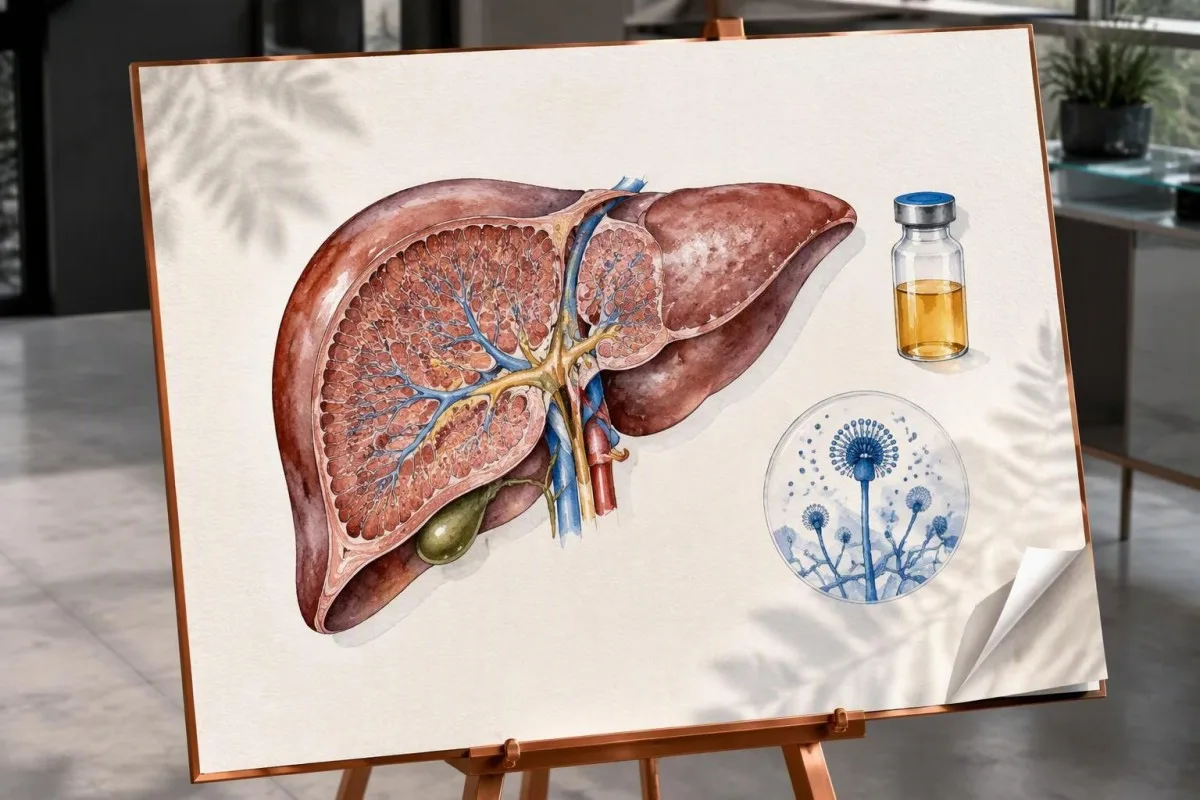
Product information recommends halving the usual maintenance dose in adults with mild-to-moderate cirrhosis, classified as Child–Pugh A or B, while retaining the standard loading regimen. That is prescribing guidance for clinicians, not a self-adjustment rule; severe hepatic impairment has less-established dosing evidence and needs specialist assessment.
Liver-test monitoring is generally recommended at least weekly during the first month, with frequency potentially reduced to monthly if results remain stable. The liver panel వివరణ distinguishes injury markers from synthetic-function measures; ALT alone does not quantify the liver's capacity to clear voriconazole.
For example, ALT of 180 IU/L with a laboratory upper limit of 40 IU/L is 4.5 times that limit. Clinicians compare the change with baseline, bilirubin, ALP, symptoms and alternative causes; our ALT ఫాలో-అప్ గైడ్ explains why a multiple of the upper limit is more informative than a raw number.
At Kantesti, we explain why a seemingly acceptable total concentration can still need context when albumin is markedly low. An albumin result of 22 g/L can affect drug binding, but there is no universally adopted albumin-correction formula for voriconazole; the సీరం ప్రోటీన్ వివరణ మార్గదర్శి helps separate binding concerns from a diagnosis of cirrhosis.
దృష్టి సమస్యలు ట్రఫ్ స్థాయి చాలా ఎక్కువగా ఉందని సూచిస్తాయా?
Visual disturbances are a recognised voriconazole effect and do not automatically mean the trough exceeds 5.5 mg/L. Temporary changes in brightness, colour perception or blurred vision can occur at otherwise acceptable exposure, whereas persistent visual loss, hallucinations or confusion require a different level of concern.

Clinical-trial information describes visual disturbances in approximately 30% of recipients, often occurring early in treatment and resolving within about 30 minutes. The frequency varies across populations and reporting methods, and the symptom alone cannot establish whether a result of 2 mg/L or 6 mg/L is responsible.
Repeated brief brightness changes soon after a dose differ from continuous loss of vision throughout the day. A pre-dose trough may not capture the maximum post-dose concentration associated with an episode; write down when symptoms start, how long they last and whether both eyes are affected.
New hallucinations, marked confusion or worsening visual impairment warrant prompt medical assessment, especially alongside a high concentration. Sudden loss of vision, severe eye pain or a new neurological deficit requires urgent evaluation regardless of the trough; do not wait 4–7 days for routine repeat monitoring.
For treatment continuing beyond 28 days, product information recommends monitoring visual function, including acuity, visual fields and colour perception. Formal eye-function testing illustrates some of these assessments, although voriconazole symptoms do not by themselves diagnose glaucoma; avoid driving while vision is affected.
voriconazole స్థాయి ఎక్కువగా ఉన్నప్పుడు ఎప్పుడు అత్యవసర శ్రద్ధ అవసరం?
A trough above approximately 5–6 mg/L raises concern for excessive exposure, particularly when accompanied by confusion, hallucinations or worsening liver tests. Urgency depends on symptoms and organ effects, not a universal critical concentration; serious adverse effects can also occur below this numerical boundary.
A hypothetical trough of 7.2 mg/L with new hallucinations needs prompt contact with the prescribing team rather than a routine appointment weeks later. The team may change or temporarily interrupt treatment, but the patient should not independently halve the dose, skip repeated doses or wait for an AI explanation.
Fainting, sustained palpitations, seizures, severe confusion, a serious rash or jaundice with systemic illness warrant urgent assessment. Voriconazole can prolong the QT interval, and low potassium or magnesium adds risk; an electrolyte panel safety review addresses hazards that the antifungal concentration does not measure.
Kidney function affects the intravenous formulation differently from the active antifungal's liver metabolism. The cyclodextrin vehicle can accumulate when creatinine clearance is below 50 mL/min, prompting a route-specific risk–benefit review; a normal voriconazole trough cannot establish that the intravenous vehicle is harmless.
Long courses introduce problems not reliably predicted by a single trough, including photosensitivity and fluoride-associated periostitis. New persistent bone pain during a hypothetical 6-month course deserves review even at 3 mg/L, and sun-protection advice remains relevant when the drug concentration falls within the intended treatment window.
స్థాయి చికిత్సా పరిధిలో ఉన్నప్పటికీ ఇన్ఫెక్షన్ మరింత తీవ్రమవుతుందా?
Yes—a therapeutic voriconazole trough does not guarantee treatment success because fungal resistance, an incorrect diagnosis, inadequate source control or profound immunosuppression can overcome adequate exposure. A result of 3 mg/L confirms neither fungal susceptibility nor sufficient drug delivery to every affected site.

The organism's minimum inhibitory concentration, or MIC, helps describe how much drug inhibits growth under laboratory conditions. If the fungal MIC is 2 mg/L rather than 0.25 mg/L, the same trough has a different exposure-to-susceptibility relationship; a trough-to-MIC ratio is not a self-dosing calculator.
Clinicians review imaging, cultures, susceptibility testing and relevant fungal markers alongside the concentration. A galactomannan result interpretation can clarify another piece of the assessment, but neither one positive marker nor one therapeutic trough independently proves active aspergillosis or its resolution.
Voriconazole lacks reliable activity against Mucorales, the fungi responsible for mucormycosis. A trough of 4 mg/L therefore cannot solve a mismatch between the medicine and the organism; persistent deterioration may require diagnostic reassessment and a different antifungal strategy rather than progressively increasing exposure.
Early imaging changes are also not always equivalent to failure because inflammatory responses can change as immune function recovers. Nonetheless, worsening breathing, new neurological symptoms or fever during severe neutropenia needs prompt clinical assessment; the infection team decides whether a 1-week trend reflects expected evolution or an inadequate treatment plan.
ట్రఫ్ పరీక్షను ఎప్పుడు మళ్లీ చేయాలి?
Voriconazole monitoring is commonly repeated after a dose change, a major interaction change, altered liver function, a route change or suspected treatment failure. A routine reassessment often occurs within 4–7 days, but concerning neurological symptoms or liver deterioration justify earlier clinical action rather than waiting for steady exposure.
Two concentrations are meaningfully comparable only when the dosing interval and collection conditions are documented. A change from 1.1 mg/L to 3.4 mg/L may represent improved exposure, but it may instead compare a delayed trough with a post-dose sample; the size of the difference cannot correct a timing error.
Changing from intravenous to oral treatment can alter exposure even when the intended prescription seems equivalent. Clinicians may repeat the level after the switch, especially if eating, vomiting or tube feeding has changed; the route belongs beside the concentration in the monitoring record, not only in the medication history.
కాంటెస్టి అనేది ఒక AI ఆధారిత రక్త పరీక్ష విశ్లేషణ సాధనం that can help organise uploaded drug levels alongside liver-test trends and reported dose times. Our medication-safety trend workflow supports preparation for review, but a rise from 2 mg/L to 6 mg/L still requires clinician-led interpretation and treatment decisions.
Stable treatment does not create one universal long-term testing interval. The team balances infection risk, treatment duration, prior variability and access to testing; keep a record of at least the previous dose time, collection time, current prescription, formulation and medication changes so the next result answers a usable question.
సమీక్ష కోసం మీరు ఏమి తీసుకురావాలి, ఈ సలహాకు మద్దతుగా ఏముంది?
Bring the actual dose and collection times, the prescribed treatment goal, recent liver results and a complete medication list to your voriconazole review. Ask whether a result such as 1.4 mg/L meets your specific indication—not whether it fits a single internet range—and do not adjust the prescription yourself.
A practical review has three questions: was the sample a true trough, is exposure appropriate for this infection or prevention plan, and are there adverse effects or interactions? Include missed doses and meal timing honestly; a 12-hour prescription does not mean every dose was actually separated by 12 hours.
The clinical recommendations here draw on the 2016 IDSA aspergillosis guideline, the 2014 British Society for Medical Mycology monitoring guideline and the 2017 CPIC voriconazole guideline. These sources address different questions—clinical treatment, concentration monitoring and pharmacogenetics—so their recommendations should be combined thoughtfully rather than presented as one identical range.
Kantesti Ltd's role is to help readers understand laboratory information, not to prescribe antifungal treatment. Our organisation and purpose are described separately; technical evaluation on 100,000 synthetic cases cannot establish that a particular voriconazole dose improves clinical outcomes in a patient with invasive fungal disease.
The two research publications listed below describe an automated technical benchmark and a clinical-validation framework, not a voriconazole therapeutic-monitoring trial. Our validation methodology and limits explain that distinction; use our interpretation to prepare questions, while your infection specialist or prescribing team determines the dose and follow-up plan.
తరచుగా అడిగే ప్రశ్నలు
సాధారణ వోరికోనజోల్ ట్రఫ్ స్థాయి ఎంత?
Voriconazole does not have a healthy-population 'normal' concentration; it has a therapeutic exposure target. Many treatment protocols use approximately 1–5.5 mg/L, while IDSA guidance discusses a minimum above 1–1.5 mg/L and an upper boundary below 5–6 mg/L. Severe disease, fungal susceptibility and prevention protocols can change the intended target. Your prescribing team should interpret the result using the actual collection time and clinical indication.
నా మోతాదుకు ఎంత సమయం ముందు వోరికోనాజోల్ స్థాయిని పరీక్షించాలి?
వోరికోనజోల్ ట్రఫ్ నమూనాను సాధారణంగా తదుపరి షెడ్యూల్ చేసిన మోతాదుకు వెంటనే ముందు, సాధారణంగా 30 నిమిషాల లోపు, స్థానిక ప్రయోగశాల సూచనల ప్రకారం సేకరిస్తారు. ఉదయం 8 గంటల మోతాదు కోసం, మందు తీసుకునే ముందు ఉదయం 7:45కి నమూనా సేకరించడం సాధారణంగా సముచితం. ముందుగా మోతాదు తీసుకుంటే, మోతాదు తర్వాతి ఫలితం రావచ్చు; దాన్ని ట్రఫ్ లక్ష్యాలతో నేరుగా పోల్చకూడదు. సూచనలు లేకుండా మోతాదును అనేక గంటలు ఆలస్యం చేయకుండా, నమూనా సేకరణ ప్రణాళికను వైద్య బృందంతో ఏర్పాటు చేసుకోండి.
తక్కువ వోరికోనజోల్ స్థాయి అంటే ఏమిటి?
1 mg/L కంటే తక్కువగా ఉన్న voriconazole ట్రఫ్ స్థాయి అనేక చికిత్సా లక్ష్యాల కంటే తక్కువగా ఉంటుంది, కానీ సూచించిన మోతాదు మరీ తక్కువగా ఉందని ఇది నిరూపించదు. మోతాదులు తీసుకోవడం మానేయడం, ఆలస్యంగా నమూనా తీసుకోవడం, ఆహార ప్రభావాలు, వాంతులు, శోషణలో లోపం, ఎంజైమ్లను ప్రేరేపించే మందులు—ఇవన్నీ ఔషధానికి గురయ్యే స్థాయి తక్కువగా ఉండటాన్ని వివరించగలవు. ఉత్పత్తి సూచనలను అనుసరించి, నోటి ద్వారా తీసుకునే voriconazoleను సాధారణంగా భోజనానికి కనీసం 1 గంట ముందు లేదా తర్వాత తీసుకుంటారు. మీరే మోతాదును పెంచకుండా, సమీక్ష కోసం మందును సూచించిన వైద్య బృందాన్ని సంప్రదించండి.
వోరికోనజోల్ ఫలితాలు mg/L మరియు µg/mLలో ఒకేలా ఉంటాయా?
mg/L మరియు µg/mLలోని Voriconazole సాంద్రతలకు ఒకే సంఖ్యా విలువ ఉంటుంది. 2 mg/L ఫలితం ఖచ్చితంగా 2 µg/mL, అలాగే 2,000 ng/mL కూడా. ప్రయోగశాలలు వేర్వేరు యూనిట్లు మరియు లక్ష్య పరిధులను ఉపయోగించవచ్చు, కాబట్టి రిపోర్టులను పోల్చే ముందు రెండింటినీ తనిఖీ చేయండి. ఈ యూనిట్ మార్పిడి తప్పు సమయంలో తీసిన నమూనాను సరిచేయదు.
చూపు మసకబారడం లేదా భ్రాంతులు వోరికొనాజోల్ విషప్రభావాన్ని సూచిస్తాయా?
వోరికోనాజోల్ తీసుకునేవారిలో ట్రఫ్ స్థాయి ఉద్దేశించిన పరిధిలో ఉన్నప్పటికీ స్వల్పకాలిక దృశ్య ఆటంకాలు సంభవించవచ్చు; అయితే భ్రాంతులు లేదా గందరగోళం అధిక ఔషధ ప్రభావం లేదా మరొక వైద్య సమస్యపై ఎక్కువ ఆందోళన కలిగిస్తాయి. ఔషధ ఉత్పత్తి సమాచారం ప్రకారం, ఔషధం తీసుకునేవారిలో సుమారు 30% మందికి దృశ్య ఆటంకాలు కలుగుతాయి; ఇవి తరచుగా సుమారు 30 నిమిషాల్లో తగ్గిపోతాయి. కొత్తగా భ్రాంతులు రావడం, దృష్టి సమస్య నిరంతరంగా ఉండటం లేదా లక్షణాలు తీవ్రమవడం జరిగితే సూచించిన వైద్య బృందాన్ని వెంటనే సంప్రదించాలి; అకస్మాత్తుగా చూపు కోల్పోవడం లేదా తీవ్రమైన నాడీ సంబంధిత లక్షణాలు కనిపిస్తే అత్యవసరంగా వైద్య పరీక్ష చేయించుకోవాలి. చూపు ప్రభావితమైనప్పుడు వాహనం నడపవద్దు లేదా యాంటీ ఫంగల్ ఔషధ మోతాదును మీరే మార్చవద్దు.
మోతాదును మార్చిన తర్వాత వోరికోనాజోల్ స్థాయిలను మళ్లీ ఎప్పుడు పరీక్షించాలి?
మోతాదులో మార్పు చేసిన తర్వాత, చికిత్సా విధానం, లోడింగ్ డోస్లు మరియు స్థానిక ప్రోటోకాల్పై ఆధారపడి, వోరికోనజోల్ ట్రఫ్ స్థాయిని సాధారణంగా 4–7 రోజుల్లో మళ్లీ పరీక్షిస్తారు. విషప్రభావం ఉన్నట్లు అనుమానం, కాలేయ పనితీరులో మార్పు లేదా ముఖ్యమైన ఔషధ పరస్పర చర్యలు ఉన్నప్పుడు అంతకంటే ముందే పరీక్షించడం లేదా వైద్య చర్య తీసుకోవడం అవసరం కావచ్చు. నాన్లీనియర్ మెటబాలిజం కారణంగా, మోతాదును 25% పెంచితే సాంద్రత కూడా కేవలం 25% మాత్రమే పెరుగుతుందని హామీ లేదు. మరిన్ని మార్పులు చేసే ముందు, చికిత్సను సూచించిన బృందం మళ్లీ పరీక్షించే తేదీని నిర్ణయించి, ఫలితాన్ని అర్థం చేసుకోవాలి.
మీ రక్త పరీక్ష ఫలితాలు ఎలా చదవాలో తెలుసుకోండి
మీ ల్యాబ్ నివేదికను అప్లోడ్ చేయండి; Kantesti యొక్క AI ప్రతి బయోమార్కర్ను సులభమైన భాషలో క్షణాల్లో వివరిస్తుంది. ప్రపంచవ్యాప్తంగా 2 మిలియన్లకు పైగా ప్రజలు ఉపయోగిస్తున్నారు.
ప్రస్తావనలు
- క్లైన్, టి., మిచెల్, ఎస్., & వెబర్, హెచ్. (2026). Kantesti Blood-Test Interpretation Engine కోసం 100,000 సింథటిక్ టెస్ట్ కేసులపై Pre-Registered, Rubric-Based Automated Technical Benchmark. Kantesti AI వైద్య పరిశోధన. డిఓఐ
- క్లైన్, టి., మిచెల్, ఎస్., & వెబర్, హెచ్. (2026). క్లినికల్ ధృవీకరణ ఫ్రేమ్వర్క్ v2.0 (మెడికల్ ధృవీకరణ పేజీ). Kantesti AI వైద్య పరిశోధన. డిఓఐ
- Patterson TF మరియు ఇతరులు (2016). ఆస్పెర్జిలోసిస్ నిర్ధారణ మరియు నిర్వహణకు ప్రాక్టీస్ మార్గదర్శకాలు: Infectious Diseases Society of America వారి 2016 నవీకరణ. Clinical Infectious Diseases. డిఓఐ
- Ashbee HR et al. (2014). Therapeutic drug monitoring (TDM) of antifungal agents: guidelines from the British Society for Medical Mycology. Journal of Antimicrobial Chemotherapy. డిఓఐ
- Moriyama B et al. (2017). Clinical Pharmacogenetics Implementation Consortium (CPIC) Guidelines for CYP2C19 and Voriconazole Therapy. Clinical Pharmacology & Therapeutics. డిఓఐ
- 2మి+విశ్లేషించిన పరీక్షలు
- 127+దేశాలు
- 100+భాషలు
వైద్య బృందం గురించి


E-E-A-T విశ్వాస సంకేతాలు
అనుభవం
వైద్యుడి నేతృత్వంలో ల్యాబ్ ఫలితాల అర్థం చేసుకునే వర్క్ఫ్లోలపై క్లినికల్ సమీక్ష.
నైపుణ్యం
క్లినికల్ సందర్భంలో బయోమార్కర్లు ఎలా ప్రవర్తిస్తాయో అనే దానిపై ల్యాబొరేటరీ మెడిసిన్ దృష్టి.
అధికారవాదం
డా. థామస్ క్లైన్ వైద్యపరంగా సమీక్షించారు; డా. సారా మిచెల్ మరియు ప్రొ. డా. హాన్స్ వెబర్ సహకారం అందించారు.
విశ్వసనీయత
ఆందోళనను తగ్గించేందుకు స్పష్టమైన తదుపరి చర్యల మార్గాలతో ఆధారిత (ఎవిడెన్స్-బేస్డ్) అర్థం చేసుకోవడం.


వైద్య నిరాకరణ ప్రకటన
ఈ వ్యాసం కేవలం విద్యా ప్రయోజనాల కోసం మాత్రమే; ఇది వైద్య సలహాగా పరిగణించబడదు. నిర్ధారణ మరియు చికిత్స నిర్ణయాల కోసం ఎల్లప్పుడూ అర్హత కలిగిన ఆరోగ్య సంరక్షణ నిపుణుడిని సంప్రదించండి.
ప్రచురించబడింది · సంపాదకీయ బృందాన్ని సంప్రదించండి
ఇంగ్లాండ్ మరియు వేల్స్లో నమోదైన Kantesti Ltd ద్వారా ప్రచురించబడింది, కంపెనీ నంబర్. 17090423, లండన్, యునైటెడ్ కింగ్డమ్.
