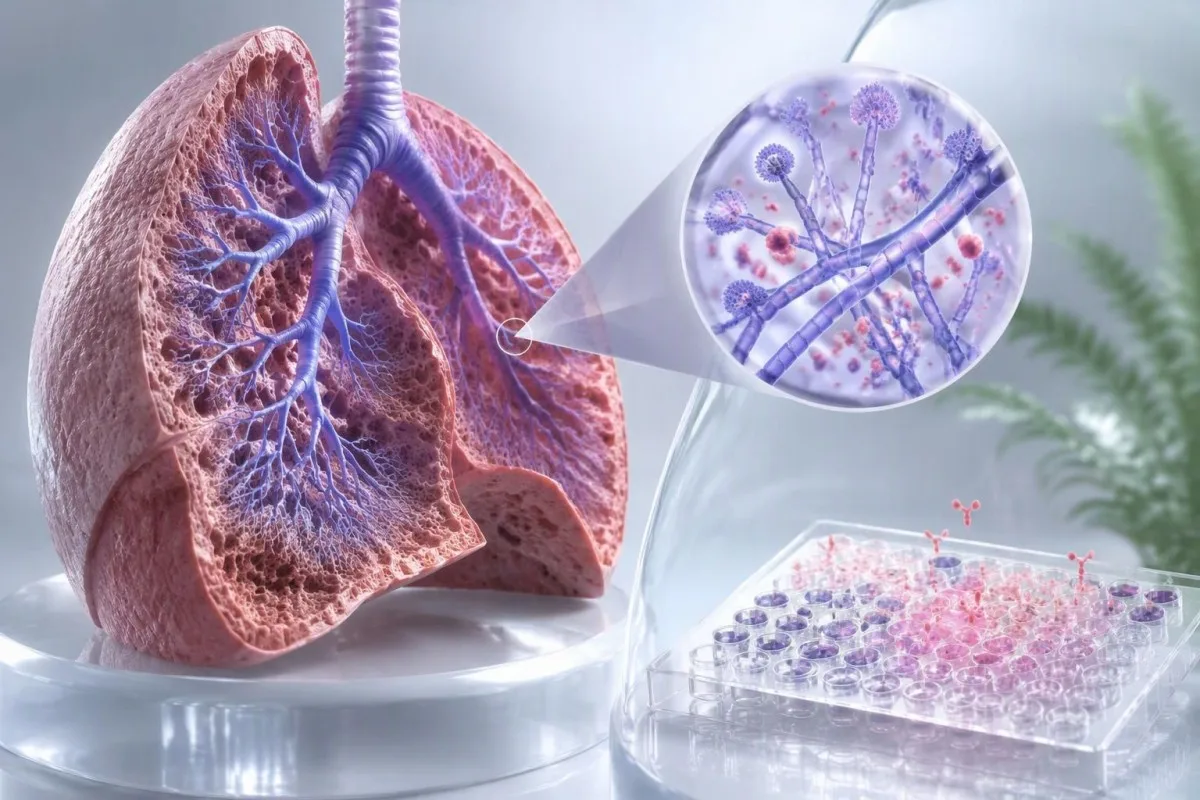
Ein positives Galaktomannan-Ergebnis spricht für eine mögliche invasive Aspergillose, bestätigt sie jedoch nicht. Ob als nächster Schritt eine dringende Abklärung, weitere Tests oder die Untersuchung eines irreführenden Ergebnisses erforderlich sind, hängt von der Probe, dem Immunstatus, den Bildgebungsbefunden und den Medikamenten ab.

Wichtigste Erkenntnisse
- Positive result bedeutet, dass der Test ein pilzliches Zellwandantigen nachgewiesen hat; für sich genommen belegt dies keine invasive Aspergillose.
- Galaktomannan-Index ist üblicherweise ein dimensionsloses Verhältnis der optischen Dichte, keine Pilzanzahl, Konzentration in ng/mL oder prozentuale Wahrscheinlichkeit.
- Laborgrenzwert liegt häufig bei einem Index von 0,5, maßgeblich ist jedoch die assayspezifische Interpretation des Labors.
- Forschungsschwellenwerte in den EORTC/MSGERC-Definitionen von 2020 umfassen Serum- oder Plasmawerte ≥1,0, BAL-Werte ≥1,0 oder Serum-/Plasmawerte ≥0,7 zusammen mit BAL-Werten ≥0,8.
- Serum versus BAL ist wichtig: Serum kann eine auf die Lunge begrenzte Erkrankung übersehen, während eine bronchoalveoläre Lavage eine Besiedlung der Atemwege ohne Gewebeinvasion nachweisen kann.
- Immunrisiko steigt bei anhaltender schwerer Neutropenie, Transplantation und erheblicher Immunsuppression; eine ANC unter 0,5 × 10^9/L über mehr als 10 Tage gilt als anerkannter Wirtsfaktor in der Forschung.
- Eine antimykotische Behandlung kann den Antigennachweis verringern; ein negatives Ergebnis während einer Behandlung mit Schimmelpilz-wirksamen Mitteln schließt eine Infektion nicht zuverlässig aus.
- Dringende Beurteilung ist angezeigt, wenn ein positives Ergebnis mit einer Hochrisiko-Immunsuppression sowie Fieber oder Atemwegssymptomen einhergeht; schwere Atemnot, Verwirrtheit oder erhebliches Bluthusten erfordern eine notfallmedizinische Versorgung.
Was bedeutet ein positiver Galaktomannan-Test tatsächlich?
A Galaktomannan-Test positiv bedeutet, dass ein Pilzzellwandantigen nachgewiesen wurde, bestätigt jedoch keine invasive Aspergillus-Infektion. Die Interpretation hängt davon ab, ob Serum oder bronchoalveoläre Lavage untersucht wurde, sowie vom Immunstatus, der Bildgebung, einer antimykotischen Vorbehandlung und möglichen Ursachen falsch-positiver Ergebnisse; Hochrisikopatienten mit Fieber oder Atemwegssymptomen benötigen eine umgehende fachärztliche Beurteilung, statt auf eine weitere Zahl zu warten.

Galaktomannan ist ein Antigen, kein Antikörper, und der Test weist Material nach, das aus Pilzzellwänden freigesetzt wird, nicht das immunologische Gedächtnis einer Person. Ein Serumindex von 0.8 bedeutet daher weder eine frühere Exposition noch eine 80%-Infektionswahrscheinlichkeit oder acht Erreger; bei diesen Interpretationen wird das Testsigmal mit einer klinischen Diagnose verwechselt.
Invasive Aspergillose bedeutet, dass Aspergillus in Gewebe eingedrungen ist und dieses geschädigt hat, während eine Besiedlung der Atemwege bedeutet, dass der Erreger vorhanden ist, ohne dass eine Invasion nachgewiesen wurde. Ein BAL-Index von 1.4 kann in beiden Situationen auftreten. Daher setzen Ärzte das Ergebnis in Bezug zum Anlass der Bronchoskopie, zu den Atemwegsbefunden und zur Bildgebung, statt das positive Signal als Behandlungsanordnung zu verwenden.
Kantesti ist ein KI-Bluttest-Analysator, der einen angegebenen Galaktomannan-Index zusammen mit der Probe und dem bereitgestellten klinischen Kontext erläutern kann, ohne eine Infektion zu bestätigen. Unser Unternehmenshintergrund erklärt unsere Rolle; unser Leitfaden zu den Grenzen von Tests auf Schimmelpilzexposition unterscheidet auch zwischen Tests auf invasive Pilzinfektionen und Behauptungen zu Umweltexpositionen.
Warum die Galaktomannan-Ergebnisse aus Serum und BAL voneinander abweichen können
Serum-Galaktomannan misst zirkulierendes Antigen, während BAL-Galaktomannan Antigen in Flüssigkeit misst, die bei einer Bronchoskopie aus den unteren Atemwegen entnommen wurde. Ein negatives Serum- und ein positives BAL-Ergebnis können bei einer echten, auf die Lunge begrenzten Aspergillose gleichzeitig auftreten; die beiden Proben erfassen unterschiedliche Kompartimente und sind keine austauschbaren Varianten desselben klinischen Signals.

Der Serum-Nachweis ist bei ausgewählten Patienten mit hämatologischer Malignität oder Stammzelltransplantation im Allgemeinen aussagekräftiger als bei vielen nicht neutropenischen Patientengruppen. Erhaltene Neutrophilenaktivität und eine auf die Atemwege konzentrierte Erkrankung können die Menge des zirkulierenden Antigens begrenzen. Daher kann ein Serumindex von 0.2 einen verdächtigen Thorax-CT-Befund und passende BAL-Befunde nicht entkräften.
BAL-Tests erfassen den Krankheitsprozess in der Lunge unmittelbarer, bringen jedoch auch die Besiedlung der Atemwege und eine kontaminationsbedingte Beeinflussung bei der Probenentnahme ins Spiel. Ein BAL-Index von 1.1 bei einem Serumindex von 0.1 erfordert beispielsweise eine Überprüfung der Atemwegserkrankung, der bei der Lavage verwendeten Spülflüssigkeit und der Atemwegskultur – nicht den Schluss, dass eines der Laborergebnisse falsch sein muss.
Serum- und BAL-Indizes sollten nicht gemittelt werden, denn ein Mittelwert aus 0.2 und 1.4 würde die biologische Bedeutung der einzelnen Kompartimente außer Acht lassen. Unsere Erläuterung zu qualitative und quantitative Ergebnisse hilft dabei, das positive Signal eines Labors von seinem Zahlenwert zu unterscheiden; führen Sie den Probentyp stets zusammen mit dem Index auf.
So lesen Sie den Galaktomannan-Index und den Grenzwert
The galactomannan index is usually a unitless optical density ratio, and many laboratories flag results at 0.5 or above. That laboratory threshold is not identical to a research case-definition threshold: the 2020 EORTC/MSGERC definitions use higher or combined specimen thresholds to improve diagnostic specificity in defined populations.
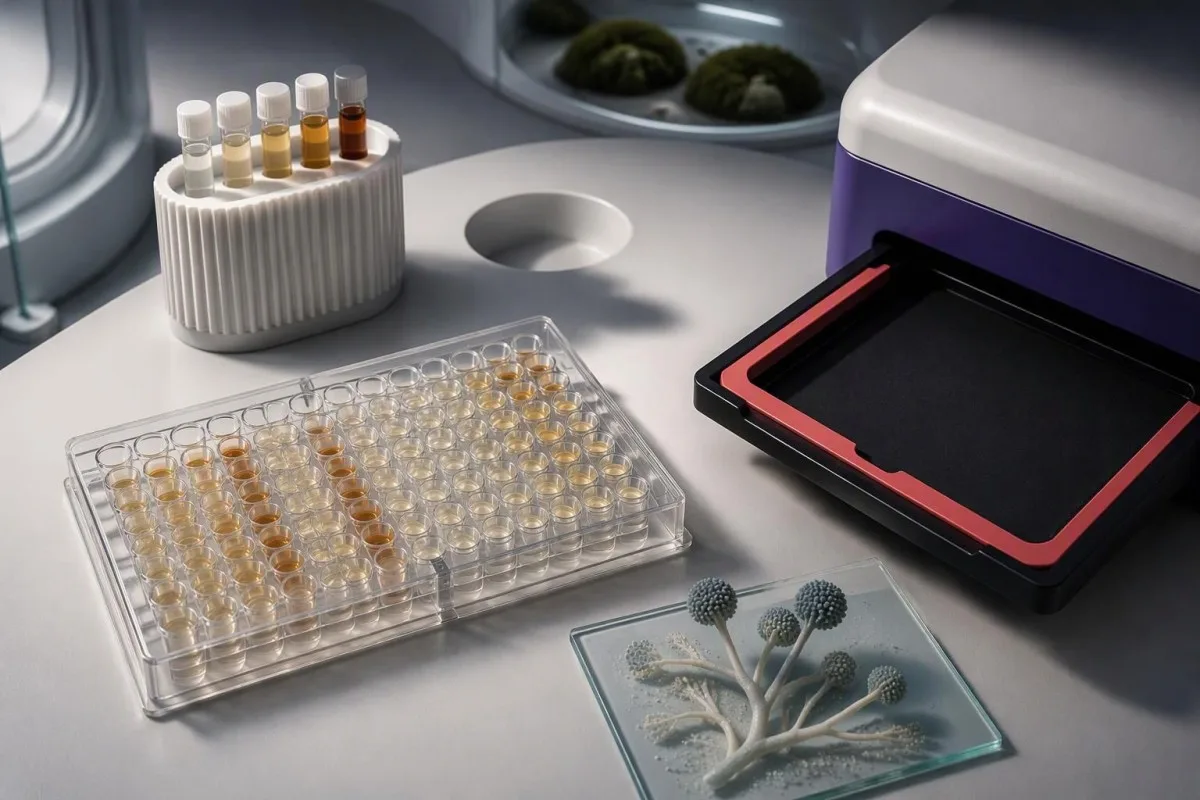
The 2020 EORTC/MSGERC galactomannan thresholds include serum/plasma ≥1.0, BAL ≥1.0, or serum/plasma ≥0.7 together with BAL ≥0.8. These are mycological criteria within research definitions, not stand-alone diagnoses; probable disease also requires the relevant host and clinical criteria (Donnelly et al., 2020).
A serum index of 0.62 may therefore be laboratory-positive without meeting the single-specimen research threshold of 1.0. This is not a contradiction between laboratories and guidelines: lower cutoffs capture more possible cases, while higher cutoffs reduce some false positives; local protocols may also define an equivocal interval or require repeat testing.
There is no universal galactomannan index that automatically means critical illness, and an index of 2.0 does not indicate twice the tissue damage of 1.0. Kantesti keeps the reported cutoff separate from clinical urgency; our guide to außerhalb des Referenzbereichs liegenden Laborwarnhinweisen erklärt, warum ein Warnhinweis Anlass zur Interpretation und keine Diagnose ist.
| Wert | Bereich | Bedeutung |
|---|---|---|
| Common laboratory-negative category | Index <0.5 | Below a frequently used assay cutoff; does not exclude invasive aspergillosis, especially during treatment or in non-neutropenic patients. |
| Positive by many laboratory protocols | Index 0.5–0.99 | Requires specimen-specific and clinical interpretation; may not meet the single-specimen EORTC/MSGERC research threshold. |
| Single-specimen research threshold | Serum/plasma ≥1.0 or BAL ≥1.0 | Meets a 2020 EORTC/MSGERC mycological criterion when the appropriate assay and specimen are used; not sufficient alone for probable disease. |
| Combined-specimen research threshold | Serum/plasma ≥0.7 and BAL ≥0.8 | Both thresholds together meet the combined galactomannan criterion; neither value independently confirms invasion. |
Wie der Immunstatus die Bedeutung eines positiven Ergebnisses verändert
A positive galactomannan result is more concerning when the patient has a strong risk factor for invasive aspergillosis, such as prolonged severe neutropenia, stem-cell transplantation or substantial immunosuppression. The 2020 research definitions recognize an absolute neutrophil count below 0.5 × 10^9/L for more than 10 days as one host factor.
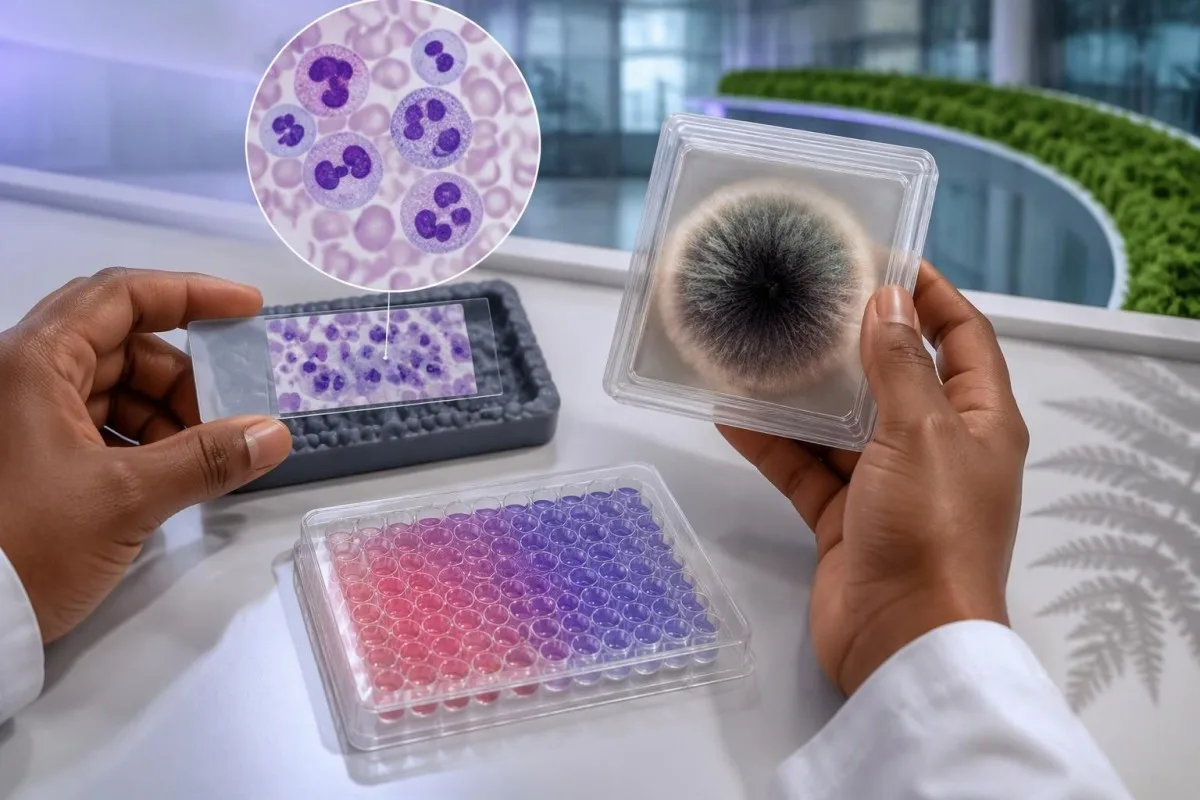
Duration and cause of neutropenia matter alongside the count. An ANC of 0.4 × 10^9/L during prolonged leukemia treatment has a different risk context from a stable, constitutionally lower count without recurrent infections; our Leitfaden zur Neutrophilenzahl explains why the percentage alone is inadequate.
Corticosteroid exposure is another risk clue, but no single dose separates safe from unsafe for every patient. The EORTC/MSGERC research host criteria include at least 0.3 mg/kg/day for at least 3 weeks in the preceding 60 days—approximately 21 mg/day for a 70 kg adult—while bedside assessment also considers other immunosuppressants and underlying lung disease.
A normal neutrophil count does not guarantee normal fungal defense, because disorders such as chronic granulomatous disease affect cell function rather than simply cell number. Our guide to oxidative burst testing explains this distinction; a single reassuring CBC should not dismiss compatible fungal disease in someone with an established immune disorder.
Warum derselbe positive Index bei verschiedenen Patienten unterschiedliche Bedeutungen hat
The probability that a positive galactomannan result represents invasive disease depends on the probability of disease before testing. In a 2019 Cochrane review of BAL testing in immunocompromised patients, an index cutoff of 1.0 had estimated sensitivity of 78% and specificity of 93%, but performance varied across studies.

A hypothetical low-risk calculation illustrates why screening can mislead. If 1,000 tested people had a 1% disease prevalence and the assay performed with 78% sensitivity and 93% specificity, approximately 8 would be true positives and 69 false positives—so only about 10% of positive results would represent disease.
With the same assumed test performance but a 20% disease prevalence, approximately 156 true positives and 56 false positives would occur among 1,000 people. About 74% of positive results would then represent disease; these are teaching calculations, not validated predictions for an individual or evidence that the Cochrane estimates apply to healthy population screening.
Lowering the BAL cutoff from 1.0 to 0.5 trades specificity for sensitivity: the review estimated 88% sensitivity and 81% specificity at 0.5 (de Heer et al., 2019). The broader lesson also appears in our discussion of tests that need confirmation, although the assays and diseases are different.
Wie eine antimykotische Behandlung und Prophylaxe die Interpretation beeinflussen
Mold-active antifungal treatment can reduce galactomannan detection, making a negative result less reassuring. The 2016 IDSA aspergillosis guideline advises against routine serum galactomannan screening during mold-active prophylaxis or treatment, while recognizing that BAL testing can still help investigate suspected disease (Patterson et al., 2016).

Medication identity and timing must accompany the result, because posaconazole, voriconazole and isavuconazole are mold-active agents, whereas fluconazole does not reliably cover Aspergillus. A serum index of 0.3 after several days of active treatment cannot be interpreted like a pretreatment index of 0.3; do not interrupt prescribed antifungals to obtain a more detectable result.
A positive result despite prophylaxis can suggest breakthrough disease, but it can also reflect inadequate exposure, a false-positive signal or another fungus. For example, a BAL index of 1.6 during posaconazole prophylaxis prompts review of adherence, absorption, drug levels where appropriate, culture and resistance testing—not an automatic conclusion that the fungus is resistant.
Azole antifungals can substantially increase tacrolimus exposure, so transplant teams may need dose adjustments and closer monitoring when treatment starts or stops. Our guide to Zeitpunkten der Tacrolimus-Talspiegelbestimmung explains the sampling issue; a correctly timed drug level answers a different question from a galactomannan index and cannot replace fungal assessment.
Welche Expositionen können ein falsch positives Galaktomannan-Ergebnis verursachen?
False-positive galactomannan results can arise from cross-reacting fungi, some medication or infusion products, and certain collection-related exposures. An index of 0.9 is not automatically explained by antibiotic use: the exact product, formulation, batch, specimen and timing matter, and a plausible interference does not exclude simultaneous invasive infection.
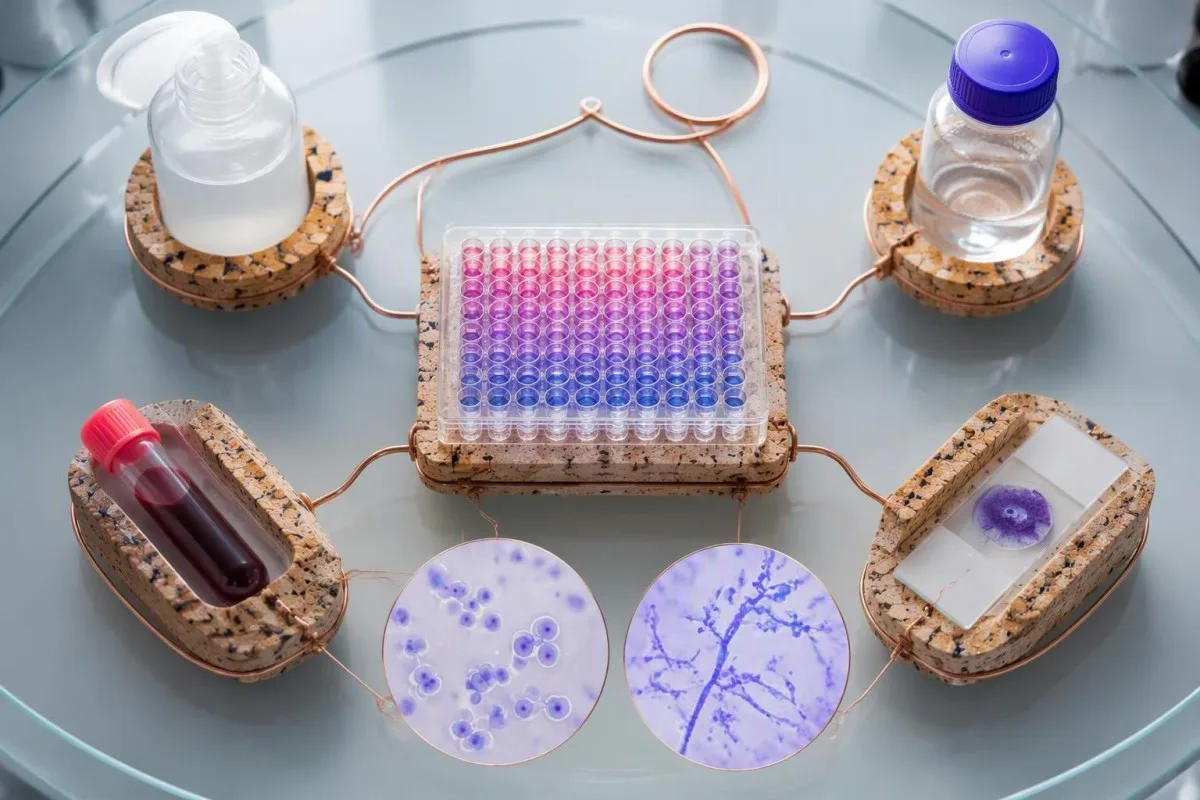
Piperacillin–tazobactam was associated with false-positive galactomannan in older reports, but many contemporary formulations no longer show the same problem. Some amoxicillin–clavulanate formulations and intravenous immunoglobulin products have also been implicated; a single index of 1.2 after an infusion should prompt a product-specific discussion with microbiology rather than a blanket claim that all such medicines invalidate testing.
Other fungi can share antigens recognized by the assay, including Histoplasma and some Fusarium and Talaromyces species. A galactomannan index of 1.5 therefore does not identify an Aspergillus species; our guide to Histoplasma antigen interpretation explains why travel, residence and organism-specific tests can redirect the diagnosis.
Enteral-feed aspiration and antigen translocation through severely damaged intestinal mucosa have been reported as misleading sources, but the evidence is less predictable than for established assay thresholds. Two useful details are the timing of feeding or aspiration and the timing of sample collection; these possibilities are not a reason to restrict ordinary foods or label every positive result a dietary artifact.
Bedeutet ein positives BAL-Ergebnis, dass Aspergillus in die Lunge eingedrungen ist?
A positive BAL galactomannan result does not prove lung tissue invasion, because antigen may come from Aspergillus colonizing the airways or from collection-related contamination. A BAL index above 1.0 strengthens a compatible investigation but still requires review of the bronchoscopy findings, host risk, imaging and other microbiological evidence.
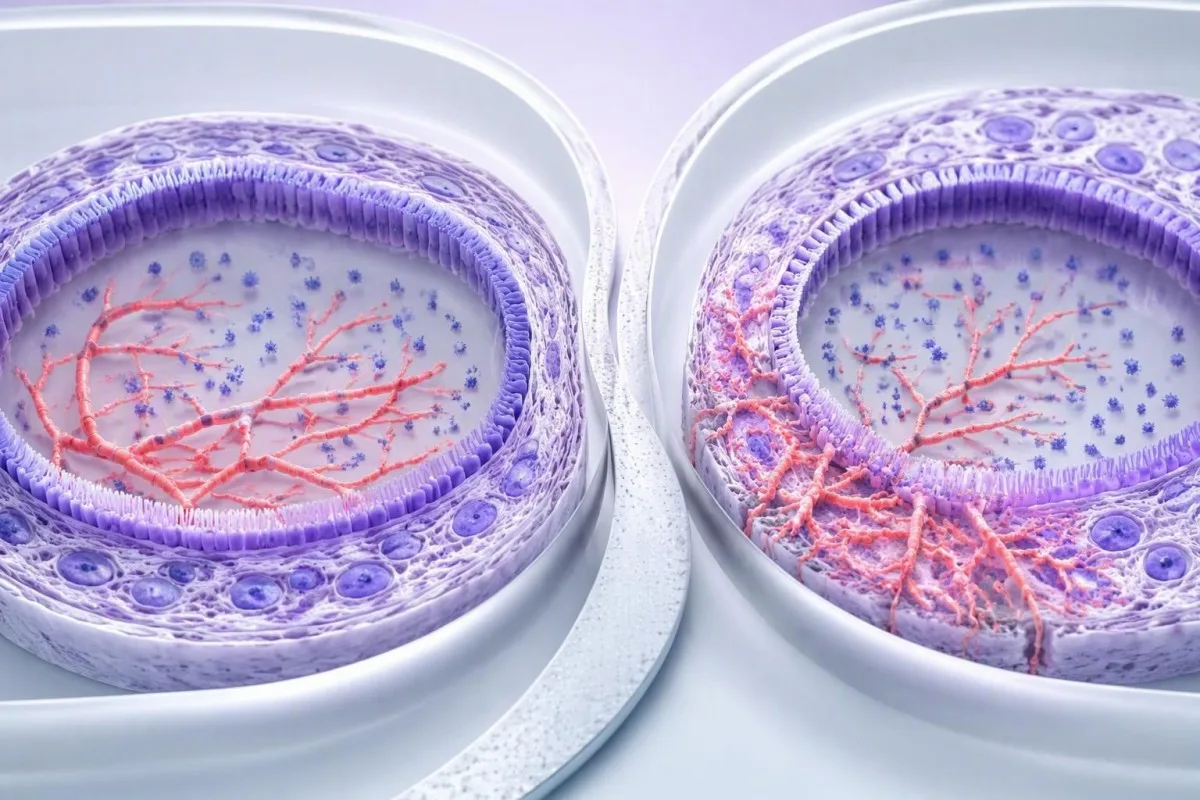
Structural lung disease changes the interpretation of airway fungal findings. Bronchiectasis, previous cavities and lung transplantation can make airway colonization more plausible, while deterioration, compatible CT abnormalities or abnormal airway tissue increase concern; an index of 2.0 cannot determine which process is occurring without those accompanying findings.
Lavage collection deserves scrutiny when the BAL result seems out of proportion to the clinical picture. Some gluconate-containing balanced fluids have caused false-positive galactomannan in published reports, although products vary; if serum is 0.1 and BAL is 1.3, ask which fluid was used and whether the laboratory recognizes interference with that specific formulation.
Regional fungal diseases can resemble pulmonary aspergillosis without sharing an identical diagnostic pathway. For a patient with a BAL index of 0.8 and relevant travel or residence history, our guide to regional fungal antibody testing explains why separate investigations may be appropriate; do not assume every alternative lung fungus will cross-react with galactomannan.
Welche Bildgebungsverfahren und Labortests helfen bei der Diagnosestellung?
Chest CT, respiratory fungal culture, microscopy and Aspergillus PCR can strengthen or challenge a positive galactomannan result. No single combination is appropriate for everyone: a serum index of 1.1 in a neutropenic patient with new pulmonary nodules is a different diagnostic problem from an isolated positive BAL result with stable chronic airway changes.
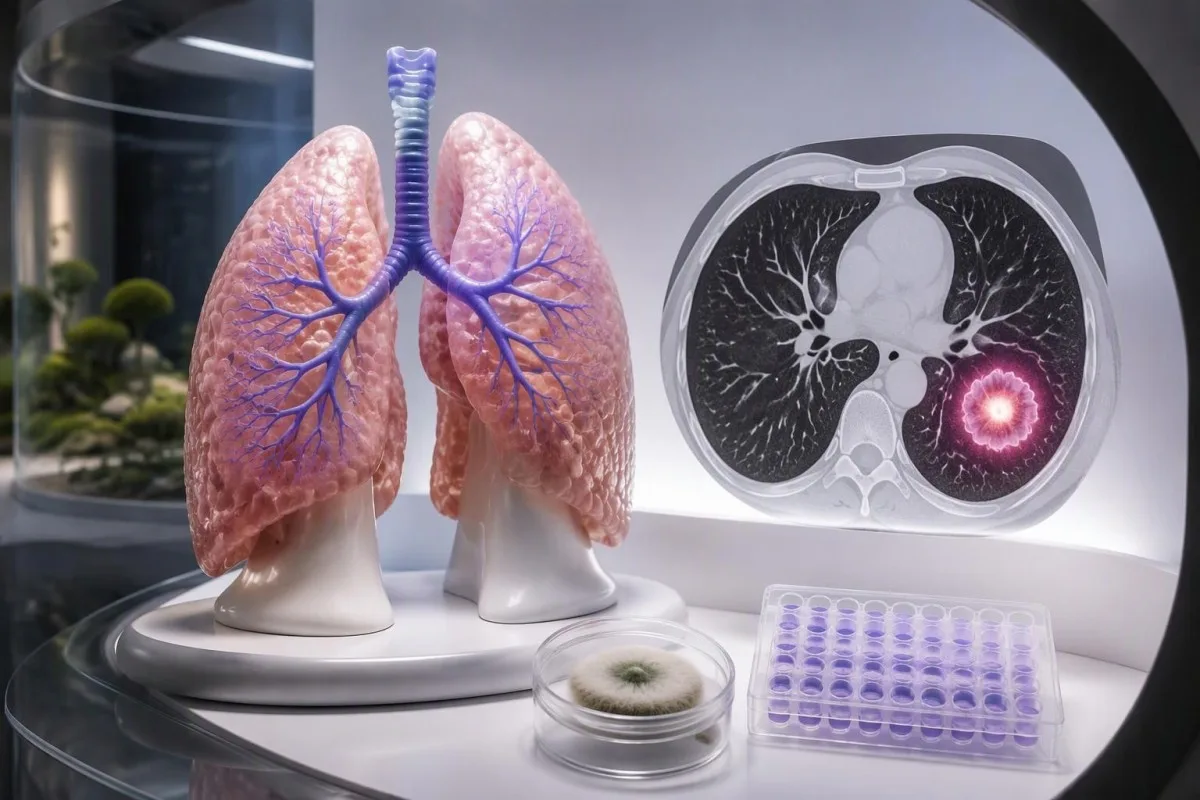
CT findings such as nodules with a surrounding ground-glass halo can support invasive aspergillosis, but they are not specific to Aspergillus. The classic halo is more useful in some neutropenic settings than in many non-neutropenic patients; a positive index of 1.4 and an atypical CT therefore still require a broader assessment rather than exclusion based on absent textbook imaging.
Culture can identify an organism and support susceptibility testing, while PCR detects fungal genetic material; neither a negative culture nor a positive airway PCR alone settles tissue invasion. Bacterial pneumonia can coexist or mimic the presentation, and our Legionella antigen guide explains another specimen-specific test that clinicians may select when the respiratory history fits.
Tissue examination can demonstrate fungal invasion when sampling is feasible, and culture or molecular methods can help identify the fungus because hyphal appearance alone is not species-specific. A CRP of 80 mg/L may show a substantial inflammatory response but cannot identify Aspergillus; our WBC- und CRP-Vergleich explains why general inflammation markers remain supporting evidence.
Wann erfordert ein positives Ergebnis eine umgehende fachärztliche Abklärung?
Contact the treating hematology, transplant, respiratory or infectious-disease team promptly when a positive galactomannan result accompanies high-risk immunosuppression, fever or new respiratory symptoms. An index of 0.6 can warrant urgent action in that setting; the clinical risk matters more than waiting for the number to reach 1.0.
Fever during significant neutropenia requires urgent assessment regardless of the galactomannan result. Common febrile-neutropenia definitions include a single temperature of at least 38.3°C or at least 38.0°C sustained for 1 hour, but oncology services may use stricter instructions; follow the team's emergency plan rather than delaying to meet a published definition.
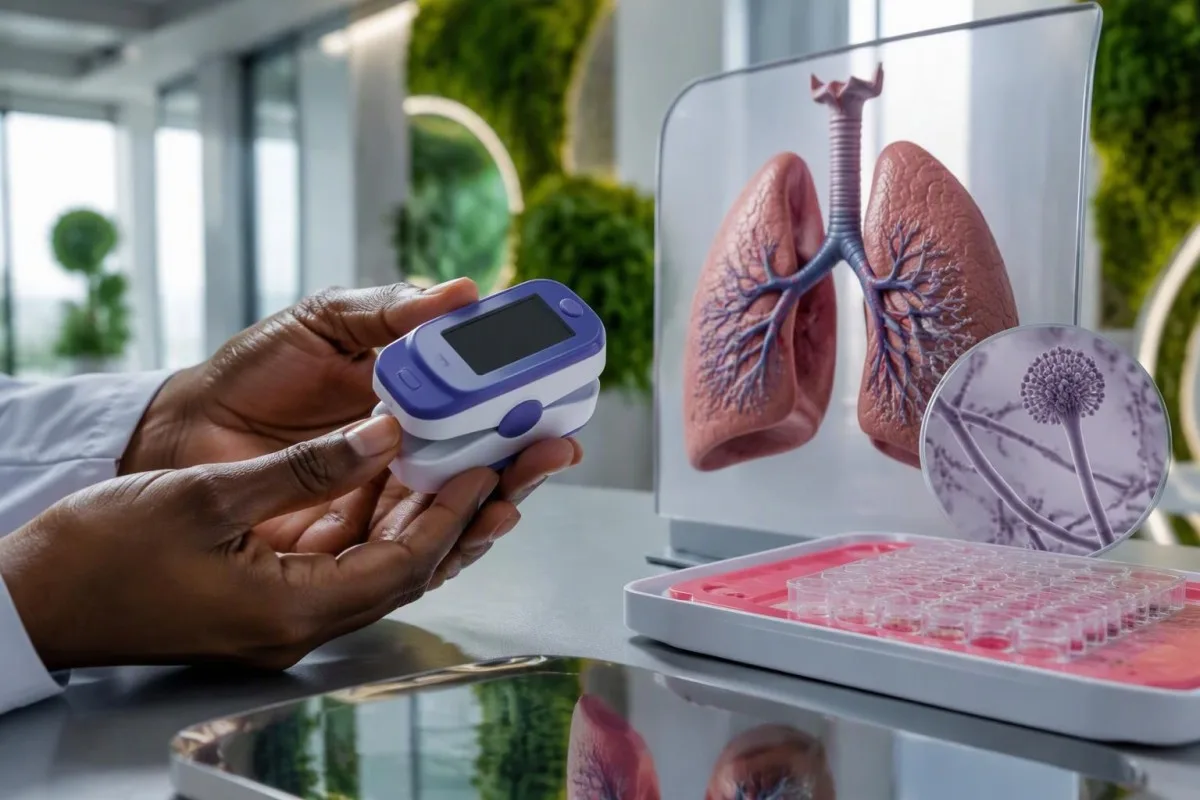
Severe breathing difficulty, confusion, fainting, significant coughing of blood or rapidly worsening chest symptoms requires emergency care. A room-air oxygen saturation of 92% or below is concerning for many adults without an individualized lower target, but a normal home reading does not rule out serious illness; our Leitfaden zur Testung von Atemnot explains why symptoms and direct assessment take priority.
Strongly suspected invasive pulmonary aspergillosis may justify treatment while the diagnostic evaluation continues, as recommended by the 2016 IDSA guideline (Patterson et al., 2016). Conversely, an isolated index of 0.55 in a clinically stable, low-risk person may prompt verification and review first; neither scenario supports starting, stopping or selecting an antifungal without the treating clinician.
Sollte der Galaktomannan-Test wiederholt werden, und bedeuten sinkende Werte eine Genesung?
Repeat galactomannan can help clarify an unexpected result or monitor selected patients, but it must not delay urgent assessment. A change from serum 0.6 to 1.3 can strengthen concern when the clinical picture fits, while a fall from 2.0 to 0.7 may support improvement without proving that infection has cleared.
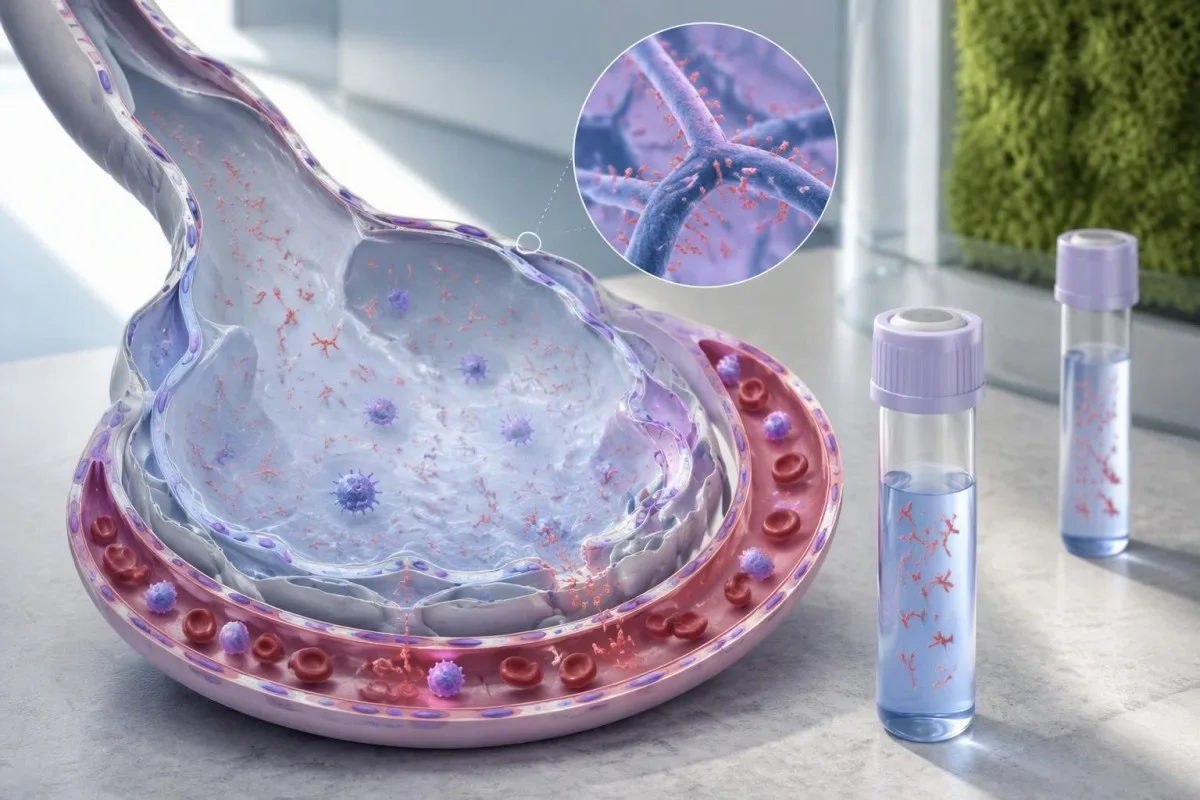
Repeat testing should use the same specimen type and preferably the same assay, because serum and BAL results cannot form a single interchangeable trend. The team may request a fresh sample or laboratory repeat after an unexpected index of 0.58; no universal 24-hour, 48-hour or weekly schedule applies to every patient and every reason for testing.
Serial serum galactomannan is most useful in selected hematological malignancy or stem-cell transplant patients whose antigen was elevated at baseline. A serum result that was always below 0.5 is a weak treatment-response marker, especially for lung-limited disease; our Bluttest-Zeitachsen-Leitfaden explains why treatment start dates must travel with laboratory trends.
Kantesti is an AI biomarker interpretation platform that can help organize serial laboratory values, such as an index changing from 1.8 to 0.9, for discussion with the treating team. Recovery still depends on symptoms, imaging, immune recovery and adequate treatment exposure; an antigen decline alone is not a safe rule for stopping antifungals.
Drei hypothetische Beispiele für die Interpretation eines Galaktomannan-Tests
Galactomannan test interpretation changes when the same numerical result is placed in a different clinical setting. The following 3 examples are hypothetical teaching scenarios, not patient encounters; each shows why specimen type, host risk and supporting findings can matter more than whether the report displays a positive flag.
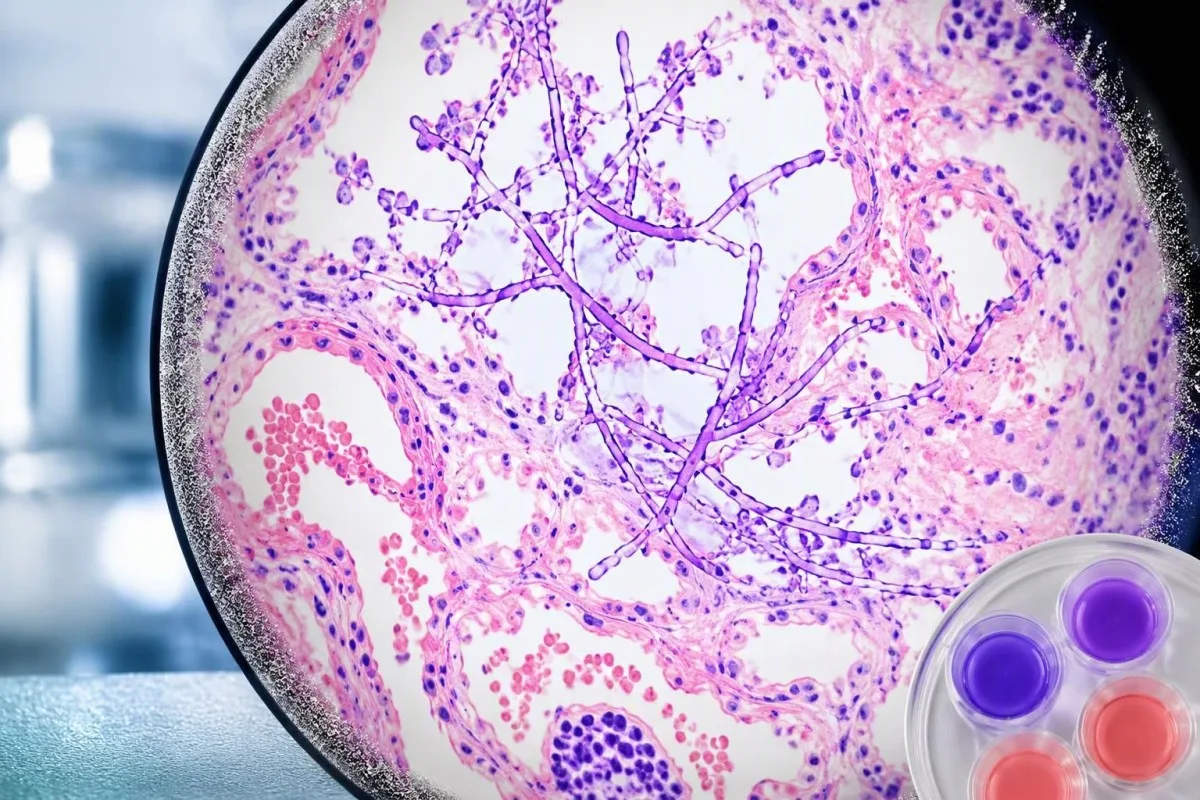
Example 1: a 56-year-old receiving leukemia treatment has an ANC of 0.2 × 10^9/L for 12 days, persistent fever, serum galactomannan 0.62 and new CT nodules. The index is below the single-specimen research threshold, but the overall pattern warrants urgent specialist investigation and possible treatment; our guide to marrow-related blood count changes explains why the underlying hematological condition matters.
Example 2: a 68-year-old with bronchiectasis has BAL galactomannan 1.35, serum 0.12, stable symptoms and no new CT abnormality. Colonization or a collection-related signal becomes more plausible, although neither is proven; the team would review lavage fluid, culture, previous scans and immune status before deciding that antifungal treatment offers more benefit than harm.
Example 3: a 43-year-old transplant recipient taking posaconazole has worsening cough, a new CT abnormality, BAL galactomannan 2.1 and serum 0.18. Treatment exposure may help explain the negative serum result, so breakthrough disease remains a concern; Kantesti can help explain the discordant report, but drug levels, organism identification and treatment decisions belong with the transplant and infection teams.
Wie Kantesti eine Überprüfung des Galaktomannan-Befunds unterstützen kann
Kantesti is an AI blood test interpretation platform that can help explain a reported galactomannan index, identify the stated specimen and organize accompanying laboratory results. An index of 0.8 needs different context in serum and BAL, and our explanation is educational support—not a diagnosis, validated fungal triage score or treatment recommendation.

Useful context includes the specimen, laboratory cutoff, collection date, symptoms and antifungal start date. An ANC of 0.3 × 10^9/L or a recent transplant also changes the questions worth asking, but those details must be supplied accurately; our Ansatz zur klinischen Validierung should not be read as evidence that this particular fungal assay has been independently validated for autonomous diagnosis.
Kantesti cannot inspect a bronchoscopy, verify tissue invasion or determine whether a specific infusion batch contains cross-reacting antigen. Even with a complete report showing an index of 1.7, the platform cannot replace chest imaging, microbiology consultation or drug-interaction management; bring the original laboratory report, not only an AI-generated explanation, to the appointment.
Share only the information needed for the question, and check consent before adding another person's results or immunosuppression history. Two practical privacy steps are removing unnecessary identifiers and checking how uploaded reports are handled; our Datenschutz- und Dateninformationen describes the relevant controls, but urgent symptoms should be addressed before any digital review.
Forschungsquellen und eine Checkliste für Ihren Facharzttermin
The most useful follow-up connects 3 kinds of evidence: clinical risk, anatomical findings and microbiological results. The 2016 IDSA guideline, 2020 EORTC/MSGERC definitions and 2019 Cochrane BAL review support that combined approach; none turns a positive galactomannan index into a stand-alone diagnosis.

Prepare 5 questions for the treating team: Was the specimen serum or BAL, which cutoff was used, what makes invasive disease likely, could an exposure explain the signal, and what additional test would change management? For an index of 0.75, these answers are more useful than asking whether the result is simply high or low.
The 2 Zenodo publications listed below are supplementary educational resources about other laboratory panels, not studies validating galactomannan or Aspergillus diagnosis. Our Leitfaden für Gerinnungstests Und Leitfaden zu Serumproteinen may help explain accompanying results, but neither establishes fungal invasion or determines antifungal treatment.
Keep uncertainty explicit when evidence is incomplete, particularly with a borderline index, negative serum during treatment or a positive BAL in structural lung disease. At Kantesti, our medizinische Inhaltsstandards separate educational interpretation from diagnosis; a single index of 1.0 should never outweigh serious symptoms or replace prompt specialist assessment.
Häufig gestellte Fragen
Bestätigt ein positiver Galaktomannan-Test eine Aspergillus-Infektion?
Ein positiver Galactomannan-Test bestätigt keine invasive Aspergillus-Infektion, da der Test Antigene und nicht die Gewebeinvasion nachweist. Viele Labore verwenden einen Index-Grenzwert von 0,5, ein positives Signal kann jedoch auch durch eine Besiedlung der Atemwege, kreuzreagierende Pilze oder produktspezifische Interferenzen entstehen. Kliniker setzen das Ergebnis der Probe in Beziehung zum Immunrisiko, zu Symptomen, zur Thoraxbildgebung und zu zusätzlichen mikrobiologischen Befunden. Hochrisikopatienten mit Fieber oder Atemwegssymptomen müssen unverzüglich untersucht werden, auch wenn der Index nur geringfügig über dem Laborgrenzwert liegt.
Wie hoch ist der normale Galaktomannan-Index?
Viele Labore werten einen Galaktomannan-Index unter 0,5 als negativ, maßgeblich ist jedoch der assayspezifische Referenzwert im Befund. Der Index ist üblicherweise ein einheitenloses Verhältnis der optischen Dichte und keine Konzentration in ng/mL oder ein prozentuales Infektionsrisiko. Die Forschungsdefinitionen von EORTC/MSGERC aus dem Jahr 2020 verwenden Serum/Plasma ≥1,0, BAL ≥1,0 oder Serum/Plasma ≥0,7 zusammen mit BAL ≥0,8 als Galaktomannan-Kriterien. Ein negatives Ergebnis schließt eine Erkrankung nicht in allen Populationen zuverlässig aus, insbesondere nicht während einer antimykotischen Behandlung mit gegen Schimmelpilze wirksamen Mitteln.
Kann BAL-Galaktomannan positiv sein, wenn der Serumtest negativ ist?
BAL-Galaktomannan kann positiv sein, wenn das Serum negativ ist, weil die Lavage das Lungenkompartiment beprobt, während das Serum zirkulierendes Antigen misst. Ein BAL-Index von 1,4 bei einem Serumwert von 0,2 kann bei auf die Lunge begrenzter Erkrankung auftreten, aber auch eine Besiedlung der Atemwege oder eine durch die Probenentnahme bedingte Interferenz widerspiegeln. Diese Diskordanz ist besonders bei nicht neutropenischen Patienten und bei Patienten unter Antimykotika relevant. Die Ergebnisse sollten weder gemittelt noch ohne Berücksichtigung der CT-Befunde und des klinischen Risikos interpretiert werden.
Können Antibiotika oder intravenöse Immunglobuline ein falsch positives Ergebnis verursachen?
Einige Arzneimittel- und Infusionsprodukte können falsch positive Galactomannan-Ergebnisse verursachen; dieser Effekt ist jedoch formulierungsspezifisch und tritt nicht generell auf. Ältere Piperacillin-Tazobactam-Präparate wurden damit in Verbindung gebracht, während viele moderne Formulierungen nicht dieselbe Interferenz zeigen; auch über einige Immunglobulinpräparate zur intravenösen Anwendung und Amoxicillin-Clavulansäure-Präparate wurde berichtet. Ein Index von 0,9 nach einer Infusion sollte Anlass sein, gemeinsam mit dem Labor das genaue Produkt und den Zeitpunkt der Probenentnahme zu überprüfen. Eine mögliche Interferenz schließt eine gleichzeitig auftretende tatsächliche Infektion nicht aus.
Schließt ein negatives Galaktomannan-Ergebnis während einer antimykotischen Behandlung eine Infektion aus?
Ein negativer Galactomannan-Befund während einer antimykotischen Behandlung mit Schimmelpilzwirksamkeit schließt eine invasive Aspergillose nicht aus. Die Behandlung kann den Antigennachweis vermindern, sodass ein Serumindex von 0,3 nach Behandlungsbeginn weniger beruhigend sein kann als derselbe Wert vor der Behandlung. Bei weiterhin hohem Verdacht können eine Thoraxbildgebung, BAL-Untersuchungen und weitere mikrobiologische Tests erforderlich sein. Setzen Sie verordnete Antimykotika nicht ab, damit der Test mit größerer Wahrscheinlichkeit positiv ausfällt.
Wann sollte ich bei einem positiven Galaktomannan-Test dringend ärztliche Hilfe in Anspruch nehmen?
Seek prompt specialist assessment when a positive galactomannan result accompanies substantial immunosuppression, fever or new respiratory symptoms. An index of 0.6 can still be concerning in someone with prolonged severe neutropenia, and fever should trigger the oncology or transplant team's emergency instructions regardless of the antigen value. Severe breathing difficulty, confusion, fainting or significant coughing of blood requires emergency care. There is no universal galactomannan index that must be reached before urgent action is appropriate.
Bedeutet ein sinkender Galaktomannan-Index, dass Antimykotika abgesetzt werden können?
Ein sinkender Galaktomannan-Index belegt für sich genommen nicht, dass die antimykotische Behandlung beendet werden kann. Ein Rückgang des Serumwerts von 2,0 auf 0,7 kann bei ausgewählten Patienten, deren Antigenwert anfangs erhöht war, für eine Besserung sprechen; Symptome, Bildgebung, Immunrekonstitution und Behandlungsdauer spielen jedoch weiterhin eine Rolle. Serum- und BAL-Werte sollten nicht zu einem einzigen Verlauf zusammengefasst werden. Die behandelnde Fachärztin oder der behandelnde Facharzt legt die Behandlungsdauer fest, anstatt sich auf einen einzelnen Index oder prozentualen Rückgang zu stützen.
Lassen Sie sich Ihre Blutwerte erklären
Laden Sie Ihren Laborbericht hoch und die KI von Kantesti erklärt jeden Biomarker innerhalb von Sekunden in einfacher Sprache. Weltweit von mehr als 2 Millionen Menschen genutzt.
Referenzen
- Klein, T., Mitchell, S. & Weber, H. (2026). aPTT-Normalbereich: D-Dimer, Protein-C-Leitfaden zur Blutgerinnung. Kantesti KI-Medizinrecherche. DOI
- Klein, T., Mitchell, S. & Weber, H. (2026). Leitfaden zu Serumproteinen: Globuline, Albumin und Albumin-Globulin-Verhältnis im Bluttest. Kantesti KI-Medizinrecherche. DOI
- Patterson TF et al. (2016). Practice Guidelines for the Diagnosis and Management of Aspergillosis: 2016 Update by the Infectious Diseases Society of America. Clinical Infectious Diseases. DOI PubMed
- Donnelly JP et al. (2020). Revision and Update of the Consensus Definitions of Invasive Fungal Disease From the European Organization for Research and Treatment of Cancer and the Mycoses Study Group Education and Research Consortium. Clinical Infectious Diseases. DOI PubMed
- de Heer K et al. (2019). Galactomannan detection in broncho-alveolar lavage fluid for invasive aspergillosis in immunocompromised patients. Cochrane Database of Systematic Reviews. DOI
- 2M+Analysierte Tests
- 127+Länder
- 100+Sprachen
Über das medizinische Team


E-E-A-T Vertrauenssignale
Erfahrung
Ärztlich geleitete klinische Überprüfung von Labor-Interpretations-Workflows.
Sachverstand
Fokus der Labormedizin darauf, wie Biomarker sich im klinischen Kontext verhalten.
Autorität
Medizinisch geprüft von Dr. Thomas Klein, mit Beiträgen von Dr. Sarah Mitchell und Prof. Dr. Hans Weber.
Vertrauenswürdigkeit
Evidenzbasierte Interpretation mit klaren nächsten Schritten zur Reduzierung von Alarm.



Medizinischer Haftungsausschluss
Dieser Artikel dient nur zu Bildungszwecken und stellt keine medizinische Beratung dar. Wende dich für Diagnose- und Behandlungsentscheidungen immer an eine qualifizierte medizinische Fachkraft.
Veröffentlicht · Kontaktieren Sie das Redaktionsteam
Veröffentlicht von Kantesti Ltd, eingetragen in England und Wales, Firmennr. 17090423, London, Vereinigtes Königreich.
