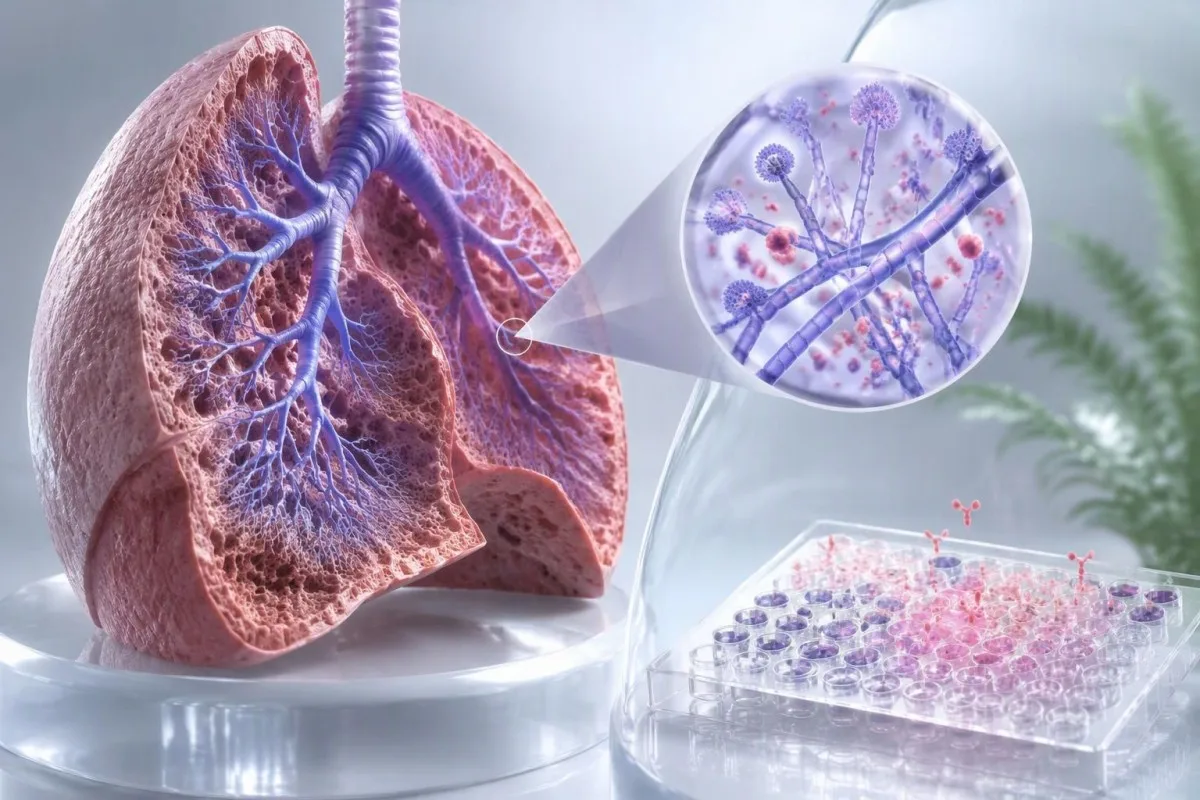
Pozitif galaktomannan sonucu olası invaziv aspergillozu destekler, ancak tanıyı doğrulamaz. Sonraki adımın acil değerlendirme, ek testler veya yanıltıcı bir sonucun araştırılması olup olmadığını numune, bağışıklık durumu, görüntüleme bulguları ve ilaçlar belirler.

Temel çıkarımlar
- Pozitif sonuç testin bir mantar hücre duvarı antijenini saptadığı anlamına gelir; tek başına invaziv aspergilloz tanısını koydurmaz.
- Galaktomannan indeksi genellikle birimsiz bir optik yoğunluk oranıdır; mantar sayısı, ng/mL cinsinden konsantrasyon veya olasılık yüzdesi değildir.
- Laboratuvar eşik değeri genellikle 0.5 indeksidir; ancak laboratuvarın teste özgü yorumu önceliklidir.
- Araştırma eşik değerleri 2020 EORTC/MSGERC tanımlarında serum veya plazma için ≥1.0, BAL için ≥1.0 ya da serum/plazma için ≥0.7 ile birlikte BAL için ≥0.8 değerlerini içerir.
- Serum ve BAL karşılaştırması önemlidir: serum testi akciğerle sınırlı hastalığı saptamayabilirken bronkoalveoler lavaj, doku invazyonu olmadan hava yolu kolonizasyonunu saptayabilir.
- Bağışıklık riski uzun süreli ağır nötropeni, transplantasyon ve belirgin immünosupresyonla artar; 10 günden uzun süre 0,5 × 10^9/L'nin altında bir ANC, araştırmalarda kabul edilen bir konak faktörüdür.
- Antifungal tedavi antijen saptanmasını azaltabilir; küf etkin tedavi sırasında alınan negatif bir sonuç, enfeksiyonu güvenle dışlamaz.
- Acil değerlendirme pozitif bir sonuca yüksek riskli immünosupresyon ve ateş ya da solunum belirtileri eşlik ettiğinde gereklidir; ciddi nefes alma güçlüğü, bilinç bulanıklığı veya belirgin kanlı öksürük acil bakım gerektirir.
Pozitif galaktomannan testi gerçekte ne anlama gelir?
A galaktomannan testinin pozitif sonucu, bir mantar hücre duvarı antijeninin saptandığı anlamına gelir; ancak invaziv Aspergillus enfeksiyonunu doğrulamaz. Yorumlama; serum ya da bronkoalveoler lavaj örneği kullanılmasına, bağışıklık durumuna, görüntülemeye, antifungal maruziyetine ve yalancı pozitiflik nedenlerine bağlıdır; ateşi veya solunum belirtileri olan yüksek riskli hastalar başka bir sonuç beklemek yerine hızla uzman değerlendirmesine alınmalıdır.

Galaktomannan bir antijendir, antikor değildir, ve test, kişinin bağışıklık belleği yerine mantar hücre duvarlarından salınan maddeleri saptar. Bu nedenle serum indeksinin 0,8 olması, önceki maruziyet, 80% enfeksiyon olasılığı ya da sekiz organizma anlamına gelmez; bu yorumlar testin sinyalini klinik tanıyla karıştırır.
İnvaziv aspergilloz, Aspergillus'un dokuya girip dokuya zarar vermesi anlamına gelirken hava yolu kolonizasyonu, organizmanın kanıtlanmış invazyon olmadan mevcut olması anlamına gelir. BAL indeksinin 1,4 olması her iki durumda da görülebilir; bu nedenle klinisyenler pozitif işareti bir tedavi talimatı olarak kullanmak yerine sonucu bronkoskopi yapılma nedeni, solunum bulguları ve görüntülemeyle birlikte değerlendirir.
Kantesti, bildirilen bir galaktomannan indeksini örnek ve sağlanan klinik bağlamla birlikte açıklamaya yardımcı olabilen, enfeksiyonu doğrulamayan bir yapay zekâ kan testi analizörüdür. Bizim şirket geçmişi rolümüzü açıklar; şu konudaki rehberimiz küf maruziyeti testlerinin sınırları ayrıca invaziv mantar testlerini çevresel maruziyet iddialarından ayırır.
Serum ve BAL galaktomannan sonuçları neden farklılık gösterebilir?
Serum galaktomannan dolaşımdaki antijeni ölçerken BAL galaktomannan, bronkoskopi sırasında alt hava yollarından toplanan sıvıdaki antijeni ölçer. Gerçek akciğerle sınırlı aspergillozda negatif serum sonucu ile pozitif BAL sonucu bir arada görülebilir; iki örnek, birbirinin yerine kullanılabilecek aynı klinik sinyalin farklı sürümlerini değil, farklı bölmeleri örnekler.
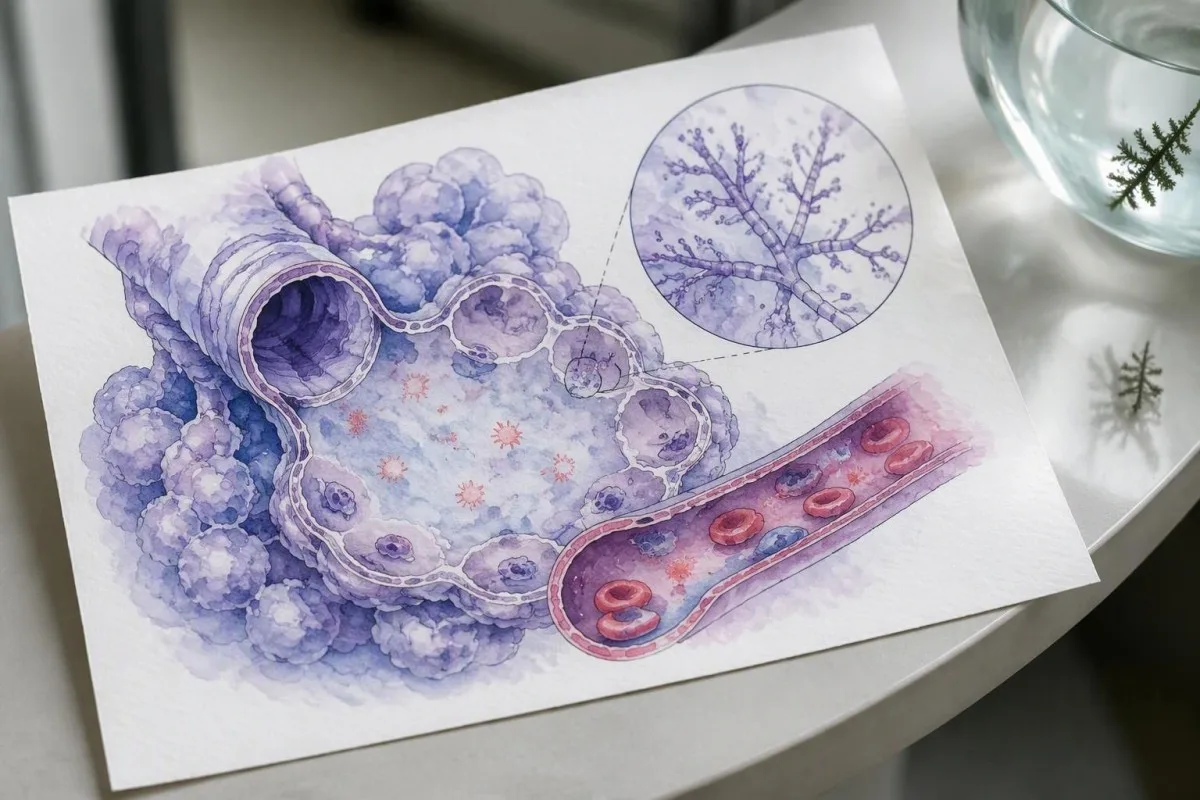
Hematolojik malignitesi veya kök hücre nakli olan seçilmiş hastalarda serumda saptama, nötropenik olmayan birçok popülasyona kıyasla genellikle daha iyi performans gösterir. Nötrofil etkinliğinin korunması ve hastalığın hava yollarında yoğunlaşması, dolaşımdaki antijeni sınırlayabilir; bu nedenle 0,2'lik serum indeksi, şüpheli bir göğüs BT'sini ve uyumlu BAL bulgularını geçersiz kılamaz.
BAL testi, testi akciğer sürecine yaklaştırır; ancak kolonizasyonu ve örnek alımına bağlı kontaminasyonu da değerlendirmeye katar. Örneğin, serum indeksi 0,1 olan 1,1'lik bir BAL indeksi; tek bir laboratuvar sonucunun mutlaka yanlış olduğu sonucuna varmak yerine hava yolu hastalığının, lavaj toplama sıvısının ve solunum kültürünün gözden geçirilmesini gerektirir.
Serum ve BAL indekslerinin ortalaması alınmamalıdır, çünkü 0,2 ve 1,4'ün ortalaması her bölmenin biyolojik anlamını ortadan kaldırır. Şu konudaki açıklamamız nitel ve nicel sonuçlar laboratuvarın pozitif işaretiyle sayısal ölçümünü birbirinden ayırt etmeye yardımcı olur; indeksin yanında örnek adını daima belirtin.
Galaktomannan indeksi ve eşik değer nasıl okunur?
The galactomannan index is usually a unitless optical density ratio, and many laboratories flag results at 0.5 or above. That laboratory threshold is not identical to a research case-definition threshold: the 2020 EORTC/MSGERC definitions use higher or combined specimen thresholds to improve diagnostic specificity in defined populations.
The 2020 EORTC/MSGERC galactomannan thresholds include serum/plasma ≥1.0, BAL ≥1.0, or serum/plasma ≥0.7 together with BAL ≥0.8. These are mycological criteria within research definitions, not stand-alone diagnoses; probable disease also requires the relevant host and clinical criteria (Donnelly et al., 2020).
A serum index of 0.62 may therefore be laboratory-positive without meeting the single-specimen research threshold of 1.0. This is not a contradiction between laboratories and guidelines: lower cutoffs capture more possible cases, while higher cutoffs reduce some false positives; local protocols may also define an equivocal interval or require repeat testing.
There is no universal galactomannan index that automatically means critical illness, and an index of 2.0 does not indicate twice the tissue damage of 1.0. Kantesti keeps the reported cutoff separate from clinical urgency; our guide to laboratuvar uyarı işaretleri bir uyarı işaretinin neden tanı değil, yorumlama gerektiren bir bildirim olduğunu açıklar.
| Düzey | Aralık | Anlamı |
|---|---|---|
| Common laboratory-negative category | Index <0.5 | Below a frequently used assay cutoff; does not exclude invasive aspergillosis, especially during treatment or in non-neutropenic patients. |
| Positive by many laboratory protocols | Index 0.5–0.99 | Requires specimen-specific and clinical interpretation; may not meet the single-specimen EORTC/MSGERC research threshold. |
| Single-specimen research threshold | Serum/plasma ≥1.0 or BAL ≥1.0 | Meets a 2020 EORTC/MSGERC mycological criterion when the appropriate assay and specimen are used; not sufficient alone for probable disease. |
| Combined-specimen research threshold | Serum/plasma ≥0.7 and BAL ≥0.8 | Both thresholds together meet the combined galactomannan criterion; neither value independently confirms invasion. |
Bağışıklık durumu pozitif sonucun önemini nasıl değiştirir?
A positive galactomannan result is more concerning when the patient has a strong risk factor for invasive aspergillosis, such as prolonged severe neutropenia, stem-cell transplantation or substantial immunosuppression. The 2020 research definitions recognize an absolute neutrophil count below 0.5 × 10^9/L for more than 10 days as one host factor.
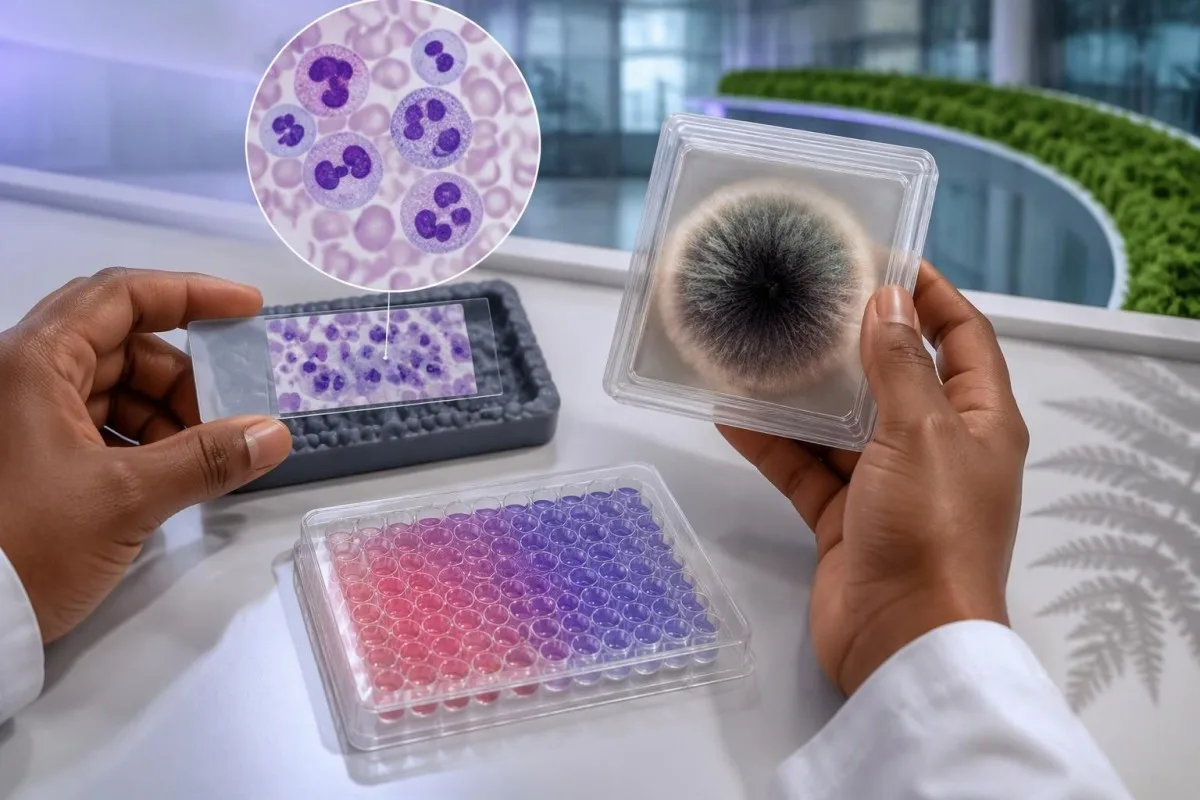
Duration and cause of neutropenia matter alongside the count. An ANC of 0.4 × 10^9/L during prolonged leukemia treatment has a different risk context from a stable, constitutionally lower count without recurrent infections; our nötrofil sayımı kılavuzumuz explains why the percentage alone is inadequate.
Corticosteroid exposure is another risk clue, but no single dose separates safe from unsafe for every patient. The EORTC/MSGERC research host criteria include at least 0.3 mg/kg/day for at least 3 weeks in the preceding 60 days—approximately 21 mg/day for a 70 kg adult—while bedside assessment also considers other immunosuppressants and underlying lung disease.
A normal neutrophil count does not guarantee normal fungal defense, because disorders such as chronic granulomatous disease affect cell function rather than simply cell number. Our guide to oxidative burst testing explains this distinction; a single reassuring CBC should not dismiss compatible fungal disease in someone with an established immune disorder.
Aynı pozitif indeks neden farklı hastalarda farklı anlamlara gelir?
The probability that a positive galactomannan result represents invasive disease depends on the probability of disease before testing. In a 2019 Cochrane review of BAL testing in immunocompromised patients, an index cutoff of 1.0 had estimated sensitivity of 78% and specificity of 93%, but performance varied across studies.

A hypothetical low-risk calculation illustrates why screening can mislead. If 1,000 tested people had a 1% disease prevalence and the assay performed with 78% sensitivity and 93% specificity, approximately 8 would be true positives and 69 false positives—so only about 10% of positive results would represent disease.
With the same assumed test performance but a 20% disease prevalence, approximately 156 true positives and 56 false positives would occur among 1,000 people. About 74% of positive results would then represent disease; these are teaching calculations, not validated predictions for an individual or evidence that the Cochrane estimates apply to healthy population screening.
Lowering the BAL cutoff from 1.0 to 0.5 trades specificity for sensitivity: the review estimated 88% sensitivity and 81% specificity at 0.5 (de Heer et al., 2019). The broader lesson also appears in our discussion of tests that need confirmation, although the assays and diseases are different.
Antifungal tedavi ve profilaksi yorumu nasıl etkiler?
Mold-active antifungal treatment can reduce galactomannan detection, making a negative result less reassuring. The 2016 IDSA aspergillosis guideline advises against routine serum galactomannan screening during mold-active prophylaxis or treatment, while recognizing that BAL testing can still help investigate suspected disease (Patterson et al., 2016).
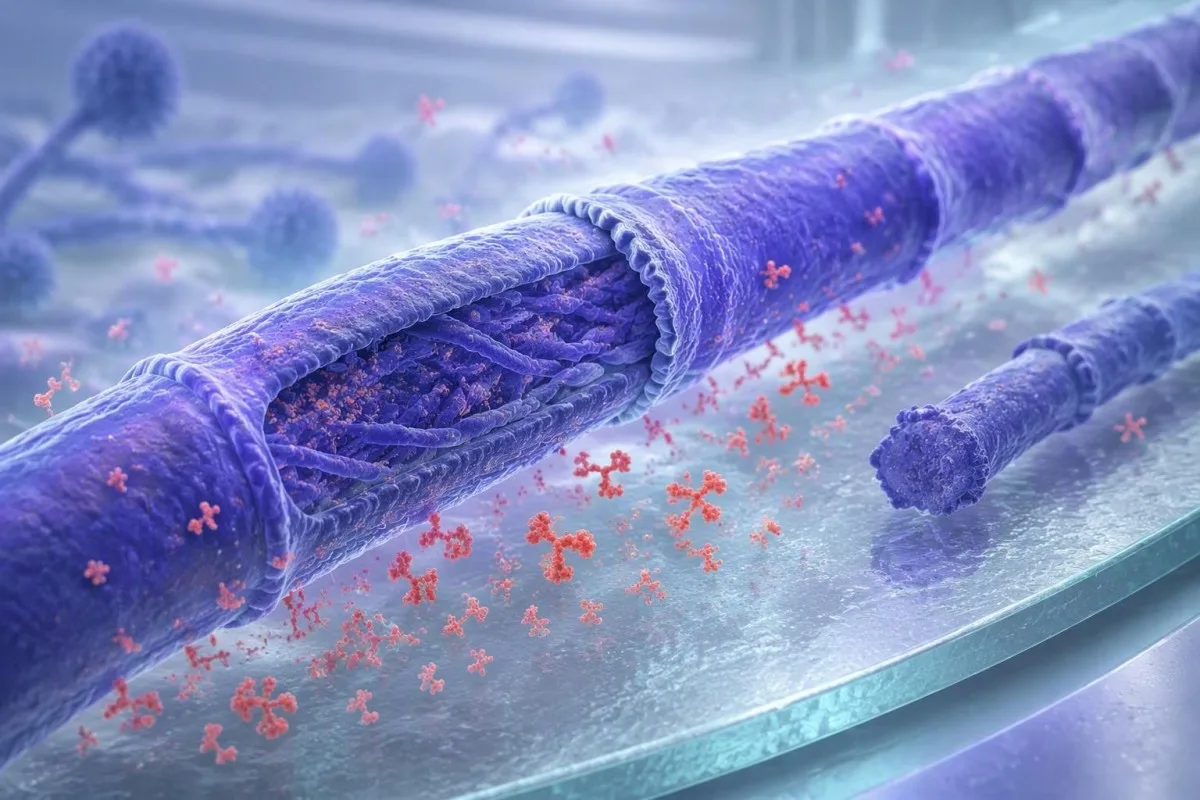
Medication identity and timing must accompany the result, because posaconazole, voriconazole and isavuconazole are mold-active agents, whereas fluconazole does not reliably cover Aspergillus. A serum index of 0.3 after several days of active treatment cannot be interpreted like a pretreatment index of 0.3; do not interrupt prescribed antifungals to obtain a more detectable result.
A positive result despite prophylaxis can suggest breakthrough disease, but it can also reflect inadequate exposure, a false-positive signal or another fungus. For example, a BAL index of 1.6 during posaconazole prophylaxis prompts review of adherence, absorption, drug levels where appropriate, culture and resistance testing—not an automatic conclusion that the fungus is resistant.
Azole antifungals can substantially increase tacrolimus exposure, so transplant teams may need dose adjustments and closer monitoring when treatment starts or stops. Our guide to takrolimus çukur düzeyi ölçüm zamanlaması explains the sampling issue; a correctly timed drug level answers a different question from a galactomannan index and cannot replace fungal assessment.
Hangi maruziyetler yalancı pozitif galaktomannan sonucuna neden olabilir?
False-positive galactomannan results can arise from cross-reacting fungi, some medication or infusion products, and certain collection-related exposures. An index of 0.9 is not automatically explained by antibiotic use: the exact product, formulation, batch, specimen and timing matter, and a plausible interference does not exclude simultaneous invasive infection.
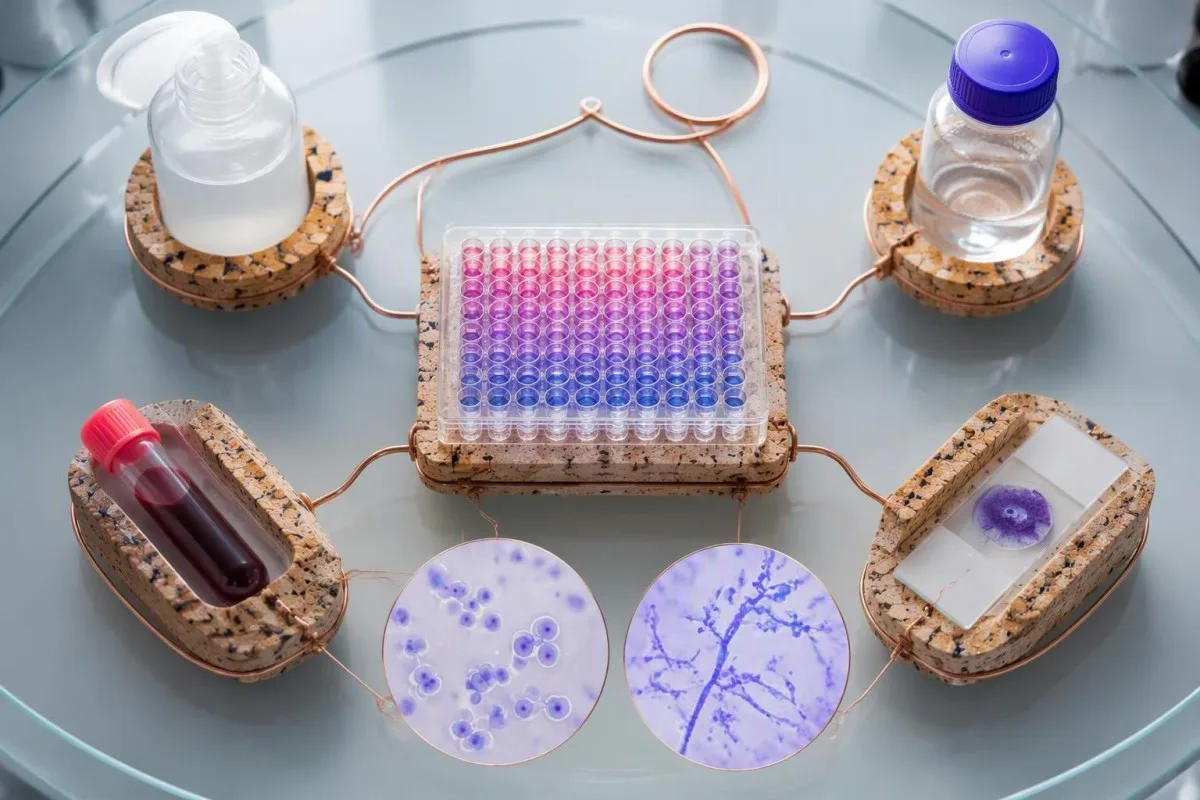
Piperacillin–tazobactam was associated with false-positive galactomannan in older reports, but many contemporary formulations no longer show the same problem. Some amoxicillin–clavulanate formulations and intravenous immunoglobulin products have also been implicated; a single index of 1.2 after an infusion should prompt a product-specific discussion with microbiology rather than a blanket claim that all such medicines invalidate testing.
Other fungi can share antigens recognized by the assay, including Histoplasma and some Fusarium and Talaromyces species. A galactomannan index of 1.5 therefore does not identify an Aspergillus species; our guide to Histoplasma antigen interpretation explains why travel, residence and organism-specific tests can redirect the diagnosis.
Enteral-feed aspiration and antigen translocation through severely damaged intestinal mucosa have been reported as misleading sources, but the evidence is less predictable than for established assay thresholds. Two useful details are the timing of feeding or aspiration and the timing of sample collection; these possibilities are not a reason to restrict ordinary foods or label every positive result a dietary artifact.
Pozitif BAL sonucu Aspergillus'un akciğere invaze olduğu anlamına mı gelir?
A positive BAL galactomannan result does not prove lung tissue invasion, because antigen may come from Aspergillus colonizing the airways or from collection-related contamination. A BAL index above 1.0 strengthens a compatible investigation but still requires review of the bronchoscopy findings, host risk, imaging and other microbiological evidence.
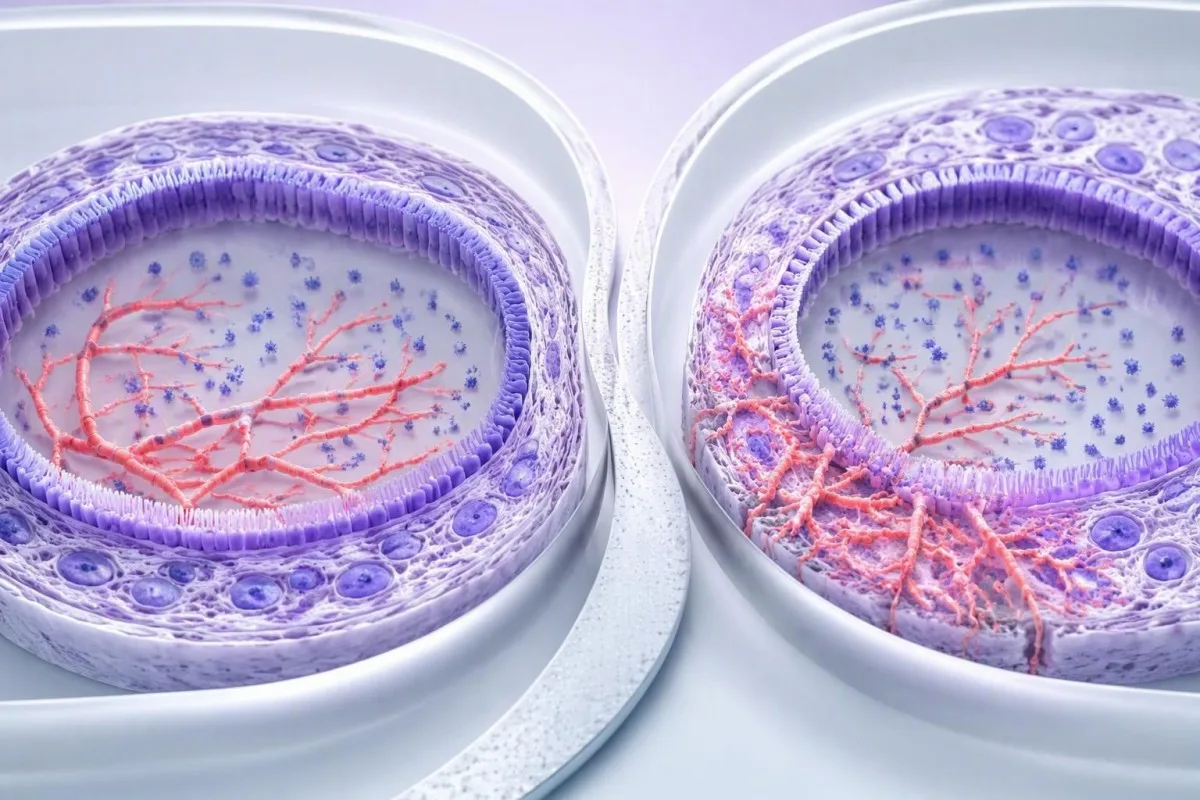
Structural lung disease changes the interpretation of airway fungal findings. Bronchiectasis, previous cavities and lung transplantation can make airway colonization more plausible, while deterioration, compatible CT abnormalities or abnormal airway tissue increase concern; an index of 2.0 cannot determine which process is occurring without those accompanying findings.
Lavage collection deserves scrutiny when the BAL result seems out of proportion to the clinical picture. Some gluconate-containing balanced fluids have caused false-positive galactomannan in published reports, although products vary; if serum is 0.1 and BAL is 1.3, ask which fluid was used and whether the laboratory recognizes interference with that specific formulation.
Regional fungal diseases can resemble pulmonary aspergillosis without sharing an identical diagnostic pathway. For a patient with a BAL index of 0.8 and relevant travel or residence history, our guide to regional fungal antibody testing explains why separate investigations may be appropriate; do not assume every alternative lung fungus will cross-react with galactomannan.
Tanıyı doğrulamaya hangi görüntülemeler ve laboratuvar testleri yardımcı olur?
Chest CT, respiratory fungal culture, microscopy and Aspergillus PCR can strengthen or challenge a positive galactomannan result. No single combination is appropriate for everyone: a serum index of 1.1 in a neutropenic patient with new pulmonary nodules is a different diagnostic problem from an isolated positive BAL result with stable chronic airway changes.
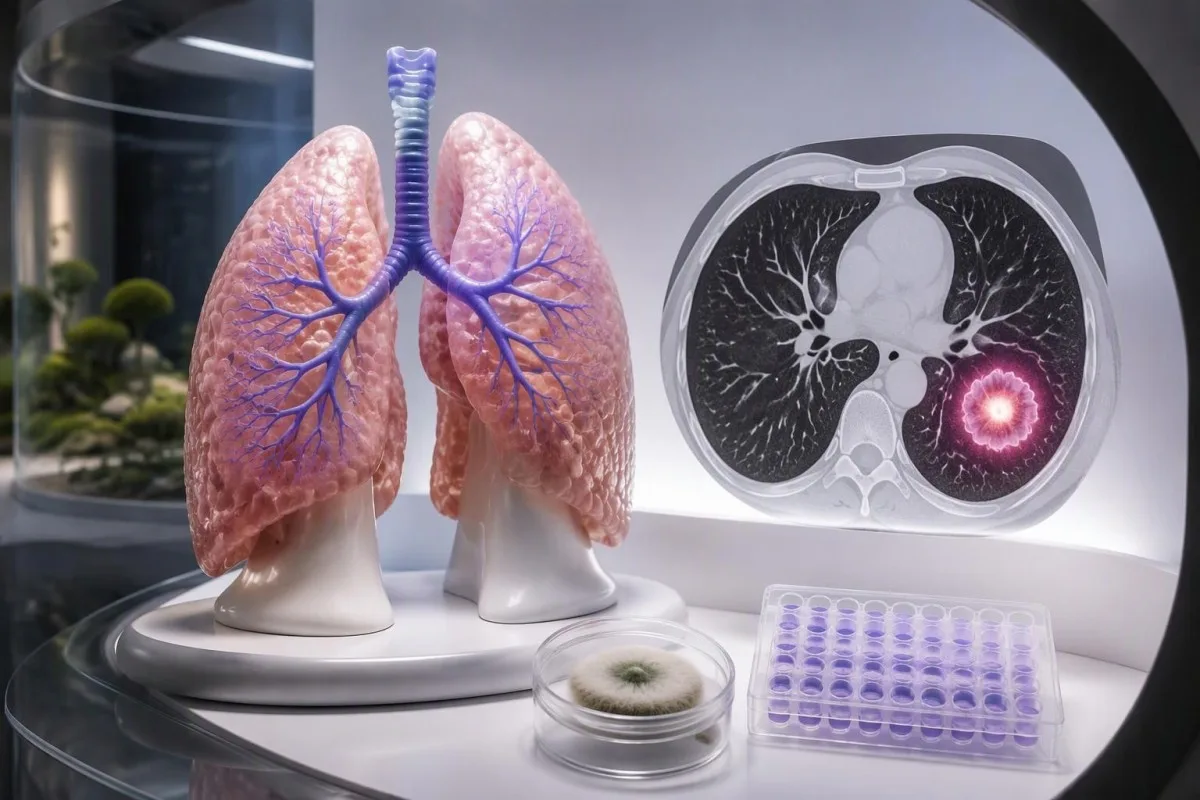
CT findings such as nodules with a surrounding ground-glass halo can support invasive aspergillosis, but they are not specific to Aspergillus. The classic halo is more useful in some neutropenic settings than in many non-neutropenic patients; a positive index of 1.4 and an atypical CT therefore still require a broader assessment rather than exclusion based on absent textbook imaging.
Culture can identify an organism and support susceptibility testing, while PCR detects fungal genetic material; neither a negative culture nor a positive airway PCR alone settles tissue invasion. Bacterial pneumonia can coexist or mimic the presentation, and our Legionella antigen guide explains another specimen-specific test that clinicians may select when the respiratory history fits.
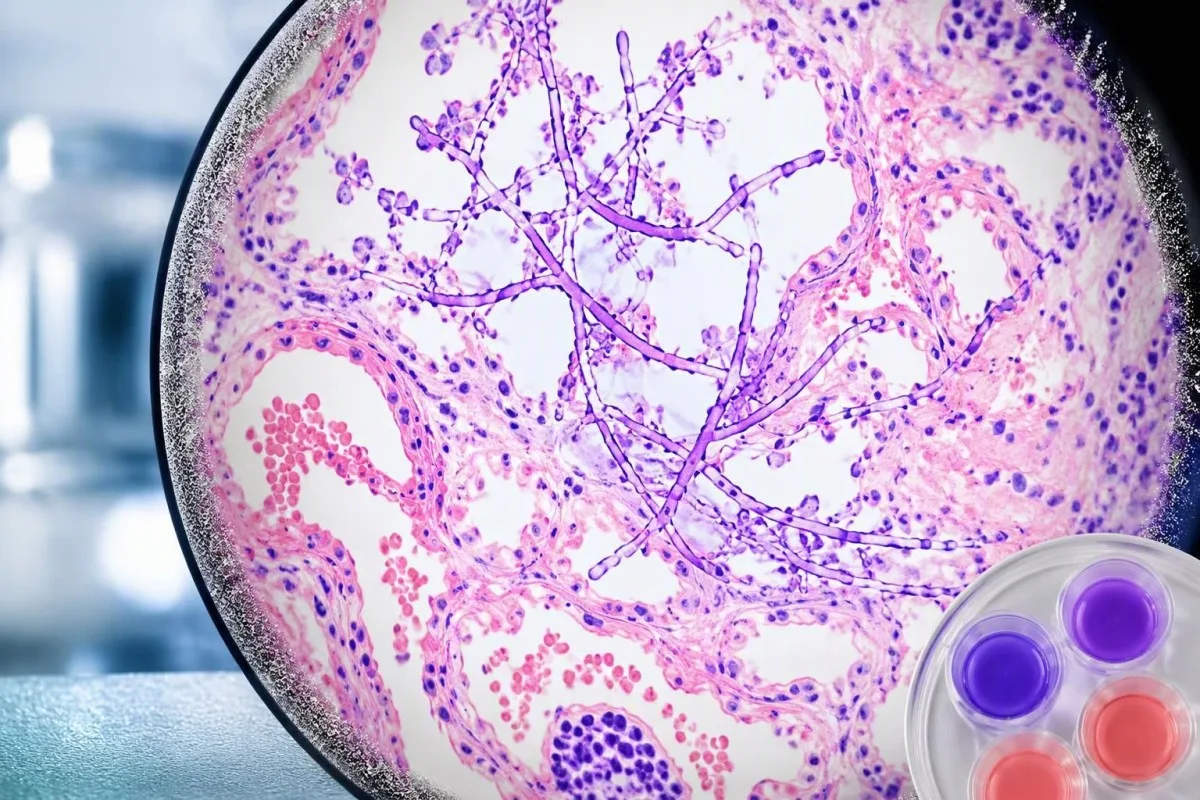
Tissue examination can demonstrate fungal invasion when sampling is feasible, and culture or molecular methods can help identify the fungus because hyphal appearance alone is not species-specific. A CRP of 80 mg/L may show a substantial inflammatory response but cannot identify Aspergillus; our WBC ve CRP karşılaştırması explains why general inflammation markers remain supporting evidence.
Pozitif bir sonuç ne zaman hızlı uzman değerlendirmesi gerektirir?
Contact the treating hematology, transplant, respiratory or infectious-disease team promptly when a positive galactomannan result accompanies high-risk immunosuppression, fever or new respiratory symptoms. An index of 0.6 can warrant urgent action in that setting; the clinical risk matters more than waiting for the number to reach 1.0.
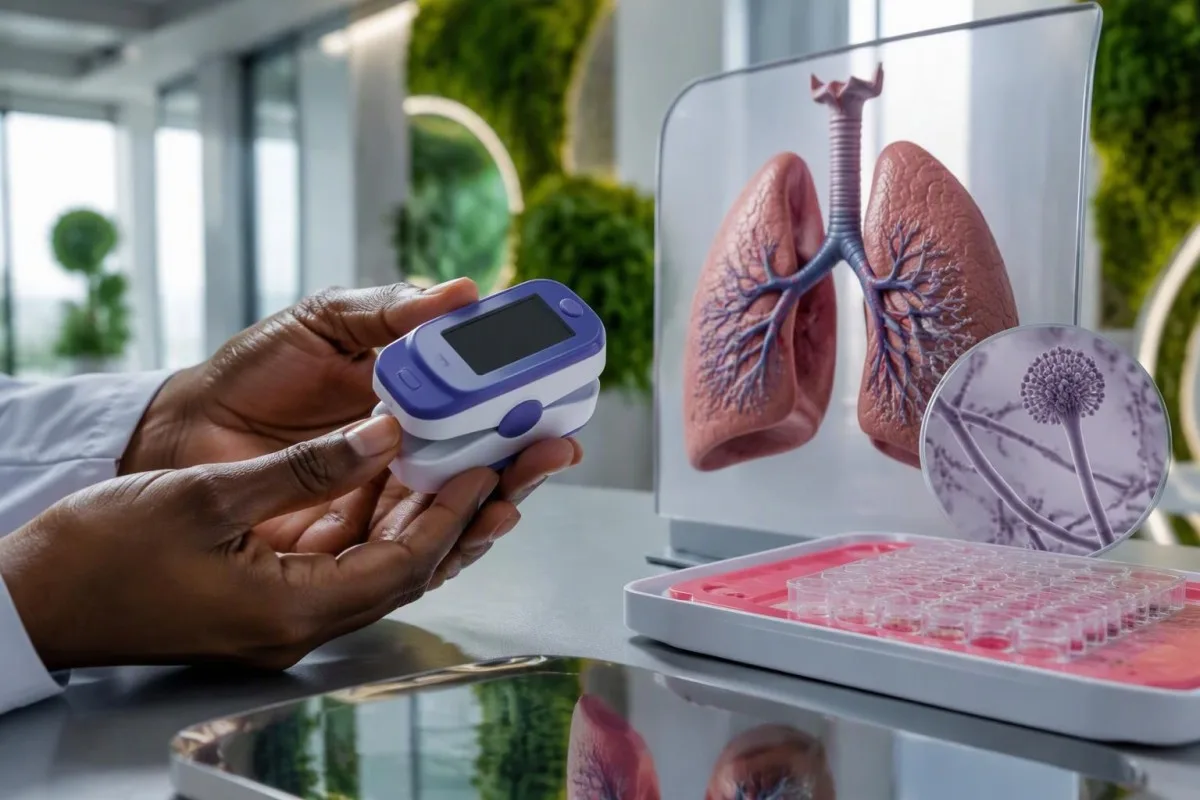
Fever during significant neutropenia requires urgent assessment regardless of the galactomannan result. Common febrile-neutropenia definitions include a single temperature of at least 38.3°C or at least 38.0°C sustained for 1 hour, but oncology services may use stricter instructions; follow the team's emergency plan rather than delaying to meet a published definition.
Severe breathing difficulty, confusion, fainting, significant coughing of blood or rapidly worsening chest symptoms requires emergency care. A room-air oxygen saturation of 92% or below is concerning for many adults without an individualized lower target, but a normal home reading does not rule out serious illness; our nefes darlığı test kılavuzumuz explains why symptoms and direct assessment take priority.
Strongly suspected invasive pulmonary aspergillosis may justify treatment while the diagnostic evaluation continues, as recommended by the 2016 IDSA guideline (Patterson et al., 2016). Conversely, an isolated index of 0.55 in a clinically stable, low-risk person may prompt verification and review first; neither scenario supports starting, stopping or selecting an antifungal without the treating clinician.
Galaktomannan testi tekrarlanmalı mı ve değerlerin düşmesi iyileşme anlamına gelir mi?
Repeat galactomannan can help clarify an unexpected result or monitor selected patients, but it must not delay urgent assessment. A change from serum 0.6 to 1.3 can strengthen concern when the clinical picture fits, while a fall from 2.0 to 0.7 may support improvement without proving that infection has cleared.
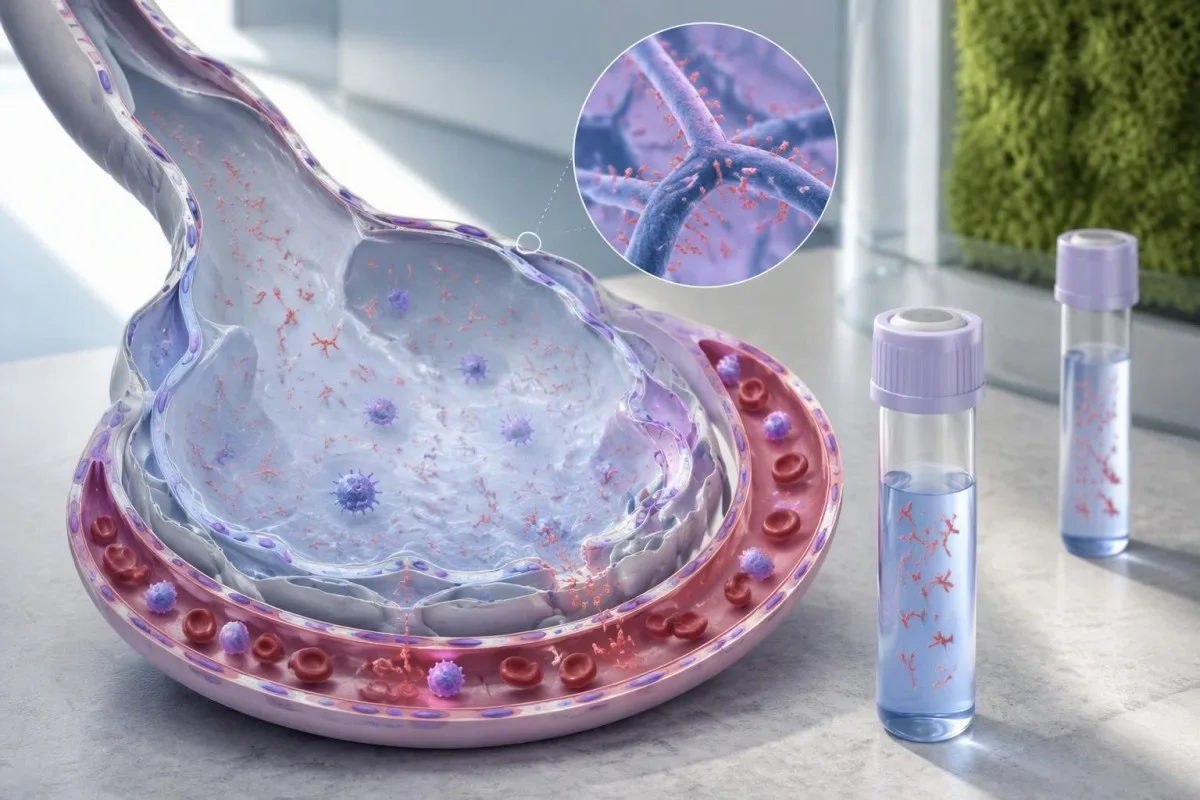
Repeat testing should use the same specimen type and preferably the same assay, because serum and BAL results cannot form a single interchangeable trend. The team may request a fresh sample or laboratory repeat after an unexpected index of 0.58; no universal 24-hour, 48-hour or weekly schedule applies to every patient and every reason for testing.
Serial serum galactomannan is most useful in selected hematological malignancy or stem-cell transplant patients whose antigen was elevated at baseline. A serum result that was always below 0.5 is a weak treatment-response marker, especially for lung-limited disease; our kan testi zaman çizelgesi rehberimiz explains why treatment start dates must travel with laboratory trends.
Kantesti is an AI biomarker interpretation platform that can help organize serial laboratory values, such as an index changing from 1.8 to 0.9, for discussion with the treating team. Recovery still depends on symptoms, imaging, immune recovery and adequate treatment exposure; an antigen decline alone is not a safe rule for stopping antifungals.
Galaktomannan testi yorumlamasına ilişkin üç varsayımsal örnek
Galactomannan test interpretation changes when the same numerical result is placed in a different clinical setting. The following 3 examples are hypothetical teaching scenarios, not patient encounters; each shows why specimen type, host risk and supporting findings can matter more than whether the report displays a positive flag.
Example 1: a 56-year-old receiving leukemia treatment has an ANC of 0.2 × 10^9/L for 12 days, persistent fever, serum galactomannan 0.62 and new CT nodules. The index is below the single-specimen research threshold, but the overall pattern warrants urgent specialist investigation and possible treatment; our guide to marrow-related blood count changes explains why the underlying hematological condition matters.
Example 2: a 68-year-old with bronchiectasis has BAL galactomannan 1.35, serum 0.12, stable symptoms and no new CT abnormality. Colonization or a collection-related signal becomes more plausible, although neither is proven; the team would review lavage fluid, culture, previous scans and immune status before deciding that antifungal treatment offers more benefit than harm.
Example 3: a 43-year-old transplant recipient taking posaconazole has worsening cough, a new CT abnormality, BAL galactomannan 2.1 and serum 0.18. Treatment exposure may help explain the negative serum result, so breakthrough disease remains a concern; Kantesti can help explain the discordant report, but drug levels, organism identification and treatment decisions belong with the transplant and infection teams.
Kantesti, galaktomannan raporunun incelenmesine nasıl destek olabilir?
Kantesti is an AI blood test interpretation platform that can help explain a reported galactomannan index, identify the stated specimen and organize accompanying laboratory results. An index of 0.8 needs different context in serum and BAL, and our explanation is educational support—not a diagnosis, validated fungal triage score or treatment recommendation.

Useful context includes the specimen, laboratory cutoff, collection date, symptoms and antifungal start date. An ANC of 0.3 × 10^9/L or a recent transplant also changes the questions worth asking, but those details must be supplied accurately; our klinik doğrulama yaklaşımımız should not be read as evidence that this particular fungal assay has been independently validated for autonomous diagnosis.
Kantesti cannot inspect a bronchoscopy, verify tissue invasion or determine whether a specific infusion batch contains cross-reacting antigen. Even with a complete report showing an index of 1.7, the platform cannot replace chest imaging, microbiology consultation or drug-interaction management; bring the original laboratory report, not only an AI-generated explanation, to the appointment.
Share only the information needed for the question, and check consent before adding another person's results or immunosuppression history. Two practical privacy steps are removing unnecessary identifiers and checking how uploaded reports are handled; our gizlilik ve veri bilgilerini describes the relevant controls, but urgent symptoms should be addressed before any digital review.
Araştırma kaynakları ve uzman görüşmeniz için bir kontrol listesi
The most useful follow-up connects 3 kinds of evidence: clinical risk, anatomical findings and microbiological results. The 2016 IDSA guideline, 2020 EORTC/MSGERC definitions and 2019 Cochrane BAL review support that combined approach; none turns a positive galactomannan index into a stand-alone diagnosis.

Prepare 5 questions for the treating team: Was the specimen serum or BAL, which cutoff was used, what makes invasive disease likely, could an exposure explain the signal, and what additional test would change management? For an index of 0.75, these answers are more useful than asking whether the result is simply high or low.
The 2 Zenodo publications listed below are supplementary educational resources about other laboratory panels, not studies validating galactomannan or Aspergillus diagnosis. Our pıhtılaşma test rehberimizden Ve serum protein rehberimiz may help explain accompanying results, but neither establishes fungal invasion or determines antifungal treatment.
Keep uncertainty explicit when evidence is incomplete, particularly with a borderline index, negative serum during treatment or a positive BAL in structural lung disease. At Kantesti, our tıbbi içerik standartları separate educational interpretation from diagnosis; a single index of 1.0 should never outweigh serious symptoms or replace prompt specialist assessment.
Sıkça sorulan sorular
Pozitif bir galaktomannan testi Aspergillus enfeksiyonunu doğrular mı?
Pozitif bir galaktomannan testi, invaziv Aspergillus enfeksiyonunu doğrulamaz; çünkü test, doku invazyonunu değil antijeni saptar. Birçok laboratuvar 0,5 indeks eşik değeri kullanır, ancak pozitif sinyal hava yolu kolonizasyonundan, çapraz reaksiyon veren mantarlardan veya ürüne özgü girişimlerden de kaynaklanabilir. Klinisyenler numune sonucunu bağışıklık riskini, semptomları, göğüs görüntülemesini ve ek mikrobiyolojik bulguları dikkate alarak değerlendirir. Ateşi veya solunum semptomları olan yüksek riskli hastalar, indeks laboratuvar eşiğinin yalnızca biraz üzerinde olsa bile hızla değerlendirilmelidir.
Normal galaktomannan indeksi nedir?
0 Birçok laboratuvar 0,5'in altındaki galaktomannan indeksini negatif olarak raporlar; ancak rapordaki teste özgü referans önceliklidir. İndeks genellikle birimsiz bir optik yoğunluk oranıdır; ng/mL cinsinden bir konsantrasyon veya enfeksiyon riski yüzdesi değildir. 2020 EORTC/MSGERC araştırma tanımları, galaktomannan kriteri olarak serum/plazma ≥1,0, BAL ≥1,0 veya serum/plazma ≥0,7 ile birlikte BAL ≥0,8 değerlerini kullanır. Negatif bir sonuç, özellikle küf etkin tedavi sırasında, her popülasyonda hastalığı güvenilir biçimde dışlamaz.
BAL galaktomannan, serum negatifken pozitif olabilir mi?
Serum negatifken BAL galaktomannan pozitif olabilir; çünkü lavaj akciğer kompartımanından örnek alırken serum dolaşımdaki antijeni ölçer. Serum 0,2 iken BAL indeksinin 1,4 olması akciğerle sınırlı hastalıkta görülebilir, ancak hava yolu kolonizasyonunu veya örnek alımına bağlı etkileşimi de yansıtabilir. Bu uyumsuzluk özellikle nötropenik olmayan hastalarda ve antifungal tedavi alanlarda önemlidir. Sonuçların ortalaması alınmamalı veya BT bulguları ve klinik risk değerlendirilmeden yorumlanmamalıdır.
Antibiyotikler veya intravenöz immünoglobulin yanlış pozitif sonuca neden olabilir mi?
Bazı ilaç ve infüzyon ürünleri galaktomannan testinde yalancı pozitif sonuçlara neden olabilir; ancak bu etki evrensel değil, formülasyona özgüdür. Eski piperasilin–tazobaktam preparatları bu durumla ilişkilendirilmişken, günümüzdeki birçok formülasyon aynı etkileşimi göstermez; bazı intravenöz immünoglobulin ve amoksisilin–klavulanat ürünleri için de bu yönde bildirimler yapılmıştır. İnfüzyon sonrasında 0,9 indeks değeri saptanması, kullanılan ürünün tam olarak hangisi olduğunun ve örnek alma zamanının laboratuvarla birlikte gözden geçirilmesini gerektirir. Olası bir etkileşim, eşzamanlı olarak gerçek bir enfeksiyonun bulunmasını dışlamaz.
Antifungal tedavi sırasında galaktomannan sonucunun negatif olması enfeksiyonu dışlar mı?
0 Negatif bir galaktomannan sonucu, küflere etkili antifungal tedavi sırasında invaziv aspergillozu dışlamaz. Tedavi antijen saptanmasını azaltabilir; bu nedenle tedavi başladıktan sonra ölçülen 0,3'lük serum indeksi, tedavi öncesinde elde edilen aynı sonuç kadar güven verici olmayabilir. Şüphe yüksek olduğunda göğüs görüntülemesi, BAL testleri ve diğer mikrobiyolojik incelemeler yine de gerekebilir. Testin pozitifleşme olasılığını artırmak için reçete edilen antifungalleri kesmeyin.
Pozitif galaktomannan testi için ne zaman acil tıbbi yardım almalıyım?
Seek prompt specialist assessment when a positive galactomannan result accompanies substantial immunosuppression, fever or new respiratory symptoms. An index of 0.6 can still be concerning in someone with prolonged severe neutropenia, and fever should trigger the oncology or transplant team's emergency instructions regardless of the antigen value. Severe breathing difficulty, confusion, fainting or significant coughing of blood requires emergency care. There is no universal galactomannan index that must be reached before urgent action is appropriate.
Galaktomannan indeksinin düşmesi antifungallerin kesilebileceği anlamına gelir mi?
Galaktomannan indeksinin düşmesi, antifungal tedavinin kesilebileceğini tek başına göstermez. Başlangıçta antijen düzeyi yüksek olan seçilmiş hastalarda serum değerinin 2,0'dan 0,7'ye düşmesi iyileşmeyi destekleyebilir; ancak semptomlar, görüntüleme, bağışıklığın toparlanması ve tedaviye maruziyet de önem taşır. Serum ve BAL değerleri tek bir eğilim olarak birleştirilmemelidir. Tedavi süresini tek bir indeks veya yüzde düşüşe göre değil, hastayı takip eden uzman belirler.
Kan tahlili sonuçları ne anlama gelir
Laboratuvar raporunuzu yükleyin; Kantesti'nin AI'ı her biyobelirteci saniyeler içinde sade bir dille açıklar. Dünya genelinde 2 milyondan fazla kişi tarafından kullanılıyor.
Referanslar
- Klein, T., Mitchell, S. & Weber, H. (2026). aPTT Normal Aralığı: D-Dimer, Protein C ve Kan Pıhtılaşması Rehberi. Kantesti AI Tıbbi Araştırma. DOI
- Klein, T., Mitchell, S. & Weber, H. (2026). Serum Proteinleri Rehberi: Globülinler, Albümin ve A/G Oranı Kan Testi. Kantesti AI Tıbbi Araştırma. DOI
- Patterson TF et al. (2016). Practice Guidelines for the Diagnosis and Management of Aspergillosis: 2016 Update by the Infectious Diseases Society of America. Clinical Infectious Diseases. DOI PubMed
- Donnelly JP et al. (2020). Revision and Update of the Consensus Definitions of Invasive Fungal Disease From the European Organization for Research and Treatment of Cancer and the Mycoses Study Group Education and Research Consortium. Clinical Infectious Diseases. DOI PubMed
- de Heer K et al. (2019). Galactomannan detection in broncho-alveolar lavage fluid for invasive aspergillosis in immunocompromised patients. Cochrane Database of Systematic Reviews. DOI
- 2 milyondan fazlaAnaliz edilen testler
- 127+Ülkeler
- 100+Diller
Sağlık ekibi hakkında


E-E-A-T Güven Sinyalleri
Deneyim
Hekim liderliğinde laboratuvar yorumlama iş akışlarının klinik incelemesi.
Uzmanlık
Klinik bağlamda biyobelirteçlerin nasıl davrandığına odaklanan laboratuvar tıbbı.
Otorite
Dr. Thomas Klein tarafından tıbbi açıdan incelenmiş; Dr. Sarah Mitchell ve Prof. Dr. Hans Weber'in katkılarıyla hazırlanmıştır.
Güvenilirlik
Alarmı azaltmaya yönelik net takip yollarıyla kanıta dayalı yorumlama.

Tıbbi sorumluluk reddi
Bu makale yalnızca eğitim amaçlıdır ve tıbbi tavsiye niteliği taşımaz. Tanı ve tedavi kararları için her zaman yetkin bir sağlık hizmeti sağlayıcısına danışın.
Yayınlanmış · Yayın ekibiyle iletişime geçin
Kantesti Ltd tarafından yayımlanmıştır; İngiltere ve Galler'de kayıtlı, şirket no. 17090423, Londra, Birleşik Krallık.
