Ufuatiliaji wa Clozapine hutumia idadi kamili ya neutrofili (ANC) ili kugundua neutropenia hatari; matokeo ya chini yanaweza kusababisha vipimo vya ziada, tathmini ya mtaalamu au kusitishwa kwa matibabu kwa maelekezo ya daktari. Ratiba hutofautiana kulingana na nchi na hatua ya matibabu. Homa, maumivu ya koo au kuugua ghafla kunahitaji tathmini ya haraka—hata baada ya kupata matokeo ya kutia moyo. Usibadilishe matumizi ya clozapine mwenyewe.

Mambo muhimu ya kukumbuka
- Vipimo vya ANC: 1.0 × 10⁹/L ni sawa na seli 1,000/µL; hakikisha vipimo vinalingana kabla ya kulinganisha matokeo na viwango vya matibabu.
- Viwango vya jumla nchini Marekani: ANC ya seli 1,000–1,499/µL inaweza kuruhusu kuendelea na matibabu huku ufuatiliaji ukiongezwa; seli 500–999/µL kwa kawaida husababisha kusitishwa kwa matibabu kwa maelekezo ya daktari inaposhukiwa neutropenia inayosababishwa na clozapine.
- Neutropenia kali: ANC iliyo chini ya seli 500/µL huhitaji usimamizi wa haraka wa kitabibu, kwa kawaida kusitishwa kwa matibabu na kuhusishwa kwa wataalamu wa damu.
- Idadi inayohusishwa na Duffy-null: Idadi ya neutrofili inayohusishwa na Duffy-null iliyothibitishwa inaweza kuhalalisha utaratibu tofauti wa matibabu; asili ya ukoo pekee haithibitishi kustahiki.
- Ratiba ya Marekani: Ufuatiliaji kulingana na taarifa za dawa kwa kawaida huanza kila wiki kwa miezi 6, kisha kila baada ya wiki 2 kwa miezi 6, halafu kila mwezi.
- Mabadiliko ya kiutawala: FDA iliondoa US clozapine REMS mnamo Juni 13, 2025; hatua hii iliondoa sharti la kujisajili kwenye rejista, si hitaji la kimatibabu la kufuatilia ANC.
- Ratiba za kimataifa: Taratibu za jadi za UK hutumia vipimo vya kila wiki kwa wiki 18, vipimo kila baada ya wiki 2 hadi mwaka 1, kisha kila baada ya wiki 4; mapendekezo yaliyorekebishwa ya Ulaya yanaweza kuruhusu vipindi virefu zaidi kwa wagonjwa walio imara na wanaostahiki.
- Dalili za dharura: Homa ya 38.0°C au zaidi, maumivu mapya ya koo, vidonda mdomoni, kutetemeka kwa baridi au kuugua ghafla kwa kiwango kikubwa kunahitaji tathmini ya haraka siku hiyo hiyo. Kuchanganyikiwa, shida ya kupumua au kuanguka kunahitaji msaada wa dharura.
Ufuatiliaji wa clozapine huamua nini hasa?
Ufuatiliaji wa clozapine hutumia matokeo ya ANC kuwasaidia wahudumu wa afya kuamua kama matibabu yanaweza kuendelea, yanahitaji ufuatiliaji wa karibu zaidi au lazima yasitishwe. ANC chini ya seli 500/µL ni matokeo makubwa ya usalama, lakini maamuzi katika viwango vya juu zaidi hutegemea itifaki ya nchi, matokeo ya awali na kiwango cha msingi cha mgonjwa kilichorekodiwa.
Matokeo ya ANC si maagizo ya dawa yanayojitegemea: kiwango cha seli 1,200/µL kinaweza kuruhusu matibabu kuendelea katika utaratibu mmoja lakini kusababisha hatua tofauti katika mwingine. Mtoa dawa lazima atambue itifaki sahihi kabla ya kutafsiri nambari hiyo; kutumia kizingiti cha Marekani kwenye tahadhari ya huduma ya ufuatiliaji ya UK kunaweza kusababisha tatizo la usambazaji wa dawa ambalo lingeweza kuepukika.
Kantesti ni kichanganuzi cha vipimo vya damu cha AI kinachoweza kueleza ANC ya 1.2 × 10⁹/L kuwa ni seli 1,200/µL, lakini tafsiri yetu haiwezi kuidhinisha utoaji wa clozapine au kuchukua nafasi ya timu ya watoa dawa. Yetu taarifa za kampuni hutambua shirika linalotoa huduma hiyo ya elimu, badala ya rejista ya ufuatiliaji wa clozapine.
Kupungua kwa kiwango kunastahili kuangaliwa hata kabla hakijavuka kizingiti cha matibabu: kupungua kwa kubuniwa kutoka seli 4,000 hadi 1,700/µL kunatofautiana na kiwango cha msingi cha muda mrefu kilicho karibu na 1,700. Mwongozo wetu kuhusu matokeo ya neutrophil ya mpaka unaeleza mabadiliko ya kawaida, lakini watumiaji wa clozapine wanapaswa kupata ushauri mahususi kuhusu dawa badala ya kufuata ratiba ya jumla ya kupima tena.
Unasomaje vipimo vya ANC na kuhesabu idadi hiyo?
ANC hupima idadi kamili ya neutrofili, si asilimia yao kati ya seli nyeupe za damu. Ubadilishaji huo ni sahihi kabisa: 1.0 × 10⁹/L ni sawa na seli 1,000/µL. Kiwango cha marejeo cha maabara na kizingiti cha matibabu ya clozapine hujibu maswali tofauti, kwa hiyo matokeo yaliyowekewa alama ya tahadhari hayamaanishi moja kwa moja kwamba matibabu lazima yasitishwe.
Maabara nyingi za kisasa huripoti ANC moja kwa moja, kwa kawaida kama neutrofili, neutrofili kamili au NEUT#. Ikiwa hesabu inahitajika, zidisha jumla ya WBC kwa sehemu ya neutrofili, ukijumuisha bendi zinaporipotiwa kando; kwa mfano, seli 4,000/µL × 0.40 hutoa ANC ya seli 1,600/µL, si seli 40/µL.
WBC ya kubuniwa ya seli 6,000/µL yenye neutrofili katika 15% hutoa ANC ya seli 900/µL licha ya jumla ya WBC ambayo huenda iko ndani ya kiwango cha marejeo cha maabara. Tofauti hiyo inaeleza kwa nini mwongozo wa viwango vya marejeo vya neutrofili hutofautisha hesabu kamili na asilimia ya tofauti za aina za seli.
Uandishi wa desimali unaweza kusababisha kutoelewana hatari: 0.8 × 10⁹/L inamaanisha seli 800/µL, ilhali 8.0 × 10⁹/L inamaanisha seli 8,000/µL. Linganisha ripoti asilia, tarehe ya uchukuaji sampuli na vipimo—si picha ya skrini iliyokatwa au nambari iliyoingizwa kwa mkono—na uombe maabara au timu ya ufuatiliaji itatue utata wowote kabla matokeo hayajatumiwa kuandika maagizo ya dawa.
| Kiwango | Wigo | Maana yake |
|---|---|---|
| Juu ya kiwango cha kawaida cha chini cha neutropenia | ≥1.5 × 10⁹/L; ≥seli 1,500/µL | Usually outside the conventional adult neutropenia definition; this is not a universal laboratory reference interval or dispensing rule. |
| Neutropenia nyepesi | 1.0–1.499 × 10⁹/L; 1,000–1,499 cells/µL | Requires interpretation against baseline, symptoms and the applicable clozapine pathway. |
| Neutropenia ya wastani | 0.5–0.999 × 10⁹/L; 500–999 cells/µL | Often requires urgent prescriber review; treatment actions differ for general and documented Duffy-null pathways. |
| Neutropenia kali | <0.5 × 10⁹/L; <500 cells/µL | High-risk finding requiring urgent clinical management, usually hematology involvement and clinician-directed interruption. |
Ni matokeo gani ya ANC hubadilisha matibabu katika utaratibu wa Marekani?
The US general-population pathway usually permits clozapine initiation at ANC ≥1,500 cells/µL. During treatment, ANC of 1,000–1,499 cells/µL can allow continuation with intensified monitoring; 500–999 cells/µL generally requires interruption when clozapine-induced neutropenia is suspected. These are clinician actions, not instructions for patients to adjust medication.
For mild neutropenia, the US prescribing-information approach commonly increases ANC checks to 3 times weekly until recovery to at least 1,500 cells/µL. Correll et al. (2022), in CNS Drugs, reproduce these management pathways and emphasize that clozapine's substantial psychiatric benefits must be considered alongside hematological risk rather than treating every low result identically.
For ANC of 500–999 cells/µL in the general pathway, clinicians usually arrange hematology input and daily testing initially, with treatment resumption considered after recovery according to the label. A repeat sample can clarify an unexpected result, but a symptomatic patient or a rapidly falling count should not wait 24 hours merely to obtain a more convenient number.
A count below 500 cells/µL enters the severe-neutropenia pathway, where any later rechallenge requires an explicit specialist risk–benefit decision. Total WBC or CRP cannot substitute for ANC; our explanation of kutokubaliana kwa WBC na CRP shows why apparently reassuring results elsewhere in the panel do not cancel a low neutrophil count.
| Kiwango | Wigo | Maana yake |
|---|---|---|
| US general-pathway initiation threshold | ANC ≥1,500 cells/µL | Usually eligible for initiation from a hematological perspective, subject to the full prescribing assessment. |
| Mild neutropenia during treatment | ANC 1,000–1,499 cells/µL | Treatment can often continue under prescriber direction with ANC monitoring 3 times weekly. |
| Moderate neutropenia during treatment | ANC 500–999 cells/µL | Usually interrupt if clozapine-induced neutropenia is suspected; obtain hematology advice and intensified monitoring. |
| Severe neutropenia during treatment | ANC <500 cells/µL | Interrupt under urgent clinical management; any future rechallenge needs specialist justification. |
Idadi inayohusishwa na Duffy-null hubadilishaje maamuzi?
Documented Duffy-null-associated neutrophil counts can justify lower clozapine ANC thresholds because a stable lower circulating count does not necessarily indicate impaired immunity. US prescribing information has historically called this the benign ethnic neutropenia, or BEN, pathway; its usual initiation threshold is ANC ≥1,000 cells/µL with at least 2 baseline measurements.
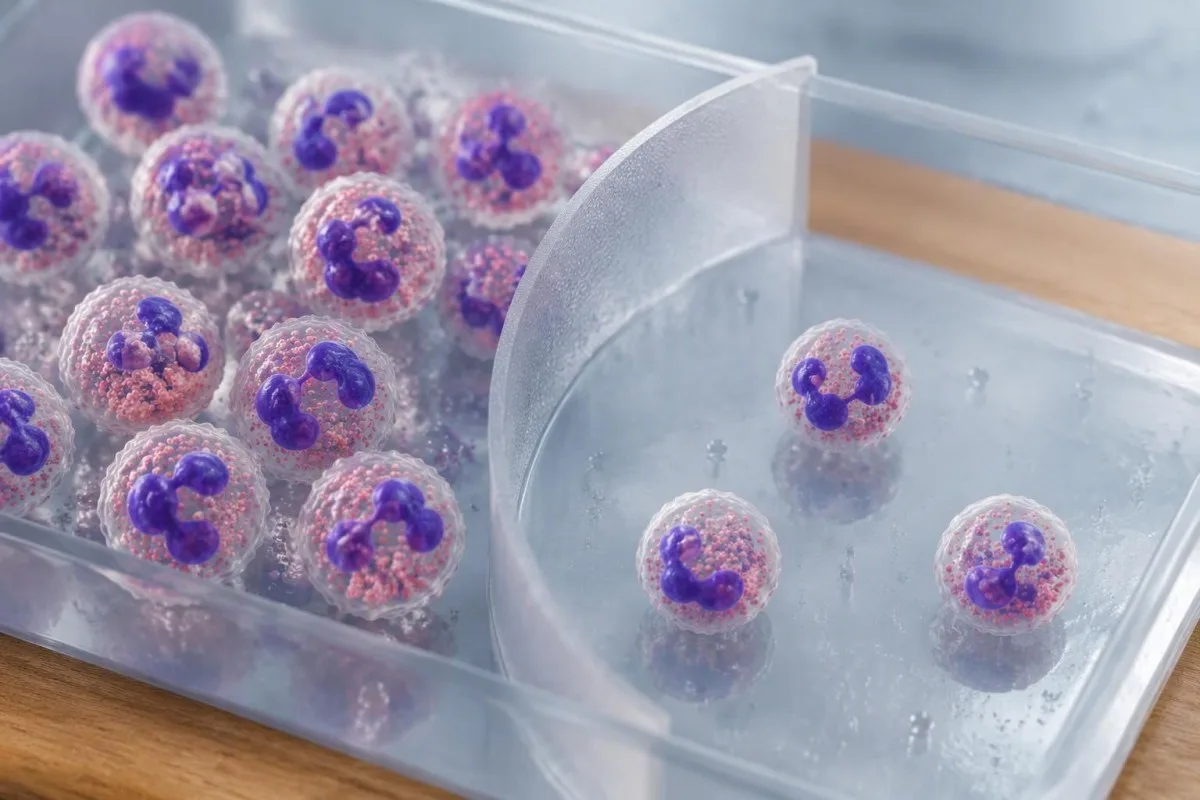
Under the US documented BEN pathway, an ANC of 500–999 cells/µL may permit continued clozapine with hematology consultation and monitoring 3 times weekly. This differs from the general pathway at the same number; the distinction must already be established clinically, not inferred after an alarming result simply to avoid an interruption.
Ancestry is not a diagnostic test for Duffy-null status, and 2 people with similar ancestry may have different baseline ANC patterns. Our Duffy-null count explanation discusses phenotype or genotype evidence, historical counts and assessment for other causes; genetic testing is not universally required, but a clinician-documented explanation is needed for an alternative treatment pathway.
A hypothetical stable baseline of 1,200 cells/µL does not make a new fall to 450 cells/µL harmless: that result meets the severe-neutropenia threshold even in the US BEN pathway. Fever, recurrent unusual infections, anemia or low platelets also weakens the assumption that a low ANC is an isolated constitutional finding and warrants a broader assessment.
Hatari ya neutropenia kutokana na clozapine huongezekaje kadiri muda unavyopita?
Clozapine neutropenia risk is concentrated early in treatment, especially during the first 18 weeks to 6 months, but it does not disappear later. Correll et al. (2022) describe agranulocytosis as affecting approximately 1% of treated patients; estimates vary across populations, monitoring systems and definitions, so this is not an individual prediction.

Approximately 1% means roughly 1 in 100 treated people in that broad estimate, not a 1% risk every month and not a 1% risk after every dose. Mild neutropenia is more frequent than agranulocytosis, and studies that combine the two outcomes can make the risk of life-threatening neutrophil depletion appear larger than it actually is.
Early intensive testing reflects the concentration of events during the first 6 months, rather than an assumption that each additional tablet causes predictable cumulative marrow damage. Severe clozapine-associated neutropenia is not reliably prevented by choosing a low dose alone, and a previously normal count cannot guarantee that the next count will remain normal.
After 2 years of stable treatment, the absolute risk is generally much lower than during initiation, which helps explain proposals for less frequent routine testing. Late neutropenia still needs investigation for medication effects, illness and marrow disease; our guide to kupima maambukizi ya mara kwa mara explains why symptoms and other cell lines can reveal risks that an ANC-only schedule misses.
Ratiba ya ufuatiliaji wa clozapine nchini Marekani ikoje baada ya REMS?
The US prescribing-information ANC schedule generally remains weekly for 6 months, every 2 weeks for the next 6 months, then monthly. The FDA removed the clozapine REMS on June 13, 2025, ending its enrollment and ANC-reporting requirements; that administrative change did not remove the clinical recommendation to monitor neutrophils.

The FDA's 2025 clozapine REMS removal communication separates access restrictions from safe prescribing: prescribers, pharmacies and patients no longer need to participate in that federal registry. A pharmacy no longer needs the former REMS dispensing authorization, but the prescriber may still require a recent ANC and a local service may still use an electronic safety workflow.
For a hypothetical patient completing 6 months without a concerning ANC event, the usual label pathway moves from weekly to every-2-week monitoring rather than immediately to monthly testing. Neutropenia, a treatment interruption or a relevant medication change can alter that plan; ask which event starts the next monitoring period instead of counting months independently.
Kantesti can help explain a trend across 3 dated ANC reports, but our platform does not determine the next legally or clinically acceptable dispensing date. Our mwongozo wa mwenendo wa usalama wa dawa explains why the original collection dates and the prescribing team's schedule must remain attached to any AI-generated summary.
Kwa nini huduma za ufuatiliaji nchini Uingereza zinaweza kutumia ratiba tofauti?
Traditional UK clozapine monitoring pathways use weekly testing for 18 weeks, every 2 weeks until 1 year, then every 4 weeks. UK dispensing has also depended on product-linked monitoring-service clearance; revised recommendations and local implementation can change the pathway, so the patient's own service must confirm the schedule and action thresholds.

An older UK pathway may classify ANC of 1.5–2.0 × 10⁹/L as amber and below 1.5 × 10⁹/L as red in patients without an approved lower-baseline pathway. Those thresholds are not interchangeable with the US continuation algorithm, and legacy UK systems may also consider total WBC; the relevant service must state which rules it currently applies.
Every 4 weeks means every 28 days, not simply once in each calendar month, so a missed appointment can affect a supply window even when the previous result was satisfactory. A useful baseline testing plan should include who books the sample, who receives it and who contacts the patient if the monitoring service cannot release medication.
Administrative alerts can arise from an overdue sample, an unprocessed sample or a genuinely low count—3 different problems with different solutions. Contact the prescribing team and pharmacy promptly if supply is threatened; do not stretch doses, borrow tablets or assume that a policy change in another country has automatically changed your own monitoring-service rules.
Ni mabadiliko gani yaliyofanywa katika mapendekezo yaliyorekebishwa ya ANC barani Ulaya?
Revised European recommendations allow less frequent ANC testing in eligible stable patients: weekly for 18 weeks, monthly through the first year, every 12 weeks after 1 year and annually after 2 years. These longer intervals depend on the specified absence of neutropenia and the locally implemented product information; they are not a universal schedule.
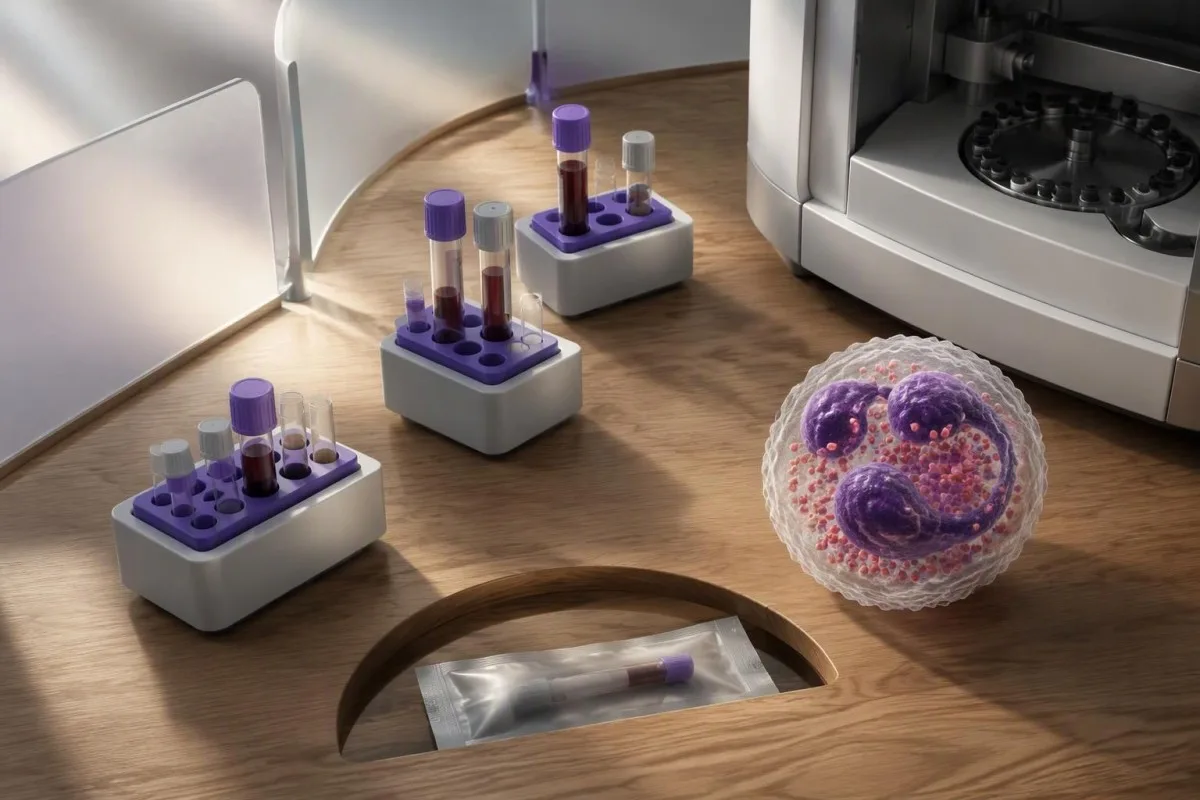
The European Medicines Agency's 2025 communication on revised routine blood count monitoring shifts the principal hematological measure toward ANC rather than combined WBC and ANC surveillance. The revised approach generally uses baseline ANC of at least 1,500 cells/µL, or at least 1,000 cells/µL in an established BEN pathway, while lowering some treatment-interruption thresholds compared with older European systems.
In the revised European approach, ANC below 1,000 cells/µL generally triggers stopping treatment in the standard pathway, whereas below 500 cells/µL is the corresponding threshold for an established BEN pathway. Results above those stopping thresholds can still require intensified surveillance; a hypothetical count of 1,100 cells/µL is not a reason to ignore a new downward trend.
Country authorization, the particular product information and service implementation can differ, even when patients have each taken clozapine for 2 years. Our guide to blood-test timing and changes explains why historical stability matters; obtain written confirmation before assuming that an annual European schedule applies to a UK, US or other national pathway.
Nini kifanyike baada ya matokeo ya chini ya ANC yasiyotarajiwa?
An unexpected low ANC needs prompt prescriber review, confirmation when appropriate and assessment for causes other than clozapine. In the US label pathway, an initial ANC below 1,500 cells/µL is generally confirmed within 24 hours, but severe neutropenia or infection symptoms require immediate management rather than waiting for a routine repeat.
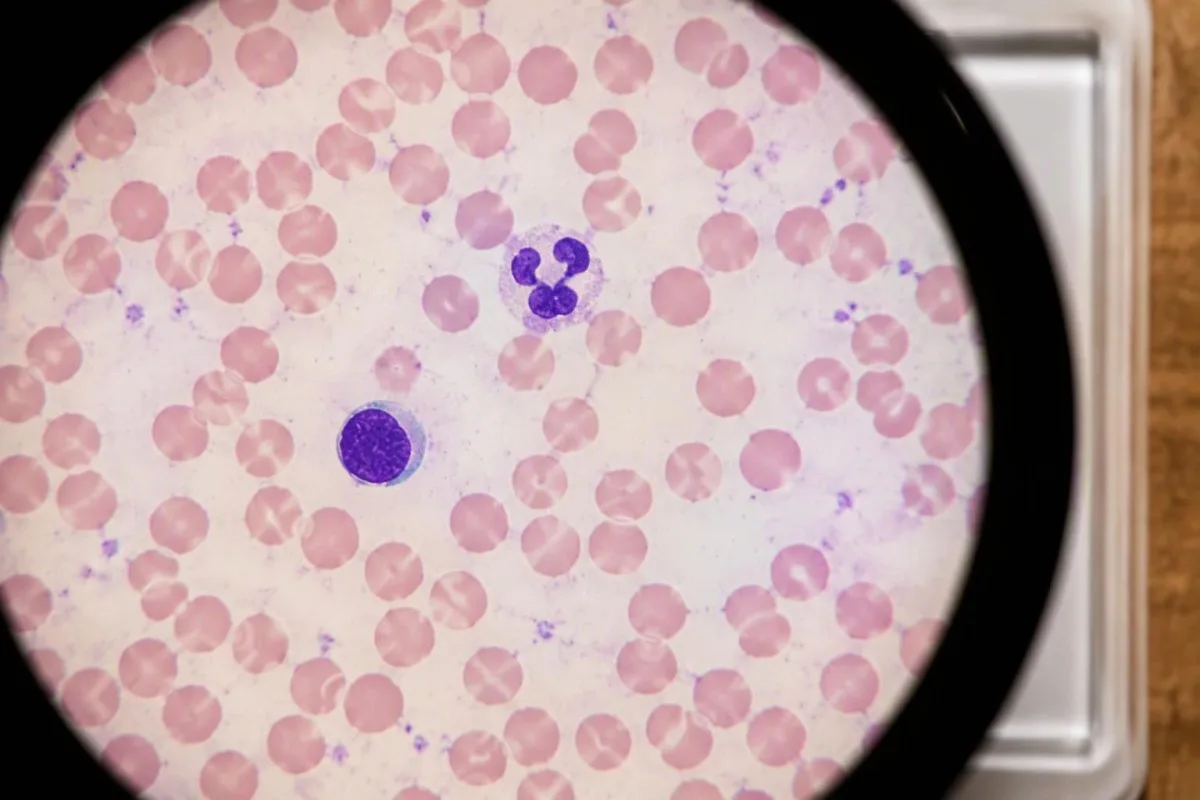
Recent viral illness, other medicines, autoimmune disease and nutritional deficiency can all lower ANC; a count of 900 cells/µL establishes neutropenia but does not establish its cause. Clinicians review the timing of drug exposure and may examine hemoglobin, platelets and a cell sample slide; concurrent abnormalities can justify evaluation for possible marrow disorders.
Kantesti is an AI blood test interpretation platform that can place an ANC of 0.9 × 10⁹/L beside platelet and hemoglobin trends, while leaving causation and medication decisions to clinicians. Our broader mwongozo wa viashiria vya hematolojia explains why a normal red-cell result does not erase an isolated neutrophil problem.
Sampling time and temporary physiological variation can affect a borderline result, but there is no safe rule that an afternoon repeat will always normalize an ANC of 1,400 cells/µL. If a clinician requests a repeat at a consistent time, follow that plan without delaying necessary care; exercise, supplements or deliberate timing changes should not be used to manipulate a treatment-clearance result.
Ni dalili zipi za maambukizi zinazohitaji tathmini ya haraka?
During clozapine treatment, fever of 38.0°C or higher, new sore throat, mouth sores, shaking chills or sudden marked illness warrants urgent same-day clinical assessment. A known ANC below 500 cells/µL makes possible infection especially urgent. Confusion, breathing difficulty, fainting or rapidly worsening illness requires emergency help, regardless of the last count.
Formal febrile-neutropenia definitions often use a single temperature of at least 38.3°C or at least 38.0°C sustained for 1 hour, together with severe or impending severe neutropenia. Those definitions support clinical classification—not a home instruction to wait an hour; tell the urgent-care team that you take clozapine and provide your last ANC if available.
An ANC of 2,000 cells/µL measured 7 days ago cannot exclude a new fall today, and severe neutropenia can weaken usual local signs such as redness or discharge. Assessment may include an urgent CBC with differential, cultures and examination; our procalcitonin interpretation guide explains why a low infection biomarker cannot independently rule out an early serious infection.
New fever may also signal pneumonia, myocarditis or another illness that raises clozapine concentrations, creating 2 linked safety questions: immune protection and medication toxicity. Call the prescribing team's urgent number immediately for advice about the next dose; if you cannot reach them promptly while significantly unwell, seek urgent care rather than waiting for an app interpretation or routine appointment.
Dawa nyingine, uvutaji sigara na ugonjwa huathirije ufuatiliaji?
Other medicines can increase neutropenia risk or change clozapine concentrations, and those are different problems requiring different tests. ANC is measured in cells/µL, whereas clozapine concentration is commonly measured in ng/mL; a normal ANC does not exclude excessive drug exposure, and a therapeutic concentration does not exclude neutropenia.

Carbamazepine is generally avoided with clozapine because of marrow-suppression risk and clinically relevant interactions; concurrent valproate has also been associated with neutropenia in observational studies. A hypothetical ANC decline from 2,600 to 1,300 cells/µL after adding another medicine warrants a complete medication review, not a conclusion that clozapine is necessarily the sole cause; valproate level interpretation addresses the separate issue of drug exposure.
Stopping combustible smoking can raise clozapine concentrations because smoke components—not nicotine itself—induce CYP1A2 metabolism. A person who stops smoking during a 3-day hospital admission may therefore need prescriber-directed concentration monitoring and dose review; our nicotine test explanation clarifies why cotinine alone does not measure the smoke-related enzyme effect.
Kantesti can explain why an ANC of 2,100 cells/µL and a clozapine level of 900 ng/mL describe different risks, but we cannot select a safer dose. Fever, major caffeine changes and interacting medicines such as ciprofloxacin can alter exposure; report new excessive sedation, confusion or muscle jerks promptly, even if the neutrophil result is reassuring.
Nini hutokea baada ya kukosa vipimo au kusitisha matibabu?
A missed ANC appointment can create a supply problem, while a clozapine treatment break can create a separate restarting hazard. After more than 48 hours without clozapine, many protocols require supervised re-titration beginning at 12.5 mg once or twice daily rather than immediate return to the previous dose; exact instructions depend on the prescribing information.
Tolerance to clozapine's blood-pressure effects can be lost quickly, so restarting a previous 300 mg daily regimen after a break may cause profound hypotension or collapse. US prescribing information also specifies reduced restart doses for shorter interruptions; patients should contact the prescribing team after missed doses rather than using a remembered 48-hour rule to decide what to take.
A treatment break does not always reset ANC surveillance to the beginning, because monitoring rules depend on interruption duration and the reason treatment stopped. In the US normal-ANC pathway, interruptions of 30 days or longer generally return patients to initiation-style monitoring; national monitoring services may use different interruption rules, especially after an abnormal count.
After a hypothetical 5-day admission, confirm the last dose, current prescription, latest ANC and who will supervise the next dose before leaving hospital. Our explanation of matokeo baada ya kutoka hospitalini helps organize altered laboratory values, but it cannot reconcile prescriptions or authorize restarting after neutropenia.
Ufuatiliaji wa ANC hukosa mambo gani kuhusu usalama wa clozapine?
ANC monitoring does not detect clozapine-related myocarditis, constipation, metabolic complications or excessive drug concentrations. Some initiation protocols add weekly troponin and CRP during the first 4 weeks, while ongoing care assesses bowel function, weight, glucose and lipids. A satisfactory ANC therefore confirms only one part of medication safety.
New chest pain, breathlessness or persistent unexplained tachycardia during the first 4 weeks needs prompt clinical assessment rather than reassurance from a normal ANC. Troponin and CRP can support a myocarditis investigation, but thresholds and screening practices vary; our myocarditis testing explanation describes why laboratory results must be interpreted with symptoms and cardiac evaluation.
Clozapine-related bowel slowing can become dangerous even when stool is still passing, and severe abdominal pain, distension or vomiting requires urgent assessment. Record bowel frequency and stool consistency rather than asking only whether constipation is present; the uthabiti wa kinyesi provides a shared description, while a change lasting 48 hours should prompt contact according to the patient's bowel-management plan.
Correll et al. (2022) describe a clozapine plasma reference range of approximately 350–600 ng/mL for many treatment-response decisions, while emphasizing individual variation and adverse effects. That range is not an ANC target or a universal safe-dose boundary; concentration samples usually need defined timing relative to the last dose, whereas routine ANC collection generally does not require a trough sample.
Unapaswa kujiandaaje kwa tathmini yako ijayo ya clozapine?
Bring the latest ANC, its units, earlier counts and a complete medication list to every clozapine review. Ask which national and service-specific pathway applies, what happens below its thresholds and whom to contact urgently. Keeping at least 3 dated results available helps distinguish a stable baseline from a new decline.

For a hypothetical sequence of 2,400, 1,900 and 1,400 cells/µL, useful questions concern the trend, recent illness, interacting medicines and the required next sample—not simply whether the latest value is red. Also ask who receives results outside office hours and whether the pharmacy needs monitoring-service clearance; these practical details can prevent an avoidable treatment gap.
Kantesti is an AI biomarker interpretation platform that helps translate an ANC of 1.4 × 10⁹/L into an understandable count and a list of clinician questions. Our kiufundi na kitabibu describes the boundaries of interpretation; it does not establish that an automated answer is a validated clozapine prescribing decision or a substitute for hematology advice.
Kantesti's educational workflow should preserve 3 essentials: the source result, the applicable clinical protocol and the human decision-maker. Our kanuni za AI inayowajibika explain why urgent symptoms take priority over automated analysis, while our taarifa za faragha na data explains considerations when sharing sensitive psychiatric and laboratory records.
Machapisho ya utafiti na mipaka ya ushahidi
The 2 Kantesti publications listed in the research publication section concern digestive symptoms and women's health, not clozapine ANC thresholds or monitoring schedules. Their Figshare DOIs identify those publications but do not establish peer review or provide evidence for clozapine decisions; the directly relevant medical and regulatory sources are listed separately below.
Maswali ya mara kwa mara
Ni kiwango gani cha ANC kilicho chini mno kuendelea kutumia clozapine?
The ANC threshold for continuing clozapine depends on the country and the patient's documented baseline pathway. In the US general pathway, ANC of 1,000–1,499 cells/µL can allow continuation with increased monitoring, while 500–999 cells/µL usually requires interruption when clozapine-induced neutropenia is suspected. A documented BEN or Duffy-null-associated pathway can permit continuation at 500–999 cells/µL under specialist supervision. ANC below 500 cells/µL requires urgent clinical management; patients should obtain immediate prescriber instructions rather than change treatment themselves.
Je, bado ninahitaji vipimo vya damu vya ANC baada ya mfumo wa REMS wa clozapine kuondolewa?
Ndiyo, kuondolewa kwa mpango wa US REMS wa clozapine hakukuondoa pendekezo la kliniki la kufuatilia ANC. FDA iliondoa sajili mnamo Juni 13, 2025, na hivyo kumaliza mahitaji ya usajili, utoaji wa ripoti na idhini ya utoaji wa dawa. Ratiba iliyo kwenye maelezo ya dawa kwa ujumla inabaki kuwa ya kila wiki kwa miezi 6, kila baada ya wiki 2 kwa miezi 6 inayofuata, kisha kila mwezi. Daktari wako anayekuandikia dawa anaweza kuhitaji vipimo vya ziada baada ya neutropenia, kusitishwa kwa dawa au mabadiliko mengine muhimu ya kliniki.
Why is my clozapine blood test schedule different from someone else's?
Ratiba za vipimo vya damu vya Clozapine hutofautiana kwa sababu taarifa za kitaifa za bidhaa, huduma za ufuatiliaji, muda wa matibabu na matukio ya awali ya ANC si sawa. Taratibu za jadi za Uingereza hutumia vipimo vya kila wiki kwa wiki 18, kila baada ya wiki mbili hadi mwaka 1, na kila baada ya wiki 4 baadaye. Mapendekezo yaliyorekebishwa ya Ulaya yanaweza kuruhusu vipimo kila baada ya wiki 12 baada ya mwaka 1 na vipimo vya kila mwaka baada ya miaka 2 kwa wagonjwa thabiti wanaostahili, kutegemea utekelezaji wa eneo husika. Uliza huduma yako ya kuagiza dawa ithibitishe ratiba inayotumika kabla ya kubadilisha miadi yoyote.
Je, clozapine inaweza kusababisha neutropenia baada ya miaka ya matokeo ya kawaida?
Neutropenia inayohusishwa na clozapine inaweza kutokea baada ya miaka ya matokeo ya kawaida, ingawa hatari huwa kubwa zaidi mwanzoni mwa matibabu. Wiki 18 za kwanza hadi miezi 6 ndizo kipindi kinachochangia sehemu kubwa ya matukio makali. Kiwango kipya cha chini baada ya miaka 2 bado kinahitaji tathmini ya clozapine, dawa nyingine, maambukizi na hali za uboho au kingamwili dhidi ya tishu za mwili. ANC iliyowahi kutia moyo hapo awali haiondoi hitaji la tathmini ya haraka homa au ugonjwa wa ghafla unapotokea.
Nifanye nini nikiwa na homa ninapotumia clozapine?
0 Homa ya 38.0°C au zaidi unapokuwa unatumia clozapine inahitaji tathmini ya haraka ya kliniki siku hiyo hiyo, hasa ikiwa una maumivu ya koo, vidonda mdomoni, kutetemeka kwa baridi au udhaifu mkubwa. Mwambie mhudumu wa afya kwamba unatumia clozapine na umpe matokeo yako ya hivi karibuni ya ANC ikiwa unayo. ANC inayojulikana kuwa chini ya seli 500/µL hufanya uwezekano wa maambukizi kuwa wa dharura zaidi, na kuchanganyikiwa, shida ya kupumua au kuzimia kunahitaji msaada wa dharura. Pata ushauri wa haraka kutoka kwa mtoa dawa kuhusu dozi inayofuata badala ya kusubiri kipimo cha kawaida kinachofuata au kubadilisha dawa mwenyewe.
Je, ninaweza kuanza tena dozi yangu ya kawaida ya clozapine baada ya kukosa dozi kwa siku mbili?
Hupaswi kuanza tena dozi yako ya kawaida ya clozapine baada ya kusitisha matibabu bila maelekezo kutoka kwa timu iliyokuandikia dawa. Baada ya zaidi ya saa 48 bila matibabu, itifaki nyingi huhitaji kuongeza dozi tena hatua kwa hatua, kuanzia 12.5 mg mara moja au mbili kwa siku, kwa sababu mwili unaweza kupoteza ustahimilivu wa athari zake kwenye shinikizo la damu. Taarifa fulani za uagizaji wa dawa pia huhitaji dozi zilizopunguzwa baada ya usumbufu wa muda mfupi zaidi. Wasiliana na timu hiyo haraka, kwa kuwa mpango sahihi wa kuanza tena na ratiba ya ANC hutegemea muda kamili na sababu ya kusitisha matibabu.
Je, hesabu ya kawaida ya seli nyeupe za damu inamaanisha kuwa kiwango changu cha ANC ninapotumia clozapine kiko salama?
Idadi ya kawaida ya jumla ya seli nyeupe za damu haidhamini kuwa ANC inatosha kwa matibabu ya clozapine. Kwa mfano, WBC ya seli 6,000/µL yenye 15% ya neutrofili hutoa ANC ya seli 900/µL. Maamuzi ya matibabu yanahitaji idadi kamili ya neutrofili, itifaki husika na muktadha wa kliniki badala ya kutegemea WBC pekee. ANC ya kawaida pia haiwezi kuondoa uwezekano wa myocarditis, kupungua sana kwa mwendo wa matumbo au viwango vya juu kupita kiasi vya clozapine.
Pata maelezo ya jinsi ya kusoma matokeo ya vipimo vya damu
Pakia ripoti yako ya maabara na AI ya Kantesti itaeleza kila kiashiria cha kibayolojia kwa lugha rahisi ndani ya sekunde chache. Inatumiwa na zaidi ya watu milioni 2 duniani kote.
Marejeleo
- Klein, T., Mitchell, S., & Weber, H. (2026). Kuhara Baada ya Kufunga, Madoadoa Meusi kwenye Kinyesi na Mwongozo wa Mfumo wa Mmeng'enyo wa Chakula 2026. Utafiti wa Kimatibabu wa AI ya Kantesti. DOI
- Klein, T., Mitchell, S., & Weber, H. (2026). Mwongozo wa Afya ya Wanawake: Ovulesheni, Kukoma Hedhi na Dalili za Homoni. Utafiti wa Kimatibabu wa AI ya Kantesti. DOI
- Correll CU et al. (2022). A Guideline and Checklist for Initiating and Managing Clozapine Treatment in Patients with Treatment-Resistant Schizophrenia. CNS Drugs. DOI
- US Food and Drug Administration (2025). FDA removes risk evaluation and mitigation strategy (REMS) program for the antipsychotic drug Clozapine. FDA Drug Safety and Availability.
- European Medicines Agency (2025). Clozapine: revised recommendations for routine blood count monitoring. Direct healthcare professional communication.
- 2M+Vipimo vilivyochanganuliwa
- 127+Nchi
- 100+Lugha
Kuhusu timu ya matibabu


E-E-A-T Trust Signals
Uzoefu
Mapitio ya kimatibabu inayoongozwa na daktari ya mifumo ya tafsiri ya maabara.
Utaalamu
Kuzingatia dawa za maabara kuhusu jinsi viashiria (biomarkers) vinavyobadilika katika muktadha wa kliniki.
Mamlaka
Imekaguliwa kimatibabu na Dkt. Thomas Klein, kwa michango kutoka kwa Dkt. Sarah Mitchell na Prof. Dkt. Hans Weber.
Uaminifu
Tafsiri inayotegemea ushahidi yenye njia zilizo wazi za ufuatiliaji ili kupunguza tahadhari za hofu.





Kanusho la kimatibabu
Makala haya ni kwa madhumuni ya elimu tu na si ushauri wa kimatibabu. Wasiliana na mtoa huduma aliyehitimu kila wakati kwa maamuzi ya utambuzi na matibabu.
Imechapishwa · Wasiliana na timu ya uhariri
Imechapishwa na Kantesti Ltd, imesajiliwa nchini Uingereza na Wales, nambari ya kampuni. 17090423, London, Uingereza.
